ABSTRACT
A systematic review of microsurgical reconstruction
of the jaws using vascularized fibula flap
technique in patients with bisphosphonate-related
osteonecrosis
Roberto SACCO1, Gianluca SACCO2, Alessandro ACOCELLA3, Silvana SALE4, Nicola SACCO5, Edoardo BALDONI6
1- DDS, Oral Surgery Program Resident, Department of Odontostomathology, Faculty of Medicine, University of Sassari, Sassari, Italy. 2- DDS, PhD, Oral Surgery Program Resident, Department of Odontostomathology, Faculty of Medicine, University of Sassari, Sassari, Italy. 3- DDS, Oral Surgery Specialist, Department of Oral and Maxillofacial Surgery, Faculty of Medicine, University of Florence, Florence, Italy. 4- DDS, PhD, Oral Surgery Program Resident, Department of Odontostomathology, Faculty of Medicine, University of Sassari, Sassari, Italy. 5- MD, Private practice, Salerno, Italy.
6- MD, DDS, Full Professor, Oral Surgery Program Director, Department of Odontostomathology, Faculty of Medicine, University of Sassari, Sassari, Italy.
Corresponding address: Roberto Sacco - Address: 17 A, London Road, Twickenham TW13SX, London (UK) - Phone: +39 349-5858220 (cell.) - e-mail: [email protected]
!"
O
bjective: The aim of this systematic review was to assess the role of microsurgical reconstruction of the jaws in patients with bisphosphonate-related osteonecrosis, and biological complications after an observation period of at least 12 months. Material and methods: An electronic MEDLINE search supplemented by manual searching was conducted to identify studies reporting data of at least 12 months observation on the microsurgical reconstruction of the jaws in patients with bisphosphonate-related osteonecrosis. Results: complications, with a success rate of 100% as no recurrence of osteonecrosis was registered. Conclusions: Microsurgical reconstruction of the jaws represents a valid treatment modality in patients with bisphosphonate-related osteonecrosis at 3rd stage of the disease.Key words: Jaw diseases. Osteonecrosis. Bisphosphonates.
INTRODUCTION
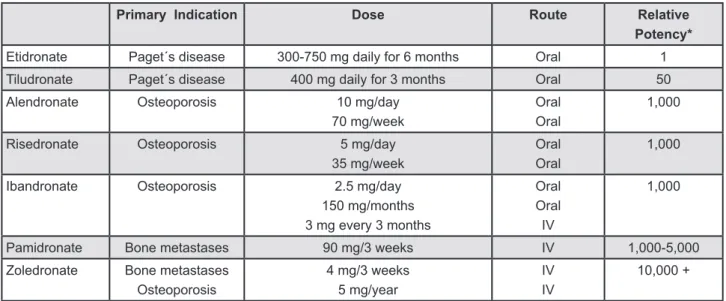
Bisphosphonates are a new class of agents that have been increasingly recommended for use in patients with osteoporosis, Paget’s disease of bone, hypercalcemia of malignancy, osteolytic bone metastases, and osteolytic lesions of multiple myeloma (Figure 1)7,19
to use of these medications, osteonecrosis of of patients receiving these drugs in particular with intravenous administration. Based on a growing number of case reports and institutional reviews, bisphosphonate therapy may cause exposed and necrotic bone that is isolated to the jaw33,35. This complication could present after simple dentoalveolar surgery. The phenomenon of bisphosphonate-related osteonecrosis of jaws
(BRONJ) was recognized a few years after their approval for use1 !!"# alerting the dental and medical communities of this complication28,37,38,43.Since brought to light in 200323,47, well over 400 reports have been published concerning BRONJ. Despite this large volume of work, there are few data yet many hypotheses concerning the underlying pathophysiology. The physiologic effects of bisphosphonates on bone cells, osteoblasts, osteoclasts, and osteocytes, have recently been comprehensively reviewed39,40,41.
Osteoclasts represent the main cellular target
of bisphosphonates46.$#
Primary Indication Dose Route Relative Potency*
Etidronate Paget´s disease 300-750 mg daily for 6 months Oral 1
Tiludronate Paget´s disease 400 mg daily for 3 months Oral 50
Alendronate Osteoporosis 10 mg/day
70 mg/week
Oral Oral
1,000
Risedronate Osteoporosis 5 mg/day
35 mg/week
Oral Oral
1,000
Ibandronate Osteoporosis 2.5 mg/day
150 mg/months 3 mg every 3 months
Oral Oral IV
1,000
Pamidronate Bone metastases 90 mg/3 weeks IV 1,000-5,000
Zoledronate Bone metastases
Osteoporosis
4 mg/3 weeks 5 mg/year
IV IV
10,000 +
Figure 1- Bisphosphonate preparations currently available in the United States (Abbreviation: Intravenous - IV, *Relative to etidronate)
various tissue-level properties5,7,27,42.
The effects of bisphosphonates on osteocytes are less clear and more controversial. There is a high awareness on both direct and indirect effects, most of which are centered around the viability and integrity of these cells and their environment3,31,32.
Although systemic bone formation is reduced in the presence of bisphosphonates, this is primarily an indirect consequence of remodeling suppression and the coupling between resorption and formation. At the level of the individual basic multicellular unit, osteoblast activity appears unaffected9,13. Reports from small animal models suggest that bisphosphonates may suppress osteoblastic bone formation directly on those surfaces undergoing bone formation without prior resorption (i.e., formation modeling)21, although large animal models do not show a similar suppressive effect on periosteal surfaces4,26.
In addition, this evidence shows that osteoclasts and/or osteocytes are the main cells of interest for BRONJ pathogenesis. The basic premise of this hypothesis is that the jaw has a high remodeling rate and bisphosphonates suppress remodeling. There is no debate about the latter because this is the principal mechanism of action of bisphosphonates34,40,41. It is also clear that # envelope, is considerably higher in the jaw compared with other skeletal sites. The BRONJ hypothesis thus follows the idea that because remodeling is high in the jaw, and bisphosphonates suppress remodeling, this likely plays a role in the pathophysiology of BRONJ3,24.
Current information on the prevalence and incidence of BRONJ (and much rarer non-bisphosphonate-associated events) is poor. These #
well as incomplete reporting. Unfortunately, with current information sources, it is not possible to determine the prevalence or incidence rates16.
Strategies for the treatment of patients with, &#'*+; < Association of Oral and Maxillofacial Surgeons (AAOMS) Position Paper on Bisphosphonate-Related Osteonecrosis of the Jaws (Position Paper) and approved by the Board of Trustees in September 20061. The Position Paper was developed by a task force appointed by the Board and composed of clinicians with extensive experience in treating these patients and basic science researchers. The knowledge base and experience in addressing '*+;= # > > The task force was then called together again in August 2008 to review the 2006 recommendations, appraise the current published data, and revise the Position Paper and recommendations, where indicated. This update contains revisions to the diagnosis and staging and management strategies and highlights the status of basic science research35,36,38. The purpose of this updated Position Paper is to provide (Figure 2): 1. Perspectives on the risk of developing BRONJ and the risks and decision-making of both the treating physician and the patient; 2. Guidance to clinicians regarding the differential diagnosis of BRONJ in patients with a history of treatment with intravenous (IV) or oral bisphosphonates; 3. Guidance to clinicians on possible BRONJ prevention measures and treatment of patients with BRONJ according to the presenting stage of the disease.
bisphosphonate-Figure 2- Staging and treatment strategies. [Ruggiero, et al.37 (2009)]
Abbreviations: bisphosphonate-related osteonecrosis of the jaw - BRONJ; intravenous - IV
*Exposed bone in maxillofacial region without resolution within 8-12 weeks in persons treated with bisphosphonate who have not undergone radiotherapy to jaws
†Regardless of disease stage, mobile segments of bone sequestrum should be removed without exposing uninvolved bone; extraction of symptomatic teeth within exposed, necrotic bone should be considered because it is unlikely that extraction will exacerbate established necrotic process
! ! "! #$%&'!< ! $< ! ! oncologist in consultation with oral and maxillofacial surgeon and patient
§Discontinuation of oral bisphosphonate therapy in patients with BRONJ has been associated with gradual improvement in clinical disease. Discontinuation of oral bisphosphonates for 6-12 months may result in either spontaneous sequestration or ! should be done in consultation with treating physician and patient
BRONJ Stage* Clinical description Treatment Strategies †‡§
At risk category No apparent necrotic bone in patients who
have been treated with either oral or IV bisphosphonates
No treatment indicated. Patient education.
Stage 0 No clinical evidence of necrotic bone, but
!
Systemic management, including use of pain medication and antibiotics.
Stage 1 Exposed and necrotic bone in asymptomatic
patients without evidence of infection
Antibacterial mouth rinse. Clinical follow-up on quarterly basis. Patient education and review of indications for continued bisphosphonate therapy.
Stage 2 Exposed and necrotic bone associated with
infectin as evidenced by pain and erythema in region of exposed bone with or without purulent
drainage
Symptomatic treatment with oral antibiotics. Oral = >
debridement to relieve soft tissue irritation.
Stage 3 Exposed and necrotic bone in patients with
pain, infection, and one or more of the following: exposed and necrotic bone extending beyond the region of alveolar bone (inferior border and
ramus in the mandible, maxillary sinus and zygoma in the maxilla), resulting in pathologic ? G communication, or osteolysis extending to the H
Antibacterial mouth rinse. Antibiotic therapy and pain control. Surgical debridement/resection for
longer term palliation of infection and pain.
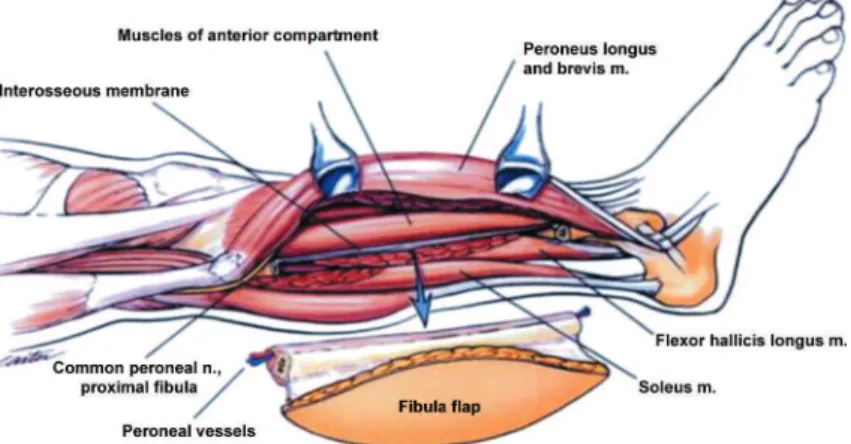
related osteonecrosis (Figure 3), highlighting the clinical effectiveness at short- and long-term using @ H# biological complications after an observation period of at least 12 months in the cases of BRONJ at the 3rd stage (as per Position Paper of American Association of Oral and Maxillofacial Surgeons -AAOMS).
MATERIAL AND METHODS
Search strategy and inclusion criteria
A systematic review of the English literature was conducted for selected articles published from January 1976 to June 2009.
Figure 3- Lateral view of the right leg. Note the proximity of the common peroneal nerve to the proximal osteotomy, according to Anthony and Foster6 (1996)
Figure 4- Search strategy Pathology and Medicine, Journal of Prosthetic
Dentistry, Oral Disease, Oral Oncology, Oral Surgery, Oral Medicine, Oral Pathology, Oral Radiology, and Endodontics, Quintessence International and The Laryngoscope.
From this extensive search, it was obvious that there were no randomized controlled clinical trials (RCTs) available, prospective or retrospective studies. In the absence of RCTs, prospective or retrospective studies, this systematic review was based on clinical cases (case series, case report):
- that had a mean follow-up time of 12 months or more;
- obtained from publications within English dental literature;
- where patients included had been examined clinically at follow-up visits.
Selection of studies
Titles and abstracts of the searches were initially screened by two independent reviewers for possible inclusion in the review. The full text of all relevant studies was then obtained for independent assessment by the reviewers. Any disagreement was resolved by discussion. Figure 4 describes W were selected from an initial yield of 947 titles. Data were extracted using a data extraction form. Disagreement regarding data extraction was resolved by consensus, after discussions (Figure 1).
Excluded studies
Six out of 11 full-text articles examined were excluded from the final analysis for different reasons: the mean observation period was <12 months, the type of reconstructions was not @ H Y osteonecrosis was an osteoradionecrosis.
Data extraction
Information on the surgical reconstructions and on biological complications was retrieved from the
5 included studies. Biological complications during the surgery, after the surgery and in the follow-up period were highlighted.
RESULTS
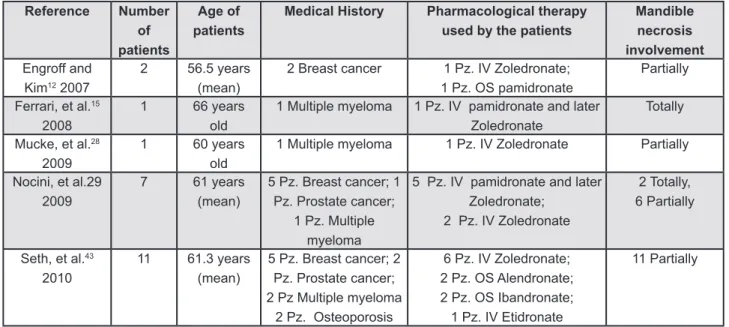
cancer-Reference Number of patients
Age of patients
Medical History Pharmacological therapy used by the patients
Mandible necrosis involvement
Engroff and Kim12 2007
2 56.5 years
(mean)
2 Breast cancer 1 Pz. IV Zoledronate;
1 Pz. OS pamidronate
Partially
Ferrari, et al.15 2008
1 66 years
old
1 Multiple myeloma 1 Pz. IV pamidronate and later
Zoledronate
Totally
Mucke, et al.28 2009
1 60 years
old
1 Multiple myeloma 1 Pz. IV Zoledronate Partially
Nocini, et al.29 2009
7 61 years
(mean)
5 Pz. Breast cancer; 1 Pz. Prostate cancer;
1 Pz. Multiple myeloma
5 Pz. IV pamidronate and later Zoledronate;
2 Pz. IV Zoledronate
2 Totally, 6 Partially
Seth, et al.43 2010
11 61.3 years
(mean)
5 Pz. Breast cancer; 2 Pz. Prostate cancer; 2 Pz Multiple myeloma
2 Pz. Osteoporosis
6 Pz. IV Zoledronate; 2 Pz. OS Alendronate; 2 Pz. OS Ibandronate;
1 Pz. IV Etidronate
11 Partially
Figure 5- Studies retrieved from the review of the literature: analysis of medical history, type of therapy used and mandible necrosis involved
Reference Number of
patients
Type of study
Type of surgery
Type of technique
Cumulative survive rate of the grafts
(CSR)
Years of follow-up
Engroff and Kim12 2007
2 Case series Partial
resection
Vascularized H
100% 12
months
Ferrari, et al.15 2008 1 Case report Total resection Vascularized
H
100% 12
months
Mucke, et al.28 2009 1 Case report Partial
resection
Vascularized osteocutaneous
H
100% 12
months
Nocini, et al.29 2009 7 Case series Partial
resection and Total resection
Vascularized H
and Vascularized
osteocutaneous
H
100% Range:
6 to 34 months
Seth, et al.43 2010 11 Case series Partial
resection
Vascularized osteocutaneous
H
100% Range:
2 weeks to 31 months
Figure 6- Studies retrieved from the review of the literature: analysis of type of surgery, type of graft used, cumulative survival rate of the grafts and years of follow-up
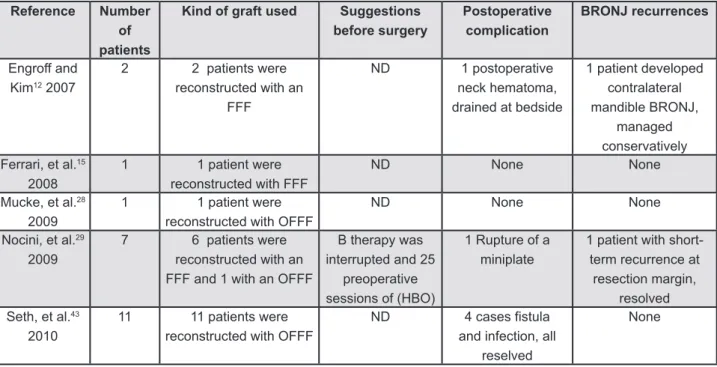
related disease 8 weeks and 16 month after surgery, with no signs of recurrent BRONJ. BRONJ-related facial pain and halitosis stopped completely after the operation in all patients. The donor leg healed without complications in all cases. Stable oral lining and solid bone union were achieved in all patients. In all studies no complications were reported to the
Reference Number of patients
Kind of graft used Suggestions before surgery
Postoperative complication
BRONJ recurrences
Engroff and Kim12 2007
2 2 patients were
reconstructed with an FFF
ND 1 postoperative
neck hematoma, drained at bedside
1 patient developed contralateral mandible BRONJ,
managed conservatively Ferrari, et al.15
2008
1 1 patient were
reconstructed with FFF
ND None None
Mucke, et al.28 2009
1 1 patient were
reconstructed with OFFF
ND None None
Nocini, et al.29 2009
7 6 patients were
reconstructed with an FFF and 1 with an OFFF
B therapy was interrupted and 25
preoperative sessions of (HBO)
1 Rupture of a miniplate
1 patient with short-term recurrence at
resection margin, resolved Seth, et al.43
2010
11 11 patients were
reconstructed with OFFF
ND \
and infection, all reselved
None
Figure 7- > ^ _ H ```
H %```{ ! _ ?! #%{ postoperative wound complications and bisphosphonate-related osteonecrosis of jaws (BRONJ) recurrences
DISCUSSION
BRONJ is a challenging complication to treat, in terms of both disease control and quality of life2,46, and its treatment is still under discussion and unclear. Although recommendations for the management of this disease exist, they are dependent on a small group of patients. In addition, accordance about prevention or conservative treatment as the basis for ‘‘at risk’’ patients exist18,23,25. Medical treatments are routinely employed together with conservative surgery of the exposed necrotic bone22. However, the initial treatment should include improvement of oral hygiene and systemic antibiotics to prevent secondary infection and pain8,14.
For the management of exposed necrotic bone, additional surgical debridement or sequestrectomy with primary mucosal closure seems to be effective in most cases. If there are recurrences at the conservative treatment, bone segment should be considered as it seems to be more successful than wound debridement alone29.
The reconstruction of subtotal mandibulectomy defects requires vascularized bone to promote healing and provide adequate soft-tissue support and oral competence11,45. Engroff and Kim12 (2007), reported two cases of microvascular reconstruction of the mandible in BRONJ patients. Two lateral mandibular defects were successfully reconstructed
H12.
Nocini, et al.30 (2009) in their case series have recently shown that a properly planned surgical resection has high curative potential
in BRONJ patients. Mucke, et al.29 (2009) have H also the vascularized iliac crest might represent a valuable technique. Despite the co-morbid #~H# morbidity and the hospital stay, patients treated for osteonecrosis were comparable to that of patients whose mandibles are reconstructed because of osteoradionecrosis10,17.
complications selected patients with advanced cases of BRONJ.
According to literature12,15,29,30,44, radical surgical treatment has to be considered when:
- BRONJ seems to involve a large area of the jaws;
- the disease is not resolved by conservative therapy;
- the donor site of the patient is well perfused; - the donor site of the patient is excluded by bone metastases.
However, the possibility of transferring cancer cells to the oral cavity during jawbone reconstruction H cancer or multiple myeloma has not been observed. # bone disease or multiple myeloma20. Mandibular reconstruction using bone-containing microvascular HH large resection and it gives also the opportunity of oral prosthetic rehabilitation using dental implants, as described by Ferrari, et al.15 (2008) in their clinical report.
CONCLUSIONS
* of bisphosphonate therapy, and current literature supports only conservative defect reconstruction. These measures may not provide optimum reconstruction to achieve a well-vascularized healing environment, adequate oral function, and facial cosmetics. Microsurgical reconstruction of the jaws plays a critical role in improving the patient’s quality of life. After an observation period of 12 months from microsurgical reconstruction of the jaws, high survival rates can be expected with few recurrences of osteonecrosis (9.09%). This, in turn, @ H` the limited number of patients found in the review of literature, this kind of treatment appears to be practicable in BRONJ-resected patients and does H primary disease.
REFERENCES
1- Advisory Task Force on Bisphosphonate-Related Osteonecrosis of the Jaws. American Association of Oral and Maxillofacial Surgeons. American Association of Oral and Maxillofacial Surgeons position paper on bisphosphonate-related osteonecrosis of the jaws. J Oral Maxillofac Surg. 2007;65:369-76.
2- Agrillo A, Ungari C, Filiaci F, Priore P, Iannetti G. Ozone therapy in the treatment of avascular bisphosphonate-related jaw osteonecrosis. J Craniofac Surg. 2007;18:1071-5.
3- Allen MR, Burr DB. Mandible matrix necrosis in beagle dogs after 3 years of daily oral bisphosphonate treatment. J Oral Maxillofac Surg. 2008;66:987-94.
4- Allen MR, Follet H, Khurana M, Sato M, Burr DB. Antiremodeling H remodelling sites of canine rib. Calcif Tissue Int. 2006;79:255-61. 5- Allen MR, Iwata K, Phipps R, Burr DB. Alterations in canine vertebral bone turnover, microdamage accumulation, and biomechanical properties following 1-year treatment with clinical treatment doses of risedronate or alendronate. Bone. 2006;39:872-9.
6- Anthony JP, Foster RD. Mandibular reconstruction with the fibula osteocutaneous free flap. Oper Tech Plast Rec Surg. 1996;3(4):233-40
7- Arantes HP, Silva AG, Lazaretti-Castro M. Bisphosphonates in the treatment of metabolic bone diseases. Arq Bras Endocrinol Metab. 2010;54:206-12.
8- Assael LA. New foundations in understanding osteonecrosis of the jaws. J Oral Maxillofac Surg. 2007;62:125-6.
9- Boyce RW, Paddock CL, Gleason JR, Sletsema WK, Eriksen EF. The effects of risedronate on canine cancellous bone remodeling: three-dimensional kinetic reconstruction of the remodeling site. J Bone Miner Res. 1995;10:211-21.
10- Buchbinder D, St. Hilaire H. The use of free tissue transfer in advanced osteoradionecrosis of the mandible. J Oral Maxillofac Surg. 2006;64:961-4.
11- Duncan MJ, Manktelow RT, Zuker RM, Rosen IB. Mandibular reconstruction in the radiated patient: the role of osteocutaneous free tissue transfers. Plast Reconstr Surg. 1985;76:829-40. 12- Engroff LS, Kim DD. Treating bisphosphonate osteonecrosis of the jaws: is there a role for resection and vascularized reconstruction? J Oral Maxillofac Surg. 2007;65:2374-85. 13- Eriksen EF, Melsen F, Sod E, Barton I, Chines A. Effects of long-term risedronate on bone quality and bone turnover in women with postmenopausal osteoporosis. Bone. 2002;31:620-5. 14- Farrugia MC, Summerlin DJ, Krowiak E, Huntley T, Freeman S, Borrowdale R, et al. Osteonecrosis of the mandible or maxilla associated with the use of new generation bisphosphonates. Laryngoscope. 2006;116:115-20.
15- Ferrari S, Bianchi B, Savi A, Poli T, Multinu A, Balestreri A. H a resected mandible in bisphosphonate osteonecrosis. J Oral Maxillofac Surg. 2008;66:999-1003.
16- Gliklich R, Wilson J. Epidemiology of bisphosphonate-related osteonecrosis of the jaws: the utility of a national registry. J Oral Maxillofac Surg. 2009;67(Sp. Iss. 5):71-4.
17- Goodacre TE, Walker CJ, Jawad AS, Jackson AM, Brough MD. Br J Plast Surg. 1990;43:410-2.
18- Greenberg MS. Intravenous bisphosphonates and osteonecrosis. Oral Surg Oral Med Oral Pathol Oral Radiol Endod. 2004;98:259-60.
19- Griz L, Caldas G, Bandeira C, Assunção V, Bandeira F. Paget’s disease of bone. Arq Bras Endocrinol Metabol. 2006;50:814-22. !~ # # # $ metastasis from lung cancer mimicking stress fracture. Clin Nucl Med. 2006;31:269-71.
21- Iwata K, Li J, Follet H, Phipps RJ, Burr DB. Bisphosphonates suppress periosteal osteoblast activity independently of resorption in rat femur and tibia. Bone. 2006;39:1053-8.
22- Khosla S, Burr D, Cauley J, Dempster DW, Ebeling PR, Felsenberg D, et al. Bisphosphonate-associated osteonecrosis of the jaw: report of a task force of the American Society for Bone and Mineral Research. J Bone Miner Res. 2007;22:1479-91. 23- Marx RE. Pamidronate (Aredia) and zoledronate (Zometa) induced avascular necrosis of the jaws: a growing epidemic. J Oral Maxillofac Surg. 2003;61:1115-7.
25- Marx RE, Sawatari Y, Fortin M, Broumand V. Bisphosphonate-induced exposed bone (osteonecrosis/osteopetrosis) of the jaws: risk factors, recognition, prevention, and treatment. J Oral Maxillofac Surg. 2005;63:1567-75.
26- Mashiba T, Hirano T, Turner CH, Forwood MR, Johnston CC, Burr DB. Suppressed bone turnover by bisphosphonates increases microdamage accumulation and reduces some biomechanical properties in dog rib. J Bone Miner Res. 2000;15(4):613-20. 27- McDonald MM, Dulai S, Godfrey C, Amanat N, Sztynda T, Little DG. Bolus or weekly zoledronic acid administration does not delay endochondral fracture repair but weekly dosing enhances delays in hard callus remodeling. Bone. 2008;43:653-62.
28- Migliorati CA. Bisphosphonates and oral cavity avascular bone necrosis. J Clin Oncol. 2003;21:4253-4.
29- Mücke T, Haarmann S, Wolff KD, Hölzle F. Bisphosphonate related osteonecrosis of the jaws treated by surgical resection and immediate osseous microvascular reconstruction. J Craniomaxillofacial Surg. 2009;37:291-7.
30- Nocini PF, Saia G, Bettini G, Ragazzo M, Blandamura S, # @ H mandible in bisphosphonate-related osteonecrosis. Eur J Surg Oncol. 2009;35:373-9.
31- Plotkin LI, Aguirre JI, Kousteni S, Manolagas SC, Bellido T. Bisphosphonates and estrogens inhibit osteocyte apoptosis via distinct molecular mechanisms downstream of extracellular signal-regulated kinase activation. J Biol Chem. 2005;280:7317-25. "~>&# $#><K#>#K SC, Bellido T. Prevention of osteocyte and osteoblast apoptosis by bisphosphonates and calcitonin. J Clin Invest. 1999;104:1363-74 33- Reiriz AB, De Zorzi PM, Lovat CP. Bisphosphonates and osteonecrosis of the jaw: a case report. Clinics (Sao Paulo). 2008;63:281-4.
34- Rodan GA, Fleisch HA. Bisphosphonates: mechanisms of action. J Clin Invest. 1996;97:2692-6.
35- Rosen HN, Moses AC, Garber J, Iloputaife ID, Ross DS, Lee SL, Greenspan SL. Serum CTX: a new marker of bone resorption that shows treatment effect more often than other markers because of therapy. Calcif Tissue Int. 2000;66:100-3.
36- Rosen HN, Moses AC, Garber J, Ross DS, Lee SL, Greenspan SL. Utility of biochemical markers of bone turnover in the follow-up of patients treated with bisphosphonates. Calcif Tissue Int. 1998;63:363-8.
37- Rosenberg TJ, Ruggiero S. Osteonecrosis of the jaws associated with the use of bisphosphonates. J Oral Maxillofac Surg. 2003;61(Sp. Iss.):60.
38- Ruggiero SL, Dodson TB, Assael LA, Landesberg R, Marx RE. Mehrotra B, et al. American Association of Oral and Maxillofacial Surgeons position paper on bisphosphonate-related osteonecrosis of the jaw - 2009 update. J Oral Maxillofac Surg. 2009;35:119-30. 39- Ruggiero SL, Mehrotra B, Rosenberg TJ, Engroff SL. Osteonecrosis of the jaws associated with the use of bisphosphonates: a review of 63 cases. J Oral Maxillofac Surg. 2004;62:527-34.
40- Russell RG, Watts NB, Ebetino FH, Rogers MJ. Mechanisms of action of bisphosphonates: similarities and differences and H * 2008;19:733-59.
41- Russell RG, Xia Z, Dunford JE, Oppermann U, Kwaasi A, Hulley PA, et al. Bisphosphonates: an update on mechanisms of <+< $ 2007;1117:209-57.
42- Santamaria Júnior M, Fracalossi AC, Consolaro MF, Consolaro < H histomorphometric analysis. Braz Oral Res. 2010;24:309-15. 43- Sarathy AP, Bourgeois SL Jr, Goodell GG. Bisphosphonate-associated osteonecrosis of the jaws and endodontic treatment: two case reports. J Endod. 2005;31:759-63.
44- Seth R, Futran ND, Alam DS, Knott PD. Outcomes of vascularized bone graft reconstruction of the mandible in bisphosphonate-related osteonecrosis of the jaws. Laryngoscope. 2010;120:2165-71.
^W~&KH Review of the literature. Arch Otolaryngol Head Neck Surg. 1991;117:724-32.
46- Vescovi P, Merigo E, Meleti M, Fornaini C, Nammour S, Manfredi M. Nd:YAG laser biostimulation of bisphosphonate-associated necrosis of the jawbone with and without surgical treatment. Br J Oral Maxillofac Surg. 2007;45:628-32.
![Figure 2- Staging and treatment strategies. [Ruggiero, et al. 37 (2009)]](https://thumb-eu.123doks.com/thumbv2/123dok_br/14981818.511006/3.892.103.804.112.568/figure-staging-treatment-strategies-ruggiero-et-al.webp)