Assessing the Causal Relationship of
Maternal Height on Birth Size and
Gestational Age at Birth: A Mendelian
Randomization Analysis
Ge Zhang1,2*, Jonas Bacelis3, Candice Lengyel2, Kari Teramo4, Mikko Hallman5, Øyvind Helgeland6, Stefan Johansson6,7, Ronny Myhre8, Verena Sengpiel3, Pål Rasmus Njølstad6,9, Bo Jacobsson8,10, Louis Muglia2
*
1Human Genetics Division, Cincinnati Children’s Hospital Medical Center, Cincinnati, Ohio, United States of America,2Center for Prevention of Preterm Birth, Perinatal Institute, Cincinnati Children’s Hospital Medical Center and March of Dimes Prematurity Research Center Ohio Collaborative, Cincinnati, Ohio, United States of America,3Department of Obstetrics and Gynecology, Sahlgrenska University Hospital, Gothenburg, Sweden,4Obstetrics and Gynecology, University of Helsinki and Helsinki University Hospital, Helsinki, Finland,5PEDEGO Research Center, University of Oulu and Department of Children and Adolescents, Oulu University Hospital, Oulu, Finland,6KG Jebsen Center for Diabetes Research, Department of Clinical Science, University of Bergen, Bergen, Norway,7Center for Medical Genetics and Molecular Medicine, Haukeland University Hospital, Bergen, Norway,8Department of Genes and Environment, Division of Epidemiology, Norwegian Institute of Public Health, Oslo, Norway,9Department of Pediatrics, Haukeland University Hospital, Bergen, Norway,10Department of Obstetrics and Gynecology, Institute of Clinical Sciences, Sahlgrenska Academy, Gothenburg University, Gothenburg, Sweden
*[email protected](GZ); [email protected](LM)
Abstract
Background
Observational epidemiological studies indicate that maternal height is associated with ges-tational age at birth and fetal growth measures (i.e., shorter mothers deliver infants at earlier gestational ages with lower birth weight and birth length). Different mechanisms have been postulated to explain these associations. This study aimed to investigate the casual rela-tionships behind the strong association of maternal height with fetal growth measures (i.e., birth length and birth weight) and gestational age by a Mendelian randomization approach.
Methods and Findings
We conducted a Mendelian randomization analysis using phenotype and genome-wide sin-gle nucleotide polymorphism (SNP) data of 3,485 mother/infant pairs from birth cohorts col-lected from three Nordic countries (Finland, Denmark, and Norway). We constructed a genetic score based on 697 SNPs known to be associated with adult height to index mater-nal height. To avoid confounding due to genetic sharing between mother and infant, we inferred parental transmission of the height-associated SNPs and utilized the haplotype genetic score derived from nontransmitted alleles as a valid genetic instrument for maternal height. In observational analysis, maternal height was significantly associated with birth
OPEN ACCESS
Citation:Zhang G, Bacelis J, Lengyel C, Teramo K, Hallman M, Helgeland Ø, et al. (2015) Assessing the Causal Relationship of Maternal Height on Birth Size and Gestational Age at Birth: A Mendelian Randomization Analysis. PLoS Med 12(8): e1001865. doi:10.1371/journal.pmed.1001865
Academic Editor:Jenny Myers, University of Manchester, UNITED KINGDOM
Received:January 27, 2015
Accepted:July 9, 2015
Published:August 18, 2015
Copyright:© 2015 Zhang et al. This is an open access article distributed under the terms of the
Creative Commons Attribution License, which permits unrestricted use, distribution, and reproduction in any medium, provided the original author and source are credited.
length (p= 6.31 × 10⁻⁹), birth weight (
p= 2.19 × 10⁻¹⁵), and gestational age (
p= 1.51 ×
10−7). Our parental-specific haplotype score association analysis revealed that birth length
and birth weight were significantly associated with the maternal transmitted haplotype score as well as the paternal transmitted haplotype score. Their association with the maternal nontransmitted haplotype score was far less significant, indicating a major fetal genetic influence on these fetal growth measures. In contrast, gestational age was significantly associated with the nontransmitted haplotype score (p= 0.0424) and demonstrated a
signif-icant (p= 0.0234) causal effect of every 1 cm increase in maternal height resulting in ~0.4
more gestational d. Limitations of this study include potential influences in causal inference by biological pleiotropy, assortative mating, and the nonrandom sampling of study subjects.
Conclusions
Our results demonstrate that the observed association between maternal height and fetal growth measures (i.e., birth length and birth weight) is mainly defined by fetal genetics. In contrast, the association between maternal height and gestational age is more likely to be causal. In addition, our approach that utilizes the genetic score derived from the nontrans-mitted maternal haplotype as a genetic instrument is a novel extension to the Mendelian randomization methodology in casual inference between parental phenotype (or exposure) and outcomes in offspring.
Introduction
Gestational age at birth (or simply gestational age), birth length, and birth weight are preg-nancy outcomes associated not only with perinatal morbidity and mortality but also with long-term adverse health outcomes, such as obesity [1], cardiometabolic disorders [2,3], and neuro-psychiatric conditions [4]. Identifying the genetic and environmental factors that causally influence these pregnancy outcomes will increase the understanding of the mechanisms under-lying their association with diseases that occur later in life and thereby provide clues for possi-ble prevention strategies [5,6].
Observational epidemiological studies have revealed several factors that are associated with birth length, birth weight, and gestational age. Examples include maternal age, height, and weight, offspring sex [7], maternal exposure to environmental hazards [8], and physiological or psychological stresses [9]. In addition, genetic factors in both mothers and infants influence these pregnancy outcomes [6,10,11]. Among these factors, maternal height has been repeatedly
reported to associate with fetal birth length [12], birth weight [7,13], and gestational age [14–
18]. Associations between paternal height and fetal birth length [19,20] as well as birth weight [21,22] have also been reported, although there was no association with gestational age [15].
The associations between maternal height and pregnancy outcomes have been interpreted
based upon a mechanistic assumption—that maternal height sets a physical constraint on the
intrauterine environment (shorter women may have a small uterus size, limiting fetal growth) (Fig
1A—direct causal effect) [23]. Furthermore, adult height may reflect a mother’s cumulative social
and nutritional condition over her life course being an indicator of the persisting biological and/or
environmental factors that impact her offspring’s growth in utero (Fig 1B—indirect association)
[24]. The latter could be particularly important in low- and middle- income countries, where
nutrition-related factors may substantially restrict one’s growth [25]. These effects—physical
through dbGaP Authorized Access portal (https:// dbgap.ncbi.nlm.nih.gov/dbgap/aa). Requests of the data underlying the findings reported in this manuscript from the MoBa cohort can be addressed to the MoBa Cohort Steering Committee ([email protected]). Some restrictions may apply for the protection of privacy and appropriate usage of the data.
Funding:This work was supported by grants from the March of Dimes (22-FY14-470, National Institutes of Health, Cincinnati Children’s Hospital Medical Center, Fifth Third Foundation, Norwegian Research Council, Swedish Medical Society, Jane and Dan Olsson Foundations, Swedish Government Grants to Researchers in the Public Health Service, European Community’s Seventh Framework Programme, ENGAGE Consortium, the European Research Council, the University of Bergen, Helse Vest, and the KG Jebsen Foundation. The funders had no role in study design, data collection and analysis, decision to publish, or preparation of the manuscript.
Competing Interests:The authors have declared that no competing interests exist.
constraints or confounding nutritional factors that jointly influence the fetal growth environment
—are commonly referred to as environmental effects (intrauterine effects) [26]. In addition to
these nongenetic mechanisms, the association between maternal height and birth outcomes could be attributed to genetics in that the genetic polymorphisms that influence maternal height may
also have direct functional effects on pregnancy outcomes in fetus (Fig 1C—genetic effect)
[6,11,20,27,28].
Disentangling these different mechanisms underlying the association between maternal height and pregnancy outcomes is important, as the knowledge may enhance our understand-ing of the genetic and environmental etiology of these important pregnancy outcomes and how they impact health. However, only a few study designs are capable of discerning these different mechanisms and drawing causal inferences with regard to the association between maternal height and pregnancy outcomes [26]. The existing literature on the genetic and environmental impacts on pregnancy outcomes is inconsistent: some studies suggest that intrauterine factors have the major role on birth weight [29], and some studies suggest that maternal height is mainly a proxy for maternal socioeconomic conditions [24,30], while some studies suggest that genetic factors have the major influence on pregnancy outcomes [20,28].
One approach to distinguish the contributions of intrauterine environmental effects from
direct genetic influences is to compare maternal–offspring and paternal–offspring associations.
Stronger maternal–offspring than paternal–offspring associations would imply intrauterine
effects, whereas similar maternal and paternal associations with a birth outcome would suggest predominant genetic effects [31,32]. Previous studies have indicated that both maternal and paternal height are associated with birth length [20] and birth weight [22,28], which suggest substantial fetal genetic impact on early fetal growth. In contrast, gestational age was reported to be associated with maternal height but not with paternal height [15].
Fig 1. Schematic representation of various causal mechanisms that can lead to the observational associations between maternal height and pregnancy outcomes.(A) Direct causal effect of maternal height on pregnancy outcomes. (B) Associations of social and nutritional confounders that have impacts on both maternal height and pregnancy outcomes. (C) Fetal genetics that directly influences pregnancy outcomes.
More recently, Eaves et al. [33] extended the genome-wide complex trait analysis (GCTA) method to partition offspring phenotypic variance into components attributable to fetal geno-type, maternal effects, and the covariance between these two. By applying this method to the Avon Longitudinal Study of Parents and Children (ALSPAC) cohort, they found that fetal genetics and maternal effect explain 13% and 11%, respectively, of the variance in birth length [33].
Another approach to draw causal inference is Mendelian randomization [34,35], which uti-lizes genetic variants associated with the parental phenotype/exposure as an instrumental vari-able to probe the causal effect of parental phenotype/exposure on outcomes in their offspring
[26,36]. As an“instrumental variable”technique [37], the validity of this method depends on
two conditions: (1) relevance—the genetic instrument must be associated with the intermediate
phenotype or risk factor with enough strength—and (2) exogeneity—the genetic instrument
must not be related to the outcome by means other than the intermediate phenotype. Specifi-cally, the latter assumption requires that the genetic instrument is unrelated to confounders and that the genetic instrument does not influence the outcome through other mechanisms (biological pleiotropy) [38].
Box 1. Assumptions of Mendelian Randomization Study
Mendelian randomization is a type of instrumental variable analysis that uses a genetic
instrumental variable (G) to examine the causal effect of an exposure or an intermediate
phenotype (X) on an outcome (Y). In our study, we used the height genetic score as the
genetic instrument (G) to probe the causal relationship between maternal height (X) and
various pregnancy outcomes (Y). The validity of this approach requires the following
assumptions to be met:
1. Gis associated withXwith enough strength, which is called the instrument relevance
in statistical terms.
2. Gis related toYonly throughX, not through other environmental confounding
fac-tors or biological pleiotropy. This assumption is also referred to as instrument exogeneity.
In this study, the first assumption was achieved by using a genetic score constructed based on a large number of height-associated SNPs. The genetic score explains a substan-tial fraction of variance in maternal height and therefore makes a powerful genetic
instrument. BecauseGis randomly assigned to individuals at birth,Gis generally not
associated with nongenetic confounders. However, it is hard to completely exclude the
possibility of biological pleiotropy, i.e.,Gmay influenceYthrough biological
mecha-nisms other thanX.
Since genetic variants typically explain a small proportion of the phenotypic variance, con-ventional Mendelian randomization studies often require large sample sizes [39]. Using height
as an example, the strongest single SNP association only explains<0.5% of the observed
varia-tion in height [40,41]. Thus, a Mendelian randomizavaria-tion study using a single SNP would require hundreds of thousands of samples [42]. One solution to this limitation is to use multi-ple associated SNPs obtained from large-scale genome-wide association studies (GWAS) to
construct more powerful genetic instruments [43–45].
When utilizing the Mendelian randomization to draw causal inference between parental phenotype and outcomes in offspring, the method is further complicated by the transmission of parental alleles, and therefore, the fetal genotype needs to be adjusted for to avoid the con-founding due to genetic sharing between parents and offspring [26,35]. Using this method, Lawlor et al. [46] explored the causal effect of maternal body-mass index (BMI) on childhood obesity. We have not seen this approach being used to examine the causal mechanism underly-ing the association between maternal height and pregnancy outcomes.
In this study, we first examined the observational associations between maternal height and birth length, birth weight, and gestational age at birth and then assessed the causal effect of maternal height on these measurements by a Mendelian randomization approach. We con-structed genetic score based on 697 height-associated SNPs as the instrumental variable for maternal height. We inferred parental transmission of the height-associated SNPs and utilized the haplotype genetic score derived from the nontransmitted alleles as a valid genetic instru-ment and thus avoided the interference by genetic transmission in causal inference. Using this modified Mendelian randomization approach, we evaluated the causal relationship of maternal height on birth size and gestational age at birth in 3,485 mother/infant pairs collected from three Nordic countries (Finland, Denmark, and Norway).
Methods
Description of Study Cohorts
We used the phenotype and genome-wide SNP data of up to 3,485 mother/infant pairs from birth cohorts collected from three Nordic countries (Table 1).
The Finnish cohort (FIN) was collected for a genetic study of preterm birth [47]. Briefly, whole blood samples were collected from ~800 mother/child pairs from the Helsinki (southern Finland) University Hospitals between 2004 and 2014. All of these studied samples are of Finn-ish descent. Crown-rump length at the first ultrasound screening between 10+ and 13 wk was used to determine the gestation and the due date. The study was approved by the Ethics Com-mittee of Oulu University Hospital and that of Helsinki University Central Hospital. Written informed consent was given by all participants.
The Mother Child Cohort of Norway (MoBa) is a nationwide Norwegian pregnancy cohort study administered by the Norwegian Institute of Public Health. The study includes more than
Table 1. Description of study cohorts.
Cohort Full Name Mother/Infant Pairs (Term/Preterm)* Genotyping Platform
FIN Finnish (Helsinki) Birth Cohort 544/239 Affymetrix 6.0 + Illumina
MoBa Norwegian Mother and Child Cohort 525/493 Illumina Human660W
DNBC Danish National Birth Cohort 960/724 Illumina Human660W
107,000 pregnancies recruited from 1999 through 2008. Gestational age was estimated by
ultra-sound at gestational weeks 17–19. In the few participants without ultrasound dating, gestational
age was estimated using the date of the last menstrual period. For the current study, we used the mother-child pairs that were selected from version 4 of the MoBa cohort, which included a total of 71,669 pregnancies. Singleton live-born spontaneous pregnancies with mothers in the age
group 20–34 y were selected. Pregnancies involving preexisting medical conditions and
pregnan-cies with complications, as well as pregnanpregnan-cies conceived by in vitro fertilization, were excluded
from the study. Random sampling was done from two gestational age ranges of 154–258 d
(cases) and 273–286 d (controls). In total, 3,121 mothers and children were genotyped [48]. Of
the 2,977 samples that passed quality control (QC), 1,018 mother/child pairs were identified and used in this study. All parents gave informed, written consent. The study was approved by the Regional Committee for Medical Research Ethics South-East, Norway.
The Danish National Birth Cohort (DNBC) followed over 100,000 pregnancies between 1997 and 2002, with extensive epidemiologic data recorded on health outcomes in both mother and child [49]. The current study used the data downloaded from the Database of Genotypes and Phenotypes (dbGaP) (http://www.ncbi.nlm.nih.gov/projects/gap/cgi-bin/study.cgi?study_ id = phs000103.v1.p1), which contains data from a genome-wide case/control study using
approximately 1,000 preterm mother-child pairs (gestational age between 22–37 wk) from the
DNBC, most with spontaneous onset of labor or preterm premature rupture of membranes (PPROM), along with 1,000 control pairs in which the child was born at ~40 wk gestation. Ges-tational age in this cohort was estimated by combining all available information from multiple sources: self-reported date of last menstrual period, self-reported delivery date, and gestational age at birth registered in the Medical Birth Register and the National Patient Register. Of the 3,838 DNBC samples with genotype data, 3,712 samples passed the genotype QC, from which we identified 1,684 mother/child pairs and used them in the current study.
All the preterm births included in this study were spontaneous. Obstetrical induction of labor, placental abnormalities, preeclampsia, congenital malformations, and multiple births were excluded. Pregnancies involving preexisting medical conditions known to be associated with preterm birth and pregnancies with complications were also excluded.
Genotyping and Imputation
Genome-wide SNP genotyping was conducted using different SNP arrays (Table 1). Specifi-cally, for FIN, genotyping was conducted using Affymetrix 6.0 (Affymetrix, California, United States) and various other Illumina arrays (Illumina, California, United States). For the Affyme-trix SNP Array 6.0, genotype calls were determined using the CRLMM algorithm [50,51]
among chips that passed the vendor-suggested QC (Contrast QC>0.4). For the Illumina
chips, the genotype calling was conducted using Illumina’s genotyping module v1.94 in the
GenomeStudio v2011.1. The 3,121 samples from the MoBa cohort were genotyped using the Illumina Human660W-Quadv1_A bead chip (Illumina), and the genotype calls were deter-mined using CRLMM algorithm. The DNBC samples were also genotyped using the Illumina Human660W-Quadv1_A bead chip, and the genotype calls were determined using the CRLMM algorithm based on the chip intensity files (IDAT files) obtained from dbGaP.
Similar QC procedures were used across the three studies. Briefly, individuals with incorrect
sex assignment, excessive heterozygosity, or low call rate (<98%) were excluded from further
analysis. Incorrect mother-child relationships and cryptic relatedness were detected by iden-tity-by-descent (IBD) sharing estimated from genome-wide SNPs. Non-European samples were identified and excluded using principal component analysis (PCA) anchored with 1000
minor allele frequency (<0.03), or significant deviation from Hardy-Weinberg equilibrium
(p<1 × 10⁻⁴) were excluded.
Following the QC procedures, we conducted genome-wide imputation using the reference haplotype data extracted from the 1000 Genomes Project (integrated phase I release) [52]. A standard two-step imputation procedure was followed: the genotype data was first prephased using Shapeit2 software [53], and then the estimated haplotypes were used to impute untyped SNPs in mothers and infants using the reference haplotypes extracted from the 1000 Genomes Project (integrated phase I release) by either Minimac [54] (FIN) or Impute2 [55] (MoBa and DNBC).
Genetic Score Analysis
We selected the 697 SNPs associated with adult height from the stage II meta-analysis [40] of GIANT studies (http://www.broadinstitute.org/collaboration/giant) to construct a weighted genetic score and use it as a genetic instrument of height. The list of height-associated SNPs and their effect size estimates were extracted from the supplementary table of reference [40]. The reported effect sizes were estimated using an approximate conditional and joint analysis, which appropriately accounts for the linkage disequilibrium (LD) between SNPs [56]. The
weighted genetic score was constructed asS=∑biGi, whereGi= 0, 1 or 2 (for genotype-based
genetic score) orGi= 0or1 (for haplotype-based genetic score, see below), which indicates the
number of reference alleles for a specific SNP, andbiis the estimated allelic effect.
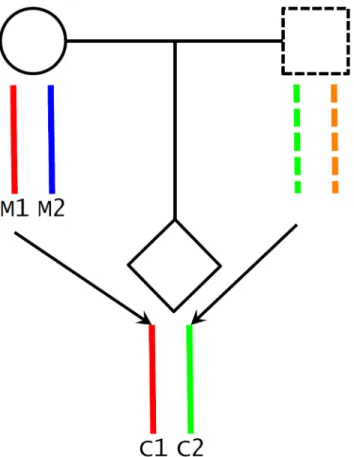
Fig 2. Maternal transmission of alleles and haplotype scores.We inferred maternal transmission of alleles (M1!C1) and constructed haplotype scores: M1 and C1, maternal transmitted haplotype score; M2, maternal nontransmitted haplotype score; and C2, paternal transmitted haplotype score.
Determining Parental Origin
A potential challenge in utilizing Mendelian randomization to study causal effects of parental exposures on outcomes in offspring is the confounding due to shared genetics between parents and offspring [26,46]. Using our case as an example, maternal genotype-based genetic score (parental genotype) is not a valid instrument for maternal height (parental phenotype) because the transmitted maternal alleles can influence the fetal phenotypes (e.g., birth length or weight) through direct genetic effects in the infants (Fig 1C). To overcome this problem, we inferred maternal transmission of height-associated alleles and utilized the nontransmitted haplotype genetic score as a genetic instrument to avoid the interference by genetic transmission (Fig 2). Specifically, for a particular SNP, we inferred allelic transmission (from mother to child) based on either direct comparison of genotypes or local haplotype sharing. If either or both of mother and child are homozygotes, the allele transmission can be unambiguously determined from their genotypes. When both mother and child were heterozygotes, we constructed a long-range (up to 1 Mb) local haplotype around the SNP under consideration and compared haplotype sharing to determine allelic transmission. With the inferred allelic transmission of the height-associated SNPs, we divided the maternal genetic score into two haplotype components (Fig 2):
“maternal transmitted haplotype score”(M1), which was calculated from the transmitted
alleles, and“maternal nontransmitted haplotype score”(M2), which was calculated from the
nontransmitted alleles in the mothers. Accordingly, the fetal genetic score was divided into
“maternal transmitted haplotype score”(C1) and“paternal transmitted haplotype score”(C2).
For example, if we useAiandBito denote the transmitted and nontransmitted alleles of SNPi
in a mother, the maternal transmitted haplotype score (M1) was calculated as∑biAiand the
maternal nontransmitted haplotype score (M2) was∑biBi. Obviously, the genotype score equals
∑biGi=∑biAi+∑biBi, since the genotype is the summation of the two alleles (Gi=Ai+Bi). The
two fetal haplotype scores (C1 and C2) were calculated in the same way, and C1 = M1. Associa-tion between the maternal transmitted haplotype score (M1/C1) and a fetal phenotype can be explained as either intrauterine effects (Fig 1A) or direct genetic influence of fetal genetics (Fig 1C), since the transmitted alleles can have genetic influence in both mothers and infants. Whereas the association between the maternal nontransmitted haplotype score (M2) and a fetal phenotype is a clear indication of causal effects of the maternal phenotype itself (Fig 1A), the association between the paternal transmitted haplotype score (C2) and a fetal phenotype should represent fetal genetic effect (Fig 1C).
Table 2. Association between maternal height and pregnancy outcomes.
Cohort Birth Length Birth Weight Gestational Age
beta* se p-value beta se p-value beta se p-value
FIN 0.0536 0.0113 2.29E-06 11.3 2.42 3.48E-06 0.293 0.142 0.0393
MoBa 0.0379 0.0109 0.00054 6.31 2.01 0.00171 0.303 0.104 0.0035
DNBC$ 11.1 1.88 4.12E-09 0.400 0.102 9.34E-05
meta 0.0455 0.00783 6.31E-09 9.46 1.19 2.19E-15 0.340 0.0647 1.51E-07
p_het# 0.317 0.149 0.746
*Beta is the unstandardized coefficient, which shows the estimated changes in pregnancy outcomes per 1 cm increase in maternal height. $ DNBC does not have birth-length data.
# p_het: heterogeneity testp-value.
Statistical Analyses
We first assessed statistical associations between maternal phenotypes (i.e., height, weight, BMI, and age) and pregnancy outcomes (i.e., birth length, birth weight, and gestational age) using linear regression. Associations between various height genetic scores and maternal phe-notype as well as pregnancy outcomes were examined by regression analysis. In the regression analyses of birth length and birth weight, maternal age, fetal gender, and gestational age were included as covariates. In the analysis of gestational age, only maternal age and fetal gender were included. To estimate the magnitude of causal effects of maternal height on pregnancy outcomes, we performed instrumental variable analysis using the two-stage least squares approach [57]. Three genetic instrumental variables for maternal height were evaluated: (1) maternal genotype-based genetic score without controlling for fetal genetic score (method 1), (2) maternal genotype-based genetic score while controlling for fetal genetic score (method 2), and (3) maternal nontransmitted haplotype score (method 3). Fixed-effect meta-analysis was used to combine the results from different studies. Between-study heterogeneity was tested by
Cochran’s Q test.
Results
Association between Maternal Height and Pregnancy Outcomes
Summary statistics of the phenotype data of the three cohorts are provided inS1 TableandS2
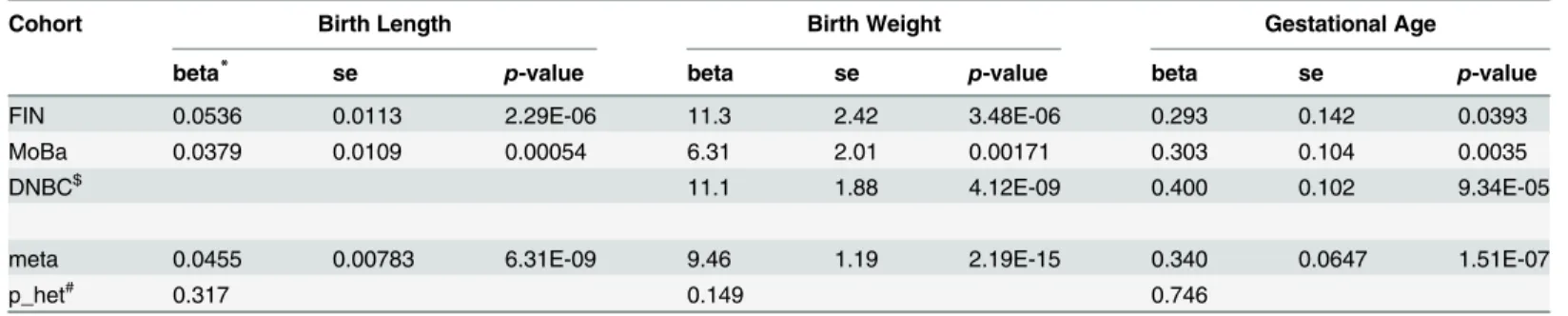
Table. We observed significant associations between maternal height and birth weight, birth length, and gestational age at birth separately in all the three studied cohorts (Table 2). The
meta-analysisp-values were 6.31 × 10⁻⁹(birth length), 2.19 × 10⁻¹⁵(birth weight) and
1.51 × 10⁻⁷(gestational age).
Table 3. Association between maternal height genetic score and maternal height.
Cohort Maternal Genotype Genetic Score
Beta se p-value r2
FIN 5.67 0.397 3.48E-41 0.209
MoBa 5.54 0.347 3.82E-51 0.207
DNBC 5.80 0.289 3.62E-80 0.202
meta 5.69 0.194 2.75E-189
p_het 0.841
doi:10.1371/journal.pmed.1001865.t003
Table 4. Association between genotype height genetic scores and pregnancy outcomes based on meta-analysis.
Genotype Score Birth Length Birth Weight Gestational Age
beta se p-value beta se p-value beta se p-value
Maternal 0.382 0.0916 3.04E-05 75.4 14.2 1.19E-07 1.34 0.760 0.0769
Fetal 0.535 0.0916 5.40E-09 101 14.3 1.84E-12 0.349 0.769 0.650
Maternal (Adjusted)* 0.135 0.108 0.214 30.6 16.8 0.0697 1.62 0.902 0.0717
Association between Maternal Height Genetic Score and Maternal
Height
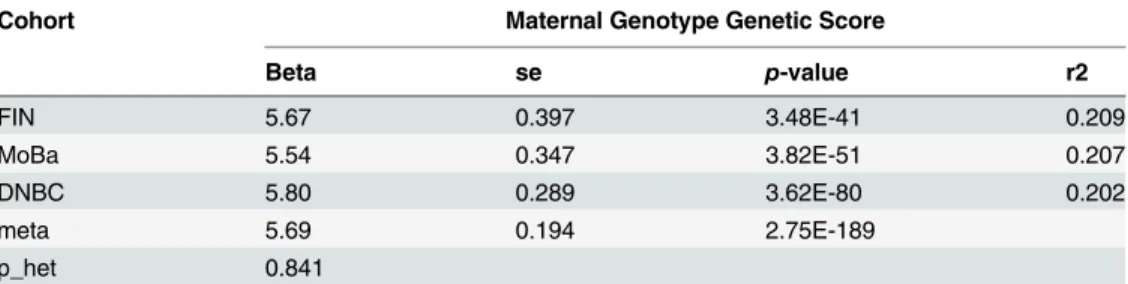
As expected, the maternal genetic score was significantly associated with maternal height
(metap= 2.75 × 10−189) and could explain a large fraction (~20%) of the observed variance in
maternal height in all of the three cohorts (Table 3). The transmitted haplotype score and the nontransmitted haplotype scores explained similar proportions of variance (~10%) (S3 Table). At single SNP level, the estimated effect sizes (on maternal height) of the height-associated
SNPs based on our studies were highly correlated with the reference study (Pearson’sρ= 0.41,
p<2 × 10⁻¹⁶).
Association between Maternal as well as Fetal Height Genetic Scores
and Pregnancy Outcomes
The maternal genetic score showed consistent significant associations with both birth length
(metap= 3.04 × 10⁻⁵) and birth weight (metap= 1.19 × 10⁻⁷) in the studied cohorts. The fetal
height genetic score was even more significantly associated with birth length (meta
p= 5.40 × 10⁻⁹) and birth weight (metap= 1.84 × 10⁻¹²), which indicated direct fetal genetic
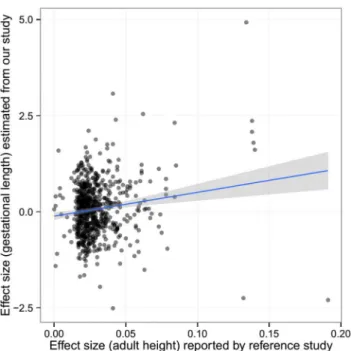
Fig 3. The estimated effect (in mothers) of the height-associated SNPs on gestational age was correlated with reported effect size on adult height.
doi:10.1371/journal.pmed.1001865.g003
Table 5. Association between haplotype genetic scores and pregnancy outcomes.
Haplotype Score* Birth Length Birth Weight Gestational Age
beta se p-value beta se p-value beta se p-value
M1 (C1) 0.534 0.136 8.08E-05 145 20.9 4.02E-12 0.587 1.12 0.601
M2 0.270 0.132 0.0405 17.1 20.4 0.404 2.204 1.09 0.0424
C2 0.557 0.129 1.61E-05 63.8 20.3 0.00165 0.203 1.08 0.851
influence of height-associated SNPs on fetal growth. After adjustment for fetal genetic score, the associations between maternal genetic score and birth length or birth weight were no longer
significant (Table 4andS4 Table).
Given the highly significant association between fetal genetic score based on adult height-associated SNPs with both birth length and birth weight, we further examined single SNP asso-ciations of these adult height-associated SNPs with both birth length and birth weight in the infants. As indicated by the quantile-quantile (Q-Q) plots (S1 Fig), there was a general inflation
of the association test statistics (λ= 1.137 and 1.175 for birth length and weight, respectively),
indicating that a substantial fraction of the height-associated SNPs were also associated with birth length or birth weight in fetus. There was also a marginally significant correlation between the estimated effect size of these SNPs on birth length and the reported effect size on
adult height (Pearson’sρ= 0.073,p= 0.055). However, the correlation of the estimated effect
size of these SNPs on birth weight and the reported effect size on adult height was not
signifi-cant (Pearson’sρ= 0.041,p= 0.283).
The pattern of associations for gestational age was different from those observed in birth length or birth weight. There was some evidence of association between maternal height
genetic score and gestational age overall (meta-analysisp= 0.077), preferably in the DNBC
cohort (p= 0.047). However, the fetal height genetic score was not significantly associated with
gestational age. After adjustment for fetal genetic score, the maternal height genetic score was
still marginally associated with gestational age (metap= 0.072). Further single marker
associa-tion (between maternal genotype and gestaassocia-tional age) analysis also showed some inflaassocia-tion of
association test statistics (λ= 1.054,S2 Fig) and a significant correlation between the estimated
effect size of these SNPs on gestational age and the reported effect size on adult height
Table 6. Pairwise correlation among genetic scores.
Score* M M1 M2 C C2
M
M1 (C1) 0.715 (0)
M2 0.734 (0) 0.051 (0.00128)
C 0.539 (8.63e-277) 0.704 (0) 0.086 (1.66e-07)
C2 0.067 (3.41e-05) 0.024 (0.0770) 0.073 (7.87e-06) 0.726 (0)
*M, maternal genotype score (M1 + M2); M1 (C1), maternal transmitted haplotype score; M2, maternal nontransmitted haplotype score; C, fetal genotype score (C1 + C2); C2, paternal transmitted haplotype score.
doi:10.1371/journal.pmed.1001865.t006
Table 7. Results of instrumental variable analysis.
Method* Birth Length Birth Weight Gestational Age
beta se p-value beta se p-value Beta se p-value
Method 1 0.0692 0.0161 1.64E-05 13.4 2.53 1.21E-07 0.280 0.135 0.0385
Method 2 0.0298 0.0214 0.164 5.70 3.30 0.0837 0.387 0.176 0.0276
Method 3 0.0501 0.0236 0.0336 2.47 3.70 0.504 0.440 0.194 0.0234
Method 4 0.0418 0.0257 0.104 0.486 3.96 0.170 0.475 0.209 0.0232
*Method 1 and method 2 use maternal genotype-based genetic score (M) as the instrument variable for maternal height without (method 1) or with (method 2) controlling for fetal genetic score (C). Method 3 utilizes maternal nontransmitted haplotype score (M2) as a valid instrument for maternal height. Method 4 uses maternal nontransmitted haplotype score (M2) as the instrument variable and further adjusts for possible bias due to assortative mating by controlling for maternal and paternal transmitted scores (M1/C1 and C2) as covariates.
(Pearson’sρ= 0.152,p= 5.58 × 10⁻⁵) (Fig 3), indicating the effect of these height-associated
SNPs on gestational age is projected through a common intermediate phenotype (i.e., height) rather than different biological (pleiotropic) mechanisms.
Association between Haplotype Height Genetic Scores and Pregnancy
Outcomes
Our parental haplotype genetic score analysis revealed significant associations of both maternal transmitted haplotype score and paternal transmitted haplotype score with birth length and
birth weight (Table 5andS5 Table). However, the associations between the maternal
nontrans-mitted haplotype scores with these two fetal growth traits were far less significant (meta
p= 0.0405 and 0.404 for birth length and birth weight, respectively). In addition, although both
were significantly associated with birth weight, the effect of maternally transmitted alleles was
significantly larger than paternally transmitted alleles (p= 0.0053). This difference of effect was
not observed for birth length. In contrast, the maternal nontransmitted haplotype score (M2), but not the parental transmitted score (C2), showed significant associations with gestational
age (metap= 0.0424), which suggests cross-generational effect of maternal height SNPs on
ges-tational age through an intermediate phenotype (maternal height) but not through genetic inheritance.
Although not a primary objective of this current study, we also examined the pairwise
corre-lations between the various genetic scores (Table 6andS6 Table). In addition to those highly
significant correlations due to genetic sharing between parents and their offspring, such as cor-relations between maternal and fetal genetic scores, we also observed significant positive corre-lations between the two maternal haplotype genetic scores (transmitted and nontransmitted scores) and between the paternally transmitted score and the maternal scores, which were most probably due to assortative mating based on height.
Instrumental Variable Analysis
To estimate the causal effect of maternal height on the pregnancy outcomes, we performed
instrumental variable analysis (Table 7andS7 Table). For comparison purposes, we tested
three different methods using either maternal genotype-based genetic score (method 1 and 2) or maternal nontransmitted haplotype score (method 3) as instrument variables. For birth length and birth weight, the causal inference based on method 1 (using maternal genotype-based genetic score without controlling for fetal genetic score) were highly significant. How-ever, the significance diminished after controlling for fetal genetic score (method 2) or when using maternal nontransmitted haplotype score as the genetic instrument (method 3). Consis-tent with our genetic score association analyses, these results again suggested that fetal genetic effect instead of causal effect of maternal height itself was the main driving force behind the observed associations between maternal height and fetal growth measures. Although the infer-ence based on the maternal nontransmitted haplotype score (method 3) indicated some
signifi-cant causal influence of maternal height on birth length (p= 0.0336). In contrast, all three
Discussion
Summary of Major Findings
While the extremes of birth size, particularly birth weight, and gestational age at birth are important global contributors to infant mortality, more modest deviations in these parameters have been repeatedly linked to risk for adult disorders such as type 2 diabetes mellitus,
hyper-tension, and cardiovascular disease [58–60]. Thus, understanding the determinants of fetal
growth and the duration of pregnancy are essential to improve both newborn and later-in-life health. Epidemiological evidence has suggested that these birth outcomes are shaped by intra-uterine environment, but the relative contribution of maternal genetic, fetal genetic, and non-genetic factors that may drive epinon-genetic physiological adaptations remains incompletely understood. Moreover, should fetal genetics shape these outcomes, their direct involvement in the risk for the adult diseases, as well, is an intriguing possibility. Recently, to better understand normal fetal growth in healthy pregnancy, a multinational longitudinal assessment has been reported [61]. These data demonstrate similar average growth profiles across geographic popu-lations but do not define the mechanisms for variability within a given population.
In this study, we observed the consistent associations between maternal height and birth length, birth weight, and gestational age in each of the three study cohorts. The estimated effect sizes of the observed associations were respectively ~0.05 cm/cm for birth length, ~10 g/cm for birth weight, and ~0.34 d/cm for gestational age per 1 cm change in maternal height, which are in the same range as previous reports for fetal growth [20] and gestational age [15]. We then disentangled causal relationships underlying these observational associations.
Based on an extensive list of height-associated SNPs (n= 697) reported by a recent large
GWA meta-analysis [40], we constructed a height genetic score as a powerful genetic instru-ment for maternal height. In our study samples, the genotype-based genetic score explained a substantial fraction (~20%) of variance in maternal height. This percentage was even larger than that (~16%) reported in the original study [40], which is likely due to the homogeneity of our samples (i.e., all females with northern European origin and a more restricted age distribu-tion). Our previous studies have shown that the height genetic score explained larger variance in females than males [62,63].
We observed significant associations of maternal height genetic score with birth length, with birth weight, and, to a lesser extent, with gestational age. As the genetic score captures the genetic variation in maternal height, these significant associations suggested either direct causal influence (Fig 1A) of maternal height or fetal genetic effect (Fig 1C) rather than confounding effects (Fig 1B), although the latter mechanism could not be excluded. It should be emphasized that maternal genetic score is not a valid instrument for maternal height, unless adjusted for fetal genotype; thus, it cannot be used to differentiate the causal effect of maternal height (Fig 1A) from fetal genetic effect (Fig 1C).
We further probed the causal impacts of maternal height using genetic instruments either based on maternal genetic score without or with adjustment for fetal genetic score (method 1 and 2) and maternal nontransmitted haplotype score (method 3). The results strongly sug-gested that the observed correlations between maternal height and birth length or birth weight were mainly due to fetal genetic effects but not due to nongenetic intrauterine effect (i.e., maternal height as an environmental factor that casually influences fetal growth). Multiple lines of evidence consistently supported this conclusion.
magnitudes of associations between paternal height with either birth length or birth weight were comparable to maternal height [20,21,64]. Genetic analyses of parent-offspring data [6,11] also suggested fetal genetics explain more variation in birth size.
Second, our haplotype-based genetic score analysis showed that both maternal transmitted genetic score and paternal transmitted genetic score were highly significantly associated with birth length and birth weight, but the nontransmitted score was not (particularly for birth weight), which again indicated that maternal height has relatively minimal effect on birth length or birth weight if not transmitted genetically. The nontransmitted score was marginally associated with birth length, which suggests some direct causal effect of maternal height on birth length, and the estimated causal effect size was similar to the observational effect (~0.05 cm change in birth length per 1 cm change in maternal height).
Thirdly, our single marker analysis indicated that those adult height-associated SNPs were excessively associated with birth length and birth weight in fetus, but the estimated effect sizes of these SNPs on birth length and birth weight were not well correlated with their effect on maternal height, which indicated direct but different functional effects of these SNPs on fetal growth rather than a common causal effect mediated through maternal height. The inference of the parental transmission in mother-child pairs also allows us to examine parent-of-origin effects of those height-associated SNPs on birth length and weight. Our results showed exces-sive differences between the maternal and paternal transmitted alleles. For birth weight, the effect sizes of the maternal transmitted alleles were generally larger than paternal transmitted ones.
We also performed the analysis using gestation-adjusted birthweight percentiles (converted to z-scores) as the outcome and obtained similar results (S8 Table). This evidence collectively suggests that birth weight and birth length are mainly defined by fetal genetics. Therefore, it is difficult to define abnormality of fetal growth in a general term (e.g., by deviation from popula-tion mean) without taking genetic variance into account. It should be noted that the samples of the current study were collected from high-resource northern European countries, with pre-sumably good nutrition throughout childhood, adolescence, and pregnancy, enabling the mothers and their infants to grow to their full genetic potential. This fact might account for why we observed a predominant influence of genetic factors on birth size in this study. The conclusion may not be directly transferrable to low- or middle-income countries, where
mal-nutrition may substantially constrain one’s growth and significantly change the association
between maternal height and fetal growth [24,25].
We also performed analysis using preterm status as a dichotomous outcome, and the results (S9 Table) indicated that shorter maternal height is a risk factor for preterm birth
(observa-tional associationp= 3.77 × 10⁻⁶, with an estimated 3% increase in risk if the mothers are 1 cm
shorter). This result was consistent with a recent epidemiology study [18]. Genetic score analy-sis also showed significant association between preterm birth risk and the nontransmitted
hap-lotype score (p= 0.0456), which suggests that maternal height causally influences preterm birth
risk.
We recognize that the association between maternal non-transmitted haplotype score and
gestational age was only modestly significant (metap= 0.0424), and it was mainly driven by
the DNBC cohort (p= 0.018) and was not significant in the other two cohorts. Also, gestational
age in the DNBC cohort was estimated by combining information from self-reported data and gestational age reported in birth registry, while it was estimated by ultrasound in the other two
cohorts. However, our meta-analysis did not reveal any sign of inconsistency—the confidence
intervals of the estimates from different cohorts overlap and thep-value for the heterogeneity
test was not significant. Nevertheless, the error-free validity of this association needs to be con-firmed by further replication studies in independent cohorts.
Using Parental Non-transmitted Haplotype Genetic Score in Causal
Inference
Inference of parental transmission and analysis of parental-specific haplotype genetic scores is an important advantage of our current study. We are unaware of any published studies using this approach to disentangle the causal relationships between a parental exposure and out-comes in offspring. The distinction between the transmitted versus the nontransmitted mater-nal alleles can differentiate whether the causal mechanism is a phenotypic one (Fig 1A) or a genetic one (Fig 1C). Using nontransmitted haplotype genetic score can prevent the confound-ing due to genetic sharconfound-ing between parents and offsprconfound-ing. Furthermore, the distinction between the maternal- and paternal-transmitted alleles can be used to study parent-of-origin effects, which are especially important in early-development phenotypes [65].
The maternal genotype-based genetic score (i.e., maternal height score) built on multiple associated SNPs, while capturing more variance in maternal height, is not a valid instrument (method 1) unless the genetic effect of those SNPs in offspring can be appropriately adjusted for. However, complete adjustment for the fetal genetic effect of multiple SNPs could be diffi-cult to achieve. We recognized that the weighted height genetic score in infants might not cor-rectly summarize the genetic effect of the height-associated SNPs on pregnancy outcomes, since the weights of the SNPs were based on their effect sizes on adult height. As indicated by our single SNP analyses, the estimated effect sizes of these SNPs on birth length and birth weight were poorly correlated with the reported effect sizes on adult height. Considering this fact, using maternal height genetic score as genetic instrument, even adjusted for offspring genotype by fetal genetic score (method 2), might be inappropriate and could lead to biased estimate in causal inference. In contrast, our approach that used the nontransmitted haplotype genetic score (method 3) did not suffer from this problem.
data are available. The second limitation might introduce bias in causal inference, since the nontransmitted haplotype genetic score could correlate with the transmitted one. Intuitively, the extent of the bias due to assortative mating should be proportional to the correlation between haplotype genetic scores and the correlation between the (maternal and paternal) transmitted haplotype genetic scores and the pregnancy outcome, and therefore, it would be small because the correlation due to assortative mating is generally low.
Biological pleiotropy is always a potential issue that could undermine the validity of Mende-lian randomization causal inference [38]. Complete exclusion of biological pleiotropy requires a strong assumption that the genetic instrument is associated with the outcome only through the intermediate phenotype but not through other biological mechanisms. Generally, it is not possible to prove this assumption [66], especially when a large number of genetic variants are used to construct the genetic instrument [43]. Some empirical evidences can help rule out
major violations of the“no pleiotropy”assumption. For example, multiple genetic variants
showing consistent results may support a common causal path through the intermediate phe-notype that the variants are associated with [66]. In this study, the significant correlation between the estimated effect size of the height-associated SNPs on gestational age and the reported effect size on adult height strongly suggested consistent causal inference across multi-ple SNPs.
From a study design perspective, there are number of limitations of our study. We tried to infer a mechanistic causal relationship between maternal height and several pregnancy out-comes. For this type of study, a random sample from target population is usually preferred. The three included studies were all case/control studies, in which the samples were enriched
for mother/child pairs with short gestational age (<37 wk). In addition, the case/control
sam-pling also broke down the normal distributions of the traits, with the distribution of the gesta-tional age broken down into two segments (one for controls and one for cases). Similarly, the distributions of birth length and birth weight have two modes. However, after adjustment for gestational age, birth weight and length followed normal distributions. Yet, there is no easy method to transform the two-segmented distribution of gestational age into normal. This prob-lem might undermine the validity of our analysis of gestational age, although regression analy-sis is robust to the normality assumption [67]. To investigate whether it could be a significant problem, we tested the association between the nontransmitted haplotype score and gestational age using a nonparametric method, and the results showed similar significant association
(metap= 0.0053). In addition, we performed the same analysis only in term mother/child
pairs (in which the gestational age followed a truncated distribution but did not significantly
deviate from normal) and obtained similar results (metap-v = 0.0270 for the association
between gestational age and the maternal nontransmitted haplotype score).
Conclusion
In summary, this study defines the causal relationship for the strong association of maternal height with fetal growth measures (i.e., birth length and birth weight) and gestational age at birth. The observed association between maternal height and fetal growth parameters is mainly defined by fetal genetics, and many of the adult height-associated SNPs also influence fetal growth. In contrast, the association between maternal height and gestational age more likely reflects the maternal height phenotype, and the resulting fetal growth environment it shapes, as being deterministic. In addition, our approach that utilizes the genetic score derived from the parental nontransmitted haplotype as a genetic instrument is a novel extension to the Mende-lian randomization methodology in casual inference between parental exposure and outcomes in offspring.
Supporting Information
S1 Fig. Q-Q plots showing excessive association between adult-height associated SNPs and birth length (A) and birth weight (B) in infants.
(PDF)
S2 Fig. Q-Q plot showing excessive association between adult-height associated SNPs and gestational length.
(PDF)
S1 Table. Descriptive statistics of maternal phenotypes. (PDF)
S2 Table. Descriptive statistics of pregnancy outcomes. (PDF)
S3 Table. Association between maternal genotype and haplotype genetic scores and mater-nal height.
(PDF)
S4 Table. Association between genotype height genetic scores and pregnancy outcomes. (PDF)
S5 Table. Association between haplotype genetic scores and pregnancy outcomes. (PDF)
S6 Table. Pairwise correlation (p-values) among genetic scores. (PDF)
S7 Table. Results of instrumental variable analysis. (PDF)
S8 Table. Statistical analyses using gestation-adjusted birth weight z-score as outcome. (PDF)
S9 Table. Statistical analyses using dichotomous preterm birth as outcome. (PDF)
Acknowledgments
The DNBC datasets used for the analyses described in this manuscript were obtained from
dbGaP athttp://www.ncbi.nlm.nih.gov/sites/entrez?db = gapthrough dbGaP accession
num-ber phs000103.v1.p1. The GWAS of Prematurity and its Complications study is one of the genome-wide association studies funded as part of the Gene Environment Association Studies (GENEVA) under the Genes, Environment and Health Initiative (GEI). Assistance with phe-notype harmonization and gephe-notype cleaning, as well as with general study coordination, was provided by the GENEVA Coordinating Center. Assistance with data cleaning was provided by the National Center for Biotechnology Information.
Author Contributions
Conceived and designed the experiments: GZ JB CL BJ LM. Performed the experiments: GZ JB CL BJ LM. Analyzed the data: GZ JB CL LM. Contributed reagents/materials/analysis tools: GZ JB KT MH PRN BJ LM. Wrote the first draft of the manuscript: GZ JB CL LM. Contributed to the writing of the manuscript: GZ JB CL KT MH ØH SJ RM VS PRN BJ LM. Enrolled patients:
KT MH BJ PRN. Agree with the manuscript’s results and conclusions: GZ JB CL KT MH ØH
SJ RM VS PRN BJ LM. All authors have read, and confirm that they meet, ICMJE criteria for authorship.
References
1. Parsons TJ, Power C, Logan S, Summerbell CD. Childhood predictors of adult obesity: a systematic review. International journal of obesity and related metabolic disorders: journal of the International Association for the Study of Obesity. 1999; 23 Suppl 8:S1–107.
2. Whincup PH, Kaye SJ, Owen CG, Huxley R, Cook DG, Anazawa S, et al. Birth weight and risk of type 2 diabetes: a systematic review. Jama. 2008; 300(24):2886–97. doi:10.1001/jama.2008.886PMID: 19109117
3. Barker DJ, Eriksson JG, Forsen T, Osmond C. Fetal origins of adult disease: strength of effects and bio-logical basis. International journal of epidemiology. 2002; 31(6):1235–9. PMID:12540728
4. Loret de Mola C, Araujo de Franca GV, Quevedo LD, Horta BL. Low birth weight, preterm birth and small for gestational age association with adult depression: systematic review and meta-analysis. The British journal of psychiatry: the journal of mental science. 2014; 205(5):340–7.
5. Yaghootkar H, Freathy RM. Genetic origins of low birth weight. Current opinion in clinical nutrition and metabolic care. 2012; 15(3):258–64. doi:10.1097/MCO.0b013e328351f543PMID:22406741 6. Lunde A, Melve KK, Gjessing HK, Skjaerven R, Irgens LM. Genetic and environmental influences on
birth weight, birth length, head circumference, and gestational age by use of population-based parent-offspring data. American journal of epidemiology. 2007; 165(7):734–41. PMID:17311798
7. Dougherty CR, Jones AD. The determinants of birth weight. American journal of obstetrics and gynecol-ogy. 1982; 144(2):190–200. PMID:7114129
8. Strauss RS. Effects of the intrauterine environment on childhood growth. British medical bulletin. 1997; 53(1):81–95. PMID:9158286
9. Rondo PH, Ferreira RF, Nogueira F, Ribeiro MC, Lobert H, Artes R. Maternal psychological stress and distress as predictors of low birth weight, prematurity and intrauterine growth retardation. European journal of clinical nutrition. 2003; 57(2):266–72. doi:10.1038/sj.ejcn.1601526PMID:12571658 10. Clausson B, Lichtenstein P, Cnattingius S. Genetic influence on birthweight and gestational length
determined by studies in offspring of twins. BJOG: an international journal of obstetrics and gynaecol-ogy. 2000; 107(3):375–81.
11. Magnus P, Berg K, Bjerkedal T, Nance WE. Parental determinants of birth weight. Clinical genetics. 1984; 26(5):397–405. PMID:6499253
12. Addo OY, Stein AD, Fall CH, Gigante DP, Guntupalli AM, Horta BL, et al. Maternal height and child growth patterns. The Journal of pediatrics. 2013; 163(2):549–54. doi:10.1016/j.jpeds.2013.02.002 PMID:23477997
14. Han Z, Lutsiv O, Mulla S, McDonald SD. Maternal height and the risk of preterm birth and low birth weight: a systematic review and meta-analyses. Journal of obstetrics and gynaecology Canada: JOGC = Journal d'obstetrique et gynecologie du Canada: JOGC. 2012; 34(8):721–46. PMID:22947405 15. Myklestad K, Vatten LJ, Magnussen EB, Salvesen KA, Romundstad PR. Do parental heights influence
pregnancy length?: A population-based prospective study, HUNT 2. BMC pregnancy and childbirth. 2013; 13:33. doi:10.1186/1471-2393-13-33PMID:23383756
16. Zhang X, Mumford SL, Cnattingius S, Schisterman EF, Kramer MS. Reduced birthweight in short or pri-miparous mothers: physiological or pathological? BJOG: an international journal of obstetrics and gynaecology. 2010; 117(10):1248–54.
17. Chan BC, Lao TT. Maternal height and length of gestation: does this impact on preterm labour in Asian women? The Australian & New Zealand journal of obstetrics & gynaecology. 2009; 49(4):388–92. 18. Morken NH, Kallen K, Jacobsson B. Predicting risk of spontaneous preterm delivery in women with a
singleton pregnancy. Paediatric and perinatal epidemiology. 2014; 28(1):11–22. doi:10.1111/ppe. 12087PMID:24118026
19. Hindmarsh PC, Geary MP, Rodeck CH, Kingdom JC, Cole TJ. Factors predicting ante- and postnatal growth. Pediatric research. 2008; 63(1):99–102. PMID:18043501
20. Knight B, Shields BM, Turner M, Powell RJ, Yajnik CS, Hattersley AT. Evidence of genetic regulation of fetal longitudinal growth. Early human development. 2005; 81(10):823–31. PMID:16085375
21. Nahum GG, Stanislaw H. Relationship of paternal factors to birth weight. The Journal of reproductive medicine. 2003; 48(12):963–8. PMID:14738024
22. To WW, Cheung W, Kwok JS. Paternal height and weight as determinants of birth weight in a Chinese population. American journal of perinatology. 1998; 15(9):545–8. PMID:9890253
23. Zhang X, Cnattingius S, Platt RW, Joseph KS, Kramer MS. Are babies born to short, primiparous, or thin mothers "normally" or "abnormally" small? The Journal of pediatrics. 2007; 150(6):603–7, 7 e1-3. PMID:17517243
24. Subramanian SV, Ackerson LK, Davey Smith G, John NA. Association of maternal height with child mortality, anthropometric failure, and anemia in India. Jama. 2009; 301(16):1691–701. doi:10.1001/ jama.2009.548PMID:19383960
25. Ozaltin E, Hill K, Subramanian SV. Association of maternal stature with offspring mortality, under-weight, and stunting in low- to middle-income countries. Jama. 2010; 303(15):1507–16. doi:10.1001/ jama.2010.450PMID:20407060
26. Smith GD. Assessing intrauterine influences on offspring health outcomes: can epidemiological studies yield robust findings? Basic & clinical pharmacology & toxicology. 2008; 102(2):245–56.
27. Paternoster L, Howe LD, Tilling K, Weedon MN, Freathy RM, Frayling TM, et al. Adult height variants affect birth length and growth rate in children. Human molecular genetics. 2011; 20(20):4069–75. doi: 10.1093/hmg/ddr309PMID:21757498
28. Wilcox MA, Newton CS, Johnson IR. Paternal influences on birthweight. Acta obstetricia et gynecolo-gica Scandinavica. 1995; 74(1):15–8. PMID:7856427
29. Brooks AA, Johnson MR, Steer PJ, Pawson ME, Abdalla HI. Birth weight: nature or nurture? Early human development. 1995; 42(1):29–35. PMID:7671843
30. Spencer NJ, Logan S. The treatment of parental height as a biological factor in studies of birth weight and childhood growth. Archives of disease in childhood. 2002; 87(3):184–7. PMID:12193422 31. Lawlor DA, Smith GD, O'Callaghan M, Alati R, Mamun AA, Williams GM, et al. Epidemiologic evidence
for the fetal overnutrition hypothesis: findings from the mater-university study of pregnancy and its out-comes. American journal of epidemiology. 2007; 165(4):418–24. PMID:17158475
32. Smith GD, Steer C, Leary S, Ness A. Is there an intrauterine influence on obesity? Evidence from par-ent child associations in the Avon Longitudinal Study of Parpar-ents and Children (ALSPAC). Archives of disease in childhood. 2007; 92(10):876–80. PMID:17595200
33. Eaves LJ, Pourcain BS, Smith GD, York TP, Evans DM. Resolving the effects of maternal and offspring genotype on dyadic outcomes in genome wide complex trait analysis ("M-GCTA"). Behav Genet. 2014; 44(5):445–55. doi:10.1007/s10519-014-9666-6PMID:25060210
34. Smith GD, Hemani G. Mendelian randomization: genetic anchors for causal inference in epidemiologi-cal studies. Human molecular genetics. 2014; 23(R1):R89–98. doi:10.1093/hmg/ddu328PMID: 25064373
36. Smith GD, Leary S, Ness A, Lawlor DA. Challenges and novel approaches in the epidemiological study of early life influences on later disease. Advances in experimental medicine and biology. 2009; 646:1– 14. doi:10.1007/978-1-4020-9173-5_1PMID:19536658
37. Didelez V, Sheehan N. Mendelian randomization as an instrumental variable approach to causal infer-ence. Statistical methods in medical research. 2007; 16(4):309–30. PMID:17715159
38. Solovieff N, Cotsapas C, Lee PH, Purcell SM, Smoller JW. Pleiotropy in complex traits: challenges and strategies. Nature reviews Genetics. 2013; 14(7):483–95. doi:10.1038/nrg3461PMID:23752797 39. Pierce BL, Ahsan H, Vanderweele TJ. Power and instrument strength requirements for Mendelian
ran-domization studies using multiple genetic variants. International journal of epidemiology. 2011; 40 (3):740–52. doi:10.1093/ije/dyq151PMID:20813862
40. Wood AR, Esko T, Yang J, Vedantam S, Pers TH, Gustafsson S, et al. Defining the role of common var-iation in the genomic and biological architecture of adult human height. Nature genetics. 2014; 46 (11):1173–86. doi:10.1038/ng.3097PMID:25282103
41. Lango Allen H, Estrada K, Lettre G, Berndt SI, Weedon MN, Rivadeneira F, et al. Hundreds of variants clustered in genomic loci and biological pathways affect human height. Nature. 2010; 467(7317):832– 8. doi:10.1038/nature09410PMID:20881960
42. Freeman G, Cowling BJ, Schooling CM. Power and sample size calculations for Mendelian randomiza-tion studies using one genetic instrument. Internarandomiza-tional journal of epidemiology. 2013; 42(4):1157–63. doi:10.1093/ije/dyt110PMID:23934314
43. Evans DM, Brion MJ, Paternoster L, Kemp JP, McMahon G, Munafo M, et al. Mining the human phe-nome using allelic scores that index biological intermediates. PLoS genetics. 2013; 9(10):e1003919. doi:10.1371/journal.pgen.1003919PMID:24204319
44. Palmer TM, Lawlor DA, Harbord RM, Sheehan NA, Tobias JH, Timpson NJ, et al. Using multiple genetic variants as instrumental variables for modifiable risk factors. Statistical methods in medical research. 2012; 21(3):223–42. doi:10.1177/0962280210394459PMID:21216802
45. Burgess S, Thompson SG. Use of allele scores as instrumental variables for Mendelian randomization. International journal of epidemiology. 2013; 42(4):1134–44. doi:10.1093/ije/dyt093PMID:24062299 46. Lawlor DA, Timpson NJ, Harbord RM, Leary S, Ness A, McCarthy MI, et al. Exploring the
developmen-tal overnutrition hypothesis using parendevelopmen-tal-offspring associations and FTO as an instrumendevelopmen-tal variable. PLoS medicine. 2008; 5(3):e33. doi:10.1371/journal.pmed.0050033PMID:18336062
47. Plunkett J, Doniger S, Orabona G, Morgan T, Haataja R, Hallman M, et al. An evolutionary genomic approach to identify genes involved in human birth timing. PLoS genetics. 2011; 7(4):e1001365. doi: 10.1371/journal.pgen.1001365PMID:21533219
48. Myking S, Boyd HA, Myhre R, Feenstra B, Jugessur A, Devold Pay AS, et al. X-chromosomal maternal and fetal SNPs and the risk of spontaneous preterm delivery in a Danish/Norwegian genome-wide association study. PLoS One. 2013; 8(4):e61781. doi:10.1371/journal.pone.0061781PMID:23613933 49. Olsen J, Melbye M, Olsen SF, Sorensen TI, Aaby P, Andersen AM, et al. The Danish National Birth
Cohort—its background, structure and aim. Scandinavian journal of public health. 2001; 29(4):300–7. PMID:11775787
50. Carvalho B, Bengtsson H, Speed TP, Irizarry RA. Exploration, normalization, and genotype calls of high-density oligonucleotide SNP array data. Biostatistics. 2007; 8(2):485–99. PMID:17189563 51. Scharpf RB, Irizarry RA, Ritchie ME, Carvalho B, Ruczinski I. Using the R Package crlmm for
Genotyp-ing and Copy Number Estimation. Journal of statistical software. 2011; 40(12):1–32. PMID:22523482 52. Genomes Project C, Abecasis GR, Auton A, Brooks LD, DePristo MA, Durbin RM, et al. An integrated map of genetic variation from 1,092 human genomes. Nature. 2012; 491(7422):56–65. doi:10.1038/ nature11632PMID:23128226
53. Delaneau O, Marchini J, Zagury JF. A linear complexity phasing method for thousands of genomes. Nature methods. 2012; 9(2):179–81.
54. Fuchsberger C, Abecasis GR, Hinds DA. minimac2: faster genotype imputation. Bioinformatics. 2015; 31(5):782–4. doi:10.1093/bioinformatics/btu704PMID:25338720
55. Howie BN, Donnelly P, Marchini J. A flexible and accurate genotype imputation method for the next generation of genome-wide association studies. PLoS genetics. 2009; 5(6):e1000529. doi:10.1371/ journal.pgen.1000529PMID:19543373
57. Palmer TM, Sterne JA, Harbord RM, Lawlor DA, Sheehan NA, Meng S, et al. Instrumental variable esti-mation of causal risk ratios and causal odds ratios in Mendelian randomization analyses. American journal of epidemiology. 2011; 173(12):1392–403. doi:10.1093/aje/kwr026PMID:21555716 58. Barker DJ. The origins of the developmental origins theory. J Intern Med. 2007; 261(5):412–7. PMID:
17444880
59. Jarvelin MR, Sovio U, King V, Lauren L, Xu B, McCarthy MI, et al. Early life factors and blood pressure at age 31 years in the 1966 northern Finland birth cohort. Hypertension. 2004; 44(6):838–46. PMID: 15520301
60. Sipola-Leppanen M, Vaarasmaki M, Tikanmaki M, Matinolli HM, Miettola S, Hovi P, et al. Cardiometa-bolic risk factors in young adults who were born preterm. American journal of epidemiology. 2015; 181 (11):861–73. doi:10.1093/aje/kwu443PMID:25947956
61. Villar J, Papageorghiou AT, Pang R, Ohuma EO, Cheikh Ismail L, Barros FC, et al. The likeness of fetal growth and newborn size across non-isolated populations in the INTERGROWTH-21st Project: the Fetal Growth Longitudinal Study and Newborn Cross-Sectional Study. Lancet Diabetes Endocrinol. 2014; 2(10):781–92. doi:10.1016/S2213-8587(14)70121-4PMID:25009082
62. Zhang G, Karns R, Sun G, Indugula SR, Cheng H, Havas-Augustin D, et al. Finding missing heritability in less significant Loci and allelic heterogeneity: genetic variation in human height. PLoS One. 2012; 7 (12):e51211. doi:10.1371/journal.pone.0051211PMID:23251454
63. Zhang G, Karns R, Sun G, Indugula SR, Cheng H, Havas-Augustin D, et al. Extent of height variability explained by known height-associated genetic variants in an isolated population of the Adriatic coast of Croatia. PLoS One. 2011; 6(12):e29475. doi:10.1371/journal.pone.0029475PMID:22216288 64. Griffiths LJ, Dezateux C, Cole TJ. Differential parental weight and height contributions to offspring
birth-weight and birth-weight gain in infancy. International journal of epidemiology. 2007; 36(1):104–7. PMID: 16984935
65. Lawson HA, Cheverud JM, Wolf JB. Genomic imprinting and parent-of-origin effects on complex traits. Nature reviews Genetics. 2013; 14(9):609–17. doi:10.1038/nrg3543PMID:23917626
66. Glymour MM, Tchetgen Tchetgen EJ, Robins JM. Credible Mendelian randomization studies: approaches for evaluating the instrumental variable assumptions. American journal of epidemiology. 2012; 175(4):332–9. doi:10.1093/aje/kwr323PMID:22247045
Editors' Summary
Background
Soon after the birth of a baby, doting parents send messages to friends and relatives or post information on social media sites to let everyone know when their new baby boy or girl was born. They may also post information about how heavy he/she was at birth and his/her length. These pregnancy outcomes, together with gestational age at birth (the
length of time that a baby has spent developing in its mother’s womb), affect the baby’s
immediate health and survival. Importantly, however, these pregnancy outcomes are also associated with the risk of long-term adverse health outcomes such as obesity, cardiometa-bolic disorders (heart disease and conditions such as diabetes that affect how the body makes energy from food), and neuropsychiatric conditions (mental disorders attributable to diseases of the nervous system, such as depression). For example, some studies have shown an association between low birth weight and an increased risk of type 2 diabetes later in life.
Why Was This Study Done?
Identification of the environmental and genetic factors that causally influence gestational age, length, and weight at birth would improve our understanding of why these pregnancy outcomes are associated with disease during adulthood and could help in the design of strategies to prevent these diseases. Epidemiological studies (investigations that examine disease patterns in populations) suggest that, compared to tall mothers, short mothers tend to deliver their babies at earlier gestational ages, with lower birth weights and lengths. Epidemiological studies cannot show, however, whether variations in maternal height cause variations in pregnancy outcomes. Other characteristics shared by tall mothers might actually determine the size and gestational age of their offspring (confounding).
Here, the researchers use“Mendelian randomization”to assess the causal effect of
mater-nal height on the size and gestatiomater-nal age at birth of babies. Because gene variants are inherited randomly, they are not prone to confounding. So, if maternal height actually affects gestational age and size at birth, genetic variants (instruments) that affect maternal height should be associated with differences in gestational age and size at birth, provided confounding due to the transmission of parental alleles (variant forms of genes; people have two alleles of every gene, one inherited from each parent) is avoided by adjusting for
the baby’s genotype.
What Did the Researchers Do and Find?
variations that are inherited together). Birth length and weight were significantly associ-ated with both the maternal and paternal transmitted haplotype scores but not with the maternal nontransmitted haplotype score. However, gestational age was significantly but modestly associated with the maternal nontransmitted haplotype score.
What Do These Findings Mean?
The validity of the assumptions that underlie the Mendelian randomization approach and the design of the studies supplying the data for this analysis may affect the accuracy of the findings reported here. Nevertheless, these findings suggest that the observed association between maternal height and fetal growth measurements is mainly determined by the genetics of the baby. That is, differences in maternal height do not cause differences in birth weight or length. Rather, some of the gene variants that the baby inherits from its
mother determine both its size and its mother’s height. These findings also provide weak
evidence that the association between maternal height and gestational age is causal. Mater-nal height might, for example, causally influence gestatioMater-nal age by limiting the space
available for the baby’s growth before birth. Finally, these findings introduce an extension
to the Mendelian randomization approach that can be used to investigate causal associa-tions between parental characteristics and offspring outcomes.
Additional Information
This list of resources contains links that can be accessed when viewing the PDF on a device
or via the online version of the article athttp://dx.doi.org/10.1371/journal.pmed.1001865.
• The March of Dimes, a not-for-profit organization for pregnancy and baby health,
pro-vides information aboutlow birth weight and its consequences
• Nemours, a not-for-profit organization for child health, provides information about the
weight of newborn babies(in English and Spanish)
• Wikipedia has pages onbirth weight,gestational age, andMendelian randomization
(note: Wikipedia is a free online encyclopedia that anyone can edit; available in several languages)
• MedlinePlus provides information and links to additional resources aboutbirth weight