Antirretroviral therapy efect in the intima-medio complex
and ankle-brachial index in patients infected by HIV
Efeito da terapia antirretroviral e dos níveis de carga viral no complexo médio-intimal e no
índice tornozelo-braço em pacientes infectados pelo HIV
Emmanuelle Tenório Albuquerque Madruga Godoi1, Carlos Teixeira Brandt2, Jocelene Tenório Albuquerque Madruga Godoi3,
Heloísa Ramos Lacerda4, Valéria Maria Gonçalves de Albuquerque5, Joseina Cláudia Zirpoli6, Juannicelle Tenório Albuquerque Madruga Godoi7, Camila Sarteschi8
Abstract
Objectives: To precociously identify the prevalence of atherosclerosis caused by thickening of the intima-media complex of the common carotid arteries and of the ankle brachial index. hese measurements were associated with the classical risk factors of atherosclerosis and the speciic factors of those infected by HIV (duration of disease, length of treatment, kind of treatment, kind of antiretroviral therapy used, CD4 and viral load).
Methods: Seventy cases infected by HIV were assessed by automatic measurement of the intima-media complex in the carotids and of the ankle brachial index. he classical risk factors of atherosclerosis (age, gender, systemic arterial hypertension, smoking, hypercholesterolemia, hypertriglyceridemia, obesity, and family history of cardiovascular events), anthropometric measurements and the variables related to HIV were taken into consideration. he adopted level of signiicance was 5%.
Results: he mean time of HIV diagnosis was 104.9 months, mean duration of treatment was 97.9 months. As regard to the type of treatment, 47 (67.1%) used protease inhibitor for more than six months and 36 (51.4%) are using it recently. he ankle brachial index was increased in one patient (0.7%), and the media complex was not thickened in any individual. here was no signiicant association of the measurement of the intima-media complex of the right common carotid with any of the variables analyzed.
Conclusions: Young individuals under the use of antiretroviral therapy for ive years or more did not show increase in thickness of the intima-media complex or increase in the ankle brachial index, and there was no diference in the intima-media complex thickness associated with the therapeutical scheme of antiretroviral used or the viral load level.
Keywords: atherosclerosis; ankle brachial index; anti-retroviral agent.
Resumo
Objetivos: Identiicar precocemente a prevalência de aterosclerose, por causa do espessamento do complexo médio-intimal das carótidas comuns e do índice tornozelo-braço. Essas medidas foram relacionadas com os fatores de risco clássicos de aterosclerose e os especíicos dos infectados pelo HIV (tempo de doença, tempo de tratamento, tipo de tratamento, tipo de terapia antirretroviral utilizada, CD4 e carga viral).
Métodos: Setenta casos infectados com o HIV foram avaliados pela medida automática do complexo médio-intimal nas carótidas e do índice tornozelo-braço. Consideraram-se os fatores de risco clássicos de aterosclerose (idade, sexo, hipertensão arterial sistêmica, tabagismo, hipercolesterolemia, hipertrigliceridemia, obesidade e história familiar de evento cardiovascular), as medidas antropométricas e as variáveis relacionadas ao HIV. O nível de signiicância assumido foi de 5%.
Resultados: O tempo médio de diagnóstico do HIV foi de 104,9 meses e de tratamento foi de 97,9 meses. Quanto ao tipo de tratamento, 47 (67,1%) izeram uso de inibidor de protease por mais de seis meses e 36 (51,4%) estão em uso atualmente. O índice tornozelo-braço estava aumentado em
Study carried out at the Program of Prevention, Control and Treatment of AIDS at Hospital das Clínicas of Universidade Federal de Pernambuco (UFPE) – Recife (PE), Brazil.
1 Doctoral student of Surgery at the Center of Health Sciences (CCS) at UFPE – Recife (PE), Brazil; Specialist in Angiologist by the Brazilian Society of Angiology and Vascular Surgery; Specialist
in USG Doppler by Colégio Brasileiro de Radiologia and by Université Paul Sabatier – Toulouse – France.
2 Full Professor of Pediatric Surgery at the Department of Surgery at CCS-UFPE – Recife (PE), Brazil. 3 Associate Professor of the Department of Clinical Medicine at CCS-UFPE – Recife (PE), Brazil. 4 Adjunct Professor of the Department of Clinical Medicine at CCS-UFPE – Recife (PE), Brazil.
5 Assistant Professor at Universidade de Pernambuco(UPE); Doctoral student at the Tropical Medicine Postgraduation Program at UFPE – Recife (PE), Brazil. 6 Cardiologist; Specialist in Epidemiology by Fundação Oswaldo Cruz (Fiocruz); Doctoral student at the Tropical Medicine Program – Recife (PE), Brazil. 7 Graduate at the Medical course at UFPE – Recife (PE), Brazil.
8 Statistics Professional; Specialist in Epidemiology at the School of Public Health of Universidade de São Paulo (FSP-USP) – São Paulo (SP), Brazil.
Finacial support: none.
Introduction
Individuals infected by the human immunodeiciency virus (HIV) have a diferent life condition than non-infected individuals, regarding morbidity and mortality due to early atherosclerosis and associated cardiovascular events1-4.
Atherosclerosis is one of the major causes of morbidi-ty and mortalimorbidi-ty in the world. Its efect on lowering expec-tancy is especially caused by acute myocardial infarction (AMI) and stroke5,6.
Ultrasonography allows the identiication of changes in the arterial wall , as well as the the evaluation of athe-rosclerotic disease progression and response to treatment7. Changes in the arterial wall are insidious and precede clini-cal events, which are a consequence of advanced atheroscle-rotic disease. Early arterial changes can be seen at B-mode ultrasonography by the evaluation and measurement of the intima-media complex (IMC)8,9. It has been used in epide-miological and cardiac risk stratiication studies as a subcli-nical marker of atherosclerosis. It may work as an impor-tant predictor of morbid events, and the main advantage of this method is its reproducibility 7,10,11.
he potent antiretroviral therapy (ARVT) improved the quality and increased life expectancy of patients infec-ted by HIV12-15. However, this therapy has been associated with a variety of proatherogenic adverse efects, with con-sequences that can be fatal3,16-19. he increased mortality due to cardiovascular events in young patients with HIV, who many times do not presented the classic risk factors for atherosclerosis, is a concern and object of recent studies1-3,20. he genesis of atherosclerosis in these individuals is not completely clear. Some authors suggest that the medication class, called protease inhibitors (PI), can be associated with early atherosclerosis and cardiovascular events4,21,22. he actual role of ARVT and HIV in the increased risk of car-diovascular disease is not clear. Possible triggering factors are: the proinlammatory state determined by the viral in-fection; the direct or metabolic-mediated efects triggered by antiretroviral agents (ARVA), especially PIs; the immu-nodeiciency state, or even the association of these factors.
Among the ARVA, PIs are more commonly associated with dyslipidemia and insulin resistance, even though me-dication from other classes – such as nucleoside/nucleotide reverse transcriptase inhibitors (NRTI) and non-nucleosi-de/nucleotide reverse transcriptase inhibitors (NNRTI) – can be involved in metabolic disorders and acute coronary events. PIs, and, less importantly, NRTI, seem to be invol-ved in the direct metabolic efects, and indirectly involinvol-ved in lipodystrophy21-25.
he IMC can be used as a predictor of atherosclerotic disease in coronary arteries, regardless of the classic risk factors: age, gender, arterial hypertension (AH), dyslipide-mia, diabetes and family history of coronary artery disease (CAD)8,26-28. he IMC measurement has also been perfor-med with patients with HIV/AIDS as an early marker to investigate risk factors for atherosclerosis, thus attempting to evaluate speciic factors that are related to the infection and to therapy29-32.
he ankle-brachial index (ABI) is a non-invasive me-thod with high predictive value for peripheral arterial dise-ase, and it is signiicantly associated with the risk of cardio-vascular mortality; its cost is low, and it has been validated in the general population15,33. Reduction of ABI to values lower than 0.9 is associated with the signiicant increase in cardiovascular risk, especially by AMI and stroke, indepen-dently of other risk factors34,35. Increase in the ABI (≥1.3) is mostly due to changes in arterial compliance rather than stenosis, which would be responsible for decreasing the ABI. he prevalence of high ABI in patients with HIV can be mediated by changes in vascular wall elasticity, as well as by the formation of atheromatous plaques15.
Considering that the early detection of atherosclerosis in individuals with HIV/AIDS would allow early treatment of patients who had a higher risk of developing cardiovas-cular events, the current study had the objective of deter-mining early prevalence and the analysis of atherosclerosis, by measuring the thickening of the common carotid IMC and the ABI. hese measurements were then related to the classic atherosclerosis risk factors and to speciic factors of those infected by HIV (time of disease, time of treatment,
da medida do complexo médio-intimal da carótida comum direita com nenhuma das variáveis analisadas.
Conclusões: Indivíduos jovens, sob o uso de terapia antirretroviral por cinco anos ou mais, não apresentaram espessamento do complexo médio-intimal ou aumento do índice tornozelo-braço. Não houve diferença do espessamento do complexo médio-médio-intimal associada ao tipo de esquema antirretroviral utilizado ou nível de carga viral.
type of antiretroviral treatment and type of antiretroviral therapy used).
Methods
his is a prospective, observational, analytical, cross-sectional and comparative study. Seventy adult sub-jects, enrolled in the Program of Prevention, Control and Treatment of AIDS at the Hospital das Clínicas of
Universidade Federal de Pernambuco (UFPE), were
con-secutively selected at a routine visit to the clinic. he sub-jects were up to 50 years old. Data were collected from August to October 2009. he subjects had been on ARVT for at least ive years and had no history of diabetes or cardiovascular diseases – angina pectoris, AMI, stroke or peripheral arterial disease (PAD), nor had been admitted to the hospital in the past two months.
All patients signed the informed consent form. he pro-ject was approved by the UFPE Research Ethics Committee. he data collection protocol consisted of a clinical questio-nnaire. Ultrasonography and the ABI measurement were performed by a researcher “blinded” to the clinical infor-mation of patients.
Participants of this study were questioned as to classic risk factors for atherosclerosis: AH, smoking, hypercholes-terolemia, hypertriglyceridemia, and family history of cdiovascular events – AMI, angina, stroke and peripheral ar-terial disease (PAD). For the evaluation of obesity, the body mass index (BMI) and abdominal circumference (AC) were measured36,37.
Ultrasound evaluation of the carotid IMC was per-formed on the B-mode of the compact Vivid i equipment (General Electric®), with a linear probe (4–10 mHz). he common carotid artery was evaluated just proximal to its bifurcation, and the internal carotid in its irst 2 cm. he exams were bilateral. IMC was measured in a plaque-free site at the posterior wall of the carotids and deined as the distance between the two echogenic lines represented by the lumen-intima interface and the media-adventitia of the arterial wall. IMC automatic measurement was per-formed in the right and let common carotid arteries with a sotware that determines the average, maximum and mi-nimum measurements (Figure 1). In the same site, three manual measurements were taken, which allowed calcu-lating the arithmetic mean of the manual measurement of the right and let common carotid arteries, as well as the maximum and minimum measurements (Figure 2). he internal right and let carotid arteries were manually me-asured. he mean of the automatic measurement of the
right common carotid (RCC) was deined as the gold stan-dard8,38. Since the studied population was aged up to 50 years, IMG was considered thickened when it measured >0.8 mm39. he presence of a plaque was deined when the IMC thickness was >1.5 mm8,40.
ABI was calculated after measuring the arterial blood pressure in the right and left ankles, which was performed under ulsonographic viewing of the arteries. To measure the blood pressure in the upper (UL) and lower limbs (LL), a Becton Dickinson® sphygmomano-meter and a compact color Doppler of GE, Vivid i model were used. Segmental evaluation of the posterior tibial and dorsalis pedis arteries was performed with Doppler ultrasonography, and all patients presented triphasic arterial flow. Systolic blood pressure was measured in the posterior tibial arteries at the ankle. ABI was calcula-ted by dividing the ankle systolic pressure by the higher brachial systolic pressure. ABI value from 0.9 to 1.3 was considered normal; >1.3, incompressible arteries; and <0.9, the presence of PAD34,35.
In order to assess the reproducibility of the method, the IMC of the carotid arteries of 20 patients was measured by two independent observers.
Definition of the variables related to HIV
he highest and most current VL were considered, being quantitatively analyzed and divided into four groups: undetectable (lower than 50 copies/mL); low (lower than 10,000 copies/mL); moderate (from 10,000 and 100,000 co-pies/mL) and high (>100,000 coco-pies/mL).
As to CD4 (lymphocyte count), we considered the lo-west count throughout the life of the patient and the current count, which was quantitatively analyzed and classiied into risk categories: low risk (more than 500 cells/mm3); mode-rate risk(from 200 to 500 cells/mm3); and severe risk (less than 200 cells/mm3).
Statistical analysis
he qualitative variables were shown by the distri-bution of frequencies, and the quantitative ones were analyzed as means, medians, standard deviation, mini-mum and maximini-mum.
Pearson’s correlation coefficient was used in order to compare IMC values in the RCC automatic mean with the quantitative variables. Student’s t test and the analysis of variance (ANOVA) were used for qualitative analysis.
he deined signiicance level was 5%. Statistics was performed with the SPSS sotware for Windows, version 12.0 – Statistical Package for the Social Science.
Sample characteristics
he sample was comprised of 70 individuals with AIDS. Table 1 presents the sample proile for biological and socioeconomic variables. he population consisted mostly of males (60%), and mean age was 40.5 years; all of them had been diagnosed and treated with ARV for at least ive years. Mean time from HIV diagnosis was 104.9 months (ranging from 60 to 228), being 25 (35.7%) with 60 to 84 months and 9 (12.9%) with more than 132 months. Mean duration of HIV treatment was 97.9 months (ranging from 60 to 180 months). Concerning the type of treatment, 49 (70.0%) used or were currently using ARV with the PI class; 47 patients (67.1%) used it for more than six months, and 36 (51.4%) were currently using PI.
The individuals in the study were questioned and evaluated as to classic risk factors for atherosclerosis: SAH, smoking, obesity, hypercholesterolemia, hyper-triglyceridemia and family history of cardiovascular events: AMI, angina, stroke or POAD (Table 1). In the evaluation of cardiovascular history, 29 (41.4%) had fa-mily history.
Results
ABI was increased in both lower limbs in one patient (0.7%). Mean ABI was 1.082 (SD=0.089) in the right lower limb (RLL) and 1.080 (SD=0.082) in the let lower limb (LLL)
he IMC was not thickened in any analyzed patient, with mean of 0.51 mm (SD=0.08) on the RCC and 0.52 mm (SD=0.09) on the LCC.
Table 2 presents the distribution of frequencies of the clinical characteristics of the group of 70 patients infected by the HIV.
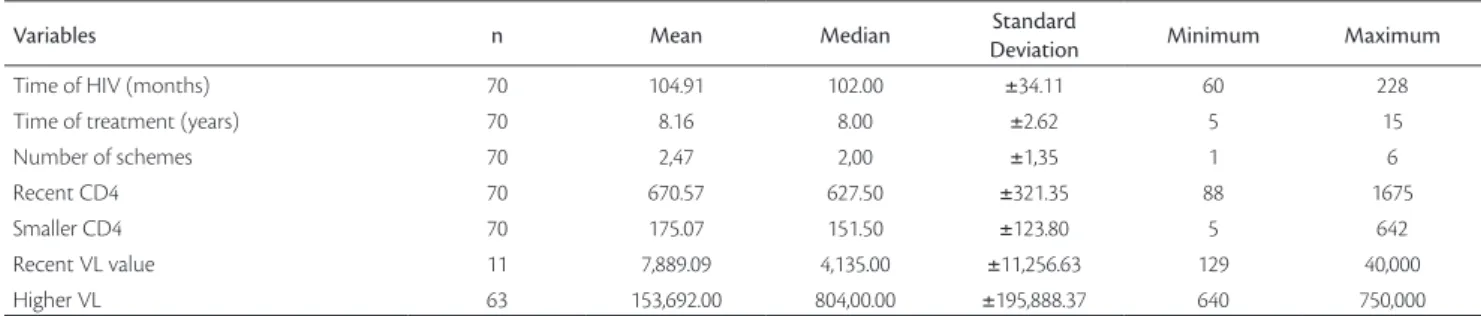
Table 3 described speciic variables related to HIV. he mean value of the recent VL was 7,889.09. It was calculated for only 11 patients, since all other patients had undetecta-ble current VL values. Sixty three patients had mean higher VL of 153,698.00; the remaining seven patients always had undetectable VL.
Table 1. Sample proile of the studied population for the socioeconomic
variables and risk factors for atherosclerosis.
Variables n %
Age (years)
Mean±SD 40.5±6.0
Minimum – Maximum 24–50
Gender
Male 42 60.0
Female 28 40.0
Schooling
Illiterate and <8 years 31 44.3
Literate >8 years 39 55.7
Income (Reais)
Mean±SD 511.8±224.3
Minimum – Maximum 200–1,800
Ethnicity
White 33 47.1
Black 16 22.9
Brown 21 30.0
Smoking 12 17.1
SAH 11 15.7
High cholesterol 25 35.7
High triglyceride 32 45.7
High BMI 25 35.7
Altered AC 10 14.3
and possibly, if the sample had been larger, this statistical trend might have been more expressive. Considering this same trend in Table 7, comparing the automatic mean of IMC in the RCC with the current VL, IMC was not as thick in groups with low VL (0.46 mm), and moderate (0.44 mm), with p=0.077. These groups also had a smal-ler population in relation to the group with undetectable VL, and, in a larger sample, this statistical trend could be more expressive.
Only two patients had atheromatous plaque on the RCC, and none on the LCC. here was no statistically sig-niicant diference in relation to the presence of the plaque and the use of PI versus the absence of PI, not even when variables related to HIV were considered.
Discussion
In this study, the automatic measurement in the right and let common carotid arteries did not show thickening of the of IMC. ABI was increased in only one patient (0.7%) with incompressible arteries.
Some authors have suggested that the association of ARVT with dyslipidemia and insulin resistance is com-mon, and it persists particularly in patients treated with PI. The pathogenesis of this metabolic abnormality is not completely understood, but it involves direct effects of the PI, lipodystrophy and factors not related to the treat-ment22. In this study, 25 (35.7%) patients presented with hypercholesterolemia and 32 (45.7%) had hypertriglyce-ridemia. As to the use of PI in the treatment, 47 (67.1%) used it for more than six months, and 36 (51.4%) were currently using it, but no IMC thickening was identi-fied. The hypothesis that the PI causes early thickening of the complex is not confirmed in this study, even in the presence of dyslipidemia. A possible reason for not finding IMC thickening and changes in the ABI in this population is that the participants were young (mean of 40.5 years) and had fewer risk factors for atherosclerosis than in other studies.
Some investigators defend the hypothesis that ARVT induces the activation of the endothelial function. hus, both the HIV and the immune response of the reconstitu-tion organism and PART can promote the early endothelial activation41-43. Since no IMC thickening was registered in this study, it was demonstrated that there is no association between the thickening of the complex with time of treat-ment, type of treatment or the presence of HIV. he patients had been diagnosed with AIDS and had been medically tre-ated for at least ive years. It is worth to mention that this
Table 2. Distribution of the frequency of qualitative variables related
to the infection by the HIV and its treatment.
Variables n %
Time of HIV 60 to 84 months 85 to 108 months 109 to 132 months >132 months 25 16 20 9 35.7 22.9 28.6 12.9
Use of ARV with PI No Yes 21 49 30.0 70.0
Irregular use of ARV No Yes 66 4 94.3 5.7
PI for more than 6 months No Yes 23 47 32.9 67.1 Current class 2NRTI + 1NNRTI 2NRTI + 1PI NRTI + NNRTI + PI Others 34 25 6 5 48.6 35.7 8.6 7.1
Type of scheme With PI/r With PI w/r Without PI 29 7 34 41.4 10.0 48.6 Current VL
Undetectable <50 copies/mL Low <10,000 copies/mL Moderate= 10,000 – 100,000 High >100,000 copies/mL
60 7 3 0 85.7 10.0 4.3 0.0 Higher VL
Undetectable <50 copies/mL Low <10,000 copies/mL Moderate 10,000 – 100,000 High >100,000 copies/mL
7 15 22 26 10.0 21.4 31.4 37.1
Base: 70 patients with HIV.
In Table 4, we see there is no statistically significant correlation of the IMC measurement in RCC (automa-tic mean) with any of the analyzed variables, that is, none of these variables interfered in the value of IMC in this study.
population has been treated for a long time (mean of 97.9 months), and that 59 (84.0%) had current undetectable VL with mean of current CD4 of 670.6, which shows that these patients were mostly clinically stable. So, the endothelium is less activated, and this is a possible reason for the IMC not to be thickened.
The lack of a significant association between the IMC thickening in patients with HIV using PI, when compared to control patients who are not on PI or to people who do not have HIV, has been identified in other observational studies of some cohorts29,30,43. Currier et al. suggest that the thickened IMC identified by ultra-sound is a consequence of traditional risk factors for
Table 6. Comparison of the IMC in RCC (automatic mean) with the type of the used antiretroviral scheme.
Current class n Media Median Standard deviation Minimum Maximum
2NRTI +1NNRTI 34 0.51 0.49 0.09 0.36 0.78
2NRTI + 1PI 25 0.49 0.49 0.05 0.35 0.58
NRTI + NNRTI +PI 6 0.56 0.60 0.09 0.46 0.67
Others 5 0.56 0.54 0.08 0.46 0.65
Total 70 0.51 0.50 0.08 0.35 0.78
p=0.081.
Table 4. Coeicient correlation of the variables related to the infection
by the HIV and its treatment with the measurement of IMC and RCC (automatic mean).
Variables Correlation p-value
Time of HIV (months) 0.047 0.700
Time of treatment (months) 0.030 0.803
Number of schemes 0.019 0.879
Current CD4 0.093 0.446
Smaller CD4 -0.087 0.472
Recent VL 0.072 0.833
Higher VL 0.082 0.522
ANOVA; VL – viral load.
Table 5. Comparison of the IMC in RCC (automatic mean) with the type of scheme (with and without PI).
Type of scheme n Mean Median Standard deviation Minimum Maximum
HIV with PI 36 0.51 0.51 0.07 0.35 0.67
HIV without PI 34 0.51 0.49 0.09 0.36 0.78
Total 70 0.51 0.50 0.08 0.35 0.78
p=0.890.
Table 7. Comparison of the IMC in RCC (automatic mean) with the viral load (VL).
Current viral load n Mean Median Standard deviation Minimum Maximum
Undetectable 60 0.52 0.51 0.08 0.36 0.78
Low 7 0.46 0.46 0.07 0.35 0.55
Moderate 3 0.44 0.46 0.06 0.38 0.49
Total 70 0.51 0.50 0.08 0.35 0.78
p=0.077.
Variables n Mean Median Standard
Deviation Minimum Maximum
Time of HIV (months) 70 104.91 102.00 ±34.11 60 228
Time of treatment (years) 70 8.16 8.00 ±2.62 5 15
Number of schemes 70 2,47 2,00 ±1,35 1 6
Recent CD4 70 670.57 627.50 ±321.35 88 1675
Smaller CD4 70 175.07 151.50 ±123.80 5 642
Recent VL value 11 7,889.09 4,135.00 ±11,256.63 129 40,000
Higher VL 63 153,692.00 804,00.00 ±195,888.37 640 750,000
atherosclerosis, and it is more important than the impact of PI to thicken the complex29. Authors who studied a prospective and multicentric cohort with 423 patients with HIV, whose IMC was analyzed by an ultrasound, concluded that only classic cardiovascular risk factors had an independent association with the increased IMC in patients infected by the HIV. In the multivariate analy-sis, the effect of lipodystrophy and ARVT disappeared after adjustment for other cardiovascular risk factors43. In this study, lipodystrophy, age, gender, BMI, smoking, alcohol consumption, SAH, AIDS stage, type and du-ration of PART, CD4, insulin, total cholesterol and ho-mocysteine were taking into account. Mean IMC in the carotid arteries of this cohort was 0.54 mm (ranging from 0.50 to 0.60). In the population of the present stu-dy, mean IMC was 0.51 mm in the RCC, and 0.53 mm in the LCC. These measurements were similar to those of other researchers when analyzing similar risk factors43. In other study, authors evaluated the IMC of 346 patients infected by the HIV and followed-up for 12 months, and the conclusion was also that classic cardiovascular risk factors are the most determinant in the progression of IMC thickness. The connection between the immuno-logic status and the IMC of the carotid arteries requires new studies30.
Some authors concluded that the predictive factors for low ABI were: age, smoking, diabetes and CD4 lower than 200 cells/μL44. Other investigators could not ind a signii-cant association with low ABI45,46. In the univariate analysis, Gutiérrez et al. observed there was a signiicant diference for low ABI when there were four classic cardiovascular risk factors versus two (p=0.015) and low CD4 count47. In the multivariate analysis of Ollala et al.15, PI, dyslipidemia and low CD4 were related to an abnormal ABI. he authors of this metanalysis concluded that the prevalence of abnormal ABI was higher in patients infected with HIV, and also that the use of PI may be related to this inding; also, that the use of ABI can be a way to identify patients with high cardio-vascular risk15. In the current sample, the only patient with altered ABI used PI. A larger sample with cases of altered ABI would be necessary to test the association of the incre-ased ABI with the use of PI.
Conclusion
he indings lead to the conclusion that young indivi-duals who used ARVT for ive years or more did not pre-sent IMC thickening or changes in the ABI. here was no diference in the IMC thickening associated with the type of
ARV scheme used or the VL level, except for a trend in the schemes with NNRTI and PI.
Acknowledgements
To Prof. Carlos Alberto Engelhorn, Professor of Angiology at the Pontifícia Universidade Católica in Paraná.
References
1. Friis-Moler N, Weber R, Reiss P, et al. Cardiovascular disease risk factors in HIV patients-association with antirretroviral therapy. Results from DAD study. AIDS. 2003;17:1179-93.
2. Bozkurt B. Cardiovascular toxicity with highly active antirre-troviral therapy: review of clinical studies. Cardiovasc Toxicol. 2004;4:243-60.
3. Grover SA, Coupal L, Gilmore N, Mukherjee J. Impact of dysli-pidemia associated with Highly Active Antirretroviral herapy (HAART) on cardiovascular risk and life expectancy. Am J Cardiol. 2005;95:586-91.
4. DAD Study Group, Friis-Møller N, Reiss P, et al. Class of antirre-troviral drugs and the risk of myocardial infarction. N Engl J Med. 2007;356:1723-35.
5. Kung HC, Hoyert DL, Xu J, Murphy SL. Deaths: inal data for 2005. Natl Vital Stat Rep. 2008;56:1-120.
6. Ministério da Saúde. Estatísticas Vitais. 2006. Brasília. [cited 2009 May 02]. Available from: http://www.w3.datasus.gov.br/
7. Freire CM, Ribeiro AL, Barbosa FB, et al. Comparison betwe-en automated and manual measurembetwe-ents of carotid intima--media thickness in clinical practice. Vasc Health Risk Manag. 2009;5:811-7.
8. Touboul PJ, Hennerici MG, Meairs S, et al. Mannheim carotid intima-media thickness consensus (2004-2006). Cerebrovasc Dis. 2007;23:75-80.
9. Stein JH, Korcarz CE, Hurst RT, et al. Use of carotid ultrasound to identify subclinical vascular disease and evaluate cardiovascular disease risk: a consensus statement from the American Society of Echocardiography Carotid Intima-Media hickness Task Force. Endorsed by the Society for Vascular Medicine. J Am Soc Echocardiogr. 2008;21:93-111.
10. Kanter SD, Algra A, van Leeuwen MS, Banga JD. Reproducibility of in vivo carotid intima-media thickness measurements: a review. Stroke. 1997;28:665-71.
11. Godoi ETAM, Barbosa AD, Godoi JTAM, et al. Envolvimento ma-crovascular e esclerose sistêmica. J Vasc Bras. 2009;8:65-75.
12. Palella FJ Jr, Delaney KM, Moorman AC, et al. Declining morbidity and mortality among patients with advanced human immuno-deiciency virus infection. HIV Outpatients Study Investigators. N Engl J Med. 1998;338:853-60.
survival among HIV-infected individuals with newer forms of hi-ghly active antirretroviral therapy. AIDS. 2007;21:685-92.
15. Olalla J, Salas D, de la Torre J, Del Arco A, Prada JL, García Alegría J. Ankle-brachial index in HIV infection. AIDS Res her. 2009;6:6.
16. Mulligan K, Grunfeld C, Tai VW, et al. Hyperlipidemia and insu-lin resistance are induced by protease inhibitors independent of changes in body composition in patients with HIV infection. J Acquir Immune Deic Syndr. 2000;23:35-43.
17. Murata H, Hruz PW, Mueckler M. he mechanism of insulin re-sistance caused by HIV protease inhibitor therapy. J Biol Chem. 2000;275:20251-4.
18. Bernal E, Masiá M, Padilla S, Gutiérrez F. High-density lipoprotein cholesterol in HIV-infected patients: evidence for an association with HIV-1 viral load, antirretroviral therapy status, and regimen composition. AIDS Patient Care STDS. 2008;22:569-75.
19. Hsue PY, Hunt PW, Wu Y, et al. Association of abacavir and HIV disease factors with endothelial function in patients on long-term suppressive ART. In: Program and abstracts of the 16th Conference on Retroviruses and Opportunistic Infections; February 8-11, 2009; Montreal. Abstract 723.
20. Depairon M, Chessex S, Sudre P, et al. Premature atherosclerosis in HIV-infected individuals-focus on protease inhibitor therapy. AIDS, 2001;15:329-34.
21. Martínez E, García-Viejo MA, Blanco JL, et al. Impact of switching from human immunodeiciency virus type 1 protease inhibitors to efavirenz in successfully treated adults with lipodystrophy. Clin InfectDis. 2000;31:1266-73.
22. Carr A. Cardiovascular risk factors in HIV-infected patients. JAIDS. 2003;34(Suppl):S73-8.
23. Carr A, Samaras K, horisdottir A, Kaufmann GR, Chisholm DJ, Cooper DA. Diagnosis, prediction, and natural course of HIV-1 protease-inhibitor-associated lipodystrophy, hiperlipida-emia, and diabetes mellitus: a cohort study. Lancet. 1999;353: 2093-9.
24. Martínez E, Conget I, Lozano L, Casamitjana R, Gatell JM. Reversion of metabolic abnormalities after switching from HIV-1 protease inhibitors to nevirapine. AIDS. 1999;13:805-10.
25. Carr A, Miller J, Law M, Cooper DA. A syndrome of lipoatrophy, latic acidaemia and liver dysfunction associated with HIV nucle-oside analogue therapy: cntribution to protease inhibitor-related lipodystrophy syndrome. AIDS. 2000;14:F25-32.
26. Lekakis JP, Papamichael CM, Cimponeriu AT, et al. Atherosclerotic changes of extracoronary arteries are associated with the extent of coronary atherosclerosis. Am J Cardiol. 2000;85:949-52.
27. Maggi P, Lillo A, Perilli F, Maserati R, Chirianni A. Colour-Doppler ultrasonography of carotid vessels in patients treated with antirre-troviral therapy: a comparative study. AIDS. 2004;18:1023-8.
28. Allison MA, Tiefenbrun J, Langer RD, Wright CM. Atherosclerotic calciication and intimal medial thickness of the carotid arteries. Int J Cardiol. 2005;103:98-104.
29. Currier JS, Kendall MA, Zackin R, et al. Carotid artery intima-media thickness and HIV infection: traditional risk factors overshadow impact of prothease inhibitor exposure. AIDS. 2005;19:927-33.
-media thickness is slightly increased over time in HIV-1-infected patients. HIV Med. 2005;6:380-7.
31. Maggi P, Perilli F, Lillo A, et al. An ultrasound-based comparative study on carotid plaques in HIV-positive patients vs. atherosclero-tic and arteritis patients: atheroscleroatherosclero-tic or inlammatory lesions? Coron Artery Dis. 2007;18:23-9.
32. Maggi P, Perilli F, Lillo A, et al. Rapid progression of carotid lesions in HAART-treated HIV-1 patients. Atherosclerosis. 2007;192:407-12.
33. Godoi ETAM, Barbosa AD, Godoi JTAM, et al. Estudo da macro-vasculatura por ultra-sonograia Doppler na esclerose sistêmica. Rev Bras Reumatol. 2008;48:86-93.
34. Leger P, Boccalon H. Bilan d’un artériopathie des membres infé-rieurs (AMI). In: Boccalon H, editor. Guide Pratique des Maladies Vasculaires, 2a ed. France: Masson; 2001. p. 13-8.
35. Spácil J, Spácabilová J. he ankle-brachial blood pressure index as a risk indicator of generalized atherosclerosis. Semin Vasc Med. 2002;2:441-5.
36. Sarno F, Monteiro CA. Importância relativa do índice de massa corporal e da Circunferência Abdominal na predição da hiperten-são Arterial. Rev Saúde Pública. 2007;41:788-96.
37. Guimarães ICB, Almeida AM, Santos AS, Barbosa DBV, Guimarães AC. Pressão arterial: efeito do índice de massa corporal e da circunferência abdominal em adolescentes. Arq Bras Cardiol. 2008;90(6):426-32.
38. Touboul PJ, Vicaut E, Labreuche J, et al. Correlation between the Framingham risk score and intima media thickness: the paroi ar-térielle et risque cardio-vasculaire (PARC) study. Atherosclerosis. 2007;192:363-9.
39. Engelhorn CA, Engelhorn AL, Cassou MF, et al. Espessamento mé-dio-intimal na origem da artéria subclávia direita como marcador precoce de risco cardiovascular. Arq Bras Cardiol. 2006;87:609-14.
40. Labropoulos N, Ashraf Mansour M, Kang SS, Oh DS, Buckman J, Baker WH. Viscoelastic properties of normal and atherosclerotic carotid arteries. Eur J Vasc Endovasc Surg. 2000;19:221-5.
41. Maggi P, Maserati R, Antonelli G. Atherosclerosis in HIV patients: a new face for an old disease? Aids Rev. 2006;8:204-9.
42. Hsue PY, Lo JC, Franklin A, et al. Progression of atherosclerosis as assessed by carotid intima-media thickness in patients with HIV infection. Circulation. 2004;109:1603-8.
43. Mercié P, hiébaut R, Lavignolle V, et al. Evaluation of cardiovas-cular risk factors in HIV-1 infected patients using carotid intima--media thickness measurement. Ann Med. 2002;34:55-63.
44. Periard D, Cavassini M, Tafé P, et al. High prevalence of peri-pheral arterial disease in HIV-infected persons. Clin Infect Dis. 2008;46:761-7.
45. Bernal E, Masiá M, Padilla S, Hernández I, Gutiérrez F. Low preva-lence of peripheral arterial disease in HIV-infected patients with multiple cardiovascular risk factors. J Acquir Immune Deic Syndr. 2008;47:126-7.
47. Gutiérrez F, Bernal E, Padilla S, Hernández I, Masiá M. Relationship between ankle-brachial index and carotid intima-media thickness in HIV-infected patients. AIDS. 2008;22:1369-71.
Correspondence Emmanuelle Tenório Albuquerque Madruga Godoi Rua Marquês de Tamandaré, 162 – apto. 1.402 – Poço da Panela CEP 52061-170 – Recife (PE), Brazil E-mail: [email protected]
Author’s contributions Conception and design: ETAMG, CTB, JTAMG, HRL Analysis and interpretation: ETAMG, CS Data collection: ETAMG, JTAMG, VMGA, JCZ Writing the article: ETAMG, JTAMG Critical revision of the article: CTB, HRL, JCZ Final approval of the article*: ETAMG, CTB, JTAMG, HRL, VMGA, JCZ,