Copyright
© ABE&M todos os dir
eitos r
eser
vados.
Evaluation of late-onset hypogonadism
(andropause) treatment using
three different formulations of
injectable testosterone
Avaliação do tratamento de pacientes hipogonádicos tardios (andropausa) usando três formulações
diferentes de testosterona injetável
Alexandre Hohl1,2, Mario Octávio Thá Marques2,
Marisa Helena César Coral2, Roger Walz2
ABSTRACT
Objective: To compare the modalities of treatment for male hypogonadism available in Brazil. Methods: Thirty-two men with late-onset hypogonadism (“andropause”) were followed-up in the Hospital de Guarnição de Florianópolis, in Florianópolis, south Brazil. Clinical diagnosis was established according to AMS questionnaire (positive if equal to or higher than 27 points), and laboratorial diagnosis was made through low values of total testosterone (under 300 ng/dL) and/or free calculated testosterone (under 6.5 ng/dL). Patients were randomized to three non-enteral treatment groups (Deposteron® – 11 patients; Durateston® – 11 patients; and Nebido® –
10 patients). Results: Clinically, Nebido® seemed to be superior when compared to Deposteron®
(mean value of improvement percentage; p = 0.03) and when compared to Durateston®
(post-treatment average AMS score; p = 0.03). According to laboratorial analysis, Nebido® showed
higher testosterone levels than Deposteron® and Durateston® (p < 0.001). Conclusions: All
non-enteral testosterone formulas available in the Brazilian market are efficient in raising testoste-rone levels and in clinical improvement of hypogonadal patients. Nebido® showed both a better
clinical and laboratorial effectiveness. Arq Bras Endocrinol Metab. 2009;53(8):989-96
Keywords
Hypogonadism; military personnel; testosterone; treatment
RESUMO
Objetivo: Comparar os tratamentos para hipogonadismo masculino disponíveis no Brasil. Mé-todos: Foram selecionados 32 homens com hipogonadismo tardio (“andropausa”) no Hospital de Guarnição de Florianópolis. O diagnóstico foi feito por meio do questionário AMS (acima de 27 pontos) e dos níveis diminuídos de testosterona total dosada (abaixo de 300 ng/dL) e/ou testosterona livre calculada (abaixo de 6,5 ng/dL). Os pacientes foram divididos em três grupos de tratamento parenteral (Deposteron® – 11 pacientes; Durateston® – 11 pacientes; Nebido® – 10
pacientes). Resultados: Clinicamente, o tratamento com Nebido® mostrou-se superior ao
trata-mento com Deposteron® (média do percentual de melhora; p = 0,03) e ao Durateston® (média
do questionário AMS pós-tratamento; p = 0,03). Laboratorialmente, o tratamento com Nebido®
mostrou níveis de testosterona superiores ao Deposteron® e Durateston® (p < 0,001).
Conclu-sões: As três formulações de testosterona parenteral existentes no mercado brasileiro são efi-cientes em elevar os níveis de testosterona e melhorar clinicamente paefi-cientes hipogonádicos, sendo o Nebido® mais efetivo clínica e laboratorialmente. Arq Bras Endocrinol Metab. 2009;53(8):989-96.
Descritores
Hipogonadismo; militares; testosterona; tratamento
1 Ambulatório de Andrologia,
Hospital de Guarnição de Florianópolis (HGuFl), Florianópolis, SC, Brasil
2 Hospital Universitário,
Universidade Federal de Santa Catarina (HU-UFSC), Florianópolis, SC, Brasil
Correspondence to:
Alexandre Hohl
Av. Rio Branco, 404/704, torre 1 – Centro
88015-200 – Florianópolis, SC, Brasil [email protected]
Copyright
© ABE&M todos os dir
eitos r
eser
vados.
dden event, but part of the aging process (1). A much more correct designation for such affection is partial androgen deficiency of the aging male (PADAM) or late-onset hypogonadism (LOH).
By the age of 40, men experience an annual decre-ase of 1.2% in the circulating levels of free testosterone (FT) and of 1% in albumin-bound testosterone (the-se two repre(the-sent the bioavailable testosterone – BT). Furthermore, there is a 1.2% annual increase in sexual hormone-binding globulin (SHBG) (2,3), a highly sta-ble testosterone carrier, which makes it unavailasta-ble for the tissues. Although total testosterone (TT) maintains its levels until 55 years old (when it begins decreasing at an annual rate of 0.4% to 0.85%) (4), it is clear that men suffer a decrease in BT after their forties.
Diagnosing LOH is really challenging, since it has no pathognomonic signs or symptoms and, for a long time, there were no cut-off points established for the labora-torial tests (5). Moreover, LOH clinical findings may be easily related to a series of other hormonal affections or even to the physiologic process of aging (1). One of its most common symptoms, erectile dysfunction, may be found in over 40% of men aged 50-80, according to the Massachusetts Male Aging Study (MMAS) (3,6).
The clinical evaluation of patients evolved when self-applied questionnaires were developed. The ADAM questionnaire, developed by the Saint Louis University, observed ten symptoms commonly found in men with low BT. The questionnaire of the Massachusetts Male Aging Study (MMAS) evaluates eight topics and may be used as a screening test for males to seek medical care (7), while the aging male symptoms (AMS) ques-tionnaire, designed and validated in fourteen coun-tries, can be used not only to evaluate aging symptoms, but also for hormonal treatment follow-up. The latter questionnaire consists of 17 questions, rated from 1 to 5, and defines a score in a range of 17 to 85. It is con-sidered positive when equal to or higher than 27 (8).
As for the laboratorial findings, TT dosages not only are not enough for the diagnosis, but also can be misleading, since the reference values vary. Furthermo-re, men can have a normal TT level and, if associated with a high SHBG level, present a subnormal FT level.
pathological (9). TT levels between both values are controversial. According to recently published guideli-nes of the Journal of Clinical Endocrinology and Meta-bolism, the cut-off point should be established at 300 ng/dL (5). Any two FT serum dosages below 6.5 ng/ dL are an indication of hypogonadism, if made with a one-month gap (10).
LOH hormone treatment requires both clinical and laboratorial criteria. Androgen replacement should only be used on patients with clinical symptoms associated with subnormal androgen serum levels (11,12). The an-drogen replacement therapy shows both laboratorial and clinical improvements in men (12). Its principal benefits are restoration of bone mass (13,14), improvement of se-xual function (15-17), better mood and life quality (18), and improvement of carbohydrates and lipids metabo-lism (19-21). On the other hand, the hormone therapy presents some risks, such as exacerbation of undiagnosed prostatic disease, polycythemia, hepatotoxicity, worse-ning of obstructive sleep apnea (OSA) and gynecomastia (22-27). In Brazil, however, no study so far assessed the different androgen replacement therapy concerning their action and adverse effects. No androgen replacement therapy should be prescribed for patients with prostate or breast cancer history. Relative contraindications are an altered prostate-specific antigen (PSA), untreated hyper-prolactinemia, OSA, and polycythemia (5).
Currently, available therapies are oral androgens, where testosterone undecanoate is the only safe testos-terone ester for clinical use, since it is not hepatotoxic. Oral therapy has very little side effects and may reduce hypogonadism symptoms (28). Transdermal andro-gens are used as scrotal and non-scrotal patches and gels. Although patches may cause local irritation, they are easy to use and may be immediately discontinued if necessary. The gels do not have such side effect, but are more expensive (15,26,29). Parenteral testostero-ne esters have various presentations. In Brazil, available presentations are Durateston®, a combination of
tes-tosterone esters of different half-lives, providing longer duration of therapeutic levels; Deposteron®, a
long-Copyright
© ABE&M todos os dir
eitos r
eser
vados.
acting undecanoate oil, which allows infrequent admi-nistration and shows smaller variations in testosterone serum levels, but is far more expensive.
Considering these options, the purpose of the pre-sent study was to compare both clinical and laborato-rial results of the different available testosterone repla-cement therapies in Brazil employed in patients with diagnosed LOH.
METHODS
Patients
The study included 50 consecutive patients attending the andrology clinic of the “Hospital de Guarnição de Florianópolis” (HGuFl) from March 2007 through March 2009. HGuFl is the Army’s reference hospital in the state of Santa Catarina, south Brazil. All patients were seen by the same physician.
Every reservist must refer to a military unit on his birthday month in order to renew his official regis-ter. Patients learned about the andrology clinic of the HGuFl through a leaflet on LOH handed out to all 800 army reservists in Santa Catarina, during their an-nual registration renewal.
Each interested reservist made an appointment at the andrology clinic of the HGuFl. Each appointment con-sisted of anamnesis, physical examination and filling out of the AMS (aging male symptoms) questionnaire (8). This is a self-applied questionnaire consisting of 17 questions. Each question must be answered based on a scale from 1 to 5; thus, the total questionnaire score may sum up from 17 to 85 points.
Each patient underwent urological evaluation, in-cluding rectal examination performed at HGuFl during the previous six months.
Inclusion criteria
•AMS questionnaire score equal to or higher than 27 points (Brazilian Portuguese validated).
•Patients with total testosterone serum level lower than 300 ng/dL and/or calculated free testoste-rone (obtained by Vermeulen’s formula) lower than 6.5 ng/dL.
Exclusion criteria
•Patients with history of prostate or breast cancer.
•Patients with untreated hyperprolactinemia.
•Patients with prostate-specific antigen (PSA) se-rum dosage above 4 ng/dL.
•Patients with severe obstructive sleep apnea (OSA) syndrome.
Study design
Patients with confirmed LOH diagnosis (positive ques-tionnaire AND reduced testosterone serum levels) were randomized to different testosterone replacement the-rapies by order of service. Three commercial prepara-tions available in Brazil, all of intramuscular administra-tion, were used. The first randomized patient received Deposteron®, the second patient received Durateston®,
and the third patient received Nebido® and so on.
•Deposteron® 200 mg (testosterone cypionate 200
mg): one dose every 4 weeks; 11 patients.
•Durateston® 250 mg (testosterone propionate
30 mg + testosterone phenylpropionate 60 mg + testosterone isocaproate 60 mg + testosterone deca-noate 100 mg): one dose every 4 weeks; 11 patients.
•Nebido® 1,000 mg (testosterone undecanoate
1,000 mg): to begin with, one dose every 6 we-eks; later, one dose every 12 wewe-eks; 10 patients. Two weeks after the second set of laboratory tests following treatment, all patients were referred to a se-cond medical appointment and once again filled out the AMS questionnaire.
Biological samples
After a 10 to 12-hour fasting period, periphe-ral blood samples were acquired at 8 a.m. from each patient. A 10-mL blood sample was taken by venous puncture, using a BD Vacutainer®. Laboratory dosages
were made by automatic enzyme chemiluminescence method processed in an Immulite analyzer (Diagnostic Products Corporation – DPC). Each specific hormone used a specific testing kit, all of the same brand (Im-mulite® prolactin, Immulite® estradiol, Immulite® total
testosterone, Immulite® SHBG, Immulite® FSH,
Im-mulite® LH, Immulite® PSA).
Biochemical assays were conducted at the clinical laboratory of the HGuFl.
All patients provided two blood samples. The first sample was taken for laboratorial diagnosis of LOH (before any treatment whatsoever). If the results were altered, the testing was repeated. The second sample was collected after the treatment had begun, according to following periodicity:
Patients receiving Deposteron® or Durateston® had
the second blood test 14 days after the fourth dose of the hormone replacement therapy (week 14);
Patients receiving Nebido® had the second blood
Copyright
© ABE&M todos os dir
eitos r
eser
vados.
free testosterone (CFT) according to Vermeulen’s for-mula (http://www.issam.ch/freetesto.htm), SHBG, LH, FSH, estradiol and prolactin, a complete blood count and PSA.
Seven patients had normal levels of testosterone. Ele-ven patients were excluded from the study, as follows:
•OSA: 1 patient.
•Untreated hyperprolactinemia: 3 patients.
•History of prostate cancer: 3 patients.
•PSA above cut-off point (4 ng/dL): 4 patients.
Statistical analysis
First, a univariate analysis was conducted to find the association level between the dependent variable (tre-atment) and the independent variables. At this phase, the independent variables studied were age, BMI, first AMS questionnaire and the following pre-treatment lab tests: total testosterone (TT), calculated free testos-terone (CFT), sex hormone-binding globulin (SHBG), LH, FSH, PSA, hematocrit, and hemoglobin. One-way ANOVA was used to determine ‘p’ values, which was similar in all groups.
ned by one-way ANOVA.
Statistical analyses were performed with the SPSS 12.0 software (Chicago, USA).
Ethical aspects
A written informed consent was obtained from each patient for the blood samples, according to the proto-col approved by the Ethics Committee. The acquisition of medication could be subsidized by FUSEX (Fundo de Saúde do Exército).
RESULTS
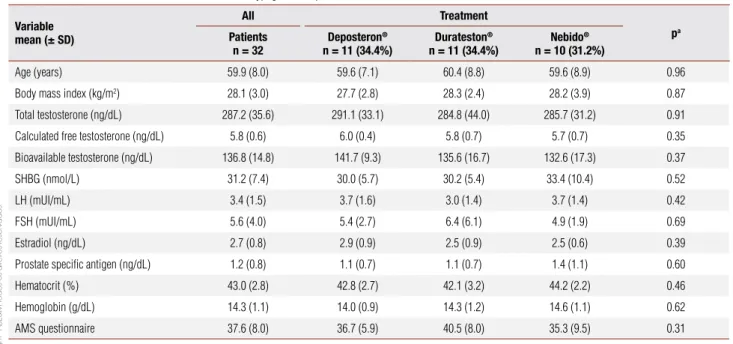
Table 1 shows clinical, laboratorial and demographic variables of the 32 hypogonadal patients studied. The mean age was 59.9 ± 8.0 years. Men showed to be overweight, with a mean BMI of 28.1 kg/m2.
Avera-ge gonadotropin levels were normal: LH = 3.4 ± 1.5 mUI/mL and FSH = 5.6 ± 4.0 mUI/mL. Median serum total testosterone levels at baseline indicated a mildly hypogonadal state in all three groups (all groups = 287.2 ± 35.6; group A = 291.1 ± 33.1; group B =
Table 1. Clinical and laboratorial variables of late-onset hypogonadism patients before treatment
Variable mean (± SD)
All Treatment
pa
Patients n = 32
Deposteron®
n = 11 (34.4%)
Durateston®
n = 11 (34.4%)
Nebido®
n = 10 (31.2%)
Age (years) 59.9 (8.0) 59.6 (7.1) 60.4 (8.8) 59.6 (8.9) 0.96
Body mass index (kg/m2) 28.1 (3.0) 27.7 (2.8) 28.3 (2.4) 28.2 (3.9) 0.87
Total testosterone (ng/dL) 287.2 (35.6) 291.1 (33.1) 284.8 (44.0) 285.7 (31.2) 0.91
Calculated free testosterone (ng/dL) 5.8 (0.6) 6.0 (0.4) 5.8 (0.7) 5.7 (0.7) 0.35
Bioavailable testosterone (ng/dL) 136.8 (14.8) 141.7 (9.3) 135.6 (16.7) 132.6 (17.3) 0.37
SHBG (nmol/L) 31.2 (7.4) 30.0 (5.7) 30.2 (5.4) 33.4 (10.4) 0.52
LH (mUI/mL) 3.4 (1.5) 3.7 (1.6) 3.0 (1.4) 3.7 (1.4) 0.42
FSH (mUI/mL) 5.6 (4.0) 5.4 (2.7) 6.4 (6.1) 4.9 (1.9) 0.69
Estradiol (ng/dL) 2.7 (0.8) 2.9 (0.9) 2.5 (0.9) 2.5 (0.6) 0.39
Prostate specific antigen (ng/dL) 1.2 (0.8) 1.1 (0.7) 1.1 (0.7) 1.4 (1.1) 0.60
Hematocrit (%) 43.0 (2.8) 42.8 (2.7) 42.1 (3.2) 44.2 (2.2) 0.46
Hemoglobin (g/dL) 14.3 (1.1) 14.0 (0.9) 14.3 (1.2) 14.6 (1.1) 0.62
AMS questionnaire 37.6 (8.0) 36.7 (5.9) 40.5 (8.0) 35.3 (9.5) 0.31
Copyright
© ABE&M todos os dir
eitos r
eser
vados.
284.8 ± 44.0; group C = 285.7 ± 31.2 ng/dL). Ave-rage PSA levels (1.2 ± 0.8 ng/dL), hematocrit (43.0 ± 2.8%), and hemoglobin (14.3 ± 1.1 g/dL) at baseline were normal. All three groups were paired in every stu-died variable.
Table 2 shows clinical response to treatment, me-asured by the average score of the AMS questionnaire and by the improvement percentage on the question-naire before and after treatment. The decrease of libido was present in all patients.
Analysis of the second questionnaire’s mean scores showed that Nebido® scored lower (23.8) in
compa-rison to the three therapeutic options, being statis-tically significant when compared with Durateston®
(29.6 – p = 0.03).
When evaluating the improvement percentage be-tween the first and the second questionnaires, Nebido®
showed better results (34.3%) among the three treat-ment groups, being statistically significant when com-pared to Deposteron® (23.1% – p = 0.03).
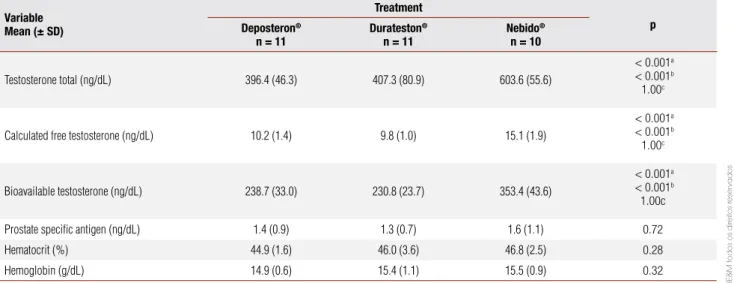
Table 3 shows the laboratorial response to treat-ment, measured by the mean testosterone levels (TT, CFT, and DFT) and the influence of therapy on the hematocrit, hemoglobin, and PSA levels.
The laboratorial improvement analysis showed that Nebido® seemed to be significantly superior (p <
0.001) to other options in all parameters analyzed (TT, FCT and DFT). On the other hand, there was no sig-nificant increase in hematocrit (p = 0.28), hemoglobin (p = 0.32) and PSA (p = 0.72).
Table 2. Second AMS questionnaire analysis according to treatment
Variable Mean (± SD)
Treatment
p Deposteron®
n = 11
Durateston®
n = 11
Nebido®
n = 10
Q2 score
Time after the initiation of treatment 16 weeks 28.2 (4.8)
16 weeks 29.6 (6.4)
14 weeks
23.8 (6.3) 0.03a
0.11b
1.00c
Improvement % between Q1 and Q2
23.1 (8.0) 26.9 (5.7) 34.3 (6.9) 0.06a
0.03b
0.60c
Q1: First AMS (aging male symptoms) questionnaire; Q2: second AMS questionnaire. a Treatment Nebido®versus Treatment Durateston®.
b Treatment Nebido®versus Treatment Deposteron®.
c Treatment Durateston®versus Treatment Deposteron®.
Table 3. Laboratorial tests variation between first and second samples, according to treatment
Variable Mean (± SD)
Treatment
p Deposteron®
n = 11
Durateston®
n = 11
Nebido®
n = 10
Testosterone total (ng/dL) 396.4 (46.3) 407.3 (80.9) 603.6 (55.6)
< 0.001a
< 0.001b
1.00c
Calculated free testosterone (ng/dL) 10.2 (1.4) 9.8 (1.0) 15.1 (1.9)
< 0.001a
< 0.001b
1.00c
Bioavailable testosterone (ng/dL) 238.7 (33.0) 230.8 (23.7) 353.4 (43.6)
< 0.001a
< 0.001b
1.00c
Prostate specific antigen (ng/dL) 1.4 (0.9) 1.3 (0.7) 1.6 (1.1) 0.72
Hematocrit (%) 44.9 (1.6) 46.0 (3.6) 46.8 (2.5) 0.28
Hemoglobin (g/dL) 14.9 (0.6) 15.4 (1.1) 15.5 (0.9) 0.32
a Treatment Nebido® versus Treatment Durateston®.
b Treatment Nebido® versus Treatment Deposteron®.
Copyright
© ABE&M todos os dir
eitos r
eser
vados.
induced androgen deficiency is associated with a decre-ased frequency of sexual thoughts and fantasies, night time erections, and libido (5). Potential risks of treat-ment include local effects on the prostate, promotion of growth of occult prostate cancer cells, and prostatic hypertrophy. Other systemic effects include fluid reten-tion, sleep apnea, gynecomastia, polycythemia, and in-creased risk of cardiovascular disease (5).
There are several preparations of testosterone throughout the world. Although elevations in liver function tests and abnormalities at liver scan and biop-sy are relatively common in patients receiving oral tes-tosterone, these preparations are still prescript in the United States. There are preparations designed for skin application which employs a testosterone con-taining patch applied directly to the testicle. Another patch can be placed on any area of skin on the body which is free of hair. The adhesive on the patch occa-sionally causes a skin rash, and the patch itself is cum-bersome. There is testosterone gel product. The gel is rubbed directly into the skin every day without the need for a patch. Many men find this the easiest and least irritating of the transdermal preparations of tes-tosterone (1,5).
In Brazil, LOH treatment is restricted to parenteral testosterone esters formulas. There is a significant diffe-rence in treatment costs and pharmacokinetic proper-ties of each formula (1). Enanthate and cypionate esters for i.m. injections were developed in the 1950’s. Theses intramuscular injections of 200 to 250 mg must be ad-ministered every 2 or 4 weeks to achieve serum testos-terone levels above the lower limit of normal (31). Re-cently, injectable testosterone undecanoate (Nebido®)
has become available in Europe and in south America (including Brazil). After a recommended loading dose in the form of an initial six-week interval, injectable tes-tosterone undecanoate is the first intramuscular agent that can be taken every three months (12 weeks) (32).
LOH diagnosis is based both on clinical and labora-torial aspects of hypogonadism (33). Clinical questio-nnaires, such as AMS, can be used both for diagnosis and for therapy follow-up (34). The symptom that best
undecanoate provided patients with higher testostero-ne serum (total, free and bioavailable) levels during the mid-treatment period. It also seemed to show greater improvement in clinical response, according to the re-sults of the AMS questionnaire.
Testosterone therapy may cause polycythemia when used at above-physiological doses (37). In spite of hi-gher testosterone serum levels, patients treated with Nebido® showed similar hematocrit/hemoglobin
se-rum levels when compared to the other treatment groups. The long-acting nature of this preparation per-mits 12-weekly administrations of injections to main-tain physiological levels of serum testosterone, without peaks above normal.
It is well established that testosterone therapy has no effect on the development of prostate cancer (5,25,38). However, there is testosterone peripheral conversion in dihydrotestosterone (DHT), which may stimulate prostate cells. Continuous monitoring of PSA is necessary during testosterone therapy in patients with LOH (39). The study showed that all three therapeutic options slightly raised PSA levels (1.2 ng/dL against 1.4 ng/dL), with no statistically significant difference among the three groups and without reaching PSA le-vels above 4.0 ng/dL during treatment period. No cli-nically significant pathological findings of the prostate were observed during treatment with testosterone in this study.
CONCLUSIONS
The study showed that all three testosterone therapeu-tic options available on the Brazilian market are effec-tive in raising testosterone serum levels and in clinical improvement of hypogonadal patients. Although it has a higher cost, testosterone undecanoate showed higher clinical and laboratorial effectiveness, when compared to other treatment formulas. The therapeutic options studied showed to be safe in non-significant raising he-matocrit, hemoglobin and PSA levels.
Acknowledgements: We thank the directors of the Hospital de Guarnição (HGuFl).
Copyright
© ABE&M todos os dir
eitos r
eser
vados.
19. Oh JY, Barrett-Connor E, Wedick NM, Wingard DL. Endogenous sex hormones and the development of type 2 diabetes in older men and women: the Rancho Bernardo study. Diabetes Care. 2002;25(1):55-60.
20. Boyanov MA, Boneva Z, Christov VG. Testosterone supplemen-tation in men with type 2 diabetes, visceral obesity and partial androgen deficiency. Aging Male. 2003;6(1):1-7.
21. Corrales JJ, Burgo RM, Garca-Berrocal B, Almeida M, Alberca I, Gonzalez-Buitrago JM, et al. Partial androgen deficiency in aging type 2 diabetic men and its relationship to glycemic control. Me-tabolism. 2004;53(5):666-72.
22. Shaneyfelt T, Husein R, Bubley G, Mantzoros CS. Hormonal predictors of prostate cancer: a meta-analysis. J Clin Oncol. 2000;18(4):847-53.
23. Sih R, Morley JE, Kaiser FE, Perry HM, 3rd, Patrick P, Ross C. Testosterone replacement in older hypogonadal men: a 12-month randomized controlled trial. J Clin Endocrinol Metab. 1997;82(6):1661-7.
24. Martits AM, Costa EM. [Treatment and monitoring of andropau-se]. Rev Assoc Med Bras. 2005;51(3):127-9.
25. Rhoden EL, Morgentaler A. Risks of testosterone-replacement therapy and recommendations for monitoring. N Engl J Med. 2004;350(5):482-92.
26. Liu PY, Yee B, Wishart SM, Jimenez M, Jung DG, Grunstein RR, et al. The short-term effects of high-dose testosterone on sleep, breathing, and function in older men. J Clin Endocrinol Metab. 2003;88(8):3605-13.
27. Hanafy HM. Testosterone therapy and obstructive sleep apnea: is there a real connection? J Sex Med. 2007;4(5):1241-6.
28. Hong JH, Ahn TY. Oral testosterone replacement in Korean pa-tients with PADAM. Aging Male. 2002;5(1):52-6.
29. Falahati-Nini A, Riggs BL, Atkinson EJ, O’Fallon WM, Eastell R, Khosla S. Relative contributions of testosterone and estrogen in regulating bone resorption and formation in normal elderly men. J Clin Invest. 2000;106(12):1553-60.
30. Carter HB, Pearson JD, Metter EJ, Brant LJ, Chan DW, Andres R, et al. Longitudinal evaluation of prostate-specific antigen levels in men with and without prostate disease. JAMA. 1992;267(16):2215-20. 31. Snyder PJ, Lawrence DA. Treatment of male
hypogona-dism with testosterone enanthate. J Clin Endocrinol Metab. 1980;51(6):1335-9.
32. Harle L, Basaria S, Dobs AS. Nebido: a long-acting injectable tes-tosterone for the treatment of male hypogonadism. Expert Opin Pharmacother. 2005;6(10):1751-9.
33. Clapauch R, Carmo AM, Marinheiro L, Buksman S, Pessoa I. Labo-ratory diagnosis of late-onset male hypogonadism andropause. Arq Bras Endocrinol Metabol. 2008;52(9):1430-8.
34. Morley JE, Charlton E, Patrick P, Kaiser FE, Cadeau P, McCready D, et al. Validation of a screening questionnaire for androgen defi-ciency in aging males. Metabolism. 2000;49(9):1239-42. 35. Clapauch R, Braga DJ, Marinheiro LP, Buksman S, Schrank Y. Risk
of late-onset hypogonadism (andropause) in Brazilian men over 50 years of age with osteoporosis: usefulness of screening ques-tionnaires. Arq Bras Endocrinol Metabol. 2008;52(9):1439-47. 36. Wang C, Nieschlag E, Swerdloff R, Behre HM, Hellstrom WJ,
Go-oren LJ, et al. Investigation, treatment and monitoring of late-onset hypogonadism in males: ISA, ISSAM, EAU, EAA and ASA recommendations. Eur J Endocrinol. 2008;159(5):507-14. 37. Tan RS, Salazar JA. Risks of testosterone replacement therapy in
ageing men. Expert Opin Drug Saf. 2004;3(6):599-606.
38. Shabsigh R, Crawford ED, Nehra A, Slawin KM. Testosterone the-rapy in hypogonadal men and potential prostate cancer risk: a systematic review. Int J Impot Res. 2009;21(1):9-23.
39. Katz A, Katz A, Burchill C. Androgen therapy: testing before prescribing and monitoring during therapy. Can Fam Physician. 2007;53(11):1936-42.
REFERENCES
1. Bonnacorsi AC. Andropausa: insuficiência androgênica parcial do homem idoso. Uma revisão. Arq Bras Endocrinol Metab. 2001;45(2):123-33.
2. Gooren LJ. The age-related decline of androgen levels in men: clinically significant? Br J Urol. 1996;78(5):763-8.
3. Gray A, Feldman HA, McKinlay JB, Longcope C. Age, disease, and changing sex hormone levels in middle-aged men: results of the Massachusetts Male Aging Study. J Clin Endocrinol Metab. 1991;73(5):1016-25.
4. Vermeulen A, Kaufman JM, Giagulli VA. Influence of some bio-logical indexes on sex hormone-binding globulin and andro-gen levels in aging or obese males. J Clin Endocrinol Metab. 1996;81(5):1821-6.
5. Bhasin S, Cunningham GR, Hayes FJ, Matsumoto AM, Snyder PJ, Swerdloff RS, et al. Testosterone therapy in adult men with andro-gen deficiency syndromes: an endocrine society clinical practice guideline. J Clin Endocrinol Metab. 2006;91(6):1995-2010. 6. Gray A, Berlin JA, McKinlay JB, Longcope C. An examination
of research design effects on the association of testosterone and male aging: results of a meta-analysis. J Clin Epidemiol. 1991;44(7):671-84.
7. Smith KW, Feldman HA, McKinlay JB. Construction and field validation of a self-administered screener for testosterone de-ficiency (hypogonadism) in ageing men. Clin Endocrinol (Oxf). 2000;53(6):703-11.
8. T’Sjoen G, Goemaere S, De Meyere M, Kaufman JM. Percep-tion of males’ aging symptoms, health and well-being in elderly community-dwelling men is not related to circulating androgen levels. Psychoneuroendocrinology. 2004;29(2):201-14.
9. Carnegie C. Diagnosis of hypogonadism: clinical assessments and laboratory tests. Rev Urol. 2004;6 Suppl 6:S3-8.
10. Rosner W, Auchus RJ, Azziz R, Sluss PM, Raff H. Position state-ment: Utility, limitations, and pitfalls in measuring testosterone: an Endocrine Society position statement. J Clin Endocrinol Me-tab. 2007;92(2):405-13.
11. Kaufman JC, Vermeulen, A. Androgens in male senescence. In: Nieschlag EBH, eds., editor. Testosterone Action, Deficiency, Substituition. Berlin: Springer; 1998. p. 437-72.
12. Hajjar RR, Kaiser FE, Morley JE. Outcomes of long-term testos-terone replacement in older hypogonadal males: a retrospective analysis. J Clin Endocrinol Metab. 1997;82(11):3793-6.
13. Greendale GA, Edelstein S, Barrett-Connor E. Endogenous sex steroids and bone mineral density in older women and men: the Rancho Bernardo Study. J Bone Miner Res. 1997;12(11):1833-43. 14. Ly LP, Jimenez M, Zhuang TN, Celermajer DS, Conway AJ,
Han-delsman DJ. A double-blind, placebo-controlled, randomized clinical trial of transdermal dihydrotestosterone gel on muscular strength, mobility, and quality of life in older men with partial an-drogen deficiency. J Clin Endocrinol Metab. 2001;86(9):4078-88. 15. Wang C, Swerdloff RS, Iranmanesh A, Dobs A, Snyder PJ,
Cun-ningham G, et al. Transdermal testosterone gel improves se-xual function, mood, muscle strength, and body composition parameters in hypogonadal men. J Clin Endocrinol Metab. 2000;85(8):2839-53.
16. McNicholas TA, Dean JD, Mulder H, Carnegie C, Jones NA. A no-vel testosterone gel formulation normalizes androgen leno-vels in hypogonadal men, with improvements in body composition and sexual function. BJU Int. 2003;91(1):69-74.
17. Aversa A, Isidori AM, Spera G, Lenzi A, Fabbri A. Androgens improve cavernous vasodilation and response to sildena-fil in patients with erectile dysfunction. Clin Endocrinol (Oxf). 2003;58(5):632-8.