J. res.: fundam. care. online 2014. out./dez. 6(4):1677-1686
1677
INTEGRATIVE REVIEW OF THE LITERATURE
Sobrecarga dos familiares de pacientes psiquiátricos: uma revisão integrativa
Overload of relatives of psychiatric patients: an integrative review Sobrecarga de familiares de pacientes psiquiátricos: una revisión integradora
Daiane de Aquino Demarco 1 , Cristiane Kenes Nunes 2 , Vanda Maria da Rosa Jardim 3 , Valéria
Cristina Christello Coimbra 4 , Luciane Prado Kantorski 5
Objective: To identify and analyze studies in the literature that evaluated the burden of psychiatric
patients relatives through Family Burden Evaluation Scale. Method: The articles search was performed in the LILACS and PubMed databases, following inclusion criteria: studies published in the period from 2002 to 2012, with full text and studies with adult humans, in Portuguese, English, and Spanish languages.
Results: Ten articles indicated that family members with higher levels of overolad are those closest to the
patient and living in conditions of social vulnerability. Conclusion: It is hoped that this study contributes to rethink the public politics on mental health, assist managers and employees of substitute services to cope with the theme of family burden, reflecting quality of life for patients and families. Descriptors: Family, Deinstitutionalization, Mental health.
Objetivo: Identificar e analisar os estudos descritos na literatura que avaliaram a sobrecarga dos
familiares de pacientes psiquiátricos através da Escala de Avaliação da Sobrecarga Familiar. Método: a busca foi realizada nas bases de dados LILACS e PUBMED e obedeceu aos seguintes critérios de inclusão: estudos publicados no período de 2002 a 2012, com texto completo; estudos com seres humanos adultos; e nos idiomas português, inglês e espanhol. Resultados: 10 artigos apontaram que os familiares com os níveis mais elevados de sobrecarga são aqueles mais próximos dos pacientes e que vivem em condições de vulnerabilidade social. Conclusão: estudos sobre a temática em questão contribuem para repensar as políticas públicas de saúde mental, auxiliar os gestores e trabalhadores dos serviços substitutivos a lidar com a sobrecarga familiar, refletindo em qualidade de vida para familiares e pacientes. Descritores: Família, Desinstitucionalização, Saúde mental.
Objetivo: Identificar y analizar los estudios descriptos en la literatura para evaluar la sobrecarga de los
familiares de pacientes psiquiátricos a través de la Escala de Evaluación de la sobrecarga familiar.
Método: La búsqueda se realizó en las bases de datos LILACS y PubMed, obedeciendo los criterios de
inclusión: estudios publicados en el periodo 2002-2012, los estudios con seres humanos adultos, en los idiomas portugues, inglés y español. Resultados: 10 artículos apuntaban que los familiares con los niveles más elevados de sobrecarga, son aquellos más próximos de los pacientes y que viven en condiciones de vulnerabilidad social. Conclusión: Los estudios sobre el tema en cuestión contribuyen a repensar las políticas de salud mental, ayudar a los gestores y trabajadores de los servicios sustitutivos a trabajar com la sobrecarga familiar, reflejando en calidad de vida de los pacientes y sus familias. Descriptores: Familia, Desinstitucionalización, Salud mental.
1Nurse. Master degree in Nursing Post Graduation Program/PPGEnf/UFPel. Scholaship of the Coordination of Improvement of
Higher Level/CAPES. Email: [email protected]. 2Nurse. Master degree in Nursing Post Graduation
Program/PPGEnf/UFPel. Email: [email protected]. 3Professor. PhD. Professor of the Nursing Department of the Federal
University of Pelotas/UFPel. Email: [email protected]. 4Professor. PhD. Professor of the Nursing Department of the
Federal University of Pelotas/UFPel. Email: [email protected]. 5Professor. PhD. Professor of the Nursing
Department of the Federal University of Pelotas/UFPel. Email: [email protected]. ABSTRACT
RESUMEN RESUMO
J. res.: fundam. care. online 2014. out./dez. 6(4):1677-1686
1678
W
ith the Psychiatric Reform, people care with mental disorders was from a focused on a hospital-centered model on the disease for mental substitute health services that seeks to work with the family in the community. This transformation of mental health care currently promotes autonomy and reintegration into society of people with disorder through a substitute services network that meet the perspective of psychosocial care and devices with the territory, of the community and different actors, including family.1-2Thus, the family gained responsibilities and occupy an important position in the context of mental health care for the fact that the person with a disorder is no longer isolated.3 Consequently, family members are considered partners in the treatment and the closest link disorder that people have with the world, so their participation is very important in everyday services, treatment and follow up.4
Families are formed by groups of people, members who have social ties, affection, relationships of coexistence, inbred or outbred kinship, linked to cultural and socioeconomic values.3
The change in the care paradigm in Mental Health and transformations from the Brazilian Psychiatric Reform brought families some assignments. One of these assignments is to be a participant in the rehabilitation process of his family member mentally ill.5
The deinstitutionalization brought the participant out of the psychiatric hospitals and the context of community care, close to the family. With deinstitutionalization, the responsibility of care for people with mental disorders focuses on families and impacts burden.6
Psychiatric deinstitutionalization and the care model in the community will have an involvement of carers and families in the care of people with mental disorder and greater interaction between patient and family, came the interest in studies focused on caregiver burden and families.7
The concept of family burden defines charges submitted to the relatives of the mental disorder carrier, such as emotional, physical and economic charges.6
When a change occurs in a family member, it affects all the others only in a different way, each one with an intensity and variation8. The burden that mental illness brought to families effects on emotions, purposing and compromising relationships and also changing the family dynamic.9
One of the challenges of the service would be to include the family in caring for the user, without forgetting that this group also needs to be cared.
In this context, this study aimed to identify and analyze the published studies in the literature that evalauted the burden of relatives of psychiatric patients by the Family Burden Evaluation Scale (FBIS, FBIS-BR).
J. res.: fundam. care. online 2014. out./dez. 6(4):1677-1686
1679
METHOD
The research consists of an Integrative Review (IR), characterized as a method exploring the scientific productions on the same subject with the purpose to obtain data and develop information that is relevant and comprehensive.10 The author suggests five steps to follow in IR , as: problem formulation, data collection, evaluation, analysis and interpretation of data and presentation of results.
The problem formulation for the IR had as guiding question: What do scientific research show about the burden evaluation of the families of psychiatric patients through the Family Burden Evaluation Scale?
This Family Burden Evaluation Scale (FBIS - BR) is an instrument created to evaluate the burden of families of patients with mental disorders. The original instrument of measurement was Family Burden Interview Schedule (FBIS).11 The Brazilian version was translated and adapted.12
The scale evaluate the objective and subjective burden. The objective burden is evaluated by the frequency the family assists the patient where 1= not at all, 2 = less than once a week, 3 = once or twice a week, 4 = three to six times a week and 5 = every day.
The subjective burden is evaluated by the discomfort level felt by the family and by the frequency of their concerns with the patient. For evaluation of the discomfort level, 1 = not at all, 2 = very little, 3 = a little, and 4 = a lot. As for the evaluation of financial concerns 1 = never, 2 = rarely, 3 = sometimes, 4 = often, and 5 = always or almost always.
Data collection was in the period from 2002 to 2012, with consultation of electronic databases Latin American and Caribbean Literature on Health Sciences (LILACS) and PubMed.
The choice of the keyword occurred through health sciences keywords (DECS), being tracked controlled studies using the "Family" keyword. To capture articles that used the family burden evaluation scale, a search with an uncontrolled keyword "Family Burden Interview Schedule" was done.
Inclusion criteria were studies that answered the research question, published in the period 2002 to 2012, with full text, studies in adult humans, and in the following languages: Portuguese, Spanish and English.
Exclusion criteria used were studies outside the defined period, not approaching the proposed theme and not answering the guiding question.
During the process of searching in the databases, 70 studies were identified for reading. After a detalied reading of the titles and abstracts of these studies, 10 met the inclusion criteria mentioned above.
The study met the ethical aspects, since the information and ideas of authors who were part of the sample by ensuring authorship and citation in the references have been respected.
J. res.: fundam. care. online 2014. out./dez. 6(4):1677-1686
1680
RESULTS E DISCUSSION
The results found in this search are listed in Table 1.
Table 1- References found in PUBMED and LILACS database according to keywords and criteria.
Keyword Number of References
Family Burden Interview Schedule AND family 70
Pubmed 63
Lilacs 07
Selected by review table 10
The analysis of the ten articles in full was performed, with data research related to the burden for families of psychiatric patients, in the studies evaluated the burden by the Family Burden Evaluation Scale.
Most studies have been published in 2007 (30%), followed by 2008 (20%) and 2009 (20%). Most publications were concentrated in Brazil (60%). Of studies conducted in Brazil, the reliability study of the Brazilian version was published in English. Thus, regarding language, 50% of the studies were in English and 50% in Portuguese.
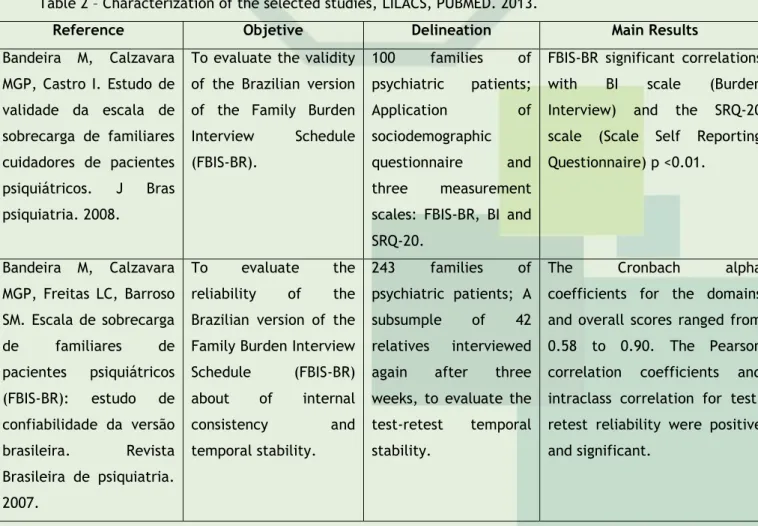
Table 2 presents the studies analyzed, classified by reference, objective, delineation, and main results (Table 2).
Table 2 – Characterization of the selected studies, LILACS, PUBMED. 2013.
Reference Objetive Delineation Main Results
Bandeira M, Calzavara MGP, Castro I. Estudo de validade da escala de sobrecarga de familiares cuidadores de pacientes psiquiátricos. J Bras psiquiatria. 2008.
To evaluate the validity of the Brazilian version of the Family Burden
Interview Schedule (FBIS-BR). 100 families of psychiatric patients; Application of sociodemographic questionnaire and three measurement
scales: FBIS-BR, BI and SRQ-20.
FBIS-BR significant correlations
with BI scale (Burden
Interview) and the SRQ-20 scale (Scale Self Reporting Questionnaire) p <0.01. Bandeira M, Calzavara MGP, Freitas LC, Barroso SM. Escala de sobrecarga de familiares de pacientes psiquiátricos (FBIS-BR): estudo de confiabilidade da versão brasileira. Revista Brasileira de psiquiatria. 2007. To evaluate the reliability of the Brazilian version of the Family Burden Interview
Schedule (FBIS-BR) about of internal consistency and temporal stability. 243 families of psychiatric patients; A subsumple of 42 relatives interviewed
again after three
weeks, to evaluate the test-retest temporal stability.
The Cronbach alpha
coefficients for the domains and overall scores ranged from 0.58 to 0.90. The Pearson correlation coefficients and intraclass correlation for test-retest reliability were positive and significant.
J. res.: fundam. care. online 2014. out./dez. 6(4):1677-1686
1681
Barroso S, Bandeira M, Nascimento E. Fatores preditores da sobrecarga subjetiva de familiares de pacientes psiquiátricos atendidos na rede pública de Belo Horizonte, Minas Gerais, Brasil. Caderno de saúde pública. 2009.To identify the relative
importance of
predictors factors of subjective burden felt by family members of psychiatric patients attended in public area Belo Horizonte, Minas Gerais.
150 families;
As an instrument for data collection, FBIS-BR scale was used.
The subjective burden was associated with objective burden, factors related to patients' clinical conditions, living conditions, health status and financial conditions of the
caregiver. The level of
subjective burden was lower when the caregiver had leisure and religious activities.
Albuquerque EPT, Cintra
AMO, Bandeira M. Sobrecarga de familiares de pacientes psiquiátricos: comparação entre diferentes tipos de cuidadores. Journal Brasileiro de psiquiatria. 2010. To investigate the objective and subjective burden in three different types of caregivers.
The FBIS-BR was
applied to 30 parents, 30 siblings and 30 spouses of patients with schizophrenia or mood disorders.
Parents had higher burden than the brothers. Compared to spouses, parents had more burden about the problematic behaviors and spending.
Continuing Table 2 – Characterization of selected studies, LILACS, PUBMED. 2013.
Referência Objetivo Delineamento Principais Resultados
Neto EBS, Teles JBM, Rosa LCS. Sobrecarga em familiares de indivíduos com transtorno obsessivo-compulsivo. Revista de psiquiatria clínica. 2011. To evaluate objective and subjective burden levels in relatives of
individuals with
obsessive-compulsive
disorder (OCD) in
samples in the public and private area.
Study of 30 subjects with OCD and 30 family caregivers; Application
of Family Burden
Evaluation Scale (FBIS-BR), sociodemographic questionnaire; Mini International Neuropsychiatric Interview. Statistical significance
between samples in the
objective dimension, with higher levels of burden on the public area and significance in the subjective dimension only in “performing household chores”, with higher levels in the sample of private practice was detected.
Kumari S, Singh AR, Verma AN, Verma PK, Chaudhury S. Subjective burden on spouses of schizophrenia patients. Industrial Psychiatry Journal. 2009. To evaluate and
compare the patterns of subjective burden of spouses of patients with schizophrenia. Study of 50 spouses of patients with schizophrenia (25 men, 25 women). Sociodemographic data were used and the Family Burden Interview Schedule- FBIS.
Both groups, male and female spouses of schizophrenia patients showed moderate level of subjective burden. Both did not differ significantly in burden gravity. Barroso SM, Bandeira M, Nascimento E. Sobrecarga de familiares de pacientes psiquiátricos atendidos na rede pública. Revista de psiquiatria clínica.
To describe the
objective and
subjective burden for families and the most affected aspects of their lives.
Descriptive study with
150 families of
psychiatric patients. FBIS-BR was used and a sociodemographic and clinical questionnaire.
Most caregivers had high objective burden related to the high frequency of help to patients in everyday and high subjective burden regarding concerns with patients.
J. res.: fundam. care. online 2014. out./dez. 6(4):1677-1686
1682
2007.
Wong C. Comparable family burden in families of clinical high-risk and recent-onset psychosis patients. Early Interv Psychiatry. 2008.
To examine the load extension reported by relatives of patients with psychosis.
Family burden was
evaluated in 23 relatives of patients with recent
psychosis and
prodromal. The FBIS evaluated the objective and subjective burden.
To assist the patient with activities of daily living was high. As for subjective burden, both groups were concerned with a frequency between 'sometimes' and 'often'.
Chien WT, Chan S,
Morrissey J. The
perceived burden among Chinese family caregivers
of people with schizophrenia. Journal of Clinical Nursing. 2007. To analyze load of Chinese families of schizophrenic people; test associations with demographic
characteristics, social and family factors, health condition.
Cross-sectional of 203 family caregivers. 4 instruments - Family
Burden Interview
Schedule, Social Support
Questionnaire, Form
Health Survey and
sociodemographic questions.
Families who perceived a higher level of caregiver burden were those who lived with worse functioning, poorer health and less social support. Age, income and number of
family members were
predictors of the burden. Thomas JK, Kumar PNS,
Verma AN, Sinha VK, Andrade C. Psychosocial Dysfunction and Family Burden in Schizophrenia and Obsessive Compulsive Disorder. Indian Journal of Psychiatry. 2004. To evaluate and
compare the pattern
and extension of
psychosocial disorder and family burden in schizophrenia.
Spouses of 35
schizophrenic patients and 30 patients with
OCD. Application
Questionnaire Analysis Dysfunction (DAQ) and FBIS.
Families of schizophrenic patients reported greater weight than the group with
OCD. Patients with
schizophrenia have more
psychosocial disorder.
Among the articles selected for the review 2 (20%), there are studies of validity and/or reliability of the FBIS-BR scale.13-4
The results indicated that the FBIS - BR scale showed significantly correlation with the BI scale (Burden Interview), which evaluates the same construct - caregiver burden, correlations between 0.23 (supervision of problem behaviors) and 0.69 (impact on daily routine) with p <0.01. The correlations, although significantly, were of moderate intensity, justifying by the differences between the two scales, such as the number and essay form of items, number and types of possible answers, beyond the diversity and range of FBIS - BR issues.14
The FBIS-BR also showed significant correlations with the SRQ-20 scale (Self Reporting Questionnaire Scale), between 0.31 (supervision of problem behaviors) and 0.52 (concern for the patient) with p <0.01. The subjective dimension of supervision subscale of problem behaviors did not correlate significantly with the SRQ-20 scale, which can be explained by the fact that not all patients have behavior problems and/or also by incomplete data. The SRQ-20 evaluates a construct different from burden (emotional distress or mental distress), but significant correlations between the two scales are justified because there is a relationship between constructs, considering that the burden incurred by
J. res.: fundam. care. online 2014. out./dez. 6(4):1677-1686
1683
the family can affect their psychological state, resulting in the development of emotionaldistress and common mental disorders.14
In reliability study of the FBIS - BR, the Cronbach alpha coefficients for the domains and overall scores ranged from 0.58 (concern for the patient) to 0.90 (assistance in everyday life). The Pearson correlation coefficients and intraclass correlation for test-retest reliability were positive and significant, ranging from 0.54 (concern for the patient) to 0.92 (assistance in everyday life) with p <0.001. The scale showed good psychometric properties of temporal stability and intern consistency.13 Articles that analyze burden or burden were eight (80%) who used FBIS-BR scale.
Factors directly related to burden identified in the studies relate to age, stage of disease and the disruption of family interactions. Factors inversely related to burden identified in studies correspond to income, leisure, religious activities, social support, patients' clinical conditions, health status, number of caregivers, when the caregiver admitted care and had positive feelings for patience.15-6-7
The objective burden refers to problems or difficulties faced by family, caused by patient behaviors, also related to the frequency of care provided to people with disorder and has a characteristic to quantify. However, subjective burden involves subjective aspects of care provision, refers to personal feelings experienced by family members on the act of caring and may be associated with the effects of objective burden.18
The type of mental disorder influenced the family burden. A study in relatives of patients with schizophrenia reported greater burden than families of patients with obsessive compulsive disorder.15
In another research, the burden in the objective dimension was higher in the sample of the public area, while the burden in the subjective dimension had significance only in matters relating to household chores, with greater results in the sample of private areas. The support subscale in everyday life in the objective dimension of private clinic presented burden level of 1.43 (not at all), and in the subjective dimension the level of burden was 1.58 (very little and/or a little), while in public area in objective dimension the level of burden was 2 (less than once a week), and in subjective dimension was 1.37 (not at all).7
The objective dimension of Supervision subscale of problematic behaviors showed level of burden of 1.12 (not at all) in private areas and the subjective dimension 2.57 (very little and/or a little) while in public are of objective dimension the burden level was 1.57 (not at all and/or less than once a week), and 2.54 subjective scale (very little and/ a little).7
In the Impact subscale on daily routines of private area, the objective dimension presented burden level of 1.03 (not at all), while in public areas the level of objective burden was 1.62 (not at all and/or less than once a week); in Concern subscale with the patient in the subjective dimension of private area, the burden level was 3.05 (sometimes), and in the public area the burden level of subjective dimension was 3.35, which corresponds to “sometimes”.7
In two studies, assisting in the daily life of patients was necessary and changes in routine did not cause objective burden on caregivers showing very little resentment to this.19-20
J. res.: fundam. care. online 2014. out./dez. 6(4):1677-1686
1684
CONCLUSION
Only the subjective burden was evaluated in a study of spouses of patients with schizophrenia. The two groups, male and female spouses did not differ in the severity of the burden felt; in both groups, most had some level of subjective burden.21
Parents had higher burden than the brothers in matters that concern often prepared meals for patients, advised to occupy their free time, they felt greater discomfort at shopping for them and had greater financial burden. The burden of the spouses was higher when compared with the brothers about the financial burden, while the aggressive behavior of patients cared more parents and they had a higher burden than spouses.22
The family burden can be generated by the unpreparedness of families, lack of support and knowledge to develop patient care and also the frustration of not producing physical and mentally healthy and ready to face a family and professional life.19
The contact with the person with some kind of mental disorder causes wear on family members, especially when the disease has acute manifestations, experienced as disabling and stigmatizing, which ends up creating a family burden both physically and emotionally and also economically. The service teams are not prepared to work with the family, focusing on the care of the person.5
The care provided by family members and their involvement in the treatment of individuals with disorders need to be guided and supervised by professional mental health services to promote the health of that person and preserve the health of the family while minimizing the burden risks.7
With this study, it is evident that the LEVEL of family burden varies, it is important to study this variation in order to advance the discussions on the effect and the experience of living with a person with mental illness in the family.
To investigate the burden of the family from the family burden evaluation scale is relevant, since this scale addresses the objective and subjective dimensions of burden experienced by the family, thus enabling propose interventions that are comprehensive.
The results showed that families with higher level of burden were those closest to the patient and in conditions of social vulnerability.
The differences found suggest that it is necessary to think and plan intervention strategies for different groups of family, considering the characteristics of each group. Many research investigating the difference in the level of burden in each group of family caregivers are needed, since there are few references that address this topic.
There is a need to expand these studies regarding the burden in order to create intervention strategies in the family, approaching this group with health services and ultimately make them partners in care to the user.
J. res.: fundam. care. online 2014. out./dez. 6(4):1677-1686
1685
REFERENCES
Studies on this subject contribute to rethink public mental health policies, help managers and workers of substitute services to cope with the burden of family, reflecting on the quality of life for patients and families.
1. Ministério da Saúde (BR). Secretaria de Atenção à Saúde/DAPE. Saúde Mental no SUS: acesso ao tratamento e mudança do modelo de atenção. Relatório de Gestão 2003-2006. Ministério da Saúde: Brasília (DF); janeiro de 2007, 85p. Disponível em: http://bvsms.saude.gov.br/bvs/publicacoes/relatorio_gestao_saude_mental_2003-2006.pdf 2. AMARANTE, P. Reforma Psiquiátrica e Epistemologia. Cad. Bras. Saúde Mental, Vol 1, n.1, jan-abr. 2009.
3. Ministério da Saúde (BR). Secretaria de Atenção à Saúde. Departamento de Atenção Básica. Saúde mental/ Cadernos de Atenção Básica, nº 34. Brasília (DF); 2013 Disponível em: http://neca.org.br/associados/caderno_34.pdf
4. Ministério da Saúde(BR). Secretaria de Atenção à Saúde. Saúde mental no SUS: os centros
de atenção psicossocial. Brasília(DF); 2004. Disponível em:
http://www.ccs.saude.gov.br/saude_mental/pdf/SM_Sus.pdf
5. Cavalheri SC. Transformações do modelo assistencial em saúde mental e os impactos na família. Rev bras enferm. 2010; [citado 30 mar 2013]; 63(1):51-7. Disponível em: http://www.scielo.br/pdf/reben/v63n1/v63n1a09.pdf
6. Melman, J. Família e Doença Mental: repensando a relação entre profissionais de saúde e familiares. 3 ed. São Paulo: Escrituras; 2008.
7. Neto EBS, Teles JBM, Rosa LCS. Sobrecarga em familiares de indivíduos com transtorno obsessivo-compulsivo. Rev psiquiatr clín. 2011; [citado 10 jan 2013]; 38(2):47-52. Disponível em: http://www.scielo.br/pdf/rpc/v38n2/v38n2a01.pdf
8. Wright LM, Leahey M. Enfermeiras e famílias: um guia para avaliação e intervenção na família. São Paulo: Roca; 2008.
9. Hirdes A, Navarini V. A Família do Portador de Transtorno Mental: Identificando Recursos Adaptativos. Texto contexto enferm. 2008; [citado 20 abr 2013]; 17(4):680-8. Disponível em: http://www.scielo.br/pdf/tce/v17n4/08.pdf
10. Cooper HM. scientific guidelines for conducting integrative research reviews. Review of Educational Research. 1982; 52(2):291-302.
11. Tessler RC, Gamache GM. The Family Burden Interview Schedule – Short Form (FBIS/SF). Armherst: Machmer Hall; 1994.
12. Bandeira M, Calzavara MGP, Varella AAB. Escala de sobrecarga dos familiares de pacientes psiquiátricos: adaptação transcultural para o Brasil (FBIS-BR). J bras psiquiatr. 2005; 54(3):206-14.
13. Bandeira M, Calzavara MGP, Freitas LC, Barroso SM. Escala de sobrecarga de familiares de pacientes psiquiátricos (FBIS-BR): estudo de confiabilidade da versão brasileira. Rev bras
J. res.: fundam. care. online 2014. out./dez. 6(4):1677-1686
1686
psiquiatr. 2007; [citado 25 fev 2013]; 29(1):47-50. Disponível em:http://www.scielo.br/scielo.php?script=sci_arttext&pid=S1516-44462007000100014&lng=pt&nrm=iso&userID=-2
14. Bandeira M, Calzavara MGP, Castro I. Estudo de validade da escala de sobrecarga de familiares cuidadores de pacientes psiquiátricos. J bras psiquiatr. 2008; [citado 17 jan 2013]; 57(2):98-104. Disponível em: http://www.scielo.br/pdf/jbpsiq/v57n2/a03v57n2.pdf 15. Thomas JK, Kumar PNS, Verma AN, Sinha VK, Andrade C. Psychosocial Dysfunction and Family Burden in Schizophrenia and Obsessive Compulsive Disorder. Indian j psychiatry.
2004; [citado 28 mar 2013]; 46(3):238-43. Disponível em:
http://www.ncbi.nlm.nih.gov/pmc/articles/PMC2951649/pdf/IJPsy-46-238.pdf
16. Barroso S, Bandeira M, Nascimento E. Fatores preditores da sobrecarga subjetiva de familiares de pacientes psiquiátricos atendidos na rede pública de Belo Horizonte, Minas Gerais, Brasil. Cad saúde pública. 2009; [citado 8 abril 2013]; 25(9):1957-68. Disponível em: http://www.scielo.br/pdf/csp/v25n9/10.pdf
17. Chien WT, Chan S, Morrissey J. The perceived burden among Chinese family caregivers of people with schizophrenia. J clin nurs. 2007 Jun; 16(6):1151–61.
18. Soares C, Munari D. Considerações acerca da sobrecarga em familiares de pessoas com transtornos mentais. Ciênc cuid saúde. 2007; [citado 17 fev 2013]; 6(3):357-62. Disponível em: http://periodicos.uem.br/ojs/index.php/CiencCuidSaude/article/view/4024/2717 19. Barroso SM, Bandeira M, Nascimento E. Sobrecarga de familiares de pacientes psiquiátricos atendidos na rede pública. Rev psiquiatr clín. 2007; [citado 10 fev 2013]; 34(6):270-7. Disponível em: http://www.hcnet.usp.br/ipq/revista/vol34/n6/270.html 20. Wong C, Davidson L, Mcglashan T, Gerson R, Malaspina D, Corcoran C. Comparable family burden in families of clinical high-risk and recent-onset psychosis patients. Early interv psychiatry. 2008; 2(4):256–61.
21. Kumari S, Singh AR, Verma AN, Verma PK, Chaudhury S. Subjective burden on spouses of schizophrenia patients. Indian j psychiatry. 2009 Jul/Dec; 18(2):97–100.
22. Albuquerque EPT, Cintra AMO, Bandeira M. Sobrecarga de familiares de pacientes psiquiátricos: comparação entre diferentes tipos de cuidadores. J bras psiquiatr. 2010;
[citado 18 jan 2013]; 59(4):308-16. Disponível em:
http://www.scielo.br/pdf/jbpsiq/v59n4/07.pdf
Received on: 20/09/2013 Required for review: 10/06/2014 Approved on: 31/07/2014 Published on: 01/10/2014
Contact of the corresponding author: Daiane de Aquino Demarco Email: [email protected]. Endereço: Rua Doutor Victor Russumano, 142. CEP: 96077-620 - Bairro: Areal – Pelotas/RS.