Ana Rita da Silva Bernardino
Degree in Biochemistry
A biotechnological approach for vanillin production
Dissertation for the Degree of Master in Biotechnology
Supervisor: Doctor Cristiana Andreia Vieira Torres, Post-doctoral
researcher, FCT-UNL
Co-supervisor: Professor Maria da Ascensão Carvalho Fernandes
Miranda Reis, Full professor, FCT-UNL
Jury: President: Prof. Dr. Carlos Alberto Gomes Salgueiro Examiner: Prof. Dr. Rui Manuel Freitas Oliveira
September, 2017
iii
Ana Rita da Silva Bernardino
Degree in Biochemistry
A biotechnological approach for vanillin production
Dissertation for the Degree of Master in Biotechnology
Supervisor: Doctor Cristiana Andreia Vieira Torres, Post-doctoral
researcher, FCT-UNL
Co-supervisor: Professor Maria da Ascensão Carvalho Fernandes
Miranda Reis, Full professor, FCT-UNL
v
A biotechnological approach for vanillin production
Copyright © Ana Rita da Silva Bernardino, Faculdade de Ciências e Tecnologia, Universidade
Nova de Lisboa.
A Faculdade de Ciências e Tecnologia e a Universidade Nova de Lisboa têm o direito,
perpétuo e sem limites geográficos, de arquivar e publicar esta dissertação através de
exemplares impressos reproduzidos em papel ou de forma digital, ou por qualquer outro meio
conhecido ou que venha a ser inventado, e de a divulgar através de repositórios científicos e
de admitir a sua cópia e distribuição com objectivos educacionais ou de investigação, não
comerciais, desde que seja dado crédito ao autor e editor.
vii
Agradecimentos
Ao longo deste ano de trabalho desafiante são muitas as pessoas às quais quero deixar uma palavra de agradecimento.
Queria, em primeiro lugar, agradecer à minha orientadora, Cristiana Torres, por toda a ajuda e apoio prestado, todas as discussões e o conhecimento que partilhou comigo e me ajudou a adquirir. Obrigada pelos conselhos, mesmo nos meus momentos de mais insegurança e preocupação.
À minha co-orientadora, a Professora Maria Ascensão Reis, um muito obrigada pela oportunidade de trabalhar e aprender tanto nos laboratórios do BIOENG, por todo o entusiasmo no meu trabalho, todas as discussões, sugestões e conhecimentos partilhados. Um obrigada também pelo interesse que me despertou por esta área de trabalho nas aulas e me fez escolher este tema.
Agradeço ainda à Drª Carla Brazinha pela oportunidade de integrar este projecto.
À Rita Valério, quero agradecer pelo que me ensinou e me ajudou no trabalho laboratorial, pela paciência e disponibilidade, mas também pela motivação, boa disposição e amizade ao longo deste ano.
Agradeço também a todos os membros do grupo BIOENG pela forma como me receberam e me ajudaram sempre que precisei, com especial atenção a Diana Araújo, Sílvia Baptista, João Pereira, Patrícia Reis, Inês Farinha e Filomena Freitas por me terem integrado, ouvido e aconselhado, mas também pelo bom ambiente de trabalho, boa disposição e simpatia.
Aos meus colegas de tese e companheiros no laboratório, Joana Marques, Patrícia Freitas, Sónia Nóbrega, Letícia Fialho, David Cruz, agradeço a companhia, o apoio e também os bons momentos. Aos meus amigos e companheiros de tese, Eliana Guarda, Juliana Almeida, Liane Meneses, Sara Mateus e Gonçalo Abrantes, um grande obrigada pela paciência, apoio e encorajamento nos momentos de maior desânimo e frustração e nos momentos de mais alegria também. Obrigada pela partilha de conhecimento, pela motivação para a escrita, pela amizade e pelos bons momentos que passámos juntos.
Aos meus amigos Bioqs de Coimbra, Adriana Mamede, Bruna Santos e Ricardo Santo, obrigada pelos momentos de diversão e pelo apoio, mesmo que à distância.
À Professora Margarida Castro, não só uma professora, mas também uma amiga, pelos conselhos, pela preocupação e atenção, muito obrigada.
À minha família, especialmente aos meus pais e à minha irmã, agradeço todo o carinho, paciência, apoio, motivação e compreensão, sem dúvida fundamental ao longo deste ano e de todo o meu percurso académico.
ix
Abstract
Vanillin is the main component of the vanilla flavor and since natural vanilla coming from the vanilla orchids has a high market price, vanillin can be produced synthetically as alternative. However, nowadays there is a growing interest in natural products and the production of natural vanilla cannot cover the demand. Therefore, over the last years, biotechnological approaches have been studied for vanillin production that, when obtained by this way, can be considered as natural.
In this thesis, the process of bioproduction of vanillin from ferulic acid by the Amycolatopsis sp. ATCC 39116 was studied in bioreactor. This microorganism has a remarkable capability to produce vanillin from ferulic acid, since it can tolerate high concentrations of substrate and product.
The objective of this work was to optimize the vanillin production varying some conditions of the standard production that contains 5 g.L-1 of yeast extract, 20 g.L-1 of glucose and is fed with a single pulse of ferulic acid (10 g.L-1). In these conditions, the maximum vanillin concentration achieved was 5.28 g.L-1,
with a yield of vanillin in ferulic acid of 0.62 g.g-1 and a volumetric productivity of vanillin of 0.28 g.L-1.h-1.
In the study of the effect of nitrogen concentration in vanillin production, different concentrations were tested (2.00 to 0.25 g.L-1) resulting in different cellular concentrations. The best production was obtained
with 0.50 g.L-1 of nitrogen (coming from 5 g.L-1 of yeast extract, standard conditions), giving rise to 5 g.L-1 of biomass.
The influence of the nitrogen source was tested by replacing half of the yeast extract that constitutes the cultivation medium by some ammonium salts. Ammonium phosphate was the salt that showed better results, thus had been chosen to perform a bioreactor run. This substitution led to a slower growth and lower vanillin volumetric productivity (0.14 g.L-1h-1).
The study of the impact of glucose concentration in vanillin production revealed that the presence of this carbon and energy source in the broth during the transformation phase is important to achieve an accumulation of the product. In its absence, vanillin is consumed at a higher rate and converted into vanillic acid.
Studies with different feeding pulse strategies were performed and the best results were obtained when the broth was removed before the addition of each pulse with biomass recovering, avoiding toxic vanillin concentrations. With this approach it was possible to obtain a higher vanillin volumetric productivity of 0.46 g.L-1.h-1 and a yield of vanillin in ferulic acid of 0.69 g.g-1 similar to the standard.
Keywords
xi
Resumo
O principal componente do aroma a baunilha é a vanilina e, uma vez que a baunilha natural, proveniente das orquídeas, tem um valor de mercado muito elevado, a vanilina é produzida, alternativamente, por via sintética. No entanto, hoje em dia, há um crescente interesse por produtos naturais e a produção de baunilha não consegue satisfazer a procura. Ao longo dos últimos anos, têm sido estudadas abordagens biotecnológicas para a produção de vanilina que, ao ser obtida por esta via, pode ser considerada natural.
Nesta tese estudou-se o processo de produção de vanilina em biorreactor a partir de ácido ferúlico por
Amycolatopsis sp. ATCC 39116. Este microrganismo tem uma capacidade excepcional para produzir
vanilina a partir do ácido ferúlico, uma vez que consegue tolerar elevadas concentrações do substrato e do produto.
Este trabalho teve como objectivo optimizar a produção de vanilina, variando algumas condições do processo padrão, que consiste em 5 g.L-1 de extracto de levedura, 20 g.L-1 de glucose e um único pulso de alimentação (ácido ferúlico 10 g.L-1). Nestas condições, a concentração máxima de vanilina obtida foi 5.28 g.L-1, com um rendimento de vanilina em ácido ferúlico de 0.62 g.g-1 e uma produtividade volumétrica de vanilina de 0.28 g.L-1.h-1.
No estudo do efeito da concentração de azoto na produção de vanilina, foram testadas várias concentrações de azoto (de 2.00 a 0.25 g.L-1), resultando em diferentes concentrações celulares. A melhor produção foi obtida com 0.5 g.L-1 de azoto (proveniente de 5 g.L-1 de extracto de levedura, a condição padrão), originando 5 g.L-1 de biomassa.
A influência da fonte de azoto foi testada recorrendo à substituição de metade do extracto de levedura que constitui o meio de cultivo por diferentes sais de amónia. O fosfato de amónia foi o que mostrou melhores resultados, tendo sido posteriormente testado em biorreactor. Esta substituição levou a que o crescimento e produção fossem mais lentos, resultando numa menor produtividade volumétrica de vanilina (0.14 g.L-1h-1).
O estudo do impacto da concentração de glucose na produção de vanilina revelou que a presença desta fonte de carbono e energia no caldo de fermentação durante a fase de produção é importante para se obter uma acumulação do produto. Na sua ausência, a vanilina é rapidamente consumida e transformada em ácido vanilico.
Foram estudadas diferentes estratégias de alimentação por pulsos, sendo que os melhores resultados foram obtidos quando o caldo de fermentação foi removido, com recuperação da biomassa, antes da adição de cada pulso de substrato, evitando concentrações tóxicas de vanilina. Desta forma, foi possível aumentar a produtividade volumétrica de vanilina para 0.46 g.L-1.h-1 mantendo-se um rendimento vanilina em ácido ferúlico de 0.69 g.g-1, semelhante ao ensaio padrão.
Termos chave
xiii
List of contents
1. Introduction and Motivation ... 1
1.1 Vanilla: a natural or a synthetic flavor ... 1
1.2 Biotechnological production of vanillin ... 3
1.3 Transformation of ferulic acid by Amycolatopsis sp. ATCC 39116 ... 5
1.3.1 Ferulic acid: the substrate ... 5
1.3.2 Toxicity of vanillin... 6
1.3.3 Amycolatopsis sp. ATCC 39116, an interesting vanillin producer ... 7
1.3.4 Bioprocess conditions ... 9
1.4 Motivation ... 10
2. Materials and methods ... 11
2.1 Vanillin production in bioreactor ... 11
2.1.1 Microorganism and growth medium composition ... 11
2.1.2 Inocula preparation ... 11
2.1.3 Fed-batch bioreactor operation ... 11
2.2 Effect of nitrogen concentration ... 12
2.3 Influence of nitrogen source ... 12
2.3.1 Shake flask experiments ... 12
2.3.2 Bioreactor experiment ... 13
2.4 Impact of glucose concentration ... 14
2.5 Pulse feeding strategy ... 14
2.5.1 Fed-batch with multiple pulse feedings ... 14
2.5.2 Fed-batch with multiple pulse feedings and biomass recovery ... 14
2.5.3 Multiple pulse feedings with biomass recovery ... 14
2.6 Analytical techniques ... 15
2.6.1 Cell growth ... 15
2.6.2 Biomass quantification ... 15
2.6.3 Phenolic compounds quantification ... 15
2.6.4 Glucose quantification ... 15
xiv
2.6.6 Calculation method ... 16
3. Results and discussion... 19
3.1 Vanillin production in bioreactor ... 19
3.2 Effect of nitrogen concentration ... 21
3.3 Influence of nitrogen source ... 25
3.4 Impact of glucose concentration ... 28
3.5 Pulse feeding strategy ... 30
4. Conclusions and future work ... 39
5. References ... 41
xv
List of Figures
Figure 1.1 – Industrial applications of vanillin, where ■ represents food and beverage industries (45%),
■ cosmetic and perfume industries (38%), ■ pharmaceutic industry (15%) and ■ other utilizations (2%) (Adapted from Eswaran 2017). ... 1
Figure 1.2 – Chemical structure of vanillin. ... 2
Figure 1.3 – Chemical structures of some of the substrates for vanillin production: ferulic acid, eugenol, isoeugenol, glucose and lignin. ... 3
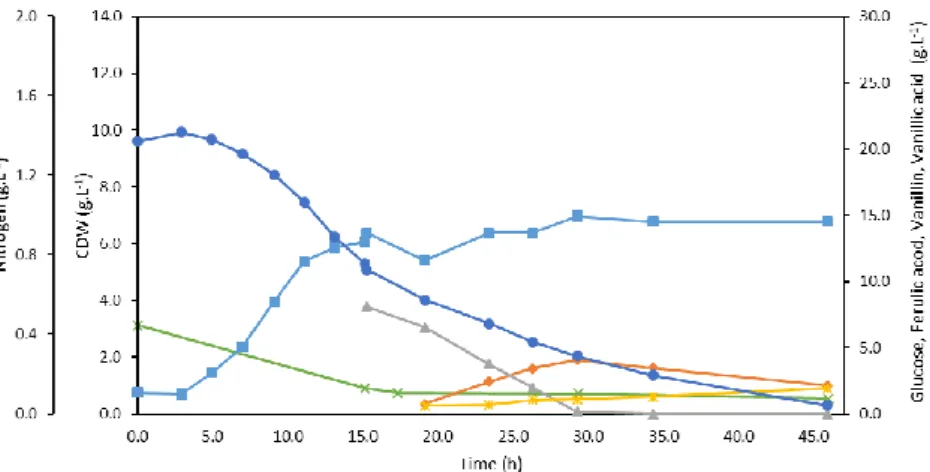
Figure 1.4 – The CoA-dependent catabolic pathway proposed for Amycolatopsis sp ATCC 39116 for degradation of ferulic acid via vanillin (Fleige et al. 2013). ... 8 Figure 3.1 – Cultivation profile of Amycolatopsis sp. ATCC 39116 in standard conditions, showing the concentrations of CDW (■), glucose (•), nitrogen (), ferulic acid (▲), vanillin (), vanillic acid () and pO2 (+) during the run time ... 19
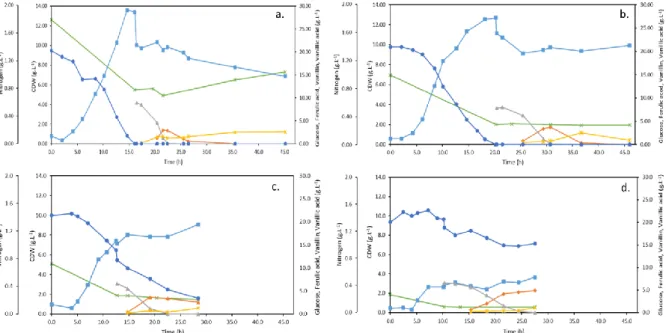
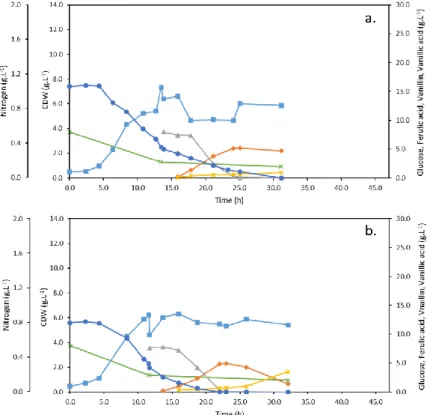
Figure 3.2 – Cultivation profiles of Amycolatopsis sp. ATCC 39116 at different initial nitrogen concentrations: a) Run 1: 2 g.L-1, b) Run 2: 1 g.L-1, c) Run 3: 0.75 g.L-1 and d) Run 4: 0.25 g.L-1. The concentrations of CDW (■), glucose (•), nitrogen (), ferulic acid (▲), vanillin () and vanillic acid () are represented throughout the run time. ... 22
Figure 3.3 – Cultivation profile of Amycolatopsis sp. ATCC 39116 in a medium containing 0.25 g.L-1 of nitrogen coming from yeast extract and 0.25 g.L-1 coming from ammonium phosphate (Run 5). The concentrations of CDW (■), glucose (•), nitrogen (), ferulic acid (▲), vanillin () and vanillic acid () are represented throughout the run time. ... 27
Figure 3.4 – Cultivation profiles of Amycolatopsis sp. ATCC 39116 at different initial glucose concentrations: a) Run 6: 15 g.L-1, b) Run 7: 10 g.L-1. The concentrations of CDW (■), glucose (•), nitrogen (), ferulic acid (▲), vanillin () and vanillic acid () are represented throughout the run time. ... 28
Figure 3.5 – Cultivation profiles of Amycolatopsis sp. ATCC 39116 with different feeding pulse strategies: a) Run 8: multiple pulse feeding, b) Run 9: multiple pulse feeding and biomass recovery and c) Run 10: multiple pulse feeding with biomass recovery. The concentrations of CDW (■), glucose (•), nitrogen (), ferulic acid (▲), vanillin () and vanillic acid () are represented throughout the run time. ... 32
xvii
List of tables
Table 2.1 – Total nitrogen concentration (Ntotal) studied in the experiments performed and the corresponding concentrations of yeast extract and ammonium sulphate ((NH4)2SO4) used to achieve the desired Ntotal. ... 12 Table 2.2 – Concentration of ammonium salts and yeast extract used in shake flasks experiments. .. 13
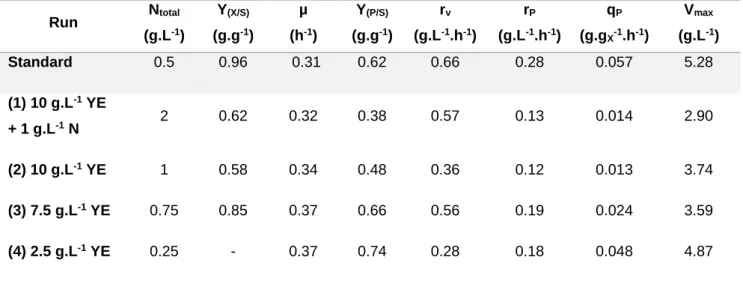
Table 3.1 – Parameters of growth and production and maximum concentration of vanillin obtained in standard conditions and in the cultivation runs for study the effect of the nitrogen concentration in vanillin production. ... 23
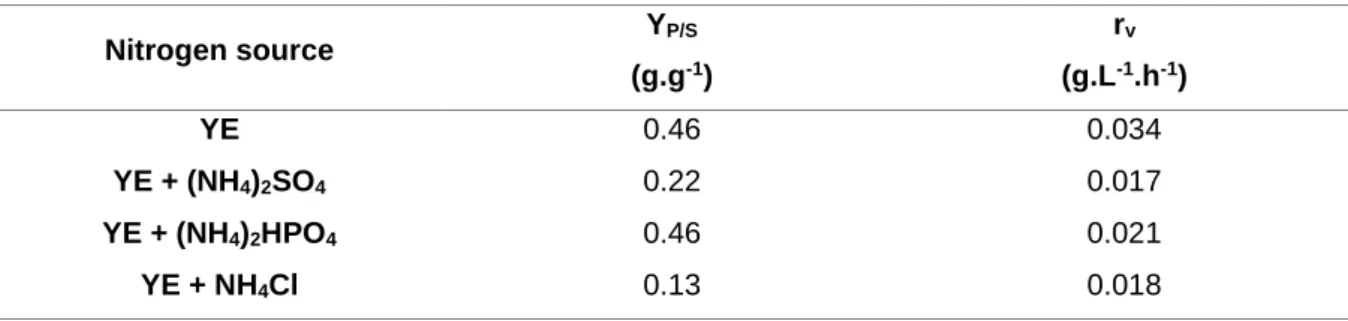
Table 3.2 – Yield of vanillin in ferulic acid and rate of vanillin production obtained for each nitrogen source tested: the control experiment and the ammonium salts that represent a half of the nitrogen source, (NH4)2SO4, (NH4)2HPO4 and NH4Cl. ... 26 Table 3.3 – Comparison of growth and vanillin production obtained in standard conditions and in the run performed with the nitrogen coming from yeast extract and ammonium phosphate. ... 27
Table 3.4 – Comparison of growth and vanillin production parameters obtained in standard conditions and in the cultivation runs performed with different glucose concentrations. ... 29
Table 3.5 – Parameters of vanillin production calculated for each pulse of ferulic acid fed in the runs performed for the study of the pulse feeding strategy: yield of vanillin in ferulic acid, rate and specific rate of vanillin production and maximum vanillin concentration reached in the pulse. ... 35
Table 3.6 – Comparison of the overall parameters of the growth and production obtained in the vanillin production process, in the standard run and in the runs performed for the study of the pulse feeding strategy and the vanillin produced in each run. ... 37
xix
Abbreviations
ATP – Adenosine Triphosphate CDW – Cell Dry Weight CoA – Coenzyme A
ECH – Enoyl-CoA Hydratase/Aldolase FCS – Feruloyl-CoA Synthetase Glc – Glucose
HPLC – High Performance Liquid Chromatography N – Nitrogen
OD600 – Optical Density at 600 nm pO2 – Partial Oxygen Pressure (%) V – Vanillin
VDH – Vanillin Dehydrogenase YE – Yeast Extract
Variables
qP – Specific productivity (gvanillin.gX-1.h-1)
qv – Specific rate of vanillin production (gvanillin.gX-1.h-1) rc – Rate of consumption of a compound (gcompound.L-1.h-1) rP – Volumetric productivity (gvanillin.L-1.h-1)
rv – Rate of vanillin production (gvanillin.L-1.h-1) t – Time (h)
𝑥 – Biomass concentration (g.L
-1)𝑥
0 – Initial biomass concentration (g.L-1) YP/S – Yield of vanillin in ferulic acid (g.g-1) YX/S – Yield of biomass in glucose (g.g-1) P – Vanillin produced (g.L-1)S1 – Glucose consumed (g.L-1) S2 – Ferulic acid consumed (g.L-1) µ – Specific growth rate (h-1)
A biotechnological approach for vanillin production
1
1. Introduction and Motivation
1.1 Vanilla: a natural or a synthetic flavor
Vanilla is one of the most widely used flavors in the world, its major application is in food and beverage industries, flavoring chocolate, ice cream and coffee, for example, but is also extensively applied in perfume and cosmetic industries. The major component of vanilla flavor, vanillin, is also used in pharmaceutical industry for production of some drugs, as L-DOPA, dopamine and papaverine, and due to its antimicrobial and antioxidant activities, it is applied as food preservative (Walton et al., 2003; Ramachandra Rao and Ravishankar, 2000; Fache et al., 2016; Kaur and Chakraborty, 2013). The appliance of vanillin in the industries are illustrated in Figure 1.1.
Figure 1.1 – Industrial applications of vanillin, where ■ represents food and beverage industries (45%), ■ cosmetic and perfume industries (38%), ■ pharmaceutic industry (15%) and ■ other utilizations (2%) (Adapted from Eswaran 2017).
Natural vanilla is extracted from the cured beans of Vanilla planifolia and Vanilla tahitensis, two species of vanilla orchids, and those cured beans contain only 2% of vanilla flavor that can be extracted (Bomgardner, 2016; Ramachandra Rao and Ravishankar, 2000). The natural vanilla flavor is a complex mixture of flavor components with more than 170 volatile aromatic compounds identified (Ramachandra Rao and Ravishankar, 2000). The main component of this flavor is vanillin, an aromatic aldehyde, which chemical structure is represented in Figure 1.2. The major producer of natural vanilla is Madagascar, with 80% of all production, but it is also produced in lower quantities in Indonesia, India, Uganda and Mexico (Bomgardner, 2016). Natural vanilla is expensive because of the weather conditions and crop dependence, and the production methods that include hand pollination and traditional cure of beans. Furthermore, its production had dropped off for half the normal harvest, making the prices of vanilla rise and eventually return to $1 250per kilogram, like before 2012 (Bomgardner, 2016).
The production of natural vanilla is about 2 000 tons per year but with the growing of the global market and the interest in natural flavors, this type of production is not enough to cover the demand. Only 1% of vanilla flavor comes from the natural source, the majority is produced synthetically, but due to the complexity of the flavor, only its main component, vanillin, is produced (Bomgardner, 2016; Gallage and Møller, 2015).
A biotechnological approach for vanillin production
2
Figure 1.2 – Chemical structure of vanillin.
About 85 % of vanillin with synthetic origin is produced using the petrochemical precursor guaiacol, and almost the rest has lignin as raw material (Fache et al., 2016). Even though synthetic vanillin is cheaper than the natural vanilla, about $10 per kilogram, its production has a negative environmental impact because the organic solvents used in vanillin purification and petrochemical sources are not considered as renewable resources (Bomgardner, 2016; Fache et al., 2016; Gallage and Møller, 2015).
Nowadays there is a rising interest by the consumers for healthy habits where natural food is included, so the demand for natural products has increased with the companies substituting the synthetic vanillin by natural vanilla to label the products as all-natural (Bomgardner, 2016). However, the global production cannot support the demand and the flavor companies are trying to find other sources of natural vanillin, with the quality presented by the vanilla extracted from cured beans (Bomgardner, 2016; Gallage and Møller, 2015). Biotechnological processes are good alternatives for this problem because they are considered natural, according to European and US legislations. In European Union, a substance can be labeled as natural since it is “obtained by appropriate physical, enzymatic or microbiological processes from material of vegetable, animal or microbiological origin” and must “correspond to substances that are naturally present and have been identified in nature”(European Commission, 2008). In United States, natural flavor “means the essential oil, oleoresin, essence or extractive, protein hydrolysate, distillate, or any product of roasting, heating or enzymolysis, which contains the flavoring constituents derived from a spice, fruit or fruit juice, vegetable or vegetable juice, edible yeast, herb, bark, bud, root, leaf or similar plant material, meat, seafood, poultry, eggs, dairy products, or fermentation products thereof, whose significant function in food is flavoring rather than nutritional” (U.S. Food and DrugAdministration).
There are already some biotechnological-derived vanillin in the market which offer an alternative to synthetic vanillin made from petrochemical sources. The company Solvay produces vanillin Rhovanil® Natural, the first to be commercially available, obtained by fermentation of ferulic acid from rice bran by an unmodified strain. This product is considered natural according to US and European regulation (Solvay). De Monchy Aromatics also produces natural vanillin by a bioconversion process from ferulic acid found in rice bran oil and is considered natural by EU regulation (Van Berkel, 2016; De Monchy Aromatics). The company Mane obtains vanillin by bioconversion of eugenol from clove oil and the companies Evolva and International Flavors and Fragrances commercialize vanillin synthetized from glucose by genetic modified microorganisms, eliminating the toxicity of vanillin for the microorganisms with the sugar group, that needs to be removed in order to obtain vanillin (Leffingwell, 2015). These
A biotechnological approach for vanillin production
3 alternatives are more expensive than the synthetic vanillin obtained from petrochemical source and cheaper than the natural vanilla from cured beans, however the price reaches several hundred dollars per kilogram (Bomgardner, 2016).
1.2 Biotechnological production of vanillin
There are other advantages for products obtained by biotechnological processes besides the labelling as natural. When compared with a synthetic approach these advantages include the high specificity for the substrate or the product, in case of the interest in only one of the isomers, and the softer production conditions, being less harmful to the environment. Comparing to the natural aroma, biotechnological production has the advantage of not depending on agriculture conditions, like crop or climate, having an impact in the price. The possibility of a scale-up process and the application on the industry as a controllable process is also a positive point (Krings and Berger, 1998; Kaur and Chakraborty, 2013). Given the need and the interest in biotechnological production of vanillin there are many studies with different substrates and microorganisms tested to obtain the optimum production conditions and yields. Biotechnological vanillin can be obtained from biotransformation of natural substrates by fungi, bacteria, genetically modified microorganisms and plant cells. The most studied substrates are ferulic acid, eugenol and isoeugenol, sugars specially glucose, lignin, aromatic amino acids and phenolic stilbenes (Gallage and Møller, 2015). The chemical structures of the substrates for production of vanillin that will be approached in this section are represented in Figure 1.3.
Figure 1.3 – Chemical structures of some of the substrates for vanillin production: ferulic acid, eugenol, isoeugenol, glucose and lignin.
Of all the substrates referred above, ferulic acid is the most studied for vanillin production because it is abundant in nature, present in the plant cell wall, and has a similar chemical structure with the desired molecule (Gallage and Møller, 2015; Priefert et al., 2001). There are several strains of microorganisms that can produce vanillin from this substrate and the most studied that are reported to produce levels above 1 g.L-1 are Amycolatopsis ATCC 39116 (re-classification of Streptomyces setonii ATCC 39116)
A biotechnological approach for vanillin production
4
(Ma and Daugulis, 2014b; Ma and Daugulis, 2014a; Muheim and Lerch, 1999), Amycolatopsis sp. V1 (Ma and Daugulis, 2014a), Aspergillus niger and Pycnoporus cinnabarius in a two-phase process including these two microorganisms (Zheng et al., 2007).
Eugenol and isoeugenol are present in clove oil as main component and eugenol was the substrate reported for production of vanillin in the first patent for microbiological production of this flavor (Gallage and Møller, 2015; Priefert et al., 2001). Some microorganisms in nature metabolize eugenol and isoeugenol having ferulic acid and vanillin as intermediate products (Gallage and Møller, 2015). The advantages of using eugenol as a substrate are the price, cheaper than ferulic acid, which makes it more attractive, and the identification as GRAS (Generally Recognized as Safe) for usage as food additives. However it has a toxic effect in the microorganisms, inhibiting their metabolism and their growth (Gallage and Møller, 2015; FDA - U.S. Food & Drug Administration; Muheim and Lerch, 1999). The microorganisms that are better studied in eugenol catabolism are Pseudomonas, in terms of enzymes and genes involved, however there are not an accumulation of vanillin because it is degraded in other products such as vanillic acid and protocatechuic acid, since vanillin is toxic for microorganisms (Gallage and Møller, 2015; Priefert et al., 2001; Muheim and Lerch, 1999). Pseudomonas HR199 with mutations in genes that are involved in degradation of vanillin has been reported in literature as producer of this flavor compound (Overhage et al., 1999; Priefert et al., 2001). A recombinant Amycolatopsis sp. HR167, that is a vanillin tolerant microorganism, is also reported as vanillin producer from eugenol, since it became capable of using eugenol as sole carbon source (Overhage et al., 2006; Priefert et al., 2001). The sugars are very attractive sources for production of vanillin by microorganisms due to the abundance and the low cost as raw material (Hansen et al., 2009; Gallage and Møller, 2015). The most studied sugar for production of this compound is glucose (Gallage and Møller 2015; Kaur and Chakraborty, 2013; Priefert et al., 2001). The advantage of glucose is that, below to certain concentrations, is nontoxic to microorganisms, since it is very commonly used by them as source of carbon and energy, and there are not the problem of the off-taste that can occur when the substrate is an aromatic compound like ferulic acid or eugenol (Gallage and Møller, 2015). However, in nature there is no microorganism reported able to produce vanillin from glucose, so the biosynthesis has been studied in recombinant organisms such as Escherichia coli, and yeasts such as Saccharomyces
cerevisiae (Gallage and Møller, 2015; Kaur and Chakraborty, 2013; Priefert et al., 2001). Some work
with recombinant yeasts involve the incorporation of the entire vanillin production pathway, but also the expression of a glycosyltransferase to produce vanillin-β-D-glucoside, that is less toxic to the cells than vanillin, allowing a better accumulation of the compound (Brochado et al., 2010; Hansen et al., 2009). This process for overcoming the toxicity of the compound is based on the natural process for production of vanilla in Vanilla planifolia, but a transformation process is needed to transform the product in vanillin (Hansen et al., 2009). In literature, the most reported work with recombinant E. coli studied the biotransformation of glucose in vanillic acid by this microorganism, and its subsequent enzymatically reduction in vanillin by enzymes isolated from Neurospora crassa (Li and Frost, 1998).
A biotechnological approach for vanillin production
5 Lignin is an abundant source of aromatic compounds and nowadays a part of synthetic vanillin is obtained chemically by this source, however some studies has been done for its microbiological transformation to obtain vanillin (Fache et al., 2016; Priefert et al., 2001; Sainsbury et al., 2013). White-rot fungi can degrade lignin, due to the presence of the extracellular enzyme lignin peroxidase, and trace amounts of that aromatic compound were identified (Martínez et al., 2005; Priefert et al., 2001). The bacteria Rhodococcus jostii RHA1, that can also degrade lignin, was studied for production of vanillin with a deletion of a vanillin dehydrogenase gene that makes the microorganism capable of accumulate the compound (Ahmad et al., 2011; Sainsbury et al., 2013).
The most studied substrates and the corresponding microorganisms used for vanillin production were presented in this section. In the next section, more specific information related to the process that was carried out in this work will be presented.
1.3 Transformation of ferulic acid by Amycolatopsis sp. ATCC 39116
1.3.1 Ferulic acid: the substrate
Ferulic acid is a hydroxycinnamic acid, extremely abundant, found in plant cell walls. It is normally found linked to carbohydrates by covalent bonds, forming esters or ethers bonds with lignin and hemicelluloses, and can also occur as amides. The presence of this molecule confers rigidity and strengthens the cell wall by cross-linking with pentosane chains, arabinoxylans, hemicelluloses and lignin, making these components less vulnerable to hydrolytic enzymes during the development of the plant. The double bond that ferulic acid has in its side chain (the chemical structure can be seen in Figure 1.3) is subjected to cis-trans isomerization but it is extracted mostly in its trans-isomeric form (Tilay et al., 2008; Kumar and Pruthi, 2014; Rosazza et al., 1995).
Ferulic acid is found in fruits, vegetables, grains, leaves and other agricultural products such as beans, corn hulls, wheat, rice and seeds of coffee. Some examples of the content in ferulic acid are 9.1-14.3 mg/0.1 kg in coffee, 9.2-9.9 mg/0.1 Kg in orange, 5.4 mg/0.1 Kg in banana, 1.2-2.8 mg/0.1 kg in carrots, 8.7 mg/0.1 kg in peanuts and 313 mg/0.1 Kg in popcorn (Zhao and Moghadasian, 2008; Kumar and Pruthi, 2014).
To release ferulic acid from the natural sources there are methods for chemical extraction, namely alkaline or acidic hydrolysis (Tilay et al., 2008). Alkaline methods can break ester bonds formed by ferulic acid in plant cell walls. This type of hydrolysis leads to a better yield in releasing some phenolic acids, including ferulic acid, since the acidic hydrolysis can degrade hydroxycinnamic acids as well (Arranz and Saura Calixto, 2010; Pan et al., 2003; Acosta-Estrada et al., 2014; Kim et al., 2006). However, there are other types of chemical linkages, like some types of ether linkages, that are not affected by alkaline treatment, but acidic hydrolysis can cleave them (Xu et al., 2005).
Nowadays, there is a growing interest for healthy and natural products and those chemical methods referred above to extract ferulic acid cannot be considered as natural. So, the alternative can pass through the enzymatic release from natural sources. As ferulic acid is found linked with hemicelluloses,
A biotechnological approach for vanillin production
6
namely arabinoxylans by ester bonds with arabinose residues, is necessary to break those polysaccharides. For this kind of extraction, a combination of enzymes produced by bacteria and fungi can be used. Such enzymes need to have ferulic acid esterase and carbohydrate hydrolase activities, which includes enzymes such as feruloyl esterase, acetyl xylan esterase, xylanase and arabinoxylanase (Uraji et al., 2013; Dupoiron et al., 2017). However, the results available on literature show that the yields achieved by the enzymatic release are still lower than those obtained by alkaline extraction and the drawback of the process is the difficulty of recovering the enzymes for reuse (Uraji et al., 2013; Dupoiron
et al., 2017; He et al., 2015).
Besides its use for vanillin production by biotechnological ways already mention above, ferulic acid and its derivatives have a wide range of functions that allow their application in pharmaceutical and cosmetic industry but also in food industry. It has been reported that, due to its antioxidant activity caused by the formation of a resonance phenoxy radical, ferulic acid shows an anti-inflammatory activity and can act as an anti-diabetic, anti-ageing and anti-cancer agent (Srinivasan et al., 2007; Ou and Kwok, 2004; Acosta-Estrada et al., 2014; Kumar and Pruthi, 2014). This property is also important in food industry, so ferulic acid can be used as additive to preserve food. Due to its capacity as cross-linking agent, ferulic acid can be used to increase the viscosity and form gels from polysaccharides as pectin (Kumar and Pruthi, 2014; Ou and Kwok, 2004).
1.3.2 Toxicity of vanillin
Vanillin is an aromatic aldehyde (its chemical structure can be seen in Figure 1.2), and aldehydes are very reactive forming, for example, schiff bases that can lead to the cell death by inhibition of enzymatic activity (Fleige et al., 2013; Gallage and Møller, 2015; Sinha et al., 2008). There are also studies showing that phenolic compounds, as vanillin, can affect or inhibit the DNA, RNA and proteins and its synthesis by formation of covalent bonds with them. It can also affect the glucose uptake, pH homeostasis and ion gradients since the aromatic ring gives hydrophobicity to the molecule, allowing interactions with the cytoplasmic membrane (Fleige and Meyer, 2016). These seems to be the reasons why vanillin cannot be accumulated in high concentrations by the producing microorganisms. Because of its toxicity, vanillin is degraded in some less harmful compounds such as vanillic acid, vanillyl alcohol and guaiacol instead of being accumulated, leading to low production yields, being the main problem with industrial application of the biotechnological process (Fleige et al., 2013; Kaur and Chakraborty, 2013).
Some microorganisms, namely some soil actinomycetes, are being studied for vanillin production from ferulic acid. These microorganisms are Amycolatopsis sp. and and Streptomyces because of its tolerance to the substrate and the product, allowing a better vanillin accumulation, making these strains interesting to industrial applications (Brunati et al., 2004; Muheim and Lerch, 1999).
In the literature, the most reported strains in production of vanillin are Amycolatopsis sp. ATCC 39116,
Amycolatopsis sp. HR 167 and Streptomyces sp. V-1. Although there is a published patent for vanillin
production with Amycolatopsis sp. HR 167 with a vanillin concentration of 11.5 gL-1 and a molar yield of 77.8%, the studies with this bacteria are, in most cases, at molecular level in order to identify genes and
A biotechnological approach for vanillin production
7 its modification for a better vanillin production (Graham S. Dr. Byng, Rudolf Dr. Hopp, 1996; Jörg Overhage, Alexander Steinbüchel, 2006; Steinbüchel, 2002; S. Achterholt, H. Priefert, 2000). The strain
Streptomyces sp. V-1 shows vanillin productions of 5.24 gL-1 with a molar yield of 74.6% (Hua et al. 2007) but better results are also found in literature, with a production of 9.09 gL-1 of vanillin and a molar yield of 95.2 gL-1 (Ma and Daugulis, 2014a). For Amycolatopsis sp. ATCC 39116 some results shown in literature for vanillin productions and molar yields are 9.4 gL-1 and 89.2% (Ma and Daugulis, 2014b), 9.18 gL-1 and 96.1 % (Ma and Daugulis, 2014a), 12.2 gL-1 and 68.6% (Fleige et al., 2016), respectively.
1.3.3 Amycolatopsis sp. ATCC 39116, an interesting vanillin producer
There are many studies in literature about the actinomycete Amycolatopsis sp ATCC 39116, including molecular studies to report the pathways for production and degradation of vanillin and studies related to the optimization and knowledge of the production process. In the most cases, the substrate used for production of vanillin is ferulic acid (Sutherland et al., 1983; Fleige et al., 2016; Fleige et al., 2013; Ma and Daugulis, 2014b; Ma and Daugulis, 2014a; Muheim and Lerch, 1999; Pérez-Rodríguez et al., 2016). There is also a published patent for the biotransformation of ferulic acid to vanillin using this microorganism (Muheim, Andreas; Müller, Bruno; Münch, Thomas; Wetli, 1998).
The pathway for ferulic acid degradation proposed for Amycolatopsis sp. ATCC 39116 is coenzyme A (CoA)-dependent as it is shown in Figure 1.4 (Fleige et al., 2013). In the initial step of this pathway, the enzyme Feruloyl-CoA synthetase (FCS) is activated in the presence of the cofactors: adenosine triphosphate (ATP), Coenzime A (CoASH) and magnesium chloride (MgCl2) and catalyze the formation of feruloyl-CoA from ferulic acid. Then, the enzyme Enoyl-CoA hydatase/aldolase (ECH) catalyze the reactions of hydration and removal of acetyl-CoA leading to the formation of vanillin (Gallage and Møller, 2015; Fleige et al., 2013). The gene expression that encodes this enzyme is induced by ferulic acid (Fleige et al., 2016).
As vanillin has a toxic effect to the cells, it is catabolized in vanillic acid by a Vanillin dehydrogenase (VDH). This enzyme as a maximum activity at pH 8.0 and temperature of 44˚C, but it is active at a wide range of temperatures and pHs (BRENDA; Fleige et al., 2013). The discovery of this enzyme and the gene that encodes it, allowed a different approach in studies for improvement of vanillin production, preventing the catabolism of vanillin in vanillic acid. Fleige et al. (2013) showed that deletion of the gene which encodes the enzyme VDH do not affect ferulic acid catabolism since it is not part of the cluster with other genes responsible for degradation of that compound. This opened the possibility to study the production and the degradation of vanillin in a vdh delection mutant. These studies show that vdh mutant can reach a higher vanillin concentration and molar production yield of vanillin in ferulic acid (14.4 ± 1 g/L and 80.9% ± 4.6%) than the wild type (12.2 ± 2.3 g/L and 73.9% ± 9.5%). This happens without a previous production of vanillic acid like other authors described in the wild strain, since vanillin is not catabolized in vanillic acid at the same rate as it is in wild type (Muheim and Lerch, 1999; Fleige et al., 2016; Ma and Daugulis, 2014a). The production, even that low, of vanillic acid may be due to other mechanisms of degradation presents in the cells or an unspecific aldehyde dehydrogenase (Fleige et
A biotechnological approach for vanillin production
8
acid is added to the broth based in genetic modifications. Fleige et al. (2016) studied the addition of copies that were constitutively expressed of fcs and ech that encoded the genes for the two enzymes needed in the beginning of the metabolic pathway. The results showed an enhancement of ferulic acid transformation and no adaptation phase. In the other hand, there were a higher production of vanillic acid than in the vdh mutant firstly mentioned.
Figure 1.4 – The CoA-dependent catabolic pathway proposed for Amycolatopsis sp ATCC 39116 for degradation of ferulic acid via vanillin (Fleige et al. 2013).
In the end of the metabolic pathway, the vanillic acid formed during ferulic acid transformation is demethylated to protocatechuic acid by the enzyme Vanillate demethylase (VanA and VanB) or decarboxylated, forming guaiacol (Fleige et al., 2013) (Figure 1.4).
For the great accumulation of vanillin that can be achieved using this strain, two possibilities are presented in literature. Muheim and Lerch (1999), observed that for higher concentrations of ferulic acid,
Amycolatopsis sp. ATCC 39116 could accumulate vanillin instead of converting it into vanillic acid,
suggesting a metabolic bottleneck in that step. These authors also reported an accumulation of vanillic acid until a certain level, after which vanillin starts to be accumulated. Fleige et al.(2013) also reached to that last observation and suggested the occurrence of a regulatory mechanism from vanillic acid which influences gene expression for VDH enzyme, or the enzymatic activity, as a possible explanation for the capability of that bacteria to accumulate vanillin instead of degrading it.
Although Amycolatopsis sp. ATCC 39116 is a strain with a notable tolerance to vanillin, if this compound is present in the lag or exponential growth phase, it has harmful effects to the cell, inhibiting growth in
A biotechnological approach for vanillin production
9 lag phase or repressing it in exponential phase. However, the presence of vanillin in stationary phase has no damaging effects in the cell density. So, vanillin production must be performed in stationary phase in order to avoid the negative effect on cells (Ma and Daugulis, 2014b). Besides this tolerance in stationary growth phase, high concentrations of vanillin affect the metabolism of cells (Fleige et al., 2016). Vanillin concentrations higher than 7 g.L-1 seems to cause cell death after some hours and exposure to 10 g.L-1 have a strong effect in a smaller period of time. In other hand, until 4 g.L-1 of vanillin is reached, the microorganism is able to tolerate it, with an initial viable cell decrease. Nevertheless, vanillin concentrations above 10 g.L-1 have already been reported in literature, but an adaptation to the presence of vanillin by the microorganisms seems not to happen. The explanation suggested by the authors that carried out these studies was that the induction of the detoxification mechanisms for vanillin in cells were not made by the toxic product but by other compound, for example ferulic acid. This explains the reason for, in the fermentation broth in presence of the substrate, cells can tolerate higher concentrations without such level of cell death even with the production rates strongly decreasing at that time (Fleige et al., 2016).
1.3.4 Bioprocess conditions
Nowadays there is a demand for natural products, and biotechnological vanillin can be part of this category, but this product is still much more expensive than the product obtained chemically. In order to try to make vanillin more competitive it is necessary to understand the bioconversion process and try to optimize its yields and productivity. These goals can be reached by the optimization of culture medium, namely: carbon and nitrogen sources and trace elements and growth factors, as well as the operating conditions such as: temperature, pH, aeration and the feeding strategy.
For vanillin production from ferulic acid by Amycolatopsis sp. ATCC 39116, there is already a published patent, in which glucose is used as carbon source, yeast extract as nitrogen source, and the need of phosphates, growth factors and trace elements is also expressed (Muheim, Andreas; Müller, Bruno; Münch, Thomas; Wetli, 1998).
In terms of industrial application, besides the low yields and productivities, there are some drawbacks in the medium composition: glucose is a substrate with high purity which increases the production costs as well as yeast extract that is an expensive nitrogen source. But there are not available studies about the medium composition concerning the substitution of these two components or a part of them. Studies about the optimization of some conditions for vanillin production have been made mainly in shake flasks, trying to understand the process and optimize pH, concentration of glucose and yeast extract in the medium, but also addition of vanillic acid in the beginning of the transformation phase and the feeding strategy (batch or fed-batch) (Pérez-Rodríguez et al., 2016; Ma and Daugulis, 2014a; Muheim and Lerch, 1999). Better productions seem to be achieved neither with a low, nor with a high cell concentration, but in between cell densities (Ma and Daugulis, 2014a; Pérez-Rodríguez et al., 2016) and glucose and yeast extract concentrations can do that control in cell mass (Ma and Daugulis, 2014a). Regarding the concentration of ferulic acid, and because the amount of vanillin produced depends on
A biotechnological approach for vanillin production
10
the concentration of substrate added to the medium (Muheim and Lerch, 1999), results in literature show that a major concentration of substrate leads to better productions. However, ferulic acid has antimicrobial activity, so there has to be a balance between the maximization of feed and its toxicity, taking into account that with a higher cell density there are more resistance to toxic effects (Pérez-Rodríguez et al., 2016; Ma and Daugulis, 2014a). This conclusion and the experiments made by some authors, lead to the fact that fed-batch has more advantages than batch processes (Pérez-Rodríguez
et al., 2016). However, the existing optimization studies, even though being in shake flasks with no
control in pH, dissolved oxygen, or stirring, they are all made under different conditions (e.g. temperatures, pHs and medium composition), making it difficult to compare the results. When the process is carried out in bioreactors, a set of other conditions, besides the ones that are referred before, appear with the need for optimization, such as stirring speed and aeration conditions (Ma and Daugulis, 2014b).
1.4 Motivation
There is a growing interest by the consumers in natural products and consequently, production of vanillin by a biotechnological approach using microorganisms and natural raw products as substitute of the chemically synthetized one, might be an interesting alternative. Therefore, and having in mind the difficulties to obtain an interesting vanillin production yield and productivity that allow to apply the process at industrial scale (Kaur and Chakraborty, 2013; Priefert et al., 2001), a biotechnological vanillin production process using the vanillin tolerant microorganism Amycolatopsis sp. ATCC 39116 and model solutions of ferulic acid as substrate was studied in this thesis.
The objective of this work was to optimize the process in the following parameters:
• From the standard operational conditions, study the influence of nitrogen, with yeast extract, and glucose concentrations in the biotransformation process, trying to reach the best conditions for vanillin production;
• Study the possibility of substituting a part of yeast extract with another nitrogen source, in order to make the process more attractive;
A biotechnological approach for vanillin production
11
2. Materials and methods
2.1 Vanillin production in bioreactor
2.1.1 Microorganism and growth medium composition
The strain used in all experiments was Amycolatopsis sp. ATCC 39116, it was maintained in cryovials containing 20% (v/v) glycerol at -80˚C.
The culture was grown in a growth medium containing: Na2HPO4, 4 gL-1; KH2PO4, 1 gL-1; NaCl, 0.2 g.L -1, MgSO4.7H2O, 0.2 g.L-1; CaCl2.H2O, 0.05 g.L-1; glucose anhydrous, 20 g.L-1 and yeast extract, 5 g.L-1. The medium was sterilized in autoclave at 1 bar, 121˚C for 30 minutes.
2.1.2 Inocula preparation
Cells were transferred from the cryovial and grown in plates with the growth medium at 45˚C. For preparation of the pre-inoculum, a colony was transferred to a 500 mL shake flask with 200 mL of growth medium and incubated in an orbital shaker at 45˚C at 200 rpm for 36 h. After that, another 500 mL shake flask with growth medium was inoculated with 10% (v/v) of the pre-inoculum and incubated during 48 h under the same conditions. The manipulation of the microorganisms was performed in a laminar flow chamber to maintain the sterile conditions.
2.1.3 Fed-batch bioreactor operation
Experiments for production of vanillin were carried out in 2 L bioreactors (BioStat B-plus, Sartorius, Germany) with an initial volume of 1.8 L. The bioreactors containing the growth medium were inoculated with about 10% (v/v) of inoculum prepared as it was described above.
The temperature was automatically controlled at 45˚C and as the experiments were performed at a high temperature (45 ˚C), in order to prevent the evaporation losses, the bioreactor condenser was maintained at 3˚C. The aeration rate was kept constant during all experiments at 2 vvm and the dissolved oxygen concentration (or partial oxygen pressure, pO2) was automatically controlled at 30% by the automatic variation of the stirrer rate, between 500 and 1000 rpm, provided by two six-blade impellers. To prevent the foam formation an antifoam Y-30 emulsion was automatically added to the broth. The process is divided in two phases: the growth phase, when cells are cultivated in the growth medium in sterile conditions and the bioconversion phase, when ferulic acid is added and sterile conditions are not maintained. During the growth phase pH was controlled at 7.2±0.02, and in the bioconversion phase, pH was adjusted and controlled at 8.2±0.02, by the addition of 5 M NaOH and/or 5 M HCl.
After the end of the exponential growth phase the biotransformation phase starts by feeding the bioreactor with a single pulse (of about 220 mL) of a ferulic acid solution (90 g.L-1) to give a concentration of 10 g.L-1. The ferulic acid stock solution was prepared by dissolving the phenolic compound in 0.5 M NaOH.
A biotechnological approach for vanillin production
12
Culture broth samples were periodically taken to monitor the cell growth by measuring the optical density at 600 nm (DO600). The samples were then centrifuged, cell pellets were used for determination of cell dry weight (CDW) and supernatants were used for quantification of ferulic acid, vanillin, vanillic acid, glucose and total nitrogen concentrations.
2.2 Effect of nitrogen concentration
In order to study the effect of nitrogen concentration in the process, experiments were performed in bioreactors with different concentrations of this element.
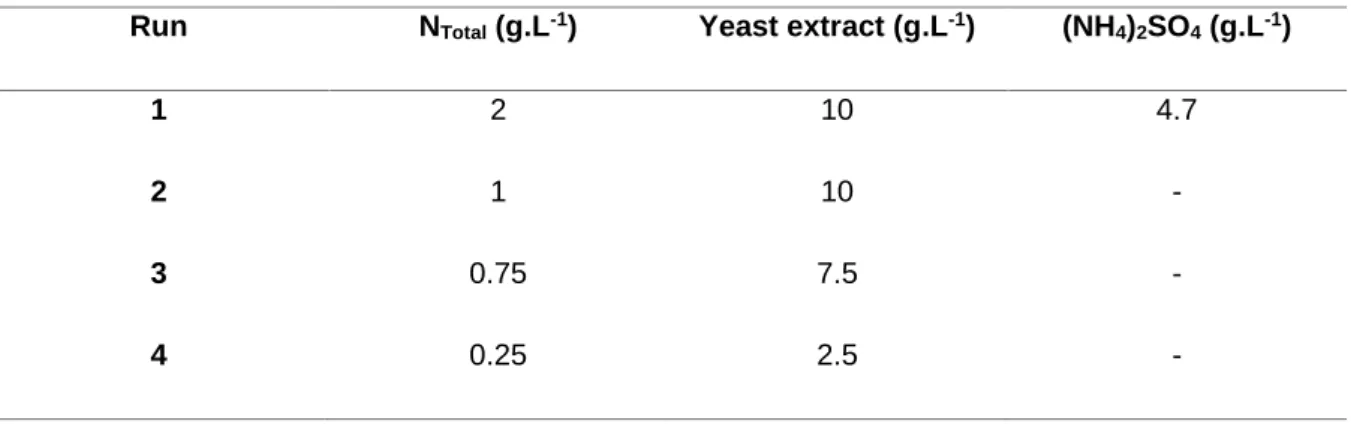
The composition of the growth medium was the same as described in section 2.1.1 with the exception of nitrogen concentration. Different total nitrogen concentrations in study were achieved using yeast extract and a combination of yeast extract and (NH4)2SO4 as represented in Table 2.1.
Table 2.1 – Total nitrogen concentration (Ntotal) studied in the experiments performed and the corresponding
concentrations of yeast extract and ammonium sulphate ((NH4)2SO4) used to achieve the desired Ntotal.
The pre-inoculum and the inoculum of Amycolatopsis sp. ATCC 39116 for this set of experiments were performed as described in section 2.1.2.
The bioreactors operation was carried out in the same conditions of the standard bioreactor, described in section 2.1.3 as well as the feeding mode.
2.3 Influence of nitrogen source
2.3.1 Shake flask experiments
2.3.1.1 Growth medium
Shake flasks experiments were performed in order to study the substitution of a part of yeast extract with another nitrogen source (ammonium salts). The nitrogen sources used in these experiments, besides yeast extract, were (NH4)2SO4, (NH4)2HPO4 and NH4Cl. The compounds were added in appropriate concentrations to have a total nitrogen content of 0.5 gL-1 with 0.25 gL-1 coming from yeast extract and 0.25 gL-1 coming from the others nitrogen sources, as presented in Table 2.2. The other medium components were used in the same concentrations as described in section 2.1.1. The medium was previously sterilized in autoclave at 1 bar, 121˚C for 20 minutes.
Run NTotal (g.L-1) Yeast extract (g.L-1) (NH4)2SO4 (g.L-1)
1 2 10 4.7
2 1 10 -
3 0.75 7.5 -
A biotechnological approach for vanillin production
13
Table 2.2 – Concentration of ammonium salts and yeast extract used in shake flasks experiments.
Experiment Ammonium salts Yeast extract (gL-1) Ammonium salts
(gL-1) 1 - 5 - 2 (NH4)2SO4 2.5 1.20 3 (NH4)2HPO4 2.5 1.18 4 NH4Cl 2.5 0.95 2.3.1.2 Inocula preparation
For preparation of pre-inoculum for the shake flasks experiments, the plates were prepared in the same way described in section 2.1.2. Then, a colony was transferred to a 500 mL baffled shake flask with 200 mL of growth medium described in section 2.1.1 and incubated in an orbital shaker at 45˚C at 200 rpm for 24 h. The inoculum was prepared by transferring 20 mL of the pre-inoculum to another 500 mL baffled shake flask with 200 mL of the growth medium and incubated as pre-inoculum. After this, the mediums containing the different ammonium salts, with pH around 7.2, were inoculated with 20 mL of the inoculum. The sterile conditions were maintained during this process.
2.3.1.3 Shake flasks assays
The cells were grown at 45˚C in an orbital shaker during approximately 24 h and, afterwards they were fed with 22 mL of a 90 gL-1 ferulic acid stock solution, prepared as described in section 2.1.3. After the feed with ferulic acid, pH was adjusted to 8.2 and whenever the samples were taken, pH was readjusted to 8.2 with 5 M NaOH or 5 M HCl. Samples of 2 or 3 mL were periodically taken during the whole process and the pH measure, the cell growth was accompanied by measurement of optical density at 600 nm (DO600). The samples were centrifuged, supernatant was recovered for quantification of ferulic acid, vanillin, vanillic acid, glucose and total nitrogen and pellet for biomass quantification.
2.3.2 Bioreactor experiment
To complete the studies for the substitution of a part of the yeast extract with other nitrogen source, a bioreactor run was performed. In this experiment, the nitrogen source used was the ammonium salt that achieved better results in shake flask experiments, giving a nitrogen concentration of 0.25 gL-1 and the yeast extract giving the same concentration as the ammonium salt, to have a total nitrogen content of 0.5 g.L-1.
The inocula preparation and the bioreactor operation were carried out as explained in section 2.1.2 and 2.1.3, respectively.
A biotechnological approach for vanillin production
14
2.4 Impact of glucose concentration
In order to evaluate the influence of glucose concentration in the process of vanillin production two different glucose concentrations (10 and 15 g.L-1) were tested. The growth medium used for these experiments was the same described in section 2.1.1, apart from the glucose concentration.
The pre-inoculum and inoculum were performed as described in section 2.1.2, as well as the operation of the bioreactor, in section 2.1.3.
2.5 Pulse feeding strategy
To improve vanillin production a pulse feeding strategy was used. The conditions for the bioreactor cultivation run are described in section 2.1. Ferulic acid pulses were fed to the bioreactor taking into consideration the pO2 rise or the acid addition to the broth, which indicate the end of growth phase or ferulic acid biotransformation. In these studies, the pulse feeding was made to give a concentration around 10 gL-1 of ferulic acid in the bioreactor.
2.5.1 Fed-batch with multiple pulse feedings
After growth phase the first ferulic acid pulse was fed, as described above (section 2.1.3). Then, when the stirring started to decrease and/or pO2 increasing, another pulse was given. This process was repeated until the cells were unable to perform the biotransformation, seen by the increase in pO2 values (rising above 30 %, until 100 %)
2.5.2 Fed-batch with multiple pulse feedings and biomass recovery
Other approach tested was the feeding with two pulses of ferulic acid as already explained in section 2.5.1, but before the third pulse, the broth was centrifuged during 20 minutes at 4 424 x g to separate the cells from the medium. Then, the biomass was resuspended in a solution of 8 gL-1 of glucose and immediately reintroduced in the bioreactor. Right after, cells were fed with an appropriate volume of ferulic acid stock solution to give the desired concentration. This process of biomass centrifugation and reintroduction in the bioreactor was repeated until the cells were unable to continue the vanillin production.
2.5.3 Multiple pulse feedings with biomass recovery
This feeding strategy consisted in performing a centrifugation step before every given pulse, including the first one, and resuspending cells in a new medium containing only glucose. The centrifugation conditions were the same described in section 2.5.2, as well as the medium used to resuspend the biomass. As in the previous sub-section this process was executed until the biomass was unable to continue the biotransformation.
A biotechnological approach for vanillin production
15
2.6 Analytical techniques
2.6.1 Cell growth
During the experiments, the cell growth was monitored by measurement of optical density at 600 nm in a UV-Visible spectrophotometer (VWR V-1200 spectrophotometer) and the samples were diluted in deionized water whenever it was necessary. The measurements were done in duplicate.
2.6.2 Biomass quantification
For biomass quantification, the resulting cell pellets from each sample taken, were washed twice with deionized water (two cycles of resuspension with deionized water and centrifugation in a VWR Mini Star Silverline centrifuge), frozen in liquid nitrogen and lyophilized (ScanVac CoolSafeTM, LaboGene) at -110˚C during 48 h. The lyophilized cell pellets were weighted to obtain the cell dry weight (CDW). This analysis was done in duplicate.
2.6.3 Phenolic compounds quantification
To determine the concentration of ferulic acid, vanillin and vanillic acid, the supernatant of each sample taken during the bioconversion phase of the bioprocess were analyzed by high performance liquid chromatography (HPLC; Alliance) equipped with a Nova-Pak® C18 3.9 mm×150 mm column (particle diameter of 4 mm), the UV detector was set at 280 nm. The injection volume of each sample was 20 µL.
The compounds were separated at 30˚C with a gradient elution program at the flow rate of 0.5 mL.min-1. The mobile phase was a mixture of two eluents, one of them (A) constituted by 10 % (v/v)
methanol, 2%(v/v) acetic acid in Milli-Q water and the other (B) constituted by 90 % methanol, 2% acetic acid in Milli-Q water. The gradient elution program was 0% B (0–10 min), from 0 to 15 % B (10–25min), from 15 to 50 % B (25–35 min) and 50 to 0% B (35-38 min). The samples were diluted in a matrix solution constituted by 3 g.L-1 tartaric acid and 0.075 mg.L-1 catechin. The standards used to make the calibration curves (that are represented in appendix, as example in A.1, A.2 and A.3) were prepared in matrix solution with ferulic acid (trans-4-hydroxy-3-methoxycinnamic acid, Sigma-Aldrich, ≥99%), vanillin methoxybenzaldehyde, Sigma Aldrich, 99%) and vanillic acid (4-hydroxy-3-methoxybenzoic acid, Sigma-Aldrich, ≥97%), within concentrations of 0.006 and 0.2 g.L-1.
2.6.4 Glucose quantification
For glucose quantification, the supernatant of the samples taken during the bioprocess were filtered in centrifuge filters (with a pore size of 0.2 µm) and analyzed by HPLC (VWR Hitachi Organizer (Pump L-2130, Auto sampler L-2200, Column Oven L-2350)) with a detector Merck Differential Refractometer RI-71. The pre-column and the column used was VARIAN Metacarb 87H and Biorad aminex HPX -42A 125-0129, respectively. The injection volume of each sample was 99 µL. The samples were separated during 15 min at 30 ˚C with 0.01 N H2SO4 as eluent and a gradient elution program at the flow rate of 0.5 mL.min-1. The standard solution with glucose (D(+)-glucose anhydrous, Scharlau) was prepared in eluent, and the standards prepared to make a calibration curve (that are represented, as example in in appendix A.4) with concentrations range between 1 and 0.06 gL-1.The samples were diluted in eluent.
A biotechnological approach for vanillin production
16
2.6.5 Nitrogen quantification
Total nitrogen was quantified using the Hach Lange Laton® total nitrogen (TNb) kit protocol. The samples were diluted in deionized water to have a nitrogen concentration within the range measured by the kit (between 20 and 100 mgL-1). After the procedure indicated in the protocol, the total nitrogen was measured in the spectrophotometer DR 2800TM by recognition of the bar code present in the sample cell.
2.6.6 Calculation method
The specific growth rate (µ, h-1) was calculated using the following equation:
𝑙𝑛 (𝑥𝑥
0) = 𝜇𝑡 Equation 2.1
where
𝑥 and
𝑥
0 (g.L-1) represent the cell concentration in the moment 𝑡 and in the beginning of the assay, respectively.The yield of biomass on substrate (𝑌𝑋 𝑆⁄ , g.g-1) was calculated using the equation presented below:
𝑌𝑋 𝑆⁄ = 𝛥𝑋
𝛥𝑆1 Equation 2.2
where 𝛥𝑋 (g.L-1) represents the biomass produced during the process and 𝛥𝑆1(g.L-1) represents the substrate consumed during the cell growth, in this case the substrate is glucose.
The yield of product on substrate (𝑌𝑃 𝑆⁄ , g.g-1) was determined by the following equation:
𝑌𝑃 𝑆⁄ = 𝛥𝑃
𝛥𝑆2 Equation 2.3
where 𝛥𝑃 (gL-1) is the maximum concentration of the product formed during the bioprocess, in this case the product is vanillin, and 𝛥𝑆2 (g.L-1) is the concentration of substrate consumed to give rise to that product concentration, in this case the substrate is ferulic acid.
The volumetric productivity (𝑟𝑝, g.L-1.h-1) of vanillin was determined as following:
𝑟𝑝= 𝛥𝑃
𝛥𝑡 Equation 2.4
where 𝛥𝑃 (g.L-1) corresponds to the variation of product concentration, vanillin, in an interval of time 𝛥𝑡 (h), since the beginning of the run and the maximum production of vanillin.
For calculation of specific productivity (g.gX-1.h-1), the equation used was the following:
𝑞𝑝= 𝑟𝑝
𝑋 Equation 2.5
where 𝑋 (g.L-1) is the cell concentration, in dry weight.
A biotechnological approach for vanillin production
17 𝑟𝑣=
𝛥𝑃
𝛥𝑡 Equation 2.6
where 𝛥𝑃 (g.L-1) is the variation of the product vanillin concentration, in an interval of time 𝛥𝑡 (h), that begin by the time that ferulic acid is fed.
The consumption rate of vanillin or ferulic acid (𝑟𝑐, g.L-1.h-1), was determined by the equation below:
𝑟𝑐 = 𝛥𝐶
𝛥𝑡 Equation 2.7
where 𝛥𝐶 (g.L-1) represents the variation of the desired compound concentration (ferulic acid or vanillin), in an interval of time 𝛥𝑡 (h). This interval of time for ferulic acid begins by the time that is added to the broth and for vanillin begins when the product reaches its maximum concentration.
The specific rate of vanillin production (𝑞𝑣, g.gX-1.h-1) was calculated with the following equation: 𝑞𝑣=
𝑟𝑣
𝑋 Equation 2.8
A biotechnological approach for vanillin production
A biotechnological approach for vanillin production
19
3. Results and discussion
3.1 Vanillin production in bioreactor
In order to study the vanillin production from ferulic acid by Amycolatopsis sp. ATCC 39116 a bioreactor run was performed with 5 g.L-1 of yeast extract as nitrogen source and 20 g.L-1 of glucose as carbon source, as it is described in section 2.1.1. At the end of exponential growth phase, around 10 g.L-1 of ferulic acid was added to the bioreactor in a single pulse. The conditions used in this run were those used in previous work (data not shown), and from now on, they will be denominated as standard conditions. Figure 3.1 depicts the standard run for vanillin production, where the profiles of cell growth with the consumption of glucose and nitrogen and the production of vanillin and vanillic acid from ferulic acid are represented over time, as well as the partial oxygen pressure (pO2).
Figure 3.1 – Cultivation profile of Amycolatopsis sp. ATCC 39116 in standard conditions, showing the concentrations of CDW (■), glucose (•), nitrogen (), ferulic acid (▲), vanillin (), vanillic acid () and pO2 (+)
during the run time.
Amycolatopsis sp. ATCC 39116 started to grow exponentially after 4 h of lag phase, reaching a
maximum cell mass of 4.36 g.L-1 in 10 hours. At that time, pO2 started to increase, indicating the beginning of the stationary growth phase. At this moment, according to Ma and Daugulis (2014b), ferulic acid should be added to the broth.
During the exponential growth phase 4.11 g.L-1 of glucose and 0.33 g.L-1 of nitrogen were consumed. The yield of biomass in substrate, glucose, (YX/S) obtained was 0.96 g.g-1, as presented in Table 3.1. At the time that ferulic acid was added, in a concentration of 8.79 g.L-1, pO2 decreased and returned to the minimum controlled, 30%, showing that the cells turned more active again. The production of vanillin started slowly after an adaptation phase (around 3 h), in which the cells are probably activating the mechanisms required to catabolize ferulic acid. A maximum vanillin concentration of 5.28 g.L-1, was reached after 19 h since the beginning of the cultivation run and 8 h since the feeding. The yield of vanillin in ferulic acid (YP/S) for the maximum vanillin concentration was 0.62 g.g-1 (that corresponds to a molar yield of 78.8%). This molar yield is within the values reported by Ma and Daugulis (2014b) and