Nanofibrous Membranes Obtained by
Electrospinning for Bone Tissue Engineering
and Wound Dressing Applications
A thesis submitted to obtain the degree of doctor,
presented by
Javier Aragón Fernández
Nanofibrous Membranes Obtained by Electrospinning
for Bone Tissue Engineering and Wound Dressing
Applications
A thesis
Prepared in the framework of Erasmus Mundus Doctorate in Membrane Engineering (EUDIME) to obtain multiple Doctoral degrees issue by Universidad de Zaragoza, Departamento de Ingeniería Química y Tecnología
del Medio Ambiente
Università della Calabria, Istituto per la Tecnologia delle Membrane (ITM)
Universidade Nova de Lisboa, Facultade de Ciência e Tecnologia
Supervisors:
Dr. Silvia Irusta Alderete, Associate Research Professor, Departamento de Ingeniería Química y Tecnología del Medio Ambiente, Universidad de Zaragoza, Spain
Dr. Loredana De Bartolo, Senior Researcher, Istituto per la Tecnologia delle Membrane, Italy
Dr. Ana Isabel Aguiar-Ricardo, Full Professor, Faculdade de Ciências e Tecnologia of Universidade Nova de Lisboa, Portugal
To my family for their love, compression, and unconditional support.
ACS Absorbable collagen sponge ACN Acetonitrile
AIC Akaike information crite
BSA-FITC Albumin–fluorescein isothiocyanate conjugate ALP Alkaline phosphatase
NH4OH Ammonium hydroxide solution
(NH4)2SO4 Ammonium sulfate
RGD Arginine–glycine–aspartate AES Artificial exudates solutions Bis-GMA Bis-glycidyl dimethacrylate BMA Bone marrow aspirate BMSCs Bone marrow stromal cells BMP Bone morphogenetic protein BMP2 Bone morphogenetic protein 2 BMP7 Bone morphogenetic protein 7 BSA Bovine serum albumin
CaCO3 Calcium carbonate
CaCl2.2H2O Calcium chloride dihydrate
CP Calcium phosphate
CF Carbon fibers CNF Carbon nanofibres CNT Carbon nanotubes
CRV Carvacrol
CARG Compound annual growth rate DMB Demineralized bone matrix DCM Dichloromethane
DMSO Dimethyl sulfoxide
DMEN Dulbecco's modification of eagle medium DPBS Dulbecco's phosphate-buffered saline
EHDA Electrospraying or electrohydrodynamic atomization EE Encapsulation efficiency
EDX Energy dispersive x-ray ETOH Ethanol absolute EthD-1 Ethdium homodimer-1 ECM Extracellular matrix FBS Fetal bovine serum
FTIR Fourier transform infrared GF Glass fibers
HDFs Human dermal fibroblasts HOBs Human osteoblasts
HA Hydroxyapatite
KF Kevlar fiber
MSCS Mesenchymal stem cells
MBC Minimum bactericidal concentration MIC Minimum inhibitory concentration MVTR Moisture vapor transmission rate
MTT 3-(3,4-dimethylthiazol-2-yl)-2,5-diphenyltetrazoliumbromide DMF N,n-dimethylformamide
Han Nanohydroxyapatite NDS Normal donkey serum NHOst Normal human osteoblasts OGM Osteoblast growth medium OCN Osteocalcin
OPN Osteopontin
PBS Phosphate-buffered saline H3PO4 Phosphoric acid
PAG Poly aldehyde guluronate PGA Poly glycolic acid
PLA Poly lactic acid PAA Poly acrylic acid
PBT Poly butylene terephthalate P(DLLA-CL) Poly(d,l-lactide/-caprolactone) PEEK Poly(ether-ether-ketone) PEI Poly(ether-imide)
PELA Poly(ethylene oxide)-b-poly(lactic acid) block copolymer PET Poly ethylene terephthalate
PEG Poly ethyleneglycol
PLGA Poly lactide-co-glycolic acid PLLA Poly l-lactic acid
PPF Poly propylene fumarate PVA Poly vinyl alcohol PCL Poly ε-caprolactone PA12 Polyamide 12
PE Polyethylene
PMMA Polymethyl methacrylate
PP Polypropylene
PSU Polysulfone
PU Polyurethane
rhBMP-7 Recombinant human bone morphogenetic protein 7 RH Relative humidity
RFP Rifampicin
SEM Scanning electron microscope SBF Simulated body fluid
SWCNT Single-wall carbon nanotubes NaCl Sodium chloride
SDS Sodium dodecyl sulfate NaOH Sodium hydroxide NaNO2 Sodium nitrate
SD Standard deviation
SSR Sum of the squared residuals TGA Thermogravimetric analysis
3D Three-dimensional
TGF-β Transforming growth factor-beta TEM Transmission electron microscope β-TCP Tricalcium phosphate
TCP Tricalciumphosphate
TRIS Tris(hydroxymethyl)aminomethane TSA Trypticasein soy agar
TSB Trypticasein soy broth
2D Two-dimensional
UTS Ultimate tensile strengths
UHMWPE Ultra-high molecular weight polyethylene FDA US food and drug administration
Summary and Objectives 1 Resumen y Objetivos 7 Sommario e Obiettivi 13 Resumo e Objetivos 19 CHAPTER I. Introduction 25 I.1 Biomaterials 29
I.1.1 Biomaterial classification 31
I.1.1.1 Metallic biomaterials 31
I.1.1.2 Ceramic biomaterials 33
I.1.1.3 Polymeric biomaterials 35
I.1.1.4 Composite biomaterials 37
I.2 Drug delivery system 40
I.3 Wound dressing materials 44
I.3.1 Wound dressing classification 47
I.4 Tissue engineering 55
I.4.1 Bone tissue engineering 58
I.4.1.1 Classification of scaffolds in bone tissue engineering 64 I.4.1.1.1 Metallic scaffolds in bone tissue engineering 65 I.4.1.1.2 Ceramic scaffolds in bone tissue engineering 65 I.4.1.1.3 Polymeric scaffolds in bone tissue engineering 65 I.5 Techniques to produce materials for biomedical applications 69
References 74
CHAPTER II. Composite membrane obtained by electro-hydrodynamic technique for infection prevention and
treatment in bone repair 91
II.1 Introduction 97
Objective 98
II.2 Preparation of polymeric particles and membrane 99
II.2.1 PLGA particles production 99
II.2.2 Electrospun membranes production 99
II.3 Results and discussion 100
II.3.1 Characterization of composite membranes 100
II.3.2 MIC and MBC determination 106
II.4 Conclusions 111
References 112
CHAPTER III. Laser-treated electrospun fibers loaded with nano-hydroxyapatite for bone tissue engineering 119
III.1 Introduction 125
Objective 127
III.2 Synthesis of inorganic nanoparticles and electrospun
membranes 127
III.2.1 Synthesis of hydroxyapatite nanoparticles 127 III.2.2 Preparation of electrospun membranes 127
III.3 Results and discussion 128
III.3.1 Hydroxyapatite characterization 128
III.3.2 Membranes characterization 130
III.3.2.1 As spun membranes 130
III.3.2.2 Laser treated membranes 134
III.3.3 In vitro bioactivity 135
III.3.4 In vitro cell morphology and viability 137
III.4 Conclusions 145
References 146
CHAPTER IV. Polymeric electrospun membranes for bone morphogenetic protein 2 delivery in bone tissue engineering 153
IV.1 Introduction 159
Objective 160
IV.2 Membrane fabrication 161
IV.3 Results and discussion 163
IV.3.1 Membrane characterization 163
IV.3.2 In vitro protein release 167
IV.3.3 In vitro enzymatic degradation 170
IV.3.4 Cell viability and morphology 173
IV.3.5 Osteogenic, osteoinductive, and osteoconductive activities
of membranes 176
IV.4 Conclusions 181
References 182
CHAPTER V. Electrospun asymmetric membranes for wound
dressing applications 191
V.2 Membrane preparation 200
V.3 Results and discussion 200
V.3.1 Membranes characterization by SEM and FTIR 200
V.3.2 Mechanical properties 204
V.3.3 Fluids handling properties 205
V.3.4 Carvacrol release 208
V.3.5 Antimicrobial properties 210
V.3.6 Cytocompatibility 211
V.3.7 Cell scratch assay 214
V.4 Conclusions 216 References 217 General Conclusions 223 Conclusiones Generales 227 Conclusioni Generali 231 Conclusões Gerais 235
APPENDIX 1. Materials and Methods 239
A.1.1 Materials 245
A.1.2 Physico-chemical characterization 246
A.1.3 In vitro studies in simulated body fluid (SBF) on “Laser-treated electrospun fibers loaded with nano-hydroxyapatite” (Chapter III) 247
A.1.4 Mechanical properties 247
A.1.4.1 Mechanical properties of “Composite membrane loaded
with RFP” (Chapter II) 247
A.1.4.2 Mechanical properties on “Electrospun asymmetric
membranes” (Chapter V) 247
A.1.5 Membranes permeability in “Polymeric electrospun membranes for bone morphogenetic protein” (Chapter IV) 248
A.1.6 Encapsulation efficiency 248
A.1.6.1 Encapsulation efficiency in “Composite membrane loaded
with RFP” (Chapter II) 248
A.1.6.2 Encapsulation efficiency in “Polymeric electrospun membranes for bone morphogenetic protein” (Chapter IV) 249 A.1.6.3 Encapsulation efficiency in “Electrospun asymmetric
membranes” (Chapter V) 249
A.1.7 In vitro release study and kinetic modeling 249 A.1.7.1 In vitro release study and kinetic modeling of “Composite
A.1.7.2 In vitro release study and kinetic modeling of “Polymeric electrospun membranes for bone morphogenetic protein”
(Chapter IV) 250
A.1.7.3 In vitro release study and kinetic modeling of “Electrospun
asymmetric membranes” (Chapter V) 250
A.1.8 Drug release kinetics 250
A.1.9 Swelling studies of “Electrospun asymmetric membranes”
(Chapter V) 252
A.1.10 Water vapor transmission of “Electrospun asymmetric
membranes” (Chapter V) 252
A.1.11 Biodegradation studies 253
A.1.11.1 Enzymatic degradation in “Polymeric electrospun membranes for bone morphogenetic protein” (Chapter IV) 253 A.1.11.2 Biodegradability in a mimic real wound environment of “Electrospun asymmetric membranes” (Chapter V) 253
A.1.12 Bactericidal tests 254
A.1.12.1 Bactericidal tests in “Composite membrane loaded with
RFP” (Chapter II) 254
A.1.12.2 Bactericidal tests in “Asymmetric membranes loaded
with CRV” (Chapter V) 255
A.1.13 Cell attachment, morphology, viability, and
immunohistochemistry 255
A.1.13.1 Cell culture on “Composite membrane loaded with RFP”
(Chapter II) 255
A.1.13.2 Cell morphology on “Composite membrane loaded with
RFP” (Chapter II) 256
A.1.13.3 Confocal analysis on “Composite membrane loaded with
RFP” (Chapter II) 256
A.1.13.4 In vitro cytotoxicity studies of “Composite membrane
loaded with RFP” (Chapter II) 256
A.1.13.5 Cell culture on “Laser-treated electrospun fibers loaded
with nano-hydroxyapatite” (Chapter III) 257
A.1.13.6 Cell viability of “Laser-treated electrospun fibers loaded
with nano-hydroxyapatite” (Chapter III) 257
A.1.13.7 Image processing for cell viability quantification on “Laser-treated electrospun fibers loaded with
nano-hydroxyapatite” (Chapter III) 258
A.1.13.8 Cell morphology on “Laser-treated electrospun fibers loaded with nano-hydroxyapatite” (Chapter III) 258 A.1.13.9 Cell culture on “Polymeric electrospun membranes for
bone morphogenetic protein” (Chapter IV) 258
A.1.13.10 Cell viability of “Polymeric electrospun membranes for
A.1.13.12 Alkaline phosphatase assay in “Polymeric electrospun membranes for bone morphogenetic protein” (Chapter IV) 259 A.1.13.13 Immunohistochemistry in “Polymeric electrospun membranes for bone morphogenetic protein” (Chapter IV) 260 A.1.13.14 In vitro cytotoxicity studies of “Electrospun asymmetric
membranes” (Chapter V) 261
A.1.13.15 Cell morphology and confocal analysis on “Electrospun
asymmetric membranes” (Chapter V) 261
A.1.14 Cell scratch model on “Electrospun asymmetric membranes”
(Chapter V) 262
A.1.15 Statistical analysis 262
References 264
APPENDIX 2. Articles published and participation in scientific
Erasmus Mundus Doctorate in Membrane Engineering (EUDIME) | Summary and Objectives 1
Summary and Objectives
The current Doctoral Thesis work has been performed under a co-supervision agreement between University of Zaragoza (Home University), University of Calabria (Host University) and Faculty of Sciences and Technology of the NOVA University of Lisbon (FCT NOVA) (Host University). This research has been carried out inside the Erasmus Mundus Doctorate in Membrane Engineering program (EUDIME), (FPA 2011-0014), funded by the European Union.
This thesis focused mainly on the use of the electrospinning technique to produce different kind of membranes for biomedical applications. In particular, it described the synthesis and production of inorganic and organic nanoparticles to be used as fillers or as carriers (drug delivery system) as well as the production of electrospun nanofibrous membranes. This work was carried out within the Institute of Nanoscience of Aragon (INA), specifically in the Nanostructured Films and Particles (NFP) group under the supervision of the Professor Silvia Irusta and Dr Gracia Mendoza. Also an important part of the physico-chemical characterization was done at INA.
The study of different biological signals and the use of specific techniques for membrane characterization were acquired at the University of Calabria under the supervision of Dr. Loredana De Bartolo in the Institute on Membrane Technology of the National Research Council of Italy (ITM-CNR). On the other hand, the mobility carried out at the Faculty of Sciences and Technology (FCT NOVA) of Universidade NOVA (FCT NOVA) under the supervision of Professor Ana Isabel Aguiar-Ricardo, allowed a total characterization of two asymmetric membranes following different International Standards to accomplish testing for primary wound dressing.
The development of novel membranes loaded with morphogenetic proteins or antibiotic are of great interest in the field of bone tissue engineering. To promote the cellular viability and extracellular matrix production, electrospun membranes with enhanced porosity and micro-scale pores could be beneficial since increased porosity and pore size can provide a three-dimensional (3D) environment that not only facilitates cell seeding/diffusion but also provides better diffusion of nutrients and waste throughout the membranes. The addition of calcium phosphate ceramics has been extensively investigated to fabricate highly porous membranes to bone
2
Summary and Objectives | Erasmus Mundus Doctorate in Membrane Engineering (EUDIME)
tissue engineering due to their close similar composition of bone, including excellent biocompatibility, osteoinductive and osteoconductive properties. A homogeneous distribution of the bone morphogenetic protein-loaded particles along the entire membrane could be ensuring a continuous release of the growth factor to provide the necessary biochemical cues for bone repair and regeneration.
Antibiotic-loaded membranes may provide drug targeted and sustained release, avoiding the long-term oral and intravenous systematic multidrug administration, which implies toxic side effects, low delivery to the target site and low patient adherence to the treatment. Therefore, membranes loaded with antibiotics can overcome the drawbacks of the traditional therapy sustaining enhanced osteogenic properties for the successful regeneration of the bone.
Another interesting biomedical application of electrospun membranes is the fabrication of efficient smart dressings for the treatment of wounds. A rapid wound healing requires developing appropriate membranes with interconnected pores that allow the oxygen diffusion and transport of metabolic waste, as well as an adequate pore size to prevent rapid dehydration and bacteria penetration. A high absorption capacity and adequate water vapor transmission will be necessary to keep a moist environment in the wound bed. Besides, if the electrospun membrane has some bactericidal properties will be better for the healing process.
The main goal of this thesis was the development of fibrous membranes by electrospinning with the appropriate characteristics to be used in bone tissue engineering or as wound dressing materials. To achieve this target, several specific objectives were defined, which are described in Chapters II to V.
The thesis was divided in the following sections:
CHAPTER I, is an introduction where the concepts of biomaterials, scaffolds and tissue engineering and the main target of drug delivery systems are described. The chapter includes the classification of biomaterials according to the origin of the materials and tissue engineering is also described as well as all the factors that must be taken into account to develop and properly apply a wound dressing are discussed. Different kind of techniques used in the literature to produce scaffolds or membranes for
Erasmus Mundus Doctorate in Membrane Engineering (EUDIME) | Summary and Objectives 3 bone tissue engineering and wound dressings are mentioned, focusing on the use of electrospinning and electrospray to produce them.
CHAPTER II, focuses on the development of enhanced 3D membranes able to promote efficient bone regeneration together with targeted antibiotic release to prevent bacteria colonization. The aim of this work was to synthesize and characterize a drug delivery system consisting of polycaprolactone (PCL) electrospun nanofibers decorated with rifampicin (RFP) loaded into poly(lactic-coglicolic acid) (PLGA) particles. This material would promote bone repair avoiding the impairment of the membrane mediated by infection. The bactericidal ability of the synthesized electrospun material was assessed In vitro against gram positive (Staphylococcus aureus) and gram negative (Escherichia coli) bacteria, as well as its cytocompatibility in human osteoblasts 3D cultures. These results are included in the accepted article entitled “Composite scaffold obtained by electro-hydrodynamic
technique for infection prevention and treatment in bone repair”. Javier
Aragon, Sergio Feoli, Gracia Mendoza, Silvia Irusta. International Journal of Pharmaceutics.
CHAPTER III, describes the synthesis and characterization of core-shell membranes of PCL and polyvinyl acetate (PVAc) obtained by electrospinning. The fibers were loaded with synthetic hydroxyapatite nanoparticles (HAn) to increase the bioactivity of the materials. The prepared membranes were then treated by laser ablation to create desired microscale topographical features in order to favor cell adhesion and growth. All prepared membranes exhibited a three-dimensional network structure with interconnected pores; the laser treatment has modified the structural characteristics of the membrane causing an increase the cell viability and cell density. The materials biocompatibility is affected by the structural properties of the membranes, indeed smaller micropore sizes favor cell adhesion and proliferation. These results are published in the article entitled
“Laser-treated electrospun fibers loaded with nano-hydroxyapatite for bone tissue engineering”. Javier Aragon, Nuria Navascues, Gracia Mendoza,
Silvia Irusta. International Journal of Pharmaceutics 525,112–122, 2017. DOI:10.1016/j.ijpharm.2017.04.022.
CHAPTER IV, refers to the development of a composite electrospun membrane of PCL or PCL/PVAc core–shell fibers loaded with synthetic HAn. These fibers were decorated with bone morphogenetic
4
Summary and Objectives | Erasmus Mundus Doctorate in Membrane Engineering (EUDIME)
protein 2 (BMP2) loaded in/into PLGA particles via simultaneous electrospraying and coaxial electrospinning. The aim of this study was to evaluate the structural and physico-chemical properties and biodegradation processes of the newly developed membranes assessing their ability to address the architectural, biochemical, and functional features of bone tissue. For this purpose, the membrane bioactivity was tested by culturing human osteoblasts on the membranes and by monitoring cell viability up to 4 weeks. The In vitro osteogenic activity of cells seeded onto the membranes was evaluated by assessing alkaline phosphatase (ALP) activity and the expression of osteogenic proteins osteocalcin (OCN) and osteopontin (OPN). These results are published in the article “Polymeric electrospun scaffolds
for bone morphogenetic protein 2 delivery in bone tissue engineering”.
Javier Aragón, Simona Salerno, Loredana De Bartolo, Silvia Irusta and Gracia Mendoza. Journal of Colloid and Interface Science, 531 (2018) 126–137. DOI:10.1016/j.jcis.2018.07.029.
CHAPTER V, describes the synthesis of an antimicrobial wound dressing material, with appropriate mechanical resistance avoiding rapid dehydration and absorbing exudates. PCL/PVAc asymmetric membranes loaded with carvacrol (CRV) were prepared by electrospinning and electrospraying simultaneously. The membranes consist of two layers: the first is an electrospun PCL sheet, the second a PVAc sheet that would be in contact with the skin releasing the antimicrobial compound. The use of different solvents results in different morphologies for the PVAc-CRV layer. The membranes exhibit mechanical properties with strain to failure values that are in the range of human skin, being adequate to be deposited over a wound surface. The samples present Water Vapor Transmission (WVTR) values in the required range to keep good moisture balance with water loss from the wound at the optimal rate. In the first week, more than 60 % of the loaded CRV was released while after three weeks membranes released between 85 to 100 % of the loaded CRV through a Fickian diffusion and diffusion due to polymer relaxation. The synthesized membranes are potential candidates to be used for wound dressing applications. The manuscript summing up these results has been submitted to a scientific journal and is currently under review.
GENERAL CONCLUSIONS, summarizes the conclusions of the thesis work.
Erasmus Mundus Doctorate in Membrane Engineering (EUDIME) | Summary and Objectives 5 APPENDIX 1, describes the main characterization techniques and the methods to evaluate different properties according to the possible applications.
APPENDIX 2, summarizes the articles published and the participation in scientific forums during the thesis period.
Erasmus Mundus Doctorate in Membrane Engineering (EUDIME) | Resumen y Objetivos 7
Resumen y Objetivos
Esta tesis doctoral se ha realizado dentro del marco de un acuerdo de co-tutela entre la Universidad de Zaragoza (Universidad de origen), la Universidad de Calabria (Universidad anfitriona) y la Facultad de Ciencias y Tecnología de la Universidad NOVA de Lisboa (FCT NOVA) (Universidad anfitriona). El trabajo de investigación se ha llevado a cabo dentro del programa de Doctorado en Ingeniería de Membranas Erasmus Mundus (EUDIME), (FPA 2011-0014), financiado por la Unión Europea.
La tesis se centró principalmente en el uso de la técnica de electrohilado para producir diferentes tipos de membranas que puedan ser utilizadas en distintas aplicaciones biomédicas. Se sintetizaron y produjeron nanopartículas orgánicas e inorgánicas para ser utilizadas como relleno o como portadores (sistema de administración de fármacos), así como membranas nanofibrosas electrohiladas. Este trabajo se llevó a cabo en el Instituto de Nanociencia de Aragón (INA), específicamente en el grupo de Nanostructured Films and Particles (NFP) bajo la supervisión de la profesora Silvia Irusta y la Dra. Gracia Mendoza. Una parte importante de la caracterización físico-química se realizó en el INA.
El estudio de diferentes señales biológicas y el uso de técnicas especificad de caracterización de membranas fue realizado en la Universidad de Calabria bajo la supervisión de la Dra. Loredana De Bartolo en el Instituto de Tecnología de Membranas perteneciente al Consejo Naional de Investigación de Italia (ITM-CNR). Por otra parte, la movilidad realizada en la Facultad de Ciencias y Tecnología (FCT NOVA) de la Universidade NOVA (FCT NOVA) bajo la supervisión de la profesora Ana Isabel Aguiar-Ricardo, permitió realizar una caracterización completa de dos membranas asimétricas siguiendo diferentes Normas Internacionales que establecen diferentes ensayos a realizar en apósitos primarios utilizados en heridas.
El desarrollo de nuevas membranas cargadas con proteínas morfogenéticas o antibióticos es de gran interés en el campo de la ingeniería de tejidos óseos. El uso de membranas electrohiladas con una microporosidad mejorada puede ser beneficiosas para mejorar la viabilidad celular debido a que una alta porosidad junto a la presencia de microporos puede proporcionar un entorno tridimensional (3D) que no solamente facilita la siembra y difusión celular sino también proporciona una mejor
8
Resumen y Objetivos | Erasmus Mundus Doctorate in Membrane Engineering (EUDIME)
difusión de los nutrientes y residuos a través de la membrana. La adición de cerámica de fosfato de calcio ha sido ampliamente investigada para fabricar membranas altamente porosas para la ingeniería de tejidos óseos debido a que presentan una composición muy similar al hueso, poseen excelentes propiedades de biocompatibilidad, osteoinductivas y osteoconductoras. Partículas cargadas con proteínas morfogenéticas de hueso distribuidas homogéneamente en las membranas podrían asegurar una liberación continua del factor de crecimiento proporcionando de esta forma las señales bioquímicas necesarias para la reparación y regeneración ósea.
Las membranas cargadas con antibióticos pueden proporcionar una liberación sostenida del fármaco en el sitio de interés, evitando una administración múltiple de fármacos por vía oral o intravenosa durante largos periodos de tiempo, lo que puede implicar efectos secundarios de toxicidad, niveles ineficaces en la zona de interés y disminuyendo el número de pacientes que aceptan estos tratamientos. Por lo tanto, las membranas cargadas con antibióticos pueden superar los inconvenientes de la terapia tradicional manteniendo propiedades osteogénicas mejoradas para la regeneración exitosa del hueso.
Otra aplicación biomédica interesante de las membranas electrohiladas es la fabricación de apósitos inteligentes eficientes para el tratamiento de heridas. Para lograr una curación rápida de la herida es necesario desarrollar membranas apropiadas con poros interconectados que permiten la difusión de oxígeno y el transporte de residuos metabólicos así como un tamaño de poro adecuado capaces de prevenir la deshidratación rápida y la penetración de bacterias. Para mantener un ambiente húmedo en el lecho de la herida se necesita una alta capacidad de absorción y una adecuada transmisión de vapor de agua. Además, si la membrana electrohilada presenta propiedades bactericidas facilitará el proceso de curación.
El objetivo principal de esta tesis fue el desarrollo mediante electrohilado de membranas fibrosas con las características apropiadas para ser utilizadas en la ingeniería de tejidos óseos o como apósito para heridas. En los Capítulos II al V se plantean una serie de objetivos específicos con el fin de cumplir el objetivo principal.
Erasmus Mundus Doctorate in Membrane Engineering (EUDIME) | Resumen y Objetivos 9 CAPÍTULO I, es una introducción donde se describen los conceptos de biomateriales, scaffolds, ingeniería de tejidos y el objetivo principal de los sistemas de liberación de fármacos. Este capítulo incluye la clasificación de los biomateriales según el origen de los materiales y se describe además la ingeniería de tejidos así como también se los factores que deben tenerse en cuenta para desarrollar y aplicar adecuadamente los apósitos para heridas. Se mencionan las diferentes técnicas utilizadas en la literatura haciendo énfasis en el uso de electrohilado y electropulverización para producir scaffolds o membranas para su uso en la ingeniería del tejido óseo y como apósitos para heridas.
CAPÍTULO II, se enfoca en el desarrollo y mejora de membranas 3D capaces de promover una eficiente regeneración ósea junto con la liberación de antibióticos dirigidos para prevenir la colonización de bacterias. El objetivo de este trabajo fue sintetizar y caracterizar un sistema de liberación de fármacos que consiste en nanofibras electrohiladas de policaprolactona (PCL) decoradas con partículas de poli (ácido láctico-coglicólico) (PLGA) cargadas con rifampicina (RFP). Este material favorecería la reparación ósea evitando el deterioro de las membranas provocado por una infección. Se realizó la evaluación In vitro de la capacidad bactericida del material electrohilado sintetizado contra bacterias gram positivas (Staphylococcus aureus) y gram negativas (Escherichia coli), así como su citocompatibilidad en cultivos 3D con osteoblastos humanos. Estos resultados han sido incluidos en un artículo aceptado titulado “Composite
scaffold obtained by electro-hydrodynamic technique for infection prevention and treatment in bone repair”. Javier Aragon, Sergio Feoli,
Gracia Mendoza, Silvia Irusta. International Journal of Pharmaceutics, 2018. CAPÍTULO III, se describe la síntesis y caracterización de membranas con estructura de núcleo-corona de PCL y acetato de polivinilo (PVAc) obtenidas por electrohilado. Las fibras se cargaron con nanopartículas de hidroxiapatita sintética (HAn) para aumentar la bioactividad de los materiales. Las membranas desarrolladas se trataron con ablación láser para crear características topográficas deseadas a nivel micrométrico con el objetivo de favorecer la adhesión y crecimiento celular. Todas las membranas obtenidas presentaron una estructura de poros tridimensionalmente interconectados y el tratamiento con láser provocó un aumento en la viabilidad y densidad celular. Además, el aumento en la
10
Resumen y Objetivos | Erasmus Mundus Doctorate in Membrane Engineering (EUDIME)
biocompatibilidad de las membranas sugiere que los microporos pequeños favorecen la adhesión y proliferación celular. Estos resultados fueron publicados en el artículo titulado “Laser-treated electrospun fibers loaded
with nano-hydroxyapatite for bone tissue engineering”. Javier Aragon,
Nuria Navascues, Gracia Mendoza, Silvia Irusta. International Journal of Pharmaceutics 525,112–122, 2017. DOI:10.1016/j.ijpharm.2017.04.022.
CAPÍTULO IV, se refiere al desarrollo de una membrana electrohilada compuesta por fibras con estructura de núcleo-corona de PCL o PCL/PVAc cargado con HAn sintética. Estas fibras se decoraron con partículas de PLGA cargadas con proteína morfogenética ósea 2 (BMP2) mediante el uso simultaneo de electrohilado coaxial y electropulverización. El objetivo de este trabajo fue evaluar las propiedades estructurales y físico-químicas así como el proceso de biodegradación de las nuevas membranas desarrolladas y su capacidad para abordar las características arquitectónicas, bioquímicas y funcionales del tejido óseo. Para esto, se probó la bioactividad de la membrana mediante el cultivo de osteoblastos humanos sobre ellos y se monitoreo de la viabilidad celular durante 4 semanas. Se evaluó la actividad osteogénica In vitro de las células sembradas sobre las membranas determinando la actividad de la fosfatasa alcalina (ALP) y la expresión de osteocalcina (OCN) y osteopontina (OPN) como proteínas osteogénicas. Estos resultados fueron publicados en el artículo titulado “Polymeric electrospun scaffolds for bone morphogenetic protein
2 delivery in bone tissue engineering”. Javier Aragón, Simona Salerno,
Loredana De Bartolo, Silvia Irusta and Gracia Mendoza. Journal of Colloid and Interface Science, 531 (2018) 126–137. DOI:10.1016/j.jcis.2018.07.029.
El CAPÍTULO V, describe la síntesis de un apósito antimicrobiano para heridas, con una resistencia mecánica adecuada que es capaz de absorber exudados y evitar la deshidratación rápida de una herida. Se prepararon membranas asimétricas de PCL/PVAc cargadas con carvacrol (CRV) mediante el uso simultáneo de electrohilado y electropulverización. Las membranas constan de dos capas; la primera es una capa de PCL electrohilado; la segunda, una lámina de PVAc que estaría en contacto con la piel liberando a su vez el compuesto antimicrobiano. Se demostró que el uso de diferentes disolventes pueden dar lugar a la obtención de diferentes morfologías de la capa PVAc-CRV. Los valores obtenidos de elongación máxima de las membranas son adecuados para ser utilizados como apósitos para heridas ya que están en el mismo rango reportado de elongaciones en la
Erasmus Mundus Doctorate in Membrane Engineering (EUDIME) | Resumen y Objetivos 11 piel humana. Las membranas presentan una tasa óptima de Transmisión de vapor de agua (WVTR) con valores que se encuentran en el rango requerido para mantener un buen balance entre humedad y pérdida de agua en la herida. En la primera semana, se liberó más del 60 % del CRV cargado, mientras que después de tres semanas, las membranas liberaron entre el 85 y el 100 % del CRV cargado mediante la contribución de un proceso de difusión de tipo Fickiano y la relajación delas cadenas poliméricas. Las membranas sintetizadas son candidatas potenciales para ser utilizadas como apósitos para heridas. El manuscrito que resume estos resultados se envió a una revista científica y está bajo revisión.
CONCLUSIONES GENERALES, resume las conclusiones del trabajo de tesis.
APÉNDICE 1, describe las principales técnicas de caracterización y los métodos para evaluar diferentes propiedades en función de las posibles aplicaciones.
APÉNDICE 2, resume los artículos publicados y la participación en foros científicos durante el período de tesis.
Erasmus Mundus Doctorate in Membrane Engineering (EUDIME) | Sommario e Obiettivi 13
Sommario e Obiettivi
La presente tesi di dottorato è stata svolta in base ad un accordo di co-supervisione tra l'Università di Saragozza (Università di appartenenza), l'Università della Calabria (Università ospitante) e la Facoltà di Scienze e Tecnologia dell'Università NOVA di Lisbona (FCT NOVA) (Università ospitante). Questa ricerca è stata condotta all'interno del programma Erasmus Mundus Doctorate in Membrane Engineering (EUDIME), (FPA 2011-0014), finanziato dall'Unione Europea.
Questa tesi è incentrata principalmente sull'uso della tecnica di elettrofilatura per produrre diversi tipi di membrane per applicazioni biomediche. In particolare è descritta la sintesi e la produzione di nanoparticelle inorganiche e organiche da utilizzare come fillers o vettori (sistema di somministrazione di farmaci) e produzione di membrane nanofibrose elettrofilate. Questo lavoro è stato condotto all'interno dell'Institute of Nanoscience of Aragon (INA), in particolare nel gruppo Nanostructured Films and Particles (NFP) sotto la supervisione della Professoressa Silvia Irusta e della dott.ssa Gracia Mendoza. All’interno dello stesso istituto INA si è svolta una parte importante di caratterizzazione chimico-fisica.
Lo studio di diversi segnali biologici e l'uso di tecniche specifiche per la caratterizzazione delle membrane è stato effettuato presso l'Università della Calabria sotto la supervisione della dott.ssa Loredana De Bartolo presso l’Istituto per la Tecnologia delle Membrane del Consiglio Nazionale delle Ricerche (ITM-CNR). Infine, la mobilità svolta presso la Facoltà di Scienze e Tecnologia (FCT NOVA) dell'Università NOVA (FCT NOVA) sotto la supervisione della prof.ssa Ana Isabel Aguiar-Ricardo, ha permesso una caratterizzazione completa di due membrane asimmetriche in accordo a diversi standard internazionali sull’esecuzione dei test per il trattamento primario di una ferita.
Lo sviluppo di nuove membrane caricate con proteine morfogenetiche o antibiotici sono di grande interesse nel campo dell'ingegneria del tessuto osseo. Le membrane elettrofilate con una maggiore porosità e pori su scala micrometrica potrebbero essere utili per promuovere la vitalità cellulare e la produzione di matrice extracellulare. Infatti un incremento della porosità e della dimensione dei pori potrebbe fornire un ambiente tridimensionale che
14
Sommario e Obiettivi | Erasmus Mundus Doctorate in Membrane Engineering (EUDIME)
favorisce il piastramento e la distribuzione cellulare all’interno della membrane promuovendo il trasporto diffusivo di nutrienti e prodotti di rifiuto. L’uso di composti ceramici di fosfato di calcio è stato ampiamente studiato per la realizzazione di membrane altamente porose utili per l’ingegneria del tessuto osseo poiché essi presentano una composizione chimica simile al tessuto osseo, un’eccellente biocompatibilità e proprietà osteoinduttive ed osteoconduttive. Particelle caricate con la proteina morfogenetica ossea distribuite omogeneamente nell'intero membrana potrebbero garantire un rilascio continuo del fattore di crescita, che rappresenta uno stimolo biochimico necessario per la riparazione e la rigenerazione ossea.
Le membrane caricate con antibiotici possono fornire un rilascio mirato e prolungato di farmaci, evitando la somministrazione a lungo termine per via orale ed endovenosa, che implica effetti collaterali tossici, una bassa erogazione al sito target e una bassa risposta al trattamento da parte del paziente. Queste membrane potrebbero superare gli svantaggi della terapia tradizionale sostenendo un incremento dell’osteogenicità che è importante per la rigenerazione ossea.
Un'altra interessante applicazione biomedica delle membrane elettrofilate è la realizzazione di medicazioni intelligenti per il trattamento delle ferite della pelle. Una guarigione rapida delle ferite richiede lo sviluppo di membrane appropriate aventi pori interconnessi che consentano la diffusione dell'ossigeno e il trasporto dei rifiuti metabolici, nonché un'adeguata dimensione dei pori allo scopo di prevenire una rapida disidratazione e la penetrazione di batteri. Un'elevata capacità di assorbimento e una trasmissione adeguata del vapore acqueo saranno necessari per mantenere un ambiente umido nel sito della ferita. Inoltre, le proprietà battericide delle membrane miglioreranno il processo di guarigione.
L'obiettivo principale di questa tesi è lo sviluppo di membrane fibrose mediante elettrofilatura per applicazioni nell'ingegneria del tessuto osseo e per il trattamento di ferite a carico della pelle. A tal scopo sono stati definiti diversi obiettivi specifici descritti nei Capitoli da II a V.
Erasmus Mundus Doctorate in Membrane Engineering (EUDIME) | Sommario e Obiettivi 15 CAPITOLO I, è un'introduzione in cui vengono descritti i concetti di biomateriali, scaffold e ingegneria tissutale e l'obiettivo principale dei sistemi di somministrazione di farmaci. Il capitolo include la classificazione dei biomateriali in base all'origine dei materiali. Viene inoltre descritta l’ingegneria tissutale elencando tutti i fattori per lo sviluppo e l’applicazione di trattamenti per le ferite della pelle. Sono stati menzionati diversi tipi di tecniche utilizzate in letteratura per produrre scaffold o membrane per l'ingegneria del tessuto osseo e le medicazioni delle ferite, concentrandosi sull'uso di electrospinning ed electrospray.
CAPITOLO II è focalizzato sullo sviluppo di strutture 3D innovative in grado di promuovere una rigenerazione ossea efficiente rilasciando nello stesso tempo antibiotici allo scopo di prevenire la colonizzazione batterica. Lo scopo di questo lavoro è stato quello di sintetizzare e caratterizzare un sistema di somministrazione di farmaci costituito da nanofibre elettrofilate di policaprolattone (PCL) decorate con particelle di acido poli(lattico-co-glicolico) (PLGA) caricate con rifampicina (RFP). Questo materiale promuoverebbe la riparazione ossea evitando il danneggiamento della membrana a causa dell'infezione. Le proprietà antibatteriche del materiale sintetizzato mediante elettrofilatura sono state valutate In vitro contro batteri Gram positivi (Staphylococcus aureus) e Gram negativi (Escherichia coli), mentre le caratteristiche dicitocompatibilità sono state testate adoperando colture di osteoblasti umani. Questi risultati sono stati accettati per pubblicare nell'articolo “Composite scaffold obtained by
electro-hydrodynamic technique for infection prevention and treatment in bone repair”. Javier Aragon, Sergio Feoli, Gracia Mendoza, Silvia Irusta.
International Journal of Pharmaceutics, 2018.
CAPITOLO III, descrive la sintesi e la caratterizzazione della membrana core-shell di PCL e polivinilacetato (PVAc) ottenute per elettrospinning. Le fibre sono state caricate con nanoparticelle di idrossiapatite sintetica (HAn) allo scopo di aumentare la bioattività dei materiali. Le membrane preparate sono state quindi trattate mediante ablazione con laser per creare le caratteristiche topografiche su microscala desiderata al fine di favorire l'adesione e la crescita delle cellule.
Tutte le membrane realizzate mostrano una struttura tridimensionale con pori interconnessi ed il trattamento laser ha modificato le caratteristiche strutturali delle membrane provocando un aumento della vitalità e della
16
Sommario e Obiettivi | Erasmus Mundus Doctorate in Membrane Engineering (EUDIME)
densità cellulare. La biocompatibilità delle membrane è fortemente influenzata dalle sue proprietà strutturali infatti la diminuzione della dimensione dei pori risulta in un aumento dell'adesione e della proliferazione cellulare. Questi risultati sono stati pubblicati nell'articolo "Laser-treated electrospun fibers loaded with nano-hydroxyapatite for
bone tissue engineering". Javier Aragon, Nuria Navascues, Gracia Mendoza,
Silvia Irusta. International Journal of Pharmaceutics 525, 12-122, 2017. DOI: 10.1016 / j.ijpharm.2017.04.022.
CAPITOLO IV, si riferisce allo sviluppo di un'impalcatura elettrofilata composita di fibre core-shell PCL o PCL / PVAc caricate con HAn sintetico. Queste fibre sono state decorate con la proteina morfogenetica ossea 2 (BMP2) caricata in particelle di PLGA mediante elettrofiltrazione simultanea ed elettrofilatura coassiale. Lo scopo di questo lavoro è stato quello di valutare le proprietà strutturali e fisico-chimiche nonchè i processi di biodegradazione delle membrane sviluppate investigando la loro capacità di mimare le caratteristiche architettoniche, biochimiche e funzionali del tessuto osseo. A tale scopo, la bioattività delle membrane è stata testata effettuando colture di osteoblasti umani e monitorando la vitalità cellulare fino a 4 settimane. L'attività osteogenica In vitro delle cellule coltivate sulle membrane è stata valutata determinando l'attività della fosfatasi alcalina (ALP) e l'espressione di proteine osteogeniche come l’osteocalcina (OCN) e l’osteopontina (OPN). Questi risultati sono stati pubblicati nell'articolo
"Polymeric electrospun scaffolds for bone morphogenetic protein 2 delivery in bone tissue engineering". Javier Aragón, Simona Salerno,
Loredana De Bartolo, Silvia Irusta e Gracia Mendoza. Journal of Colloid and Interface Science, 531 (2018) 126-137. DOI: 10.1016 / j.jcis.2018.07.029.
CAPITOLO V, descrive la sintesi di un materiale per la medicazione delle ferite con attività antimicrobiche edun'adeguata resistenza meccanica che evita la rapida disidratazione e l'assorbimento degli essudati. Le membrane asimmetriche PCL / PVAc caricate con carvacrolo (CRV) sono state preparate mediante elettrospinning e elettrospray simultaneamente. Le membrane sono costituite da due strati: il primo è un foglio elettrofilato di PCL; il secondo, un foglio di PVAc che durante il contatto con il tessuto epidermico dovrebbe rilasciare il composto antimicrobico. L'uso di diversi solventi determina morfologie differenti per lo strato PVAc-CRV. Le membranes presentano delle proprietà mecchaniche con valori di deformazione fino a rottura che sono nello stesso range di
Erasmus Mundus Doctorate in Membrane Engineering (EUDIME) | Sommario e Obiettivi 17 quello che si trova nella pelle umana, perciò possono essere considerati adeguati per essere depositati sulla superficie di una ferita. I campioni presentano valori di trasmissione del vapore acqueo (WVTR) nell'intervallo richiesto per mantenere un’umidità adeguata con perdita di acqua dalla ferita ad una velocità ottimale. Nella prima settimana, oltre il 60 % del CRV caricato è stato rilasciato mentre dopo tre settimane le membrane hanno rilasciato tra l'85 e il 100 % del CRV caricato attraverso una diffusione di Fick e una diffusione dovuta al rilassamento del polimero. Le membrane sintetizzate sono potenzialmente candidabili per applicazioni come la medicazione di ferite. Il manoscritto che riassume questi risultati è stato presentato a una rivista scientifica ed è in fase di revisione.
CONCLUSIONI GENERALI, riassume le conclusioni del lavoro di tesi.
APPENDICE 1, descrive le principali tecniche di caratterizzazione ed i metodi per valutare le diverse proprietà in base alle possibili applicazioni.
APPENDICE 2, riassume gli articoli pubblicati e la partecipazione a forum scientifici durante il periodo della tesi.
Erasmus Mundus Doctorate in Membrane Engineering (EUDIME) | Resumo e Objetivos 19
Resumo e Objetivos
O presente trabalho de Tese de Doutoramento foi realizado sob um acordo de co-supervisão entre a Universidade de Saragoça (Universidade de Origem), a Universidade da Calábria (Universidade Anfitriã) e a Faculdade de Ciências e Tecnologia da Universidade NOVA de Lisboa (FCT NOVA) (Universidade Anfitriã). Esta investigação foi realizada no âmbito do programa de Doutoramento Erasmus Mundus em Engenharia das Membranas (EUDIME), (FPA 2011-0014), financiado pela União Europeia.
Esta tese enfocou principalmente no uso da técnica de eletrofiação para produzir diferentes tipos de membranas para aplicações biomédicas. Em particular, descreve a síntese e a produção de nanopartículas inorgânicas e orgânicas para serem utilizadas como cargas ou como transportadores (sistema de libertação de fármacos), bem como a produção de membranas nanofibrosas eletrofuncionais. Este trabalho foi realizado no Instituto de Nanociência de Aragon (INA), especificamente no grupo de Nanostructured Films and Particles (NFP) sob a supervisão da Professora Silvia Irusta e da Doutora Gracia Mendoza. Também uma parte importante da caracterização físico-química foi feita no INA.
O estudo de diferentes sinais biológicos e o uso de técnicas específicas para a caracterização de membranas foram adquiridos na Universidade da Calábria sob a supervisão da Doutora Loredana de Bartolo no Institute on Membrane Technology (ITM). Por outro lado, a mobilidade realizada na Faculdade de Ciências e Tecnologia (FCT NOVA) da Universidade NOVA (FCT NOVA), sob a supervisão da Professora Ana Isabel Aguiar-Ricardo, permitiu uma caracterização total de duas membranas assimétricas seguindo diferentes Normas Internacionais para realizar testes de curativos primários.
O desenvolvimento de novos scaffolds carregados com proteínas morfogenéticas ou antibióticos é de grande interesse no campo da engenharia de tecidos ósseos. Para promover a viabilidade celular e a produção de matriz extracelular, os suportes elétricos com poros de micro-incrustação ou porosidade aumentada podem ser benéficos, pois o aumento da porosidade e do tamanho dos poros podem proporcionar um ambiente tridimensional (3D) que não apenas facilita a disseminação e difusão celular mas também melhora a difusão de nutrientes e resíduos em todos os andaimes. A adição de cerâmica de fosfato de cálcio tem sido extensivamente
20
Resumo e Objetivos | Erasmus Mundus Doctorate in Membrane Engineering (EUDIME)
investigada para fabricar estruturas de suporte altamente porosas para engenharia de tecido ósseo devido à semelhança da composição do osso, incluindo excelentes propriedades de biocompatibilidade, osteoindutoras e osteocondutoras. Uma distribuição homogênea das partículas carregadas de proteína óssea morfogenética ao longo de todo o arcabouço poderia assegurar uma libertação contínua do fator de crescimento para fornecer as pistas bioquímicas necessárias para o reparo e a regeneração óssea.
Suportes carregados com antibióticos podem fornecer uma libertação direcionada e sustentada, evitando a administração sistêmica por via oral e intravenosa de múltiplos fármacos a longo prazo, o que implica efeitos colaterais tóxicos, baixa entrega ao local alvo e baixa adesão do paciente ao tratamento, bem como propriedades para a regeneração bem sucedida do osso.
Outra aplicação biomédica interessante das membranas electrospun é a fabricação de curativos inteligentes eficazes para o tratamento de feridas. Uma rápida cicatrização das feridas requer o desenvolvimento de membranas apropriadas com poros interconectados para evitar desidratação rápida e penetração de bactérias. Uma alta capacidade de absorção e uma transmissão adequada de vapor de água serão necessárias para manter um ambiente úmido no leito da ferida. Além disso, se a membrana electrospun tiver algumas propriedades bactericidas, será melhor para o processo de cicatrização.
O objetivo principal desta tese foi o desenvolvimento de membranas fibrosas por eletrofiação com as características adequadas para uso em engenharia de tecido ósseo ou como material de curativo. Para atingir esses objetivos, vários objetivos específicos foram definidos, descritos nos Capítulos II a V.
Este documento foi dividido nas seguintes seções:
CAPÍTULO I, é uma introdução onde são descritos os conceitos de biomateriais, scaffolds e engenharia de tecidos e o principal alvo dos sistemas de libertação de drogas. Também é descrita a classificação de biomateriais e engenharia de tecidos de acordo com a origem dos materiais e todos os fatores a ter em conta para desenvolver e aplicar corretamente um curativo. Diferentes tipos de técnicas usadas na literatura para produzir scaffolds ou membranas para engenharia de tecidos ósseos e curativos foram
Erasmus Mundus Doctorate in Membrane Engineering (EUDIME) | Resumo e Objetivos 21 mencionados, com foco no uso de eletrofiação e eletropulverização para produzi-lo.
CAPÍTULO II, enfoca no desenvolvimento de andaimes 3D aprimorados capazes de promover uma regeneração óssea eficiente, juntamente com a libertação de antibióticos direcionados para evitar a colonização de bactérias. O objetivo deste trabalho foi sintetizar e caracterizar um sistema de libertação de fármaco constituído por nanofibras de eletrofun policaprolactona (PCL) decoradas com partículas de poli (ácido láctico-coglicólico) (PLGA) carregadas com rifampicina (RFP). Este material promoveria a reparação óssea evitando o comprometimento da estrutura mediada pela infecção. A capacidade bactericida do material sintetizado foi avaliada In vitro contra bactérias Gram positivas (Staphylococcus aureus) e Gram negativas (Escherichia coli), bem como a sua citocompatibilidade foi avaliada em culturas 3D de osteoblastos humanos. Estes resultados foram aceitos para publicação no artigo intitulado “Composite scaffold obtained
by electro-hydrodynamic technique for infection prevention and treatment in bone repair”. Javier Aragon, Sergio Feoli, Gracia Mendoza,
Silvia Irusta. International Journal of Pharmaceutics, 2018.
CAPÍTULO III, descreve a síntese e a caracterização de membranas de núcleo-casca de PCL e acetato de polivinila (PVAc) obtidas por eletrofiação. As fibras foram carregadas com nanopartículas de hidroxiapatita sintética (HAn) para aumentar a bioatividade dos materiais. Os andaimes preparados foram tratados por ablação a laser para criar características topográficas em microescala de modo a favorecer a adesão e crescimento celular.
Todas as membranas obtidas exibiram uma estrutura de rede de poros interconectados tridimensionalmente e o tratamento com laser causou um aumento na viabilidade celular e na densidade celular. Além disso, um aumento na biocompatibilidade dos scaffolds sugere que tamanhos menores de microporos favorecem a adesão e a proliferação celular. Estes resultados estão publicados no artigo intitulado “Laser-treated electrospun fibers
loaded with nano-hydroxyapatite for bone tissue engineering”. Javier
Aragon, Nuria Navascues, Gracia Mendoza, Silvia Irusta. International Journal of Pharmaceutics 525,112–122, 2017. DOI:10.1016/j.ijpharm.2017.04.022.
CAPÍTULO IV, refere-se ao desenvolvimento de um andaime de eletropneio compósito de fibras de núcleo-casca PCL ou PCL PVAc
22
Resumo e Objetivos | Erasmus Mundus Doctorate in Membrane Engineering (EUDIME)
carregadas com HAn sintético. Estas fibras foram decoradas com partículas de PLGA carregadas com proteína morfogenética óssea 2 (BMP2) por eletropulverização e eletrofiação coaxial simultaneamente. O objetivo deste trabalho foi avaliar as propriedades estruturais e físico-químicas e os processos de biodegradação dos novos scaffolds desenvolvidos e a sua capacidade de abordar as características arquitetônicas, bioquímicas e funcionais do tecido ósseo. Para este propósito, a bioatividade do andaime foi testada cultivando osteoblastos humanos nos andaimes e monitorando a viabilidade celular durante 4 semanas. A atividade osteogênica In vitro de células semeadas nos arcabouços foi avaliada pela atividade da fosfatase alcalina (ALP) e a expressão das proteínas osteogênicas osteocalcina (OCN) e osteopontina (OPN). Estes resultados estão publicados no artigo “Polymeric electrospun scaffolds for bone morphogenetic protein 2
delivery in bone tissue engineering”. Javier Aragón, Simona Salerno,
Loredana De Bartolo, Silvia Irusta and Gracia Mendoza. Journal of Colloid and Interface Science, 531 (2018) 126–137. DOI:10.1016/j.jcis.2018.07.029.
CAPÍTULO V, descreve a síntese de um material antimicrobiano para curativos, com resistência mecânica adequada, evitando a rápida desidratação e absorvendo exsudatos. As membranas assimétricas de PCL/PVAc carregadas com carvacrol (CRV) foram preparadas simultaneamente por electrospinning e electropulverização. As membranas consistem em duas camadas; a primeira é uma folha de PCL electrospun; a segunda é uma folha de PVAc que estaria em contato com a pele libertando o composto antimicrobiano. O uso de diferentes solventes resulta em diferentes morfologias para a camada PVAc-CRV. Os valores de tensão para falha estão na faixa da pele humana, sendo adequados para serem depositados sobre a superfície da ferida. As amostras apresentam valores de Transmissão de Vapor de Água (WVTR) na faixa necessária para manter um bom equilíbrio de humidade com a perda de água da ferida na taxa ideal. Na primeira semana, mais de 60 % do CRV carregado foi libertado, enquanto após três semanas as membranas libertaram entre o 85 e o 100 % do CRV carregado através de difusão e difusão de Fick, devido ao relaxamento do polímero. Membranas sintetizadas são potenciais candidatos a serem usadas em aplicações de curativos. O manuscrito que resume estos resultados foi submetido a uma revista científica e está atualmente em revisão.
CONCLUSÕES GERAIS, resume as conclusões do trabalho de tese.
Erasmus Mundus Doctorate in Membrane Engineering (EUDIME) | Resumo e Objetivos 23 APÊNDICE 1, descreve as principais técnicas de caracterização e os métodos para avaliar diferentes propriedades de acordo com as possíveis aplicações.
APÊNDICE 2, resume os artigos publicados e a participação em fórums científicos durante o período da tese.
Erasmus Mundus Doctorate in Membrane Engineering (EUDIME) | CHAPTER I 25
CHAPTER I
INDEX
CHAPTER I. Introduction 25
I.1 Biomaterials 29
I.1.1 Biomaterial classification 31
I.1.1.1 Metallic biomaterials 31
I.1.1.2 Ceramic biomaterials 32
I.1.1.3 Polymeric biomaterials 35
I.1.1.4 Composite biomaterials 37
I.2 Drug delivery system 40
I.3 Wound dressing materials 44
I.3.1 Wound dressing classification 47
I.4 Tissue engineering 56
I.4.1 Bone tissue engineering 59
I.4.1.1 Classification of scaffolds in bone tissue engineering 64 I.4.1.1.1 Metallic scaffolds in bone tissue engineering 65 I.4.1.1.2 Ceramic scaffolds in bone tissue engineering 65 I.4.1.1.3 Polymeric scaffolds in bone tissue engineering 65 I.5 Techniques to produce materials for biomedical applications 69
Erasmus Mundus Doctorate in Membrane Engineering (EUDIME) | CHAPTER I 29
I.1 Biomaterials
The loss of a body part or an organ generates, besides the loss of function, social and psychological disorders. This has determined not only the interest of finding new materials, but constantly new technologies are developed to improve them and provide materials that meet the most modern requirements in this field. For more than a century, efforts have been devoted to find materials with the appropriate characteristics to solve the problems related to the reconstruction of tissues and organs injured due to aging diseases or due to trauma from accidents or falls (1–4).
The widespread definition of biomaterials was suggested by the American National Institute of Health, "biomaterial is any substance or combination of substances, other than drugs, synthetic or natural in origin, which can be used for any period of time, which augments or replaces partially or totally any tissue, organ or function, in order to maintain or improve the quality of life of the individual" (1).
Figure I.1. Main disciplines that integrate the biomaterials sciences and engineering. Modified from von Recum and LaBerge (7).
Gold and ivory were the first materials used by Egyptians and Romans as biomaterials for replacements of cranial defects (1). Amniotic membrane (innermost layer of the placenta) was the first biological material documented for its use as a surgical material in skin transplantation with
30
CHAPTER I | Erasmus Mundus Doctorate in Membrane Engineering (EUDIME) better results when compared to xenograft or cadaveric coverings (5). Polymethyl methacrylate (PMMA) is a non-degradable polyacrylate and was one of the first polymers accepted to be used in orthopedics applications in the mid-1950s (6). The tissue biocompatibility of this polymer became further apparent when Plexiglas fragments were accidentally implanted in eyes and other body tissues of World War II fighter pilots during aircraft crashes (6).
The advance in modern medicine has implied the increase in human life and, thus, a greater use of biomaterials. Nowadays, biomaterials play an essential role in medicine facilitating healing and reestablishing the main functions of tissues after injury or disease. The modern field of biomaterials combines not only chemistry, physics, biology and medicine and also recent influences from materials science, regenerative medicine and tissue engineering (Figure I.1) (7).
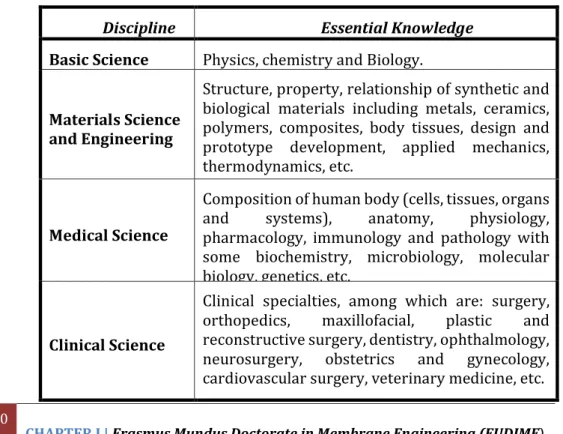
Biomaterials science and engineering is an interdisciplinary research field that requires knowledge from different areas, which are mentioned in Table I.1.
Table I.1. Disciplines involved in the development of biomaterials.
Discipline Essential Knowledge
Basic Science Physics, chemistry and Biology.
Materials Science and Engineering
Structure, property, relationship of synthetic and biological materials including metals, ceramics, polymers, composites, body tissues, design and prototype development, applied mechanics, thermodynamics, etc.
Medical Science
Composition of human body (cells, tissues, organs and systems), anatomy, physiology, pharmacology, immunology and pathology with some biochemistry, microbiology, molecular biology, genetics, etc.
Clinical Science
Clinical specialties, among which are: surgery, orthopedics, maxillofacial, plastic and reconstructive surgery, dentistry, ophthalmology, neurosurgery, obstetrics and gynecology, cardiovascular surgery, veterinary medicine, etc.
Erasmus Mundus Doctorate in Membrane Engineering (EUDIME) | CHAPTER I 31 The global market of biomaterials was around 70 billion of USD in 2016 and is expected to reach about 150 Billion of USD by 2021 with a compound annual growth rate (CAGR) of 16.0% (8). According to their applications, the biomaterials market is sectioned into cardiovascular, orthopedic, ophthalmology, dental, plastic surgery, wound healing, tissue engineering, neurological/central nervous system, and other applications (8).
I.1.1 Biomaterial classification
Biomaterials can be classified according to the nature of the material, being the most important groups: ceramics, metals, polymers and composites. They can be defined either as passive biomaterials (generally remain neutral in their biological environment and have no inherent power of action) or active biomaterials (able to interact with their environment and may even become an integral part of the body) with different bioactivity (9).
I.1.1.1 Metallic biomaterials
Metallurgic industry is able to produce a large number of metals and alloys, but only a few are biocompatible and long-term successful as an implant material. The combination of high mechanical strength and fracture toughness makes metals more suitable for load-bearing applications compared with ceramics or polymeric materials. At the beginning, metallic implants were developed to be used mainly in bone repair (internal fracture fixation of long bones), playing a major role in most orthopedic devices, including temporal and permanent devices (e.g. bone plates, pins, screws and total joint replacements) (10). The main methods to obtain them are by casting, forging, pressing, rolling and machining. Afterwards, the metallic implants developed were used not only in orthopedic surgery, but also in dental and orthodontic practice, including tooth fillings and roots. Currently, several researches point to the use of metallic biomaterials in application of nonconventional reconstructive surgery of hard tissues/organs (NiTi shape memory alloys as vascular stents) and to develop new magnesium-based alloys for bone tissue engineering and regeneration (10).
Chen and Thouas summarized the current status and clinical applications of the four classes of metallic biomaterial (10): Stainless steels, Co-based and Ti-based alloys are routinely applied in: temporary devices
32
CHAPTER I | Erasmus Mundus Doctorate in Membrane Engineering (EUDIME) (fracture plates, screws, hip nails, etc.); stem and cup of total hip replacements with cobalt–chromium-molybdenum or ceramic femoral heads; total joint replacements (wrought alloys); dentistry castings and other permanent devices (nails, pacemakers). The last category corresponds to "Miscellaneous" and within there are different alloys such as tantalum alloys, used as a radiographic marker and wire sutures for plastic surgery and neurosurgery, both approved by the US Food and Drug Administration (FDA); magnesium alloys, that have been reported in different papers as a biodegradable orthopedic implants and nickel-titanium alloys (known as Nitinol), which have been FDA approved for different applications: orthodontic dental archwires, vascular stents, vena cava filter, intracranial aneurysm clips, catheter guide wires, orthopedic staples and contractile artificial muscles for an artificial heart.
Despite all its advantages for bone repair current metallic biomaterials present limitations or disadvantages, among which can be highlighted (11): possible release of toxic metallic ions and/or particles through
corrosion or wear processes, reducing biocompatibility, leading to the beginning of the inflammatory cascades and triggering tissue loss
the elastic moduli are not well matched with that of natural bone tissue, producing stress shielding effects reducing the remodeling and stimulations of new bone growth, compromising the implant stability
are essentially neutral in vivo, remaining as permanent fixtures, causing a second surgical procedure after the tissue has healed sufficiently to remove them safely, such are the cases of plates, screws and pins used to secure serious fractures.
I.1.1.2 Ceramic biomaterials
Ceramic materials are composed of inorganic, non-metallic substances crystalline, semi-crystalline or non-crystalline (amorphous compounds), glasses and glass-ceramics (partially crystallized glasses).
Ceramic biomaterials (Table I.2) can be categorized according with the interactions or attachment between material and host tissue (bioinert or
Erasmus Mundus Doctorate in Membrane Engineering (EUDIME) | CHAPTER I 33 bioactive). Furthermore, the bioactive ceramics may be divided as resorbable or non-resorbable and they may be manufactured either in granulates, as coatings, porous or dense in bulk form (12).
Ceramic biomaterials have been widely used to repair the skeletal system, comprising bone, joints and teeth and to augment both hard and soft tissue (13). Additionally, these materials have been used as carriers for enzymes, antibodies, antigens and as microinjectable delivery system for radioactive isotopes for in situ treatment of tumors. They are also used for eyeglasses, diagnostic instruments, chemical ware, thermometers, tissue culture flasks and fiber optics for endoscopy (12). In dentistry, ceramics are used as restorative materials (including inlays and onlays), in gold-porcelain crowns, glass-filled ionomer cements, multi-unit bridges and dentures (1,12).
The main methods of manufacturing ceramic biomaterials are plasma spraying, liquid phase sintering (vitrified), hydrothermal synthesis and solid state sintering (12).
In addition, the main advantages of the use of ceramic biomaterials are their high biocompatibility, high resistance to compression, lower wear rates, resistance to corrosion, chemical inertness, release of very low concentrations of ‘inert’ wear particles, low thermal and electrical conductivity, easy obtaining and low production costs (13,14). Its main disadvantages are associated with the low impact resistance and the difficulties in processing specific geometric forms (14).
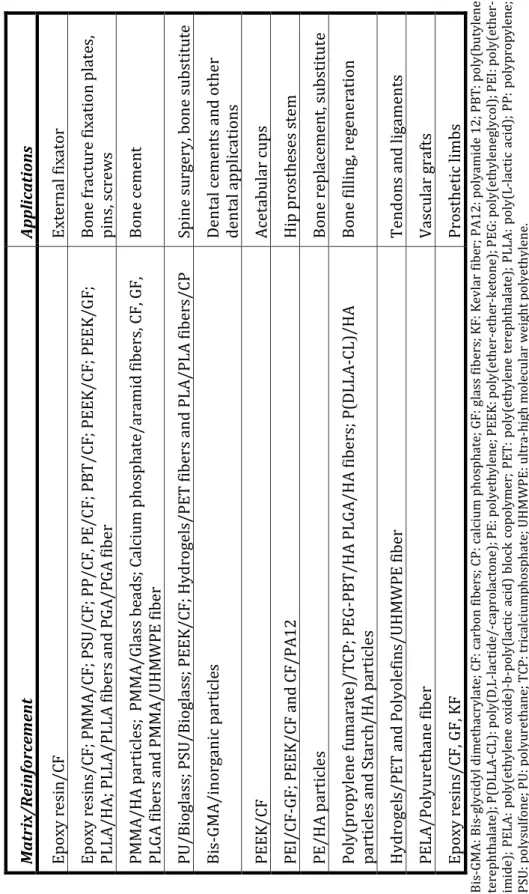
Ta bl e I .2 . T yp es o f C er am ic b io m at er ia ls (1 2) . In te ra cti on w ith ho st ti ssu e Pr op er ties Im plan t– Ti ssu e R esp on se Ce ram ic Bioin er t No n-to xi c m at er ial , d en se o r n on -po ro us an d bio lo gica lly in act iv e (n ea rl y i ne rt ) A f ib ro us ti ss ue o f var iab le th ic kn es s is fo rm ed an d ad her ed by g ro w th i nto s ur fa ce ir reg ul ar iti es b y cem en tin g th e dev ic e i nt o th e t is su es o r b y p res s-fit tin g in to a d ef ect Al um in um o xid e (s in gl e c ry st al an d po ly cr ys ta lli ne ) Zir co nia (1 3) No n-to xic m at er ia l, p or ou s ( po re di am et er b et w een 5 0-15 0µ m ) a nd bio lo gica lly in act iv e ( ne ar ly in er t) An in gr ow n o ccu rs t ha t m ec han ic al ly at tac hes t he t is su e to th e m at er ial Al um in um o xid e (p ol yc ry st al lin e) H yd ro xya pa tit e-co at ed p or ou s m et al s Bioa ct iv e No n-to xic m at er ia l b io lo gica lly ac tiv e, d en se o r n on -p or ou s, gl as se s an d g las s-ce ra m ics w ith a r ea ct iv e sur fa ce Th ey co nn ect d ir ect ly b y ch em ica l bo nd in g w ith th e ti ss ue f or m in g an in ter fac ial b on d Bio act iv e g las se s Bio act iv e g la ss -ce ra m ics H yd ro xya pa tit e ( H A) No n-to xi c r es or bab le m at er ial bio lo gica lly a ct iv e, d en se , no n-po ro us o r p or ou s a bl e to d is so lv e i n bio lo gica l e nv ir on m en t Th e s ur ro un di ng ti ss ue re pl ac es it sl ow ly Ca lc iu m su lfa te Tr ica lciu m p ho sp ha te Ca lciu m –p ho sp ha te sa lts