2018/2019
Cátia Filipa Pinheiro Ramos
A cirurgia bariátrica altera os desfechos da gravidez?
Does bariatric surgery change pregnancy outcomes?
Mestrado Integrado em Medicina
Área: Ciências Médicas e da Saúde - Medicina Clínica
Tipologia: Dissertação
Trabalho efetuado sob a Orientação de:
Doutor Silvestre Carneiro
E sob a Coorientação de:
Doutora Alexandra Matias
Trabalho organizado de acordo com as normas da revista:
Obstetrics & Gynecology
Cátia Filipa Pinheiro Ramos
A cirurgia bariátrica altera os desfechos da gravidez?
Does bariatric surgery change pregnancy outcomes?
Dedicatória
À minha Mãe e ao meu Pai,
por me apoiarem e me possibilitarem realizar o sonho de ser médica,
por não me deixarem desistir quando tudo parecia impossível,
por serem os melhores pais que poderia ter.
Muito Obrigado. Amo-vos Pais.
À minha Avó e ao meu Avô,
por sempre acreditarem que seria capaz,
por me ouvirem a desabafar,
pelo carinho e o colo que só eles me sabem dar.
Muito Obrigado. Amo-vos Avós.
Ao Mário,
por desvendar todos os mistérios informáticos que
os meus computadores teimam em fazer aparecer,
por trazer polémica e humor às nossas conversas.
Obrigado Amigo.
Ao António,
por ser como um irmão para mim,
por me instigar a dar sempre o meu melhor,
por poder confiar cegamente.
Ao Campeão,
por ser o melhor e mais silencioso companheiro de casa,
pelas horas que me ouvia a recitar matéria,
pelos passeios inesquecíveis.
Muito Obrigado. Amo-te Pia.
Ao Daniel,
por ser quem me acompanhou
nesta jornada que foi medicina desde o 1º dia,
por suportar as minhas frustrações, desilusões e mágoas,
por ouvir horas e horas de reclamações e choros,
por nunca me deixar cair.
Muito Obrigado. Amo-te Barbosa.
Assim comecei o meu percurso em Medicina.
Assim continuo o meu percurso em Medicina.
“Cântico Negro”
“Vem por aqui”- dizem-me alguns com olhos doces,
Estendendo-me os braços, e seguros
De que seria bom que eu os ouvisse
Quando me dizem: “vem por aqui”!
Eu olho-os com olhos lassos,
(Há, nos meus olhos, ironias e cansaços)
E cruzo os braços,
E nunca vou por ali…
A minha glória é esta:
Criar desumanidade!
Não acompanhar ninguém.
—Que eu vivo com o mesmo sem-vontade
Com que rasguei o ventre a minha Mãe.
Não, não vou por aí! Só vou por onde
Me levam meus próprios passos…
Se ao que busco saber nenhum de vós responde,
Por que me repetis: “vem por aqui”?
Prefiro escorregar nos becos lamacentos,
Redemoinhar aos ventos,
Como farrapos, arrastar os pés sangrentos,
a ir por aí…
Se vim ao mundo, foi
Só para desflorar florestas virgens,
O mais que faço não vale nada.
Como, pois, sereis vós
Que me dareis impulsos, ferramentas, e coragem
Para eu derrubar os meus obstáculos?…
Corre, nas vossas veias, sangue velho dos avós,
E vós amais o que é fácil!
Eu amo o Longe e a Miragem,
Amo os abismos, as torrentes, os desertos…
Ide! tendes estradas,
Tendes jardins, tendes canteiros,
Tendes pátrias, tendes tetos,
E tendes regras, e tratados, e filósofos, e sábios.
Eu tenho a minha Loucura!
Levanto-a, como um facho, a arder na noite escura,
E sinto espuma, e sangue, e cânticos nos lábios…
Deus e o Diabo é que me guiam, mais ninguém.
Todos tiveram pai, todos tiveram mãe;
Mas eu, que nunca principio nem acabo,
Nasci do amor que há entre Deus e o Diabo.
Ah, que ninguém me dê piedosas intenções!
Ninguém me peça definições!
Ninguém me diga: “vem por aqui”!
A minha vida é um vendaval que se soltou.
É uma onda que se alevantou.
É um átomo a mais que se animou…
Não sei por onde vou,
Não sei para onde vou
—Sei que não vou por aí!
1
Does bariatric surgery change pregnancy outcomes?
Cátia Pinheiro-Ramos, MS
1,2; Bruno M. P. M. Oliveira, PhD
3,4; Tiago Aguiar, MD
2; A. Matias, MD, PhD
1,2;
Silvestre Carneiro, MD, PhD
1,21Faculdade de Medicina da Universidade do Porto (FMUP); 2Centro Hospitalar Universitário de São João (CHUSJ), Porto, Portugal 3Faculdade de Ciências da Nutrição e Alimentação da Universidade do Porto (FCNAUP); 4LIAAD – INESC TEC, Porto, Portugal
ABSTRACT
OBJECTIVE: To evaluate the impact of bariatric surgery on maternal and neonatal outcomes.
METHODS: This is an observational and retrospective cohort study. Two main groups were defined. For
the study group (Post-BS group), we included women who underwent one or more weight-loss procedures
and delivered a child (n=97). Only the first pregnancy after the last bariatric surgery was considered. For
the control group, we selected women who had pregnancies but had not been submitted to bariatric surgery
– All-Controls (n=9375). We further defined a subset of this group, including women with a
pre-pregnancy BMI≥35 kg/m
2, named Obese-Controls (n=412). We focused our analyses in gestational
diabetes mellitus (GDM), gestational hypertensive disorders (GHD), caesarean-delivery, prematurity,
large-for-gestational-age (LGA), small-for-gestational-age (LGA) and congenital malformations.
RESULTS: Post-BS women had a higher pre-pregnancy BMI than all-controls and a lower pre-pregnancy
BMI than obese-controls. There is a higher prevalence of GDM in the post-BS women when compared to
the all-controls (p=0.006) and a lower prevalence when compared to obese-controls (p=0.123). The
prevalence of GHD was similar between the post-BS women and all-controls (p=1.000), being lower
relative to the obese-controls (p=0.146). Post-BS women had a higher prevalence of caesarean-delivery
when compared to all-controls (p=0.175), but a lower prevalence when compared to obese-controls
(p=0.358). Post-BS neonates had a higher prevalence of prematurity than neonates of the all-controls
(p=0.236) and obese-controls (p=0.551). Post-BS women had a lower prevalence of LGA neonates than
all-controls (p=0.376) and obese-controls (p=0.019). Concerning to SGA, post-BS women had small
neonates with a higher prevalence than all-controls (p=0.159) and obese-controls (p=0.067). A higher
prevalence of congenital malformations was found in post-BS women when compare to all-controls
(p=0.003) and obese-controls (p=0.022).
CONCLUSION: Bariatric surgery improves some pregnancy outcomes relative to obese women, having
less than one-third of the LGA prevalence. However, bariatric surgery worsens other pregnancy outcomes
relative to obese women, having more than three times the prevalence of congenital malformations.
2
INTRODUCTION
This project took place in Portugal, an European country, with the same public health problem as the
vast majority of the world: obesity. According to the Portuguese Food and Physical Activity Survey,
the national prevalence of obesity is presently 22.3%
1.
In Portugal higher rates of obesity were recorded in women when compared to men (24.3% versus
20.1%, respectively), increasing with age. The same study also showed that the prevalence of obesity
decreases as literacy increases
1.
The prevalence of obesity in the Portuguese population is one of the highest in Europe and shows a
growing trend (as in other European countries)
2. In our country obesity rates doubled from 2005 to
2015, in all age groups
2.
Bariatric surgery (BS) appears to be the most effective treatment for morbid obesity (BMI ≥ 40kg/m
2)
and for severe obesity with obesity-related comorbidities (BMI ≥ 35kg/m
2) because it provides the
greatest weight-loss and the maximum improvement of comorbid conditions when compared to
non-surgical treatments
3. Due to this effectiveness there is an increasing number of patients undergoing
bariatric procedures and women in reproductive age are a substantial percentage of these patients
4.
This leads to a rising prevalence of pregnancies and newborns deriving from women with previous
weight-loss surgery
5.
It might be expected that bariatric surgery and subsequent weight-loss would warrant better outcomes
for pregnancy, delivery and newborns. However, the surgery itself and the resulting nutritional
imbalance can affect pregnancy outcomes. Thus the main objective of this work was to study which
pregnancy outcomes were affected by bariatric surgery.
MATERIALS AND METHODS
This is an observational and retrospective cohort study performed at Centro Hospitalar Universitário
de São João (CHUSJ) and Faculdade de Medicina da Universidade do Porto (FMUP), a university
3
Patient information related to bariatric surgery was collected from SClínico, the hospital clinical
database system. Information relative to prenatal period, labor and puerperium was collected from
ObsCare, a dedicated obstetrical database.
For this study we defined 2 main groups:
- Study-group: pregnancy in women after their bariatric surgery (Post-BS);
- Control-groups: pregnancy in women without bariatric surgery.
For the study-group we selected initially all women who underwent bariatric surgery (adjustable
gastric banding (AGB), sleeve gastrectomy (SG) or Roux-y-gastric bypass (RYGB), all performed
laparoscopically), from January 2009 to December 2017 and gave birth between July 1997 and
December 2018 at CHUSJ (n=281). From this cohort we selected only the first pregnancy (to avoid
over-representation bias) after the last bariatric surgery, thus establishing a study-group of 97 women.
For the control group, from all births that took place in CHUSJ from February 2014 to December
2018, we selected the first birth of each woman (to avoid bias).
The exclusion criteria for the control-group were: bariatric surgery history; assisted reproductive
technology background; multiple pregnancies; fetal death; inconsistent or incomplete available data.
After applying these exclusion criteria, we had a group with 9354 cases – All-Controls.
We further defined a subset of this group with women with a BMI ≥ 35 kg/m
2at the beginning of
pregnancy (n=412) as Obese-Controls. A flowchart for selection and grouping of study-group and
control-groups is displayed in Figure 1.
We collected data about maternal age at delivery, surgery date, birth date, maternal educational level,
maternal smoking habits, maternal weight and height, coexisting conditions before pregnancy
(namely chronic hypertension, diabetes mellitus 1 and 2 and hypothyroidism), gestational age (GA),
gestational age at first prenatal visit and the number of prenatal appointments, APGAR score at 1 and
5 minutes and neonatal weight, height and cephalic perimeter. Gestational age at the first prenatal
4
Pre-surgery BMI was computed based on weight and height measured at the time of bariatric surgery.
Pre-pregnancy BMI was calculated based on weight and height measured at the first prenatal
appointment.
Bariatric surgery procedures were classified as restrictive (AGB and SG) and mixed (RYGB).
The surgery-to-delivery interval is the difference between the date of bariatric surgery and the date
of birth. We grouped surgery-to-delivery interval in 4 groups: <1year, 1-2years, 3-5years and
>5years.
Weight-gain during pregnancy was divided in 3 groups: below-recommended weight-gain,
recommended weight-gain and above-recommended weight-gain, according to the 2009 guidelines
for weight-gain during pregnancy
6.
We divided smoking habits into 2 categories: smoker and non-smoker.
Maternal educational level was divided in 3 groups: ≤9 years of schooling, 10-12 and higher
education.
The primary outcomes measured were: Gestational Diabetes Mellitus (GDM); Gestational
Hypertensive Disorders (GHD); Caesarean-delivery; Prematurity; Large-for-Gestational-Age
(LGA); Small-for-Gestational-Age (SGA) and Congenital Malformations.
GDM is defined as diabetes that is first diagnosed in the second or third trimester of pregnancy.
Hence, it is not clearly either preexisting type 1 or type 2 diabetes
7-11. In Portugal, the diagnosis of
GDM is made according to HAPO results
12and with IADPSG criteria
13.
GHD includes gestational hypertension, preeclampsia and eclampsia. No cases of pregnant women
with eclampsia were found in our sample. For gestational hypertension, we considered all pregnant
women who had systolic blood pressure ≥ 140 mmHg and/or diastolic blood pressure ≥ 90 mmHg
after 20 weeks of gestation, in the absence of proteinuria. If blood pressure did not normalize in the
postpartum period, the diagnosis changed to chronic hypertension. In relation to preeclampsia, we
included all pregnant women who had gestational hypertension after 20 weeks of gestation, in the
5
gestational hypertension after 20 weeks of gestation and one of the following: thrombocytopenia,
renal insufficiency, impaired liver function, pulmonary edema, cerebral or visual symptoms
14-16.
Gestational age at delivery was calculated according to the first trimester ultrasound findings or, when
ultrasound was unavailable, by weeks of amenorrhea. Whenever the delivery occurred before 37
weeks of gestation was termed as preterm birth.
We classified type of labor as vaginal or dystocic delivery (forceps, ventouse or caesarean-delivery).
SGA was defined as a birthweight below the 10th percentile for sex and gestational age
17,18and LGA
was defined as a birthweight above 90th percentile
19. If the newborn was premature, Fenton Curves
were used to define the percentiles
20, if newborn had 37 complete weeks or more, we used WHO
Curves
21.
Under congenital malformations, we included all neonates who were born with any kind of congenital
defects or chromosomal abnormalities.
We computed the relative (%) and absolute (n) frequencies for categorical variables and mean and
standard deviation (sd) for continuous variables. Normality of continuous variables was assumed
when skewness and kurtosis were between -2 and +2
22.
To relate two categorical variables, we computed the odds ratio (OR) and used the Fisher's exact test
(for 2x2 tables) and Pearson's chi-square test (for larger tables). Comparison between two
independent groups of a continuous or ordinal variable were done using t-Student's test or
Mann-Whitney's test. The degree of association between two continuous or ordinal variables was
done using Pearson's or Spearman's correlation coefficients and it was categorized according to
Finney
23.
We used logistic regressions in forward procedures, with the likelihood ratio criteria, to relate our
primary dichotomous outcomes, specifically: GDM, GHD, caesarean-delivery, prematurity, SGA,
LGA and congenital malformations, with a set of independent variables, namely: type of bariatric
surgery (restrictive-procedures or mixed-procedures), pre-pregnancy BMI, weight-gain per week of
6
Data analysis was carried out using Microsoft Excel 2016 and IBM SPSS Statistics 25.0 for Windows.
Significance level was set at 5%.
RESULTS
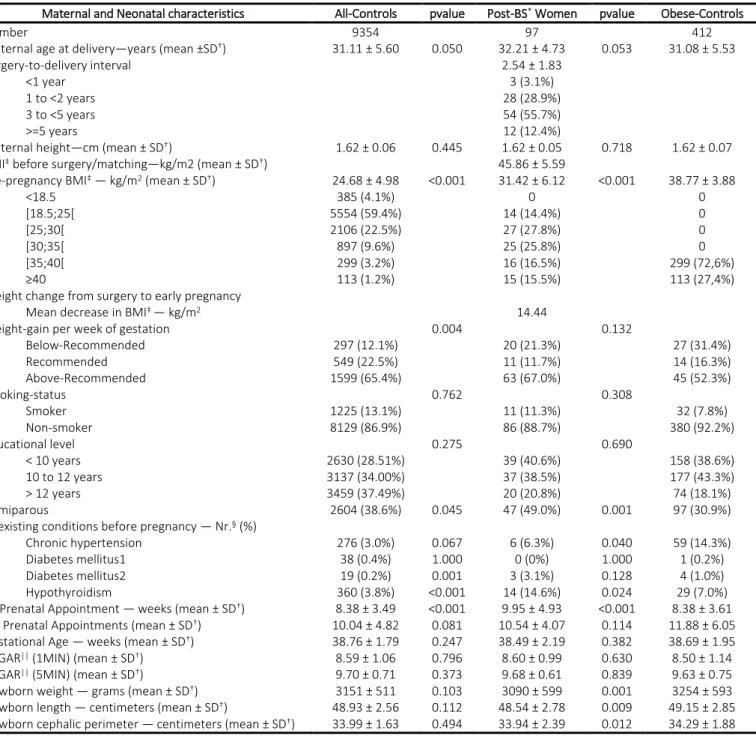
Post-BS women had a higher pre-pregnancy BMI than all-controls and a lower pre-pregnancy BMI
than obese-controls (Table I).
Post-BS women were older than all-controls at delivery time (p=0.050). The differences between
these two groups regarding educational level and smoking habits were not significant. Pre-gestational
comorbidities, mainly diabetes mellitus 2 (DM2) (p=0.001) and hypothyroidism (p<0.001) had a
higher prevalence in post-BS women than in all-controls. Post-BS women had the first prenatal
appointment later than all-controls (p<0.001), although there are no significant differences for the
number of prenatal appointments. With respect to neonatal parameters, there were no significant
differences between these two groups about APGAR score, weight, length and cephalic perimeter of
neonate. Considering birthweight, post-BS neonates had a higher prevalence of macrosomia
(weight>4000g) than all-controls (p=0.779) and post-BS neonates had a higher prevalence of
low-birthweight (weight<2500g) than all-controls (p=0.104).
Post-BS and obese-controls had no significant differences in maternal age at delivery. Regarding
pre-gestational comorbidities, post-BS women had a higher prevalence of chronic hypertension
(p=0.04) and hypothyroidism (p=0.024) than obese-controls, however no differences were found
about DM2 prevalence. Educational level and smoking habits were no significantly different in the
two groups. Post-BS women had the first prenatal appointment later than obese-controls (p<0.001),
although there are no significant differences about the number of prenatal appointments. In respect to
neonatal parameters, post-BS neonates had a lower mean weight (p=0.001), length (p=0.009) and
cephalic perimeter (p=0.012) than obese-controls neonates. However, no significant differences were
7
had a lower prevalence of macrosomia (weight>4000g) than obese-controls (p=0.366) and post-BS
neonates had a higher prevalence of low-birthweight (weight<2500g) than obese-controls (p=0.070).
Related to bariatric surgery, 76.3% of post-BS women underwent only one weight-loss procedure,
mainly RYGB.
Post-BS women gained more weight than recommended during pregnancy (67.0%). This is also true
for all-controls (65.4%) and obese-controls (52.3%) (Table I).
The majority of post-BS women (55.7%) became pregnant 3 to 5 years after their surgery, in full
agreement with the current AJOG recommendation of a minimum of 12-24 months of
surgery-to-delivery interval
24.
There is a higher prevalence of GDM in the post-BS women when compared to the all-controls
(p=0.006) and a lower prevalence when compared to obese-controls (p=0.123). When considering
post-BS and all-controls, GDM risk was augmented by: bariatric surgery (p=0.011), specifically
RYGB (OR=2.690), a higher pre-pregnancy BMI (OR=1.104/(kg/m
2)), a lower weight-gain during
gestation (OR=1.807) and the mother being older (OR=1.086/year). Furthermore, gestational age was
negatively related with GDM (OR=0.894/week). Regarding post-BS and obese-controls, GDM risk
was related with weigh-gain during pregnancy (p=0.034) and was higher on older mothers
(OR=1.039/year) (Tables II,III).
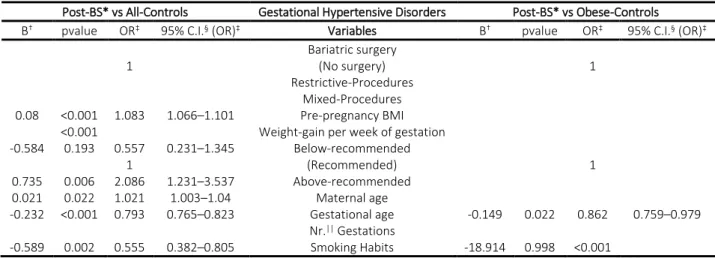
The prevalence of GHD was similar between the post-BS women and all-controls (p=1.000), being
lower relative to the obese-controls (p=0.146). With respect to post-BS and all-controls, GHD risk
was augmented by: a higher pre-pregnancy BMI (OR=1.083/(kg/m
2)), a higher weight-gain during
pregnancy (OR=2.086) and the mother being older (OR=1.021/year). Gestational age and smoking
habits were negatively related with GHD for both control-groups (Tables II,IV).
Post-BS women had a higher prevalence of caesarean-delivery when compared to all-controls
(p=0.175), but a lower prevalence when compared to obese women (p=0.358). Related to post-BS
and all-controls, caesarean-delivery risk was increased for women who underwent
8
weight-gain per week (OR=1.468), older age (OR=1.052/year) and smoking habits (OR=1.179).
Inversely, the risk of a caesarean-delivery decreased with the number of gestations (OR=0.827) and
with shorter gestational times (OR=0.868/week). When analyzing to post-BS and obese-controls,
caesarean-delivery risk is augmented with older age (OR=1.082/year) and decreased by RYGB
(OR=0.342), number of gestations (OR=0.805) and shorter gestational times (OR=0.826/week)
(Tables II,V).
Post-BS neonates had a higher prevalence of prematurity than neonates of the all-controls (p=0.236)
and obese-controls (p=0.551). Considering prematurity relative to post-BS and all-controls, the risk
factors were: a lower weight-gain per week (OR=1.754), a higher maternal age (OR=1.034/year) and
smoking habits (OR=1.265) (Tables II,VI). Regarding the obese-controls no significant risk factors
were found.
Post-BS women had a lower prevalence of LGA neonates than all-controls (p=0.376) and
obese-controls (p=
0.019). The major risk factor for LGA, when studying post-BS and all-controls, was the
higher than recommended weight-gain during pregnancy (OR=2.375). Other risk factors for LGA
were: longer gestational times (OR=1.442/week), higher pre-pregnancy BMI (OR=1.054/(kg/m
2))
and the number of gestations (OR=1.140). Furthermore, smoking habits were negatively related with
LGA (OR=0.545). Relative to post-BS and obese-controls, LGA risk is augmented with longer
gestational ages (OR=1.405/week) and decreased by bariatric surgery, either restrictive or RYGB
(OR=0.276) (Tables II,VII).
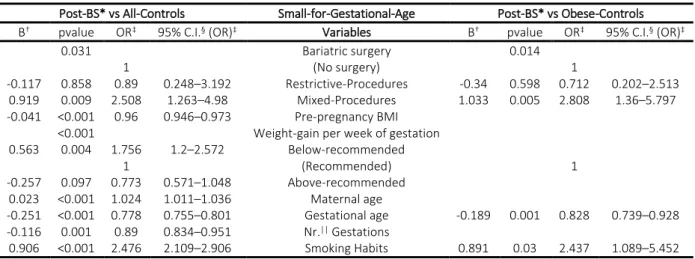
Concerning SGA, post-BS women had a higher prevalence of small neonates than all-controls
(p=0.159) and obese-controls (p=
0.067). Compared post-BS and all-controls, the main risk factor for
SGA was BS, mainly RYGB (OR=2.508), followed by smoking habits (OR=2.476). Other risk factors
for SGA neonates, in all-controls group, were: below-recommended weight-gain during pregnancy
(OR=1.756) and age (OR=1.024/year). On the contrary, protective factors for SGA were: a higher
pre-pregnancy BMI (OR=0.960/(kg/m
2)), a longer gestational time (OR=0.778/week) and a higher
9
SGA neonates was also RYGB (OR=2.808), followed by smoking habits (OR=2.437). The protective
factor was the longer gestational time (OR=0.828/week) (Tables II,VIII).
A higher prevalence of congenital malformations was found in post-BS women when compare to
all-controls (p=0.003) and obese-all-controls (p=0.022). When analyzing post-BS women and all-all-controls,
the main risk factor for malformations was bariatric surgery (p=0.001), with restrictive procedures
(OR=5.846) having a higher effect than RYGB (OR=4.295). Considering post-BS women and
obese-controls, congenital malformations were increased by restrictive-procedures (OR=4.564), with
RYGB having a no significative effect (p=0.068). Gestational age was negatively related with
malformations for both control-groups (OR=0.836/week; OR=0.758/week) (Tables II,IX).
DISCUSSION
Bariatric surgery improves some pregnancy outcomes relative to obese women, having less than
one-third of the LGA prevalence. Furthermore, bariatric surgery also decreases, although no significantly,
the likelihood of GDM, GHD and caesarean-delivery. However, bariatric surgery worsens other
pregnancy outcomes relative to obese women, having more than three times the prevalence of
congenital malformations. Post-BS women also have a higher prevalence of SGA neonates than obese
women, although non-significant.
In our sample, post-BS women had higher GDM prevalence than all-controls, as in other studies
25,26,
and lower prevalence than obese-controls, as reported by other authors
4,27-33. This may be explained
by the metabolic effect of RYGB, (the major risk factor), but also by the lower weight-gain during
gestation, the higher pre-pregnancy BMI and by older age. It appears that RYGB has implications on
glucose metabolism that outweigh high BMI on GDM risk
34. However, after adjusting for pregnancy
weight-gain, the prevalence of GDM did not differ between post-BS and obese-controls and
pre-pregnancy BMI was not a significant covariate. Nevertheless, weight-gain during gestation may be
10
reduces the risk of GDM by helping to achieve a lower pre-pregnancy BMI, but on the other hand
surgery may increase GDM risk through lower the weight-gain during gestation.
Post-BS women had a similar prevalence of GHD compared to all-controls and a lower prevalence
of GHD compared to obese-controls, as in other studies
4,28,31,33-35. Since post-BS women had lower
pre-pregnancy BMI than obese women, they had lower GHD risk from BMI
27. Regarding the
deleterious effects, a weigh-gain above-recommendations may have a negative impact on GHD
outcome, mostly for women with a higher BMI at the beginning of pregnancy. Therefore, bariatric
surgery may reduce the prevalence of GHD by the weight-loss effect but may have a negative impact
by delaying childbearing age.
The higher prevalence of C-sections in post-BS women related to all-controls, as reported in the
literature
25,28,36,37and confirmed in our series, may be due to restrictive procedures, namely AGB and
SG, which are risk factors for caesarean-delivery, even after we adjusted for pre-pregnancy BMI and
weight-gain during pregnancy. We can hypothesize that the higher likelihood of having a C-section
on women that had restrictive procedures, when compared with RYGB, is due to a lower weight-loss
between surgery and pregnancy. The lower prevalence of C-sections in women that underwent RYGB
relative to obese-controls, in line with the literature
28,30,35, is associated to weight-loss after surgery.
Higher prevalences of prematurity are found among older mothers and those with lower weekly
weight-gain, which may explain it being more common among post-BS mothers than in all-controls,
albeit not significantly. The similarities related to prematurity, that we observed between post-BS and
obese-controls, can be explained by bariatric surgery not representing a high risk for preterm-delivery
in obese mothers, as reported by other authors
4,36,38,39.
A higher probability of LGA neonates is related with gaining weight above-recommendation, a higher
pre-pregnancy BMI, a larger gestational age and a higher number of gestations. Relative to
obese-controls, the lower prevalence of LGA neonates among post-BS women, as in other studies
11
Women that underwent RYGB had a higher prevalence of SGA neonates than both control-groups,
with restrictive-procedures (AGB, SG) having a similar SGA likelihood to both control-groups, as
reported by other authors
28,30,34,41,44-46, which may be related with the metabolic effects associated to
RYGB, in line with the literature
30,34-36,47-49. Lower weight-gain per week of gestation, higher
maternal age and smoking habits are other risk factors for SGA. Shorter gestational time appears as
a deleterious factor of SGA, perhaps because it might be a signal of pregnancy problems.
The higher prevalence of congenital malformations in post-BS women than in all-controls and
obese-controls, as reported by other authors
28,50, seems to be related to bariatric surgery itself. These
findings are at variance with other studies which did not find any differences between post-BS and
all-controls
51,52and between post-BS and obese-controls
34,51. We also sought if SGA or LGA
outcomes had impact on occurrence of malformations, as an indirect measure of nutritional
imbalances, however no significant relationships were found (data not shown). In fact, apropos of
nutritional deficits, in our sample, post-BS women had a significantly higher number and variety of
prescriptions of nutritional supplements, namely vitamin D, B12, folate, iron, magnesium and
multivitamins than all-controls and obese-controls (data not shown). We note that, RYGB, the
bariatric procedure with a malabsorptive component in our sample, appears to be slightly less
implicated as a risk factor for congenital malformations, and that the SGA outcome is not related with
malformations, thus, nutritional deficits may not be the key-factor for the observed prevalence of
malformations.
A major strength of our work is the multivariate analysis of the differences between study and
control-groups, adjusted for factors that could influence the studied outcomes. Furthermore, our post-BS
group included women who underwent different types of weight-loss surgery, in contrast to other
studies
29,40,53-56. Therefore, our conclusions can be applicable to the majority of post-BS women and
we were able to observe different effects between RYGB and restrictive-procedures.
One of the limitations of our study is the small sample size, in particular of post-BS women, when
12
significant effects in the categories with small frequency. Further, our work implicates the expertise
of one single institution, which may not be representative of the Portuguese population. Other
limitations are related with this being a retrospective design
57,58.
It would be interesting to make a prospective study in which we would compare pregnancy outcomes
in women who would undergo bariatric surgery with women who would lose weight through a
conservative way (without surgery), in order to understand the differences between weight-loss
effects, metabolic-effects and surgery-effects. These conclusions would be important to define an
effective follow-up strategy for women who lose weight through surgery before becoming pregnant,
to avoid negative pregnancy outcomes like SGA and congenital malformations.
In conclusion, bariatric surgery improves some pregnancy outcomes at the cost of degradation of
other outcomes. In fact, the major finding of our work, the higher prevalence of congenital
malformations in neonates from post-BS women, is a warning that these results have to be confirmed
in larger population and in multicenter studies.
So, the question remains: although bariatric surgery is clearly the most effective way of losing weight,
is it the safest option for women in childbearing age?
Conflict of Interest: The authors declare no conflict of interest. Statement of Human and Animal Rights: Not applicable. Statement of Informed Consent: Not applicable.
13
REFERENCES
1.
Lopes C, Torres D, Oliveira A, et al. Inquérito Alimentar Nacional e de Atividade Física IAN-AF
2015-2016: Relatório Parte II. 2017.
2.
Gaio V, Antunes L, Namorado S, et al. Prevalence of overweight and obesity in Portugal: Results from
the First Portuguese Health Examination Survey (INSEF 2015). Obesity research & clinical practice
2018;12:40-50.
3.
Angrisani L, Santonicola A, Iovino P, Formisano G, Buchwald H, Scopinaro N. Bariatric Surgery
Worldwide 2013. Obesity surgery 2015;25:1822-32.
4.
Maggard MA, Yermilov I, Li Z, et al. Pregnancy and fertility following bariatric surgery: a systematic
review. Jama 2008;300:2286-96.
5.
Kwong W, Tomlinson G, Feig DS. Maternal and neonatal outcomes after bariatric surgery; a
systematic review and meta-analysis: do the benefits outweigh the risks? American journal of obstetrics and
gynecology 2018;218:573-80.
6.
Rasmussen KM, Catalano PM, Yaktine AL. New guidelines for weight gain during pregnancy: what
obstetrician/gynecologists should know. Current opinion in obstetrics & gynecology 2009;21:521.
7.
Organization WH. Use of glycated haemoglobin (HbA1c) in diagnosis of diabetes mellitus:
abbreviated report of a WHO consultation: Geneva: World Health Organization; 2011.
8.
Metzer B, Lowe L, Dyer A, et al. Hyperglycemia and adverse pregnancy outcomes. N Engl J Med
2008;358:1991-2002.
9.
Organization WH. Definition and diagnosis of diabetes mellitus and intermediate hyperglycaemia:
report of a WHO/IDF consultation. 2006.
10.
Agarwal MM, Dhatt GS, Shah SM. Gestational diabetes mellitus: simplifying the international
association of diabetes and pregnancy diagnostic algorithm using fasting plasma glucose. Diabetes care
2010;33:2018-20.
11.
Aekplakorn W, Chariyalertsak S, Kessomboon P, et al. Prevalence and management of diabetes and
metabolic risk factors in Thai adults: the Thai National Health Examination Survey IV, 2009. Diabetes care
2011;34:1980-5.
14
12.
Group HSCR. Hyperglycemia and adverse pregnancy outcomes. New England Journal of Medicine
2008;358:1991-2002.
13.
Diabetes IAo, Panel PSGC. International association of diabetes and pregnancy study groups
recommendations on the diagnosis and classification of hyperglycemia in pregnancy. Diabetes care
2010;33:676-82.
14.
Gillon TE, Pels A, von Dadelszen P, MacDonell K, Magee LA. Hypertensive disorders of pregnancy:
a systematic review of international clinical practice guidelines. PloS one 2014;9:e113715.
15.
Vest AR, Cho LS. Hypertension in pregnancy. Current atherosclerosis reports 2014;16:395.
16.
Henderson JT, Thompson JH, Burda BU, Cantor A. Preeclampsia screening: evidence report and
systematic review for the US Preventive Services Task Force. Jama 2017;317:1668-83.
17.
De Onis M, Habicht J-P. Anthropometric reference data for international use: recommendations from
a World Health Organization Expert Committee. The American journal of clinical nutrition 1996;64:650-8.
18.
Committee WE. Physical status: the use and interpretation of anthropometry. http://helid digicollection
Org/en/d/Jh0211e/ 1995.
19.
Alexander GR, Himes JH, Kaufman RB, Mor J, Kogan M. A United States national reference for fetal
growth. Obstetrics & Gynecology 1996;87:163-8.
20.
Fenton TR, Kim JH. A systematic review and meta-analysis to revise the Fenton growth chart for
preterm infants. BMC pediatrics 2013;13:59.
21.
Group WMGRS. WHO Child Growth Standards based on length/height, weight and age. Acta
paediatrica (Oslo, Norway: 1992) Supplement 2006;450:76.
22.
Trochim W, Donnelly J. The Research Methods Knowledge Base, 3rd. Mason, OH: Atomic Dog
Publishing 2006.
23.
Finney D. Statistics for biologists Chapman and Hall. London New York 1980.
24.
Obstetricians ACo, Gynecologists. ACOG practice bulletin no. 105: bariatric surgery and pregnancy.
Obstetrics and gynecology 2009;113:1405.
25.
Sheiner E, Levy A, Silverberg D, et al. Pregnancy after bariatric surgery is not associated with adverse
perinatal outcome. American journal of obstetrics and gynecology 2004;190:1335-40.
26.
Karmon A, Sheiner E. Pregnancy after bariatric surgery: a comprehensive review. Archives of
gynecology and obstetrics 2008;277:381-8.
15
27.
Willis K, Lieberman N, Sheiner E. Pregnancy and neonatal outcome after bariatric surgery. Best
practice & research Clinical obstetrics & gynaecology 2015;29:133-44.
28.
Carreau AM, Nadeau M, Marceau S, Marceau P, Weisnagel SJ. Pregnancy after Bariatric Surgery:
Balancing Risks and Benefits. Canadian journal of diabetes 2017;41:432-8.
29.
Johansson K, Cnattingius S, Näslund I, et al. Outcomes of pregnancy after bariatric surgery. New
England Journal of Medicine 2015;372:814-24.
30.
Galazis N, Docheva N, Simillis C, Nicolaides KH. Maternal and neonatal outcomes in women
undergoing bariatric surgery: a systematic review and meta-analysis. European journal of obstetrics,
gynecology, and reproductive biology 2014;181:45-53.
31.
Kominiarek MA. Pregnancy after bariatric surgery. Obstetrics and gynecology clinics of North
America 2010;37:305-20.
32.
Shai D, Shoham-Vardi I, Amsalem D, Silverberg D, Levi I, Sheiner E. Pregnancy outcome of patients
following bariatric surgery as compared with obese women: a population-based study. The journal of
maternal-fetal & neonatal medicine : the official journal of the European Association of Perinatal Medicine,
the Federation of Asia and Oceania Perinatal Societies, the International Society of Perinatal Obstet
2014;27:275-8.
33.
Lesko J, Peaceman A. Pregnancy outcomes in women after bariatric surgery compared with obese and
morbidly obese controls. Obstetrics and gynecology 2012;119:547-54.
34.
Falcone V, Stopp T, Feichtinger M, et al. Pregnancy after bariatric surgery: a narrative literature
review and discussion of impact on pregnancy management and outcome. BMC pregnancy and childbirth
2018;18:507.
35.
Yi XY, Li QF, Zhang J, Wang ZH. A meta-analysis of maternal and fetal outcomes of pregnancy after
bariatric surgery. International journal of gynaecology and obstetrics: the official organ of the International
Federation of Gynaecology and Obstetrics 2015;130:3-9.
36.
Santulli P, Mandelbrot L, Facchiano E, et al. Obstetrical and neonatal outcomes of pregnancies
following gastric bypass surgery: a retrospective cohort study in a French referral centre. Obesity surgery
2010;20:1501-8.
37.
Mead NC, Sakkatos P, Sakellaropoulos GC, Adonakis GL, Alexandrides TK, Kalfarentzos F.
Pregnancy outcomes and nutritional indices after 3 types of bariatric surgery performed at a single
16
institution. Surgery for obesity and related diseases : official journal of the American Society for Bariatric
Surgery 2014;10:1166-73.
38.
Ducarme G, Revaux A, Rodrigues A, Aissaoui F, Pharisien I, Uzan M. Obstetric outcome following
laparoscopic adjustable gastric banding. International Journal of Gynecology & Obstetrics 2007;98:244-7.
39.
Ducarme G, Parisio L, Santulli P, Carbillon L, Mandelbrot L, Luton D. Neonatal outcomes in
pregnancies after bariatric surgery: a retrospective multi-centric cohort study in three French referral centers.
The journal of maternal-fetal & neonatal medicine : the official journal of the European Association of
Perinatal Medicine, the Federation of Asia and Oceania Perinatal Societies, the International Society of
Perinatal Obstet 2013;26:275-8.
40.
Roos N, Neovius M, Cnattingius S, et al. Perinatal outcomes after bariatric surgery: nationwide
population based matched cohort study. Bmj 2013;347:f6460.
41.
Vrebosch L, Bel S, Vansant G, Guelinckx I, Devlieger R. Maternal and neonatal outcome after
laparoscopic adjustable gastric banding: a systematic review. Obesity surgery 2012;22:1568-79.
42.
Kjaer MM, Nilas L. Pregnancy after bariatric surgery--a review of benefits and risks. Acta obstetricia
et gynecologica Scandinavica 2013;92:264-71.
43.
Sheiner E, Willis K, Yogev Y. Bariatric surgery: impact on pregnancy outcomes. Current diabetes
reports 2013;13:19-26.
44.
Kjaer MM, Lauenborg J, Breum BM, Nilas L. The risk of adverse pregnancy outcome after bariatric
surgery: a nationwide register-based matched cohort study. American journal of obstetrics and gynecology
2013;208:464.e1-5.
45.
Chevrot A, Kayem G, Coupaye M, Lesage N, Msika S, Mandelbrot L. Impact of bariatric surgery on
fetal growth restriction: experience of a perinatal and bariatric surgery center. American journal of obstetrics
and gynecology 2016;214:655. e1-. e7.
46.
González I, Rubio MA, Cordido F, et al. Maternal and perinatal outcomes after bariatric surgery: a
Spanish multicenter study. Obesity surgery 2015;25:436-42.
47.
Guelinckx I, Devlieger R, Vansant G. Reproductive outcome after bariatric surgery: a critical review.
Human reproduction update 2009;15:189-201.
48.
Magdaleno R, Pereira BG, Chaim EA, Turato ER. Pregnancy after bariatric surgery: a current view of
maternal, obstetrical and perinatal challenges. Archives of gynecology and obstetrics 2012;285:559-66.
17
49.
González I, Lecube A, Rubio MÁ, García-Luna PP. Pregnancy after bariatric surgery: improving
outcomes for mother and child. International journal of women's health 2016;8:721.
50.
Weintraub AY, Levy A, Levi I, Mazor M, Wiznitzer A, Sheiner E. Effect of bariatric surgery on
pregnancy outcome. International Journal of Gynecology & Obstetrics 2008;103:246-51.
51.
Josefsson A, Bladh M, Wiréhn AB, Sydsjö G. Risk for congenital malformations in offspring of
women who have undergone bariatric surgery. A national cohort. BJOG: An International Journal of
Obstetrics & Gynaecology 2013;120:1477-82.
52.
Stothard KJ, Tennant PW, Bell R, Rankin J. Maternal overweight and obesity and the risk of
congenital anomalies: a systematic review and meta-analysis. Jama 2009;301:636-50.
53.
Pilone V, Hasani A, Di Micco R, et al. Pregnancy after laparoscopic gastric banding: maternal and
neonatal outcomes. International journal of surgery (London, England) 2014;12 Suppl 1:S136-9.
54.
Facchiano E, Iannelli A, Santulli P, Mandelbrot L, Msika S. Pregnancy after laparoscopic bariatric
surgery: comparative study of adjustable gastric banding and Roux-en-Y gastric bypass. Surgery for obesity
and related diseases : official journal of the American Society for Bariatric Surgery 2012;8:429-33.
55.
Han SM, Kim WW, Moon R, Rosenthal RJ. Pregnancy outcomes after laparoscopic sleeve
gastrectomy in morbidly obese Korean patients. Obesity surgery 2013;23:756-9.
56.
Adams TD, Hammoud AO, Davidson LE, et al. Maternal and neonatal outcomes for pregnancies
before and after gastric bypass surgery. International journal of obesity (2005) 2015;39:686-94.
57.
Coughlin SS. Recall bias in epidemiologic studies. Journal of clinical epidemiology 1990;43:87-91.
58.
Mann C. Observational research methods. Research design II: cohort, cross sectional, and case-control
studies. Emergency medicine journal 2003;20:54-60.
18
Figure I - Flowchart: Study-group and Control-groups
All bariatric surgeries between 01/2009 – 12/2017 (n=2689)
Women who underwent bariatric surgery and gave birth in CHUSJ (n=281)
Post-surgery Births (n=108)
Included only the 1stbirth after
bariatric surgery
Post-bariatric Women (n=97)
From SClínico, we selected:
All births that occurred in CHSJ between 02/2014 – 12/2018 (n=12 550)
Women who gave birth only one child in CHSJ between 02/2014 – 12/2018 (n=10 967)
Included only the 1stbirth
of every women
Then we excluded women with:
- Bariatric surgery history
- Assisted reproductive technology background - Multiple pregnancies
- Fetal deaths
- Inconsistent or incomplete data available
From ObsCare, we selected:
All-Controls (n=9 354 births)
S
tu
dy
-G
ro
up
Co
ntro
l-G
ro
up
s
Pre-pregnancy BMI ≥ 35 kg/m2 (n=412 births) Obese-Controls (n=412 births)19
Table I - Characteristics of Post-BS women compared with All-Controls and Obese-Controls.
Maternal and Neonatal characteristics All-Controls pvalue Post-BS* Women pvalue Obese-Controls
Number 9354 97 412
Maternal age at delivery—years (mean ±SD†) 31.11 ± 5.60 0.050 32.21 ± 4.73 0.053 31.08 ± 5.53
Surgery-to-delivery interval 2.54 ± 1.83
<1 year 3 (3.1%)
1 to <2 years 28 (28.9%)
3 to <5 years 54 (55.7%)
>=5 years 12 (12.4%)
Maternal height—cm (mean ± SD†) 1.62 ± 0.06 0.445 1.62 ± 0.05 0.718 1.62 ± 0.07
BMI‡ before surgery/matching—kg/m2 (mean ± SD†) 45.86 ± 5.59
Pre-pregnancy BMI‡ — kg/m2 (mean ± SD†) 24.68 ± 4.98 <0.001 31.42 ± 6.12 <0.001 38.77 ± 3.88
<18.5 385 (4.1%) 0 0 [18.5;25[ 5554 (59.4%) 14 (14.4%) 0 [25;30[ 2106 (22.5%) 27 (27.8%) 0 [30;35[ 897 (9.6%) 25 (25.8%) 0 [35;40[ 299 (3.2%) 16 (16.5%) 299 (72,6%) ≥40 113 (1.2%) 15 (15.5%) 113 (27,4%)
Weight change from surgery to early pregnancy
Mean decrease in BMI‡ — kg/m2 14.44
Weight-gain per week of gestation 0.004 0.132
Below-Recommended 297 (12.1%) 20 (21.3%) 27 (31.4%) Recommended 549 (22.5%) 11 (11.7%) 14 (16.3%) Above-Recommended 1599 (65.4%) 63 (67.0%) 45 (52.3%) Smoking-status 0.762 0.308 Smoker 1225 (13.1%) 11 (11.3%) 32 (7.8%) Non-smoker 8129 (86.9%) 86 (88.7%) 380 (92.2%) Educational level 0.275 0.690 < 10 years 2630 (28.51%) 39 (40.6%) 158 (38.6%) 10 to 12 years 3137 (34.00%) 37 (38.5%) 177 (43.3%) > 12 years 3459 (37.49%) 20 (20.8%) 74 (18.1%) Primiparous 2604 (38.6%) 0.045 47 (49.0%) 0.001 97 (30.9%)
Coexisting conditions before pregnancy — Nr.§ (%)
Chronic hypertension 276 (3.0%) 0.067 6 (6.3%) 0.040 59 (14.3%)
Diabetes mellitus1 38 (0.4%) 1.000 0 (0%) 1.000 1 (0.2%)
Diabetes mellitus2 19 (0.2%) 0.001 3 (3.1%) 0.128 4 (1.0%)
Hypothyroidism 360 (3.8%) <0.001 14 (14.6%) 0.024 29 (7.0%)
1st Prenatal Appointment — weeks (mean ± SD†) 8.38 ± 3.49 <0.001 9.95 ± 4.93 <0.001 8.38 ± 3.61
Nr. Prenatal Appointments (mean ± SD†) 10.04 ± 4.82 0.081 10.54 ± 4.07 0.114 11.88 ± 6.05
Gestational Age — weeks (mean ± SD†) 38.76 ± 1.79 0.247 38.49 ± 2.19 0.382 38.69 ± 1.95
APGAR|| (1MIN) (mean ± SD†) 8.59 ± 1.06 0.796 8.60 ± 0.99 0.630 8.50 ± 1.14
APGAR|| (5MIN) (mean ± SD†) 9.70 ± 0.71 0.373 9.68 ± 0.61 0.839 9.63 ± 0.75
Newborn weight — grams (mean ± SD†) 3151 ± 511 0.103 3090 ± 599 0.001 3254 ± 593
Newborn length — centimeters (mean ± SD†) 48.93 ± 2.56 0.112 48.54 ± 2.78 0.009 49.15 ± 2.85
Newborn cephalic perimeter — centimeters (mean ± SD†) 33.99 ± 1.63 0.494 33.94 ± 2.39 0.012 34.29 ± 1.88
Table II - Pregnancy Outcomes of Post-BS Women compared with All-Controls and Obese-Controls.
Primary Outcomes All-Controls OR* pvalue Post-BS Women OR* pvalue Obese-Controls
GDM† 959 (10.3%) 2.160 0.006 19 (19.8%) 0.637 0.123 115 (27.9%) GHD‡ 434 (4.6%) 0.894 1.000 4 (4.2%) 0.441 0.146 37 (9.0%) Caesarean-delivery 2671 (28.6%) 1.350 0.175 34 (35.1%) 0.800 0.358 166 (40.3%) Prematurity 683 (7.3%) 1.476 0.236 10 (10.4%) 1.252 0.551 35 (8.5%) LGA§ 537 (5.7%) 0.530 0.376 3 (3.1%) 0.270 0.019 44 (10.7%) SGA|| 1140 (12.2%) 1.459 0.159 16 (16.8%) 1.884 0.067 40 (9.7%) Malformations 129 (1.4%) 4.715 0.003 6 (6.2%) 3.815 0.022 7 (1.7%)
*OR, Odds Ratio; †GDM, Gestational Diabetes Mellitus; ‡GHD, Gestational Hypertensive Disorders; §LGA, Large for Gestational Age; ||SGA, Small for Gestational Age *BS, Bariatric surgery; †SD, Standard-Deviation; ‡BMI, Body Mass Index; §Nr., Number; ||APGAR, Appearance, Pulse, Grimace, Activity, Respiration score
20
Table III - Multivariable Analyses of Risk and Protective Factors for GDM
Table IV - Multivariable Analyses of Risk and Protective Factors for GHD
Table V - Multivariable Analyses of Risk and Protective Factors for Caesarean-delivery
Post-BS* vs All-Controls Caesarean-delivery Post-BS* vs Obese-Controls
B† pvalue OR‡ 95% C.I.§ (OR)‡ Variables B† pvalue OR‡ 95% C.I.§ (OR)‡
0.012 Bariatric surgery 0.004
1 (No surgery) 1
0.962 0.004 2.616 1.353–5.059 Restrictive-Procedures 0.392 0.243 1.479 0.766–2.856
-0.243 0.475 0.785 0.403–1.527 Mixed-Procedures -1.072 0.003 0.342 0.17–0.688
0.044 <0.001 1.045 1.035–1.054 Pre-pregnancy BMI
<0.001 Weight-gain per week of gestation
0.087 0.634 1.090 0.764–1.557 Below-recommended 1 (Recommended) 1 0.384 0.002 1.468 1.145–1.882 Above-recommended 0.051 <0.001 1.052 1.043–1.062 Maternal age 0.079 <0.001 1.082 1.043–1.123 -0.141 <0.001 0.868 0.847–0.89 Gestational age -0.191 <0.001 0.826 0.744–0.918 -0.190 <0.001 0.827 0.789–0.867 Nr.|| Gestations -0.217 0.01 0.805 0.683–0.949 0.164 0.019 1.179 1.027–1.352 Smoking Habits
Post-BS* vs All-Controls Gestational Diabetes Mellitus Post-BS* vs Obese-Controls
B† pvalue OR‡ 95% C.I.§ (OR)‡ Variables B† pvalue OR‡ 95% C.I.§ (OR)‡
0.011 Bariatric surgery
1 (No surgery) 1
-0.534 0.322 0.586 0.203–1.689 Restrictive-Procedures
0.990 0.005 2.69 1.345–5.379 Mixed-Procedures
0.099 <0.001 1.104 1.091–1.117 Pre-pregnancy BMI
<0.001 Weight-gain per week of gestation 0.034
0.591 0.013 1.807 1.131–2.884 Below-recommended 0.071 0.902 1.074 0.347–3.324 1 (Recommended) 1 -0.389 0.053 0.678 0.457–1.006 Above-recommended -0.598 0.269 0.550 0.19–1.589 0.082 <0.001 1.086 1.072–1.1 Maternal age 0.038 0.046 1.039 1.001–1.079 -0.112 <0.001 0.894 0.865–0.924 Gestational age -0.097 0.051 0.907 0.823–1 Nr.|| Gestations Smoking Habits
Post-BS* vs All-Controls Gestational Hypertensive Disorders Post-BS* vs Obese-Controls
B† pvalue OR‡ 95% C.I.§ (OR)‡ Variables B† pvalue OR‡ 95% C.I.§ (OR)‡
Bariatric surgery
1 (No surgery) 1
Restrictive-Procedures Mixed-Procedures
0.08 <0.001 1.083 1.066–1.101 Pre-pregnancy BMI
<0.001 Weight-gain per week of gestation
-0.584 0.193 0.557 0.231–1.345 Below-recommended 1 (Recommended) 1 0.735 0.006 2.086 1.231–3.537 Above-recommended 0.021 0.022 1.021 1.003–1.04 Maternal age -0.232 <0.001 0.793 0.765–0.823 Gestational age -0.149 0.022 0.862 0.759–0.979 Nr.|| Gestations -0.589 0.002 0.555 0.382–0.805 Smoking Habits -18.914 0.998 <0.001
21
Table VI - Multivariable Analyses of Risk and Protective Factors for Prematurity
Table VII - Multivariable Analyses of Risk and Protective Factors for LGA
Prematurity Post-BS* vs All-Controls
Variables B† pvalue OR‡ 95% C.I.§ (OR)‡
Bariatric surgery
(No surgery) 1
Restrictive-Procedures Mixed-Procedures Pre-pregnancy BMI
Weight-gain per week of gestation <0.001
Below-recommended 0.562 0.014 1.754 1.122–2.74 (Recommended) 1 Above-recommended 0.257 0.144 1.293 0.916–1.826 Maternal age 0.033 <0.001 1.034 1.019–1.049 Gestational age Nr.|| Gestations Smoking Habits 0.235 0.036 1.265 1.016–1.576
Post-BS* vs All-Controls Large-for-Gestational-Age Post-BS* vs Obese-Controls
B† pvalue OR‡ 95% C.I.§ (OR)‡ Variables B† pvalue OR‡ 95% C.I.§ (OR)‡
Bariatric surgery 0.035 1 (No surgery) 1 Restrictive-Procedures -1.286 0.035 0.276 0.083–0.914 Mixed-Procedures 0.053 <0.001 1.054 1.038–1.071 Pre-pregnancy BMI
0.005 Weight-gain per week of gestation
0.086 0.847 1.089 0.456–2.603 Below-recommended 1 (Recommended) 1 0.865 0.004 2.375 1.315–4.289 Above-recommended Maternal age 0.366 <0.001 1.442 1.34–1.552 Gestational age 0.34 0.006 1.405 1.101–1.792 0.131 <0.001 1.140 1.062–1.225 Nr.|| Gestations -0.607 <0.001 0.545 0.394–0.754 Smoking Habits
22
Table VIII - Multivariable Analyses of Risk and Protective Factors for SGA
Post-BS* vs All-Controls Small-for-Gestational-Age Post-BS* vs Obese-Controls
B† pvalue OR‡ 95% C.I.§ (OR)‡ Variables B† pvalue OR‡ 95% C.I.§ (OR)‡
0.031 Bariatric surgery 0.014
1 (No surgery) 1
-0.117 0.858 0.89 0.248–3.192 Restrictive-Procedures -0.34 0.598 0.712 0.202–2.513
0.919 0.009 2.508 1.263–4.98 Mixed-Procedures 1.033 0.005 2.808 1.36–5.797
-0.041 <0.001 0.96 0.946–0.973 Pre-pregnancy BMI
<0.001 Weight-gain per week of gestation
0.563 0.004 1.756 1.2–2.572 Below-recommended 1 (Recommended) 1 -0.257 0.097 0.773 0.571–1.048 Above-recommended 0.023 <0.001 1.024 1.011–1.036 Maternal age -0.251 <0.001 0.778 0.755–0.801 Gestational age -0.189 0.001 0.828 0.739–0.928 -0.116 0.001 0.89 0.834–0.951 Nr.|| Gestations 0.906 <0.001 2.476 2.109–2.906 Smoking Habits 0.891 0.03 2.437 1.089–5.452
Table IX - Multivariable Analyses of Risk and Protective Factors for Congenital Malformations
Post-BS* vs All-Controls Malformations Post-BS* vs Obese-Controls
B† pvalue OR‡ 95% C.I.§ (OR)‡ Variables B† pvalue OR‡ 95% C.I.§ (OR)‡
0.001 Bariatric surgery 0.057
1 (No surgery) 1
1.766 0.005 5.846 1.718–19.885 Restrictive-Procedures 1.518 0.045 4.564 1.033–20.17
1.457 0.016 4.295 1.314–14.033 Mixed-Procedures 1.321 0.068 3.748 0.909–15.452
Pre-pregnancy BMI Weight-gain per week of gestation
Below-recommended 1 (Recommended) 1 Above-recommended Maternal age -0.179 <0.001 0.836 0.788–0.887 Gestational age -0.277 <0.001 0.758 0.65–0.884 Nr.|| Gestations Smoking Habits
Agradecimentos
Agradeço aos meus orientadores, ao Doutor Silvestre Carneiro e à
Doutora Alexandra Matias, a confiança que depositaram em mim e o
entusiasmo que tiveram pelo projeto. Graças à vossa exigência, conselhos,
expertise e otimismo, o trabalho pautou-se por uma qualidade superior.
Agradeço ao Doutor Bruno Oliveira, coautor deste projeto, por todas as
horas de empenho, rigor, dedicação e paciência. Sem o seu trabalho este
projeto não seria possível.
Anexos
março, 2019
1.
Aprovação da Comissão de Ética para a Saúde
As journals respond to current thinking around various policies and procedures, their information for au-thors inevitably grow longer and more cumbersome. Obstetrics & Gy-necology’s Instructions for Authors is no exception. Compounding this problem is the fact that each journal has different instructions, which re-quire an author to reformat their manuscript every time they submit to a different journal. In an attempt to ease the burden this creates for au-thors, the Editors and editorial staff offer this illustration depicting the essential requirements when sub-mitting a manuscript to Obstetrics & Gynecology.
We still encourage authors to skim the Instructions for Authors, but for the initial submission, our editorial team will be flexible about the for-matting of different manuscript ele-ments. If authors are asked to revise their manuscript, the editorial office will provide additional guidance to the author.
Submit all manuscripts at http://
ong.editorialmanager.com (Editorial
Manager). Once a manuscript is submitted through Editorial Manager, it will be assigned a number and the corresponding author will be notified by email.
We encourage authors to contact our editorial office by phone or email:
Obstetrics & Gynecology 409 12th Street, SW Washington, DC 20024-2188 Phone: 202-314-2317 Fax: 202-479-0830 Email: [email protected]
I. POLICIES
The following policies apply to all manuscripts submitted to Obstetrics & Gynecology. Obstetrics & Gynecology
follows recommendations from
the Committee on Publication
Ethics (http://publicationethics.org), the International Committee of Medical Journal Editors (http://www.icmje.org), and the Council of Science Editors
© 2018 by the American College of Obstetri-cians and Gynecologists. Published by Wolters Kluwer Health, Inc. All rights reserved.
192 VOL. 133, NO. 1, JANUARY 2019 OBSTETRICS & GYNECOLOGY
(http://www.councilofscienceeditors.org);
these also guide the journal’s
response to allegations of scientific misconduct. If the Editors discover or are notified of a serious problem with a published article, the journal
will follow the guidelines on
retraction published by the
Committee on Publication Ethics.1
A. Authorship
Concerns about scientific and publi-cation misconduct have necessitated an increased need for transparency and accountability regarding author-ship of articles. Prompting authors to attest to their role in developing and writing a manuscript helps to affirm that those individuals who made appropriate contributions to qualify as an author are so-described, and avoids naming someone as an author who did not.
The role of authorship in Obstet-rics & Gynecology is reserved for those individuals who meet the criteria recommended by the In-ternational Committee of Medical Journal Editors (ICMJE; http://
www.icmje.org):2
1. Substantial contributions to the conception or design of the work; or the acquisition, analy-sis, or interpretation of data for the work; and
2. Drafting the work or revising it critically for important intellec-tual content; and
3. Final approval of the version to be published; and
4. Agreement to be accountable for all aspects of the work in ensuring that questions related to the accu-racy or integrity of any part of the work are appropriately investi-gated and resolved.
All persons who contributed to the work reported in the manuscript, but not sufficiently to be authors, must be acknowledged in a separate para-graph on the title page of the manu-script. All individuals named in the acknowledgments must give written permission to be named.
Documen-tation of that permission should re-main in the author’s files unless requested by the editorial office. Verification that permission has been obtained from all named persons should be included in the cover letter. Author Declaration of
Transparency
As proposed in a 2013 editorial
in BMJ,3 Obstetrics & Gynecology
requires that all evidence-based research submissions be accompa-nied by a transparency declaration statement from the manuscript’s lead author. By signing this statement, the lead author declares that the manu-script’s contents are not misleading.
The following statement should appear in the submission’s cover let-ter, or be uploaded in Editorial Manager as a separate attachment:
The lead author* affirms that this manuscript is an honest, ac-curate, and transparent account of the study being reported; that no important aspects of the study have been omitted; and that any discrepancies from the study as planned (and, if relevant, regis-tered) have been explained.
Signed by: _________________ *The manuscript’s guarantor. Number of Authors
There are no limits to the number of authors that may appear in the byline of an article. However, all authors listed in the byline must meet the criteria recommended by the ICMJE. For guidance on assignment of
au-thorship, please see “Addressing
Authorship Issues Prospectively: A Heuristic Approach” (available at http://dx.doi.org/10.1097/ACM.
0000000000001285).4
“Co-first authors” and notes in the manuscript describing the degree of author contribution are not permitted. Ghost Authorship
A ghost author is someone who participates in one or more of the following–research, data analysis, or writing of a manuscript–but is not
named or disclosed in the author
byline or acknowledgments.5Ghost
authorship is prohibited by the journal. Authors must disclose whether any manuscript prepara-tion assistance was received—in-cluding but not limited to topic development, data collection, anal-ysis, writing, or editorial assistance— and, if so, who provided and who paid for the assistance (see V.A). Group Authorship
If authorship is attributed to a group or collective, there must be at least one individual name included. List the names of the in-dividuals in the group or collective in an appendix, which will be published online. A reference to the online appendix will appear in the print journal.
ORCID Identifier
We strongly encourage authors to enter their ORCID identifier in Edi-torial Manager. Please go to the “Update My Information” page to enter an existing identifier or to reg-ister with ORCID (http://orcid.org/). Continuing Medical Education First and second authors of articles published in Obstetrics & Gynecology are eligible to receive 10 Category 1 continuing medical education credits per article for one article per year.* To receive credit, please email your re-quest with a copy of the published article to [email protected].
B. Clinical Trials
Obstetrics & Gynecology’s policies re-garding clinical trial registration and data sharing statements are detailed below.
Clinical Trial Registration Obstetrics & Gynecology complies with the ICMJE requirement that clinical trials be registered in a public trials
*The American College of Obstetricians and Gynecologists is accredited by the Accredita-tion Council for Continuing Medical EducaAccredita-tion (ACCME) to provide continuing medical edu-cation for physicians.