Original Article 193
-uSE OF PERSONAL PROTECTIVE EQuIPMENT BY GAS STATIONS
WORKERS: A NuRSING CONTRIBuTION
1Laurelize Pereira Rocha2, Marta Regina Cezar-Vaz3, Marlise Capa Verde de Almeida4, Clarice Alves Bonow5, Mara Santos da Silva6, Valdecir Zavarese da Costa7
1 Extracted from the thesis - Gas stations workers: individuals exposed to benzene, Nursing Graduate Program, Federal
University of Rio Grande (FURG), 2012.
2 Doctoral student, Nursing Graduate Program, FURG. Scholarship provided by Research Support Foundation of Rio Grande
do Sul (FAPERGS). Rio Grande do Sul, Brazil. E-mail: [email protected]
3 Ph.D. in Nursing. Associate Professor, Nursing School, FURG. Rio Grande do Sul, Brazil. E-mail: [email protected] 4 Doctoral Student, Nursing Graduate Program, FURG. Technical Nurse at the Laboratory of Nursing Practices, Nursing School,
FURG. Rio Grande do Sul, Brazil. E-mail: [email protected]
5 Ph.D. in Nursing. Professor, Nursing Program, Federal University of Pampa (UNIPAMPA). Uruguaiana, Rio Grande do Sul,
Brazil. E-mail:[email protected]
6 Ph.D. in Nursing. Associate Professor, Nursing School, FURG. Rio Grande do Sul, Brazil. E-mail: [email protected] 7 Ph.D. in Environmental Education. Professor, Nursing Program, UNIPAMPA. Rio Grande do Sul, Brazil. E-mail: valdecircosta@
unipampa.edu.br
ABSTRACT: This study’s objective was to identifythe use of personal protective equipmentby gas stations’ workers in the city of Rio Grande, RS, Brazil. This quantitative, descriptive and exploratory study was conducted with 221 workers from 22 gas stations using a questionnaire and non-participative and symmetrical observation. Descriptive statistics were used in the analysis and question quality was controlled through Cronbach’s alpha test, which obtained a result of 0.96. The results indicate a predominance of multitasking, while workers self-reported the use of boots, aprons, gloves, masks, goggles, earplugs and uniforms. Observation, however, showed incoherence in the workers’ reports, since only boots and uniforms were actually used. The results show there is a need for nurses to implement protective and preventive actions to assure workers are not exposed to risks and hazards, while also encouraging health surveillance.
DESCRIPTORS: Occupational health. Protective devices. Filling station. Nursing.
uTILIZAÇÃO DE EQuIPAMENTOS DE PROTEÇÃO INDIVIDuAL POR
FRENTISTAS DE POSTOS DE COMBuSTíVEIS: CONTRIBuIÇÃO DA
ENFERMAGEM
RESuMO: Objetivou-se identiicar a utilização de equipamentos de proteção individual por atendentes/frentistas de postos de combustíveis da cidade do Rio Grande-RS. Trata-se de um estudo quantitativo, exploratório e descritivo, realizado com 221 frentistas de 22 postos de combustíveis, por meio de questionário e registro de observação não participante e sistemática. Para a análise foram realizadas a estatística descritiva e o controle de qualidade das questões, por meio do teste Alpha de Cronbach, obtendo-se o resultado de 0,96. Veriicou-se a predominância da multifunção e a utilização autorreferida de botinas, avental, luvas, máscara, óculos, protetor auricular e uniforme. A observação conirmou somente o uso de botinas e uniformes, constatando-se incoerência. Os pontos levantados demonstram a necessidade da atuação do enfermeiro, por meio de ações de proteção e prevenção de riscos e agravos à saúde do
trabalhador, incentivando a vigilância em saúde.
DESCRITORES: Saúde do trabalhador. Equipamentos de proteção. Posto de combustível. Enfermagem.
uTILIZACIÓN DE EQuIPAMIENTOS DE PROTECCIÓN INDIVIDuAL
POR EMPLEADOS DE ESTACIÓN DE SERVICIO: CONTRIBuCIÓN DE LA
ENFERMERíA
RESuMEN: Se objetivó identiicar la utilización de equipamientos de protección individual, por asistentes/ empleados de gasolinera de
la ciudad de Rio Grande-RS. Se trata de un estudio cuantitativo, exploratorio, descriptivo, realizado con 221 trabajadores de 22 estaciones de servicio, por medio de cuestionario y registro de observación no participante y sistemático se dio. Para análisis fueram realizadas
la estadística descriptiva y el control de calidad de las preguntas por medio del test Alpha de Cronbach, obteniendose el resultado de 0,96. Se veriicó la predominancia de la multifunció y la utilización de botas, delantal, guantes, máscara, lentes, protector auricular y uniforme, conforme autoreferido. La observación conirmó únicamente el uso de botas y uniformes, constatandose inconsistencia. Los puntos planteados demuestran la necesidad de actuación de las enfermeras, a través de acciones de protección y prevención de
los riesgos y peligros para la salud del trabajador, estimulando la vigilancia de la salud.
INTRODuCTION
The environment of gas stations exposes gas station attendants to innumerous risks and health hazards, which should be considered harmful to the health status of these workers. Among the risks are: contact with fuels and other chemical products, remaining close to fuel pumps, noise, heat, cold, risk of being run over, robbery, re-petitive movements, standing for long hours, and work overload due to the different functions they perform.1-2 There are chemical products to which these workers are exposed, such as aromatic hy-drocarbons, benzene, toluene and xylene (BTX), components of gasoline and chemical solvents.3 The chemical agent benzene, which poses a high risk to human health, even in small amounts, is an colorless, volatile, soluble, lammable liquid with high carcinogenic potential. It is present in the air through cigarette smoke, gasoline fumes, and emissions of automotive engines, in gas sta-tions, and chemical industries, among others2-3 Automobiles are considered to be the main source of benzene. Therefore, we note the continuous exposure of individuals working at gas stations during work hours.4
Exposure to benzene has been subject to en-vironmental and occupational control worldwide due to being a contaminant and its harmful poten-tial related to the possibility of causing diseases, such as myeloid leukemia and lymphoblastic leu-kemia.4 Data from the National Cancer Institute of Brazil (INCA, as per its acronym im Portuguese) indicate that benzene, toluene and xylene are the contaminants that pose the highest risk of cancer development due to occupational and environ-mental exposure.3 The toxicity of benzene does not depend on the route it is introduced into the organism, though the main routes are respiratory from the inhalation of fumes, the digestive tract and skin. Contamination through skin depends on skin integrity, hydration, and temperature.5 Such exposure may cause gastrointestinal dis-orders such as stomach aches, heartburn and poor digestion; allergies and itching skin may be observed, especially on the hands; changes in the central nervous system such as dizziness may be observed, while the respiratory system may be compromised.6
Due to uncertainty in regard to safe levels of exposure to benzene, differences among individu-als in terms of sensitivity to absorption are
con-sidered.7 There is a prevention model that, a priori, does not recognize any safe parameter of exposure to benzene. Under Brazilian law, the epidemiologi-cal surveillance of populations exposed to benzene is considered a way to identify and control at an early stage health problems arising from this work environment. This surveillance process is intended to minimize exposure of workers to occupational risks and diseases through individual and collec-tive prevencollec-tive measures.8
In the context of gas station workers, at-tention is drawn to surveillance health actions and programs intended to reduce exposure to benzene.7 Therefore, education in regard to the appropriate use of Personal Protective Equip-ment (PPE), hygiene and collective protection measures is essential, as is encouraging their use. From this perspective, nursing professionals can apply their clinical knowledge and implement individual and collective interventions to inlu -ence the thinking and actions of subjects/work-ers in relation to their own health, promoting self-transformation through the acquisition of knowledge concerning the health-work-disease continuum. 9
There is scientiic nursing and clinical sup -port that can be applied in different ields within public and occupational health. Like the focus of this study, gas stations, there are environments seldom explored and are not part of the daily practice of nursing professionals. Nursing profes-sionals have unique features and can be effective in recognizing and seeking strategies to encourage individual and social transformations in the ield of occupational health.
Therefore, there is a need to identify the context of gas station attendants to devise intervention strategies to promote health and prevent risk and disease that are the result of the occupational environment. For that, the follow-ing question guided this study: what personal protective equipment do gas stations’ workers use in the work place? This study’s objective was to identify the use of personal protective devices by gas station workers in the city of Rio Grande, RS, Brazil.
METHOD
34 gas stations located in Rio Grande, RS, Brazil. Four of these refused to participate and eight were classiied as loss since personal contact, or contact through telephone or email, was not established after six months of attempts. None of these facili-ties agreed to sign their refusal.
The population of gas stations’ workers in the city is approximately 340 workers, 221 of which constituted the study’s sample distributed according to the companies’ functional staff. The workers were selected according to the follow-ing criteria: individuals workfollow-ing directly with fuel pumps with a minimum weekly workload of 30 hours regardless of their shift. The sample was computed using StatCalc in the EpiInfo Program, version 3.5.2. A level of conidence of 95% was considered with a sample size of 180 individuals.
Each facility was contacted and asked to authorize the study. A pilot study with 20 work-ers was conducted in two gas stations located in the city. These were included in the total sample because there were no changes in the questionnaire for data collection. The members of the research group responsible for the study were previously trained for the ieldwork, which was performed in the second semester of 2010 using a structured questionnaire addressing the following variables: sex, age, race, schooling, marital status, and other questions related to the individuals’ characteristics; work characteristics; time in job function; workload and wage income; variables related to the organization of the work process; and use of PPE. This last section was structured in accordance with the Regulating Norm (RN)6, which regulates aspects related to the health surveillance of workers exposed to benzene and the use of PPE as protective and prevention measures against risk exposure in the work place.10-11
To measure the reliability of the ques-tions, Cronbach’s alpha was performed, the result of which was 0.96, showing that the variance of scores is explainable.12 In addition to the questionnaire, data collection included non-participant observation during everyday circumstances in the public areas, supporting the study to describe and clarify how the things
in fact occur and thereby complementing data provided in questionnaires. In this manner, the study provides more consistent knowledge to organize and analyze data.13 A script was used to guide observation toward aspects related to the study’s problem. A total of 213 hours and 15 minutes of observation were recorded; an average of ten hours in each gas station. Obser-vation was mainly performed during the day, between 8am and 8pm, including Sundays and holidays during working hours, comprising a total of 163 workers. The Statistical Package for the Social Sciences (SPSS), version 19.0, was used to organize and analyze data. Descriptive analysis was chosen and absolute frequencies and percentages were obtained.
Observation notes were recorded in a ield diary and immediately coded into different cat-egories in order to make clear the differences and similarities found among the observations and to support analysis based on the deinition of the study’s problem.13 These notes enabled the
characteristics of the work to be quantiied within the speciic theme: the use of PPE by gas station attendants.
This is part of a larger project titled “Health, risks and occupational diseases: an integrated study in different work places.” It was approved by the Institutional Board Review at the Federal University of Rio Grande (FURG) according to protocol n. 109/2010; the participants signed free and informed consent forms prior to data col-lection and were ensured of conidentiality and anonymity.
RESuLTS
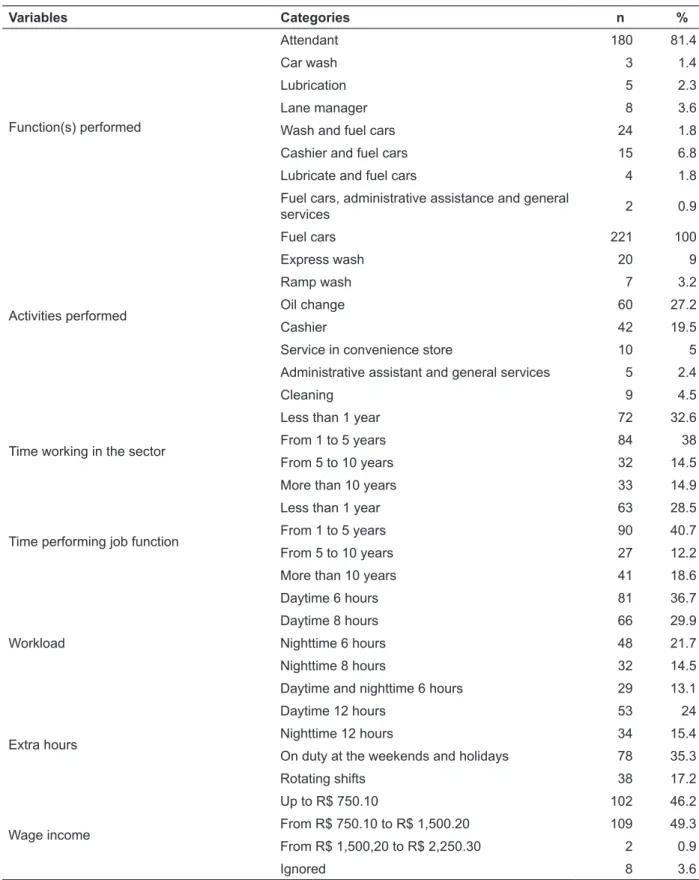
Table 1 - Characteristics of the work performed by gas station workers. Rio Grande-RS, Brazil, 2010
Variables Categories n %
Function(s) performed
Attendant 180 81.4
Car wash 3 1.4
Lubrication 5 2.3
Lane manager 8 3.6
Wash and fuel cars 24 1.8
Cashier and fuel cars 15 6.8
Lubricate and fuel cars 4 1.8
Fuel cars, administrative assistance and general
services 2 0.9
Activities performed
Fuel cars 221 100
Express wash 20 9
Ramp wash 7 3.2
Oil change 60 27.2
Cashier 42 19.5
Service in convenience store 10 5
Administrative assistant and general services 5 2.4
Cleaning 9 4.5
Time working in the sector
Less than 1 year 72 32.6
From 1 to 5 years 84 38
From 5 to 10 years 32 14.5
More than 10 years 33 14.9
Time performing job function
Less than 1 year 63 28.5
From 1 to 5 years 90 40.7
From 5 to 10 years 27 12.2
More than 10 years 41 18.6
Workload
Daytime 6 hours 81 36.7
Daytime 8 hours 66 29.9
Nighttime 6 hours 48 21.7
Nighttime 8 hours 32 14.5
Daytime and nighttime 6 hours 29 13.1
Extra hours
Daytime 12 hours 53 24
Nighttime 12 hours 34 15.4
On duty at the weekends and holidays 78 35.3
Rotating shifts 38 17.2
Wage income
Up to R$ 750.10 102 46.2
From R$ 750.10 to R$ 1,500.20 109 49.3
From R$ 1,500,20 to R$ 2,250.30 2 0.9
Ignored 8 3.6
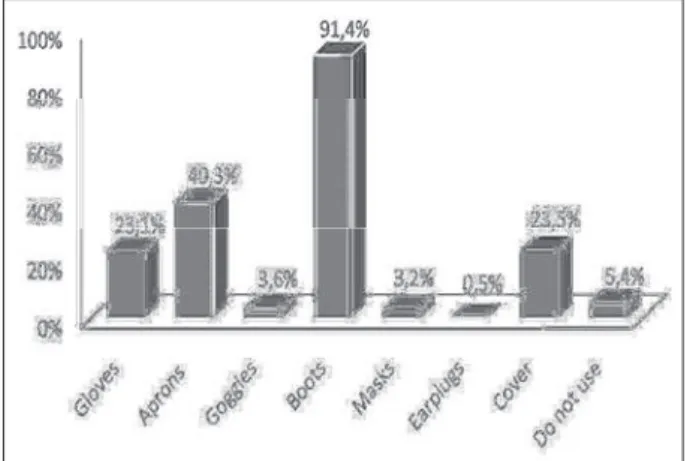
In regard to the self-reported use of PPE, boots was the device most frequently mentioned (202 workers/91.4%), followed by aprons (89
nine (4.07%) workers reported the use of hand lotion; seven (3.2%) workers reported the use of overalls; two (0.9%) reported the use of motorcycle helmets; three (1.5%) reported they wore their own clothes; one (0.5%) reported the use of waterproof clothing (motorcycle); one (0.5%) reported the use of chemical gloves, and another (0.5%), reported the use of water-repellent boots.
Figure 1 - Frequency PPE is used by gas station workers. Rio Grande-RS, Brazil, 2010
Reasons PPE is not used by some of the in-terviewees are provided by 12 workers: six (2.7%) reported there is no PPE available at work; three (1.4%) reported the company does not require the use of PPE: two (0.9%) considered it to be trouble-some/uncomfortable; and one (0.5%) worker did not use it because he was in training. We highlight the PPE provided by the company and which the workers consider being necessary (Figure 2). In regard to PPE the workers considered to be nec-essary: 29 (13.2%) indicated raincoat; 28 (12.6%), uniform (pants, T-shirt, jacket and hat); 14 (6.3%) hand lotion; eight (3.6%) no PPE necessary; two (0.9%) overalls; and two (0.9%) mentioned the use of motorcycle helmet.
The observation process enabled captur-ing the organizational structure of the work performed by the workers based on ample analysis per gas station. Multitasking was the main characteristic of 21 gas stations, since the workers would fuel cars, charge for the service, wash windshields, check oil and luids, clean the work environment (loor, store and bathrooms), clerk in the convenience store, and take care of the cash register and sell products (e.g. coal, ire extinguishers, automotive oil, etc.), among oth-ers. Other characteristics refer to work hours: no ixed schedule was observed in four gas stations;
in nine stations, the workers stood up most of the time or even throughout the workday due to the need to manage administrative work.
Figure 2 - PPE provided by the companies and deemed necessary by the gas station workers. Rio Grande-RS, Brazil, 2010
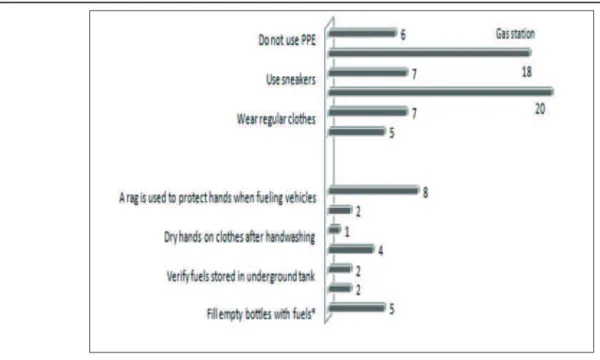
We observed workers in three gas stations fueling more than one vehicle at the same time. In three stations workers had their meals while standing at a lane. In another station, workers did not have time for a meal due to the large number of duties they had, while in another station there was no proper place for the workers to have their meals. In regard to the use of PPE, a uniform was individual protection in 20 gas stations, though not all workers made use of uniforms. Addition-ally, the T-shirts that compose the uniforms either had short sleeves or long sleeves were used but rolled up.
Certain notes concerning the observations deserve to be highlighted: one gas station did not provide boots or uniforms; in another, the workers used their own “motorcycle” clothing to protect them from rain; a single worker from another sta-tion used a mask, though only when lubricating vehicles. Considering the individuals who did not use PPE, several situations were observed: the rags used by workers to clean their hands remained on the fuel pumps the entire time. We also veriied, in one station, that the workers remained the entire time at work with their hands soiled with fuel; in another station, the workers had snacks in the fuel lane without washing their hands.
Figure 3 - Items recorded in the observation of gas stations concerning the use of PPE and situations when PPE is not used by the gas station workers. Rio Grande-RS, Brazil, 2010
DISCuSSION
Most workers in this study were white male and young adults, which is in agreement with other publications.14-15 Studies with gas station workers, truckers and other workers exposed to benzene show that some profes-sions are more common among men, which may be explained by the fact these professions present more evident risks if compared to other professions. Exposure to chemical agents such as benzene, toluene and xylene among women working in petrochemical resulted in the birth of under weight children.16
In regard to education, completed high school was the most common level of education among the workers and there was no statistical signiicance when this variable was associated with the use of PPE. According to the results of another study,14 individuals with this level of education are aware that PPE is required to protect from occupational exposure. Multitasking was observed among the work characteristics, which corroborates another study2 that indicates that multitasking associated with working conditions is a factor generator of physical disorders (work dynamics), psychological disorders (high demand from the company, clients and co-workers), and physiopatological disorders due to the
manipula-tion of chemical products than can lead to severe health problems. In the item related to time work-ing in the sector and performwork-ing the job function, we observed workers with more than 10 years in the job function, which requires that attention be paid to their health. One study14 shows a high level of hippuric acid (biological indicator of toluene) in a worker performing his job function for 21 years, characterizing a high level of contamination due to longer exposure. Another study15 shows that cumulative exposure to low levels of benzene may cause leukemia.
possibly leading to the occurrence of occupational accidents and disease caused by physical, psycho-logical or social harm.
Observation also showed there is a lack of an appropriate place and/or time for meals. Paragraph 1st of Art 71 CLT provides that workers with a workload from four to six hours have the right to a 15 minute break from work for a snack and at least one hour, and two hours at most, for workers with more than six hours of continuous work, with the exception of when there is a col-lective agreement for longer intervals for work-loads of up to four continuous hours of work.17 In this sense, we note that work organization may minimize psychological, physical and social effects, reduce the time of exposure to chemical agents (especially to benzene) and to occupational work risks caused by long workloads or poorly elaborated schedules.
The wage range of gas station workers is based on the Collective Labor Agreement of 2010/2011 for workers in the retail trade of fuels of Rio Grande do Sul.18 The wage may be another reason that generates high turnover in this cat-egory of workers, especially given the activity’s high demand and risks involved; that is, the salary is just not worth it.2 The stipulated minimum wage is R$ 577.00 plus hazard pay that corresponds to 30% additional monthly remuneration. Paragraph 1, Art. 193 CLT, establishes that dangerous activi -ties are those whose nature or methods require workers to be in constant contact with lammable or explosive products in conditions of high risk.17 According to NR-16, workers who remain in risk areas, even if they do not directly manipulate fuel pumps, are entitled to a hazard pay.11 We view gas station workers as performing an unhealthy activity because, according to Art 189 CLT, un -healthy activities or operations are those, which given their nature, work conditions or methods, expose workers to agents that are harmful to health above tolerance limits established by the nature or intensity of the agent and time of exposure to its effects.17 Because benzene is a chemical agent, the maximum tolerance of which, intensity and time of exposure are deined only as a technological reference and, in fact, there is no safe level of ex-posure, the activities performed by these workers justify the adoption of PPE to reduce the intensity of exposure.17
In regard to the use of PPE, the use of boots predominated, consonant with one study14 that
also reports the same observations concerning the workplace. In addition to the use of boots, 40.3% of the workers used aprons during their activities, a habit to be encouraged among other workers. Aprons are a protective measure against exposure to benzene through skin contact and there is evidence from one study indicating that contamination is reduced when overalls are changed every work shift.19 We also note that most workers identify uniforms as being PPE, however the arms remained exposed as the sleeves are either short sleeves or long sleeves were used rolled up, revealing a lack of concern or information on the part of workers who are in direct contact with fuel. Therefore, authors20 recommend individual protection, especially of hands and forearms, given benzene’s high level of permeability.
PPE protect professionals from risk and harm to health in the workplace and is among the main equipment protecting the most vulner-able routes of exposure against chemical products that are used in gas stations, such as: a hood for the head and neck; face shield and goggles; shoes; gaiters pants; overalls; safety kit (pants, jacket or pullover); respirator; air puriier; and gloves. These devices should be provided by companies to their employees free of cost, according to the needs of the task performed.11 The NR-6, however, does
disregarding the causal nexus. We understand that when workers realize their own exposure to occupational risks, they become co-responsible in the prevention of diseases and accidents and in health promotion.22
Even though most workers report the use of PPE, those who do not use the equipment allege the company does not provide the equip-ment; the company does not enforce its use; PPE is annoying/uncomfortable; or that equipment is not used during training, corroborating a prior study.14 In the face of several situations observed in the environment of gas stations concerning the lack of PPE use and inappropriate self-care measures, we verify the need for health profes-sionals to implement interventions, revealing a ield for nursing professionals to provide health education, instructing workers about the chemi-cal products used in this environment, espe-cially benzene, one of the main components of gasoline. Among other actions, nurses can bring educational measures to workers, through the acquisition of knowledge concerning the risks to which they are exposed.
The attitudes of workers such as eating at the lane they are responsible for, lack of ap-propriate hand hygiene before handling food19 and the lack of appropriate measures to reduce exposure, show they lack knowledge concerning the intake of benzene. In this context, we agree with studies19,23 highlighting the importance of using PPE and encouraging serious individual and collective care measures among workers, such as avoiding drying hands on one’s uniform; using gloves to fuel vehicles instead of rags that remain out at the lane; washing hands frequently and before eating; not rolling up the uniform’s sleeves, among other measures. Other measures related to work conditions can minimize expo-sure, such as providing sinks for the external areas near the fueling area for workers to wash their hands.
FINAL CONSIDERATIONS
This study’s results enabled the identii -cation of the socio-demographic proile of gas station workers; showed that most workers perform multiple tasks; and also enabled the identification of how long these individuals have worked in the sector and have performed their job functions, which requires care due to
cumulative exposure. The weekly workload is long and wages are low, even after adding haz-ard pay. We note the use of PPE such as boots, aprons, gloves and uniforms on the part of the gas station workers, though some deny the use of PPE. Observation conirmed the use of boots and uniform, however, other devices were not used, even if available. Therefore, the responsibility of employers is not only to provide PPE, but also enforce and monitor the use of PPE, while work-ers are responsible for appropriately using the protective measures provided. In this aspect, we noticed a lack of coherence between the workers’ reports and what was observed during working hours, showing a lack of knowledge of the risks and diseases to which they are exposed in the work environment.
We note the need for further studies to more incisively intervene in the occupational health of gas station workers. Another relevant aspect in-volves the fact that observation was not performed during all work shifts (e.g. night shift) due to safety and inancial reasons, which can be considered a limitation of this study.
The practice of nurses comprises measures that encourage workers to adopt measures to protect their health while in the workplace based on guidance as to how contamination by chemical agents takes place; how to eliminate such elements from the organism and how to avoid exposure; which PPE is appropriate and should be used during working hours. These actions can be imple-mented by nurses linked to Regional Centers in Occupational Health (CEREST, as per its acronym in Portuguese), the objective of which is to prevent occupational accidents and diseases. Hence, the CEREST covering this region is a strategic tool to disseminate occupational health practices within the SUS network’s sphere through interventions, surveillance of disease and working conditions in order to minimize or eliminate the exposure of workers to occupational risks.
ACKNOWLEDGEMENTS
REFERENCES
1. Cezar-Vaz MR, Rocha LP, Bonow CA, Silva MRS,
Cezar-Vaz J, Cardoso LS. Risk perception and
occupational accidents: a study of gas station workers in southern Brazil. Int J Environ Res Public Health. 2012 Jul; 9(7):2362-77.
2. Ferreira MC, Freire ON. Carga de trabalho e rotatividade na função de frentista. Rev Adm Contemp. 2001 Mai-Ago; 5(2):175-200.
3. Ministério da Saúde (BR). Secretaria de Atenção à
Saúde. Instituto Nacional do Câncer. Coordenação de Prevenção e Vigilância. Vigilância do câncer ocupacional e ambiental. Rio de Janeiro (RJ): INCA; 2005.
4. Ministério da Saúde (BR). Secretaria de Políticas
de Saúde. Departamento de Atenção Básica. Área Técnica de Saúde do Trabalhador. Cadernos de
Atenção Básica: Programa Saúde da Família. Brasília (DF): MS; 2001.
5. Costa MAF, Costa MFB. Benzeno: uma questão de saúde pública. Interciência. 2002 Abr; 27(4):201-4.
6. Dib MA, Oliveira LRZ, Dias OA, Torres ARR,
Silveira NA. Avaliação da qualidade do sêmen e do estado geral de saúde de frentistas de postos de gasolina da cidade de Goiânia.Estudos. 2007 Nov-Dez; 34(11-12):957-77.
7. Machado JMH, Costa DF, Cardoso LM, Arcuri A.
Alternativas e processos de vigilância em saúde do
trabalhador relacionados à exposição ao benzeno
no Brasil. Ciênc Saúde Coletiva. 2003 Out-Dez; 8(4):913-21.
8. Ministério do Trabalho e Emprego (BR). Portaria Interministerial n. 775, de 28 de abril de 2004. Dispõe sobre a proibição da comercialização de produtos acabados que contenham “benzeno” em sua composição, admitindo, porém, alguns
percentuais [Internet]. Brasília (DF); 2004 [aceso 2011 Set 22]. Disponível em: http://portal.mte.
gov.br/legislacao/portaria-interministerial-n-775-de-28-04-2004.htm
9. Cezar-Vaz MR, Cardoso LS, Bonow CA, Sant’Anna
CF, Sena J.Conhecimento clínico do enfermeiro na
atenção primária à saúde: aplicação de uma matriz
ilosóica de análise. Texto Contexto Enferm. 2010
Jan-Mar; 19(1):17-24.
10. Brasil. Organização Pan-Americana da Saúde no Brasil. Doenças relacionadas ao trabalho: manual de procedimentos para os serviços de saúde.
Brasília (DF): MS; 2001.
11. Ministério do Trabalho e do Emprego (BR).
Legislação de Segurança e Medicina do Trabalho.
2ª ed. São Paulo (SP): Método; 2008.
12. Silveira FL. Um exemplo de análise multivariada
aplicada à pesquisa quantitativa em ensino de
ciências: explicando o desempenho dos candidatos ao concurso vestibular de 1999 da Universidade Federal do Rio Grande do Sul. Investigações Ensino Ciências. 1999; 4(2):161-80.
13. Silverman D. Interpretação de dados qualitativos: métodos para análise de entrevistas, textos e interações. Porto Alegre (RS): Artmed, 2009. 14. Grendel GL, Teixeira M L. Avaliação de acido
hipúrico como biomarcador de exposição ocupacional em trabalhadores de postos de
combustíveis. Rev Saúde Pesquisa. 2009 Set-Dez;
2(3):319-24.
15. Bloemen LJ, Youk A, Bradley TD, Bodner KM,
Marsh G. Lymphohaematopoietic cancer risk
among chemical workers exposed to benzene. Occup Environ Med. 2004 Mar; 61(3):270-4.
16. Chen D, Cho S-I, Chen C, Wang X, Damokosh AI,
Ryan L, et. al. Exposure to benzene, occupational
stress, and reduced birth weight. Occup Environ Med. 2000 Out; 57(10):661-7.
17. Ministério do Trabalho e do Emprego (BR).
Consolidação das Leis de Trabalho. Decreto-Lei n.
5.452, de 1º de maio de 1943. Aprova a Consolidação
das Leis de Trabalho [Internet]. [acesso 2011 Mar 22]. Disponível em: https://www.planalto.gov. br/ccivil_03/decreto-lei/Del5452.htm
18. M i n i s t é r i o d o T r a b a l h o e d o E m p r e g o
(BR). Consolidação das Leis de Trabalho. Convenção coletiva de trabalho [Internet]. 2011 [acesso 2011 Mai 25]. Disponível em:
h t t p : / / p o r t a l . m t e . g o v . b r / d a t a / f i l e s /
FF8080812C1CBDF2012C2172CC301BE6/SIND_ COMBUST_2005.pdf
19. Colman R, Coleman A. Unexpected cause of raised benzene absorption in coke oven
by-product workers. Occup Med (Lond). 2006 Jun;
56(4):269-71.
20. Adami G, Larese F, Venier M, Barbieri P, Lo Coco
F, Reisenhofer E. Penetration of benzene, toluene and xylenes contained in gasolines through human abdominal skin in vitro. Toxicol in Vitro. 2006 Dez; 20(8):1321-30.
21. Carvalho QGS, Pedrosa WA, Sebastião QP.
Leucemia mieloide aguda versus ocupação proissional: peril dos trabalhadores atendidos
no hospital de hematologia de Recife. Rev Esc Enferm USP. 2011 Dez; 45(6):1446-51.
23. Wiwanitkit V, Suwansaksri J, Nasuan P. Research note: urine trans, trans-muconic acid as a biomarker for benzene exposure in gas station
attendants in Bangkok, Thailand. Ann Clin Lab
Sci. 2001 Out; 31(4):399-401.
Correspondence: Laurelize Pereira Rocha
Área Acadêmica de Enfermagem Prof. Newton Azevedo 4º andar – Escola de Enfermagem
Rua: General Osório, s/n. 96200-190 – Rio Grande, RS, Brasil E-mail: [email protected]