Abstract
Objective: To evaluate the impact that a program based on maternal dietary counseling covering breastfeeding and healthy complementary feeding had on the prevalence of iron deiciency, anemia and iron deiciency anemia in children aged 12 to 16 months.
Methods: Newborn infants were randomized at birth to an intervention or a control group. Mothers in the intervention group received home visits during the children’s irst year of life on a monthly basis up to 6 months, and at 8, 10 and 12 months. The mothers in the control group received visits for data collection when children reached 6 and 12 months. All children were visited at ages between 12 and 16 months and 24-hour dietary recalls and hemoglobin and ferritin tests were conducted.
Results: There was no evidence that the intervention had an effect on anemia incidence, which was 66.5% in the intervention group and 61.8% in the control group. There was also no evidence of any difference between the groups in the prevalence of iron deiciency anemia or of iron deiciency. However, a higher percentage of children in the intervention group were exclusively breastfed at 4 and 6 months, and breastfed at 6 and 12 months. Intervention group children also consumed more meat and were fed diets with better iron bioavailability and consumed less cow’s milk and calcium than children from the control group.
Conclusion: This intervention had no effect on the prevalence of anemia, iron deiciency or iron deiciency anemia.
Clinical trial registry identiication number: NCT00629629.
J Pediatr (Rio J). 2012;88(1):33-9: Intervention studies, anemia, public policies, infant nutrition.
Original article
Copyright © by Sociedade Brasileira de Pediatria33
Introduction
Anemia is considered one of the largest public health problems in both developing countries and developed countries.1 In Brazil, the National Demographic and Health
Survey (Pesquisa Nacional sobre Demograia e Saúde, PNDS)2 found that approximately 3 million children had
anemia in 2006. A systematic review3 showed that the
median prevalence of anemia among children under 5 years old was 53% and that the highest prevalence rates
are observed among children less than 24 months old. The principal cause of anemia among children less than 2 years
old is iron deiciency (ID).1,4-5
ID causes delays in central nervous system development
and children aged 6 to 12 months are the most susceptible
to these effects, which appear to last into adulthood.6 In
developing countries, 200 million children under 5 years old do not achieve their development potential. It is estimated
The impact of systematic dietary counseling
during the irst year of life on prevalence rates
of anemia and iron deiciency at 12-16 months
Gisele Ane Bortolini,1 Márcia Regina Vitolo2
1. Mestre, Ciências Médicas. Doutoranda, Nutrição, Departamento de Nutrição, Universidade de Brasília (UnB), Brasília, DF, Brazil.
2. Pós-doutorado, Nutrição. Professora adjunta, Departamento de Nutrição, Universidade Federal de Ciências da Saúde de Porto Alegre (UFCSPA), Porto Alegre, RS, Brazil.
No conflicts of interest declared concerning the publication of this article.
Financial support: Conselho Nacional de Desenvolvimento Científico e Tecnológico (CNPq), Brazil.
Suggested citation: Bortolini GA, Vitolo MR. The impact of systematic dietary counseling during the first year of life on prevalence rates of anemia and iron deficiency at 12-16 months. J Pediatr (Rio J). 2012;88(1):33-9.
Manuscript submitted Jun 19 2011, accepted for publication Oct 19 2011.
that this delayed development is responsible for more than
20% of the causes of low income among adults, which in
turn has implications for the development of the countries they live in.7 Prevention of anemia is based on three
intervention strategies: iron supplementation, fortiication
of foods and education about food and nutrition.4
The recommendations for feeding Brazilian children
under 2 are summarized in a publication entitled “Ten
Steps for Healthy Feeding of Children Younger Than Two Years” (Dez Passos para Alimentação Saudável de Crianças Menores de Dois Anos). The basic principles are as follows:
contribute to increasing the duration of both exclusive and overall breastfeeding; provide an adequate quality of complementary feeding to children under 2; and develop healthy dietary habits.8 Against this background, the objectives of this study were to evaluate the impact that an intervention based on the dietary guidelines contained in the Ten Steps publication had on the prevalence rates
of anemia, of ID and of iron deiciency anemia (IDA) in
children aged 12-16 months and to investigate certain feeding practices that are related to anemia.
Methods
This is a randomized ield study that recruited children at birth at the Hospital Centenário, which is the only hospital in the city of São Leopoldo, state of Rio Grande do Sul, Brazil. Only children in Brazilian National Health Service (Sistema Único de Saúde, SUS) wards were enrolled. Newborn infants were eligible for the study if they had birth weight ≥ 2,500 g and gestational age ≥ 37 weeks. Mothers were invited to take part in the study between October 2001 and June 2002 and were provided with information on how the study would work, i.e., that there would be differences between
a control group and an intervention group. More detail on the methodology is provided in a previous publication.9 The
sample size used in this study had 92% power within a 95% conidence interval (95%CI) to detect a 30% reduction in the occurrence of anemia on the basis of an estimated 60%
prevalence of the condition in the control group.
Intervention group
The intervention consisted of providing the mothers with dietary counseling based on the guidance provided in the
Ten Steps for Healthy Feeding of Children Younger Than Two Years.8 Counseling took place during 10 home visits: during
the irst 10 days after their children’s births, monthly up to 6 months and then at 8, 10 and 12 months. The dietary
recommendations that the mothers were given prioritized exclusive breastfeeding up to 6 months and introduction of complementary foods at the age of 6 months. Mothers were
advised not to give their children bottles or paciiers. They
were encouraged to provide complementary feeding with fruit
snacks and meals made from cereals or roots, meat, pulses
and greens, vegetables or fruit, with emphasis on leaving
enough time between meals to guarantee that the children
would eat a suficient quantity of these foods. Mothers were given a simpliied illustrated folder on the Ten Steps and a
printed sheet with four recipes providing examples of food groups and meal preparation. They were instructed not to
give the infants fried foods, sweets, honey, sugared drinks,
porridge or savory snacks. Twelve undergraduate students of nutrition conducted the home visits in pairs. The entire team was trained in the dietary guidelines and in techniques
for counseling mothers about the Ten Steps for Healthy Feeding of Children Younger Than Two Years. Each dietary counseling session lasted 30 to 40 minutes.
Control group
Members of the control group were visited at 6 and
12 months for collection of anthropometric, dietary and
sociodemographic data and to collect data on the infants’
health status. Interviewers informed mothers about the
anthropometric results and instructed them to attend the nearest health service if nutritional problems were detected.
Assessment of nutritional iron status
Interviewers who were not involved in the intervention
process and who were blind to which group children belonged to conducted home visits at 6 and 12 months in
order to collect data on the study variables. A total of 397
children were evaluated at ages of 12-16 months. Their mothers were instructed to take them to the Municipal
Clinical Analysis Laboratory for blood tests. A total of 369 blood samples were collected and 369 hemoglobin (Hb) results and 289 serum ferritin (SF) results were obtained. Hb was measured with a Coulter meter and SF was measured using a commercial ELISA kit. The outcome variables investigated were anemia, ID and IDA. Anemia was deined as Hb < 11 g/dL; ID as SF < 15.0 µg/L and IDA as the combination of both Hb < 11 g/dL and SF < 15 µg/L in the same child. Mean cell volume results
of < 74 fL4,10 were deined as microcytosis.
Assessment of feeding habits related to nutritional iron status
The study analyzed the following variables at 6 months
of age for both groups: exclusive breastfeeding, deined as breastfeeding as the only food offered to the child, with no infusions or water; breastfeeding, deined as breastmilk as part of the child’s feeding, irrespective of whether other
foods were also given. A 24-hour dietary recall was used to record each child’s dietary intake on the day before the
last home visit, providing speciic details of portions as
reported by the mother or guardian. Commercial products
breastfed children, an estimated volume of 448 mL/day
for 12-month old infants was adopted.11
The nutritional content of the children’s diets was
calculated using UNIFESP’s NutWin software and tables of the chemical composition of foods, in addition to information
provided by food manufacturers about products not listed in the tables. A total of 343 24-hour dietary recalls were analyzed and 26 were discarded because of the following
reasons: seven were not illed out correctly, two related to children who were sick, 13 provided information in the form of non-speciic household measures, four of the children’s
carers did not know the information requested.
The bioavailability of the children’s iron intake was assessed using an adapted method that has been described in an earlier publication.12 The current recommendation is
to employ the estimated average requirement (EAR), which, for the age group in question, is 3 mg of iron per day.13 Nutrient and food intake results are presented as means and standard deviations.
Statistical analysis
The chi-square test was used to verify homogeneity of the sample in terms of distribution of socioeconomic and demographic variables across the intervention and control groups after randomization. The chi-square test was also used to evaluate the differences in the prevalence rates of
the primary study outcomes: anemia, ID and IDA. Relative risks and their respective 95%CI were calculated in order
to quantify the effect of the intervention on breastfeeding and feeding habits. The sample size changed for different
analyses, depending on the availability of data. Student’s
t test and the Mann-Whitney nonparametric test were
used for intake variables, Hb and SF and the
Kolmogorov-Smirnov test was used to check they were applicable. The
cutoff for rejection of the null hypothesis was set at 5%
for all tests.
Research ethics
The research protocol was approved by the Ethics Committee at the Universidade Federal do Rio Grande do Sul (UFRGS). At the start of the home visits, each child’s
guardian was given a free and informed consent form containing information about all of the procedures involved in
the research, a guarantee of conidentiality and a statement
about the right to refuse to take part in the investigation. The interview was only started if agreement was forthcoming and the informed consent form was signed.
Results
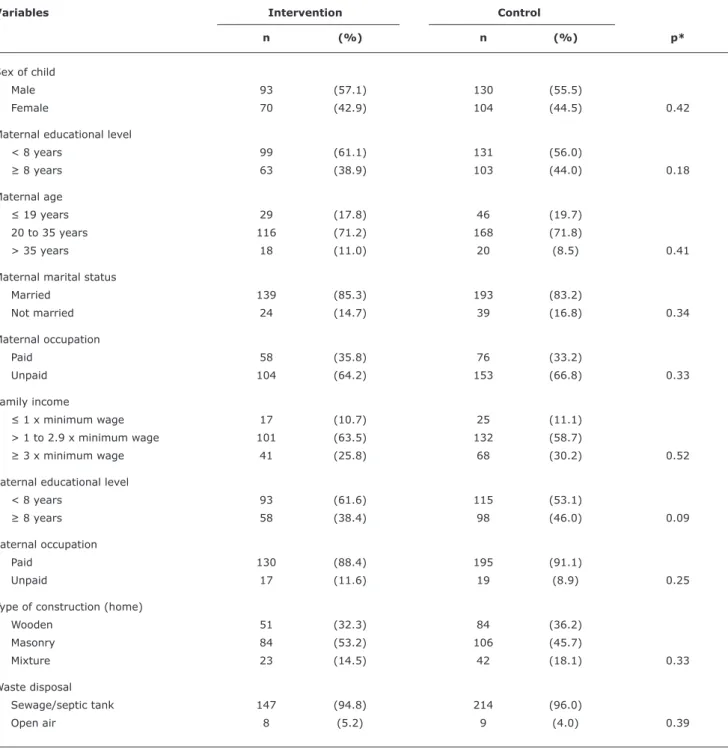
The distributions of the socioeconomic and family variables and the children’s sex were similar for the control
and intervention groups, conirming that the randomization
process conducted at the start of the study had been adequate
(Table 1). At the point at which the study outcomes were assessed, mean age was 12.95±1.15 months (range: 11.84 to 16.25 months). As is shown in Table 2, there was no statistically signiicant difference in anemia between the groups, with a prevalence of 66.5% in the intervention group and prevalence of 61.8% in the control group (p = 0.21). The groups were also not different in terms of ID, IDA or microcytosis. Mean Hb concentrations were 10.35±1.09 g/dL and 10.52±1.19 g/dL in the intervention and control groups respectively, with no statistically signiicant difference. Mean SF also did not differ between groups and was 5.87±7.51 µg/L in the intervention group and 7.29±9.66 µg/L in the control group.
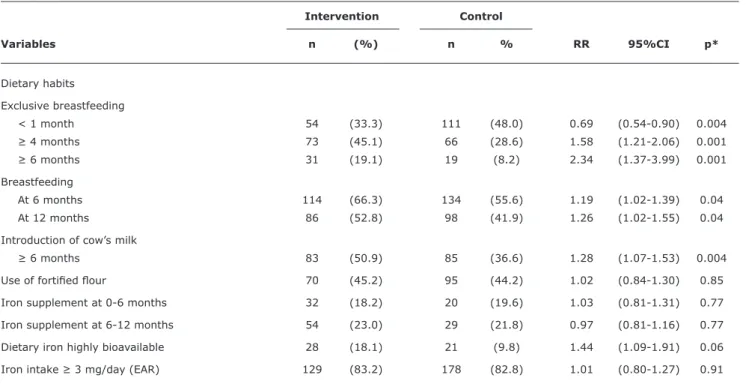
The results related to dietary outcomes are listed in Table 3 and show that the proportion of children who were exclusively breastfed for less than 1 month was statistically higher in the control group and that the children in the
intervention group had a 40% greater likelihood of receiving
exclusive breastfeeding for 4 months or more. The children in the intervention group were more than twice as likely to be on exclusive breastfeeding at 6 months of age. The proportion of children receiving breastfeeding at 6 and at 12 months was also greater in the intervention group. Cow’s milk was introduced earlier in the control group
(p = 0.004).
The prevalence of supplementation with iron was similar
for the two groups, at around 20%. More than 40% of both groups were fed with fortiied lour (p = 0.85) and approximately 80% of the children had iron intakes that were above their EAR. Notwithstanding, a higher percentage (18.1%) of the intervention group had diets with a high
level of iron bioavailability when compared with the control
group (9.8%) (Table 3).
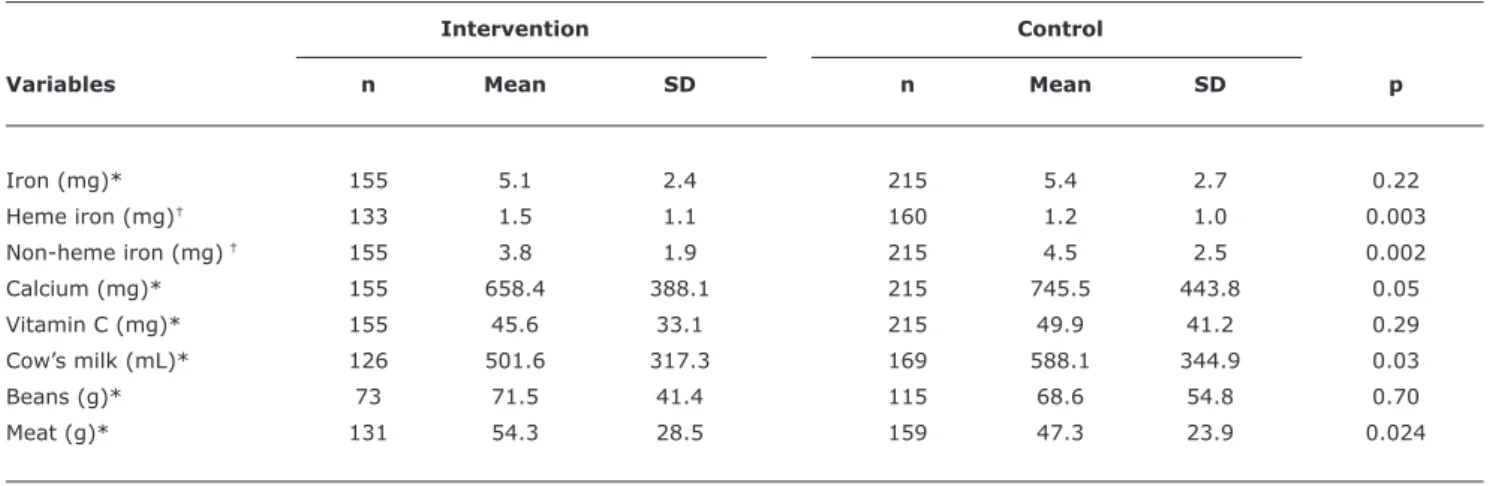
Table 4 lists the results for intakes of micronutrients
and foods. Mean iron intake was approximately 5 mg/day in both groups. It will be observed that 29.2% of dietary iron in the intervention group was not heme, whereas, in the control group this proportion was 23% (p < 0.001). The intervention group had a higher meat intake (p = 0.02). According to the dietary recall, cow’s milk and calcium intakes were higher in the control group, whereas vitamin C intake, iron intake from fortiied foods and intake of beans
did not differ between the groups.
Discussion
Previous studies have shown that the intervention described in this article promoted a reduction in the prevalence of caries14 and respiratory morbidities.15
However, this study has demonstrated that the intervention was not effective for the prevention of anemia or ID. High prevalence rates of anemia, ID and IDA were observed
Table 1 - Sex of children and maternal and socioeconomic variables in the intervention and control groups
Variables Intervention Control
n (%) n (%) p*
Sex of child
Male 93 (57.1) 130 (55.5)
Female 70 (42.9) 104 (44.5) 0.42
Maternal educational level
< 8 years 99 (61.1) 131 (56.0)
≥ 8 years 63 (38.9) 103 (44.0) 0.18
Maternal age
≤ 19 years 29 (17.8) 46 (19.7)
20 to 35 years 116 (71.2) 168 (71.8)
> 35 years 18 (11.0) 20 (8.5) 0.41
Maternal marital status
Married 139 (85.3) 193 (83.2)
Not married 24 (14.7) 39 (16.8) 0.34
Maternal occupation
Paid 58 (35.8) 76 (33.2)
Unpaid 104 (64.2) 153 (66.8) 0.33
Family income
≤ 1 x minimum wage 17 (10.7) 25 (11.1)
> 1 to 2.9 x minimum wage 101 (63.5) 132 (58.7)
≥ 3 x minimum wage 41 (25.8) 68 (30.2) 0.52
Paternal educational level
< 8 years 93 (61.6) 115 (53.1)
≥ 8 years 58 (38.4) 98 (46.0) 0.09
Paternal occupation
Paid 130 (88.4) 195 (91.1)
Unpaid 17 (11.6) 19 (8.9) 0.25
Type of construction (home)
Wooden 51 (32.3) 84 (36.2)
Masonry 84 (53.2) 106 (45.7)
Mixture 23 (14.5) 42 (18.1) 0.33
Waste disposal
Sewage/septic tank 147 (94.8) 214 (96.0)
Open air 8 (5.2) 9 (4.0) 0.39
* Chi-square test.
A study conducted in Mexico with low socioeconomic status women and neonates showed that iron reserves are
lower at birth if maternal stocks are deicient, which is a relection of the limited capacity of the fetus to acquire iron and the restriction imposed by gestational ID on building
up fetal stocks.16 A study conducted in Indonesia supported
this hypothesis, demonstrating that infants born with normal weight (≥ 2,500 grams), but to anemic mothers (Hb < 12 g/dL) had twice the likelihood of low Hb when
Table 2 - Prevalence of anemia, iron deiciency, iron deiciency anemia and microcytosis in intervention and control groups
Intervention Control
group group
Variables n (%) n (%) p‡
Anemia* 105 (66.5) 131 (61.8) 0.21
ID 118 (90.1) 143 (90.5) 0.53
IDA 79 (57.2) 91 (51.7) 0.19
Microcytosis† 82 (52.6) 105 (50.0) 0.35
ID = iron deficiency (serum ferritin < 15 µg/L); IDA = iron deficiency anemia. * Hemoglobin < 11 g/dL.
† Mean cell volume < 74 fL. ‡ Chi-square test.
Table 3 - Simple frequencies and percentages, relative risks and 95% conidence intervals for dietary habits, by intervention or control group
Intervention Control
Variables n (%) n % RR 95%CI p*
Dietary habits
Exclusive breastfeeding
< 1 month 54 (33.3) 111 (48.0) 0.69 (0.54-0.90) 0.004
≥ 4 months 73 (45.1) 66 (28.6) 1.58 (1.21-2.06) 0.001
≥ 6 months 31 (19.1) 19 (8.2) 2.34 (1.37-3.99) 0.001
Breastfeeding
At 6 months 114 (66.3) 134 (55.6) 1.19 (1.02-1.39) 0.04
At 12 months 86 (52.8) 98 (41.9) 1.26 (1.02-1.55) 0.04
Introduction of cow’s milk
≥ 6 months 83 (50.9) 85 (36.6) 1.28 (1.07-1.53) 0.004
Use of fortiied lour 70 (45.2) 95 (44.2) 1.02 (0.84-1.30) 0.85
Iron supplement at 0-6 months 32 (18.2) 20 (19.6) 1.03 (0.81-1.31) 0.77
Iron supplement at 6-12 months 54 (23.0) 29 (21.8) 0.97 (0.81-1.16) 0.77
Dietary iron highly bioavailable 28 (18.1) 21 (9.8) 1.44 (1.09-1.91) 0.06
Iron intake ≥ 3 mg/day (EAR) 129 (83.2) 178 (82.8) 1.01 (0.80-1.27) 0.91
95%CI = 95% confidence interval; EAR = estimated average requirement; RR = relative risk. * Chi-square test.
reserves.18 A national survey conducted in Brazil2 showed that the prevalence of anemia among women of fertile age
is approximately 20%.
Another factor that could explain the high prevalence rates of anemia and the absence of any impact from the intervention on outcomes related to nutritional iron status is the time between delivery of the child and clamping of
the umbilical cord. In Brazil, the cord tends to be clamped
early; however, this variable was not analyzed in the
present study.19 There is suficient evidence to show that later umbilical cord clamping has the effect of reducing
the incidence of anemia, ID and IDA in the child at later
ages. A systematic review showed that late clamping of the
umbilical cord (2-3 minutes) increases Hb concentration by an average of 2.17 g/dL.20
It is also interesting to note that, although the intervention group had a higher intake of heme iron, this nutrient still accounted for less than 30% of the total iron intake. Mean iron intake was greater than the EAR, but it
is important to take into consideration the fact that this
recommendation was based on an 18% absorption level,13
which does not relect the true dietary situation of the
children investigated.
The intervention led to increased consumption of meat
and better quality iron intake. Evidence has been published showing that introducing meat during the irst year of life is
a protective factor against anemia.12,21 The effect of reducing
cow’s milk intake may reduce the risk of anemia, since this
has been associated with a reduced incidence of anemia.12,22
Therefore, this intervention led to an improvement in the dietary proile of the children in the intervention group,
Table 4 - Daily intakes of nutrients and foods, by intervention or control group
Intervention Control
Variables n Mean SD n Mean SD p
Iron (mg)* 155 5.1 2.4 215 5.4 2.7 0.22
Heme iron (mg)† 133 1.5 1.1 160 1.2 1.0 0.003
Non-heme iron (mg) † 155 3.8 1.9 215 4.5 2.5 0.002
Calcium (mg)* 155 658.4 388.1 215 745.5 443.8 0.05
Vitamin C (mg)* 155 45.6 33.1 215 49.9 41.2 0.29
Cow’s milk (mL)* 126 501.6 317.3 169 588.1 344.9 0.03
Beans (g)* 73 71.5 41.4 115 68.6 54.8 0.70
Meat (g)* 131 54.3 28.5 159 47.3 23.9 0.024
SD = standard deviation. * Student’s t test.
† Mann-Whitney nonparametric test.
In this study, dietary intake was assessed on the basis of just a single 24-hour dietary recall, which may have limited the results. It is recognized that a given individual’s dietary
intake includes a wide range of variation and so in order to acquire more trustworthy data it is necessary to conduct
more than one dietary recall per person. Notwithstanding, this limitation should not have had a signiicant effect on the results, since mean intakes of two groups were compared
meaning that possible sources of bias would have occurred at similar rates in both groups.
Adherence to healthy dietary habits may have been limited by cultural and socioeconomic features of the study
population, which is a function of the multiple causes
of anemia that are not restricted to the health sector.
Interventions involving nutritional guidance for mothers and/or guardians during the irst year of infants’ lives did
not have an effect on reducing anemia or on increasing the quantity of dietary iron when the children reached 18 months of age.23 Another two studies showed that dietary
education led to an increase in mean SF and Hb, but that
levels remained below the cutoff points for normality.24-25
The high prevalence rates of anemia, ID and IDA observed
in both groups of full term normal birth weight infants from
families who use the SUS emphasize the magnitude of the
problem in the 12-to-16-month age group. The research team did not recommend the use of iron supplements.
Use of iron supplements was not a limitation to the results observed in this study, since approximately 20% of the children in both groups were given these products. In many parts of Brazil, complementary feeding does not appear to
meet the high iron requirements of children under 2 years old.12,26-27 It is therefore necessary, in addition to healthy
dietary intake, to supplement with iron and/or fortiied foods.
Current research is revisiting the effectiveness of isolated iron supplementation for children and suggesting the use of multiple micronutrients.28-30 It is therefore accepted
that a given population that is deicient in one nutrient is undoubtedly also deicient in other micronutrients. The PNDS survey in Brazil also found that 17.4% of children from 6 to 59 months had vitamin A deiciency.2 Fishman et al.29 have stated that for certain populations prevention and control of nutritional anemia demands the use of supplementation with several micronutrients. Another meta-analysis showed that combined supplementation with vitamins and minerals is better than supplementation with one or two micronutrients in isolation.30 A recent World
Health Organization publication recommends the use of
multiple micronutrients for prevention of anemia on a public health scale.28
The results of this study show that the intervention
resulted in a better dietary intake proile. The children in the intervention group were breastfed for longer, had non-human milk introduced later, consumed signiicantly
greater quantities of heme iron and meat and had diets with better iron bioavailability in relation to the children
in the control group. However, the intervention was not suficient to prevent occurrence of anemia, ID or IDA in children aged 12 to 16 months. Therefore, in our country, prevention of ID in children less than 2 years old from
low socioeconomic conditions must involve a variety of
strategies, such as iron supplementation during pregnancy, later clamping of the umbilical cord, promotion of exclusive breastfeeding up to 6 months, recommendations for the
References
1. de Benoist B, McLean E, Egli I, Cogswell M, eds. Worldwide prevalence of anaemia 1993-2005: WHO global database on anemia. Geneva: World Health Organization; 2008.
2. Brasil, Ministério da Saúde. Pesquisa Nacional de Demograia e Saúde da Criança e da Mulher - PNDS 2006: dimensões do processo reprodutivo e da saúde da criança. Ministério da Saúde, Centro Brasileiro de Análise e Planejamento. Brasília: Ministério da Saúde; 2009.
3. Jordão RE, Bernardi JL, Barros Filho A de A. Prevalência de anemia ferropriva no Brasil: uma revisão sistemática. Rev Paul Pediatr. 2009;27:90-8.
4. World Health Organization. Iron deiciency anemia: assessment, prevention, and control. A guide for programme managers. Geneva: World Health Organization; 2001.
5. Bortolini GA, Vitolo MR. Relationship between iron deiciency
and anemia in children younger than 4 years. J Pediatr (Rio J). 2010;86:488-92.
6. Beard JL. Why iron deiciency is important in infant development. J Nutr. 2008;138:2534-6.
7. Grantham-McGregor S, Cheung YB, Cueto S, Glewwe P, Richter L, Strupp B; International Child Development Steering Group. Developmental potential in the irst 5 years for children in developing countries. Lancet. 2007;369:60-70.
8. Brasil. Ministério da Saúde. Dez passos para uma alimentação saudável: guia alimentar para crianças menores de dois anos. Brasília: Ministério da Saúde; Organização Pan-Americana de Saúde; 2002.
9. Vitolo MR, Bortolini GA, Feldens CA, Drachler M de L. Impactos da implementação dos dez passos da alimentação saudável para crianças: ensaio de campo randomizado. Cad Saude Publica. 2005;21:1448-57.
10. World Health Organization. Assessing the iron status of populations: report of a Joint World Health Organizatoin/Center for Disease Control and Prevention Technical Consultation on the Assessment of Iron Status at the Population Level. Geneva: World Health Organization; 2004.
11. Dewey KG, Cohen RJ, Rivera LL, Brown KH. Effects of age of
introduction of complementary foods on iron status of breast-fed
infants in Honduras. Am J Clin Nutr. 1998;67:878-84.
12. Vitolo MR, Bortolini GA. Iron bioavailability as a protective factor
against anemia among children aged 12 to 16 months. J Pediatr (Rio J). 2007;83:33-8.
13. Trumbo P, Yates AA, Schlicker S, Poos M. Dietary reference intakes: vitamin A, vitamin K, arsenic, boron, chromium, copper, iodine, iron, manganese, molybdenum, nickel, silicon, vanadium, and zinc. J Am Diet Assoc. 2001;101:294-301.
14. Feldens CA, Vítolo MR, Drachler M de L. A randomized trial of the effectiveness of home visits in preventing early childhood caries. Community Dent Oral Epidemiol. 2007;35:215-23.
15. Vitolo MR, Bortolini GA, Dal Bó Campagnolo P, Feldens CA.
Effectiveness of a nutrition program in reducing symptoms of respiratory morbidity in children: a randomized ield trial. Prev Med. 2008;47:384-8.
16. Jaime-Perez JC, Herrera-Garza JL, Gomez-Almaguer D. Sub-optimal fetal iron acquisition under a maternal environment. Arch Med Res. 2005;36:598-602.
17. De Pee S, Bloem MW, Sari M, Kiess L, Yip R, Kosen S. The high
prevalence of low hemoglobin concentration among Indonesian infants aged 3-5 months is related to maternal anemia. J Nutr. 2002;132:2215-21.
18. Sipinillo A, Capuzzo E, Piazzi G, Nicola S, Colonna L, Iasci A. Maternal high-risk factors and severity of growth deicit in small for gestational age infants. Early Hum Dev. 1994;38:35-43. 19. McDonald SJ, Middleton P. Effect of timing of umbilical cord
clamping of term infants on maternal and neonatal outcomes. Cochrane Database Syst Rev. 2008;(2):CD004074.
20. Venâncio SI, Levy RB, Saldiva SR, Mondini L, Alves MC, Leung SL. Efeitos do clampeamento tardio do cordão umbilical sobre os níveis de hemoglobina e ferritina em lactentes aos três meses de
vida. Cad Saude Publica. 2008;24:S323-31.
21. Hallberg L, Hoppe M, Andersson M, Hulthén L. The role of meat to improve the critical iron balance during weaning. Pediatrics. 2003;111:864-70.
22. Gunnarsson BS, Thorsdottir I, Palsson G. Iron status in 2-years-old Icelandic children and associations with dietary intake and
growth. Eur J Clin Nutr. 2004;58:901-6.
23. Childs F, Aukett A, Darbyshire P, Ilett S, Livera LN. Dietary education and iron deiciency anaemia in the inner city. Arch Dis Child. 1997;76:144-7.
24. Kapur D, Sharma S, Agarwal KN. Effectiveness of nutrition education, iron supplementation or both on iron status in children. Indian Pediatr. 2003;40:1131-44.
25. Khoshnevisan F, Kimiagar M, Kalantaree N, Valaee N, Shaheedee N. Effect of nutrition education and diet modiication in iron depleted preschool children in nurseries in Tehran: a pilot study. Int J Vitam Nutr Res. 2004;74:264-8.
26. Bortolini GA, Vitolo MR. Baixa adesão à suplementação de ferro entre lactentes usuários de serviço público de saúde. Pediatr (São Paulo). 2007; 29:176-82.
27. Oliveira MA, Osório MM, Raposo MC. Socioeconomic and dietary
risk factors for anemia in children aged 6 to 59 months. J Pedriatr (Rio J). 2007;83:39-46.
28. World Health Organization. Guideline: use of multiple micronutrient powders for home fortiication of foods consumed by infants and children 6–23 months of age. Geneva: World Health Organization; 2011.
29. Fishman SM, Christian P, West KP. The role of vitamins in the prevention and control of anaemia. Public Health Nutr. 2000;3:125-50.
30. Allen LH, Peerson JM, Olney DK. Provision of multiple rather than two or fewer micronutrients more effectively improves growth and
other outcomes in micronutrient-deicient children and adults. J Nutr. 2009;139:1022-30.
Correspondence: Gisele Ane Bortolini
QRSW 06, Bloco B7, ap. 105 – Setor Sudoeste CEP 70675-627 - Brasília, DF - Brazil