WATER QUALITY AND DIVERSITY OF YEASTS FROM TROPICAL LAKES AND RIVERS FROM THE RIO
DOCE BASIN IN SOUTHEASTERN BRAZIL
Adriana O. Medeiros1*, Beatriz S. Missagia 2, Luciana R. Brandão2, Marcos Callisto3, Francisco A. R. Barbosa3, Carlos A.
Rosa2
1
Departamento de Botânica, Instituto de Biologia, Universidade Federal da Bahia, Salvador, BA, Brasil; 2Departamento de
Microbiologia, Instituto de Ciências Biológicas, Universidade Federal de Minas Gerais, Belo Horizonte, MG, Brasil; 3
Departamento de Biologia Geral, Instituto de Ciências Biológicas, Universidade Federal de Minas Gerais, Belo Horizonte, MG,
Brasil.
Submitted: July 12, 2011; Returned to authors for corrections: August 15, 2011; Approved: June 07, 2012.
ABSTRACT
Yeast communities were assessed in 14 rivers and four lakes from the Doce River basin in Brazil, during the
rainy and dry seasons of the years 2000 and 2001. Water samples were collected at the subsurface in all
sites. The following physical and chemical parameters were measured: temperature, dissolved oxygen, pH,
electrical conductivity, total phosphorus, ortho-phosphate, ammonium, nitrate, nitrite and total nitrogen and
the counts of faecal coliforms and heterotrophic bacteria were carried out to characterize the aquatic
environmental sampled. The yeast counts were higher in aquatic environments with the highest counts of
coliform and heterotrophic bacteria. These environments receive a high influx of domestic and industrial
waste. A total of 317 isolates identified in forty eight yeast species were recorded in the sites sampled and
the specie Aureobasidium pullulans were found in eleven out of eighteen sites sampled and some opportunistic pathogens such as the yeast species Candida krusei were isolated only in the polluted rivers with a positive correlation with the biotic and abiotic parameters that indicate sewage contamination.
Key words: tropical freshwater, yeast diversity and water quality
INTRODUCTION
Many bodies of water throughout the world are considered
to be impacted by the input of allochthonous material from
industrial and domestic effluents associated with human
activities. These environments can host a great variety of
microorganisms and may be considered a risk to human beings
(9).
Yeasts are common inhabitants of aquatic environments
and their density and species diversity depend on the water
type and purity (11, 12). Despite this fact the knowledge of the
ecology of freshwater yeasts is still incipient and present wide
gaps related in particular to the factor that drive their
distribution patterns, diversity and functional significance in
aquatic systems (28).
Nevertheless, some researchers have proposed using the
presence of yeasts as an indicator of sewage contamination and
recreational water quality as a complement to the coliform
counts. Some studies have shown a correlation between the
occurrence of yeasts in aquatic environments and the presence
of fecal pollution indicators (3, 4, 5, 8, 12, 20). Yeasts
populations respond quickly to organic contamination and
some species could be used as indicators of nutrient enrichment
in aquatic environments (5). Common yeast species isolated in
freshwater have been associated with humans (20), and some
of them are opportunistic pathogens such as the species
Candida albicans, Candida parapsilosis, Candida krusei, Candida guilliermondii, Candida glabrata and Candida tropicalis.
The main objective of this study was to determine the
levels of microbial water quality indicators and yeast species
present in freshwater environments of the Doce River basin in
Brazil by sampling regions with different levels of
anthropogenic impacts.
MATERIALS AND METHODS
Study area
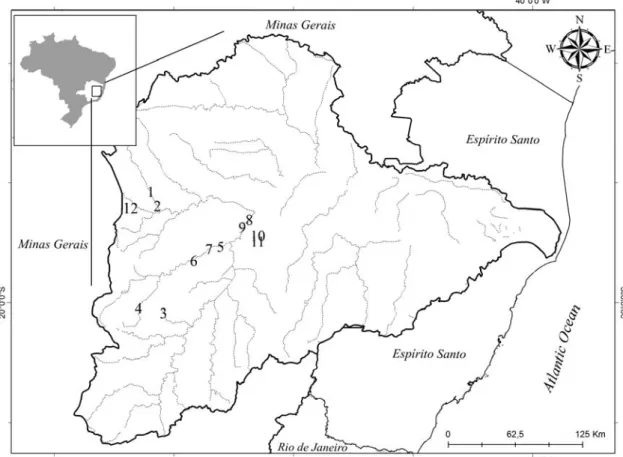
This study was carried out in the Doce River basin, in the
state of Minas Gerais in southeastern Brazil (Figure 1). The
Doce River watershed is one of the most important basins in
southeastern Brazil. The waters of the Doce River basin are
used by more than 3 million inhabitants in approximately 300
municipalities. Rapid urbanisation has resulted in a lack of
basic sanitation, resulting in degradation of the aquatic
ecosystems of this region (18). Water samples were collected
from two regions of the Doce River basin: Serra do Cipó and
the Middle Doce River basin.
Serra do Cipó is located in the central part of Minas
Gerais State (19° 12’ - 19° 34’ S, 43° 27’ - 43° 38’W) and
separates two important Brazilian watersheds: the São
Francisco River basin and the Doce River basin. This region
has a subtropical climate with a marked dry season, and the
annual medium temperatures oscillate between 17°C and 19°C
(7). In this region, a longitudinal gradient was studied and
water sample was collection from five sites in the Indaiá
stream, named IND1 (1st order), IND2 (2nd order), IND3 (3rd
order), IND4 (3rd order) and IND5 (4th order). A first order
stream has no tributaries. When two first-order streams meet,
they form a second-order stream, and so on (13). The IND sites
are located inside the Serra do Cipó National Park, and these
points are considered to be free of anthropogenic impacts.
Samples were also collected from two sites in the Peixe river,
named PEI1 and PEI2 (5th and 6th order stretches, respectively),
that are located outside of the Serra do Cipó National Park and
have been affected by humans (7).
The middle stretch of the Doce River basin is located in
southeastern Brazil. This region also includes the Doce River
State Park (ca. 36,000 ha), the largest remnant of the Atlantic Forest in the State of Minas Gerais and one of the few places in
Brazil where non-impacted natural lakes can be found. The
climate of this region is characterised by two well-defined
seasons: a dry season from May to August/September and a
rainy season from October to March (18). In this region, seven
rivers were sampled representing the mainly sub-basin of the
middle Rio Doce basin: the Caraça (CAR), Santa Bárbara
(SBR), Peixe (PER), Severo (SER), Piracicaba (PIR), Ipanema
(IPR) and Doce rivers (DOR). Four lakes from the region
were also studied, two located in the Doce River State Park,
Carioca Lake (CAL) and Dom Helvécio Lake (DOL); and the
other two sites located outside of the park, in the region of the
Eucalyptus reforestation area, Amarela Lake (AML) and
Águas Claras Lake (ACL) (21).
Sampling
Sample collections and physical and chemical
measurements were carried out in the rainy and dry periods in
January and August, respectively, of both 2000 and 2001.
Water samples were collected at the littoral zone of the rivers.
In the lakes, the samples were collected in the limnetic zone in
the sub-surface water column. The water samples for
microbiological analysis were directly collected into sterilised
bottles. The samples were transported to the laboratory on ice
and the analyses were carried out within 8 h of sampling.
The water temperature, electric conductivity, pH and
dissolved oxygen were measured in situ with a multi-probe analyser (Horiba, mod. U-22). At all of the sites, water samples
were collected to determine the contents of total nitrogen,
nitrate, nitrite (17), ammonium, total phosphorus and
phosphate (10).
The quantification of faecal coliform bacteria was made
by the standard most probable number (MPN) method
according to Eaton et al. (9). Water samples were inoculated into lactose broth (Difco, USA) for the presumptive phase. If
the water samples showed positive results in the presumptive
phase, it was then inoculated into brilliant green lactose bile
broth (Difco, USA) for total coliforms (TC) and EC broth
(Difco, USA) to confirm the presence of faecal coliforms
(incubated at 44.5oC ± 0.2 during 24 h). The results were
expressed as MPN per 100 mL of water sample. The
enumeration of heterotrophic bacteria was performed utilising
the pour plate method on NWRI agar incubated at 25oC, for
five days (9). For yeast isolation, 0.1 ml aliquots of undiluted
water samples were spread in triplicate on YMA (1% glucose,
0.5% peptone, 0.3% malt extract, 0.3% yeast extract, 2.0%
agar) supplemented with 200 mg chloramphenicol L-1. The
plates were incubated at room temperature (25 3ºC) during 5
days. Each different yeast morphotype was counted, purified,
and maintained on YM slants or frozen at -80ºC for later
identification. The yeasts were characterised by standard
methods (30). Identifications followed the taxonomic keys of
Kurtzman & Fell (15). Yeasts isolates of uncertain identity
were confirmed by sequencing the D1/D2 variable domains of
AATAAGCGGAGGAAAAG-3’) and NL-4 (5’-GGTCCGTG
TTTCAAGACGG-3’). The DNA extraction were done
according to Brandão et al (6) and the D1/D2 variable domains
of the large subunit of the r RNA gene were amplified as
described by Lachance et al (16) . Sequencing of the D1/D2
domains was performed directly from purified PCR products
using a MegaBaceTM 1000 automated sequencing system
(Amersham Biosciences). The sequences obtained were
compared with those included in the GenBank database using
the BASIC LOCAL ALIGNMENT SEARCH TOOL (BLAST
at http://www.ncbi.nlm.nih.gov) (1).
Statistical Analyses
To verify the significantly differences among the sites
sampled (rivers X lakes), the years when the studies were
conducted (2000 and 2001) and the period (dry and rainy) a
PERMANOVA test was used with a software package
PERMANOVA for PRIMER, 2006 (2). The Canonical
Correspondence Analysis (CCA) was used to verify the main
trend of distribution of yeast species in relation to the biotic
and abiotic parameters. The biotic data were transformed in log
(x+1). For the CCA analyses were utilized the program
CANOCO for Windows 4.5 (29).
RESULTS
Physical and chemical parameters
In all of the analysed sites, the highest temperatures were
obtained during the rainy period. In Serra do Cipó, the
temperature varied from 14°C to 23.5°C and in the middle of
the Rio Doce basin, from 12.7°C to 29°C. The pH values
varied from 4.0 at the CAR site (rainy season of 2000) to 8.0 at
the SBR site (rainy season of 2001). In Serra do Cipó, the
sample sites showed acidic water during the rainy season (pH
4.2 – 5.7) and during the dry season the pH levels increased
(pH 4.7 – 7.2). The conductivity values were highly variable
during the sample years (1 µS/cm to 375 µS/cm) and were
higher during the rainy season. The sites from Serra do Cipó
had the lowest values for these parameters. The values for
dissolved oxygen ranged from 0.3 mgL-1 to 10.3 mg L-1,
generally being higher during the dry season. In the rivers, the
values of dissolved oxygen reached up to 5.6 mg L-1, except at
the IPR site. In the lakes, the values of dissolved oxygen varied
from 2.7 to 11.0 mg L-1. The values of total phosphorus ranged
from 9.2 µg L-1 to 28 µg L-1 in the Serra do Cipó sample sites.
In the rivers of the middle Doce River basin, the values ranged
from 4.7 µg/L (CAR site - rainy season) to 843.3 µg L-1 (IPA
site - dry season). Soluble reactive phosphorus values ranged
from 1.2 µg L-1 to 455.5 µg L-1, with the lowest values being
found in the lakes. Total nitrogen ranged from 48.1 µg L-1 to
5,988.0 µg L-1 and the ammonium values ranged from 2.6 µg
L-1 to 3,320.0 µg L-1, with the highest values obtained at the
IPR site. For all of the sites sampled, the values of nitrate
ranged from 0.5 to 826.0 µg L-1, and those of nitrite ranged
from 1.6 µg L-1 to 193.2 µg L-1. The majority of the sample
sites in Serra do Cipó had values of ammonia and nitrite that
were below the detection limits for the method used.
Microbial parameters
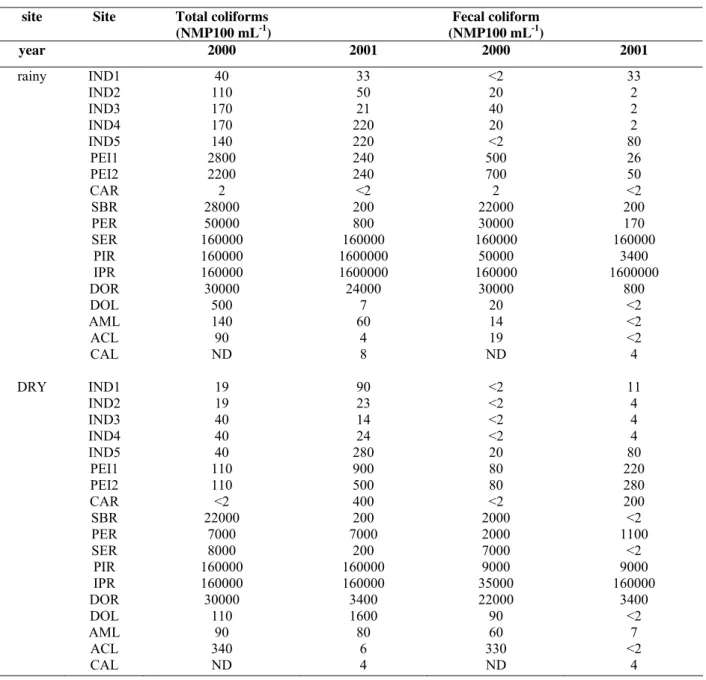
Table 1 show the results of coliform counts. In Serra do
Cipó, the sites PEI1 and PEI2 showed the highest counts of
coliforms (2,200 to 2,800 MPN 100 mL-1 of total coliforms and
500 to 700 MPN 100mL-1 of faecal coliforms, respectively)
during all sampled periods, with even higher counts found
during the rainy season of 2000. In the middle part of the Doce
River basin, the coliform counts ranged from < 2 MPN 100
mL-1 (CAR site) to 1,600,000 MPN 100mL-1 (IPR site). In the
lakes, the coliform counts were high in the year 2000, with
total coliform counts reaching up to 500 MPN 100 mL-1 and
faecal coliform counts reaching up to 330 MPN 100mL-1. The
lowest counts of total and faecal coliform bacteria were found
in Carioca Lake.
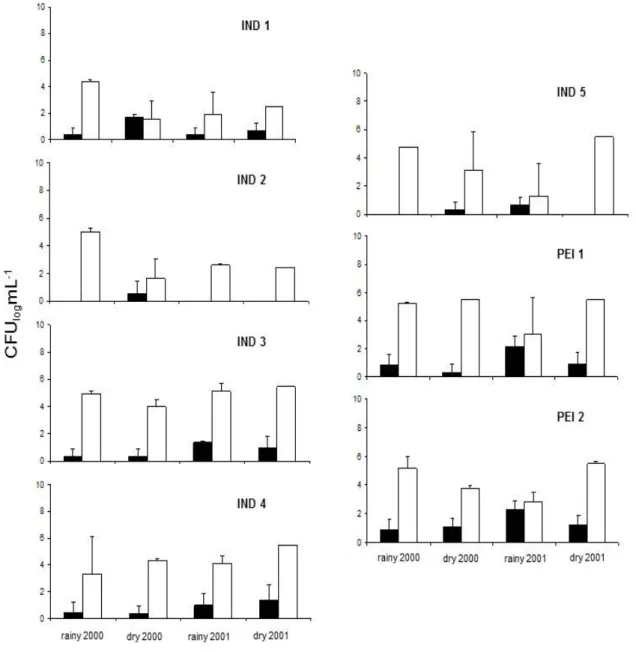
Yeasts were isolated in all sites sampled in Serra do Cipó,
and the highest counts were found in the site PEI2 (420 cfu
mL-1) (Figure 2: mean ± standard error, n = 3). The number of
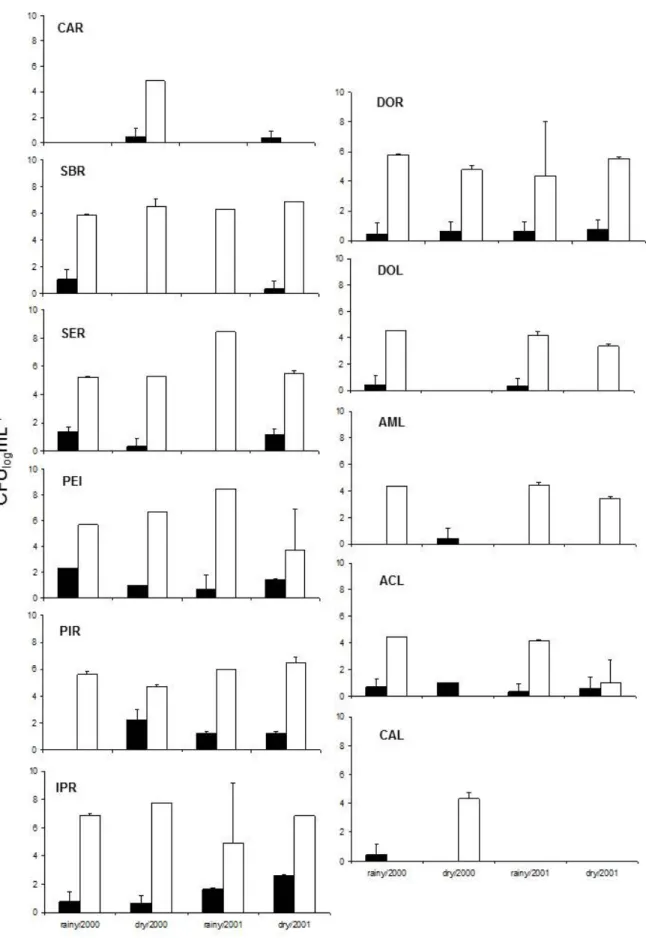
3.0 x 10⁵ cfu mL-1, and the highest counts were found during the dry season. In the sample sites in the middle Doce River basin (Figure 3: mean ± standard error, n = 3), the number of yeasts during all periods sampled ranged from 10 to 466 cfu mL-1. The highest counts of yeast were found in the sites SER (186 cfu mL-1), PIR (466 cfu mL-1) and IPR (383 cfu mL-1) during the dry season of 2000. The sampled rivers in the middle of the Doce River basin had the highest counts of heterotrophic bacteria. In the
lakes, the yeast counts ranged from 3.3 to 13.3 cfu mL-1. At Dom Helvécio Lake yeasts were found only in the rainy season of the sampled years. In Aguas Claras lake (ACL), yeasts ranged from 3.3 to 10 cfu mL-1and were isolated in all sample dates. In Amarela Lake (AML) yeasts were isolated only during the dry season of 2000, counts of heterotrophic bacteria ranged from 1.0 x 10³ to 3.0 x 10⁵ cfu mL-1 and the highest counts were found during the rainy season of 2000 for all of the lakes.
Table 1. Most probable number of total and faecal coliforms in the sites sampled during the rainy and dry seasons of 2000 and
2001.
site Site Total coliforms
(NMP100 mL-1)
Fecal coliform
(NMP100 mL-1)
year 2000 2001 2000 2001
rainy IND1 40 33 <2 33
IND2 110 50 20 2
IND3 170 21 40 2
IND4 170 220 20 2
IND5 140 220 <2 80
PEI1 2800 240 500 26
PEI2 2200 240 700 50
CAR 2 <2 2 <2
SBR 28000 200 22000 200
PER 50000 800 30000 170
SER 160000 160000 160000 160000
PIR 160000 1600000 50000 3400
IPR 160000 1600000 160000 1600000
DOR 30000 24000 30000 800
DOL 500 7 20 <2
AML 140 60 14 <2
ACL 90 4 19 <2
CAL ND 8 ND 4
DRY IND1 19 90 <2 11
IND2 19 23 <2 4
IND3 40 14 <2 4
IND4 40 24 <2 4
IND5 40 280 20 80
PEI1 110 900 80 220
PEI2 110 500 80 280
CAR <2 400 <2 200
SBR 22000 200 2000 <2
PER 7000 7000 2000 1100
SER 8000 200 7000 <2
PIR 160000 160000 9000 9000
IPR 160000 160000 35000 160000
DOR 30000 3400 22000 3400
DOL 110 1600 90 <2
AML 90 80 60 7
ACL 340 6 330 <2
Figure 2. Counts of heterotrophic bacteria (A) and yeasts (B) in the sampled sites in Serra do Cipó during the rainy and dry
Figure 3. Counts of heterotrophic bacteria □ and yeasts ■, during the rainy and dry seasons of 2000 and 2001 (means ± SE, n=3)
Yeast species
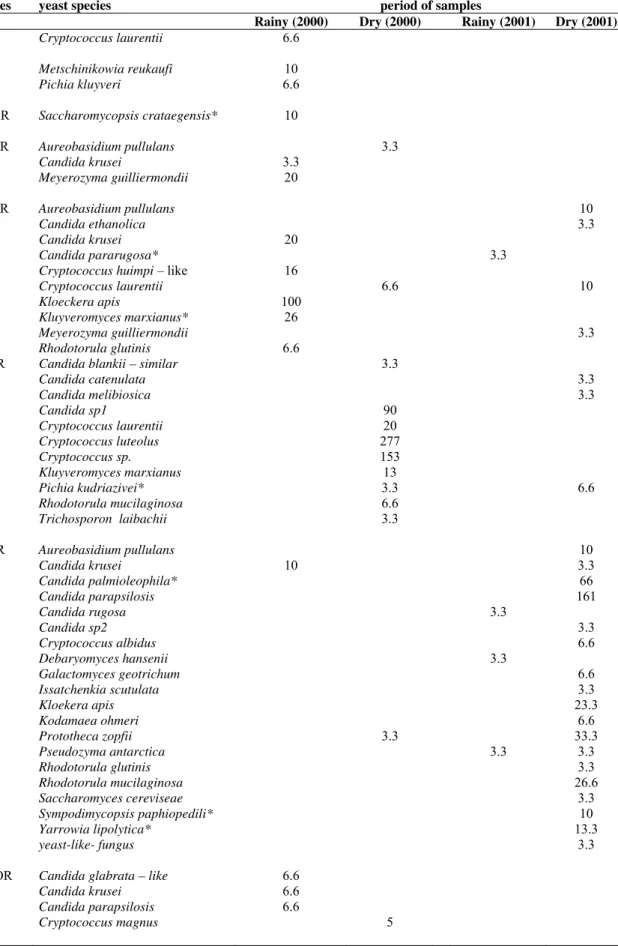
In the present study, we recorded a total of 317 yeast
isolates belonging to 21 genera and 48 species, including the
colourless algae Prototheca spp. (Table 2). 18 yeast species were identified in the sites sampled at Serra do Cipó. This
species belong to the genera Aureobasidium, Candida, Cryptococcus, Debaryomyces, Kloekera, Kodamaea, Metschinikowia, Pichia and Rhodotorula. The highest number of yeast species were found in the Peixe river (5 and 8 yeasts
speciesin sites PEI1 and PEI2, respectively) and the species
Kloeckera japonica had the highest frequency and the the black yeast Aureobasidium pullulans was prevalent at the sample sites of Serra do Cipó.
In the sampled sites at the middle of the Doce River basin,
the rivers had the highest numbers of yeast species. The IPR
site presented the highest number of species during the dry
season of 2001 with 18 species of yeasts from the 20 species
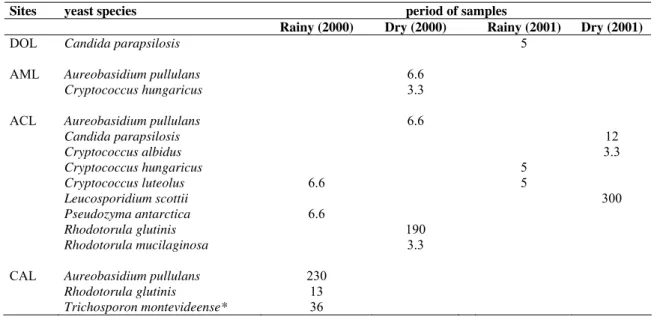
identified in this site during this study. In the lakes, the highest
number of species were found during the dry season of 2000 in
the ACL (9 species). Some yeast species, such as Meyerozyma guilliermondii and Kloekera apis, were isolated from the rivers at the middle of the Doce River basin. The genus with the
highest number of species identified was Candida (13 different species). The opportunistic species C. guilliermondii and C. krusei were isolated from the rivers and Candida krusei mainly in the rainy period of 2000. Cryptococcus laurentii, C. luteolus, C. hungaricus and C. albidus were isolated from almost all of the sampled sites. Species of Rhodotorula were isolated at the IPR and PIR sites from the middle of the Doce River basin.
The other species isolated in the present study had low counts.
The colourless algae Prototheca was isolated at the site IPR, located at the middle of the Doce River basin.
Table 2. The density of yeast species (cfu ml-1) sampled in the rainy and dry seasons of 2000 and 2001. (mean ± SE, n=3).
Sites yeast species period of samples
Rainy (2000) Dry (2000) Rainy (2001) Dry (2001)
IND1 Kodamaea ohmeri 3.3
Rhodotorula mucilaginosa 33.3
IND2 Aureobasidium pullulans 10.3
IND3 Aureobasidium pullulans 23.3
Debaryomyces hansenii 5
Kodamaea ohmeri 3.3
IND4 Aureobasidium pullulans 10
Candida blankei 85
Candida entomophila – like 5
Candida melibiosica 20
Cryptococcus albidus 25 15
Kodamaea ohmeri 3.3
Wickerhamomyces pijperi* 3.3
IND5 Candida palmioleophila* 3.3
Candida parapsilosis 5
PEI1 Aureobasidium pullulans 3.3 3.3
Candida guilliermondii 70
Cryptococcus luteolus 3.3
Kloeckera japonica 153
Rhodotorula glutinis 3.3
PEI2 Aureobasidium pullulans 6.6 13.3 3.3 6.6
Kloeckera apis 3.3
Kloeckera japonica 350
Rhodotorula glutinis 6.6
Table 2. Continuation
Sites yeast species period of samples
Rainy (2000) Dry (2000) Rainy (2001) Dry (2001)
Cryptococcus laurentii 6.6
Metschinikowia reukaufi 10
Pichia kluyveri 6.6
SBR Saccharomycopsis crataegensis* 10
PER Aureobasidium pullulans 3.3
Candida krusei 3.3
Meyerozyma guilliermondii 20
SER Aureobasidium pullulans 10
Candida ethanolica 3.3
Candida krusei 20
Candida pararugosa* 3.3
Cryptococcus huimpi – like 16
Cryptococcus laurentii 6.6 10
Kloeckera apis 100
Kluyveromyces marxianus* 26
Meyerozyma guilliermondii 3.3
Rhodotorula glutinis 6.6
PIR Candida blankii – similar 3.3
Candida catenulata 3.3
Candida melibiosica 3.3
Candida sp1 90
Cryptococcus laurentii 20
Cryptococcus luteolus 277
Cryptococcus sp. 153
Kluyveromyces marxianus 13
Pichia kudriazivei* 3.3 6.6
Rhodotorula mucilaginosa 6.6
Trichosporon laibachii 3.3
IPR Aureobasidium pullulans 10
Candida krusei 10 3.3
Candida palmioleophila* 66
Candida parapsilosis 161
Candida rugosa 3.3
Candida sp2 3.3
Cryptococcus albidus 6.6
Debaryomyces hansenii 3.3
Galactomyces geotrichum 6.6
Issatchenkia scutulata 3.3
Kloekera apis 23.3
Kodamaea ohmeri 6.6
Prototheca zopfii 3.3 33.3
Pseudozyma antarctica 3.3 3.3
Rhodotorula glutinis 3.3
Rhodotorula mucilaginosa 26.6
Saccharomyces cereviseae 3.3
Sympodimycopsis paphiopedili* 10
Yarrowia lipolytica* 13.3
yeast-like- fungus 3.3
DOR Candida glabrata – like 6.6
Candida krusei 6.6
Candida parapsilosis 6.6
Table 2. Continuation
Sites yeast species period of samples
Rainy (2000) Dry (2000) Rainy (2001) Dry (2001)
DOL Candida parapsilosis 5
AML Aureobasidium pullulans 6.6
Cryptococcus hungaricus 3.3
ACL Aureobasidium pullulans 6.6
Candida parapsilosis 12
Cryptococcus albidus 3.3
Cryptococcus hungaricus 5
Cryptococcus luteolus 6.6 5
Leucosporidium scottii 300
Pseudozyma antarctica 6.6
Rhodotorula glutinis 190
Rhodotorula mucilaginosa 3.3
CAL Aureobasidium pullulans 230
Rhodotorula glutinis 13
Trichosporon montevideense* 36
* Yeast isolates with their identity confirmed by sequencing of the D1/D2 variable domains of the large subunit DNA.
Statistical analyses
The results obtained in relation to PERMANOVA didn’t indicate significantly differences in relation to the biotic parameter found in the different years, sites and station (p > 0.05). According to the CCA (Figure 4), where the two axes accounted for 70% of the total variability of the data the first and second axes explained 47% and 23% of the total data variability, respectively. The values of total phospurus, total nitrogen, temperature, pH, total and faecal
coliforms, nitrite, ammonium and the yeast species Candida krusei, Candida parapsilosis, Candida sp1, Candida catenulada,
Metschinikowia reukaufi and Rhodotorula mucilaginosa have a positive correlation. On contrary the values of dissolved oxygen had a negative correlation with the species Aureobasidium pullulans, Candida sp2, Candida pararugosa, Kloekera japonica, Rhodotorula glutinis and Meyerozyma guilliermondii.
Figure 4. Correlation of biotic and abiotic parameters with the two axes of Canonical Correspondence Analyses (CCA). TEMP = temperature, condut=conductivity, OD= dissolved oxygen, P-total = total phosphorus, PO4 – orthophosphate, N- tot = total nitrogen, NH4 = nitrate, NO3 = nitrite, AP = Aureobasidium pullulans, Cb1= Candida blankei, Cb2= Candida
blankei-similar, Cc= Candida catenulata, Cn= Candida entomophila-like, Ct= Candida ethanolica, Cg= Candida glabrata-like, Cu= Candida
guilliermondii, Ck= Candida krusei, Cm= Candida melibiosica, Cp=
Candida palmioleophila, Cr=Candida parapsilosis, Cs= Candida
pararugosa, Cr= Candida rugosa, C1= Candida sp1, C2= Candida sp2, Cra=
Cryptococcus albidus, Crh= Cryptococcus huimpi-like, Cru= Cryptococcus
hungaricus, Crl= Cryptococcus laurentii, Crs= Cryptococcus luteolus, Crm=
Cryptococcus magnus, Cr1= Cryptococcus sp., Dh=Debaryomyces hansenii,
Gg = Galactomyces geotrichum, Is= Issatchenkia scutulata, Ka = Kloekera apis, Kj= Kloekera japonica, Kp= Kloekera apis, Km = Kluyveromyces
marxianus, Ko= Kodamaea ohmeri, Ls – Leucosporidium scottii, Mr=
Metschinikowia reukaufi, Mg= Meyerozyma guilliermondii, Pk= Pichia
kluyveri, Ku= Pichia kudriazivel, Pz= Prototheca zopfii, Pa= Pseudozyma
antartica, Rg= Rhodotorula glutinis, Rm= Rhodotorula mucilaginosa, Sc=
Saccharomyces cereviseae, Sa= Saccharomycopsis crataegensis, Sp=
DISCUSSION
In the present study, the rivers sampled at the middle of
the Doce River basin generally had the highest counts of the
microorganisms studied. In regard to the coliform group, which
was used to indicate the water quality of the sites sampled, at
Serra do Cipó the counts were highest at the sites located
outside of the National Park of Serra do Cipó. These sites
receive large amounts of organic matter from non-treated
effluents from the farms and small towns surround the region
(7). The rivers sampled at the middle of the Doce River basin
had very high counts of coliform bacteria, and these rivers are
under different types of human influences, such as domestic
and industrial effluents (22).
The counts of heterotrophic bacteria can be related to the
presence of organic matter and, as with the counts of coliform
bacteria, heterotrophic bacteria had the highest counts at the
rivers in the middle of the Doce River basin, sites known to
receive industrial and domestic effluents or waste from cattle
raising (22). The same association occurred with the yeast
densities, which were high in the sites with high counts of
coliform bacteria. Studies done by de Almeida et al. (8) and
Brandão et al. (5) found a positive correlation between the
counts of yeasts detected after incubation at 37°C and the
occurrence of E. coli in the Tagus estuary in Portugal and lakes in Southeastern Brazil, respectively.
The variability of microbial counts found in the present
study could be explained by the different level of water quality
of these environments, as they receive different kinds and
levels of pollutants in the form of wastewater, industrial
effluents and others. Another explanation could be the atypical
rainy season of the two years sampled in the present study,
when in the year 2001, rain densities were very low compared
to the year 2000 (personal communication).
In the present study, 48 yeast species were isolated and
the number of species varied among the sampled sites. Most of
the isolated yeast species have been commonly associated with
soil, plants and animals, and probably entered the aquatic
environment by the rain (20). The number of species increased
in sites where the counts of total and faecal coliforms were
high. Some species were only isolated at sites with high counts
of coliform bacteria and some of these have been reported as
opportunistic pathogens. This is the case for Candida krusei, which was isolated only in the rainy season of 2000 at sites
with high levels of coliform bacteria (PER, SER, IPR and
DOR). According to Sláviková et al. (24) and Sláviková &
Vadkertiová (25, 26, 27), this species is characteristic of water
polluted by wastewater. Candida krusei was detected by Medeiros et al. (19) in a river from the Doce River basin
(Piracicaba river). In that same study, they tested this yeast
against five antifungal drugs (ketoconazole, fluconazole,
itraconazole, terbinafine and amphotericin B), and found that it
was resistant to all of them. Candida parapsilosis, another species considered to be an opportunistic pathogen, was
isolated mainly in rivers and lakes with low levels of total and
faecal coliforms (IND5, DOR and ACL), except for the DOL
site. This species was reported by Medeiros et al. (19) in rivers
and lakes of the Doce River basin with different levels of
pollution. The Cryptococcus species have been isolated from aquatic ecosystems around the world, including oligotrophic,
mesotrophic and eutrophicated environments (20). In the
present study, these yeasts were isolated from nine of the 18
sites sampled and only four of these sites had the highest
counts of total and faecal coliforms (SER, PIR, IPR and DOR).
The yeast-like colourless algae Prototheca was isolated at the sites IPR (P. zopfii). This algae was isolated from other aquatic environments containing high levels of organic matter
(14, 23) and is considered an emerging pathogen (14). The
specie Aureobasidium pullulans were isolated in the majority sampling sites that corroborate the suggestion that this
yeast-like species is often isolated from many different types of water
(19, 6).
In the present studies yeast counts and some species that
wastewater corroborating the propose of Brandão et al (5) that
this unicellular fungi can be utilized to indicate freshwater
quality.
It is important to consider that the Doce River basin
presents different levels of human interactions within the
watershed (e.g., mining, siderurgy, and the discharge of
untreated sewage), which influence the counts of bacteria of
sanitary interest, as well as the counts and species of yeast. In
fact, some of these environments could pose a risk to the
people that use them for recreation or other uses.
ACKNOWLEDGEMENTS
This study was supported by the Conselho Nacional de
Desenvolvimento Cientifico e Tecnológico-CNPq, Fundação
do Amparo a Pesquisa do Estado de Minas Gerais
(FAPEMIG), Instituto Estadual de Florestas and the Instituto Brasileiro do Meio Ambiente. We thank the support of Joseline Molozzi for the statistical analyses and Luciano Pataro for the
illustration of the sampled sites.
REFERENCES
1. Altschul, S.; Madden, T.; Schaffer, A.; Zhang, J.; Zhang, Z.; Miller, W.; Lipman, D. (1997). Gapped BLAST and PSI-BLAST: a new generation of protein database search programs. Nucl. Acids Res. 25 (17), 3389-3402.
2. Anderson, M.J.; Gorley, R.N.; Clarke, K.R. (2008). PERMANOVA + for PRIMER: Guide to software and statistical methods. PRIMER-e, Plymounth.
3. Arvanitidou, M.; Kanellou, K.; Katsouyannopoulos, V.; Tsakris, A. (2002). Diversity of Salmonella spp. and fungi in northern Greek coastal bathing waters and their relation with faecal pollution indicators. Water Res. 36 (20), 5127-5131.
4. Arvanitidou, M.; Kanellou, K.; Vagiona, D.G. (2005). Diversity of Salmonella spp. and fungi in northern Greek rivers and their correlation
to fecal pollution indicator. Environ. Res. 99 (2), 278-284.
5. Brandão, L.R.; Medeiros, A.O.; Duarte, M.C.; Babosa, A.C.; Rosa, C.A. (2010). Diversity and antifungal susceptibility of yeasts isolated by multiple-tube fermentation from three freshwater lakes in Brazil. J. Water Health. 8 (2), 279-289.
6. Brandão, L.R.; Libkind, Diego; Vaz, A.B.M.; Espírito Santo, L.C.;
Moliné, M..; de García, V; van Broock, M.; Rosa. C.A. 2011. Yeasts from an oligotrophic lake in Patagonia (Argentina): diversity, distribution and synthesis of photoprotective compounds and extracellular enzymes. FEMS Microbiol. Ecol. 75 (1), 1-13.
7. Callisto, M.; Goulart, M.; Medeiros, A.O.; Moreno, P.; Rosa, C.A. (2004). Diversity assessment of benthic macroinvertebrates, yeasts and microbiological indicators along a longitudinal gradient in Serra do Cipó, Brazil. Braz. J. Biol. 64 (4), 743-755.
8. De Almeida, J.M.G.C.F. (2005). Yeasts community survey in the Tagus estuary. FEMS Microb. Ecol. 53 (2), 295-303.
9. Eaton, A.D.; Greenberg, A.E.; Clesceri, L.S.E. (2005). Standard Methods for the Examination of Water and Waste Water. 21th
ed. A.P.H.A, Washington. 1600p.
10. Golterman, H.L.; Clymo, R.S.; Ahmstad, A.M. (1978). Methods for physical and chemical analysis of fresh water. Oxford: Blackwell
Scientific Publ. Grasshoff, K. (1976). Methods of Seawater Analysis. Verlag Chemie. New York: Weinheim.
11. Hagler A.N. (2006). Yeasts as indicator of environmental quality. In: Rosa C.A, Gábor P (Eds.), Biodiversity and ecophysiology of yeasts. Berlin: Springer, p. 515-532.
12. Hagler, A.N.; Ahearn, D.G. (1987). Ecology of aquatic yeasts. In: Rose, A. H; Harison, J.S. (2ed). The yeasts: Biology of yeasts, London: Academic Press. p.181-205.
13. Johnson, B.L.; Richardson, W.B.; Naimo, T.J. (1995). Past, Present, and Future Concepts in Large River Ecology. BioScience. 45 (3), 134-141. 14. Krcmery, V. (2000). Systemic chlorellosis, an emerging infection in
humans caused by algae. Int. J. Antimicrob. Agents. 15 (3), 235–237. 15. Kurtzman, C.P.; Fell, J.W. (1998). The yeast: a taxonomic study. 4ed.
Amsterdan Elsevier Science B.V.
16. Lachance, M.A.; Bowles, J.M.; Starmer, W.T. & Barker, J.S. (1999). Kodamaea kakaduensis and Candida tolerans, two new ascomycetous yeast species form Australian Hibiscus flowers. Can. J. Microbiol. 45, (1) 172-177.
17. Markereth, F.J.H.; Heron, J.; Talling, J.F. (1978). Water analysis: some revised methods for limnologists. Freshwater Biological Association, Cumbria and Dorset, England.
18. Marques, M.M.; Barbosa, F.A.R. (2001). Biological quality of waters from in an impacted tropical watershed (middle Rio Doce basin, southeast Brazil), using benthic macroinvertebrate communities as an indicator. Hydrobiologia. 457, (1-3) 69-76.
19. Medeiros, A. O.; Kohler, L.M.; Hamdan, J.S.; Missagia, B.S.; Barbosa, F.A.R.; Rosa, C.A. (2008). Diversity and antifungal susceptibility of yeasts from tropical freshwater environments in Southeastern Brazil. Water Res. 42, 3921-3929.
21. Petrucio, M.M.; Barbosa, F.A.R.; Furtado, A.L.S. (2006). Bacterioplankton and phytoplankton production in seven lakes in the Middle Rio Doce basin, south-east Brazil. Limnologica. 36 (3), 192– 203.
22. Petrucio, M. M.; Medeiros, A.O.; Rosa, C.A.; Barbosa, F.A.R. (2005). Trophic State and Microorganisms Community of Major Sub-Basins of the Middle Rio Doce Basin, Southeast Brazil. Braz. Arch. Biol. Technol. 48 (4), 625-633.
23. Pore, R.S.; Barnett, E.A.; Barness Jr.; W.C.; Walker, J.D. (1983). Prototheca ecology. Mycopathologia. 81 (1), 49–62.
24. Sláviková, E.; Vadkertiová, R.; Koclová-Kratochvilová, A. (1992). Yeasts isolated from artificial lake waters. Can. J. Microbiol. 38 (11), 1206-1209.
25. Sláviková, E.; Vadkertiová, R. (1995). Yeasts and yeasts-like organisms
isolated from sil-pond waters. Acta Microbiol. Pol. 44, 191-189. 26. Sláviková, E.; Vadkertiová, R. (1997). Yeast and yeast-like organisms
occurring in the river Morava. Fund. Technol. Biotechnol. 35 (4), 293-297.
27. Sláviková, E.; Vadkertiová, R. (1997) - Seasonal occurrence of yeasts and yeast-like organisms in the river Danube. Ant. Van Leeuw. 72 (2), 77-80.
28. Spencer, J. F. T. & Spencer, D. M. 1997. (Eds) Yeasts in natural and artificial habitat. Springer-Verlag, Berlin.
29. Ter Braak, C.J.F. & Smilauer, P. (1998). Canoco for Windows v. 45. Micro computer Power. Ithaca. New York.
30. Yarrow, D. (1998). Methods for the isolation and identification of yeasts. In Kurtzman, C. P. & Fell, J. W. (Ed.). The Yeasts, a Taxonomic Study. 4th ed. Amsterdam, Elsevier, pp. 77-100.