Hugo Miguel Melo Giesteira
Development of an integrated platform for the in silico phenotype simulation of microbial strains H u g o M ig u e l M e lo G ie st e ir a Outubro de 2014 U M in h o | 2 0 14 D e v elo pm en t o f a n in teg ra te d p la tf o rm f o r th e in silic o ph e n o type sim u la tio n o f m ic ro b ia l s tr a in s Universidade do Minho Escola de Engenharia
Universidade do Minho
Dissertação de Mestrado
Escola de Engenharia
Departamento de Informática
Hugo Miguel Melo Giesteira
Development of an integrated platform for
the in silico phenotype simulation of
microbial strains
Mestrado em Bioinformática
Trabalho realizado sob orientação de
Miguel Francisco Almeida Pereira Rocha
Carlos Daniel Machado
II
Acknowledgements/Agradecimentos
Este trabalho pode ter sido realizado por mim mas tal não seria possível sem um grande grupo de pessoas que me apoio durante este ano. Por essa razão guardo a primeira seção do meu trabalho para agradecer o apoio a todas estas pessoas e dizer que sem elas não teria conseguido chegar até aqui.
Gostaria de agradecer aos meus orientadores, professor Miguel Rocha e doutor Daniel Machado por todos os conselhos e disponibilidade demonstrada desde o início do trabalho. Um especial obrigado ao Paulo Vilaça por todas as horas dispensadas em me orientar, ensinar e apoiar quando situações mais complicadas surgiam e por ter acreditado em mim até ao fim.
Aos meus colegas de mestrado, pelo companheirismo e amizade que vou guardar mesmo depois da final do curso. Aos meus colegas e amigos da SilicoLife, Marco, Hugo, Rafa, Pedro, Barbara, Maia, Simão, Sónia e Joel, por todo o apoio e por conseguirem transformar um local de trabalho num local mais agradável e cheia de boa disposição.
Um grande obrigado a todos os meus restantes amigos que, apesar de não terem percorrido o mesmo caminho académico que eu, sempre me deram conselhos, ajudaram a superar obstáculos muitas vezes colocados por mim mesmo e sempre tiveram palavras amigas que me fizeram puxar para cima e não me deixar desistir dos meus objetivos.
Por fim um especial agradecimento para a minha família, principalmente aos meus pais e à minha irmã, por todas as vezes que lidaram comigo nos momentos menos bons e pela paciência e dedicação pois devo a eles grande parte da pessoa que sou hoje.
A todas estas pessoas digo um enorme obrigado, sem vocês não estaria onde estou nem teria conquistado o que consegui até hoje. Obrigado!
III
Resumo
Recentes técnicas de sequenciação genómica e abordagens estão a aumentar constantemente, a uma taxa exponencial, os dados biológicos disponíveis. Esta informação está se tornar ainda mais acessível com o desenvolvimento de novas tecnologias de high-throughout, fazendo com que a simulação in silico de sistemas vivos ou sintéticos se torne mais atrativa. A crescente investigação dos últimos dez anos permitiu o desenvolvimento de modelos matemáticos sofisticados que, por meio de engenharia metabólica, são utilizados numa tentativa de otimizar as funções do organismo, modificando-os geneticamente para produzir compostos de interesse industrial.
Em relação ao uso dos modelos de simulação de fenótipo, métodos como o Flux Balance Analysis são utilizados para identificar conjuntos de manipulações genéticas que resultam em estirpes mutantes capazes de produzir compostos desejados. Variações desses métodos têm rapidamente surgido e, em paralelo, um grande número de ferramentas computacionais surgiram com a capacidade de realizar esses métodos. Todas estas ferramentas estão disponíveis para a comunidade e construídas em diferentes sistemas e linguagens. No entanto, nenhuma inclui todos os métodos relevantes, o que resulta numa necessidade de recurso a mais do que uma ferramenta para realizar certas tarefas.
Neste trabalho, uma plataforma que pode integrar todos estes métodos é apresentada com o objetivo de centralizar e integrar os métodos de simulação de fenótipo mais relevantes e também permitir a sua extensão fácil com outros métodos. Para este trabalho, foi realizado um estudo dos métodos e ferramentas mais relevantes de modo a que esta plataforma possa integrar os métodos e ferramentas mais significativas. Esta plataforma é dividida em duas camadas: uma camada de ligação que é responsável pela troca de informação através das ferramentas computacionais e línguas, e uma camada de formulação responsável por executar os métodos dessas ferramentas e também apresentar os seus resultados.
Através destas camadas, a plataforma pode executar métodos de qualquer ferramenta disponível construída em qualquer linguagem computacional e fornecer aos investigadores o acesso a todos os métodos em uma única plataforma. Como aplicação prática desta plataforma, foi desenvolvido um plugin e integrado no OptFlux, um software de código aberto para apoiar as tarefas de engenharia metabólica, e encontra-se disponível em www.optflux.org. Este plugin
IV
oferece uma ligação com a ferramenta COBRA e executa os métodos de simulação metabólicas mais relevantes presentes no último.
V
Abstract
Modern sequencing techniques and omics approaches are constantly increasing available biological data at an exponential rate. This information is becoming even more accessible with the development of new high-throughout technologies, making in silico simulation of living and synthetic systems more attractive. The growing research in the past decade allowed the development of sophisticated mathematical models that, through Metabolic Engineering, are used in an attempt to optimize organism's functions, genetically modifying them to produce compounds of industrial interest.
Regarding the use of models for phenotype simulation, methods such as Flux Balance Analysis are used to identify sets of genetic manipulations that result in mutant strains capable of producing desired compounds. Variations of these methods have rapidly appeared and in parallel, a great number of computational tools emerged with the capability of performing these methods. All these tools are available for the community and built in different systems and languages. However, none includes all the relevant methods, which results in a need of recurring to more than one tool to accomplish certain tasks.
In this work, a platform that can integrate all these methods is presented with the goal of centralizing and integrating the most relevant existing phenotype simulation methods and also enabling their easy extension with other methods. For this work, a study of the most relevant methods and tools was made so that this platform could integrate the most significant methods and tools. This platform is divided in two layers: a connection layer that is responsible for exchanging information through the computational tools and languages, and a formulation layer responsible for performing the methods from these tools and also presenting the results.
Through these layers, the platform can perform methods from any available tool built in any computational language and provide to the researchers the access to all methods in a single platform. As a practical implementation of this platform, a plugin was developed and integrated in OptFlux, an open-source software to support metabolic engineering tasks, available at
www.optflux.org. This plugin provides a connection with the COBRA Toolbox and performs the most
VI
Contents
Acknowledgements/Agradecimentos II
Resumo III
Abstract V
List of Figures VIII
List of Tables IX
Acronyms X
1. Introduction 1
1.1. Context and motivation ... 1
1.2. Goals ... 2
1.3. Structure of the document ... 3
2. Metabolic engineering: concepts and methods 5 2.1. Background ... 5
2.2. Genome-Scale Models ... 6
2.2.1. Stoichiometric models ... 7
2.3. Application of Metabolic Models in Metabolic Engineering ... 9
2.3.1. Structure of a Mathematical Optimization Problem ... 10
2.3.2. Algorithms for Phenotype Simulations ... 11
2.3.3. Algorithms to Redesign Metabolic Networks ... 14
2.3.4. Further algorithms ... 18
2.4. Constraint-based analysis computational tools ... 19
2.4.1. Systems Biology Research Tool ... 19
2.4.2. CellNetAnalyzer ... 19
2.4.3. COBRA toolbox ... 20
2.4.4. OptFlux ... 21
2.4.5. Other computational tools ... 22
3. Computational frameworks analysis 23 3.1. Model structure ... 23
VII
3.1.1. Metabolic ... 23
3.1.2. COBRA ... 29
3.2. Constraint-based analysis structure ... 30
3.2.1. Metabolic ... 31
3.2.2. COBRA ... 36
4. Results and Development 41 4.1. A language-independent platform ... 41
4.2. Java-MATLAB integration ... 44
4.3. Convert Metabolic Model to Cobra Model ... 45
4.4. COBRA methods from Java ... 46
4.4.1. Converter Layer ... 47
4.4.2. Formulations Layer ... 49
4.4.3. COBRA’s formulations implementations ... 50
4.4.4. Other COBRA’s formulation implementations ... 55
4.4.5. Platform enrichment ... 60
4.5. Integration with OptFlux ... 61
4.5.1. The OptFlux tool ... 61
4.5.2. A COBRA-MATLAB plugin for OptFlux ... 62
4.6. Case studies ... 67
4.6.1. Case study I: succinate ... 68
4.6.2. Case study II: malate ... 70
5. Conclusions and Future Work 73 5.1. Discussion ... 73
5.2. Future work ... 74
VIII
List of Figures
Figure 1 - Overview of the COBRA Toolbox ... 20
Figure 2 - BioComponents class diagram ... 25
Figure 3 - Metabolic class diagram - Model view ... 27
Figure 4- Phenotype Simulation Abstract Layer Class Diagram ... 32
Figure 5- Simulation Control Center Class Diagram ... 36
Figure 6 - COBRA Toolbox – Major methods ... 37
Figure 7 - Connection Layer Class Diagram ... 42
Figure 8 - Comparison between Metabolic and COBRA Models ... 45
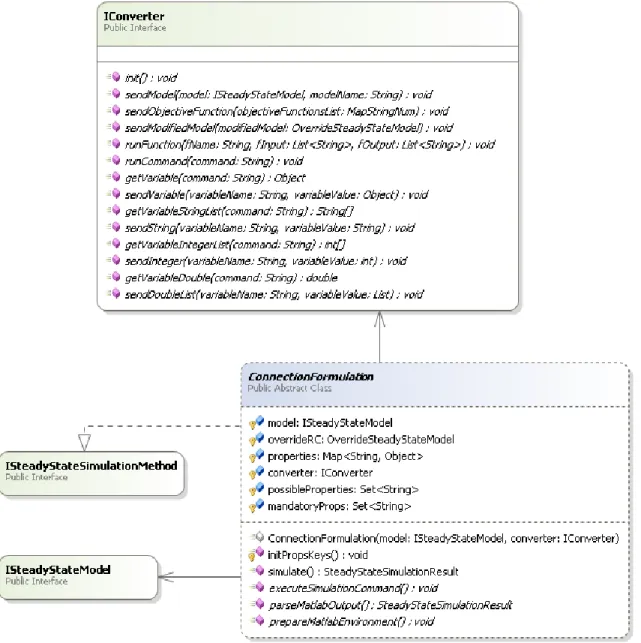
Figure 9 Java-MATLAB Connection Class Diagram ... 48
Figure 10 Formulation Layer Class Diagram ... 49
Figure 11 - Construction of COBRA’s FBA result ... 52
Figure 12 - Construction of COBRA’s GeometricFBA result ... 53
Figure 13- Construction of COBRA’s LinerMOMA/MOMA result ... 55
Figure 14- Construction of COBRA’s OptKnock result ... 58
Figure 15 - Construction of COBRA’s GDLS result ... 59
Figure 16 - OptFlux GUIs with simulations ... 64
Figure 17 - Simulation datatype and result view ... 65
IX
List of Tables
Table 1: Optimization algorithms to explore model predictions ... 13
Table 2: Optimization algorithm store design metabolic networks ... 17
Table 3: Optimization algorithms to correct/improve models of metabolism ... 18
Table 4: Optimization values for Succinate ... 69
X
Acronyms
CLP
Coin-or Linear Programming
CPLEX
ILOG CPLEX Optimization Studio
FBA
Flux Balance Analysis
GLPK
GNU Linear Programming Kit
GSSMs Genome Scale Metabolic Models
GUI
Graphical User Interface
LP
Linear Programming
ME
Metabolic Engineering
MILP
Mixed Integer Linear Programming
MOMA Minimization of Metabolic Adjustment
MVC
Model-view-controller
QP
Quadratic Programming
ROOM Regulatory On-Off Minimization
SBML
Systems Biology Markup Language
1
Chapter 1
1.
Introduction
1.1.
Context and motivation
The field of Metabolic Engineering (ME) studies the optimization of living organisms’ metabolic processes, by genetically modifying them to achieve a certain goal, such as increasing production of a desired compound or allowing production of a new product, playing an important role in the biotechnology industry [1]. Over these last few years, computational tools have been used as a way to improve ME methods by computational screening of strains and strain optimization based on computer simulations.
Indeed, in the past decades, biological data increased at an exponential rate, information became even more accessible with the development of new technologies, making in silico simulation of living and synthetic systems more attractive [2]. The increase of research in the past years allowed the development of sophisticated mathematical models capable of predicting cellular behavior.
Modelling of cells has been traditionally achieved through the use of dynamic models. However, since these require information typically difficult to determine, their applicability is limited to small-scale systems. As an alternative, recent efforts allowed the development of genome-scale metabolic models (GSMMs) for several organisms, taking advantage on the growing number of sequenced genomes and the availability of Bioinformatics tools for automatic genome annotation [3]. These models allowed the study of the metabolism of different organisms through several methods for phenotype simulation and structural analysis.
1.2 Goals
________________________________________________________________
2
Regarding the use of GSMMs for phenotype simulation, algorithms such as Flux Balance Analysis (FBA) [4] or Minimization of Metabolic Adjustment (MOMA) [5] were proposed and quickly became popular. In recent years, the number of methods proposed for this task has been growing rapidly, including variants of the objective function, imposed constraints, optimization methods or inputs (for instance, including different types of omics data).
Also, in parallel, a number of computational tools and integrated platforms have been proposed for ME tasks. Notable examples are the COBRA toolbox [6], which works over MATLAB (a more recent version in Python has also been proposed) or CellNetAnalyser [7], just to name a few. Within the host group for this thesis, the OptFlux ME platform has also been developed over the past few years [8] aiming to be a reference tool in the field.
While all these tools are available for the community, none includes all the relevant methods, impairing their straightforward comparison for a given task. In many cases, methods are proposed in a publication being tested with few case studies, while their thorough validation is hard to achieve and typically not done.
1.2.
Goals
The main goal of this work will be the design and development of an integrated platform for in silico phenotype simulation of microbial strains. This platform should integrate the most relevant existing simulation methods from different platforms built in different computational languages. This platform should also enable its easy extension with other methods and tools that may be developed. The developed platform will be integrated with the OptFlux workbench for ME, developed by the host group of this work.
This work implies the following scientific/technological objectives:
Review the existent phenotype simulation methods and the ME computational tools that implement them;
Introduction
________________________________________________________________
3
Design and implement these methods within an integrated computational platform that will also allow to integrate different ME platforms written over different systems and programming languages;
Develop a user-friendly interface, in the form of a plugin for OptFlux that allows the use of the developed platform and all implemented phenotype simulation methods;
Validate the performance and accuracy of the developed methods with selected case studies.
1.3.
Structure of the document
This document is organized in the following way: Chapter 2
Metabolic engineering: concepts and methods
An introduction to the Metabolic Engineering field and along with it a brief presentation of the genome-scale models used in the area. Some phenotype prediction algorithms will be presented that use these models, together with a review of some relevant ME tools.
Chapter 3
Core computational frameworks analysis
Introduce the frameworks OptFlux and COBRA toolbox. Explain how the model is created and used in both tools. Describe the structure of the constraint-based methods in these tools.
Chapter 4
Results and Development
Explained how the implementation of the platform was performed and also explain the development of the OptFlux plugin. Validate the plugin through case studies.
1.3 Structure of the document
________________________________________________________________
4 Chapter 5
Conclusions and future work
The summary of the work accomplished for this thesis and the future improvements and implementations.
5
Chapter 2
2.
Metabolic engineering: concepts and methods
2.1.
Background
Nowadays, chemical and pharmaceutical industries are strongly exploiting the metabolic capabilities of different microorganisms for the production of valuable compounds. Indeed, there is an increasing trend to replace chemical production processes with biotechnological methods based on microbial fermentations. Typically, microorganisms evolve to be adapted to their natural habitats and this implies requirements distinct from the industrial ones. So, to obtain a desired phenotype for industrial purposes, it is often needed to rearrange the genotype of the organism, to create so called cell factories. The recent development of genetic engineering techniques to make targeted changes over the genomes, made the reproduction of metabolic potentials of many different microorganisms possible. The field that handles the definition of the desired metabolic changes towards industrial goals is referred as Metabolic Engineering (ME) [9].
ME provides an integrated approach towards the conception of new cell factories by providing rational conception procedures and valuable mathematical and experimental tools. Mathematical models or in silico (computational) models play a vital role for phenotypic analysis, being used for the design of optimal metabolic network structures. Recurring to these models, it is possible to design improved metabolic networks by performing changes over the genotype of a selected host microorganism. Afterwards, an experimental evaluation can be done to check the results of the performed changes validating in silico predictions [10].
2.2 Genome-Scale Models
________________________________________________________________
6
The nature of cellular metabolism and regulation is not always easy to understand and normally raises difficulties. Therefore, an analysis of the metabolism as a whole is usually required. The increasing amount of complete sequenced genomes for a large number of microorganisms, together with powerful Bioinformatics tools for genome annotation, provided the opportunity to develop genome-scale metabolic models (GSMMs). Also, these advances led to the creation of a large number of databases with experimental data, offering plenty information from different microorganisms. On the other hand, a question arises, how to extract relevant information from these large repositories of data to correctly use them to develop efficient industrial processes. Therefore, the main challenge of ME of this post-genomic era is to extend its design methodologies to include biological data on the whole-genome scale. The first stage of this challenge involves the reconstruction of genome-scale models and to study how the consistency and exactness of the predictions conceived using the model are associated to the nature and abstraction degree of the used model [10].
2.2.
Genome-Scale Models
The reconstruction of metabolic networks has long been an objective of biochemistry. With the recent advances in genome sequencing, it became possible to convert these reconstructions into a mathematical format that represents the genotype-phenotype relations in the metabolism of a specific microorganism [11]. These mathematical formats, or models, contain biochemical, genetic and genomic information, which have been gradually incorporated into GSMMs. These models support the development of distinct methods for the computation of phenotypic behaviors in the form of fluxes for metabolic reactions [11], [12].
In the end of the 1990s, the first metabolic genome-scale reconstruction and GSMM was published [13]. Since then, there has been an exponential growth in the field of genome-scale metabolic network analysis. At the date of writing of this text, well over one hundred genome-scale metabolic reconstructions have already been published [14]. Two lists of models are available in the following web sites: http://systemsbiology.ucsd.edu/InSilicoOrganisms/OtherOrganisms and
Metabolic engineering: concepts and methods
________________________________________________________________
7
These models are able to predict which reactions occur in the cell and their fluxes, given specific conditions (e.g. media). The simulation of this behavior is based in external and internal variations. When these variations occur it may result in transformations in the cell in order to adapt and survive. The prediction of these fluxes is one of the main goals of the GSMMs. Therefore, ME aims to use these predictions to optimize an organism to achieve a certain goal, like the maximum production of a desired compound. [15]–[17].
Metabolic models can be grouped into two different types: stoichiometric models and kinetic models [9], [18], [19].
Kinetic models describe the metabolic system by joining kinetics information about particular cellular processes with known stoichiometry [18], [20], [21].
Kinetic models use the dynamic properties of the metabolic network, but an important problem related with defining these models is the lack of available kinetic data and the difference between in vivo and in vitro kinetic parameters, which leads to greater difficulties in reconstructing these type of models [22].
Given this difficulty this project will be aimed at the study of phenotype simulations using stoichiometric models.
2.2.1.
Stoichiometric models
Stoichiometric models represent the metabolic network as a set of stoichiometric equations that desirably correspond to the full set of biochemical reactions in the system. The metabolic network consists of a set of nodes, defined by compounds and a set of edges that represent reactions. The knowledge of the biochemical reactions and their stoichiometries can be mined from several sources, as pathway databases (e.g. KEGG or MetaCyc), published literature or annotated genome information. Then, this information is used to build a stoichiometric matrix assuring the adequate mass balance. The rows of the matrix typically represent metabolites, while the columns represent reactions. This matrix is of great importance because it represents the interpretation of biological knowledge into mathematical expressions.
2.2 Genome-Scale Models
________________________________________________________________
8
If a steady-state assumption is taken it is considered that the sum of all the fluxes that produce, transport and degrade an internal metabolite is zero and thus resulting in a stationary concentration. This assumption generates the following flux balance equation:
(2.1)
In this equation, S is the matrix that encompasses the stoichiometry of the reactions, while v is the vector of metabolic fluxes for each reaction.
This system of linear equations is usually underdetermined, since the number of fluxes typically surpasses the number of metabolites. Consequently, a multiplicity of solutions (flux distributions) exists. A particular solution may be found recurring to linear optimization, by declaring an objective function and looking for its maximal value within the stoichiometrically defined domain [12], [13].
Equation 2.1 describes all feasible flux distributions [23] instead of an individual solution. Although being feasible, that does not mean that those solutions have a biologically sense, which means that there is a need to further restrict the solution space. It is possible to restrict the model by limiting the value of the fluxes:
(2.2)
where is the value of the flux, and and are the bounds defined for the flux .
There are two main forms of restrictions, adjustable and non-adjustable. The former constraints may change through evolution and are specific for different organisms [24] and are usually used to validate the model under specific conditions. The non-adjustable restrictions are, for instance, restrictions imposed by thermodynamics or enzyme capacities.
The restrictions shown in Equation 2.2 allow setting limits to the flux values and also providing ways to restrict the model from the reversibility of the reactions, or by restricting the fluxes to a constant value. A reaction is reversible if , and irreversible if either or are zero. Setting the value of a flux is possible by giving the same value to and . Biologically speaking, these flux restrictions can be considered environmental and/or genetic conditions.
The procedure of stoichiometric modelling of a cell starts by determining the stoichiometric matrix, which will give the mass balances, by assuming a pseudo steady state of the system
Metabolic engineering: concepts and methods
________________________________________________________________
9
(Equation 2.1), following a constraint based approach and limiting the value of the fluxes through constraints (Equation 2.2).
There are different approaches when performing analyzes over this system. When a single solution is desired, under a specific environment, the solution can be acquired by constraining and/or defining some of the fluxes. In metabolic flux analysis (MFA) some exchange fluxes are measured to try to render a determined equation system. This approach can also be combined with extra data provided by the measurement of labeling patterns of specific metabolites to determine the single solution, often referred to as metabolic network analysis (MNA) [14]–[16]. In predictive studies, the methodology of Flux Balance Analysis (FBA) uses an optimization approach, by reporting to linear programming to determine the optimum flux distribution using a specified objective function, for instance the growth maximization (maximizing a defined artificial biomass flux) or ATP production [17], [18].
Another approach is, instead of looking for a particular flux solution for the model, to perform analysis of the topology of the metabolic network through the use of convex analysis, determining sets of elementary flux modes or extreme pathways [19]–[22], which are minimal operating modes of the metabolic systems.
2.3.
Application of Metabolic Models in Metabolic
Engineering
The number of genome-scale models is growing year after year. These models are mostly stoichiometric and do not explicitly encompass kinetic information, regulatory mechanisms or other known cellular processes. The lack of information and some unawareness of complex cellular regulation are the major reasons for this. Consequently, it seems that the complete in silico representation of the cellular behavior is a goal still far from being achieved. Nevertheless, the actual stoichiometric GSMMs present challenges to understand, extract and use all the information that they encompass. As a result, the analysis of these models has revealed some potential in relating genotype with phenotype [25].
2.3 Application of Metabolic Models in Metabolic Engineering
________________________________________________________________
10
As mentioned earlier, ME attempts to optimize the metabolic processes of microorganisms to obtain desired products. This objective has motivated the development of computational approaches to identify targets for genetic intervention, taking advantage of the recent progress in the reconstruction of GSMMs. Mainly, optimization-based approaches have been heavily used for the benefit of ME by identifying the best candidates where changes occurring in GSMMs could lead to improve the production of the intended compound [26]. These methods have been applied in a variety of biotechnology and biomedical applications for the identification of capable biochemical routes for the production of valuable chemicals using microorganisms [27]–[37], for the comprehension of disease metabolism [38]–[40] and the identification of drug targets [41], [42].
2.3.1.
Structure of a Mathematical Optimization
Problem
A mathematical optimization problem consists in finding the best solution from a set of existing possibilities that obey the constraints defined for the specific problem. These conditions comprise an objective function and a series of constraints. The objective function is the property of the system that will be maximized or minimized. As for the constraints, they are represented in two groups, the steady-state conditions for the reactions are equations, while inequalities are imposed by flux bounds.
As regards the types of problem variables, these can be continuous or discrete, while some problems combine variables of both types. Continuous variables represent continuous properties of the system such as reaction fluxes. Discrete variables are used in discrete decisions like the number of reactions that should be added to the metabolic model or ‘yes/no’ decisions, such as ‘the reaction X will be knocked out or not’ which are represented by a specific type of discrete variables, binary variables.
These mathematical problems can be divided in different mathematical programming paradigms. In a linear programming (LP) problem, both the objective function and constraints are linear and all variables are continuous. If one of the terms is non-linear, then it is named a nonlinear programming (NLP) problem. In the cases where there are both continuous and discrete (integer or binary) variables, the problem is named mixed-integer programming (MIP), which can be MILP or MINLP for linear or nonlinear cases respectively. The bi-level programming is another group of
Metabolic engineering: concepts and methods
________________________________________________________________
11
mathematical optimization problems, which in a nutshell span the cases where there is a problem within another problem. Here, the inner problem is normally considered a phenotype simulation layer and the outer problem the strain optimization layer which optimizes changes to impose to the organism. This bi-level programming supports both continuous and integer variables and linear or nonlinear objective function and constraints [26].
2.3.2.
Algorithms for Phenotype Simulations
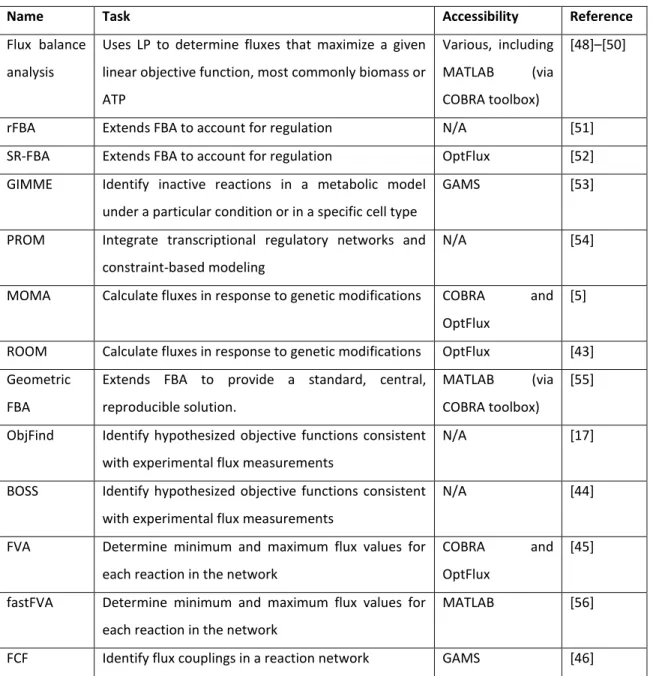
There are several methods to generate and explore predictions based on metabolic models (Table 1). These methods have distinct objectives, such as to estimate the maximum theoretical yields, classify the reactions relations, quantify fluxes based on experimental data and analyze results of genetic mutations. Some of these methods will be briefly explained below, while a more comprehensive overview is provided in Table 1 [26].
Flux Balance Analysis (FBA) is one of the dominant and most studied mathematical approaches for phenotype prediction based on GSMMs [44]–[46]. It is an approach that, given the reaction stoichiometry of a microorganism, has the ability to quantitatively predict its growth rate or the production rate of a specific metabolite, being this feature that makes this method so appreciated [47]. The FBA prerequisites are the existence of a metabolic model, a defined biological objective and the environmental conditions.
FBA uses LP to determine the steady-state flux distribution in a metabolic network by maximizing an objective function, for instance, the biomass flux or ATP production. Biomass production is one of the most used objective functions, based on the premise that the metabolic objective of the cell is to maximize growth. On the other hand, the FBA approach can also be used for the phenotype simulation of mutant strains, for instance predicting the effects of disabling one or multiple genes (or reactions). These are considered genetic conditions, where the value of the reactions encoded by these genes is restricted to null.
Although FBA can be used for predicting fluxes in mutant strains, usually these organisms are created in the laboratory and are not exposed to the same evolutionary pressure as the wild-type. Taking this into account, the use of FBA is debatable, and probably is not the best. Alternatively, some studies considered the variation of the objective function resulting in another group of
2.3 Application of Metabolic Models in Metabolic Engineering
________________________________________________________________
12
techniques, which include for example, the minimization of metabolic adjustments (MOMA) [5]. The MOMA approach assumes that the mutant cell attempts to minimize the perturbation caused by the mutation in terms of flux variation. This means that, considering a given wild type reference flux distribution (known or obtained using FBA), the MOMA solution will be as close as possible from the reference distribution. In this case, the objective function is the minimization of the quadratic distance of the flux values from both solutions, and therefore is formulated as a quadratic programming (QP) problem.
On the other hand, regulatory on/off minimization (ROOM) [43], is a similar method that minimizes the total number of significant flux changes from the reference flux distribution. This is performed under the assumption that the cell minimizes the effort of adaptation to the new mutation, and it has been shown that there has been evolutionary pressure to minimize the cost of gene expression [43]. In terms of mathematical optimization problem, ROOM is formulated as a mixed integer linear programming (MILP) problem.
In ROOM's predictions, the flux distributions are very different from FBA's predictions, but the value of the growth rate is actually very close, while MOMA's are typically significantly lower. In fact, flux distributions from ROOM are claimed to be more correlated with experimental data than the two other methods[43].
As mentioned above, FBA has some limitations in its predictions, limitations that can be addressed by the addition of constraints to the optimization problem. By adding some features, other methods were developed, incorporating regulatory information, such as regulatory FBA (rFBA) [48], steady-state regulatory FBA (SR-FBA) [49], and probabilistic regulation of metabolism (PROM) [51].
Other studies have focused mostly in the identification or prediction of a physiological relevant objective function based on experimental flux data and developed other kind of algorithms [17], [44], such as ObjFind and BOSS. The former, a bi-level optimization procedure that gives a quantitative score to the reliability of an objective function [17], and the latter, a method that infers new objective functions so that the difference between model prediction flux distribution and measured fluxes is minimized [44].
Another approach is provided by flux variability analysis (FVA), which demonstrates that the linear optimization can be used with other purposes than just identifying the maximum efficiency of
Metabolic engineering: concepts and methods
________________________________________________________________
13
a product or biomass. FVA can identify metabolic flux variability, this is, the minimum and maximum flux values for each reaction in the network [45], possibly providing additional constraints (e.g. minimum biomass values).
Flux coupling analysis (FCA) and its variations consist in a series of LPs performed for finding dependencies between fluxes of a metabolic network at steady-state. FCA verifies the feasibility of the network, when a reaction is blocked and the other is carrying flux [46], [47].
Table 1:Optimization algorithms to explore model predictions
Name Task Accessibility Reference
Flux balance analysis
Uses LP to determine fluxes that maximize a given linear objective function, most commonly biomass or ATP
Various, including
MATLAB (via
COBRA toolbox)
[48]–[50]
rFBA Extends FBA to account for regulation N/A [51]
SR-FBA Extends FBA to account for regulation OptFlux [52]
GIMME Identify inactive reactions in a metabolic model
under a particular condition or in a specific cell type
GAMS [53]
PROM Integrate transcriptional regulatory networks and
constraint-based modeling
N/A [54]
MOMA Calculate fluxes in response to genetic modifications COBRA and
OptFlux
[5]
ROOM Calculate fluxes in response to genetic modifications OptFlux [43]
Geometric FBA
Extends FBA to provide a standard, central, reproducible solution.
MATLAB (via
COBRA toolbox)
[55]
ObjFind Identify hypothesized objective functions consistent with experimental flux measurements
N/A [17]
BOSS Identify hypothesized objective functions consistent
with experimental flux measurements
N/A [44]
FVA Determine minimum and maximum flux values for
each reaction in the network
COBRA and
OptFlux
[45]
fastFVA Determine minimum and maximum flux values for
each reaction in the network
MATLAB [56]
2.3 Application of Metabolic Models in Metabolic Engineering
________________________________________________________________
14
FFCA Identify flux couplings in a reaction network MATLAB [47]
F2C2 Identify flux couplings in a reaction network MATLAB [57]
SL Finder Identify synthetic lethals in a genome-scale model GAMS [58]
OptMeas Determine measurement sets that enable flux
elucidation
C [59]
13C-FLUX MFA calculations N/A [60]
Source: [26]
2.3.3.
Algorithms to Redesign Metabolic Networks
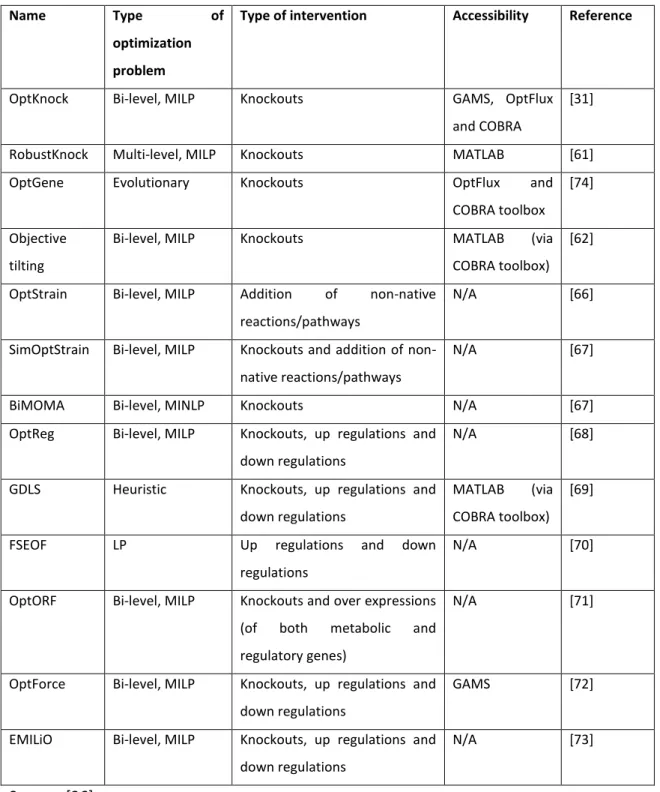
The following algorithms (Table 2) represent approaches for the redesign of metabolic networks and can be divided into three groups: pinpointing gene/ reaction deletions, identification of non-native additional pathways and identification of combinations of knockouts, down-regulation and overexpression that lead to the overproduction of a chosen chemical. Some of the most used optimization methods are presented in Table 2 [26].
Gene/Reaction knockout identification
Microorganisms can metabolize and secrete a large quantity of compounds. Most of these are not necessary when seeking to produce a specific target. Thus, a genetic intervention seeks to optimize the microorganism to maximize the production of a target, while minimizing the secretion of secondary compounds that are not profitable. Once a genetic intervention is performed, it is also important that cell growth is not affected significantly.
The OptKnock algorithm was developed to suggest the deletion of specific reactions so that these two requirements are maintained. This method uses a bi-level optimization, searches the optimal set of reactions deletions that maximizes the desired product secretion rate, while subject to the inner layer problem that guarantees steady-state conditions and seeks to maximize the biological aim. A bi-level approach can be altered into a single level MILP [31]. This method can sometimes be overly optimistic, it attempts to determine reaction deletions that optimize product yield, but does not verify for cases where an alternate optimal solution might divert flux away from producing the desired compound. The RobustKnock method, by employing a bi-level max-min
Metabolic engineering: concepts and methods
________________________________________________________________
15
optimization, assures a minimal production rate by considering alternate optima that produce less of the desired chemical [61].
To conduct a global search for ME strain designs is difficult because there are a large number of possible genetic manipulations in an organism. Genetic algorithms can be used to iteratively refine strain designs until a strain is found that is able to produce a compound of interest. In OptGene, a set of metabolic genes is provided for each member in an in silico population, as well as the number of desired gene deletions. Based on the desired objective, it is determined a fitness score for each individual. The gene vectors of the fittest members of the population are chosen for crossover and subjected to random mutation. Until a genotype providing a desired phenotype is found, this action is carried out [66].
The tilting of the objective function was introduced as an alternative to RobustKnock. It was implemented in OptGene and OptKnock and simulates the worst-case scenario for product formation. Tilting was implemented by adding the product transport to the objective weighting vector [62]. This method is easier to implement and more computationally tractable compared to RobustKnock.
Identification of non-native additional pathways
In OptStrain, in addition to designing growth-coupled production strains, foreign metabolic pathways may be added to expand the range of producible metabolites. Using curated databases containing known enzyme-catalyzed reactions, such as KEGG [63], MetaCyc [64] or BRENDA [65], the minimal number of reactions needed to synthesize a compound of interest is added to the metabolic network of the production strain. Afterwards, bi-level or MILP approaches can be used to identify a set of reaction deletions that optimizes the product of interest, subject to optimal in silico growth [66].
SimOptStrain identifies simultaneous gene deletions and non-native reaction additions. BiMOMA, instead of the maximization of the biomass, uses MOMA as the cellular objective in the inner problem to recognize gene knockouts that result in the overproduction of a sought compound [67].
2.3 Application of Metabolic Models in Metabolic Engineering
________________________________________________________________
16
Identification of multiple types of genetic interventions
Desired products can be obtained not only through the deletion of extant metabolic reactions, but also through the up- and down-regulation of other reactions. These modifications can be identified in silico. The OptReg extends OptKnock and allows for the prediction of reactions that can be up or down-regulated to aid in strain design [68].
The Genetic Design through Local Search (GDLS) method provides a flux modulation evaluation from the viewpoint of fitness of recombinant strains. It relies on local searches with multiple search paths to find combinations of genetic interventions. A heuristic approach is defined in which it is established the k number of genetic manipulations and the number of M best solutions desired. MILP is then used to make k more genetic changes and keep the M best solutions. These are then used as new initial points for k more changes. This is iterated until no more improved solutions are found. A faster computation of more complex gene modifications sets is possible through this method, but it is not guaranteed to provide a global optima [69].
Flux scanning based on enforced objective flux (FSEOF) identifies reaction amplification targets to make a product of interest. This method assesses all metabolic fluxes to find the ones that increase when the product flux is forced [70].
OptORF uses a MILP formulation and integrates transcription regulatory rules to identify optimal gene deletions and over expressions to maximize the production of a desired compound [71].
OptForce identifies possible genetic manipulations by classifying whether the reaction flux must change to overproduce a particular compound of interest. The method further identifies a minimal set of fluxes that must be forced through manipulations so that the network is consistent with the overall objective of overproduction of the compound of interest [72].
Enhancing Metabolism with Iterative Linear Optimization (EMILiO) identifies sets of reactions that may augment the production of a growth-coupled product by optimizing their flux. It also predicts the flux range that would maximize yield [73].
Metabolic engineering: concepts and methods
________________________________________________________________
17
Table 2:Optimization algorithm store design metabolic networks
Name Type of optimization problem
Type of intervention Accessibility Reference
OptKnock Bi-level, MILP Knockouts GAMS, OptFlux
and COBRA
[31]
RobustKnock Multi-level, MILP Knockouts MATLAB [61]
OptGene Evolutionary Knockouts OptFlux and
COBRA toolbox [74]
Objective tilting
Bi-level, MILP Knockouts MATLAB (via
COBRA toolbox) [62]
OptStrain Bi-level, MILP Addition of non-native
reactions/pathways
N/A [66]
SimOptStrain Bi-level, MILP Knockouts and addition of
non-native reactions/pathways
N/A [67]
BiMOMA Bi-level, MINLP Knockouts N/A [67]
OptReg Bi-level, MILP Knockouts, up regulations and
down regulations
N/A [68]
GDLS Heuristic Knockouts, up regulations and
down regulations
MATLAB (via
COBRA toolbox) [69]
FSEOF LP Up regulations and down
regulations
N/A [70]
OptORF Bi-level, MILP Knockouts and over expressions
(of both metabolic and
regulatory genes)
N/A [71]
OptForce Bi-level, MILP Knockouts, up regulations and
down regulations
GAMS [72]
EMILiO Bi-level, MILP Knockouts, up regulations and
down regulations
N/A [73]
2.3 Application of Metabolic Models in Metabolic Engineering
________________________________________________________________
18
2.3.4.
Further algorithms
The previous tables (Table 1 and Table 2)show some of the most important methods used in ME, and some of the most relevant to this project. Despite this fact, this is just a small sample when compared to the dozen of methods and variations that have been studied and developed so far. Table 3 [26] shows another group of methods with a brief explanation of its purpose. These are procedures to curate GSMMs by (i) pinpointing and filling network gaps, (ii) identifying and fixing growth and flux prediction inconsistencies and (iii) restoring thermodynamic feasibility [26]. A more complete list is being updated regularly by the systems biology research group of the University of California, San Diego and can be found online: http://sbrg.ucsd.edu/cobra-predictions-app/. This list shows more than six hundred papers related to all kind of methods and applications, which can be filtered by year, prediction application, computational prediction or the organisms used in the case studies.
Table 3:Optimization algorithms to correct/improve models of metabolism
Name Task Accessibility Reference
GapFind Identify dead-end metabolites GAMS and
MATLAB(via COBRA toolbox)
[75]
GapFill Bridge the gaps (i.e., dead-end metabolites) GAMS and
MATLAB(via COBRA toolbox)
[75]
SMILEY Reconcile growth prediction inconsistencies (single gene
mutations)
MATLAB (via
COBRA toolbox) [76]
GrowMatch Reconcile growth prediction inconsistencies (single gene mutations)
GAMS [75]
Modified GrowMatch
Reconcile growth prediction in consistencies (single gene mutations)
N/A [77]
Extended GrowMatch
Reconcile growth prediction inconsistencies (double and higher order gene mutations)
N/A [78]
GeneForce Identify and correct transcriptional regulatory rules using
growth prediction inconsistencies (single gene
mutations)
Metabolic engineering: concepts and methods
________________________________________________________________
19
OMNI Reconcile flux prediction inconsistencies N/A [80]
TMFA Eliminate thermodynamically infeasible pathways and
loops
N/A [81]
ll-COBRA Eliminate thermodynamically infeasible loops MATLAB (via
COBRA toolbox) [82]
Source: [26]
2.4.
Constraint-based analysis computational tools
With the development and widespread use of methods developed to support ME, some computational tools were implemented to improve and enhance the evolution that has occurred in this field.
2.4.1.
Systems Biology Research Tool
The Systems Biology Research Tool (SBRT) is an open-source and multiplatform tool designed to give the user greater ease in performing tasks of systems biology. This tool supports more than 30 methods for analyzing stoichiometric networks, like FBA, FVA or reaction deletions tasks, and more than a dozen methods from fields like graph theory, geometry, algebra, and combinatorics. It is also an application that allows independent software developers to improve it by adding new functionalities [83].
2.4.2.
CellNetAnalyzer
CellNetAnalyzer (CNA) is a toolbox for MATLAB (MATrix LABoratory is a commercial computing environment) that offers an extensive and user-friendly environment for structural and functional analysis of metabolic, signaling and regulatory networks. CNA particular strengths are methods for functional network analysis, i.e. methods that describe functional states, pinpointing intervention strategies, identifying functional dependencies, or expose qualitative predictions of the perturbations effects. The capability of the user to call external algorithms from external programs is also one of the strengths of the CNA [7].
2.4 Constraint-based analysis computational tools
________________________________________________________________
20
2.4.3.
COBRA toolbox
COnstraint-Based Reconstruction and Analysis (COBRA) toolbox is a package for MATLAB and one of the most complete computational tools used in ME. It is a tool with methods that simulate, analyze and predict a diversity of metabolic phenotypes resorting to GSMMs. These models can be imported and exported in different formats, a feature that is a great advantage over most tools.
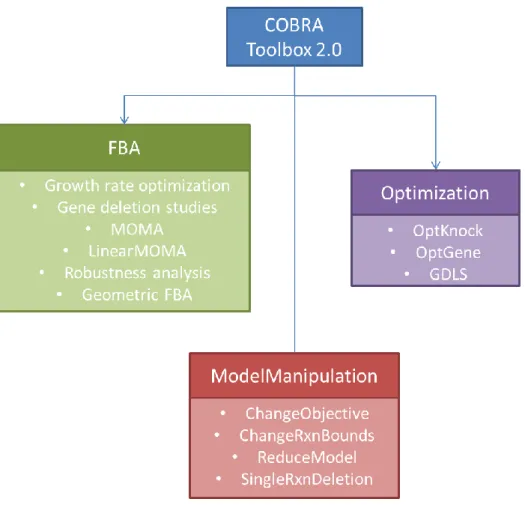
Figure 1 -Overview of the COBRA Toolbox
Figure 1 represents an overview of most of the components present in this tool. The tool consists in several categories of COBRA methods and its wide use by a large number of researchers is due to the quality and quantity of these methods. Operations like FBA, FVA, MOMA, GeometricFBA, Gap Filling, OptGene or OptKnock are available in this toolbox. In terms of solvers, COBRA toolbox contains solver interface functions for LP, MILP, QP, nonlinear programming problems and supports the IBM ILOG CPLEX Optimization Studio (CPLEX), Gurobi and GNU Linear Programming Kit (GLPK) solvers.
Metabolic engineering: concepts and methods
________________________________________________________________
21
One of the disadvantages of this tool is that it is MATLAB-based. MATLAB is a numerical computing environment that requires a commercial license. Nevertheless, the growth of COBRA triggered its conversion to a Python-base framework (free programming language) [84] but this is still quite incomplete.
2.4.4.
OptFlux
OptFlux is a free and open source software developed by the Bioinformatics and Systems Biology research group of the University of Minho. The goal of this tool is to provide a user-friendly computational tool for ME applications becoming a reference in this field.
This tool enables importation and exportation of GSMMs, and with it, metabolites, reactions and gene-reaction associations. This tool supports several flat file formats and it is compatible with the standard machine-readable format for representing models, Systems Biology Markup Language (SBML) files [85]. OptFlux also has a model repository that presents already curated models ready to be used.
In OptFlux, GSMMs can be used for phenotype simulation of both wild-type and mutant organisms, strain optimization, elementary modes analysis and flux variability analysis. The phenotype simulations are performed by methods such as FBA, ROOM and MOMA, while strain optimization is executed through the OptKnock algorithm, Evolutionary Algorithms or Simulated Annealing. The latter algorithms provide the identification of sets of reaction deletions that maximize a certain objective function, its major goal is to identify genetic modifications that result in a mandatory change of the microorganism to produce a specific metabolite without minimize its biomass production.
In terms of solvers, this software can use free or commercial solvers provided users have compatible licenses, including the Coin-or Linear Programming (CLP), the GLPK and CPLEX.
OptFlux’s architecture is based in plugins, which allows, with some ease, its extension with new functionalities and thus a constant growth and evolution. It is implemented in Java on top of AIBench (http://www.aibench.org), which is a software development framework that was created as a cooperative project between the research group of the University of Minho and researchers from the University of Vigo in Spain. AIBench is a lightweight, non-intrusive, MVC-based Java application
2.4 Constraint-based analysis computational tools
________________________________________________________________
22
framework that simplifies the connection, execution and integration of operations with well-defined input/output, leading to units of work with good consistency that can be simply combined and reused [8].
2.4.5.
Other computational tools
The presented computational tools are some of the most relevant in the ME field. Beside then, some others were developed and are often used in this area. Tools such as BioMet Toolbox [86], FASIMU [87], SurrayFBA [88], TIGER [89] and RAVEN [90] are capable of performing phenotype simulations or optimization analyzes and other significant ME tasks.
23
Chapter 3
3.
Computational frameworks analysis
In this chapter, two of the main frameworks for ME, the OptFlux framework and the COBRA toolbox will be explained in further detail, from the model representation to the constraint-based methods included and how they are performed. These tools have been the ones used in this study, and therefore their knowledge is important to be able to create a connection between them.
3.1.
Model structure
The GSMMs representation presented in the previous chapter is used both by OptFlux and COBRA to perform several methods, including phenotype simulation, strain optimization, analysis, and model modification. Although the models are built and computationally represented differently in each of these tools, the underlying mathematical framework is the same. The present section seeks to explain how the tools perform the model construction and also how its structure is represented in both these tools.
3.1.1.
Metabolic
The GSMMs in OptFlux is built and managed through two different software projects. These projects are the BioComponents and the Metabolic.
3.1 Model structure
________________________________________________________________
24
BioComponents project
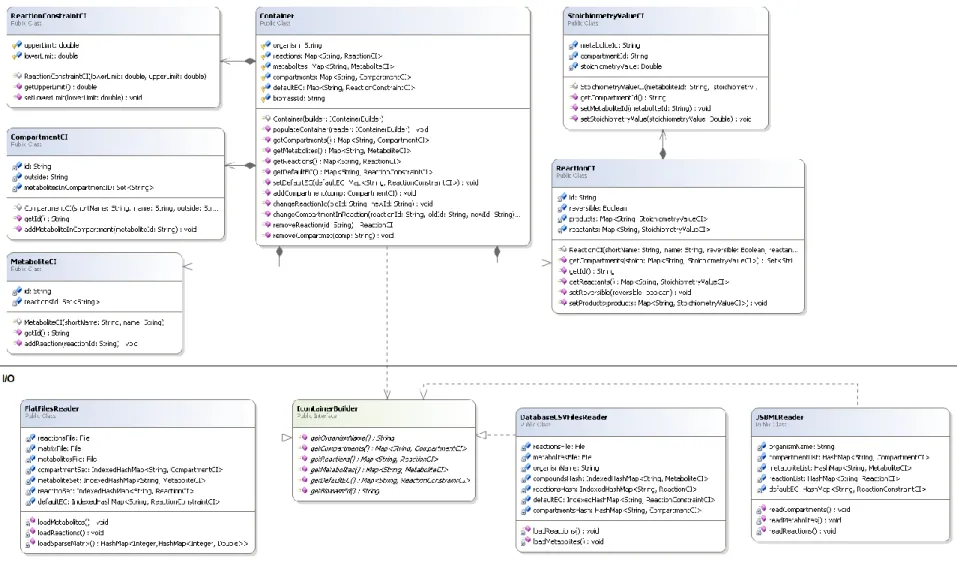
The BioComponents is a project with a significant Input/Output (I/O) component that is responsible for the creation and management of a structure named Container, which is used as the major data structure to keep the whole set of information needed for a GSMM.
The Container structure consists of several kinds of information about a certain organism and allows the creation of the organism model.
The Container structure holds all the information in smaller data structures and lists:
The organism name;
The biomass reaction identifier;
A list of CompartmentCI objects, which holds the information of all organism’s compartments, their names and a list of all their associated metabolites;
A list of MetaboliteCI objects, which holds the information of all organism’s metabolites, its name and a list of all its associated reactions;
A list of ReactionCI objects, which holds the information of all organism’s reactions. It is a structure slightly more complex than CompartmentCI or MetaboliteCI. Here, the name of the reaction, its reversibility, and two lists with the reactants and the products, are kept. The reactants/ products lists contain the name of the metabolite and the StoichiometricValueCI structure which has the name of the metabolite, in which compartment it is presented and its stoichiometric value in the reaction;
A list of ReactionConstraintsCI, which holds the constraint values (the upper and lower bounds) for each reaction of the organism.
Computational frameworks analysis
________________________________________________________________
25
3.1 Model structure
________________________________________________________________
26
This Container structure was built to have a better manipulation of all organisms’ information. This manipulation has the capability of adding, changing or even removing all the existent data. With this capability, it is possible, for instance, to add new compartments or reactions to the organism, to change in which compartment a specific metabolite is present, to remove reactions, to change its constraints or even to change the stoichiometric value that a specific metabolite has in a certain reaction.
All this Container information is obtained from different readers. These readers are structures responsible for getting and handling data from different sources. Usually, the information needed for a constraint-based model can be found in files with different formats, and thus different readers were implemented. In the BioComponents project, there are a significant number of readers that cover almost all types of information sources, such as SBML, CSV Files, FlatFiles or Metatool.
Each reader implements the interface IContainerBuilder. This interface obliges the implemented reader to reply to all the information essential to create the model by implementing the interface methods. All readers must get information such as the list of compartments, metabolites and reactions from its source to fulfill the agreement with the IContainerBuilder. This treaty allows that, although the information sources can be very different, a Container is created using the IContainerBuilder and the Metabolic project is responsible to convert this structure in a constraint based model.
Metabolic project
Metabolic is a project where constraint-based methods for simulation, optimization and analysis are implemented. Also, it is responsible for the creation of GSMMs and their use using constraint-based methods.
Computational frameworks analysis
________________________________________________________________
27
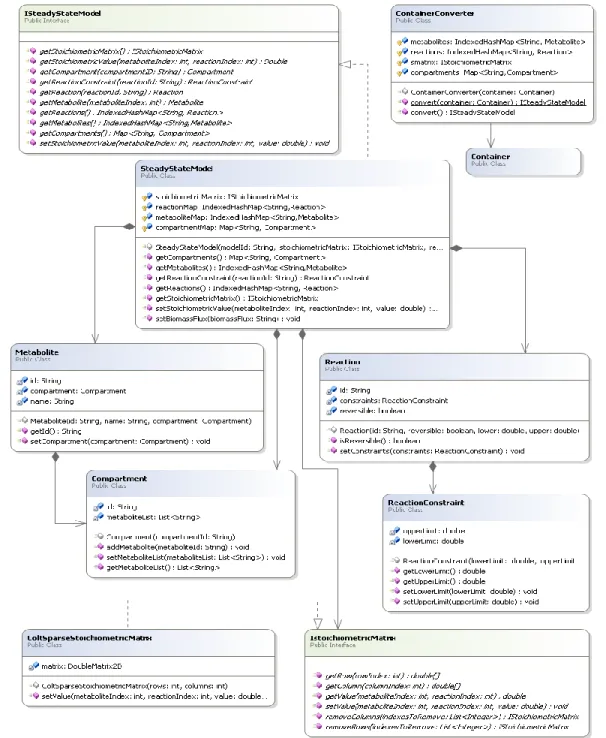
Figure 3 -Metabolic class diagram - Model view
Figure 3 represents the class diagram responsible for the creation of the GSMMs in the Metabolic project. In this project the model is represented by a structure named SteadyStateModel (SSM) that implements the interface ISteadyStateModel. Although the SSM holds information also present in the Container, its representation and organization are different, since the SSM handles
3.1 Model structure
________________________________________________________________
28
structures that are oriented for numerical computation to support constraint-based methods. One of the major differences is the stoichiometric matrix that exists in the SSM organizing stoichiometric coefficients in a suitable matrix representation. The need of having two similar structures lies in the manipulation of both structures, for instance, while in the container it is easy to remove reactions/metabolites, in the SSM that manipulation is more complex, since the data in this structure is indexed and linked in the matrix.
This structure was created with the purpose of being used for simulation, optimization and other constraint-based methods. This project has a class named ContainerConverter that, using all the necessary information present in the Container, creates a structure that implements the interface ISteadyStateModel, in this case the SSM.
Similarly to the Container, the SSM structure is composed by a set of data structures that represent the model. These structures are:
A list of compartments represented by the Compartment structure. This structure consists in the compartment name and a list of associated metabolites;
A list of metabolites represented by the Metabolite structure. This structure consists in the name of the metabolite and the name of the compartment.
A list of reactions represented by the Reaction structure. This structure is slightly different from the Container’s ReactionCI because it does not have information about the associated metabolites, on the other hand it contains the name of the reaction, its reversibility and the ReactionConstraint structure, which consists in the upper and lower bounds that a reaction can have;
The IStoichiometricMatrix structure, it does not exist in the Container and it is the base of the constraint-based model. This structure represents the bond between metabolites and reactions. It is a matrix m X n in where m represents the number rows (metabolites), n represents the number of columns (reactions). The value of each matrix’s cell is obtained from the Container’s ReactionCI where the connection metabolite-reaction is presented. All the structures that implement the ISteadyStateModel, such as SSM, are obligated to implement some essential functions to most of the constraint-based methods. These functions are the list of reactions, the list of metabolites, the whole stoichiometric matrix and the value of a certain matrix’s cell. With these the based methods have full access to the
constraint-Computational frameworks analysis
________________________________________________________________
29
based model to perform all its operations. This is the major reason for the development of the ISteadyStateModel interface in the Metabolic project.
3.1.2.
COBRA
Since COBRA is a toolbox developed in the MATLAB environment it has its own ways of data management. The COBRA toolbox uses MATLAB and its numerical computing environment to hold data in a workspace. This workspace contains all the variables used and created in this environment. Here, there is not an order or even a data distribution by categories or classes in the same way other structured programming languages do. In this workspace, all the structures or variables are at the same level and there is complete freedom in the management of their content. The GSMM is a structure array that groups related data using data containers called fields. This structure in the COBRA toolbox consists of several fields, such as:
Rxns, a string vector where each element represents the ID of a reaction;
Mets, a string vector where each element represents the ID of a metabolite;
S, the stoichiometric matrix. It is a matrix m X n where m represent the number of rows
(metabolites) and n represents the number of columns (reactions);
Rev, a numeric vector with the same number of elements as the Rxns field and where each
element represents the reversibility of the correspondent reaction (binary value);
Lb, a numeric vector with the same number of elements as the Rxns field and where each
element represents the lower bound of the correspondent reaction;
Ub, a numeric vector with the same number of elements as the Rxns field and where each
element represents the upper bound of the correspondent reaction;
C, a numeric vector with the same number of lines as the Rxns field and where each row
represents the objective coefficient of the correspondent reaction. This field is used to define which reaction or reactions will be in the objective function of the model;
RxnsNames, a string vector with the same number of elements as the Rxns field and where
each row represents the name of the correspondent reaction;
MetNames, a string vector with the same number of elements as the Mets field and where
3.2 Constraint-based analysis structure
________________________________________________________________
30
For loading GSMMs in COBRA, it is necessary to define a list of metabolites, a list of reactions and the stoichiometric matrix to perform its constraint-based operations. There are three standard ways of loading these models in COBRA: through a SBML file, text files and Excel files.
Another approach, less conventional, of loading models in COBRA is through MAT files. These files contain the MATLAB formatted data of any variable or structure supported by this platform and, thus, the GSMMs can be saved and loaded in this format. COBRA does not have a method for loading these sorts of files and so it is not a COBRA functionality but a MATLAB one.
Although there are different approaches when loading the model, all the approaches have the same final result and a unique structure that represents a GSMM. In COBRA, this structure is not static and can be changed, there are some functions in the toolbox that allow to add reactions, remove metabolites or reactions and change the value of each cell of the stoichiometric matrix. On the other hand, being this toolbox built in MATLAB it is also possible to change all the variables within the workspace and thus modify the model. Some of this manipulation functions will be presented in 3.2.2.
This structure of the model is used by almost every operation of the COBRA toolbox. The constraint-based model is the center of all the tools that have constraint-based methods and COBRA is no exception. These methods can be categorized by simulation, optimization and analysis methods and both OptFlux and COBRA have methods that represent these three categories.
3.2.
Constraint-based analysis structure
The constraint-based analysis has a great number of methods that are used in metabolic engineering. Within these methods there are some that can be categorized as phenotype simulation methods. A number of simulation methods are developed in the Metabolic project and also in the COBRA toolbox. This chapter seeks to explain how the simulation mechanisms in each of the tools work.
![Table 3 [26] shows another group of methods with a brief explanation of its purpose](https://thumb-eu.123doks.com/thumbv2/123dok_br/17667548.825155/30.918.99.767.568.1074/table-shows-group-methods-brief-explanation-purpose.webp)