Ana Rita Secca da Fonseca
Dissertation presented to obtain the
Ph.D degree in Biology | Neuroscience
Instituto de Tecnologia Química e Biológica António Xavier | Universidade Nova de Lisboa
Oeiras,
May, 2016
Insert here an image
with rounded corners
Pombal’s maze: a novel decision
Ana Rita Secca da Fonseca
Dissertation presented to obtain the Ph.D degree in Biology | Neuroscience
Instituto de Tecnologia Química e Biológica António Xavier | Universidade Nova de LisboaOeiras, May, 2016
Pombal’s maze: a novel decision
-making paradigm
Cá dentro inquietação, inquietação É só inquietação, inquietação
Porquê, não sei Mas sei É que não sei ainda
i
ACKNOWLEDGEMENTS
I feel extremely privileged to have been offered the possibility to undertake such an incredible intellectual endeavor. Above all, I thank the people who throughout these years have generously given me the opportunity to become a better person, towards the world and towards myself
Zach as an example of extra-sensorial intuition and intellectual freedom Masa as an example of rigor and endless generosity
Patrícia for all the cognitive rough and tumble Gil for silence
Maria for throwing ladders at the moon
Bass as an example of making-it-happen
Cindy as an example of thorough kindness towards Nature Eric as an example of scientific culture
Nico as an example of detail Sara as an example of endurance Sam as an example of insurrection Alex as an example of rebellion
Susana and Marta as examples of seriously playful science
Rui and Carlos for putting things into perspective INDP 2008 for all the fun and support
CNP community as an example of diversity and active listening
world wide web as an example of human cooperation Alexandra Elbakyan as example of open science
Rats as reminders of a universal bond
ii
À minha família xoné como exemplo de amizade e estupidez natural À minha família de sangue por me ter ensinado o berro e o riso À avó Augusta como exemplo de leveza
À avó Luz como um exemplo do brincar Ao irmão Filipe como exemplo de destemor À mãe Ana como exemplo de resistência A Matilde como exemplo de impermanência
iii
RESUMO
Os animais são constatemente confrontados com decisões: o que comer?
Onde encontrar parceiro sexual? Como alcançar aquela gota de água?
Actualmente, decorre um debate dentro do campo cujo o objecto de
estudo são as tomadas de decisão, sobre quais são os mecanismos
subjacentes à selecção de acções: será que os animais escolhem de entre
o que pretendem obter - o retorno, ou escolhem de entre o que precisam
de fazer para alcançar esse retorno? Existem dados comportamentais e de
actividade neuronal que suportam a hipótese de que há competição entre
as acções potenciais a acontecer em áreas relacionadas com a
componente motora, enquanto os animais têm que decidir de entre
múltiplas opções qual a que leva ao objectivo. Mais especificamente, tem
sido avançada a hipótese de que a selecção de acções depende dum
mecanismo de competição entre acções potenciais, onde um sinal
polarizador favorece uma das acções, levando à sua selecção. Por forma a
melhor compreender em que medida a selecção de acções depende
efectivamente dum mecanismo de competição, é necessário explorar
melhor quais os tipos de interacção entre acções potenciais,
simultaneamente ao nível da actividade neuronal e do comportamento.
Uma das formas em que este objectivo poderá ser atingido é através da
investigação da actividade neuronal e do comportamento enquanto
animais decidem entre múltiplas acções em que todas levam ao objectivo.
Dentro das neurociências, existem duas linhas de investigação cujo um
dos objectivos é determinar o que acontece no cérebro quando múltiplas
acções permitem atingir o objectivo: o estudo de navegação espacial, que
por um lado, pretende compreender a selecção de acções pela perspectiva
iv
espaço que obrigam a uma decisão - pontos de escolha- e
correspondentes escolhas discretas, e o planeamento motor, que pretende
compreender a seleção de acções pela perspectiva do controlo motor,
focando-se nas dínâmicas contínuas do movimento. Assim, desenhámos e
desenvolvemos um novo paradigma comportamental- a que chamámos
de labirinto de Pombal- onde são oferecidas múltiplas opções de acção
para chegar a um objectivo. Este paradigma apresenta a roedores o
problema de escolher entre caminhos interconnectados quais os que lhe
permitem chegar a uma recompensa sinalizada por um sinal luminososo,
o que implica que esta tarefa tem simultaneamente características de uma
tarefa de navegação e de uma tarefa de planeamento motor. O paradigma
proposto baseia-se num labirinto que apresenta uma estrutura de uma
grelha com múltiplos pontos de recompensa e múltiplas intersecções.
Estas intersecções tinham o potencial para se tornarem pontos de escolha,
dando a oportunidade aos animais de fazer várias decisões ao longo do
caminho. Foi observado que os roedores adoptam a estratégia óptima de
escolher os caminhos que são mais curtos para chegar à recompensa, na
maioria das vezes. Dentro do conjunto dos caminhos mais curtos, os
animais mostram tendências para certas opções baseando-se em
características geométricas (e.g. o número de mudanças de direcção).
Estas tendências reflectem custos internos implícitos associados a
diferentes característiscas dos caminhos que combinadas podem gerar
competição entre diferentes acções, pois podem ser mutuamente
exclusivas. Adicionalmente, foi observado que os animais diminuiam a
velocidade quando se aproximavam da intersecção, o que é indicativo de
que estes locais eram vistos como sítios onde havia a possibilidade de
v
competição, foi possível determinar qual a escolha que iria ser feita na
próxima intersecção. No entanto, mesmo nesta condição em que foi
possível antecipar qual a escolha que o animal ia fazer, verificou-se uma
diminuição da velocidade à chegada da intersecção. Esta observação
pode indicar que os animais usam as intersecções para reconsiderar as
decisões previamente tomadas ou pode ser simplesmente uma tendência.
No geral, resolver o labirinto de Pombal depende de seleccionar
diferentes acções em competição, tanto no ponto de partida do caminho
bem como na intersecção, permitindo uma visão integrada entre a
componente discreta- as tendências- e a componente contínua- a
dinâmica do movimento. Estes resultados mostram que o paradigma
proposto oferece uma nova janela para compreender o fenómeno da
vi
ABSTRACT
Animals have to make decisions constantly: what to eat, where to mate,
how to reach that water drop. There is an ongoing debate within the
decision-making field about the underlying mechanisms of action
selection: is that animals select between what they want, the outcomes, or
between what they need to do to get it, the actions? There is both
behavior and neural data that supports the hypothesis that competition
between potential actions is taking place in motor-related areas while
animals are deciding between multiple options to reach a goal. More
specifically, it has been hypothesized that action selection relies on a
competition mechanism between potential actions, where a bias signal
favors one of the actions, leading to its selection. In order to further
understand to what extent action selection relies on competition
mechanisms, it is necessary to further explore the types of interactions
between potential actions both at the level of neural activity and
behavior. One way in which this subject could be addressed is by
investigating neural activity and behavior while animals are deciding
between multiple options that all lead to goal. There are two fields in
neuroscience that have been aiming at understanding what happens in the
brain when multiple actions lead to goal: navigation, which, on one side,
aims at understanding action selection from the perspective of spatial
processing focusing on choice points and associated discrete choices; and
motor planning, which aims at understanding action selection from the
perspective of motor control focusing on the continuous dynamics of
movement. Hence, we designed and developed a novel paradigm –named
vii
between different interconnected paths to reach a light-cued reward
which implies that this task has characteristics of both navigation and
motor planning problems. The proposed paradigm relied on a maze with
grid-like geometry with multiple reward locations and multiple
intersections. These intersections had the potential to become choice
points so animals had the opportunity to make multiple decisions while
traveling through a path. We found that rats adopted a nearly optimal
strategy in that they overwhelmingly selected paths that minimized
distance to the goal. Within, the set of shortest paths to reach the goal,
rats showed biases towards certain options based on geometrical features
(e.g. number of turns). These biases reflect implicit internal costs
associated to different path features that when combined could generate
competition between different actions, because they could be mutually
exclusive. We also found that animals slowed down while reaching an
intersection, which indicates that animals saw these locations as a
possibility for decision. Moreover, by comparing trajectories of
competing paths it was possible to anticipate which choice the animals
were going to make in the intersection ahead. Nevertheless, even when it
was possible to determine the choice ahead, animals still slowed down,
which could indicate that intersections were used to reconsider decisions
taken at the beginning of the trial or reveal a bias. Overall, solving
Pombal’s maze depended on selecting different competing actions both at the start point and at the intersection, allowing for an integrated approach
between the discrete choices – the biases- and the continuous component- the dynamics of movement. These results show that the proposed
viii
contributing to a better understanding of the underlying interactions
ix
ABREVIATION LIST
ACC anterior cingulate cortex
AUC area under the curve
LIP lateral intraparietal area
M2 secondary motor cortex
OFC orbitofrontal cortex
PMd dorsal premotor cortex
PPC posterior parietal cortex
ROC receiver operating characteristic
SC superior colliculus
SD standard deviation
SEM standard error of the mean
x
FIGURE INDEX
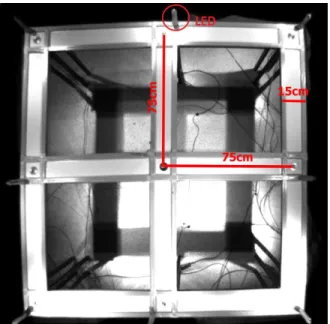
Figure 1 Top view of the maze.. ... 26
Figure 2 Trial structure.. ... 27
Figure 3 Example trial.. ... 27
Figure 4 Number of trials increases with experience. ... 29
Figure 5 Example of velocity trace over y dimension.. ... 30
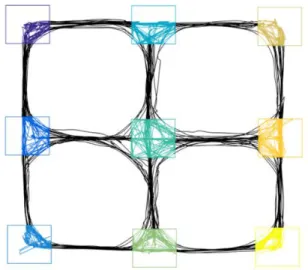
Figure 6 Regions of interest centered on water ports.. ... 31
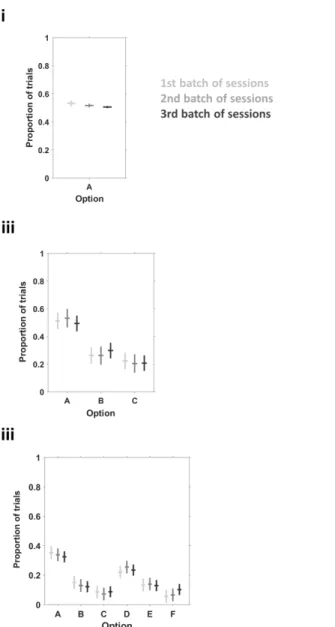
Figure 7 Animals choose shortest paths more often than a stochastic choice model.. ... 36
Figure 8 Animals choose shortest paths more than a stochastic choice model, independently of distance to goal.. ... 37
Figure 9 Animals increase the proportion of shortest path trials across sessions.. ... 38
Figure 10 Animals decrease incorrect poking across sessions.. ... 39
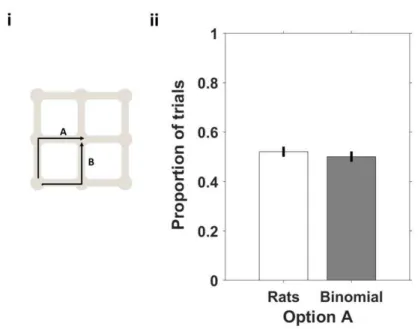
Figure 11 There is no bias towards one of the options, in a two option condition. ... 40
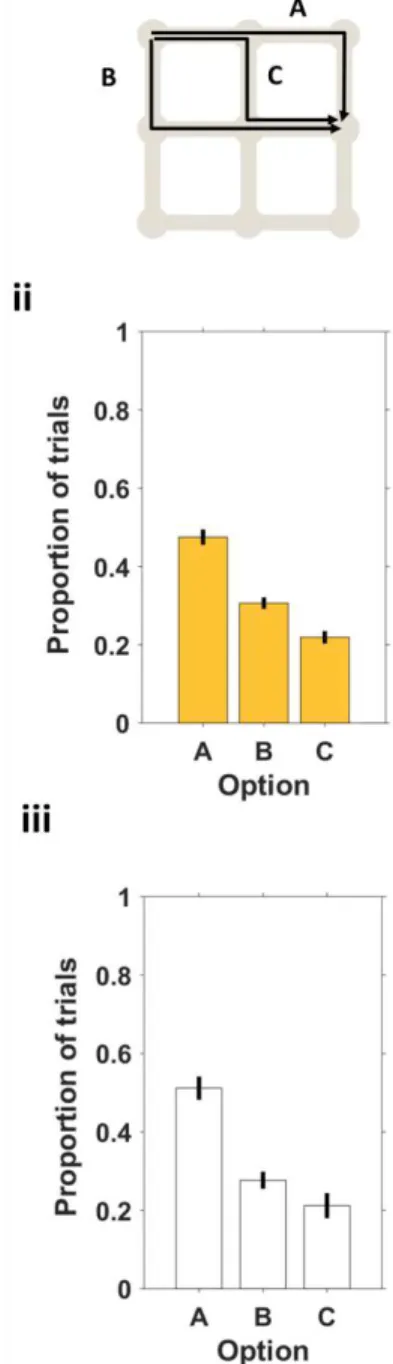
Figure 12 There is a bias towards one of the options, in a three option condition.. ... 41
Figure 13 There is a bias towards one of the options, in a three option condition.. ... 42
xi
Figure 15 Trials categorized according to different criteria.. ... 50
Figure 16 Example of start-goal pair for multiple option analysis.. ... 51
Figure 17 Example of start-goal pair for center avoidance analysis. ... 52
Figure 18 Numbering of each port.. ... 53
Figure 19 Example start-goal pair for maze experience.. ... 52
Figure 20 Goal probabilities per start port.. ... 53
Figure 21 Metrics associated with direction of movement. ... 54
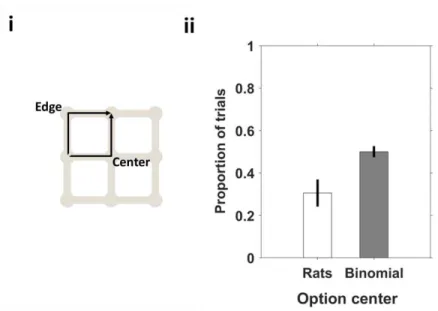
Figure 22 Animals avoid center paths.. ... 56
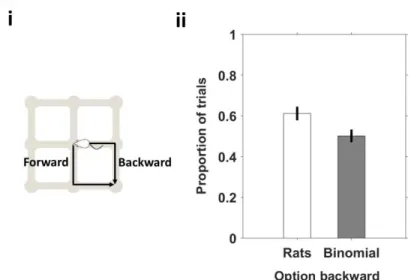
Figure 23 Animals preferred to the go back through the direction of arrival at the port. ... 57
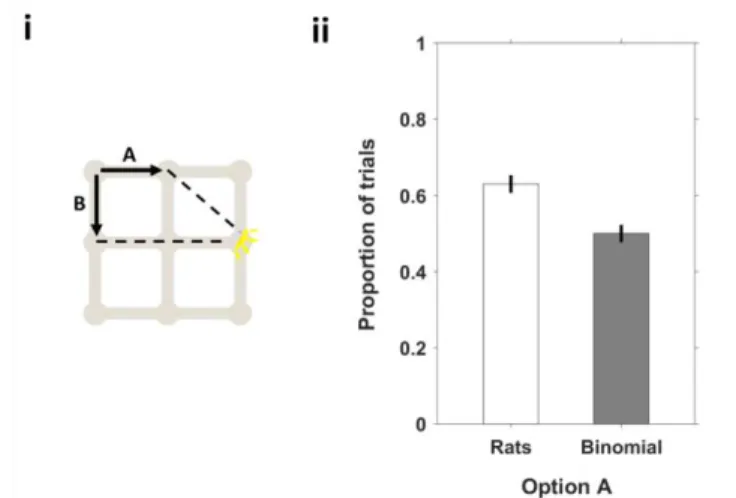
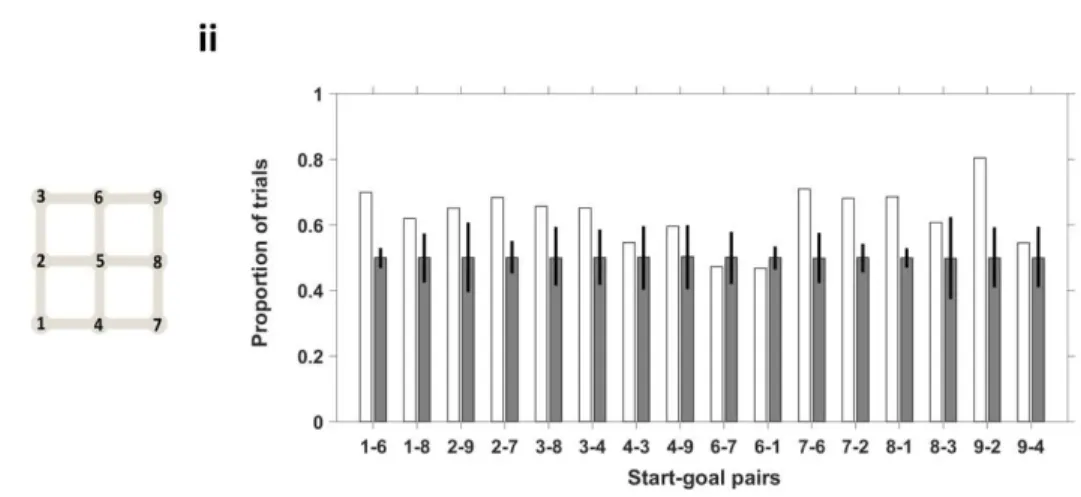
Figure 24 Preference for type A is maintained across the majority of start-goal pairs.. ... 59
Figure 25 Rats prefer paths that minimize distance to goal faster.. ... 58
Figure 26 Rats prefer paths that go through the center, in a three options condition.. ... 59
Figure 27 Animals prefer to continue in the direction that they arrived at the port.. ... 60
Figure 28 Animals prefer paths with one turn.. ... 61
Figure 29 Animals are faster to reach the goal when taking a path with one turn. ... 62
Figure 30 Different factors define different expected proportions for each option. ... 68
Figure 31 Trial type A minimizes number of turns and trial type C minimizes Euclidean distance to the goal.. ... 63
xii
Figure 33 Rats don't prefer paths that minimize Euclidean distance to
goal.. ... 65
Figure 34 Animals prefer paths with one turn. ... 66
Figure 35 Movement time is independent of number of turns... 67
Figure 36 The probability of choice for option A or option B should be
the same.. ... 72
Figure 37 Window of interest for behavioral analysis.). ... 77
Figure 38 Linear transformation of trajectories for spatial alignment.. ... 78
Figure 39 Raw velocities and corresponding trajectories.. ... 78
Figure 40 Examples of binned trajectories and corresponding velocities..
... 79
Figure 41 Example trial dynamics profile where one rat left the choice
point ROI and then re-entered it. ... 79
Figure 42 Pairing of start-goal pairs according to spatial overlap.. ... 80
Figure 43 Animals are faster to leave start port when they are about to do
a shortest path.. ... 81
Figure 44 Animals take more time to leave the start port ROI when more
options are available.. ... 83
Figure 45 Animals were faster to leave start port when the goal was
closer.. ... 84
Figure 46 Bell-shaped velocity profile.. ... 85
Figure 47 Animals slow down while reaching the choice point.. ... 86
Figure 48 Extra non-optimal option does not affect decrease in velocity,
when one optimal option is available... 87
Figure 49 Extra non-optimal option does not affect decrease in velocity,
xiii
Figure 50 Animals slow down more when choice point offers two
optimal path options.. ... 90
Figure 51 Distance to the light does not affect velocity decrease at the
choice point ... 92
Figure 52 Trajectories from competing options in a three option condition
diverge 20 cm after animal has left the start port ROI.. ... 94
Figure 53 Trajectories from competing options in a six option condition
xiv
AUTHORS CONTRIBUTION
xv
TABLE OF CONTENTS
ACKNOWLEDGEMENTS ______________________________________ i
RESUMO _________________________________________________ iii
ABSTRACT ________________________________________________ vi
ABREVIATION LIST _________________________________________ ix
FIGURE INDEX ______________________________________________ x
AUTHORS CONTRIBUTION __________________________________ xiv
TABLE OF CONTENTS _______________________________________ xv
1 GENERAL INTRODUCTION ________________________________ 1
1.1 The entrance… _________________________________________ 2
1.1.1 What _____________________________________________________ 3 1.1.2 Why ______________________________________________________ 3 1.1.3 How ______________________________________________________ 3
1.2 Framing decision-making processes _________________________ 4
1.3 Action selection mechanisms ______________________________ 6
1.3.1 Competition between actions _________________________________ 8
1.4 Multiple actions, one goal _______________________________ 11
1.4.1 Navigation and action selection _______________________________ 12 1.4.2 Motor planning and action selection ___________________________ 16
1.5 Guide for the reader ____________________________________ 20
2 POMBAL’S MAZE ______________________________________ 22
2.1 Introduction __________________________________________ 23
xvi
2.2.1 Animal subjects __________________________________________ 24
2.2.2 Experimental apparatus ___________________________________ 25
2.2.3 Pombal’s maze paradigm __________________________________ 26
2.2.4 Spatial distribution of reward _______________________________ 27
2.2.5 Training _________________________________________________ 28
2.2.6 Video processing _________________________________________ 29
2.2.7 Trajectories into sequences ________________________________ 30
2.2.8 Video and BControl synchronization ________________________ 32
2.2.9 Data base _______________________________________________ 32
2.2.10 Validation criteria _______________________________________ 33
2.3 Results _______________________________________________ 35
2.3.1 Preference for shortest paths ______________________________ 35
2.3.2 Strength of light-water pairing ______________________________ 38
2.3.3 Biased choices ___________________________________________ 39
2.4 Discussion ____________________________________________ 44
3 DISCRETE CHOICES _____________________________________ 47
3.1 Introduction __________________________________________ 48
3.2 Methods _____________________________________________ 48
3.2.1 Trial classification _________________________________________ 49
3.2.2 Movement time ___________________________________________ 54
3.2.3 Direction of movement ____________________________________ 54
3.2.4 Measuring preference _____________________________________ 55
3.3 Results _______________________________________________ 55
3.3.1 Preference for allocentric features: center versus edge ________ 55
3.3.2 Preference for egocentric features: backwards versus forward _ 56
3.3.3 Preference for geometrical features: minimizing the Euclidean
distance to goal __________________________________________________ 57
xvii
3.3.5 Qualitative framework _____________________________________ 67
3.3.6 Competition between options ______________________________ 62
3.4 Discussion ____________________________________________ 67
4 DYNAMICS OF CHOICE __________________________________ 75
4.1 Introduction __________________________________________ 76
4.2 Methods _____________________________________________ 76
4.2.1 Spatial window of interest __________________________________ 77
4.2.2 Spatial data alignment and binning _________________________ 77
4.2.3 Velocity exclusion criterion _________________________________ 79
4.2.4 ROC analysis ____________________________________________ 80
4.3 Results _______________________________________________ 81
4.3.1 Latency to leave the start port ______________________________ 81
4.3.2 Bell-shaped velocity profile_________________________________ 84
4.3.3 Velocity at the choice point_________________________________ 86
4.3.4 Trajectories for competing paths ____________________________ 92
4.4 Discussion ____________________________________________ 95
5 GENERAL DISCUSSION _________________________________ 100
5.1 Conceptual framing ____________________________________ 101
5.2 Overview of main empirical findings ______________________ 101
5.3 Critical points ________________________________________ 103
5.4 Pombal’s maze and action selection ______________________ 105
5.5 Final remarks and future directions _______________________ 108
1
GENERAL
INTRODUCTION
I get in
in what, from the outside, it’s called the inside searching for the path that will get to the center
leaving longing and fear on the outside
2 1.1 The entrance…
Nature has provided humans with a lot to wonder about. Far away flickering
points up above our heads, sea rages, clamorous lightning cruising dark
skies, apples that persist to fall and days that persist to die. But maybe, and
just maybe, the phenomenon that relentlessly takes more of our surprise is
ourselves, what is within us. And, whatever that might be, it lives in an
enclosed finite body which interacts with others – conspecifics or not- and with the environment, through behavior.
Even though there is not consensus about a definition of behavior,
neuroscientists agree that it is generated by different types of biological
matter (nerve cells, muscles) which work together to generate actions. There
are many parts but in the end the body is just one. If a rat goes on a quest to
find water then its head, legs, tail and 200 000 000 neurons have to get there,
in full commitment with that decision, together. But animals have to make
decisions constantly: what to eat, where to mate, how to reach that water
drop... There are always many options so how do animals select a single
one?
There is an ongoing debate within the decision-making field about the
underlying mechanisms of action selection: is action selection achieved by
first making a choice between abstract representation of outcomes and then
performing a sensorimotor transformation of that abstraction to the action
space or is it achieved by evaluating several potential actions while at the
same time weighing the costs and benefits of each, before arriving at a
3
1.1.1 What
One of the fundamental problems in decision-making is to understand how
actions are selected (1.2 Framing decision-making processes). For a long
time it was thought that action selection relied mostly on a central executive
system that would then send the selected abstract action to be implemented
by the motor system. There is currently compelling evidence that higher
motor areas are involved in the action selection process. It has been
hypothesized that action selection is generated by a competition process
between potential actions which underlying architecture relies on mutual
inhibition that is fed by a value-based bias signal (1.3 Action selection
mechanisms).
1.1.2 Why
On one side, there is a fair amount of research that has brought
understanding about the generation of the bias signal. On the other side, there
is both behavior and neural data that supports the hypothesis that competition
between potential actions is taking place in motor-related areas while
animals are deciding between multiple options to reach a goal (1.3.1
Competition between actions). Nonetheless, in order to further understand
to what extent action selection relies on competition, it is necessary to further
explore the types of interactions between potential actions both at the level of
neural activity and behavior.
1.1.3 How
One way in which this subject could be addressed is by investigating
decision-making problems where multiple options lead to a goal and the
4
goal). There are two fields in neuroscience that have been aiming at
understanding what happens in the brain when multiple actions can lead to
goal: navigation (1.4.1 Navigation and action selection), which, on one
side, aims at understanding action selection from the perspective of spatial
processing focusing on choice points and associated discrete choices; and
motor planning (1.4.2 Motor planning and action selection), which aims at
understanding action selection from the perspective of motor control
focusing on the continuous dynamics of movement. Hence, we developed
and designed a novel paradigm –named Pombal’s maze- where animals are offered multiple actions to reach a goal. This paradigm presents rodents with
the problem of choosing between different interconnected paths to reach a
light-cued reward which implies that this task has characteristics of both
navigation and motor planning problems. We specified and characterized
validation criteria for the behavior and defined the optimization problem that
animals were solving while performing the task, from a decision-making
framework (Chapter 2 – Pombal’s maze); then, we investigated which
decision variables were influencing animal’s choices, considering a navigation framework (Chapter 3 – Discrete choices); finally, we searched
for dynamics correlates of competition between different actions,
considering a motor planning framework (Chapter 4 – Dynamics of
choice).
1.2 Framing decision-making processes
Making a decision involves a deliberative process were information from
different sources is weighed to generate a commitment to a proposition with
the aim to achieve particular goals (Gold & Shadlen 2007). Information may
5
& Mainen 2003), or derived from subjective experience, such as the
pleasantness of a given food (Padoa-Schioppa et al. 2006). It is argued that
these different pieces of information are converted into an common currency
that allows for the comparison between the different possibilities of action
(Sugrue et al. 2005). This common currency is defined by the values which
represent the subjective costs and benefits that can be attributed to each of
the potential outcomes (and associated courses of action) of a decision
process. Value can be manipulated by giving explicit feedback or by offering
rewards which elicit approach and consummatory behavior (Penner &
Mizumori 2012) and can also reflect more implicit factors such as the costs
associated with wasted time, effort, and resources. After the comparison
between options takes place, the commitment is reached towards one of the
options and, consequently, a choice is revealed by an overt behavior that
concludes the decision process, leading to an outcome that can be more or
less expected. Outcomes can come under the form of positive rewards like
social information (Deaner et al. 2005), or negative rewards like loss of
money (Wunderlich et al. 2009) and are used as informative events about the
how successfully are animals reaching their a defined goal. Goals are critical
variables in the decision-making process because it is assumed that animals
optimize behavior to achieve them. Hence, under this assumption and given
a specific decision-making problem, it is possible to make predictions about
the choice patterns of the subject. These predictions can be generated by
concrete mathematical models that allow for a direct estimation of these
different variables (Corrado & Doya 2007). This implies that it should be
possible to determine which quantities, internal to the subject’s decision process, summarize the relevant properties of the available behavioral
6
variables, are expected to be represented inside the brain and enacted by
behavior.
In the controlled environment of the laboratory, decision-making processes
are studied by confronting subjects with offered mutually exclusive options.
The decision problem is structured in time and space, with the aim to
implicitly divide the process of decision-making into segments, within each
trial. While an overt choice is made, both behavior and neural data can be
observed and correlated. This strategy may lead to the understanding of the
algorithmic mechanisms of decision-making (Glimcher et al. 2009).
1.3 Action selection mechanisms
Classically, from the perspective of cognitive psychology, the brain was
considered a serial processing system that would first transform sensory
information into perceptual representations, then would use these
abstractions to construct knowledge about the world and make decisions and,
finally, would implement decisions through action (Coutlee & Huettel 2012;
Schall 2002; Lepora & Pezzulo 2015). This system would rely on an
executive center which should be responsible for aggregating, integrating
and evaluating information about goals, costs and benefits, to then send
abstract commands to the motor system, resultant form the deliberation
process. This conception of decision-making implied certain predictions such
as that decision-related neural activity would be confined to central executive
brain regions the same way that action-related neural activity would be
confined to sensorimotor brain regions (Tversky & Kahneman 1981); the
motor preparation would only start after the decision had been taken by the
central executive system and only one motor program would be prepared
7
would have to be represented by the central executive system (Cisek 2012).
Nevertheless, evidence accumulated throughout the years directing
hypothesis towards other directions. For instance, numerous studies report
that both decision-related neural activity and action-related neural activity
were widely found in the brain. More specifically, not only decision-related
activity was found in cortical and sub-cortical regions, many of which
traditionally related to sensorimotor control, such as high order motor areas
in both monkey (Romo et al. 2004; Cisek & Kalaska 2005) and rat
(Murakami et al. 2014; Raposo et al. 2014), basal ganglia (Hikosaka et al.
2006; Gold & Shadlen 2007) or superior colliculus (SC) (Basso & Wurtz
1998; Andersen & Cui 2009) but also action-related neural activity was
found in regions traditionally related to central executive function such as
lateral prefrontal cortex (Seo et al. 2012). Additionally, it was also found that
some neurons represent both decision-related and action-related neural
activity depending on the stage of the decision-making process (Hoshi &
Tanji 2007).
Cumulatively, there is evidence that neurons in sensorimotor regions
represent multiple potential targets and actions before decision is made.
More specifically, it was observed that neural activity that correlates with
spatial features of a given action implicating different types of movement
such as saccades (McPeek 2003; Churchland et al. 2008) or reach (Baldauf et
al. 2008; Scherberger & Andersen 2007) is influenced by the presence of
multiple potential targets. In addition, it has been shown that unselected
actions are not completely suppressed until the movement is initiated (Cisek
& Kalaska 2005). These studies indicate that multiple actions are represented
even before movement onset, which argues for participation in motor
8
On the other side, the inherent metabolic cost of each potential action should
also be weighed on the decision-making process (Rangel & Hare 2010) so,
during the decision-making process, action costs should be represented and
integrated as a cost. For instance, it has been observed that in face of two
reaching targets that led to the same reward, animals strongly preferred the
one that was biomechanically easier to perform (Cos et al. 2014). Other
example of integration of the action costs into the decision, is that animals
chose to grip more when the effortful option offered high reward (Kurniawan
et al. 2010) or that animals trade-off accuracy with motor costs (Marcos et al.
2015). Accordingly, the cost of each action was integrated into the decision
which implicitly means that this cost was derived from some representation
of the action before movement started.
Overall, it seems that over the years a fair amount of evidence accumulated
against the classical view. It is argued that the advantage of having the motor
system preparing and selecting a set of movement plans, when presented
with multiple competing actions, would allow for more rapid movement
execution when one of the plans is being executed and, potentially, a
reduction in the working memory demand (Gallivan et al. 2015). Hence, it
has been put forward the hypothesis that action selection is not enclosed in a
region but possibly distributed through different networks other than just a
central executive region and where, for instance, motor-related areas could
have a more active role in the process of action selection (Cisek 2012;
Lepora & Pezzulo 2015).
1.3.1 Competition between actions
As an account for the previously described evidence, it has been proposed
9
(Tipper et al. 1998; Pastor-Bernier & Cisek 2011). More specifically, this
hypothesis conveys that a competition process between multiple potential
actions is taking place. The underlying circuitry architecture of such
competition process would rely on a mutual inhibition interaction between
representations of potential actions and would be fed by a bias signal which
would implicitly bring to the process integrated information about both
sensory evidence and subjective experience (Coulthard et al. 2008; Cisek
2007). This architecture would be functionally similar to the biased
competition model proposed for visual attention where parallel
representations of targets compete through lateral inhibition and are biased
by signals of different sources (Desimone & Duncan 1995).
1.3.1.1 Bias signal
The possibility that there is a signal that biases the competition dynamics
seems very likely, given what it is known about behavioral and neural
correlates of decision variables. Understanding how decision variables are
generated from representation and integration of different types of
information has been subject of intense research within decision-making
studies. Generally, there are two main categories of problems:
perceptual-based decisions, where animals have to make decisions perceptual-based on a perceptual
experience of a given stimulus and value-based decisions where animals
have to make decisions based on their individual subjective experience
(Glimcher et al. 2009).
Perceptual decision-making paradigms allowed to answer questions like
where and how is perceptual information integrated. For example, the
random dot motion discrimination task (Shadlen & Newsome 2001) where a
10
presented to a monkey that has to saccade to one of two parallel targets to
implicitly report which motion direction it perceived, allowed us to
understand that in lateral intraparietal area (LIP) there are neurons whose
activity correlates with the integration of information. Another example is
the odor-mixture categorization task, where a mixture of two odors is
presented to a rat that has to nose poke into one of two parallel ports to
implicitly report which odor identity it perceived, allowed to understand that
not only SC was active before movement initiation but that this activity
varied with sensory uncertainty and task difficulty (Felsen & Mainen 2012).
Value-based decision-making paradigms allowed answering questions like
where and how subjective experience information is integrated. For example,
in a task where monkeys chose between two types of juice offered in
different amounts, OFC neurons encode value independently of visuospatial
factors and motor responses (Padoa-Schioppa & Assad 2006). Another
example is a dynamic foraging task, where rats chose freely between two
spatial goals that delivered a fixed amount of water reward with different
probabilities, allowed to understand that neurons in secondary motor cortex
(M2) encode value of upcoming choice (Sul et al. 2012).
In summary, using these categories of paradigms behavioral and neural data
was investigated while sensorial and/or subjective information was
manipulated, creating decision conflicts that the subject had to solve. This
lead to better understanding on how the brain represents and integrates
information that is valuable for decisions whether this information is
sensorial or derived from subjective experience (Glimcher et al. 2009;
Sugrue et al. 2005). The previously described paradigms contributed for the
understanding about how the bias is generated but it still remains to be
11
and that would be fed with this bias signal. There are other related lines of
study that have addressed these questions more specifically.
1.3.1.2 Representation of potential actions
The hypothesis that action selection is implemented through competition
relies heavily on the implicit premise that potential actions under selection
are simultaneously represented while there is an ongoing decision-making
(Cisek 2006; Tipper et al. 1998). The theory that perceiving and acting on
the world depends on the simultaneous specification of multiple potential
actions than can be afforded by the environment has been around for 40
years (Gibson 1979). During that time convincing evidence has been
accumulated showing that when an animal is offered the possibility to
choose between multiple actions to reach a goal these potential actions are
simultaneously represented in motor-related areas (Cisek & Kalaska 2002;
Cisek & Kalaska 2005; Basso & Wurtz 1998; Houk 1995).
In summary, at least some of the necessary conditions for the implementation
of action selection through competition are met, both for the existence of a
bias signal and for the simultaneous representation of potential actions.
Nonetheless, it is not fully understood how and what type of interactions
dynamically occur between potential actions, both at the level of neural
activity and behavior. It is necessary to further explore the types of
interactions between potential actions both at the level of neural activity and
behavior. One way in which this subject could be addressed is by
investigating neural activity and behavior while animals are deciding
between multiple options that all lead to goal
12
Within the decision-making field, there are two types of problems that
require the subject to make a decision about which action to take, among
alternatives, to reach the same goal: motor planning tasks and spatial
navigation tasks. Both types of tasks involve making choices about which
movement or sequence of movements to optimize in order to reach a goal
(Penner & Mizumori 2012; Whitlock et al. 2008; Wolpert & Landy 2012),
being the main difference that, on the first case, the movements under choice
are performed by one body part (hand, arm or eye) and, in the second case,
the whole body. Also, there is an important line of complementarity between
these two fields associated to the type of action selection correlates they
focus on. If, on one side, in navigation paradigms one of the key windows
for understanding action selection is the choice point, where discrete choices
are measured and interpreted according to different strategies (Tolman
1938); in the case of motor planning, one of the key windows is the
movement between start and goal positions, where the continuous dynamics
of movement is assessed (Flash & Hogan 1985). It seems that considering
both of these two perspectives can bring a more complete understanding
about action selection correlates and may lead to a more detailed
characterization of both the type of choices at choice points and the
dynamics of those choices. Consequently, this can contribute for a more
complete comprehension of how animals select actions namely by exposing
correlates of the interactions between potential actions.
1.4.1 Navigation and action selection
It has been proposed extensively that animals select actions in navigation
contexts using two distinct schemes derived from instrumental conditioning:
13
habitual action-selection, driven by stimulus-response associations
(Glimcher et al. 2009; Penner & Mizumori 2012; Niv et al. 2006; Balleine &
Ostlund 2007; Daw & Shohamy 2008). Goal-directed action selection is
sensitive to the contingencies between actions and their outcomes and to the
utilities of these outcomes. It depends on having a schema of how the world
works that can be used to determine the consequences of actions (Redish
2016). This argues for animals being capable of learning the casual
relationship between their actions and the resulting outcomes, allowing them
control over their own action based on their desire for a particular outcome
goal (Tolman 1948). This type of schema confers animals with the ability to
plan actions to maximize expected rewards within their environment and
flexibly integrate new information like a novel stimuli and or a change in
reward contingency. In that sense, this system does not impose that a specific
action has to be selected but animals can resort to it to guide behavior
(Redish 2016; Johnson et al. 2007). It is thought that this flexibility comes
with a time cost because it involves deliberation. This system is critically
dependent on intact hippocampal function (Poldrack & Packard 2003;
Packard & McGauch 1996). On the other side, habitual action selection is
sensitive to the pairing between antecedent stimuli within the environment
and actions without regard to their consequential outcomes (Niv et al. 2006).
Animals automate their behavior when actions reliably led to goals, by
developing stored action chains that can be released at appropriate times but
that, once initiated, tend to run to conclusion (Hull 1943; Dezfouli et al.
2014). The habit system allows for fast action selection but also permits
arbitrary stimulus-action pairings. Hence, it provides the basis for simpler,
non-integrated navigation functions such as stimulus recognition and
approach and is critically dependent on intact striatal function (Penner &
14
From the perspective of action selection, solving a navigation task is also
solving an optimization problem that depends on the processing of spatial
contextual information (Niv et al. 2006; Penner & Mizumori 2012).
Reinforcement learning is a theoretical framework that aims at describing the
process through which an organism learns to optimize behavior within a
decision environment. The decision-making environments in which
reinforcement learning occurs is defined by a set of states (Sutton & Barto
1998), which in the case of navigation, can be represented by locations on a
maze, such as a corner or an intersection; a set of possible actions that the
decision-maker can choose from, such as turn left or travel west; and, finally,
a set of rules that the decision-maker must learn about the environment
through persistent interaction with it, such as where is reward located and
when. In reinforcement learning, outcomes such as food or water have
numerical utilities, and the imperative is to choose actions to maximize a
long-term measure of total utility (Niv et al. 2006; Glimcher et al. 2009). The
actions implemented by the decision-maker implicate a change from one
state to another, which leads to different outcomes. Then the problem is to
decide which strategy maximizes utility given many different possibilities of
states. In the reinforcement learning framework, on one side, using
goal-directed system implicates that, when at a choice point, animals work out the
ultimate outcomes consequent on a sequence of their actions by searching
through a tree of states, joined up according to the actions that lead between
them, and choosing actions based on the outcomes’ current utilities; on the other side, habitual action selection system implicates that, when at the
choice point, animals chose an action by comparing their relative stored
values, rather than the actual identity of the outcomes consequent on
15
In navigational contexts, the outcomes are often dependent on the
implementation of whole sequences of action choices dependent on the
spatial context. Hence, understanding how animals select which path to take
to reach a goal is also a matter of spatial cognition. This area of knowledge
focus, for example, in investigating how spatial information from the
environment is processed and represented in the brain (Moser et al. 2008;
O’Keefe 1979), how internal cues are used to navigate the environment (Taube 2007), how animals integrate information from a travelled path to
then return to an initial position (McNaughton et al. 2009) or how animals
learn to solve a maze (Tolman & Postman 1953). Among other behavioral
paradigms, mazes have been the most popular setting to understand how
animals navigate the environment (Knierim & Hamilton 2011; Sharma et al.
2010). Usually, inside mazes, animals are presented with the problem of
navigating through a network of interconnecting paths and dead ends where
only one or few options lead to reward. Generally, the underlying strategy of
these paradigms is to let the animal to familiarize itself with the maze by
learning spatial features and reward contingencies, and then manipulate
either or both. These manipulations are designed so that the observed
behavioral effects can be explained by different learning factors. For
instance, in the case of Tolman–Hull plus maze where rats are trained for collecting reward according with a certain rule - turn left from the south arm
to the west arm- to test what animals have learned, trials starts in a different
arm and, then depending on which strategy the animal is following, the
behavioral effect should be different (Gardner et al. 2013; Ruprecht et al.
2014). Another example is the Multiple-T task where rats are trained to run
through a central track and to turn left or right for food (Brown 1946;
16
different shape and the side on which the final reward is placed can change,
but both variables generally remain constant within a day. Here the aim is to
determine what animals learn by observing, for instance, when animals take
wrong paths. Given that one of the aims of this type of studies is to
understand how animals process and integrate spatial information, the goal is
usually not cued to allow for the animals to reveal their expectation of where
the goal is, which may bring up how the animals is using spatial information.
An exception to this is the Cue-T task where rats are trained to turn left or
right at a T intersection where the correct choice depends on a sensory cue
provided on the stem of the T (Johnson & Redish 2007; Thorn et al. 2010).
In this case, the aim can be to better understand how animals learn to
associate stimulus with reward (Barnes et al. 2005). Overall, these paradigms
allow for asking different questions from how is spatial information
processed and learned and how possible choices map on to different
strategies.
While solving a maze, the animal is faced with choice points where a
decision takes place. At the choice point, animals should consider which
action among alternatives leads to reward and, depending on the underlying
strategy and on the decision variables that the animal is taking into
consideration, the selected action should be different. As in any other
decision-making study, the experimental strategy is to pose a problem to the
subject where, given an optimization problem, the different choices reveal
the underlying processes of action selection.
1.4.2 Motor planning and action selection
In planning a movement, the brain has to select one of many possible
17
multiple potential movements when merely presented with alternative targets
for action, one of which will subsequently be selected before a movement is
even required, is critical to the understanding of the underlying mechanisms
by which the brain initially represents and makes decisions between
competing options in the environment (Gallivan et al. 2015; Murakami &
Mainen 2015). As described before, it has been proposed that selection of
actions may be performed through competition among neurons preparing for
available actions (Cisek 2007). This further supports the view that motor
systems do not passively reflect the result of completed cognitive processes;
rather, it is crucially linked to the dynamic decision-making process itself
(McKinstry et al. 2008; O’Hora et al. 2016; Haith et al. 2015). Considering the linkage between cognitive and motor processes, and the concurrent
processing of multiple motor plans, competing cognitive states are likely to
prepare corresponding plans in parallel (Song & Nakayama 2009; Cisek
2012). Hence, the quality of the interactions between potential actions could,
in potential, spill to the movement execution dynamically modulating
reaction time or trajectory.
In the particular setting of motor planning paradigms, for instance, it has
been shown that when reaching for a target in the presence of a distractor,
where the distractor afforded a movement with the other hand, resulted in
higher reaction time in comparison when the distractors afforded responses
for the same hand (Ray et al. 2014). Moreover, there is evidence that the
number of actions under consideration for selection modulates reaction time
that increases with the increase in the number of possible reach targets
(Churchland et al. 2008).
Evidence for dynamical interactions between action plans has come from
18
of distractors in ‘go-before-you-know’ tasks. It has been observed that the trajectory of a reach to a target is influenced by the presence and placement
of distracters (Welsh et al. 1999; Tipper et al. 1998), suggesting that multiple
target and distractor related directional signals coexist and interfere, in neural
populations specifying reach direction. When a target and distractor appear
in close proximity, the endpoints of target-directed eye and arm movements
often land between them, an observation which has been termed ‘spatial averaging’ (Van Der Stigchel & Theeuwes 2006; Eggert et al. 2002; Theeuwes et al. 1998). In a case where the presented targets corresponded to
potential reach locations and not as distractor, it has been shown that,
trajectories are spatially sensitive to the probabilistic distribution of targets
within the display. Specifically, when presented with two or three target
displays, subjects initiate their reaches toward an intermediary or averaged
location before correcting the trajectory of the movement towards the cued
target location. This indicates that the observed spatial averaging of the
reaching trajectory depends not only on the spatial position of the stimulus in
the display, like in the previously described case of the distractors, but also
on the probability that these stimulus are targets that afford reach movements
(Chapman et al. 2010). There has been some debate about whether the
potential reach targets were being encoded in visual versus motor
coordinates so that the spatial averaging was a consequence of visual
averaging but, recently, it was shown that by introducing an obstacle in some
trials while subjects where solving a ‘go-before-you-know’ task generated a correct spatial averaged reach trajectory predicted by averaging of motor
target locations rather than averaging of visual target locations (Stewart et al.
2014).
One of the hypothesis that has been put forward to explain all these
19
distractors) create overlapping hills of activity in the corresponding motor
maps of structures involved in movements of the eye in structures like SC
(McPeek 2003), and arm in structures like motor cortex (Georgopoulos et al.
1988) with the final movement vector being determined by the averaging of
these signals (Tipper et al. 2001). Under this view, both targets and
distractors are therefore thought to be initially represented as potential targets
by the visuo-motor system (McPeek & Keller 2004). In agreement with this
interpretation, it was found that activity in the SC appears greatest at an
intermediary location when spatial averaging of eye movement occurs
(Glimcher & Sparks 1993) arguing for the simultaneous initiation of multiple
movements and consequent averaging of the resultant activity.
On the other side, it has also been shown that in a cued-response delayed
task, when two targets of different value are presented before the go signal
and, after the goal signal, the less valued target is cued for reach, the average
trajectory tends to be initially deviated towards the higher value target
(Pastor-Bernier et al. 2012). Congruently with this view, for instance, it has
been observed that neural activity correlated with movement direction is
pre-shaped by information about the available motor choices (Kurata 1993). For
example, neural activity related to an action tends to be stronger if the action
is more likely or yields higher rewards (Kable & Glimcher 2009; Sugrue et
al. 2005). This observation would again enforce the interpretation that there
is an underlying ongoing competition between the two representations of the
two reach movements but the one that is more valued is winning before the
cue is presented, and then when the cued signal is presented the subject has
to update the value of each target and take the reach that leads to reward.
More specifically, the hypothesis that competition is implemented through
20
of activity associated to each action representation are modulated by the
number of potential actions. This shows activity normalization across
representations which is a trace inherent to mutual inhibition (Cisek &
Kalaska 2005; Churchland et al. 2008; Basso & Wurtz 1997).
Currently, not only it remains to be understood if there is competition
between potential actions promoted by circuits at the level of the motor
system but also, if that is the case, how is the conflict between potential
actions resolved. Additionally, action selection mechanisms may also be
different if actions are mutually exclusive or if the decision is taking place
while animals are already moving or not. Overall, these behavioral correlates
of action selection such as reaction time or movement trajectory provide a
window into the dynamics of decision-making processes.
In conclusion, we started by acknowledging the incomplete understanding
about action selection mechanisms. We revised evidence that favors the
hypothesis that action selection is achieved by interactions between
representations of potential actions. We focused on two types of frameworks
that combined may lead to a more complete characterization of the action
selection phenomenon, namely, by investigating actions both from the
perspective of choice points and from the perspective of dynamics between
start and goal.
1.5 Guide for the reader
The present work focused on understanding the action selection when
21
combines features of navigation tasks with features of motor planning tasks
using both discrete and continuous choice correlates.
In Chapter 2, we introduced the rationale behind the design of a novel
behavioral paradigm, characterized validation criteria for the behavior and
defined the optimization problem underlying the task that animals were
solving, from a decision-making framework.
In Chapter 3 we described choice preferences and investigated which
decision variables were influencing animal’s choices, considering a
navigation framework.
In Chapter 4 we characterized the choice dynamics associated to certain
decisions and investigated dynamics correlates of competition between
different actions, considering a motor planning framework.
Each of these chapters was divided into:
Introduction: where a rationale for the chapter was presented; Methods: where protocols and statistics were listed;
Results: where data was presented graphically and with respective
levels of significance;
22
2
POMBAL’S MAZE
and what now?
what am I seeing? what should I do? which false step shall I not take?
until what is called the arrival because it is everything and almost nothing
23 2.1 Introduction
In the general introduction, we explained the motivation for studying action
selection by combining the two related frameworks of navigation and motor
planning in one paradigm.
In this chapter, we will explain how we developed a novel behavioral
paradigm where both navigation features and motor planning features are
present. We will go over the rationale behind it and how it was implemented
from set up to data processing and validation. To conclude this chapter, we
will suggest an optimization strategy for the decision-making problem
underlying it.
We were aiming at developing a paradigm where a subject would have to
decide between multiple options to get reward and where reward location
was cued, similarly to motor planning tasks, and where different spatial
information would have to be combined for decision, as in navigation tasks.
The aim was to offer subjects options that were sufficiently ambiguous
between each other to generate competition between options. To achieve that
premise, a grid-like maze was developed where subjects were confronted
with the decision of which path to take to reach a defined goal. The grid-like
geometry implicated that there was symmetry over travelled distance for the
different options. We wanted to be able to control, on a trial by trial basis,
the start location and the goal, so that, on each trial, the subject went from a
defined point A to a defined point B to get reward, by making a decision on
which path to take. Additionally, to maximize the number of trials per
session, we water deprived the animals and introduced water ports on the
floor where the animal could collect reward, as a motivation factor. Reward
24
position, with the water ports. In order to insure that subjects were able to see
the light in whatever position they were in the maze there were no boundary
walls. The paradigm was named Pombal’s maze after Marquês de Pombal,
the politician that envisioned Lisbon’s reconstruction after the 1755
earthquake, of which the city’s downtown grid-like structure is a corollary.
Given the novelty of the paradigm, we wanted to determine if rats where
behaving according to certain necessary validation criteria. The rationale
behind the construction of this paradigm assumed that rats would learn the
association between visual cue and reward, that rats would learn the maze
geometry and combine it with visual information about the goal and, finally,
that rats were engaged into a decision-making problem, on a trial by trial
basis. Overall, what we expected was that rats would use both information
about the goal and the maze geometry to select the paths that would
maximize reward rate. These optimal paths would be shorter in distance to
the goal, consequently minimize time to reach the goal and energy
expenditure.
2.2 Methods
2.2.1 Animal subjects
Eight Long Evans rats (300-350 g at the start of training) were trained and
tested in accordance with European Union Directive 86/609/EEC and
approved by Direcção-Geral de Veterinária (DGV) of Portugal. All rats were
trained in the Pombal’s maze task described below. Each rat performed between one and two sessions per day depending on trial number achieved
25
performed at least 200 trials, a second session would take place ~60 minutes
later. Per day, rats performed between 250–300 trials. 5 days per week for a period of ~10 weeks. Each day, each rat run ~250 meters. Rats where trained
and tested in two separated batches of four animals each and were
paired-housed and maintained on a normal 12 hr light/dark cycle and tested during
the daylight period. Rats were allowed free access to food but were
water-restricted. While under training, animals got 5 minutes freely available water
in a variable delay after the end of the session. This delay varied between 1
hour and 3 hours. After animals were trained, water was freely available for
20 minutes only on days in which there was no testing. Nevertheless, water
availability was adjusted to ensure animals maintained no less than 85% of
ad libitum weight at any time.
2.2.2 Experimental apparatus
The behavioral apparatus for the task was designed by A.R.F. and Z.F.M.
The behavioral control system (BControl) was developed by Z.F.M, C.
Brody (Princeton University) in collaboration with A. Zador (Cold Spring
Harbor Laboratory). Pombal’s maze comprised a 1.5m by 1.5m grid elevated maze with no inner or outer walls (Figure 1). The maze was surrounded by
black curtains at 20 cm distance from the edge and 2 meters from floor to
top. In each corner and intersection, there were nine conical ports (2.5 cm
diameter, 1 cm depth), embedded on the floor, where animal could collect
water reward of size 20 µL. On one side of the maze, behind the curtains,
nine water deposits where hang above the height of the maze. Each port was
equipped with an infrared photodiode/phototransistor pair that registered a
digital signal when the rat‘s snout was introduced into the port (“nose poke”), allowing us to determine the position of the animal during the task
26
two was 75 cm. The tracks that composed the grid were 15 cm wide. The
hard structure of the maze was built with metal rails and tracks where plastic
sheets parts that slid into the rails slit. Moreover, ~2 cm away from each port
there was a white visible led encapsulated in a 10 cm height plastic tube
which would signal for reward availability. A Point Grey FL3-U3-13S2M
camera with lens Fujinon YV28x28SA-2was placed at 1.5 meters above the
center of the maze and video recordings where performed at 73 fps with
resolution of 1280x960. Experiments were performed under dim light (~10
lux) to increase the contrast between background and light cue. The video
was recorded on the infrared spectrum and the maze was illuminated by
standard CCTV infrared lamps.
2.2.3 Pombal’s maze paradigm