Continuous renal replacement therapy in children with
multiple organ dysfunction syndrome: A case series
_______________________________________________
Yan-lin Zhang
1,2, Wei-ping Hu
1,2, Ling-hui Zhou
1,2, Yin Wang
1,2, Ao Cheng
1,2, Si-nan Shao
1,2, Ling-ling
Hong
1,2, Qiu-yue Chen
1,21Department of Nephrology, The First Affiliated Hospital of Xiamen University, Xiamen University,
Xiamen 361003, People’s Republic of China; 2Department of Nephrology, The First Hospital of Xiamen,
Fujian Medical University, Xiamen 361003, People’s Republic of China
ABSTRACT
ARTICLE
INFO
______________________________________________________________ ______________________
There is a lack of definitive information regarding the precise indications, implementa-tion, and outcomes of continuous renal replacement therapy (CRRT) for the treatment of critically ill children. Six children (three boys, three girls) aged from 3 days to 8 years, all of whom had multiple organ failure, were submitted to bedside CRRT using M60 filter membranes. Modified Port carbonate formula was used and clotting time was maintained between 20 and 30 minutes. Activated partial thromboplastin time was 1.5- to 2-fold normal. One patient discontinued treatment due to family decision. Marked improvements were seen in the remaining five patients, including normali-zation of blood urea nitrogen and creatinine levels, stabilinormali-zation of electrolytes, and improvements in markers of organ function. Of note, one patient (a six-year-old male) underwent the treatment for 241 hours. All five patients were subsequently discharged and recovered uneventfully. CRRT is effective for the management of children who are critically ill due to multiple organ failure.
Key words:
Child; Organ Dysfunction Scores; Renal Replacement Therapy; Multiple Organ Failure
Int Braz J Urol. 2014; 40: 846-52
_____________________
Submitted for publication: November 05, 2013
_____________________
Accepted after revision: April 06, 2014
INTRODUCTION
Continuous renal replacement therapy (CRRT) is frequently used for the treatment of cri-tically ill children with acute kidney disease (1). Although such treatment can be effective (2,3), there is still a lack of consensus concerning the precise indications, the implementation, and the associated outcomes regarding CRRT in children (2,4). Therefore, we felt compelled to share our ex-perience using this approach for treating critically ill children. Specifically, we describe the treatment
and outcomes for a series of six critically ill chil-dren, all of whom had multiple organ dysfunction syndrome (MODS).
MATERIALS AND METHODS
Patients
IBJU| CONTINUOUS RENAL REPLACEMENT THERAPY IN CHILDREN
847
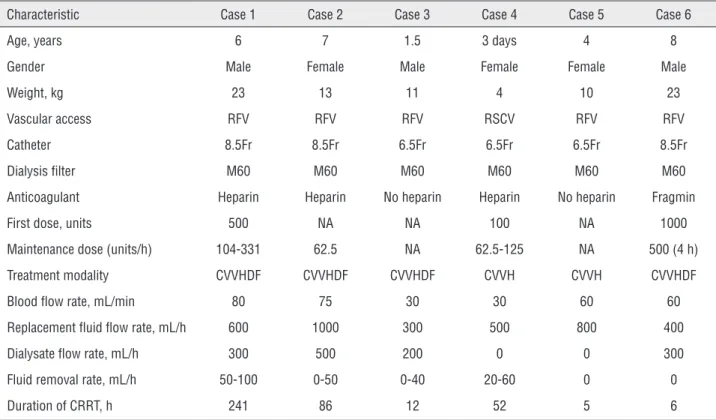
Table 1 - Demographic and treatment characteristics of critically ill children with multiple organ dysfunction syndrome who received continuous renal replacement therapy.
Characteristic Case 1 Case 2 Case 3 Case 4 Case 5 Case 6
Age, years 6 7 1.5 3 days 4 8
Gender Male Female Male Female Female Male
Weight, kg 23 13 11 4 10 23
Vascular access RFV RFV RFV RSCV RFV RFV
Catheter 8.5Fr 8.5Fr 6.5Fr 6.5Fr 6.5Fr 8.5Fr
Dialysis filter M60 M60 M60 M60 M60 M60
Anticoagulant Heparin Heparin No heparin Heparin No heparin Fragmin
First dose, units 500 NA NA 100 NA 1000
Maintenance dose (units/h) 104-331 62.5 NA 62.5-125 NA 500 (4 h)
Treatment modality CVVHDF CVVHDF CVVHDF CVVH CVVH CVVHDF
Blood flow rate, mL/min 80 75 30 30 60 60
Replacement fluid flow rate, mL/h 600 1000 300 500 800 400
Dialysate flow rate, mL/h 300 500 200 0 0 300
Fluid removal rate, mL/h 50-100 0-50 0-40 20-60 0 0
Duration of CRRT, h 241 86 12 52 5 6
CRRT: continuous renal replacement therapy; CVVHDF: continuous venovenous hemofiltration with dialysis; CVVH: continuous venovenous hemofiltration; NA: not available; RFV: right femoral vein; RSCV: right subclavian vein.
characteristics). All suffered from MODS (Ta-ble-3) due to sepsis and acute rhabdomyolysis syndrome (Case 1), septic shock (Cases 2, 3, and 6), neonatal asphyxia and meconium aspiration syndrome (Case 4), or hemorrhagic shock, ureter and bladder rupture, and crush syndrome (cau-sed by a car accident) (Case 5).
Treatment
A PRISMA bedside CRRT machine (Hos-pal, Lyon, France) and M60 AN69 membrane filters were used for all patients. Double- or sin-gle-lumen veno-venous hemodialysis catheters were inserted via the right femoral or subcla-vian vein. The replacement fluid (modified Port carbonate formula) was infused using the post--dilution method. For anticoagulation, patients received heparin or low molecular weight rin (note: some patients did not receive
hepa-rin). Clotting time was maintained between 20 and 30 minutes and tested using the capillary tube method. Activated partial thromboplastin time was 1.5-2.0 times normal.
Outcomes
One patient (case 5) discontinued treat-ment due to a family decision and eventually died due to circulatory failure and electrolyte distur-bance. Dramatic improvements were seen in clini-cal measures after treatment in all other patients (Table-2). Of note, blood urea nitrogen (BUN) and creatinine (Cr) levels were normalized, electrolyte and acid-base balance was stabilized, and indica-tors of organ function were markedly improved. These patients were subsequently discharged.
IBJU
|
CONTINUOUS RENAL REPLA
CEMENT THERAPY IN CHILDREN
848
Before After Before After Before After Before After Before After Before After
Body temp, ºC 39.3 36.8 37.7 36.5 37.7 36.5 36.5 37 38.2 35.5 39.1 36.4
BP, mmHg 70/48 96/50 85/45 104/74 81/52 102/68 NA NA 55/32 84/30 65/35 108/73
Urine output, mL 140 1740 30 915 NA NA 170 1600 0 800 1280 1620
WBC, ×109/L 26.9 8.4 23.03 6.5 12.1 2.2 20.2 8.6 12.41 7.25 21.98 9.8
Hb, g/L 94 143 83 96 156 103 149 139 88 59 144 78
Platelets, ×109/L 197 354 49 162 411 436 150 144 160 210 250 243
BUN, mg/dL 43.820 28.089 95.084 54.214 60.393 54.491 NA NA NA NA 16.9 1.5
Creatinine, mg/dL 4.28 0.86 3.51 0.94 3.48 1.88 2.31 1.75 2.17 1.76 1.36 0.27
ALT, U/L 10382 173 116 31 72 NA 577 141 173 NA 82 71
AST, U/L 13891 140 615 20 51 NA 686 41 511 NA 315 280
TBIL, mg/dL 0.4678 0.234 1.053 0.351 0.175 NA 1.286 0.8198 0.234 NA 15 5
DBIL, mg/dL 0.117 0 0.468 0.117 0 NA 0.526 0.234 NA NA 7 3
Albumin, g/L 25 36 17 28 43 NA 30 32.4 NA NA 24 30
Creatine kinase, U/L 23057 24 374 299 30 NA NA 195 8000 NA 13586 126
CRP, mg/L >90 11 >90 0.51 26 NA 8 NA NA NA 18 5
K+, mg/dL 13.294 19.159 16.031 17.595 23.851 13.294 19.941 13.490 28.543 19.941 9.384 16.813
Ca2+, mg/dL 7.9358 9.860 6.894 8.617 3.888 4.730 4.930 9.619 6.092 5.170 7.375 7.174
Na+, md/dL 280.487 321.86 305.767 340.252 308.066 303.468 278.179 289.674 301.169 308.066 344.85 312.664
Cl-, mg/dL 333.23 350.955 258.045 354.5 350.955 326.14 304.87 290.69 365.135 354.5 340.32 361.59
APTT, s 63.6 39.2 84.8 13.9 12.8 23 33.9 29.1 NA 179.3 143.9 34.1
PT, s 28.6 12.7 45.5 36.6 35.7 39 15.8 15.3 NA 34.1 18.9 14.2
INR 5.82 0.97 5.03 1.09 4.31 1.07 1.11 1.17 3.61 NA 1.62 1.12
IBJU| CONTINUOUS RENAL REPLACEMENT THERAPY IN CHILDREN
849
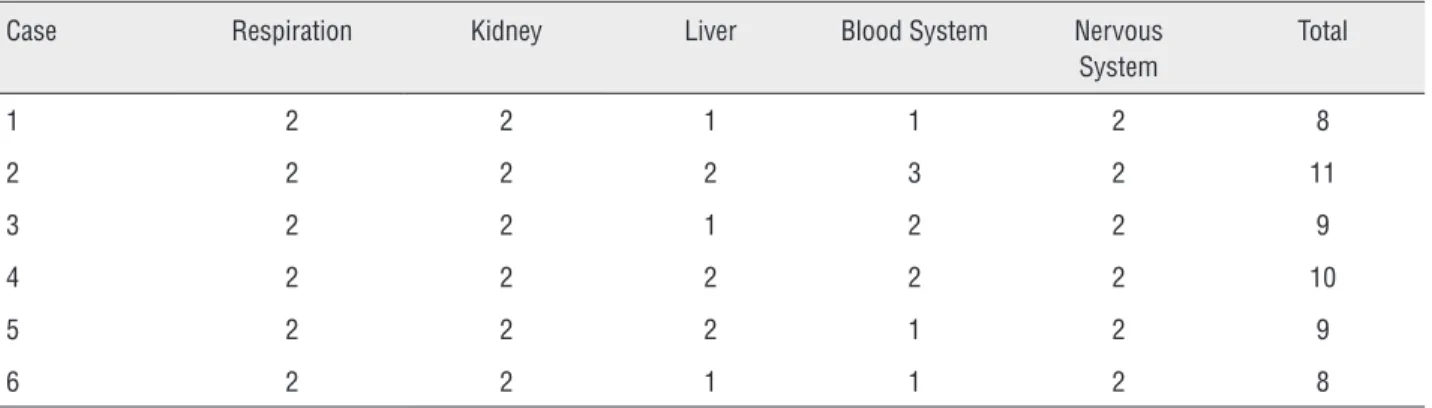
Table 3 - Summary of multiple organ dysfunction scores for each critally ill child who received continuous renal replacement therapy.
Case Respiration Kidney Liver Blood System Nervous System
Total
1 2 2 1 1 2 8
2 2 2 2 3 2 11
3 2 2 1 2 2 9
4 2 2 2 2 2 10
5 2 2 2 1 2 9
6 2 2 1 1 2 8
Case 1
Case 1 was a six-year-old boy who was ad-mitted on 9 January 2011 with a two-day history of non-projectile vomiting and diarrhea, yellow watery stool, and fever. He had also experienced a convul-sion. After admission, the patient was diagnosed with toxic bacterial enteritis, sepsis, MODS (acute kidney injury [AKI], stress ulcer, infection-induced toxic en-cephalopathy, early disseminated intravascular coa-gulation, acute myocardial injury, acute liver injury, acute rhabdomyolysis), hyponatremia, metabolic acidosis, and hypoalbuminemia. The patient was ex-periencing blurred consciousness on admission and suffered a convulsion the day after admission, with a concomitant sustained decrease in blood pressure and urine output. Blood testing revealed abnormal coagulation, metabolic acidosis, electrolyte imbalan-ce, and progressively increased BUN and Cr levels. Serum Cr peaked at 378µmol/L, while creatine ki-nase was 23057 U/L. The patient underwent CRRT from 11-20 January, and regained consciousness on January 16th. His liver and renal function gradu-ally improved, and blood pressure and urine output normalized. The patient underwent CRRT for 241 hours and was hospitalized for 33 days before dis-charge. After discharge, the patient was followed-up once-monthly for six months. His development was normal and there was no relapse of symptoms/bio-chemical abnormalities.
Case 4
Case 4 was a three-day-old female neona-te who was transferred to the neonatal inneona-tensive
care unit on 16 February 2008. She had a history of no crying, poor responsiveness, and anuria. Diagnoses after admission were neonatal asphy-xia and meconium aspiration syndrome, neonatal AKI, MODS (heart, liver, kidney, brain), neonatal hypoxic encephalopathy, and severe electrolyte imbalance. Her serum Cr was 204µmol/L on ad-mission and 429µmol/L on the day after admis-sion. CRRT was initiated. Her electrolytes and urine output gradually normalized. The patient underwent bedside CRRT for 52 hours and was hospitalized for 20 days before discharge. After discharge, the patient was followed-up once--monthly for six months. Her development was normal and there was no relapse of symptoms or biochemical abnormalities.
DISCUSSION
Herein, we have summarized our experien-ce treating six children with MODS using CRRT. Of the five children who received full treatment, all recovered completely, thus supporting the effec-tiveness of CRRT for the management of children who are critically ill due to MODS.
af-ter CRRT (3,5,6). In both of these cases, and indeed in general, we believe that early intervention with CRRT may have inhibited the cytokine cascade/ systematic inflammatory response and the asso-ciated inflammatory injury (7). Clearly, the ame-lioration of uremia and fluid overload likely con-tributed to the efficacy of treatment. According to our review of the literature, CRRT for 241 hours is very rare. This duration of treatment was ne-cessary to stabilize the patient’s internal environ-ment, provide nutritional/metabolic support, and allow for the implementation of other supportive treatment. For this patient, an AN69 membrane filter M60 with good biocompatibility, high per-meability, and a strong adsorption capacity was used. The area of the filter was relatively large (0.6m2). The membrane, which can also be used
under hypotension, causes a weak activation of complement and leukocytes, and has a small im-pact on hemodynamics. The high-permeability of this membrane may help to improve the anti-in-flammatory cytokine to proinanti-in-flammatory cytoki-ne ratio, down-regulate the body’s inflammatory response, and ameliorate the systemic inflamma-tory response (8).
One of the keys to early intervention in the neonate was placement of a central venous catheter by an experienced anesthesiologist. The smallest M60 filter was used and the tubing was pre-filled with whole blood. Further, at the begin-ning of CRRT, the blood flow rate was low, thus preventing a subsequent drop in blood pressure (9). Attention was also paid to body heat preser-vation and heating the vascular access point. This case highlights that, in addition to having the ap-propriate equipment, inter-departmental coopera-tion can be important for successful CRRT. Staff in neonatal/pediatric intensive care units should not hesitate to seek assistance from staff in other departments who may have appropriate expertise in central vein cannulation and CRRT.
We also believe it is worthwhile to summa-rize the key technical principles and requirements for successful implementation of CRRT in children. Due to the physiological and anatomical charac-teristics of children, including low body weight, small blood flow volume, and hemodynamic ins-tability, filters and tubing with a low pre-filled
vo-lume should be used to reduce the blood vovo-lume in extracorporeal circulation and help ameliorate the decrease in effective circulating blood volu-me. Filters with a high molecular weight polymer membrane, high permeability, good biocompatibi-lity, and a small impact on the coagulation system should be selected. The use of AN69 membranes has been linked to bradykinin release syndrome among patients who are acidotic or taking angio-tensin converting enzyme inhibitors (10,11). Al-ternative membranes should be used in such ca-ses. Generally, the blood volume in extracorporeal circulation should be maintained at <10% of body weight, ie, <30mL in neonates, <50mL in infants, and <100mL in children. For neonates weighing <2.5kg, tubing can be pre-filled with plasma, whole blood, or 5% albumin (12).
Establishing vascular access is a key factor for successful CRRT in children. The most frequen-tly used veins in children are the femoral and in-ternal jugular. For operative easiness and to help maintain stable blood flow, veno-venous double--lumen hemodialysis catheters are often used. Two single-lumen venous hemodialysis catheters can be used in infants. Recommended catheters by age are: <6 months, 4-5F single-lumen; 6-12 months, 5-7F double-lumen; 1-3 years, 8-9F double-lumen; and >3 years, 8-12F double-lumen (13).
Determining the therapeutic dose for con-tinuous veno-venous hemofiltration in critically ill children remains a challenge. Individual doses should be determined according to the disease conditions, taking into consideration metabolic state, fluid volume, and duration of dialysis (14). Transmembrane pressure should be monitored and maintained at <200mmHg (note: a transmembrane pressure >250mmHg may indicate clotting in the filter) (15). Particular attention should be paid to warming the replacement fluid. The recommended flow rates are as follows. Blood flow: 30mL/min in neonates; 30-40mL/min in infants/young chil-dren; 50-75mL/min in children weighing <20kg; and 75-100mL/min in children weighing >20kg. Ultrafiltration rate: 8-10mL/min/m2 in neonates/
infants; 8-15mL/min/m2 in children (note: daily
IBJU| CONTINUOUS RENAL REPLACEMENT THERAPY IN CHILDREN
851
We believe there are a number of key fac-tors that should be taken into account when consi-dering CRRT in cases similar to those described he-rein. For cases involving AKI or acute renal failure, particular attention should be paid to water and sodium retention and blood nitrogen levels, all of which have a significant impact on the treatment and survival of infants and young children (17), as well as the speed of progress. The characteristics of systemic disease are also an important factor (18). CRRT rescue was successful in the 5 patients described herein who completed treatment. We be-lieve that several reasons underlie this high rate of treatment success. First, the decision to treat with CRRT was made early. Our approach is consistent with that advocated by Wolf et al., who suggest that the survival rate following extracorporeal cir-culation can be improved if treatment is commen-ced as soon as possible (19). Second, CRRT allows for correction of water and sodium retention and electrolyte imbalances in a timely manner, facili-tating the effectiveness of other treatments (20). Finally, we must reiterate, that involvement and cooperation between a multi-disciplinary team is of paramount importance so that appropriate res-cue of respiratory failure, use of breathing ma-chines, infection prevention and treatment, and cardiovascular support can be accomplished. With regards to when to withdraw treatment, we believe that CCRT can be halted once water and sodium retention subsides, urine output returns to normal, and renal function recovers. To this end, it is worth noting that body water load and urine output are directly related to survival in children (4, 21).
Over the last few decades, CRRT has beco-me increasingly used in pediatrics, particularly for treating critical illness, such as severe acute renal failure and MODS (9). With further study into the mechanisms underlying the efficacy of CRRT and technological advances, the effectiveness of CRRT for treating critically ill children can only improve. We hope the sharing of our experience with this treatment will help facilitate such improvement.
ABBREVIATIONS
AKI = acute kidney injury ALT = alanine transaminase
APPT = activated partial thromboplastin time AST = aspartate transaminase
BP = blood pressure BUN = blood urea nitrogen Cr = creatinine
CRP = C-reactive protein
CRRT = continuous renal replacement therapy CVVHDF = continuous venovenous hemofiltra-tion with dialysis
CVVH = continuous venovenous hemofiltration DBIL = direct bilirubin level
Hb = hemoglobin
INR = international normalized ratio
MODS = multiple organ dysfunction syndrome NA = not available
PT = prothrombin time RFV = right femoral vein RSCV = right subclavian vein TBIL = total bilirubin level WBC = white blood cell count
CONFLICT OF INTEREST
None declared.
REFERENCES
1. Sutherland SM, Alexander SR. Continuous renal replacement therapy in children. Pediatr Nephrol. 2012; 27: 2007-16. 2. Goldstein SL. Continuous renal replacement therapy:
mechanism of clearance, fluid removal, indications and outcomes. Curr Opin Pediatr. 2011; 23: 181-5.
3. Hayes LW, Oster RA, Tofil NM, Tolwani AJ. Outcomes of critically ill children requiring continuous renal replacement therapy. J Crit Care. 2009; 24: 394-400.
4. Askenazi DJ, Goldstein SL, Koralkar R, Fortenberry J, Baum M, Hackbarth R, et al. Continuous renal replacement therapy for children ≤10 kg: a report from the prospective pediatric continuous renal replacement therapy registry. J Pediatr. 2013; 162: 587-592.e3.
5. Goldstein SL, Somers MJ, Baum MA, Symons JM, Brophy PD, Blowey D, et al. Pediatric patients with multi-organ dysfunction syndrome receiving continuous renal replacement therapy. Kidney Int. 2005; 67: 653-8.
7. Splendiani G, Mazzarella V, Cipriani S, Zazzaro D, Casciani CU. Continuous renal replacement therapy: our experience in intensive care unit. Ren Fail. 2001; 23: 259-64.
8. Mu TS, Palmer EG, Batts SG, Lentz-Kapua SL, Uyehara-Lock JH, Uyehara CF. Continuous renal replacement therapy to reduce inflammation in a piglet hemorrhage-reperfusion extracorporeal membrane oxygenation model. Pediatr Res. 2012; 72: 249-55.
9. Lee CY, Yeh HC, Lin CY. Treatment of critically ill children with kidney injury by sustained low-efficiency daily diafiltration. Pediatr Nephrol. 2012; 27: 2301-9.
10. Brophy PD, Mottes TA, Kudelka TL, McBryde KD, Gardner JJ, Maxvold NJ, et al. AN-69 membrane reactions are pH-dependent and preventable. Am J Kidney Dis. 2001; 38: 173-8.
11. Tielemans C, Madhoun P, Lenaers M, Schandene L, Goldman M, Vanherweghem JL. Anaphylactoid reactions during hemodialysis on AN69 membranes in patients receiving ACE inhibitors. Kidney Int. 1990; 38: 982-4.
12. Kendirli T, Ekim M, Ozçakar ZB, Yüksel S, Acar B, Oztürk-Hiişmi B, et al. Renal replacement therapies in pediatric intensive care patients: experiences of one center in Turkey. Pediatr Int. 2007; 49: 345-8.
13. Hackbarth R, Bunchman TE, Chua AN, Somers MJ, Baum M, Symons JM, et al. The effect of vascular access location and size on circuit survival in pediatric continuous renal replacement therapy: a report from the PPCRRT registry. Int J Artif Organs. 2007; 30: 1116-21.
14. Sebestyen JF, Warady BA. Advances in pediatric renal replacement therapy. Adv Chronic Kidney Dis. 2011; 18: 376-83.
15. Baldwin I. Is there a need for a nurse emergency team for continuous renal replacement therapy? Contrib Nephrol. 2007;156:191-6.
16. Bunchman TE, Brophy PD, Goldstein SL. Technical considerations for renal replacement therapy in children. Semin Nephrol. 2008; 28: 488-92.
17. Askenazi DJ, Koralkar R, Hundley HE, Montesanti A, Patil N, Ambalavanan N. Fluid overload and mortality are associated with acute kidney injury in sick near-term/term neonate. Pediatr Nephrol. 2013; 28: 661-6.
18. Bock KR. Renal replacement therapy in pediatric critical care medicine. Curr Opin Pediatr. 2005; 17: 368-71.
19. Wolf MJ, Chanani NK, Heard ML, Kanter KR, Mahle WT. Early renal replacement therapy during pediatric cardiac extracorporeal support increases mortality. Ann Thorac Surg. 2013; 96: 917-22.
20. Boschee ED, Cave DA, Garros D, Lequier L, Granoski DA, Guerra GG, et al. Indications and outcomes in children receiving renal replacement therapy in pediatric intensive care. J Crit Care. 2014; 29: 37-42.
21. Sutherland SM, Zappitelli M, Alexander SR, Chua AN, Brophy PD, Bunchman TE, et al. Fluid overload and mortality in children receiving continuous renal replacement therapy: the prospective pediatric continuous renal replacement therapy registry. Am J Kidney Dis. 2010; 55: 316-25.
_______________________ Correspondence address:
Yan-lin Zhang, MD Department of Nephrology, The First Affiliated Hospital of Xiamen University and The First Hospital of Xiamen, Fujian Medical University,