Corresponding author: Dr. Reza Najaipour.
e-mail: [email protected] Received 18 January 2016 Accepted 28 April 2016
High prevalence of plasmid-mediated quinolone
resistance determinants in
Enterobacter cloacae
isolated from hospitals of the Qazvin, Alborz,
and Tehran provinces, Iran
Amir Peymani
[1], Taghi Naserpour Farivar
[1], Reza Najaipour
[1]and Samaneh Mansouri
[1][1]. Celular and Molecular Research Center, Qazvin University of Medical Sciences, Qazvin, Iran.
Abstract
Introduction: Plasmid-mediated quinolone resistance (PMQR) is a growing clinical concern worldwide. The main aims of this study were to detect qnr-encoding genes and to evaluate the clonal relatedness of qnr-positive Enterobacter cloacae isolates. Methods: A total of 116 E. cloacae isolates that were not susceptible to quinolone were obtained from seven hospitals in Tehran,
ive hospitals in Qazvin, and two hospitals in Karaj (Iran). Bacterial identiication was performed using standard laboratory methods and API 20E strips. Quinolone resistance was determined using the Kirby-Bauer disk diffusion method according to the Clinical Laboratory Standards Institute (CLSI) guidelines. PCR and sequencing were employed to detect qnrA, qnrB, and qnrS genes, and
clonal relatedness was assessed using the enterobacterial repetitive intergenic consensus (ERIC)-PCR method. Results: In total, 45 (38.8%) and 71 (61.2%) of isolates showed high- and low-level quinolone resistance, respectively, and qnr-encoding genes were
detected in 70 (60.3%) of them. qnrB1 [45 (38.8%) isolates] was the most commonly detected gene, followed by qnrS1 [28 (24.1%)
isolates] and qnrB4 [18 (15.5%) isolates] either alone or in combination with other genes. The results of the ERIC-PCR revealed
that 53 (75.7%) qnr-positiveisolates were genetically unrelated. Conclusions: This study describes, for the irst time, the high prevalence of the qnrB1, qnrS1, and qnrB4 genes among E. cloacae isolates in Iran. The detection of qnr genes emphasizes the need
for establishing tactful policies associated with infection control measures in hospital settings in Iran.
Keywords: Enterobacter cloacae. Enterobacterial repetitive intergenic consensus-PCR.
Plasmid-mediated quinolone resistance.
doi:
Major Article
INTRODUCTION
Enterobacter cloacae is a clinically signiicant gram-negative
bacterium that can cause several clinical diseases such as urinary tract infections, bacteremia and sepsis, lower respiratory tract infections, pneumonia, and soft tissue infections(1). Health care for patients with infections caused by this organism has been associated with high mortality and morbidity, especially among patients admitted in intensive care units (ICUs)(2) (3).
Nowadays, quinolones are being frequently used to treat serious infections caused by enterobacteria in hospital settings(4) (5). Extensive and inappropriate use of quinolones and other such antimicrobial agents has increased multidrug resistance in Enterobacter cloacae (MDREC) isolates, which complicates and limits the
process of antimicrobial therapy(6) (7).
Resistance to quinolone compounds is often due to chromosomal point mutations in deoxyribonucleic acid (DNA) gyrase and/or topoisomerase IV(8). However, plasmid-mediated quinolone resistance (PMQR) has also been reported in several parts of the world(9) (10) (11) (12) (13) (14). Plasmids carrying qnr genes widely vary in size and typically carry multiple resistance determinants(15) (16). Qnr proteins are members of a pentapeptide repeat protein family, which is capable of protecting DNA gyrase and DNA topoisomerase IV from quinolone compounds(17). For example, QnrB4 is a characterized pentapeptide repeat protein that interacts with DNA gyrase(18). Antibiotic treatment against infections caused by qnr-positive isolates is more complicated
because of the remarkable ability of these organisms to develop resistance to different antibiotic classes as well as their high potential for transmitting antibiotic resistance between different bacterial species(19) (20). Three major groups of qnr determinants, qnrA, qnrB, and qnrS, are increasingly being identiied in clinical
isolates of various enterobacterial species worldwide(21). The irst PMQR gene was reported in a Klebsiella pneumoniae isolate from
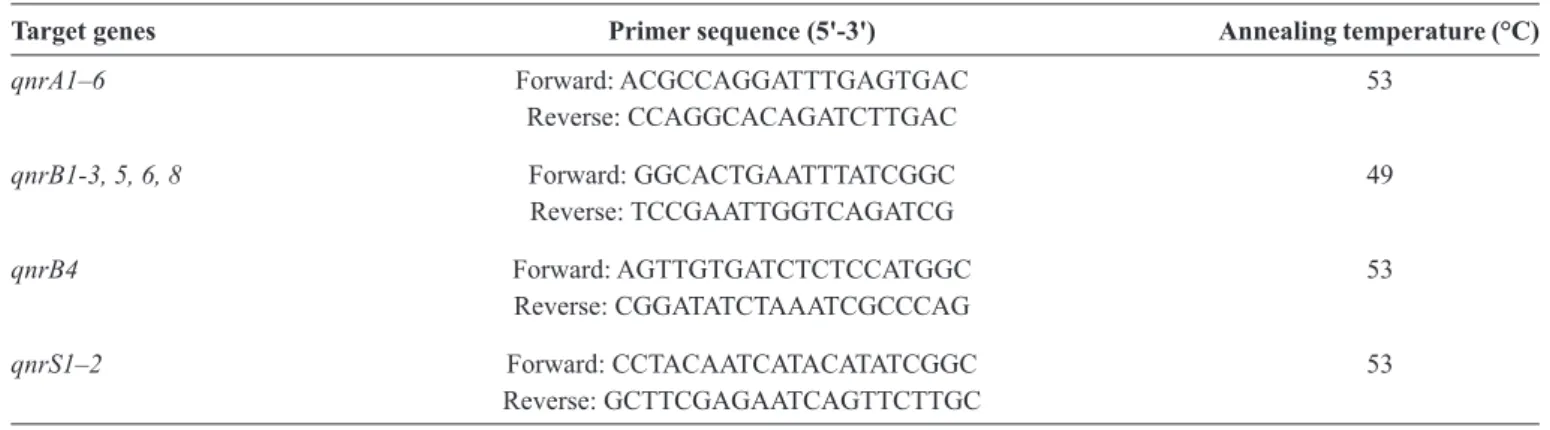
TABLE 1 -Primers used for the detection of qnr genes in Enterobacter cloacae isolates.
Target genes Primer sequence (5'-3') Annealing temperature (°C)
qnrA1–6 Forward: ACGCCAGGATTTGAGTGAC 53
Reverse: CCAGGCACAGATCTTGAC
qnrB1-3, 5, 6, 8 Forward: GGCACTGAATTTATCGGC 49
Reverse: TCCGAATTGGTCAGATCG
qnrB4 Forward: AGTTGTGATCTCTCCATGGC 53
Reverse: CGGATATCTAAATCGCCCAG
qnrS1–2 Forward: CCTACAATCATACATATCGGC 53
Reverse: GCTTCGAGAATCAGTTCTTGC
qnr: quinolone resistance.
other clinical isolates such as Enterobacter spp.(21), Escherichia coli,(23) Salmonella spp.(24), and Citrobacter freundii(25).
To the best of our knowledge, there has been no report so far on the frequency of qnr genes among E. cloacae isolates in
Iran. In this study, for the irst time, we described the frequency of qnr determinants (qnrA, qnrB, and qnrS) among E. cloacae
isolates that are non-susceptible to quinoloneisolates collected from hospitals of the Qazvin, Alborz, and Tehran provinces in Iran. This study emphasizes the need for establishing speciic policies for infection control measures in hospital settings in Iran.
METHODS
Bacterial isolates and antimicrobial susceptibility In this cross-sectional descriptive study, 116 quinolone non-susceptible E. cloacae isolates (one isolate per patient)
were obtained from the clinical samples of patients admitted to the university hospitals of Tehran (seven hospitals), Qazvin (ive hospitals), and Karaj (two hospitals) in Iran. The samples were collected from June 2013 to October 2014. The bacteria were isolated from various clinical specimens including tracheal aspirates, urine, sputum, blood, bronchoalveolar lavage (BAL), wounds, and cerebrospinal luid. Bacterial identiication was initially performed using standard laboratory methods, and the results were then conirmed using the API 20 E (bioMérieux, France) microorganism identiication system. The isolates were stored at -70°C in trypticase soy broth containing 20% glycerol and subcultured twice prior to testing. Written informed consent was obtained from all the patients enrolled in this study. Kirby-Bauer disk diffusion testing was performed according to the Clinical Laboratory Standards Institute (CLSI) guideline to detect quinolone resistance using nalidixic acid (10µg) and ciproloxacin (5µg)(26). The antibiotic disks were purchased from the Mast (Mast Diagnostics Group Ltd, Merseyside, UK). If resistance to both the antibiotics was detected, the isolates were classiied as showing high-level quinolone resistance. On the other hand, nalidixic acid-resistant or -intermediate isolates and ciproloxacin-susceptible isolates were classiied as showing low-level quinolone resistance(13). Escherichia coli American Type Culture Collection (ATCC) 25922 and Pseudomonas
aeruginosa ATCC 27853 were used as the quality control strains
for antimicrobial susceptibility testing.
PCR and sequencing of qnr-encoding genes
All the isolates were subjected to PCR for the detection of the qnrA, qnrB, and qnrS PMQR genes using speciic primers (Table 1)(27).Plasmid DNA was extracted using the plasmid mini
extraction kit (Bioneer Company, Korea).
PCR ampliications were performed in a thermocycler (Applied Biosystems, USA) as follows: 95°C for 5 min and 35 cycles of 1 min at 95°C, 1 min at speciic annealing temperature for each primer and 1 min at 72°C. A inal extension step of 10 min at 72°C was performed. The reaction mixtures were prepared in a total volume of 25μl (24μl of PCR master mix plus 1μl of template DNA) including 5ng of genomic DNA, 2.0U of Taq DNA polymerase, 10mM dNTP mix at a inal concentration of 0.2mM, 50mM MgCl2 at a inal concentration of 1.5mM, 1μM of each primer, and 10X PCR buffer in inal concentration of 1X.
The PCR products were electrophoresed on 1% agarose gel at 100 volts and were then stained with ethidium bromide solution and visualized in a gel documentation system (UVtec, UK). The puriied PCR products were sequenced by the Macrogen Company (Seoul, Korea), and sequence alignment and analysis were performed online using the Basic Local Alignment Search Tool (BLAST) program of the National Center for Biotechnology Information (http://blast.ncbi.nlm.nih.gov/Blast.cgi).
Molecular typing by enterobacterial repetitive intergenic consensus-PCR
All the qnr-positive E. cloacae isolates were tested for
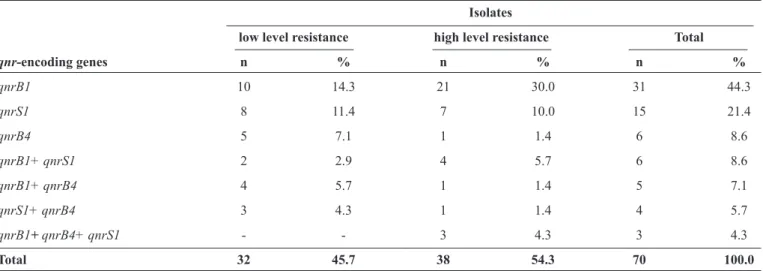
TABLE 2 - Distribution of the qnrB1, qnrB4, and qnrS1 genes among 70 qnr-positive Enterobacter cloacae isolates. Isolates
low level resistance high level resistance Total
qnr-encoding genes n % n % n %
qnrB1 10 14.3 21 30.0 31 44.3
qnrS1 8 11.4 7 10.0 15 21.4
qnrB4 5 7.1 1 1.4 6 8.6
qnrB1+qnrS1 2 2.9 4 5.7 6 8.6
qnrB1+qnrB4 4 5.7 1 1.4 5 7.1
qnrS1+qnrB4 3 4.3 1 1.4 4 5.7
qnrB1+ qnrB4+ qnrS1 - - 3 4.3 3 4.3
Total 32 45.7 38 54.3 70 100.0
qnr: quinolone resistance.
Statistical analysis
Statistical analysis was performed for descriptive statistics including frequencies and cross tabulation of microbiological, clinical, and demographic characteristics using the computer software program Statistical Package for the Social Sciences (SPSS) version 16.
RESULTS
During the study period, 116 quinolone non-susceptible
E. cloacae isolates were recovered from different clinical
specimens; 42 (36.2%) were isolated from urine specimens, 28 (24.1%) from wound specimens, 18 (15.5%) from tracheal specimens, 17 (14.7%) from blood specimens, 5 (4.3%) from sputum specimens, 4 (3.4%) from bronchoalveolar lavage specimens, and 2 (1.7%) from cerebrospinal luid specimens. The isolates were obtained from 47 (40.5%) patients admitted to ICUs, 31 (26.7%) from those admitted to the internal medicine ward, 14 (12.1%) from the infectious diseases ward, 9 (7.8%) from the surgery ward, 9 (7.8%) from the orthopedic ward, and 6 (5.2%) from the neurology ward. The mean age of the patients was 51.7 ± 17.4 years (range: 17-83 years); 69 (59.5%) patients were male and 47 (40.5%) were female.
The results of the disk diffusion test showed that 93 (80.2%) isolates were fully resistant to nalidixic acid and 23 (19.8%) showed intermediate resistance. Forty-three (37.1%) isolates were fully resistant to ciproloxacin and 2 (1.7%) showed intermediate resistance to it. In total, 45 (38.8%) and 71 (61.2%) isolates showed high- and low-level quinolone resistance, respectively.
PCR and sequencing revealed that the qnr-encoding genes
were present in 70 (60.3%) of the quinolone non-susceptible
E. cloacae isolates; among them, qnrB1 [45 (38.8%) isolates]
was the most commonly detected gene, followed by qnrS1
[28 (24.1%) isolates] and qnrB4 [18 (15.5%) isolates] either
alone or in combination with other genes. The qnrB1 gene
was found to coexist with qnrS1 in 6 (8.6%) isolates; 5 (7.1%)
isolates also carried both qnrB1 and qnrB4, and 3 (4.3%)
isolates carried the qnrS1, qnrB1, and qnrB4 genes. In this
study, the presence of the qnrA gene was not detected. In total,
38 (54.3%) isolates showing high-level quinolone resistance and 32 (45.7%) showing low-level quinolone resistance carried the
qnr genes. The most common gene found among the isolates
showing high- and low-level quinolone resistance was qnrB1 (Table 2). qnr-positive isolates were mostly recovered from
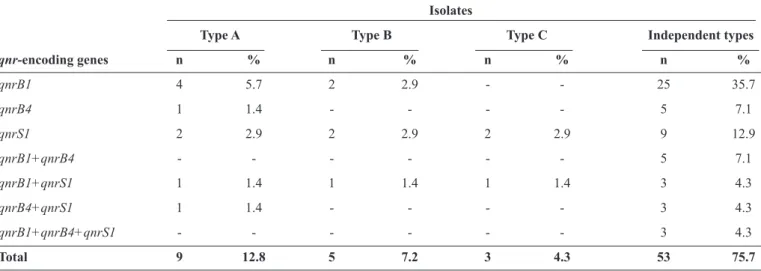
wound specimens (19%), followed by urine samples (15.5%). The patients infected by these organisms were mostly admitted to the ICU (26.7%) and the internal medicine (12.1%) wards (Table 3). The ERIC-PCR results revealed that 53 (75.7%) qnr-encoding isolates showed different genotypes and had
distinct ERIC-PCR patterns, indicating clear heterogeneity in their genetic proiles (Table 4).
DISCUSSION
Enterobacter cloacae has been increasingly recognized as
a clinically signiicant nosocomial pathogen(29). Quinolones are among the most commonly prescribed antimicrobials for the treatment of serious infections caused by E. cloacae and
other members of the Enterobacteriaceae family. However, the development of resistance to these antibiotics in the causative bacteria has complicated treatment and may lead to treatment failures(30). In recent years, PMQR has been reported in several studies, especially in enterobacteria(8). However, there is limited data on the prevalence of qnr genes among enterobacteria
isolates in Iran(14) (31). To the best of our knowledge, this is the irst report on the detection of qnrB1, qnrB4, and qnrS1 determinants
among quinolone non-susceptible E. cloacae isolates in Iran.
The present study demonstrated a high (60.3%) prevalence of PMQR determinants among quinolone non-susceptible
E. cloacae isolates collected from several educational hospitals
TABLE 4 - Enterobacterial repetitive intergenic consensus-PCR result of the 70 qnr-positive Enterobacter cloacae isolates.
Isolates
Type A Type B Type C Independent types
qnr-encoding genes n % n % n % n %
qnrB1 4 5.7 2 2.9 - - 25 35.7
qnrB4 1 1.4 - - - - 5 7.1
qnrS1 2 2.9 2 2.9 2 2.9 9 12.9
qnrB1+qnrB4 - - - 5 7.1
qnrB1+qnrS1 1 1.4 1 1.4 1 1.4 3 4.3
qnrB4+qnrS1 1 1.4 - - - - 3 4.3
qnrB1+qnrB4+qnrS1 - - - 3 4.3
Total 9 12.8 5 7.2 3 4.3 53 75.7
PCR: polymerase chain reaction; qnr: quinolone resistance.
TABLE 3 - Frequency of detection of the 70 qnr-positive Enterobacter cloacae isolates based on hospital wards and source of clinical specimens.
Isolates Isolates
Wards n % Specimens n %
ICU 31 26.7 Wound 22 19.0
Internal medicine 14 12.1 Urine 18 15.5
Orthopedic 7 6.0 Trachea 14 12.1
Neurology 7 6.0 Blood 11 9.5
Infectious diseases 6 5.2 Sputum 4 3.4
Surgery 5 4.3 BAL 1 0.9
ICU: intensive care unit; BAL: bronchoalveolar lavage.
prevalence rate reported in our study is lower than that reported by Bouchakour et al. in their study in Morocco, in which 62.5% of the E. cloacae isolates were found to carry qnr determinants(35).
This may indicate that the rate of PMQR is increasing among enterobacteria. In a previous study, we reported that 53 (44.2%) of the E. cloacae isolates studied were extended-spectrum
β-lactamase (ESBL) producers(36). Taken together, these data suggest that inappropriate and extensive use of broad-spectrum antibiotics has resulted in the emergence of resistant isolates in our hospital settings. Moreover, the high resistance rate found among the isolates in this study emphasizes the need for a local and national antimicrobial resistance surveillance system for monitoring the administration of antimicrobials and emergence of antibiotic resistance in bacterial isolates present in our hospital settings. The data on antibiotic resistance received from the hospital infection and antibiotic control committees can help encourage physicians to discontinue excessive use of antibiotics, which will eventually lead to better preventive measures for controlling hospital infections.
Moreover, we found that 54.3% of the qnr-positive isolates
in this study showed high-level quinolone resistance. Since PMQR determinants confer only low-level resistance to quinolones, we hypothesize that the high-level resistance pattern is due to another mechanism such as chromosomal mutation; however, we could not test this hypothesis in the present study. Further, most of the qnr-positive E. cloacae isolates were
frequently collected from patients admitted to ICUs, which is consistent with the reports of some previous studies(37) (38). This result suggests that prolonged stay in ICUs, exposure to broad-spectrum antibiotics, chronic underlying conditions, and the use of invasive techniques and devices might predispose patients to infections caused by the aforementioned quinolone-resistant isolates.
In the present study, 38.8%, 24.1%, and 15.5% of the quinolone non-susceptible E. cloacae isolates carried the qnrB1, qnrS1, and qnrB4 genes, respectively, alone or in
REFERENCES
1. Sanders Jr WE, Sanders CC. Enterobacter spp.: pathogens poised
to lourish at the turn of the century. Clin Microbiol Rev 1997; 10:220-241.
2. Lin YC, Chen TL, Ju HL, Chen HS, Wang FD, Yu KW, et al. Clinical characteristics and risk factors for attributable mortality in Enterobacter cloacae bacteremia. J Microbiol Immunol Infect
2006; 39:67-72.
3. Kuboyama RH, Oliveira HB, Moretti-Branchini ML. Molecular epidemiology of systemic infection caused by Enterobacter cloacae in a high-risk neonatal intensive care unit. Infect Control
Hosp Epidemiol 2003; 24:490-494.
4. Becnel Boyd L, Maynard MJ, Morgan-Linnell SK, Horton LB, Sucgang R, Hamill RJ, et al. Relationships among ciproloxacin, gatiloxacin, levoloxacin, and norloxacin MICs for luoroquinolone-resistant Escherichia coli clinical isolates.
Antimicrob Agents Chemother 2009; 53:229-234.
5. Khodursky AB, Cozzarelli NR. The mechanism of inhibition of topoisomerase IV by quinolone antibacterials. J Biol Chem 1998; 273: 27668-27677.
6. Chen CH, Huang CC. Risk factor analysis for extended-spectrum beta-lactamase-producing Enterobacter cloacae bloodstream
infections in central Taiwan. BMC Infect Dis 2013; 13:417. 7. Lockhart SR, Abramson MA, Beekmann SE, Gallagher G, Riedel
S, Diekema DJ, et al. Antimicrobial resistance among Gram-negative bacilli causing infections in intensive care unit patients in the United States between 1993 and 2004. J Clin Microbiol 2007; 45:3352-3359.
8. Strahilevitz J, Jacoby GA, Hooper DC, Robicsek A. Plasmid-mediated quinolone resistance: a multifaceted threat. Clin Microbiol Rev 2009; 22:664-489.
9. Poirel L, Nguyen TV, Weintraub A, Leviandier C, Nordmann P. Plasmid-mediated quinolone resistance determinant qnrS in Enterobacter cloacae. Clin Microbiol Infect 2006; 12:1021-1023.
10. Wu JJ, Ko WC, Tsai SH, Yan JJ. Prevalence of plasmid-mediated quinolone resistance determinants QnrA, QnrB, and QnrS among clinical isolates of Enterobacter cloacae in a Taiwanese hospital.
Antimicrob Agents Chemother 2007; 51:1223-1227.
11. Kanamori H, Yano H, Hirakata Y, Hirotani A, Arai K, Endo S, et al. Molecular characteristics of extended-spectrum beta-lactamases and qnr determinants in Enterobacter species from Japan.
PLoS One 2012; 7:e37967.
12. Zhang R, Ichijo T, Huang YL, Cai JC, Zhou HW, Yamaguchi N, et al. High prevalence of qnr and aac(6')-Ib-cr genes in both
water-borne environmental bacteria and clinical isolates of Citrobacter freundii in China. Microbes Environ 2012; 27:158-163.
13. Oktem IM, Gulay Z, Bicmen M, Gur D. qnrA prevalence in extended-spectrum beta-lactamase-positive Enterobacteriaceae isolates from Turkey. Jpn J Infect Dis 2008; 61:13-17.
14. Pakzad I, Ghafourian S, Taherikalani M, Sadeghifard N, Abtahi H, Rahbar M, et al. qnr prevalence in extended spectrum beta-lactamases (ESBLs) and none-ESBLs producing Escherichia coli
isolated from urinary tract infections in central of Iran. Iran J Basic Med Sci 2011; 14:458-464.
15. Iabadene H, Messai Y, Ammari H, Ramdani-Bouguessa N, Lounes S, Bakour R, et al. Dissemination of ESBL and Qnr determinants in Enterobacter cloacae in Algeria. J Antimicrob Chemother
2008; 62:133-136.
16. Tran JH, Jacoby GA. Mechanism of plasmid-mediated quinolone resistance. Proc Natl Acad Sci U S A 2002; 99:5638-5642. in Iran, Pakzad et al.(14) reported that 9 (37.5%) and 4 (20.8%) of
the ESBL-producing E. coli isolates studied were positive for the qnrA and qnrB genes, respectively(14). In another study conducted
in Iran, Saboohi et al.(31) showed the presence of the qnrA (25.8%), qnrB1 (1.2%), and qnrS (1.2%) genes among ESBL-producing Salmonella isolates(31). In Taiwan, Wu et al.(10) reported that
10.1%, 6.5%, and 0.6% of the clinical E. cloacae isolates studied
contained the qnrB2, qnrS1, and qnrA1 genes, respectively(10).
In the United States, Robicsek et al.(34) showed that 20% and 11% of the Enterobacter isolates studied harbored the qnrA and qnrB genes, respectively(34). In Algeria, Iabadene et al.(15) reported
the presence of qnrB1, qnrB4, and qnrS1 in clinical isolates of E. cloacae(15). Dahmen et al. from Tunisia reported that qnrB1 was the
most prevalent gene among E. cloacae isolates, followed by qnrB2
and qnrS1, whereas qnrA was more prevalent among K. pneumoniae
isolates(32). Thus, to the best of our knowledge, this is the irst report on the detection of the qnrS1, qnrB4, and qnrB1 genes among E. cloacae isolates collected from three distinct provinces of Iran.
In addition, the ERIC-PCR analysis conducted in this study showed that more than 75% of the qnr-positive isolates were
epidemiologically unrelated, suggesting that the dissemination of
qnr-positive isolates was not due to a clonal outbreak. This is in
agreement with the fact that the isolates in the present study were collected from seven hospitals in Tehran, ive hospitals in Qazvin, and two hospitals in Karaj – three different locations in Iran.
In conclusion, the results of this study revealed a high prevalence of PMQR due to the presence of qnr genes among
clinical isolates of E. cloacae in Iran. The emergence and spread
of these resistance determinants in clinical settings raises serious concerns about infection control management and antibiotic therapy. The fact that PMQR determinants confer only low-level resistance to quinolones and our inding that 54.3% of the
qnr-positive isolates in our study showed high-level quinolone
resistance suggest that another mechanism such as chromosomal mutation may be responsible for the high-level resistance observed. This hypothesis needs to be tested in future studies. Limitation of our study was laboratory resources. Nevertheless, our indings highlight the need for adopting appropriate infection control policies formulated by infection control committees and rational antibiotic administration by physicians to reduce the further spread of these resistant bacteria in our hospitals.
Acknowledgments
The authors would like to appreciate the acting head and the staff of the Cellular and Molecular Research Center, Qazvin University of Medical Sciences, for providing assistance for completing this research project.
Conlict of interest
The authors declare that there is no conlict of interest.
Financial Support
17. Tran JH, Jacoby GA, Hooper DC. Interaction of the plasmid-encoded quinolone resistance protein Qnr with Escherichia coli
DNA gyrase. Antimicrob Agents Chemother 2005; 49:118-125. 18. Merens A, Matrat S, Aubry A, Lascols C, Jarlier V, Soussy CJ, et
al. The pentapeptide repeat proteins MfpAMt and QnrB4 exhibit opposite effects on DNA gyrase catalytic reactions and on the ternary gyrase-DNA-quinolone complex. J Bacteriol 2009; 191:1587-1594. 19. Garnier F, Raked N, Gassama A, Denis F, Ploy MC. Genetic
environment of quinolone resistance gene qnrB2 in a complex
sul1-type integron in the newly described Salmonella enterica serovar
Keurmassar. Antimicrob Agents Chemother 2006; 50:3200-3202. 20. Vien le TM, Abuoun M, Morrison V, Thomson N, Campbell
JI, Woodward MJ, et al. Differential phenotypic and genotypic characteristics of qnrS1-harboring plasmids carried by hospital
and community commensal enterobacteria. Antimicrob Agents
Chemother 2011; 55:1798-1802.
21. Cattoir V, Poirel L, Nordmann P. Plasmid-mediated quinolone resistance determinant QnrB4 identiied in France in an
Enterobacter cloacae clinical isolate coexpressing a QnrS1
determinant. Antimicrob Agents Chemother 2007; 51:2652-2653. 22. Martinez-Martinez L, Pascual A, Jacoby GA. Quinolone resistance
from a transferable plasmid. Lancet 1998; 351:797-799.
23. Hassan WM, Hashim A, Domany R. Plasmid mediated quinolone resistance determinants qnr, aac(6')-Ib-cr, and qep in
ESBL-producing Escherichia coli clinical isolates from Egypt. Indian J
Med Microbiol 2012; 30:442-447.
24. Kim JH, Cho JK, Kim KS. Prevalence and characterization of plasmid-mediated quinolone resistance genes in Salmonella
isolated from poultry in Korea. Avian Pathol 2013; 42: 221-229. 25. Shao Y, Xiong Z, Li X, Hu L, Shen J, Li T, et al. Prevalence
of plasmid-mediated quinolone resistance determinants in
Citrobacter freundii isolates from Anhui province, PR China.
J Med Microbiol 2011; 60:1801-1805.
26. Clinical and Laboratory Standards Institute Performance standards for antimicrobial susceptibility testing. Tewnty-third informational supplement M100-S23 2013. Wayne, PA: CLSI, 2013.
27. Lavilla S, Gonzalez-Lopez JJ, Sabate M, Garcia-Fernandez A, Larrosa MN, Bartolome RM, et al. Prevalence of qnr genes among
extended-spectrum beta-lactamase-producing enterobacterial isolates in Barcelona, Spain. J Antimicrob Chemother 2008; 61:291-295. 28. Smith JL, Drum DJ, Dai Y, Kim JM, Sanchez S, Maurer JJ,
et al. Impact of antimicrobial usage on antimicrobial resistance in
commensal Escherichia coli strains colonizing broiler chickens.
Appl Environ Microbiol 2007; 73:1404-1414.
29. Fernandez A, Pereira MJ, Suarez JM, Poza M, Trevino M, Villalon P, et al. Emergence in Spain of a multidrug-resistant Enterobacter cloacae clinical isolate producing SFO-1 extended-spectrum
beta-lactamase. J Clin Microbiol 2011; 49:822-828.
30. Sahm DF, Critchley IA, Kelly LJ, Karlowsky JA, Mayield DC, Thornsberry C, et al. Evaluation of current activities of luoroquinolones against gram-negative bacilli using centralized
in vitro testing and electronic surveillance. Antimicrob Agents
Chemother 2001; 45:267-274.
31. Saboohi RRN, Razavi M, Aghasadeghi M, Moshiri A, Bahremand A, Kave K, et al. Molecular detection and association of qnrA, qnrB, qnrS and blaCMY resistance genes among clinical isolates of Salmonella spp. in Iran. Advances in Microbiology 2014; 4:63-68.
32. Dahmen S, Poirel L, Mansour W, Bouallegue O, Nordmann P. Prevalence of plasmid-mediated quinolone resistance determinants in Enterobacteriaceae from Tunisia. Clin Microbiol Infect 2010;
16:1019-1023.
33. Kim HB, Park CH, Kim CJ, Kim EC, Jacoby GA, Hooper DC. Prevalence of plasmid-mediated quinolone resistance determinants over a 9-year period. Antimicrob Agents Chemother 2009; 53:639-645. 34. Robicsek A, Strahilevitz J, Sahm DF, Jacoby GA, Hooper DC. qnr
prevalence in ceftazidime-resistant Enterobacteriaceae isolates from
the United States. Antimicrob Agents Chemother 2006; 50:2872-2874. 35. Bouchakour M, Zerouali K, Gros Claude JD, Amarouch H, El
Mdaghri N, Courvalin P, et al. Plasmid-mediated quinolone resistance in expanded spectrum beta lactamase producing enterobacteriaceae
in Morocco. J Infect Dev Ctries 2010; 4:779-803.
36. Peymani A, Farivar TN, Sanikhani R, Javadi A, Najaipour R. Emergence of TEM, SHV, and CTX-M-extended spectrum beta-lactamases and class 1 integron among Enterobacter cloacae
isolates collected from hospitals of Tehran and Qazvin, Iran. Microb Drug Resist 2014; 20:424-430.
37. Bado I, Cordeiro NF, Robino L, Garcia-Fulgueiras V, Seija V, Bazet C, et al. Detection of class 1 and 2 integrons, extended-spectrum beta-lactamases and qnr alleles in enterobacterial isolates from the
digestive tract of Intensive Care Unit inpatients. Int J Antimicrob Agents 2010; 36: 453-458.
38. Jonas D, Biehler K, Hartung D, Spitzmuller B, Daschner FD. Plasmid-mediated quinolone resistance in isolates obtained in german intensive care units. Antimicrob Agents Chemother 2005; 49:773-775.
ERRATUM
Revista da Sociedade Brasileira de Medicina Tropical/Journal of the Brazilian Society of Tropical Medicine
49(3):286-291, May-June, 2016 - P.286
Should read:
[1]. Celular e Molecular Research Center, Qazvin Universidade de Ciências Médicas, Qazvin, Iran.