MUTANTS GENERATED BY SPONTANEOUS AND INDUCED FOREWORD MUTATIONS AT SEVERAL GENE LOCI IN ASPERGILLUS NIGER
Ghassan J. M. Kanan*, Heyam E. Al-Najjar
Department of Biological Sciences, Mu’tah University, Karak – Jordan, P. O. Box (7)
Submitted: April 25, 2009; Returned to authors for corrections: March 18, 2010; Approved: June 21, 2010.
ABSTRACT
We aimed her mainly to evaluate the contribution of newly employed bromate selection system, in
obtaining new Aspergillus niger nitrate/nitrite assimilation defective mutants, through Ultraviolet treatment (UV), 1, 2, 7, 8-Diepoxyoctane (DEO), phenols mixture (Phx)) and spontaneous treatments. The newly employed bromate selection system was able to specify only two putative novel mutant types designated brn (bromate resistant but chlorate sensitive (RS) strain, which may specify nitrite specific transporter) and cbrn mutants (bromate resistant and chlorate resistant strain, which may specify nitrate/nitrite bispecific system). The most relevant and innovative findings of this research work involve the isolation of the RR (cbrn) mutants (a new type of nitrate assimilation defective mutants), that could be useful for studying the
bispecific nitrate /nitrite transporter system. The majority of obtained bromate resistant mutants (93.3% of the total mutants obtained by all treatments) were of the brn type, whereas the remaining percentage (6.76%) was given to cbrn strains. The highest percentages of brn mutant strains (48% and 58.6% of the total RS strains) were obtained with UA after spontaneous and Phx treatment, whereas Trp has generated 29% and 42% of RS strains after UV and DEO treatments, respectively. The obtained ratios of cbrn mutants were higher (i.e. in the range of 8.4%-11.64% of the total bromate mutants) with chemical treatments, especially when U.A or Pro was serving as sole N-sources at 25ºC rather than 37ºC. A 69% mutants` yield of Aspergillus niger mutant strains representing nine gene loci (niaD, cnx-6 loci, nrt and nirA) were selected on the bases of chlorate (600 mM) toxicity. All chlorate resistant mutants were completely sensitive to bromate (250 mM). The niaD mutants showed the highest percentage (73.97%) of chlorate resistant mutants obtained with all tested treatments. The UV treatment has generated the highest ratio (86.9%) of niaD mutants, whereas, the least (61%) was obtained with Phx treatment. The highest percentage of cnx mutants (32%) was obtained with Phx treatment. The DEO treatment as compared to other tested treatments was the best to use for obtaining the highest ratios of either nrt (13.8%) mutants or nirA (1.9%) mutants.
Key words:Aspergillus niger. chlorate. bromate. mutagenesis
1100
Kanan, G.J.M. et al. Isolation and Growth Characterization of Resistant Mutants in A. nigerINTRODUCTION
Theblack mould Aspergillus niger has been subjected to various research and industrial uses for several decades since 1919, where its utility comes from strains ability to produce high levels of enzymes (8, 33). However, manymutant strains deficient in nitrate assimilation were isolated on the bases of chlorate toxicity through spontaneous and induced mutagenesis (5, 13, 16). Six phenotypic classes of chlorate resistant mutants (nrtA, niiA, niaD, cnx, nirA and areA)were characterized and designated as in Aspergillus nidulans (9, 13, 20). Genetic studies revealed that niaD and niiA genes are the structural gene for nitrate and nitrite reductase enzymes respectively, (11, 31). The transcription of both genes depends on two positively acting transcription factors, one is encoded by the nirA gene, (mediates nitrate and nitrite induction) and required for efficient transcription of niaD, niiA, and nrtA (6, 27). The second protein is encoded by the areA gene, mediates nitrogen metabolite repression, and is a general transcription factor needed for the efficient transcription of many genes involved in the utilization of different nitrogen sources (12, 20, 21). The cnx genes of A. niger and A. nidulans were found to be required for the biosynthesis of molybdenum cofactor, needed for the activity of both molybdoenzymes (4, 13, 32). Potassium bromate has been classified as a genotoxic carcinogen that induces DNA damage to prokaryotic and eukaryotic mutational test systems (3, 14). In addition, potassium bromate has caused kidney tumor to rodents (23, 36). However, due to its toxilogical effects, there have been a lot of controversies in the use of potassium bromate as a food and beverages additive or as flour improver (24). However, it has been employed here as a new selection system for the isolation of new A. niger nitrate assimilation defective mutants. The mutagen 1, 2, 7, 8-Diepoxyoctane (DEO) is one of the most potent mutagens in a wide variety of mutational test systems, including Salmonella typhimurium (25), Saccharomyces cerevisia (26), A. nidulans (17), and human epithelial cells (34). In addition, Ultraviolet light (UV) has widely been used as a mutagen, where it was able to produce different mutant types in A. niger and A.
nidulans (13, 17, 20). However, the phenols Mixture (Phx) which is usually used as a standard solution for water pollution analysis, was reported as a mutagen and a carcinogenic agent, as listed by US Environmental Protection Agency (EPA) (29). To the best of our knowledge no previous mutagenic research methods were conducted for mutants selection (whether in prokaryotic or eukaryotic mutational test systems), using bromate, in addition to the traditional chlorate resistance selection system. Thus, we aimed here mainly to explore the contribution of newly employed bromate selection system for
obtaining new Aspergillus niger nitrate/nitrite assimilation
defective mutants, that might be useful for studying the
existence of a bispecific nitrate /nitrite transporter system at the
gene level. Furthermore, the current study aimed for
elucidating the influence of mutagenic treatments employed
(DEO, Phx, Ultraviolet and spontaneous treatment), the ten tested nitrogen sources and the selection temperatures (25º C
and 37º C), on the nature of mutants obtained and on mutant
yield.
MATERIALS AND METHODS
Wild-Type Fungal Strain and Media
The wild-type strain (with regard to nitrogen regulation) used for mutants isolation was [IMI60286 (ATCC 10864)]. Gene symbols are those in standard use (7). Standard Aspergillus nidulans growth media and handling techniques were as described by Clutterbuck (7).
Potassium Bromate and Chlorate Toxicity to A. niger Wild-Type Strain
Isolation of A. niger Bromate and/or Chlorate Resistant Mutants by Spontaneous and Induced Mutagenesis
Spontaneous Treatment: Mutant strains were isolated on the basis of chlorate (600 mM) and/or bromate (250 mM) resistance with a sole source of nitrogen as described previously (9). Ten nitrogen sources were used and these include: uric acid (UA), proline (Pro), glutamic acid (Glu), histidine (His), aspartic acid (Asp), arginine (Arg), tyrosine (Tyr), tryptophan (Trp), lysine (Lys) and cystine (Cys). Conidiospores were suspended in 5 mL normal saline-Tween 80 (0.05%), then adjusted to a concentration of 1x10⁸ conidiospores /mL. The 5 mL suspension was added to 20 mL of 0.1 M potassium orthophosphate buffer (pH 5.8) and incubated at room temperature for 40 min. Conidia were pelleted, washed twice with sterile distilled water and resuspended in sufficient volume of saline-Tween 80 solution. The suspension was divided into aliquots of 200 µL each, then plated on glucose supplemented minimal medium containing chlorate (600 mM) or bromate (250 mM), a sole N-source (10 mM) and sodium deoxycholate (0.08%) for colony size restriction (22). Cultured plates were incubated at either 25 ºC or 37 ºC.
Mutagenesis with 1,2,7,8-Diepoxyoctan (DEO): Mutagenesis with Diepoxyoctane was performed as described previously (1, 2) by adding 5 mL conidia (approximately 1x10⁸ conidiospores /mL) to 20 mL of 0.1 M potassium orthophosphate buffer (pH 5.8) containing 12 mg/mL 1,2,7,8-Diepoxyoctane (Aldrich chemical company). Treatment was for 40 min at 37° C. Conidia were pelleted (4233R Refrigerated Centrifuge) at 6000 rpm for 10 min, washed thrice with sterile distilled water and resuspended in sufficient volume of saline-Tween 80 solution. conidiospores were plated on selective madia and incubated as mentioned above.
Mutagenesis with Phenols Mixture (Phx): Mutagenesis with Phx mixture was performed as described above for DEO treatment, except that 12 mg/mL of phenols mixture were added to the conidiospores suspension. The tested Phx mixture was having the following constituents: 2,4-dinitrophenol, phenol, 4-nitrophenol, 2-chlorophenol,
2-methyl-4,6-dinitrophenol, 2-nitrophenol, 2,4-dimethylphenol, 4-chloro-3-methylphenol, 2,4-dichlorophenol, 2,4,6-trichlorophenol, and pentachlorophenol (29).
Mutagenesis with Ultraviolet Light (UV): A 25 mL conidiospores suspension (approximately 1x10⁸ conidiospores /mL) prepared in orthophosphate buffer as mentioned above, was irradiated with ultraviolet light (UV) at an intensity of 20 J/m2/s (UV-lamp UVKL-6U; 254 nm; Vetter GMBH, Wiesloch, Germany) for 40 min at room temperature. After irradiation conidiospores were processed by plating onto selective media as described for the spontaneous treatment.
Selection of Bromate and/or Chlorate Resistant Mutants For confirmation of mutants obtained, the putative mutant strains grown on selective media post mutagenesis were further tested at both selection temperatures, on chlorate (600 mM) and bromate (250 mM) with a sole source of nitrogen (10 mM). Assignment of mutations to their gene loci was carried out according to the criteria described previously by Cove (9) and Kanan (17). The assignment of mutations involved replica plating of mutant strains onto the following media types: (i) potassium bromate (250 mM) with uric acid (5 mM) as the best serving sole nitrogen source, (ii) potassium chlorate (600 mM) with proline (10 mM) as a sole nitrogen source, (iii) potassium nitrate (10 mM), (iv) potassium nitrite (5 mM), (v) hypoxanthine (5 mM).
Statistical Analysis
1102
Kanan, G.J.M. et al. Isolation and Growth Characterization of Resistant Mutants in A. nigerRESULTS
Potassium Bromate and Chlorate Toxicity to A. niger Wild-Type Strain
Results obtained indicate that bromate and chlorate toxicity to A. niger wild-type strain were achieved at a concentration of 250 mM and 600 mM respectively, where complete inhibition of fungal growth was reached.
Conidiospores Viability Assays After Mutagenic Treatments
Viability tests were performed concurrently with mutagenic treatments and the estimated viabilities in term of survivals/mL for spontaneous, DEO, Phx and UV treatments were 8.0x10⁴, 1.5x10⁵, 2.8x10⁵ and 3.3x10,5 respectively. However, the percentages of survivals after indicated treatments have reached approximately 100%, 35.4%, 50.32% and 56.63%, respectively.
Effect of Treatments on Proportions of Chlorate Resistant Mutant Classes
Results presented in Table 1 indicate that a sum of 6139 nitrate assimilation defective mutant strains (i.e. 68.98% mutants` yield) in nine different loci (niaD, cnx-6 loci, nrt and nirA genes) were isolated on the bases of chlorate (600 mM) toxicity using four mutagenic treatments. However, the obtained mutants` yield (expressed as percentages) after spontaneous, DEO, Phx and UV treatments, were 47.9%; 90%; 68%; and 93.4%, respectively (Table 1). These mutants were chlorate resistant (600 mM) but bromate (250 mM) sensitive strains (designated SR-type). The chlorate resistant mutant strains were selected at two temperature regimes (25º C and 37º C). However, results of T-test indicate that the selection temperature has not significantly influenced the ratios of generated mutants with either spontaneous treatment (P values ranged from 0.761-0.942) or UV treatment (P values ranged from 0.226-0.398). The selection at these temperatures (25º C and 37º C) did not significantly influence the ratios of generated mutants when Arg, His, Pro, Glu, Asp and Tyr were
UV treatment had significantly influenced the ratios of niaD, cnx and nirA mutants (but not that of nrt mutants), where the calculated F values for these mutants (185.05, 126.95 and 36.17 respectively), were higher than the tabulated F value (4.07) at df1 and df44. Results of one way ANOVA indicate that the used N-source with all mutagenic treatments had significantly (P values ranged from 0.001-0.026) influenced the ratios of obtained mutants in the investigated gene loci (niaD, cnx, nrt ) except nirA gene (P values ranged from 0.098-0.165). The niaD mutants as compared to other mutant classes have represented the highest percentage (73.97% of total mutants) of mutants yield obtained with all treatments. The obtained yields of niaD mutants were 86.9%; 72.5%; 71.2% and 61% with UV, spontaneous, DEO and Phx treatment, respectively. Presented results (Table 1) indicate that the amino acid Lys was serving as the best sole source of nitrogen for obtaining niaD mutants with all mutagenic treatments (except for Pro where, a 93% mutants` yield was obtained with UV treatment), where a percentage of 84% to 90% of the total confirmed mutants was achieved with Lys. However, these percentages of mutants have reflected 3.4% to 17.5% of the total niaD mutants produced under indicated conditions. Furthermore, results of Post Hoc (Tukey) multiple comparisons indicate that all N-sources (except Cys and UA) which were used with the spontaneous treatment had significantly (P<0.05) influenced the ratios of generated niaD mutants. The highest percentage of niaD mutants (84% of the total confirmed mutants) was obtained with Lys while the least (69%) was generated with Pro. In addition, there were significant differences (P values ranged from 0.011-0.033) in niaD ratios obtained with His and those obtained with UA, Trp and Tyr after Phx treatment, where the highest percentage of mutants` yield (61%) was obtained with His. Moreover, there were significant differences (P values ranged from 0.014-0.045) in niaD mutants obtained with Pro (comprising 93%) and ratios generated with UA, Trp or Tyr after UV treatment. The use of Arg, Glu and Pro as sole sources of nitrogen with DEO treatment did not reflect significant difference in obtained ratios of niaD muants (P values ranged from 0.997-1.000).
1104
Kanan, G.J.M. et al. Isolation and Growth Characterization of Resistant Mutants in A. nigertreatment and those obtained with the rest of tested N-sources, where the highest proportion from the total confirmed mutants was generated with Arg. In contrast, nirA mutants` yield was found to be the least obtained (1.9%) with all tested treatments, where a range from 0.0% (with UV treatment) to 4.4% (with DEO treatment) mutants` yield from the total confirmed mutants generated by the specified treatment was achieved (Table 1).
There were siginificant differences (P values in the range of 0.006-0.034) in ratios of nrt mutants and nirA mutants obtained with Arg and those obtained with Lys, UA, Trp and Tyr after Phx treatment. The former amino acid has participated in the generation of the highest mutants` yield for nrt mutants (6.5%) and nirA mutants (3.5%), while the latter amino acids have generated the least percentages (Table 1).
Table 1. Numbers and percentages of confirmed chlorate (600 mM) resistant Aspergillus niger mutant classes generated after spontaneous and induced mutagenic treatments.
Spontaneous Treatment
Confirmed mutant classes niaD mutants cnx mutants nrt mutants nirA mutants N-source a
No % No % No % No % No %
Arg 300 17.4 216 72 57 19 24 8 3 1
His 250 14.5 193 77 35 14 17 6.8 5 2
Lys 50 2.9 42 84 6 12 2 4 - -
Pro 250 14.5 172 69 65 26 10 4 3 1
U.A 50 2.9 34 68 15 30 1 2 - -
Glu 300 17.4 231 77 51 17 12 4 6 2
Asp 300 17.4 210 70 81 27 6 2 3 1
Trp 100 5.8 64 64 32 32 4 4 - -
Tyr 125 7.2 88 71 33 26 4 3 - -
Cys - - - -
Total No of mutants 1725 1250 375 80 20
DEO Treatment N-source
Confirmed mutant classes No of niaD No of cnx No of nrt No of nirA
No % No % No % No % No %
Arg 275 20.3 180 65.5 15 5.5 50 18 5 1.8
His 125 9.2 78 62 14 11 25 20 8 6.4
Lys 50 3.7 42 84 3 6 5 10 - -
Pro 225 16.6 165 73 29 12.9 18 8 13 5.8
U.A 50 3.7 28 56 14 28 7 14 1 2
Glu 225 16.6 177 78.7 16 7 23 10 9 4
Asp 175 12.9 133 76 29 16.6 9 5 5 3
Trp 125 9.2 84 67 8 6 24 19 9 7
Tyr 50 3.7 33 66 6 12 9 18 2 4
Cys 75 5.5 45 60 12 16 16 21 7 9
Total No of mutants 1356 965 146 186 59
Phx Treatment N-source
Total mutants No of niaD No of cnx No of nrt No of nirA
No % No % No % No % No %
Arg 200 15.6 98 49 82 41 13 6.5 7 3.5
His 300 23.4 183 61 96 32 15 5 6 2
Lys 50 3.9 42 84 6 12 1 2 1 2
Pro 200 15.6 124 62 64 32 6 3 6 3
U.A 25 2 15 60 8 32 1 4 1 4
Glu 200 15.6 128 64 56 28 8 4 8 4
Asp 200 15.6 132 66 60 30 4 2 4 2
Trp 50 3.9 30 60 17 34 2 4 1 2
Tyr 50 3.9 31 62 16 32 2 4 1 2
Cys - - - -
Total No of mutants 1283 783 413 52 35
UV Treatment
Total mutants No of niaD No of cnx No of nrt No of nirA
N-source
No % No % No % No % No %
Arg 250 19.5 199 79.6 36 14.4 19 7.6 - -
His 300 23.4 256 85 27 9 15 5 - -
Lys 100 7.8 88 88 8 8 4 4 - -
Pro 350 27.3 325 93 18 5 7 2 - -
U.A 25 2 21 84 3 12 1 4 - -
Glu 300 23.4 264 88 23 8 12 4 - -
Asp 300 23.4 270 90 21 7 7 2 - -
Trp 100 7.8 76 76 20 20 4 4 - -
Tyr 50 3.4 42 84 6 12 2 4 - -
Cys - - - -
Total No of mutants 1775 1543 159 73 -
Mutant strains were selected at two temperature regimes (25 ºC and 37ºC) on glucose supplemented minimal medium containing potassium chlorate (600 mM) and a sole N-source (10 mM). a Arg denotes Arginine; His: Histidine; Lys:Lysine; Pro: Proline; U.A: Uric acid; Glu: Glutamic acid; Asp: Aspartic acid;
Effect of applied Treatments on Proportions of Bromate Resistant Mutants
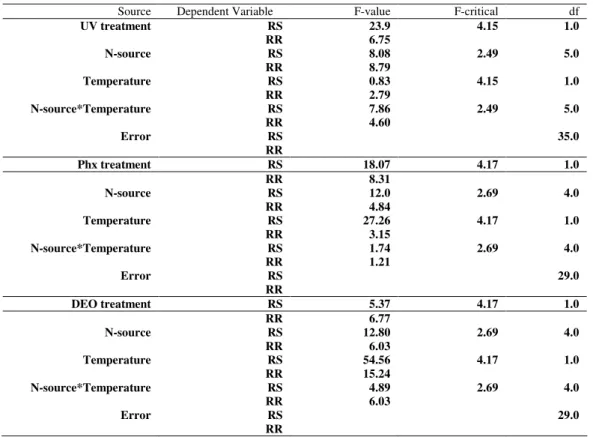
Results presented in Table 2 indicate that 976 mutant strains from a total of 1530 (i.e. 63.8%) screened colonies were isolated on the bases of bromate resistance (250 mM), after four mutagenic treatments (i.e. spontaneous; DEO; Phx and UV treatment). However, the obtained mutants' yield after spontaneous, DEO, Phx and UV treatments were 7.5%, 76.8%, 85.6% and 88%, respectively. The selected mutants were found to represent two phenotypic classes. The first, showed high resistance to bromate but complete sensitivity to chlorate (RS-type) and these were designated brn mutant strains (i.e. bromated resistant nitrate utilizing). The second type of mutants showed high resistance to both selective agents (i.e. bromate and chlorate; RR-type) and designated cbrn strains (chlorate and bromated resistant nitrate utilizing). The brn mutant strains were found to constitute 93.3% of the total confirmed mutants, whereas cbrn strains have constituted just 6.76%. However, the highest percentages of RS mutants (i.e. 58.6% and 48%; expressed as percentages from the total confirmed RS strains) were obtained with UA after spontaneous and Phx treatments, whereas Trp has generated 29% and 42% of Rs strains after UV and DEO treatments, respectively (Table 2). Results of multivariate ANOVA indicate that the selection temperature, the used N-source with the treatments and the interaction between both factors have significantly influenced the ratios of mutants generated after spontaneous, DEO, Phx and UV treatments. Consequently, results presented in Table 3 indicate that the calculated F -values for strains with the RS and the RR phenotypes were significantly higher than the tabulated F-values in all tested treatments. Results indicate that three (UA, Pro, and Trp) out of ten tested N-sources have served effectively as sole sources of nitrogen with all treatments. Uric acid (UA) was serving at 25º C rather than 37º C as sole N-source with all treatments except with Phx treatment, where the selection of mutants was successful at both temperatures (25º C and 37º C). The generated mutants' yields with UA were 60%, 39%, 50% and 28% after spontaneous, DEO, Phx and UV treatments,
1106
Kanan, G.J.M. et al. Isolation and Growth Characterization of Resistant Mutants in A. nigerhighly influenced by the N-source used, where the calculated F-value i.e. 8.08 and 8.79 for RS and RR phenotypes, respectively were higher than the tabulated F-value (2.49) at df5 and df35 (Table 4). However, the selection temperature
showed no significant influence on the treatment action, where the calculated F-value was less than the tabulated value (Table 4).
Table 2. Numbers and percentages of confirmed bromate (250 mM) resistant Aspergillus niger mutant classes generated after spontaneous and induced mutagenic treatments.
Spontaneous Treatment Confirmed mutant classes brn mutants (strains with RS
phenotypes)
Cbrn mutants (strains with RR phenotypes)
N-source a
No % from total No % from total Rs No % from total RR
UA 18 60 17 58.6 1 100
Pro 6 20 6 20.7 - -
Trp 6 20 6 20.7 - -
Total screened mutants 400
Total confirmed mutants 30 29 1
% of mutant yield
7.5 96.7 3.3
DEO treatment
Confirmed mutant classes brn mutants (strains with RS phenotypes)
Cbrn mutants (strains with RR phenotypes)
N-source a
No % from total No % from total Rs No % from total RR
UA 114 39 98 38 16 47
Pro 126 43 108 42 18 53
Trp 40 13.7 40 15.5 - -
Arg 8 2.8 8 3 - -
Glu 4 1.4 4 1.6 - -
Total screened mutants 380
Total confirmed mutants 292 258 34
% of mutant yield
76.8 88.4 11.64
Phx treatment
Confirmed mutant classes brn mutants (strains with RS phenotypes)
Cbrn mutants (strains with RR phenotypes)
N-source a
No % from total No % from total Rs No % from total RR
UA 108 50 94 48 14 77.8
Pro 42 19.6 38 19.4 4 22.2
Trp 34 15.9 34 17 - -
Arg - - - -
Glu 6 2.8 6 3 - -
His 24 11 24 12 - -
Total screened mutants 250
Total confirmed mutants 214 196 18
% of mutant yield
85.6 91.6 8.4
UV treatment
Confirmed mutant classes brn mutants (strains with RS phenotypes)
Cbrn mutants (strains with RR phenotypes)
N-source a
No % from total No % from total Rs No % from total RR
UA 124 28 118 27.6 6 46
Pro 118 27 111 26 7 54
Trp 124 28 124 29 - -
Arg 18 4 18 4.2 - -
Glu 50 11.4 50 12 - -
His 6 1.4 6 1.4 - -
Total screened mutants 500
Total confirmed mutants 440 427 13
% of mutant yield 88 97 3
Mutant strains were selected at two temperature regimes (25 ºC and 37ºC) on glucose supplemented minimal medium containing potassium bromate (250 mM) and a sole N-source (10 mM). a U.A: denotes Uric acid; Pro: Proline; Trp: Tryptophane; Arg Arginine; His: Histidine; Glu:
Table 3. Multivariate ANOVA test for the influence of temperature and N-source on treatments` efficiency in obtaining bromate mutants.
Source Dependent Variable F-value F-critical df
Spont/N-source RS 423.0 5.14 2.0
RR 121.0
Temperature RS 1513.0 5.99 1.0
RR 121.0
N-source*Temperature RS 379.0 5.14 2.0
RR 121.0
Error RS 6.0
RR
DEO/N-source RS 466.0 3.48 4.0
RR 1135.0
Temperature RS 5550.0 4.96 1.0
RR 3025.0
N-source*Temperature RS 356 3.48 4.0
RR 1135
Error RS 10.0
RR
Phx/N-source RS 709.0 3.48 4.0
RR 762.0
Temperature RS 3713.0 4.96 1.0
RR 864.0
N-source*Temperature RS 795.0 3.48 4.0
RR 357.0
Error RS 10
RR
UV/N-source RS 6870.0 3.11 5.0
RR 781.0
Temperature RS 4284.0 4.75 1.0
RR 48.0
N-source*Temperature RS 13013.0 3.11 5.0
RR 154.0
Error RS 12.0
RR
Table 4. Multivariate ANCOVA for the influence of treatments as compared to spontaneous treatment in generating bromate mutant classes.
Source Dependent Variable F-value F-critical df
UV treatment RS 23.9 4.15 1.0
RR 6.75
N-source RS 8.08 2.49 5.0
RR 8.79
Temperature RS 0.83 4.15 1.0
RR 2.79
N-source*Temperature RS 7.86 2.49 5.0
RR 4.60
Error RS 35.0
RR
Phx treatment RS 18.07 4.17 1.0
RR 8.31
N-source RS 12.0 2.69 4.0
RR 4.84
Temperature RS 27.26 4.17 1.0
RR 3.15
N-source*Temperature RS 1.74 2.69 4.0
RR 1.21
Error RS 29.0
RR
DEO treatment RS 5.37 4.17 1.0
RR 6.77
N-source RS 12.80 2.69 4.0
RR 6.03
Temperature RS 54.56 4.17 1.0
RR 15.24
N-source*Temperature RS 4.89 2.69 4.0
RR 6.03
Error RS 29.0
1108
Kanan, G.J.M. et al. Isolation and Growth Characterization of Resistant Mutants in A. nigerDISCUSSION
The highest yield of chlorate resistant mutants was obtained after UV treatment (93.4%) this was followed by a 90% yield obtained with the DEO treatment. Concerning chlorate toxicity it had been previously proposed that chlorate itself is not toxic, but it renders toxic when it is converted (In vivo) to chlorite by the action of the molybdoenzyme nitrate reductase. i..e. chlorate serves as an analogue for nitrate during reduction in bacteria, fungi, algae and higher plants (10, 19). However, this might not be the mechanism of action for chlorate, because not all mutants lacking nitrate reductase are chlorate resistant, i.e. both chlorate sensitive and resistant mutants lacking nitrate reductase. A possible explanation for chlorate toxicity is that it mimics nitrate and lead to a shutdown of nitrogen metabolism, as chlorate can not act as nitrogen source (11). In addition, an important feature should be met to demonstrate that chlorate and nitrate share a common transport system is that they should each competitively inhibit the uptake of the other ion (19). Concerning the Specificity and effectiveness of employed mutagenic treatments in inducing forward mutations in Aspergillus niger at several gene loci, the niaD mutants were obtained with the highest percentage (73.97% of the total generated mutants) with all mutagenic treatments whatever, the used N-source or the selection temperature. However, cnx mutants have ranked the second, in terms of total mutants yield (17.8%) obtained with all treatments (Table 3). Furthermore, Phx treatment as compared with other treatments has generated the highest cnx ratio (32%). The high relative frequency of this mutant type may suggest that the niaD gene contains one or more mutational hot spots that became easily altered with reduced capacity for DNA repairing. These findings disagreed with that obtained previously by Cove (9, 10) which indicated that cnx genes were more susceptible to mutations than niaD gene. However, our results agreed with the findings of Kanan et al. (18). Moreover, it seems likely that nrt (generated with a 6.4% yield of the total mutants) and nirA (obtained with a yield of 1.9%) genes were relatively less prone to mutations whatever the applied
treatment, the N-source or the selection temperature used and this agreed with the findings of Cove (9) and also with that of Kanan et al. (18). The success of certain N-source in generating high ratio of specific mutants type under specific treatments` conditions but not the other, could be related to the type and position of mutation in the altered gene(s) involved in the utilization of different N-sources. This kind of alteration (either in the transcriptional factors or in N-source utilization genes) could make one nitrogen source unable to be metabolized under certain treatments` conditions but not the others. These suggestions confirm not unexpectedly the previous findings (9, 12, 18, 20, 21) which stated that the effective transcription of genes involved in N-sources utilization, the type of N-source used, the selection temperature and the interactions between them had significantly influenced the ratio of selected mutants. The spontaneously generated mutations comprise the ultimate source of natural genetic variation that is seen in populations. The frequency at which spontaneous mutations occur is low, since these are the resultants of low level inherent metabolic errors, or they may actually caused by unknown agents present in the environment (30). The DEO mutagen was preferentially affecting the treated conidiospores more than UV and Phx treatments, and this confirm the previous findings of Yunes, et. al. (37) stated that DEO was more carcinogenic and mutagenic than the other analogues. The DEO mutagen reacts preferentially with the N7 of guanosine and the N3 of adenine,
the same enzymatic reduction (15). This may lead to the suggestion that bromate toxicity arises as a result of mimicking nitrite (being its toxic analogue), so it might alter specific genes responsible for the active uptake of nitrite, which suggests that brn strains (with the RS phenotypes) may specify a nitrite specific system independent from the nitrate transport system specified by nrt gene (with the SR phenotypes). Furthermore, the occurance of cbrn strains with RR phenotypes may specify specific components for a complex bispecific transporter that is responsible for the transport of both nitrate and nitrite. The mutation at the cbrn locus may be influenced by the nature of nrt and brn genes, which suggests overlapping sequence, where the cbrn alteration may arise as a result of double loss mutation in both genes. Furthermore, if the recombinant progeny (i.e. non-parental recombinants) are recovered from out crosses between the wild-type and nrt or brn mutants, this suggests that chlorate and bromate resistant may occur due to a complex locus that co-segregates as a single gene or two tightly linked genes. This locus is independent from the chlorate specific one which is represented by nrt mutants showing complete sensitivity to bromate but high resistance to chlorate (SR-type). In addition, bromate resistance in brn strains that show high resistance to bromate but not to chlorate i.e. RS phenotypes may result from a distinct locus that is independent from the bispecific one (RR-type) or the chlorate specific locus. These suggestions would agree with that of Kanan (17) who stated that results of recombination analysis and biochemical studies on the A. nidulansbrn and cbrn mutant strains suggest that these strains may specify a nitrite specific and nitrate/nitrite bi-specific transporters, respectively.
CONCLUSIONS
As a consequence of the double selection for nitrate assimilation defective mutants on chlorate and bromate, new phenotypes (i.e. with RS and RR phenotypes) were observed. This selection system which is based on bromate resistance is considered valuable in terms of applying it in addition to the
1110
Kanan, G.J.M. et al. Isolation and Growth Characterization of Resistant Mutants in A. niger25º C with all treatments except the DEO treatment. In addition, Cys was not the N-source of choice for mutants selection at any of the tested temperatures. The niaD mutants have ranked the first among all chlorate resistant mutants in terms of achieved mutant yield (73.97% of the total mutants), by all tested treatments. However, the UV treatment has generated the highest niaD ratio (86.9%), whereas, the least was obtained with Phx treatment. The obtained mutants` yield in cnx genes was 17.8% of the total mutants generated from all treatments (except DEO treatment). However, a 32% of the total mutants generated after Phx treatment was of cnx type which was the highest among tested treatments. The obtained nrt mutants` yield was ranked the third among isolated mutant types, where only 6.4% of the total confirmed mutants were achieved by all treatments (except DEO; generates 13.8%). The nirA mutant` yield was the least obtained (1.9%) with all treatments. However, DEO treatment was the best to use for the isolation of these types of mutants. In contrast, no single nirA mutant was obtained with any of the ten tested N-sources after UV treatment.
ACKNOWLEDEGMENT
Authors would like to thank Mu'tah University, Jordan for providing the requirements and the suitable environment for this research work. Thanks are also due to Dr. J. R. Kinghorn, University of St. Andrews, Scotland-UK for providing the wild-type strain.
REFERENCES
1. Adelberg, E.A.; Mandel, M.; Chen, G.C. (1965). Optimal conditions for mutagenesis by N-methyl N-nitro-N- nitrosoguanidine in Escherichia coli K12. Biochem. Biophys. Res. Comm. 18, 788-795.
2. Alderson, T.; hartly, M.J. (1969). Specificity for spontaneous and induced forward mutation at several gene loci in Aspergillus nidulans.
Mutat. Res. 8, 255-264.
3. Akintonwa, A.; Awodele, O.; Emeka, P.M.; Osajare, O. (2007). The mutagenic potentials of potassium bromate and some commonly used food additives. Afr. J. Biotechnol. 6 (8), 1004-1006.
4. Appleyard, M.V.C.L.; Sloan, J.; Kanan, G.J.M.; Heck, I.S.; Kinghorn,
J.R.; Unkles, S.E. (1998). The Aspergillus nidulans cnxF and its involvement in molybdenum biosynthesis. J. Biol. Chem. 273 (24), 14869-14876.
5. Bos, C.J. (1987). Induction and isolation of mutants in fungi at low mutagen doses. Curr. Genet. 12, 471- 474.
6. Burger, G.; Tilburn, J.; Scazzocchio, C. (1991). Molecular cloning and functional characterization of the pathway-specific regulatory gene nirA, which controls nitrate assimilation in Aspergillus nidulans. Mol. Cell. Biol. 11 (2), 795-802.
7. Clutterbuck, A.J. (1974). Aspergillus nidulans. In: King, R.C. (eds). Vol. I. Handbook of genetics Bacteria, bacteriophages and fungi. New York, London, Plenum Press, p. 447-510.
8. Coral, G.; Arikan, B.; Onald, M.N.; Guvenmez, H. (2002). Some properties of crude carboxymethyl cellulase of Aspergillus niger
Z10 wild-type strain. Turk. J. Biol. 26, 209-213.
9. Cove, D.J. (1976a). Chlorate toxicity in Aspergillus nidulans: The selection and characterization of chlorate resistant mutants. Hered. 36 (2), 191-203.
10. Cove, D.J. (1976b). Chlorate toxicity in Aspergillus nidulans: Studies of mutants altered in nitrate assimilation. Mol. Genet. Genom. 146, 147-159. 11. Cove, D.J. (1979). Genetic studies of nitrate assimilation in Aspergillus
nidulans. Biol. Rev. 54 (3), 291-327.
12. Caddick, M.X.; Arst, H.N.; Taylor, L.H.; Johnson, R.I.; Brownlee, A.G. (1986). Cloning of the regulatory gene areA mediating nitrogen metabolite repression in Aspergillus nidulans. EMBO. 5 (5), 1087-1090. 13. Debets, A.J.M.; Swart, K.; Bos, C. J. (1990). Genetic analysis of
Aspergillus niger: Isolation of chlorate resistance mutants, their use in mitotic mapping and evidence for an eighth linkage group. Mol. Gene. Genom. 221, 453-458.
14. Harrington-Brock, K.; Collard, D.D.; Chen, T. (2003). Bromate induces loss of heterozygosity in the Thymidine kinase gene of L5178Y/TK+/--3.7.2C mouse lymphoma cells. Mutat. Res. 537, 21-28.
15. Hijnen, W.A.M.; Voogt, R.; Veenendaal, H.R.; Van der Jagt, H.; Van der Koou, D. (1995). Bromate reduction by denitrifying bacteria. Appl. Environ. Microbiol. 61 (1), 239-344.
16. Ilczuk, Z. (1973). Synthesis of pectolytic enzymes by UV-induced mutants of Aspergillus niger. Acta Microbiol. Pol. 5 (22), 95-101. 17. Kanan, G.J.M. (2002). Bromate toxicity in Aspergillus nidulans:
Isolation and growth characterization of two novel putative nitrate transport encoding genes through mutants selection and subsequent meiotic recombination analysis of brn mutants. Mu’tah Lil-Buhuth wad-Dirasat. 17 (2), 71-100.
18. Kanan, G.J.M.; Qaseer, H.A.; El-Qisairi, A.K.; Zaghal, M.H.; Al-Najar, H.A. (2002). Chemically induced mutagenesis in Aspergillus nidulans
using cis-[Pd(biq)Cl2 ] as compared with NTG and spontaneous
mutations. Mu’tah Lil-Buhuth wad-Dirasat. 17 (2), 101-132.
(2001). Isolation of UV-induced mutations in the areA nitrogen regulatory gene of Aspergillus niger, and construction of a disruption mutant. Mol. Genet. Genom. 266, 42-47.
21. MacCabe, A.P.; Vanhanen, S.; Gelpke, M.D.S.; Van de Vondervoort, P.J.I.; Arst, H.N.; Visser, J. (1998). Identification, cloning and sequence of the Aspergillus niger areA wide domain regulatory gene controlling nitrogen utilization. Biochem. Biophys. Acta. 1396, 163-168.
22. Mackintosh, M.E.; Pritchard, R.H. (1963). The production and replica plating of micro colonies of Aspergillus nidulans. Genet. Res. 4, 321-322. 23. Moore, M.M.; Chen, T. (2006). Mutagenicity of bromate: Implications
for cancer risk assessment. Toxicol. 221, 190-196.
24. Oni, O.A.; Oladele, O.I.; Inedia, O.F. (2005). Consumer willingness to pay for safety labels in Nigeria: A case study of potassium bromate in bread. J. Cenet. Europe. Agri. 6 (3), 381-388.
25. Picada, J.N.; Khromov-Borisov, N.N.; Henriques, J.A.P. (1999). Deletogenic activity of 1,2,7,8-diepoxyoctane in Salmonella typhimurium
tester strain TA102. Mutat. Res. 437, 165-173.
26. Pungartnik, C.; Picada, J.; Brendel, M.; Henriques, J.A.P. (2002). Further phenotypic characterization of Pso mutants of Saccharomyces crevisiae
with respect to DNA repair and response to oxidative stress. Genet. Mol. Res. 1 (1), 79-89.
27. Punt, P.J.; Strauss, J.; Smith, R.; Kinghorn, J. R.; Van Den Hondel, C.A.M.J.J.; Scazzocchio, C. (1995). The intergenic region between the divergently transcriped niiA and niaD genes of Aspergillus nidulans
contains multipe NirA binding sites which act bidirectionally. Mol. Cell. Biol. 15 (10), 5688-5699.
28. Rodgers, G.A. (1980). Evolution of potential substrates to monitor respiratory nitrate reductase activity in soil. J. Soil Sci. 31, 387-395. 29. Ruana, J.; Urbe, I.; Borrull, F. (1993). Determination of phenols at the
ng/l level in drinking and river waters by liquid chromatography with UV
and electrochemical detection. J. Chrom. 655 (2), 217-226.
30. Snustad, D.P.; Simmons, M.J. (2000). Priciples of Genetics. John Wiley and Sons, Inc, USA.
31. Unkles, S.E.; Campbell, E.I.; Punt, P.J.; Hawker, K.L.; Contreras, R.; Van den Hondel, C.; Kinghorn, J.R. (1992). The Aspergillus niger niaD
gene encoding nitrate reductase: upstream nucleotide and amino acid sequence comparisons. Genet. 111, 149-155.
32. Unkles, S.E.; Smith, J.; Kanan, G.J.M.M.; Miller, L.J.; Heck, I.S.; Boxer, D.H.; Kinghorn, J.R. (1997). The Aspergillus nidulans cnxABC locus is a single gene encoding two catalytic domains required for synthesis of precursor Z, an intermediate in molybdenum cofactor biosynthesis. J. Biol. Chem. 272 (45), 28381-28390.
33. Verdoes, J.C.; Van Diepeningen, A.D.; Punt, P.J.; Debets, A.J.M.; Stouthamer, A.H.; Van den Hondel, C. (1994). Evaluation of molecular and genetic approaches to generate glucoamylase overproducing strains of Aspergillus niger. J. Biotechnol. 36, 65-175.
34. Vock, E.H.; Lutz, W.K.;Ilinskaya, O.; Vamvakas, S. (1999). Discrimination between genotoxicity and cytotoxicity for the induction of DNA double-strand breaks in cells treated with aldehydes and diepoxides. Mutat. Res. 441, 85-93.
35. Wolstenholme, G.E.W.; O’connor, M. (1969). Mutation as Cellular Process. Churchill Ltd, London.
36. Yamaguchi, T.; Wei, M.; Hagihara, N.; Omori, M.; Wanibuchi, H.; Fukushima, S. (2008). Lack of mutagenic and toxic effects of low dose potassium bromate on kidneys in the big blue rat. Mutat. Res. 652 (1), 1-11.