The objective of the national nuclear safety research program is to ensure, according to chapter 7a of the Nuclear Energy Act, which came into force in 2004, that new issues related to the safe use of nuclear power plants emerge, the public regulator of there are enough technical and other faculties that the importance of these matters can be determined without delay. A high scientific quality is required from the research projects in the program and their results must be published. The program's research projects are selected based on an annual call for proposals.
The research program is strongly based on chapter 7a, “Assurance of expertise”, of the Finnish Nuclear Energy Act. The research needs and challenges as well as the organization of the program are presented in the SAFIR2010 Framework Plan [1]. These research areas include both topic-specific research projects and interdisciplinary collaboration projects.
Below is a brief summary of the research plans of the individual projects (Chapter 2) and the general financial (Chapter 3) and administrative (Chapter 4) matters.

Organisation and human factors research area
Safety management and organizational learning (ManOr)
Expert Work in Safety Critical Environment (SafeExpertNet)
The aim is also to define and develop practices for maintaining and developing expertise in nuclear power plants. Providing new insights into the nuclear power expertise community and the roles of its various stakeholders (including nuclear power plants, regulators, research and educational organizations and authorities). Defining and developing the sharing of knowledge and expertise, and their use across the nuclear energy community.
Automation and control room research area
Model-based safety evaluation of automation systems (MODSAFE) 12
Securing automation systems and devices for use in critical applications requires the security assessment of their software. In this project, methods based on formal model checking are developed and applied in the safety analysis of NPP safety automation. Operationalizing model-based safety assessment as part of Safety Cases of safety automation systems.
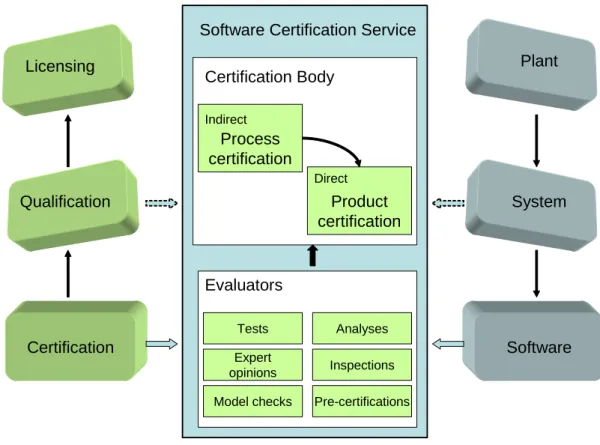
In response to this need, the CERFAS project develops facilities for software certification services, mainly for requirements in the areas of control of NPPs in Finland. The main goal of the project is to develop facilities for a high-level software certification service. The prerequisites for high-level services are the application of diverse expertise and effective dedicated assessment tools.
The strategic goal of CERFAS is to develop facilities for flexible, supported, commercially exploitable, high-quality software certification service capable of certifying security-critical and security-related software.
Operator practices and human-system interfaces in
All equipment in safety class 2 and essential accident instruments in safety class 3 must have a type-approval certificate (YVL 5.5). The project will collaborate with Electricité de France (EdF), and through the EU-funded MMOTION project (including in the FP7-EURATOM-FISSION programme) also with other European stakeholders in the nuclear field.
Fuel and reactor physics
Development and Validation of Fuel Performance Codes (POKEVA)13
The basic goal is to continue the development of reactor dynamics computer codes (TRAB-3D and HEXTRAN) at VTT, especially in the field of thermal hydraulics. The goal is to have a truly independent transient calculation system that can be used by the safety authority and other end users for safety analysis that is independent of power plant designers and fuel suppliers. To achieve this, the codes must be continuously developed to be at par with other codes used for similar purposes internationally.
In addition to the development work itself, it is essential that the new models are validated against measurements and the results of other codes. Much of this work can be done in the form of international collaboration in the form of calculating benchmark problems.
Total reactor Physics Analysis System (TOPAS)
Thermal Hydraulics research area
- Numerical modeling of condensation pool (NUMPOOL)
- Improved Thermal Hydraulic Analysis of Nuclear Reactor
- CFD modelling of NPP horizontal and vertical steam generators
- Improvement of PACTEL Facility Simulation Environment (PACSIM)16
- Large Break Loss-of-Coolant Accident Test Rig (LABRIG)
Second, improving understanding of the thermal hydraulic phenomena in the dry well and in the wet well compartments of the depressurization pool. The main objectives of the project are to develop and validate calculation methods for safety assessment of nuclear power plants. The aim of the project is to develop a simulation methodology and tool for modeling a horizontal and vertical steam generators of NPPs taking into account the multidimensional effects and the two-phase flow phenomena.
The main objective of the PACSIM project is to improve the simulation environment of the PACTEL facility with TRACE thermal hydraulics code. The main goal of the project is to improve understanding and increase fidelity in quantification of different phenomena in the dry well and condensation pool of a boiling water reactor (BWR) containment during steam discharge. Strains of the pool wall at precisely defined locations must be measured for verification of the structural analysis.
The first objective of the project is to design a pilot test device using information from the LABRE project.

Severe Accidents research area
Release of radioactive materials from a degrading core (RADECO). 18
The main reason for this is that a significant portion of iodine may exist in a volatile form. The understanding of iodine behavior in confinement has increased significantly over the past decades, but there are still some areas where further investigation is needed. Some data are available on the production of organic iodides from painted surfaces, but reactions of iodine with different types of paint can be different.
The course of serious accident phenomena during a serious accident has not been investigated to the same extent as serious accident phenomena that begin during operation. In the first subtask is a joint project with the IRSN Caradache research center to determine the chemistry of iodine in the primary circuit. At the same time, IRSN will focus on iodine chemistry in the gas phase under similar experimental conditions.
VTT will continue to monitor Phebus FP and International Source Term Programs (ISTP) and participate in the interpretation of the results.
Core Melt Stabilization (COMESTA)
The aim of the study at VTT is to determine iodine compounds released as a result of the reactions on the surface of primary circuit pipes. In this task, new analysis techniques for quantifying chemical reaction kinetics will be developed. Such measurements will provide information on high temperature chemistry and enable validation of, for example, iodine chemistry codes.
Hydrogen Risk in Containments and Particle Bed Issues (HYRICI)
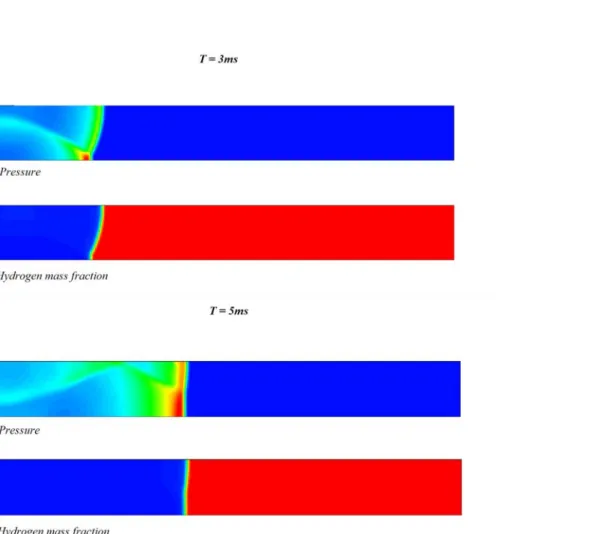
The tests will be modeled using CFD codes together with other program participants. The fourth subproject is a continuation of the EU/SARNET project which is scheduled to end in September 2008. The focus is on the analytical work included in SARNET Work Package 12.1 (hydrogen combustion) and to a lesser extent in WP 12.2 (mixing of the braking atmosphere).
Structural safety of reactor circuit research area
- Risk-Informed Inspections of Piping (PURISTA)
- Fatigue endurance of critical equipment (FATE)
- Water chemistry and oxidation in the primary circuit (WATCHEM)
- Monitoring of the structural integrity of reactor circuit (RAKEMON)
- Fracture assessment for reactor circuit (FRAS)
- Influence of material, environment and strain rate on environmentally
A quantitative, mechanism-based and risk-informed probabilistic evaluation of crack initiation (and growth) due to thermal and/or mechanical loads is intended for the long term, but the current project is primarily concerned with the applicability of existing design codes and YVL guides. The results will be used in modeling to obtain estimates for relevant parameters of oxidation processes. This assignment consists of a thorough review of the literature on the subject along with experimental tests under appropriate conditions in which various decontamination procedures are tested.
With this approach a sufficiently high level of competence can be achieved to enable the selection of the best practice of plant-specific commercial decontamination. The fourth objective (Task 4) is to evaluate the effect of dissolved H2 on the stability of oxide films on nickel-base alloys and their welds during cooling of a PWR. The goal of this project is to develop monitoring techniques and systems that can be used to monitor the structural integrity of primary circuit components.
The influence of strain rate and environment on the fracture toughness properties of austenitic nuclear materials is also measured during the first year within a diploma thesis and continued during the second year with a larger test matrix.
Construction safety research area
Service Life Management System of Concrete Structures in
The objective of the project is to develop a predictive service life management system (SLMS) for concrete structures in nuclear power plants. The management system includes the prediction of service life, the maintenance of safety and service limits, the prediction of maintenance and repair actions, the calculation of life cycle costs and environmental impacts, the assessment of risks and the inspection of structures. With SLMS the safety, accepted structural performance and uninterrupted serviceability of concrete structures are ensured during the planned service life of a nuclear power plant.
Thus, the observed state of the structures is included in the process of predicting the lifetime and deciding on maintenance and repair measures. The methodological foundations of the lifetime management system were developed within the EU project LIFECON GIRD-CT. The actual lifecycle management system is complemented by structural and risk analyses, as not all degradations can be predicted by simple degradation models and not all consequences of degradation can be addressed in a simple way.
Cracking The behavior of concrete structures in nuclear power pants is studied by a special design program (IVODIM) for serviceability limit state design.
IMPACT 2010
The system is also equipped with qualitative and quantitative risk analyses, financial and ecological life cycle analyzes and detailed analyzes of the structural condition. For example, separate risk analyzes are performed for corrosion of steel liners and prestressing tendons.
Structures under Soft Impact (SUSI)
The applicability of these types of methods using smoothing factors will be further studied. The purpose of the liquid study is to assist the IMPACT 2010 project in planning water-filled rocket tests, in addition to evaluating and analyzing test results. Another essential objective is the development and calibration of suitable analytical and numerical methods that can be applied to real fuel spread and fire risk analyses.
In particular, the suitability of the Fire Dynamics Simulator (FDS) code for the current release will be further examined, and testing and validation of submodels will continue. The new objective is a large-scale simulation of the spread and combustion of fuel after an aircraft crash using the results and lessons learned from the IMPACT tests.
Probabilistic safety analysis (PSA) research area
CHAllenges in Risk-Informed Safety MAnagement (CHARISMA)
Implementation of Quantititive Fire Risk Assessment in PSA
Extreme weather and nuclear power plants (EXWE)
The subject of the Master's thesis will be defined more precisely at the beginning of the project. Master's and doctoral theses will be prepared based on the results of the research project.