Safeguarding the biodiversity of ISLA DEL COCO National Park by enhancing biosecurity
Part I: Project Information GEF ID
10752 Project Type MSP
Type of Trust Fund GET
CBIT/NGI CBIT No NGI No Project Title
Safeguarding the biodiversity of ISLA DEL COCO National Park by enhancing biosecurity Countries
Costa Rica Agency(ies) CAF
Other Executing Partner(s) ISLAND CONSERVATION Executing Partner Type CSO
GEF Focal Area Biodiversity Taxonomy
Focal Areas, Biodiversity, Species, Invasive Alien Species, Threatened Species, Biomes, Tropical Rain Forests, Protected Areas and Landscapes, Coastal and Marine Protected Areas, Terrestrial Protected Areas, Influencing models, Demonstrate innovative approache, Stakeholders, Type of Engagement, Consultation, Partnership, Information Dissemination, Civil Society, Academia, Non-Governmental Organization, Capacity, Knowledge and Research, Innovation, Capacity Development, Learning, Theory of change, Indicators to measure change, Knowledge Exchange, Knowledge Generation
Rio Markers
Climate Change Mitigation Climate Change Mitigation 0 Climate Change Adaptation Climate Change Adaptation 0
Submission Date 1/8/2021
Expected Implementation Start 10/1/2021
Expected Completion Date 10/1/2023
Duration 24In Months Agency Fee($) 51,903.00
A. FOCAL/NON-FOCAL AREA ELEMENTS
Objectives/Programs Focal Area Outcomes Trust
Fund GEF
Amount($) Co-Fin Amount($)
BD-2-6 Address direct drivers to
protect habitats and species through the Prevention, Control and Management of Invasive Alien Species
GET 572,435.00 4,572,000.00
Total Project Cost($) 572,435.00 4,572,000.00
B. Project description summary
Project Objective
To ensure conservation, ecological restoration and sustainable use of the globally significant biodiversity of Isla del Coco National Park by initiating a cost effective, sustainable process of prevention and preparing for the eradication of invasive alien species, particularly mammals, while learning relevant lessons
Project Component
Financin g Type
Expected Outcomes
Expected Outputs
Trus t Fun d
GEF Project Financing($
)
Confirmed Co- Financing($
)
Comprehensiv e invasive alien species prevention system
Technical
Assistance Outcome 1 - A
comprehensiv e IAS prevention system for Isla Del Coco National Park (203,483 ha), based on development and
implementatio n of
biosecurity protocols reducing risks of IAS introductions and
establishment
Output 1.1:
Biosecurity protocols developed, based on assessment of IAS pathways and potential control points, and implemented
GET 84,459.00 822,000.00
Project Component
Financin g Type
Expected Outcomes
Expected Outputs
Trus t Fun d
GEF Project Financing($
)
Confirmed Co- Financing($
)
Component 2 - Preparing for invasive mammal eradications
Technical
Assistance Outcome 2 - T??he operational Plan and Environmental and Social Impact Assessment sets the stage for the eradication of invasive mammals and follow-up phases of Ecosystem Restaoration.
Output 2.1:
Physical and human capacities for eradication of invasive mammals, established Output 2.2: Field trials for informing invasive deer eradication Output 2.3:
Operational plan for five invasive mammal species approved by PSC
Output 2.4: Environ mental and Social Impact Assessment approved by PSC
GET 409,214.00 3,260,000.0 0
Project Component
Financin g Type
Expected Outcomes
Expected Outputs
Trus t Fun d
GEF Project Financing($
)
Confirmed Co- Financing($
)
Component 3 -
Sustainability, knowledge, monitoring and evaluation
Technical
Assistance Outcome 3 - sustainability and
knowledge are enhanced through capture of lessons learned, monitoring and evaluation
Output 3.1: Knowled ge and lesson captured and are available for learning Output 3.2: Well- structured monitoring and evaluation (M&E) system in place provides timely information to PSC
GET 31,632.00 100,000.00
Sub Total ($) 525,305.00 4,182,000.0 0
Project Management Cost (PMC)
GET 47,130.00 390,000.00
Sub Total($) 47,130.00 390,000.00
Total Project Cost($) 572,435.00 4,572,000.00
C. Sources of Co-financing for the Project by name and by type Sources of Co-
financing Name of Co-
financier Type of Co-
financing Investment
Mobilized Amount($)
Recipient Country Government
ACMC In-kind Recurrent
expenditures
3,230,000.00
Civil Society
Organization FAICO In-kind Recurrent
expenditures 1,142,000.00 Civil Society
Organization ISLAND
CONSERVATION In-kind Recurrent
expenditures
100,000.00
Other CAF Grant Investment
mobilized 100,000.00
Total Co-Financing($) 4,572,000.00 Describe how any "Investment Mobilized" was identified
CAF will offer a non reimbursable technical cooperation to the Ministry of Environment and Energy of Costa Rica. CAF's Technical Cooperation Funds are a percentage of CAF's annual revenues, therefore it is considered as "Investment Mobilized".
D. Trust Fund Resources Requested by Agency(ies), Country(ies), Focal Area and the Programming of Funds Agenc
y Trust
Fund Country Focal
Area Programmin
g of Funds Amount($) Fee($)
CAF GET Costa
Rica
Biodiversity BD STAR Allocation
572,435 51,903
Total Grant Resources($) 572,435.00 51,903.00
E. Non Grant Instrument
NON-GRANT INSTRUMENT at CEO Endorsement
Includes Non grant instruments? No Includes reflow to GEF? No
F. Project Preparation Grant (PPG) PPG Required false
PPG Amount ($)
PPG Agency Fee ($)
Agenc
y Trust
Fund Country Focal
Area Programming
of Funds Amount($) Fee($
) Total Project Costs($) 0.00 0.00
Core Indicators
Indicator 1 Terrestrial protected areas created or under improved management for conservation and sustainable use
Ha (Expected at PIF)
Ha (Expected at CEO
Endorsement) Ha (Achieved at
MTR) Ha (Achieved at
TE)
0.00 2,330.00 0.00 0.00
Indicator 1.1 Terrestrial Protected Areas Newly created
Ha (Expected at PIF)
Ha (Expected at CEO
Endorsement)
Total Ha (Achieved at MTR)
Total Ha
(Achieved at TE)
0.00 0.00 0.00 0.00
Name of the Protecte d Area
WDP A ID
IUCN Category
Total Ha (Expected at PIF)
Total Ha (Expected at CEO
Endorsement)
Total Ha (Achieved at MTR)
Total Ha (Achieved at TE) Indicator 1.2 Terrestrial Protected Areas Under improved Management effectiveness
Ha (Expected at PIF)
Ha (Expected at CEO
Endorsement)
Total Ha (Achieved at MTR)
Total Ha
(Achieved at TE)
0.00 2,330.00 0.00 0.00
Nam e of the Prot ecte d Area
W DP A ID
IUC N Cate gory
Ha (Exp ected at PIF)
Ha (Expect ed at CEO Endors ement)
Total Ha (Achi eved at MTR)
Total Ha (Achi eved at TE)
METT score (Baselin e at CEO Endors ement)
MET T scor e (Achi eved at MTR)
MET T scor e (Achi eved at TE)
Nam e of the Prot ecte d Area
W DP A ID
IUC N Cate gory
Ha (Exp ected at PIF)
Ha (Expect ed at CEO Endors ement)
Total Ha (Achi eved at MTR)
Total Ha (Achi eved at TE)
METT score (Baselin e at CEO Endors ement)
MET T scor e (Achi eved at MTR)
MET T scor e (Achi eved at TE) Akula
Natio nal Park Parqu e Nacio nal Isla del Coco
125 689 170
Selec tNatio nal Park
2,330.00 54.00
Indicator 2 Marine protected areas created or under improved management for conservation and sustainable use
Ha (Expected at PIF)
Ha (Expected at CEO
Endorsement) Ha (Achieved at
MTR) Ha (Achieved at
TE)
0.00 201,153.00 0.00 0.00
Indicator 2.1 Marine Protected Areas Newly created
Total Ha
(Expected at PIF)
Total Ha
(Expected at CEO Endorsement)
Total Ha (Achieved at
MTR) Total Ha
(Achieved at TE)
0.00 0.00 0.00 0.00
Name of the Protecte
d Area WDP
A ID IUCN Category
Total Ha (Expected at PIF)
Total Ha (Expected at CEO
Endorsement)
Total Ha (Achieved at MTR)
Total Ha (Achieved at TE) Indicator 2.2 Marine Protected Areas Under improved management effectiveness
Total Ha
(Expected at PIF)
Total Ha
(Expected at CEO Endorsement)
Total Ha (Achieved at
MTR) Total Ha
(Achieved at TE)
0.00 201,153.00 0.00 0.00
Nam e of the Prot ecte d Area
W DP A ID
IUC N Cate gory
Total Ha (Exp ected at PIF)
Total Ha (Expect ed at CEO Endors ement)
Total Ha (Achi eved at MTR)
Total Ha (Achi eved at TE)
METT score (Baselin e at CEO Endors ement)
MET T scor e (Achi eved at MTR)
MET T scor e (Achi eved at TE) Akula
Natio nal Park Parqu e Nacio nal Isla del Coco
125 689 170
Selec tNatio nal Park
201,153.
00
Indicator 11 Number of direct beneficiaries disaggregated by gender as co-benefit of GEF investment Number
(Expected at
PIF) Number (Expected at CEO Endorsement)
Number (Achieved at MTR)
Number (Achieved at TE)
Female 324
Male 792
Total 0 1116 0 0
Part II. Project Justification
1a. Project Description
1) The global environmental and/or adaptation problems, root causes and barriers that need to be addressed (systems description)
Since the creation of the PNIC in 1978, five management plans have been developed for the National Park. The current management plan covers the 10-year period from 2017-2026. In order to better match its management planning to the current reality, a Diagnostic for the Update of the General Management Plan of the Isla del Coco National Park was completed in 2016[1]1. The resulting report concluded that a number of the 51 strategies proposed in the 2007 management plan?including a plan for control and surveillance and other actions related to invasive species?had not been achieved.
Among the most significant threats facing the island?s biodiversity?one against which there are currently no control or surveillance protocols?is the increasing human presence and the concomitant risks of introduction and spread of alien invasive species. PNIC?s management plan, or Plan de Manejo (2017-26), includes five priority action areas: pelagic species, the forest ecosystem, reefs, geological formations and the historical cultural legacy. These are called Focal Management Elements (FME) and are considered vital to the park?s functions. FMEs benefit people through fish production, water supply and electricity generation, but several are at risk from factors such as illegal fishing, climate change, sedimentation, pollution, uncontrolled tourism and diving and the lack of protection of the historical legacy.
Invasive alien mammals have significant impacts on the human resources and terrestrial and marine ecosystems of Isla del Coco. Rats (Rattus rattus, R. norvegicus) were present by 1865. They negatively impact stored foods, and infrastructure and carry pathogens that impact the health of people. Workers on Isla del Coco have been diagnosed with, and their health significantly impacted by leptospirosis sourced from rats on at least two occasions. Rats, as omnivores cause population declines and extinctions of island floras and faunas and interrupt ecosystem processes with negative cascading effects[2]2. On Isla del Coco, as elsewhere, their diet consists of seeds, seedlings, marine and terrestrial invertebrates, reptiles, seabirds and landbirds[3]3. Predation on seeds and seedlings by rats has been shown elsewhere to significantly impact forest recruitment, structure, composition and dynamics[4]4. Preferential predation on native seeds and dispersal of invasive plant seeds has been documented on Isla del Coco[5]5, providing a competitive advantage for invasive plants. Rat predation on the eggs, chicks and adult land birds like the Cocos finch and seabirds like the white tern have been documented.
Elsewhere, rat predation on land and seabirds have had population-level impacts however this has not been studied nor described for Isla del Coco. Rats provide a year-round food source for feral cats and may facilitate the presence of an elevated cat population on Cocos with resultant increased impacts on native birds, a process known as hyperpredation[6]6. Rat population density for Cocos of 63-156 individuals/ha, with an average of 87.5 rats/ha[7]7, which is high compared to other islands worldwide.
Cats were introduced by seafarers to control rats in 1893. Feral cats are present across the entire island and prey on invasive rats, endemic reptiles, land birds, seabirds and large marine and terrestrial invertebrates. Little research has been done on island on their population level impacts on native fauna, however they likely have had significant impacts on seabird populations that now only breed
abundantly on the cat-free islets. Elsewhere, a loss of seabirds has resulted in significant vegetation changes as a result of cessation of nutrient inputs from guano[8]8.
Pigs were introduced to Isla del Coco in 1793 to provide food for visiting sailors. Population densities in 2019 were 21.9 pigs/km2 from a camera trap study[9]9. As omnivores, feral pigs will prey on other invasive mammals including deer fawns, seabirds, reptiles, invertebrates in the soil, fruits, seeds, seedlings and other plant material[10]10. While foraging for worms and fallen fruits, pigs root up the ground in a manner equivalent to ploughing, disturbing the bed of vegetation and fallen leaves and exposing soil to erosion processes. On Cocos, one study estimated that up to 19% of the island?s surface area is affected annually by feral pigs, with resultant exposure of soils increasing erosion rates ten-fold[11]11. Eroded soil ends up in the marine environment as sediment. During major rainfall events, large sediment plumes are prevalent around the island. Sediment plumes are carried on currents and deposited on the sea floor, changing the seafloor substrate. Sediment has complex effects on the ability of planktonic life-stages of corals[12]12, lobster and fish to successfully locate suitable habitat, as well as impacting on their post-settlement performance and, ultimately, recruitment success[13]13. The remainder of this baseline discussion focuses on and provides more detailed information on the invasive deer species for which trials will be conducted under Component 2.
White-tail deer (Odocoileus virginianus) is a medium-sized deer with a long neck and legs, whose native distribution covers substantial areas of North, Central and South America. The species has been introduced to a suite of islands worldwide, many of which it has successfully invaded, e.g. Isla
Margarita, Mexico, Cuba, New Zealand, Jamaica, Hispaniola and the Bahamas. The species is found in a variety of ecosystems including tropical forest, with a preference for forested areas for refuge[14]14. White-tail deer are fast and agile, reaching a speed of up to 64 km / hr. They feed on grasses, fungi, nuts, seedlings and tender foliage. They generally do not form large groups; social structure is typically made up instead of a female and her offspring. Reproduction occurs throughout the year and juveniles sexually mature after one year. Average life span is 10 years.
White-tail deer were introduced onto Isla del Coco in 1934[15]15 and have thrived there. In order to estimate their numbers and distribution, the ACMC park ranger team has developed a monitoring system based on camera traps. Camera traps are efficient tools for wildlife monitoring and arrays of camera traps can have high detection probabilities for deer when appropriately placed. Through this method, the presence of deer in different areas of the island can be determined and removal efforts can be focused on sites where animals are more likely to remain.
Building on earlier surveys of deer and other invasive species[16]16, an initial effort between researchers and ACMC was recently completed[17]17. A total of 1,577 camera trap photo-captures were used to establish deer activity patterns on Isla del Coco, demonstrating that deer were present
across the entire island, with concentrations around Wafer and Chatham bays. The species activity peaks during diurnal periods (early morning and late afternoon). Nocturnal activity is reduced, but present and consistent.
Previous survey data, reported in 2010[18]18, had indicated that 323 deer (range of 116 - 325) were present on Isla del Coco. A survey undertaken in 2019[19]19 estimated the deer population to be between 50 and 77 individuals. Deer presence was recorded in 75.5% of the 45 sites, leading to the conclusion that the entire island is suitable to be occupied by them. Accurate total population estimates of wildlife have long-eluded researchers, with significant differences in results depending upon how studies are designed, implemented, their data analysed and whether they violate assumptions of the statistical methods used.[20]20
The harmful effect of invasive herbivores in islands has been studied in differ?ent parts of the world.
Bonilla-Mata (2020) highlights the problems of natural regeneration linked to the presence of large herbivores on small islands, including Isla del Coco. Herbivores impact the development of the forest due to their browsing on seedlings, saplings and branches, changing growth patterns and by altering tree abundance and regeneration (Dirzo, 2001). The main negative impact of selective deer herbivory is the interruption of forest regeneration processes by their grazing on germination shoots and tender foliage of some forest plant species[21]21 [22]22 [23]23.
Herbivores can also affect the availability of tree seeds and their dispersion, which is a critical process for forest maintenance (Janzen, 1970). Deer, like other wild mammals, are important seed dispersers in part because of their wide range of movement. Herbivory by deer can promote the establishment of introduced species within the forest structure by dispersing invasive plant seeds from open areas into the forest. Kellogg and Bridgham (2004) mention that this results in the transformation of forest ecosystems to alternate states, as invasive species displace native ones.
Finally, deer can cause additional physical impacts, including increased erosion from hooved feet compacting soil on temporary access routes, while denuding some areas of vegetation and destabilizing slopes in other parts.
As elsewhere, invasive mammals intro?duced into the PNIC have had significant impacts on forest regeneration. These have been confirmed by comparing vegetation within exclusion fences to unfenced control plots[24]24 [25]25. The results obtained?notably related to the regeneration of endemic,
threatened tree species inside the exclusion fences, while no regeneration occurred out?side the fences?serve to illustrate the intense pressure posed by introduced herbivores. In particular, canopy species are consumed by herbivores during the seedling and sapling stages and are heavily subjected to branch-grazing until they outgrow the white-tailed deer.
In line with the above, the structure and composition of Isla del Coco ?s forests have been undergoing a transformation for decades, since the introduction of invasive mammals and more recently due to climate change. More significant changes have been documented in the Premontane Pluvial Rainforest (PPR). These changes are characterized by the loss of dominance of S. holdridgei, in turn inducing a shift in forest vertical and horizontal structure. Statistically significant differences have been identified in recruitment, mortality, regeneration and growth rates between the two forest types. Even though the PPR and CF share the same canopy species, dynamic and ecological process, along with abiotic factors
and geological origin[26]26 have caused them to respond differently to browsing and other pressures?a fact that reaffirms the diversity and complexity of the island?s ecosystems.[27]27
The severity of the challenge posed by invasive mammals to the island?s floral biodiversity have been well documented. In particular, it has been found that, according to IUCN criteria, all thirty-two (known at the time) endemic species, along with four sub-species, are critically endangered.[28]28 Deer currently impact the biodiversity of PNIC by: 1) preventing forest regeneration and altering forest composition and structure by predating on seeds and browsing on seedlings,[29]29 2) dispersing seeds of invasive alien species or opportunistic native species, 3) compacting soil on temporary access routes, and 4) increased sediment on the reef and reduced ability of soil to maintain ecosystems through accelerated erosion. In the long term, deer act as ecosystem engineers contributing to the degradation of the tropical forest towards a deforested condition with plant cover by a few alien, invasive and
opportunistic plants.
Under a baseline, business-as-usual scenario, monitoring of invasive species would continue on an intermittent basis, but no system for biosecurity would be established. In this case, invasive species would continue arriving and becoming established. With regard to established invasive mammal species, managers would continue to discuss the need for removing the damaging invasive species and they would continue to be a priority in subsequent management plans. Meanwhile, ecosystems would continue being degraded and modified and the likelihood of species going extinct would increase. The reef would be further impacted from sediment, impacting marine ecosystems and the dive tourism industry.
3) The proposed alternative scenario with a description of outcomes and components of the project
Isolation and the small size of island ecosystems tends to make them heavily susceptible to the effects of invasive species. Equilibrium thresholds are easily surpassed, processes of succession stagnate and species become prone to extinction. For this reason, 75% of global extinctions have occurred in islands, while 67% were due to the introduction of species.[30]30
Eradication of five invasive mammal species is a critical ecological need facing PNIC[31]31. While best practice would seem to call for the simultaneous eradication of all the species introduced in the
island[32]32, in practice this is rarely feasible. Reasons vary from social opposition, to the most common: high costs and substantial perceived risks.
On Isla del Coco, the simultaneous eradication of all five invasive mammal species is thus not feasible.
As such, multiple eradications will need to be sequenced in an order whereby each eradication facilitates the next, rather than make any subsequent eradication more difficult or less likely to be successful. For example, feral pigs have a tendency to kill deer fawns;[33]33 to avoid releasing deer from this predation pressure, deer should be eradicated before pigs. Similarly, feral pigs and deer tend
to consume significant quantities of rodenticide-laced bait, effectively clearing large areas of bait intended for rats and thereby increasing the likelihood of operational failure of rat eradication.
Accordingly, feral pigs should be eradicated before rats. Eradicating rats will simultaneously reduce the feral cat population through secondary poisoning and increase the likelihood of feral cats taking baits once rodents are absent. Without feral pigs and deer, cat traps can be used without interference or non- target captures of deer or pigs. Invasive rodents and feral cats can therefore be targeted simultaneously, with follow-up methods (e.g. trapping) to target any remaining feral cats. In summary, the order in which the invasive mammals on Isla del Coco should be eradicated is: deer first, followed by feral pigs and, finally, the simultaneous eradication of invasive rats (two species) and feral cats.
Thus, for a variety of reasons, a multi-staged eradication of Isla del Coco?s five invasive mammal species is planned. While there are pragmatic, including financial, reasons to remove these species one at a time, there are also benefits to be obtained from this stepwise approach. One benefit is lesson learning which, if done effectively, can significantly improve the efficiency and effectiveness of subsequent stages.
Feral pigs have been eradicated from 54 islands worldwide, with the largest being Santiago Island (58,465 ha) in the Galapagos. Feral cats have been eradicated from 107 islands and rats from more than 650 islands worldwide, many larger than Cocos[34]34. Invasive deer populations have been eradicated from 15 temperate islands worldwide[35]35, including some that are much larger with equally
challenging topography (e.g. Secretary Island (8,140 ha), New Zealand[36]36). These eradications provide a suite of lessons learned and a body of knowledge that can be applied. However, unlike invasive pigs, cats and rats, deer eradication has only been conducted on temperate islands with few well-documented case studies and has not been attempted on a tropical island like Cocos. As such, trials will be used to inform the operational plan chapter for white-tailed deer, specifically to 1. provide reliable estimates of effort and cost; 2. determine whether the suite of methods is adequate or whether other methods need to be incorporated; and 3. test and refine methods for use in tropical conditions and to ensure species specificity (e.g. avoiding pig captures) can be achieved.
In preparation for trials the building of human and physical capacities will occur, that will also be required for conducting eradications on the island. Much of the associated infrastructure, e.g., temporary access routes, temporary camp sites and camera traps, will remain in place to support subsequent eradications.
In parallel with the above, a system of enhanced prevention (i.e. biosecurity) will be designed and put in place. This will consist of the design and implementation of a set of protocols and training of national park staff in their implementation. These actions are meant to sharply reduce the risk of further invasions and likelihood of establishment.
Finally, a system of monitoring and assessment will ensure both that the success of eradication preparation efforts can be verified along with the effectiveness of the comprehensive biosecurity system.
Component 1: Comprehensive invasive alien species prevention system
Outcome 1: A comprehensive IAS prevention system for Isla del Coco National Park (203,483 ha), based on development and implementation of biosecurity protocols reducing risks of IAS introductions and establishment
IAS prevention encompasses efforts to prevent harm from intentional and unintentional introductions of biological organisms?including harm to the environment, to human and animal health and the local economy.[37]37 Biosecurity measures are generally carried out at ports of departure and entry, as well as along travel pathways between destinations.
This outcome will ensure that an effective system for IAS prevention is in place concurrently with commencing the process of eradicating established IAS.
Output 1.1: Biosecurity protocols developed, based on assessment of the existing biosecurity system at control points, and implemented
The project will conduct a detailed technical assessment of the current potential pathways that IAS, both flora and fauna, could use to reach the PNIC. Based on the identification of potential pathways, options for possible control points will be considered. Control points are phytosanitary barriers to intercept IAS, preventing them from arriving and establishing themselves in the PNIC. Specifically, the steps to establish the biosecurity system will be identified, including: equipment needed to reinforce the control points, the protocols, equipment, staff capacity and infrastructure The protocols will be aligned with the institutional policies of SINAC-ACMC and will be approved by the Project Steering
Committee (PSC).
The biosecurity protocols will establish the steps and guidelines that ACMC staff will need to follow in different situations, in order to ensure that they exercise their responsibilities and functions correctly.
The protocols will aim to: a) establish the roles and responsibilities of ACMC staff regarding biosecurity; and b) standardize the performance of park rangers in relation to biosecurity.
The development of protocols will also involve establishing phases for their implementation and will identify priority actions that must be completed in the first year from their approval. This project will finance the prioritized activities for year 1. Implementation of activities for subsequent phases of the biosecurity protocols will be funded in conjunction with the second stage of the eradication. Finally, an audit will be conducted of protocol implementation, with project funds.
Once protocols have been approved by the PSC, ACMC staff will participate in training workshops to enable them to understand and be prepared to implement them. Workflow charts and other materials will be developed as part of the protocols, in order to aid implementation. Flowcharts will facilitate the application of protocols in the field and will be printed and distributed among SINAC-ACMC officials, tourist boats, scientists and other visitors, so that they can be available for quick consultation. Detailed protocols will be printed and also uploaded to the ACMC website.
Implementation of biosecurity protocols following the completion of the eradications will be financed with public funds, especially through preventive actions to be taken by park rangers. Tourism companies will be required, at their own expense, to comply with biosecurity protocols that will be defined for tourism operations in the ACMC.
Component #2: Preparing for invasive mammal eradications
Outcome 2: The operational plan and environmental and social impact assessment sets the stage for the eradication of invasive mammals and follow-up phases of ecosystem restoration
Under this outcome, the project will deliver an operational plan and ESIA for a series of invasive mammal eradications. In so doing, it will implement a trial of invasive deer eradication methods to effectively estimate effort and budget requirements within the operational plan, refine methods under tropical conditions. It will also establish physical; monitoring infrastructure and information systems needed to efficiently implement the trials and ultimately verify the success of the eradications. This will serve as an important base to solidify political and financial support for eradications on the island.
Indeed, proposals for funding eradications are under active development: CAF is currently preparing a project proposal for funding by the Adaptation Fund of a regional project (Costa Rica and Dominican Republic) which would implement the invasive species eradications on Isla del Coco. As CAF safeguards are triggered by the use of toxicants to implement the eradications an ESIA is required and will be developed under this component.
The project takes a stepwise approach to eradication financing. As such, the current proposal carefully lays the groundwork for eradication to take place at a subsequent stage. The Government of Costa Rica remains deeply committed to the project and intends to prioritize fundraising for the eradication phase from multiple possible sources, including GEF8, FFEM, IKI and private sources.
Output 2.1 Physical and human capacities for eradication of invasive mammals, established
Given the demanding topography, extreme rainfall patterns and currently limited physical infrastructure of Isla del Coco, the project will need to build physical and human capacities to ensure a safe and successful trial, and implement the subsequent eradications. In order to facilitate access and field work, temporary camp sites, located in strategic places on the island, will be established to provide shelter to field staff. A network of temporary access routes will also be established to allow field personnel access to remote locations. Field staff will be engaged, trained and equipped. Key areas for training will include camera trap protocols (e.g. installation, battery and memory card changes and functionality checks); use of digital data collection devices and associated software; GIS; trapping protocols;
implementation of eradication strategies, including use of firearms and ballistics; hunter ethics; first- aid, safety and emergency procedures; training on appropriate behaviour during field operations;
guidance on PNIC main camp rules; roles and expectations of each team member; orientation to the GEF / CAF project requirements, including safeguards and grievance mechanism procedures.
Equipment needs will include: wet weather gear, boots, radios, radio holsters and chargers, radio repeater, knives, ammunitions, tree stands, cable-traps, trap setting tools, digital data collection devices (GPS-enabled tablets) with weather-proof housings, camera trap setting supplies, field computer and
accessories, sleeping bags, backpacks, waterproof gear bags, first aid kit, and hut kits (generators, stove, pots, cooking utensils, cots, radio charger, shelves, first aid kit).
To enable monitoring, determination of deer travel routes and future verification of eradication, an array of camera traps will be strategically laid out at key locations around the island. Approximately 110 camera traps will provide coverage of the island and be capable of reliably capturing quality images day and night. Camera traps will be placed on tree trunks or using rebar stakes to cover key temporary access routes and other likely deer travel routes. Wherever possible, camera locations will be identified through fresh deer sign (footprints, faeces). Resulting images will be essential to the
project?s ability to place cable-traps along deer travel routes, monitor and verify, including follow-on eradications.
Accurate and well interpreted data and information are essential elements to achieving this outcome.[38]38 A number of activities will combine to ensure this output.
Data collected from camera traps will be fed into a digital data collection system and relational database. The project will employ innovative artificial intelligence techniques to assist with
categorizing the thousands of resulting images, in particular to separate deer images from those of feral pigs.
Data will also be collected regarding the eradication efforts themselves. Hunters will carry ruggedized field data entry tablets. Tablets will capture the hunter?s GPS log for the day, and allow hunters to record where animals or sign were seen, animals were shot, traps set, checked or recovered. Data from tablets will be downloaded to a database to allow more detailed analyses to be undertaken, including for various reports to be produced under Output 3.
Output 2.2: Field trials for informing invasive deer eradication
Field trials for invasive deer will apply and provide critical tests of physical and human capacities developed in component 2.1. Hunters will test and refine cable-trap setting techniques, utilizing sign (footprints, faeces) and camera trap images to guide placement. Catch-per-unit-effort will be determined, along with trap nights, trap specificity as a ratio of deer to non-target (i.e. pig) captures, and avoidance tactics of deer assessed through analysis of camera trap images. If specific avoidance tactics are identified refinements will be made and likelihood of capture re-assessed. Hunters will also determine key locations for trails to access vantage points and assess feasibility of shooting within clearings and in the tropical forest with frequent heavy rains. Deer stands will be established where appropriate and their relative effectiveness determined. Catch-per-unit-effort will be determined, along with areas of the island that can be targeted with this method.
Output 2.3: Operational plan for five invasive mammal species approved by PSC
The invasive deer, pig, rat (2 species) and cat eradication operational plan will be developed, and approved by the PSC. Lessons learnt from the field trial will inform the invasive deer eradication
chapter. An annex to the plan will identify and assess risks to non-target wildlife and propose mitigation actions where appropriate. Efficiencies will be sought, and innovative cost-saving and risk- avoidance and reduction measures assessed and applied where appropriate (e.g. the use of drones for spreading rodenticide bait). Methods will be discussed with stakeholders through an engagement process, and their ideas and concerns will be taken into consideration in development of the plan.
Stakeholder engagement process will include meeting with agencies providing permits for firearms, toxicants, drones, which will be essential to determine which methods are feasible and processes required. The resulting operational plan will adhere to international best practice for IAS eradication including the humane treatment and disposal of species that will be eradicated.
Output 2.4: Environmental and Social Impact Assessment approved by PSC.
As a last step, an ESIA will be conducted, the development of which will include additional
stakeholder engagement. The ESIA will bring together the suite of operational, risk management and other plans developed for the project into a single document that: identifies and assesses the potential environmental and social impacts of the proposed invasive mammal eradications; evaluates
alternatives; and incorporates appropriate mitigation, management and monitoring measures. A third- party consultancy company will be contracted to develop an ESIA that meets both Costa Rica?s and the CAF Implementing Agency?s process and content requirements. IC and ACMC staff will provide technical support and oversight to the consultancy team. Once completed, the ESIA will be submitted to the PSC for approval. Even if a full ESIA is not required under national regulations, an ESIA is required by CAF (or other implementing agencies) in order to fulfil relevant safeguards for multilateral funds or other funds financing the implementation phase of the invasive alien mammal eradication project.
Component #3: Sustainability, knowledge, monitoring and evaluation
Outcome 3: sustainability and knowledge are enhanced through capture of lessons learned, monitoring and evaluation
Output 3.1: Knowledge and lesson captured and are available for learning
The full ecological restoration of Isla del Coco will depend on the successful removal of all five invasive mammal species and the prevention of IAS introductions. The present project will provide a critical kick start to subsequent eradications. Physical and human capacity building will be one reason for this benefit. A second will depend on the project?s efforts to capture lessons learned from the field trials and stakeholder engagement and integrate them into the Operational plan. These will include lessons related to the use of camera traps, the estimation of effort to effectively cover the island and manage a large camera trap network, and more. Stakeholders? concerns can often result from lessons
learnt that were not previously documented. Also significant is the demonstration effect and increase in confidence resulting from training and better understanding of the limits and opportunities of mammal eradications.
For the above reasons, the project will carefully document its approach and methodology and ensure that its results are effectively communicated / shared amongst experts, policy makers and the general public in Costa Rica and beyond.
Output 3.2: Well-structured monitoring and evaluation (M&E) system in place provides timely information to PSC.
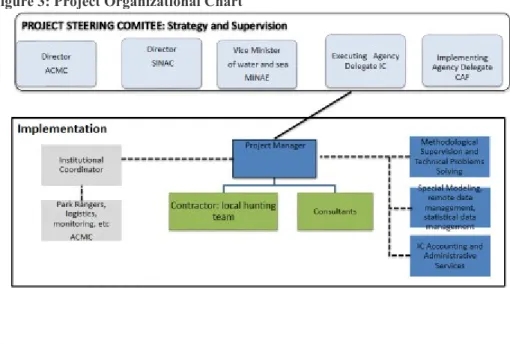
In this output, the executing agency will: 1) Set up and convene a Project Steering Committee (PSC) to review project progress towards planned outcomes and outputs. Section IV provides more details on PSC conformation and responsibilities. 2) Put in place simple M&E tracking tools and process, that provide results-oriented project management and enable timely decisions to manage risks. 3) Implement Project M&E Strategy, including preparation of: Progress Reports, Annual Work Plans, Technical & Financial Progress Reports, PIR, GEF Tracking Tools, including reporting on Safeguard implementation. 4) Prepare and submit information for project Audit and Project Terminal Evaluation.
4) Alignment with GEF focal area and/or impact program strategies
Drawing on the Millenium Ecosystem Assessment, GEF-7 Programming Directions identify invasive alien species (IAS), particularly in island ecosystems, as one of the five main direct drivers of biodiversity loss. In recognition of the importance of this driver, and in response to CBD guidance for GEF-7 (Item II.D), the strategy targets investments in prevention, control and management of invasive alien species (with a focus on islands). More specifically, the strategy supports ?the implementation of comprehensive prevention, early detection, control and management frameworks that emphasize a risk management approach??, as well as ?targeted eradication? in ?specific circumstances where proven, low-cost and effective eradication would result in the extermination of the IAS and the survival of globally significant specieis and/or ecosystems?.
In alignment with the above, the project is set in an island ecosystem with globally significant
ecosystem and species threatened by IAS. It combines a comprehensive pathways approach, including elements of protection, early detection, control and management. The proposed project begins with field trials to provide increased levels of certainty for a carefully designed series of IAS eradications. It is expected to generate important lessons for many other islands whose biodiversity is threatened by IAS.
5) Incremental/additional cost reasoning and expected contributions from the baseline, the GEFTF, LDCF, SCCF, and co-financing
Summary Baseline Analysis without the GEF?s Intervention
Under the baseline scenario, monitoring of invasive species would continue on an intermittent basis, but no system for biosecurity would be established. In this case, invasive species would continue arriving and becoming established. For example, the common house gecko (Hemidactylus frenatus) was introduced, likely on construction materials and established, around 2011.[39]39
With regard to established invasive mammal species, managers would continue to discuss the need for removing the damaging invasive species and they would continue to be a priority in subsequent management plans. Researchers would continue publishing data indicating that invasive species are the greatest threat to the island?s ecosystems and would continue recommending their eradication.
Meanwhile, ecosystems would continue being degraded and modified and the likelihood of species going extinct would increase. The reef would be further impacted from sediment, impacting marine ecosystems and the dive tourism industry.
The GEF Alternative
Under the GEF Alternative, an informal partnership of governmental and non-governmental organizations would be established, with a commitment to ensuring the biosecurity of PNIC and the eradication of all five invasive mammal species over the medium term. The catalytic impact of GEF funding through this mid-sized project will provide increased levels of certainty in terms of eradication methods for deer, significantly increasing the probability of success and stakeholder buy in for the implementation of the multiple species eradication that is required to safeguard the biodiversity of the PNIC. This first phase will cement this partnership and create the foundation for follow-up
eradications.
6) Global environmental benefits (GEFTF) and/or adaptation benefits (LDCF/SCCF)
The project will contribute to improve the sustainability and protect the biodiversity of PNIC (2,330 terrestrial ha, 201,153 ha marine). It will reduce pressures and extinction risks facing a number of globally significant island-endemic species, though the most significant improvements in this regard will depend on the implementation of the Operating Plan and series of targeted eradications?for which the project lays the groundwork in important ways. The park?s management effectiveness will be increased due to enhanced capacities to prevent the introduction of IAS and to undertake eradications.
The comprehensive IAS prevention system being supported under Component 1 will help to prevent IAS introductions from the only pathway, i.e. vessels, which would potentially affect both marine and terrestrial areas of the park.
7) Innovativeness, sustainability and potential for scaling up
Innovativeness: In Component 2, traditional tools are being complemented with digital data collection and data management in relational databases. Interpretation of camera trap imagery will present a particular opportunity for innovation. The 100 plus camera traps will collect thousands of photos.
Extrapolating from ACMC?s 2019 study some 5,466 photo-captures per month of rats, cats, pigs and deer can be expected (not including native species or false triggers from vegetation). Over the life of this project more than 150,000 photos will likely need to be processed, categorized and data entered into the database. To manage this massive amount of data, the project will employ artificial intelligence techniques to assist with categorizing the resulting images and automating workflows. Prior to
deployment of cameras, software will be ?trained? using the existing photo database from ACMC to sort images of deer and other species.
Sustainability: Component 1, which focuses on biosecurity, will contribute to the sustainability of ecological benefits by helping to prevent additional invasions. Component 2, will generate the groundwork that will allow for multiple species to be eradicated from Isla del Coco, allowing conservation benefits to accrue over time.
Upscaling: Although more than 1,000 eradications of invasive mammals from islands have occurred globally[40]40 (including 15 deer eradications). No previous eradication of deer has taken place in a tropical island such as Isla del Coco, hence the field trials conducted under this project will be useful for future eradications in similar conditions around the world. Furthermore, Costa Rica has not implemented any eradications, despite having several candidate islands[41]41. The systems set up in this project will build significant capacities in the SINAC ACMC team, thereby setting the stage for implementing eradications of invasive mammals from PNIC and potentially from other locations in the country. It will facilitate this by providing lessons learnt, infrastructure, capacity in partners and testing of the partnership model.
[1] Diagn?stico Para La Actualizaci?n Del Plan General De Manejo Del Parque Nacional Isla Del Coco, 2016.
[2] Jones HP, Tershy BR, Zavaleta ES, et al. 2008. Severity of the effects of invasive rats on seabirds:
A global review. Conservation Biology 22:16-26
Kurle CM, Croll DA, Tershy BR. 2008. Introduced rats indirectly change marine rocky intertidal communities from algae-to invertebrate-dominated. Proceedings of the National Academy of Sciences 105:3800-3804
Towns DR, Atkinson IAE, Daugherty CH. 2006. Have the harmful effects of introduced rats on islands been exaggerated? Biological Invasions 8:863-891
[3] G?mez , J. R. 2004. Estudio denso-poblacional de los roedores introducidos y su impacto sobre la fauna nativa en la Isla del Coco. Master?s thesis: Universidad Nacional de Costa Rica.
[4] Towns DR, Atkinson IAE, Daugherty CH. 2006. Have the harmful effects of introduced rats on islands been exaggerated? Biological Invasions 8:863-891
[5] G?mez , J. R. 2004. Estudio denso-poblacional de los roedores introducidos y su impacto sobre la fauna nativa en la Isla del Coco. Master?s thesis: Universidad Nacional de Costa Rica.
[6] Ringler D, Russell JC, Le Corre M. 2015. Trophic roles of black rats and seabird impacts on tropical islands: Mesopredator release or hyperpredation? Biological Conservation 186:76-84
[7] G?mez , J. R. 2004. Estudio denso-poblacional de los roedores introducidos y su impacto sobre la fauna nativa en la Isla del Coco. Master?s thesis: Universidad Nacional de Costa Rica.
[8] E.g. Fukami T, Wardle DA, Bellingham PJ, et al. 2006. Above-and below-ground impacts of introduced predators in seabird-dominated island ecosystems. Ecology Letters 9:1299-1307
[9] ACMC 2020 Implementaci?n del Plan de Especies Ex?ticas e Invasoras en el Parque Nacional Isla del Coco: Estudio poblacional de cerdos y venados.
[10] Inferred from diet elsewhere, and stomach an?lisis in Sierra C. 2001a. El cerdo cimarr?n (Sus scrofa, Suidae) en la Isla del Coco, Costa Rica: Composici?n de su dieta, estado reproductivo y gen?tica. Revista de biolog?a tropical 49:1147-1157
[11] Sierra C. 2001b. The feral pig (Sus scrofa, Suidae) in Cocos Island, Costa Rica: Rootings, soil alterations and erosion. Revista de biologia tropical 49:1159
[12] Jones, et al. (2015) Effects of sediments on the reproductive cycle of corals. Marine Pollution Bulletin 100(1): 13-33.
[13] O?Connor, et al. 2016. Sediment pollution impacts sensory ability and performance of settling coral-reef fish. Oecologia 180 1:11-21
[14] Nowak, R. 1991. Walker's Mammals of the World, Fifth Edition. Baltimore, Maryland: The Johns Hopkins University Press.
[15] Montoya, M. & Pascal, M. (2005) Un demi-mill?naire d'?volution de la faune de vert?br?s de l'?le Cocos (Costa Rica-Patrimoine mondial). Revue d'?cologie.
[16] D?az, G., E. Carrillo y F. Berm?dez. 2010. Levantamiento de informaci?n de l?nea base para el monitoreo de especies end?micas y especies ex?ticas en la Isla del Coco. Informe T?cnico. Onca Natural. 117 p.
[17] ACMC 2020 Implementaci?n del Plan de Especies Ex?ticas e Invasoras en el Parque Nacional Isla del Coco: Estudio poblacional de cerdos y venados.
[18] D?az, G., E. Carrillo y F. Berm?dez. 2010. Levantamiento de informaci?n de l?nea base para el monitoreo de especies end?micas y especies ex?ticas en la Isla del Coco. Informe T?cnico. Onca Natural. 117 p.
[19] ACMC 2020 Implementaci?n del Plan de Especies Ex?ticas e Invasoras en el Parque Nacional Isla del Coco: Estudio poblacional de cerdos y venados.
[20] E.g. Witmer, G. W. (2005) Wildlife population monitoring: some practical considerations.
Wildlife Research 32(3): 259-263.
[21] Anderson, R.C., E.A. Corbett, M.R. Anderson, G.A. Corbett, T.M. Kelley. 2001. High white-tailed deer density has negative impact on tallgrass prairie forbs. J Torrey Bot Soc 128: 381?392.
[22] Rooney, T.A. 2001. Deer impacts on forest ecosystems: a North American perspective. Forestry 74: 201?208.
[23] Tzilkowski, W.M., M.C. Brittingham, M.J. Lovallo. 2002. Wildlife damage to corn in Pennsylvania: farmer and on-the-ground estimates. Journal Wildlife Management 66: 678?682.
[24] C?t?, S. D., Beguin, J., de Bellefeuille, S., Champagne, E., Thiffault, N., & Tremblay, J.-P. (2014).
Structuring effects of deer in boreal forest ecosystems. Advances in Ecology, 2014.
[25] Relva, M. A., Nunez, M. A., & Simberloff, D. (2010). Introduced deer reduce native plant cover and facili?tate invasion of non-native tree species: evidence for invasional meltdown. Biological Invasions, 12(2), 303-311.
[26] Castillo et. al (1988); Bergoeing (2012) [27] Bonilla-Mata 2020
[28] Trusty, J. L., Kesler, H. C., Rodr?guez, J. & Francisco-Ortega, J. (2011) Conservation status of endemic plants on Isla del Coco, Costa Rica: applying IUCN Red List criteria on a small island. In: The Biology of Island Floras, eds. D. Bramwell & J. Caujap?-Castells, pp. 452-473. Cambridge: Cambridge University Press.
[29] Acosta-Vargas, Luis Guillermo. February 2016. Population status of the tree Sacoglottis holdridgei (Humiriaceae) at Isla del Coco National Park. International Journal of Tropical Biology, Vol.64
[30] Acosta-Vargas. Effectiveness of two treatments to promote tree regeneration: implications for forest restoration in the Isla del Coco National Park, Costa Rica. (Int. J. Trop. Biol. ISSN-0034-7744) Vol. 68(Suppl. 1): S103-S114, March 2020.
[31] See, e.g., Tye A, Cooke B, N. M, et al. 2004. A strategy for introduced species management on Cocos Island, Costa Rica, including a plan for the eradication of six mammal species. Unpublished report
[32] See, e.g., Tye A, Cooke B, N. M, et al. 2004. A strategy for introduced species management on Cocos Island, Costa Rica, including a plan for the eradication of six mammal species. Unpublished report
[33] Springer, M.D. 1977. Ecological and economic aspects of wild hogs in Texas. Research and Management of Wild Hog Populations: Proceedings of a Symposium 37-66; Wilcox, J. T., and D. H.
Van Vuren. 2009. Wild pigs as predators. Journal of Mammalogy 90:114-118.
[34] DIISE, 2018. The Database of Island Invasive Species Eradications, developed by Island
Conservation, Coastal Conservation Action Laboratory UCSC, IUCN SSC Invasive Species Specialist Group, University of Auckland and Landcare Research New Zealand.
http://diise.islandconservation.org
[35] DIISE, 2018. The Database of Island Invasive Species Eradications, developed by Island
Conservation, Coastal Conservation Action Laboratory UCSC, IUCN SSC Invasive Species Specialist Group, University of Auckland and Landcare Research New Zealand.
http://diise.islandconservation.org
[36] Macdonald, N., Nugent, G., Edge, K. & Parkes, J. (2019) Eradication of red deer from Secretary Island, New Zealand: changing tactics to achieve success. In: Island invasives: scaling up to meet the challenge, IUCN.
[37] Meyerson and Reaser 2002a.
[38] Will, D. J., Campbell, K. J. & Holmes, N. D. (2014) Using digital data collection tools to improve overall cost-efficiency and provide timely analysis for decision making during invasive species eradication campaigns. Wildlife Research 41: 499-509.
[39] Villegas-Retana, S. A. & Duran-Apuy, A. (2015) Abundancia y distribuci?n espacial de Hemidactylus frenatus (Squamata: Gekkonidae) en edificaciones del Parque Nacional Isla Del Coco, Costa Rica. Brenesia 83-84: 78-80.
[40] Simberloff, D., Keitt, B., Will, D., Holmes, N., Pickett, E. & Genovesi, P. (2018) Yes We Can!
Exciting Progress and Prospects for Controlling Invasives on Islands and Beyond. Western North American Naturalist 78(4): 942-958.
[41] To be added.
1b. Project Map and Coordinates
Please provide geo-referenced information and map where the project interventions will take place.
Isla del Coco is located in the Eastern Tropical Pacific, between north latitude 5 ? 30 ?and 5 ? 34? and west longitude 87 ? 01 ?and 87 ? 06?.
1c. Child Project?
If this is a child project under a program, describe how the components contribute to the overall program impact.
N/A
2. Stakeholders
Please provide the Stakeholder Engagement Plan or equivalent assessment.
The project is unusual in the sense that the project site?a volcanic island and its surrounding waters?has no permanent inhabitants and no ?buffer zone?. Hence stakeholder consultations have taken place with stakeholders in San Jose who have an interest in Cocos Island.
The government of Costa Rica invited Island Conservation to Cocos Island in 2019 to appraise feasibility of a multi-species eradication, an initiative which has been prioritized in the 2016
management plan as a key requirement for restoration of the island and preventing extinction of many endemic species. Development of this project began with a joint visit to the project site, evaluation of methodologies, and joint work on the preparation of the proposal. MINAE, IC and Association Costa Rica por Siempre signed an MOU for the implementation of this project in 2019.
The three partners initiated a preliminary consultation process in the third quarter of 2019, which engaged public and private stakeholders such as Fundacion Amigos Isla del Coco (FAICO), Corredor Marino del Pacifico Este Tropical (CMAR) and Instituto Costarricense de Pesca y Acuicultura (INCOPESCA). FAICO participates in the Consejo Regional del ?rea de Conservaci?n de la Isla del Coco (CORAC), a key stakeholder for the successful implementation of the project.
Face-to-face meetings during 2020 have not been possible due to the Corona Virus Pandemic. In preparing the present project document, stakeholders from MINAE, SINAC and PNIC participated in the identification of project priorities and in the definition of planned outputs and outcomes through virtual interviews and two online project planning workshops. Project stakeholders had the opportunity to review and comment on proposed project activities and to provide specific inputs to the project formulation process.
As co-financing to this project, CAF will fund a stakeholder engagement process that will provide additional opportunities for stakeholders to provide input and voice concerns. This stakeholder engagement process will provide feedback for Operations Plan (component 2.3). Consulting with stakeholders while preparing project operations plan allows for key feedback to be incorporated into project design. Hence, the project should be able to address key concerns in order to make sure stakeholders views are incorporated. This consultation process will be led by high ranking MINAE staff, with support from a team involving stakeholder consultation and communication experts.
During project implementation, stakeholder engagement will include: (1) consultation via meetings with government agencies and stakeholders to share project information, answer questions and doubts first hand, gather data and field experience, to inform the Operational Plan; (2) recruitment and training of a local team for implementation of component 2 (field trials); (3) participation of technical staff in training, and tools development; (4) collaborative project oversight through membership of the Project Steering Committee; (5) contribution of data sources, technical expertise and knowledge management, and (6) taking action to institutionalize project results and taking lessons learned on board to allow for up-scaling, replication, and sustainability. Each of the above areas of participation will contribute towards an envisaged national ownership of the project and its follow up.
Summary of Previous Stakeholder Engagement Activity
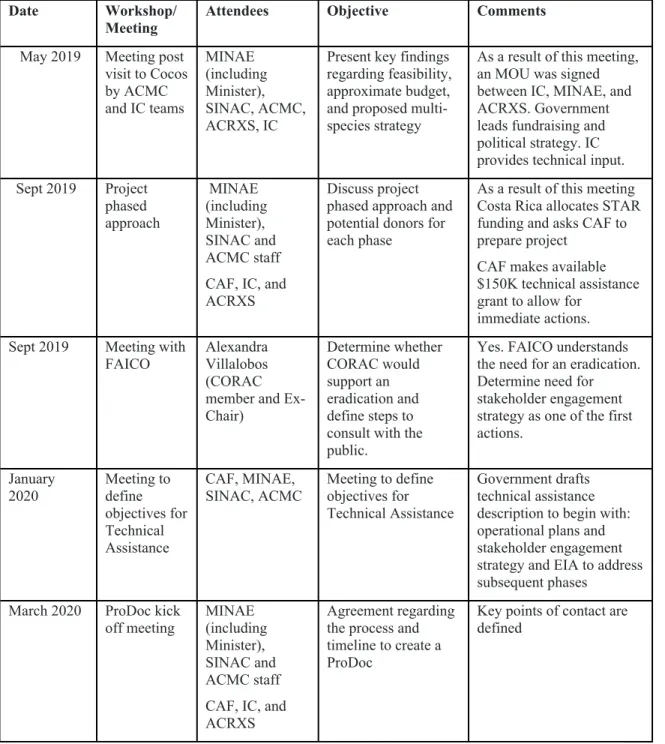
Beginning in 2019, IC has undertaken a series of stakeholder consultations, focused on issues relating to the development and eventual implementation of the present project and other finance for invasive species eradications. Examples of some of these consultations are listed in the table below.
Table 1: Summary of consultations to date
Date Workshop/
Meeting Attendees Objective Comments
May 2019 Meeting post visit to Cocos by ACMC and IC teams
MINAE (including Minister), SINAC, ACMC, ACRXS, IC
Present key findings regarding feasibility, approximate budget, and proposed multi- species strategy
As a result of this meeting, an MOU was signed between IC, MINAE, and ACRXS. Government leads fundraising and political strategy. IC provides technical input.
Sept 2019 Project phased approach
MINAE (including Minister), SINAC and ACMC staff CAF, IC, and ACRXS
Discuss project phased approach and potential donors for each phase
As a result of this meeting Costa Rica allocates STAR funding and asks CAF to prepare project
CAF makes available
$150K technical assistance grant to allow for
immediate actions.
Sept 2019 Meeting with
FAICO Alexandra
Villalobos (CORAC member and Ex- Chair)
Determine whether CORAC would support an eradication and define steps to consult with the public.
Yes. FAICO understands the need for an eradication.
Determine need for stakeholder engagement strategy as one of the first actions.
January
2020 Meeting to
define objectives for Technical Assistance
CAF, MINAE,
SINAC, ACMC Meeting to define objectives for Technical Assistance
Government drafts technical assistance description to begin with:
operational plans and stakeholder engagement strategy and EIA to address subsequent phases
March 2020 ProDoc kick
off meeting MINAE (including Minister), SINAC and ACMC staff CAF, IC, and ACRXS
Agreement regarding the process and timeline to create a ProDoc
Key points of contact are defined
Project Stakeholders
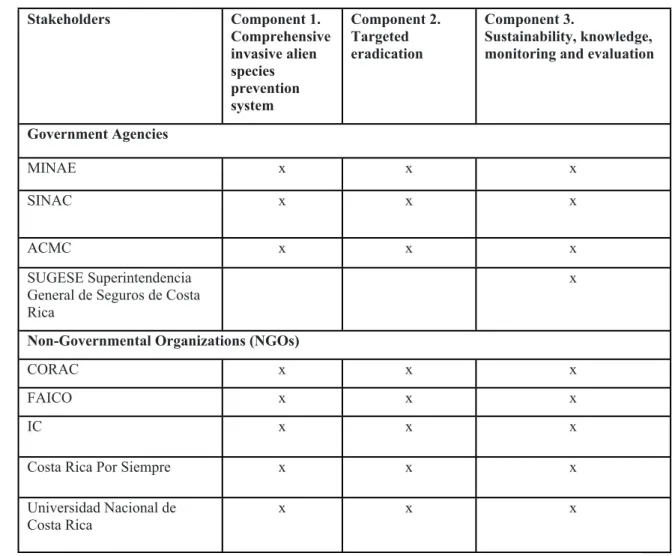
Among the strategic actors are: the partner institutions that endorse and will participate in the execution of the project; the institutions that are contributing funding to implement each of the components of the project, and; the target group that constitutes the institutional technicians who are in charge of co- executing the activities of each component. The table below links stakeholders to relevant project components.
Table 2: Stakeholder identification, by project component
Stakeholders Component 1.
Comprehensive invasive alien species prevention system
Component 2.
Targeted eradication
Component 3.
Sustainability, knowledge, monitoring and evaluation
Government Agencies
MINAE x x x
SINAC x x x
ACMC x x x
SUGESE Superintendencia General de Seguros de Costa Rica
x
Non-Governmental Organizations (NGOs)
CORAC x x x
FAICO x x x
IC x x x
Costa Rica Por Siempre x x x
Universidad Nacional de
Costa Rica x x x
In addition, provide a summary on how stakeholders will be consulted in project
execution, the means and timing of engagement, how information will be disseminated,
and an explanation of any resource requirements throughout the project/program cycle to ensure proper and meaningful stakeholder engagement.
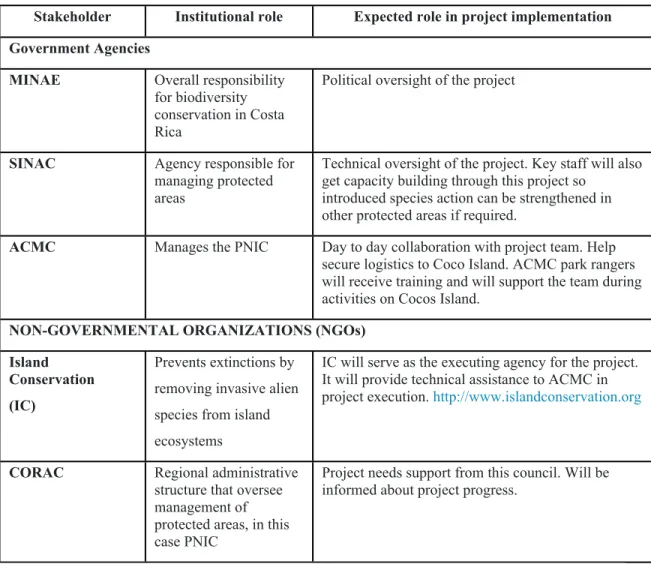
Table 3 describes the expected role of the above institutions in project implementation
Table 3. Stakeholder roles, overall and with respect to project
Stakeholder Institutional role Expected role in project implementation Government Agencies
MINAE Overall responsibility for biodiversity conservation in Costa Rica
Political oversight of the project
SINAC Agency responsible for managing protected areas
Technical oversight of the project. Key staff will also get capacity building through this project so
introduced species action can be strengthened in other protected areas if required.
ACMC Manages the PNIC Day to day collaboration with project team. Help secure logistics to Coco Island. ACMC park rangers will receive training and will support the team during activities on Cocos Island.
NON-GOVERNMENTAL ORGANIZATIONS (NGOs) Island
Conservation (IC)
Prevents extinctions by removing invasive alien species from island ecosystems
IC will serve as the executing agency for the project.
It will provide technical assistance to ACMC in project execution. http://www.islandconservation.org
CORAC Regional administrative structure that oversee management of protected areas, in this case PNIC
Project needs support from this council. Will be informed about project progress.
Select what role civil society will play in the project:
Consulted only; Yes
Member of Advisory Body; Contractor;
Co-financier; Yes
Member of project steering committee or equivalent decision-making body;
Executor or co-executor; Yes Other (Please explain)
N/A
3. Gender Equality and Women's Empowerment
Provide the gender analysis or equivalent socio-economic assesment.
Since Isla del Coco has no permanent inhabitants, and given the nature of the project, opportunities for gender mainstreaming are limited. However, consistent with the need to ensure gender mainstreaming throughout the project, the Results Framework has been modified to indicate the specific number of women and men directly benefitting from the project, which is also consistent with GEF-7 Core Indicator 11 (see Results Framework, Indicator 3.2). Compliance with the required outputs and standards of the GEF gender policy will be subject to independent external auditing to be explicitly referenced in the Project Operations Manual, in all Subsidiary Agreements between CAF and the project?s Executing Agencies, and in the Terms of Reference for the Terminal Evaluation of the project.
A gender analysis and mainstreaminbg plan has been added as Annex 7 to the CAF project document, and as a separate document in the GEF Portal (Road Map-Documents section).
Does the project expect to include any gender-responsive measures to address gender gaps or promote gender equality and women empowerment?
No
Closing gender gaps in access to and control over natural resources;
Improving women's participation and decision making Generating socio-economic benefits or services or women
Will the project?s results framework or logical framework include gender-sensitive indicators?
Yes
4. Private sector engagement
Elaborate on private sector engagement in the project, if any
Private sector dive operators will be engaged under Component 1 to ensure their understanding of, and compliance with, IAS prevention protocols, including possible requirements related to hull cleaning, insect traps, etc.
5. Risks to Achieving Project Objectives
Elaborate on indicated risks, including climate change, potential social and environmental risks that might prevent the project objectives from being achieved, and, if possible, the proposed measures that address these risks at the time of project implementation.(table format acceptable):