Vol-7, Special Issue-Number5-July, 2016, pp359-367 http://www.bipublication.com
Research Article
Molecular analysis of G202010A mutation in factor II of blood coagulation and
its relationship with polymorphism rs5030737 of
MBL gene in recurrent pregnancy loss
Neda Mohammad Rafiee¹, Hussein Rasi*2 and Mahdi Goudarzvand³ 1,2
Department of Biology,
Karaj branch, Islamic Azad University, Karaj, Iran
3Department of Physiology and Pharmacology, School of Medicine,
Alborz University of Medical Sciences, Karaj, Iran. *Correspondence Author: [email protected]
ABSTRACT
Purpose: Miscarriage means ending a pregnancy at any stage of the fetus. Recurrent pregnancy loss is defined as two or more loss of pregnancy to be detected continuous or discontinuous before the twentieth week of pregnancy.Mutations in the gene for coagulation factor IIand MBL gene can be involved in miscarriage. Hence, according to importance of this issue, the purpose of this study is to investigate G20210A mutation of coagulation factor IIand its relationship with polymorphism rs5030737 of MBL gene to evaluate on-time diagnosis and treatment of miscarriage.
Method: in order to conduct the study, 41 patients with history of miscarriage and 48 healthy women with successful delivery were selected. A questionnaire was fulfilled by them to insert comprehensive information including history of miscarriage, history of miscarriage among relatives, age, weight, blood type, type of marriage and smoking. Then, blood sample of every one was taken. The blood samples were transferred to the laboratory and after extraction of DNA from each of samples, G20210A mutation in coagulation factor IIandtype of polymorphism rs5030737 in MBL gene was determined using PCR method. Finally, analysis of the results and assessment of other important and effective factors in them was done using Epi Info software and using chi square (X2) test.
Results: among the patients, frequency of patients with one miscarriage was determined to 29.25%; frequency of patients with two miscarriages to 58.85% and frequency of patients with 3 miscarriages was obtained to 4.9%. In regard with assessing G20210A mutation in coagulation factor II, frequency percent ofheterozygous or carriers were equal to 7.3% among patients and to 2.1% for healthy individuals. Among them, frequency of available genotypes included GG: 92.6%; GA: 7.3%, AA: 0 in patient group and GG: 97.9%, GA: 2.1% and AA: 0 in healthy individuals. On the other hand, frequency of types of polymorphism of MBL included BB: 17%; AB: 22% and AA: 61% in patients group and BB: 4.1%; AB: 31.3% and AA: 64.6% in healthy individuals. Statistical analysis of frequency of types of genotype of G20210A mutation and types of alleles of polymorphism rs5030737 in MBL gene has not been significant statistically between two patient group and control group in level of p=0.05; although the opportunity to have miscarriage in GA genotype and BB allele is to 3-4 times more than control group. In general, two factors of G20210A mutation and MBL polymorphism have not affected each other infirst trimester miscarriages and can't empower each other at the same time for recurrent pregnancy loss.
Keywords: mutation, DNA, gene, G20210A, MBL, Recurrent Pregnancy Loss, miscarriage.
INTRODUCTION
Recurrent pregnancy loss is defined astwo or more pregnancy losses continuously or discontinuously before week 20of pregnancy orlive births
attitude to help professional caregivers for evaluation and consultation of couples with miscarriage [3]. Brenner B. (1999)[4] has investigated on types of polymorphism of factors Vand II, especially in women suffering from infertility and recurrent pregnancy loses. Swanson et al (1996)and Antred J et al (2002) have presented evaluation of the Relationship of G20210A Prothrombin mutation with 3.3% increase in miscarriage in end of pregnancy. Moreover, G20210A Prothrombin mutation can increase the risk of fetal growth retardation to 4.6-5.9 times and placenta detachment to 8.9 times. Assessing the polymorphism can be also done in people withvenous thrombosis regardless of age (before or after 45 years old) environmental conditions (thrombosis caused by irritation or non-irritation) and illness severity. Patients with hematologic malignancies, people who a member in their family is recognized as carrier of the polymorphisms and also women with positive family history of thrombophilia that tend to useContraceptive methods or hormonal treatments are also investigated in terms of these polymorphisms. Fat'hi et al (2008) have studied polymorphism of MBL gene in Azari people of Iran. Blood samples were provided from 144 Azari people of Tabriz and surrounding areas. MBL genotypes were measured using PCR-RFLP method. Prevalence ofHaplotype allele B and LX in these people demonstrated that it can lead toprotection against intracellular pathogens such as Leishmaniaor Tuberculosis (TB). However, it can reversely lead toSensitivity to external pathogens, SLE and rheumatoid arthritis (osteoarthritis) [5]. DeGeijnet al (2011) has demonstrated in a study that MBL protein has not effect on pregnancy process of patients withrheumatoid arthritis [6]. Christiansen et al (2009) has conducted a study on MBL gene polymorphisms and has found that there is direct relationship betweenMBL serum deficiency levels and recurrent miscarriages [7].Gihan E-H Gawish (2015) has demonstrated in a study that there is very strong relationship among the combinational
miscarriage [15]. Port M et al (2014) have found thata single mutation in the prothrombin gene in localized areas of 3'F2 has been inherited thrombophilia factor and this can result in complexity in pregnancy. Ardestani M et al (2013) have studied frequency ofFactor II G20210A mutation and factor V Leiden mutation in women with recurrent miscarriage and have found that frequency ofFactor V Leiden mutation in patients has been equal to 2.5% and higher than control group (1.25%). However, no significant difference has been found. Moreover, the studies indicated that G20210A mutation was found in no one in patient or control groups [16].
MATERIALS AND METHODS
This study is in kind of Case-Control research and is also a fundamental research with experimental procedure. The study is performed on41 women
who have experienced 1, 2 or more times pregnancy loss in history of their pregnancy. After signing the consent papers, they were selected as patient group and 48 women without experience of pregnancy loss and with at least one live birth were selected as control group from volunteers. About 1ml blood sample was taken from every person and was transferred to the laboratory under cold conditions in tubes containing EDTA (an adequate anticoagulant that deactivates DNA enzyme with chelating bivalentscations) in least time possible. Extraction of DNA was done using Cinnagen kit (DN8115C). Toensure of extraction of DNA, 1% Agarose gel was used to perform electrophoresis and DNA was maintained under temperature of -20°C until beginning analysis.
Assessment of PCR reaction in G20210A mutation in coagulation factor II
After extraction of DNA, PCR reaction was used to measure G20210A mutation in coagulation factor II usingCinnagen kit (PR8251C) and specific primers of the mutation witha concentration of 0.5 macro molar and finally, 2% Agarose gel was applied for electrophoresis.
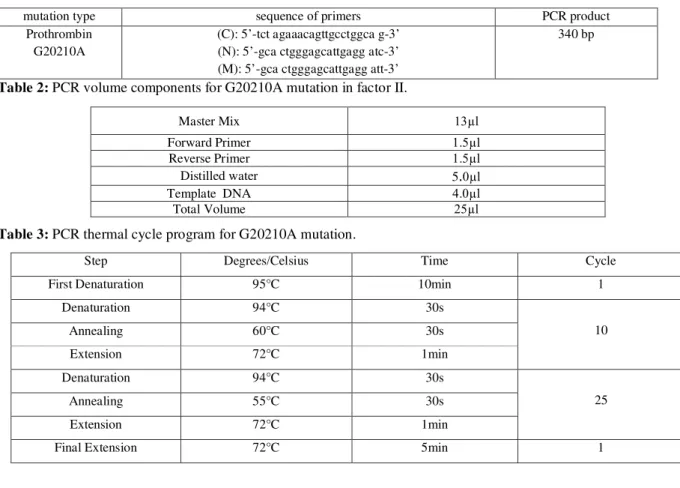
Table 1: The sequence of primers used to amplify the mutated region G20210A.
Table 2: PCR volume components for G20210A mutation in factor II.
Table 3: PCR thermal cycle program for G20210A mutation.
PCR product sequence of primers
mutation type
340 bp (C): 5’-tct agaaacagttgcctggca g-3’
(N): 5’-gca ctgggagcattgagg atc-3’ (M): 5’-gca ctgggagcattgagg att-3’ Prothrombin G20210A 13µl Master Mix 1.5µl Forward Primer 1.5µl Reverse Primer 0µl . 5 Distilled water 4.0µl
Template DNA
Assessment of PCR reaction for MBL polymorphism proliferation (rs5030737)
rs5030737 polymorphism proliferation is done using Cinnagen kit number (PR8252C) using PCR and specific primers synthesized by Cinnagen Company.
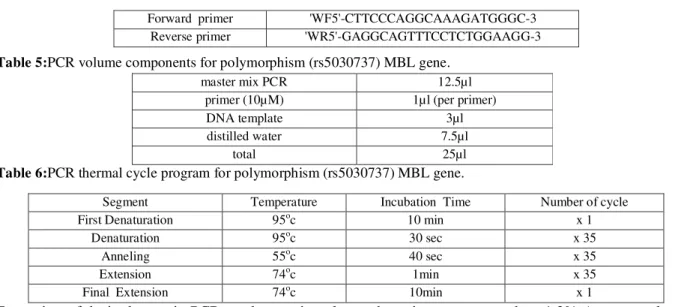
Table 4: Theinformation of sequence of primers used in polymorphism (rs5030737) of MBL gene.
Table 5:PCR volume components for polymorphism (rs5030737) MBL gene.
master mix PCR 12.5µl
primer (10µM) 1µl (per primer)
DNA template 3µl
distilled water 7.5µl
total 25µl
Table 6:PCR thermal cycle program for polymorphism (rs5030737) MBL gene.
Formation of desired parts in PCR products using electrophoresis was measured on 1.3% Agarose gel and to determine type of the desired genotype, RFLP method is applied. The RFLP reaction was done by Ban I enzyme and diagnostic kit of New England Bio Labs. For purpose of data analysis, Epi Info 7.1.3.10 and chi square (X2) test are applied.
RESULTS
Comparing frequency percent of pregnancy loss samples (patient)
According to the investigations,frequency of miscarriage samples in statistical population is presented in table 7.
Table 7: frequency of samples.
number of miscarriage samples in statistical population
frequency percent of onetime miscarriage samples
frequency percent of 2times miscarriages samples
frequency percent of 3 timesmiscarriages samples
41 29.25% 65.85% 4.9%
Frequency of age groups in patient samples
Table 8: frequency of age groups of patients with recurrent pregnancy loss.
age group ≤25 years old >25 years old
frequency percentage 39.1% 60.9%
It is observed that when there isincreasing in age,the number of patients with pregnancy loss syndrome is increased significantly.
Frequency of Rhof blood type in patients with pregnancy loss
Table 9: frequency of Rhof blood type in patients with pregnancy loss.
Rh type Rh⁺ Rh⁻
frequency percentage 68.3% 31.7%
Comparing frequency ofConsanguinity marriage in patient group
Table 10: frequency percent of consanguinity marriage in patient group.
type of marriage patient group control
frequency percentage 19.5 4.1
(X²=5.22, P=0.05)
WF5'-CTTCCCAGGCAAAGATGGGC-3 '
Forward primer
WR5'-GAGGCAGTTTCCTCTGGAAGG-3 '
Reverse primer
Number of cycle Incubation Time
Temperature Segment
x 1 10 min
95oc First Denaturation
x 35 30 sec
95oc Denaturation
x 35 40 sec
55oc Anneling
x 35 1min
74oc Extension
x 1 10min
Pregnancy loss backgroundfrequency comparison inFirst-degree relatives of patient and control group
Table 11: Frequency of pregnancy loss background in first-degree relatives. consanguinity pregnancy loss
background patient group control group
frequency percent 24.3 8.33
(X²=4.30, P≤0.05)
G20210A mutation analysis results in Coagulation factor II
According to the investigations, The GAgenotype is carrier and is affected by mutation. Moreover, GG genotype is healthy and no mutation is occurred in it.
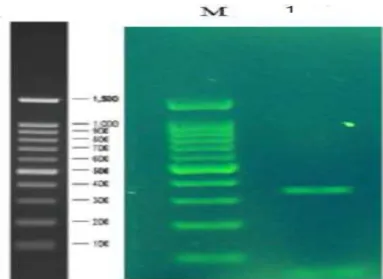
Figure 1: PCR reaction results for G20210A mutation diagnosis. 100bp marker molecular sink M – sink 1 containing 340bp section
According to statistical analysis, X2 in this method is equal to 1.85, which indicates that frequency of the mutation in patient group indicates no significant difference compared to healthy group in level of p≤0.05. However, the chance to haveHeterozygous of the mutation in patient group has been about 3.5 times more than healthy group.
Frequency percentage of G20210 mutation in statistical population
Frequency of the mutation in statistical population for each genotype is presented in table 12.
Table 12: Frequency comparison of G20210A mutation in statistical population.
genotype Patient samples (%) Control samples (%)
GG 92.6 97.9
GA 7.3 2.1
AA 0 0
According to table 12, the most frequency percentage in patients to 92.6% is related to GG genotype and without mutation and the lowest frequency percent to 7.3% is related to GA genotype (patients with mutation). In control group, the most frequency to 97.9% is related to GG genotype without mutation and the lowest frequency to 2.1% is related to GA genotype.
G20210A mutation analysis in two groups of age ranges of patient population
Table 13: G20210A mutation frequency comparison in different age groups.
genotypes-age group ≤25 years old (%) >25 years old (%)
GG 44 48.7
GA 0 7.3
According to table 13,the most frequency of GG and GA genotypes is observed in age range of over 25 years old.
Frequency percentage of polymorphism rs5030737 of MBL gene in statistical population
Frequency of this type of polymorphism of MBL gene in statistical population for each allele is presented in table 14.
Table 14: comparing frequency ofpolymorphism rs5030737 of MBL gene in statistical population. allele type Patient samples (%) Control samples (%)
AA 61 64.6
AB 22 31.3
BB 17 4.1
According to table 14,themost frequency percentage in patients to 61% is related to AA allele and the lowest frequency in patients to 17% is related to BB allele. In control group, the most frequency percent to 64.6% is related to AA allele and lowest frequency to 4.1% is related to BB allele.
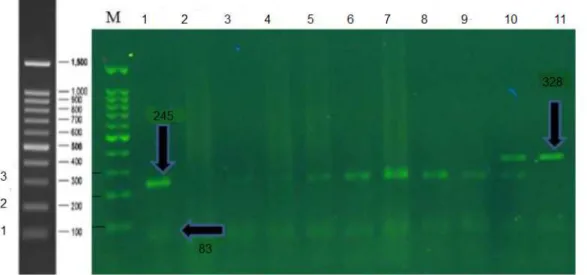
Figure 2: PCR-RFLP reaction resultsfor MBL genotypesdiagnosis; sink M and marker molecular of 100bp, sinks 1, 3, 4, 5, 6, 7, 8 and 9 of alleles A/A-sink 2 negative sample – sink 10 of allele A/B sample – sink 11 of B/B allele sample According to statistical analysis, X2 in this method is equal to 2.77 that indicate no significant difference in level of p≤0.05. Alsothe opportunity of BB allele in patient group has been about 4.5times of healthy group. Analysis of rs5030737 polymorphism of MBL gene in 2 age groups of statistical population
According to table 15, the highest frequency related to AA allele is observed in age range over 25 years old and the lowest frequency related to BB allele is observed in age range below 25 years old.
Table 15: Frequency of rs5030737 polymorphism of MBLgene comparison in different age ranges. allele types-age range ≤25 years old (%) >25 years old (%)
AA 26.9 34.2
AB 12.1 9.7
BB 4.9 12.2
Analysis of the relationship of G20210A mutation with rs5030737 polymorphism of MBL gene
According to statistical analysis and using X2 formula, obtained results show that there is no significant correlation between G20210A mutation and rs5030737 polymorphism of MBL
gene. It means that the two mutations can't affect
emergence of recurrent pregnancy
losssimultaneously.
DISCUSSION AND CONCLUSION
according to obtained results, frequency of AA, GA and GG genotypes of the mutation in patient group are respectively equal to 0, 7.3 and 92.6%; although in control group, frequency of the genotypes is respectively equal to 0, 2.1 and 97.9%. It could be found that frequency in patient group is not significantly different from healthy group; although opportunity to haveHeterozygous of the mutation in patient group has been about 3.5 times of healthy group. In another study conducted by Zenuzi et al (2010) [17] on frequency of genotypes of G20210A FII in two patient groups, frequency of genotypes AA, GA and GG is respectively equal to 0, 2 and 98%; although in control group, the frequency has been respectively equal to 0, 0 and 100%. This issue demonstrates that there is no significant statistical difference between frequencies of studied mutations of two groups. In another study conducted by Ardestani et al (2012) [16], similar results are obtained. Although frequency of coagulation factor V in patient group is obtained to 2.5% and to 1.25% in control group, there was no significant difference between the two groups. Moreover, G20210A mutation has been observed in no group. In another study by Gihan et al (2015) [8], different results from results of the present study are obtained. The study showed that frequency of genotypes in G20210Amutation is significantly different in patient group (35%) and control group. Moreover, as the mentioned study has investigated two other mutations related to coagulation factors MTHFRC677T and G1691A, it has been found that there is a significant correlation among 3 mutations ofG20210A
،MTHFRC677T and G1691A in terms of affecting recurrent pregnancy losses. On the other hand, study of Mahjoob et al (2005) has demonstrated that frequency of factor V Leiden mutation (0.1400 vs. 0.0276; P < 0.001) and not FII G20210A mutation (0.0100 vs. 0.0225; P=0.159) in patient group has been more than control group [18]. Therefore, through comparing obtained results from thepresentstudy and previous studies, it could be mentioned that G20210A mutation in
results have been obtained [19]. Through studying results of previous studies and the present study, as G20210A mutation in FII coagulation is common mostly in second trimester of pregnancy and in case if emergence in first trimester, it needs an amplifying factor; and considering this issue that this study has been conducted on first trimester pregnancy losses; it could be found that two factors of G20210A mutation and MBL polymorphism have no effect on each other in first trimester pregnancy losses and can't amplify each other simultaneously for emergence of recurrent pregnancy loss.
REFERENCES
1. ValianBoroujeni. S "assessment recurrent pregnancy loss and the importance of genetic factors", Journal of Laboratory & Diagnostic, Fall2014, Number 25, pages 41-37.
2. Wong L, Porter T, Jesús Gd., Recurrent early pregnancy loss and antiphospholipid antibodies: where do we stand? Lupus, 23(12):1226-8, 2014.
3. The practice committee of the American society for reproductive medicine. Evaluation and treatment of recurrent pregnancy loss: a committee opinion. Fertility and Sterility, 98 (5): 1103-11, 2012
4. Brenner B. Inherited thrombophilia and pregnancy loss. ThrombHaemost 1999;82:634 – 40.
5. Fathi, F,AsgharZadeh, M,Pourostadi, M, Mularasuli, Z, SamadiKafil, H, 2006, the identification of Mycobacterium tuberculosis strains resistant to isoniazid by PCR, the Fifteenth International Congress of Medical Sciences, Islamic Azad University, Tabriz branch
6. Fleur E van de Geijn, Yaël A de Man, Manfred Wuhrer, Sten P Willemsen, André M Deelder, Johanna MW Hazes, Radboud JEM Dolhain ,Mannose-binding lectin does not explain the course and outcome of pregnancy in rheumatoid arthritis, Biomed Central, 2011.
7. Ole B. Christiansen, Henriette S. Nielsen1, Marie Lund1, Rudi Steffensen, and Kim Varming, Mannose-binding lectin-2 genotypes and recurrent late pregnancy losses, Human Reproduction, Vol.24, No.2 pp. 291–299, 2009 8. Gihan E-H Gawish, The Prevalence of Inherited Thrombophilic Polymorphisms in Saudi Females with Recurrent Pregnancy Loss Confirmed using Different Screening Protocols of PCR., J Mol Genet Med, Volume 9 • Issue 1 • 1000156, 2015.
9. Robert M. Silver, MD, Yuan Zhao, MS, Catherine Y. Spong, MD, BahaSibai,
MD,GeorgeWendelJr, MD, Katharine
Wenstrom, MD, Philip Samuels, MD, Steve N. Caritis, MD, Yoram Sorokin, MD,
MenachemMiodovnik, MD, Mary J.
O’Sullivan, MD,Deborah Conway, MD, and Ronald J. Wapner, Prothrombin Gene
G20210A Mutation and Obstetric
Complications, OBSTETRICS &
GYNECOLOGY, VOL. 115, NO. 1,
JANUARY 2010.
10.Sultan GharaiH,Memarian T, A'arabi, M., Hantooshzadeh, S, Arefi, S, A'arabi M, Akhondi, M, Modaresi, S.H, "Relationship between gene polymorphism of PAI-1, ACE and coagulation factor 13 recurrent spontaneous abortion in Iranian patients." Journal of reproduction and infertility, winter 2006, Volume 7, Number 4 (29); pp.324-330. 11.Soltani. A, SA. Rahmati Rad, Z. Pourpak, Z.
Alizadeh, b. Haji Beigi, M. Zaidi, A. Farazmand, "The genetic polymorphism in exon 1 MBL2 gene and its relationship with serum levels of MBL protein in the population from Tehran", Journal of Molecular Cell Biology, Volume 26, Number 4, 2013.
12.O. B. CHRISTIANSEN, D. C. KILPATRICK, V. SOUTER, K. VARMING, S. THIEL &J. C.
JENSENIUS, Mannan-Binding Lectin
13.13.Dara S. Berger &ZaherMerhi& W. Allen Hogge& Robert E. Ferrell, Mannose binding lectin genotypes are not associated with
increased risk of unexplained
recurrentpregnancy loss, J Assist Reprod Genet (2013) 30:723–727.
14.14.Alireza Parand, JaleZolghadri , MozhganNezam , AbdolrezaAfrasiabi , SezanehHaghpanah , MehranKarimi , Inherited Thrombophilia and Recurrent Pregnancy Loss, Iran Red Cres Med J. 2013;15(12):e13708.
15.15.Manouchehr Mazdapour,
FarzanehHasanian-Langroudi, AsoLavei, Iman Seyhon1, Study on the Relationship of G20210A Prothrombin mutation with Unexplained recurrent Spontaneous Miscarriage, ABR Vol 5 [3] September 2014. 16.Torre MahiArdestani. M, H,Nodoushan. E.,
Aflatunian. AS., Ghasemi. N., Sheikhha. M. , "Case-control study to evaluate the frequency of mutation factor - V Lydyn factor II G20210A mutations in women with recurrent spontaneous abortion" Journal of Reproductive Medicine, Vol. XI, No. 1, January 11, pages 41- 46, 2012.
17.ZenoziPoursadegh. A, Sakhinia N., Chaparzadeh. N., "Molecular analysis of gene mutations common in women with abortion spontaneous Prothrombic factors" Cell and Molecular Biology graduate thesis Teacher Training University, Azerbaijan. Persian date Sep2010.
18.TouhamiMahjoub, Nabil Mtiraoui,1 HalaTamim, SondesHizem, Ramzi R. Finan,BrahimNsiri, and Wassim Y. Almawi4, Association Between Adverse Pregnancy Outcomes and Maternal Factor V G1691A (Leiden) and ProthrombinG20210A Genotypes in Women With a History of Recurrent Idiopathic Miscarriages,American Journal of Hematology 80:12–19 (2005).
19.Steffensen R. , Thiel S. , Varming K. , Jersild C. , Christian Jensenius J. , 2000, Detection of Structural Gene Mutations and Promoter Polymorphisms in The Mannan-Binding Lectin