Albanian j. agric. sci. ISSN: 2218-2020, (2012), Nr. 2/Vol.11 © Agricultural University of Tirana
POLYPARASITISM AND DAMAGE OF SMALL RUMINANTS’ EFFICIENCY
IN THE DISTRICT OF ELBASAN, ALBANIA.
NEZIR GJONI1, ESMERALDA SHERKO2, NEFAIL BIBA2, JORGJI STASA3, BEJO BIZHGA2*
1
Veterinary Doctor Elbasan
2
Faculty of Veterinary Medicine, Agricultural University of Tirana
3
Faculty of Agriculture & Environment, Agricultural University of Tirana
* Author of correspondence; Email: [email protected]
Abstract:
Parasitic diseases cause loss of productivity in sheep and polyparasitism is already a widespread phenomenon. This paper brings forward a preliminary parasitic study as well as data on sheep productivity, by testing samples of productive animals in the district of Elbasan. The samples were gathered and examined during the seasons that display parasitic culmination in sheep, in spring, autumn and winter. Parasitic examinations were performed in the Veterinary Laboratory in Elbasan under a permanent supervision by the Sector of Parasitolgy from the Faculty of Veterinary Medicine in Tirana. The parasitic diagnostic methods that were used, were direct. Comparisons were later drawn, based on the results of previous years by the studies carried out previously by the FVM and the Veterinary service in the county of Elbasan. Each sample was analyzed with the method of sedimentation for the trematodes (fasciola, dicrocoelium, paramphistomum), the method of flotation (Mc Master) for the gastrointestinal strongyloidiasis, dicrocoelium, strongyloides, trichuris and cestodes and the Berman method for the bronchopulmonary strongyloidiasis. The most important species resulted Fasciola hepatica, the gastrointestinal strongyloidiasis, the bronchopulmonary strongyloidiasis, which were observed all over the examined herds. The parasite load of fascioliasis in sheep fluctuated from 48 e/g/f to 114 e/g/f, dicrocoeliasis from 0 e/g/f to 60 e/g/f in winter; of the paramphistomum from 24 e/g/f to 72 e/g/f; of the gastrointestinal strongyloidiasis from 24 e/g/f to 240 e/g/f, of the bronchopulmonary strongyloidiasis from 12 l/g/f – to 120 l/g/f. Trichuris ovis was observed in almost uniform values from 6 e/g/f to 36 e/g/f. Cestodes were diagnosed in all the seasons, but their level culminated in spring. The study showed that polyparasitism in sheep is a real phenomenon which damages health and efficiency. Therapy and prophylaxis against parasites in sheep must be applied regularly and it must take into consideration the parasite load as well as the biological cycle of the parasites.
Keywords: parasites, sheep, faecal samples, parasite load, Elbasan.
1. Introduction
Helminthosis in sheep has polyspecific etiology. Several kinds of helminths can be found within each individual, which simultaneously damage the liver, the digestive system as well as the respiratory tract. The precise identification of the negative effects of polyparasitism in the livestock production deriving from sheep requires examinations. These examinations depend on the climatic conditions for each area, productive categories, the form of breeding, leading the production as well as concrete possibilities of the veterinary specialists to evaluate the negative effects of these diseases and to differentiate them from those of other origin. Below there is a table nr. 1 of the data concerning the number of head in the district of Elbasan over the period of time from 1990 to 2011 to give accurate and valuable knowledge about this problem to farmers and specialists. Polyparasitism is a
Table 1. Number of sheep head in the district of Elbasan by years.
Unit/ Years 1990 1994 1999 2005 2011
Sheep 59372 63398 59974 62260 70335
Milking sheep 40293 44182 47395 44100 46670
Table 2. Average productivity of milk in sheep for the district of Elbasan in different years.
Year 1993 1994 2002 2004 2007 2008 2009 2010 2011
Productivity 56 62 48 43 53 56 56 62 64
Figure 1: Study area.
The table 2 also provides data on sheep productivity for this district for the period 1993-2011. This productivity presents its own oscillations which in a lot of cases are attributed to the conditions of welfare and the phenomenon of parasitism.
During a season of studies, sampling and evaluation of the data was carried out in three areas in order to ensure reliable data as such as figure 1. The representative sample consisted of a minimum of 50 sheep. The samples were chosen for each season by three sheep herds for any area. In addition to the collective sample in each working season, 5 randomly chosen samples were examined, which served as an indicator for the values obtained for the herd. Season was conceived the period during April- May for spring, September – November for autumn and January – February for winter. 27 collective samples and 135 individual samples by the sheep herds, were examined during one whole year.
2. Material and Methods
The sample of the sheep was conceived as a sample of the herd. For this reason 100 grams of faeces were samples, which represented a homogenous mixture of at least 50 % of the head of the herd [7, 13]. It was taken and examined while
being fresh, within 24 hours from the moment it was obtained.
2.1. Mc Master technique (MAFF, 1986).
3 gr faeces and 42 ml. Saturated salt solution with 45-50 glass spheres were put in a jar of 100 ml which was closed tightly with a lid. The content of the jar was shaken up to thorough homogenization. This mixture was later filtered through a sieve with a thin mesh (width of pores 0.15-0.25 mm) in one beker. The Mc Master slide was filled in with liquid taken by the filtrate with a Paster pipet [13]. The Mc Master slide was examined under a microscope 2-3 minutes after having been filled, so that the eggs appeared on surface. When only one side of the Mc Master slide was counted the resulting number was multiplied with 100, when counted on both sides the number found from both was multiplied with 50 and when the three sides were counted the resulting number was multiplied with 33. The real obtained number is the number of eggs per 1 gr faeces [7, 13].
2.2. Precipitation technique.
The basis of this technique relies on the considerably specific low weight of the used solutions, which allow the precipitation of the forms of larvae and eggs in the end. This method was used for the eggs of Fasciola spp., Dicrocoelium spp.,
Paramphistomum spp., as well as the larvae of the lung nematodes [3, 7, 10, 13].
2.3. Benedek technique of modified
sedimentation[2, 5, 7].
5 gr faeces were taken, put in a bowl and added 150-200 ml tap water, then they were homogenized. The mixture was filtered in a beker 250 through a porous filter 250-300 µm. Several drops from a detergent were used to lower the surface pressure. Thus the eggs were found at the bottom of the bowl. After waiting for 15-20 still minutes the supernatantin was poured 1 cm from the last layer. This process was
117
repeated 3 or 4 times until the water was cleaned completely. After the last process of sedimentation, while keeping still the bottom precipitated layer, all the remaining water was poured only keeping 50 ml precipitation. To calculate the parasite load 10 ml sediment, which represented the quantity of eggs in 1 gram faeces, was poured onto e Petri plate later adding two drops of 1 % -e methylene blue (the cuttings of the plants became blue, whereas the eggs took their characteristic colours). Afterwards it was examined with an objective x10 and the necessary differentiations and calculations were done.2.4. Baermann technique.
This method was used to collect and count the larvae of the nematodes found in faeces [16] on land and in animal tissues [2, 10]. It was used for the lung nematodes [13, 15, 16]. The culture of the faeces was performed, and the larvae of the gastrointestinal and bronchopulmonary nematodes were transformed into L3 [2, 7]. The following larvae were obtained through this method: Dictyocaulus spp., Muellerius spp.,
Cystocaulus spp., Protostrongylus sp. Metastrongylus
spp., Aelustrongylus abstrusus [8, 14]. But L1 or infectous larvae of Filaroides osleri and Filaroides hirthi are lethargic. They might easily move away from the faeces and it is very difficult to find them [2, 4]. The basis of the technique lies in the larvae that prefer waters and because of their gravity they are collected at the bottom of liquids. For this purpose the Baermann method is used with different modifications [4, 7, 10]. .
3. Results and Discussion
Polyparasitism resulted to be a frequent phenomenon in sheep in the district of Elbasan, despite the area and the season of carrying out the study [1, 8]. In the results of parasite load in sheep in the district of Elbasan, we notice values which often confirm severe damage of efficiency. However there is not always a proper correlation between the number of eggs found in one gram of faeces with the number of parasites found in sheep. This correlation was proved while gathering data during necropsy.
We noticed that the obtained values for the eggs and larvae in the fresh faeces resulted in full correlation with the type of the parasite and their number in the parasitized sheep. It is noticed that in sheep during spring (Table 3) the quantity of the fasciolia eggs in 1 gram faeces, calculated with the
method of rapid sedimentation, varies from 60 to 114 e/g/f and on average 91 e/g/f [3, 7, 13]. The lowest level resulted in the farms of mountainous areas and the highest level in the lowland farms, in river or stream banks.
According to the calculations this level is classified as an invasion, which must be estimated and evaluated, as it is able to influence the health and efficiency of farms. Fascioliasis is a disease of the pastures and progresses while closely related to the environmental conditions. Wherever there are still ponds or waters that move slowly there is fascioliasis.
118
in Muriqan, two herds in Jagodinë, one herd in Bujqës, two herds in Bradashesh, one in Labinot etc. If we compare the level of infestation according to the data from FVM and the Veterinary service of the district, the peak of infestation by fascioliasis of the sheep herd was during 2002-2003. Thereafter this level has been decreasing, but there was again an increase of the infestation level in 2008-2009.N/e/g/f of dicroceliosis by the obtained data only confirms trematode polyparasistism in sheep. The results show that it might cause slight health damages only in the lowland areas, in places where the biology of the intermediate hosts is favoured, in humid places or in river or stream banks. The highest parasite load resulted 60 e/g/f and was evidenced during winter. According to the observations over years as well as results obtained by the study dicroceliosis is not a problem for sheep in the district of Elbasan. The results of the study are approximate to those of the literature for our region, especially during spring.
Paramphistomum in sheep offered parasite load up to the degree that the it could cause slight subclinical alterations. The maximal level resulted 72 e/g/f for Paramphistomum cervi. There were no alterations in values of paramphistomum between spring and autumn. Winter resulted to have the highest parasite load. The gastrointestinal strongyloidiasis in spring results up to levels which are considered as problematic. The results offered by laboratory examinations for SGI in spring are problematic and confirm that we are in the culmination of the phenomenon of “lactation rise” [1, 8]. The highest level is 240 e/g/f in farms of the lowland area. It is a load which should be taken into consideration, although this parasite load refers to all kinds of gastrointestinal strongyloidiasis in sheep. Parasite load in autumn resulted lower between 42 and 72 e/g/f. Results between 42 and 54 e/g/f of SGI for winter show that they do not result problematic for sheep in the district of Elbasan.
The level of the bronchopulmonary strongyloidiasis is considerably concerning, when we observe up to 120 l/g/f. This means that the number and level of infestation of snails in pastures is high and in the upcoming seasons this level will be increasing (in spring there are on average 65 l/g/f, in autumn 76 l/g/f and in winter 95 l/g/f) [14]. According to the obtained data an almost uniform invasion is noticed among the herds, despite the conditions of the environment for gastrointestinal strongyloidiasis. This result originates from the routine and often uniform
contamination of pastures by eggs of these parasites eliminated in sheep [9, 12]. Generally the infestation levels of the sheep categories by the gastrointestinal strongyloidiasis go parallel [1, 5, 8], because it often refers to the same pastures, collective pastures of villages or regions, which always have a high level of contamination [8, 11].
119
during March. It consisted of benzimidazole preparates in 95 % of the cases [3]. Almost in none of the cases parasite load was monitored before dehelminthization. Dehelminthization of autumn wascarried out only in 40 % of the monitored herds. It was carried out from 15 October to the 15 November, where 50 % used benzimidazole and 50 % preparates of imidazole [3].
Table 3. Faecal eggs count in sheep farms during spring.
Parasites Lowland Hill Mountain
Fasciolia e/g/f 114 90 60
Dicrocoelium e/g/f 24 12 0
Paramphistomum e/g/f 60 48 24
Gastrointestinal strongyloidiasis e/g/f 240 120 108 Bronchopulmonary strongyloidiasis l/g/f 72 60 24 Cestode proglottid g/f 54 32 40
Trichuris e/g/f 36 12 6
Table 4. Faecal eggs count in sheep farms during autumn.
Parasites Lowland Hill Mountain
Fasciolia e/g/f 72 54 36
Dicrocoelium e/g/f 12 6 0
Paramphistomum e/g/f 60 42 24 Gastrointestinal strongyloidiasis e/g/f 60 72 42 Bronchopulmonary strongyloidiasis l/g/f 90 60 12 Cestode proglottid g/f 12 6 2
Trichuris e/g/f 24 12 24
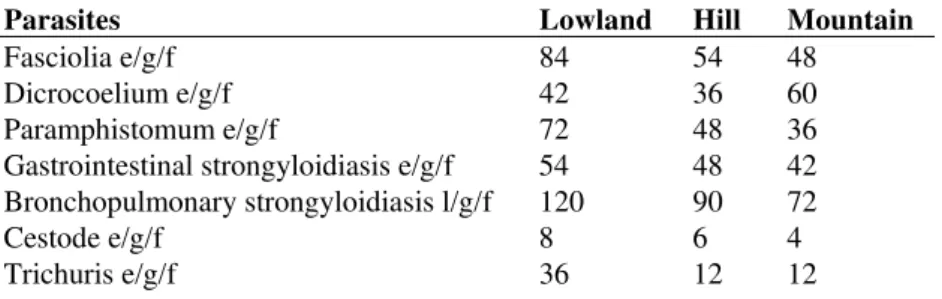
Table 5. Faecal eggs count in sheep farms during winter.
Parasites Lowland Hill Mountain
Fasciolia e/g/f 84 54 48
Dicrocoelium e/g/f 42 36 60
Paramphistomum e/g/f 72 48 36 Gastrointestinal strongyloidiasis e/g/f 54 48 42 Bronchopulmonary strongyloidiasis l/g/f 120 90 72
Cestode e/g/f 8 6 4
Trichuris e/g/f 36 12 12
The results of the study showed that parasites are always present, with typical seasonal variations. Polyparasitism normally constitutes a serious problem [1, 5, 8], which should not be underestimated by the specialists and farmers and must be kept under control through two dehelminthizations, one in April and the other in October. This is indispensable especially for the particular areas of the territory of the district of Elbasan and specifically in some farm villages.
With the same dehelminthization logics the spring scheme of dehelminthing must comprise all trematodes [3, 12] and the possibility of reinfestation by them, all the gastrointestinal or bronchopulmonary strongyloidiasis, because the data obtained by the study about the parasite load are within the limits of an invasion, which if forgotten, might be underestimated and might cause severe damage of the efficiency.
Almost permanently in all the herds throughout the whole year we found, fasciolasis, dicrocoelium, gastrointestinal and bronchopulmonary strongyloidiasis, dictyocaulus, cestodes, trichuris etc. But the obtained data are the average of the parasite load of herds included in the study, thus not all parasites were present in the same sheep and at the same level of parasitism.
120
differentiation of the family Dictyocaulus, clear clinical signs of the disease were noticed, even when we found 8 l/g/f. The disease appeared with the whole clinical signs.We noticed that certain farms, especially those of the lowland area and in river banks had problems because of the trematodes, the gastrointestinal strongyloidiasis as well as by strongyloides.
Considering the data of the table nr. 4, which present the levels of the parasite load for autumn an almost uniform decrease can be immediately noticed in n/e/g/f in almost all parasites.
The herds which are about to be substituted must be indispensably included the dehelminthizations practiced in sheep during autumn [3, 6]. Considering a general overlook of the data in winter it is obvious that the conditions have been deteriorated in comparison with autumn, not only for the trematodes, but also for the gastrointestinal and bronchopulmonary nematodes [5]. This is an expected situation for us. Almost all over the farms there were animals with all the signs of diarrhoea thin and without wool in the part of abdomen, some of which had goitre (a characteristic of fascioliasis) [1, 5], in most of the cases they gave birth to weak lambs (in two or three cases lambs were born dead), the quantity of the colostrums was insufficient and in some extreme cases sheep died or were slaughtered while in agony.
However we must confirm that 2011 is not conceived as a typical parasitic year. There was an inappropriate climate for the development of parasitosis, because of the high temperatures and rare precipitation, which did not enable the possibility of normal biology for the intermediate hosts [2, 7, 13].
4. Conclusions
The parasitologic examinations carried out in the herds of Elbasani district, through direct parasitic diagnosing methods, confirmed the phenomenon of all-year-round polyparasitism with significant variations according to the seasons, which directly interests the condition and production of sheep. The most important parasitic species resulted Fasciola hepatica, gastrointestinal and bronchopulmonary strongyloidiasis. These parasites were observed in all the examined herds. The average parasite load of fasciliosis in sheep resulted 86 e/g/f, dicroceliosis 30 e/g/f, paramphistoma 48 e/g/f. These values must serve as a signal of the initiation of the damage of the
condition and production by trematodosis in sheep in this district. Periodic monitorization of the parasite load, therapy and prophylaxis against parasites in sheep must be applied regularly and any kind of anti-parasitic treatment must take into consideration the parasite load, as well as the biological cycle of the parasites.
5. References
1. Atu O, Galadima M, Alice F: Prevalence of intestinal parasites in Etulo, Benue State, Nigeria. Nigerian Journal of Parasitology, 2006,
27: 1-6.
2.
Bowman DD, Georgi JR, Jarvinen JA:
Veterinary Parasitology Reference
Manual, Fifth Edition.
Iowa State
University Press; USA. 1999.
3. Bizhga B, Selami F: Evaluation of Antihelminthic Therapy Comparative Effects of Triclabendasol and Nitroxynil in Reduction of Trematod Eggs on Sheep. Journal of International Environmental Aplikation & Science, 2011. 6 (1): 141-144.
4. Bizhga B, Zanaj S: Mbi efikasitetin e disa metodave diagnostikuese per llogaritjen e ngarkeses parazitare. Revista Veterinaria,2003.
1: 66-84.
5. Gargılı A, Tauzer E, Gulanber A, Toparlak M, Efil I, Kelefl V, Ulutafl M: Prevalence of liver fluke infections in slaughtered animals in Trakya (Thrace), Turkey. Turk. J. Vet. Anim. Sci, 1999. 23: 115-116.
6.
Hartwig N:
Control of Internal Parasites of
Sheep:
Iowa State University; USA. 2000.
7.
Kassai T:
Veterinary Helminthology:
Butterworth-Heinemann, Oxford; UK. 1999.
8. Khajuria, J.K. and Kapoor, P.R.: Prevalence of parasites in sheep and goats at Kathua-Jammu.
Journal of Veterinary Parasitology, 2003. 17: 121-126.
9.
Sheep 201: Internal parasite (worm) control
. www.sheep101.info/201/parasite.html.10.
Sloss M, Kemp R, Zajac A:
Veterinary
Clinical Parasitology.
Iowa State University
Press; USA. 1994.
121
12.
Scoggins R.D:
Control of Internal Parasites
in Sheep.
University of Illinois Extension;
USA. 2000.
13.
Urquhart GM, Armour J, Duncan JL, Dunn,
AM, Jennings FW:
Veterinary Parasitology,
Longman Sci. and Technical, Essex; UK.
1987.
14.
Herd R. P, Zajac A. M:
Nematode infections
in cattle, sheep, goats and swine. Current
Veterinary Therapy. Food Animal
Practice. Howard JL, Smith RA (eds).
W.
B. Saunders Co., Philadelphia. 1999.
15. Zajac A, Johnson J, King S: Evaluation of the importance of centrifugation as a component of zinc sulfate fecal flotation examinations.
JAAHA. 2002. 38: 221-224.
16. Whittier WD, Zajac A, Umberger SH: Control of
Internal Parasites in Sheep. 2009.