FUNDAÇÃO GETÚLIO VARGAS
ESCOLA DE ADMINISTRAÇÃO DE EMPRESAS DE SÃO PAULO
LUÍS MIGUEL FERREIRA PINTO VELOSO
BEING AHEAD OF ITS TIME
THE CONSUMER RESISTANCE PHENOMENON: A COMPARATIVE CASE STUDY RESEARCH
FUNDAÇÃO GETÚLIO VARGAS
ESCOLA DE ADMINISTRAÇÃO DE EMPRESAS DE SÃO PAULO
LUÍS MIGUEL FERREIRA PINTO VELOSO
BEING AHEAD OF ITS TIME
THE CONSUMER RESISTANCE PHENOMENON: A COMPARATIVE CASE STUDY RESEARCH
SÃO PAULO 2014
Dissertação apresentada à Escola de Administração de Empresas de São Paulo da Fundação Getúlio Vargas, como requisito para obtenção do título de Mestre Profissional em Gestão Internacional.
Campo do Conhecimento:
Gestão e Competitividade em Empresas Globais
Veloso, Luís.
Being Ahead of its Time. The Consumer Resistance Phenomenon: a Comparative Case Study Research / Luís Veloso - 2014.
71 f.
Orientador: Tales Andreassi
Dissertação (MPGI) - Escola de Administração de Empresas de São Paulo.
1. Consumo (Economia). 2. Consumidores. 3. Comportamento do consumidor. 4. Inovações tecnológicas. I. Tales Andreassi. II. Dissertação (MPGI) - Escola de Administração de Empresas de São Paulo. III. Título.
LUÍS MIGUEL FERREIRA PINTO VELOSO
BEING AHEAD OF ITS TIME
THE CONSUMER RESISTANCE PHENOMENON: A COMPARATIVE CASE STUDY RESEARCH
Dissertação apresentada à Escola de Administração de Empresas de São Paulo da Fundação Getúlio Vargas, como requisito para obtenção do título de Mestre Profissional em Gestão Internacional.
Campo do Conhecimento:
Gestão e Competitividade em Empresas Globais
Data de Aprovação: 26/09/2014
Banca Examinadora:
_________________________________ Prof. Dr. Tales Andreassi
_________________________________ Prof. Dr. Silvana Pereira
RESUMO
As empresas frequentemente negligenciam o fenômeno da resistência dos consumidores, culminando em investimentos em vão que podem comprometer a sustentabilidade financeira da empresa. Em um mundo onde a novidade é solicitada pelo mercado, as empresas impulsionadas por inovação devem perceber se os consumidores estão preparados para receber uma tecnologia disruptiva.
Neste cenário, a difusão tecnológica tornou-se um tema importante de debate entre os pesquisadores. A resistência dos consumidores, no entanto, tem sido negligenciada na literatura. Este estudo analisa as características de inovação percepcionáveis que inibem a massa crítica de consumidores a adotar produtos tecnológicos. Além disso, este estudo complementa a literatura atual, fornecendo resultados empíricos e testando a teoria existente. O projeto de pesquisa tem uma abordagem qualitativa de estudo de caso múltiplo, investigando as características mais relevantes de dois produtos tecnológicos disruptivos que foram rejeitados pela maioria dos consumidores, versus outros dois produtos tecnológicos disruptivos que foram positivamente reconhecidos. Os resultados mostram que a compatibilidade com o estilo de vida do cliente constitui o fator mais importante que levanta barreiras para a adoção.
ABSTRACT
Companies frequently neglect the consumer resistance phenomenon, which climaxes in vain investments that may compromise the financial sustainability of the company. In a world where novelty is requested by the market, companies driven by innovation should realize whether consumers are prepared to receive a disruptive technology.
In this scenario, technology diffusion has become a critical topic of debate among researchers. Consumer resistance, nevertheless, has been neglected in the literature. Thus, this study analyses the perceived innovation characteristics that inhibit the critical mass of consumers to adopt technological products. Moreover, it complements the current literature by providing empirical results and by testing the existing theory.
The research design takes a qualitative multi-case study approach by investigating the most pertinent characteristics of two disruptive technological products that were rejected by the early majority of consumers versus other two disruptive technological products that were largely accepted. The results show that compatibility with the customer’s lifestyle constitutes the most prominent factor that raises barriers to adoption.
TABLE OF CONTENTS
1. INTRODUCTION ... 14
2. LITERATURE REVIEW ... 17
2.1. Innovation ... 17
2.2. Consumer Innovation Resistance and Consumer Innovativeness ... 18
2.3. Adoption Decision Process ... 20
2.3.1. Goal Setting Process ... 20
2.3.2. Goal Striving Process ... 21
2.4. Barriers to Innovation Adoption ... 22
2.4.1. Consumer Characteristics ... 23
2.4.2. Perceived Innovation Characteristics ... 25
2.4.3. Propagation Mechanisms Characteristics ... 29
3. METHODOLOGY ... 32
3.1. Object of Analysis ... 32
3.2. Procedures ... 33
3.2.1. Design ... 33
3.2.2. Data analysis ... 34
4. INDIVIDUAL ANALYSIS OF THE FOUR CASE STUDIES ... 35
4.1. Rocket eBook Reader ... 35
4.1.1. Description of the product ... 35
4.1.2. Product characteristics affecting consumer decision ... 35
4.2. Amazon Kindle ... 39
4.2.1. Description of the product ... 39
4.2.2. Product characteristics affecting consumer decision ... 40
4.3. HP Compaq Tablet PC TC1000 ... 43
4.3.1. Description of the product ... 43
4.3.2. Product characteristics affecting consumer decision ... 44
4.4. iPad ... 48
4.4.1. Description of the product ... 48
4.4.2. Product characteristics affecting consumer decision ... 49
5. COMPARATIVE ANALYSIS OF THE FOUR CASE STUDIES ... 54
6. CONCLUSION ... 62
LIST OF TABLES
LIST OF FIGURES
Figure 1: Types of passive innovation resistance ... 19
Figure 2: Technology adoption life cycle ... 20
Figure 3: A Model for Consumer Resistance to and Acceptance of Innovations – A Goal Setting Process ... 20
Figure 4: A Model for Consumer Resistance to and Acceptance of Innovations – A Goal Striving Process ... 22
Figure 5: Classification of propagation mechanisms ... 29
Figure 6: Units sold worldwide in Millions, per fiscal year ... 42
LIST OF ACRONYMS
3
3G
Third Generation ... 48, 50
A
AAC
Advanced Audio Coding ... 48
AIFF
Audio Interchange File Format ... 48
AT&T
American Telephone and Telegraph ... 50
AVI
Audio Video Interleave ... 48
C
CEO
Chief Executive Officer ... 43, 49
COMDEX
Computer Dealers' Exhibition ... 44
D
DDR
Double Data Rate ... 48
DOC
Document ... 48
dpi
dots per inch ... 35, 40
DRAM
Dynamic Random Access Memory ... 35
E
EBSCO
Elton B. Stephens Company ... 33
EDR
Enhanced Data Rate ... 48
EVDO
Evolution-Data Optimized ... 40
G
GB
Gigabyte ... 44, 48, 50
GHz
Gigahertz... 44, 48
GIF
Graphics Interchange Format... 48
H
HE
High Efficiency ... 48
HP
Hewlett-Packard ... 8, 32, 33, 43, 44, 54
HTC
High Tech Computer Corporation ... 58
HTM
HyperText Markup ... 48
HyperText Markup Language ... 42, 48
I
IEEE
Institute of Electrical and Electronics Engineers... 44
IP
Internet Protocol ... 26
IR
Infrared ... 37, 46
J
JPEG
Joint Photographic Experts Group ... 37
JPG
Joint Photographic Group ... 48
JSTOR
Journal Storage ... 33
L
LC
Low Complexity ... 48
LCD
Liquid-Crystal Display ... 35, 47
LED
Light-Emitting Diode ... 48
M
M4V
iTunes Video File ... 48
MB
Megabyte ... 35, 40, 44, 48
MOV
QuickTime Movie ... 48
MP3
Moving Picture Experts Group Layer-3 Audio ... 24, 40, 48, 51, 56
MS
Microsoft ... 45
O
OEBPS
Open eBook Publication Structure ... 37
OS
Operating System ... 48, 49
P
PC
Personal Computer ... 8, 32, 33, 35, 36, 37, 40, 43, 44, 45, 46, 48, 50, 53, 54, 64, 65, 66, 68, 69, 70
PDA
Personal Digital Assistant .. 36, 37, 38, 39, 45, 46, 47, 48, 53, 57, 69, 71
Personal Digital Assitant ... 46
Portable Document Format ... 41, 42, 48
PNG
Portable Network Graphics ... 37
ppi
PPT
Power Point File format ... 48
R
RAM
Random-Access Memory ... 44, 48
RTF
Rich Text Format ... 48
S
SD
Secure Digital ... 40, 44
T
TFT
Thin-Film Transistor ... 44, 48
TIFF
Tagged Image File Format ... 48
TXT
Text File ... 48
U
US
United States .... 17, 35, 38, 39, 40, 43, 44, 45, 46, 48, 50
USA
United States of America .... 35, 39, 42, 70
USB
Universal Serial Bus ... 50
V
VBR
Variable Bit Rate ... 48
VCF
Virtual Card File ... 48
VCR
Video Cassette Recorder ... 14
W
WAV
Waveform Audio File Format... 36, 48
Wi-Fi
Wireless Fidelity, wireless internet 40, 48, 52
X
XGA
Extended Graphics Array ... 44
XLS
Excel Spreadsheet ... 48
XML
Extensible Markup Language ... 37
XP
1. INTRODUCTION
Technological innovation has played a vital role at various levels, namely international trade, industry structure, and formation and development of new industries (Utterback, 1971). The process of technological innovation comprehends three phases: idea generation, problem solving, and implementation, perchance followed by diffusion (Utterback, 1971).
Adoption and diffusion of technological innovations has received the main attention of researchers. The key reason for this has been the pro-innovation bias of researchers (Ram, 1987), which is based on the assumption that innovation is good and therefore should be adopted by everyone. In part, this explains the tendency of researchers to classify late
adopters as “laggards”. However, this pro-innovation fallacy is unveiled when confronted
with the high failure rates for innovations (Heidenreich & Spieth, 2013).
Since the bias has been recognized, there is an increasing literature on consumer resistance and rejection. Nevertheless, the difference between resistance and rejection is still blurred. In this study, and following the definitions given by Kuisma, Laukkanen & Hiltunen (2007), rejection is a passive behavior that results in a final decision not to adopt an innovation. Resistance, on the other hand, is an active behavior, which may occur during the adoption process, but may not result in rejection.
Most innovations do not reach diffusion, because they do not reach the critical mass of adopters. In fact, consumers fall into one of five classifications that are arranged, in ascending order, in an axis of sensitivity to risk: innovators, early adopters, early majority, late majority, and laggards (Rogers, 2003). Each type of consumer has different needs, product criteria, and reactions to new innovations. In particular, innovation is usually rejected when it falls into a chasm (Meade & Rabelo, 2004). This chasm is situated between the consumers in the early market (innovators and early adopters) and the early majority. Consequently, consumer resistance to new technologies is often the main reason for failure (Nov & Ye, 2008).
advantage, or create a critical mass of customers in order to set a dominant standard” (p. 22). However, consumer resistance delays the process and thus challenges these objectives. In particular, it is not clear if first movers have a positive net benefit.
The benefits of being a first mover extend from technological leadership, anticipation of scarce assets, and exploitation of buyers’ switching costs (Schilling, 2002). Nevertheless these advantages, a firm that presents its new technology later can avoid mistakes made by the first mover, have a clear perception of consumer needs, and capitalize on the development investment of the earlier entrant (Schilling, 2002). Despite several studies have paid substantial attention to entry timing, there is still considerable disagreement about the net benefit provided by early entry, and how early such entry should be. Consumer resistance seems not to support the assumption that first movers will be the successful firms.
The importance of consumer resistance is especially relevant for high-tech markets. These high innovation failure rates culminate in ineffective investments, inability to generate future revenues, loss of reputation, and can undermine the competitiveness of companies in the long run (Heidenreich & Spieth, 2013). In fact, a product that is successful during the first 12 months (i.e. a product that did not face consumer resistance) is more likely to develop a new market in the near future (Beard & Easingwood, 1996). Henceforth, understanding the phenomenon of innovation resistance is the key to successful development of innovations. The purpose of this case study research is to examine the phenomenon of Consumer Resistance on real case studies, contributing to the understanding of this theory. More specifically, the aim of this study is to match the theory with real facts that either precluded the success of some innovative products or fostered the success of similar innovations. Therefore it is qualitative case study research. For this purpose, two product categories will be studied: tablets and e-books. These case products were selected because they faced strong resistance among consumers in the first stages of their life cycle. Therefore, this study systematically identifies and compares the most relevant factors that determined the decision of the consumer whether to adopt or reject these products.
The study exploits both functional and psychological barriers to innovation. The paper begins with some theoretical review about consumer resistance, followed by the approach and method used. Then the case products are individually described and cross-compared. Finally, the analysis, conclusions and implications are presented.
The research objective of this thesis is to examine the different consumer responses to similar innovative products:
2. LITERATURE REVIEW
2.1. Innovation
The definition of innovation is frequently confused with the definition of invention. Invention is the outcome resulting from two distinct data: information about a need or want and information about the technical means required to satisfy this need or want (Utterback, 1971). Innovation is an invention, but it has reached market introduction (Utterback, 1971). In other words, innovation has an economic impact. The degree of the economic impact is subject to exogenous variables to the firms, namely political, social, economic, and cultural factors. Innovation is not a static occurrence, but a process divided into three phases: idea generation, problem solving, and implementation, which may have a significant economic impact (Utterback, 1971). Therefore, the implementation stage refers to the emergence of an innovation.
Firms tend to be short-term oriented in relation to innovation. Put differently, firms tend to invest in innovative products where there is evident potential for short-term profit (Utterback, 1971). However, empirical evidence suggests that neither the cost nor the technical knowledge constraint the process of innovation. In actual fact, only 21 percent of firms recognize that their most important new products or processes were driven by the perception of a technical opportunity; 53 percent were market-driven; and the remainder recognizes that the starting point arose from production, design, administrative, and other internal changes (Utterback, 1971). Moreover, 23 percent of the most important innovations were adopted from other firms; and 67 percent of innovations costed less than US$100,000 to introduce, suggesting that the majority of the cases reported tended to invest mostly in minor innovations (Utterback, 1971). Consequently, the main constrain firms face to successfully launch an innovative product is their ability to recognize the needs of the external environment.
Innovation and marketing need thus to be tightly connected (Beard & Easingwood, 1996). An innovation cannot be simply defined as an “idea, practice or object that people see as different” (Ram, 1987, p. 208). This general definition needs to be more focused, from a
marketer’s point of view. An innovative product has to be perceived by the consumer as new
Nevertheless, an intended innovation came up by a firm, may not be perceived as new to the consumer (Ram, 1987). If the consumer does not perceive newness, then the product may face lack of adoption. In this case, however, it is not due to consumer resistance, but due to the failure on the part of the firm to stimulate optimal newness.
Innumerous innovative firms fail to realize the concept of innovation from a marketer’s perspective. In fact, innovation merely driven by technology availability i.e. discovery-push, is likely to cause resistance, as demonstrated by the high failure rate (Ram & Sheth, 1989). In fact, only one in three new product concepts reach the commercialization phase, and only 10% of these were well received by consumers. As a result, innovation has to be driven by market analysis i.e. market-pull orientation (Ram & Sheth, 1989).
2.2. Consumer Innovation Resistance and Consumer Innovativeness
The concept of consumer resistance is used by most researchers to explain innovation failures. Innovation resistance is a natural consumer response to innovative products (Ram & Sheth, 1989). Radical innovations, such as the automobile and the computer, which have already proved to deliver incalculable benefits to the consumer, have faced consumer resistance in the initial stages of their technology adoption life cycles. In fact, most technological innovations not only face resistance but also opposition (Cavusoglu, Hu, Li & Ma, 2010). Radical innovations, by definition, are superior both in technical terms and in the ability to meet consumer needs (Montaguti et al., 2002). Nonetheless, the conceptualization of consumer resistance differs across studies.
According to Kuisma (2007), the psychology of innovation resistance is generated when there is a tendency towards an existing practice or behavior, which is driven by the desire of stability and status quo, and when there are perceived risks associated with innovation adoption, which can be physical, social, economic, and functional risks. Heidenreich & Spieth (2013), in their turn, believe that this phenomenon is the result of two distinct foundations: product-specific barriers, and adopter- and situation-specific factors. The former is defined as active innovation resistance and the latter is defined as passive innovation resistance.
Consumer innovativeness is the opposite of consumer resistance to innovation. According to Heidenreich & Spieth (2013), it is the propensity an individual has to seek variety and novelty more often than others. Consumer innovativeness is driven by two central needs: need for stimulation, and need for uniqueness (Heidenreich & Spieth, 2013). The adoption of new products occurs as a consequence of consumer innovativeness.
A consumer evaluates product novelty attributes and forms an attitude towards the innovation. Inevitably, a certain degree of divergence will result from comparing the actual perceived attributes with consumer’s optimal expectations. Barriers to adoption will rise, if this divergence exceeds the consumer’s minimum level of tolerance on each attribute (Bagozzi & Lee, 1999). The impact of product-specific barriers within new product evaluation on negative attitude formation, i.e. active innovation resistance, has been empirically confirmed in the literature (Heidenreich & Spieth, 2013).
Active innovation resistance can have catastrophic consequences which frequently are irreversible, namely complaining behavior, negative word-of-mouth, and boycott (Heidenreich & Spieth, 2013).
2.2.2. Passive Consumer Innovation Resistance
Contrary to active innovation, passive innovation resistance has not drawn the attention of researchers. It is still lacking empirical validation of the impact of this variable on consumer resistance. Passive innovation resistance can be defined as a natural response that serves to maintain status quo, when this is being threatened by changes imposed by innovations (Ram, 1987). Any change imposed on consumers’ behavior may disturb their psychological equilibrium (Osgood & Tannenbaum, 1995). Consequently, consumers often opt for resisting the change rather than going through a distressing process of readjustment.
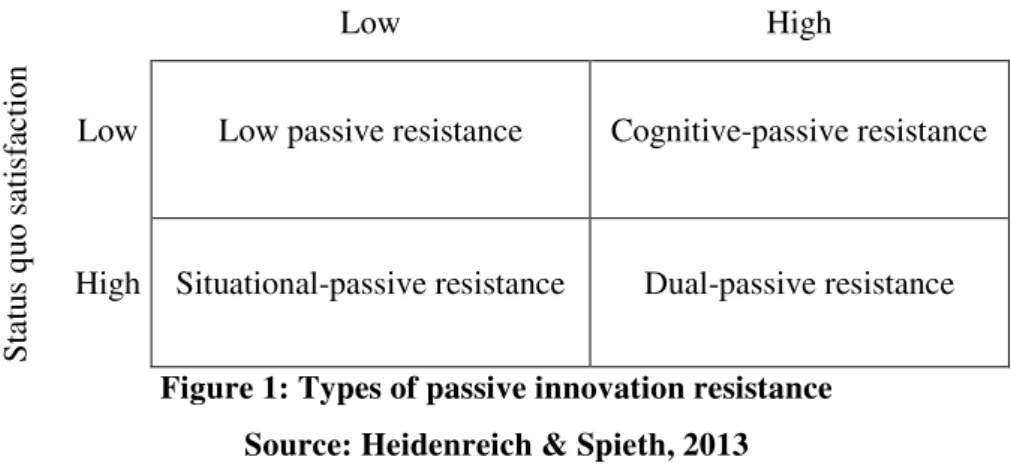
Passive innovation resistance is driven by cognitive-passive resistance and situational-passive resistance (Heidenreich & Spieth, 2013). The former is determined by an inclination to resist changes, and the latter is determined by status quo satisfaction, as illustrated in Figure 1.
Inclination to resist change
Low High
Sta
tus
quo
sa
tisf
act
ion
Low Low passive resistance Cognitive-passive resistance
High Situational-passive resistance Dual-passive resistance
Figure 1: Types of passive innovation resistance
Source: Heidenreich & Spieth, 2013
consumers tend to prefer consistency and status quo rather than continuous search for new products and thus changing behaviors. As a result, the majority of consumers show a certain level of passive innovation resistance. Consumers who are characterized by a high level of passive innovation resistance are skeptical about innovation, they hardly break away from routines, and they are emotionally stressed when faced with change (Heidenreich & Spieth, 2013). Moreover, resistance to innovation increases when it is taken into account that these consumers are satisfied with current products. The repetition of existent product usage is thus encouraged. Even if a new product increases consumers’ utility, the act of learning the new product may bring negative responses (Heidenreich & Spieth, 2013).
Figure 2: Technology adoption life cycle
Source: Rogers, 2003
2.3. Adoption Decision Process
The development of consumer resistance is divided into two processes, goal setting and goal striving, where goal is anything consumers want to experience (Bagozzi & Lee, 1999).
2.3.1. Goal Setting Process
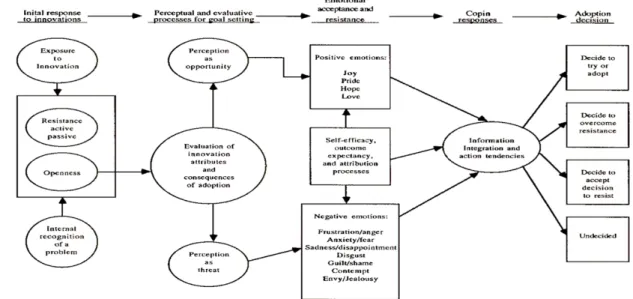
The goal setting process consists of five stages, as Figure 3 illustrates (Bagozzi & Lee, 1999).
Figure 3: A Model for Consumer Resistance to and Acceptance of Innovations – A Goal Setting Process
In stage one, a consumer witnesses an alteration of an external (communication of an innovation) or internal (recognition of a need) situation and responds by resisting or opening to this alteration. For example, certain religions encourage their followers to resist certain medical practices, independently of their benefits. In fact, ingrained habits in daily life can lead consumers to resist change.
The second stage starts when consumers are open to consider an innovation, evaluate its characteristics and consequences of adoption, and infer whether an innovation is an opportunity or a threat. If it is perceived as an opportunity, consumers may adopt the innovation that very instant; if it is perceived as a threat, consumers may reject it immediately. However, these two situations do not constitute the majority of consumer decisions, and most consumers will continue information processing, throughout steps three and four.
In stage three, consumers develop positive or negative feelings and beliefs about the new product, in which these emotional responses are influenced by some cognitive processes, namely self-efficacy, outcome expectancies, and attribution processes. Self-efficacy is the confidence a consumer has on his/her ability to adopt the innovation; outcome expectancies are beliefs that the new product will meet the desired goals; and attribution processes shape
consumer’s responses.
In stage four, feelings and cognitive responses are translated into coping activities. For example, consumers who experience emotional reactions of anger usually attack the source of frustration, either verbally or physically. In fact, the decision to adopt or not an innovation is a function of coping responses.
Finally, in the last stage, a consumer decides whether to adopt or try an innovation, to resist adoption, or to remain undecided, a case that occurs when information has not been completely integrated.
2.3.2. Goal Striving Process
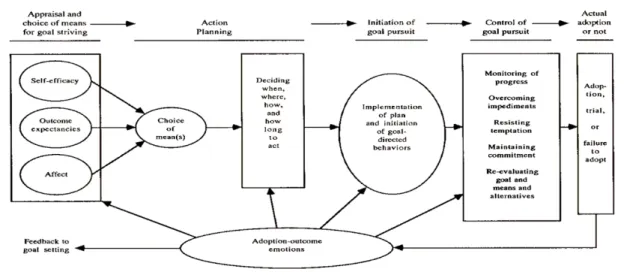
Figure 4: A Model for Consumer Resistance to and Acceptance of Innovations – A Goal Striving
Process
Source: Bagozzi & Lee, 1999
In stage one, a consumer considers the alternatives available to implement the decision, considering the three appraisal mechanisms: self-efficacy, outcome expectancy, and affect i.e. how much a consumer likes each mean. To illustrate this first stage, imagine a consumer who wants to install innovative devices in his/her car, that is, he/she has already decided to adopt the new devices. In order to install innovative devices, this consumer may opt for different means, namely hiring someone to install the new devices, managing the project by hiring and supervising several contractors, or installing the new devices oneself. In each alternative, the consumer will consider the three appraisal mechanisms in order to maximize his/her utility. The second stage is action planning, which is constituted by four decision points: when, where, how, and how long to act.
In stage three, consumers execute the action planning delineated in the previous stage. For example, a consumer may opt today to buy an innovative product in the future, when the price drops below a certain level.
In stage four, a consumer develops control activities, namely overcoming obstacles encountered, resisting temptations, committing to goal attainment, and reevaluating goal, means, and alternatives, in order to assure that the goal will be achieved.
Finally, in stage five, consumers will opt to adopt, try, or reject the innovation.
2.4. Barriers to Innovation Adoption
mechanisms (Ram, 1987). These elements are not mutually exclusive and thus they depend on each other.
2.4.1. Consumer Characteristics
Consumer characteristics influence the perception he/she has about the attributes of an innovation. Some of the consumer characteristics that are relevant to explain his/her behavior in the context of product innovations are: personality traits, attitudes, previous innovative experience, perception, motivation, and beliefs (Ram, 1987).
Personality plays an important role in innovation resistance. In fact, variety-seekers have low resistance to new products, because they like to innovate and to feel new experiences; oppositely, if a new product cannot be tried out prior to adoption, consumers with low self-confidence would postpone the purchase (or reject it definitely) until the uncertainty of the product performance has disappeared (Ram, 1987).
Attitudes and beliefs also determine the adoption of an innovation. Attitudes are viewed by theorists as a central element to how persons deal with their surroundings (Haugtvedt & Kasmer, 2008). Consequently, attitudes have a significant impact on perceptions, and on individual, social, and cultural behavior (Haugtvedt & Kasmer, 2008). In relation to beliefs, consumers recognize that products help to build their identity (Ram, 1987). For example, a consumer may buy an innovative product if he/she believes that it will reflect an image of a modern person. Beyond that, consumers’ current choices may be affected by expectations about future choices (Meyer et al., 1997). For example, expectations about price decrease in the near future or the belief that there are some bugs to be fixed may delay the adoption of an innovation.
Past innovative experiences have shaped the problem-solving capability of consumers (Ram,
1987). In the same way, past choices influence consumers’ current choices and affect their
perception and attitude formation (Meyer et al., 1997). Moreover, it is very probable that rejection will occur, if consumers have an insufficient level of how-to knowledge prior to adoption of a new product (Wood & Lynch Jr, 2002). Knowledge is approximately related to the concept of memory.
Memory is the record of individual’s personal past and it shapes the way individuals learn
frequently denoted as remembering and knowing, respectively. Recollection is a slow and meticulous search process, and familiarity is a fast and involuntary process. Mandler (1980) provided the classic example of the “butcher on the bus”, where it is possible to distinguish the concepts of recollection and familiarity. Consider noticing a man entering on a crowded bus. Instantaneously, you realize that you have seen this man before, but you cannot remember who he is. This initial sense of knowing the man is an involuntary process, which is called familiarity. The next phase of recognition memory is originated when you try to remember who this man is, by retrieving details about your previous encounter, such as remembering him wearing an apron. This careful process of remembering facts is called recollection.
Familiarity consequently fosters automated thinking, which in turn speeds up the process of learning and may free up resources to other cognitive tasks (Wood & Lynch Jr, 2002). However, consumers with prior knowledge often fall short of these advantages, since they may become overconfident, but actual accuracy in performance does not increase, and thus they may end up using incorrect inferences and misusing a product (Wood & Lynch Jr, 2002). This is particularly true for radically new products. Part of the explanation is that overconfidence does not motivate the consumer to search for new information, especially when obsolescence of prior knowledge is not perceived explicitly (Wood & Lynch Jr, 2002). The consumer’s perception of the innovation characteristics likewise influences the intention to adopt. In fact, the same product may have different perceptions across the wide range of consumers. For example, a consumer located in the right extreme of the technology adoption life cycle, laggards, may overestimate the complexity of a new product and, thus, he/she may reject the innovation. Innovators are less likely to overestimate an innovation. The concept of
consumer’s perception is related with the notion of categorization. Consumer category is
defined as a set of products, services, or brands that are perceived by the consumer to be related in some way (Loken, Barsalou & Joiner, 2008). The information about a consumer category allows consumers to draw inferences about a particular product or service (Loken et al., 2008). For example, a new product can be classified as an MP3, because consumers used prior knowledge about physical or functional features of other MP3. Additionally, unknown features of a new MP3 are subject to inferences based on prior categorical information about MP3.
decrease in temperature makes individual aware of the need for warmth), emotional arousal (e.g. people who often engage in daydreaming may have their latent needs stimulated), cognitive arousal (e.g. a movie that reminds people of home may create the need to call ones parents), and environmental arousal (e.g. the smell of bakery goods may stimulate the need for food). These needs are never completely satisfied and they appear to substitute old needs, with higher goals set. In the context of innovation resistance, motivation also refers to the degree the consumer is satisfied with his/her current situation, and thus any innovation that threatens the status quo has lower chances to be adopted (Ram, 1987).
Notwithstanding the fact that these psychological characteristics affect the willingness to innovate, the consumer may not have the ability to innovate (Ram, 1987). The ability to innovate is therefore affected by other consumer characteristics that go beyond the psychological field. These characteristics are demographic variables, namely education, income, mobility, and age (Ram, 1987).
2.4.2. Perceived Innovation Characteristics
Passive innovation resistance is a predisposition to resist innovations. Notwithstanding passive innovation resistance does not have a significant direct effect on intention to adopt, it influences intention to adopt indirectly through different innovation attributes (Heidenreich & Spieth, 2013). Different innovation attributes are thus source for product-specific barriers. According to Rogers (2003), the most prominent ones are relative advantage, complexity, compatibility, observability, trialability, and risk (Bagozzi & Lee, 1999; Heidenreich & Spieth, 2013; Ram, 1987).
Relative advantage is associated with value barrier. The value barrier concept states that consumers are more likely to resist innovation, if the new product does not provide superior performance to existent substitutes, which are used as reference points (Ram, 1987; Heidenreich & Spieth, 2013). The perceived value of an innovation is the difference between
innovation’s benefits and possible negative effects associated with adoption (Heidenreich &
innovation resistance will underestimate the value of an innovation (Heidenreich & Spieth, 2013).
Complexity barrier is divided into two subcategories: complexity of the idea and complexity of execution (Heidenreich & Spieth, 2013). If an innovation is difficult to understand and use, consumers will be less willing to adopt it. In fact, product comprehension, in particular for radical innovations, may require cognitive effort on the part of the consumer (Heidenreich & Spieth, 2013). Complexity barrier is thus associated with the concept of perceived ease of use, which is the belief that using a product will be effortless (Nov & Ye, 2008). Even when an innovation conveys substantial benefits to the consumer, he/she may reject the new product, because learning and using it are psychological difficult for them (Nov & Ye, 2008; Heidenreich & Spieth, 2013). More precisely, consumers with high levels of passive innovation resistance overestimate the complexity of an innovation and thus they will face a higher complexity barrier (Heidenreich & Spieth, 2013). As an illustration, consider Skype, a freemium voice-over-IP service and instant messaging client. One factor that differentiates Skype from other potential substitutes is its ease of use, which starts with the download and ends with video features.
The attribute of compatibility drives the usage barrier. According to Ram (1987), compatibility denotes consistency with consumer, traditional, and cultural values, and with consumer lifestyles. For example, despite the fact that Coca-Cola may have an almost identical flavor to other coke substitutes, consumers who are loyal to the brand i.e. whose current lifestyle is associated with the brand, are unlikely to purchase its substitutes. Therefore, the usage barrier arises when an innovation discontinues the routine of past experiences and requires changes in consumers’ behavior. Consumers satisfied with their
status quo will overestimate the innovation’s usage barrier. In fact, since consumers largely
inclined to passive innovation resistance have high cognitive rigidity, passive innovation resistance is positively related to usage barrier.
of a new unfamiliar product (Heidenreich & Spieth, 2013). As a result, passive innovation resistance leads consumers to underestimate the tangibility of the benefits of a new product, which in turn decreases the intention to adopt a new technology.
Trialability refers to how easy consumers can interact with an innovation prior to adoption (Heidenreich & Spieth, 2013; Ram, 1987). If consumers face a completely innovative product, which cannot be tried prior to purchase, then the consumer may perceive a high level of risk in purchasing the product and thus he/she will probably reject the product. For example, websites that offer paid subscription based financial services usually offer a free one month subscription. In fact, consumers who register high level of passive innovation resistance are less interested in trying new products and also less informed about opportunities to try them (Heidenreich & Spieth, 2013). Passive innovation resistance is thus positively related to trialability barrier.
Finally, perceived risk is the risk that an innovation can bring (Ram, 1987). There are four types of risk: physical risk, which can cause harm to a person or his property; functional risk, in which an innovation does not function properly; psychological or social risk, which is a result of the fear of being seen in an undesirable way; and economic risk, which is the result of not waiting for a better or cheaper version (Ram, 1987; Kuisma et al., 2007). The type of innovation clearly influences the level of perceived risk. Since major innovations compromise the routine of the consumers, these types of innovations have higher levels of perceived risk and thus higher innovation resistance. The keyword in the attribute of perceived risk is uncertainty. Innovations comprehend a certain degree of uncertainty, which entails some level of perceived risk (Heidenreich & Spieth, 2013). Consumers are frequently uncertain whether a new product is completely developed or whether it performs as expected. Since individuals tend to consider more potential losses than potential gains (Heidenreich & Spieth, 2013), consumers high on passive innovation overestimate the risk of an innovation. Despite the fact the abovementioned innovation attributes are the most critical ones, according to Zaltman, Duncan & Holbek (1973), there are other relevant perceived innovation characteristics, namely reversibility, realization, amenability to modification, and effect on adoption of other innovations (Ram, 1987).
Realization is related to the speed the consumer expects to receive the benefits from the innovation; accordingly, the lower the realization of an innovation, the higher will be the innovation resistance (Ram, 1987).
Amenability to modification refers to the possibility of modifying the innovation to meet consumer satisfaction; therefore, the lower the amenability to modification of an innovation, the higher will be the innovation resistance (Ram, 1987).
Finally, the adoption of one innovation may inhibit the adoption of other innovations; thus, the higher the inhibitory effect of an innovation on the adoption of other beneficial innovations, the higher will be the innovation resistance (Ram, 1987).
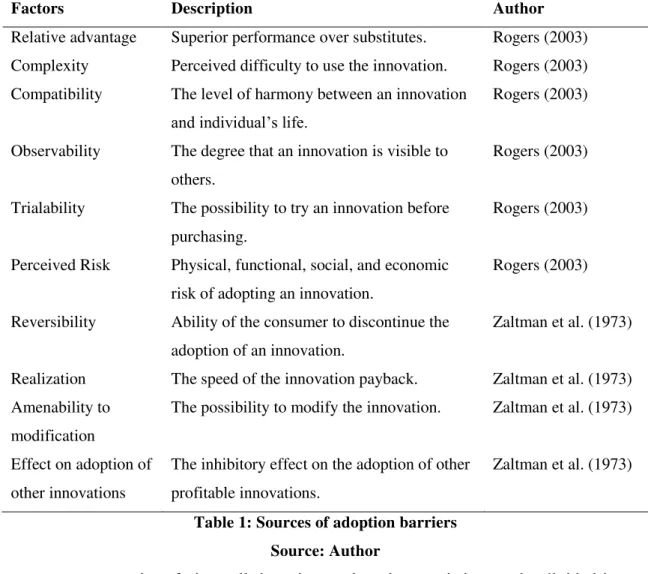
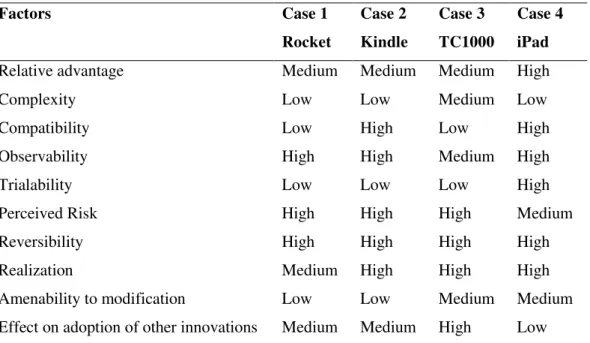
Table 1 summarizes the perceived innovation characteristics that constitute a source of adoption barriers.
Factors Description Author
Relative advantage Superior performance over substitutes. Rogers (2003) Complexity Perceived difficulty to use the innovation. Rogers (2003) Compatibility The level of harmony between an innovation
and individual’s life.
Rogers (2003)
Observability The degree that an innovation is visible to others.
Rogers (2003)
Trialability The possibility to try an innovation before purchasing.
Rogers (2003)
Perceived Risk Physical, functional, social, and economic risk of adopting an innovation.
Rogers (2003)
Reversibility Ability of the consumer to discontinue the adoption of an innovation.
Zaltman et al. (1973)
Realization The speed of the innovation payback. Zaltman et al. (1973) Amenability to
modification
The possibility to modify the innovation. Zaltman et al. (1973)
Effect on adoption of other innovations
The inhibitory effect on the adoption of other profitable innovations.
Zaltman et al. (1973)
Table 1: Sources of adoption barriers
Source: Author
process) are consumer-independent characteristics. Relative advantage, complexity, compatibility, perceived risk, observability, and the remaining attributes constitute some examples of perceived innovation characteristics that do depend on the consumer.
Despite this categorization of barriers to innovation adoption, the literature also suggests that barriers to innovation adoption can be divided into functional and psychological barriers (Kuisma et al., 2007). Given this classification, functional barriers are composed by usage, value and risk barriers, whereas psychological barriers are divided into tradition (routine) and image (reputation of product class, industry or company) barriers (Kuisma et al., 2007).
2.4.3. Propagation Mechanisms Characteristics
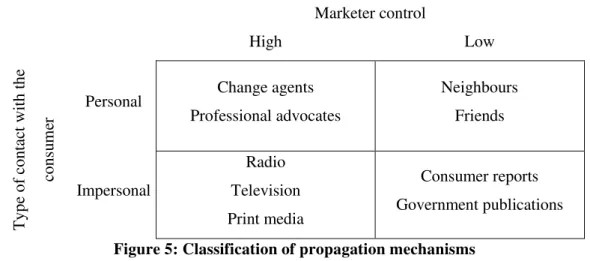
According to Ram (1987), propagation mechanisms are distinguished in relation to marketer control and type of contact with the consumer (Figure 5).
Marketer control
High Low
Type of con tac t w ith t he cons um er
Personal Change agents Professional advocates Neighbours Friends Impersonal Radio Television Print media Consumer reports Government publications
Figure 5: Classification of propagation mechanisms
Source: Ram, 1987
In the early stage of an innovation, the firm needs to inform consumers about the new product. Consequently, the firm is usually the initiator of the communication process (Ram & Sheth, 1989). Since the firm aims to overcome the initial consumer resistance and product uncertainty, the message is both informative and persuasive and the typical propagation mechanisms are media advertising and change agents (Ram & Sheth, 1989). Using face-to-face contact, change agents provide favorable information to the market, develop the need for and desire to change, provide information to the consumers, stabilize product acceptance, prevent adoption cessation, and achieve a terminal relationship (Ram & Sheth, 1989). Through advertising and promotional budgets, mass media advertising informs consumers about new products (Ram & Sheth, 1989).
proven to play a significant role on innovation acceptance, due to their personal communication. Word-of-mouth refers to the direct contact between the potential consumer
and the source of communication, such as consumer’s friends, family, or peers. Opinion
leaders, who are also called influentials, have a precise knowledge about a product (van Eck, Jager & Leeflang, 2011). Moreover, according to Ram (1987), consumers see their innovation resistance decreasing more effectively when propagation mechanisms are based on direct and personal contact.
Despite the different impact that each propagation mechanism has on innovation resistance, all of these instruments have the same implications (Ram, 1987). First, clear propagation mechanisms reduce the innovation resistance. Second, when consumers perceive expertise and credibility on the part of the propagation mechanism, the intention to adopt will increase. Third, the more information that the transmitter conveys to the consumer, the lower will be innovation resistance. Finally, the higher perceived similarity between the source of communication and the consumer, the higher will be the intention to adopt.
2.5. Strategies to Reduce Consumer Resistance
According to Beard & Easingwood (1996), launching a new product comprehends four distinct tactics: prepare the market, target the product, position the product, and attacking the market. However, the impact of these tactics depends on the nature of the technology (continuous or discontinuous innovation), and on the barriers to innovation adoption.
In relation to preparation tactics, licensing the technology has to be the starting point, in order to protect the company from imitation. Furthermore, selling to other equipment manufacturers allows the producer to retain full ownership of its innovation and to expand its marketing capacity, notwithstanding at a lower margin. Another tactic is preannouncing directed to the media, service suppliers, and distribution network, since it informs, creates awareness, accelerates the creation of a larger network (Montaguti et al., 2002), enriches company's reputation, and fosters distributor support (Eliashberg & Robertson, 1988). Nonetheless, preannouncing may delay sales of existing products, expose the new product to competitors, and create frustrated expectations (Eliashberg & Robertson, 1988). Finally, resorting to special distribution arrangements (e.g. joint ventures) may assure that companies dispose the necessary competencies and resources to commercialize radical innovative products (Montaguti et al., 2002).
early adopters, who are often large organizations and initiators of word-of-mouth, since the objective is to reach rapid takeoff (Montaguti et al., 2002). Conversely, targeting late adopters is suitable when the market has already accepted a new technology to a larger degree. Finally, existing customers should be targeted when the pace of technological advancement is fast; if competition is based on superior price/value combination, then the target should be competitors’ customers.
Regarding positioning tactics, small firms may benefit from concentrating sales on heavy users, since they will increase sales volume. Moreover, a company may focus on low prices, by following a penetration strategy, which creates product awareness, increases consumers’ willingness to pay, and contains entry of new competitors (Montaguti et al., 2002). Alternatively, a firm may emphasize technological superiority, particularly a certain application, since consumers may not understand the benefits of the entire innovation. Finally, position the product as a safe bet may reduce uncertainty, where company reputation or product exclusivity may help to build credibility.
3. METHODOLOGY
3.1. Object of Analysis
In order to obtain an answer to the question of this study, a multiple rather than a single case study approach is used as a valuable technique to obtain replication logic in analyzing pattern-matching properties between cases and theories. By using the product, not the firm, as the focus of the analysis, it is expected that the systematic use of cross-case analysis draws some conclusions about the foundations of consumer resistance and thus the barriers inhibiting product adoption. The cases selected, namely tablets and e-books, were not randomly chosen and they will be thoroughly compared. In this study, it is considered the definition given by Stork (2000), where an e-book reader is any mixture of hardware, software, and content that results in equivalent of a traditional print book.
The e-books analyzed were the Rocket eBook (case 1), introduced in 1998, and the Amazon Kindle (case 2), launched in 2007; the tablets that were subject to study were the HP Compaq Tablet PC TC1000 (case 3), released in 2002, and the iPad (case 4), released in 2010. These four products were selected after an intensive research about other products that have also faced consumer resistance. The choice of these products is due to the fact that they were innovative technological products at the time they were introduced in the market, there is a clear distinction between the successful and the unsuccessful cases, in which the successful cases are known by most consumers and the unsuccessful are unfamiliar, and the final reason that justifies the choice for these products is the fact that the majority of consumers did not use e-book readers or tablets before the launch of the Kindle or the iPad, respectively.
The products of the same category present similar characteristics that enable a better isolation of the phenomenon of consumer resistance. This sample allows some level of variance to be observed, because it includes groups of products that operate in different industries, and that belong to firms with different sizes. Moreover, these products have encountered different levels of consumer resistance. Notwithstanding the elements that enable the observation of a certain degree of variance, all the cases selected share a common characteristic: they were perceived by consumers as innovative.
throughout this study it will be considered that products that did not face consumer resistance, have reached market diffusion. According to this criterion, case 1 and case 3, the Rocket eBook and the HP Compaq Tablet PC TC1000 respectively, fall under the category of products that encountered consumer resistance. In contrast, case 2 and case 4, the Amazon Kindle and the iPad respectively, did not face any type of consumer resistance.
3.2. Procedures
3.2.1. Design
According to Yin (1989), the choice of using a case-study method depends largely on the research question(s). Questions directed to “how” or “why” some social phenomenon occurs, an exploratory “what” question, and “how much” or “how many” type of questions are good indicators of the relevance of a case-study approach (Yin, 1989). Multiple case study research aims to achieve several goals, namely to provide description, test theory, or generate theory about the phenomenon being investigated (Eisenhardt, 1989). In fact, theory built from cases has several advantages when compared to other ways of doing social science research (Eisenhardt, 1989). The first advantage is the possibility of generating new theory. Additionally, the emergent theory can be testable since constructs can be measured. Finally, the theory can be empirically valid, because it emerges from a close observation of the reality. Nonetheless, a case study approach also includes some disadvantages (Eisenhardt, 1989). For example, the theory might be complex, given the exhaustive use of empirical evidence. Another disadvantage is that the theory may be narrowed to the cases observed, where generalization is difficult to raise.
In order to obtain both internal and external validity, as well as to obtain robust conclusions, it was used more than two methods to test the results, i.e. triangulation concept. In fact, if these two or more methods have led to the same results, the validity of the conclusions is stronger and more robust than if the result was reached through only one method. Therefore, all sources of information, which were possible to access, allowed for different perspectives on each case, specifically interviews with academics in the field of Innovation Management, company websites, internal documentation, product and firm brochures, magazines and newspapers, and other secondary data. Due to the impossibility to interview people from the analyzed companies, the secondary data was the only possible way to get specific information about the products. However, it is included primary data, which includes interviews with experts on Innovation Management.
innumerous sources: newspapers and magazines, such as The New York Times, The
Guardian; blogs; and companies’ websites. Finally, in order to add more information and
validate the existent one, it was conducted in-depth, semi-structured interviews with 4 Professors experts on Innovation Management. The interviews were face-to-face (except for interviewee 2, in which was only possible to interview via Skype), lasted 30 minutes on average, and they were recorded with the consent of the interviewee.
Given the qualitative nature of the research, the most appropriate interviews are in-depth ones (Legard, Keegan & Ward, 2003). In-depth interviews are a form of conversation, in which an interviewee is asked each time to reveal motivations, beliefs, attitudes and feelings about a particular topic (Vieira & Tibola, 2005). This type of interview combines structure with flexibility, in which key topics are covered during the interview, but the interviewee is free to explore the topics in the order most suited to him/her (Legard, et al., 2003). The questions are intended to encourage the respondent to talk freely. Some key questions were prepared in advance, however there was flexibility to comment on other issues raised and to departure from the established order. Furthermore, some questions could be left out if appropriate.
3.2.2. Data analysis
Eisenhardt (1989) considers data analysis as “the heart of building theory from case studies” (p. 539). It was conducted an intense within-case analysis, particularly about the perceived innovation characteristics, in order to become conversant with each case. Detailed descriptive case study write-ups are fundamental to get familiarized with each product and to accelerate cross-case comparison. The tactic used in this study to search for cross-case patterns was to allocate the cases to different categories, followed by a survey of within-group similarities and differences, together with intergroup differences.
4. INDIVIDUAL ANALYSIS OF THE FOUR CASE STUDIES
In this section, the different variables that affect the adoption rate of an innovation are matched against the empirical findings related to the four case studies. In particular, it is examined the perceived innovation characteristics of the selected case studies.
4.1. Rocket eBook Reader
4.1.1. Description of the product
Launched in 1998 at a price of US$199 (Lawinski, 2010), the Rocket eBook was an early e-book reader, initially manufactured by NuvoMedia, a company founded in 1997 in Palo Alto, California, USA (Lebert, 2011). The product moved unsteadily for a couple of years, but it was never accepted by the general public, even after RCA/Gemstar had bought the Rocket eBook in 2000 and had proceeded with some modifications (Pence, 2012). The Rocket eBook was discontinued 5 years after its launch (Lawinski, 2010).
The Rocket eBook had 4 MB flash memory and 2 MB DRAM, which is equivalent to 10 novels or 4,000 pages of text. Additionally, it had an internal socket for extra memory. The battery charge time was 90 minutes, and the battery would last between 17 and 30 hours per charge. Moreover, the Rocket eBook displayed high-resolution monochrome LCD touch screen with stylus and built-in backlight. It had a 4.5 by 3 inch active viewing area, and 106 dpi resolution. The size of the product was 5" x 7.52" x 1.5", height, width, depth, respectively, and it weighed 22 ounces. The operating system was RocketEngine, which was property of the parent company, merely designed for electronic books.
The Rocket eBook was not available with wireless, and the connection to a computer (PC or Macintosh) was made through the Rocket eBook Cradle, a device with two cables: one for power through a wall transformer, and another for computer (Lebert, 2011).
The product had four soft-buttons, above and below the display area, which complemented the touch screen (Chvatik, 2000). On the bottom right was the Bookshelf button, where it was possible to choose and delete titles, alter settings, and get information about the e-book. The bottom left, the Book button, included the Lookup, Underline, Add note, Set bookmark, Previous Location, About This Title, and the Bookmarks and Go To commands, where there was the Find option. On the top right, there was the Page Orientation button, which changed the disposition of the screen between portrait, landscape, and their reverses. Finally, on the top left, the Shortcut button was a shortcut chosen by the reader for the function that he/she used most.
4.1.2. Product characteristics affecting consumer decision
At the time the Rocket eBook was launched, there was no popular hardware similar to an book reader. Although a personal computer, a laptop, or a PDA could be used to read an e-book, the real competitor of the Rocket eBook was the paper book (Pence, 2012). As such, the comparison should be made between the utility derived from reading a paper book and the one derived from reading from the Rocket eBook.
The Rocket eBook offered several advantages over a paper book. The most prominent one was the possibility to hold in a single device many magazines, newspapers, and books, which could not go out of print (Stork, 2000). This was particularly relevant for heavy travelers. In fact, the power supply accepted international voltages. Likewise, the backlight of the e-book reader did not disturb people around, constituting an important detail during flights (Chvatik, 2000).
The Rocket eBook brought other convenient advantages that were commonly associated with computers, namely features like find, dictionary, and hyperlinks, and apparatus like speaker that supported the playback of .WAV files (NuvoMedia, Inc., 1999). This device was able to store digital audio data. Additionally, people could customize fonts to adapt to their eyesight (NuvoMedia, Inc., 1999). Similar to print books, the Rocket eBook allowed the reader to underline and to insert bookmarks, and it opened the page where the reader stopped reading the last time (NuvoMedia, Inc., 1999). Finally, some readers had mentioned that it was very comfortable to use this product (Rothman, 2009).
There were, nevertheless, several disadvantages, namely black-and-white screen, pixelated text, scarcity of published e-books, and e-books’ prices only 20% cheaper than paper books – the high price of the device may have not been compensated (Chvatik, 2000). Furthermore, contrary to print books, e-books could not be borrowed to a friend’s e-book reader, because each Rocket eBook was registered to a single owner. This would guarantee copyrights for the authors. This brought another disadvantage: it was easier to find a book in the shelf than to find which Rocket eBook had the e-book.
The Rocket eBook therefore presents clear advantages over a paper book but also disadvantages: the net benefit of this innovative product is still positive.
Complexity
The NuvoMedia’s Rocket eBook was the first e-book reader to be considered user-friendly.
The process to purchase Rocket Editions and store them into the Rocket eBook was composed of three steps. In the first step, a consumer would purchase any e-book (as long as it was available in Rocket Editions) in any online bookseller. Then, the e-book would be
could not be read. Finally, the reader would transfer the e-book from his/her PC to the Rocket eBook, and the title could be transferred back to the PC as a storage device.
Nevertheless, some features were not intuitive (Chvatik, 2000). The Find option was in the Go To menu; battery and memory status, and clock were hidden on the Bookshelf button; the underlining process (click on the underline command and then select a text) was done differently from what a consumer was used to do in a computer; and, in order to program the Shortcut button, a reader would have to open the menu that had the command that he/she wanted as a shortcut, then click on the Shortcut button, and finally select the command. This last process would be more intuitive if it was in the Settings option.
Compatibility
A brief description of the events that preceded the launch and the discontinuation of the Rocket eBook is a guide to understand how close the innovation was to consumers’ lifestyle. In the beginning of the 1990’s, the increasing use of Internet attracted publishers and vendors, who started to consider the hypothesis of presenting and selling digital books (Muravskiy, 2010). However, the process of making books available online was still in an embryonic phase, characterized by its time consuming and expensive manual work.
In 1992, Book Stacks Unlimited, as Books.com, initially a dial-up bulletin board located in Cleveland, began selling new paper books online with a number of visitors of approximately half a million (Norman, 2013).
One year later, Apple launched the first PDA, Newton Message Pad, which had incorporated the following features: fax and email, handwriting recognition, plug-in memory cards, and IR communications (Zeldes, 2005). Despite this technical advancement, Apple Newton was discontinued in 1998, because it had never reached the critical mass of consumers. In fact, it could not compete with Palm Pilot, which had been introduced in 1996 (Zeldes, 2005).
In 1995, Amazon entered the online business of selling physical books (Webley, 2010) and, one year later, the Internet Archive was founded with the purpose of allowing people, from researchers to the general public, to have permanent access to historical collections in digital format (Internet Archive, 2001).
It was in this context that, in 1998, the Rocket eBook was introduced, together with the Soft Book, as the first hand-held e-book readers (Kozlowski, 2013).
launched in the same year, 2,000 e-books became commercially available, enabling the observation of e-books consumption trends: computer and business titles (Muravskiy, 2010). In the same year, BlackBerry was introduced as a merge between PDAs and cell phones (Hill, 2013). This first BlackBerry was a two way pager that provided wireless access to email, corporate data, organizer features, web, and phone. Sales skyrocketed followed by rapid growth (Hill, 2013).
In 2000, just for illustration, Stephen King's novel, Riding the Bullet, was published exclusively on the net for US$2.50, reaching 400,000 copies downloaded in the first day (Muravskiy, 2010).
In 2001, Apple introduced the iPod, a portable music player, which convinced the world to pay for downloaded music (Apple, 2014). Despite its role as a music industry changer, iPod’s sales remained low until 2004, due to its price and exclusive compatibility with Mac (Lloyd, 2004).
In the same year, Wikipedia, the free internet encyclopedia based on volunteer contributors, was created, increasing exponentially the number of electronic articles (Muravskiy, 2010). These main events show that the digital era was still in its embryonic phase and the critical mass of consumers was still skeptical about electronic devices. Internet was still far from being generally used (Internet World Stats, 2014). In fact, the Rocket eBook had never reached takeoff, serving only a niche of computer and business readers, who valued transportability and convenience. The majority of consumers still preferred to read from paper books.
Nevertheless, this e-book reader had some level of compatibility with the consumers’ lifestyle. The Rocket eBook had a similar size and shape of any paper book. This subtle characteristic of the device would appear to the consumer as a version of a paper book, in other words, the consumer did not need to redefine his/her concept of reading.
Observability
The Rocket eBook was a high transportable device and thus was publicly exposed. Users of this product could be agents of communication outside their houses, whether in a subway journey or in a restaurant.
Trialability
namely in Gutenberg Project website (Project Gutenberg, 2014). However, this variable might have depended on the availability of the seller.
Perceived Risk
The Rocket eBook, as any early e-book reader, was not cheap. Consequently there was an economic risk. Additionally, since it was a new product, it may have still some bugs to be fixed, raising a functional risk. Furthermore, since it was a new disruptive device, the adopters may have been seen as eccentric people and thus there was some level of social risk. Finally, there was no risk of physical order.
Reversibility
Purchasing the Rocket eBook, or any other e-book reader, did not preclude further purchases of paper books. The consumer had the initial cost of buying the device, but he/she could discontinue the adoption of this innovative product.
Realization
The consumer may have used the product as soon as he/she purchased any e-book, which could be bought online. The lead time between buying an e-book and actually starting to read it, was the time spent transferring an e-book to the Rocket eBook through a cable.
Amenability to modification
The product, by its nature, could not be modified, since it had rigid features, i.e. it only served as a reading device as initially programed. Future modifications would only be possible in later versions.
Effect on adoption of other innovations
Palm Pilots and PDAs were the hot technology, when the Rocket eBook tried to reach a critical mass of consumers. Contrary to the e-book reader, PDAs were multi-task, including reading e-books. However, the user experience was not as comfortable as the one derived from the Rocket eBook. The Palm Pilot Personal was US$100 more expensive than the Rocket eBook (Kairer, 2006).
4.2. Amazon Kindle
4.2.1. Description of the product
significantly below from hardcover books, were available for download on launch day (Slywotzky, 2011).
The first generation of the Kindle could support approximately 5,000 books. Apart from its memory of 256 MB with 180 MB free, it had an expandable memory, 4GB SD card. Moreover, it had a resolution of 600 x 800 pixel resolution at 167 dpi, with 4 level of gray scale. Its display technology E-Ink® allowed the Kindle to have a battery life of several weeks. The size of the product was 7.5" x 5.3" x 0.7", height, width, depth, respectively, and it weighed 10.3 ounces. It was incorporated with Linux 2.6.26 operating system.
It featured wireless technology, EVDO, with no subscription required, which allowed consumers to download e-books from the Amazon website directly to the Kindle, in less than 60 seconds (Wollman, 2010). Consumers could use the keyboard to search for e-books. The Kindle First Generation had a Select wheel that allowed the reader to scroll the silver cursor up and down the page. Readers could access audio files using a speaker and a headphone jack.
4.2.2. Product characteristics affecting consumer decision
Relative advantage
The first generation of the Kindle offered several advantages over physical books. Firstly, the convenience to carry five thousand books, magazines and newspapers in a purse (Bauer, 2011).
Readers could surf the web, listen to MP3 music or podcasts, and play games (Pressman, 2007). Furthermore, it was possible to increase the font size, search for a certain word in an e-book, or use a dictionary. Consumers could buy an e-book anytime, or simply read a sample of it, since the Kindle was the first e-book reader that had its own cellular wireless connection (Pressman, 2007).
The Kindle had a mobile broadband, not a Wi-Fi, which gave the reader free, fast, and unlimited wireless anywhere, for instance, on the beach (Elgan, 2007). In fact, it was possible to search for e-books directly on the Kindle and download them without a PC.
Any author could upload his/her book directly to the Kindle Marketplace, bypassing traditional publishers (Hyatt, 2013). These e-books were sold at a relatively low price, US$2.99 to US$5.99, and some were even free (Richardson, 2012).