European Integration online Papers ISSN 1027-5193
Vol. 16 (2012), Article 14
How to cite?
Vieira, Alena Vysotskaya Guedes & Sabina Kajnč Lange (2012): „Beyond continuity: Analysis of the effects of the first Trio Presidency on Policy Coherence for Development‟, European Integration online Papers(EIoP), Vol. 16, Article 14, http://eiop.or.at/eiop/texte/2012-014a.htm.
DOI: 10.1695/2012014
Beyond continuity:
Analysis of the effects of the first Trio Presidency on
Policy Coherence for Development*
†
Alena Vysotskaya Guedes Vieira Post-Doc Researcher, Portuguese Foundation for Science and Technology at the Research Unit in Political Science and International Relations (NICPRI/UMinho); Invited Assistant Professor in Political Science and International Relations at the School of Economics and Management, University of Minho
Sabina Kajnč Lange Lecturer at the European Institute of Public Administration,
Maastricht; Assistant Professor of European Studies at the Faculty of Social Sciences, University of Ljubljana
Keywords: Policy coordination; Council of Ministers; European Council; Germany; Portugal; Slovenia; development policy; European Commission; CFSP; COREPER; socialization.
Table of Contents
Introduction ... 2 1. The rotating presidencies and the challenge of continuity ... 6 2. Presidency roles and its powers in promoting Policy Coherence for Development .... 7 3. The Trio Presidency performance ... 13 3.1. Trio cooperation in setting the agenda: The analysis of the 18-months programme . 14 3.2. Trio effects on the management of the Council ... 18 3.3. Trio effects with regard to the political initiative and brokering role ... 20 3.4. Representational roles: Trio effects internally, but no trace of external cooperation 22 Conclusions: The first Trio experience and its implications ... 22 References ... 25
Introduction
The present article explores whether the first Trio Presidency of the Council of Ministers of the European Union,1 composed of Germany, Portugal and Slovenia, lived up to the goal of ensuring greater continuity and sustainability in managing the Council‟s work. In doing so, the contribution puts to the test the major objective behind the creation of the Trio: to improve continuity between the rapidly changing priorities of the consecutive six-monthly Presidencies of the Council of Ministers. The disruptive effect of rotation became daunting following the EU‟s 2004 and 2007 enlargements, as well as after the rejection of the Constitutional Treaty during the French and the Dutch referenda. The Constitutional Treaty was supposed to put in place other institutional innovations to ensure continuity in the EU leadership. The latter innovations, i.e. the posts of the President of the European Council and
1
the High Representative of the Union for Foreign Affairs and Security Policy2 (as well as the European External Action Service [EEAS]), have attracted significant attention from European think-tanks and scholars (Bicci, 2012; Duke, 2009; Reynaert, 2012). On the contrary, the Trio Presidency and its role in improvement of the continuity of the Council‟s work have remained under-researched.
The Trio Presidency warrants greater attention due to its potential to change policy-making in the EU. The format of the Trio Presidency is founded on the network-styled bargaining among the three participating states. In this sense, the Trio Presidency instils the EU policy-making system with new elements of „horizontality‟ (Peters, 1998a:17). The latter complements the „vertical‟ elements of coordinating EU policy-making, which were reinforced by the Lisbon Treaty with the introduction of the aforementioned posts of the President of the European Council and the High Representative of the Union for Foreign Affairs and Security Policy. Furthermore, the Trio Presidency needs to be considered as an important forum for “creating and maintaining values” (Peters, 1998b), due to its role as a forum for socialisation of the member states. A commitment to the Trio Presidency should strengthen the principles of neutrality and impartiality underpinning the EU Chairmanship (Tallberg, 2006). At the same time, the Trio should reinforce the vertical coherence of the EU: the „Europeanisation‟ of member states stemming from their presidency experience should be reinforced by the socialisation derived from the Trio.
The performance of the first Trio, composed of Germany, Portugal, and Slovenia, merits attention due to two main reasons. Firstly, the three countries were pioneers in establishing trilateral cooperation, both in terms of the style of interactions among the three participating countries and in relation to external actors (other EU institutions and member states). Secondly, the first Trio Presidency operated in a particular institutional context: it took place before the Lisbon‟s Treaty entry into force,3 and also before the alteration of the Rules of Procedure (ROP) of the Council, which reinforced the Trio format (Council, 2009). The overall Trio responsibilities of the three were thus less pronounced and the expectations to deliver on the Trio were lower.4 The analysis of the Trio‟s cooperation in this specific institutional setting allows for the drawing of lessons for the post-Lisbon global action of the EU. In particular, it is deemed useful to explore the implications of the Trio experience regarding the opportunities (and constraints) for the Trio vis-á-vis the President of the European Council and the new High Representative, in relation to the objective of ensuring greater coherence and continuity of the Council‟s work. The importance of this insight has
2
The High Representative of the Union for Foreign Affairs and Security Policy is at the same time the Vice-President of the Commission. The High Representative is responsible for the coherence of the EU‟s external action (Art. 18(4) TEU).
3
The Lisbon Treaty came into force on 1 December 2009, one month prior to the end of the second Trio, composed of France, Czech Republic and Sweden.
4While the Rules of Procedure 2006 only mention that the three countries “shall prepare, in close cooperation
been reinforced by the recognition of the Trio in relation to the EEAS, whereby the new High Representative may deputise the foreign minister of the rotating presidency or of a Trio member state to represent her in the European Parliament for issues falling exclusively or prevailingly under the Common Foreign and Security Policy (High Representative, 2011).5 Through analysing the Trio Presidency‟s performance, the article aspires to establish a link between contributions on the Trio Presidencies (Agh et al., 2008; Batory and Puetter, 2011; Mazzucelli, 2008; Mazzucelli and Dragomaca, 2009; Kiez and Maurer, 2007) and the extensive literature focusing on the EU Presidency‟s particular functions (e.g. Schalk et al., 1997; Tallberg, 2006, 2004, 2003; Wantjen, 2007). Furthermore, the article draws on the contributions of Peters (1998a; 1998b) and Jordan and Schout (2008) on horizontal coordination, and develops its own scale of „measuring‟ Trio performance. This is achieved by distinguishing, in the first place, between individual decision-making of each of the three countries and Trio effects. The latter is disaggregated further into (a) Trio communication, including the establishments of reliable channels of communication, (b) Trio consultations, (c) Trio effects regarding avoiding divergences (speaking with one voice), and (d) intra-Trio searches for agreement (seeking consensus, in contrast to negative coordination to hide differences).
This article explores the cooperation of the Trio participants by looking into the development cooperation dossier, and in particular, into the promotion of the principle of the Policy Coherence for Development (PCD). This principle stipulates taking into account the objectives of development cooperation in the non-development policies that are likely to affect developing countries. Four reasons justify the article‟s focus on the PCD. Firstly, the PCD has been consistently defined as a core principle of the EU external relations since its institutionalisation in (the Art. 178 of) the Treaty of Maastricht, especially after the adoption of the European Consensus for Development in 2005 (OJ 2006/C46/01). The PCD is included in the provisions of the Treaty of Lisbon (Article 208 of the Treaty on the Functioning of the EU), and its promotion is a legal requirement both for the High Representative and for the Commission. The High Representative has been specifically tasked with ensuring the consistency of EU external actions. In this context, the PCD has recently attracted the attention of a number of scholars interested in the post-Lisbon institutional design of EU external action and especially the EEAS as a service assisting the High Representative – but not the Trio Presidencies (Duke and Blockmans, 2010; Hartmann, 2010; van Seters and Klavert, 2011).
5
Secondly, an analysis of the PCD suits the purpose of exploring the Trio Presidency because it involves various modes of governance regarding EU external action,6 such that established Trio effects are not limited to a certain mode. The analysis of the cooperation in the PCD also remains valid in the post-Lisbon set up, since it cuts across various institutional arrangements. While the Council Presidency retains Chairmanship over a number of Council formations and their preparatory bodies, the High Representative chairs the Foreign Affairs Council. Furthermore, representatives of the EEAS chair some of the preparatory bodies feeding into the Foreign Affairs Council. The High Representative also contributes with the part on the Foreign Affairs Council to the 18-months programme.
Thirdly the Trio format seemed especially promising in order to tackle one of the main PCD challenges, i.e. the constantly changing priorities of the individual Presidencies (Egenhofer et al., 2006: iv). Not only did it propose to work on the basis of a jointly prepared 18-month programme, thereby guaranteeing sustainability of the issues on the agenda, but it also allowed for the early inclusion – and therefore familiarisation with the dossier – of the second and especially the third Trio participant in presidency business. Considering the diversity of issues related to the PCD and the thematic as well as geographic priorities of the three member states in question (Germany, Portugal, and Slovenia), the Trio format promised to be a particularly valuable mechanism.7
Fourthly, the promotion of the PCD consistently suffered from the lack of leadership and political will in the EU (van Seters and Klavert, 2011, Egenhofer et al., 2006). In addition, given the shared competence of the matter, conflicting interests within EU institutions (both the Council and the Commission), and diverging interests of member states, the promotion of the PCD has been recognised as „mission impossible‟ (Carbone, 2008: 339). Nevertheless, in spite of all these challenges, Germany, Portugal, and Slovenia identified the PCD as a focal point of the three countries‟ cooperation from the outset and declared their commitment to promoting the principle onto the EU agenda. This trilateral determination makes it interesting to analyse the actual performance of the first Trio Presidency.
While academic literature on Trio Presidencies generally represents a burgeoning field of study, systematic in-depth studies of the Trio cooperation in specific policy fields are still missing. Initially, this academic limbo was due to the non-ratification of the Constitutional Treaty (in which the first two Trios operated). In addition, the performance of the second Trio was anecdotally dysfunctional (Batory and Puetter, 2011). Both of these factors could explain the lack of respective research. However, now that the fifth Trio is being prepared, one would
6
In May 2005, the EU Council adopted the Conclusions on the PCD which define 12 respective policy areas: trade, environment, climate change, security, agriculture, bilateral fisheries agreements, social policies, migration, research/innovation, information technologies, transport, and energy. In its Conclusions in November 2009, the Council agreed to make the PCD agenda more operational by focusing the PCD on five priority areas: (a) trade and finance, (b) climate change, (c) food security, (d) migration, and (e) security.
7
expect more academic reflection on Trio Presidencies and their contribution to the goal of ensuring continuity and sustainability of the Council‟s work. The present contribution aspires to fill this gap by providing an analysis of the Trio cooperation by focusing on one specific issue.
The analysis proceeds by first outlining the basis for the Trio as a mechanism for continuity. It then focuses on the traditionally established roles of the rotating presidency: manager of the Council work, provider of political initiative, broker, and in addition, representative functions – namely that of the Council regards to other institutions and that of external representatives of the EU. In doing so, the contribution pays special attention to the possibilities of the promotion of the PCD in the Council. The conduct of the first Trio is subsequently analysed both in terms of the preparation of the common programme and its implementation across the 18 months. The study draws on official and semi-official documents, as well as 40 anonymous, semi-structured expert interviews the authors conducted with officials from all three administrations as well as from Brussels-based institutions between May 2008 and December 2009. The article concludes with a discussion on whether, and to what extent, the Trio made a difference in the promotion of the PCD and to more continuous and coordinated work of the Council.
1.
The rotating presidencies and the challenge of continuity
The Trio format was not the first attempt to address the challenge of rapidly changing presidency priorities. Indeed, the issue of continuity was occasionally the only element of (possible) change in the otherwise extremely stable and resilient institution of presidency. Within the larger overview of institutional work in the European Economic Community (EEC), the Tindemans report in 1975 proposed the presidency should last for a term of 12 months (Tindemans, 1975). However, little has changed since the switch from 3-monthly terms in office of the European Coal and Steel Community to 6-monthly terms in office of the EEC (as of 1958).8 The prospect of a big wave of enlargement to include ten Central and Eastern European States as well as Malta and Cyprus in 2004/2007, however, led to dramatic changes in terms of institutionalisation of cooperation among individual Presidencies as well as in the tasks entrusted upon them.
In June 2002, on the eve of the “unprecedented increase in number of member states of the Union”, the Seville European Council requested the Presidencies to work more closely together (Council, 2002). As a result, a triannual programme („Multiannual strategic programme‟) was adopted in 2003, prepared jointly by six Presidencies assuming their terms between 2004 and 2006. Two Presidencies of each calendar year, operating on a basis of the triannual programme, cooperated under the label of „team presidency‟. Cooperation over a
8
three year span, however, proved difficult. When the first Multiannual Programme came to an end and the entry into the force of the Constitutional Treaty was not in sight, the 18-month Trio Presidency was introduced by means of changes to the Council‟s Rules of Procedure in September 2006 (Council, 2006a).9
Though the Rules of Procedure did not prescribe or even provide for any exact form of cooperation between the participating member states, the Trio represented a more ambitious format than the Team Presidencies in two important ways. Firstly, it obliged the members of a team to prepare, in close cooperation with the Commission, a draft programme of Council activities for three semesters and submit it jointly to the Council for its endorsement no later than one month before their joint period in office (Council, 2006a: Art. 2, pt. 4.). Following enlargement, the Council determined the order in which the office of the President shall be held between January 2006 and June 2018 (Council, 2005). Secondly, the sequence of member states that consequently form Trios suggested that the Trio programme was the only assurance for the three subsequent countries to work together: Trios were (and continue to be) formed by member states which are different in size, member states which joined the EU at different times, and members with different diplomatic traditions, foreign policy priorities and sensitivities.10
2.
Presidency roles and its powers in promoting
Policy Coherence for Development
11The presidency of the Council is widely recognised to carry out the following tasks (Wallace and Edwards, 1976): management of the Council, provider of political initiatives, package-broker, liaison with other Union institutions and external representative of the Union.12 Only the managerial and the representational functions have their base in the Treaties (Art. 203 and 204 TEC; Art. 18 TEU).
Management of the Council primarily entails the tasks of convening and chairing the
meetings of the Council and its preparatory bodies. Since the establishment of the European Council in 1974 until the first (extraordinary) European Council under the Lisbon Treaty took place on the 11th of February 2010, it also chaired the meetings of the European Council. Since 1974 Presidencies present priorities for their term in office, which they seek to pursue
9
All references to the Rules of Procedure in the article, unless otherwise stated, refer to this version of the Rules of Procedure.
10This principle was later laid down in the Art. 1, pt. of the new Council‟s Rules of Procedure of 1 December
2009, stating: “The groups shall be made up on a basis of equal rotation among the member states, taking account their diversity and geographical balance within the Union.”
11
In line with the objectives of this article, this section refers to the pre-Lisbon institutional setting of the EU, unless stated otherwise.
12
by steering the Council‟s work via the control over the meetings (formal and informal) and via their power as Chair. The indicative provisional agendas for the Council meetings, stipulating the legislative work and operational decisions envisaged on the basis of the 18-month programme (after consulting the Commission), are established by the incoming presidency a week before taking up the office. At the same time, the next presidency to take office in six months time, establishes similar indicative provisional agendas for Council meetings after consulting the Commission and the incoming presidency (Council, 2006: Art. 2, pt.5). For these purposes, the screening exercise by the future presidency with the support of the Secretariat General and the parallel coming about of the presidency priorities take place two years before the presidency begins. From 2006 on, the presidency has an explicit obligation in terms of screening the indicative agendas for the PCD, as well as updating the PCD Rolling Work Programme.
The presidency programme and the provisional indicative agendas of the Council meetings are thus the key instruments for the presidency to place particular emphasis on specific issues, including the promotion of the PCD. The horizontal overview the presidency possesses allows it to allocate issues to specific Council working parties. The presidency also decides on joint Council-formation sessions to tackle cross-cutting issues or to answer specific sets of questions. Finally, the presidency can establish high-level working parties for specific issues and „Friends of the Presidency‟ group. These horizontal powers of the presidency are particularly valid in the promotion of PCD given its stretch over a number of Council formations (van Schaik and Kaeding, 2008).
It has been widely discussed in the literature (Schalk et al., 2007; Tallberg 2006, 2003, 2004; Thompson, 2008) to what extent the presidency actually affects the agenda and the outcomes of the Council‟s work. Despite the priorities of individual presidencies and the possibility to introduce new items on the agenda (agenda-setting; Tallberg, 2003), much of the work of the Union exceeds the six months in office and each presidency‟s agenda is thus to a large extent determined by the „inherited agenda‟. The control over the meetings, however, still allows for room to manoeuvre. The presidency can choose to move a dossier forward by structuring the agenda (Tallberg, 2003), e.g. scheduling more meetings, engaging in informal meetings, and structuring particular meeting‟s agenda and controlling the time for its discussion. This tool becomes essential when promoting the continuity of the commonly established Trio priorities. In a similar manner it can also leave specific issues off the agenda (agenda-exclusion; Tallberg, 2003), or put them on the agenda in a way that does not allow much time for a discussion.
The power of the Chair primarily derives from its procedural and informational advantage (Tallberg, 2004). The Council Rules of Procedure13 explicitly impose the responsibility upon the presidency for the discussions in the Council to be conducted in a business-like manner. The Chair not only proposes the agenda, but (a good Chair) also manages the introduction of amendments, speaking order, speaking time, breaks and adjournments of the meetings. It also
13
works out the compromising proposals and, above all, decides when a certain dossier is lifted up in the Council hierarchy, i. e. when it is rife to leave the working group for the Coreper and when it can be finally passed on to the Council for adoption (Lewis, 2003: 153).
The presidency‟s informational advantage derives from two main sources: the privileged relationship with the Secretariat General of the Council for the time in office on the one hand and the engagement in sounding out the member states, including the so-called confessionals, on the other hand (Lewis, 2003:153). With its institutional memory, the Secretariat General provides the Chair with the background information on the dossier. The Secretariat General also informs the Chair on the previous and likely positions and argumentation by the individual decision-makers. With the growing number of member states, especially following the 2004 enlargement round, such exchange of information has become even more necessary. The presidency relies less and less on tour de table14 and instead engages more in tour de capital. This means that in order to find out the positions of the member states, the presidency engages in informal bilateral and multilateral talks outside the meeting rooms. This often translates into literal tour de capital prior to assuming the office.
The informational advantage of the presidency, however, is not absolute. Warntjen (2008: 317–318) reminds, firstly, that the informational advantage might diminish as negotiations go on and every one‟s positions become known, and, secondly, that member states with high stakes will work towards sounding out colleagues as well. Furthermore, the Commission is taking part in the meetings in the Council as well as in the European Parliament (shall it be involved), making it privy to much information (Warntjen, 2008: 317–318). However, the presidency‟s information advantage is still considerable, due to the services of the General Secretariat at the disposal of the presidency, increased personnel, and the horizontal overlook. The presidency is also presenting the compromise solutions, thus always being first to find out its acceptability.
The managerial role thus entails (a) influence over the agenda, (b) management of meetings by controlling the allocation of the work within the Council, (c) controlling the procedures and (d) sounding out of the member states. The latter role is closely related to the role of a
mediator or (package-)broker. The sounding out of the member states serves the presidency
in preparing compromise proposals that allow for the Council to adopt decisions. All across the Council it means that each Chair in each working group engages with everyone to learn their positions and negotiates bilaterally and multilaterally to reach outcomes acceptable for all (or the required majority of) the member states. The General Secretariat is also instrumental here with advice over the wording, tactics and negotiating techniques (Kajnč, 2009). The presidency with its overall vertical and horizontal overview is also well suited to cut deals across the policies. Again, in an area such as PCD which cuts across numerous policy areas, the horizontal overview plays a crucial role and allows for a greater manoeuvring space while placing greater responsibility on the presidency to use its powers for the promotion of the PCD.
The role of the political initiator is in part related to the managerial role in its agenda-setting aspect, but it is also a stand-alone task. It is clearly limited by the Commission‟s primacy over the introduction of policy initiatives and by the short term in office. Still, several „windows of opportunity‟ are in place for the presidency to act as initiator (less so after the introduction of the post of the President of the European Council). However, even in the post-Lisbon setting, the presidency chairs the General Affairs Council with its elevated coordinating function, as well as the COREPER. The latter has a pivotal position to promote PCD as a site of oversight of the work of about 160 Council Working parties and committees. The presidency‟s importance in promoting the PCD is reinforced by the absence of any „standing operating procedure‟ for the promotion of the PCD in the Council, which includes the absence of established contacts between the Working Party on development (CODEV) and the other working groups covering non-development policy areas (van Schaik and Kaeding, 2008:13). The presidency also profits from its prestigious position in outreach and awareness raising activities, such as conferences, seminars and workshops. These events, which enjoy high-level attendance under the presidency clout, are crucial to promote certain issues which may eventually find their way into the Council (or presidency) Conclusions. The presidency has thus a powerful way to exert leadership and relate PCD to various elements of its priorities and programme, be it geographically or thematically conceived.
The first Trio operated in a pre-Lisbon framework, and thus the three Chairmans-in-Office also presided upon the meetings of the European Council. The presidency furthermore proposed the annotated agendas of the meetings of the European Council, was responsible for drafting presidency Conclusions of the European Council meetings and chaired (and still chairs) all the working groups preparing the documents for the meeting.15
While the Rules of Procedure (Art. 26) formally entrust the role of the representation of the
Council in front of the European Parliament upon the presidency, the relations between the
Council and other institutions, especially the Commission and the European Parliament, go far beyond sheer representation. The representational role includes the formal presentation of the presidency programme in the plenary by the prime minister as well as in the relevant committees by the ministers or state secretaries both upon the assumption of the office and at the end of the term. With a growth of the co-legislating role by the European Parliament, the presentations of the programmes serve to „win hearts and minds‟ of the Members of the European Parliament to work constructively on the dossiers in question. The interactions between the two institutions have further increased with a rise in the number of first-reading and early second-reading agreements being adopted in the last legislature (European Parliament, 2009). This means that the presidency engages in intensive talks with the rapporteur, the relevant Parliament Committee members, and in formal and informal trilogue meetings in order to polish divergent views and speed up the conclusion of a dossier. The average length of the legislative procedures (in co-decision) nevertheless exceeds the term in office of one presidency, but with its 15.5 months (European Parliament, 2009) it comes close
15
to the 18-months of the Trio. The length of the procedures, plus the horizontal overview the presidency possess, suggest the necessity for good collaboration of the succeeding Presidencies on working relations with the European Parliament.
The Commission is deeply involved with the presidency in the preparation of its programme. It needs to be consulted in preparation of the indicative provisional agendas. The 18-month programme is prepared in close cooperation with the Commission, as well (Council 2006: Art. 2, pt. 4.5). The Commission has the right to amend the proposal in the co-legislative procedure until the Council has acted and also the right to withdraw the proposal shall there be a disagreement between the Commission and the Council and the latter does not agree on it with unanimity (Art. 251 TEC; Art. 294/9 TFEU). Therefore close relations between individual Chairs and Commission‟s representatives for each dossier are extremely important. The main objective of relations between the three institutions, i.e. the Council, the EP and the Commission, is to reach agreements. Similarly as with regard to the mediating (brokering) role in the Council, the presidency depends on being informed, able to present the arguments, and simultaneously negotiate a joint text with the members of the European Parliament on the one hand and in the Council on the other hand. With the variety of policies included in the PCD, which allow for different levels of involvement of the European Parliament and the Commission, a deeply knowledgeable presidency, able to present the variety of arguments and bring to the other institutions‟ attention elements of the PCD is crucial.
External representation of the Union was the most visible role of the presidency outside of
the Brussels‟ institutions and the one that gave it most prestige. Mostly, but not completely, it was scrapped from the rotating presidency by the Lisbon Treaty. Previously, it included representation on behalf of the member states in dialogue with third parties, hosting of the meetings, exerting local presidency, issuing presidency declarations on international events and negotiating on behalf of the member states. During the first Trio tenure, it was the role managed to a large extent by the Foreign Ministry of the country holding the presidency and its diplomatic representations abroad (if existent; otherwise a system of future Presidencies executing local presidency applied) - with the full association of the Commission and assistance of the High Representative. These various elements of the representational tasks armed the presidency with information, knowledge and visibility. However, it was its task of drafting the negotiating mandates for itself solely, or jointly for the Commission), which needed to be adopted by the Council that gave the presidency most leverage in external representation - and thus also a possibility to observe the PCD in EU‟s external action.
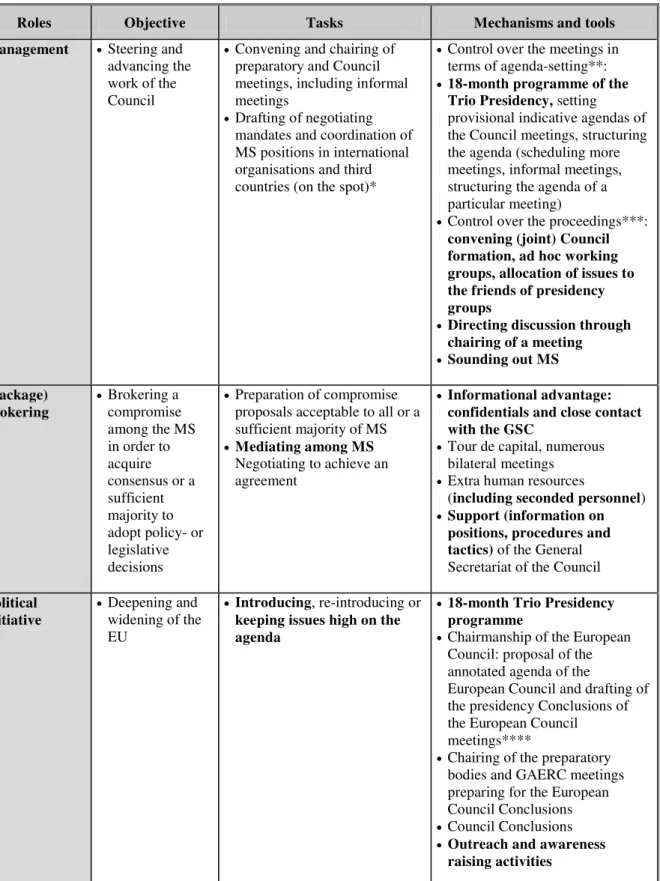
Table 1: Presidency’s roles and the analysis of Trio effects
Roles Objective Tasks Mechanisms and tools
Management Steering and advancing the work of the Council
Convening and chairing of preparatory and Council meetings, including informal meetings
Drafting of negotiating mandates and coordination of MS positions in international organisations and third countries (on the spot)*
Control over the meetings in terms of agenda-setting**:
18-month programme of the Trio Presidency, setting provisional indicative agendas of the Council meetings, structuring the agenda (scheduling more meetings, informal meetings, structuring the agenda of a particular meeting)
Control over the proceedings***: convening (joint) Council formation, ad hoc working groups, allocation of issues to the friends of presidency groups
Directing discussion through chairing of a meeting
Sounding out MS
(Package) brokering
Brokering a compromise among the MS in order to acquire consensus or a sufficient majority to adopt policy- or legislative decisions
Preparation of compromise proposals acceptable to all or a sufficient majority of MS
Mediating among MS Negotiating to achieve an agreement
Informational advantage: confidentials and close contact with the GSC
Tour de capital, numerous bilateral meetings
Extra human resources
(including seconded personnel)
Support (information on positions, procedures and tactics) of the General Secretariat of the Council
Political initiative
Deepening and widening of the EU
Introducing, re-introducing or keeping issues high on the agenda
18-month Trio Presidency programme
Chairmanship of the European Council: proposal of the annotated agenda of the
European Council and drafting of the presidency Conclusions of the European Council
meetings****
Chairing of the preparatory bodies and GAERC meetings preparing for the European Council Conclusions
Council Conclusions
Representing the Council in front of other institutions
Good and efficient cooperation between the institutions
Presentation of the Presidency programme in the EP plenary and in the relevant
committees, presentation of the achievements
Answering questions by the MEPs
Briefing of the EP on the achievements of the European Council*****
Negotiation with the EP on behalf of the Council on the co-decision files
Consultation with the Commission in the
preparation of the provisional indicative agendas and close cooperation for the
preparation of the 18-month programme
Speeches and appearance in the EP plenary and
Committee sessions.
Meetings with EP leadership and the political group leadership prior to taking up the presidency
meetings with the Commission at all levels in the preparation of the programme, indicative agendas and in carrying out the presidency
Chairmanship of the trilogue and Conciliation committee meetings
Informal meetings
Screening of the progress in the work of the Council
External representation ******
Represent and negotiate on behalf of the member states with third parties
Representation on behalf of the member states in dialogue with third parties, hosting of the meetings, exerting local presidency
Issuing presidency declarations on international events and negotiating on behalf of the member states
Coordination of member states positions on the spot (in third countries or international organisations)
Diplomatic representation
Presidency declarations on international events
* The role transferred to the new High Representative and the EEAS and gradually phased out as the EEAS becomes fully operational.
** Limited, formally and informally.
*** Formally as stated in the rules of procedure.
**** Since the Lisbon Treaty entered into force the President of the European Council is entrusted with the tasks of preparing, chairing and drafting of Conclusions (if appropriate) of the European Council meetings.
***** Since the Lisbon Treaty entered into force the President of the European Council briefs the European Parliament on the European Council meetings.
****** The role significantly reduced with the entering into force of the Lisbon Treaty. See text.
The present table indicates that the Trio effects are present in all the presidency functions with the exception of the external representation. The following section analyses the intensity of the Trio effects in accordance with the operationalization developed above and explores what contributed to the emergence of the Trio with regard to the PCD.
3.
The Trio Presidency performance
3.1. Trio cooperation in setting the agenda: The analysis of the 18-months programme
The cooperation of Germany, Portugal, and Slovenia with regard to PCD matters started long before Germany assumed its presidency on the 1st of January 2007. In the first months of 2006, German officials established contact with their Trio partners asking them to lay down their ideas about the future cooperation. The first exchange of views was eventually realized at the Gymnich meeting held under the Austrian Presidency in spring 2006 (interview German Foreign Office [GFO], 2009). It was then decided that each Trio participant composed a catalogue of items for the future presidency agenda. In the development dossier, the first difference was the number of the proposed items: the Portuguese list (extra long, 22 items) contrasted with the Slovenian one (extra short, four items) (interview GFO, 2009). An active German engagement – Germany talked to each of the Trio partners before the tripartite discussion, asking them to reconsider the initial positions – contributed to the emergence of a common 18-month presidency agenda. The document was finalised in autumn 2006, and subsequently confirmed at the December session of the GAERC. The fact that representatives of Portugal and Slovenia were prepared to review the number of their national priorities in the development dossier, as well as the German effort invested into the negotiation with its partners, indicated that the cooperation among the three countries would go beyond the simple accumulation of national priorities under the Trio umbrella. This initial cooperation was marked by a bottom-up approach, involving not only officials in the rank of Ministers and State Secretaries but officials at the level of Directories Generals. The input from these officials was crucial for „de-politicisation‟ of the Trio efforts with regard to the PCD matters.
Most of references to the Trio encountered during the interviews are related to this bottom-up programming exercise, which „could have not been better‟ (interview at the Portuguese Ministry for Foreign Affairs [PT MFA], 2009; interview at the Slovenian Ministry of Foreign Affairs [SI MFA], 2009). What was especially appreciated by smaller Trio members was the room for manoeuvre they eventually received during these initial talks. One of the officials illustrated this phase by stating that “no one was stepping on the others’ toes” (interview PT MFA 2009). Eventually, a certain relationship “conducive to the successful Trio performance” was forged: The officials involved in the PDC dossiers who met at the preparatory meetings got to know their counterparts better, developed good working relationships and identified „convergence of interests‟ (interview PT MFA; interviews Portuguese Institute for Development Cooperation [PIDA], 2008, 2009).
cooperation and half way towards the 2015 Millenium Development Goals (MDG). This aspiration was supported by German Minister‟s counterparts.16
German, Portuguese and Slovenian officials eventually agreed on a Trio programme for development cooperation policy entitled „Strengthening the European Union‟s Role as a Global Partner for Development: The 18-months Programme on Development Policy of the EU Presidencies of Germany, Portugal and Slovenia January 2007-June 2008‟ (2007). The document expanded and elaborated upon the „Development Policy‟ section of the 18-month general Trio programme. In January 2007, this separate Trio development programme was published as a single document by the German Ministry for Development Cooperation (GMDC). The latter also published the final document evaluating the Trio performance at the end of term (Europe – a Strong Global Partner for Development: Taking Stock of the joint 18-month development policy programme, 2008).
Both the general 18-month programme and separate Trio development cooperation programme revealed an aspiration to improve coordination among the three Presidencies with regard to the PCD. The former document includes an explicit and repeated commitment of the Trio to promote PCD in the „Development Policy‟ section (Council, 2006b: 68). Remarkably, the „Strategic Framework‟ section of this document placed development concerns high on the Trio agenda. The three Presidencies declared to “reinforce the Union‟s development policy as a decisive and distinct policy element of the EU‟s future external action as a whole.” (Council, 2006b: 5).
The references to the development and PCD in the general 18-month programme and the publication of a separate Programme on Development Policy clearly indicated that the Trio was capable of establishing reliable communication and consultation and that the Trio was indeed speaking with one voice. This document assigned a set of „Trio presidency priorities‟ to each of the Trio members. According to it, German priorities included the issue of a more efficient cooperation of donors (with a view to improve aid effectiveness), Economic Partnership Agreements (EPAs), and energy issues. The latter were related to the objective of emphasising “energy access, renewable energy and energy resources, especially in Africa” (Strengthening the European Union‟s Role as a Global Partner for Development, 2007: 6). The Portuguese Trio priorities encompassed the issue of fragile states, where the need for “new, complementary approaches” was identified. With regard to this specific objective, the document stated the priority of adopting a “more coherent and effective EU approach towards fragile states and the prevention of state failure and fragility encompassing the existing instruments and policy areas (e.g. governance, security and development)” (Strengthening the European Union‟s Role as a Global Partner for Development, 2007: 6). Another priority assigned to Portugal was the migration-development interface, defined as a promotion of “overall effective management of migration flows”, as well as the maximization of the “potential benefits of migration” (Strengthening the European Union‟s Role as a Global Partner for Development, 2007: 7). The Slovenian Trio priorities referred to the position of
16
women and children in armed conflicts, by emphasizing the need to further integrate the “protection of women in conflict and post-conflict situation into EU development policies and programmes, based on the promotion of gender equality” (Strengthening the European Union‟s Role as a Global Partner for Development, 2007: 7).
The Trio priorities assigned to Germany, Portugal, and Slovenia reinforced each other in three distinct ways: through thematic links, a common geographic focus, and a specific approach aimed at promoting the issues on the EU agenda. Both the Portuguese and Slovenian Presidencies were attributed issues falling into the remit of the security-development nexus. This suggested that both could benefit from coordinating their approaches. The German presidency priorities established the link between energy and good governance, which was closely related to the Portuguese emphasis on fragile states. Both the general and a separate development Trio programme clearly indicated Africa as a joint regional priority. The latter was defined as a “continent being both strategically crucial to overall MDG achievement, and the same time of special importance to Europe as our immediate neighbor” (Council, 2006b: 69). The general 18-months programme reinforced this point by defining energy (a „German‟ Trio priority) and gender equality (a „Slovenian‟ Trio priority) as a central EU concern in implementing the EU Strategy for Africa (planned to acquire an important impulse during the Portuguese Presidency). The 18-month programme also attributed particular importance to working towards further integrating the African, Caribbean and Pacific (ACP) partner countries into the global economy and advancing the European Partnership Agreements (EPAs).
Furthermore, the separate development programme mentioned the possibility of conducting a study on the “appropriate EU strategy on crises prevention and fragile states, with special reference to the situation of women and children in armed conflict and the general issue of good governance” (Strengthening the European Union‟s Role as a Global Partner for Development, 2007: 7). The Portuguese and Slovenian Trio partners requested the same think-tank, European Centre for Development Policy Management (ECDPM), to produce independent studies on „issues of global relevance to development‟ (Faria and Magalhaes Ferreira, 2007; Sheriff and Barnes, 2008), which corresponded with the Trio priorities as defined by the programme. The study of the German Trio priority, i.e. division of labor in development cooperation, was undertaken by the German Development Institute in close cooperation with Portuguese and Slovenian research institutions (Bučar et al., 2007; Mürle, 2007).17
The studies mentioned above were co-financed by Trio partners (interview GMDC, 2009).18 They were crucial to a „launch a wide public debate‟, which was important for the subsequent cooperation with the Commission (interview GMDC, 2009; interview PT MFA 2009). The documents also served as background expert papers or issue papers for the Council conclusions, while also legitimizing the horizontal approaches to the issues. That is to say, the
17
Centre of International Relations, Faculty of Social Sciences, University of Ljubljana, Slovenia; and Centre of African and Development Studies at the Technical University of Lisbon.
18
studies referred to issues pertaining to different modes of governance in the EU (security, development, and women and children in armed conflicts), but nevertheless brought together in the conclusions with a specific reference to the PCD.
A sign of Trio spirit and a sound foundation for the cooperation to continue beyond programming was also observable in the presentations of the Trio programme as well as of individual presidency programs to the European Parliament. These presentations were attended by all three representatives. During their presentations, all made positive references to the Trio format. The German presentation referred to the Trio format as a means to „strengthen continuity of the European policy‟ and „foster the European growing together‟ (GMDC, 2007). The Portuguese presentation in its turn highlighted the Trio format as an „innovative experience which represents an important contribution to the governance of EU‟ (PT MFA, 2007). Finally, the Slovenian presentation noted that the format helped „ensuring consistency, efficiency and continuity throughout the three presidencies‟ (Website of the Slovenian Presidency 2008).
The agreement on Trio priorities mostly resulted from complementary visions and approaches of the three Trio participants. This was an important experience because it allowed for the Trio communication and consultation effects. As a result, officials within the three administrations came to know their counterparts personally, which was crucial to establishing reliable communication channels. The publication of a separate programme attested to the fact that the Trio was capable of avoiding divergences and speaking with one voice. However, apart from these instances of “negative coordination to hide differences” (Peters, 1998b:7), we also found that some Trio priorities resulted from rounds of tough negotiations and involved a complex compromise on sensitive issues. This constituted another kind of „Trio effects‟, namely the intra-Trio search for an agreement. This meant that the Trio members achieved the degree of cooperation where they recognized their interdependence and their mutual interest in resolving policy differences (Peters, 1998b: 7).
In spite of Africa‟s central place with regard to PCD, the German Presidency was determined to prioritise the Eastern dimension and Portugal the Southern dimension in EU‟s global action. Both were declared to be part of the Trio Presidency priorities, as reflected in 18-months programme sections referring to “strengthening and enhancing the ENP with regard to both its Eastern and Mediterranean neighbours” (Council, 2006b: 63). The same objectives were patent in the sections related to Africa, Latin America as well as Russia and Central Asia (Council, 2006b: 64–66). According to the adopted „division of labour‟, the German and Portuguese Presidency took the objectives upon themselves accordingly.
Presidency and since then developed as a „Southern‟ initiative. Eventually, Portugal received German backing for its aspiration to advance the issue of legal migration as a part of the PCD, while Germany could count on the Portuguese support for the extension of the Global Approach to Migration to the East (interview PT MFA, 2009; interview GFO, 2009).
3.2. Trio effects on the management of the Council
The existence of a well-balanced 18-month programme was a major achievement, but its implementation was a crucial test for meeting the objectives of the Trio format. The Trio partners made an explicit commitment to extend their cooperation beyond setting up a common programme by agreeing to “work closer together during the coming 18 months in order to foster the implementation of the joint aims and projects named.”19 Our research shows that the Trio partners stayed true to this commitment. The analysis of the management function with regard to the Trio efforts to promote PCD displays the Trio effects with regard to communication, consultation, and the avoiding divergences within the Trio (speaking with one voice).
Officials in the EU institutions pointed out the stark contrast to the previous presidencies‟ approach to the PCD dossier, when it was primarily the Commission and the General Secretariat of the Council (GSC) that looked after the dossier and its continuity. In the eyes of an official in the GSC, the first Trio seemed to have taken upon itself the mission to provide continuity (interview GSC, 2009) and continuously pushed the PCD forward throughout the 18-months term. In this respect, the officials in the Commission and in the GSC refer to a “clear Trio effect”, defined as an “improved coherence and continuity” (interview GSC, 2009). Once again, the German input was found to be essential: “Germany really monitored the carrying out of the programme and looked after it, so that the issues were kept on the agenda. It had the other two on board, contacting them, informing them, offering technical and expert help, first of all to Slovenia, secondment, support in dealing with other member states” (interview GSC, 2009).
With respect to carrying out the programme, no use of diverting tools (such as agenda-structuring or agenda-exclusion) was reported in the conducted interviews. On the contrary, the analysis of initiatives undertaken by the Trio members to promote PCD indicates that the three even went beyond the tripartite agreement in their aspiration to promote the PCD. For instance, Portugal promoted the theme of food security (which was supported by a Conference on this issue organized by the German Presidency in May 2007 in Berlin), and pushed for an establishment of a group inside the CODEV to discuss the matter, which eventually received training (interview PIDA, 2009) on the subject.
The three Presidencies both actively supported the thematic priorities of their partners and cooperated to keep the agreed geographic priority high on the agenda. The German
19
Presidency undertook significant preparatory work ahead of the EU-Africa summit taking place under the Portuguese Presidency (interview GFO, 2009). The Energy Partnership with Africa, promoted and adopted under the German Presidency, was signed during the EU-Africa summit in Lisbon in December 2007. After the summit was over, Slovenia did its best to keep a focus on Africa in more general terms high on the agenda. As a part of this continuous effort, Slovenia invested in the organization of the EU-Nigeria meeting, which had not been organized for years (interview SI MFA, 2009). Most Portuguese and German officials were unanimous in indicating a continually strong German and Slovenian backing for the aspiration to put Africa high on the EU agenda as the most visible Trio effect (interview SI MFA, 2009; interview GFO, 2009).
The Slovenian Presidency provides further evidence of the support of the thematic priorities of Trio partners. The Slovenian Presidency organised a Conference on Coordination and Division of Labour in the Field of EU Development cooperation in Brdo (17–18 February 2008), defined in the programme as a „German‟ Trio priority (as a follow-up initiative to the Code of Conduct on Complementarity and the Division of Labour adopted in May 2007). The Slovenian Presidency also held the Informal Meeting of Humanitarian Aid Committee in Brdo (6–7 March 2008) - a priority that was especially emphasised by the Portuguese Trio member (and resulted in the European Consensus on Humanitarian Aid, adopted in December 2007). In another example, Germany, despite its “traditional control-oriented and security centric preoccupations” (Parkes, 2008: 53), elaborated proposals on circular migration and thus contributed to the sustainability of the „migration-development‟ nexus, which was a matter of special attention of the Portuguese Presidency.
The three Trio partners have used their upper hand on the procedure to increase the number of opportunities for governments to consider specific issues related to the PCD. The Portuguese Presidency has, for instance, organised the first GAERC with Development Ministers in a specific configuration as a Joint Council of Development and Defence Ministers (19-20 November 2007), which was essential to the promotion of the security-development nexus. The Portuguese and German Presidencies made use of the possibility to organise informal meetings on the initiative of individual Presidencies and through their own funding (see the EPA section below).
the three countries during and after the Trio tenure were stark in contrast. After the Trio‟s end, the national representatives, again, assumed positions that “could not be more different” (interview SI MFA, 2009), which once again confirms the existence of the „Trio effect‟.
As mentioned above, Trio partners were often invited to the briefings before the meetings, which according to the accounts of our interviewees, often resulted in extending the privileged informational advantage of the Chairman-in-Office to the rest of the Trio. This was especially important in the external relations field, where familiarisation with third parties and issues on the agenda of political dialogues has always been a rather delicate affair. Despite the practice being intended only (if needed) for the subsequent presidency to attend briefings and the meetings in the framework of the political dialogues, the German Presidency often also invited the Slovenian representatives to be included in the talks as much as possible (interview GFO, 2008).
Debriefings of the Presidencies in the capital of the following presidency were established as another mechanism of the Trio continuity. At the end of the German Presidency, the German officials visited Lisbon and brought a paper summing up all the achievements and problems. The Portuguese officials repeated the experience with the Slovenian colleagues, who were particularly satisfied with the quality of the debriefing (interview SI MFA, 2009). In this regard, the accounts of officials involved in the PCD issues contradict the otherwise existing information suggesting the lack of cooperation between Portugal and Slovenia. Both Slovenia and Portugal chose to focus on the complex security-development nexus. The Portuguese officials, aware of the Slovenian Trio PCD priorities, warned their Slovenian colleagues about the extent of the existing intra-EU difficulties and offered suggestions to overcome them (interview PIDA, 2009).
In order to boost the capacity to promote the PCD, there was also extensive secondment by development experts with preference for the Trio (interview GMDC, 2009; interview PIDA 2009). Development policy experts were seconded to respective capitals from the Trio partners, which in the case of Slovenia (who had no development policy experts to spare on secondments for the time of its own presidency) meant a significant increase in the manpower. This proved essential to managing the dossier from the capital, providing background information on the substance and positions, helping with sensitive information, as well as to the efficient management of the dossier. The seconded Trio officials also acted as a link between the governments, keeping an eye on the execution of the joint programme (interview SI MFA, 2009).
3.3. Trio effects with regard to the political initiative and brokering role
analysis below demonstrates the existence of the Trio effects regarding communication, consultation, and avoiding divergences among the three countries.
The German and Portuguese Presidencies organised the „Informal Meetings of EU Development Ministers and informal ACP-EU dialogue on EPAs‟, the first of this kind. The summit was held in Petersberg/Bonn (12-13 March 2007), some days before the ACP-EU Ministerial Council in Brussels (24-25 of May 2007) was taking place. In a similar manner, an analogous meeting was held in Funchal/Madeira (21-22 September 2007), prior to the discussion on EPAs during the EU-Africa summit in Lisbon (8 – 9 December 2007). Slovenia also arranged a meeting of 30 „key‟ ACP Ministers in Ljubljana to discuss EPAs (Percival, 2008).
The need for this joint approach and effort was illustrated by the severe tensions concerning the EPAs during the Lisbon EU-Africa summit. In December 2007, the ACP Council of Ministers adopted a unanimous declaration in which it deplored ”the enormous pressure that has been brought to bear on the ACP states by the European Commission to initial the interim trade arrangements” (ACP Council Declaration, 2007). All three Presidencies sought to give a strong voice to developing countries negotiating the EPAs with the European Commission. The Slovenian presidency eventually succeeded in adopting the Resolution by the Joint Ministerial ACP-EU meeting in Addis Ababa in June 2008, which emphasised “… a commitment to make every effort to ensure that all regions conclude World Trade Organisation (WTO) - compatible full EPAs with due regard for ACP circumstances” (Resolution, 2008). This meant that after months of tense negotiations, the positions of the EU and ACP countries were finally brought one step closer to each other (Percival, 2008).
Another example of the Trio effects in the brokerage function was the German support for the realisation of the EU-Africa summit in Lisbon. The difficulty was related to the deadlock created by Gordon Brown‟s threat to boycott the summit, which triggered similar declarations in other EU member states (e.g. Czech Republic). Eventually, the plans to boycott the event left the Portuguese Presidency with a dilemma as to whether to issue an invitation to Zimbabwe‟s leader (otherwise banned from travelling into the EU) (Ferreira-Pereira, 2008: 66). Several African states, including South Africa and Zambia, had announced that they would boycott the summit should Zimbabwe‟s leader not be present. The Portuguese Presidency eventually won the support of the EU‟s leaders by stressing a new strategic environment and in particular China‟s growing interest in Africa. It also continuously emphasised the fact that one country cannot stand in the way to the EU-African strategic partnership. However, without Chancellor Angela Merkel‟s commitment, the summit in Lisbon was considered „close to impossible‟ (interview PT MFA, 2009).
MFA, 2009), in spite of disagreements over the necessity of the Council to come together in the first place (interview SI MFA, 2009).
3.4. Representational roles: Trio effects internally, but no trace of external cooperation
Germany, Portugal, and Slovenia invested into increasing the visibility of the Trio effort throughout the 18 months of their presidency term. In December 2006, at a special event at the Ministry for Economic Cooperation and Development in Berlin, three high officials in the rank of Ministers came together and presented their programmes with regard to development cooperation. The presentation of the German programme by the Minister Heidemarie Wieczorek-Zeul was followed by presentations by State Secretaries João Cravinho and Andrej Šter. Subsequently, representatives of the three countries attended the presentation of Programmes of the individual Presidencies to the European Parliament‟s Committee on Development. The already above mentioned positive references to the Trio allow for establishing Trio effects of communication and consultation, as well as the avoidance of divergences among three participants.
The state of affairs with regard to the working level representation was, however, different. As one of the Portuguese officials noted, „there was no need to go beyond the traditional representation as it could have been received negatively‟ (interview PT MFA, 2009). Eventually, as Chairs of the Working Groups, the Trio was ‘present and absent at the same time’ (interview PT MFA, 2009). In the external representation area, we did not find any specific reference to, or awareness of, the Trio cooperation. For instance, the close cooperation among the capitals and in Brussels did not automatically transpose into the local Presidencies. The system established for the assumption of the local Presidencies hardly allows for specific cooperation among three Presidencies, as it provides for the next presidency in a row with presence in a particular capital, to exert local presidency. The Trio experience again confirms the fact that the diplomatic representations in third countries are more of a bastion of traditional (nation-state) foreign policy instruments and not exposed to the socialisation and learning processes in member states‟ capitals and in Brussels.
Conclusions: The first Trio experience and its implications
nuanced picture of Trio cooperation, in contrast to the „common wisdom‟ that Germany dominated the first presidency Trio (see e.g. Kiez and Maurer, 2007: 111). As we demonstrated, the common programme was a result of linking complementary approaches and complex compromises. While confirming the driving force from Germany, the analysis shows that in PCD matters, the activism was coupled with an „honest broker‟ position regarding the priorities of Portugal and Slovenia.
With the sole obligation of presenting the joint programme, cooperation among the Trio members could have halted once the implementation got under way. However quite the contrary occurred, in which the performance of the three Presidencies displayed a number of Trio effects - including communication, consultation and the avoidance of differences- especially in carrying out the managerial function. Our analysis demonstrated how individual Presidencies actively steered the agenda to support priorities established by the Trio. All three participants promoted the joint council formations, informal meetings, as well as the organisation of conferences and other instruments to promote and sustain the Trio-supportive agenda. This enabled the implementation of the three distinct thematic Trio priorities. The Trio effect on the brokering function was facilitated by technical support, expert help, and the informational advantage extended to the Trio members, as well as visits of Trio officials to the next presidency‟s capital to debrief their colleagues. Such informal meetings also led to inter-Trio coordination of strategies for dealing with other EU institutions (primarily with the Commission).
The Trio effects were less pronounced in the internal and especially external representation function. Trio cooperation in relation to the European Parliament involved merely the presence of other Trio participants during the presentation of the individual priorities (both during the 18 months and the separate development programme at the EP Development Committee), as well as during the reports of all three State Secretaries at the meeting with the Development Committee at end of the Slovenian Presidency in June 2008. In relation to the external representation function, we did not find any Trio effects.
states easily agree on its importance, but one which implementation will inevitably face significant difficulties.
Still, the analysis of the first Trio cooperation in PCD matters offers an insight into the practical implementation of a programme agreed upon by the three parties. This concerns especially the idea that has accompanied the evolution of the Trio from the beginning, i.e. the thematic division of labour across 18 months (Kiez and Maurer, 2007: 112). Though the first Trio did not adopt this approach, it set a precedent of dividing assignments of thematic PCD priorities to Germany, Slovenia and Portugal under the Trio umbrella. This approach was reinforced by thematic links of the individual Presidencies, a common geographic priority, as well as by a common Trio strategy regarding commissioning and co-financing studies by the think tanks ECDPM and GDI on specific issues (such as states‟ fragility).
This adapted version of the thematic division of labour proved to be positive, as it provided for an increased visibility of the work of the EU institutions, first of all, the Commission. At the same time, it enabled the close contact of the involved officials, leading up to several Trio effects. It should be noted, however, that this model was highly dependent on the composition of the Trio. It gave time for a newer member state, namely Slovenia to prepare its Chairmanship, and built upon the traditional national priorities of another smaller Trio member, i.e. Portugal and its interest in fragile states. The Trio (and other) members‟ concerns about the individual Chairmanships‟ autonomy or regarding the manpower and resources to implement the agreed agenda quickly vanished. Even though the idea of thematic division of labour may appear contradictory to creating the feeling of joint ownership stemming from a common programme, it is actually conducive to the improvement of continuity. However, exclusive reliance on the thematic division of labour could result in restricting the Trio effects.
The present analysis allows for drawing of some preliminary conclusions with regard to the post-Lisbon decision-making system of the EU. Given the modest results of the first presidency Trio with regards to the PCD on the one hand and the predominance of the Trio effects in the management functions on the other hand, the present analysis supports the central role of the High Representative in the promotion of the PCD. At the same time, Trio effects continue to be highly relevant to the promotion of this principle. The rotating presidency continues to chair about a dozen of the development-related Working Groups, the Coreper and GAC, as well of informal meetings and outreach activities. The Trio can establish pre-negotiated compromises at the lower levels, which can „climb up‟ to the Council, making its running smoother.