Original Article
Artigo Original
Olfactory function and quality of life
after olfaction rehabilitation in total
laryngectomees
Função olfatória e qualidade de vida
após a reabilitação do olfato em
laringectomizados totais
Christiane Gouvêa dos Santos1,2Anke Bergmann2
Kaliani Lima Coça2
Angela Albuquerque Garcia3
Tânia Cristina de Oliveira Valente1
Keywords
Quality of Life Smell Laryngectomy Olfaction Disorders Rehabilitation
Descritores
Qualidade de Vida Olfato Laringectomia Transtornos do Olfato Reabilitação
Correspondence address:
Christiane Gouvêa dos Santos Praça da Cruz Vermelha, 23, Centro, Rio de Janeiro (RJ), Brazil. CEP: 20230-130.
E-mail: [email protected]
Received: October 06, 2015
Study carried out at the Instituto Nacional de Câncer José Alencar Gomes da Silva – INCA - Rio de Janeiro (RJ), Brazil.
1 Universidade Federal do Estado do Rio de Janeiro – UNIRIO - Rio de Janeiro (RJ), Brazil. 2 Instituto Nacional de Câncer José Alencar Gomes da Silva – INCA - Rio de Janeiro (RJ), Brazil. 3 Universidade Federal do Rio de Janeiro – UFRJ - Rio de Janeiro (RJ), Brazil.
Financial support: nothing to declare. Conlict of interests: nothing to declare. ABSTRACT
Purpose: To evaluate the effects of olfaction rehabilitation in the olfactory function and quality of life of total laryngectomized patients. Methods: Pre-post intervention clinical study conducted with total laryngectomees
submitted to olfaction rehabilitation by means of the Nasal Airlow-Inducing Maneuver (NAIM) using the University of Pennsylvania Smell Identiication Test (UPSIT), Olfactory Acuity Questionnaires, a Monitoring
Questionnaire, and the University of Washington Quality of Life Questionnaire (UW-QOL). Results: Participants were 45 total laryngectomees. Before olfaction rehabilitation, 48.9% of the participants had their olfactic abilities
classiied as anosmia, 46.8% as microsmia, and 4.4% were considered within the normal range. After olfaction rehabilitation, 4.4% of the participants were classiied as anosmia and 31.1% were within the normal range. In the Smell Identiication Test, the mean score after rehabilitation showed statistically signiicant improvement.
Reponses to the Olfactory Acuity Questionnaires after rehabilitation showed improvement in the frequency of perception regarding smell, taste, and the ability to smell perfume, food, leaking gas, and smoke, after learning the maneuver. Although the scores in the Quality of Life Questionnaire already indicated good quality of life
before the surgery, post-intervention values were statistically signiicant. Conclusion: Olfaction rehabilitation improves olfactory function and has a positive impact on the activities of daily living and quality of life of total laryngectomized patients.
RESUMO
Objetivo: Avaliar os efeitos da reabilitação do olfato na função olfatória e na qualidade de vida de laringectomizados totais. Método: Estudo clínico pré e pós-intervenção em laringectomizados totais submetidos à reabilitação do olfato pela técnica Nasal Airlow- Inducing Maneuver, por meio do Teste de Identiicação do Olfato da Universidade da Pensilvânia, dos Questionários sobre a Acuidade Olfatória, do Questionário de Acompanhamento e do Questionário de Qualidade de Vida da Universidade de Washington. Resultados: Foram incluídos
45 laringectomizados totais. Antes da reabilitação do olfato, 48,9% dos participantes tiveram o olfato classiicado
em anosmia, 46,8% apresentaram algum tipo de microsmia e 4,4% tiveram o olfato considerado normal. Depois
da reabilitação, 4,4% dos participantes foram classiicados como anosmia e 31,1% foram classiicados dentro da normalidade. No Teste de Identiicação do Olfato, o escore médio após a reabilitação apresentou melhora estatisticamente signiicante. Nos questionários sobre a acuidade olfatória após a reabilitação do olfato, os
resultados demonstram melhora na frequência da percepção com relação ao olfato, paladar e à capacidade de sentir cheiros dos perfumes, alimentos, gás vazando e fumaça, após o aprendizado da manobra. Os escores do Questionário de Qualidade de Vida, embora já indicassem uma boa qualidade de vida antes da intervenção,
Santos CG, Bergmann A, Coça KL, Garcia AA, Valente TCO 670
INTRODUCTION
Total laryngectomy associated with radiotherapy is one of the interventions of choice for the treatment of advanced laryngeal tumors(1). It implies physical, functional, social and psychological consequences that negatively affect the quality of life of patients(2).
In addition to compromising communication, total laryngectomy affects pulmonary function and causes changes in the senses of smell and taste. The permanent discontinuity between the upper and lower airways, with the removal of the larynx and the transfer of the nasal air current to a permanent tracheostoma, entails signiicant changes in pulmonary physiology as well as alterations in olfactory acuity(2,3).
Olfactory perception can occur in two main ways: the irst and most important is the orthonasal olfaction, which occurs when odorant molecules are delivered to the olfactory epithelium via the nares; the second is the retronasal olfaction, which occurs when odorant molecules from the oral cavity, produced during mastication, are delivered via the nasopharynx and posterior choanae to the olfactory epithelium in the olfactory cleft(4-6).
Discontinuation of the airlow in the nasopharyngeal airways due to total laryngectomy prevents the odorant molecules from reaching the olfactory epithelium, precluding its stimulation and causing hyposmia or even anosmia(5,7,8).
Olfactory deterioration contributes to loss of appetite and weight and often compromises the nutritional status of individuals, affecting their quality of life(6,9).
Studies conducted with patients following total laryngectomy have shown that olfaction rehabilitation improves quality of life(2,5,8-10). This concept is deined by the World Health Organization (WHO) as “[...] the individuals’ perception of their position in life in the context of the cultural and value system in which they live and in relation to their goals, expectations, standards, concerns and social relations [...]”(11:1403). The absence of a single instrument to assess quality of life is common sense, because its concept is rather dynamic and subjective. Perception of quality of life is personal and under constant change, according to the experiences of each individual.
Traditionally, research on the rehabilitation of total laryngectomees has mainly focused on changes in communication and deglutition and in the pulmonary symptoms, and olfaction rehabilitation has been left in the background(4,12). Although several studies have demonstrated the presence of changes in the sense of smell following total laryngectomy and the existence of patients who, unintentionally, compensated for their olfactory changes(13,14), little had been discussed in relation to rehabilitation after such changes. Only in 2000, a study conducted by Hilgers et al.(15) described an effective technique for olfaction rehabilitation for this population.
The Nasal Airlow-Inducing Maneuver (NAIM), also known as the Polite Yawning Technique(15), consists in the performance of a repeated extended yawning movement, lowering the jaw, loor of mouth, tongue, base of tongue and soft palate while maintaining the lips securely closed(16). This technique produces a negative pressure in the oral cavity and oropharynx, inducing
a nasal airlow and enabling odorant molecules to reach the olfactory epithelium again.
The present study aims to assess the effects of olfaction rehabilitation, by means of the Nasal Airlow-Inducing Maneuver (NAIM), in the olfactory function and quality of life of totally laryngectomized patients.
METHODS
This is a pre-post intervention clinical study initially conducted with 49 (40 men and nine women) total laryngectomized patients.
Inclusion criteria comprised individuals of both genders, having concluded treatment of total laryngectomy (surgery/radiotherapy/chemotherapy) at six months prior to assessment, who presented effective communication and were being monitored at the Head and Neck Surgery Service and the Speech-language Pathology Unit of the “Instituto Nacional de Câncer José Alencar Gomes da Silva” - INCA.
Exclusion criteria were as follows: being under 18 years of age, use of nasogastric tube or gastrostomy, presence of clinical or surgical complication, presence of disease activity, presence of changes in olfactory acuity prior to laryngectomy, and known respiratory allergy.
During the conduction of the works, four participants were excluded for not attending sessions continually, which was considered abandonment; 45 individuals remained in the study.
This survey was approved by the Research Ethics Committee of INCA under no. 880.367. All individuals agreed to participate in the study by signing an Informed Consent Form.
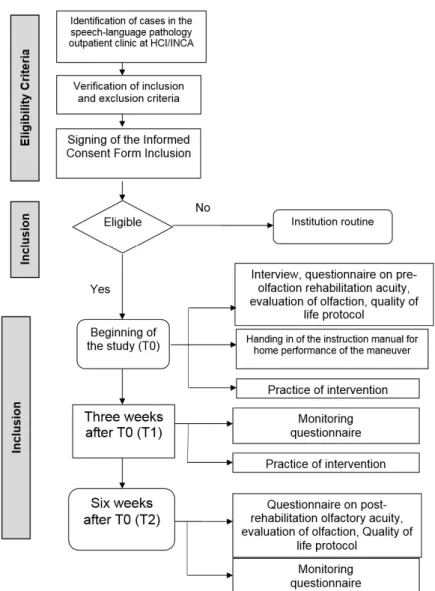
Patients were monitored for six weeks. During this period, they attended three weekly meetings with the researcher. Assessment of olfactory function and quality of life occurred in the irst and last weeks, pre- and post-olfaction rehabilitation. In the irst meeting (T0), participants learned how to perform the NAIM and received an instruction manual with guidelines on the maneuver execution for home training. At the end of the third week (T1), the same participants attended a meeting at the institute where they received extra orientation, performed assisted practice of the maneuver, and responded to a follow-up questionnaire. Participants were evaluated at the end of the sixth week (T2). At T0 and T1, a water manometer was used to provide visual biofeedback to the participants and the researcher during the practice of the maneuver.
All questionnaires and the smell identiication test were applied by the researcher in order to avoid inadequate responses due to misunderstanding of questions, even for literate patients. The study lowchart is presented in Figure 1.
The following instruments were used.
Smell Identiication Test
of each page. The examiner instructs the patient to scratch this strip with a pencil or like, releasing the odorant. The patient then approaches the stimulus approximately one centimeter to the nares and tries to identify the odorant. After that, the patient is required to choose the option that best describes the odorant. The test scores range from 0 (worst) to 40 (best), which classiies the olfactory function as normosmia (34-40 for men; 35-40 for women), slight microsmia (30-33 for men; 31-34 for women), moderate microsmia (26-29 for men; 26-30 for women), severe microsmia (19-25), anosmia (06-18) e possible cheater (00-05)(17). This test has been validated for the Brazilian population(18).
Olfactory acuity pre-post rehabilitation of olfaction
questionnaires
The questionnaires used to assess the perception that each participant has of their smell, pre- and post-intervention, were adapted by the researcher based on other questionnaires described in the literature(2,3).
The olfactory acuity pre-rehabilitation of olfaction questionnaire is composed of seven multiple-choice questions with four alternative responses for each item. The irst two questions relate to how individuals perceive their smell and taste; questions three to six measure the frequency which participants perceive the smell of perfumes, food, leaking gas and smoke; and the seventh question refers to the presence of some type of dificulty in the daily life of individuals owing to change in the perception of smells.
The olfactory acuity post-rehabilitation of olfaction questionnaire consists of eight questions: the irst seven are similar to those of the pre-rehabilitation of smell instrument and the eighth question investigates whether something has changed in the participants’ lives after olfaction rehabilitation; if so, participants should describe these changes.
Quality of life protocol
Quality of life was assessed, pre- and post-intervention, by means of the application of the Brazilian version of the University of Washington Quality of Life Questionnaire (UW-QOL),
Santos CG, Bergmann A, Coça KL, Garcia AA, Valente TCO 672
translated and validated for Portuguese by Vartanian et al.(19), to patients with head and neck cancer.
The questionnaire is composed of 12 single question domains: pain, appearance, activity, recreation, swallowing, chewing, speech, shoulder, taste, saliva, mood and anxiety. Each question has between three and six response options that are scaled evenly from 0 (worst) to 100 (best) according to the hierarchy of response; a composed score, which represents the mean of the twelve domains, is also calculated. This instrument also has a question that asks patients to choose which of the domains have been the most important to them. There are also three global questions on how patients feel relative to their overall quality of life and one open question on any other considerations that the participants wish to express.
Monitoring questionnaire
The follow-up questionnaire was developed by the researchers and used in the third and sixth weeks of the intervention. It comprises questions related to adherence to the intervention, the frequency which the participants trained the maneuver to induce nasal airlow, the presence of any dificulties in conducting it, and their opinion about the maneuver.
The patients’ feedback on the performance of the maneuver allows the researcher to correct any errors in the technique, aids in the improvement of its execution, and reinforces the need for systematic training.
Statistical analysis
For descriptive analysis, data were presented as number (%), mean, and standard deviation and were organized in an Excel spreadsheet. The Wilcoxon Signed-Rank Test, with statistical signiicance for p<0.05, was used to compare the standards of quality of life and olfaction measured pre- and post-intervention. The absolute difference between pre- and post-rehabilitation of
olfaction (%) was calculated to evaluate the changes of smell classiication in the UPSIT and olfactory acuity in the olfaction questionnaire.
Statistical analyses were performed using the software program Statistical Package for the Social Sciences (SPSS), 20.0.
RESULTS
In the initial group of 49 total laryngectomized patients, mean age was 61.2 years and the average postoperative time was ive years and four months. Cervical emptying was performed in 45 patients. Forty-six participants underwent radiotherapy and only four individuals were submitted to chemoradiotherapy.
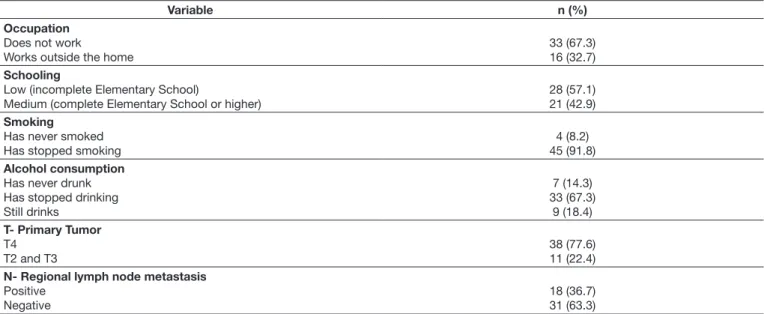
Regarding the means of communication used by the participants, 25 used tracheoesophageal prostheses, 20 used electronic larynxes, and only four used esophageal voice. The demographic and clinical characteristics of participants are described in Table 1.
With respect to the study inal sample (n=45), the mean UPSIT score was 17.87 prior to olfaction rehabilitation using the NAIM; this score was improvement after rehabilitation and reached the mean of value of 29.24, (p<0.001) (Table 2).
According to the classiication of smell in the UPSIT, initially, 43 participants (95.7%) presented some degree of alteration in olfactory perception, whereas two individuals (4.4%) were classiied as normal. After olfaction rehabilitation using the NAIM, which enabled total laryngectomy patients to direct the airlow to the nasal cavity again, the percentage of individuals with some degree of alteration in the olfactory function dropped to 68.8%. Table 3 shows the distribution of participants according to their classiication of smell in the UPSIT.
The results of the olfactory acuity pre-post rehabilitation of olfaction questionnaires are shown in Table 4. These results suggest an improvement in the frequency of perception in
Table 1. Clinical and demographic data of participants (n=49)
Variable n (%)
Occupation
Does not work
Works outside the home
33 (67.3) 16 (32.7)
Schooling
Low (incomplete Elementary School)
Medium (complete Elementary School or higher)
28 (57.1) 21 (42.9)
Smoking
Has never smoked Has stopped smoking
4 (8.2) 45 (91.8)
Alcohol consumption
Has never drunk Has stopped drinking Still drinks
7 (14.3) 33 (67.3)
9 (18.4)
T- Primary Tumor
T4 T2 and T3
38 (77.6) 11 (22.4)
N- Regional lymph node metastasis
Positive Negative
Table 2. Comparison between the parameters of olfactory function and quality of life of patients measured during pre- and post-olfaction rehabilitation (n=45)
Measured parameters
Pre-rehabilitation
Post-rehabilitation
Difference (final – initial) Wilcoxon Signed-Rank Test
Mean (SD) CI 95% Negative
a
N (%)
Positiveb
N (%)
Unalteredc
N (%) p value Mean (SD) Mean (SD)
QOL (UW-QOL)
Total Score 968.22 (144.66) 1052.78 (126.44) 84.55 (111.23) 51.14-117.97 5 36 4 0.000
Composed score 80.68 (12.05) 87.73 (10.53) 7.04 (9.27) 4.26-9.83 5 36 4 0.000
Pain 79.44 (22.79) 85.56 (20.97) 6.11 (20.75) -0.12-12.34 5 13 27 0.058
Appearance 85.00 (20.91) 92.22 (15.83) 7.22 (18.17) 1.76-12.68 2 10 33 0.012
Activity 87.78 (15.65) 93.89 (12.10) 6.11 (13.22) 2.13-10.08 1 11 33 0.005
Recreation 82.22 (21.06) 87.78 (16.53) 5.55 (18.37) 0.034-11.07 4 11 30 0.049
Swallowing 79.44 (17.70) 86.07 (16.48) 6.62 (16.73) 1.59-11.65 1 9 35 0.013
Chewing 94.44 (15.89) 94.44 (15.89) 0.00 (15.07) -4.53-4.53 2 2 41 1.000
Speech 72.69 (31.22) 85.96 (25.13) 13.26 (22.85) 6.40-20.13 1 16 28 0.000
Shoulder 74.93 (30.26) 81.62 (19.45) 6.69 (28.09) -1.75-15.13 3 8 34 0.096
Taste 64.22 (34.47) 83.02 (23.17) 18.60 (26.29) 10.70-26.50 2 21 22 0.000
Saliva 70.44 (28.68) 79.27 (28.75) 8.82 (24.12) 1.54-16.07 4 13 28 0.142
Mood 88.33 (24.77) 91.11 (21.42) 2.78 (17.85) -2.58-8.14 2 4 39 0.288
Anxiety 89.44 (16.41) 93.33 (13.48) 3.89 (11.86) 0.32-7.45 1 7 37 0.035
Olfaction (UPSIT)
Scores 17.87 (11.50) 29.24 (6.24) 11.38 (9.61) 8.49-14.26 1 42 2 0.000
Caption:aFinal parameter < Initial parameter; bFinal parameter > Initial parameter; cFinal parameter = Initial parameter; UW-QOL- University of Washington Quality of Life Questionnaire; QOL- Quality of life; SD- Standard Deviation; CI- Confidence Interval. UPSIT- University of Pennsylvania Smell Identification Test. Statistical analysis performed using the Wilcoxon Signed-Rank Test. Statistically significant values are marked in bold (p<0.05).
Table 3. Classification of olfaction using the UPSIT for pre- and post-olfaction rehabilitation of laryngectomees (n=45)
Classification of olfaction Pre n (%)
Post n (%)
Absolute difference between pre- and post-olfaction rehabilitation n (%)
Anosmia 22 (48.9) 2 (4.4) -20 (-44.5)
Severe microsmia 7 (15.6) 8 (17.8) 1 (2.2)
Moderate microsmia 7 (15.6) 10 (22.2) 3 (6.6)
Slight microsmia 7 (15.6) 11 (24.4) 4 (8.8)
Normosmia 2 (4.4) 14 (31.1) 12 (26.7)
Caption: UPSIT - University of Pennsylvania Smell Identification Test
relation to smell, taste, and the ability to smell perfume, food, leaking gas, and smoke after learning the maneuver.
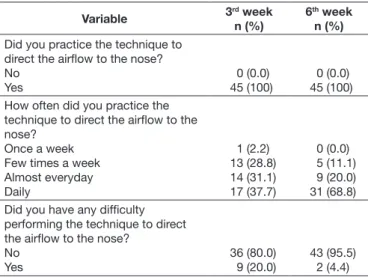
With regard to dificulties in the daily life of total laryngectomees due to olfactory changes, 22.2% of the individuals who reported problems in the pre-olfaction rehabilitation period did not report any dificulty after the intervention. Most of the participants who reported changes in their lives after rehabilitation of olfaction pointed to improvement of smell as the greatest change occurred. However, some individuals also mentioned improved taste and increased self-esteem as perceived changes. Responses to the monitoring questionnaire applied in the third and sixth weeks revealed that all participants had practiced the NAIM, suggesting complete adherence to olfaction rehabilitation. A larger number of patients (68.8%) reported using the maneuver daily in the sixth week compared with the third week (37.7%), suggesting that the meeting held in the third week was important for patients to systematize the maneuver practice, including it in their daily lives. Few participants reported having dificulties in performing the NAIM in the meetings of the third and sixth weeks, 20.0%
and 4.4%, respectively, possibly because the technique can be quickly and easily learned (Table 5).
Although the means of the total and composed scores in the UW-QOL evaluation had already indicated good quality of life of participants prior to the intervention, greater and statistically signiicant values were observed in the post-olfaction rehabilitation period (p =0.000 for both). The domains that presented the
highest means with statistically signiicant values were taste, speech, and saliva (Table 2).
Santos CG, Bergmann A, Coça KL, Garcia AA, Valente TCO 674
DISCUSSION
The present study analyzed the olfactory acuity of 45 total laryngectomees in the pre- and post-olfaction rehabilitation periods using a maneuver known as Nasal Airlow-Inducing Maneuver (NAIM) and the impact of this intervention on the quality of life (QOL) of this population.
The characteristics of the population investigated are in accordance with the worldwide prevalence of laryngeal cancer(20), considering that most of the sample is composed of men aged 60 years or older, smokers, alcohol consumers, and of low schooling.
The change in olfactory perception after total laryngectomy is a consequence of this surgery(12,21).
Among the participants, 95.7% presented some degree of change in olfactory perception. The high prevalence of this change, found in the study population, corroborates previous data(2,21,22).
Table 5. Practice frequency of NAIM and difficulties in the performance of this technique at the third and sixth weeks after olfaction rehabilitation (n=45)
Variable 3
rd week
n (%)
6th week
n (%)
Did you practice the technique to direct the airflow to the nose? No Yes 0 (0.0) 45 (100) 0 (0.0) 45 (100) How often did you practice the
technique to direct the airflow to the nose?
Once a week Few times a week Almost everyday Daily 1 (2.2) 13 (28.8) 14 (31.1) 17 (37.7) 0 (0.0) 5 (11.1) 9 (20.0) 31 (68.8) Did you have any difficulty
performing the technique to direct the airflow to the nose?
No Yes 36 (80.0) 9 (20.0) 43 (95.5) 2 (4.4)
Caption: NAIM - Nasal Airflow Inducing Maneuver
Table 4. Results of the Olfactory Acuity Pre-post Rehabilitation of Olfaction Questionnaires (n=45)
Variable Pre n (%) Post n (%) Absolute difference between pre- and post-olfaction rehabilitation n (%)
How do you rate your sense of smell now? Poor Fair Good Very good 14 (31.1) 19 (42.2) 12 (26.7) 0 (0.00) 0 (0.00) 8 (17.8) 29 (64.4) 8 (17.8) -14 (-31.1) -11 (-24.4) 17 (37.7) 8 (17.8) How do you rate your sense of taste now?
Poor Fair Good Very good 3 (6.7) 16 (35.6) 21 (46.7) 5 (11.1) 0 (0.00) 6 (13.3) 24 (53.3) 15 (33.3) -3 (-6.7) -10 (-22.3) 3 (6.6) 10 (22.2) How often can you smell perfume?
Never Sometimes Almost always Always 8 (17.8) 15 (33.3) 8 (17.8) 14 (31.1) 0 (0.00) 9 (20.0) 8 (17.8) 28 (62.2) -8 (-17.8) -6 (-13.3) 0 (0) 14 (31.1) How often can you smell food?
Never Sometimes Almost always Always 8 (17.8) 21 (46.7) 10 (22.2) 6 (13.3) 0 (0.00) 10 (22.2) 14 (31.1) 21 (46.7) -8 (-17.8) -11 (-24.5) 4 (8.9) 15 (33.4) How often can you smell leaking gas?
Never Sometimes Almost always Always 22 (48.9) 11 (24.4) 2 (4.4) 10 (22.2) 5 (11.1) 10 (22.2) 4 (8.9) 26 (57.8) -17 (-37.8) -1 (-2.2) 2 (4.5) 16 (35.6) How often can you smell smoke?
Never Sometimes Almost always Always 14 (31.1) 12 (26.7) 7 (15.6) 12 (26.7) 2 (4.4) 6 (13.3) 9 (20.0) 28 (62.2) -12 (-26.7) -6 (-13.4) 2 (4.4) 16 (35.5) Do you have any difficulties in your daily life
due to change in the perception of smells? None Few Some Many 25 (55.6) 9 (20.0) 5 (11.1) 6 (13.3) 35 (77.8) 10 (22.2) 0 (0.00) 0 (0.00) 10 (22.2) 1 (2.2) -5 (-11.1) -6 (-13.3) Has there been any change in your daily life
Although studies demonstrated high prevalence of these changes, little attention had been given to olfactory alteration in total laryngectomees until the early 2000’s(13).
A device named Larynx Bypass(14) was developed aiming the restoration of nasal airlow and, consequently, of olfaction after total laryngectomy. This apparatus uses a tube between the tracheostoma and the patient’s mouth which enables breathing through the nose again(22). Studies have testiied that this technique presents reliable improvement in the olfactory perception of total laryngectomees(14,23); however, the functionality of this device has been questioned because its intricate handling makes it not suitable for use in the everyday life of patients(15,22-24).
The Nasal Airflow-Inducing Maneuver technique is non-invasive and inexpensive. It can be learned easily and quickly and it requires no devices. It aims to restore the nasal airlow of patients, consequently improving their sense of smell(4,15).
Several studies conducted on the NAIM have reported positive results regarding the use of this technique for the improvement of olfactory acuity(2,5,10,22).
The University of Pennsylvania Smell Identiication Test (UPSIT) was used to evaluate the participants’ olfaction in the pre- and post-intervention periods. This test, which is considered the gold standard in olfactory assessment, is utilized worldwide(8,25); however, it has never been used with a population of total laryngectomees and, therefore, no previous related results are available for comparison.
This research identiied a statistically signiicant increase (p=0.000) in the score of olfaction classiication in the UPSIT
after the use of NAIM, showing improvement in the olfactory perception of total laryngectomees. The mean initial score found was 17.87, which is considered low according to the test classiication. The mean post-intervention score reached 29.24, indicating moderate microsmia. Such result corroborates those of previous studies(2,5,10,15,26,27).
A change in the olfactory perception of a considerable number of patients was observed, with an increased percentage of individuals able to perceive some smells. This can be veriied in the reduction of the number of individuals classiied in the anosmia category and in the consequent increase of the number of patients included in other categories (microsmia and normosmia).
The study conducted by Hilgers et al.(15) reported that only one therapy session is enough for patients learn how to use the maneuver. Nevertheless, a long-term assessment showed that not all individuals who learn the maneuver are able to execute it properly(27). Thus surveys subsequent to the aforementioned study used more intensive rehabilitation programs with a larger number of sessions(5,23,26) to ensure the maintenance of long-term results.
This study demonstrated that, with only two training sessions on the maneuver, most patients did not present dificulties in performing it; it also showed that frequent practice led to improvement in the olfactory perception of these individuals. The use of a manometer - an inexpensive, simple tool that provides biofeedback to the patient - during the practice sessions aided in the correct learning of the maneuver. The importance of using a manometer has been previously described in the literature(2,15,22).
Given the socioeconomic and demographic proile of the population studied, the reduced number of sessions required to obtain satisfactory results is a positive aspect for clinical practice in this country, because it facilitates adherence and reduces potential costs with commuting.
The large adherence to the olfaction rehabilitation identiied possibly contributed to the improvement of olfactory perception in this population, as well as the weekly frequency of technique performance, which became more intense over time. In the third week, 37.7% of participants were practicing the maneuver daily; whereas by the sixth week, this percentage had increased to 68.8%.
Regarding dificulties relative to the maneuver performance, in the third week, 20.0% of the participants presented some dificulty, such as incoordination of the jaw and tongue movements, whereas in the sixth week, only 4.4% presented this dificulty. The scientiic literature suggests that the correct execution of the maneuver depends on constant and intensive training, which ensures olfactory improvement and maintenance of long-term effects(5,9,26,27).
Improvement of olfactory perception after intervention was also observed when the results of the olfactory acuity questionnaires were compared in the pre- and post-olfaction rehabilitation periods. The use of semi-structured questionnaires to assess the olfaction of individuals is a practice conducted by other researchers and it considers the opinion of participants(2,3,9,26).
The perception of taste is also affected after total laryngectomy. The changes resulting from this intervention, such as the interruption of the nasal airlow, modiications of the olfactory epithelium, and the effects of radiotherapy are some of the hypothesis of this change(2,4,12,21).
Although a speciic assessment of taste was not included in the study, a question about how the participants considered their taste was included in the questionnaires on olfactory acuity. Improvement in the patients’ perception regarding taste was observed after the use of the NAIM. There was an increase in the number of laryngectomees included in the categories good and very good. Previous studies have also presented similar results(2,26).
It is common sense that changes in olfactory perception bring overall dificulties to the everyday life of laryngectomees, as in the detection of spoiled food, smelling of possible gas leaks and smoke, perception of body odor, and problems in food preparation and even in their feeding. These changes may expose patients to risk situations and often generate insecurity and even social isolation(2,15).
This study showed a decrease in the frequency of daily life dificulties reported by the participants after olfaction rehabilitation. The majority of patients (86.7%) referred to some type of change in their lives after the intervention. The major changes identiied, besides the improvement of smell, were the improvement of taste and self-esteem.
Santos CG, Bergmann A, Coça KL, Garcia AA, Valente TCO 676
Although total laryngectomees often report diminished quality of life after such surgery(28), other studies indicated good quality of life for this population over time, conirming the indings presented herein(29,30).
The good quality of life observed in this group of individuals may be associated with the following factors: all patients in the study were already rehabilitated with an effective method of communication; they presented an average of ive years and four months between the surgery and the study, which may have provided a period for adjustments and compensations related to the sequelae. Moreover, the changes related to unhealthy habits that previously interfered with their social and family relationships, such as smoking and alcohol consumption, and the improved self-care after the surgery, may be associated with the satisfactory quality of life in this group of patients.
The statistically signiicant improvement (p<0.001) in quality of life after olfaction rehabilitation may be associated with both the improvement of olfactory function and the patients’ feeling of being cared and welcomed, with appreciation of their demands and complaints, and with the possibility of improving their lives from the beneits that learning the maneuver provided; this is a limitation of the present study.
Further research should be conducted to assess adherence to the regular practice of NAIM and maintenance of long-term results.
CONCLUSION
Olfactory rehabilitation using the NAIM has proved to be an effective technique of fast and easy acquisition that does not require devices and generates excellent results aiming the improvement of olfactory acuity and quality of life of patients. Its inclusion is recommended in the routine treatment of total laryngectomees in association with the rehabilitation of communication and pulmonary function immediately after surgery.
REFERENCES
1. Nemr K, Furia CLB. Câncer de cabeça e pescoço. In: Rehder MI, Branco A. Disfonia e disfagia: interface, atualização e prática clínica. Rio de Janeiro: Revinter; 2011. p. 93-123.
2. Morales-Puebla JM, Morales-Puebla AF, Jiménez-Antolín JA, Muñoz-Platón E, Padilla-Parrado M, Chacón-Martínez J. Morales-Puebla JM. Olfactory rehabilitation after total laringectomy. Acta Otorrinolaringol Esp. 2010;61(2):128-34. http://dx.doi.org/10.1016/j.otorri.2009.10.011. PMid:20116778.
3. Fujii M, Fukazawa K, Hatta C, Yasuno H, Sakagami M. Olfactory acuity after total laryngectomy. Chem Senses. 2002;27(2):117-21. http://dx.doi. org/10.1093/chemse/27.2.117. PMid:11839609.
4. van As-Brooks CJ, Finizia CA, Kerle SM, Ward EC. Rehabilitation of olfaction and taste following total laryngectomy. In: Ward EC, van
As-Brooks CJ. Head and neck cancer: treatment, rehabilitation, and outcomes.
San Diego: Plural Publishing, 2014. p. 421-45.
5. Ward E, Coleman A, van As-Brooks C, Kerle S. Rehabilitation of olfaction post- laryngectomy: a randomized control trial comparing clinician assisted versus a home practice approach. Clin Otolaryngol. 2010;35(1):39-45. http://dx.doi.org/10.1111/j.1749-4486.2009.02050.x. PMid:20447161. 6. Leon EA, Catalanotto FA, Werning JW. Retronasal and Orthonasal
Olfactory Ability after Laryngectomy. Arch Otolaryngol Head Neck
Surg. 2007;133(1):32-6. http://dx.doi.org/10.1001/archotol.133.1.32. PMid:17224519.
7. Manestar D, Ticac R, Maricic S, Malvic G, Corak D, Marjanovic Kavanagh M, et al. Amount of airflow required for olfactory perception in laryngectomees: a prospective interventional study. Clin Otolaryngol. 2012;37(1):28-34. http://dx.doi.org/10.1111/j.1749-4486.2012.02442.x. PMid:22257443.
8. Moor JW, Rafferty A, Sood S. Can laryngectomees smell? Considerations regarding olfactory rehabilitation following total laryngectomy. J Laryngol Otol. 2010;124(4):361-5. http://dx.doi.org/10.1017/S0022215109992489. PMid:20059791.
9. Risberg-Berlin B, Rydén A, Moller RY, Finizia C. Effects of total laryngectomy on olfactory function, health-related quality of life, and communication: a 3-year follow-up study. BMC Ear Nose Throat Disord. 2009;9:8. PMID: 19640307. http://dx.doi.org/10.1186/1472-6815-9-8.
10. Risberg-Berlin B, Karlsson TR, Tuomi L, Finizia C. Effectiveness of olfactory rehabilitation according to a structured protocol with potential of regaining pre-operative levels in laryngectomy patients using nasal airflow-inducing maneuver. Eur Arch Otorhinolaryngol. 2014;271(5):1113-9. http://dx.doi. org/10.1007/s00405-013-2719-2. PMid:24077871.
11. The World Health Organization Quality of Life Assessment (WHOQOL): position paper from the World Health Organization. Soc Sci Med.
1995;41(10):1403-9. http://dx.doi.org/10.1016/0277-9536(95)00112-K. PMid:8560308.
12. Caldas ASC, Facundes VLD, Cunha DA, Balata PMM, Leal LB, Silva HJ. Gustatory and olfactory dysfunction in laryngectomized patients. Braz J OtorhinolaryngoL. 2013;79(5):546-54. http://dx.doi.org/10.5935/1808-8694.20130099. PMid:24141667.
13. Vam-Dam FSAM, Hilgers FJM, Embroek G, Touw FL, Van As CJ, De Jong N. Deterioration of olfaction and gustation as a consequence of total laryngectomy. Laryngoscope. 1999;109(7 Pt 1):1150-5. http://dx.doi. org/10.1097/00005537-199907000-00027. PMid:10401859.
14. Schwartz DN, Mozell MM, Youngentob SL, Leopold DL, Sheehe PR. Improvement of olfaction in laryngectomized patients with the larynx bypass. Laryngoscope. 1987;97(11):1280-6. http://dx.doi.org/10.1288/00005537-198711000-00006. PMid:3669839.
15. Hilgers FJM, Van Dam FSAM, Keyzers S, Koster MN, Van As CJ, Muller MJ. Rehabilitation of olfaction after laryngectomy by means of
a nasal airflow- inducing maneuver – the “polite yawning” technique. Arch Otolaryngol Head Neck Surg. 2000;126(6):726-32. http://dx.doi. org/10.1001/archotol.126.6.726. PMid:10864109.
16. Caldas ASC, Facundes VLD, Silva HJ. Reabilitação das funções do olfato e do paladar em laringectomizados totais: revisão sistemática. Rev CEFAC. 2012;14(2):343-9. http://dx.doi.org/10.1590/S1516-18462011005000100. 17. Doty RL, Shaman P, Kimmelman CP, Dann MS. University of Pennsylvania smell identification test: a rapid quantitative olfactory function test for the clinic. Laryngoscope. 1984;94(2 Pt 1):176-8. http://dx.doi.org/10.1288/00005537-198402000-00004. PMid:6694486.
18. Fornazieri MA, Santos CA, Bezerra TFP, Pinna FR, Voegels RL, Doty RL. Development of normative data for the Brazilian Adaptation of theUniversity of Pennsylvania Smell Identification Test. Chem Senses. 2015;40(2):141-9. http://dx.doi.org/10.1093/chemse/bju068. PMid:25547105.
19. Vartanian JG, Carvalho AL, Yueh B, Furia CL, Toyota J, McDowell JA, et al. Brazilian-Portuguese validation of the University of Washington Quality
of Life Questionnaire for patients with head and neck cancer. Head Neck.
2006;28(12):1115-21. http://dx.doi.org/10.1002/hed.20464. PMid:16823873. 20. INCA: Instituto Nacional de Câncer José Alencar Gomes da Silva. Estimativa
2014: incidência de câncer no Brasil [Internet]. Rio de Janeiro: Coordenação de Prevenção e Vigilância/INCA; 2014. 124 p. [citado em 2014 Ago 12].
Disponível em: http://www.inca.gov.br
21. Mumovic G, Hocevar-Boltezar I. Olfaction and gustation abilities after a total laryngectomy. Radiol Oncol. 2014;48(3):301-16. http://dx.doi. org/10.2478/raon-2013-0070.
22. Haxel BR, Fuchs C, Fruth K, Mann WJ, Lippert BM. Evaluation of the “nasal
means of the Sniffin’Sticks test. Clin Otolaryngol, Mainz.
2011;36(1):17-23. http://dx.doi.org/10.1111/j.1749-4486.2011.02261.x.
23. Göktas O, Lammert I, Berl J, Schrom T. Rehabilitation of the olfactory sense after laryngectomy- the larynx bypass. Laryngorhinootologie. 2005;84(11):829-32. PMid:16358190.
24. Risberg-Berlin B, Moller RY, Finizia C. Effectiveness of olfactory rehabilitation with the nasal airflow-inducing maneuver after total laryngectomy: one- year
follow-up study. Arch Otolaryngol Head Neck Surg. 2007;133(7):650-4.
http://dx.doi.org/10.1001/archotol.133.7.650. PMid:17638776.
25. Fornazieri MA, Doty RL, Santos CA, Pinna FR, Bezerra TFP, Voegels RL. A new cultural adaptation of the University of Pennsylvania smell identification test. Clinics. 2013;68(1):65-8. http://dx.doi.org/10.6061/ clinics/2013(01)OA10. PMid:23420159.
26. Risberg-Berlin B, Ylitalo R, Finizia C. Screening and rehabilitation of olfaction after total laryngectomy in Swedish patients: Results from an intervention study using the nasal airflow-inducing maneuver. Arch
Otolaryngol Head Neck Surg. 2006;132(3):301-6. http://dx.doi.org/10.1001/ archotol.132.3.301. PMid:16549751.
27. Hilgers FJ, Jansen HA, Van As CJ, Polak MF, Muller MJ, Van Dam FS. VAN AS CJ, Polak MF, Muller MJ, Van- Dam, FSAM. Long- term
results of olfaction rehabilitation using the nasal airflow- inducing (“polite
yawning”) maneuver after total laryngectomy. Arch Otolaryngol Head Neck
Surg. 2002;128(6):648-54. http://dx.doi.org/10.1001/archotol.128.6.648. PMid:12049558.
28. Silva AP, Feliciano T, Freitas SV, Esteves S, Sousa CA. Quality of life in patients submitted to total laryngectomy. J Voice. 2015;29(3):382-8. http:// dx.doi.org/10.1016/j.jvoice.2014.09.002. PMid:25619472.
29. Paula FC, Gama RR. Avaliação de qualidade de vida em laringectomizados totais. Rev Bras Cir Cabeça Pescoço. 2009;38(3):177-82.
30. Robertson SM, Yeo JCL, Dunnet C, Young D, MacKenzie K. Voice, swallowing and quality of life after total laryngectomy- results of the west
of Scotland laryngectomy audit. Head Neck. 2012;34(1):59-65. http:// dx.doi.org/10.1002/hed.21692. PMid:21416548.
Author contributions