Cop
yright
© ABE&M t
odos os dir
eit
os r
eser
vados
.
1 Molecular Pharmacology Laboratory, Faculty of Health Sciences, University of Brasilia (UnB), Brasilia, DF, Brazil 2 Neonatal Screening Program of Federal District, Genetics Unit, Hospital de Apoio de Brasilia, Brasilia, DF, Brazil 3 Pediatric Endocrinology Unit, University Hospital of Brasilia, UnB, Brasilia, DF, Brazil 4 Gonadal and Adrenal Diseases Clinics, University Hospital of Brasilia, UnB, Brasilia, DF, Brazil
Correspondence to:
Adriana Lofrano-Porto Laboratório de Farmacologia Molecular, Faculdade de Ciências da Saúde, Campus Universitário Darcy Ribeiro, Universidade de Brasília 70904-970 – Brasília, DF, Brazil [email protected]
Received on Oct/27/2013 Accepted on Mar/24/2014
DOI: 10.1590/0004-2730000003098
3
b
-hydroxysteroid dehydrogenase
type II deiciency on
newborn screening test
Deiciência de 3b-hidroxiesteroide desidrogenase tipo 2 em teste de triagem neonatal
Vitor Guilherme Brito de Araújo1,2, Renata Santarem de Oliveira1,3, Kallianna Paula Duarte Gameleira2, Cátia Barbosa Cruz3, Adriana Lofrano-Porto1,4
SUMMARY
3b-hydroxysteroid dehydrogenase II (3b-HSD) deiciency represents a rare CAH variant. New-borns affected with its classic form have salt wasting in early infancy and genital ambiguity in both sexes. High levels of 17-hydroxypregnenolone (Δ517OHP) are characteristic, but
extra-ad-renal conversion to 17-hydroxyprogesterone (17OHP) may lead to positive results on newborn screening tests. Filter paper 17OHP on newborn screening test was performed by immunoluo-rometric assay, and serum determinations of 17OHP and Δ517OHP, by radioimmunoassay. A
46,XY infant with genital ambiguity and adrenal crisis at three months of age presented a posi-tive result on newborn screening for CAH. Serum determinations of 17OHP and Δ517OHP were
elevated, and a high Δ517OHP/cortisol relation was compatible with the diagnosis of 3b-HSD
deiciency. Molecular analysis of the HSD3B2 gene from the affected case revealed the pres-ence of the homozygous p.P222Q mutation, whereas his parents were heterozygous for it. We present the irst report of 3b-HSD type II deiciency genotype-proven detected at the Newborn Screening Program in Brazil. The case described herein corroborates the strong genotype-phenotype correlation associated with the HSD3B2 p.P222Q mutation, which leads to a classic salt-wasting 3b-HSD deiciency. Further evaluation of 17OHP assays used in newborn screen-ing tests would aid in determinscreen-ing their reproducibility, as well as the potential signiicance of moderately elevated 17OHP levels as an early indicator to the diagnosis of other forms of classic CAH, beyond 21-hydroxylase deiciency. Arq Bras Endocrinol Metab. 2014;58(6):650-5
SUMÁRIO
A deiciência da enzima 3b-hidroxiesteroide desidrogenase tipo 2 (3b-HSD) representa varian-te rara de hiperplasia adrenal congenital (HAC). Recém-nascidos afetados com a forma clássi-ca apresentam perda de sal nas primeiras semanas de vida e ambiguidade genital em ambos os sexos. Concentrações elevadas de 17-hidroxipregnenolona (Δ517OHP) são características,
porém sua conversão extra-adrenal a 17-hidroxiprogesterona (17OHP) pode resultar em re-sultados positivos no teste de triagem neonatal. A determinação da concentração de 17OHP obtida em amostra de sangue colhida em papel-iltro para triagem neonatal foi realizada por ensaio imunoluorimétrico, e as concentrações séricas de 17OHP and Δ517OHP, por
radioimu-noensaio. Um menino, 46,XY, com ambiguidade genital e crise adrenal aos 3 meses de vida, apresentou teste positivo na triagem neonatal para HAC. As concentrações séricas de 17OHP e Δ517OHP estavam aumentadas, bem como a relação Δ517OHP/cortisol, o que foi compatível
com o diagnóstico de deiciência de 3b-HSD. A análise molecular do gene HSD3B2 revelou
a mutação p.P222Q em homozigose na criança afetada e em heterozigose em seus pais, o que conirmou a deiciência de 3b-HSD com resultado moderadamente elevado na dosagem de 17OHP no “Teste do Pezinho” (Programa de Triagem Neonatal do Distrito Federal, Brasil). Esse caso corrobora a forte correlação genótipo-fenótipo associada à mutação p.P222Q no gene HSD3B2. Estudos futuros para avaliação dos ensaios utilizados na triagem neonatal para
Cop
yright
© ABE&M t
odos os dir
eit
os r
eser
vados
.
INTRODUCTION
C
ongenital adrenal hyperplasia (CAH) is most commonly due to steroid-21-hydroxylase (CYP21) deiciency, which is considered one of the most common inborn errors of metabolism. The early recognition of its classical form is mandatory to pre-vent life-threatening salt-wasting adrenal crisis in the newborn. The diagnosis primarily relies on the in-ding of elevated plasmatic levels of 17OHprogestero-ne (17OHP), the immediate substrate of the enzyme CYP21 in the adrenal cortex. Neonatal screening has been widely shown to minimize delays in the diagnosis of CAH, thereby reducing morbidity and mortality re-lated to the disease (1). Therefore, the determination of 17OHP level in dry blood spots collected in ilter paper has been implemented in newborn screening programs worldwide.Congenital adrenal hyperplasia has been included in the National Neonatal Screening Program in Brazil in the year 2012, based on available epidemiological evi-dence about the relevance and cost-effectiveness of the early case detection and treatment recommendations (2). Since then, many Neonatal Screening Reference Services have been organized and started their work in different regions of the country, where routine immu-nometric 17OHP determination has been offered for the entire population.
The estimated worldwide incidence of CAH due to CYP21 deiciency varies from 1:16.000 a 1:20.000 (3,4). In a government-funded newborn screening program in the state of Goiás showed an incidence of 1:10,300 live births (5). Less frequently, CAH may re-sult from other enzymatic defects, leading to rare and variable clinical presentations, such as 11b-hydroxylase deiciency and, even more rarely, 3b -hydroxy-steroid-desidrogenase type II (3b-HSD) deiciency. Even tually, cases of less common forms of CAH have been de-scribed in which an elevated 17OHP level was irstly noted in a dry blood spot collected for neonatal screen-ing for 21-hydroxylase deiciency (6,7).
3b-HSD deiciency results in salt-wasting or non-salt-wasting CAH with impaired steroidogenesis in adrenals and gonads (8,9). It also causes genital am-biguity, leading to slightly virilized genitalia in genetic females and genital ambiguity in genetic males, ex-plained by the excess of weak adrenal androgens and gonadal testosterone deiciency, respectively (9-13).
Premature pubarche in young children and hirsu tism and menstrual disorders during young adulthood are believed to be equally present in non-salt-wasting forms of the disease, as part of its clinical spectrum (11-13).
We present the irst report of 3b-hydroxy-steroid dehydrogenase type II deiciency genotype-proven de-tected at the Newborn Screening Program in Brazil. The clinical and hormonal features of a 46, XY infant with a classical phenotype of 3b-HSD deiciency detected by a positive newborn screening test for CYP21 deiciency
are described. Molecular analysis of the HSD3B2 gene
revealed the homozygous P222Q mutation. This case highlights the signiicance of conirming the speciic enzymatic deiciency with molecular genetic methods and the potential contribution of neonatal screening in predicting life-threatening salt-wasting complications, whatever the etiology of CAH.
CASE REPORT
The patient was an infant born at term after an un-eventful gestation with genital ambiguity and palpable gonads, who had a positive neonatal screening result for CAH. At birth, weight was 3,970 g and height was 53 cm. Segmental physical examination was unremark-able except for a 2.5 cm phallus, with penoscrotal prox-imal hypospadia, incompletely fused labioscrotal folds and bilaterally palpable gonads. Karyotype was 46, XY. Neonatal 17OHP determination on a blood spot collected on ilter paper S&S #903 (Guthrie test) on the irst day of life was 5,170 ng/dL (normal value for weight at birth and age on the date of specimen collec-tion: < 2,000 ng/dL) (14). There was no consanguin-ity or similar family history. Despite prior instructions and contact on the occasion of the screening result, the infant was brought to medical attention at three months of age with recurrent vomiting, dehydration, hyponatremia (Na = 107 mEq/L) and hypercalemia (K = 6,09 mEq/L). Serum 17OHP level was 2,430 ng/dL (< 200 ng/dL), whereas 17α-hydroxypregnenolone (Δ5 17OHP) was 1,080 ng/dL or 32.5 nmol/L
Cop
yright
© ABE&M t
odos os dir
eit
os r
eser
vados
.
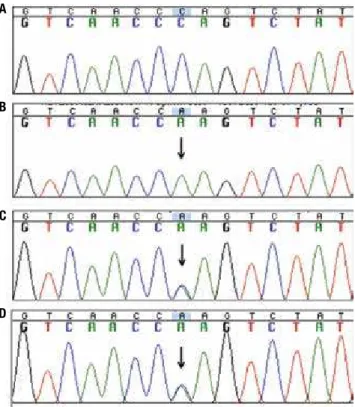
Figure 1. Electropherogram of partial nucleotide sequence of the exon 4
of the HSD3B2 gene. (A) Wild-type control; (B) the patient, showing the
homozygous mutation c.665C>A (p.P222Q) (arrow); (C) and (D) parents,
heterozygotes. A
B
C
D
is, above the proposed criteria for 3b-HSD deiciency diagnosis (≥ 94) (12). Hormonal levels were drawn just after starting vigorous luid replacement and hydro-cortisone and ludrohydro-cortisone supplementation, due to acute clinical instability. Subsequently, the patient fully recovered and has shown normal weight and height gain and psychomotor development suitable for age.
SUBJECTS AND METHODS
The study was approved by the Research Ethics Com-mittee of the Faculty of Health Sciences, University of Brasilia, Brazil. Both parents gave informed consent for the participation of the patient in the study.
Hormonal determinations
Filter paper 17OHP determination was performed by an immunoluorometric assay (AutoDELFIA®
Neona-tal 17α-OH-progesterone), and serum determinations of 17OHP, Δ517OHP, androstenedione and cortisol,
by radioimmunoassay.
Normal reference values were deined for each test by the manufacturer and validated by the reference laboratory.
Molecular genetics analysis
Genomic DNA from the index case was extracted from peripheral blood leucocytes by the salting-out method (15). The coding exons (exons 2 to 4) and exon-in-tron boundaries of the HSD3B2 gene were ampliied
using previously described primers (6). PCR products were puriied using the Qiagen puriication kit (QIA-quick®) and automatically sequenced in both sense and
antisense orientations. Sequencing data were analysed using the software Sequencher version 5.0 (Gene Co-des Corporation, Ann Arbor, Mich., USA) as compared with the HSD3B2 reference sequence (Gen Bank, ref.
NG_013349.1).
Molecular results
DNA sequencing of the HSD3B2 gene from the
pa-tient showed the homozygous change of a cytosine for an alanine at nucleotide 665, in exon 4. Both parents were heterozygous for the same missense mutation, c.665C>A, which results in the substitution of the ami-noacid Proline to Glutamine at residue 222 (p.P222Q) (Figure 1).
DISCUSSION
We describe a Brazilian patient with a phenotype of classical 3b-HSD deiciency, who irstly presented with an abnormal 17OHP level on the newborn screening test for CAH due to steroid 21-hydroxylase deiciency. Molecular analysis of the HSD3B2 gene revealed that
the patient was homozygous for the missense p.P222Q mutation, thereby conirming the clinical and hormo-nal diagnosis.
The 3b-hydroxysteroid dehydrogenase/Δ5-Δ4
isome-rase (3b-HSD) catalyzes the oxidation as well as the isomerization of 3b-hydroxy-5-ene steroids into ke-to-4-ene steroids, allowing the synthesis of proges-terone, 17α-hydroxyprogesterone, androstenedione, and testosterone from their precursors pregnenolone, 17α-hydroxypregnenolone, dehydroepiandrosterone (DHEA), and 5-androstene-3b, 17b-diol (Δ5-diol),
Cop
yright
© ABE&M t
odos os dir
eit
os r
eser
vados
.
cortex, ovary and testis, but also in several peripheral tissues, including the skin, adipose tissue, breast, lung, endometrium, prostate, liver, kidney, epididymis, and brain (3,16-19). Two isoforms of 3b-HSD have been described in humans (17,18). The type 1 enzyme is ex-pressed mainly in placenta and skin and is about ive times more active than the type 2, which is found in adrenals and gonads (18).
Paradoxically, in 3b-HSD deiciency increased cir-culating 17OHP levels are commonly found and are believed to result from the conversion of excessive amounts of accumulated Δ5 steroids (pregnenolone, 17OHpregnenolone and DHEA) by the isoenzyme 3b-hydroxysteroid-dehydrogenase type 1, in peripheral tissues. Similarly, circulating levels of Δ4 androstenedi-one and testosterandrostenedi-one may be also increased.
In this context, although CAH screening programs are not aimed to detect different etiologies of CAH other than CYP21 deiciency, immunoassays used for 17OHP determination on newborn screening tests ap-pear to allow the detection of some uncommon causes of CAH, such as 3b-HSD deiciency. However, the sen-sitivity of those assays for such less frequent enzymatic defects is still unclear (20). Indeed, the main goal of CAH screening is the prompt detection of the classical form of CYP21 deiciency in order to prevent mortal-ity due to severe salt-wasting crises in early life. False positive rates are still considerably high (1), despite great efforts to adjust cutoff values for some known interfering conditions. Nevertheless, the proportion of patients with other rare causes of CAH who would beneit from a positive screening test is still only pre-sumptive. The adequate differentiation between these conditions and false positive results in infants with sub-tle clinical manifestations in the irst weeks of life may be challenging and requires a high degree of suspicion by the care team.
Possibly, as far as screening programs become more widespread in the world, more such cases will be identi-ied. Accordingly, an increasing number of CAH cases caused by rare enzymatic deiciencies have been de-scribed, and recently a signiicant number of them were picked up by neonatal screening for 21-hydroxylase de-iciency (6,7,20-22).
In the present case, the presence of genital ambi-guity with palpable gonads and a moderately increased 17OHP on neonatal screening test immediately in-dicated the need to investigate 3b-HSD deiciency. Subsequently, the 46, XY karyotype, hormonal and
molecular results conirmed the diagnosis. It is worth noting that, although clearly elevated, the measured serum concentration of Δ517OHPregnenolone (1,080
ng/dL or 32.5 nmol/L) was below the criteria pro-posed by Lutfallah and cols. (12), reviewed in 2010: a baseline Δ5 17OHPreg ≥ 84 nmol/L for neonates,
although the child was already 3 months old. A reason for this apparent discrepancy is related to the fact that the hormonal measurements were obtained just after the patient started intravenous hydrocortisone treat-ment during an acute adrenal crisis. Therefore, it is pos-sible that higher Δ517OHPreg levels would have been
noted earlier, if the tests were done before the acute crisis and treatment initiation. The clinical diagnosis of 3b-HSD deiciency in this case was then conirmed by the identiication of the p.P222Q homozygous inacti-vating mutation in the HSD3B2 gene.
Several mutations, including frameshift, nonsense, in-frame deletions, splicing and missense mutation, have been described in the HSD3B2 gene in patients
suffering from classical 3b-HSD deiciency (6,23-25). The functional characterization of these mutant pro-teins has helped understanding the structure-function relationships of the 3b-HSD family (21,24-27). The p.P222Q mutation found in the present case leads to a shift in amino acid interactions and change the sub-strate’s binding site, thereby signiicantly reducing protein activity (26). This variant affects a highly con-served amino acid in mammals, a fact that reinforces its importance for the function of the enzyme (26,28-30). The p.P222Q mutation in the HSD3B2 gene has
been irstly described in an Argelian family, in which a 46,XY boy and his 46,XX sister presented with a classi-cal phenotype of 3b-HSD deiciency (25). Since then, it has been reported only in other two cases from Bra-zil, with similar clinical presentations (11,13,26,31). A different mutation was also described in the same posi-tion at the protein, the p.P222T, and was associated with premature pubarche, but not salt-wasting form. Notably, the mutated protein 222T was not detected on in vitro assays with transiently transfected 293 cells,
bringing up an additional pathogenic mechanism of a severe impairment in protein stability (32).
In summary, the case described herein corroborates the strong genotype-phenotype correlation associated with the p.P222Q mutation in the HSD3B2 gene,
Cop
yright
© ABE&M t
odos os dir
eit
os r
eser
vados
.
genitalia strongly suggests the diagnosis of 3b-HSD deiciency and may prevent morbity and mortality as-sociated with the occurrence of a salt-loosing crisis, if promptly recognized. Further evaluation of 17OHP assays used in newborn screening tests would aid in de-termining their reproducibility, as well as the potential signiicance of moderately elevated 17OHP levels as an early indicator to the diagnosis of other forms of classic CAH, beyond 21-hydroxylase deiciency.
Disclosure: no potential conlict of interest relevant to this article was reported.
REFERENCES
1. Speiser PW, White PC. Congenital adrenal hyperplasia. N Engl J Med. 2003;349:776-88.
2. Portaria nº 2.829, December 14th, 2012. Ministry of Health. Availa-ble at: bvsms.saude.gov.br/bvs/prt2829_14_12_2012.html. Acces-sed on: Oct 10, 2013.
3. Krone N, Arlt W. Genetics of congenital adrenal hyperplasia. Best Pract Res Clin Endocrinol Metab. 2009;23:181-92.
4. White PC. Neonatal screening for congenital adrenal hyperplasia. Nat Rev Endocrinol. 2009;5(9):490-8.
5. Silveira EL, dos Santos EP, Bachega TA, van der Linden Nader I, Gross JL, Elnecave RH. The actual incidence of congenital adrenal hyperplasia in Brazil may not be as high as inferred – an estimate based on a public neonatal screening program in the state of Goi-ás. J Pediatr Endocrinol Metab. 2008;21(5):455-60.
6. Jeandron D, Sahakitrungruang T. A novel homozygous Q334X mutation in the HSD3B2 gene causing classic deiciency: an unex-pected diagnosis after a positive newborn screen for 21-hydro-xylase deiciency. Horm Res Paediatr. 2012;77:334-8.
7. Nordenström A, Forest MG, Wedell A. A case of 3beta-hidroxys-teroid dehydrogenase type II (HSD3B2) deiciency picked up by neonatal screening for 21-hydroxylase deiciency: dificulties and delay in etiologic diagnosis. Horm Res. 2007;68:204-8.
8. Simard J, Rheaume E, Sanchez R, Lalamme N, de Launoit Y, Luu--The V, et al. Molecular basis of congenital adrenal hyperplasia due to 3beta-hydroxysteroid dehydrogenase deiciency. Mol En-docrinol. 1993;7:716-28.
9. Pang S. The molecular and clinical spectrum of 3beta-hydroxys-teroid dehydrogenase deiciency disorder. Trends Endocrinol Me-tab. 1998;9:82-6.
10. Pang S. Congenital adrenal hyperplasia owing to 3beta-hydro-xysteroid dehydrogenase deiciency. Endocrinol Metab Clin North Am. 2001;30:81-99.
11. Mendonca B, Russel A, Vasconcelos-Leite M, Arnhold I, Bloise W, Wajchenberg B, et al. Mutation in 3beta-hydroxysteroid dehydro-genase type II associated with pseudohermaphroditism in males and premature pubarche or cryptic expression in females. J Mol Endocrinol. 1994;12:119-22.
12. Lutfallah C, Wang W, Mason JI, Chang YT, Haider A, Rich B, et al. Newly proposed hormonal criteria via genotypic proof for type II 3beta-hydroxysteroid dehydrogenase deiciency. J Clin Endocri-nol Metab. 2002;87:2611-22.
13. Mermejo L, Elias L, Marui S, Moreira A, Mendonca B, de Castro M. Reining hormonal diagnosis of type II 3beta-hydroxysteroid dehydrogenase deiciency in patients with premature pubarche
and hirsutism based on HSD3B2 genotyping. J Clin Endocrinol Metab. 2005;90(3):1287-93.
14. Olgemöller B, Roscher AA, Liebl B, Fingerhut R. Screening for congenital adrenal hyperplasia: adjustment for 17-hydroxy-progesterone cut-off values to both age and birth weight ma-rkedly improves the predictive value. J Clin Endocrinol Metab. 2003;88(12):5790-94.
15. Miller AS, Dykes DD, Polesky HF. A simple salting out procedure for extracting DNA from human nucleated cells. Nucleic Acids Res. 1988;16(3):1215.
16. Lachance Y, Luu-The V, Verrault H, Dumont M, LeBlanc G, Labrie F. Structure of the human type II 3beta-hydroxysteroid dehydroge-nase/Δ5-Δ4-isomerase (3bHSD) gene: adrenal and gonadal speci-icity. DNA Cell Biol. 1991;10:701-11.
17. Luu-The V, Lachance Y, Labrie C, Leblanc G, Thomas JL, Strickler RC, et al. Full-length cDNA structure and deduced amino acid se-quence of human 3beta-hydroxy-5-ene steroid dehydrogenase. Mol Endocrinol. 1989;3:1310-2.
18. Rheáume E, Lachance Y, Zhao H, Breton N, Dumont M, de Lau-noit Y, et al. Structure and expression of a new DNA encoding the almost exclusive 3beta-hydroxysteroid dehydrogenase/Δ5-Δ4-isomerase in human adrenals and gonads. Mol Endocrinol. 1991;5:1147-57.
19. Labrie F, Simard J, Luu-The V, Belanger A, Pelletier G. Structure, function and tissue-speciic gene expression of 3beta-hydroxys-teroid dehydrogenase/D5-D4 isomerase enzymes in classical and peripheral intracrine steroidogenic tissues. J Steroid Biochem Mol Biol. 1992;43:805-26.
20. Kösel S, Burggraf S, Fingerhut R, Dörr HG, Roscher AA, Olgemöl-ler B. Rapid second-tier molecular genetic analysis for congenital adrenal hyperplasia attributable to steroid 21-hydroxylase dei-ciency. Clin Chem. 2005;51:298-304.
21. Jansen N, Riepe FG, Peter M, Sander S, Steuerwald U, Korsch E, et al. Neonatal screening: identiication of children with 11beta--hydroxylase deiciency by second-tier testing. Horm Res Pediatr. 2012;77:195-9.
22. Johannsen TH, Mallet D, Dige-Petersen H, Múller J, Main KM, Mo-rel Y, et al. Delayed diagnosis of congenital adrenal hyperplasia with salt wasting due to type II 3beta-hydroxysteroid dehydroge-nase deiciency. J Clin Endocrinol Metab. 2005;90:2076-80. 23. Simard J, Ricketts ML, Gingras S, Soucy P, Feltus FA, Melner MH.
Molecular biology of the 3beta-hydroxysteroid dehydrogenase/ Δ5-Δ4-isomerase Gene Family. Endocr Rev. 2005;26(4):525-82. 24. Rheaume E, Simard J, Morel Y, Mebarki F, Zachmann M, Forest
MG, et al. Congenital adrenal hyperplasia due to point mutations in the type II 3beta-hydroxysteroid dehydrogenase gene. Nat Genet. 1992;1:239-45.
25. Moisan AM, Ricketts ML, Tardy V, Desrochers M, Mebarki F, Chaus-sain JL, et al. New insight into the molecular basis of 3beta--hydroxysteroid dehydrogenase deiciency: identiication of eight mutations in the HSD3B2 gene in eleven patients from seven new families and comparison of the functional properties of twenty--ive mutant enzymes. J Clin Endocrinol Metab. 1999;84:4410-25. 26. Lusa ALG, Lemos-Marini SHV, Soardi FC, Ferraz LFC, Guerra-Jú-nior G, Mello MP. Structural aspects of the p.P222Q homozygous mutation of HSD3B2 gene in a patient with congenital adrenal hyperplasia. Arq Bras Endocrinol Metab. 2010;54(8):768-74. 27. Thomas J, Duax W, Addlagatta A, Kacsoh B, Brandt S, Norris
W. Structure/function aspects of human 3beta-hydroxysteroid dehydrogenase. Mol Cell Endocrinol. 2004;215:73-82.
Cop
yright
© ABE&M t
odos os dir
eit
os r
eser
vados
.
29. Welzel M, Wüstemann N, Simic-Schleicher G, Dörr HG, Schulze E, Shaikh G, et al. Carboxyl-terminal mutations in 3beta-hydroxyste-roid dehydrogenase type II cause severe salt-wasting congenital adrenal hyperplasia. J Clin Endocrinol Metab. 2008;93:1418-25. 30. Morel Y, Mébarki F, Rhéaume E, Sanchez R, Forest M, Simard J.
Structure-function relationships of 3beta-hydroxysteroid dehydro-genase deiciency. Steroids. 1997;62:176-84.
31. Marui S, Castro M, Latronico AC, Elias LLK, Arnhold IJP, Moreira AC, et al. Mutations in the type II 3beta-hydroxysteroid
dehydro-genase (HSD3B2) gene can cause premature pubarche in girls. Clin Endocrinol. 2000;52:67-75.