DOI: http://dx.doi.org/10.5007/1980-0037.2016v18n1p50
1 University of Passo Fundo. Passo Fundo, RS. Brazil.
2 State University of Campinas. Campinas, SP. Brazil.
3 Paranaense Athletic Club.Curitiba, PR. Brazil.
4 State University of Londrina. Departamento of Sports Sciences. Londrina, PR. Brazil.
5 University of Marilia. Marilia, Brazil.
Received: 21 May 2015
Accepted: 8 November 2015
Adaptations in the physical capacities of U-18
futsal athletes during a competitive season
Adaptações nas capacidades físicas de atletas de futsal
da categoria sub 18 no decorrer de uma temporada
competitiva
Fernando Matzenbacher1,4
Bruno Natale Pasquarelli2
Felipe Nunes Rabelo3
Antônio Carlos Dourado4
Julia Zoccolaro Durigan4
Hélcio Gonçalves Rossi4
Luiz Cláudio Reeberg Stanganelli4
Abstract – he aim of this study was to verify and to analyze adaptations on physical and
physiological variables of futsal athletes during the pre-competitive and competitive phases of a training macrocycle. he sample was composed of nine Under-18 futsal athletes who performed the following tests: vertical jump, 10 and 30-meter linear sprint, repeated sprint ability test, Yo-Yo intermittent recovery test level 1 and VO2máx. Based on the qualitative
analysis of the change magnitude, it was possible to verify adaptations from training for the vertical jump test (certainly positive), 10-meter linear sprint (likely decrease), 30-meter linear sprint (irrelevant), repeated sprint ability test for best sprint (irrelevant), mean of sprints (likely decrease), fatigue index (likely decrease), YYIRI (likely increase), VO2máx
(likely decrease) and speed of VO2máx (likely increase). hus, it was possible to verify that training-induced adaptations were positive since athletes improved their performance for the most control tests for each physical capacities of futsal (vertical jumps, 10-meter linear sprint, and repeated agility sprint test for the mean of sprints and fatigue index and aerobic resistance. herefore, data have shown that athletes improved their physical performance considering the characteristics of futsal during training throughout a macrocycle.
Key words: Monitoring; Performance; Physical itness; Team sports; Training.
Resumo – O objetivo do presente estudo foi o de veriicar e analisar as adaptações nas variáveis
físicas e isiológicas de atletas de futsal durante as etapas pré-competitiva e competitiva de um macrociclo de treinamento. Participaram do estudo nove atletas de futsal da categoria sub-18, que realizaram os seguintes testes: saltos verticais, velocidade de 10 e 30 metros, resistência de velocidade, Yo-Yo intermitentt recovery test Level 1 (YYIR1) e consumo máximo de oxigênio (VO2máx). Baseado na análise qualitativa da magnitude da mudança, foi possível veriicar as adaptações advindas do treinamento para os testes de saltos verticais (certamente positivo), velo-cidade de 10 metros (provável diminuição), velovelo-cidade de 30 metros (irrelevante), resistência de velocidade para o melhor sprint (irrelevante), média dos sprints (provável diminuição) e índice de fadiga (possível diminuição), YYIR1 (possível aumento), VO2máx (provável diminuição) e velocidade do VO2máx (provável aumento). Foi possível veriicar que as adaptações causadas pelo treinamento realizado foram positivas, já que os atletas melhoraram o desempenho na maioria dos testes de controle das capacidades físicas solicitadas na modalidade (saltos verticais, velocidade de aceleração 10 m, resistência de velocidade nas variáveis média dos sprints e índice de fadiga e na resistência aeróbia especíica). Desta forma, os dados demonstraram que os atletas melhoraram suas
INTRODUCTION
Sciences applied to sports have sought to understand the structural and functional changes in the body of individuals submitted to training process. Although there are studies related to gene polymorphisms1,2, biochemistry dimension of the body, anthropometric, psychological, cognitive, physical and physiological aspects are the most investigated in this area.
Despite the current ofer of articles related to the topic, two points must be highlighted: the irst is that further studies are still needed in order to understand the physical and physiological adaptations resulting from the training process in certain sports. Futsal is one of the sport modalities lacking deeper studies on this subject. he second is the importance of trying to understand that the training process should be considered as a set of manipulated variables in order to obtain a result (sports)3,4.
he predominance of studies related to these issues is due to the methodological and technological development. Today, it is increasingly possible to accurately record the performance of athletes and to quantify the training load applied through the use of photocells to measure speed, or equipment to test vertical jump height and register heart rate during training sessions and competitions, measure oxygen uptake and other cardiorespiratory variables, in addition to the use of the latest technologies such as Global Positioning System (GPS) and other portable equipment. For this reason, much of the information available in Sport Science is about the physical aspects of training.
he training load is the result of the ratio between total volume pre-scribed and its quality, or between work and its intensity. Accordingly, external load refers to the amount of work while internal load is the efect that a certain external load exerts on the body5.
herefore, to verify the efectiveness of a particular training program, it is necessary to quantify its load and analyze the performance of athletes over time. Training adaptations are associated with changes in performance, for example, delayed fatigue or increased power. he adaptive responses of training are usually evaluated through physical testing in laboratory or
in the ield6, and the information collected relate to a complex organism
and therefore interrelated and interdependent of other dimensions that transcend physical and physiological dimensions7.
hus, this shows that performing periodical measurements and tests is important not only for the diagnosis of the health status and performance of athletes, but also in the training prescription and control of dynamics of functional changes arising from the training efects; body composition and physical abilities of athletes, and the others are consequences of other structures interacting with them, either behavioral or morphological7.
However, it is necessary to monitor the development of players at dif-ferent times (from pre-season to the competition period). In addition, in order to understand the information collected, analysis methods capable of detecting changes not only on a group level but individual changes should also be used, since the responses of the same training vary according to the adaptive capabilities of each individual. To this end, progressive statistical models have been suggested for a more accurate interpretation of adjust-ments resulting from training10-12.
In this sense, the aim of this study was to determine and analyze ad-justments in physical and physiological variables of futsal players during pre-competitive and competitive periods.
METHODS
he study was conducted during a 31-week macrocycle covering precom-petitive and comprecom-petitive phases. During the season, two weeks were scheduled (third and twenty-seventh week) to carry out the control tests in order to verify the physical and physiological adaptations arising from tactical, physical and technical training of a futsal team state champion of U-18 category. To monitor the adjustments that occurred during the study period, a maximum oxygen uptake test in laboratory used for athletes and ive ield tests used by the sport in question and speciic to diferent biomo-tor capabilities were applied. Furthermore, the volume dedicated to each type of training was recorded by quantifying time. he internal training load was monitored during all sessions (n = 57) by means of the heart rate (Suunto Team Pod, Suunto Oy, Finland) and perceived exertion by using the scale proposed by Foster et al.13 in all training sessions.
Subjects
Study participants were nine under-18 futsal players who compete at state level (age: 17.2 ± 0.4 years; height: 176.4 ± 6.6 cm; body mass: 68.1 ± 9.3 kg and body fat: 9.9 ± 6.8%). he initial sample was composed of 14 athletes, but ive were excluded for at least one of the following reasons: a) Not performing all tests in the pre-competitive and / or competitive period; b) Frequency less than 80% in training sessions; c) Team of in the course of the season. his study was approved by the Ethics Committee of the State University of Londrina, Brazil (protocol No. 35902/2011) and was developed according to resolution of the National Health Council (196/96) for research with humans. All subjects were verbally and written instructed about the procedures performed in the study and voluntarily participated after completing the free and informed consent form.
Training characteristics
dedicated to technical / tactical training (contact with the ball) and 1,174 minutes (23%) to the development of the physical abilities of athletes. he division of training of physical abilities was as follows: 204 minutes (17%) for speed resistance training; 306 minutes (26%) for muscular power training; 256 minutes (22%) for aerobic training; 102 minutes (9%) for co-ordinative training and 306 minutes (26%) for lexibility training (Table 1).
Control tests
Control tests were performed (laboratory and ield) together with body composition assessment to verify adaptations caused by training during the study period. All tests were performed in the afternoon, the same period of the team’s training sessions, with minimum interval of 48 hours prior to tests, athletes performed warm-up exercises for about 15 minutes, which were composed of ive minutes of slow jogging; ive minutes of dynamic and static stretching and ive minutes of movements in progressive speed with acceleration, deceleration and direction changes. Participants were asked to come to sessions rested, fed and hydrated and not making eforts 24 hours preceding each evaluation.
Special aerobic resistance test
he Yo-Yo Intermittent Recovery Level 1 (YYIR1) incremental test was used. he test consists of performing 40-meter runs (20 + 20 m, with change of direction of 180º), increasing the speed by sound stimulus. Between each 40-meter run, subjects performed ten seconds of active recovery, jogging 10 meters (5 + 5 m). he test ended when subjects failed twice in an attempt to reach the inish line in time determined by the sound stimulus, at the
same stage, or upon reaching exhaustion 14. he test result was obtained
by the total distance in meters.
Speed resistance test (repeated sprints)
he test consisted of six 40-meter sprints (20 + 20m, with change of direc-tion of 180°), interspersed with 20 seconds recovery between sprints 5. A photocell (Hidroit®, Belo Horizonte, Brazil) was used to determine the time of each sprint. he test results were expressed by the average and total time of all sprints, the best sprint time and the fatigue index were obtained by the following equation: ([Mean of sprints] / [Best sprint] x 100) - 10016.
Speed test
To evaluate speed, the 10 and 30-meter linear sprint test was used 17. Sub-jects performed two attempts within an interval longer than three minutes, being considered the best time for analysis. Photocell (Hidroit®, Belo Horizonte, Brazil) was used to measure the time of each 10 and 30-meter linear sprint test.
Lower limb power test
tech-niques, squat jump (SQ J), countermovement jump (CMJ) and free jump (FJ) were performed, all on the Multisprint contact platform. Each subject performed three attempts in each jumping technique and the highest value reached by participants was considered for analysis18.
Maximum oxygen uptake test (VO2
max)
To determine the maximum oxygen uptake, subjects were submitted to a continuous and progressive workout on a ATL 10200 treadmill (In-bramed®). Before the test, three was previous warm-up exercise at 7 km h-1, soon after, test at speed of 8 km h-1 begun with increments in speed of 1 km h-1 each minute until exhaustion. At the end of the test, participants were allowed to active recovery for three minutes at speed of 7 km / h-1. Treadmill inclination was set at 1%. Heart rate and respiratory gas ex-change values were measured by breath for breath method using a portable ergospirometer system (Cosmed K4b2, Rome, Italy). Data were iltered at
the average value every 10 seconds. VO2max was considered when the test
reached two of the following criteria: a) VO2max plateau despite increasing speed, b) respiratory exchange ratio above 1.10, c) HR reached ± 10 bpm. min-1 ofHR
max predicted for age using the formula (220-age). he protocol
used to determine VO2max was adapted from Barbero et al.19
Statistical analysis
he results of this study were revealed by means of descriptive statistics on measures of central tendency (mean) and dispersion (standard deviation and conidence intervals) to detect changes induced by training in the evaluated variables and compare the results before and after testing,
To check the magnitude of change induced by training, the delta percentage (Δ%) was calculated by the following equation: (TC post - TC pre) / (TC pre) x 100. In addition, a qualitative analysis of data was carried out, which were presented from the relative change described in
percent-age change and 90% conidence interval, as suggested by Hopkins et al.11.
Practical inference based on the change magnitude was applied 11. he chance of inding a positive or a negative efect of training [e.g. higher or lower than the minimum detectable change (0.2 multiplied by the initial standard deviation based on efect size20)] was calculated. hus, the change was qualitatively assessed as described below: <1% almost certainly not; 1-5% very unlikely; 5-25% unlikely; 25 - 75% possible; 75-95% likely; 95-99% very likely; > 99% certainly; positive and negative values> ± 10% inconclusive. Spreadsheets available on http://www.sportsci.org/resources/ stats/index.html were used on these analyses.
he size efect of changes in each physical parameter analyzed was also calculated. he limit values for the analysis of the Cohen’s size efect were: <0.2 (trivial or irrelevant efect) 0.2 - 0.6 (small efect) 0.6 - 1.2 (moderate efect) 1.2 - 2.0 (large efect) and> 2.0 (very large efect)20.
RESULTS
he average intensity recorded during training sessions was 69 ± 6% HR max and PSE 5.8 ± 1.5 (CR - 10).
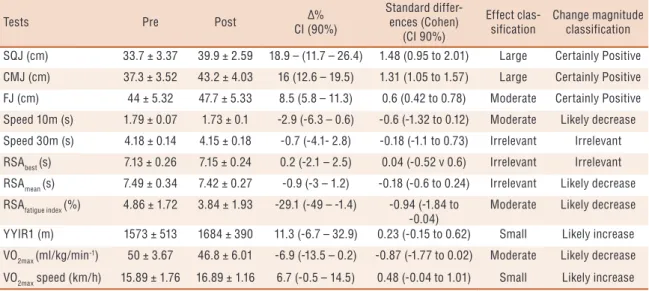
Table 2 shows the pre and post-test results of all variables observed during the macrocycle. It also shows the delta percentage (CI 90%), the efect size and classiication and the change magnitude percentage of all variables analyzed during the study.
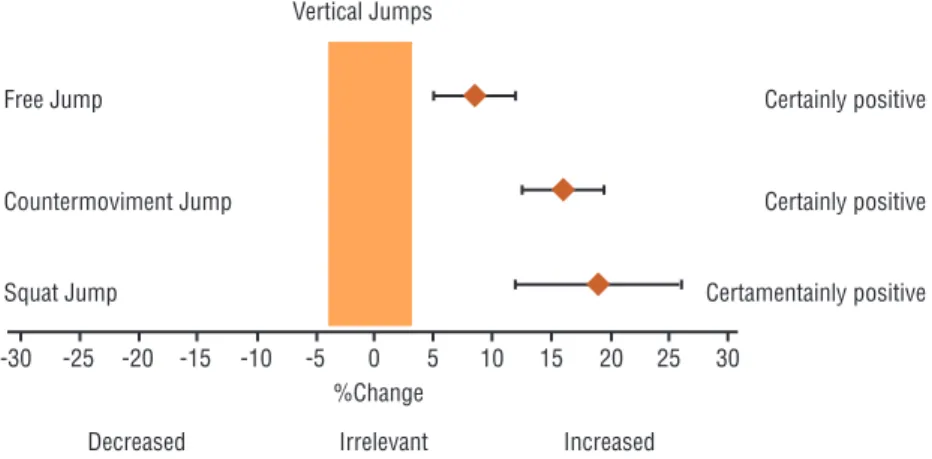
Figure 1 presents the results considering the statistical method used10, and in this case, it was possible to infer that the evaluated group had 100% chance of having an increase in performance on vertical jump tests at the end of the training period.
Table 1. Total time in minutes (%) devoted to each training component for each mesocycle.
TC/meso Meso 1 Meso 2 Meso 3 Meso 4 Meso 5 Meso 6 Meso 7 Meso 8 Total Total time 355 972 634 708 475 639 638 682 5.103 Weekly Time 118 243 127 236 119 160 159 227 170 Technical / Tactical(%) 111,5 (32) 631 (65) 507 (80) 511 (72) 413 (87) 569,5 (89) 528 (83) 635 (93) 3.929 (77) RSA (%) 44 (12) 37 (4) 23 (4) 30 (4) 21 (4) 29,5 (5) 15 (2) - 204 (4) MP (%) 39 (11) 146 (15) 25 (4) 90 (13) 10 (2) - 41 (7) - 306 (6) Aerobic (%) 96 (27) 76 (8) 26 (4) 34 (5) - - - - 256 (5) Coordination (%) 35 (10) 22 (2) 10 (1,5) 12 (1,5) 9 (2) - 8 (1) - 102 (2) Flexibility (%) 29,5 (8) 60 (6) 42 (6,5) 31 (4,5) 22 (5) 40 (6) 44 (7) 47 (7) 306 (6) TC = training components; Meso = mesocycle; RSA = Capacity of Performing Repeated Sprints; MP = Muscle Power.
Table 2. Changes in physical abilities (mean ± standard deviation) of athletes throughout the season (n = 9).
Tests Pre Post Δ% CI (90%)
Standard differ-ences (Cohen)
(CI 90%)
Effect clas-sification
Change magnitude classification SQJ (cm) 33.7 ± 3.37 39.9 ± 2.59 18.9 – (11.7 – 26.4) 1.48 (0.95 to 2.01) Large Certainly Positive CMJ (cm) 37.3 ± 3.52 43.2 ± 4.03 16 (12.6 – 19.5) 1.31 (1.05 to 1.57) Large Certainly Positive FJ (cm) 44 ± 5.32 47.7 ± 5.33 8.5 (5.8 – 11.3) 0.6 (0.42 to 0.78) Moderate Certainly Positive Speed 10m (s) 1.79 ± 0.07 1.73 ± 0.1 -2.9 (-6.3 – 0.6) -0.6 (-1.32 to 0.12) Moderate Likely decrease Speed 30m (s) 4.18 ± 0.14 4.15 ± 0.18 -0.7 (-4.1- 2.8) -0.18 (-1.1 to 0.73) Irrelevant Irrelevant RSAbest (s) 7.13 ± 0.26 7.15 ± 0.24 0.2 (-2.1 – 2.5) 0.04 (-0.52 v 0.6) Irrelevant Irrelevant RSAmean (s) 7.49 ± 0.34 7.42 ± 0.27 -0.9 (-3 – 1.2) -0.18 (-0.6 to 0.24) Irrelevant Likely decrease RSAfatigue index (%) 4.86 ± 1.72 3.84 ± 1.93 -29.1 (-49 – -1.4) -0.94 (-1.84 to
-0.04)
Moderate Likely decrease YYIR1 (m) 1573 ± 513 1684 ± 390 11.3 (-6.7 – 32.9) 0.23 (-0.15 to 0.62) Small Likely increase VO2max (ml/kg/min-1) 50 ± 3.67 46.8 ± 6.01 -6.9 (-13.5 – 0.2) -0.87 (-1.77 to 0.02) Moderate Likely decrease
VO2max speed (km/h) 15.89 ± 1.76 16.89 ± 1.16 6.7 (-0.5 – 14.5) 0.48 (-0.04 to 1.01) Small Likely increase SQJ = Salto Squat Jump; CMJ = Countermovement jump; FJ = Free jump; RSA = Capacity of Performing Repeated Sprints; RSAbest = best sprint; RSAmean = Mean os sprints; YYIR1 = Yo-yo Intermittent Recovery Test Level 1; VO2max = maximum oxygen uptake; VO2max
Figure 1. Change magnitude in vertical jumps.
DISCUSSION
he aim of this study was to determine and analyze the behavior of physical and physiological variables of futsal players during pre-competitive and competitive stages of a training macrocycle. he hypothesis of this study was conirmed because there were positive adjustments of speciic skills required in the sport resulting from the training load.
he training load prescription of the present study aimed at the speci-icity of the sport during the annual training cycle, which consisted of approximately 77% of the total time for technical / tactical training and
23% for the development of physical abilities. According to Gomes5, the
goal of this training stage is to achieve sports scores and to seek a stable motivation for the pursuit of these results, in which tactical abilities must be improved, considering the functions exercised both individually and collectively, in addition to the gain of speciic physical abilities of the sport.
he power of the lower limbs is of fundamental importance for futsal players, as is required in the decisive moments of the match, whether in situations of counterattack, recovery of ball possession or even in trying to prevent a goal. In this study, it was measured by applying the jumping tests, which were also applied in other studies, thus enabling the com-parison with values reported by Gorostiaga et al.21 and Silva et al.22 for CMJ, which presented the following values: 38.1 ± 4.1 cm and 43.8 ± 6.8 cm during the preparatory period, respectively. In addition, Silva et al.22 reported that U-20 athletes jumped on average 43.7 ± 4.1 cm, values, very close to those of the current study, indicating that the evaluated subjects had values similar those of above studies, demonstrating a performance level compatible for futsal players.
As for values found using the FJ technique, the values found in this
study were lower than those reported by Freitas et al.8 of 50.5 ± 3.8 cm
In addition to comparisons with other studies in literature, it was found that the change magnitude for power of the lower limbs by means of jumping tests was classiied as “certainly positive”. his means that athletes have positively adapted to muscle power training stimuli within 23% prescribed for the development of physical capacities, in addition to stimuli ofered by technical / tactical training, which appears to induce adaptations in muscle power through speciic actions of the sport. he power of the lower limbs enables athletes to perform quick and explosive movements in a short time, which is a quite requested feature in futsal. his capacity, when trained in a speciic way, has a high degree of transfer to motor actions performed in court such as making jumps and sprints,
enabling an improved performance of athletes during a match21,22.
he motor actions used in futsal are carried out quickly and in all direc-tions, being necessary to cover spaces as quickly as possible. So, when the acceleration speed test (10 m) was analyzed, the results found in this study in the irst evaluation after two weeks of training (1.79 ± 0.08 s) were better than the indings by Freitas et al.7 (2.04 ± 0.11 s) during the preparatory period and after a two-month vacation period, which was a justiication for performance lower than expected by these authors.
hus, this variable showed a positive adjustment resulting from train-ing, being also consistent with standards of the sport, perhaps due to the training speciicity. his capacity is extremely important in futsal, since most of the sprints performed on the court are around 6 to 16 meters, which occur in the decisive moments of the match25-27.
Regarding linear speed (30 m), subjects of this research were faster (4.18 ± 0.14 s pretest and; 4.15 ± 0.18 s post-test) than the 27 semiinalist athletes of the professional State of Paraná Futsal Championship, which covered 30m in 4.40 ± 0.20 s during the inal phase of the competition24. It could be inferred that the sample of this study is within the linear speed standard for futsal, although the change magnitude in the 30-m speed test have been regarded as “irrelevant”. A possible explanation for this may be the fact that during training, 30-meter linear sprints were not conducted because there were no reports in literature that during a futsal match, athletes perform sprints of that distance.
Another speciic capacity of the sport is the ability to perform repeated sprints. In this study, the efect of training was classiied as “irrelevant” in the speed resistance test for variable best sprint. Variables, average of sprints and fatigue index were classiied as “possible reduction” and “likely reduction” in the test execution time and reduction percentage, respec-tively, thus relecting a positive adjustment to the training performed (4% of total training volume) and throughout the technical / tactical training, particularly in counterattack training, in which athletes performed sprints within short periods of time.
investiga-tion at the beginning of the preparatory period the average of sprints (7.43 ± 0.2 s), and higher values at the end of the preparatory period (7.24 ± 0.2 s) and during competition (7.13 ± 0.3 s).
With regard to the fatigue index, the values recorded in the second assessment (3.84 ± 1.93%) in this study are similar to those found by Im-pellizzeri et al.15 in a study with high-level athletes (3.3 ± 1.5%) and higher than those achieved by mid-level athletes (5.1 ± 1.8%) of professional soccer players. he authors also reported that the diference between high-level and intermediate-level players was signiicant and can be considered able to diferentiate performance levels15. he low reduction percentage shows that there is a small diference among times of the six sprints, which means that athletes who reported lower fatigue index had better speed resistance15,16.
Given the indings above, it is noteworthy that the distance covered at high intensity, due to the presence of sprints, can be considered a speciic characteristic of the sport, as sprints occur in the decisive moments of the match. So, to perform relatively more sprints and high-intensity activities during a match, athletes must show good ability to repeat high-intensity eforts and resist fatigue, which is vital for the physical performance of athletes on the court15,25.
In addition to the above capabilities, futsal athletes must also have special preparation for the development of aerobic resistance. YYIR1 has been used to assess this ability in a special way in many sports due to its speciicity and practicality. Krustrup et al.14 reported that YYIR1 is sensitive to detect changes in performance throughout the season and to identify athletes with lower physical itness.
During the macrocycle, the magnitude of performance changes in YYIR1 was classiied as “possible increase”. On the irst moment, the subjects ran on average 1,573 ± 513 m, and on the second moment, they ran 1,684 ± 390 m. here are few studies on the use of YYIR1 to measure the special aerobic resistance of futsal players in literature. he distance covered by subjects in this study was lower than distances reported by Heineck et al.28 of 1842 ± 432 m in a study of 12 professional futsal athletes. On the other hand, values are higher than those obtained by Oliveira et al.4 in a study of professional athletes of this sport, with initial values of 1,244 ± 298 m, 1,491 ± 396 m at the end of the preparatory period and 1,465 ± 270 me during competition.
In this case and according to results obtained, it was possible to infer that athletes have positively adapted to stimuli due to training on the special aerobic resistance throughout the season. his adaptation seems to be important because athletes who showed better result in this test tend to cover a longer distance at high intensity and longer total distance dur-ing a match. hus, subjects are more involved in the actions of the game, covering more space on the court with greater number of contacts with the ball, and stay longer on the court14,29.
intense stimuli, thus enabling greater participation of athletes in speciic game actions, ensuring high overall performance during matches19,25,26.
Given the results obtained, aerobic power (VO2max) was the only
variable analyzed in which the change magnitude was classiied as “likely
decrease” in the performance of athletes. Rodrigues et al.8 evaluated 14
professional futsal athletes who competed in the National League of Brazil and found at the beginning of the season (71.5 ± 5.9 ml / kg / min-1) and at the end of the season (67.6 ± 3.5 ml / kg / min-1). According to Senso and Drust17, negative adjustments in this variable can occur due to its low sensitivity to stimulus caused by training, in which changes in aerobic itness can be attributed to peripheral adaptations and not to central ad-aptations. he change magnitude in the inal speed test was classiied as a “likely increase”. A possible explanation for such change is that athletes increased metabolic and mechanical eiciency of the movement, thereby
improving the running economy 17.
Some authors advise that professional futsal athletes should have VO2max of approximately 55-60 ml / kg / min-1 to support the high demands of the game19,24,25.
Even with results similar to those of professional athletes in anaerobic performance variables, variables related to aerobic performance have shown results below those obtained by athletes under this category. his can be attributed to physiological ballast acquired by professionalized athletes with many years of training, supporting higher training loads and increased competitive demands, while U-19 athletes are in the sports training process, and have not yet reached maximum potential capacity.
One of the peculiarities of this study was that the irst evaluation was carried out after two weeks of training after the vacation of young athletes, which may have contributed to the maintenance of initial itness levels, which is similar to that of professional athletes in many variables. All these aspects, together with training volume and competitive demands, relatively low in relation to demands required of professional athletes, could lead to lower degree of adaptation of these individuals. However, it could be inferred that the intensity and speciic training caused positive efects on the physical abilities required in futsal. hese changes were detected by the use of non-conventional statistics (minimum detectable change), widely used in sports in situations where the sample size is relatively small. With regard to sports performance, any change (positive and / or negative), though relatively small, inluence the performance of athletes and may lead to a better result in a particular test or in a particular game situation11. herefore, we emphasize the importance of using this performance analysis model for longitudinal studies of young athletes.
loads applied. In addition, the description of the external training load behavior that positively inluenced physical abilities analyzed throughout the study showed that the content of training loads should be as speciic as possible and quantiied as detailed as possible so that these associations can be carried out with accuracy.
CONCLUSION
It was possible to verify that the adaptations caused by training were posi-tive, as athletes improved performance in most control testing of physical capabilities requested in the sport (power of the lower limbs, 10-m accelera-tion speed, speed resistance in variables average sprints and fatigue index and speciic aerobic resistance). It is important to emphasize the validity of studies that monitor in many diferent ways the athlete’s performance during preparation macrocycles, because only through this method, coaches and physical trainers are able to understand in more detail the adjustments of athletes to training loads.
Acknowledgments
To the entire coaching staf and athletes from the Colégio Londrinense futsal team - coordinator Ocimar Bortoluci de Souza and coach Lincoln Kato junior.
REFERENCES
1. Wang G, Padmanabhan S, Wolfarth B, Fuku N, Lucia A, Ahmetov II, et al.
Chapter Four. Genomics of Elite Sporting Performance: What little We Know and Necessary Advances, In: heodore Friedmann, Jay C. Dunlap and Stephen F. Goodwin, Editor(s), Advances in Genetics, Academic Press 2013. p. 123-149.
2. Mafulli N, Margiotti K, Longo UG, Loppini M, Fazio VM, Denaro V. he
genetics of sports injuries and athletic performance. Muscles Ligaments Tendons J. 2013;3(3):173-89.
3. Milanez VF, Pedro RE, Moreira A, Boullosa D, Salle-Neto F, Nakamura FY. he
role of aerobic itness on session rating of perceived exertion in futsal players. Int J Sports Physiol Perform 2011;6:358-66.
4. Oliveira RS, Leicht AS, Bishop D, Barbero AJC, Nakamura FY. Seasonal changes
in physical performance and heart rate variability in high level futsal players. Sports Med 2013;34(5):424-30.
5. Gomes AC. Treinamento Desportivo Estruturação e Periodização. 2. Porto Alegre:
Artmed, 2009.
6. Impellizzeri FM, Rampinini E, Coutts AJ, Sassi AP, Marcora SM. Use of RPE-
Based Training load soccer. Med Sci Sports Exerc 2004;36(6):1042-47.
7. Moreira, A. La periodización del entrenamiento y las cuestiones emergentes: el
caso de los deportes de equipo. Rev Andal Med Deporte 2010;3(4):170-8.
8. Freitas VH, Miloski B, Filho MGB. Quantiicação da carga de treinamento
através da percepção subjetiva de esforço da sessão e desempenho no futsal. Rev Bras Cineantropom Desempenho Hum 2012,14(1):73-82.
9. Rodrigues VM, Ramos GP, Mendes TT, Cabido CET, Melo ES, Condessa LA,
CORRESPONDING AUTHOR Fernando Matzenbacher. Rua Bento Gonçalves, 598, Apt. 603.Centro,
CEP: 99010-010 Passo Fundo, Rio Grande do Sul. Brasil.
E-mail: [email protected]
10. Batterham A M, Hopkins W .Making Meaningful Inferences AboutMagnitudes:
2005; Available from:<http://sportsci.org/jour/05/ambwgh.htm. > [2015 jan20].
11. Hopkins W, Marshall S, Batterham A, Hanin J. Progressive statistics for studies
in sports medicine and exercise science. Med Sci Sports Exer 2009;41(1):3-12.
12. Hopkins, W. Statistical Analysis and Data Interpretation: an Introduction: 2013;
Available from:<http://sportsci.org/2013/inbrief.htm#analysis. > [2015 jan20].
13. Foster C, Florhaug JA, FranklinJ, Gottschall L, Hrovatin LA, Parker S, et al. A new
approach to monitoring exercise training. J Strength Cond Res 2001;15(1):109-15.
14. Krustrup P, Morh M, Amstrup T, Rysgaard T, Johansen J, Steensberg A. et al. he
Yo-yo intermittent recovery test: physiological response, reliability and validity. Med Sci Spor Exerc 2003;35(4):697-705.
15. Impellizzeri FM, Rampinini E, Castagna C, Bishop D, Bravo FD, Tibaudi A,
et al. Validity of repeated-sprint test for football. Sports Med 2008;29:899-905.
16. Rampinini E, Bishop D, Marcora SM, Bravo DF, Sassi R, Impellizzeri FM.
Va-lidity of Simple Field Tests as Indicators as Match-Related Physical Performance in Top-Level Professional Soccer Players. Int J Sports Med 2007; 28(3):228-35.
17. Svensson M, Drust B. Testing soccer players. J Sports Sci 2005;23(6): 601-18.
18. Bosco C, Luhtanen P, Komi PV. A simple method for measurement of mechanical
power in jumping. Eur J Appl Physiol 1983;50 273-82.
19. Barbero JC, D’ottavio S, Vera JG, Castagna, C. Aerobic itness in futsal players of
diferent competitive level. J Strength Cond Res 2009;23(7):2163-66.
20. Buchheit M, Villanueva AM, Delhomel G, Brughelli M, Ahmaidi S. Improving
repeated sprint ability in young elite soccer players: repeated shuttle sprints vs. explosive strength training. J Strength Cond Res 2010;24(10):2715-22.
21. Gorostiaga EM, Lldio l, Ibánez J, Granados C, Navarro I, Ruesta M, et al.
Dif-ferences’ in physical itness among indoor and outdoor elite male soccer players. Eur J Appl Physiol 2009;106(4):483-91.
22. Silva JF, Detanico D, Floriano LT, Dittrich N, Nascimento PC, Santos SG. et al.
Níveis de potência muscular em atletas de futebol e futsal em diferentes categorias e posições. Motr 2012;8(1):14-22.
23. Matos JAB, Aidar FJ, Mendes RR, Lomeu LM, Santos CA, Pains R, et al.
Ac-celeration capacity in futsal and soccer players. Fit Performance J 2008;7 (4):224-28.
24. Avelar A, Santos KM, Cyrino ES, Carvalho FO, Dias RMR, Altimari LR, et al.
Peril antropométrico e de desempenho motor de atletas paranaenses de futsal de elite. Rev Bras Cineantropom Desempenho Hum 2008;10(1):76-80.
25. Barbero AJC, Soto VM, Barbero AV, Granda Vera J. Match analysis and heart rate
of futsal players during competition.J Sports Sci 2008;26(1):63-73.
26. Castagna C, D’ottavio S, Granda VJ, Barbero AJC. Match demands of professional
Futsal: A case study.J Sci Med Sport 2009;12:490-94.
27. Dogramaci SN, Watsford ML, Murphy AJ. Time-motion analysis of international
and national level futsal. J Strength Cond Res 2011;25(3):646-51.
28. Heineck LM, Moro VL, Fuke K, Matheus SC. Comparação entre diferentes
testes de campo para a veriicação do condicionamento físico de atletas de futsal. Brazilian JournalBiomotricity 2011;5(4):239-47.
29. Helgerud J, Engen LC, Wislof I U, Hof J. Aerobic endurance training improves