www.atmos-chem-phys.net/8/7165/2008/ © Author(s) 2008. This work is distributed under the Creative Commons Attribution 3.0 License.
Chemistry
and Physics
Simulation of atmospheric mercury depletion events (AMDEs)
during polar springtime using the MECCA box model
Z.-Q. Xie1,*, R. Sander2, U. P¨oschl1, and F. Slemr2
1Biogeochemistry Department, Max Planck Institute for Chemistry, P.O. Box 3060, 55020 Mainz, Germany 2Air Chemistry Department, Max Planck Institute for Chemistry, P.O. Box 3060, 55020 Mainz, Germany
*also at: Institute of Polar Environment, University of Science and Technology of China, Hefei, Anhui, 230026, P. R. China Received: 7 May 2008 – Published in Atmos. Chem. Phys. Discuss.: 10 July 2008
Revised: 15 October 2008 – Accepted: 15 October 2008 – Published: 9 December 2008
Abstract. Atmospheric mercury depletion events (AMDEs) during polar springtime are closely correlated with bromine-catalyzed tropospheric ozone depletion events (ODEs). To study gas- and aqueous-phase reaction kinetics and specia-tion of mercury during AMDEs, we have included mercury chemistry into the box model MECCA (Module Efficiently Calculating the Chemistry of the Atmosphere), which en-ables dynamic simulation of bromine activation and ODEs.
We found that the reaction of Hg with Br atoms domi-nates the loss of gaseous elemental mercury (GEM). To ex-plain the experimentally observed synchronous depletion of GEM and O3, the reaction rate of Hg+BrO has to be much lower than that of Hg+Br. The synchronicity is best repro-duced with rate coefficients at the lower limit of the liter-ature values for both reactions, i.e. kHg+Br≈3×10⁻¹³ and
kHg+BrO≤1×10⁻¹⁵cm3molecule−1s−1, respectively. Throughout the simulated AMDEs, BrHgOBr was the most abundant reactive mercury species, both in the gas phase and in the aqueous phase. The aqueous-phase concen-trations of BrHgOBr, HgBr2, and HgCl2were several orders of magnitude larger than that of Hg(SO3)22−.
Considering chlorine chemistry outside depletion events (i.e. without bromine activation), the concentration of to-tal divalent mercury in sea-salt aerosol particles (mostly HgCl2−
4 ) was much higher than in dilute aqueous droplets (mostly Hg(SO3)22−), and did not exhibit a diurnal cycle (no correlation with HO2radicals).
Correspondence to:Z.-Q. Xie ([email protected])
1 Introduction
Mercury is a prominent environmental pollutant which can form toxic compounds and bioaccumulate in aquatic organ-isms and food chains. Due to its relatively high vapor pres-sure and low solubility, mercury undergoes long-range atmo-spheric transport to remote areas like the polar regions.
Since 1995, year-round monitoring of atmospheric Hg has been performed at Alert, Canada (Schroeder et al., 1998). The results indicate that gaseous elemental mercury (GEM, Hg0) concentrations occasionally decrease from ap-proximately 1.7 ng/m3, the background level in the North-ern Hemisphere (Slemr et al., 2003), to values less than 0.1 ng/m3within 24 h or less after sunrise from late March to mid-June. Such abrupt losses of GEM are called atmospheric mercury depletion events (AMDEs), and they are closely cor-related with ground level ozone depletion events (ODEs). Further investigations at Barrow, Ny- ˚Alesund, and Station Nord (Northeast Greenland) showed that AMDEs can occur throughout the Arctic and the sub-Arctic regions (Lindberg et al., 2002; Berg et al., 2003; Skov et al., 2004; Poissant and Pilote, 2003). Highly time-resolved measurements of mer-cury species and total gaseous mermer-cury (TGM) at the Neu-mayer station (Ebinghaus et al., 2002) revealed that AMDEs occur also in the maritime Antarctic during austral spring. The chemical processes involved in AMDEs are, however, still not well understood, as outlined in a recent review by Steffen et al. (2008).
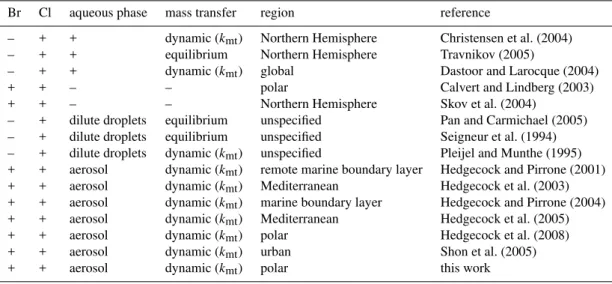
Table 1.Comparison of mercury models with halogen chemistry.
Br Cl aqueous phase mass transfer region reference
– + + dynamic (kmt) Northern Hemisphere Christensen et al. (2004)
– + + equilibrium Northern Hemisphere Travnikov (2005)
– + + dynamic (kmt) global Dastoor and Larocque (2004)
+ + – – polar Calvert and Lindberg (2003)
+ + – – Northern Hemisphere Skov et al. (2004)
– + dilute droplets equilibrium unspecified Pan and Carmichael (2005)
– + dilute droplets equilibrium unspecified Seigneur et al. (1994)
– + dilute droplets dynamic (kmt) unspecified Pleijel and Munthe (1995) + + aerosol dynamic (kmt) remote marine boundary layer Hedgecock and Pirrone (2001)
+ + aerosol dynamic (kmt) Mediterranean Hedgecock et al. (2003)
+ + aerosol dynamic (kmt) marine boundary layer Hedgecock and Pirrone (2004)
+ + aerosol dynamic (kmt) Mediterranean Hedgecock et al. (2005)
+ + aerosol dynamic (kmt) polar Hedgecock et al. (2008)
+ + aerosol dynamic (kmt) urban Shon et al. (2005)
+ + aerosol dynamic (kmt) polar this work
in 1998. The chemical reactions causing the AMDEs (berg et al., 2001, 2002; Ariya et al., 2002; Calvert and Lind-berg, 2004b; Goodsite et al., 2004) are probably similar to those driving the ozone depletion events (Bottenheim et al., 1986; Barrie et al., 1988; Simpson et al., 2007), and the oxi-dation of GEM by reactive halogen species like Br atoms and BrO radicals is considered to be a key process of mercury depletion (Ariya et al., 2004; Calvert and Lindberg, 2004a; Goodsite et al., 2004; Skov et al., 2004).
Reactive bromine species can be generated from sea salt aerosols and in the course of sea ice formation, when con-centrated salt solutions (brine) are separated from ice. When an open lead of sea water begins to freeze over, it often forms frost flowers. These are dendritic vapor-deposited ice crystals that wick brine from the freezing ice (Perovich and Richter-Menge, 1994; Rankin et al., 2002; Canosa-Mas et al., 1996) and can serve as sites of halogen activation and sources of sea salt aerosols (Simpson et al., 2007). Recently, Sander et al. (2006) used the MECCA (Module Efficiently Calculat-ing the Chemistry of the Atmosphere) box model to study the role of carbonate precipitation in freezing sea water for the generation of reactive bromine. To link the process of halo-gen activation in sea salt aerosols over nascent sea ice with AMDEs and investigate its potential impact, we have added mercury chemistry to MECCA.
For comparison, other model studies of atmospheric mer-cury chemistry are listed in Table 1 and shortly summarized here. Ryaboshapko et al. (2002) compared several mercury chemistry models. These models have been commonly used to study the long-range transport of mercury. They con-tain chemical reactions of Hg species related to SO2 and chlorine but they do not consider bromine chemistry. Pan and Carmichael (2005) and Seigneur et al. (1994) studied mercury atmospheric mechanisms with a box model, as-suming gas/aqueous-phase partitioning according to Henry’s
Fig. 1. Simplified halogen and mercury chemistry. Bromine chemistry is shown with red arrows, Hg chemistry in green, and ozone destruction in blue. “RGM*” refers to all gas-phase species in our model that contain mercury, except for elemental Hg. Hg2+complexes* refers to HgSO3, Hg(SO3)22−, Hg(OH)2, HgOHCl, HgCl+, HgCl
2, HgCl−3, HgCl2 − 4 , HgBr
+, HgBr
2, HgBr−3 and HgBr2 − 4 .
in the gas and the aqueous phase including bromine chem-istry with a fully coupled gas/aqueous chemchem-istry mechanism.
2 Model description
We have used the atmospheric chemistry box model MECCA by Sander et al. (2005). It describes the release of halogens from sea salt aerosols under conditions of the polar bound-ary layer at 82◦N with a fully pH-dependent aqueous-phase chemistry mechanism. Here, we added mercury chemistry to the polar MECCA model. In the current model version, there are a total of 686 equations (178 gas-phase equations; 250 aqueous-phase equations; 138 Henry’s law equations; 70 equilibria; 48 photolyses). The set of ordinary differ-ential equations is integrated with the KPP software pack-age (Sandu and Sander, 2006), using the Rosenbrock method RODAS3. The release process of reactive halogens and the reactions with mercury and ozone both in the aerosol and the gas phase are shown in Fig. 1. Dry deposition is switched off in the model because under the conditions of our model calculations, there is enough aerosol surface available so that uptake of RGM to aerosols dominates over dry deposition. MECCA only simulates locally occurring chemistry; advec-tion of an air mass already depleted in GEM and RGM can-not be modeled.
2.1 Gas-phase oxidation reactions
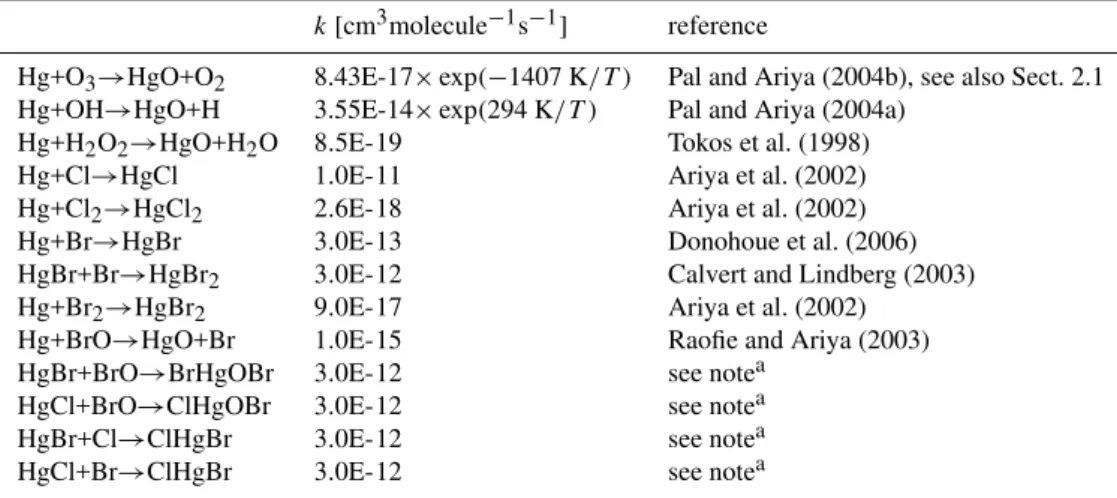
Potential reactions of Hg in the atmosphere have recently been summarized by Steffen et al. (2008). The primary re-actions include the oxidation by O3(Pal and Ariya, 2004b), the OH radical (Sommar et al., 2001; Pal and Ariya, 2004a), H2O2 (Tokos et al., 1998) and reactive halogen species (Ariya et al., 2002; Calvert and Lindberg, 2003, 2004a; Raofie and Ariya, 2003; Donohoue et al., 2005, 2006). Ta-ble 2 shows the reactions and their rate constants. There is a wide range of rate constants for GEM oxidation by O3and OH. Here, the temperature-dependent kinetic data reported by Pal and Ariya (2004a) and Pal and Ariya (2004b) are used. It should be noted that Seigneur et al. (2006) and Selin et al. (2007) found that this rate coefficient for Hg+O3 depletes GEM too fast in a global one-year simulation. However, on the time scale of AMDEs (several days), the reaction Hg+O3 is negligible, even when using the fast rate coefficient.
Table 2.Gas-phase reactions.
k[cm3molecule−1s−1] reference
Hg+O3→HgO+O2 8.43E-17×exp(−1407 K/T ) Pal and Ariya (2004b), see also Sect. 2.1 Hg+OH→HgO+H 3.55E-14×exp(294 K/T ) Pal and Ariya (2004a)
Hg+H2O2→HgO+H2O 8.5E-19 Tokos et al. (1998)
Hg+Cl→HgCl 1.0E-11 Ariya et al. (2002)
Hg+Cl2→HgCl2 2.6E-18 Ariya et al. (2002)
Hg+Br→HgBr 3.0E-13 Donohoue et al. (2006)
HgBr+Br→HgBr2 3.0E-12 Calvert and Lindberg (2003)
Hg+Br2→HgBr2 9.0E-17 Ariya et al. (2002)
Hg+BrO→HgO+Br 1.0E-15 Raofie and Ariya (2003)
HgBr+BrO→BrHgOBr 3.0E-12 see notea
HgCl+BrO→ClHgOBr 3.0E-12 see notea
HgBr+Cl→ClHgBr 3.0E-12 see notea
HgCl+Br→ClHgBr 3.0E-12 see notea
aSince the kinetics of these reactions have neither been studied theoretically nor experimentally, we have used the valuek(HgBr+Br) here,
as assumed by Calvert and Lindberg (2003).
Table 3.Aqueous-phase reactions.
k reference
Hg+O3→HgO+O2 4.7E7 M−1s−1 Munthe (1992)
HgO+H+→Hg2++OH− 1.0E10 M−1s−1 Pleijel and Munthe (1995) Hg+OH→Hg++OH− 2.0E9 M−1s−1 Lin and Pehkonen (1997) Hg++OH→Hg2++OH− 1.0E10 M−1s−1 Lin and Pehkonen (1997) Hg2++HO
2→Hg++O2+H+ 1.7E4 M−1s−1 Pehkonen and Lin (1998) Hg++HO
2→Hg+O2+H+ 1.0E10 M−1s−1 1
Hg+HOCl→Hg2++Cl−+OH− 2.09E6 M−1s−1 Lin and Pehkonen (1998)
Hg+ClO− H→+Hg2++Cl−+OH− 1.99E6 M−1s−1 Lin and Pehkonen (1998) Hg+HOBr→Hg2++Br−+OH− 0.279 M−1s−1 Wang and Pehkonen (2004)
Hg+BrO− H+
→Hg2++Br−+OH− 0.273 M−1s−1 Wang and Pehkonen (2004) Hg+Br2→Hg2++2Br− 0.196 M−1s−1 Wang and Pehkonen (2004)
HgSO3 H2O→ Hg+HSO−4+H+ 0.0106 s−1 van Loon et al. (2000)
Hg(OH)2 →hνHg+2 OH 2 Xiao et al. (1994)
1assumed to be the same as for Hg++OH
2follows a diurnal cycle with a peak of about 3E-7 s−1
role of halogens in GEM depletion in the atmosphere is still uncertain and argued, it is known that reactions of Hg with Br2, Cl2, Br, Cl, and BrO are involved. There are only a few reports on the association reactions of HgBr with Br, Cl, BrO, and HgCl with Br and BrO radicals. The rate coeffi-cients have not yet been determined experimentally. A value consistent with those measured for similar association reac-tions is assumed.
2.2 Aqueous-phase redox chemistry
In contrast to the gas phase, aqueous-phase reactions of mer-cury include both oxidation and reduction (Table 3). Poten-tial aqueous oxidants are O3(Munthe, 1992), the OH radical (Lin and Pehkonen, 1997), HOCl/ClO−
(Lin and Pehkonen, 1998), and Br2/HOBr/BrO−(Wang and Pehkonen, 2004). In the aqueous phase, the chemical lifetime of Hg against ox-idation is much less than in the gas phase. For the reduc-tion of aqueous Hg2+
Table 4.Aqueous-phase equilibria.
equilibrium K[M−1] reference
Hg2++OH−⇋HgOH+ 4.0E10 see notea HgOH++OH−⇋Hg
(OH)2 1.58E11 see notea Hg2++SO2−
3 ⇋HgSO3 2.E13 van Loon et al. (2001) HgSO3+SO23−⇋Hg(SO3)2−
2 1.E10 van Loon et al. (2001) Hg2++Cl−⇋HgCl+ 5.8E6 Hepler and Olofsson (1975) HgCl++Cl−⇋HgCl
2 2.5E6 Hepler and Olofsson (1975) HgCl2+Cl−⇋HgCl−
3 6.7 Hepler and Olofsson (1975)
HgCl−3+Cl−⇋HgCl2−
4 1.3E1 Hepler and Olofsson (1975) Hg2++Br−⇋HgBr+ 1.1E9 Hepler and Olofsson (1975) HgBr++Br−⇋HgBr
2 2.5E8 Hepler and Olofsson (1975) HgBr2+Br−⇋HgBr−
3 1.5E2 Hepler and Olofsson (1975)
HgBr−3+Br−⇋HgBr2−
4 2.3E1 Hepler and Olofsson (1975) HgOH++Cl−⇋HgOHCl 2.69E7 see notea
avalue as cited by Pan and Carmichael (2005)
Table 5.Henry’s law coefficientskH.
reaction kH[M/atm] reference
Hg⇋Hg(aq) 0.13 see notea
HgO⇋HgO(aq) 3.2E6 see noteb
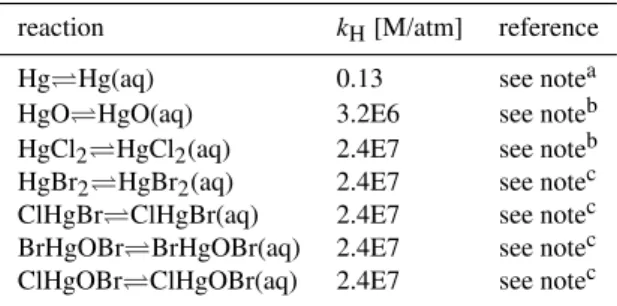
HgCl2⇋HgCl2(aq) 2.4E7 see noteb HgBr2⇋HgBr2(aq) 2.4E7 see notec ClHgBr⇋ClHgBr(aq) 2.4E7 see notec BrHgOBr⇋BrHgOBr(aq) 2.4E7 see notec ClHgOBr⇋ClHgOBr(aq) 2.4E7 see notec
avalue as cited by Schroeder and Munthe (1998) bvalue as cited by Shon et al. (2005)
cassumed to be the same as for HgCl 2
is slow, its contribution should be small (Xiao et al., 1994). The reduction of aqueous Hg2+
by S(IV) was also reported to have a small rate constant (Munthe et al., 1991; van Loon et al., 2000). After depletion of aqueous S(IV), the reaction of HO2with Hg may be the only significant aqueous reduc-tion balancing Hg0oxidation (Lin and Pehkonen, 1998; Lin et al., 2006). However, there is no literature reporting a di-rect kinetic study of the Hg2++HO
2reaction. Pehkonen and Lin (1998) proposed a two-step reduction of Hg2+by HO
2 as an important reducing pathway. For the second step, we assume the same value as for Hg++OH. It should be noted that according to G˚ardfeldt and Jonsson (2003), Hg2+
will not be reduced by HO2under ambient conditions.
2.3 Aqueous-phase equilibria
Aqueous Hg2+ can form a wide variety of complexes with softer ligands such as Cl−, Br−, and SO2−
3 which have a
sig-Table 6.Initial gas-phase mixing ratios.
species initial value
O3 30 nmol/mol
Hg 0.168 pmol/mol
NO 10 pmol/mol
NO2 10 pmol/mol
SO2 100 pmol/mol
C2H6 2000 pmol/mol C2H4 26 pmol/mol C2H2 329 pmol/mol
nificant impact on the reaction kinetics. Compared to these inorganic ligands, the concentrations of organic ligands are low and thus not considered here. Formation of Hg2+ com-plexes are treated as chemical equilibria since Hg2+ has a very rapid water exchange rate in aqueous solutions (Bre-zonik, 1994) (Table 4).
As suggested by Lin and Pehkonen (1997) and Lin and Pehkonen (1998), the total concentration of ligands and the pH of atmospheric droplets are important factors affecting Hg2+ speciation. At low S(IV) concentrations, mercury chloride complexes (HgCl2, HgCl−3, and HgCl24−) dominante (Lin et al., 2006), while at high S(IV) concentrations, the dominant complex is Hg(SO3)22−(Lin and Pehkonen, 1998; Lin et al., 2006). Below pH 5.5, OH−
concentrations are low and cannot form hydroxide complexes with Hg2+
. In the ma-rine boundary layer or polar regions, the contribution of bro-mide (Br−
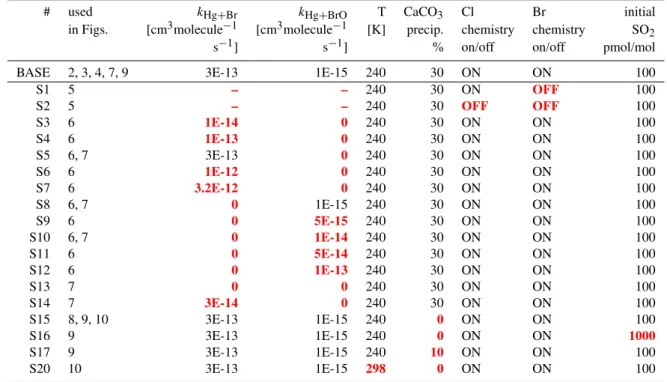
Table 7.Summary of base run and sensitivity studies S1 to S20. Values that differ from the BASE run are shown in red.
# used kHg+Br kHg+BrO T CaCO3 Cl Br initial
in Figs. [cm3molecule−1 [cm3molecule−1 [K] precip. chemistry chemistry SO 2
s−1] s−1] % on/off on/off pmol/mol
BASE 2, 3, 4, 7, 9 3E-13 1E-15 240 30 ON ON 100
S1 5 – – 240 30 ON OFF 100
S2 5 – – 240 30 OFF OFF 100
S3 6 1E-14 0 240 30 ON ON 100
S4 6 1E-13 0 240 30 ON ON 100
S5 6, 7 3E-13 0 240 30 ON ON 100
S6 6 1E-12 0 240 30 ON ON 100
S7 6 3.2E-12 0 240 30 ON ON 100
S8 6, 7 0 1E-15 240 30 ON ON 100
S9 6 0 5E-15 240 30 ON ON 100
S10 6, 7 0 1E-14 240 30 ON ON 100
S11 6 0 5E-14 240 30 ON ON 100
S12 6 0 1E-13 240 30 ON ON 100
S13 7 0 0 240 30 ON ON 100
S14 7 3E-14 0 240 30 ON ON 100
S15 8, 9, 10 3E-13 1E-15 240 0 ON ON 100
S16 9 3E-13 1E-15 240 0 ON ON 1000
S17 9 3E-13 1E-15 240 10 ON ON 100
S20 10 3E-13 1E-15 298 0 ON ON 100
2.4 Gas-aqueous phase exchange
Equilibration towards Henry’s law is calculated using the mass-transfer coefficients (kmt) according to Schwartz (1986). The accommodation coefficient was assumed to be
α=0.1 for all mercury species, and the Henry’s law coeffi-cients are listed in Table 5. Mercury compounds have vapor pressures orders of magnitude lower than that of elemental mercury and belong to the group of semivolatiles.
3 Results and discussion
The conditions of our model runs are similar to those in Sander et al. (2006). The model starts on 31 March with initial gas-phase mixing ratios as shown in Table 6. The tem-perature is set toT=240 K. Photolysis rate coefficients are calculated for a latitude of 82◦ N. The chemistry of back-ground sulfate aerosol is switched on in the model runs. Sea salt particles (2µm radius) are injected into the air on 4 April (i.e. after a spin up of 4 days). They are composed of well-mixed, liquid, concentrated sea water (c=5 mol/L), assuming that 30% of the carbonate has precipitated before particle for-mation. The initial liquid water content (LWC) of the model aerosol is 5×10⁻¹⁰m3/m3, and it decays exponentially with a lifetime of 3 days. The main features of this BASE run, and also of several sensitivity studies (as described in the sections below) are summarized in Table 7.
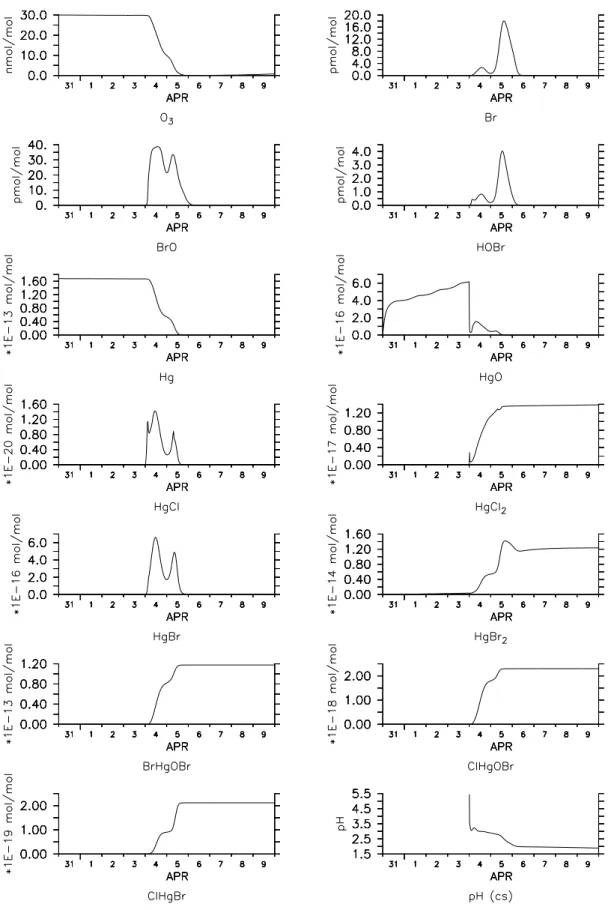
After injection into the air, the aerosol pH drops abruptly to about 3. The so-called “bromine explosion” starts and the
levels of BrO and Br increase quickly. Sea salt aerosol is depleted in Br−during this period. After 2 days both Hg and O3are thoroughly depleted.
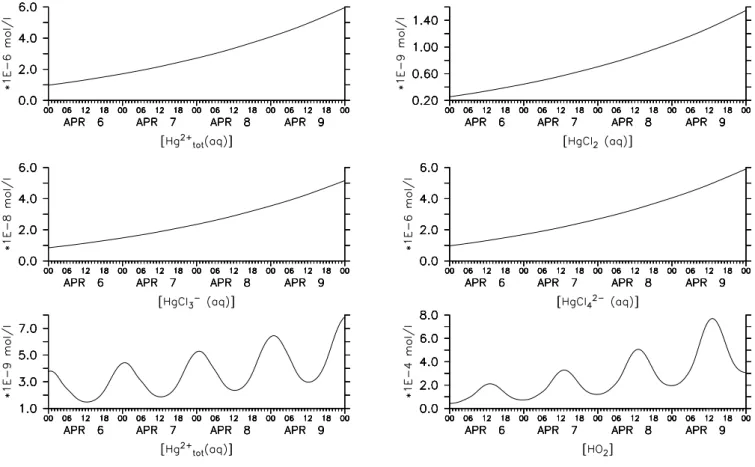
Fig. 5. Total concentration of aqueous-phase divalent mercury complexes (Hg2tot+). Top rows: sensitivity study S1 without Br chemistry. Here, Hg2tot+is virtually identical to HgCl24−. Bottom row: sensitivity study S2 without any halogen chemistry. Here, an anticorrelation to HO2can be seen.
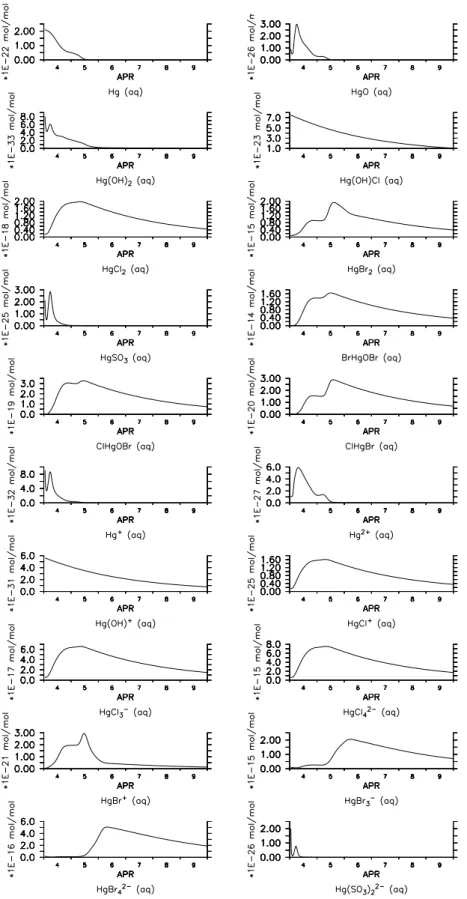
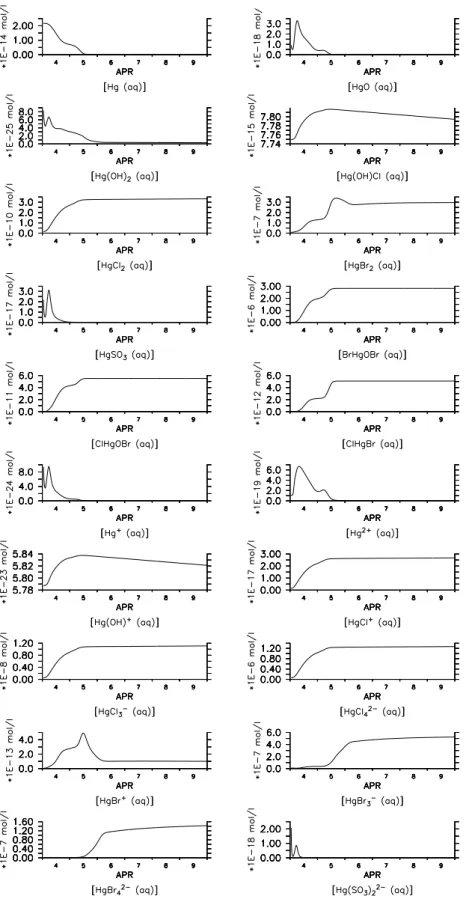
The main mercury species in the aqueous phase are BrHgOBr, HgCl24−, HgBr2, HgBr−3, and HgBr24−. At the be-ginning of the AMDE, the concentrations of chlorine com-plexes increase quickly and peak after one day. The con-centration of HgBr2 increases faster than that of the other bromine complexes during the first day and peaks when GEM reaches zero. After that, their amount in the atmo-sphere decreases (Fig. 3, in mol/mol) due to the loss of sea salt aerosols, while their aqueous-phase concentrations reach equilibria and remain constant (Fig. 4, in mol/L).
The main sulfur complexes are HgSO3 and Hg(SO3)22−. Their concentrations are very low and their diurnal cycles after AMDEs are controlled by the variation of SO2−
3 con-centrations. In contrast to the study by Pan and Carmichael (2005), the sum of all divalent mercury complexes (Hg2tot+) does not display a diurnal cycle. We have performed fur-ther sensitivity tests to find the reason for this difference. As shown in Fig. 5 (top rows), when bromine chemistry was switched off, neither Hg2tot+nor HgCl2show a diurnal cycle. This is due to the high levels of Cl−
in the sea-salt aerosol of our model. When both chlorine and bromine chemistry were switched off, Hg2+
tot concentrations display the same
cy-cle as calculated by Pan and Carmichael (2005), which is controlled by the oxygen-hydrogen photochemical reactions that produce HO2radicals in the liquid phase (Fig. 5, bottom row).
To the best of our knowledge, this is the first model study of atmospheric mercury speciation in both the gas and the aqueous phase including bromine chemistry. However, our results can only be considered preliminary because we had to use estimates for several Henry’s law coefficients. Still, we hope that our simulations can provide first clues about the mercury compounds deposited to the snowpack in polar regions.
3.2 The reactions of Hg with Br and BrO
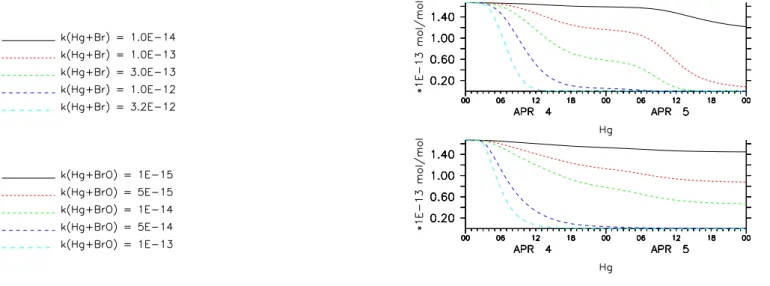
Fig. 6.Changes in the GEM depletion rates with respect to differentkHg+BrandkHg+BrOvalues (unit = cm3molecule−1s−1).
Fig. 7.The role of BrO+Hg and Br+Hg as a function of the Br/BrO ratio (kin cm3molecule−1s−1).
and 3.2×10⁻¹²cm3molecule−1s−1 (Ariya et al., 2002). There is limited information about its temperature- and pressure-dependence. Khalizov et al. (2003) and Goodsite et al. (2004) reported values of 1.0×10⁻¹²exp(209 K/T ) and 1.1×10⁻¹²(T /298 K)−2.37cm3molecule−1s−1,
Fig. 8. Time series of O3, Hg, Br, and BrO during an ODE that last several days (sensitivity study S15, see Table 7). Also shown are the GEM depletion rates forkHg+Br=3.0×10⁻¹³andkHg+BrO=1.0×10⁻¹⁵cm3molecule−1s−1, respectively.
y = 5,37E-06x - 8,65E-15
R2
= 0,97
N=1152, P=0,985, significant level at 0,05
-2E-14 0 2E-14 4E-14 6E-14 8E-14 1E-13 1,2E-13 1,4E-13 1,6E-13 1,8E-13
0,00E+00 5,00E-09 1,00E-08 1,50E-08 2,00E-08 2,50E-08 3,00E-08
O3 (mol/mol)
GEM (mol/mol)
S16 S15 S17 BASE
Fig. 9. Correlation between GEM and O3in the BASE run and in
sensitivity studies S15, S16, and S17. See Table 7 for a description of the model runs.
Ariya (2003) showed that kHg+BrO is between 10−15 and 10−13cm3molecule−1s−1. Further experiments identified HgBr, HgBrO/HgOBr, and HgO as reaction products (Raofie and Ariya, 2004). To test the possible importance of Hg+Br and Hg+BrO in our model, we have performed several sensi-tivity runs, varying their rate coefficients.
In a first series of simulations, the reaction Hg+BrO is switched off, andkHg+Bris varied (top graph in Fig. 6). With
kHg+Br=1.0×10⁻¹⁴, 1.0×10⁻¹³, 3.0×10⁻¹³, 1.0×10⁻¹³, 3.2×10⁻¹²cm3molecules−1s−1, a fraction of 5.0%, 30%, 65%, 97% and 100% GEM, respectively, has been depleted after one day. In a second series, the reaction Hg+Br is switched off, and kHg+BrO is varied (bottom graph in Fig. 6). WithkHg+BrO= 1.0×10⁻¹⁵, 5.0×10⁻¹⁵, 1.0×10⁻¹⁴, 5.0×10⁻¹⁴, 1.0×10⁻¹³cm3molecules−1s−1, a fraction of 7.0%, 29%, 52%, 97% and 100% GEM, respectively, has been depleted after one day.
Fig. 10.The loss rate of Hg versus the different atmospheric temperature (S15 = black = 240 K, S20 = red = 298 K) in a simulation without carbonate precipitation.
relative importance of these reactions. The results are shown in Fig. 7. In agreement with Calvert and Lindberg (2003), changing the mercury-related rate coefficients does not affect ozone or bromine species significantly. When bothkHg+Br andkHg+BrOare zero (solid black line in Fig. 7), only 1.3% of the initial Hg is depleted during the first day, showing that in polar regions the reactions with O3, OH, H2O2, Br2, Cl2, or Cl are not sufficient to deplete GEM. Also shown in the figure are the temporal evolution of Br and BrO during the ODE. Due to the ozone depletion, there is a steady increase in the ratio Br/BrO. Thus the relative importance of Hg+BrO and Hg+Br will shift towards the latter during the AMDE. In the beginning, when O3decreases, the ratio is small with high levels of BrO, while when O3is low, less BrO is pro-duced and subsequently the ratio increases.
This can be seen clearly in Fig. 8, which shows a model simulation of an ODE that lasts several days. The reaction Hg+Br is important throughout the ODE, whereas the re-action Hg+BrO slows down towards the end of the ODE, and never exceeds 10% of the total Hg loss rate. Both re-actions show diurnal cycles with faster rates during the day. The diurnal cycle of Hg+Br is more pronounced than that of Hg+BrO.
It is interesting to compare the loss rates of Hg and O3. Ebinghaus et al. (2002) reported Antarctic mea-surements with 15-min resolution and found a highly significant correlation between TGM and O3 at a lag-time of zero. In our model calculations, such a syn-chronous loss of GEM and ozone can best be repro-duced when using kHg+Br=3.0×10⁻¹³ and kHg+BrO ≤
1.0×10⁻¹⁵cm3molecule−1s−1. Using these rate coefficients for different mercury depletion scenarios, our model results show a significant correlation between mercury and ozone (R2=0.97, see Fig. 9).
With other values of kHg+Br, the rate of GEM depletion will either be faster or slower than that of O3(Figs. 6 and 7). In the model runs where the reaction Hg+Br is switched off and the loss of GEM is due to reaction with BrO, a syn-chronized loss of Hg and O3 cannot be reproduced. When
kHg+BrO>1.0×10⁻¹⁴ cm3s−1, Hg loss is faster than that of ozone. With smaller values ofkHg+BrO, the reaction becomes too slow towards the end of the ODE, when the concentration of Hg is small and the Br/BrO ratio is high (Figs. 6 and 7). This implies that the contribution of Hg+BrO to AMDEs is small.
3.3 Effects of temperature
Variations in temperature have a strong effect on reac-tion kinetics. For most reactions of mercury species, the temperature-dependence of the rate coefficients is not known. Still, models can be used to study indirect effects resulting from temperature effects on sulfur and halogen species.
Pan and Carmichael (2005) simulated the effect of tem-perature in the aqueous phase at night without halogens. In their model, low temperatures slow the oxidation of mercury in the aqueous phase and increase the time for the system to reach equilibrium. High temperatures favor the partition-ing of H2SO3into SO23−, and increase the oxidation rate of SO2−
3 . The net result is that the SO 2−
3 elimination speed is greater than its production speed. Therefore, they con-cluded that higher temperatures result in lower concentra-tions of SO23−, and favor the liquid-phase mercury oxidation reactions.
activation of bromine. They found that low temperatures favor the activation of reactive bromine due to a shift of the equilibrium between BrCl and Br2Cl−. An increase in bromine enhances the oxidation of Hg.
To study these counteracting effects, we performed model runs atT=298 K and 240 K, as shown in Fig. 10. Consis-tent with the results from Pan and Carmichael (2005), the initial loss of Hg (before the bromine explosion) is faster at 298 K. However, once the ODE starts, the loss of Hg is more pronounced at 240 K because of the higher concentrations of bromine species.
4 Conclusions
Investigating the chemistry of AMDEs with MECCA, we found that:
1. The reaction of Hg with Br dominates the loss of GEM throughout the depletion event. To explain the ex-perimentally observed synchronous destruction of Hg and O3, the reaction rate of Hg+BrO has to be much lower than that of Hg+Br. The synchronicity is best reproduced with rate coefficients at the lower limit of the literature values for both reactions, i.e.kHg+Br ≈ 3×10⁻¹³andk
Hg+BrO≤1×10⁻¹⁵ cm3molecule−1s−1, respectively.
2. BrHgOBr is the most abundant reactive mercury species, both in the gas phase and in the aqueous phase. The aqueous-phase concentrations of BrHgOBr and mercury halide complexes (HgX2, HgX−3, HgX24−with X=Br,Cl) are several orders of magnitude larger than that of Hg(SO3)22−. Note, however, that these results depend on the assumed Henry’s law coefficients, which need to be confirmed by measurements.
3. Considering chlorine chemistry outside depletion events (i.e. without bromine activation), the con-centration of total divalent mercury in the sea-salt aerosol (concentrated solution droplets) is dominated by HgCl2−
4 , does not exhibit a diurnal cycle, and is much higher than in dilute aqueous solution droplets, where it is dominated by Hg(SO3)22−and negatively correlated with the HO2radical concentration.
Acknowledgements. The Max-Planck Society and M. O. Andreae
are gratefully acknowledged for support. Z.-Q. Xie acknowledges financial support from the Alexander von Humboldt Foundation and from the Chinese National Natural Science Foundation (grant no. 40776001) to visit Germany.
Edited by: J. W. Bottenheim
This Open Access Publication is financed by the Max Planck Society.
References
Ariya, P. A., Khalizov, A., and Gidas, A.: Reactions of gaseous mercury with atomic and molecular halogens: Kinetics, product studies, and atmospheric implications, J. Phys. Chem. A, 106, 7310–7320, 2002.
Ariya, P. A., Dastoor, A. P., Amyot, M., Schroeder, W. H., Barrie, L., Anlauf, K., Raofie, F., Ryzhkov, A., Davignon, D., Lalonde, J., and Steffen, A.: The Arctic: a sink for mercury, Tellus, 56B, 397–403, 2004.
Aspmo, K., Gauchard, P.-A., Steffen, A., Temme, C., Berg, T., Bahlmann, E., Banic, C., Dommergue, A., Ebinghaus, R., Fer-rari, C., Pirrone, N., Sprovieri, F., and Wibetoe, G.: Measure-ments of atmospheric mercury species during an international study of mercury depletion events at Ny- ˚Alesund, Svalbard, spring 2003. How reproducible are our present methods?, Atmos. Environ., 39, 7607–7619, 2005.
Barrie, L. A., Bottenheim, J. W., Schnell, R. C., Crutzen, P. J., and Rasmussen, R. A.: Ozone destruction and photochemical reac-tions at polar sunrise in the lower Arctic atmosphere, Nature, 334, 138–141, 1988.
Berg, T., Sekkesæter, S., Steinnes, E., Valdal, A.-K., and Wibetoe, G.: Springtime depletion of mercury in the European Arctic as observed at Svalbard, Sci. Total Environ., 304, 43–51, 2003. Bottenheim, J. W., Gallant, A. G., and Brice, K. A.: Measurements
of NOyspecies and O3at 82◦N latitude, Geophys. Res. Lett., 13, 113–116, 1986.
Brezonik, P. L. (Ed.): Chemical Kinetics and Process Dynamics in Aquatic Systems, CRC Press, Boca Raton, FL, 1994.
Calvert, J. G. and Lindberg, S. E.: A modeling study of the mecha-nism of the halogen-ozone-mercury homogeneous reactions in the troposphere during the polar spring, Atmos. Environ., 37, 4467–4481, 2003.
Calvert, J. G. and Lindberg, S. E.: Potential influence of iodine-containing compounds on the chemistry of the troposphere in the polar spring. I. Ozone depletion, Atmos. Environ., 38, 5087– 5104, 2004a.
Calvert, J. G. and Lindberg, S. E.: The potential influences of iodine-containing compounds on the chemistry of the tropo-sphere in the polar spring. II. Mercury depletion, Atmos. En-viron., 38, 5105–5116, 2004b.
Canosa-Mas, C. E., King, M. D., Lopez, R., Percival, C. J., Wayne, R. P., Shallcross, D. E., Pyle, J. A., and Daele, V.: Is the reaction between CH3(O)O2and NO3important in the night-time tropo-sphere?, J. Chem. Soc. Faraday Trans., 92, 2211–2222, 1996. Christensen, J. H., Brandt, J., Frohn, L. M., and Skov, H.:
Mod-elling of mercury in the Arctic with the Danish Eulerian Hemi-spheric Model, Atmos. Chem. Phys., 4, 2251–2257, 2004, http://www.atmos-chem-phys.net/4/2251/2004/.
Cl and the reaction of Cl with Cl: a pulsed laser photolysis-pulsed laser induced fluorescence study, J. Phys. Chem. A, 109, 7732–7741, 2005.
Donohoue, D. L., Bauer, D., Cossairt, B., and Hynes, A. J.: Tem-perature and pressure dependent rate coefficients for the reac-tion of Hg with Br and the reacreac-tion of Br with Br: a pulsed laser photolysis-pulsed laser induced fluorescence study, J. Phys. Chem. A, 110, 6623–6632, 2006.
Ebinghaus, R., Kock, H. H., Temme, C., Einax, J. W., L¨owe, A. G., Richter, A., Burrows, J. P., and Schroeder, W. H.: Antarc-tic springtime depletion of atmospheric mercury, Environ. Sci. Technol., 36, 1238–1244, 2002.
G˚ardfeldt, K. and Jonsson, M.: Is bimolecular reduction of Hg(II) complexes possible in aqueous systems of environmental impor-tance, J. Phys. Chem. A, 107, 4478–4482, 2003.
Goodsite, M., Plane, J. M. C., and Skov, H.: A theoretical study of the oxidation of Hg0to HgBr2in the troposphere, Environ. Sci. Technol., 38, 1772–1776, 2004.
Hedgecock, I. M. and Pirrone, N.: Mercury and photochemistry in the marine boundary layer-modelling studies suggest the in situ production of reactive gas phase mercury, Atmos. Environ., 35, 3055–3062, 2001.
Hedgecock, I. M. and Pirrone, N.: Chasing quicksilver: Modeling the atmospheric lifetime of Hg0(g)in the marine boundary layer at various latitudes, Environ. Sci. Technol., 38, 69–76, 2004. Hedgecock, I. M., Pirrone, N., Sprovieri, F., and Pesenti, E.:
Re-active gaseous mercury in the marine boundary layer: modelling and experimental evidence of its formation in the Mediterranean region, Atmos. Environ., 37, S41–S49, 2003.
Hedgecock, I. M., Trunfio, G. A., Pirrone, N., and Sprovieri, F.: Mercury chemistry in the MBL: Mediterranean case and sensi-tivity studies using the AMCOTS (Atmospheric Mercury Chem-istry over the Sea) model, Atmos. Environ., 39, 7217–7230, 2005.
Hedgecock, I. M., Pirrone, N., and Sprovieri, F.: Chasing quick-silver northward: mercury chemistry in the Arctic troposphere, Environ. Chem., 5, 131–134, 2008.
Hepler, L. G. and Olofsson, G.: Mercury. Thermodynamic proper-ties, chemical equilibriums, and standard potentials, Chem. Rev., 75, 585–602, 1975.
Holmes, C. D., Jacob, D. J., and Yang, X.: Global lifetime of elemental mercury against oxidation by atomic bromine in the free troposphere, Geophys. Res. Lett., 33, L20808, doi:10.1029/ 2006GL027176, 2006.
Khalizov, A. F., Viswanathan, B., Larregaray, P., and Ariya, P. A.: A theoretical study on the reactions of Hg with halogens: Atmo-spheric implications, J. Phys. Chem. A, 107, 6360–6365, 2003. Lin, C.-J. and Pehkonen, S. O.: Aqueous free radical chemistry
of mercury in the presence of iron oxides and ambient aerosol, Atmos. Environ., 31, 4125–4137, 1997.
Lin, C.-J. and Pehkonen, S. O.: Oxidation of elemental mer-cury by aqueous chlorine (HOCl/OCl−): Implications for tro-pospheric mercury chemistry, J. Geophys. Res., 103D, 28 093– 28 102, 1998.
Lin, C.-J., Pongprueksa, P., Lindberg, S. E., Pehkonen, S. O., Byune, D., and Jang, C.: Scientific uncertainties in atmospheric mercury models I: Model science evaluation, Atmos. Environ., 40, 2911–2928, 2006.
Lindberg, S. E., Brooks, S., Lin, C.-J., Scott, K., Meyers, T.,
Cham-bers, L., Landis, M., and Stevens, R.: Formation of reactive gaseous mercury in the Arctic: Evidence of oxidation of Hg0 to gas-phase Hg−II compounds after Arctic sunrise, Water Air Soil Pollut. Focus, 1, 295–302, 2001.
Lindberg, S. E., Brooks, S., Lin, C.-J., Scott, K. J., Landis, M. S., Stevens, R. K., Goodsite, M., and Richter, A.: Dynamic oxida-tion of gaseous mercury in the Arctic troposphere at polar sun-rise, Environ. Sci. Technol., 36, 1245–1256, 2002.
Lu, J. Y. and Schroeder, W. H.: Annual time-series of total filterable atmospheric mercury concentrations in the Arctic, Tellus, 56B, 213–222, 2004.
Lu, J. Y., Schroeder, W. H., Barrie, L. A., Steffen, A., Welch, H. E., Martin, K., Lockhart, L., Hunt, R. V., Boila, G., and Richter, A.: Magnification of atmospheric mercury deposition to polar regions in springtime: the link to tropospheric ozone depletion chemistry, Geophys. Res. Lett., 28, 3219–3222, 2001.
Munthe, J.: The aqueous oxidation of elemental mercury by ozone, Atmos. Environ., 26A, 1461–1468, 1992.
Munthe, J., Xiao, Z. F., and Lindqvist, O.: The aqueous reduction of divalent mercury by sulfite, Water Air Soil Pollut., 56, 621–630, 1991.
Pal, B. and Ariya, P. A.: Gas-phase HO-initiated reactions of ele-mental mercury: Kinetics, product studies, and atmospheric im-plications, Environ. Sci. Technol., 38, 5555–5566, 2004a. Pal, B. and Ariya, P. A.: Studies of ozone initiated reactions of
gaseous mercury: Kinetics, product studies, and atmospheric im-plications, Phys. Chem. Chem. Phys., 6, 572–579, 2004b. Pan, L. and Carmichael, G. R.: A two-phase box model to study
mercury atmospheric mechanisms, Environ. Chem., 2, 205–214, 2005.
Pehkonen, S. O. and Lin, C. J.: Aqueous photochemistry of divalent mercury with organic acids, J. Air Waste Manage. Assoc., 48, 144–150, 1998.
Perovich, D. K. and Richter-Menge, J. A.: Surface characteristics of lead ice, J. Geophys. Res., 99C, 16 341–16 350, 1994. Peterson, G., Munthe, J., Pleijel, K., Bloxam, R., and Kumar, A. V.:
A comprehensive Eulerian modelling framework for airborne mercury species: development and testing of the tropospheric chemistry module (TCM), Atmos. Environ., 32, 829–843, 1998. Pleijel, K. and Munthe, J.: Modelling the atmospheric mercury cy-cle – Chemistry in fog droplets, Atmos. Environ., 29, 1441–1457, 1995.
Poissant, L. and Pilote, M.: Time series analysis of atmospheric mercury in Kuujjuarapik/Whapmagoostui (Qu´ebec), J. Phys. IV France, 107, 1079–1082, 2003.
Rankin, A. M., Wolff, E. W., and Martin, S.: Frost flowers: Impli-cations for tropospheric chemistry and ice core interpretation, J. Geophys. Res., 107, 4683, doi:10.1029/2002JD002492, 2002. Raofie, F. and Ariya, P. A.: Kinetics and products study of the
re-action of BrO radicals with gaseous mercury, J. Phys. IV France, 107, 1119–1121, 2003.
Raofie, F. and Ariya, P. A.: Product study of the gas-phase BrO-initiated oxidation of Hg0: Evidence for stable Hg1+ com-pounds, Environ. Sci. Technol., 38, 4319–4326, 2004.
Ryaboshapko, A., Bullock, R., Ebinghaus, R., Ilyin, I., Lohman, K., Munthe, J., Petersen, G., Seigneur, C., and W¨angberg, I.: Comparison of mercury chemistry models, Atmos. Environ., 36, 3881–3898, 2002.
note: The new comprehensive atmospheric chemistry module MECCA, Atmos. Chem. Phys., 5, 445–450, 2005,
http://www.atmos-chem-phys.net/5/445/2005/.
Sander, R., Burrows, J., and Kaleschke, L.: Carbonate precipitation in brine – a potential trigger for tropospheric ozone depletion events, Atmos. Chem. Phys., 6, 4653–4658, 2006,
http://www.atmos-chem-phys.net/6/4653/2006/.
Sandu, A. and Sander, R.: Technical note: Simulating chemical systems in Fortran90 and Matlab with the Kinetic PreProcessor KPP-2.1, Atmos. Chem. Phys., 6, 187–195, 2006,
http://www.atmos-chem-phys.net/6/187/2006/.
Schroeder, W. H. and Munthe, J.: Atmospheric mercury – An overview, Atmos. Environ., 32, 809–822, 1998.
Schroeder, W. H., Anlauf, K. G., Barrie, L. A., Lu, J. Y., Steffen, A., Schneeberger, D. R., and Berg, T.: Arctic springtime depletion of mercury, Nature, 394, 331–332, 1998.
Schwartz, S. E.: Mass-transport considerations pertinent to aqueous phase reactions of gases in liquid-water clouds, in: Chemistry of Multiphase Atmospheric Systems, NATO ASI Series, Vol. G6, edited by Jaeschke, W., pp. 415–471, Springer Verlag, Berlin, 1986.
Seigneur, C., Wrobel, J., and Constantinou, E.: A chemical ki-netic mechanism for atmospheric inorganic mercury, Environ. Sci. Technol., 28, 1589–1597, 1994.
Seigneur, C., Vijayaraghavan, K., and Lohman, K.: Atmospheric mercury chemistry:sensitivity of global model simulations to chemical reactions, J. Geophys. Res., 111, D22 306, 2006. Selin, N. E., Jacob, D., Park, R., Yantosca, R. M., Strode, S., Jaegl´e,
L., Holmes, C., and Jaffe, D. A.: Chemical cycling and depo-sition of atmospheric mercury: constraints from observations, J. Geophys. Res., 112, D02308, doi:10.1029/2006JD007450, 2007. Shepler, B. C., Balabanov, N. B., and Peterson, K. A.: Hg+Br→HgBr recombination and collision-induced dissocia-tion dynamics, J. Chem. Phys., 127, 164 304, doi:10.1063/1. 2777142, 2007.
Shon, Z.-H., Kim, K.-H., Kim, M.-Y., and Lee, M.: Modeling study of reactive gaseous mercury in the urban air, Atmos. Environ., 39, 749–761, 2005.
Simpson, W. R., von Glasow, R., Riedel, K., Anderson, P., Ariya, P., Bottenheim, J., Burrows, J., Carpenter, L. J., Frieß, U., Goodsite, M. E., Heard, D., Hutterli, M., Jacobi, H.-W., Kaleschke, L., Neff, B., Plane, J., Platt, U., Richter, A., Roscoe, H., Sander, R., Shepson, P., Sodeau, J., Steffen, A., Wagner, T., and Wolff, E.: Halogens and their role in polar boundary-layer ozone depletion, Atmos. Chem. Phys., 7, 4375–4418, 2007,
http://www.atmos-chem-phys.net/7/4375/2007/.
Skov, H., Christensen, J. H., Goodsite, M. E., Heidam, N. Z., Jensen, B., W˚ahlin, P., and Geernaert, G.: Fate of elemen-tal mercury in the Arctic during atmospheric mercury depletion episodes and the load of atmospheric mercury to the Arctic, En-viron. Sci. Technol., 38, 2373–2382, 2004.
Slemr, F., Brunke, E., Ebinghaus, R., Temme, C., Munthe, J., Wang-berg, I., Schroeder, W. H., Steffen, A., and Berg, T.: Worldwide trend of atmospheric mercury since 1977, Geophys. Res. Lett., 30, 1516, doi:10.1029/2003GL016954, 2003.
Sommar, J., Gardfeldt, K., Stromberg, D., and Feng, X.: A kinetic study of the gas-phase reaction between the hydroxyl radical and atomic mercury, Atmos. Environ., 35, 3049–3054, 2001. Steffen, A., Douglas, T., Amyot, M., Ariya, P., Aspmo, K., Berg,
T., Bottenheim, J., Brooks, S., Cobbett, F., Dastoor, A., Dom-mergue, A., Ebinghaus, R., Ferrari, C., Gardfeldt, K., Goodsite, M. E., Lean, D., Poulain, A. J., Scherz, C., Skov, H., Sommar, J., and Temme, C.: A synthesis of atmospheric mercury deple-tion event chemistry in the atmosphere and snow, Atmos. Chem. Phys., 8, 1445–1482, 2008,
http://www.atmos-chem-phys.net/8/1445/2008/.
Tokos, J. J. S., Hall, B., Calhoun, J. A., and Prestbo, E. M.: Homo-geneous gas-phase reaction of Hg0with H2O2, O3, CH3I, and (CH3)2S: Implications for atmospheric Hg cycling, Atmos. En-viron., 32, 823–827, 1998.
Travnikov, O.: Contribution of the intercontinental atmospheric transport to mercury pollution in the Northern Hemisphere, At-mos. Environ., 39, 7541–7548, 2005.
van Loon, L., Mader, E., and Scott, S. L.: Reduction of the aque-ous mercuric ion by sulfite: UV spectrum of HgSO3and its in-tramolecular redox reaction, J. Phys. Chem. A, 104, 1621–1626, 2000.
van Loon, L. L., Mader, E. A., and Scott, S. L.: Sulfite stabilization and reduction of the aqueous mercuric ion: Kinetic determina-tion of sequential formadetermina-tion constants, J. Phys. Chem. A, 105, 3190–3195, 2001.
Wang, Z. and Pehkonen, S. O.: Oxidation of elemental mercury by aqueous bromine: atmospheric implications, Atmos. Environ., 38, 3675–3688, 2004.