Article
J. Braz. Chem. Soc., Vol. 22, No. 7, 1333-1338, 2011. Printed in Brazil - ©2011 Sociedade Brasileira de Química
0103 - 5053 $6.00+0.00
A
*e-mail: [email protected]
Biotransformation of Chalcones by the Endophytic Fungus
Aspergillus
lavus
Isolated from
Paspalum maritimum
Trin.
Marivaldo J. C. Corrêa,a Fátima M. Nunes,a Heriberto R. Bitencourt,a Fábio C. Borges,a Giselle M. S. P. Guilhon,a Mara S. P. Arruda,a Andrey M. R. Marinho,a Alberdan S. Santos,a
Cláudio N. Alves,a Davi S. B. Brasil b and Lourivaldo S. Santos*,a
aPrograma de Pós-Graduação em Química, Instituto de Ciências Exatas e Naturais and
bFaculdade de Engenharia Química, Instituto de Tecnologia, Universidade Federal do Pará,
Campus Universitário do Guamá, 66075-900 Belém-PA, Brazil
O fungo Aspergillus flavus isolado como endofítico da planta Paspalum maritimum Trin. foi avaliado quanto ao seu potencial de aplicação em reações de biotransformações. Os compostos chalcona (1), 3,4,5-trimetoxichalcona (2) e 2,3,4,4’-tetrametoxichalcona (3) foram biotransformados, respectivamente, na diidrochalcona (4), 3,4,5-trimetoxidiidrochalcona (5) e 2,3,4,4’-tetrametoxidiidrochalcona (6). As estruturas destes compostos foram determinadas por análises de RMN uni e bidimensionais e por espectrometria de massas. As diidrochalconas 5 e 6 são substâncias inéditas.
The fungus Aspergillus lavus isolated as endophytic of the plant Paspalum maritimum Trin. was evaluated for its potential application in biotransformation reactions. The compounds chalcone (1), 3,4,5-trimethoxychalcone (2) and 2,3,4,4’-tetramethoxychalcone (3) were biotransformed, respectively, in dihydrochalcone (4), 3,4,5-trimethoxydihydrochalcone (5) and 2,3,4,4’-tetramethoxydihydrochalcone (6). The structures were elucidated by spectroscopic methods including 1D and 2D NMR techniques, and MS analysis. The dihydrochalcones 5
and 6 are new compounds.
Keywords: biotransformations, Aspergillus flavus, Paspalum maritimum, chalcones, dihydrochalcones
Introduction
Chemical reactions performed by microorganisms have been used as an alternative to obtain products of chemical and biological interest. Taking into account the modern concepts and requirements for a safer and environmentally friendly chemistry,the use of reactions promoted by microorganisms tends to increase in the near future.1-3
Such reactions, usually known as biotransformation, have certain advantages over the conventional reactions. Biotransformation is usually performed in aqueous systems and at neutral pH, preventing the common use of dangerous solvents in conventional synthesis.4-9 In addition,
microorganisms are capable of performing a wide variety of reactions, including some almost inaccessible by chemical means.10-13
Chalcones are precursors of the lavonoids and are deined as α,ß-unsaturated ketones in which both the carbonyl and the olefinic fragment are linked to an aromatic ring. They possess a large spectrum of action, such as antiviral activity,14 inhibition of NS3 protease of
dengue virus,15 activity against herpes simplex virus,16
HIV-1 replication inhibition in lymphocytes-H9 in mice,17
allelopathic activity,18 anti-inlammatory and antibacterial
properties.19 These activities have been raising the interest
in synthesizing and characterizing different chalcones, in order to obtain the corresponding dihydrochalcones to correlate structure versus biological activity.
Biotransformation of bioactive natural and synthetic compounds by many microorganisms including species of Aspergillus have been examined and investigated.20,21
Biotransformation of Chalcones by the Endophytic Fungus Aspergillus lavus J. Braz. Chem. Soc. 1334
strain of A. nigerKB and three UV mutants of A. niger resulted in the reduction of carbonyl group and dehydrogenation at C-2 and C-3 positions; reduction of carbonyl group and hydroxylation at C-7; and dehydrogenation at C-2 and C-3 and hydroxylation at C-3 producing lavonol.23 In the high
molecular weight fraction of the culture extract of Aspergillus oryzae, genistein was transformed into shoyulavone B in the presence of (±)-transepoxysuccinic acid.24 Epigallocatechin
gallate (EGCG) has been reported to be converted into epigallocatechin (EGC) by a hydrolase from Aspergillus oryzae and the yield of EGC could reach at least 70%.25
Biotransformation of the lavanone by means of Aspergillus niger MB culture led to formation of three products: 6-hydroxylavanone, 2’,5’-dihydroxydihydrochalcone and 2’-hydroxydihydrochalcone. Their yields were 18%, 6% and 7.5% after 9 days, respectively.26
Due to the potential ability of Aspergillus to promote biotransformation reactions, we decided to study biotransformation reactions of chalcone (1), 3,4,5-trimethoxychalcone (2) and 2,3,4,4’-tetramethoxy-chalcone (3), using the endophytic fungus Aspergillus lavus isolated from the plant Paspalum maritimum.
Results and Discussion
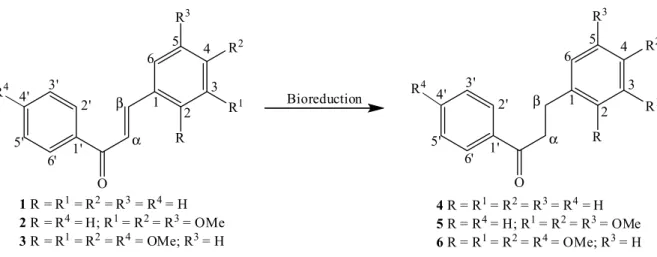
The chalcones 1 (68.5% yield),272 (75.0% yield)28 and 3 (60.0% yield)29 were synthesized using methodology
described in the literature18 and their structures were
determined by the analysis of 1D- and 2D-NMR, mass spectral information and comparison with reported physical and spectroscopic data. These chalcones were bioreduced by Aspergillus lavus producing the dihydrochalcones 4 (74.5% yield), 5 (36.3% yield) and
6 (15.6% yield), respectively, after 10 days of reaction (Figure 1). The known dihydrochalcone (4) was identiied by comparison of the spectroscopic data with those
published in literature.30 The dihydrochalcones 5 and 6
are new compounds.
The bioreduction reaction of the chalcones was regioselective, showing only alteration in carbon-carbon double bond of the olein, with no reaction at the carbonyl double bond. Several reactions of chalcones are reported, however, none of them showed regioselectivity for the double bond C-2 and C-3. Among the reactions of biotransformation reported directly on chalcones, Aspergillus alliaceus cyclized the chalcone 2’-hydroxy-2,3-dimethoxychalcone to three flavanones and to O-demethylated (6.5% yield) and hydroxylated (7.2% yield) chalcones.31 The unsubstituted chalcone was converted to
2’’-hydroxychalcone and 2’’,3’’-dihydroxychalcone in 25% and 59% yields, respectively, by Escherichia coli.32
Microbial transformation of chalcone xanthohumol, using the culture broth of Pichia membranifaciens afforded three metabolites, one isomeric prenyllavanone in 3.3% yield, and two modiied prenylchalcones in 0.55 and 0.58% yield.33 The yields obtained in the biotransformation
reactions of chalcones to dihydrochalcones in this work are higher (15.6-75.5% yield) than those reported in the literature, although no reaction can be directly compared, because none of them performed this type of bioreduction (direct formation of dihydrochalcones from chalcone).
The biotransformation products (dihydrochalcones 4,
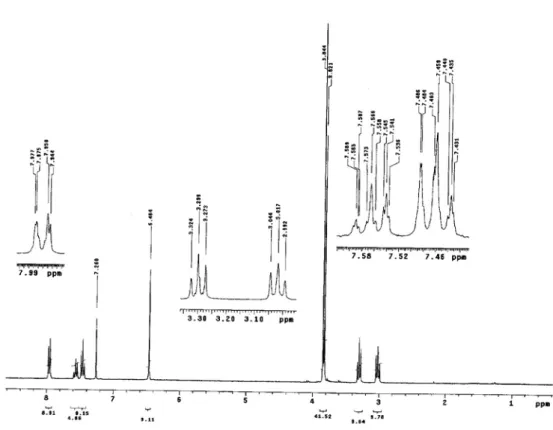
5 and 6) were characterized mainly by the presence of two triplets in the 1H NMR spectra that indicate the reduction
of the double bond of the conjugated oleinic system. In the
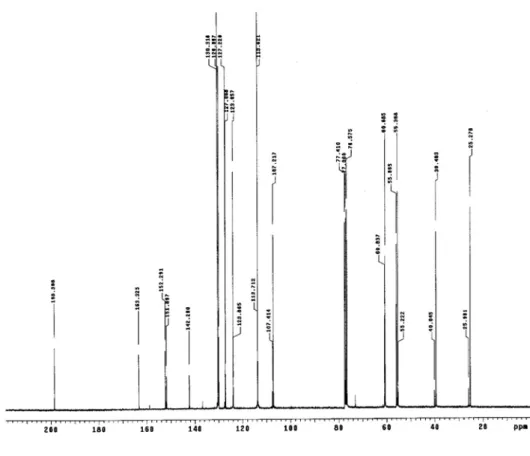
13C NMR spectrum, the chemical shift of the carbonyl carbon
increased about 10 ppm due to the loss of conjugation. Compound 5 was identified as 3,4,5-trimethoxy-dihydrochalcone. The analysis of the LR-MS spectrum showed that compound 5 has a molecular ion peakat m/z 300 (64%) and fragments at m/z 195 (100%), 181 (36%), 165 (42%) and 77 (36%), suggesting a molecular formula
Corrêa et al. 1335 Vol. 22, No. 7, 2011
C18H20O4 (9 degrees of insaturation). This molecular
formula was conirmed on the basis of HRESIMS [m/z 323.1270 (M+Na)+; D –1.1 mmu] analysis and NMR data
(Table 1). The 1H NMR spectrum of 5 (Table 1) showed
signals due to the benzylic methylene protons Hβ at dH
3.01 (2H, t, J 7.5 Hz) and to the α-carbonyl protons Hα
at dH 3.29 (2H, t, J 7.5 Hz). The coupling of the protons Hα and Hβ was conirmed by analysis of 1H × 1H-COSY
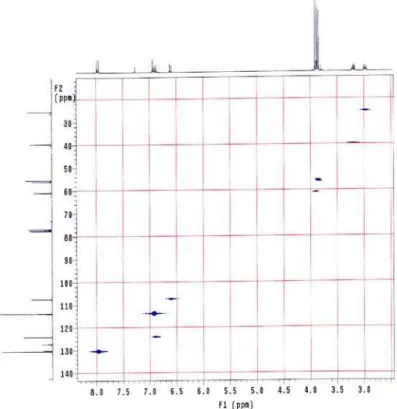
spectrum. HETCOR spectrum (1J
CH) showed correlations
of the signals of the protons at dH 3.29 (Hα) and 3.01 (Hβ) with signals at dC 40.6 (Cα) and 30.6 (Cβ), respectively. The triplet at dH 3.01, assigned to the signal of hydrogen Hß, showed a correlation in the HMBC spectrum with the signals at dC 137.1 (C1) and at dC 105.4 (C2/C6). The singlet at dH 6.46 (2H, s, ArH) assigned to the equivalent protons H2/H6 of ring B showed correlation with the signal at dC 105.4 (C2/C6) in the HETCOR spectrum. The HMBC spectrum showed the correlation of the signal at dH 6.46 (H2/H6) with the signals at dC 153.2 (C3/C5), 136.9 (C4), 105.4 (C2/C6) and 30.6 (Cβ). The assignment of the protons and carbons signals of ring A was proposed from the analysis of 1H × 1H-COSY and HETCOR spectra.
The HETCOR spectrum showed the correlations of signals at dC 128.6 (C2’/C6’) 128.0 (C3’/C5’) and 133.1 (C4’) with the signals at dH 7.96 (H2’/H6’), 7.45 (H3’/H5’) and 7.56 (H4’), respectively. The HMBC spectrum showed correlation of the signal at dH 7.45 (H3’/H5’) with signals at dC 128.6 (C2’/C6’) and dC 136.9 (C1’) and of the signal at dH 7.96 (H2’/H6’) with the signals at dC 128.0 (C3’/C5’), 133.1 (C4’) and 199.2 (C=O).
Compound 6 was identiied as 2,3,4,4’-tetramethoxy-dihdrochalcone. The analysis of LR-MS spectrum of 6
showed a molecular ion peak at m/z 330 (82%) and the peaks at m/z 195 (24%), 181 (98%), 166 (48%), 135 (100%) and 107 (16%), which are consistent with the molecular formula C19H22O5 (9 degrees of insaturation). This molecular formula
was conirmed on the basis of HRESIMS [m/z 353.1358 (M+Na)+; D +0.7 mmu] analysis and NMR data (Table 1).
The 1H NMR spectrum of 6 showed signals attributed to
the benzylic methylene protons Hß and Hα similar to those of compound 5. Two ortho-related doublets in the aromatic region (1H each, J 8.4 Hz) at dH 6.87 and 6.59, were assigned to H6 and H5, respectively. The signal at dH 6.59 correlated with the signals of carbons at dC 127.2 and 142.3 in the
Table 1.1H and 13C NMR chemical shifts (d
H and dC in ppm) of compounds 5 and 6in CDCl3a,b
Position 5 6
dH dC HMBCc dH dC HMBC
1 137.1d 127.2 5, 6, α
2 6.46 (s) 105.4 6, ß 151.9 OMe-2
3 153.2 2,OMe-3 142.3 5
4 136.9d 2,6, OMe-4 152.3 6, OMe-4
5 153.2 6, OMe-5 6.59 (d, 1H, J 8.4) 107.2
6 6.46 105.4 2, ß 6.87 (d, 1H, J 8.4) 123.9 3
α 3.29 (t, 2H, J 7.5) 40.6 ß 3.18(t, 2H, J 8.4) 39.5 β
β 3.01 (t, 2H, J 7.5) 30.6 2, 6, α 2.96 (t, 2H, J 8.4) 25.3 6, α
C=O 199.2 2’, 6’ 198.4 α, β, 2’, 6’
1’ 136.9 3’, 5’ 129.9
2’ 7.96 (dd, 2H, J 7.5 and 1.5) 128.6 6’ 7.95 (d, 2H, J 9.3) 130.6 3’, 6’
3’ 7.45 (t, 2H, J 7.5) 128.0 6.92 (d, 2H, J 9.3) 113.6
4’ 7.56 (tt, 1H, J 13.2, 7.5 and 1.5) 133.1 2’, 6’ 163.3 2’, 6’, OMe-4’
5’ 7.45 (t, 2H, J 7.5) 128.0 6.92 (d, 2H, J 9.3) 113.6
6’ 7.96 (dd, 2H, J 1.5 and 7.5) 128.6 2’ 7.95 (d, 2H, J 9.3) 130.6 2’, 5’
OMe-2 3.90 (s) 60.8
OMe-3 3.84 (s) 56.1 3.88 (s) 60.6
OMe-4 3.82 (s) 60.8 3.83 (s) 55.3
OMe-5 3.84 (s) 56.1
OMe-4’ 3.85 (s) 55.9
a 1H NMR data were recorded at 300 MHz. b13C NMR data were recorded at 75 MHz. c1H-13C HMBC correlations are from the carbon(s) speciied to
Biotransformation of Chalcones by the Endophytic Fungus Aspergillus lavus J. Braz. Chem. Soc. 1336
HMBC spectra, what allowed the assignment of these signals to C1 and C3, respectively. In the same NMR spectrum, it was observed that the signal at dH 6.87 (H6) showed correlation with the signals at dC 151.9 and 152.3, which indicated that these signals can be attributed to C2 and C4 carbons, respectively. The analysis of the HETCOR (1J
CH) spectrum
of 6 conirms the assignments of the signals of the protons H5 and H6, since they showed correlations with the signals of carbons at dC 107.2 (C5) and 123.9 (C6). The 1H NMR
spectrum showed two ortho-related doublets at dH 7.95 and 6.92 (2H each, J 8.4 Hz), due to the protons of a system AA’-XX’, assigned to H2’/H6’ and H3’/H5’, respectively. This coupling was confirmed by analysis of spectrum
1H × 1H-COSY. The analysis of HETCOR spectrum of 6,
relating to the ring A, was important to assign accurately the signals at dC 130.3 and 113.6 to carbons C2’/C6’ and C3’/C5’, respectively, that showed 1J
CH correlations with
signals at dH 7.95 and 6.92. The HMBC spectrum showed correlations of the signals of carbons at dC 129.9 (C1’) and 163.3 (C4’) with the signals at dH 6.92 (H3’/H5’) and
dH 7.95 (H2’/H6’). The assignment of carbonyl carbon signal (dC 198.4) was based on the analysis of the correlations with the signals due to Hβ and Hα.
Experimental
General experimental procedures
Low-resolution mass spectra data were obtained on a Thermo DSQII GC-MS instrument equipped with fused silica capillary column (30 m × 0.25 mm id) with DB-5MS stationary phase (0.25 mu thickness of the ilm); carrier gas helium gas, temperature of the source and other parts 200 oC; type of injection: splitless; programmed temperature
to 100-300 oC, with a gradient of 5 oC min-1. The quadrupole
ilter swept range 39-400 daltons every second. Ionization was obtained by the technique of electron impact with energy of 70 eV, and high resolution mass spectra were recorded on an LC-IT-TOF mass spectrometer model 225-07100-34-SHIMADZU, by positive ionization mode of the ESI. NMR spectra, including HMBC experiment, were recorded on a Varian Mercury-300 spectrometer, operating at 300 MHz for 1H and 75 MHz for 13C NMR, using solvent
signal (d-chloroform) as reference. The chemical shifts are given in delta (d) values and the coupling constants (J) in Hertz (Hz).
Plant material
The leaves of Paspalum maritimum were collected in January 2009 in the forest reserve of EMBRAPA-Amazônia
Oriental in Belém, Pará State, Brazil. A voucher specimen (IAN 183337) was deposited at the herbarium of this institution.
Microorganisms and culture
The general procedures adopted for isolation of the microorganism followed the methodology described by Araújo et al.34 Epiphytic hyphae and spores were eliminated
by immersion of the plant material in 70% ethanol (1 min), followed by 5% aqueous sodium hypochlorite (4 min) and inally with 70% aqueous ethanol (30 s), before being rinsed in sterile distilled water. The material was then deposited on a Petri dish containing Sabouraud (SDA), composition meat peptone 10 g L-1 (HIMEDIA), D-glucose anhydrous
20.0 g L-1 (NUCLEAR), Agar 20.0 g L-1 (VETEC) and
chloramphenicol 1.0 g L-1 and incubated in the dark at
30 oC. Samples of the fast growing fungi were subcultured
onto other plates with the culture medium used. The microorganisms were conserved as suspension in distilled water. The alpm3D1 strain was identiied as Aspergillus lavus by Dra. Maria Inês de Moura Sarquis, Fiocruz-RJ. A voucher specimen has been deposited at “Laboratório de Química de Microorganismos e Bioensaios-UFPA”.
Synthesis of substrate:18 chalcones 1-3
In a lat-bottomed lask (125 mL), placed in an ice bath, 15 mL of EtOH, 11 mmol of acetophenone or derivatives, 15 mL of 10% NaOH solution and 12 mmol of benzaldehyde or derivatives were added. The reaction mixture was kept on magnetic stirring at 40 oC for 40 min. After this period,
the mixture was cooled and left in freezer for 48 h and then iltered under vacuum. The product was crystallized in methanol.Chalcone 1 was obtained in 68.5% yield (1.47 g), chalcone 2 was obtained in 75.0% yield (2.42 g) and chalcone
3 was obtained in 60.0% yield (2.62 g).
General procedure for biotransformation reactions
One Erlenmeyer lask (250 mL), containing 100 mL SDA modiied medium (meat peptone 10 g L-1 (HIMEDIA),
D-glucose anhydrous 10 g L-1 (NUCLEAR) and
chloramphenicol 1.0 g L-1) was previously autoclaved at
121 oC for 15 min. Three small disc cut from Petri dishes
containing mycelium of A. lavus in SDA medium and the appropriate chalcones (1-3), 0.05 g dissolved in 0.5 mL DMSO, were added under steril conditions to the Erlenmeyer lask and shaken (160 rpm) at 30 oC. After 10 days the
Corrêa et al. 1337 Vol. 22, No. 7, 2011
and evaporated at reduced pressure. Experiments were performed in triplicate and were reproducible according to TLC analysis. Control lasks consisted of cultures containing substrate in DMSO without fungus and cultures containing fungus and DMSO without substrate. The purifications were carried out from one experiment. The crude residue (102.0 mg) obtained from the biotransformation reaction of chalcone 1 was chromatographed on silica gel by elution with EtOAc (300 mL) and MeOH (100 mL). Evaporation of solvent furnished EtOAc extract (62.0 mg) and MeOH extract (30.6 mg). TLC analysis indicated that the substances of interest were in the extract EtOAc. This extract was chromatographed sequentially on silica gel eluting with hexanes and increasing polarity with EtOAc, to give eleven fractions (A1-A11). Fractions A3-A5 (hexanes:EtOAc 9:1; 8:2 and 8:2, respectively) were grouped and recrystallized with MeOH giving dihydrochalcone 4 (37.2 mg). The crude residues obtained from the biotransformation reactions of chalcones 2 and 3 after the same treatment, provided EtOAc extract (113.0 mg) and MeOH extract (90.6 mg) to the chalcone 2 reaction, and EtOAc extract (119.0 mg) and MeOH extract (97.3 mg) to the chalcone 3 reaction. The EtOAc extract obtained from the biotransformation reactions of chalcone 2 was chromatographed sequentially on silica gel eluting with hexanes and increasing polarity with EtOAc, to give fourteen fractions (B1-B14). Fractions B6-B10 (hexanes:EtOAc 8:2; 8:2; 7:3; 7:3 and 6:4, respectively) were grouped and recrystallized with MeOH giving dihydrochalcone 5 (18.3 mg). The EtOAc extract obtained from the biotransformation reactions of chalcone 3
was chromatographed sequentially on silica gel eluting with hexanes and increasing polarity with EtOAc, to give seventeen fractions (C1-C17). Fractions C12 (hexane:EtOAc 6:4) and C13 (hexane:EtOAc 6:4) were grouped and recrystallized with MeOH giving dihydrochalcone 6 (7.8 mg).
3,4,5-Trimethoxydihydrochalcone (5)
Crystalline solid; mp 59-61 oC (MeOH); 1H NMR
(300 MHz, CDCl3): see Table 1; 13C NMR (75 MHz,
CDCl3): see Table 1. LR-MS: m/z (rel. int.): 300 (64), 195
(100), 181 (36), 165 (42), 77 (36). HRESIMS [M+Na]+;
Found: 323.1270 [M +Na]+ ; Calc. for C
18H20O4Na:
323.1259.
2,3,4,4’-Tetramethoxydihydrochalcone (6)
Crystalline solid; mp 75-77 oC (MeOH); 1H NMR
(300 MHz, CDCl3): see Table 1; 13C NMR (75 MHz,
CDCl3): see Table 1. LR-MS: m/z (rel. int.): 330 (82), 195
(24), 181 (98), 166 (48), 135 (100), 107 (16). HRESIMS [M+Na]+ Found: 353.1358 [M+Na]+; Calc. for C
19H22O5Na:
353.1365.
Conclusions
Microbial transformation is an effective tool for the structural modification of bioactive natural and synthetic compounds, including chalcones. Microbial factories pose advantages such as rapid growth, ease of cultivation, convenient genetic manipulations, and high level production on natural products biotransformation. Moreover, microbial production increases product selectivity and reduces the usage of toxic chemicals while conserving energy usage. The use of microorganisms in bioreduction reactions of chalcones has led to the formation of several products in mixture, formed by cyclization, reduction, O-demethylation, hydroxilation reactions, among others. Generally, these reactions have shown low yield and stereoselectivity. In this work we performed the biotransformation reaction of chalcones to dihydrochalcones in excellent yields, compared to other biotransformation reactions of flavonoids. The bioreduction reaction was regioselective, showing only alteration in carbon-carbon double bond of the olein, not occurring any alteration in the carbonyl double bond of the α,β-unsaturated ketone system. In addition, to the best of our knowledge this is the irst report of the obtention of dihydrochalcones directly from biotransformation reaction of chalcones.
Supplementary Information
Supplementary Information (Figure S1-S19) is available free of charge at http://jbcs.org.br as PDF ile.
Acknowledgments
The authors would like to thank CAPES, CNPq and FAPESPA for financial support; Dra. Maria Inês de Moura Sarquis (Fiocruz-RJ) by identiication of the fungus; Laboratory of Mass Spectrometry of Northeast (LEMANOR) by acquisition of mass spectra (LCMS-IT-TOF: quadrupole ion trap-time of light mass spectrometer).
References
1. Demain, A. L.; Appl. Microbiol. Biotechnol. 1999, 52, 455. 2. Schmid, A.; Dordick, J. S.; Hauer, B.; Wubbolts, M.; Witholt,
B.; Nature 2001, 409, 258.
3. Faber, K.; Biotransformations in Organic Chemistry, 4th ed.; Springer: Berlim, 2000.
4. Davis, B. G.; Boyer, V.; Nat. Prod. Rep. 2001, 18, 618. 5. Comasseto, J. V.; Omori, A. T.; Porto, A. L. M.; Andrade, L.
Biotransformation of Chalcones by the Endophytic Fungus Aspergillus lavus J. Braz. Chem. Soc. 1338
6. Comasseto, J. V.; Andrade L. H.; Omori, A. T.; Assis, L. F.; Porto, A. L. M.; J. Mol. Catal. B: Enzym. 2004, 29, 55. 7. Kamerbeek, N. M.; Moonen, M. J. H.; van der Vem, J. G. M.;
van Berkel, W. J. H.; Fraaije, M. W.; Janssen, D. B.; Eur. J. Biochem. 2001, 268, 2547.
8. Andrade, L. H.; Keppler, A. F.; Crusius-Schoenlein, I. H.; Porto, A. L. M.; Comasseto, J. V.; J. Mol. Catal. B: Enzym. 2004, 31, 129.
9. Gotor-Fernandez, V.; Brieva, R.; Gotor, V.; J. Mol. Catal. B: Enzym. 2006, 40, 111.
10. Pinheiro, S.; Ferreira, V. F.; Quim. Nova 1998, 21, 312. 11. Ogawa, J.; Shimizu, S.; Curr. Opin. Biotechnol. 2002, 13, 367. 12. Sahoo, S.; Kumar, P.; Lefebvre, F,; Halligudi, F. B.; Appl. Catal.,
A 2009, 354, 17.
13. Wang, P.-Y.; Tsai, S.-W.; J. Mol. Catal. B: Enzym. 2009, 59, 70.
14. Ishitsuka, H.; Ninomiya, Y. T.; Ohsawa, C.; Fujiu, M.; Suhara, Y.; Antimicrob. Agents Chemother. 1982, 22, 617.
15. Kiat, T. S.; Pippen, R,; Yusof, R.; Ibrahim, H.; Khalid, N.; Rahman, N. A.; Bioorg. Med. Chem. Lett. 2006, 12, 3337. 16. Phrutivorapongkul, A.; Lipipun, V.; Ruangrungsi, N.; Kirtikara,
K.; Nishikawa, K.; Maruyama, S.; Watanabe, T.; Ishikawa, T.; Chem. Pharm. Bull. 2003, 51, 187.
17. Wu, J.-H.; Wang, X.-H.; Yi, Y.-H.; Lee, K.-H. Bioorg. Med. Chem. Lett. 2003, 13, 1813.
18. Bitencourt, H. R.; Santos, L. S.; Souza Filho, A. P. S.; Planta Daninha 2007, 25, 747.
19. Herencia, F.; López-Garcia, M. P.; Ubeda, A.; Ferrándiz, M. L.; Biol. Chem. 2002, 6, 242.
20. Wang, A.; Zhang, F.; Huang, L.; Yin, X.; Li, H.; Wang, Q.; Zeng, Z.; Xie, T.; J. Med. Plant. Res. 2010, 4, 847.
21. Das, S.: Rosazza, J. P. N.; J. Nat. Prod. 2006, 69, 499. 22. Buisson, D.; Quintin, J.; Lewin, G.; J. Nat. Prod. 2007,70,
1035.
23. Kostrzewa-Suslow, E.; Dmochowska-Gladysz, L.; Bialonska, A.; Ciunik, Z.; Rymowicz, W.; J. Mol. Catal. B: Enzym. 2006, 39, 18.
24. Kinoshita, E.; Murakami, S.; Aishima, T.; J. Agric. Food Chem.
2000, 48, 2149.
25. Zhong, K.; Shao, Z.; Hong, F.; Biotechnol. Prog. 2008, 24, 583. 26. Kostrzewa-Suslowa, E.; Dmochowska-Gladysz, J.; Bialonska,
A.; Ciunik, Z.; J. Mol. Catal. B: Enzym. 2008, 52, 34. 27. Annapoorna, S. R.; Rao, M. P.; Sethuram, B.; Indian J. Chem.,
Sect. A: Inorg., Bio-inorg., Phys., Theor. Anal. Chem.2002, 41, 1341.
28. Edwards, M. L.; Stemerick, D. M.; Sunkara, P. S.; J. Med. Chem.
1990, 33, 1948.
29. Russell, A.; J. Chem. Soc. 1934, 218. 30. Sushma, D.; Asian J. Chem. 2007,19, 4957.
31. Sanchez-Gonzalez, M.; Rosazza, J. P. N.; J. Nat. Prod. 2004, 67, 553
32. Shindo, K.; Kagiyama, Y.; Nakamura, R.; Hara, A.; Ikenaga, H.; Furukawa, K.; Misawa, N.; J. Mol. Catal. B: Enzymol. 2003, 23, 9.
33. Herath, W. H. M. W.; Ferreira, D.; Khan, I. A.; Phytochemistry
2003, 62, 673.
34. Araújo, W. L.; Lima, A. O. S.; Azevedo, J. L.; Marcon, J.; Sobral, J. K.; Lacava, P. T.; Manual: Isolamento de Microrganismos Endofíticos, CALQ: Piracicaba, Brazil, 2002.
Submitted: July 8, 2010
Supplementary Information
S
I
J. Braz. Chem. Soc., Vol. 22, No. 7, S1-S10, 2011. Printed in Brazil - ©2011 Sociedade Brasileira de Química 0103 - 5053 $6.00+0.00
*e-mail: [email protected]
Biotransformation of Chalcones by the Endophytic Fungus
Aspergillus
lavus
Isolated from
Paspalum maritimum
Trin.
Marivaldo J. C. Corrêa,a Fátima M. Nunes,a Heriberto R. Bitencourt,a Fábio C. Borges,a
Giselle M. S. P. Guilhon,a Mara S. P. Arruda,a Andrey M. R. Marinho,a Alberdan S. Santos,a
Cláudio N. Alves,a Davi S. B. Brasil b and Lourivaldo S. Santos*,a
aPrograma de Pós-Graduação em Química, Instituto de Ciências Exatas e Naturais and
bFaculdade de Engenharia Química, Instituto de Tecnologia, Universidade Federal do Pará,
Campus Universitário do Guamá, 66075-900 Belém-PA, Brazil
Figure S1. 1H NMR spectrum (300 MHz, CDCl
Biotransformation of Chalcones by the Endophytic Fungus Aspergillus lavus J. Braz. Chem. Soc.
S2
Figure S2. 13C NMR spectrum (75 MHz, CDCl
3) of compound 5.
Corrêa et al. S3 Vol. 22, No. 7, 2011
Figure S5. HMBC spectrum of compound 5 (expansion).
Biotransformation of Chalcones by the Endophytic Fungus Aspergillus lavus J. Braz. Chem. Soc.
S4
Figure S6. HMBC spectrum of compound 5 (expansion).
Corrêa et al. S5 Vol. 22, No. 7, 2011
Figure S8. HMBC spectrum of compound 5 (expansion).
Biotransformation of Chalcones by the Endophytic Fungus Aspergillus lavus J. Braz. Chem. Soc.
S6
Figure S10. High resolution mass spectrum of compound 5.
Figure S11. 1H NMR spectrum (300 MHz, CDCl
Corrêa et al. S7 Vol. 22, No. 7, 2011
Figure S13. DEPT spectrum (75 MHz, CDCl3) of compound 6. Figure S12. 13C NMR spectrum (75 MHz, CDCl
Biotransformation of Chalcones by the Endophytic Fungus Aspergillus lavus J. Braz. Chem. Soc.
S8
Figure S14. HETCOR spectrum (75 MHz, CDCl3) of compound 6.
Corrêa et al. S9 Vol. 22, No. 7, 2011
Figure S17. HMBC spectrum of compound 6 (expansion).
Biotransformation of Chalcones by the Endophytic Fungus Aspergillus lavus J. Braz. Chem. Soc.
S10
Figure S19. High resolution mass spectrum of compound 6.