REVISTA PAULISTA
DE PEDIATRIA
1984-1462/© 2014 Sociedade de Pediatria de São Paulo. Published by Elsevier Editora Ltda. All rights reserved. www.rpped.com.br
DOI of refers to article: http://dx.doi.org/10.1016/j.rpped.2014.11.012
ORIGINAL ARTICLE
Risk factors associated with structural postural changes
in the spinal column of children and adolescents
Juliana Adami Sedrez*, Maria Izabel Zaniratti da Rosa, Matias Noll,
Fernanda da Silva Medeiros, Claudia Tarragô Candotti
Universidade Federal do Rio Grande do Sul (UFRGS), Porto Alegre, RS, Brazil
Received 15 April 2014; accepted 30 July 2014
KEYWORDS Risk factors; Posture;
Spine/abnormalities; Child;
Adolescent; Epidemiology
Abstract
Objective: To investigate the association between behavioral risk factors, speciically postural habits, with the presence of structural changes in the spinal column of children and adolescents.
Methods: 59 students were evaluated through the self-reporting Back Pain and Body Pos-ture Evaluation Instrument and spinal panoramic radiographic examination. Spine
curva-tures were classiied based on Cobb angles, as normal or altered in the saggital plane and
as normal or scoliotic in the frontal plane. Data were analyzed using SPSS 18.0, based on descriptive statistics and chi-square association test (a=0,05).
Results: The prevalence of postural changes was 79.7% (n=47), of which 47.5% (n=28)
showed frontal plane changes and 61% (n=36) sagital plane changes. Signiicant associa -tion was found between the presence of thoracic kyphosis and female gender, practice of physical exercises only once or twice a week, sleep time greater than 10 hours, inade-quate postures when sitting on a seat and sitting down to write, and how school supplies are carried. Lumbar lordosis was associated with the inadequate way of carrying the school backpack (asymmetric); and scoliosis was associated wuth the practice of compe-titive sports and sleep time greater than 10 hours.
Conclusions: Lifestyle may be associated with postural changes. It is important to deve-lop health policies in order to reduce the prevalence of postural changes, by decreasing the associated risk factors.
© 2014 Sociedade de Pediatria de São Paulo. Published by Elsevier Editora Ltda. All rights reserved.
*Corresponding author.
Fatores de risco associados a alterações posturais estruturais da coluna vertebral em crianças e adolescentes
Resumo
Objetivo: Veriicar se existe associação entre fatores de risco comportamentais, especi
-icamente hábitos posturais, com a presença de alteração postural estrutural na coluna vertebral de crianças e adolescentes.
Métodos: Foram avaliados 59 crianças e adolescentes, que responderam ao questionário auto-aplicável Back Pain and Body Posture Evaluation Instrument e realizaram o exame
radiográico panorâmico da coluna vertebral. De acordo com o ângulo de Cobb, as cur
-vaturas sagitais da coluna vertebral foram classiicadas como normal ou alterada e, no
plano frontal, como escoliose ou normal. Os dados foram analisados no SPSS 18.0, a partir
de estatística descritiva e do teste de associação qui-quadrado (a=0,05).
Resultados: A prevalência de alterações posturais foi de 79,7% (n=47), sendo que 47,5% (n=28) apresentavam alteração no plano frontal e 61% (n=36) no plano sagital. Foi en
-contrada associação entre cifose torácica e sexo feminino, prática de exercício físico de
apenas uma ou duas vezes na semana, tempo de sono superior a 10 horas, posturas ina-dequadas para sentar no banco e sentar para escrever e o meio de transporte do material
escolar. Para lordose lombar, observou-se associação com o transporte da mochila escolar de modo inadequado (assimétrico). Houve associação signiicativa entre a presença de escoliose com a prática de esporte competitivo e o tempo de sono superior a 10 horas.
Conclusões: Hábitos de vida podem estar associados a alterações posturais, sendo impor
-tante o desenvolvimento políticas de saúde a im de reduzir a prevalência de alterações posturais por meio da redução dos fatores de risco associados.
© 2014 Sociedade de Pediatria de São Paulo. Publicado por Elsevier Editora Ltda. Todos os direitos reservados.
PALAVRAS-CHAVE Fatores de risco; Postura;
Coluna vertebral/ anormalidades;
Criança;
Adolescente; Epidemiologia
Introduction
Static postural changes are considered a public health problem, especially those that affect the spinal column, as they may be a predisposing factor for degenerative condi-tions of the spine in adulthood;1-3 additionally, depending on their magnitude, they are capable of causing impair-ment to some daily activities.
The phases of childhood and adolescence correspond to those during which young individuals attend the school envi-ronment, where they remain for long periods in the seated position, usually assuming an inadequate posture, most often on inappropriate furniture,4 which in addition to the tendency to a sedentary lifestyle throughout school time5 can also favor the onset of static postural changes. Furthermore, there seems to be a trend that postural habits adopted in childhood and adolescence will continue into adulthood.6
Thus, investigations on the occurrence of static postural changes and the variables associated with this condition help to understand the risk factors for spinal problems, early detection of these changes being the first step towards prevention of conditions that predispose to the emergence of these disorders. Thus, early detection of static postural changes should be one of the goals of pro-fessionals working with child and adolescent health, as growth spurts occur at these age groups, and these are critical times for the onset of back problems7 caused by several adjustments, adaptations, and psychosocial and physical changes that are characteristic of this phase of development, in addition to intrinsic and extrinsic factors
such as genetic, environmental, physical, emotional and socioeconomic factors.8
In this context, some studies have sought to identify the postural pattern of young individuals at school age, and their results suggest a high prevalence of anteroposterior and lateral changes in the spinal column,9,10 using photo-grammetry to assess posture. Nevertheless, many of these studies are limited due to the lack of real knowledge on spinal column posture, which is only possible through radio-logical assessment. Thus, it is important to carry out stud-ies that aim not only to assess static posture, but also to provide evidence of the actual positioning of the spinal column, in addition to knowledge of behavioral risk factors, such as postural habits.
Thus, we assessed the hypothesis that inadequate postur-al habits in the seated position and when carrying the school backpack might be associated with the presence of static postural changes in the sagittal and frontal planes, respec-tively. Therefore, the aim of this study was to investigate if there is an association between behavioral risk factors, spe-cifically postural habits, and the presence of structural pos-tural changes in the spinal column of young individuals.
Method
indi-viduals, with a confidence level of 95% and a sampling error of 5%. Therefore, 59 young individuals aged between 7 and 18 years, mean age of 12.9±2.3 years, 55.9% of which were females, were evaluated. These young indi-viduals attended schools registered at the Family Health Strategy (FHS) program of Porto Alegre, and those referred to panoramic radiographic examination of the spinal col-umn between the months of October and December 2012 were invited to participate in the study. Digital radio-graphs were performed at the Mãe de Deus Hospital in Porto Alegre, RS.
The assessment method used was the Back Pain and Body Posture Evaluation Instrument (BackPEI) questionnaire, which has been validated with high reproducibility.12 The BackPEI questionnaire consists of 21 closed questions, which address the occurrence, frequency and intensity of pain in the last three months, as well as questions on demo-graphic (age, gender) and behavioral factors (level of exer-cise, competitive or non-competitive practice of exerexer-cise, daily hours watching television and using the computer, number of daily hours of sleep, reading and/or studying in bed, and postures in activities of daily living); and pan-oramic X-ray examination of the spinal column in the right profile and anteroposterior view for evaluation of Cobb angles.13 Both evaluation procedures were performed on the same day and shift.
Based on the digital radiographs, Cobb angles were cal-culated using Matlab® 7.9 software (MATrix LABoratory L.L.C, Dubai, UAE). For calculation of the thoracic kyphosis angle, the upper vertebral plateau of the first thoracic ver-tebra (T1) and the lower verver-tebral plateau of the 12th tho-racic vertebra (T12) were identified,14 and to calculate the lumbar lordosis angle the upper vertebral plateau of the first lumbar vertebra (L1) and the lower vertebral plateau of the fifth lumbar vertebra (L5) were used.15 The upper plateau of the cranial vertebra with the greatest tilt and the lower plateau of the caudal vertebra with the greatest tilt were used as a reference to calculate the angle of sco-liosis.16 All calculations were performed by two indepen-dent examiners, and in cases where values between exam-iners differed by more than 5°, a third examiner performed a new assessment, with mean values between assessments being used for the analyses. The reproducibility of Cobb angles was tested by three independent examiners. The results showed excellent levels of intraobserver reproduc-ibility for thoracic kyphosis (ICC=0.96, p<0.001); lumbar lordosis (ICC=0.98, p<0.001) and scoliosis (ICC=0.75, p<0.001). The interobserver reproducibility also showed
excellent correlation for thoracic kyphosis (ICC=0.81, p<0.001) and lumbar lordosis (ICC=0.92, p<0.001), and moderate correlation for scoliosis (ICC=0.73, p<0.001).
The proposed limits for children were used to classify sag-ittal spinal curvatures. The normal values for thoracic kypho-sis were 20-50°.14 For lumbar lordosis, the 31-49.5° interval was adopted as normal.17 For statistical analysis, subjects were divided into two groups: (1) normal curvature and (2) postural change. In the sagittal plane, the postural change group comprised individuals who had both increases and decreases of curvatures. In the frontal plane, the postural change group consisted of individuals with scoliosis >10°.10
Data were analyzed using the Statistical Package for Social Sciences, version 18.0 (SPSS Inc. Released 2009. PASW Statistics for Windows, Version 18.0. Chicago, USA), based on the descriptive statistics and the chi-square test of association (bivariate analysis). Three analyses were performed, separately, for each dependent variable: (1) thoracic kyphosis, (2) lumbar lordosis, and (3) scoliosis, considering the demographic and behavioral variables as independent ones. The independent variables that had a level of significance of p<0.25 in the bivariate analysis were included in the Poisson regression model with robust variance separately for the outcomes thoracic kyphosis, lumbar lordosis and scoliosis. The measure of effect used was the Prevalence Ratio with their respective 95% confi-dence intervals (95% CI) (a=0.05).
This study was approved by the Ethics Committee of Universidade Federal do Rio Grande do Sul, under number 19685, and students were included only after parents or guardians consented to their participation in the study by signing the free and informed consent form.
Results
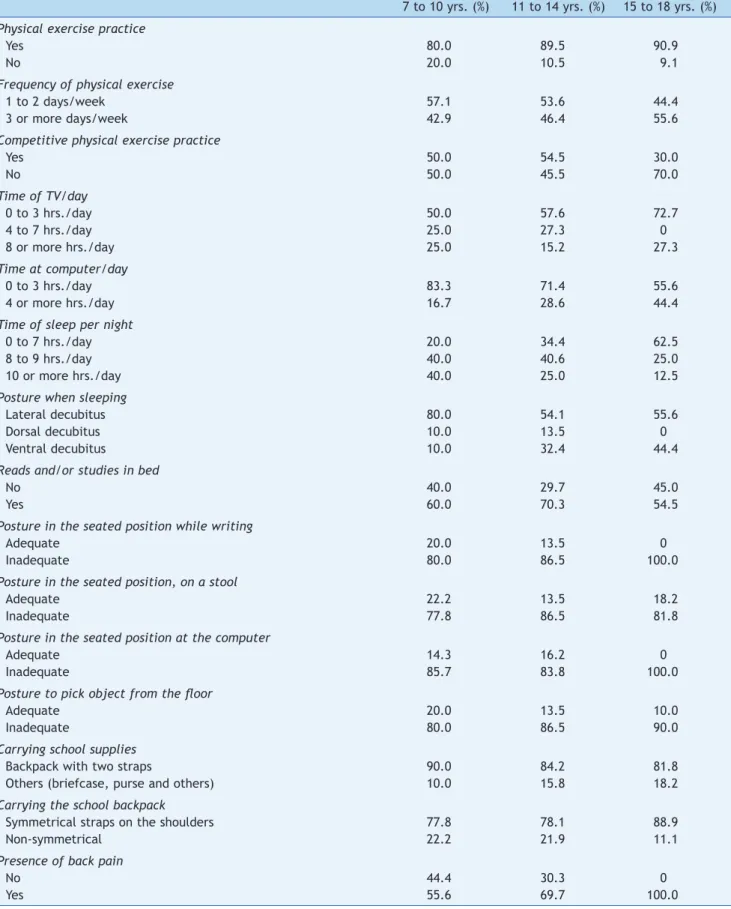
Table 1 shows the descriptive data of the sample stratified by age group. Considering that the age range of the sample has a broad spectrum, we investigated the prevalence of daily habits in the different age groups (Table 2). In this analysis, it can be observed that, in most cases, the evalu-ated habits had similar prevalence, regardless of age range.
Considering these data, we chose to perform the analysis on the total sample. Thus, of the 59 subjects assessed, 30 had thoracic kyphosis, 19 had lumbar lordosis and 28 scoli-osis. The association between demographic and behavioral variables with each postural change is shown separately for the sagittal (Table 3) and frontal (Table 4) planes.
Table 1 Anthropometric characteristics and curvatures of the spinal column in mean and standard deviation, stratiied by age
group. Age (years)
n Weight
(kg)
Height (cm)
BMI Kyphosis
(degrees)
Lordosis (degrees)
Scoliosisa (degrees)
7 to 10 10 38.77±13.27 1.37±0.15 20.30±4.01 45.65±8.97 42.15±8.39 8.06±2.27
11 to 14 38 48.27±9.07 1.53±0.85 20.42±2.85 49.55±9.76 44.92±8.79 10.16±3.71
15 to 18 11 61.74±11.62 1.65±0.11 22.50±3.01 49.00±14.92 44.92±6.64 8.70±1.77
Total 59 48.55±12.17 1.52±0.13 20.71±3.15 48.74±10.45 44.41±8.37 9.58±3.32
Table 2 Frequency of behavioral variables, stratiied by age groups.
7 to 10 yrs. (%) 11 to 14 yrs. (%) 15 to 18 yrs. (%)
Physical exercise practice
Yes 80.0 89.5 90.9
No 20.0 10.5 9.1
Frequency of physical exercise
1 to 2 days/week 57.1 53.6 44.4
3 or more days/week 42.9 46.4 55.6
Competitive physical exercise practice
Yes 50.0 54.5 30.0
No 50.0 45.5 70.0
Time of TV/day
0 to 3 hrs./day 50.0 57.6 72.7
4 to 7 hrs./day 25.0 27.3 0.
8 or more hrs./day 25.0 15.2 27.3
Time at computer/day
0 to 3 hrs./day 83.3 71.4 55.6
4 or more hrs./day 16.7 28.6 44.4
Time of sleep per night
0 to 7 hrs./day 20.0 34.4 62.5
8 to 9 hrs./day 40.0 40.6 25.0
10 or more hrs./day 40.0 25.0 12.5
Posture when sleeping
Lateral decubitus 80.0 54.1 55.6
Dorsal decubitus 10.0 13.5 0
Ventral decubitus 10.0 32.4 44.4
Reads and/or studies in bed
No 40.0 29.7 45.0
Yes 60.0 70.3 54.5
Posture in the seated position while writing
Adequate 20.0 13.5 0.
Inadequate 80.0 86.5 100.0.
Posture in the seated position, on a stool
Adequate 22.2 13.5 18.2
Inadequate 77.8 86.5 81.8
Posture in the seated position at the computer
Adequate 14.3 16.2 0.
Inadequate 85.7 83.8 100.0.
Posture to pick object from the loor
Adequate 20.0 13.5 10.0
Inadequate 80.0 86.5 90.0
Carrying school supplies
Backpack with two straps 90.0 84.2 81.8
Others (briefcase, purse and others) 10.0 15.8 18.2
Carrying the school backpack
Symmetrical straps on the shoulders 77.8 78.1 88.9
Non-symmetrical 22.2 21.9 11.1
Presence of back pain
No 44.4 30.3 0.
Considering the association found between inadequate postures in the seated position with thoracic kyphosis (Table 3), we sought to identify the inadequacies identified in young individuals while performing these postures. Figure 1 shows the percentages of young individuals for each of the inadequate postures in the seated position.
Discussion
The main results show that thoracic kyphosis was associat-ed with inadequate posture in the seatassociat-ed position when writing and sitting on a stool. Moreover, the habit of using the computer for 4 hours or more was also associated with these changes (Table 3), confirming the initial hypothesis of this study.
In the study by Detsch et al,9 carried out only with girls, the habit of watching TV for 10 hours or more was associated with the presence of postural changes in the sagittal plane, although the same did not occur with the sitting posture at school. Nevertheless, these authors observed that most stu-dents had poor posture while sitting to study. Another similar study found no significant results for the association between the habit of watching television for more than two hours daily and postural changes.2 Although there is no consensus, it is believed that the time spent in an inadequate seated position can be considered a risk factor for the development of postural changes in the sagittal plane. Moreover, it is noteworthy that when specifically analyzing postural inade-quacies in the seated position, whether when writing or sit-ting on a stool, it was observed that, for all inadequate pos-tures, there is a tendency among young individuals to per-form a trunk flexion (Fig. 1). Therefore, to establish preven-tive actions in schools, it is necessary to understand this characteristic, and thus the health professional should aim to minimize this bad postural habit. These findings do not allow us to state that there is a cause/effect association of postural change, and new longitudinal studies aimed at exploring this subject are necessary.
Another association found with thoracic kyphosis was the female gender, with a prevalence ratio of 1.18.Another study also found increased incidence of kyphosis in girls.9 Vasconcelos et al10 found a high prevalence of dorsal hyper-kyphosis in a sample of deaf children (75%) and suggested this change could be associated with natural physiological changes in growth and in the child’s individual development. In this sense, it is considered that girls had higher propensity to develop thoracic hyperkyphosis because of a tendency to adopt a stooped posture to hide the development of breasts.18 Furthermore, the literature has shown that female gender can be considered a risk for the development of postural changes in the frontal plane. Vasconcelos et al10 reported an association between female gender and the presence of sco-liosis, with an odds ratio of 3:1. Leal et al19 found a ratio of 1.28:1 and Nery et al,20 a ratio of 2.4:1, when comparing the female and male genders. However, in the present study, this association was not observed. Nevertheless, it is possi-ble to observe a higher prevalence of scoliosis in females (61.5%) when compared to males (36.4%).
Among behavioral aspects, physical exercise showed no association with postural changes in the sagittal and frontal
planes, although other studies have shown increased risk of postural changes with physical activity,21,22 and individuals who performed physical exercise three or more days a week were less likely to have thoracic kyphosis changes. The competitive practice of physical exercise showed association only with the presence of scoliosis. Meliscki et al,21 who evaluated swimmers aged 13-28 years, found a prevalence of scoliosis in females associated to the side where swimmers breathed and the type of swimming stroke they practiced, demonstrating the influence of sports prac-tice on the positioning of anatomical structures, facilitat-ing postural changes. Also, Santo et al,22 when analyzing school-age children, found an association between the presence of scoliosis and the practice of physical activity. It is noteworthy that, in the present study, we did not investigate the type of sport each subject practiced, thus limiting greater clarification on this issue. However, it is speculated that physical activity can be both a protective factor and a risk for postural changes. Possibly, factors such as the type of sport practiced, the volume of weekly train-ing, time of practice and the way the activity is performed can influence the type of musculoskeletal response.
As for the transport of school supplies, there was associa-tion between lumbar lordosis changes and how the backpack was carried, as well as thoracic kyphosis changes and how the school supplies were carried. These results differ from the initial study hypothesis that the inappropriate use of the backpack would be associated with the presence of scoliosis. The literature has also described the lack of association between postural changes and carrying school supplies;9,10 however, a tendency to postural change has been reported in students carrying school supplies inadequately.9 Lemos et al(2005)23 investigated the locations more often affected by postural changes when children carry loads of less, equal to and of more than 10% of body weight and found that postur-al changes begin to occur when the load is greater than 10% of body weight. The changes found in this study may be related to the weight of the school backpack, a variable that was not analyzed, which is a limitation of our study.
sk
f
a
ct
o
rs
a
ss
o
ci
a
te
d
w
it
h
s
tr
u
ct
u
ra
l p
o
st
u
ra
l c
h
a
n
ge
s
in
t
h
e
s
p
in
a
l c
o
lu
m
n
o
f c
h
ild
re
n
a
n
d
a
d
o
le
sc
e
n
ts
7
7
behavioral variables.
Variables N (%) Thoracic kyphosis Lumbar lordosis
N (%) p value PR (95%CI) N (%) p value PR (95%CI)
Gender (n=59)
Male 33 (55.9) 13 (39.4) 0.041* 1 8 (24.2) 0.135 1
Female 26 (44.1) 17 (65.4) 1.18 (1.01-1.39) 11 (42.3) 1.14 (0.95-1.36)
Age groups (n=59)
7 to 10 years 10 (16.9) 4 (40.0) 0.754 1 2 (20.0) 0.223 1
11 to 14 years 38 (64.4) 20 (52.6) 1.09 (0.85-1.38) 15 (39.5) 1.16 (0.92-1.47)
15 to 18 years 11 (18.6) 6 (54.5) 1.11 (0.82-1.47) 2 (18.2) 0.98 (0.74-1.31)
Behavioral
Physical exercise practice (n=59)
Yes 52 (88.1) 27 (51.9) 0.657 1 17 (32.9) 0.824 1
No 7 (11.9) 3 (42.9) 0.94 (0.71-1.23) 2 (28.6) 0.96 (0.74-1.27)
Frequency of physical exercise (n=44)c
1 to 2 days/week 23 (52.3) 15 (65.2) 0.028* 1 7 (30.4) 0.591 1
3 or more days/week 21 (47.7) 7 (33.3) 0.81 (0.66-0.97) 8 (38.1) 1.05 (0.86-1.31)
Competitive physical exercise practice (n=51)c
Yes 25 (49.0) 11 (44.0) 0.325 1 10 (40.0) 0.317 1
No 26 (51.0) 15 (57.7) 1.09 (0.91-1.31) 7 (26.9) 0.90 (0.74-1.09)
Time of TV/day (n=52)
0 to 3 hrs./day 31 (59.6) 14 (45.2) 0.539 1 9 (29.0) 0.277 1
4 to 7 hrs./day 11 (21.2) 7 (63.4) 1.12 (0.91-1.39) 6 (54.5) 1.19 (0.95-1.51)
8 or more hrs./day 10 (19.2) 5 (50.0) 1.03 (0.81-1.33) 3 (30.0) 1.00 (0.78-1.29)
Time at computer/day (n=43)
0 to 3 hrs./day 30 (69.8) 13 (43.3) 0.021* 1 11 (36.7) 0.911 1
4 or more hours/day 13 (30.2) 10 (76.9) 1.23 (1.03-1.47) 5 (38.5) 1.01 (0.81-1.27)
Time of sleep per night (n=50)
0 to 7 hours/day 18 (36.0) 7 (38.9) 0.008 1 5 (27.8) 0.446 1
8 to 9 hours/day 19 (38.0) 6 (31.6) 0.94 (0.75-1.18) 5 (26.3) 0.98 (0.78-1.23)
10 or more hours/day 13 (26.0) 10 (76.9) 1.27 (1.03-1.56) 6 (46.2) 1.14 (0.89-1.46)
Posture when sleeping (n=56)
Lateral decubitus 33 (58.9) 16 (48.5) 0.151 1 8 (24.2) 0.112 1
Dorsal decubitus 6 (10.7) 2 (33.3) 0.89 (0.66-1.21) 2 (33.3) 1.07 (0.79-1.45)
Ventral decubitus 17 (30.4) 16 (70.6) 1.14 (0.97-1.36) 9 (52.9) 1.23 (1.00-1.49)
Reads and/or studies in bed (n=58)
No 20 (62.5) 9 (45.0) 0.582 1 4 (20.0) 0.109 1
Yes 12 (37.5) 20 (52.6) 1.05 (0.87-1.26) 15 (39.5) 1.16 (0.96-1.39)
A
d
a
m
i Se
d
re
z
J
e
t a
l
Table 3 Results of association and prevalence ratios (PR) for the dependent variables thoracic kyphosis and lumbar lordosis, according to independent demographic and behavioral variables. (Cont.)
Variables N (%) Thoracic kyphosis Lumbar lordosis
N (%) p value PR (95%CI) N (%) p value PR (95%CI)
Posture in the seated position while writing (n=58)
Adequate 7 (12.1) 1 (14.3) 0.014* 1 2 (28.6) 0.879 1
Inadequate 51 (87.9) 28 (54.9) 1.35 (1.06-1.72) 16 (31.4) 1.02 (0.77-1.34)
Posture in the seated position on a stool (n=57)
Adequate 9 (15.8) 1 (11.1) 0.001* 1 2 (22.2) 0.484 1
Inadequate 48 (84.2) 27 (56.2) 1.41 (1.14-1.72) 16 (33.3) 1.09 (0.85-1.39)
Posture in the seated position at the computer (n=55)
Adequate 7 (12.7) 2 (28.6) 0.234 1 4 (57.1) 0.130 1
Inadequate 48 (87.3) 25 (52.1) 1.18 (0.89-1.55) 14 (29.2) 0.82 (0.63-1.05)
Posture to pick object from the loor (n=57)
Adequate 8 (14.0) 4 (50.0) 0.957 1 2 (25.0) 0.654 1
Inadequate 49 (86.0) 24 (49.0) 0.99 (0.77-1.27) 16 (32.7) 1.06 (0.81-1.37)
Carrying school supplies (n=59)a
Backpack with two straps 50 (84.7) 23 (46.0) 0.032* 1 17 (34.0) 0.458 1
Others 9 (15.3) 7 (77.8) 1.21 (1.01-1.45) 2 (22.2) 0.91 (0.71-1.16)
Carrying the school backpack (n=50)c
Adequate 40 (80.0) 19 (47.5) 0.671 1 11 (27.5) 0.042 1
Inadequate 10 (20.0) 4 (40.0) 0.94 (0.74-1.20) 6 (60.0) 1.25 (1.01-1.56)
Presence of back pain (n=52)
No 14 (26.9) 5 (35.7) 0.212 1 4 (28.6) 0.696 1
Table 4 Prevalence ratios (PR) for the dependent variable postural change in the frontal plane (scoliosis), according to independent demographic and behavioral variables.
Total n (%) With scoliosis n (%) p value PR (95%CI) Demographic
Gender (n=59)
Male 33 (55.9) 12 (36.4) 0.058 1
Female 26 (44.1) 16 (61.5) 1.69 (0.98-2.91)
Age groups (n=59)
7-10 yrs. 10 (16.9) 5 (50.0) 0.978 1
11-14 yrs. 38 (64.4) 18 (47.4) 0.94 (0.46-1.91)
15-18 yrs. 11 (18.6) 5 (45.5) 0.91 (0.37-2.22)
Behavioral
Physical exercise practice (n=59)
Yes 52 (88.1) 23 (44.2) 0.093 1
No 7 (11.9) 5 (71.4) 1.61 (0.92-2.82)
Weekly frequency of physical exercise (n=44)c
1-2 days/week 23 (52.3) 12 (52.2) 0.541 1
3 or more days/week 21 (47.7) 9 (42.9) 0.82 (0.43-1.54)
Competitive physical exercise practice (n=51)c
Yes 25 (49.0) 7 (28.0) 0.046 1
No 26 (51.0) 15 (57.7) 2.06 (1.01-4.18)
Time spent watching TV/day (n=52)
0-3 hrs./day 31 (59.6) 14 (45.2) 0.852 1
4-7 hrs./day 11 (21.2) 6 (54.5) 1.20 (0.62-2.34)
8 or more hrs./day 10 (19.2) 5 (50.0) 1.10 (0.53-2.3)
Time at the computer/day (n=43)
0-3 hours/day 30 (69.8) 15 (50.0) 0.507 1
4 or more hours/day 13 (30.2) 5 (38.5) 0.76 (0.35-1.67)
Time of sleep per night (n=50)
0-7 hours a day 18 (36.0) 5 (27.8) 0.004 1
8-9 hours a day 19 (38.0) 9 (47.4) 1.71 (0.71-4.12)
10 or more hours a day 13 (26.0) 11 (84.6) 3.04 (1.39-6.64)
Posture when sleeping (n=56)
Lateral decubitus 33 (58.9) 12 (36.4) 1
Dorsal decubitus 6 (10.7) 5 (83.3) 0.019 2.29 (1.28-4.07)
Ventral decubitus 17 (30.4) 10 (58.8) 1.61 (0.88-2.95)
Reads and/or studies in bed (n=58)
No 20 (34.5) 7 (35.0) 0.232 1
Yes 38 (65.5) 20 (52.6) 1.50 (0.77-2.93)
Posture in the seated position while writing (n=58)
Adequate 7 (12.1) 1 (14.3) 0.161 1
Inadequate 51 (87.9) 27 (52.9) 3.71 (0.59-23.1)
Posture seated on a stool (n=57)
Adequate 9 (15.8) 4 (44.4) 0.768 1
Inadequate 48 (84.2) 24 (50.0) 1.12 (0.51-2.36)
Posture in the seated position at the computer (n=55)
Adequate 7 (12.7) 3 (42.9) 0.737 1
Inadequate 48 (87.3) 24 (50.0) 1.16 (0.47-2.87)
Posture to pick object from the loor (n=57)
Adequate 8 (14.0) 4 (50.0) 0.957 1
Inadequate 49 (86.0) 24 (49.0) 0.98 (0.46-2.07)
Carrying school supplies (n=59)
Backpack with two straps 50 (84.7) 23 (46.0) 0.573 1
Others (briefcase, purse and others) 9 (15.3) 5 (55.6) 1.20 (0.62-2.33)
Finally, regarding the variable back pain, no association was found with postural change. This result is different from some studies in the literature, which found an association between thoracic kyphosis and back pain.10,26 Santo et al22 found a higher prevalence of back pain in female students and those whose parents had back pain. That is, literature shows conflicting results on the factors associated with back pain, such as hereditary and demographic aspects and postural change. These discrepancies may be related to local and regional characteristics of the study population. Thus, one demonstrates the importance of carrying out local studies to investigate the prevalence of changes and their risk factors, as it is not appropriate to generalize the results from different locations, since the variables pain and pos-ture undergo significant cultural and social influence.
An important result obtained in this study refers to the high prevalence of postural changes in the assessed sub-jects, observed in 79.7% (n=47) of young individuals, with 47.5% (n=28) of them showing changes in the frontal plane, and 61% (n=36) in the sagittal plane.
Vasconcelos et al10 observed prevalence of 90.6% of pos-tural changes in deaf children. Detsch et al,9 when assessing female students aged between 14 and 18 years, reported a prevalence of 66% for lateral changes and of 70% for antero-posterior changes in the municipality of São Leopoldo, RS. The same authors obtained similar results when assessing children aged 6 to 17 years from the municipality of Novo Hamburgo, RS, finding postural changes in 70.78% of the cases.6 High prevalence of postural changes was also found in a study that evaluated students from the first to fourth grades of elementary school in the municipality of Jaguariúna, São Paulo, which reported asymmetry or postural change in 98% of assessed individuals.27 These literature data corrobo-rate the findings of this study, as all showed high prevalence of postural changes. Furthermore, the two studies that investigated changes in the plans separately indicated a greater frequency of changes in the sagittal plane. It is note-worthy that all the aforementioned studies assessed external postural changes, as they used noninvasive evaluation. This research used the gold standard to identify postural
chang-Figure 1 Percentages of postures adopted in the seated position, according to the BackPEI questionnaire by Noll et al12 (authorized image).
Another type/ I don’t know
Another type/ I don’t know Adequate
posture
28.8% (n=17)
8.5% (n=5)
1.7% (n=1)
5.1% (n=3) 5.1% (n=3)
18.6% (n=11) 15.2% (n=9)
28.8% (n=17) 35.6% (n=21)
23.7% (n=14) 13.6% (n=8)
15.3% (n=9) Adequate posture
Table 4 Prevalence ratios (PR) for the dependent variable postural change in the frontal plane (scoliosis), according to independent demographic and behavioral variables. (Cont.)
Total n (%) With scoliosis n (%) p value PR (95%CI)
Carrying the school backpack (n=50)c
Adequate (symmetrical straps on the shoulders) 40 (80.0) 17 (42.5) 0.277 1
Inadequate (non-symmetrical) 10 (20.0) 6 (60.0) 1.41 (0.75-2.62)
Presence of back pain (n=52)
No 14 (26.9) 5 (35.7) 0.477 1
es, and thus it is understood that the clinical relevance of this study derives from the knowledge of the actual position of the spine of young individuals, and it can be inferred that these showed high prevalence of structural spinal changes.
However, the present study also showed limitations, such as the smaller sample size of the age ranges 7-10 years and 15-18 years, which hindered the separate statistical analysis by age groups. Also, the cross-sectional nature of the study does not allow us to analyze the cause/effect association of postural changes and habits. Additionally, the external and internal validity of the sample is limited regarding the prev-alence of postural changes, as the sample was not randomly generated, but consisted of students referred for radiologi-cal examination. Nevertheless, the fact that the postural changes were evaluated with the gold standard compensates to some extent the lack of sample randomization and increases the internal study validity. Thus, the perspective is to carry out a cohort study in order to understand the factors that lead young individuals exposed to the school environ-ment to develop postural changes.
Given the abovementioned facts, we found a high preva-lence of postural structural changes in the spinal column and inadequate postural habits among the young individuals assessed, regardless of the age range. The results showed that of the 59 young individuals, 30 showed thoracic kyphosis change, which is associated with female gender, the practice of physical exercises only once or twice a week, more than 10 hours of sleep/day, inadequate posture in the seated position and how school supplies were carried; 19 showed abnormalities in the lumbar lordosis, which is associated with the act of carrying the school backpack asymmetrically, and 28 young individuals were diagnosed with scoliosis, which was associated with the practice of competitive sports and more than 10 hours of sleep/day. Thus, it is suggested that postural habits may be associated with postural chang-es, and the development of health policies to reduce the occurrence of bad postural habits is important.
Conlicts of interest
The authors declare no conflicts of interest.
References
1. Braccialli LM, Vilarta R. Aspectos a serem considerados na
elaboração de programas de prevenção e orientação de
problemas posturais. Rev Paul Educ Fis. 2000;14:16-8.
2. Widhe T. Spine: posture, mobility and pain. Spine: posture, mobility and pain. A longitudinal study from childhood to adolescence. Eur Spine J. 2001;10:118-23.
3. De Vitta A, Martinez MG, Piza NT, Simeão SF, Ferreira NP. Prevalence of lower back pain and associated factors in students. Cad Saude Publica. 2011;27:1520-8.
4. Lis AM, Black KM, Korn H, Nordin M. Association between sitting and occupational LBP. Eur Spine J. 2007;16:283-98.
5. Guedes DP, Guedes JE, Barbosa DS, de Oliveira JA. Levels of regular physical activity in adolescents. Rev Bras Med Esporte. 2001;7:187-99.
6. Detsch C, Candotti CT. A incidência de desvios posturais em meninas de 6 a 17 anos da cidade de Novo Hamburgo. Revista Movimento. 2001;7:43-56.
7. Lemos AT, Santos FR, Gaya AC. Lumbar hyperlordosis in children and adolescents at a privative school in southern Brazil: occurrence and associated factors. Cad Saude Publica. 2012; 28:781-8.
8. Penha PJ, João SM, Casarotto RA, Amino CJ, Penteado DC. Postural assessment of girls between 7 and 10 years of age. Clinics. 2005;60:9-16.
9. Detsch C, Luz AM, Candotti CT, de Oliveira DS, Lazaron F, Guimarães LK, et al. Prevalence of postural changes in high school students in a city in southern Brazil. Rev Panam Salud Publica. 2007;21:231-8.
10. De Vasconcelos GA, Fernandes PR, de Oliveira DA, Cabral ED, da Silva LV. Postural evaluation of vertebral column in deaf school kids from 7 to 21 years old. Fisioter Mov. 2010;23:371-80. 11. Bettany J, Partridge C, Edgar M. Topographical, kinesiological and
psychological factors in the surgical management of adolescent idiopathic scoliosis. Stud Health Technol Inform 1995;15:321-6. 12. Noll M, Candotti CT, Vieira A, Loss JF. Back pain and body
posture evaluation instrument (BackPEI): development, content validation and reproducibility. Int J Public Health. 2013;58:565-72.
13. Harrison DE, Cailliet R, Harrison DD, Janik TJ, Holland B. Reliability of Centroid, Cobb, and Harrison posterior tangent methods. Spine. 2001;26:E227-34.
14. Boseker EH, Moe JH, Winter RB, Koop SE. Determination of “normal” thoracic kyphosis: a roentgenographic study of 121 “normal” children. J Pediatr Orthop. 2000;20:796-8.
15. Bernhardt M, Bridwell KH. Segmental analysis of the sagittal plane alignment of the normal thoracic and lumbar spines. Spine (Phila Pa 1976). 1989;14:717-21.
16. Vrtovec T, Pernus F, Likar B. A review of methods for quantitative evaluation of spinal curvature. Euro Spine J. 2009;18:593-607. 17. Propst-proctor SL, Bleck EE. Radiographic determination of
lordosis and kyphosis in normal and scoliotic children. J Pediatr Orthop. 1983;3:344-6.
18. Knoplich J. Enfermidades da coluna vértebra. 2nd ed. São Paulo: Panamed Editorial; 1986.
19. Leal JS, Leal MC, Gomes CE, Guimarães MD. Inquérito
epidemiológico sobre escoliose idiopática do adolescente. Rev
Bras Ortop. 2006;41:309-19.
20. Nery LS, Halpern R, Nery PC, Nehme KP, Stein AT. Prevalence of scoliosis among school students in a town in southern Brazil. São Paulo Med. 2010;128:69-73.
21. Meliscki GA, Monteiro LZ, Giglio CA. Postural evaluation of swimmers and its relation to type of breathing. Fisioter Mov. 2011;24:721-8.
22. Do Espírito Santo A, Guimarães LV, Galera MF. Prevalence of idiopathic scoliosis and associated variables in schoolchildren
of elementary public schools in Cuiabá, state of Mato Grosso,
2002. Rev Bras Epidemiol. 2011;14:347-56.
23. Lemos AT, Machado DT, Moreira R, Torres L, Garlipp DC, Lorenzi TD,et al. Atitude postural de escolares de 10 a 13 anos de
idade. Revista Peril (UFRGS). 2005;7:53-9.
24. Auvinen JP, Tammelin TH, Taimela SP, Zitting PJ, Järvelin MR,
Taanila AM, et al. Is insuficient quantity and quality of sleep a
risk factor for neck, shoulder and low back pain? A longitudinal study among adolescents. Eur Spine J. 2010;19:641-9.
25. Paananen MV, Auvinen JP, Taimela SP, Tammelin TH, Kantomaa MT, Ebeling HE,et al. Phychosocial, mechanical, and metabolic factors in adolescents’ musculoskeletal pain in multiple locations: a cross-sectional study. Eur J Pain. 2010;14:395-401. 26. Melo RS, da Silva PW, Macky CF, da Silva LV. Postural analysis of
spine: comparative study between deaf and hearing in school-age. Fisioter Mov. 2012;25:803-10.