A Work Project, presented as part of the requirements for the Award of a Master Degree in Finance from the NOVA – School of Business and Economics.
Nonius Software:
Venture capital harvesting
Case Study and Teaching Note
Luís Guilherme Sintrão de Carvalho Sousa da Fábrica 952
A Project carried out on the Entrepreneurial Finance and Venture Capital course, under the supervision of:
Paulo Soares de Pinho Philippe Grégoire
2 Nonius Software: Venture capital harvesting
Abstract: This case study discusses the initial opportunity, strategic decisions and financing
options of Nonius Software, a Portuguese company providing hospitality technology. The case is particularly focused on the founders’ available alternatives when venture capital investors, that provided growth funding to the company, decide to harvest their investments. António Silva, the company CEO, must decide between an IPO, a trade sale, new venture capital or private equity investors or a MBO. He evaluates the implications of each option on providing an exit to the departing investors, while trying to regain decision power and fund future growth.
Key words: Financing growth, Venture Capital, Harvesting.
Introduction
António Silva managed to finally sit down at his desk. The last few days had been seriously demanding for the founder and CEO of Nonius. In 2015, the Portuguese technological group, specialized in the development of digital solutions to the hospitality market, was going through a crucial moment in its still short existence.
Nonius was founded in 2005, with the purpose of seizing an opportunity created by the fast development of wireless technologies and the change in general technological consumption behaviors, which led to the emergence of a market for public internet hotspots. Having begun by providing a single solution to multiple industries, the company’s product portfolio was enlarged over the years, becoming technologically diversified and focused on the hospitality market, namely hotels, but also tourist cruise ships and hospitals. Nonius expanded in size and clients, starting the internationalization process only two years after its foundation and following a policy of growth by acquisitions, resulting in the existing group.
After 3 major financing rounds, the company was now facing a new challenge. Apart from the founders, Nonius shareholders were mostly venture capitalist funds, and the managers of two of them wanted to sell their equity positions. Furthermore, the company needed to keep on
3
pursuing its expansion abroad and funding was needed. Confronted by this scenario, Antonio Silva knew that Nonius would have to go either through another financing round or a deep capital structure reorganization. He considered the pros and cons of an IPO, a trade sale, the entry of new venture capital or private equity and a leveraged management buyout. Being aware of the advantages and drawbacks of each option, he was struggling to make a decision, knowing that it would impact the entire future of the company. Looking at the ticking clock on the wall of his office, he just wished to have more time to make a choice.
1. Turning the idea into a business
Back in 2003, António Silva worked as developer of internet access software on a multinational company in England. Although being passionate about his job, the Portuguese electronics engineer, with a post-graduation on telecommunications and systems networks, had the ambition of developing a project of his own. Having a solid experience in software development and internet solutions, he wanted to take advantage of his technical insight and product market knowledge on communication technologies to conceive an innovative solution. He shared his vision with some close connections in the areas of engineering and product development and successfully challenged Leonel Domingues and Rui Castro, two former co-workers and team members in a Portuguese electronics company, to join him. Hence, in mid-2003, the trio started the conception of a product rooted in innovative features and holding the potential of being turned into a business idea. Exhibit 1 outlines the entrepreneurs’ background. The plan was to use their expertise in developing management software and telecommunications equipment to come up with a forward-looking product that could leverage on an unexploited market opportunity. At the time, the technological market was on the verge of a significant shift, with wireless internet technologies rapidly emerging as a new trend and an increasing number of devices being able to wirelessly connect to the internet and perform new functions. To take full advantage of those features, users needed not only reliable wireless
4
internet connections, but also reliable entities that could provide and manage the access to those networks, so they could stay connected when away from home (3G and other mobile data connections were not yet available for most devices). Given this scenario, the entrepreneurs spotted an opportunity in the emergence and widespread of the market for WISPs (Wireless Internet Service Providers), i.e. businesses or individuals who provided wireless internet access to others, with the possibility of charging for it. Hence, they came up with the idea of developing a platform not only to access, but also to manage and monetize internet wireless networks. A lot of time and effort was eventually spent in the process of converting this idea into a feasible prototype of a marketable product.
After a year, the three entrepreneurs had created a platform allowing any entity to commercialize broadband internet connections. They took advantage of the introduction and fast development of the Wi-Fi technology, in view of its high penetration rate in the market and low cost. Given the novelty of the market for public hotspots, there were few solutions allowing businesses to provide and monetize wireless internet connections and none of them offered as many features as the platform developed by the team.
Since the prototype had achieved a satisfactory development stage, they decided to test its business potential in the 1st edition of the contest Concurso de Ideias, promoted by Agência de Inovação (AdI) in 2004. The platform was considered one of the 30 best ideas in competition, meaning that the project’s viability was approved, a prize of €10k was awarded and validation was provided to turn the project into a business.
2. The birth of Nonius
In the following months, the entrepreneurs worked hard on every detail of the project. But up to that moment, their education and training had been exclusively technical: they had a solid background on product development and team management but no experience in building a business. To overcome this shortcoming, an extra effort was put on preparing an adequate
5
business plan, and António Silva even took a course on Entrepreneurship and Business Management, which proved to be fundamental.
On the 4th April 2005, the trio founded Nonius Software (Nonius), a company specialized in the development and provision of internet accessing and management platforms. First and foremost, Nonius intended to be a provider of specific solutions to also specific necessities. The strategy was to conceive standard products with broad characteristics and during the later development stages redirect the focus to address specific challenges faced by players of a given sector. In addition, founders wanted to go beyond the ordinary supplier-customer relationship, by partnering up with clients for the development and improvement of solutions, asking for user feedback and integrating client suggestions as soon as possible, to quickly address any arising issues. Such attention to customer needs and the willingness to customize the product according to clients’ requirements soon proved to be a competitive advantage in the market.
At the time, there were positive growth perspectives for the market of Wi-Fi hotspots. The worldwide number of public Wi-Fi hotspots was around 50,000 and it was expected to increase to 200,000 by 2008, with the number of users following the same growing trend, from 39 million to 120 million. In Portugal, the number of public hotspots was expected to increase 15 times until 2007, representing an increase in the market value from €35m to €550m.
3. Products and target markets
In August 2005, the company officially launched its first solution – the WirelessGestServer (WGServer) - a platform conceived to provide and manage wireless and cable internet connections. In fact, it was already in place at the facilities of some customers, which were actively participating on its improvement, according to the differentiation strategy of close relationship with clients and quick adjustment to any customization requirement.
Although Nonius started providing internet access solutions to 4 distinct markets - hotels, residential condominiums, business centers and commercial areas - the management quickly
6
realized that the hotel market would be the most successful one. In the words of António Silva, “Technology in a hotel conveys a sense of luxury and comfort to guests. … On the one hand, the hotel is a business looking for technologically stable solutions, easy to maintain and having an affordable cost. On the other hand, guests expect the same, or even better, technology than the one they have at home.”
Therefore, WGServer features addressed essentially the hospitality industry. Technology was becoming increasingly important in that business, with guests demanding more technologically updated rooms and hotels searching for customizable solutions that could confer them advantage over competitors. The possibility of connecting several devices to the internet had become one of the most demanded features, being for many guests one of the first factors to consider when choosing a hotel and, consequently, an efficient way to build customer loyalty. Hence, hotel units struggled to provide high-quality internet connection services to its guests, while effectively managing the access, keeping low installation and maintenance costs and profiting from it all. The WGServer was a perfect fit for those needs.
The most innovative feature was that it enabled full customization and control over the internet offer to guests, making the hotel totally autonomous regarding the internet services delivered. The solution also conferred financial benefits to the hotel, both in terms of revenue generation, in case management decided to charge guests for the internet service, and in terms of cost reduction, by integrating those charges with the accounting system and enabling remote maintenance. These features guaranteed a quick return on investment.
To clearly differentiate from the competition in the hospitality market, the WGServer encompassed a larger set of features. Being developed along with costumers, it could leverage on its highly customizable characteristics to match diverse hotel specifications and management preferences. In addition, the platform interface was more intuitive and user-friendly than
7
competition, which was crucial to reduce staff training hours in a business with very high staff turnover. Exhibit 2 describes the WGServer.
The WGServer soon became a reference in the Portuguese market for implementation of Wi-Fi hotspots, being installed not only in hotels, but also in residential condominiums, companies, cafes, restaurants, business parks and other public spaces. Despite its immediate success and positive sales perspectives, Nonius continued investing on R&D, to improve the solution and expand the WG product line. As a result, it came up with another two innovative platforms: the WGStargate (WGS) and the WGPositionSystem (WG-WPS). Exhibit 3 and
Exhibit 4 describe those solutions. To develop them, Nonius relied again on partnerships with
clients, but also on government subsidies, attributed to promote technological innovation in startups. The WG product line drove sales during the early years of operation of Nonius.
In 2010, a new product was launched, embodying Nonius’ strategic evolution from a provider of wireless internet access solutions to several markets to a supplier of last generation multimedia technology tailored to the hospitality industry. That product, named NiVo, was a multimedia entertainment system for guest rooms, conceived to provide several services to guests through the set-top boxes (STB) located in the rooms and connected to the TV. It was built on recently updated IP technologies and responded to guests’ expectation of getting increasingly interactive experiences from their rooms. Among other features, the system allowed to watch television, connect to internet both wirelessly and by cable, get relevant real-time information such as schedules of airport and nearby transportation and also book available amenities like a table at a restaurant or a spa treatment. All this was available just by using the TV remote control in the room. Exhibit 5 provides further description of NiVo.
Following the launch of NiVo, Nonius decided to rearrange the way its solutions and platforms were presented to the market, in order to clarify the product portfolio and show its entire focus on the hospitality business. Therefore, 5 product lines were introduced in 2011:
8
Nonius.HSIA, Nonius.TV, Nonius.VoIP, Nonius.Signage and Nonius.Apps. Exhibit 6 provides the description of those product segments. Nonius also enlarged its interactive TV offer by developing apps to run on Smart TVs, in response to the revolution that the market was going through. In fact, TV sets were getting its own operating system and supporting applications developed exclusively for them, which represented significant savings for hotels, since hardware investment could be reduced and apps updated without major expenses. Nonius developed its own hospitality applications, which were independent of hardware and could be integrated in televisions running on the most common platforms.
4. Company development
4.1. First years and internationalization
In the first couple of years in operation, Nonius presented a solid commercial and financial performance. Following the first sales to the hotel market in the last quarter of 2005, the subsequent two years were fundamental for market consolidation of the WirelessGest product line, with Nonius becoming a reference in the Portuguese market for implementation of Wi-Fi hotspots. The company continuously enlarged its client portfolio, from 10 clients in 2005 to 80 in 2007, and also the team, which grew to 17 members.
In 2007, Nonius put in practice its Development & Expansion (D&E) Plan, a business plan designed to increase business volume and initiate internationalization. Considering the recognition achieved in the Portuguese market and the current business volume, it was time to approach foreign markets and start exporting its solutions. As go-to-market strategy, Nonius put up its Value-Added Integrators (VAI) network, comprising accredited telecommunication integrators that would resell Nonius’ products and install the technology in clients’ facilities. Backed by this network, Nonius could benefit from their presence among clients in target-markets and leave the burden of setting up its products to specialized companies. As marketing strategy, Nonius started attending technology and hospitality fairs to present its solutions, create
9
awareness and brand recognition, forge contacts with market players and find integrators to establish partnerships. “Nonius internationalization strategy leverages on finding exclusive resellers/distributors for our products in certain countries and geographical areas that the company defines as target markets”, mentioned António Silva.
The company targeted the Spanish market in a first stage, due to its geographical and business proximity, and then expanded to other European and Portuguese-speaking countries. However, the company soon faced constraints, being forced to adapt its approach to each foreign market due to protectionism and resistance to imported products. In Spain, for instance, clients preferred to acquire solutions through local distributors, which led Nonius to build up partnerships with integrators and included them on its VAI network. Conversely, the entry in Germany had to be done through a licensing process, with the final client buying products as they were national technology.
Nonius’ first international sale happened in 2008, when an integrator from Galicia sold the WGServer to a Spanish hotel. Up to 2010, the business volume followed an upward trend and, although domestic sales remained the main revenue source, sales from international markets increased to almost 20% of revenue. During this period, Nonius was awarded by IAPMEI the status of “SME Leader” in 2009, and “SME Excellence” in 2010.
4.2. Growth through acquisitions
In 2011, although Nonius was the market leader of high-speed internet solutions in Portugal and a main player in the national market for interactive TV solutions, the company wanted to grow even more and become a global player in hospitality technology. A growth plan through acquisitions was then put in practice, targeting the Brazilian, African and European markets.
In the same year, a joint venture with Bluepex, a Brazilian firm specialized in the development of technological solutions, gave rise to Tech2H, which became responsible for marketing and distributing Nonius solutions in Brazil. Setting up a joint venture with a native
10
company guaranteed quick adaptation to the business reality in the country and soon proved to be a successful strategy. In its very first year, Tech2H managed to set up representation deals with two large technological integrators in Brazil and became supplier of Accor and Transamerica, major hotel chains in South America. The immediate success propelled Nonius to invest €44k in the acquisition of an additional 45% of Tech2H in 2012, guaranteeing full control of the company. Exhibit 7 presents Tech2H financial performance.
In 2012, Nonius also acquired Impresa DGSM, its major competitor in Portugal. Besides increasing its market share in Portugal and in African Portuguese-speaking countries, the acquisition allowed Nonius to scale up in dimension, becoming a relevant technological developer at European level and a more attractive provider to major international hospitality groups. Nonius incorporated not only the know-how and specialized human resources of its former competitor, but also the interactive TV platform developed by DGSM, enlarging its portfolio of solutions. After the acquisition, 19 of the 20th largest Portuguese hotel chains were clients of Nonius. Exhibit 8 presents DGSM’s acquisition details and financial performance.
In 2014, Nonius presented a solid performance in Brazil, as well as in other Portuguese-speaking countries, but international business volume seemed to stagnate around 20% of the total revenue. An increased presence in European markets was needed and Nonius decided to acquire TendiQ, a Dutch technological systems integrator for hospitality markets. The company served a portfolio of major international chains as IHG, Marriott and Westcourt and was run by a team with large experience and proven merit, having performed integrations in more than 4,000 hotel rooms across Europe. Exhibit 9 presents TendiQ’s details.
5. Market and competition
In 2014, the hospitality market was going through a period of significant growth and future perspectives were also optimistic. In Portugal, the hotel market had a value of €2,204m, with 1,700 hotels and 16,000 guests, being expected for the following years an annual growth of
11
10% in value, guests and rooms. This was mainly due to the recovery of domestic demand after the financial crisis and to the increase of foreign tourists looking to replace more dangerous holiday destinations. In Spain, the hotel market was valued in €12,200m, comprising around 16,800 hotels, with expected increases of near 8% in value and 5% in guests and rooms. Also in Brazil, the hotel market increased exponentially, mainly due to the FIFA World Cup, and the growing trend was expected to continue, driven by other major sports events hosted by the country, such as the 2016 Olympic Games. The expansion of those markets was beneficial for hospitality technology providers, since the emergence of new hotel units and the renovation of outdated ones implied large investments in technological and digital systems.
At the time, Nonius had grown into a corporate group comprised by Nonius Software, Nonius Europe (previous TendiQ) and Nonius Brazil (previous Tech2H) and ranked eighth in the global hospitality market, serving more than 800 clients and 110,000 rooms in 26 countries. In Portugal, Nonius held a 70% share of the market for provision of technological services to the hospitality market, having its solutions installed in every major hotel group in the country. In Brazil, the company ranked second in the market, serving a total of 260 hotels and being the main supplier of digital services to the largest chains. Nonius became a reference as well in the market of touristic cruise ships, adding to its client portfolio some major operators. Exhibit 10 provides information regarding clients and markets served.
Since the hotel industry was the most relevant business segment, Nonius financial performance improved substantially in the latest years. In 2014, the group’s business volume translated into revenues of €4.8m, with international sales generating higher revenues than domestic ones. The Iberian market generated almost half of that total revenue. Considering the portfolio of products, Nonius.TV represented 60% of sales, followed by Nonius.HSIA with 29%. To keep up with the continuous growth, the team was successively enlarged, comprising almost 60 members in 2014. Exhibit 11 provides Nonius’ financial and operational details.
12
Regarding competition, Wavecom and Fractalia Hotel Systems were the main players in the wireless internet hotspot market, offering platforms that could rival Nonius’ ones. Founded in 2000, Wavecom was a Portuguese company offering wireless internet solutions similar to the WGServer. Its products were present in the hotel market, but they were mainly directed to companies and commercial facilities. In turn, Fractalia, a Spanish company founded in 2004, specialized in providing internet solutions to the hotel market, but offered no television or other services. Its target markets were similar to Nonius, being present mainly in Portugal and Spain. Considering only the TV market, the main competitor was HiBox, a Finnish provider of TV solutions for the hospitality market founded in 2005. Operating mainly in Europe, its products were similar to Nonius.TV, but did not offer wireless internet solutions. In addition, there were also some multinational companies, such as Samsung or Huawei, offering similar solutions to Nonius, but their products offered no customization to clients and were not adjustable to meet specific demands of the sector. In this scenario, Nonius managed to maintain its competitive advantage because it offered a bundle of integrated solutions of television, internet, and other products, instead of providing an isolated approach to just one product, as those firms.
6. Financing
In the beginning of the project, the three entrepreneurs made an initial investment of €90k to fund the development of the prototype into a viable product, which was entirely bootstrapped from their own finances. Since it was still a business idea, they preferred to invest their personal savings to turn it into an opportunity, instead of taking the risk of raising external funds and become liable before any entity.
After the prototype reached a reassuring development stage and business viability had been provided by the award in the contest, the trio believed it was time to seek external investment. Nonius had just been created and funding was needed to get the WGServer ready for commercialization and placement in the market. Hence, in July 2005, Nonius went through a
13
start-up financing round. Beta Capital (Beta - Sociedade de Capital de Risco, SA), a venture capital (VC) firm specialized in equity investments on early-stage technology-driven startups, invested €51k to acquire 33% of Nonius equity. The founders seek Beta Capital’s investment because the VC could be crucial for Nonius growth, playing the role of a mentor and sharing fundamental business know-how to lead the company to thrive on the market.
As any equity investment in a recent venture, Beta Capital attempted to reduce the risks associated with its investment, subordinating it to certain terms. The investor was present at board meetings and had been granted veto power regarding important subjects, such as remuneration, profit distribution, capital injections and issue of preferred and ordinary shares, among others. Furthermore, it benefited not only from redemption rights, if its veto on those delicate matters was not respected, with founders being obliged to buy back its shares at 4x the initial investment, but also from both pre-emption and tag-along rights, in case any founder wanted to sell his shares at Nonius. Working as an exit-route covenant, a “drag-along” clause was also in force from 2013 onwards, allowing Beta Capital to sell its position to a third party and compelling founders to either sell theirs along or redeem its back. To align incentives, it has also been established the attribution of performance bonus to the management team, based on business volume and profits. Exhibit 12 describes the main terms of Beta’s investment.
Nonius also benefited from financial support of partners and investors, to bear R&D costs and share the risks connected to the development of new solutions, namely the WGS and WG-WPS. For WGS, the company received a grant within the scope of a startup-directed initiative created by the European Space Agency. For WG-WPS, Nonius established a financing agreement with Crivo Ventures, receiving €100k in several installments, as the company achieved certain progression milestones. In return, Crivo Venture would be entitled to receive 10% of future revenues generated by sales of WG-WPS, up to the moment when revenue amounted to €1.5 million, and 5% onwards. In addition, Nonius also leveraged on several
14
government subsidies, directed to promote innovation and support the internationalization of Portuguese ventures and their products. Exhibit 13 shows amounts received in subsidies.
In 2007, having the first product already placed in the Portuguese market, Nonius needed funding to support its internationalization plan, so management decided to go through a second financing round. In June, the Venture Capital Syndication Fund (FSCR) of IAPMEI, the Portuguese government agency for promotion of SME, acquired a stake of 13.7% of Nonius equity for €205k. The three founders and Beta Capital also invested in this Series A round, with Nonius raising a total of €500k to develop new projects, fund the internationalization strategy and contribute to the company expansion. Although the FSCR had become shareholder, it could not appoint a member to the executive board, comprised by 2 founders and a member of Beta Capital. Nevertheless, all the matters previously submitted to Beta Capital’s veto required now the approval by holders of 2/3 of the share capital. The FSCR also benefited from redemption, pre-emption and tag-along rights as Beta already did, as well as the drag-along clause. In addition, as performance bonus, the management team and key employees were entitled to receive stock warrants, redeemable at par up to June 2012. Exhibit 14 describes the main terms. To complement funding received from equity investments, Nonius also raised bank debt since 2009. The company borrowed funds through medium and long-term loans and bank overdrafts, benefiting from low interest rates based on agreements between public entities and banks to provide liquidity to SMEs. Borrowed amounts were used to finance the operation, providing liquidity and enhancing working capital, rather than potential investments.
In 2011, Nonius wanted to consolidate the implementation of its current solutions on the national market, to invest substantially on expanding abroad and to increase the life cycle of its products. The global strategy was focusing on new markets and growing through acquisitions and to fund it the board decided to go through a Series B financing round. In October, Caixa Capital, a VC firm owned by the largest Portuguese banking group, acquired 16.67% of Nonius
15
share capital through its fund EmpreenderMais, investing a total of €1m. The investment comprised €120k in share capital and €880k in interest bearing shareholder loans, from which €380k were immediately delivered and €500k were subject to the fulfillment of cumulative milestones regarding recently launched products and internationalization goals. These shareholder loans could also be converted in share capital in the event of a trade sale, an IPO or the entry of a new shareholder in a future financing round. In addition, besides the pre-emption, tag-along and redemption clauses in place from previous rounds and now extensible to Caixa Capital, the VC also protected its investment through liquidation and anti-dilution clauses and a lock-up period of 3 years for the founders. Moreover, the executive board comprised one extra member, appointed by Caixa Capital, and the drag-along clause could now be enforced only from 2015 onwards. Exhibit 15 describes the main terms in place after Caixa Capital’s investment and Exhibit 16 shows the evolution of Nonius shareholder structure.
7. Decision taking
In 2015, António Silva came across one of the major challenges he ever faced as Nonius’ CEO. More than half of the equity was detained by VC funds and two of them were expected to reach the end of its lifetime very soon, with investors putting pressure on fund managers to accomplish profitable exits from current investments sooner rather than later. Furthermore, the drag-along clause resulting from Series B implied that, in case any shareholder wanted to sell its equity share, the founders could be forced to either acquire it, which would involve a major financial investment, or sell theirs along, being forced to abandon their company. For both reasons, Nonius current shareholder structure could not remain unchanged for much longer.
In addition, the management team wanted to continue the international expansion of the business. Nonius had already obtained a significant share of the Portuguese market, having to increase its investment on foreign markets to boost the business volume. The expansion plan comprised the strengthening of its position in current markets, as well as the entrance in new
16
ones. However, to fund this plan, Nonius would have inevitably to go through another financing round. Since Series B, the company had received no significant funding and the strategy of growing through acquisitions led to several investments that, although contributing to increase its size and seize opportunities in new markets, had exhausted the previously raised funds.
Considering the inevitability of changes in Nonius’ capital structure, António Silva pondered several options. Performing an IPO or a trade sale of Nonius to a largest international competitor were two hypothesis that have quickly gone through his mind. The company had gained some dimension in previous years and its valuation had increased significantly in each financing round. Furthermore, business volume had consistently grown at remarkable annual rates and operational results had improved from year to year, which positively influenced financial perspectives for the following years, increasing António’s hopes of getting a good valuation either in IPO or trade sale scenario. However, he did not get overenthusiastic about the idea of selling the company he had founded. The founders did not want to be rushed into the decision of leaving or losing power over the company due to other shareholders’ pressure, preferring to remain for a few more years. Exhibit 17 shows the evolution of the global IPO market for the tech industry and the sub-industry of software developers, and Exhibit 18 presents the implied valuation multiples of acquired European companies in those industries.
Another alternative António considered was the replacement of the equity positions of VC funds by investments from new shareholders. Such operation would provide the desired profitable exit to current VC and replace their positions with the entrance of new investors in the share capital. The new shareholders could be other VC or private equity funds, which would provide financial support to pay the exit of the departing shareholders and fund the company expansion. Nevertheless, António came across some issues regarding this solution. First, Nonius was no longer a startup, but a mature company, which would deter most VC from investing on its equity, given its current developing stage, the invested amount it would require
17
and the poor perspectives of achieving a decent internal rate of return (IRR) at exit. Furthermore, António perceived this moment as an opportunity to recover control over Nonius business decisions, which the founders had lost over the years due to the continuous entry of new shareholders and the resulting dilution on their equity positions.
This final consideration led to another alternative, a Management Buyout (MBO). The two founders could acquire the equity position of other shareholders, recovering the majority of Nonius share capital and consequently taking control over the company’s business decisions. To financially support this operation, Nonius could raise debt from banks and other investors, bringing up a balanced mix between senior long-term bank loans and more junior financial instruments, such as Mezzanine debt. Still, this option had also its drawbacks. Bank debt would impose the burden of having to perform periodical installments to reimburse the loaned amount, plus interests. For its part, Mezzanine debt would bring financial and operational covenants that could turn debt into equity if certain criteria were not met, diluting once again the founders’ equity positions, which was ironically the departure point they wanted to abandon.
No clear solution for Nonius was in sight. António Silva had a difficult decision to take - and the clock was ticking.
Teaching note
Synopsis: Nonius Software is a Portuguese technological group, specialized in developing
digital solutions to the hospitality market. Founded in 2005 to seize an opportunity in the emerging market for public internet hotspots, the company grew in size, number of products and international coverage, maintaining an edge over competitors. After 3 major financing rounds, founders knew Nonius had to go through a capital structure reorganization, since the managers of 2 VC funds wanted to sell their equity positions. This move represented a serious challenge for the founders, for it was uncertain which option would better address VC’s desires and their own, among an IPO, a trade sale, a MBO or new shareholders.
18 Pedagogical objectives and intended audience: This case can be used to illustrate how
entrepreneurs may seize market opportunities resulting from technological innovation and modification of consumer behaviors. It may also be used to address strategies for achieving and maintaining competitive advantage on startups and for expanding internationally. In addition, the case may be useful to describe the financing options for new ventures, according to their development stage, to show the terms and implications of venture capital investments and to evaluate the available alternatives when initial investors intend to harvest. In an entrepreneurship course, this case may be used to approach strategies for new ventures to seize technological market opportunities and get competitive advantage. In an entrepreneurial finance course, it could be not only a starting point to analyze alternative ways of startups raising funds to finance growth but also an example of the founders’ dilemma of choosing among alternatives to accommodate the exit of pressing VC investors while regaining control and avoiding dilution.
Questions:
1. Identify the founders’ decisions that drove Nonius to early success: Lussier (1995)1 identified 15 explanatory variables that could explain success in young firms, including industry experience, partners, product timing, planning, professional advisors, and capital, among others. Exhibit TN1 provides an explanation of those success variables. In fact, several of these factors drove Nonius to early success. First of all, the founders conceived a solution solidly rooted on their technical knowledge and professional experience in telecommunication solutions and management software (industry experience). This product expertise, together with the group dynamics attained from being former team members (partners), contributed to accelerate prototype development and allowed an increased assertiveness in the choice of features for the product. On the other hand, the early identification of the market opportunity resulting from the emergence of wireless internet technologies was crucial to recognize the needs it would create and to anticipate the expansion of the market for WISP, in order to offer
19
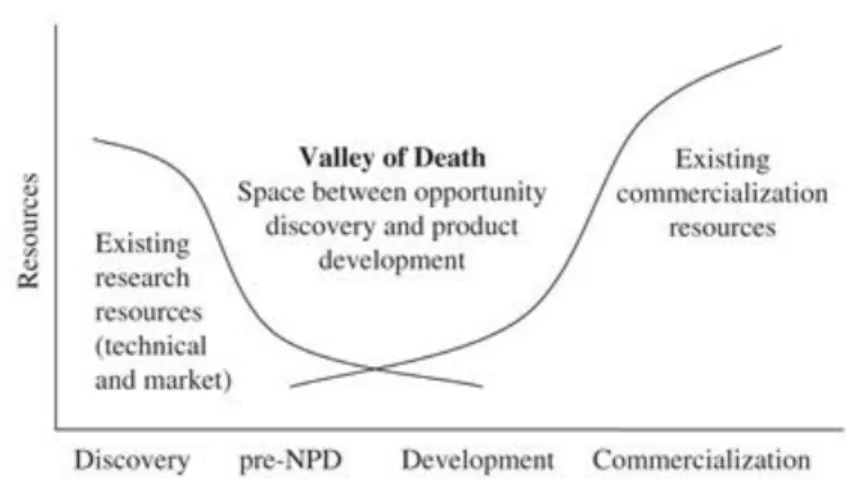
a solution that could address those needs (product timing). Success was also grounded on having set as main priority the development of a minimum viable product, improving the platform up to a stage that could confirm its potential and searching for validation on AdI’s contest, all this before founding Nonius (planning). Last but not least, the academic skills in Business Management obtained by António Silva allowed an adequate construction of the business plan, while the decision of choosing Beta Capital as investor brought valuable advice and business contacts that guaranteed a quick entry in the market (professional advisors). All these factors led Nonius to generate revenues fast and at a growing pace. These precocious revenues combined with the subsidies for innovation and R&D and the product development partnerships that were established in early years, for example with Crivo (capital), contributed to shorten Nonius’ Valley of Death (VoD) - the concept of VoD has been described by Markham et al. (2010)2 as the transitional period when a new product is being taken to the market, where the large resource consumption with R&D cannot yet be supported by revenues generated from sales (Exhibit TN2 shows the VoD). Although being typically shorter for tech ventures, the entrepreneurs’ decisions shortened it even more, by setting the conditions to obtain early cash inflows that soon exceeded outflows.
2. Explain the factors conferring competitive advantage to Nonius’ products along the years: Porter (1985)3 states that organizations can achieve competitive advantage through cost advantage and differentiation advantage. In Nonius case, a number of differentiation strategies were adopted over the years to gain and maintain advantage. To begin, it was one of the first companies to address the WISP business segment in Portugal, benefiting from first mover advantage in a market with large growth potential. Nonius focused on delivering solutions that guaranteed high-quality internet connections, while its platforms encompassed a larger set of features than the competitors’ ones, enabling clients to customize and manage their internet offer to final users. Yet, the main differentiation factors were the highly customizable features
20
of its products, able to match diverse business specifications and client preferences, as well as the development partnerships established with clients, which allowed quick adjustments by understanding their specific needs. As the product portfolio grew, strategies to maintain competitive advantage became more diverse. Nonius focused exclusively on its most successful market, the hospitality industry, adapting the most recent technologies to its specific needs, illustrated by the use of IP technologies in NiVo or the introduction of Smart TVs. This refocusing, together with a permanent attention to the evolution of guests’ technological demands, allowed Nonius to consistently launch last generation solutions that targeted challenges faced by the hospitality industry with greater assertiveness than competition. In addition, Nonius could offer a set of integrated solutions of TV, internet, telephony, signage and apps, specifically targeted to the hospitality industry and covering the majority of the sector’s technological needs. This proved to be a major advantage over main competitors, which either offered solutions to just one product segment or developed broad solutions without any sector-specialization. Hotel managers preferred to have one technological provider that could offer several products and keep them up-to-date than having to deal with multiple suppliers and be constantly aware of the last technological trends in the sector.
3. Analyze Nonius’ strategies to achieve international growth: Anderson and Gatignon (1986)4 evaluated the impact of market entry modes on the entrant’s level of control over its foreign business operations, establishing high, medium and low-control modes. Exhibit TN3 presents this categorization. Apart from the level of control, these modes also differed significantly regarding cost, commitment, risk and return. In its first years of internationalization, Nonius favored indirect exportation, through integrators operating in foreign target markets, and licensing of products, when needed to overcome market entry barriers (as in Germany). This strategy allowed Nonius to focus on product development, trusting in the market recognition that those integrators and licensees already had. However, although implying lower risk of
21
failure and less investment (funded mainly through the Series A round), these low-control modes restricted Nonius’ main source of differentiation, which was the close relationship with customers, thus reducing the potential return from internationalization. Hence, Nonius started adopting higher control entry modes. In 2011, it established a joint-venture in Brazil, taking advantage from the market positioning of its Brazilian partner and sharing associated costs and risks. However, being a 50/50 equity joint venture, limited operational control was an inevitable drawback. In the following years, Nonius performed a number of acquisitions in the Brazilian, African and European markets, which guaranteed quick entries in those crucial target markets. This high-control strategy, although comprising higher risk and larger investments (funded through the Series B round), leveraged on the existing product and client portfolio of the acquired companies and allowed a closer attention to clients’ demands, increasing Nonius dimension and revenues.
4. Evaluate the financing options that Nonius’ founders should have considered for its start-up financing round. Analyze the pros and cons of those alternatives: Vinturella and Erickson (2013)5 identify several financing options for new ventures, including bootstrapping, government subsidies, business angel (BA) financing, VC and debt. From these alternatives, Osnabrugge (2000)6 compares BA and VC investments, regarding type and amount of funding provided, shared experience, complexity of due diligence and investment terms, monitoring and influence demanded and focus on exit routes, among others. At its start-up financing round, founders focused on obtaining funding to finalize the WGServer, target initial clients and achieve its first sales. Considering its infant development stage and the risks inherent to a project not yet exposed to market challenges and competition, Nonius might continue bootstrapping from their finances, which would allow full control over business decisions and total focus on product development, instead of constantly reporting to an external investor. However, gaining dimension through bootstrapping would imply a great financial effort from
22
founders, while waiving the expertise and business know-how provided by other investors. To rely solely on funding provided by government R&D subsidies was not an option, since those funds alone would not be sufficient to finance operations for the first years, being necessary to complement them with other financing sources. Another choice would be a long-term bank debt, since the bank would not require an ownership stake and Nonius could also start benefiting from debt’s tax shield effects. Yet, a bank loan would impose a priority use of generated cash-flows to perform periodic repayments, restricting its reinvestment in growth strategies. In addition, given the uncertainty and risks related to Nonius early development stage, the bank would demand tough covenants and high interest rates, together with some collateral, which was hard to provide for a recent technological firm with few or no fixed assets. As alternative, founders could obtain investment from a BA, forgoing an equity stake and full control over the company’s decisions in exchange for funding and relevant industry or entrepreneurial experience from an individual available to invest in the company’s growth. A BA with know-how and a wide network of relations in the hotel industry or technology business would create opportunities to accelerate Nonius entry in the market, while demanding more favorable investment terms than VCs. Conversely, the BA would provide less structural support, might have different expectations for the business than the founders, would imply little follow-on money and, last but not least, could be hard to find, either because possible candidates were not suitable for the target-markets or were not available to invest in the company. In the end, the founders opted for VC funding. A VC fund brings not only business and managerial expertise and a vast network of connections as a BA would, but can also provide larger initial and follow-on investment amounts. And having in mind a profitable exit strategy since the beginning of its investment, a VC will be a better choice to enhance Nonius’ growth potential. Nevertheless, founders had to forgo a larger equity stake and accept a major dilution in subsequent financing rounds, while losing decision power over relevant financial and operational issues. Moreover,
23
VC investments typically require long due diligence and tough and complex investment terms, as attested by Beta Capital’s clauses providing downside protection and upside benefits. Finally, VC funds place high exit pressure from a certain point, to guarantee its investors a profitable exit and maximize its IRR, as ended up being the case in 2015. Exhibit TN4 shows the pros and cons of each financing alternative.
5. Analyze the alternatives considered by António Silva in 2015, describing their benefits and disadvantages for the founders: Vinturella and Erickson (2013)7 identify 3 main exit routes for investors to harvest investments: IPOs, M&A and MBOs. In turn, Giot and Schwienbacher (2007)8 mention that the option between IPO, trade sale or other exit strategy must vary according to company and investment-related variables, such as operating industry, company development stage, invested amounts, number of financing rounds and time elapsed since initial investment, among others. When António Silva considered an IPO of Nonius, he was aware that the operation would allow VCs to accomplish an exit at a considerable profit, given the total amounts they had invested, and, if successful, it could increase the company’s visibility in the market, boosting business volume and providing liquidity to pursue the international expansion plan. Nonius had a good track record for growth and still held future potential, exploring consistently new technologies and foreign markets that enabled successful launches over the years, which would positively impact its valuation. Yet, the IPO process was a long and costly one, delaying the departure of pressing VCs, bringing unnecessary and almost unbearable costs and diverting management focus from product development and operational issues. And although Nonius financial performance had improved significantly in recent years and the technological sector was a “hot” one, the company had still not reached the size to be a relevant IPO target, to be realistic. Between the 4Q 2014 and 3Q 2015, technology companies performing IPO’s received, on average, a valuation with a multiple of 4.2x sales, while software companies were valued on 5.5x sales, implying a valuation for Nonius of just between €20m
24
and €27m, considering its sales of €4.8m. Markets would take it as a small offering on a very small company, attracting little analyst attention and receiving no coverage, thus increasing the probability of becoming a stock with low liquidity. This context, along with the lack of tradition for IPOs in the Portuguese market and the potential reputational hazard brought by a failed IPO, let alone the founders’ intention to recover control of the company, made the option of performing an IPO not desirable. For its part, a trade sale was still a hypothesis to be considered, since Nonius had already a significant dimension and international presence, being known to competitors and other potential buyers. Due to strategic buyers’ market knowledge, an auction would certainly push Nonius price up, with the acquirer having an incentive to pay a price as higher as the potential synergies extracted from the deal. Between the 4Q 2014 and 3Q 2015, tech companies acquired in trade sales on European developed markets received, on average, a valuation with a multiple of 3.0x sales, while software companies where valued on 2.3x sales, implying a valuation for Nonius in case of trade sale between €11m and €15m. The process would be simpler, quicker and cheaper than an IPO. However, Nonius would get a lower valuation, typical of trade sale deals, due to the smaller size of companies involved compared to IPOs and the inclination of markets to deliver higher valuations than strategic investors, mostly due to the asymmetry of information regarding the industry and the potential of the company. Worse, such option would not bring the control of the company back to its founders: in fact, it could even force them to leave their management positions and, most probably, the company. Another option would be to accommodate the entrance of new shareholders to replace VCs, which would provide them the desired exit and also fund the international expansion of Nonius through further investments by the incoming shareholders. Still, investors available to become shareholders of the company on such conditions would probably be other VCs or private equity growth funds and that could raise though problems. The fact that Nonius had already lost the startup status and had matured into a company with solid performance could
25
deter the investment from most VCs, usually searching for companies requiring low initial investment but holding significant growth perspectives, to achieve a profitable exit and high IRR. This problem would be overcome if the investor was a growth fund, which typically invests in later stages, on companies with consistent revenues but room to grow. These funds adopt a hybrid strategy of own capital and debt, leveraging their returns and asking for lower equity stakes, therefore reducing the founders’ dilution and even allowing them to partially cash-in. Nevertheless, those funds would demand significant control over relevant business decisions, something that would go against the founders’ intentions; and later on, they would also start putting pressure to perform a profitable exit. So, the remaining option would be the MBO. The founders could buyout the equity positions of other shareholders with the amounts raised through bank and mezzanine debt, regaining the decision-making power over Nonius business and being held accountable before no one regarding their management decisions. Nevertheless, the debt raised to finance both the MBO process and international expansion would bring some burden to the company. Bank debt would demand collaterals and impose periodical repayments of capital and interests, while the mezzanine investor would bring financial and operational covenants that may turn debt into equity if the premises were not met, diluting the founders stake and claiming decision powers.
Reference List:
1 Lussier, Robert. 1995. “A nonfinancial business success versus failure prediction model for young firms.”
Journal of Small Business Management, 33(1): 8-20
2 Markham, Stephen, Ward, Stephen, and Kingon, Angus. 2010. “The Valley of Death as Context for Role Theory in Product Innovation.” Journal of Product Innovation Management, 27(3): 402-417
3 Porter, Michel. 1985. Competitive advantage: creating and sustaining superior performance. New York: The Free Press
4 Anderson, Erin, and Gatignon, Hubert. 1986. “Modes of Foreign Entry: A Transaction Cost Analysis and Propositions.” Journal of International Business Studies, 17(3): 1-26
5 Vinturella, John, and Erickson, Suzanne. 2013. Raising Entrepreneurial Capital. London: Elsevier
6 Osnabrugge, Mark van. 2000. “A comparison of business angel and venture capitalist investment procedures: an agency theory-based analysis.” Venture Capital, 2(2): 91-109
7 Vinturella, John, and Erickson, Suzanne. 2013. Raising Entrepreneurial Capital. London: Elsevier
8 Giot, Pierre, and Schwienbacher, Armin. 2007. “IPOs, trade sales and liquidations: Modelling venture capital exits using survival analysis.” Journal of Banking and Finance, 31(3): 679-702
1 Appendixes
Exhibit 1 – Background of the entrepreneurs
António Silva finished his Bachelors degree in Electronics by Instituto de Engenharia do
Porto in 1998, being immediately employed by Efacec, a Portuguese multinational company operating in the sectors of electronics, engineering and energy, among others. At Efacec, Antonio worked as a software engineer, developing IP networking firmware and integration solutions, having met Leonel Domingues and Rui Castro, co-workers and team members in several common projects. António remained in the company for two years, taking at the same time a post-graduation in Telecommunications and Networking Systems by Faculdade de Engenharia do Porto. In 2000, António accepted an offer from Windriver Systems, an American company specialized in the development of industry-specific software solutions, and moved to the UK, to develop network solutions for major clients in Europe. He kept the position for two years, having moved in 2002 to LSI Logic, another American company with offices in the UK and dedicated to design and conceive networking software. At LSI, António was responsible for the designing and development of software for a specific solution of the company, position that he occupied until becoming Nonius CEO. His academic background and professional experiences have been fundamental to develop the necessary technical skill and market knowledge to make Nonius thrive.
Leonel Domingues graduated in Industrial Electronics in 1994 by Universidade do Minho
and completed a Master degree in Electronics in 1996, in the same University, where he was also Teaching Assistant and Research Assistant. In 1994, Leonel started his professional career as software and hardware developer, function that he performed for the following 14 years in different companies, such as Efacec. In 2015, at the moment of Nonius foundation, Leonel had already been software architect and R&D team leader at Lucent Technologies for five years, position that conferred him product development know-how and team management skills to become CTO at Nonius.
Rui Castro graduated in Electrical and Computers Engineering by Universidade do Porto in
1996 and completed a Masters in Telecommunications by Chalmers University of Technology in 1998. In 1997, Rui started his career as R&D engineer for Ericsson, which was followed by positions as software engineer and telecommunications researcher in companies such as Efacec and Novabase. In 2005, he became Nonius COO, a role in which his professional experience has been fundamental to confer him skills to administrate the company’s operations and team.
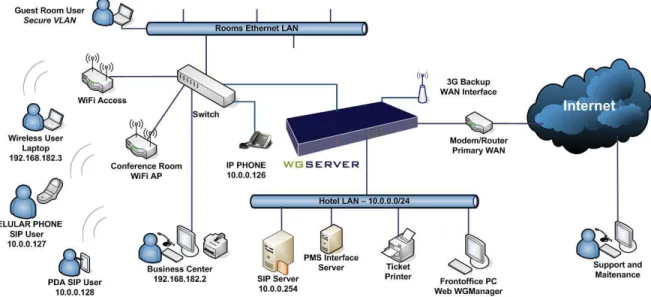
2 Exhibit 2 – The WirelessGestServer (example of WGHotel, specific for Hotels)
The WGHotel creates a network for public Internet access in the hotel, separating it from the hotel’s internal network. The solution is prepared to integrate the Internet billing with the hotel’s billing system, by interfacing with the hotel’s front-office system. When a room is checked-in, the information is sent to the WGSHotel that automatically generates a username and a password for that room. The login data can then be sent to a ticket printer, located at the hotel’s reception and this ticket may be attached to the room’s key card. The WGHotel also sets the charging tariff by usage time or volume, allowing to differentiate prices according to guest categories, and monitors the bandwidth usage, allowing to set a maximum bandwidth available per user.
WGHotel may also provide 100% security to the hotel’s clients when they connect to the public network. With the WG3PSW (WirelessGEST 3rd-Party Switch) module the room’s Ethernet plug may be enabled at check-in and disabled at check-out, prohibiting its usage when the room is not checked-in. WG3PSW may also configure one VLAN per room, preventing communication between different rooms in the same LAN.
Figure 1: WGServer network Source: Nonius WGServer manual
3 Exhibit 3 – The WGStargate
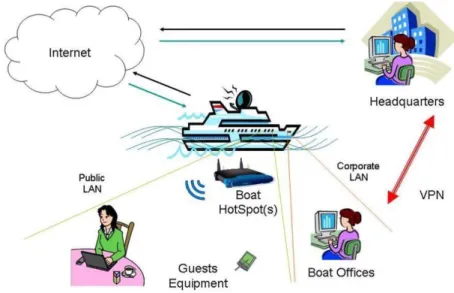
Launched in 2008, the WGS was a system designed to provide internet connection to river and sea cruise ships and tourist boats. While sailing, ships often had access to no other internet signal than the one provided by satellites, receiving signal from other data communication technologies only sporadically, mostly when approaching the shore or riverbanks. These satellite connections were extremely costly, being important to optimize the way they were used. The WGS brought a solution to the problem, enabling the automatic selection of the least expensive technology available in a given moment, without reducing the intensity or quality of the signal. It allowed cruise ship operators to provide high speed internet connection to passengers while moving or passing through remote locations, and, at the same time, guarantee the necessary bandwidth for internal and business communications through a dedicated mechanism developed by Nonius. Hence, the WGS provided cost reduction with communications and maximization of benefits and services.
To develop the project, Nonius applied to a startup-directed initiative created by the European Space Agency (ESA). The project has been one of a total of 7 projects approved in a contest, being therefore technically and financially supported by ESA. Nonius counted also on Douro Azul, a Portuguese company dedicated to touristic trips on the Douro River, as product development partner, keeping the policy of partnering up with potential clients.
Besides the niche market of cruise ships providing tourist trips in rivers and seas, the platform targeted also the areas of defense and civil protection, since it allowed the quick placement and operation of an emergency communication services in the event of a disaster or calamity.
Figure 2: WGStargate network
4 Exhibit 4 – The WGPositionSystem
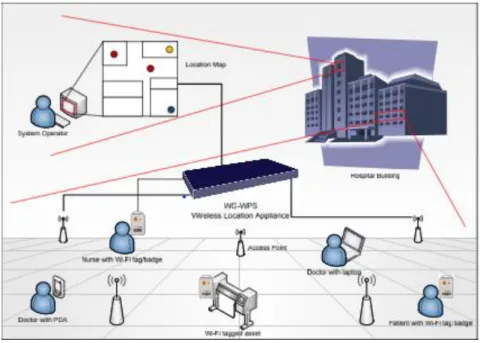
Launched in 2009, the WG-WPS was a solution designed to locate people and objects using a laptop or smartphone and a location tag connected to a wireless network. Location tags could be transported by people or attached to objects, sending notifications in certain situations, such as the loss of signal or the entrance of people in non-authorized places. The platform was primarily designed to be used in hospitals, to locate doctors, patients or medical equipment, but it ended up being also introduced in the hospitality business, mainly with the function of locating children within a hotel or resort and track them down through the television in the room or a smartphone.
The WG-WPS was developed in partnership with several entities, which supported the project both financially and technically. Concerning technical support, Nonius partnered up with Hospital Joaquim Urbano, in Porto, where implementation trials have been conducted, and with ISEP, an engineering university, which provided technical aid. Regarding financial support, Nonius entered into a financing agreement with Crivo Ventures, to cover development expenses and reduce the development risk.
Figure 3: WGPositionSystem network Source: Nonius’ WG-WPS presentation
5 Exhibit 5 – NiVo
“In the past, the hospitality industry was able to offer in-room services and contents that did not exist at the guest’s home. Nowadays, the industry is falling behind in that chapter. Hotels are not being able to offer more up-to-date and technologically evolved solutions than the ones that the guest can obtain at home… NiVO represents Nonius’ solution to this challenge, for a highly competitive price when compared to the investment required for having an analogic TV solution.” António Silva
6
Figure 4: NiVo’s main features Source: Nonius presentation of NiVo
7 Exhibit 6 – Nonius product portfolio
8 Table 1: Tech2H profit & loss statement
Source: Annual financial reports
Table 2: Impresa DGSM profit & loss statement Source: Annual financial reports
Note: In 2014, DGSM was totally integrated in Nonius Software Exhibit 7 – Tech2H post-acquisition performance
Currency: € 000 2012 2013 2014
Sales and services rendered 87 241 941
Other operating income 0 0 -
Operating costs (95) (150) (399)
EBITDA (7) 92 542
Depreciation and amortization - (6) (132)
EBIT (7) 86 410
Financial result - (2) (94)
EBT (7) 84 316
Income tax - (22) (104)
Net profit (7) 62 212
Sales growth rate (%) - 177% 290%
EBITDA growth rate (%) - 1161% 491%
EBITDA margin (%) -8% 38% 58%
Exhibit 8 – Impresa DGSM’s acquisition and performance
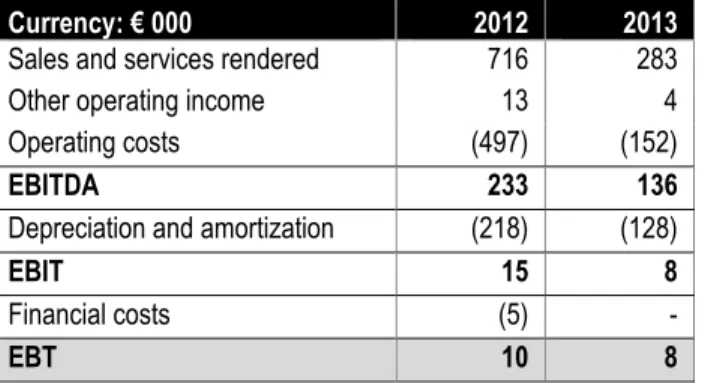
In May 2012, Nonius acquired Impresa DGSM. The transaction has been evaluated in €1.5m but no cash has been involved. Instead, Nonius acquired 100% of Impresa DGSM and its sole owner, Impresa S.A., the largest private media group in Portugal, became shareholder of Nonius, receiving company shares representing 15% of its share capital.
“We believe that this operation brings several benefits for our partners, namely by offering more and better products, solutions and contents for the hospitality and hospital markets; by bringing a better geographical coverage with the delegations in Porto (headquarters), Lisbon and São Paulo; by improving efficiency and responsiveness to every client; and by conveying a stronger shareholder structure, able of supporting current and future projects at a national and international level” said Antonio Silva about the acquisition of Impresa DGSM.
Currency: € 000 2012 2013
Sales and services rendered 716 283
Other operating income 13 4
Operating costs (497) (152)
EBITDA 233 136
Depreciation and amortization (218) (128)
EBIT 15 8
Financial costs (5) -
9 Table 3: TendiQ profit & loss statement
Source: Annual financial reports
Exhibit 9 – TendiQ’s acquisition and performance
In May 2014, Nonius acquired TendiQ, an investment amounting to a global sum of €260k. Nonius paid €80k to TendiQ’s shareholders and distributed 36,000 shares of capital among the shareholders and management employees, representing 1.2% of its equity.
Currency: € 000 May - Dec 2014
Sales and services rendered 526 828
Operating costs (526) (802)
EBITDA (0) 26
Depreciation and amortization (2) (7)
EBIT (2) 19
Financial result - (2)
EBT (2) 17
Income tax - (4)
10 Figure 5: Geographies where Nonius operated in 2014
Source: Annual financial report 2014 Graph 1: Evolution in the number of clients Source: Annual financial reports
Exhibit 10 – Number of clients, relevant customers and international presence
Relevant customers International presence 0 200 400 600 800 1,000 2005 2006 2007 2008 2009 2010 2011 2012 2013 2014 # cli en ts Client portfolio
11 52 185 373 565 768 993 825 1,621 2,616 2,301 76 93 229 277 298 675 2,527 0 1,000 2,000 3,000 4,000 5,000 6,000 2005 2006 2007 2008 2009 2010 2011 2012* 2013* 2014* C ur re nc y: € 0 00
Portuguese market International markets
Table 4: Evolution of Nonius revenues Source: Annual financial reports
*Revenues for 2012, 2013 and 2014 were generated by the entire group, comprised by Nonius Software, Nonius Europe and Nonius Brasil.
Graph 2: Evolution and segmentation of Nonius revenues Source: Annual financial reports
Series A round; Internationalization process Series B round; Acquisitions strategy Startup financing round
Exhibit 11 – Nonius financial and operational performance
Revenues
Currency: € 000 2005 2006 2007 2008 2009 2010 2011 2012* 2013* 2014*
Portuguese market 52 185 373 565 768 993 825 1,621 2,616 2,301
International markets - - - 76 93 229 277 298 675 2,527
Sales and services 52 185 373 641 861 1,222 1,103 1,919 3,291 4,827
Sales annual growth rate - 259% 102% 72% 34% 42% -10% 74% 72% 47%
International sales (in % of total) - - - 12% 11% 19% 25% 16% 21% 52%
Portuguese market annual growth rate - 259% 102% 51% 36% 29% -17% 96% 61% -12%
12 Graph 3: Evolution of Nonius revenue and EBITDA
Source: Annual financial reports
*EBITDA for 2012, 2013 and 2014 was generated by the entire group, comprised by Nonius Software, Nonius Europe and Nonius Brasil
52 185 373 641 861 1,222 1,103 1,919 3,291 4,827 -36 -2 26 151 231 -105 548 808 1,242 -1000.0 .0 1000.0 2000.0 3000.0 4000.0 5000.0 6000.0 2005 2006 2007 2008 2009 2010 2011 2012* 2013* 2014* C ur re nc y: € 0 00
Revenues and EBITDA
Revenue from sales and services EBITDA
Table 5: Nonius team members by department Source: Annual financial reports
Table 6: Evolution of Nonius team Source: Annual financial reports
Team
Departments 2011 2012 2013 2014
Executive team 2 2 2 3
Finance & Administrative 2 3 5 6 Sales & Marketing 6 8 8 10
R&D 17 14 13 15
Operations 6 8 16 25
Total 33 35 44 59
Year # members Growth (%)
2006 8 - 2007 17 113% 2008 21 24% 2009 26 24% 2010 35 35% 2011 33 -6% 2012 35 6% 2013 44 26% 2014 59 34%
13 60% 29% 7% 2% 2% Product segmentation
Nonius.TV Nonius.HSIA Nonius.Apps Nonius.Signage Nonius.VoIP
Graph 4: Revenue by geography Source: Annual financial report 2014
Graph 5: Revenue by market
Source: Annual financial report 2014
Graph 6: Revenue by product
Source: Annual financial report 2014
Business volume segmentation in 2014
46%
22% 21%
11%
Geographical segmentation
Iberia Rest of Europe Latin America Africa & Middle East
75%
17% 4% 4%
Market segmentation
14 Exhibit 12 – Main clauses from startup financing round
▪ Veto power: Any decision on the following topics can only be taken with the previous agreement of Beta Capital: management remuneration, profit distribution, capital injections, issue of preferred or ordinary shares, election of social bodies, among others. ▪ Redemption: Beta Capital has the right to sell its shares and the founders have the
obligation of acquiring them, in case the venture capitalist veto power is not respected on the previous topics or any founder decides to sell his shares, among other situations. The price to pay by the founders corresponds to 4x the investment performed by Beta Capital at Nonius.
▪ Pre-emption: In case any shareholder wishes to sell his shares of Nonius’ capital, the remaining shareholders may choose to acquire those shares, under the terms defined by the seller, having priority over any party which do not own company shares.
▪ Tag-along: In case any founder decides to sell his shares to a third party, Beta Capital may require that the buyer also purchases its shares, in the same proportion and under the same terms defined to the acquisition of the founder’s shares.
▪ Drag-along: From 2013 onwards, if Beta Capital finds a buyer for its shares and intends to accept an acquisition proposal for them, the founders are compelled to sell their shares, jointly and pro rata, to the proposed buyer, under the same terms defined to the acquisition of Beta Capital’s shares. In alternative, the founders may opt for acquiring Beta Capital shares, as long as they offer the same conditions than the proposed buyer.