A landscape
genetics perspective
on the spatial
dynamics of
hybridization
between two species
of wall lizards
Mariana Jorge Meneses Correia Ribeiro
Mestrado em Biodiversidade, Genética e EvoluçãoDepartamento de Biologia 2014
Orientador
Catarina Pinho, Post-Doc, Centro de Investigação em Biodiversidade e Recursos Genéticos (CIBIO), Universidade do Porto
Co-orientador
Antigoni Kaliontzopoulou, Post-Doc, Centro de Investigação em Biodiversidade e Recursos Genéticos (CIBIO), Universidade do Porto
Todas as correções determinadas pelo júri, e só essas, foram efetuadas. O Presidente do Júri,
“We used to make fun of Edgar Anderson by saying that he was finding hybrids under every bush. Then we realized that even the bushes were hybrids”
Agradecimentos
E agora que mais uma fase de aprendizagem termina para dar lugar a muitas outras, não posso deixar de agradecer a todos aqueles que me ajudaram nesta jornada.
Em primeiro lugar quero agradecer à minha orientadora, Catarina Pinho por todo o apoio, por tudo o que me ensinou e principalmente pela paciência perante todas as perguntas e dúvidas de quem está a iniciar um percurso em ciência. Especialmente, quero agradecer por sempre ter ouvido as minhas opiniões e ideias com todo o respeito e sempre com o sorriso e simpatia que te caracterizam. Obrigada.
À Antigoni por estar sempre presente e me ouvir mesmo quando o assunto não era a sua especialidade. Principalmente por estar sempre a apoiar-me quando via que estava mais em baixo. Quero que saibas que as tuas palavras de apoio, força e reconhecimento foram sempre essenciais para conseguir levar este trabalho até ao fim. Nunca vou esquecer cada ensinamento, cada palavra amiga. σας ευχαριστώ.
Ao Miguel Ángel Carretero pelos conhecimentos incríveis sobre lagartixas, e principalmente por encontrar sempre mil e uma explicações biológicas para explicar os resultados. Além disso, agradeço todo o entusiasmo que demonstrou ao longo do trabalho o que me fez gostar cada vez mais de lagartixas. Sei que ainda tenho muito mais para apreender contigo. Gracias.
À Xana Sá Pinto que apesar de forma não-oficial ajudou na minha orientação durante todo o trabalho. Obrigada pelas perguntas difíceis que me fizeram ter vontade de arrancar cabelos mas que ao mesmo tempo me ensinaram não a decorar conceitos mas a percebê-los e aplicá-los. Sei que tudo o que apreendi contigo vai ser muito importante ao longo da minha futura carreira. Obrigada por todo o teu apoio.
À Susana Lopes…não há palavras. Se hoje tenho resultados genéticos para apresentar a ti se deve. Obrigada por nunca desistires durante meses de optimização. Mas mais importante que isso, obrigada pela amizade e por me aturares sempre que estava chateada. Nunca me vou esquecer de ti.
Ao Guilherme Dias, por estar sempre comigo a apanhar aquelas lagartixas demoníacas, por me ensinar como se fazia uma extração e um PCR, pelos almoços
descontraídos e cafezinhos nas horas de mais calor. Acima de tudo, obrigada pelas conversas e amizade.
A todo o pessoal do CTM pela ajuda no laboratório com especial destaque à Sofia Mourão por responder sempre com um sorriso a todas as perguntas básicas e à Patrícia Ferreira por conseguir sempre encaixar as minhas amostras e simplesmente pela pessoa que é.
Aos meus colegas de mestrado pelos momentos de loucura, pelas gargalhadas ao almoço e pelo companheirismo sempre presente. Este ano sem vocês não tinha sido o mesmo. Em especial à Isabel por ser a louca que é e por me fazer sempre rir com as barbaridades que diz. Obrigada amiga, foste essencial neste ano e no resto da minha vida; À Ana Cristina por estar sempre lá quando foi preciso e pelas experiências partilhadas; À Sara por me fazer sempre rir cada vez que ia a internet; Ao Zé pela calma irritante de quem não tem uma tese para entregar; Ao Pedro por me ter proporcionado momentos hilariantes enquanto criava aquele gif épico.
À Mafalda por conseguir ser tão louca como eu e por ser a minha companheira na palhaçada e brincadeira. Juntas somos maléficas!; À Luana pelas novas skills no paint, por toda a companhia, conversas, ajuda sempre que foi necessário (sem ti esta tese não era entregue). Sei que vou levar uma amiga para a vida; À Carolina…não há como descrever este ano querida…conhecer-te melhor foi das melhores coisas que me aconteceu. Meninas, sempre juntas na alegria e na desgraça!
Aos meus amigos pelos momentos de descontração e por toda a ajuda sempre que foi necessário.
Ao Miguel por ter aguentado as minhas ausências sem reclamar. Por me ouvir falar de coisas que não entende. Enfim…obrigada por estares na minha vida.
Aos meus pais e ao meu padrasto por me terem aturado quando os dias no laboratório corriam mal. Em especial a minha mãe por todas as lancheiras a rebentar de comida e por ter me dizer sempre para te calma que tudo se ia resolver. Aos meus irmãos e sobrinhos por compreenderem esta fase mais difícil com o mesmo amor de sempre.
Por último, ao Blacky por estar sempre sentado ao meu lado nas longas horas de escrita.
Sumário
Compreender o isolamento reprodutivo e as barreiras ao fluxo génico é essencial para entender a especiação. Desta forma, as zonas híbridas, áreas onde espécies geneticamente diferentes entram em contacto e se cruzam, permitem o estudo dos processos envolvidos no isolamento reprodutor, permitindo identificar potenciais barreiras ao fluxo génico, estudar os padrões genómicos da seleção e introgressão e identificar os caracteres fenotípicos sob seleção. Podarcis bocagei e P.
carbonelli constituem um bom modelo de estudo para a especiação uma vez que estas
hibridam, mantendo no entanto a sua identidade genética e morfológica na sua restrita área de contacto. Neste projeto propusemo-nos a estudar a zona híbrida entre as duas espécies utilizando uma estratégia multidisciplinar. Especificamente, combinámos análises genéticas e morfológicas com o mapeamento geográfico a fina escala de cada indivíduo, de forma a compreender a dinâmica espacial desta zona.
Para a análise molecular utilizou-se o DNA mitocondrial e um conjunto de microssatélites para estimar o nível de miscigenação de cada indivíduo. Estes marcadores moleculares, confirmam o carácter bimodal desta zona híbrida reportado em estudos anteriores, permitindo a identificação de 144 indivíduos de P. carbonelli, 33 de P. bocagei e 18 híbridos, resultando numa proporção de híbridos de 9.2%. Foi possível identificar diferentes tipos de híbridos incluindo F1, F2 e retrocruzamentos com as classes parentais. Apesar da maior abundância de P. carbonelli na amostragem, os híbridos apresentam, maioritariamente, DNA mitocondrial de P.
bocagei, sugerindo a ocorrência preferencial de cruzamentos interespecíficos entre
fêmeas de P. bocagei e machos de P. carbonelli. Os nossos resultados parecem suportar a regra de Haldane sugerindo uma redução da fertilidade das fêmeas embora não suporte a sua inviabilidade. Estes resultados sugerem a existência de fortes barreiras ao fluxo génico na zona híbrida.
Além disso, foi utilizada uma combinação de caracteres folidóticos para analisar os possíveis efeitos da hibridação na morfologia das espécies e nas características morfológicas dos híbridos. P. bocagei e P. carbonelli são mais similares morfologicamente em zonas de simpatria do que em zonas alopátricas, não suportando a ocorrência de reinforcement a atuar sobre estas características morfológicas. A maior semelhança morfológica entre as duas espécies na zona de contacto pode estar relacionada com a ocorrência de introgressão devido ao processo de hibridação. Os indivíduos híbridos não apresentam diferenças significativas na morfologia em relação às formas parentais e não tendo sido detetadas formas
morfologicamente intermédias. Adicionalmente, analisamos os níveis de assimetria de diversos caracteres bilaterais para testar se a hibridação aumenta a instabilidade no desenvolvimento, com potenciais efeitos no fitness dos híbridos. Estas análises não revelaram diferenças significativas na instabilidade do desenvolvimento entre híbridos e formas parentais. Em consonância com estudos anteriores o presente estudo sugere que a hibridação entre as duas espécies de lagartixas analisadas é um fenómeno raro, embora constante nesta zona híbrida.
Dado que fortes barreiras ao fluxo génico foram detetadas, estudámos a dinâmica espacial desta zona híbrida à micro-escala geográfica, de forma a obter mais informação sobre os fatores que contribuem para limitar a hibridação entre estas espécies. Análises de clinos e interpolações mostram uma transição abrupta nos caracteres genéticos. Por outo lado, os caracteres morfológicos apresentam uma distribuição em forma de mosaico na zona híbrida que está provavelmente relacionada com a intra e inter-variabilidade existente nas espécies modelo. Os resultados sugerem a existência de uma barreira geográfica que limita o contacto entre as duas espécies. No entanto, a baixa frequência híbridos, quando comparados com indivíduos puros, sugere fortemente a existência de barreiras reprodutivas entre estas espécies. Mais estudos são necessários para identificar estas barreiras, e compreender a sua natureza e o seu papel na restrição do fluxo génico entre as espécies.
Neste estudo utilizou-se uma abordagem multidisciplinar, combinando dados genéticos, morfológicos e espaciais para analisar esta zona híbrida, de forma a relacionar os resultados com explicações biológicas. Esta abordagem permitiu caracterizar a zona híbrida e forneceu informação importante para compreender de que forma as barreiras geográficas e reprodutivas contribuem para limitar o fluxo génico entre espécies de Podarcis. Assim, salientamos a importância de uma abordagem multidisciplinar para investigar os processos que responsáveis pela formação de novas espécies e manutenção da sua integridade.
Palavras-chave
: P. bocagei, P. carbonelli, zonas híbridas, barreiras reprodutivas, padrões espaciais.Abstract
Understanding reproductive isolation and barriers to gene flow is essential to understand speciation. As such, hybrid zones, areas where genetically differentiated species come into contact and interbreed to some extent, allow the study of processes involved in the emergence of reproductive barriers, allowing to identify potential barriers to gene flow, to study the genomic patterns of selection and introgression, and to identify the phenotypic characters under selection. Podarcis bocagei and P.
carbonelli are two lacertid lizards, endemic to the Iberian Peninsula. They provide a
good model system to study speciation because they are known to interbreed in the wild to some extent, but also to maintain their genetic and morphological identities in their small contact area. In this work we studied the hybrid zone between these two species using a multidisciplinary approach. Specifically, we combined population genetics and morphological analyses with a fine-scale geographic mapping of individuals to understand the spatial dynamics of this hybrid zone.
For molecular analyses we used mitochondrial DNA and a combination of microsatellites to evaluate the level of admixture of each individual. These molecular markers revealed a strongly bimodal hybrid zone and allowed the identification of 144 individuals of P. carbonelli and 33 of P. bocagei as well as 18 hybrids, resulting in a proportion of hybrids of 9.2%. Among these, we found hybrids of multiple classes (F1, F2, backcrosses with each parental form and other types of hybrids). Moreover, despite the presence of more P. carbonelli individuals in our sample, we found that the majority of hybrids had a P. bocagei maternal origin, indicating a directionality of crosses where females of P. bocagei breed with males of P. carbonelli and hybrid males. Our results provide some support to Haldane’s rule suggesting the reduced hybrid female fertility, although not complete unviability. These results suggest strong barriers to gene flow in the hybrid zone.
Further, we used a combination of pholidotic (scalation) traits to examine the effects of hybridization on the morphology of the species by exploring the morphological properties of hybrids. Morphologically, P. bocagei and P. carbonelli are more similar in sympatric than in allopatric areas, allowing us to reject reinforcement acting at these morphological traits. The higher similarity between the two species at the contact zone can be related with introgression due to long-term hybridization. Hybrid individuals do not differ in morphology from the parental forms while no morphologically intermediate forms were identified. No relation was detected between genetic and morphological assignments of hybrid individuals. Therefore, morphological
traits do not follow genetic admixture patterns. Also, we examined the level of asymmetry of several bilateral traits to test whether hybridization could be associated to increased developmental instability with potential effects on the fitness of hybrids. In this case, no differences in developmental stability were detected between hybrids and parental forms. Together with a previous study, our results suggest that although rare, hybridization has been regularly occurring at this hybrid zone.
As strong barriers to gene flow were suggested, we studied the spatial dynamics of the hybrid zone at the microgeographic scale, in order to obtain more insights on the factors limiting gene flow between these two wall lizards. A steep transition across the landscape was detected in genetic traits trough clinal analysis. On the other hand, morphological traits show a mosaic distribution across the area, possibly due to the high intra and interspecific morphological variability of the model species. Our results suggest a strong influence of a geographic barrier that seems to limit the contact between the two species. However, the low number of individuals with intermediate genotypes when compared to those with carrying pure genotypes, strongly suggest the existence of reproductive barriers between the two species. Further studies are required to identify these barriers and study its nature and its role impeding gene flow between these species.
In the present study, the combination of genetic, morphological and spatial evidence allowed to characterise the features of this interesting hybrid zone providing important information that allowed us to better understand how geographic and reproductive barriers interplay and limit gene flow between these two Podarcis species. This study also highlights the importance of multidisciplinary approaches in hybrid zone research and how these approaches allow to investigate how species integrity is maintained, to enhance biological interpretation of the results, eventually leading to a better understanding of the processes driving speciation.
Key words
: P. bocagei, P. carbonelli, hybrid zones, reproductive barriers, spatial patterns.Index
Agradecimentos ... i Sumário... iii Abstract ...v Index ... vii List of Figures ... ix List of Tables ... xiList of Abbreviations ... xiii
1. Introduction ... 1
1.1. Speciation ... 1
1.2. Hybridization: definition and consequences ... 2
1.2.3. Hybrid zones ... 3
1.3. Using genetic traits to study hybridization ... 5
1.4. How do they look like? - Morphological traits in hybridization studies ... 7
1.4.1. Advantages and limitations of morphological traits ... 7
1.4.2. Developmental instability ... 8
1.5. The spatial structure of hybrid zones ... 9
1.5.1. Landscape genetics ... 10
1.5.2. Cline theory ... 11
1.6. Wall lizards of the genus Podarcis ... 12
1.7. Hybridization between Podarcis species ... 13
1.8. Study case: P. bocagei and P. carbonelli ... 14
1.9. Objectives ... 17
2. Genetic and morphological characterization of a contact zone between two species of wall lizards ... 18
2.1. Introduction ... 18
2.2. Methods ... 21
2.2.1. Study area and sampling method ... 21
2.2.2. DNA extraction ... 23
2.2.3. Mitochondrial DNA amplification and analyses ... 23
2.2.4. Microsatellites ... 24
2.2.5. Microsatellite data analyses ... 25
2.2.6. Pholidotic patterns... 27
2.2.7. Asymmetry analyses ... 30
2.3. Results ... 31
2.3.2. Genetic composition of the contact zone and genetic identification of hybrids
... 32
2.3.3. Genetic variability in the contact zone ... 35
2.3.4. Pholidotic patterns... 37
2.3.5. Discriminant analyses ... 39
2.3.6. Asymmetry analyses ... 41
2.4. Discussion ... 43
2.4.1. Genetic characterization of the hybrid zone ... 43
2.4.2. Morphological characterization of the hybrid zone ... 44
2.4.3. Evaluating the stability of hybrid zone inferences ... 46
3. Zooming in a hybrid zone: the micro-spatial structure of the contact zone between two species of wall lizards ... 48
3.1. Introduction ... 48
3.2. Methods ... 50
3.2.1. Interpolations ... 51
3.2.2. Cline analyses ... 52
3.3. Results ... 54
3.3.1. Distribution of parental and hybrid individuals across the hybrid zone ... 54
3.3.2. Interpolations ... 55
3.3.3. Clines ... 58
3.4. Discussion ... 59
4. Final remarks ... 64
4.1. General discussion ... 64
4.2. Conclusions and future work ... 67
4.2.1. Conclusions ... 67
4.2.2. Future work ... 68
5. References ... 70
List of Figures
Figure 1 – Dorsal and ventral view of both genders of P. bocagei and P. carbonelli. Pictures’ author – Miguel Ángel Carretero. ... 15
Figure 2 - Distribution of Podarcis bocagei (red) and Podarcis carbonelli (green) in the Iberian Peninsula and contact zone between them (yellow star). The area of overlap between both species is indicated in a large scale by the distribution maps of both species. However, this large overlap area is not exact due to the use of 10x10 squares. Both species are only found in sympatry in a small area in Espinho. The sampling locations Madalena (red dot) and Torreira (green rhombus) are also identified. ... 21
Figure 3 - Ordinal pholidotic characters (orange) and categorical characters (black) recorded. See material and methods for variable abbreviations. Adapted from Kaliontzopoulou et al. (2012)... 28
Figure 4 - Results of the Factorial Correspondence Analysis performed using GENETIX. Each square represents an individual. ... 32
Figure 5 - Model-based multilocus genotype analyses performed in STRUCTURE
showing the proportion of the genome of each genotype originating from each of the two species at K=2 (upper graph) at Espinho. Each individual is represented by a vertical bar divided in two segments, the length of which is proportional to the estimated percentage of the genome originated from P. bocagei (red) or P. carbonelli (green). ... 33
Figure 6 - Scatter-plots of individual scores of the first two principal components. The x axis represent 63.42% of the variance and the y axis 26.90 %. Analysis performed with the three pholidotic characters that present significant differences between species (FPN, STSN, SCGN). ... 39
Figure 7 - Scatter-plot of the genetic versus the morphological assignment to P.
bocagei for the individuals sampled in the hybrid zone. ... 41
Figure 8 – Map of the study area representing the exact position where each individual was sampled. A) Individuals identities based on field identifications; B) Individuals
classified based on the proportion of genome assigned to a species estimated using
STRUCTURE. ... 54 Figure 9 - Inverse distance weighted interpolations. A) Interpolation performed with the proportion of genome assignment estimated by STRUCTURE software; B) interpolation
performed with the PP calculated using the morphology-based discriminant analysis; C) interpolation performed with the genetic distances between individuals calculated with microsatellite scores; D) interpolation performed with the Euclidian distances between individuals calculated with morphological characters. ... 57
Figure 10 - Combined maximum likelihood geographic clines across the study area for the proportion of genome assignment estimated by STRUCTURE software using 16 microsatellite loci (nDNA) and species classifications using mtDNA. X axis representing the frequency of the genetic marker(s) and y axis representing distance (Kmx10). ... 58
Figure 11 - Combined maximum likelihood geographic clines across the study area for 16 microsatellite loci analysed X axis representing the frequency of the genetic marker(s) and y axis representing distance (Kmx10).. ... 59
Figure 12 - Photograph representing the centre of the cline (approximately 600m from the northernmost sampled individual. In the image it is visible the presence of a river stream indicated by a black arrow. Source: “Cline centre of the study area”. 41o01´52.66´´N and 8o38´43.86´´E. Google Earth. June 26, 2007. November 1, 2014.
List of Tables
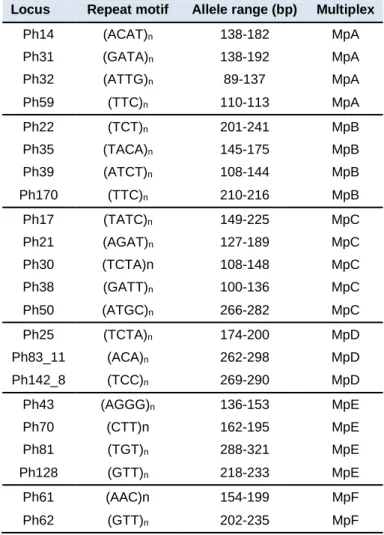
Table 1 - Composition of the six multiplex sets and characteristics of the markers analysed in this study. The allele range corresponds to that reported in Molecular Ecology Resources Primer Development Consortium (Agostini et al. 2013) for P.
guadarramae lusitanica ... 25
Table 2 - Total number of individual genotypes obtained (N Total), effective number of samples assigned to each cluster in the STRUCTURE analysis (N STRUCTURE
assignment) and percentage of samples assigned to each cluster in relation to the total number of samples analysed, using a threshold of 0.90. ... 33
Table 3 - Results obtained using NEWHYBRIDS and mtDNA depicted for all hybrid individuals. The six classes represent the proportion of the estimated posterior probabilities of assignment to pure P. carbonelli (PC), P. bocagei (PB), F1, F2, and backcross of a F1 hybrid with a pure P. carbonelli (BC) or with a pure P. bocagei (BB). ... 35
Table 4 - Number of alleles (Na), number of private alleles (Pa) and expected heterozigosity (He) observed per locus in each species in Espinho and in the total sample. Fst, Pid (probability of identity) and Pid sibling (Probability of identity in siblings) values for each locus in all analysed samples. ... 36
Table 5 – Mean value and standard error of each variable analysed in P. carbonelli and
P. bocagei. See methods for variable abbreviations. ... 37
Table 6 - Results of ANOVA showing the p-values at the factors sex and species and the respective interaction term for each morphological trait used. See methods for variable abbreviations... 38
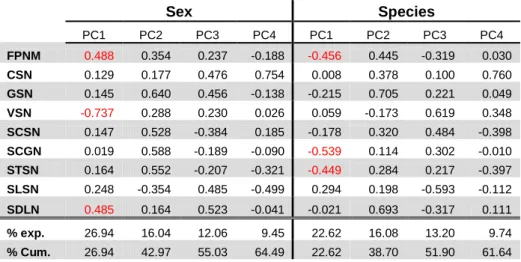
Table 7 - Correlations between the first four principal component axes and initial variables as obtained from the principal component analyses (PCA) applied to continuous pholidotic variables in sex and species. %exp.: percentage of variation explained by the each axis; %Cum.: cumulative percentage explained. See methods for variable abbreviations ... 38
Table 8 - Posterior probabilities of belonging to P. bocagei (PB) or P. carbonelli (PC) based on the discriminant function performed with morphological data presented for all hybrid individuals detected with genetic markers and classified according to the results of NEWHYBRIDS: class classification (F1, F2, and F1 backcrossed with P. bocagei (BB) or P. carbonelli (BC)). ... 40
Table 9 - Results obtained from two-way, mixed model ANOVAs (side = fixed factor, individual = random factor) for all groups and traits, separately. df - degrees of freedom; F - F-statistic; P - corresponding p-value. See methods for variable abbreviations. ... 41
Table 10 - Results obtained from linear regression of |R-L| on SVL and (R+L)/2 for all traits. Df - degrees of freedom; F - F-statistic; P - corresponding p-value. See methods for variable abbreviations. ... 42
Table 11 - Results obtained with three-way ANOVA on log transformed average of trait values across the two replicate counts, with sex, type (Parental vs. Hybrids), species nested within type and trait as factors and all interaction effects. ... 42
List of Abbreviations
HW – Hardy-WeinbergLD – Linkage disequilibrium LE – Linkage equilibrium SVL – Snout-vent length DNA – Deoxyribonucleic acid mtDNA – Mitochondrial DNA PCR – Polymerase chain reaction rRna – ribosomal RNA
bp – Base pair
Ho – Observed heterozigosity He – Expected heterozigosity Na – Number of alleles Pa – Private alleles
AMOVA – Analyses of Molecular Variance Fst – Fixation index
FCA – Factorial Correspondence Analysis K – Number of clusters
MCMC – Markov Chain Monte Carlo qi – Admixture proportion
PP – Posterior probability Pid – Probability of identity
PidSib – Probability of identity in siblings CSN – Colaria scales FPN – Femoral pores GSN – Gularia scales SCGN – Supraciliary granules SDLN – Subdigital lamellae STSN – Supratemporal scales VSN – Ventral scales SCSN – Supraciliary scales SLSN – Supralabial scales
IN_F – Contact between the internasal and frontal scales O_IP – Contact between the occipital and interparietal scales MASS – Presence of the masseteric scale
TYMP – Presence of the tympanic scale ANOVA – Analysis of Variance
PCA – Principal Component Analysis DA – Discriminant Analysis
FA – Fluctuating asymmetry AI – Asymmetry index
PCoA – Principal Coordinate Analysis IDW – Inverse distance-weighted ED – Euclidian distances
AICc – Akaike’s information criterion SD – Standard deviation
1. Introduction
1.1. Speciation
Biologists are trying to understand the processes involved in species differentiation since before Darwin (Coyne & Orr 2004; Sobel et al. 2010). Under the biological species concept (Mayr 1942, 1963), speciation can be defined as the development of mechanisms responsible for reproductive isolation (Turelli et al. 2001; Wiens 2004; Butlin et al. 2012). Therefore, understanding speciation becomes the study of when, where and how gene flow breaks down. Speciation is a complex process because it integrates several mechanisms such as ecology, behaviour, morphology and interaction between multilocus genotypes. The study of speciation is based on the clarification of the mechanisms that create reproductive isolation. Therefore, understanding the genetics and genomics of speciation and connecting speciation processes is important to the research on biodiversity patterns (Butlin et al. 2012).
Barriers to gene exchange may evolve during long periods of spatial isolation (Abbott et al. 2013). However, it is also possible that incipient species contact before developing complete reproductive barriers. An extreme example is divergence without any spatial isolation, mediated exclusively by divergent selection, but intermediate scenarios, such as contact during variable periods because of e.g. range changes may be more common (Abbott et al. 2013). The study of reproductive barriers in areas where incompletely isolated species contact is thus essential to understand speciation and to evaluate the relative importance of such isolating mechanisms. Typically, barriers to gene exchange are classified with respect to whether they act before (“prezygotic”) or after (“postzygotic”) hybrid zygote formation (Butlin et al. 2012). Prezygotic isolation mechanisms, normally based on assortative mating (but also in other processes such as sperm competition), have been considered more important barriers to gene flow, potentially having a higher influence in the process of speciation, than postzygotic barriers, which are not always detected (Sobel et al. 2010).
In species differentiation, normally the unit of adaptation is the gene or a set of interacting genes, which means that the genome does not work as a whole and the levels of gene flow and differentiation vary along the genome (Wu 2001). The genetic basis of reproductive isolation is usually thought to result from epistatic incompatibilities
in genes responsible for physiological, anatomical, ecological or behavioural isolation (Turelli et al. 2001; Coyne & Orr 2004). Gene flow becomes more difficult as the number of genes that present incompatibilities between diverging taxa increase, due to the co-adaptation of different loci within populations (Orr 1995). To understand speciation it is necessary to know how genetic differences between species evolve and to determine the effect of these differences on gene flow (Barton & Bengtsson 1986). When divergent selection is stronger than gene flow, reproductive barriers between different taxa appear (Kisel & Barraclough 2010). Also, strong selection on only one or few traits could be more effective in promoting adaptive divergence with gene flow, and weaker selection on multiple traits creates a more general barrier to gene flow (Nosil 2008). Therefore, significant reproductive isolation only appears when genetic differences cause a substantial reduction in gene flow at the majority of loci, or if they promote the evolution of further differences that can lead to a strong barrier to gene exchange (Barton & Bengtsson 1986). The study of speciation is based on the clarification of the mechanisms that create reproductive isolation. These mechanisms can be addressed when reproductive barriers between species are not complete, thus when gene flow exists and species hybridize.
1.2. Hybridization: definition and consequences
Hybridization is defined as “the interbreeding of individuals from two populations, or groups of populations, which are distinguishable on the basis of one or more heritable characters” (Harrison 1993). The different groups that hybridize could be species, subspecies or races that are different from each other on the basis of various characters such as morphology (e.g. body colour, meristic traits such as the number of scales in lizards), behaviour (e.g. mate choice), cytological (e.g. chromosome numbers) and molecular markers (e.g. DNA sequences) (Kawakami & Butlin 2001).
Natural hybridization and gene flow were, and still are, controversial amongst taxonomists because they violate the strict biological species concept (Mayr 1942, 1963). Traditionally, these processes were considered rare in the wild and they were relatively neglected, not being considered an important evolutionary process, particularly in animals (Arnold 1992; Mallet 2005). This view has changed thanks to new cytogenetic studies and molecular data. Nowadays, natural hybridization is known to occur much more frequently than initially anticipated. In fact, hybridization between
species has been estimated to occur in 10% of animal species and 25% of plants (Mallet 2005). Moreover, hybridization is now recognized as an important evolutionary phenomenon, with variable effects on the differentiation of populations. On one hand, hybridization may slow or reverse differentiation between incipient species by allowing gene flow and recombination to break apart co-adapted gene arrangements (Mallet 2007; Abbott et al. 2013). In some cases hybridization may lead to the reduction or even extinction of rare species by genetic homogenization or disruption of local adaptation (Allendorf et al. 2001). On the other hand, it has long been recognized that hybridization has the potential to create adaptive variation, functional novelty and even lead to the formation of new species (Lewontin & Birch 1966; Seehausen 2004). Indeed, it has been shown that hybridization can accelerate speciation via adaptive introgression or cause near-instantaneous speciation by allopolyploidization (Abbott et
al. 2013). It can also lead to speciation if the new hybrid lineages become
reproductively isolated from the parental forms, a process known as hybrid speciation (Mallet 2007; Abbott et al. 2013). This can happen e.g. when a hybrid recombinant genome is as fit as or fitter than the parental forms in areas of intermediate habitat (Dobzhansky 1940; Kawakami & Butlin 2001).
The frequency of hybridization is affected by a series of factors, such as the reproductive barriers (either prezygotic or postzygotic) that decrease the frequency of hybrids in the wild. Time since divergence is also very relevant, since more closely related species have the tendency to hybridize more often than species that diverged longer ago and which have had more time to develop mechanisms of reproductive isolation and accumulate incompatibilities. Finally, there are taxon-specific differences and some groups hybridize more often than others (Mallet 2005). The relative contribution of different factors in determining the frequency of hybridization can be efficiently investigated in hybrid zones.
1.2.3. Hybrid zones
Hybrid zones have received extensive attention and have been referred to as important “windows on the evolutionary process” (Harrison 1990). Hybrid zones are geographically narrow contact zones where distinct groups of individuals meet, mate and produce hybrids (Barton & Hewitt 1985). They have been observed in a wide variety of organisms (Barton & Hewitt 1985; Kawakami & Butlin 2001; Abbott et al. 2013). Normally, hybrid zones present a mixture of genotypes ranging from first generation hybrids to individuals with repeatedly admixed genomes that result from
multiple generations of backcrossing (Kawakami & Butlin 2001). This leads to introgression, the acquisition by one species of genetic material from another (Baack & Rieseberg 2007). The extent of introgression is highly dependent on the effects of fitness (if hybrids present lower fitness when compared to parental forms introgression will be minimum and vice-versa) and reproductive isolation, as well as on genetic linkage relationships (Barton 1979; Wu 2001; Gompert et al. 2012). Due to the typically strong assortative mating between closely related species that live in sympatry, first generation hybrids are often difficult to produce in animals with internal fecundation (Mallet 2005). However, after the appearance of this class of hybrids, the backcrossing to the parental forms is much more straightforward if the hybrid individuals are viable and fertile (Mallet 2005, 2008).
Hybrid zones can be classified according to the distribution of genotypic classes. The unimodal hybrid zone is based on a hybrid swarm where intermediate hybrid genotypes predominate (Jiggins & Mallet 2000). A trimodal hybrid zone is characterized by a defined group of hybrids with intermediate allele frequencies and extensive genotyping variance caused by several levels of introgression (Gay et al. 2008). Another category is defined by the presence of intermediate or “flat” genotypic distributions, with an even mixture of parental and hybrid genotypes on the hybrid zone (Jiggins & Mallet 2000). Finally, in bimodal hybrid zones the distribution of genotypes is represented by a higher number of pure individuals with few intermediates, which suggests a restriction to gene flow with strong prezygotic barriers (Jiggins & Mallet 2000). Considering the biological species concept, speciation exists when different species remain distinct in sympatric zones, which is the case of bimodal hybrid zones where the speciation of parental forms is almost complete.
Hybrid zones have been widely used in the study of evolutionary processes (Hewitt 1988a; Harrison 1993; Dowling & Secor 1997), as they can provide a present view of the process of divergence and speciation. For this reason, they have been used for systematic inference and to understand different modes of speciation (Jiggins & Mallet 2000). Indeed, their study can enhance our knowledge about the evolutionary mechanisms of reproductive isolation, selective forces against hybrids and the genetic basis of local adaptation (Kawakami & Butlin 2001). Also, hybrid zones allow the study of several other biological characteristics without long laboratory crossing as they already present many interactions between characters and highly recombined genotypes in a natural context. Examples are the distribution of rare alleles, morphological asymmetry, gene expression, testicular dysfunction, mate preferences, dispersal rate, population size and patchiness, competition, and the effects of parasites, to name just a few (see Hewitt 1988 and references therein).
Prezygotic barriers seem to be important in the formation and maintenance of hybrid zones (Coyne & Orr 2004), especially behavioural differences that cause assortative mating which can reduce gene flow between hybridising taxa. This type of barriers has been documented in several hybrid zones (e.g. between the flycatchers
Ficedula hypoleuca and F. albicollis (Sætre et al. 1999)). Also, habitat segregation and
temporal isolation can pose strong barriers to gene flow (Kawakami & Butlin 2001). These barriers can exist in combination with postzygotic barriers, causing reduced fitness on hybrids, which can result in strong linkage disequilibria and a deficiency in heterozygotes near the centre of the hybrid zone. However, the contribution of each barrier to the maintenance of the proportion of hybrids in a stable hybrid zone is normally unknown.
1.3. Using genetic traits to study hybridization
The recognition of the importance of hybridization in nature is largely a consequence of new insights provided by molecular studies. Molecular analyses allow a more rigorous identification of hybrids (Mallet 2005) and an evaluation of the type of hybrids (F1, F2, etc.) (Anderson & Thompson 2002). Moreover, using a large number of genetic markers may be useful in the detection of genomic regions with reduced gene flow, which are expected to contain genes responsible for reproductive isolation and local adaptation (Kawakami & Butlin 2001; Baack & Rieseberg 2007; Gompert et
al. 2012; Kingston et al. 2012). However, it is important to understand the differences
between different types of molecular markers, as these may have different modes of evolution, varying in the level of information and in possible subsequent interpretations. In the past, the analysis of DNA variation basically relied on mitochondrial DNA (mtDNA), as this marker is more abundant than nuclear DNA and easier to use with several techniques (e.g. RFLP, sequencing) (Zhang & Hewitt 1996). In general, mitochondrial DNA is maternally inherited presenting no recombination (Avise 1994; Zhang & Hewitt 1996). Therefore, the analysis of this marker, exclusively, in hybridization studies is not very useful, particularly in cases where the forms involved are cryptic. However, when analysed together with more loci, it may provide particularly interesting information on the dynamics of hybridization and introgression, and hence it has been used in several studies of hybrid zones (e.g. Sequeira et al. 2005; Barilani et
provide insights with respect to the types of crossings responsible for gene flow by allowing the identification of the maternal lineage of hybrid individuals (Mallet 2005).
The identification of hybrid individuals and therefore the study of hybridization can only be performed using biparental molecular markers, like microsatellite loci (also known as simple sequence repeats or short tandem repeats). These markers are tandem repeats of one to six nucleotides, repeated a certain number of times, with a characteristic mutational behaviour (Ellegren 2004), and they are typically highly polymorphic due to their high mutational rates (Kelkar et al. 2010). These markers present some advantages when compared to other biparental molecular markers (such as single nucleotide polymorphisms, SNP). For example, the accuracy of the genotypes is easy to assess (Pálsson et al. 1999); they present a high allelic diversity (Kelkar et al. 2010; Guichoux et al. 2011); and are more or less easy to use in closely related species (Guichoux et al. 2011). On the other hand, one of the main disadvantages of microsatellites is the limited reproducibility among laboratories using different equipment or reagents (Guichoux et al. 2011). Microsatellites are widely used since the appearance of the polymerase chain polymorphism (PCR) in the late 1980s in pedigree analysis (e.g. Dow & Ashley 1998; Knight & Turner 1998), for genetic mapping (e.g. Wu & Tanksley 1993), or genetic structure studies (Estoup et al. 1995). Also, and more importantly for the objective of this thesis, they have been extensively used in hybridization analysis as they allow the distinction of parental forms and identification of hybrid individuals (Lu et al. 2001).
In order to analyse the multilocus genotypes of microsatellites, clustering methods and assignment test can be used (Manel et al. 2005). These methods allow the study of hybridization at the individual level, as it is possible to infer the contribution of various genetic groups in the ancestry of the individual (Cornuet et al. 1999; Pritchard et al. 2000). Recently, with the use of Bayesian methods, it is possible to determine the number of genetic groups in a system and the proportion of the genome of the individual that belong to each of these groups (Pritchard et al. 2000; Corander et
al. 2003). These methods use highly polymorphic molecular markers (e.g.
microsatellites) and usually lead to accurate results even without previous information about the group or diagnostic markers (Pritchard et al. 2000; Anderson & Thompson 2002; Vähä & Primmer 2006). Therefore, they allow a robust characterization of hybrid systems.
1.4. How do they look like? - Morphological traits in hybridization
studies
Morphological traits were, and still are, used to infer the evolutionary mechanisms underlying phenotypic characteristics in order to understand how diversity appears and investigate what factors determine its distribution across different geographical and temporal scales (Kaliontzopoulou et al. 2011). The morphological characteristics of the organisms are essential to the survival and successful reproduction of individuals, as some morphological traits have important known biological functions such as reproductive behaviour or habitat use. As an example, in some lizards, the femoral pores as source of pheromone secretions could be related with territory acquisition, reproductive signalling (Carretero & Llorente 1993) and recognition (Barbosa et al. 2005). Similarly, subdigital lamellae can be related with habitat use (Glossip & Losos 1997). Also, the study of morphological traits is important as developmental changes have consequences at the morphological expression and function affecting the fitness of the organism (Klingenberg 2002).
1.4.1.
Advantages and limitations of morphological traitsThe application of morphological trait studies in hybrid zones could be beneficial in the identification of pre- and post-zygotic barriers. Usually, in hybrid zones, we can expect that hybrids (at least first generation ones) may be morphologically intermediate between the parental individuals. However, even first generation hybrids are not always morphologically intermediate (Allendorf et al. 2001) while intermediate individuals are not necessarily hybrids (Wilson 1992). In the past, when molecular tools were still not available, morphological patterns were used to assess hybridization. However, such an approach has probably underestimated the frequency hybridization and backcrosses in the wild (Mallet 2005), as hybrid individuals are now known to exist even when morphologically intermediates are not present, and there is an evident difficulty in the identification of backcrossed individuals based on morphological traits due to their morphological similarities to one of the parental forms. Therefore, the use of morphological traits exclusively is probably not the best approach in the identification of hybrid individuals. Other limitations of these traits are the non-additive genetic variance for phenotypic traits; pleiotropy, which could be wrongly interpreted as linkage disequilibrium; and phenotypic plasticity that can mask the relationship between allelic and phenotypic clines (Gay et al. 2008).
Today, the prime advantage of the study of morphological traits in hybrid zones is not the identification of hybrid individuals. In fact, this is not a common practice. Instead, morphological studies in these areas are used to aid in understanding the evolutionary mechanisms involved in morphological evolution during species differentiation and the maintenance of morphological differences. For example, if the proportion of hybrid individuals is low (when compared to parental forms) and no morphologically intermediate individuals are found even in first generation hybrids, we are probably detecting the effect of strong selection against hybrids and/or assortative matting. Also, hybrids could present anomalies which can be a target for selection. A different approach involves the investigation of the similarities between parental species forming the hybrid zone. If parental forms are morphologically more similar in sympatric zones than in allopatric areas this could indicate extensive introgression or adaptation to similar selective pressures (Martínez-Freiría et al. 2008). On the contrary, if parental forms are morphologically more dissimilar this could indicate reinforcement which would suggest the existence of prezygotic barriers (i.e. different morphologies can help avoid interspecific mating).
As is the case for genetic traits, a bimodal distribution of phenotypic characters is expected in the presence of strong selection against hybrids and/or assortative mating combined with high dispersal (Jiggins & Mallet 2000; Gay et al. 2008). Hybrid zones can also present weaker selection and assortative mating but morphologically intermediate individuals could not be present. On the contrary, when extensive introgression is present, phenotype frequencies tend to a unimodal distribution, showing a hybrid swarm. Phenotype distribution can also be important in the determination of the movement in the hybrid zone, aiding to establish if the zone is stable which is an assumption e.g. of cline analysis (Barton & Hewitt 1985, 1989; Gay
et al. 2008). The detailed examination of the spatial distribution of phenotypes allows
the investigation of selection across hybrid zones. Despite the advantages of study the phenotypic distribution in hybrid zones this type of characters are not regularly analysed.
1.4.2. Developmental instability
Morphological characters can be used in hybrid zones, not only to detect intermediate individuals, but also to assess developmental instability through the study of fluctuating asymmetry (FA). Normally, organisms have the tendency to present developmental stability i.e. a tendency to follow a specific developmental pathway
under a particular set of conditions (Willmore et al. 2007). In bilaterally symmetric organisms, the same genome controls the development of the right and left side of the symmetric bilateral features and, as both are developed in the same environment, they are expected to present a perfect symmetry (Palmer & Strobeck 1986). As such, small, random deviations from perfect symmetry (i.e. fluctuating asymmetry) have been used as a measure of developmental instability (Palmer 1994; Palmer & Strobeck 1986). FA has been associated with lower fitness (Palmer & Strobeck 1986) and it can increase due to extrinsic (environmental) or intrinsic (mostly genetic) stress factors (Palmer & Strobeck 1986; Palmer 1994). Developmental instability and increased FA have been detected in a series of species associated to different causes such as pollution (Eeva & Tanhuanpää 2000), parasites (Møller 1992), extreme temperatures (Savage & Hogarth 1999) and hybridization (Wilsey et al. 1998).
Therefore, the analysis of FA could be a useful tool for investigating hybrid zones, as an increase in the degree of FA across hybrid zones could be an indication of selection against hybrids. Indeed, hybrid individuals may exhibit higher developmental instability, which may result in negative selection. Despite its potential, fluctuating asymmetry has not been extensively used in hybrid studies, but some examples exist (e.g. Mus musculus, where increased developmental stability was detected in populations with admixture (Alibert et al. 1994); and Apis mellifera, where no significant differences were found in the level of asymmetry (Smith 1997)).
1.5. The spatial structure of hybrid zones
The spatial distribution of genotypes and phenotypes across hybrid zones as well as their coincidence/discordance in the space may allow the determination of the processes generating and maintaining hybrid zones (Barton & Hewitt 1985). The study of the spatial distribution of neutral markers combined with the variation of phenotypic traits would allow the study of which traits are involved in reproductive isolation and the estimation of the levels of selection (Brumfield et al. 2001; Gifford 2008; Benson et al. 2012).
From a geographical perspective, hybrid zones can be classified as extended areas of overlap, narrow contact zones or mosaic zones (Arnold 1992). Thus, phenotypes and genotypes across a hybrid zone could be spatially structured as clines with a continuous transition from one parental form to the other (Barton & Hewitt 1985). On the other hand, hybrid zones could be spatially structured as a mosaic distribution
of phenotypes/genotypes across the landscape, which is normally related with environmental heterogeneity (Britch et al. 2001). The position of hybrid zones could be related with distinct habitat or environmental gradients. However, they may also exist in areas with a uniform environment with no apparent environmental differences (Kawakami & Butlin 2001).
1.5.1. Landscape genetics
Landscaped genetics is defined as the “amalgamation of molecular population genetics and landscape ecology” (Manel et al. 2003). Therefore, a landscape genetics approach is applied in all the studies that combine population genetic data with data on landscape structure (Holderegger & Wagner 2006). The combination of improvements in molecular genetics (e.g. Bayesian approaches which allow an individual-based analyses) and new statistical tools (e.g. geostatistics) have promoted the development of this recent field (Manel et al. 2003). One of the important characteristics of landscape genetic is scale. It is defined by the species-specific biological and ecological processes under study, and by the spatial dimension at which we are able to sample (Holderegger & Wagner 2006). For example, we can investigate the genetic structure at a fine-scale through an individual-based approach that infers gene flow directly from genetic distances among individuals (Holderegger & Wagner 2006, 2008). Studies performed in a landscape genetic framework provide information on the spatial configuration of the microevolutionary processes, providing a better inference on the nature of gene flow, genetic drift and selection than classic population genetics methods (Manel et al. 2003). This approach also allows the detection of genetic discontinuities and their correlation with landscape environmental features, such as barriers (Manel et al. 2003). Therefore, we can use this kind of studies in hybrid zones to enhance the detection of barriers to gene flow related to the environment in the area of contact. At the same time, a spatial approach may allow associating the genetic differences between parental and hybrid individuals with the characteristic of the landscape. With the use of landscape genetics we can investigate the spatial structure of genotypes in hybrid zones through the combination of population genetics analyses (e.g. genetic distances between individuals) with the geographical coordinates of parental and hybrid individuals.
1.5.2. Cline theory
Cline theory provides a powerful conceptual framework in which it is possible to understand the maintenance of hybrid zones and estimate the influence of dispersal and selection (Barton & Hewitt 1985; Gay et al. 2008). A cline can be defined as the estimated frequencies of alleles or phenotypes across a spatial gradient (Kruuk et al. 1999). When the cline transition of a genetic or phenotypic trait is narrow when compared with the capacity of dispersal of the organism, the influence of that trait to reproductive isolation is stronger as compared to traits characterized by wider clines. Therefore, cline analyses allow the identification of the patterns of introgression and the determination of the factors contributing to reproductive isolation between different species in a hybrid zone (Barton 1979; Rieseberg et al. 1999) and they are therefore a powerful tool for examining the influence and nature of reproductive barriers. The shape of a cline can be studied trough the analysis of the sigmoid shape at the centre of the cline, and the two exponential decay curves at both sides of its centre. These parameters allow the estimation of coincidence and concordance of clines at different traits and the investigation of the influence of the selection against hybrids (Szymura & Barton 1986).
The type of selection operating in hybrid zones is important for interpreting cline patterns. Indeed, whether selection is endogenous or exogenous (that is, if it acts upon different alleles in different genetic backgrounds or different environments, respectively (Kruuk et al. 1999)). In exogenous selection, fitness is defined based upon the environment and determined by environmental gradient across the area. On the other hand, in endogenous selection fitness is determined by within-genome interactions such as epistasis and it is independent of the environment. When only endogenous selection is present, fitness is independent of the location but it could still be mediated by interactions with the environment such as different abilities to escape predators (Kruuk et al. 1999 and references therein). In a tension zone endogenous selection is reflected in strong selection against hybrids being balanced by dispersal of parental genotypes (Barton & Hewitt 1985). However, when exogenous selection is the strongest force it is reflected in differential natural selection across an environmental gradient (Moore et al. 1993).
The distinction between the two types of selection is not straightforward as they result in similarly shaped clines. Still, some specific characteristics of the clines could be analysed (Moore et al. 1993). When exogenous selection is a strong selective force, the position and width of the cline must be related with the position and width of the
ecotone. On the other hand, if endogenous selection is shaping the contact zone, the cline should be independent of the environment, and different and independent traits should not exhibit the same cline shape. The distinction of these two types of selection is important as it would allow the understanding of the factors responsible for divergence. In theory, it will allow to know if species divergence occur due to the accumulation of genetic incompatibilities or by the diversity of alternative ecological niches (Kruuk et al. 1999). However, there is no apparent reason for either type of selection to be exclusive. In fact some studies show the influence of both types of selection simultaneously in hybrid zones (e.g. salamanders (Alexandrino et al. 2005) and chickadees (Bronson et al. 2003)).
Different forms of clines exist in continuous habitats. For instance, the cline may exhibit a smooth transition from one parental type to the other. In such cases, dispersal is negligible and selection maintains a stable equilibrium at each locality. This type of clines could be related with increased fitness in hybrids (Barton & Hewitt 1985). Other clines exhibit a steep transition across the hybrid zone. This type of clines are maintained by a balance between dispersal and selection and can be related with differences in the environment or selection against hybrid (Barton & Hewitt 1985).
1.6. Wall lizards of the genus Podarcis
Wall lizards of the genus Podarcis belong to the order Squamata and to the family Lacertidae (Wagler 1830), and they are probably the best studied group of reptiles in the Mediterranean (Camargo et al. 2010). Species of the genus are distributed around the Mediterranean basin, being one of the most abundant and widely distributed reptile genera in Europe and North Africa (Arnold 1987). The genus is composed by small sized lizards, very similar in morphology and ecology (Arnold 1973, 1990). Podarcis are habitat generalists (Arnold 1987) and most of them use rocks, trunks, vegetation or bare ground for thermoregulation, foraging and shelter.
The systematics of the genus is a matter of discussion until today in terms of relations between species and delimitation of species. Therefore, several studies exist, both focusing on the entire genus (e.g. Harris & Arnold, 1999; Oliverio, Bologna, & Mariottini, 2000; Harris et al., 2005) or on a specific geographical group (e.g. Harris & Sá-Sousa 2001; Harris & Sa-Sousa 2002; Capula & Ceccarelli 2003; Poulakakis & Lymberakis 2003; Pinho et al. 2006, 2007a; Lima et al. 2009; Kaliontzopoulou et al. 2011). Currently, this genus comprises 23 species (Uetz et al. 2014), some of them
added recently (e.g. Geniez et al. 2014). Some of the species are critically endangered (Capula et al. 2002), while other are successful colonizers (Corti et al. 1999).
Iberian and North African wall lizards present a complex evolutionary history which is probably related with their cryptic diversity (Kaliontzopoulou et al. 2011). Mitochondrial DNA reveals that Podarcis wall lizards distributed across Iberia and North Africa, with the exception of P. muralis, form a monophyletic clade (Harris & Arnold 1999; Oliverio et al. 2000). Currently, six species are recognized (Kaliontzopoulou et al. 2011): Podarcis bocagei (Seoane, 1984); Podarcis carbonelli (Pérez-Mellado, 1981); Podarcis vaucheri (Boulenger, 1905); Podarcis liolepsis (Boulenger, 1905); Podarcis guadarramae (Boscá, 1916) (former P. hispanica type 1); and. P, virescens, (former P. hispanica type 2) Geniez et al. 2014. Normally, the lineages observed in mtDNA are also recovered by nuclear markers (Pinho et al. 2007a).
As mentioned above, species of the genus Podarcis are habitat generalists (Arnold 1987). However, in the Iberian and North African clade some species show some degree of specialization, as is the case of P. guadarramae (Sá-Sousa et al. 2002; Kaliontzopoulou et al. 2012a) which is very saxicolous. In terms of distribution, the majority of lineages are parapatric, with some exceptions in the pairs P. bocagei/P.
guadarramae guadarramae and P. carbonelli/P. virescens, which are sympatric or even
syntopic. Sympatry is rare but also present between P. carbonelli and P. virescens in the Iberian Central System and between P. vaucheri and P. carbonelli in Doñana National Park (Carretero 2008).
In terms of morphological characters, the species of this genus are highly variable in size, shape, scalation and colour patterns (Arnold et al. 1978; Harris & Sá-Sousa 2001; Sá-Sá-Sousa et al. 2002; Kaliontzopoulou et al. 2012b). Moreover, this variability is not only present between species but also between populations (Kaliontzopoulou et al. 2012b). Finally, sexual dimorphism is strong in the genus (Kaliontzopoulou et al. 2007, 2008).
1.7. Hybridization between Podarcis species
Throughout the investigation of the systematics of the genus, it has been repeatedly suggested that forms of Podarcis are not completely reproductively isolated, but the extent and dynamics of gene flow between them is far away from being totally understood. Overall, hybridization between different forms of Podarcis exist but is
limited. In nature, hybrid individuals were identified in several pairs: Podarcis
wagleriana/Podarcis sicula (Capula 1993); P. sicula/P. tiliguerta (Capula 2002); P.
sicula/P. raffonei (Capula et al. 2002); P. bocagei/P. guadarramae lusitanica (Arntzen & Sá-Sousa 2007; Pinho et al. 2007a); P. vaucheri/P. guadarramae (Pinho et al. 2008); and between P. bocagei and P. carbonelli (Pinho et al. 2009). The later pair of species has also been shown to hybridize in captivity (Galán 2002). In terms of morphology, when hybrids or introgression where detected, intermediate individuals are rarely found (Pinho 2007; Pinho et al. 2009). However, when morphological intermediate individuals where detected between P. sicula and P. tiliguerta, molecular analysis confirmed a hybrid origin (Capula 2002).
The detection of hybrid individuals between different species of Podarcis suggests that the species of the genus may not be completely reproductively isolated (Pinho et al. 2009), making them an interesting system for the study of the nature and effectiveness reproductive barriers.
1.8. Study case: P. bocagei and P. carbonelli
Podarcis bocagei and P. carbonelli are two species endemic of the western
Iberian Peninsula that were used as model species in the present study.
P. bocagei is a medium sized (mean SVL: males – 56.9mm; females – 54.7mm)
insectivorous lizard (Galán 2009), endemic to the North-West of the Iberian Peninsula (Pinho 2008 in Loureiro et al. 2008). Males present green dorsal patterns and brown sides with a normally yellow/orange colour and females have a brownish colour all over the body (Galán 2009). The species exhibits sexual dimorphism in some characters such as larger heads in relation to body size in males (Kaliontzopoulou et al. 2007). Usually, females of this species can lay from 2 to 7 eggs in 1-3 clutches (Galán 1999), and larger females tend to start breeding earlier in the season and to lay more eggs and more clutches (Galan 1997). P. bocagei generally occupies humid habitats, being present in Atlantic areas, where it can occupy a variety of habitats such as dune areas, anthropogenic habitat or even forests (Galán 2009; Kaliontzopoulou et al. 2010).
In terms of phylogeography, P. bocagei shows little geographical substructure, which seems to indicate extreme glacial retractions and postglacial northern expansions in multiple glacial refugia (Pinho et al. 2011). Historically, P. bocagei seems to have undergone an extremely rapid demographic growth from a single source in a refugial region smaller than its actual distribution. Therefore, the present range of the
species must have been colonized in the past 10000 years, during the most recent period of climate warming and aridification (Pinho et al. 2007b).
P. carbonelli was initially described as a subspecies of P. bocagei. However,
molecular analyses reveal high levels of differentiation, which supported its elevation to the species level (Harris & Sá-Sousa 2001). This species has a smaller size than P.
bocagei (mean SVL: males – 50.7mm; females – 49.4mm;Sá-Sousa 2009). Males
have a green dorsal pattern and females are totally brownish (Sá-Sousa & Harris 2002). Clutch size ranges between 1 and 5 eggs, with a mean of 2.3 eggs (Pérez-Mellado 1982). P. carbonelli is distributed in Western Iberian Peninsula South of the Douro river with a fragmented distribution (Sá-Sousa 2008 in Loureiro et al. 2008; Sillero & Carretero 2013). In terms of habitat this species occupies the same humid environments as P. bocagei. (Sá-Sousa 2001). Evolutionary studies on P. carbonelli (Pinho et al. 2007b, 2011) suggest that the current distribution of the species occupies a smaller area than that in the past, most probably due to climatic modification during Pleistocene and Holocene Sousa 2001), and that is still decreasing nowadays (Sá-Sousa et al. 2009). This, combined with the increased fragmentation of its distribution, has led to the classification of this species as endangered (Sá-Sousa et al. 2009). Currently, the species is more abundant at the Northern part of its distribution, being rare and more locally distributed at the south (Sá-Sousa 2001).
Figure 1 – Dorsal and ventral view of both genders of P. bocagei and P. carbonelli. Pictures’ author – Miguel Angel Carretero.
Regarding their phylogenetic relationships, P. carbonelli and P. bocagei are closely-related, yet not sister species. According to evidence based on mtDNA, they shared their most recent common ancestor at about 6.5 MYA (Kaliontzopoulou et al. 2011). In general, both species are quite similar, both being ground-dwelling lizards. However, some differences do exist, as P. bocagei predominates in areas with Atlantic climate and P. carbonelli is more constrained to Atlantic or Sub-Atlantic areas that are normally surrounded by large Mediterranean areas (Sá-Sousa 2001). Both species reproduce at the same time of the year, but they appear to have some minor differences in some characteristics such as sperm competition (Carretero et al. 2006). Further, some evidences indicate that the two species also differ in their reproductive behaviour, as suggested by the presence of assortative mating (Barbosa et al. 2005). In terms of morphology, both species are relatively similar, but they also exhibit significant differences (Harris & Sá-Sousa 2001; Kaliontzopoulou et al. 2005, 2012) that remain in sympatry (Kaliontzopoulou 2004) but with less distinction (Pinho et al. 2009).
P. bocagei and P. carbonelli present mostly a parapatric distribution (Sá-Sousa
2001), being found in strict syntopy in a small area along the north-west coast of Portugal (Carretero et al. 2002) in a dune area around the city of Espinho. The primary dune is covered by degraded gramineae (Otanto maritimi and Ammophileton australis) separated from the secondary dune by an interdune corridor with ephemeral therofytes. The secondary dune is composed by endemic species of the Northwestern Iberian Peninsula with perennial herbaceous and small shrubs (Iberidetum procumbentis) separated by clearings composed of small annual plants (Evax pygmaea). The vegetation present a coast-inland gradient. The flora distribution is very affected by anthropogenic disturbance and the regression of the coast line. The effect of both factors can be observed in the lack of primary dunes and the substitution of the typical vegetation of the secondary dunes by nitrophilic communities due to human stepping and nitrification of the sand (Carretero et al. 2002). At the same time, the expansion of invasive species such as Carpobrotus edulis has a negative impact in the vegetation of the area (Carretero et al. 2002).
A genetic analysis of the sympatric area between P. bocagei and P. carbonelli allowed the detection of hybrids with some level of introgression (Pinho et al. 2009). Despite the presence of hybridization, a high proportion of parental forms were detected, which suggested the existence of a bimodal hybrid zone with strong barriers to gene flow. Also, a preliminary morphological analysis was performed but no evidence for the existence of intermediate phenotypes in admixture individuals was found. The study put a first basis, but also left several question about the influence and