Short Report
S
J. Braz. Chem. Soc., Vol. 23, No. 1, 171-179, 2012. Printed in Brazil - ©2012 Sociedade Brasileira de Química 0103 - 5053 $6.00+0.00
*e-mail: [email protected]
Metal Chloride Hydrates as Lewis Acid Catalysts in Multicomponent Synthesis of
2,4,5-Triarylimidazoles or 2,4,5-Triaryloxazoles
Marcelo V. Marques,a,b Marcelo M. Ruthner,c Luiz A. M. Fontoura*,a,c and Dennis Russowsky*,b
aDepartamento de Engenharia de Processos, Fundação de Ciência e Tecnologia, 94930-230 Cachoeirinha-RS, Brazil
bLaboratório de Sínteses Orgânicas, Instituto de Química, Universidade Federal do Rio Grande do Sul, 91501-970 Porto Alegre-RS, Brazil
cCurso de Química, Universidade Luterana do Brasil, 92452-900 Canoas-RS, Brazil
Uma série de nove hidratos de cloretos metálicos (ZnCl2.2H2O, SnCl2.2H2O, CdCl2.2H2O,
MnCl2.4H2O, CoCl2.6H2O, SrCl2.6H2O, NiCl2.6H2O, CrCl3.6H2O e CeCl3.7H2O) foi investigada
como catalisadores ácidos de Lewis brandos e baratos na síntese multicomponente de triarilimidazóis. O melhor catalisador para as reações com benzila foi o SnCl2.2H2O, enquanto que
para as reações com benzoína, o CeCl3.7H2O foi mais eficiente. Todas as reações foram efetuadas
em EtOH como solvente. Estes catalisadores também foram empregados igualmente com sucesso na síntese de triariloxazóis.
A series of nine metal chloride hydrates (ZnCl2.2H2O, SnCl2.2H2O, CdCl2.2H2O, MnCl2.4H2O,
CoCl2.6H2O, SrCl2.6H2O, NiCl2.6H2O, CrCl3.6H2O and CeCl3.7H2O) was investigated as mild and
inexpensive Lewis acid catalysts to promote the multicomponent synthesis of triarylimidazoles. Reactions starting from benzil showed the best results when SnCl2.2H2O was used, while for benzoin
as the starting material, CeCl3.7H2O was more efficient. All reactions were performed in EtOH
as solvent. These catalysts were also successfully employed in the synthesis of triaryloxazoles.
Keywords: triarylimidazoles, triaryloxazoles, multicomponent reaction, metal halide hydrates, Lewis acids, Radziszewski reaction, benzil, benzoin
Introduction
Imidazole is a five-membered ring heteroaromatic compound with two nitrogen atoms at 1 and 3 positions.1
This type of compound is known to exhibit a broad range of pharmaceutical and industrial applications. For instance, the imidazole core unity is present in many compounds with pronounced biologic activities such as angiotensin inhibitors,2 anti-inflammatory,3 glucagon antagonist,4
antiviral,5 antimicrobial,6 fungicidal7 and high cytotoxicity,
which has indicated them as new candidates in cancer therapy.8
A particular class of triarylimidazoles, the pyridinyl arylimidazoles 1, 2 and 3 have been recognized as a potent p38 mitogen-activated protein (MAP) kinase inhibitors and emerged as possible therapeutic drugs in
the treatment of various diseases such as cancer and as anti-inflammatory agent, combating the associated pain with osteoarthritis (Figure 1).9 Beyond the pharmacological
applications, arylimidazoles have been used in the industry as chemiluminescent10 and chromotropic materials11 due to
their optic and electronic properties.12
The synthesis of triarylimidazoles from the three-component reaction of 1,2-dicarbonyl compounds, aldehyde and ammonia was independently discovered by Japp and Robinson13 in 1882 and Radziszewski.14 However,
long periods of time and harsh conditions were frequently associated with low yields of production. Davidson et al.15
showed to be possible to reduce the reaction times using acetic acid as solvent and ammonium acetate instead of ammonia. This last protocol became usual and default procedure for the synthesis of triarylimidazoles.
Recently, Kamijo and Yamamoto16 have reviewed the
process. Besides other methods using Brønsted catalysis of p-toluenesulfonic acid (p-TSA),17 heteropolyacids,18
oxalic acid19 and phosphomolybdic acid20 were developed.
Heterogeneous catalysts based on silica-supported Brønsted or Lewis acids, such as HClO4/SiO2,
21
H2SO4/SiO2,22 BF3/SiO2,23 NaHSO4/SiO224 or zeolites
HY-type,25 were successfully employed. Microwave,26
ultrasound irradiation27 and ionic liquids28 were also
reported as efficient promoters to the synthesis of arylimidazoles. Other solid catalysts, such as NaHSO329
or I2
30 and proline31 or tetrabutylammonium bromide
(TBAB)32 as organocatalysts, were also effective.
Although many catalysts have been employed in the Radziszewski reaction, the use of Lewis acid catalysts such as metal triflates as Yb(OTf)3,
33 metal halides as
ZrCl4,34 Zn(acac)427 or cerium ammonium nitrate35 are
rare. Additionally, few examples of metal halide hydrates like InCl3.3H2O36 and NiCl2.6H2O/Al2O337 were reported
for the synthesis of these compounds.
The previous experience of our research group on the use of highly moisture sensitive metal halides as Lewis acid catalysts in organic reactions38 prompt us
to investigate the similar ability of the metal halide hydrates, which are cheaper, easily handled and compatible moisture. Fortunately, our group discovered that SnCl2.2H2O was successfully employed in the
Biginelli reaction,39 Friedlander condensation40 and in
conjugate Friedel-Crafts reaction.41 In the present work,
we explore the ability of a series of metal chloride hydrates (SnCl2.2H2O, ZnCl2.2H2O, CdCl2.2H2O, MnCl2.4H2O,
CoCl2.6H2O, SrCl2.6H2O, NiCl2.6H2O, CrCl3.6H2O
and CeCl3.7H2O) as mild and inexpensive Lewis acid
catalysts in the multicomponent Radziszewski reaction. Besides the search for catalyst efficiency, variables such as protic/aprotic solvents and molar ratio of reagents and catalyst were investigated towards the optimization of a general and useful protocol.
Results and Discussion
Catalysts
To investigate the abilities of metal chloride hydrates as Lewis acid catalysts, lophine (2,4,5-triphenyl-1H-imidazole) (8a) was chosen as the model compound. In a first example, the reaction of benzil (4a, 1.0 mmol), benzaldehyde (6a, 1.0 mmol ), NH4OAc (7, 4.0 mmol) and
SnCl2.2H2O (0.10 mmol) was carried out in gently
refluxing EtOH. The course of the reaction was monitored by thin layer chromatography (TLC) and after a period of 4 h, the starting materials were consumed. After this time, the reaction was stopped and the crude product was isolated (Table 1, entry 2). Therefore, this time was chosen as default for comparison with other catalysts (Scheme 1).
Table 1. Different metal chloride hydrate catalysts for the synthesis of
lophine (8a)
entry Catalyst Amount / mmol time / h
8a - Yield / %
from 4a from 5
1 − − 4 57 17
2 SnCl2.2H2O 0.1 4 91 67
3 MnCl2.4H2O 0.1 4 83 70
4 ZnCl2.2H2O 0.1 4 73 72
5 CdCl2.2H2O 0.1 4 76 61
6 CoCl2.6H2O 0.1 4 79 63
7 SrCl2.6H2O 0.1 4 78 63
8 NiCl2.6H2O 0.1 4 76 63
9 CrCl3.6H2O 0.1 4 73 65
10 CeCl3.7H2O 0.1 4 77 88
11 SnCl2.2H2O 0.05 4 82 −
12 CeCl3.7H2O 0.05 4 − 68
13 CeCl3.7H2O 0.1 2 − 55
14 CeCl3.7H2O 0.1 6 − 92
N N N O H ON
Me2N
1 - SB-590885
Oncogenic B-Raf protein kinase inhibitor N N N S H F CH3 O
2 - SB-203580
Anti-inflammatory
3 - SB-431542
Brain cancer therapy N N N H NH2 O O O
Marques et al. 173 Vol. 23, No. 1, 2012
The same conditions were applied for the reactions with benzoin (5, 1.0 mmol) instead of benzil, and the results are shown in the Table 1. In all cases, the metal chloride hydrates showed catalytic activity affording lophine in variable yield. It should be noted that in the absence of the catalyst, the yield was drastically reduced, evidencing the metal halide activity (see Table 1, entry 1). The best results (higher than 80% yield) starting from benzil (4) were found in the presence of SnCl2.2H2O and
MnCl2.2H2O (entries 2 and 3, respectively). On the other
hand, the optimum result with benzoin (5) was achieved in the presence of CeCl3.7H2O (entry 10). The decrease
in the catalyst amount from 0.10 to 0.05 mmol afforded worse results for both starting ketones (entries 11 and 12). Finally, the reactions that were carried out for 2 h caused a decrease in the yield of the product, while an increase of 6 h in the time of the reaction led only to a small improvement (cf. entries 10 and 14, respectively). Therefore, it was decided to explore the use of SnCl2.2H2O and
CeCl3.7H2O (0.10 mmol) as the main catalysts and the
time of 4 h as default.
Different mechanistic pathways have been proposed for this multicomponent reaction having the benzil or benzoin as starting materials.15,28,33 The proposed rationale
by Kokare et al.19 seems to be in accordance with the results
in Table 1 (Scheme 2). The authors suggested the initial formation of N,N-ketal (9) under Brønsted acidic catalysis from benzaldehyde (6a) and 2 equivalents of NH4OAc (7).
It was assumed that the same activation occurs in the Lewis catalysis. Therefore, the condensation of 9 with benzil (4a) after losing 2 equivalents of water, leads to the conjugate intermediate 10 which rearranges via a [1,5]-sigmatropic proton shift to afford the corresponding lophine (8a).
On the other hand, starting from benzoin, the cyclization of intermediate imino-alcohol (11) should occur by an intramolecular attack of nitrogen in a more hindered and saturated carbon to afford the dihydroimidazole intermediate (12) (Scheme 3). Additionally, the needed oxidation step to produce the conjugated intermediate (10) could be corroborating to explain the minor reactivity that is observed in reactions starting from benzoin. The intermediate (10) is suggested as common specie in both mechanistic pathways.
H O
NH4OAc +
4a
7 6a
EtOH
80 oC, 4 h N
N H Lophine (8a) catalyst O O 5 OH O or
Scheme 1. The three-component Radziszewski reaction.
Ph H O 2 NH3 Ph NH2 NH2 + Ph Ph O O
- 2 H2O N
N Ph Ph H Ph N N H Ph Ph Ph
6a 9 4a 10 8a
[1,5] sigmatropic
LA
LA LA
Scheme 2. Suggested mechanistic pathway starting from benzil (4a).
Ph Ph O 9 N N Ph HO H Ph H H Ph LA N O N Ph Ph Ph H2 H AL + + aerial oxidation 10
5 11 12
8a
- H2O - H2O
Solvent
Despite the use of H2O,42 MeOH, EtOH, i-PrOH,
CH2Cl2, THF, 1,4-dioxane
43 or CH 3CN
34 as solvents has
already been reported in presence of different catalysts, the relative influence of alcoholic solvents in the Radziszewski reaction was not well studied. For this purpose, were investigated the reactions of benzil (4a, 1 mmol) or benzoin (5, 1 mmol), benzaldehyde (6a, 1.0 mmol), NH4OAc (7,
4.0 mmol) and the catalyst (0.10 mmol) carried out in MeOH, EtOH, n-PrOH, CH3CN and THF (tetrahydrofuran)
promoted by SnCl2.2H2O or CeCl3.7H2O for the synthesis
of lophine (8a, Scheme 4). The results are shown in the Table 2, bellow.
Table 2 shows the solvents, their dipole moments (µ) and relative dielectric constants (ε).44 The reaction from
benzyl in the presence of SnCl2.2H2O seems to be more
influenced by the solvent (Table 2, entries 1-5). Aprotic solvents led to poorer yields. In the case of CH3CN (the
most polar between them), the solvent might be associating to the catalyst in a stronger way than the other ones do,
reducing more significantly the reaction rate (entry 4). On the other hand, from benzoin and CeCl3.7H2O, the yields
are essentially the same for all the solvents, protic or aprotic (entries 6-10). The effect of CH3CN is not observed,
which might be attributed to the metal volume, making their association more difficult (entry 9). Besides the effects of polarity of the solvents, their ability in acting as “hydrogen bond donors” can be considered. This new principle can be evidenced in the activation process through the hydrogen bonding between the solvent and reactants on organocatalyzed reactions, as recently reviewed by Akiyama.45 Therefore, based on the results above
discussed and on economical and ambient sustainability reasons, lower toxicity and easy availability, ethanol becomes more advantageous solvent and was chosen as a default solvent in our present study.
Molar ratio of NH4OAc
Next, it was investigated the influence of the molar ratio of NH4OAc on the synthesis of lophine under catalysis of
Scheme 4. Synthesis of lophine (8a) under different solvents.
Table 2. Synthesis of lophine via Scheme 4
entry Ketonea Catalystb Solvent µ / debye ε
R 8a - Yield / %
1 4a SnCl2.2H2O MeOH 1.70 32.6 79
2 4a SnCl2.2H2O EtOH 1.69 24.3 89
3 4a SnCl2.2H2O n-PrOH 1.55 20.1 78
4 4a SnCl2.2H2O CH3CN 3.92 37.5 65
5 4a SnCl2.2H2O THF 1.75 7.6 75
6 5 CeCl3.7H2O MeOH 1.70 32.6 88
7 5 CeCl3.7H2O EtOH 1.69 24.3 88
8 5 CeCl3.7H2O n-PrOH 1.55 20.1 85
9 5 CeCl3.7H2O CH3CN 3.92 37.5 80
10 5 CeCl3.7H2O THF 1.75 7.6 81
Marques et al. 175 Vol. 23, No. 1, 2012
SnCl2.2H2O and CeCl3.7H2O. The molar ratio of benzil (4a,
1.0 mmol) or benzoin (5, 1.0 mmol), benzaldehyde (6a, 1.0 mmol) and catalyst (0.10 mmol) were the same for all performed assays. The results are shown in Table 3. From substrates, 4a or 5, the increase in the NH4OAc amount
from 2 to 4 mmol was followed by an improvement on the reaction yield (cf. entries 1, 2 and 4, 5, respectively).
From substrates, benzyl or benzoin, the increase in the NH4OAc amount from 2 to 4 mmol was followed
of an improvement on the reaction yield (cf. entries 1, 2 and 4, 5, respectively). Using 10 mmol of NH4OAc, a
little improvement from benzyl was observed (entry 3). In contrast, a poorer yield from benzoin (entry 6) was achieved. In summary, 4 mmol (2 molar equivalents) were considered the optimum amount of this reagent. This developed protocol was applied to the reaction of benzils (4a-c) and benzoin (5) with aldehydes (6a-k) to afford a library of triarylimidazoles (8a-p) (Scheme 5). The results are show in the Table 4.
Pyrazine and triaryloxazoles
The decrease in the yield when 10 mmol of NH4OAc
was employed with benzoin (5, see Table 3, entry 6) was
attributed to the formation of pyrazine (13) as a byproduct (identified by GC-MS analysis).
Similar observation was already reported in the literature.15 Intending to confirm this hypothesis, it was
performed the reaction of benzoin (5, 2.0 mmol), NH4OAc
(7, 4.0 mmol) under refluxing of ethanol and CeCl3.7H2O
(0.10 mmol) over 4 h in absence of the aldehyde. After this time, the pyrazine (13) was isolated in 87% yield (Scheme 6).
On the other hand, the reaction of benzil (4a, 2.0 mmol) with ammonium acetate (7, 4.0 mmol) under refluxing of ethanol and SnCl2.2H2O (0.10 mmol) over 4 h afforded the
triaryloxazole (10a) in 74% yield (Scheme 7).
Davidson et al.15 early reported the formation of
2,4,5-trifenyloxazole as a lateral product in the Radziszewski reaction under acetic acid media. By the proposed mechanistic pathway suggested by Davidson et al.,15 it
is clear the aid of acetic acid as a Brønsted acid catalyst. Triaryloxazoles are structurally similar to triarylimidazoles and also have some of their properties, but have been less studied so far. Due to their broad application (for example, in nonlinear optical devices46 or as biologically active
compounds),47 it was decided to investigate the ability of
metal chloride hydrates such as NiCl2.6H2O, ZnCl2.2H2O,
MnCl2.4H2O and SnCl2.2H2O to participate as Lewis acid
catalysts in the synthesis of triaryloxazoles. The results are shown in Table 5.
The reactions were carried out as described in the synthesis of lophine (see Table 1). In the absence of the catalyst (Table 5, entry 1), 10a was only isolated in a poor yield. The same result was observed when NiCl2.6H2O or
MnCl2.4H2O was added (entries 2 and 3). Changing
the catalyst to ZnCl2.2H2O, an increase in the yield was
observed. In the presence of SnCl2.2H2O, a reasonable yield
(78%) was achieved (entries 4 and 5, respectively). Other solvents were also investigated. The reactions were carried
Table 3. Synthesis of lophine (8a) under different molar ratio of NH4OAc
entry Ketone Catalyst NH4OAc / mmol 8a - Yield / %
1 4a SnCl2.2H2O 2 45
2 4a SnCl2.2H2O 4 91
3 4a SnCl2.2H2O 10 96
4 5 CeCl3.7H2O 2 38
5 5 CeCl3.7H2O 4 88
6 5 CeCl3.7H2O 10 64
Table 4. Triarylimidazoles from different aromatic aldehydes
entry Ketone (4, 5) Aldehyde (6) Catalyst - yield / % Imidazoles (8)
R1 Ar SnCl
2.2H2Oa CeCl3.7H2Ob
1 H (4a, 5) C6H5 (6a) 94 81 8a
2 H (4a, 5) 4-(HO)C6H4 (6b) 96 81 8b
3 H (4a, 5) 4-(CH3O)C6H4 (6c) 95 91 8c
4 H (4a, 5) 3,4-(CH3O)2C6H3 (6d) 92 62 8d
5 H (4a, 5) 1-naphthyl (6e) 61 85 8e
6 H (4a, 5) 4-(CN)C6H4 (6f) 71 83 8f
7 H (4a, 5) 3-(NO2)C6H4 (6g) 91 87 8g
8 H (4a, 5) 2-(NO2)C6H4 (6h) 74 60 8h
9 H (4a, 5) 2-furyl (6i) 73 69 8i
10 H (4a, 5) 2-thienyl (6j) 75 82 8j
11 H (4a, 5) 3-thienyl (6k) 94 84 8k
12 CH3O (4b) 3-thienyl (6k) 98 - 8l
13 F (4c) C6H5 (6a) 87 - 8m
14 F (4c) 4-(CN)C6H4 (6f) 64 - 8n
15 F (4c) 2-furyl (6i) 71 - 8o
16 F (4c) 3-thienyl (6k) 92 - 8p
aIn reactions from benzil (4a); bin reactions from benzoin (5).
O
OH
NH4OAc
EtOH 80 oC, 4 h
N N
Benzoin
(5) Pyrazine (13)
CeCl3.7H2O
Scheme 6. Synthesis of pyrazine (13) from benzoin (5).
NH4OAc
O N Catalyst O O EtOH Reflux R1 R1 R1 R1 R1 Benzils 4a - R1= H
4c - R1= F Triaryloxazoles (14a,b)
Scheme 7. Synthesis of triaryloxazoles (14a,b) from benzils (4a,c).
out under reflux. In MeOH, a decrease in the yield was observed, while the use of n-PrOH permitted to isolate the product in a yield of 73% (entries 6 and 7, respectively). On the other hand, in CH3CN and THF (aprotic polar solvents),
benzyl was recovered after the work up (entries 8 and 9, respectively). So, EtOH was considered to be the best solvent. After that, the amount of catalyst was diminished
from 10 to 5 mol% (cf. entries 5 and 10, respectively) and no significant decrease in the yield was observed, therefore, this new condition was set as default.
Marques et al. 177 Vol. 23, No. 1, 2012
(14b) in good yield, confirming the applicability of this protocol.
Conclusions
We found that the metal halide hydrates were active as Lewis acid catalyst to prepare 2,4,5-triarylimidazoles in reasonable to good yields through the Radziszewski multicomponent synthesis. These catalysts were effective starting from benzoin, as well as from benzils. The SnCl2.2H2O showed the best results in reactions from
benzyl, while CeCl3.7H2O was more effective with benzoin.
Additionally, we demonstrate that the molar ratio of NH4OAc is important to improve the yields of the products
and the large excess of them can leads to the formation of 1,2,4,5-tetraarylpyrazines. The SnCl2.4H2O was also
effective to promote the reaction of benzils with NH4OAc
to afford the respective triaryloxazoles in good yields.
Experimental
General considerations
The solvents and reagents were used without previous treatment, except for benzaldehyde, anisaldehyde and furfural, which were distilled prior to use. The reactions were monitored by thin layer chromatography (TLC) on ALUGRAM SIL G/UV 254 Macherey-Nagel silicagel
plates. A mixture CH2Cl2/AcOEt in 98:2 ratios was used as
eluent. The plates were visualized in alcoholic solution of 2,4-dinitrofenilidrazine or under UV light (254 nm). The
1H and 13C nuclear magnetic resonance (NMR) spectra were
recorded in DMSO-d6 using a Varian VNMRS or a Varian Mercury spectrometers at 300/400 MHz and 75/100 MHz, respectively. The chemical shifts (d) are reported in parts per million (ppm) relative to DMSO-d6 at d 2.50 ppm for 1H NMR and the line at d 39.5 ppm for 13C NMR. The
coupling constants J are reported in Hz. The following abbreviations are used for the multiplicities: s (singlet), d (doublet), dd (double of doublets), t (triplet), q (quartet), m (multiplet) and br s (broad singlet). The infrared (IR) spectra were recorded on a Perkin-Elmer Spectrum One, between 4000 and 600 cm-1 (Nujol). The melting points (mp)
were measured on an Uniscience Brazil fusing equipment (model 498) and are uncorrected. The mass spectra (MS) were recorded on a GC-MS QP 2010 Shimadzu (EI, 70 eV).
General procedures
Synthesis of 2,4,5-triarylimidazoles (8a-p) from benzyls (4a-c)
A 10 mL round-bottom flask equipped with magnetic stirrer was charged with benzyls (4a-c) (1.0 mmol), aldehydes (6a-k) (1.0 mmol), NH4OAc (7, 4.0 mmol) and
SnCl2.2H2O (0.10 mmol), followed by EtOH (4 mL). The
reaction mixture was stirred and gently refluxed for 4 h. After the completion of the reaction with the monitoring of TLC, 4 mL of water were added. The solid was filtered under reduced pressure and washed with small portions of a mixture of cooled EtOH/H2O (1:1, v:v). The crude product
was recrystallized from acetone/water 9:1 or toluene.
Synthesis of 2,4,5-triarylimidazoles (8a-k) from the benzoin (5)
A 10 mL round-bottom flask equipped with magnetic stirrer was charged with benzoin (5) (1.0 mmol),
Table 5. Synthesis of triaryloxazoles 14a and 14b from Scheme 7
entry Benzil Catalyst / loada Solvent time / h Oxazole Yield / %
1 4a − EtOH 4 14a 15
2 4a NiCl2.6H2O / 0.10 EtOH 4 14a 15
3 4a MnCl2.4H2O / 0.10 EtOH 4 14a 15
4 4a ZnCl2.2H2O / 0.10 EtOH 4 14a 56
5 4a SnCl2.2H2O / 0.10 EtOH 4 14a 78
6 4a SnCl2.2H2O / 0.10 MeOH 4 14a 44
7 4a SnCl2.2H2O / 0.10 n-PrOH 4 14a 73
8 4a SnCl2.2H2O / 0.10 CH3CN 4 14a −
9 4a SnCl2.2H2O / 0.10 THF 4 14a −
10 4a SnCl2.2H2O / 0.05 EtOH 4 14a 74
11 4a SnCl2.2H2O / 0.05 EtOH 6 14a 84
12 4a SnCl2.2H2O / 0.05 EtOH 18 14a 94
13 4c SnCl2.2H2O / 0.05 EtOH 18 14b 93
aldehydes (6a-k) (1.0 mmol), NH4OAc (7, 4.0 mmol) and
CeCl3.7H2O (0.10 mmol), followed by EtOH (4 mL). The
reaction mixture was stirred and gently refluxed for 4 h. After the completion of the reaction with the monitoring of TLC, 4 mL of water were added. The solid was filtered under reduced pressure and washed with small portions of a mixture of cooled EtOH/H2O (1:1, v:v). The crude
product was recrystallized from acetone/water 9:1 or toluene.
Synthesis of 2,4,5-triaryloxazoles (14a,b) from benzyls (4a,c)
A 10 mL round-bottom flask equipped with magnetic stirrer was charged with benzyls (4a,c) (1.0 mmol), NH4OAc (7, 5.0 mmol) and SnCl2.2H2O (0.05 mmol),
followed by EtOH (4 mL). The reaction mixture was stirred and gently refluxed for 4 h. After the completion of the reaction with the monitoring of TLC, 4 mL of water were added. The solid was filtered under reduced pressure and washed with small portions of a mixture of cooled EtOH/H2O (1:1, v:v). The crude product was recrystallized
from acetone/water 9:1 or toluene.
Supplementary Information
Supplementary data (spectral data of compounds
8a-p and 10a,b and spectra) are available free of charge at http://jbcs.org.br as PDF file.
Acknowledgments
The authors would like to acknowledge FAPERGS (Fundação de Amparo à Pesquisa do Estado do Rio Grande do Sul) and CNPq (Conselho Nacional de Desenvolvimento Cientifico e Tecnológico, Grant 2007-6/484615) for financial support and graduate fellowship (M. V. M).
References
1. For reviews on the chemistry of imidazoles, see: Grimmett, M. R. In Comprehensive Heterocyclic Chemistry, vol. 5; Katritzky, A. R.; Rees, C. W., eds.; Pergamon: Oxford, 1984; Grimmett, M. R. In Science of Synthesis, vol. 12; Neier R., ed.; Thieme: Stuttgart, 2002.
2. Palkowitz, A. D.; Steinberg, M. I.; Thrasher, K. J.; Reel, J. K.; Hauser, K. L.; Zimmerman, K. M.; Wiest, S. A.; Whitesitt, C. A.; Simon, R. L.; Pfeifer, W.; Lifer, S. L.; Boyd, D. B.; Barnett, D. J.; Wilson, T. M.; Deeter, J. B.; Kakeuchi, K.; Riley, R. E.; Miller, W. D.; Marshall, W. S.; J. Med. Chem.1994, 37, 4508. 3. Trujillo, J. I.; Kiefer, J. R.; Huang, W.; Thorarensen, A.; Xing,
L.; Caspers, N. L.; Day, J. E.; Mathis, K. J.; Kretzmer, K. K.;
Reitz, B. A.; Weinberg, R. A.; Stegeman, R. A.; Wrightstone, A.; Christine, L.; Compton, R.; Li, X.; Bioorg. Med. Chem. Lett.2009, 19, 908.
4. Linda, L.; Chang, L. L.; Sidler, K. L.; Cascieri, M. A.; Laszlo, S.; Koch, G.; Li, B.; MacCoss, M.; Mantlo, N.; O’Keefe, S.; Pang, M.; Rolandoc, A.; Hagmanna, W. K.; Bioorg. Med. Chem. Lett.2001, 11, 2549.
5. Sharma, D.; Narasimhan, B.; Kumar, P.; Judge, V.; Narang, R.; Clercq, E.; Balzarini, J.; Eur. J. Med. Chem.2009, 44, 2347. 6. Kumar, S.; Boehm, J.; Lee, J. C.; Nat. Rev. Drug Disc.2003,
2, 717.
7. Laufer, S.; Koch, P.; Org. Biomol. Chem.2008, 6, 437. 8. King, A. J.; Patrick, D. R.; Batorsky R. S.; Ho, M. L.; Do, H. T.;
Zhang, S. Y.; Kumar, R.; Rusnak, A. K.; Wilson, D. M.; Hugger, E.; Wang, L.; Karreth, F.; Lougheed, J. C.; Lee, J.; Chau, D.; Stout, T. J.; May, E. W.; Rominger, C. M.; Schaber, M. D.; Luo, L.; Lakdawala, A. S.; Adams, J. L.; Contractor, R. G.; Smalley, K. S. M.; Herlyn, M.; Morrissey, M. M.; Tuveson, D. A.; Huang, P. S.; Cancer Res.2006, 66, 11100.
9. Young, P. R; McLaughlin, M. M.; Kumari, S.; Kassisi, S.; Doyle, M. L.; McNulty, D.; Gallagher, T. F.; Fisher, S.; McDonnell, P. C.; Carr, S. A.; Huddleston, M. J.; Seibel, G.; Porter, T. G.; Livi, G. P.; Adams, J. L.; Leei, J. C.; J. Biol. Chem.1997, 272, 12116. 10. Yagi, K.; Soong, C. F.; Irie, M.; J. Org. Chem.2001, 66, 5419. 11. Fridman, N.; Speiser, S.; Kaftory, M.; Cryst. Growth Des.2006,
6, 2281.
12. Santos, J.; Mintz, E. A.; Zehnder, O.; Bosshard, C.; Bu, X. R.; Gunter, P.; Tetrahedron Lett.2001, 42, 805.
13. Japp, F. R.; Robinson, H. H.; Ber. Dtsch. Chem. Ges.1882, 15, 1268.
14. Radziszewski, B.; Ber. Dtsch. Chem. Ges.1882, 15, 1493. 15. Davidson, D.; Weiss, M.; Jelling, M.; J. Org. Chem.1937, 2,
319; Davidson, D.; Weiss, M.; Jelling, M.; J. Org. Chem.1937, 2, 328.
16. Kamijo, S.; Yamamoto, Y.; Chem. Asian J.2007, 2, 568. 17. Khodaei, M. M.; Bahrami, K.; Kavianinia, I.; J. Chin. Chem.
Soc.2007, 54, 829.
18. Nagarapu, L.; Apuri, S.; Kantevari, S.; J. Mol. Catal. A: Chem.
2007, 266, 104.
19. Kokare, N. D.; Sangshetti, J. N.; Shinde, D. B.; Synthesis 2007, 2829.
20. Yadhav, S. D.; Kokare, N. D.; Jadhav S. D.; J. Heterocycl. Chem.
2008, 45, 1461.
21. Kantevari, S.; Vuppalapati, S. V. N.; Biradar, D. O.; Nagarapu, L.; J. Mol. Catal. A: Chem.2007, 266, 109.
22. Shaabani, A.; Rahmati, A.; J. Mol. Catal. A: Chem.2006, 249, 246.
23. Sadeghi, B.; Mirjalili, B. B. F.; Hashemi, M. M.; Tetrahedron Lett. 2008, 49, 2575.
Marques et al. 179 Vol. 23, No. 1, 2012
25. Sivakumar, K.; Kathirvel, A.; Lalitha, A.; Tetrahedron Lett.
2010, 51, 3018.
26. Shih, M.-H.; Tsai, C.-H.; Wang, Y.-C.; Shieh, M.-Y.; Lin, G.-L.; Wei, C.-Y.; Tetrahedron2007, 63, 2990.
27. Khosropour, A. R.; Ultrason. Sonochem.2008, 15, 659. 28. Siddiqui, S. A.; Narkhed, U. C.; Palimkar, S. S.; Daniel, T.;
Lahoti, R. J.; Srinivasan, K. V.; Tetrahedron2005, 61, 3539. 29. Sangshetti, J. N.; Kokare, N. D.; Kotharkar, S. A.; Shinde, D. B.;
Monatsh. Chem.2008, 139, 125.
30. Kidwai, M.; Mothsra, P.; Bansal, V.; Somvanshi, R. K.; Ethayathulla, A. S.; Dey, S.; Singh,T. P.; J. Mol. Catal. A: Chem.
2007, 265, 177.
31. Shitole, N. V.; Shelke, K. F.; Sonar, S. S.; Sadaphal, S. A.; Shingate, B. B.; Shingare, M. S.; Bull. Korean Chem. Soc.2009, 30, 1963.
32. Chary, M. V.; Keerthysri, N. C.; Vupallapati, S. V. N.; Lingaiah, N.; Kantevari, S.; Catal. Commun.2008, 9, 2013.
33. Wang, L.-M.; Wang, Y.-H.; Tian, H.; Yao, Y.-F.; Shao, J.-H.; Liu, B.; J. Fluorine Chem.2006, 127, 1570.
34. Sharma, G. V. M.; Jyothi, Y.; Lakshmi, P. S.; Synth. Commun.
2006, 36, 2991.
35. Sun, Y.-F.; Huang, W.; Lu, C.-G.; Cui, Y.-P.; Dyes Pigm.2009, 81, 10.
36. Sharma, S. D.; Hazarika, P.; Konwar, D.; Tetrahedron Lett.
2008, 49, 2216.
37. Heravi, M. M.; Bakhtiari, K.; Oskooie, H. A.; Taheri, S.; J. Mol. Catal. A: Chem.2007, 263, 279.
38. Russowsky, D.; Petersen, R. Z.; Godoi, M. N.; Pilli, R. A.; Tetrahedron Lett.2000, 41, 9939; Andrade, C. K. Z.; Rocha, R. O.; Russowsky, D.; Godoi, M. N.; J. Braz. Chem. Soc.2005, 16, 535; Godoi, M. N.; Costenaro, H. S.; Kramer, E.; Machado, P. S.; D’Oca, M. G. M.; Russowsky, D.; Quim. Nova2005, 28,
1010; Silveira, C. C.; Vieira, A. S.; Braga, A. L.; Russowsky, D.; Tetrahedron2005, 61, 9312; Russowsky, D.; Canto, R. F. S.; Sanches, S. A. A.; D’Oca, M. G. M.; Fatima, A.; Pilli, R. A.; Kohn, L. K.; Antonio, M. A.; de Carvalho, J. E.; Bioorg. Chem.
2006, 34, 173.
39. Russowsky, D.; Lopes, F. A.; Silva, V. S. S.; Canto, K. F. S.; D’Oca, M. G. M.; Godoi, M. N.; J. Braz. Chem. Soc.2004, 15, 165.
40. Costa, J. S.; Pisoni, D. S.; Silva, C. B.; Petzhold, C. L.; Russowsky, D.; Ceschi, M. A.; J. Braz. Chem. Soc. 2009, 20, 1448.
41. Schwalm, C. S.; Ceschi, M. A.; Russowsky, D.; J. Braz. Chem. Soc.2011, 22, 623.
42. Chauveau, E.; Marestin, C.; Schiets, F.; Mercier, R.; Green Chem.2010, 12, 1018.
43. Chary, M. V.; Keerthysri, N. C.; Vupallapati, S. V. N.; Lingaiah, N.; Kantevari, S.; Catal. Commun.2008, 9, 2013.
44. Lide, D. R.; Handbook of Chemistry and Physics, 79th ed.; CRC
Press: Boca Raton, 1993.
45. Akiyama, T. In Hydrogen Bonding in Organic Synthesis; Pihko, P. M., ed.; Wiley-VCH: Weinheim, 2009, chapter 2.
46. McCairn, M. C.; Culliford, S. J; Kozlowski, R. Z; Sutherland, A. J.; Tetrahedron Lett.2004, 45, 2163.
47. Epple, R.; Cow, C.; Xie, Y.; Azimioara, M.; Russo, R.; Wang, X.; Wityak, J.; Karanewsky, D. S.; Tuntland, T.; Nguyen-Tran, V. T. B.; Ngo, C. C.; Huang, D.; Saez, E.; Spalding, T.; Gerken, A.; Iskandar, M.; Seidel, H. M.; Tian, S.-S.; J. Med. Chem.2010, 53, 77.
Supplementary Information
Printed in Brazil - ©2012 Sociedade Brasileira de Química0103 - 5053 $6.00+0.00S
I
*e-mail: [email protected]
Metal Chloride Hydrates as Lewis Acid Catalysts in Multicomponent Synthesis of
2,4,5-Triarylimidazoles or 2,4,5-Triaryloxazoles
Marcelo V. Marques,a,b Marcelo M. Ruthner,c Luiz A. M. Fontoura*,a,c and
Dennis Russowsky*,b
aDepartamento de Engenharia de Processos, Fundação de Ciência e Tecnologia,
94930-230 Cachoeirinha-RS, Brazil
bLaboratório de Sínteses Orgânicas, Instituto de Química, Universidade Federal do Rio Grande do Sul,
91501-970 Porto Alegre-RS, Brazil
cCurso de Química, Universidade Luterana do Brasil, 92452-900 Canoas-RS, Brazil
Spectral characterization of compounds 8a-p and 10a,b
2,4,5-Triphenyl-1H-imidazole (lophine) (8a): solid; mp
278-279 oC;11H NMR (300 MHz, DMSO-d
6) d 12.71 (br s,
1H, NH), 8.09 (d, 2H, J 7.0 Hz), 7.14-7.70 (m, 13H); 13C NMR (75 MHz, DMSO-d
6) d 145.4, 137.0, 135.1,
131.0, 130.2, 128.6, 129.5, 128.4, 128.2, 128.1, 127.7, 127.0, 126.4, 125.1; IR (Nujol) ν
max/cm
-1 1600, 1503, 1128,
966, 916; GC-MS (IE, 70 eV) m/z (%) 296 (M+, 100.0), 165 (48.0), 148 (12.6), 89 (17.1), 77 (7.0), 63 (7.3), 51 (4.0).
4-(4,5-Diphenyl-1H-imidazol-2-yl)phenol (8b): solid;
mp 262-263 oC;21H NMR (400 MHz, DMSO-d
6) d 9.61
(br s, 1H, NH), 7.89 (d, 2H, J 8.3 Hz), 7.05-7.70 (m, 10H), 6.84 (d, 2H, J 8.8 Hz); 13C NMR (100 MHz, DMSO-d
6) d157.6, 145.9, 126.6, 121.5. 115.2; IR (Nujol) ν
max/cm -1
1643, 1613, 1546, 1506, 1490, 1240, 764, 698; GC-MS (IE, 70 eV) m/z (%) 312 (M+, 100.0), 165 (39.0), 89 (8.9), 77 (8.9), 51 (3.0), 39 (2.9).
2-(4-Methoxyphenyl)-4,5-diphenyl-1H-imidazole (8c):
solid; mp 233-234 oC;1 1H NMR (400 MHz, DMSO-d
6) d12.45 (br s, 1H, NH), 8.01(d, 2H, J 8.8 Hz), 7.15-7.62 (m, 10H), 7.04 (d, 2H, J 8.8 Hz), 3.82 (s, 3H); 13C NMR (100 MHz, DMSO-d6) d55.1, 59.4, 145.6, 128.2, 126.6, 123.1, 114.0;
IR (Nujol) ν max/cm
-1 1614, 1546, 1248, 765, 696; GC-MS
(IE, 70 eV) m/z (%) 326 (M+, 100.0), 311 (22.4), 165 (14.0), 89 (6.3), 77 (6.3), 63 (3.0), 51 (2.9), 39 (1.8).
2-(3,4-Dimethoxyphenyl)-4,5-diphenyl-1H-imidazole
(8d): solid; mp 250-251 oC;11H NMR (400 MHz, DMSO-d
6) d12.46 (br s, 1H, NH), 7.16-7.77 (m, 12H), 7.06 (d, 1H,
J 8.3 Hz), 3.86 (s, 3H), 3.82 (s, 3H); 13C NMR (100 MHz,
DMSO-d6) d 55.4, 55.5, 149.0, 148.7, 148.1, 145.5,
137.8, 129.4, 128.4, 128.2, 128.1, 127.9, 127.4, 126.9, 126.2, 123.1, 117.8, 111.8, 108.9; IR (Nujol) ν
max/cm -1
1606, 1495, 765, 696; GC-MS (IE, 70 eV) m/z (%) 326 (M+, 100.0), 165 (12.6), 89 (5.2),77 (4.8), 63 (5.2), 51 (2.1).
2-(1-Naphtalen-1-yl)-4,5-diphenyl-1H-imidazole (8e):
solid; mp 273-275 oC;31H NMR (400 MHz, DMSO-d
6) d
12.71 (br s, 1H, NH), 8.01 (d, 2H, J 7.8 Hz), 7.98 (dd, 1H,
J 7.3 and 1.0 Hz), 7.50-7.65 (m, 7H), 7.20-7.47 (m, 7H); 13C NMR (100 MHz, DMSO-d
6) d145.4, 137.9, 137.0,
135.2, 133.5, 130.9, 130.2, 129.4, 128.7, 128.4, 128.2, 128.0, 127.7, 127.5, 127.3, 127.0, 126.5, 126.4, 126.3, 125.9, 125.0; IR (Nujol) ν
max/cm
-1 1596, 1500, 764, 695;
GC-MS (IE, 70 eV) m/z (%) 326 (M+, 100.0), 165 (37.4), 139 (9.3), 89 (6.0), 77 (4.1), 63 (3.3), 51 (1.9).
4-(4,5-Diphenyl-1H-imidazol-2-yl)benzonitrile (8f):
solid; mp 248-250 oC; 1H NMR (300 MHz, DMSO-d
6) d13.03 (br s, 1H, NH), 8.26 (d, 2H, J 8,2 Hz), 7.93 (d, 2H, J 8.2 Hz), 7.18-7.70 (m, 10 H); 13C NMR (75 MHz, DMSO-d6) d 143.6, 138.0, 134.6, 134.2, 132.7, 130.5,
129.5, 128.6, 128.4, 128.2, 128.0, 127.0, 126.7, 125.4, 118.8, 110.0; IR (Nujol) ν
max/cm
-1 2227, 1610, 1490, 766,
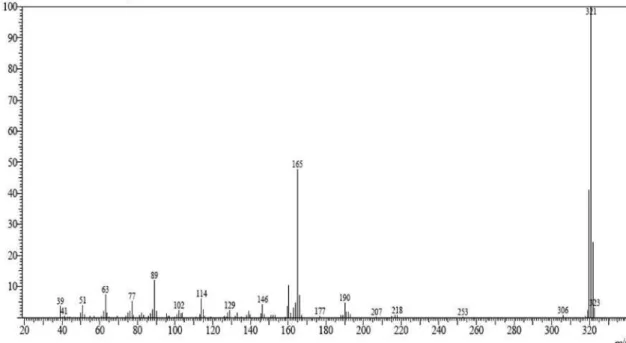
696; GC-MS (IE, 70 eV) m/z (%) 321 (M+, 100.0), 165 (47.7), 89 (12.0), 77 (5.3), 63 (7.4), 51 (4.0); HRMS (ESI, w/H+) calcd. 321.13387, found 322.13394.
2-(3-Nitrophenyl)-4,5-diphenyl-1H-imidazole (8g):
solid; mp 315-317 oC;41H NMR (300 MHz, DMSO-d
6) d
13.11 (br s, 1H, NH), 8.96 (s, 1H), 8.52 (d, 1H, J 7.7 Hz), 8.21 (dd, 1H, J 8.2 Hz), 7.77 (t, 1H, J 8.0 Hz), 7.22-7.64 (m, 10H); 13C NMR (75 MHz, DMSO-d
6) d148.3, 143.4,
Metal Chloride Hydrates as Lewis Acid Catalysts in Multicomponent Synthesis J. Braz. Chem. Soc.
S2
ν
max/cm-1 1541, 1523, 1348, 777, 699; GS-MS (IE, 70 eV)
m/z (%) 341 (M+, 100.0), 311 (47.8), 295 (21.1), 165 (42.6), 89 (22.0), 77 (13.2), 63 (3.3), 43 (2.2).
2-(2-Nitrophenyl)-4,5-diphenyl-1H-imidazole (8h):
solid; mp 224-225 oC;5 1H NMR (300 MHz, DMSO-d
6) d12.98 (sl, 1H, NH), 8.00 (d, 1H, J 7.6 Hz), 7.93 (d, 1H,
J 8.2 Hz), 7.79 (t, 1H, J 7.6 Hz), 7.64 (t, 1H, J 7.6 Hz), 7.35-7.60 (m, 8H), 7.31 (t, 1H, J 7.0 Hz), 7.23 (t, 1H,
J 7.0 Hz); 13C NMR (75 MHz, DMSO-d
6) d 148.2, 140.9,
137.4, 134.6, 132.0, 130.5, 129.7, 129.4, 128.7, 128.6, 128.2, 128.1, 127.9, 126.9, 126.6, 123.9,123.3; IR (Nujol) ν
max/cm-1 1601, 1524, 1502, 1364, 724, 694; GC-MS (IE, 70 eV) m/z (%) 341 (M+, 59.7), 311 (100.0), 207 (15.0), 165 (40.1), 147 (14.2), 135 (21.3), 104 (79.0), 89 (46.3), 77 (25.6), 63 (13.8), 51 (11.4).
2-(Furan-2-yl)-4,5-diphenyl-1H-imidazole (8i): solid;
mp 229-230 oC;
61H NMR (300 MHz, DMSO-d6) d 12.85
(br s, 1H, NH), 7.81 (d, 1H, J 1.6 Hz), 7.36-7.75 (m, 10H), 6.98 (d, 1H, J 3.4 Hz), 6.65 (dd, 1H, J 3.4 and 1.8 Hz); 13C NMR (75 MHz, DMSO-d
6) d 148.3, 145.7,143.1,
138.6, 138.0, 129.6, 128.5, 128.3, 127.7, 111.9, 107,5; IR (Nujol) ν
max/cm
-1 1602, 1500, 764, 696; GC-MS (IE, 70 eV)
m/z (%) 286 (M+, 100.0), 257 (9.4), 165 (22.0), 143 (6.1), 128 (8.6), 89 (3.7), 77 (9.0), 63 (2.8), 51 (12.1).
4,5-Diphenyl-2-(thiophen-2-yl)-1H-imidazole (8j):
solid; mp 255-256 oC;1 1H NMR (300 MHz, DMSO-d
6) d 12.79 (br s, 1H, NH), 7.69 (d, 1H, J 3.5 Hz), 7.25-7.51 (m, 11H), 7.15 (dd, 1H, J 4.7 and 3.5 Hz); 13C NMR (75 MHz, DMSO-d6) d 124.1, 126.2, 126.5, 127.0, 127.8,
128.1, 128.6, 130.8, 133.9, 134.7, 136.6, 141.5; IR (Nujol) ν
max/cm
-1 1594, 1493, 765, 695; GC-MS (IE, 70 eV)
m/z (%) 304 (6.77), 302 (M+, 100.0), 165 (39.7), 151 (8.7), 95 (7.4), 89 (5.8), 77 (6.3), 69 (6.5), 63 (4.1), 51 (4.3).
4,5-Diphenyl-2-(thiophen-3-yl)-1H-imidazole (8k):
solid; mp 257-259 oC; 1H NMR (300 MHz, DMSO-d
6) d
12.63 (br s, 1H, NH), 8.04 (dd, 1H, J 2.9 and 1.3), 7.71 (dd, 1H, J 5.0 and 1.2 Hz), 7.65 (dd, 1H, J 5.0 and 2.9 Hz), 7.31-7.53 (m, 10H); 13C NMR (75 MHz, DMSO-d
6) d 142.7, 132.5, 128.4, 127.7,127.0, 125.9, 121.8; IR (Nujol) ν
max/cm
-1 1593, 1493, 765, 697; GC-MS (IE, 70 eV)
m/z (%) 304 (6.64), 302 (M+, 100.0), 165 (46.6), 151 (8.9), 89 (10.3), 77 (6.5), 63 (5.2), 51 (4.2); HRMS (ESI, w/H+) calcd. 303.09505, found 303.09518.
4,5-Bis(4-methoxyphenyl)-2-(thiophen-3-yl)-
1H-imidazole (8l): solid; mp 199-201 oC;7 1H NMR
(400 MHz, DMSO-d6) d 12.35 (br s, 1H, NH), 7.97
(dd, 1H, J 2.9 and 1.5 Hz), 7.68 (dd, 1H, J 4.8 and 1.1 Hz), 7.62 (dd, 1H, J 5.5 and 2.9 Hz), 6.80-7.50 (m, 8H), 3.75 (s, 3H), 3.79 (s, 3H); 13C NMR (100 MHz, DMSO-d
6) d148.3, 143.4, 137.7, 134.7, 131.8, 131.2, 130.6, 130.4, 129.2, 128.7, 128.4, 128.3, 128.1, 127.1, 126.8, 122.6, 119.4; IR (Nujol) ν
max/cm
-1 3391, 1655, 1600, 1573, 1508,
1259, 1163, 842, 832; GC-MS (IE, 70 eV) m/z (%) 362 (M+, 100.0), 347 (28.4), 275 (4.1), 181 (5.7).
4,5-Bis(4-fluorophenyl)-2-phenyl-1H-imidazole (8m):
solid; mp 255-257 oC;8 1H NMR (400 MHz, DMSO-d
6) d12.67 (br s, 1H, NH), 8.07 (dd, 2H, J 8.4 and 1.1 Hz), 7.50-7.60 (m, 4H), 7.48 (t, 2H, J 7.5 Hz), 7.38 (t, 1H,
J 7.3 Hz), 7.29 (t, 2H, J 8.8 Hz), 7.14 (t, 2H, J 8.8 Hz); 13C NMR (100 MHz, DMSO-d
6) d 161.5 (d, 1J
CF 245.7 Hz),
160.9 (d, 1J
CF 243.4 Hz), 145.4, 136.1, 131.4 (d, 4JCF 3.1 Hz),
130.4 (d, 3J
CF 8.4 Hz), 130.1, 128.7 (d, 3J
CF 7.6 Hz), 128.5,
128.1, 128.0, 127.2 (d, 4J
CF 3.1 Hz), 126.9, 125.0, 115.5
(d, 2J
CF 21.4 Hz), 114.9 (d, 2J
CF 21.4 Hz); IR (Nujol)
ν max/cm
-1 1606, 1590, 1537, 1514, 1595, 1226, 1156, 835;
GC-MS (IE, 70 eV) m/z (%) 332 (M+, 100.0), 201 (44.1), 89 (9.6), 77 (3.0), 63 (4.6), 51 (2.2), 39 (2.0).
4-[4,5-Bis(4-fluorophenyl)-1H-imidazol-2-yl)]
benzonitrile (8n): solid; mp 272-274 oC; 1H NMR
(400 MHz, DMSO-d6) d12.98 (br s, 1H, NH), 8.23 (d, 2H, J 8.3 Hz), 7.93 (d, 2H, J 8.3 Hz), 7.55 (d, 2H, J 8.8 Hz), 7.54 (d, 2H, J 8.8 Hz), 7.00-7.40 (m, 4H); 13C NMR (100 MHz, DMSO-d6) d143.5, 134.0, 132.6, 128.7, 128.0,
125.4, 125.1, 118.6, 110.0; IR (Nujol) ν max/cm
-1 2229, 1608,
1516, 1497, 1223, 1161, 847, 837; GC-MS (IE, 70 eV)
m/z (%) 357 (M+, 100.0), 201 (42.5), 107 (13.3); HRMS (ESI, w/H+) calcd. 358.11522, found 358.11503.
4,5-Bis(4-fluorophenyl)-2-(furan-2-yl)-1H-imidazole
(8o): solid; mp 223-225 oC; 1H NMR (400 MHz, DMSO-d
6) d12.81 (br s, 1H, NH), 7.79 (dd, 1H, J 1.8 and 0.7 Hz), 7.42-7.58 (m, 4H), 7.27 (t, 2H, J 9.0 Hz), 7.14 (t, 2H,
J 9.0 Hz), 6.96 (dd, 1H, J 3.3 and 0.7 Hz), 6.64 (dd, 1H,
J 3.3 and 1.8 Hz); 13C NMR (100 MHz, DMSO-d
6) d
161.6 (d, 1J
CF 244.1 Hz), 161.0 (d, 1J
CF 241.9 Hz), 145.5,
143.0, 138.4, 136.8, 136.0, 130.4 (d, 3J
CF 8.4 Hz), 128.9 (d, 3J
CF 8.4 Hz), 127.0 (d, 4J
CF 3.1 Hz), 126.3, 115.6 (d, 2J
CF 22.1 Hz), 115.0 (d, 2JCF 21.4 Hz), 111.7, 107.4;
IR (Nujol) ν
max/cm-1 1606, 1529, 1514, 1496, 1228, 1158, 836, 738; GC-MS (IE, 70 eV) m/z (%) 322 (M+, 100.0), 293 (11.8), 201 (18.8), 107 (3.9); HRMS (ESI, w/H+) calcd. 323.09905, found 323.09912.
4 , 5 - B i s ( 4 - f l u o ro p h e n y l ) - 2 - ( t h i o p h e n - 3 - y l ) -
(400 MHz, DMSO-d6) d8.17 (dd, 1H, J 2.9 and 1.5 Hz),
7.76 (dd, 1H, J 5.1 and 1.5 Hz), 7.69 (dd, 1H, J 5.1 and 2.9 Hz), 7.54 (dd, 4H, J 9.2 e 5.5 Hz Hz), 7.24 (t, 4H,
J 8.8 Hz); 13C NMR (100 MHz, DMSO-d
6) d 166.6 (d, 1J
CF 248.0 Hz), 166.0 (d, 1J
CF 255.6 Hz), 162.6, 160.2,
141.9, 132.8, 132.7, 132.6, 129.8 (d, 3J
CF 8.4 Hz), 128.1,
127.1, 152.7, 123.2, 116.5 (d, 2J
CF 22.1 Hz), 115.3 (d, 2J
CF 21.4 Hz); IR (Nujol) νmax/cm
-1 3467, 1650, 1598,
1501, 1227, 1156, 835; GC-MS (IE, 70 eV) m/z (%) 338 (M+, 100.0), 201 (43.7), 107 (11.4), 95 (9.6); HRMS (ESI, w/H+) calcd. 339.07620, found 339.07639.
2,4,5-Triphenyl-1,3-oxazole (10a): solid; mp
111-113 oC;9 1H NMR (200 MHz, DMSO-d
6) d8.4-8.0
(m, 2H), 7.3-7.15 (m, 13H); 13C NMR (50 MHz, DMSO-d
6) d 159.9, 145.7, 136.5, 132.3, 131.3, 129.7, 129.5, 129.2, 129.0, 128.6, 128.1, 127.0, 126.6; IR (Nujol) ν
max/cm-1 3060, 2000-1700, 1600, 1590, 1500, 1490, 700, 690; GC-MS (IE, 70 eV) m/z (%) 297 (M+, 100.0), 269 (28.7), 165 (92.9). 105 (9.5), 89 (27.7), 77 (22.7), 63 (14.1), 51 (10.4)
2,4,5-Tris(4-fluorophenyl)-1,3-oxazole (10b): solid;
mp 154-157°C; 1H NMR (200 MHz, DMSO-d
6) d 8.3-7.9
(m, 2H), 7.8-7.1 (m, 10H); 13C NMR (50 MHz, DMSO-d
6) d 164.2, 162.9, 162.6, 116.9, 116.8, 166.4, 130.4, 129.6,
129.3, 128.7, 125.1, 123.7; IR (Nujol) ν
max/cm-1 3060, 2100-1700, 1600, 1520, 1500, 1200, 820; GC-MS (IE, 70 eV) m/z (%) 351 (M+, 86.6), 323 (18.6), 201 (100.0), 123 (10.5), 107 (28.9), 95 (19.3), 81 (4.4), 51(1.1); HRMS (ESI, w/H+) calcd. 352.09922, found 352.0979.
References
1. Sangshetti, J. N.; Kokare, N. D.; Kotharkar, S. A.; Shinde, D. B.;
Monatsh. Chem.2008, 139, 125.
2. Kidwai, M.; Mothsra, P.; Bansal, V.; Somvanshi, R. K.; Ethayathulla, A. S.; Dey, S.; Singh,T. P.; J. Mol. Catal. A: Chem.
2007, 265, 177.
3. Mohammadi, A. A.; Mivechi, M.; Kefayati, H.; Monatsh. Chem.
2008, 139, 935.
4. Zang, H.; Su, Q.; Yingming, M.; Cheng, B.-W.; Jun, S.;
Ultrason. Sonochem.2010, 17, 749.
5. Samai, S.; Nandi, G. C.; Singh, P.; Singh, M. S.; Tetrahedron
2009, 65, 10155.
6. Bahrami, K.; Khodaei, M. M.; Nejati, A.; Monatsh. Chem.2011,
142, 159.
7. Seko, N.; Yoshino, K.; Yokota, K.; Tsukamoto, G.; Chem. Pharm. Bull.1991, 39, 651.
8. Kamijo, S.; Yamamoto, Y.; Chem. Asian J.2007, 2, 568. 9. Ramirez, T. A.; Zhao, B.; Shi, Y.; Tetrahedron Lett.2010, 51,
1822.
Figure S1.1H NMR spectrum (300 MHz, DMSO-d
Metal Chloride Hydrates as Lewis Acid Catalysts in Multicomponent Synthesis J. Braz. Chem. Soc.
S4
Figure S2.13C NMR spectrum (75 MHz, DMSO-d
6) of compound 2,4,5-triphenyl-1H-imidazole (8a).
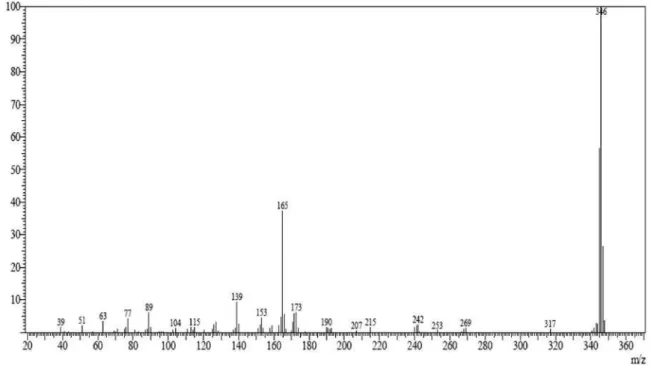
Figure S4. Mass spectrum (70 eV) of compound 2,4,5-triphenyl-1H-imidazole (8a).
Figure S5.1H NMR spectrum (400 MHz, DMSO-d
Metal Chloride Hydrates as Lewis Acid Catalysts in Multicomponent Synthesis J. Braz. Chem. Soc.
S6
Figure S6.13C NMR spectrum (100 MHz, DMSO-d
6) of compound 4-(4,5-diphenyl-1H-imidazol-2-yl)phenol (8b).
Figure S8. Mass spectrum (70 eV) of compound 4-(4,5-diphenyl-1H-imidazol-2-yl)phenol (8b).
Figure S9.1H NMR spectrum (400 MHz, DMSO-d
Metal Chloride Hydrates as Lewis Acid Catalysts in Multicomponent Synthesis J. Braz. Chem. Soc.
S8
Figure S10.13C NMR spectrum (100 MHz, DMSO-d
6) of compound 2-(4-methoxyphenyl)-4,5-diphenyl-1H-imidazole (8c).
Figure S12. Mass spectrum (70 eV) of compound 2-(4-methoxyphenyl)-4,5-diphenyl-1H-imidazole (8c).
Figure S13.1H NMR spectrum (400 MHz, DMSO-d
Metal Chloride Hydrates as Lewis Acid Catalysts in Multicomponent Synthesis J. Braz. Chem. Soc.
S10
Figure S14.13C NMR spectrum (100 MHz, DMSO-d
6) of compound 2-(3,4-dimethoxyphenyl)-4,5-diphenyl-1H-imidazole (8d).
Figure S16. Mass spectrum (70 eV) of compound 2-(3,4-dimethoxyphenyl)-4,5-diphenyl-1H-imidazole (8d).
Figure S17. 1H NMR spectrum (400 MHz, DMSO-d
Metal Chloride Hydrates as Lewis Acid Catalysts in Multicomponent Synthesis J. Braz. Chem. Soc.
S12
Figure S18. 13C NMR spectrum (100 MHz, DMSO-d
6) of compound 2-(naphthalen-1-yl)-4,5-diphenyl-1H-imidazole (8e).
Figure S20. Mass spectrum (70 eV) of compound 2-(naphthalen-1-yl)-4,5-diphenyl-1H-imidazole (8e).
Figure S21.1H NMR spectrum (300 MHz, DMSO-d
Metal Chloride Hydrates as Lewis Acid Catalysts in Multicomponent Synthesis J. Braz. Chem. Soc.
S14
Figure S22.13C NMR spectrum (75 MHz, DMSO-d
6) of compound 4-(4,5-diphenyl-1H-imidazol-2-yl)benzonitrile (8f).
Figure S24. Mass spectrum (70 eV) of compound 4-(4,5-diphenyl-1H-imidazol-2-yl)benzonitrile (8f).
Metal Chloride Hydrates as Lewis Acid Catalysts in Multicomponent Synthesis J. Braz. Chem. Soc.
S16
Figure S26.1H NMR spectrum (300 MHz, DMSO-d
6) of compound 2-(3-nitrophenyl)-4,5-diphenyl-1H-imidazole (8g).
Figure S27.13C NMR spectrum (75 MHz, DMSO-d
Figure S28. IR spectrum (Nujol) of compound 2-(3-nitrophenyl)-4,5-diphenyl-1H-imidazole (8g).
Metal Chloride Hydrates as Lewis Acid Catalysts in Multicomponent Synthesis J. Braz. Chem. Soc.
S18
Figure S30.1H NMR spectrum (300 MHz, DMSO-d
6) of compound 2-(2-nitrophenyl)-4,5-diphenyl-1H-imidazole (8h).
Figure S31.13C NMR spectrum (75 MHz, DMSO-d
Figure S32. IR spectrum (Nujol) of compound 2-(2-nitrophenyl)-4,5-diphenyl-1H-imidazole (8h).
Metal Chloride Hydrates as Lewis Acid Catalysts in Multicomponent Synthesis J. Braz. Chem. Soc.
S20
Figure S34.1H NMR spectrum (300 MHz, DMSO-d
6) of compound 2-(furan-2-yl)-4,5-diphenyl-1H-imidazole (8i).
Figure S35.13C NMR spectrum (75 MHz, DMSO-d
Figure S36. IR spectrum (Nujol) of compound 2-(furan-2-yl)-4,5-diphenyl-1H-imidazole (8i).
Metal Chloride Hydrates as Lewis Acid Catalysts in Multicomponent Synthesis J. Braz. Chem. Soc.
S22
Figure S38.1H NMR spectrum (300 MHz, DMSO-d
6) of compound 4,5-diphenyl-2-(thiophen-2-yl)-1H-imidazole (8j).
Figure S39.13C NMR spectrum (75 MHz, DMSO-d
Figure S40. IR spectrum (Nujol) of compound 4,5-diphenyl-2-(thiophen-2-yl)-1H-imidazole (8j).
Metal Chloride Hydrates as Lewis Acid Catalysts in Multicomponent Synthesis J. Braz. Chem. Soc.
S24
Figure S42.1H NMR spectrum (300 MHz, DMSO-d
6) of compound 4,5-diphenyl-2-(thiophen-3-yl)-1H-imidazole (8k).
Figure S43.13C NMR spectrum (75 MHz, DMSO-d
Figure S44. IR spectrum (Nujol) of compound 4,5-diphenyl-2-(thiophen-3-yl)-1H-imidazole(8k).
Metal Chloride Hydrates as Lewis Acid Catalysts in Multicomponent Synthesis J. Braz. Chem. Soc.
S26
Figure S46. HRMS (ESI +) of compound 4,5-diphenyl-2-(thiophen-3-yl)-1H-imidazole(8k).
Figure S47.1H NMR spectrum (400 MHz, DMSO-d
Figure S48.13C NMR spectrum (100 MHz, DMSO-d
6) of compound 4,5-bis(4-methoxyphenyl)-2-(thiophen-3-yl)-1H-imidazole(8l).
Metal Chloride Hydrates as Lewis Acid Catalysts in Multicomponent Synthesis J. Braz. Chem. Soc.
S28
Figure S50. Mass spectrum (70 eV) of compound 4,5-bis(4-methoxyphenyl)-2-(thiophen-3-yl)-1H-imidazole(8l).
Figure S51.1H NMR spectrum (400 MHz, DMSO-d
Figure S52.13C NMR spectrum (100 MHz, DMSO-d
6) of compound 4,5-bis(4-fluorophenyl)-2-phenyl-1H-imidazole (8m).
Metal Chloride Hydrates as Lewis Acid Catalysts in Multicomponent Synthesis J. Braz. Chem. Soc. S30
Figure S54. Mass spectrum (70 eV) of compound 4,5-bis(4-fluorophenyl)-2-phenyl-1H-imidazole (8m).
Figure S55.1H NMR spectrum (400 MHz, DMSO-d
Figure S56.13C NMR spectrum (100 MHz, DMSO-d
6) of compound 4-[4,5-bis(4-fluorophenyl)-1H-imidazol-2-yl]benzonitrile (8n).
Metal Chloride Hydrates as Lewis Acid Catalysts in Multicomponent Synthesis J. Braz. Chem. Soc. S32
Figure S58. Mass spectrum (70 eV) of compound 4-[4,5-bis(4-fluorophenyl)-1H-imidazol-2-yl]benzonitrile (8n).
Figure S60.1H NMR spectrum (400 MHz, DMSO-d
6) of compound 4,5-bis(4-fluorophenyl)-2-(furan-2-yl)-1H-imidazole (8o).
Figure S61.13C NMR spectrum (100 MHz, DMSO-d
Metal Chloride Hydrates as Lewis Acid Catalysts in Multicomponent Synthesis J. Braz. Chem. Soc. S34
Figure S62. IR spectrum (Nujol) of compound 4,5-bis(4-fluorophenyl)-2-(furan-2-yl)-1H-imidazole (8o).
Figure S64. HRMS (ESI +) of compound 4,5-bis(4-fluorophenyl)-2-(furan-2-yl)-1H-imidazole (8o).
Figure S65.1H NMR spectrum (400 MHz, DMSO-d
Metal Chloride Hydrates as Lewis Acid Catalysts in Multicomponent Synthesis J. Braz. Chem. Soc. S36
Figure S66.13C NMR spectrum (100 MHz, DMSO-d
6) of compound 4,5-bis(4-fluorophenyl)-2-(thiophen-3-yl)-1H-imidazole (8p).
Figure S68. Mass spectrum (70 eV) of compound 4,5-bis(4-fluorophenyl)-2-(thiophen-3-yl)-1H-imidazole (8p).
Metal Chloride Hydrates as Lewis Acid Catalysts in Multicomponent Synthesis J. Braz. Chem. Soc. S38
Figure S70.1H NMR spectrum (200 MHz, DMSO-d
6) of compound 2,4,5-triphenyl-1,3-oxazole (10a).
Figure S71.13C NMR spectrum (50 MHz, DMSO-d
Figure S72. IR spectrum (KBr) of compound 2,4,5-triphenyl-1,3-oxazole (10a).
Metal Chloride Hydrates as Lewis Acid Catalysts in Multicomponent Synthesis J. Braz. Chem. Soc. S40
Figure S74.1H NMR spectrum (200 MHz, DMSO-d
6) of compound 2,4,5-tris(4-fluorophenyl)-1,3-oxazole (10b).
Figure S75.13C NMR spectrum (50 MHz, DMSO-d
Figure S76. IR spectrum (KBr) of compound 2,4,5-tris(4-fluorophenyl)-1,3-oxazole (10b).
Metal Chloride Hydrates as Lewis Acid Catalysts in Multicomponent Synthesis J. Braz. Chem. Soc. S42