Alterations on monoamines
concentration in rat hippocampus
produced by lipoic acid
Ítala Mônica de Sales Santos1, Rizângela Lyne Mendes de Freitas2,
Gláucio Barros Saldanha2, Adriana da Rocha Tomé3,
Joaquín Jordán4, Rivelilson Mendes de Freitas1
ABSTRACT
The purposes of the present study were to verify monoamines (dopamine (DA), norepinephrine (NE), serotonin (5-HT)), and their metabolites (3,4-hydroxyphenylacetic acid (DOPAC), homovanillic acid (HVA) and 5-hydroxyindoleacetic acid (5-HIAA)) contents in rat hippocampus after lipoic acid (LA) administration. Wistar rats were treated with 0.9% saline (i.p., control group) and LA (10, 20 or 30 mg/kg, i.p., LA10, LA20 and LA30 groups, respectively). After the treatments all groups were observed for 24 h. The NE and DA levels were increased only in 20 mg/kg dose of LA in rat hippocampus. Serotonin content and in their metabolite 5-HIAA levels was decreased in same dose of LA. On the other hand, in DOPAC and HVA levels did not show any significant change. The alterations in hippocampal monoamines can be suggested as a possible of brain mechanism of action from this antioxidant. The outcome of the study may have therapeutic implications in the treatment of neurodegenerative diseases.
Key words: lipoic acid, hippocampus, dopamine, norepinephrine, serotonin.
Alterações na concentração de monoaminas no hipocampo de ratos produzidas pelo ácido lipóico
RESUMO
O objetivo do presente estudo foi verificar a concentração das monoaminas (dopamina (DA), norepinefrina (NA), serotonina (5-HT)), e seus metabólitos (ácido 3,4-hidroxifenil (DOPAC), ácido homovanílico (HVA) e 5 ácido hydroxiindolacético (5-HIAA)) no hipocampo de ratos após administração do ácido lipóico (AL). Ratos Wistar foram tratados com solução salina 0,9% (i.p., grupo controle) e AL (10, 20 ou 30 mg/kg, i.p., AL10, AL20 e AL30 grupos, respectivamente). Após os tratamentos todos os grupos foram observados durante 24 h. O conteúdo de DA no hipocampo de ratos foi aumentado apenas com AL na dose de 20 mg/ kg dose. A concentração de serotonina e do seu metabólito 5-HIAA também foi diminuída com esta dose de AL. Por outro lado, os níveis de DOPAC e de HVA não mostrram nenhuma mudança significativa. As alterações na concentração das monoaminas hipocampais podem ser sugeridas como um possível mecanismo de ação cerebral deste antioxidante. O resultado do estudo pode ter implicações terapêuticas no tratamento de doenças neurodegenerativas.
Palavras-chave: ácido lipóico, hipocampo, dopamina, norepinefrina, serotonina.
Correspondence
Rivelilson Mendes de Freitas Rua Cícero Eduardo s/n 64600-000 Picos PI - Brasil E-mail: [email protected]
Support
This study was supported in part by grants from the Brazilian National Research Council (CNPq), Brazil. I.M.S.S. and R.M.F are fellows from CNPq
Received 15 September 2009 Received in final form 23 October 2009 Accepted 4 November 2009
1Laboratory of Experimental Research in Biological Sciences, Federal University of Piaui, Picos PI, Brazil; 2Course of Pharmacy,
Catholic Faculty Rainha do Sertão, Quixada CE, Brazil; 3State University of Ceará, Campus do Itaperi – Fortaleza CE, Brazil; 4Grupo de Neurofarmacología, Departamento de Ciencias Médicas, Facultad de Medicina. Universidad de Castilla - La
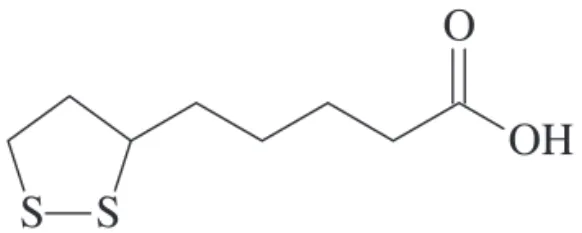
Mancha. Centro Regional de Investigaciones Biomédicas, Albacete, Spain. Alpha-lipoic acid (LA) also known as
thioctic acid contains two thiol groups, which may be oxidized or reduced1 (Fig 1). As the thiol antioxidant glutathione, LA
antioxi-dant, both the oxidized and reduced forms of LA are anti-oxidants. LA is 6,8-dithio-octanoic acid, an eight-carbon disulphide containing a single chiral center. LA also con-tains an asymmetric carbon, thus resulting in two pos-sible optical isomers. Only the R-isomer is endogenous-ly synthesized. Both isomers seem to have diferent po-tencies; it was previously shown that the R-form is more potent than the S-form in its ability to stimulate glucose uptake2, as well as to increase insulin-stimulated glucose uptake in rats3. On the other hand, the S-form exerts a slightly increased ainity for glutathione reductase.
LA is a naturally occurring compound that is synthe-sized in small amounts by plants and animals, includ-ing humans4,5. Endogenously synthesized LA is covalent-ly bound to speciic proteins, which function as cofactors for mitochondrial dehydrogenase enzyme complexes. In addition, to the physiological functions of protein-bound LA, there is an increasing scientiic and medical interest in potential therapeutic uses6.
According to Packer and colleagues, an ideal thera-peutic antioxidant should fulill several criteria. hese in-clude absorption from the diet, conversion in cells and tissues into usable form, the presence of variety antioxi-dant actions in both membrane and aqueous phases, and low toxicity7. LA is unique among natural antioxidants in its ability to fulill all of these requirements, making it a potentially highly efective therapeutic agent for a number of conditions in which oxidative damage has been impli-cated. LA’s antioxidant properties consist of the following: [1] its capacity to directly scavenge reactive oxygen spe-cies (ROS); [2] its ability to regenerate endogenous anti-oxidants, such as glutathione reduced, vitamins E and C; and [3] its metal chelating activity, resulting in reduced ROS production.
LA has a long-established eicacy in slow-onset and long-term reduction of oxidative processes involved in the pathogenesis of neurodegenerative diseases8,9. Al-though the efect was slow, drug’s cheapness, low tox-icity and the ability to ameliorate other unpleasant side efects of these distressing conditions make it a practi-cal choice10. Protecting the central nervous system (CNS) against oxidative damage may be a useful therapeutic ap-proach. hus, LA may possess a modulatory role in the treatment of neurodegenerative diseases, since this
com-pound interrupts cellular oxidative processes in both its oxidized and reduced forms. he efects of LA in the cen-tral nervous system (CNS) have not yet been determined, therefore, would be important to conduct these studies to clarify its brain mechanism of action.
Dopamine (DA), serotonin (5-HT), norepinephrine (NE) and their metabolites 3,4-hydroxyphenylacetic acid (DOPAC), homovanillic acid (HVA) and 5-hydroxyin-doleacetic acid (5-HIAA), represent the most important monoamines and metabolites-derived neurotransmitters. DA and NE are the most abundant excitatory monoam-ines neurotransmitter and are widely distributed in the
mammalian brain, including the hippocampus11. DA is
present at all parts of the CNS, at higher concentration in the substantia nigra and globus pallidus, followed by hy-pothalamus and hippocampus. here are some diseases associated with changes in these neurotransmitters lev-els. A role for the disrupted dopaminergic transmission in the etiology of chronic neurodegenerative diseases was postulated8,12. Pharmacological studies with LA can re-vealed their efects in monoamines concentrations, since when established may justify the use of this antioxidant in the clinic treatment of neurodegenerative diseases.
Previous studies in our laboratory8,9 have shown anti-convulsant and neuroprotective activities of LA in pilo-carpine model. hus, the pharmacological acknowledge-ment of LA at the level of CNS should be considered of great importance.
In this way, the purposes of the present work were to verify monoamines and their metabolites contents in rat hippocampus after LA administration, and to identify its possible mechanism of action at the CNS level.
METHOD
In each experiment, male Wistar rats weighing (250-280 g) provided by the Animal House of the Federal Uni-versity of Piaui (Brazil) were used. The animals were housed in groups of 30, into plastic cages with sawdust as beddings, and kept in a room with controlled temper-ature (26±1oC) and a 12-h light/dark cycle, with food and water ad libitum, except during the experiments. he
an-imals were treated in accordance to the current law and the NIH Guide for Care and Use of Laboratory Animals. he project was previously submitted to Animal’s Ethics Committee of the Federal University of Piaui.
Animals were treated with 0.9% saline (controls) and lipoic acid at the doses of 10, 20 or 30 mg/kg, i.p. (LA10, LA20 or LA30 groups, respectively). Twenty-four hours after the drug administration, the animals were sacriiced by decapitation, and the hippocampus was dissected. Af-ter dissection, the area was used for monoamines and metabolites determinations13.
Analyses of monoamines and metabolites were
car-S
S
OH
O
ried out with a high-performance liquid chromatogra-phy (HPLC, Shimadzu, Japan) apparatus. For all the ex-perimental procedures, 10% (w/v) homogenates of hip-pocampus of the LA10 (n=7), LA20 (n=7), LA30 (n=7) and control (n=9) groups were prepared. he endogenous levels of DA, NE, 5-HT and their non conjugated metab-olites DOPAC, HVA, and 5-HIAA were determined by reverse-phase high-performance liquid chromatography (HPLC) with electrochemical detection. Briely, a C18 re-verse phase column (Shim-pack, CLC-ODS 150 mm × 4.6 mm; Shimadzu, Kyoto, Japan), an amperometric detec-tor (Shimadzu, LECD-6A) and a liquid chromatography work station were used. he hippocampus was immedi-ately homogenized in 0.2 M perchloric acid. he homoge-nates 10% (w/v) were centrifuged (20.000 × g per min for 30 min). After centrifugation 20 µl of the supernatant was injected into the chromatograph. he mobile phase (pH 3.0) used at a low rate of 0.6 ml/min was of the following composition: 15.7 g of citric acid, 471.5 ml of twice-dis-tilled water, NaOH suicient to bring pH to 7.0, 3.78 mg of octyl sodium sulfate, 20 ml of acetonitrile and 10 ml of tetrahydrofuran. Oxidation potential was ixed at 0.85 V using a glass carbon working versus an Ag/AgCl refer-ence electrode. he peak areas of the external standards were used to quantify the sample peaks. he values ob-tained were expressed as ng/g wet tissue.
All results are presented as mean ± S.E.M of number of animals used in experiments. he results were com-pared using ANOVA followed by Student-Newman-Keuls test. he signiicance level was set at p<0.05.
RESULTS
DA levels in rat hippocampus increased by 9% af-ter LA administration (20 mg/kg), when compared to the controls (p<0.0001). No signiicant changes were ob-served in DA levels after LA treatment (10 or 30 mg/kg, i.p.), when compared to control group (Fig 2). When do-pamine level at LA20 group was compared to the LA10 group a signiicant increase (11%) was also found. In addi-tion, when dopamine level at LA30 group was compared to the LA20 group a signiicant decrease (10%) was also found (p<0.0489). No signiicant changes were observed in DOPAC and HVA levels in rat hippocampus, after the administration of LA (10, 20 or 30 mg/kg i.p.) when com-pared to the control (Fig 2).
NE level in rat hippocampus increased by 11% af-ter LA administration (20 mg/kg) as compared to con-trols (p<0.0001). At LA20 group, 5-HT level decreased by 9% (p<0.0345) and 5-HIAA level decreased by 21% (p<0.0001) after LA treatment, compared to the con-trols. No signiicant changes were observed in NE, 5-HT and 5-HIAA levels in rat hippocampus, after the admin-istration of LA (10 or 30 mg/kg, i.p.) when compared to
the control (Fig 3). When NE level at LA20 group was compared to the LA10 group a signiicant increase (13%) (p<0.0121) was found, instead 5-HT and 5HIAA levels decreased by 12% (p<0.0006) and 20% (p<0.0004) com-pared to LA10 group, respectively. In addition, when NE level at LA30 group was compared to the LA20 group a signiicant decrease (11%) (p<0.0049) was found, instead 5HIAA levels increased by 13% (p<0.0014) compared to LA20 group (Fig 3).
DISCUSSION
Most of the studies with LA were carried out in or-gans and systems other than the CNS14. In the present
DA DOPAC HVA
500
400
300
200
100
0
a,b
c
(ng/g wet tissue)
Control group LA10 group LA20 group LA30 group
Fig 2. Efects of lipoic acid on dopamine (DA), and their metab-olites (3,4-hydroxyphenylacetic acid (DOPAC), and homovanil-lic acid (HVA) in rat hippocampus. ap<0.05 as compared to
con-trol (ANOVA and Student–Newman–Keuls test); bp<0.05 as
com-pared to LA10 group (ANOVA and Student-Newman-Keuls test);
cp<0.05 as compared to LA20 group (ANOVA and
Student-New-man-Keuls test).
a,b
a,b
a,b c
c b
NE 5-HT 5-HIAA
400
300
200
100
0
(ng/g wet tissue)
Control group LA10 group LA20 group LA30 group
Fig 3. Efects of lipoic acid on norepinephrine (NE), serotonin (5-HT) and and their metabolite 5-hydroxyindoleacetic acid (5-HIAA) lev-els in rat hippocampus. ap<0.05 as compared to control (ANOVA
and Student-Newman-Keuls test); bp<0.05 as compared to LA10
group (ANOVA and Student-Newman-Keuls test); cp<0.05 as
work, DA, NE, 5-HT and their non conjugated metabo-lites DOPAC, HVA, and 5-HIAA levels were determined in rat hippocampus, after the LA administration. In the present study after the LA acute administration (20 mg/ kg), DA and NE levels were increased in rat hippocam-pus. In a previous study, we observed that LA in same dose increased the locomotor activity, in the open ield test, conirming that LA do not posses inhibitory efect and the behavior presented may be related to changes in these monoamines concentrations in the hippocampus (data not show). Recently, Meurs and colleagues15, de-scribed an increase in hippocampal DA content in the establishment of neurodegenerative diseases. DA has a modulatory efect on the dopaminergic system, in which increase of DA in the hippocampus is correlated with de-creased glutamate levels. Dopamine modulates fast excit-atory synaptic transmission in several brain regions. Ear-ly studies in the hippocampus revealed that DA, in par-ticular via D2 receptors, indirectly stimulates Y2 receptor causing inhibition of glutamatergic system15. hese re-sults suggest that LA probably exert their efects in CNS through of indirect stimulation of Y2 receptor, since, that produces an increase in DA levels.
he result suggests that the observed increase in do-pamine level was not produced by the activation of the sparse dopaminergic projection from ventral tegmental area to the hippocampus16, this increase was probably produced by inhibition of glutamatergic system by LA. Furthermore, we suggest that the increased dopamine and norepinephrine levels can be produced by three mecha-nisms: [1] by increasing their synthesis and or release; [2] by reduction in their metabolization rate; and/or [3] by decreasing its reuptake brain. In another set of exper-iments previous study showed that ventral tegmental area stimulation releases endogenous dopamine from the ax-onal terminals of dopaminergic neurons in the accum-bens, and our results suggest that LA induces the release of dopamine in hippocampus17,18.
he hippocampus is a region structurally and func-tionally afected in neurodegenerative diseases19,20. A re-duced hippocampal volume has been reported in patients sufering from depression, but it is still unknown if these changes can be reversed by antioxidants treatment, be-ing necessary more studies to clarify the antioxidant ef-fects. Based in this, we also showed a decrease in 5-HT levels only after LA administration at the dose of 20 mg/ kg. We believe that the LA dose-response curve in the hippocampus may be bell-shaped: at a low dose range, it increases 5-HT levels, decreasing them at higher dos-es. herefore, it would be important to test the anxyolitic and/or antidepressant efects of LA, once, that changes in 5-HT content in hippocampus are detected in neuro-degenerative disorders.
During chronic mild stress leads to altered synaptic function and cellular survival in the ventral
hippocam-pus21. These impairments of the hippocampus may be
compatible with altered emotionality, cognitive impair-ment, social isolation and disturbed memory22. Acute an-tioxidant treatment can modiied hippocampal seroton-ergic transmission. Serotonin is suggested to regulate as-pects of the development and the plasticity of brain cir-cuits. Serotonin and GABA show a reciprocal modulatory function in the hippocampus. his region is rich in both 5-HT and GABA terminals and receptors23,24. Projections from serotonergic neurons of the raphe nuclei terminate on GABAergic hippocampal interneurons increasing or decreasing their activity via serotonergic receptors25,26. On the other hand, inhibition of the GABA receptor decreas-es hippocampal 5-HT level, while application of GABA agonists to hippocampus decreases 5-HT release24. his reciprocal modulation of 5-HT and GABA in the hip-pocampus appears incompatible with the simplistic hy-potheses of decreased 5-HT and GABA levels in neuro-degenerative diseases. Hence, the study of LA efects in hippocampus may be useful to study the respective con-tribution direct of serotonin and/or indirect of GABA in the treatment of CNS diseases. We suggest that the decreased in serotonin levels can be produced by three mechanisms: [1] by decreasing of their synthesis and/or release; [2] by elevation in their metabolization rate; and/ or [3] by increasing its reuptake brain. However, further studies should be performed to conirm the hypothesis of that LA exert efects in serotonin concentration.
In addition, the hippocampus is responsible for some aspects of the neurobiology of memory11, as the consol-idation of memory. he selective activation of dopamin-ergic receptors, as well as serotondopamin-ergic receptors, is fol-lowed by the sequential intervention of several metabolic pathways mediated by pre- and post-synaptic protein ki-nases that also activate proteins necessary to the forma-tion of memory. In this case, we suggest that the LA can change the concentration of these, as well as can produce efects indirect on amino acids contents in the hippocam-pus. herefore, further studies should be performed with LA, since these amino acids may interfere with various brain mechanisms, altering several neurotransmission systems and producing neurodegenerative diseases. hus, more speciic studies must be conducted in order to fur-ther clarify these questions.
Together, these results are of interest, considering that some neurodegenerative diseases are related to the im-balance of these monoamines levels in the CNS.
Acknowledgments – We would like to thank Stenio Gardel Maia
for her technical assistance.
REFERENCES
1. Packer L, Witt EH, Tritschler HJ. alpha-Lipoic acid as a biological antioxidant. Free Radic Biol Med 1995;19:227-250.
2. Estrada DE, Ewart HS, Tsakiridis T, et al. Stimulation of glucose uptake by the natural coenzyme alpha-lipoic acid/thioctic acid: participation of elements of the insulin signaling pathway. Diabetes 1996;45:1798-1804.
3. Khanna S, Roy S, Packer L, Sen CK. Cytokine-induced glucose uptake in skel-etal muscle: redox regulation and the role of alpha-lipoic acid. Am J Physiol 1999;276:1327-1333.
4. Carreau JP. Biosynthesis of lipoic acid via unsaturated fatty acids. Methods Enzymol 1979;62:152-158.
5. Sik A, Penttonen M, Ylinen A, Buzsaki G. Hippocampal CA1 interneurons: an in vivo intracellular labeling study. J Neurosci 1995;15:6651-6665. 6. Kramer K, Packer L. R-alpha-lipoic acid. In: Kramer K, Hoppe P, Packer L (Eds).
Nutraceuticals in Health and Disease Prevention. New York: Marcel Dekker, Inc; 2001:129-164.
7. McKittrick CR, Magarinos AM, Blanchard DC, Blanchard RJ, McEwen BS, Sakai RR. Chronic social stress reduces dendritic arbors in CA3 of hippocampus and decreases binding to serotonin transporter sites. Synapse 2000;36:85-94. 8. Freitas RM, The evaluation of efects of lipoic acid on the lipid peroxidation,
nitrite formation and antioxidant enzymes in the hippocampus of rats after pilocarpine-induced seizures. Neurosci Lett 2009;45:140-144.
9. Militão GCG, Ferreira, PMP, Freitas RM. Efects of lipoic acid on oxidative stress in rat striatum after pilocarpine-induced seizures. Neurochem Int 2009; in press. 10. Gaspar P, Cases O, Maroteaux L. The developmental role of serotonin: news
from mouse molecular genetics. Nat Rev Neurosci 2003;4:1002-1012. 11. Goodman and Gilman. As bases farmacológicas da terapêutica/editores
re-sponsáveis, In: Hardman JG, Limbird LE, Gilman AG (eds) (tradução da 10. ed. Original, Vorsatz CM, revisão técnica, Fonseca AL), McGraw-Hill, Rio de Janeiro, 2005;392:229-234.
12. Smith AR, Shenvi SV, Widlansky M, Suh JH, Hagen TM. Lipoic acid as a
poten-tial therapy for chronic diseases associated with oxidative stress. Curr Med Chem 2004;11:1135-1146.
13. Burke RE, Greenbaun D. Efect of post-mortem factors on muscarinic recep-tor subtypes in rat brain. J Neurochem 1987;49:529-596.
14. Freitas RM, Nascimento VS, Sousa FCF, Vasconcelos SMM, Viana GSB, Fon-teles MMF. Catalase activity in cerebellum, hippocampus, frontal cortex and striatum after status epilepticus induced by pilocarpine in Wistar rats. Neu-rosci Lett 2004;365:102-105.
15. Meurs A, Clinckers R, Ebinger G, Michotte Y, Smolders I. Sigma 1 receptor-me-diated increase in hippocampal extracellular dopamine contributes to the mechanism of the anticonvulsant action of neuropeptide Y. Eur J Neurosci 2007;26:3079-3092.
16. Ishikawa K, Ott T, McGaugh JL, Evidence for dopamine as a transmitter in dor-sal hippocampus. Brain Res 1982;232:222-226.
17. Kebabian JW, Calne DB. Multiple receptors for dopamine. Nature 1979;277:93-96. 18. Tao R, Ma Z, Auerbach SB. Diferential regulation of 5-hydroxytryptamine re-lease by GABAA and GABAB receptors in midbrain raphe nuclei and fore-brain of rats. Br J Pharmacol 1996;119:1375-1384.
19. Lopez JF, Vazquez DM, Chalmers DT, Watson SJ. Regulation of 5-HT recep-tors and the hypothalamic-pituitary-adrenal axis. Implications for the neu-robiology of suicide. Ann NY Acad Sci 1997;836:106-134.
20. Summers TR, Matter JM, McKay JM, et al. Rapid glucocorticoid stimulation and GABAergic inhibition of hippocampal serotonergic response: In vivo di-alysis in the lizard anolis carolinensis. Horm Behav 2003;43:245-253. 21. Jayatissa MN, Bisgaard C, Tingstrom A, Papp M, Wiborg O. Hippocampal
cyto-genesis correlates to escitalopram-mediated recovery in a chronic mild stress rat model of depression. Neuropsychopharmacology 2006;31:2395-2404. 22. Bartesaghi R. Efect of early isolation on the synaptic function in the dentate
gyrus and ield CA1 of the guinea pig. Hippocampus 2004;14:482-498. 23. Sheline YI, Gado MH, Kraemer HC. Untreated depression and hippocampal
volume loss. Am J Psychiatry 2003;160:1516-1518.
24. Stanzione P, Calabresi P, Mercuri N, Bemardi G. Dopamine modulates CA1 hippocampal neurones by elevating the threshold for spike generation: an in vitro study, Neuroscience 1984;13:1105-1116.
25. Halasy K, Miettinen R, Szabat E, Freund TF. GABAergic interneurons are the major postsynaptic targets of median raphe afferents in the rat dentate gyrus. Eur J Neurosci 1992;4:144-153.