Kelly Polido Kaneshiro OlympioI Juliana NaozukaII
Pedro Vitoriano OliveiraII Maria Regina Alves CardosoIII Etelvino José Henriques BecharaIV,V
Wanda Maria Risso GüntherI
I Departamento de Saúde Ambiental.
Faculdade de Saúde Pública (FSP). Universidade de São Paulo (USP). São Paulo, SP, Brasil
II Departamento de Química Analítica.
Instituto de Química (IQ). USP. São Paulo, SP, Brasil
III Departamento de Epidemiologia. FSP. USP.
São Paulo, SP, Brasil
IV Departamento de Bioquímica. IQ. USP. São
Paulo, SP, Brasil
V Departamento de Ciências Exatas e da
Terra. Universidade Federal de São Paulo. Diadema, SP, Brasil
Correspondence: Wanda Maria Risso Günther Depto Saúde Ambiental, FSP-USP Av. Dr. Arnaldo, 715 - Cerqueira César 01246-904 São Paulo, SP, Brasil E-mail: [email protected] Received: 11/13/2009 Approved: 3/3/2010
Article available at: www.scielo.br/rsp
Association of dental enamel
lead levels with risk factors for
environmental exposure
Associação de níveis de chumbo
no esmalte dentário com fatores de
risco para exposição ambiental
ABSTRACT
OBJECTIVE: To analyze household risk factors associated with high lead levels in surface dental enamel.
METHODS: A cross-sectional study was conducted with 160 Brazilian adolescents aged 14–18 years living in poor neighborhoods in the city of Bauru, southeastern Brazil, from August to December 2008. Body lead concentrations were assessed in surface dental enamel acid-etch microbiopsies. Dental enamel lead levels were measured by graphite furnace atomic absorption spectrometry and phosphorus levels were measured by inductively coupled plasma optical emission spectrometry. The parents answered a questionnaire about their children’s potential early (0–5 years old) exposure to well-known lead sources. Logistic regression was used to identify associations between dental enamel lead levels and each environmental risk factor studied. Social and familial covariables were included in the models.
RESULTS: The results suggest that the adolescents studied were exposed to lead sources during their fi rst years of life. Risk factors associated with high dental enamel lead levels were living in or close to a contaminated area (OR = 4.49; 95% CI: 1.69;11.97); and member of the household worked in the manufacturing of paints, paint pigments, ceramics or batteries (OR = 3.43; 95% CI: 1.31;9.00). Home-based use of lead-glazed ceramics, low-quality pirated toys, anticorrosive paint on gates and/or sale of used car batteries (OR = 1.31; 95% CI: 0.56;3.03) and smoking (OR = 1.66; 95% CI: 0.52;5.28) were not found to be associated with high dental enamel lead levels.
CONCLUSIONS: Surface dental enamel can be used as a marker of past environmental exposure to lead and lead concentrations detected are associated to well-known sources of lead contamination.
Lead poisoning is a longstanding and well-known public health problem. No lead concentration can be considered safe for human health5 as lead exposure may
cause damage to various organs, especially the central nervous system (CNS) of developing children. In Brazil, the use of tetraethyl lead as an antiknock addi-tive in gasoline was banned in 1978, and the country also has regulations on acceptable lead levels in food and water.a,b However, in terms of acceptable levels
RESUMO
OBJETIVO: Analisar fatores de risco no ambiente domiciliar associados com altos níveis de chumbo no esmalte dentário superfi cial.
MÉTODOS:Estudo transversal conduzido com 160 adolescentes brasileiros (14 a 18 anos), residentes em bairros pobres do município de Bauru, SP, de agosto a dezembro de 2008. A concentração de chumbo no esmalte dentário foi avaliada por microbiópsias ácidas do esmalte dentário superfi cial, quantifi cada por espectrometria de absorção atômica com forno de grafi te e a concentração de fósforo foi medida por espectrometria de absorção óptica com plasma indutivamente acoplado. Os pais dos adolescentes responderam a questionário sobre possível exposição prévia (cinco primeiros anos de vida do adolescente) a chumbo decorrente de fontes de contaminação bem conhecidas. Usou-se regressão logística para identifi car associações entre concentração de chumbo no esmalte e fatores de risco ambientais. Covariáveis familiares e sociais foram incluídas nos modelos.
RESULTADOS: Os resultados sugerem que os jovens avaliados foram expostos a fontes de chumbo durante seus primeiros anos de vida. Os fatores de risco associados com o desfecho foram residir em área contaminada por chumbo ou nas suas proximidades (OR = 4,49; IC 95%: 1,69;11,97) e ter convivido, no mesmo domicílio, com pessoa que trabalhava em fábrica de tintas, pigmentos, cerâmicas ou baterias (OR = 3,43; IC 95%: 1,31;9,00). Ter usado, em casa, cerâmica vitrifi cada, brinquedos de baixa qualidade ou piratas, ter aplicado zarcão em portões de ferro sem cobertura esmaltada ou armazenar baterias de carro usadas na residência (OR = 1,31; IC 95%: 0,56;3,03) e hábito de fumar não foram associados com altas concentrações de chumbo no esmalte dentário (OR = 1,66; IC 95%: 0,52;5,28).
CONCLUSÕES: O esmalte dentário superfi cial pode ser utilizado como marcador de exposição ambiental passada ao chumbo e as concentrações encontradas desse metal estão ligadas a fontes bem conhecidas de contaminação por chumbo.
DESCRITORES: Intoxicação por Chumbo, diagnóstico. Esmalte Dentário. Exposição Ambiental. Adolescente. Estudos Transversais.
INTRODUCTION
a Brazil. Decree no. 16, of 13 March 1990. Authorizes the inclusion of the maximum lead content in food in Table II, as provided in Article 26
of Decree no. 55 871 of 26 March 1965. Diario Ofi cial Uniao. 15 Mar 1990;Section 1:5436.
b National Environmental Agency. Resolution CONAMA no. 357. Provides for classifi cation of water bodies and environmental guidelines for
its regulatory framework and sets out the conditions and standards of effl uent discharge, and other dispositions. Diario Ofi cial Uniao. 18 Mar 2005;Section 1:58-63.
c Brazil. Law 11.762, of 1st August 2008. Sets the upper lead limit authorized in the manufacture of paints for use in child and school settings,
varnishes and similar materials and other dispositions. [cited 2008 Oct 7]. Available from: http://www.planalto.gov.br/ccivil_03/_Ato2007-2010/2008/Lei/L11762.htm
in humans, only occupational exposure was regulated until recently, when a regulation was signed into law establishing the legal maximum lead content in mate-rials for children in educational settings, as well as in varnishes and furniture.c
in paints. Today, paints manufactured in Brazil are lead-free. However, red lead is still used as anticorrosive, e.g., in iron gates, refrigerators, cars, stoves, bicycles, and many other goods. In this case, a protective coat of paint is required to be applied over red lead.d
Manufacturers of canned foods in Brazil have also replaced lead-based solders. Glazed ceramic containers can be a source of lead poisoning when lead leaches into stored beverages, especially in the case of acidic fruit juices such as those made from grapes and citrus fruits.2
The tartaric and citric acids in such juices rapidly dissolve the lead in glazed ceramics by chelating the metal. In 1986, the Environmental Impact Assessment (EIA) Study became an offi cial requirement for the approval of potentially polluting industrial plants and manda-tory for companies to obtain a permit.e The strategies
outlined in this report to minimize pollution by the plant require offi cial analysis and approval.14 However, plants
that began operating prior to 1986 are not required to follow this regulation unless they have provenly caused environmental impacts.14 Unfortunately, several small
companies and household sources of lead contamina-tion do not issue warnings to prevent lead exposure.d
Considering the multiple potential sources of lead exposure in Brazil and the devastating effects of lead during CNS development, the objective of the present study was to investigate household risk factors asso-ciated with high lead levels in surface dental enamel in Brazilian adolescents.
METHODS
A cross-sectional study was conducted including volunteer adolescents aged 14–18 living in the city of Bauru, Southeastern Brazil.Some of these adolescents attended a social project (“First Job”) and lived in Tangarás situated close to a battery recycling plant or Ferradura Mirim slum situated about 2 km from that plant. These two sites (n=65) were considered either “contaminated”f or “close” areas. Fortunato Rocha Lima housing development, constructed through an urban renewal project to rid the city of slums, was considered a non-contaminated area (n=95). This housing development is located about 11 km from a battery recycling plant.
Based on data form a recent census carried out by the Sciences School of Universidade Estadual Paulista Júlio de Mesquita Filho (Unesp, Bauru, SP) in Ferradura
Mirim slum, visits were made only to 101 households of 14- to 18-year-old adolescents. All adolescents who agreed to participate in this study and whose parents signed an informed consent form were included in the statistical analyses. As no previous data were available for Fortunato Rocha Lima housing development, other social projects were visited so that the participating adolescents could be enrolled in the study. These adolescents were encouraged to invite other adolescents living in the same area to join them and make up the sample – snowball technique sampling. In both areas, meetings were held with the parents and adolescents to explain the study purposes. Those parents who subsequently signed an informed consent form were scheduled for an interview.
A questionnaire was administered to the parents of the adolescents and the following information was collected: location of current and previous homes to assess if they were living in or close to a contaminated area (risk factor A); if a member of the household worked in the manufacturing of ceramics, paints, paint pigments or batteries (risk factor B); if there was in the household glazed ceramics for hot/acidic foods/beve-rages, low-quality or pirated toys, anticorrosive paints on gates not coated with other enamel paint, and/or used car batteries (risk factor C); and if the adolescent was a former or current smoker (risk factor D). The adolescents were considered exposed to any of the three
fi rst risk factors (A, B and C) only when this exposure occurred in the fi rst fi ve years of life.
To include social and family variables in the analysis, this study included questions about the mother’s educa-tional level, occupation of the head of the household,11
number of children and number of people living in the household, and the adolescent’s age and gender. Surface dental enamel (SDE) acid-etch microbiopsies were performed to assess dental enamel lead levels (DELL). The materials used in this procedure were cleaned with a detergent solution, soaked in 10% (v/v) nitric acid for 24 h, rinsed with ultrapure water, dried and stored in a closed polypropylene container to avoid contamination. All reagents were tested for lead contamination.
Biopsies were performed at a dental clinic. All proce-dures were performed by a single dentist (KPKO). The adolescents’ teeth were cleaned with a rotary brush and pumice slurry, then washed and dried. In preparation for the biopsy, the maxillary right incisor was isolated
d Freitas CU. Estratégias de abordagem para a exposição ambiental ao chumbo no Estado de São Paulo. [cited 2006 Dec 1]. Available from:
http://www.cve.saude.sp.gov.br/htm/doma/chumbo.htm
e National Environmental Agency. Resolution CONAMA no. 1, of 23 January 1986. Defi nes the circumstances and establishes the
requirements and conditions for Environmental Impact Assessment (EIA) and related Environmental Impact Report – RIMA. Diario Ofi cial Uniao. 17 Feb 1986; Section 1:2548-9.
f Enviromental Agency of the State of São Paulo. Relação de áreas contaminadas: novembro de 2008 [cited 2010 Feb 18] Available from:
with cotton rolls and an adhesive tape (Magic Tape, 810 Scotch 3M) containing a circular perforation (4.0 mm in diameter) was placed on the labial surface of the tooth, delimiting the biopsy site. The sampling site was etched once according to the following procedure: 10 μL of 1.6 moL/L HCl in 70% (v/v) glycerol were applied to the area for 35 s.3 The biopsy solution was
then transferred to a 0.2 mL centrifuge tube (Axygen Scientifi c, Inc., Union City, USA) containing 200 μL of ultrapurifi ed water. The surface was then rinsed twice for 10 s with 10 μL ultrapurifi ed water, which was then transferred to the centrifuge tube, making a
fi nal volume of 230 μL. The tape was removed and the tooth was washed with water for 30 s and dried with air jet, after which a neutral topical fl uoride was applied. Various sites on the clinic’s dental bench or centrifuge tube rack were also sampled to check for lead contamination in the environment where the procedures were carried out.
SDE has a very steep lead gradient.4 The accurate
calculation of biopsy depth is crucial to determine SDE lead levels. The method used to calculate the biopsy depth was described by Cleymaet et al6 and it is based
on the assumption that 17.4% of the weight of enamel corresponds to phosphorus and that the mean density of dental enamel is 2.95 g/cm³. Biopsy depths are esti-mated according to the following equation:
Biopsy depth = enamel mass (μg) / 2.95 x biopsy area (mm2)
DELL were measured using a graphite furnace atomic absorption spectrometer, model SIMAA-600, equi-pped with a longitudinal Zeeman-effect background correction system, Echelle optical arrangement, solid state detector, end-capped transversal heating graphite tubes (EC-THGA) with integrated pyrolytically coated platforms (Perkin-Elmer, Norwalk, CT) and a hollow cathode lamp. Solutions were delivered into the graphite tube by means of an AS-72 autosampler. The instrumental conditions for the spectrometer were as follows: 15 mA of lamp current, 0.7 nm of band-pass and 283.3 nm of wavelength. The heating program consisted of fi ve steps (temperature/oC, ramp/s, hold/s):
1 (130, 10, 10); 2 (200, 5, 20); 3 (800, 5, 20); 4 (2100, 0, 5); and 5 (2400, 1, 2). Aliquots of 10 μL of samples or analytical solutions were introduced into the graphite furnace with 10 μL of chemical modifi er (5 μg Pd + 3 μL Mg). This chemical modifi er was prepared using suprapure solutions of 10 g/L Pd in 15% (v/v) HNO3 and 10 g/L Mg using Pd(NO3)2 and Mg(NO3)2 (Merck, Darmstadt, Germany), respectively.
The calibration curve (2–40 μg/L) was constructed using analytical-grade Tritisol solutions of 1000 mg L-1 of Pb (Pb(NO
3)3) diluted in 1.6 mol/L HCl in 70%
(v/v) glycerol.
The samples were analyzed without previous treatment. Samples with high lead concentrations (>40 μg/L) were diluted in deionized water (2–5 times). The analytical signals of each sample were recorded in triplicate. The accuracy of the analytical procedure was checked by analyzing a standard reference material of animal bone (H-5, IAEA from Austria). The comparison between lead concentrations obtained experimentally (3.08, SD = 0.16 mg/kg) and the certifi ed concentration (3.10, SD = 0.18 mg/kg) showed good agreement using Student’s t-test at a 95% signifi cance level.
Phosphorus was assessed using a Modula ICP optical emission spectrometer (Spectro Analytical Instruments, Kleve, Germany) equipped with a radial-viewed plasma torch. The settings of the instrumental conditions for the analyses were as follows: 1400 W of power supplier, cross-fl ow nebulizer, double pass (Scott-type) spray chamber, 12 L/min of outer gas fl ow, 1.0 L/min of intermediate and nebulizer gas fl ow, 1.5 mL/min of sample uptake rate and 213.618 nm of atomic P analytical wavelength.
The calibration curve was obtained using analytical-grade Tritisol solutions of 1000 mg/L of P (KH2PO4) from Spex (Spex Sample Preparation, Metuchen, USA) after dilution (20 times) in water. The analytical range was 0.5–10 mg/L. The analytical signals of each sample were obtained in triplicate.
For the statistical analysis, the data from the question-naires were entered onto an Excel 2003 chart (Microsoft Corporation, Redmond, WA, USA). Each risk factor was analyzed dichotomously. Living in Ferradura Mirim slum or in the proximity of a plant that might conta-minate the environment with lead was considered risk level 1, while living in Fortunato Rocha Lima housing development or locations far from such plants was considered risk level 0. If a member of the household worked in a plant that could possibly use lead in its manufacturing process, it was considered risk level 1, otherwise, it was considered risk level 0. A risk level 0 was considered when there was no exposure to glazed ceramic kitchenware, pirated toys, anticorrosive paint, and used car batteries during the fi rst fi ve years of life; otherwise it was considered risk level 1. And smokers were considered at risk level 1 and non-smokers at risk level 0. DELL were considered as a dependent variable and each risk factor as an independent one.
To address the large standard deviation in DELL, and since there is no established DELL prevalence in the population studied, we decided to consider the 75th
Bivariate analyses were performed to identify asso-ciations between the independent variables and the outcome. Multiple logistic regression models were used to control for potential confounders.
Mann-Whitney tests were applied to analyze the diffe-rence by gender and between exposed and non-exposed adolescents (p<0.05).
Intercooled Stata version 9.1 software was used for the analysis.
This study was approved by the Research Ethics Committee of Faculdade de Saúde Pública of Universidade de São Paulo (Protocol No. 244/05). All adolescent participants underwent dental cleaning, as well as an application of neutral fl uoride gel as needed. A dental clinical examination was performed in all the participants of the study, and whenever a curative treatment was required, this was explained to the study participants who received written guide-lines including a list of local public services providing dental treatment.
RESULTS
A total of 262 adolescents were invited to participate in the study and 183 (70%) parents signed an informed consent form. Six adolescents did not attend the exami-nations, even after at least three attempts had been made for home visits or telephone contact. Four adolescents could not undergo lead assessments because they had dental caries or wore orthodontic appliances on both maxillary central incisors. Thus, 179 (68%) subjects were examined for lead and 160 parents (61%) answered the questionnaire. The main reasons stated by adolescents refusing to participate in the study were: the adolescent had left home; the adolescent could not attend the examination because he/she had a full-time job, or was not interested in participating.
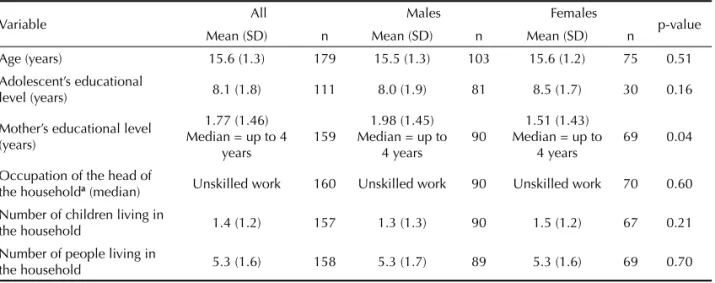
Table 1 shows the covariate structure and data charac-terizing the sample. The only signifi cantly different variable between males and females was the mother’s average educational level (p=0.04).
DELL was statistically different between exposed and non-exposed subjects only in the analysis of risk factor A (p=0.0006). As for risk factor B, although the medians found for adolescents whose parents worked in the manufacturing of ceramics, paint pigments, batte-ries or paints were higher than median DELL among adolescents whose parents did not engage in this type of work, the difference was not statistically signifi cant (p=0.0908). The differences found in mean DELL between adolescents exposed and not exposed to risk factor C and risk factor D were not signifi cant either (p=0.9022 and p=0.4528, respectively) (Table 2). Table 3 shows the association between DELL and the risk factors studied. High DELL was signifi cantly associated with living in households located in or close to contaminated areas (risk factor A), and having a member of the household who worked at ceramic, pigment, battery or paint manufacturing plants (risk factor B). The adjusted odds ratios for social and family variables were 4.49 (95% CI: 1.69;11.97) and 3.43 (95% CI: 1.31;9.00) for risk factors A and B, respecti-vely. The odds ratios for DELL vs. risk factor C or D
were not signifi cant.
DISCUSSION
This study showed a strong association between high DELL and living in proximity (around 2 km) with plants using lead, or even having a member of the household who worked in such plants. Also, SDE microbiopsies indicate body lead concentrations when there were risk factors for lead exposure during childhood in the adolescents studied.
Table 1. Descriptive variables for all adolescents and stratifi ed by sex. City of Bauru, Southeastern Brazil, 2008.
Variable All Males Females p-value
Mean (SD) n Mean (SD) n Mean (SD) n
Age (years) 15.6 (1.3) 179 15.5 (1.3) 103 15.6 (1.2) 75 0.51
Adolescent’s educational
level (years) 8.1 (1.8) 111 8.0 (1.9) 81 8.5 (1.7) 30 0.16
Mother’s educational level (years)
1.77 (1.46) Median = up to 4
years
159
1.98 (1.45) Median = up to
4 years
90
1.51 (1.43) Median = up to
4 years
69 0.04
Occupation of the head of
the householda (median) Unskilled work 160 Unskilled work 90 Unskilled work 70 0.60
Number of children living in
the household 1.4 (1.2) 157 1.3 (1.3) 90 1.5 (1.2) 67 0.21
Number of people living in
the household 5.3 (1.6) 158 5.3 (1.7) 89 5.3 (1.6) 69 0.70
Unsuspected sources of lead poisoning are probably present in the daily routine of millions of people worldwide. A recent study found that one fi fth of both US- and India-manufactured Ayurvedic medicines purchased via the Internet contained detectable lead, mercury, or arsenic.19 However, products for children
present serious danger. Toys may contain lead-based paints and end up in small children’s mouths. This can be serious because a child’s intestine absorbs lead much faster than an adult’s and their developing CNS is more vulnerable to toxic agents, especially in malnourished children. Neural proliferation, differentiation and plas-ticity are strongly impaired by lead.
Smoking in the family environment was also iden-tifi ed as a risk factor for higher blood lead levels in children living close to a smelting plant in Sweden.1
The present study found no correlation between high DELL and adolescents’ smoking habit. Dental enamel contamination by lead contained in cigarettes would show a post-eruptive uptake of lead in dental tissue, but there is no data that defi nitely demonstrate that this occurs. Our results showed that smokers do not have higher DELL than non-smokers, although the sample studied included few smokers. Pre-eruptive lead uptake seems to be prevalent.
Table 2. Mean (µg/g) and median dental enamel lead concentrations in exposed and non-exposed adolescents to the risk factors studied according to their answers in the questionnaire. City of Bauru, Southeastern Brazil, 2008.
Risk factor
Exposed Non-Exposed
All Males Females
p-value
All Males Females
p-value
Mean (SD) n Mean
(SD) n Mean (SD) n Mean (SD) n Mean (SD) n Mean (SD) n A 222.8 (363.0) Median = 139.5 65 530.7 (784.4) Median = 248.4 11 262.1 (287.7) Median = 188.6 54 0.59 129.9 (189.0) Median = 62.5 95 147.1 (215.2) Median = 52.3 44 115.1 (163.8) Median = 62.5 51 0.40 B 274.3 (500.4) Median = 148.0 31 356.4 (640.5) Median = 204.8 18 160.6 (143.7) Median = 129 13 0.47 142.0 (181.3) Median = 79.3 128 149.7 (187.0) Median = 78.2 72 132.2 (175.1) Median = 79.4 56 0.32 C 178.2 (314.0) Median = 88.7 112 215.1 (392.6) Median = 88.7 62 132.4 (166.4) Median = 90.2 50 0.13 143.1 (155.6) Median = 76.8 48 137.8 (143.5) Median = 61.5 28 150.5 (174.7) Median = 99.0 20 0.94 D 158.2 (134.2) Median = 155.8 16 155.3 (130.2) Median = 155.8 14 178.2 (221.1) Median = 178.2 2 0.75 168.7 (287.9) Median = 84.0 144 197.6 (362.0) Median = 81.5 76 136.4 (168.0) Median = 90.2 68 0.25
Risk factor A: living in or close to a contaminated area; Risk factor B: member of the household worked in the manufacturing of ceramics, paints, paint pigments or batteries; Risk factor C: presence of potential lead-contaminated products in the household; Risk factor D: adolescent was a (former or current) smoker.
a Mann-Whitney test (between male and female groups).
Mann-Whitney test (between exposed and non-exposed groups): A - p=0.0006; B - p=0.0908; C - p=0.9022; D - p= 0.4528.
Table 3. Association between dental enamel lead levels and the risk factors studied. City of Bauru, Southeastern Brazil, 2008.
Risk factor OR (95% CI)
Adjusted for biopsy depth Adjusted for biopsy depth, family and social variables
A 4.25 (1.63;11.13) 4.49 (1.69;11.97)a
B 2.30 (0.96;5.49) 3.43 (1.31;9.00)b
C 1.24 (0.55;2.82) 1.31 (0.56;3.03)c
D 2.06 (0.67;6.28) 1.66 (0.52;5.28)d
Risk factor A: living in or close to a contaminated area; Risk factor B: member of the household worked in the manufacturing of ceramics, paints, paint pigments or batteries; Risk factor C: presence of potential lead-contaminated products in the household; Risk factor D: adolescent was a (former or current) smoker.
a adjusted for biopsy depth, number of children in the household and occupation of the head of the household;b adjusted for
Some comments about the biomarker selected for this study. Dental enamel has been considered a biomarker for early or chronic lead exposure.3,4,17 SDE
microbiop-sies can be an option instead of bone lead measured by K-line X-ray fl uorescence (XRF) spectroscopy of tibia because it is a minimally invasive, fast, safe, low-cost and painless procedure for analyzing past exposure to lead. Several studies have used in vivo dental enamel microbiopsies to assess lead levels.6,9 None of our
volunteers reported any problem or discomfort during dental sampling procedure.
Past use of low-quality or pirated toys, lead-glazed ceramic kitchenware, red lead for iron gates and car batteries at home was not found to be associated with high DELL. However, the sample was small and lead content of toys and glazed ceramic kitchenware was not measured. This was partly because the questionnaire asked about the use of these objects when the subjects were very young, and there are no means of measuring that. In addition, imported and low-quality toys have only been recently available in the Brazilian market. Another fact worth mentioning is that most respondents reported they did not live in houses with iron gates, but in shacks that typically have no iron gates, which are associated with higher quality housing.
With this respect the socioeconomic status should be stressed. Neurodevelopmental toxicity manifes-tations depends on factors such as age at exposure, coexposure to other neurotoxicants, nutritional status, genotype and home environment characteristics.20 Low
socioeconomic status implies living in risk areas or in areas surrounding contaminated factories, which is aggravated by unpaved streets. They lack recreational opportunities, and children frequently play in the streets in direct contact with lead-contaminated soil and dust, which then accumulates in their homes. Playing with lead-containing soil and dust has indeed found to be a risk factor for lead poisoning.18 In the study area, parents
reported that their children had scarcely any toys, and the few ones they had were bought from street vendors who sell pirated low-quality toys.
The association found in this study between having a member of the household who worked with lead and high DELL has already been demonstrated in previous studies.8 In Freitas’ study, although workers had separate bathrooms and lockers in the plant, 20% of them said they usually took home the clothes they
wore at work. Some of the adolescents here studied lived in the same area or had relatives who worked in the same plant investigated by Freitas et al.8
Lead has long been known as a ubiquitous, insidious and devastating neurotoxicant. Lead poisoning is reportedly linked to high risk of learning disabilities, aggressiveness and criminal offenses.7,15-17,21
One of the many positive consequences of preventing lead exposure is its substantial economic benefi ts. Grosse et al10 estimated that American preschool
chil-dren would experience a 2.2–4.7 point increase in IQ if leaded gasoline and blood lead were reduced. Based on this premise, they estimated the IQ-related increase in income and that the economic benefi t for each year’s cohort of 3.8 million children aged two ranges from $110 billion to $319 billion. Landrigan et al,12 assuming
no threshold for lead-IQ association, estimated the loss of future earnings for one-year cohort of children aged 5 in 1997 at $43.4 billion.
In conclusion, although we did not measure lead concentrations related to the risk factors studied during the putative exposure time (children aged 0–5 years), DELL seem to refl ect the risk factors report-edly associated with lead exposure.13 Because lead exposure is preventable, public health policies are needed to protect the population from these risks of poisoning, thereby preventing individual and national economic losses. Government-supported education campaigns should inform the public of the serious dangers of lead exposure. Such public initiatives for primary prevention already exist in developed countries.g,hHowever, very little has been done in
Brazil, where most people are unaware of the dangers of lead poisoning, and where it is not known what portion of the population is at risk of lead exposure.
ACKNOWLEDGEMENTS
To Dr. Clarice Umbelino de Freitas (Center for Epidemiological Surveillance, São Paulo State Health Department, Brazil) and Dr. Cássia Maria Buchalla for their valuable guidance and ideas during the design of this study. To Dr. Marília Afonso Rabelo Buzalaf (Bauru Dentistry School, Universidade de São Paulo, Brazil) and Dr. Brian Bandy (University of Saskatchewan, CA) for their suggestions to the manuscript.
g Centers for Disease Control and Prevention. Lead. State and Local Programs. [cited 2010 Jul 17] Available from: http://www.cdc.gov/nceh/
lead/programs.htm
1. Berglund M, Lind B, Sörensen S, Vahter M. Impact of dust lead on children’s blood lead in contaminated areas of Sweden. Arch Environ Health. 2000;55(2):93-7. DOI:10.1080/00039890009603393
2. Browder AA. Lead poisoning from glazes. Ann Intern Med. 1972;76(4):665.
3. Brudevold F, Reda A, Aasenden R, Bakhos Y. Determination of trace elements in surface enamel of human teeth by a new biopsy procedure. Arch Oral Biol. 1975;20(10):667-73. DOI:10.1016/0003-9969(75)90135-1
4. Brudevold F, Aasenden R, Srinivasian BN, Bakhos Y. Lead in enamel and saliva, dental caries and the use of enamel biopsies for measuring past exposure to lead. J Dent Res. 1977;56(10):1165-71.
5. Chiodo LM, Covington C, Sokol RJ, Hannigan JH, Jannise J, Ager J, et al. Blood lead levels and specifi c attention effects in young children. Neurotoxicol Teratol. 2007;29(5)9:538-46.
6. Cleymaet R, Quartier E, Slop D, Retief DH, Smeyers-Verbek J, Coomans D. Model for assessment of lead content in human surface enamel. J Toxicol Environ Health. 1991;32(2):111-27. DOI:10.1080/15287399109531472
7. Dietrich KN, Ris MD, Succop PA, Berger OG, Bornschein RL. Early exposure to lead and juvenile delinquency. Neurotoxicol Teratol. 2001;23(6):511-8. DOI:10.1016/S0892-0362(01)00184-2
8. de Freitas CU, de Capitani EM, Gouveia N, Simonetti MH, de Paula e Silva MR, Kira CS, et al. Lead exposure in an urban community: investigation of risk factors and assessment of the impact of lead abatement measures. Environ Res. 2007;103(3):338-44. DOI:10.1016/j.envres.2006.09.004
9. Gomes VE, Rosário de Souza M L, Barbosa Jr F, Krug FJ, Pereira Saraiva M C, Cury JA, et al. In vivo studies on lead content of deciduous teeth superfi cial enamel of preschool children. Sci Total Environ. 2004;320(1):25-35. DOI:10.1016/j.scitotenv.2003.08.013
10. Grosse SD, Matte TD, Schwartz J, Jackson RJ. Economic gains resulting from the reduction in children’s exposure to lead in the United States. Environ Health Perspect. 2002;110(6):563-70.
11. Hollingshead AB. The index of social position. In: Hollingshead AB, Redlich FC. Social class and mental
illness: a community study. New York: John Willey & Sons; 1958. p.390-1.
12. Landrigan PJ, Schechter CB, Lipton JM, Fahs MC, Schwartz J. Environmental pollutants and disease in American children: estimates of morbidity, mortality, and costs for lead poisoning, asthma, cancer and developmental disabilities. Environ Health Perspect. 2002;110(7):721-8.
13. Levin R, Brown MJ, Kashtock ME, Jacobs DE, Whelan EA, Rodman J, et al. Lead exposures in U.S. children, 2008: implications for prevention. Environ Health Perspect. 2008;116(10):1285-93. DOI:10.1289/ ehp.11241
14. Machado PAL. Direito ambiental brasileiro. São Paulo: Revista dos Tribunais; 1982.
15. Needleman HL, McFarland C, Ness RB, Fienberg SE, Tobin MJ. Bone lead levels in adjudicated delinquents. A case control study. Neurotoxicol Teratol. 2002;24(6):711-7. DOI:10.1016/S0892-0362(02)00269-6
16. Olympio KPK, Gonçalves C, Günther WM, Bechara EJ. Neurotoxicity and aggressiveness triggered by low-level lead in children: a review. Rev Panam Salud Publica. 2009;26(3):266-75. DOI:10.1590/S1020-49892009000900011
17. Olympio KPK, Oliveira PV, Naozuka J, Cardoso MR, Marques AF, Günther WM, et al. Surface dental enamel lead levels and antisocial behavior in Brazilian adolescents. Neurotoxicol Teratol. 2010;32(2):273-9. DOI:10.1590/S1020-49892009000900011
18. Rhoads GG, Ettinger AS, Weisel CP, Buckley TJ, Goldman KD, Adgate J, et al. The effect of dust lead control on blood lead in toddlers: a randomized trial. Pediatrics. 1999;103(3):551-5. DOI:10.1542/ peds.103.3.551
19. Saper RB, Phillips RS, Sehgal A, Khouri N, Davis RB, Paquin J. Lead, mercury, and arsenic in US- and Indian-Manufactured ayurvedic medicines sold via the internet. J Am Med. Assoc. 2008;300:915-23.
20. Weiss B, Bellinger DC. Social ecology of children’s vulnerability to environmental pollutants. Environ Health Perspect. 2006;114:1479-85.
21. Wright JP, Dietrich KN, Ris D, Hornung RW, Wessel SD, Lanphear BP. Association of prenatal and childhood blood lead concentrations with criminal arrests in early adulthood. PLoS Med. 2008;5:732-40. REFERENCES
This research was supported by FAPESP (São Paulo Research Foundation grants 01/09641-1 and 06/56530-4), CNPq (the National Council for Scientifi c and Technological Development), and the Milênio Redoxoma Project.
Olympio KPK was recipient of a fellowship from CAPES (Brazilian Federal Agency for Support and Evaluation of Graduate Education).