Asymptomatic Bacteriuria among Pregnant Women Referred to
Outpatient Clinics in Sanandaj, Iran
Kalantar Enayat, Farhadifar Fariba, Nikkho Bahram
Department of Microbiology (KE), School of Medicine, Sanandaj University of Medical Sciences,
Sanandaj, Iran, Department of Obstetrics (FF), Beassat Hospital, Sanandaj, Iran and School of
Medicine (NB), Kurdistan University of Medical Sciences, Sanandaj, Iran
ABSTRACT
Objectives: Determine the prevalence of asymptomatic urinary tract infection (AUTI) among pregnant women. We also determined the antibacterial susceptibility of the isolates to various antibiotics and associated risk factors in AUTI.
Materials and Methods: One thousand ive hundred and ive consecutive pregnant women were included in the study.
Mid-stream urine specimen for complete examination of urine was obtained.
Results: Of 1505 pregnant women, 134 (8.9%) had bacteriuria. The mean age of the all the pregnant women included in the study was 28.40 years with a standard deviation of 6.16. Age ranged from 15 to 45 years of age. The urine culture of the asymptomatic pregnant women (1505 cases) showed growth in only 134 cases (8.9%). Escherichia coli was the com-monest organism 79 (58.96%) followed by CN Staphylococcus 22 (16.8%) and S aureus 18 (13.43%).
Escherichia coli, which comprised 58.96% (79) of the isolates, were 88.62%, 87.35%, and 83.55% sensitive to cefotaxime,
ciproloxacin and cefotizoxime respectively. Similarly, E. coli were 89%, 70%, and 20% resistant to ampicillin, cotrimoxa
-zole, and nitrofurantoin respectively (OR 1.57 95% CI 1.01, 2.44). After analyzing, four variables, hemoglobin levels seem to be independently associated with asymptomatic bacteriuria (OR = 9.41 (1.65-50.38).
Conclusion: Prevalence of asymptomatic bacteriuria among pregnant women was 8.9%. The predominant organisms were Escherichia coli 58.96% (79%), followed by CN Staphylococcus 22 (16.8%). Most strains of Escherichia coli showed that they were resistant to ampicillin, tetracycline and gentamicin.
Key words: urinary tract infection; pregnant women; symptoms Int Braz J Urol. 2008; 34: 699-707
INTRODUCTION
Urinary tract infection (UTI) is one of the most common reasons for people to seek medical consultation and is also one of the most frequently occurring nosocomial infections. UTI affects all age groups, but women particularly pregnant women are more susceptible than men, due to pregnancy, short urethra, easy contamination of urinary tract with fecal lora and various other reasons (1,2).
Asymptomatic bacteriuria (ASB) is bacte-riuria without apparent symptoms of urinary tract
infections. The importance of ASB is a major risk factor for the development of UTI (3,4).
In the past years, scientists have spent con-siderable time and effort investigating the frequency of occurrence and consequences of asymptomatic bacteriuria in pregnancy (5-8).
Few studies in Iran have shown that the preva-lence of asymptomatic bacteriuria among pregnant women ranged from 6.1 % to 10.9% (9-11).
strains such as those causing asymptomatic urinary tract infections (AUTI) among pregnant women, require surveillance of the most common causative species (12,13).
The prevalence rate of asymptomatic bac-teriuria in pregnant women is comparable to the prevalence rate of non-pregnant women, indicating that pregnancy alone does not necessarily incline to the development of asymptomatic bacteriuria. It has been suggested that the frequency of bacteriuria increases by about 1% during pregnancy (6). The risk of acquiring bacteriuria increases with the duration of pregnancy from 0.8% of women with bacteriuria in the 12th gestational week to 2% at the end of pregnancy (6).
There are a number of conditions associated with an increased prevalence of asymptomatic bacte-riuria in pregnancy. Low socioeconomic status, sickle cell traits, diabetes mellitus and grand multiparity have been reported; each is associated with two-fold increase in the rate of bacteriuria (5).
A major study comparing normal and high-risk pregnant women reported 6.0% prevalence in healthy women; 12.2% rate in diabetic women and 18.7% in women with a previous history of uri-nary tract infection (5). Maternal anemia has been reported to be associated with both asymptomatic bacteriuria and pyelonephritis, but an association with covert bacteriuria has not yet been conirmed (14).
There is insufficient local data on asymp-tomatic bacteriuria among pregnant women in Sanandaj. The objectives of this study was to de-termine the prevalence of asymptomatic bacteriuria detected on the first pre-natal visit among pregnant women and to identify factors that increases the risk of developing asymptomatic bacteriuria in pregnant women.
MATERIALS AND METHODS
A total of 10 clinics from South, North, West, East and Central of Sanandaj city were randomly selected for this study to determine the prevalence of asymptomatic urinary tract infection (AUTI) among pregnant women. We also determined the antibacterial
susceptibility of the isolates to various antibiotics and associated risk factors in AUTI.
All pregnant women consulting for their irst pre-natal check- up, who were willing to participate, were included in the study. The following patients were excluded (a) patients with history of fever (b) patients with any two of the following genitourinary complaints: dysuria, urinary hesitancy, urgency, slow stream, incontinence, frequency, incomplete voiding and (c) patients with any intake of antibiotics for any indication during the current pregnancy.
One thousand ive hundred and ive con -secutive pregnant women were included in the study. Mid-stream urine specimen for complete examination of urine was obtained. Asymptomatic Bacteriuria in pregnancy is deined clinically as: (a) > 100,000 colony forming units of a single bacterial uropatho-gen per mL of midstream urine specimen and (b) the absence of symptoms attributable to urinary infec-tion.
During the study period, all the urine samples were analyzed manually for culture and sensitivity using the semiquantitative calibrated loop method. Urine was inoculated on to blood agar and eosin methylene blue plates. The plates were incubated overnight. Next morn-ing, a colony count was done, and interpreted according to our local interpretation guidelines. Bacteria were isolated and identiied based on biochemical tests (15).
Antimicrobial susceptibility testing by disc diffusion was done according to theClinical and Labo-ratory Standard Institute guidelines (16). This study was supported by grant from Kurdistan University of Medical Sciences.
Data was coded, computed and analyzed using SPSS version 11.5 and p values � 0.05 were� 0.05 were 0.05 were considered to be statistically signiicant.
RESULTS
Escherichia coli was the most common organ-ism 79 (58.96%) followed by CN Staphylococcus 22 (16.8%) and S aureus 18 (13.43%) (Table-2).
Escherichia coli, which comprised 58.96% (79) of the isolates, were 88.62 %, 87.35%, and 83.55 % sensitive to cefotaxime, ciproloxacin and cefoti -zoxime respectively (Table-3).
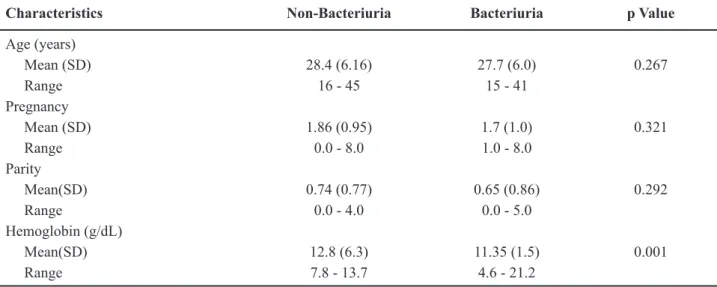
After analysis, four variables (age, parity, gravity, and hemoglobin level): hemoglobin levels seem to be independently associated with asymptom-atic bacteriuria (OR = 9.41 (1.65-50.38).
COMMENTS
Women with asymptomatic bacteriuria during pregnancy are more likely to deliver premature or low-birth-weight infants and have a 20- to 30-fold increased risk of developing pyelonephritis during pregnancy compared with women without bacteriuria (17).
This study revealed that prevalence of ASB among pregnant women was 8.9%, which is similar to other reported studies, with minor differences (8,10,18).
Several studies have demonstrated that the geographical variability of pathogens occurrence in case of UTI is limited by the predominance of Gram negative, usually Enterobacteriaceae and particularly
E. coli and Enterobacter spp., in various regions of the world and the resistance patterns of these organisms can vary signiicantly between hospital, countries and continents (19-22).
In this study the etiologic agent Escherichia coli 79 (58.96%) was the most frequent which is in agreement with similar reported studies in our region as well as in other parts of the world (3,8,10,20,21,23).
Gram-positive organisms have recently received more attention as causing bacteriuria and urinary tract infection. Although, they are seen in small numbers during pregnancy they are recognized as important causes of urinary tract infection. Our study indings of coagulase negative Staphylococcus Table 1 – Demographic characteristics of pregnant women screened for asymptomatic bacteriuria.
Characteristics Non-Bacteriuria Bacteriuria p Value
Age (years)
Mean (SD) 28.4 (6.16) 27.7 (6.0) 0.267
Range 16 - 45 15 - 41
Pregnancy
Mean (SD) 1.86 (0.95) 1.7 (1.0) 0.321
Range 0.0 - 8.0 1.0 - 8.0
Parity
Mean(SD) 0.74 (0.77) 0.65 (0.86) 0.292
Range 0.0 - 4.0 0.0 - 5.0
Hemoglobin (g/dL)
Mean(SD) 12.8 (6.3) 11.35 (1.5) 0.001
Range 7.8 - 13.7 4.6 - 21.2
SD = standard deviation
Table 2 – Bacteriologic isolates from pregnant women with asymptomatic bacteriuria.
Organism (s) N (%)
E. coli 79 (58.96)
Coagulase negative Staphylococcus 22 (16.8)
Staphylococcus aureus 18 (13.43)
Enterobacter spp 10 (7.46)
Klebsiella spp 5 (3.73)
(CNS) were the second most common urine isolate and are similar to the indings of Khattak et al. (23) and Abdullah et al. (24).
Regarding the antibiotics, E. coli exhibited 88.6 2% and 87.35% sensitivity to cefotaxime and ciproloxacin respectively. In contrast, 73.43% and 79.74% were resistant to nalidixic acid and cotri-moxazole respectively and least susceptible to tetracy -cline, ampicillin, gentamicin and amikacin (Table-3). However, Shanson (25) reported the prevalence of resistance of urinary isolates to gentamicin was 2%.
In view of changing pattern of bacterial resis-tance to common drugs, the imporresis-tance of educating physicians to use these antibiotics for empiric therapy is important.
Factors proposed to affect the frequency of bacteriuria during pregnancy include multiparity, age, previous medical history of UTI, diabetes mellitus, anatomic urinary tract abnormalities, and socio-eco-nomic status (3,13).
In this study, after analyzing, four vari -ables such as age, hemoglobin, parity and gravity: hemoglobin levels hemoglobin levels seem to be independently associated with asymptomatic bac-teriuria (OR = 9.41 (1.65-50.38) which is similar
to other studies (5,13). Although the proposed asso-ciation between covert bacteriuria and anemia during pregnancy has not been conirmed, nevertheless, our study found hemoglobin is to be an independent risk factor. In West Africa, anemia in pregnancy results from multiple causes, including iron and folate deficiency; malaria and hookworm infestation; infections, such as HIV; and hemoglobinopathies (26).
Few recently studies also revealed that ane-mia continues to be a major health problem in many developing countries and is associated with increased rates of maternal and perinatal mortality, premature delivery, low birth weight, and other adverse outcomes (27).
CONCLUSION
Prevalence of asymptomatic bacteriuria among pregnant women was 8.9%. The predominant organisms were Escherichia coli 58.96% (79)%, fol-lowed by CN Staphylococcus 22 (16.8%). Most strains of Escherichia coli showed resistant to ampicillin, tetracycline and gentamicin.
Table 3 – In vitro antibiotics sensitivity pattern of isolated organisms.
Cip Ct Nor Sxt Ctx NA Tet Fm Am Gm Amk
Organism (s) Antibiotics Sensitivity (%)
E. coli 69
(87.35) 66 (83.55) 58 (73.43) 20 (25.32) 70 (88.62) 15 (18.99) 01 (1.27) 23 (29.12) 02 (2.54) 04 (5.07) 07 (8.87) CNS 14 (63.64) 12 (54.55) 10 (45.46) 04 (18.20) 18 (81.82) 16 (72.73) 02 (9.10) 10 (45.46) 08
(36.37) ND ND
S. aureus 06
(33.34) ND 15 (83.34) 04 (22.23) 15 (83.34) ND 04 (22.23) 08 (44.45) 06
(33.34) ND ND
Enterobacter sp 08
(80.00) 07 (70.00) 04 (40.00) 07 (70.00) ND 09 (90.00) 04 (40.00) 06 (60.00) 04 (40.00) 07 (70.00) 04 (40.00)
Klebsiella sp 04
(80.00) ND ND
01 (20.00) 03 (60.00) 01 (20.00) 03 (60.00) ND 03 (60.00) 03 (60.00) 02 (40.00)
ACKNOWLEDGEMENTS
To Mrs. Kakaie S for reviewing the data cod-ing and entry to computer. The Deanship of Scientiic Research, Kurdistan University of Medical Sciences, provided inancial support.
CONFLICT OF INTEREST
None declared.
REFERENCES
1. Gupta K, Sahm DF, Mayield D, Stamm WE: An -timicrobial resistance among uropathogens that cause community-acquired urinary tract infections in women: a nationwide analysis. Clin Infect Dis. 2001; 33: 89-94.
2. Al-Dujiaily AA: Urinary tract infection during preg-nancy in Tikrit. Med. J. Tikrit. 2000; 6: 220-4. 3. Al-Haddad AM: Urinary tract infection among
pregnant women in Al-Mukalla district, Yemen. East Mediterr Health J. 2005; 11: 505-10.
4. Patterson TF, Andriole VT: Detection, signiicance,
and therapy of bacteriuria in pregnancy. Update in the managed health care era. Infect Dis Clin North Am. 1997; 11: 593-608.
5. Kiningham RB: Asymptomatic bacteriuria in preg -nancy. Am Fam Physician. 1993; 47: 1232-8. 6. Nicolle LE: Asymptomatic bacteriuria: when to screen
and when to treat. Infect Dis Clin North Am. 2003; 17: 367-94.
7. Tugrul S, Oral O, Kumru P, Köse D, Alkan A, Yildirim G: Evaluation and importance of asymptomatic bacte-riuria in pregnancy. Clin Exp Obstet Gynecol. 2005; 32: 237-40.
8. Uncu Y, Uncu G, Esmer A, Bilgel N: Should asymp-tomatic bacteriuria be screened in pregnancy? Clin Exp Obstet Gynecol. 2002; 29: 281-5.
9. Mohammad M, Mahdy ZA, Omar J, Maan N, Jamil MA: Laboratory aspects of asymptomatic bacteriuria in pregnancy. Southeast Asian J Trop Med Public Health. 2002; 33: 575-80.
10. Hazhir S: Asymptomatic bacteriuria in pregnant
women. Urol J. 2007; 4: 24-7.
11. Shirazi MH, Sadeghifard N, Ranjbar R, Daneshyar E,
Ghasemi A: Incidence of Asymptomatic Bacteriuria
During Pregnancy. Pak. J. Biol. Sci. 2006; 9: 151-4.
12. Boroumand MA, Sam L, Abbasi SH, Salarifar M, Kassaian E, Forghani S: Asymptomatic bacteriuria in type 2 Iranian diabetic women: a cross sectional study. BMC Womens Health. 2006; 6: 4
13. Bandyopadhyay S, Thakur JS, Ray P, Kumar R: High
prevalence of bacteriuria in pregnancy and its screen-ing methods in north India. J Indian Med Assoc. 2005; 103: 259-62.
14. Nicolle LE: Management of Asymptomatic UTIs in Women. Medscape Womens Health. 1996; 1: 4. 15. Forbes BA, Bailey & Scott’s Diagnostic Microbiology,
10th ed. St. Louis, Mosby. 1998; pp. 283-304. 16. Clinical and Laboratory Standard Institute.
Perfor-mance Standards for Antimicrobial Disk Susceptibil-ity Tests. NCCLS documents M 100 - SIS, 940 West
Valley Road. Wayne, PA, 19087 USA, 2005.
17. Smaill F: Antibiotics for asymptomatic bacteriuria in
pregnancy. Cochrane Database Syst Rev. 2001; (2): CD000490. Review. Update in: Cochrane Database Syst Rev. 2007; 2: CD000490.
18. Kiningham RB: Asymptomatic bacteriuria in preg -nancy. Am Fam Physician. 1993; 47: 1232-8. 19. Fatima N, Ishrat S: Frequency and risk factors of
asymptomatic bacteriuria during pregnancy. J Coll Physicians Surg Pak. 2006; 16: 273-5.
20. Kutlay S, Kutlay B, Karaahmetoglu O, Ak C, Erkaya S: Prevalence, detection and treatment of asymptomatic
bacteriuria in a Turkish obstetric population. J Reprod
Med. 2003; 48: 627-30.
21. Akinloye O, Ogbolu DO, Akinloye OM, Terry Alli OA: Asymptomatic bacteriuria of pregnancy in Ibadan, Nigeria: a re-assessment. Br J Biomed Sci. 2006; 63: 109-12.
22. Teppa RJ, Roberts JM: The uriscreen test to detect signiicant asymptomatic bacteriuria during pregnancy.
J Soc Gynecol Investig. 2005; 12: 50-3.
23. Khattak AM, Khattak S, Khan H, Ashiq B,
Moham-mad D, Raiq M: Prevalence of asymptomatic bacte -riuria in pregnant women. Pak. J. Med. Sci. 2006; 22: 162-6.
24. Abdullah AA, Al-Moslih MI: Prevalence of asymp-tomatic bacteriuria in pregnant women in Sharjah, United Arab Emirates. East Mediterr Health J. 2005; 11: 1045-52.
25. Shanson DC: Infection of the urinary tract. In: Micro-biology in clinical practice, 2.nd. (ed.), Butterworth, London. 1989; pp. 430-50.
26. Mockenhaupt FP, Rong B, Günther M, Beck S, Till
women: importance of malaria, iron deiciency, and haemoglobinopathies. Trans R Soc Trop Med Hyg.
2000; 94: 477-83.
27. Dim CC, Onah HE: The prevalence of anemia among pregnant women at booking in Enugu, South Eastern Nigeria. MedGenMed. 2007; 9: 11-14
Accepted after revision: September 1, 2008
Correspondence address: Dr. Kalantar Enayat
Department of Microbiology, School of Medicine Kurdistan University of Medical Sciences Sanandaj, Iran
Fax: + 0098 871 666 4649
E-mail: [email protected]
EDITORIAL COMMENT
Urinary tract infection (UTI) is one of the most frequently occurring nosocomial infections. UTI affects all age groups, but women particularly pregnant women are more susceptible than men, due to pregnancy, short urethra, easy contamination of urinary tract with fecal lora, immunodeiciency of the pregnancy and various other reasons. Several socio-demographic characteristics were found sig-niicantly associated with UTIs, such as age 30 years and more, illiterates and low educational level, low socio-economic level, unsatisfactory personal hygiene and use of underwear clothes other than cotton. Sig-niicant associations with UTIs were also found in multigravidae 4th and more, those having more than one child and those who previously suffered UTIs. Authors of the present study demonstrated that hemo-globin levels might be independently associated with asymptomatic bacteriuria. Further investigation may associate this inding with the low socio-economic level. Urological conditions in pregnancy represent a major diagnostic and therapeutic challenge.
As-ymptomatic bacteriuria and acute cystitis of pregnant women, even if uncomplicated and non-progressive are associated to poorer pregnancy prognosis and they need to be properly treated. Deinition of the optimal antimicrobial agent for the treatment of asymptomatic bacteriuria or uncomplicated UTI in pregnant women is controversial. Among the most important factors in the choice of antimicrobial agent in a certain popula-tion of pregnant women to consider are the frequently isolated urinary pathogenic bacteria and microbial resistance. Until there are data from well-designed trials that establish the optimal duration of therapy for asymptomatic bacteriuria, standard treatment courses are recommended.
EDITORIAL COMMENT
Screening for and treatment of asymptom-atic bacteriuria is a standard procedure of obstetrical care and included in most antenatal guidelines. Un-treated asymptomatic bacteriuria is a risk factor for pyelonephritis in pregnancy and associated with low birth weight infants (1). Screening for asymptomatic bacteriuria has been included as one of the most cost-effective strategies for maternal and neonatal health in developing countries in a detailed analysis of interventions to achieve the millennium develop-ment goals for health (2).
There are, however, dificulties in the wide-spread implementation of screening and treatment of asymptomatic bacteriuria. Educational programs should emphasize the importance of early antenatal care and healthcare providers need to be aware of the importance of asymptomatic bacteriuria. Facilities to culture the urine are often not available in under-re-sourced settings and alternative diagnostic tests that are less expensive, easier to implement and have been validated in these populations are urgently needed.
There is no clear consensus in the literature on either the duration of therapy or the choice of antibiotics and this study from the Kurdistan region of Iran conirms the importance of knowing local resistance patterns. The resistance to ampicillin and co-trimoxazole very high, but nitrofurantoin retained reasonable activity and most isolates were sensitive to ciproloxacin. Where recent surveys of antibiotic susceptibility have been carried out, staggering rates of resistance to ampicillin and cotrimoxazole are often found, meaning that these less expensive antibiotics cannot be used for presumptive treatment unless antibiotic susceptibility testing of the organism can be routinely performed. For the women in this study, there are few oral alternatives available. While the organisms generally remained sensitive to one of the parenteral third generation cephalosporins, these agents are usually reserved to treat severe infections, and ciproloxacin and the other quinolones are not usually recommended in pregnancy. Older agents, e.g. fosfomycin, may need to be reconsidered.
In this population, the prevalence of asymp-tomatic bacteriuria was within published ranges at 8.9%. Interestingly, staphylococcal species made
up 30% of the isolates with 13% of urinary isolates reported as Staphylococcus aureus, an organism that has not traditionally been thought of as a urinary pathogen. The importance of the reported increase in gram positive organisms associated with bacteriuria in pregnancy is uncertain. More research which includes pregnancy outcomes and a thorough microbiology work-up, with speciation of the organisms and ad-ditional susceptibility testing is needed.
Enayat et al., did not provide information regarding the management of their patients and whether effective treatment was provided. Despite almost uniform guidelines, there is little evidence of adherence to screening recommendations. Poor adherence with screening in indigenous communities in Australia has been proposed as one explanation for worse pregnancy outcomes in this population (3). Structural problems related to the provision of care in remote communities were identiied as contributing factors. It is important that well-designed treatment studies for women in low and middle income countries are performed that can address the emerging problem of antimicrobial resistance and additional research on the implementation and outcome of programs to screen and treat pregnant women for asymptomatic bacteriuria in diverse settings is needed.
REFERENCES
1. Smaill F, Vazquez JC: Antibiotics for asymptomatic bacteriuria in pregnancy. Cochrane Database Syst Rev.
2007; CD000490.
2. Adam T, Lim SS, Mehta S, Bhutta ZA, Fogstad H, Mathai M, et al.: Cost effectiveness analysis of strat-egies for maternal and neonatal health in developing countries. BMJ. 2005; 331: 1107.
3. Bookallil M, Chalmers E, Andrew B: Challenges in preventing pyelonephritis in pregnant women in
In-digenous communities. Rural Remote Health. 2005;
5: 39
EDITORIAL COMMENT
In this edition of the International Braz J Urol authors Enayat, Fariba and Bahram report on their 2007 study of asymptomatic bacteriuria among pregnant women referred to outpatient’s clinics in Sanandaj City, Iran. This is a well written, good study, on an important topic, handled in a scientiically rigor -ous manner.
The authors studied 1505 pregnant women from a total of ten clinics from South, North, West, East and Central portions of Sanandaj city, in the province of Kurdistan, Iran, in order to determine the prevalence of asymptomatic urinary tract infec-tion. They found 8.9 % had bacteriuria. Although the prevalence of asymptomatic bacteriuria in pregnant women is similar to the prevalence in non-pregnant women, the consequences of not treating are much more severe in pregnant women. According to the IDSA Guidelines for the Diagnosis and Treatment of Asymptomatic Bacteriuria in Adults (1), the ap-propriate screening test is a urine culture early on in pregnancy, preferably at week 16 of gestation. Since pregnant women with asymptomatic bacteriuria have increased risk of developing pyelonephritis, premature delivery, and birthing infants with low birth weight, it is recommended to treat asymptomatic bacteriuria with antimicrobials. The microbes cited by the IDSA Guidelines paper include E. coli, Enterobacteriaceae, coagulase-negative staphylococci, Enteroccocus, Group B streptococci, and Gardnerella vaginalis. Although many microbes can cause asymptomatic bacteriuria, the most common uropathogen reported by this Guidelines committee and found in the study by Enayat et al. was E. coli, although at a lower per-centage in the Iranian study.
Similar standards of care have been imple-mented throughout the world. The study by Enayat et al. extends the observations of asymptomatic bacteria among pregnant women into Sanandaj, Iran. The study further clariies that the same microbes around the world have different resistance patterns in the Kurdistan city where there studied occurred. The materials and methods of the study are consis-tent with the scientiic methods used in the IDSA guidelines. In the IDSA guidelines, positive screen is considered to be > 100,000 cfu/mL in a sample of
urine that has been collected appropriately to mini-mize contamination from a person without symptoms of urinary infection. The study maintained the same clinical standards as they consulted pregnant women without symptoms of urinary infection during their irst pre-natal check-up. The study discovered that E. coli was the most common (58.96% of pregnant women with asymptomatic bacteriuria), followed by coagulase negative Staphylococcus (16.8%), and Staphylococcus aureus (13.43%). However, the E. coli found was more resistant to the antibacterials that are recommended by the IDSA in their North American Guidelines. In Sanandaj, the E. coli were 89%, 70%, and 20% resistant to Ampicillin, Cotrimoxazole, and Nitrofurantoin respectively, while in North America, nitrofurantoin and sulfamethoxazole are prominently used to treat asymptomatic bacteriuria, because of the lower rates of resistance in the North American re-gion. The study also indicated that E. coli in Sanandaj showed sensitivities to cefotaxime, ciproloxacin, and cefotizoime at a rate of 88.62%, 87.355, and 83.55% respectively. Hence, it seems that E. coli in Iran tend to be more resistant to common antimicrobials and require more aggressive treatment options. Known factors in causing increased antimicrobial resistance are a greater use of a given antibiotic in the region, and the prevalence of clonal group A, for examples. However, the question of why resistance is higher among E. coli in Sanandaj remains unclear, and was not the objective of this paper.
REFERENCE
1. Nicolle LE, Bradley S, Colgan R, Rice JC, Schaeffer A,
Hooton TM; Infectious Diseases Society of America; American Society of Nephrology; American Geriatric
Society.Infectious Diseases Society of America guide-lines for the diagnosis and treatment of asymptomatic bacteriuria in adults. Clin Infect Dis. 2005; 40: 643-54. Erratum in: Clin Infect Dis. 2005; 40: 1556.
Dr. Richard Colgan & Dr. Hengqi Zheng