OR
IGI
N
A
L
R
E
S
E
A
R
C
H
Laser therapy, used in a specific dose, modulates
pulmonary inflammatory processes in an
experimental model of sepsis in rats
O uso da laserterapia em dose especíica modula o processo inlamatório
pulmonar em um modelo experimental de sepse em ratos
El uso de la láserterapia en dosis especíica modula el proceso inlamatorio
pulmonar en un modelo experimental de sepsis en ratones
Caroline Bublitz1, Livia Assis2, Ana Cláudia M. Rennó3, Vivian Cury4, Gabriela Harada5,
Aya H. Hirai6, Liria Yuri Yamauchi7
Mailling Adress: Caroline Bublitz – Rua Silva Jardim, 136, Laboratório de Biomateriais e Biocompatibilidade, sala 342, Edifício Central, 3º. Andar – CEP: 11015-020 – Santos (SP) – E-mail: [email protected] – Tel: (11) 95357-8342 – Presentation: Feb. 2015 – Accepted for publication: Nov. 2015 – Financing Source: Fapesp and CNPq Study developed in Celular and Molecular Biology Laboratory, Biological Sciences Department, Universidade Federal de São Paulo, Campus Baixada Santista – Santos (SP), Brazil
1PhD student. Participated in the conception of the project, design and execution of the research, data analysis and writing of the
man-uscript – Universidade Federal de São Paulo, Campus Baixada Santista – Santos (SP), Brazil.
2Post-doctoral student. Participated in the conception of the project, design and execution of the research, and writing of the
manu-script – Universidade Federal de São Paulo, Campus Baixada Santista – Santos (SP), Brazil.
3Associate professor. Participated in the conception of the project, critical review and approval of the inal version of the manuscript –
Universidade Federal de São Paulo, Campus Baixada Santista – Santos (SP), Brazil.
4Post-doctor. Participated in the design of the research and data analysis – Faculdade de Medicina da Universidade of São Paulo –
São Paulo (SP), Brazil
5Bachelor in Physiotherapy. Participated in the conception of the project, execution of the research and data analysis – Universidade
Federal de São Paulo, Campus Baixada Santista – Santos (SP), Brazil.
6Bachelor in Physiotherapy. Participated in the conception of the project, execution of the research and data analysis – Universidade
Federal de São Paulo, Campus Baixada Santista – Santos (SP), Brazil.
7Adjunct professor. Participated in the intellectual conception of the project, critical review of the manuscript and approval of the inal
version of the manuscript – Universidade Federal de São Paulo, Campus Baixada Santista – Santos (SP), Brazil.
ABSTRACT | This study aimed to determine the efectiveness of LLLT in decreasing the lung inlammatory process in septic rats. A total of 32 male Wistar rats were divided into four groups (n=8): control group (CG), sepsis 24h (S24), sepsis and LLLT with 30 J/ cm² (S24L30); sepsis and LLLT with 65 J/cm² (S24L65). The irradiation was performed immediately after surgery in the anterior region of the trachea and ventral regions of the chest, bilaterally, just below the ribs. Histological analysis of lung tissue was performed and the number of inlammatory cells was quantiied. The S24 group showed an increase of inlammatory cells compared to the CG (p <0.01); S24L30 increased the number of inlammatory cells, while S24L65 decreased this number compared to S24 (both p<0.05); S24L65 had a lower number of inlammatory cells compared to S24L30 (p<0.01). In conclusion, LLLT at a speciic energy dose (30J / cm²) was capable of decreasing the number of 420
inlammatory cells in acute lung tissue inlammation due to sepsis.
Keywords | Laser Therapy, Low-Level; Sepsis; Lung.
numero em relação ao S24 (ambos p <0,05); S24L65 diminui o numero de células inlamatórias comparado ao S24L30 (p<0.01). Concluiu-se que LLLT em dose especíica de energia (30J/cm²) foi capaz de diminuir o número de células inlamatórias no tecido pulmonar em fase aguda da sepse.
Descritores | Terapia a Laser de Baixa Intensidade; Sepse;
Pulmão.
RESUMEN | El objetivo del estudio es determinar la eicacia de la LLLT en la disminución del proceso inlamatorio pulmonar en ratones sépticos. Se utilizaron 32 ratones machos Wistar divididos en cuatro grupos (n=8): control (CG); sepsis 24h (S24); sepsis y tratamiento con LLLT 30 J/cm2 (S24L30);
sepsis y tratamiento con LLLT 65 J/cm2 (S24L65). Se realizó la
irradiación inmediatamente después de la cirugía en la región anterior de la tráquea y en las regiones ventrales del tórax, bilateralmente, debajo de las costillas. Se realizó un análisis histológico del tejido pulmonar y se cuantiicó el número de células inlamatorias. El grupo S24 presentó un aumento de células inlamatorias en comparación al CG (p <0,05); S24L30 aumentó el número de células inlamatorias, mientras S24L65 disminuyó este número en relación al S24 (ambos p <0,05); S24L65 disminuyó el número de células inlamatorias en comparación al S24L30 (p<0,01). Se concluye que la LLLT en dosis especíica de energía (30J/cm2) ha sido capaz de
disminuir el número de células inlamatorias en el tejido pulmonar en fase aguda de la sepsis.
Palabras clave | Terapia Láser de Baja Intensidad; Sepsis; Pulmón.
INTRODUCTION
Sepsis is a potentially life-threatening complication of an infection and it is a frequent cause of death in critically ill patients. It is also related to the interaction of diferent events involving inlammatory and anti-inlammatory processes, humoral and cellular reactions and circulatory abnormalities1.
As a consequence, sepsis leads to diferent system function impairments, putting a series of organs at risk, including liver, kidneys and lungs2. One of the
most common types of lung injury related to sepsis is the adult or acute respiratory distress syndrome (ARDS) and it is responsible for a high mortality rate3. ARDS is characterized by acute inlammation,
with neutrophil migration, interstitial edema, difuse alveolar wall thickening with increased collagen and ibrin deposition as well as alveolar hemorrhage4.
Upregulation of proinlammatory cytokines occurs in the presence of ARDS, with a marked upregulation of interleukin (IL-6, IL-8) and tumor necrosis factor (TNF-α) expression5. Moreover, neutrophils also
release damaging proinlammatory and pro-apoptotic mediators that act on adjacent cells to create ulcerating lesions6. In this context, it is extremely important
to develop treatments capable of modulating the inlammatory process related to sepsis, to try to avoid the development of ARDS.
he stimulatory efects of low level laser therapy (LLLT) on tissues and its ability to modulate the
inlammatory process have been highlighted by many authors7-9. It seems that LLLT regulates the
expression factors related to inlammation such as COX-2, cytokines, interleukins, prostaglandins and the reduced number of inlammatory cells such as neutrophils in many experimental models such as acute injuries10, osteoarthritis7 and lung inlammation11-14.
Mafra et al.13,14, demonstrated that LLLT reduced
the cholinergic hyper reactivity and tumor necrosis factor (TNF)mRNA expression in rats exposed to lipopolysaccharides via an NF-kappaB-dependent mechanism. Furthermore, Silva et al. (2014)15
demonstrated that LLLT (660 nm, 30 mW and 5.4 J) reduced bronchial hyper responsiveness and decreased allergic lung inlammation in an experimental model of allergic asthma. Also, de Lima et al. (2010)16
observed a reduction in edema, neutrophils inlux and decreased TNFin the inlammatory process in rat lungs.
METHODOLOGY
Animals and Experimental design
In this study, 32 male Wistar rats (weighing 300±20 g) were used. hey were maintained under a controlled temperature (22±2oC), light-dark periods of 12 hours,
and with free access to water and a commercial diet. All animal handling and surgical procedures were strictly conducted according the Guiding Principles for the Use of Laboratory Animals. his study was approved by the Institutional Experimental Animal Use Committee.
he animals were randomly distributed into the following experimental groups (n=8): control group (CG); sepsis group: rats submitted to the experimental model of sepsis without treatment (S24G); and sepsis laser treated groups: rats submitted to the experimental model of sepsis treated with laser therapy at 30 J/cm2
(S24L30G) and rats treated with laser therapy at 65 J/cm2 (S24L65J). All the animals were euthanized 24
hours post-surgery.
Experimental model of sepsis
Sepsis was produced by cecal ligation and puncture (CLP) as previously described17. Rats were
anesthetized intraperitoneally with a mixture of ketamine-xylazine (Ketamine 50 mg/Kg and Xylazin 10 mg/Kg), and a midline laparotomy was performed. he cecum was ligated at its base and punctured twice with a 22-gauge needle. he cecum was then returned to the peritoneal cavity, the muscle and skin layers were then closed. Rats were resuscitated with 10 ml of 0.9% sterile saline administered subcutaneously. All animals were injected subcutaneously with the analgesic buprenorphine (0.2 mg/kg) immediately after surgery.
Laser therapy
Laser irradiation was made immediately after the surgery. A low-energy GaAlAs laser (Photolase DMC Ltda®) was used with an 808 nm, continuous wavelength,
30 mW, 3.8 W/cm2, beam diameter 0,028 mm, luence
of 30 J/cm2with irradiation time of 28seconds (energy
per point 0.8J – totaling 2.4J per session) or 65 J/cm2
with an irradiation time of 1.01 seconds (energy per point 1.8J – totaling 5.4J per session)18. he irradiation
was performed once, using the punctual contact technique, at three points: anterior region of the trachea
and bilaterally on the ventral regions of the chest (just below the ribs).
Euthanasia
At the end of the experimental period (24 hours), rats were deeply anesthetized by urethane (1.25 mg/kg) and euthanized individually by transcardial perfusion with 100 ml isotonic saline at room temperature (containing heparin 0.2%) followed by pulmonary perfusion with 500 ml of ixative luid (4°C) over a period of 20 min19.
he lungs were removed for analysis.
Histological procedures
After surgical resection of the specimens of each experimental group, the right lung was immediately washed with saline and ixed in 10% bufered formalin (Merck, Darmstadt, Germany) for 12 hours, followed by dehydration in a graded series of ethanol and then embedded in parain. hin sections (5 µm) in the longitudinal axis of the lung were obtained using a microtome (Leica Microsystems SP 1600, Nussloch, Germany). Sections of each specimen were stained with hematoxylin and eosin (HE) (Merck).
Morphometric evaluation
Histological characterization of the lung tissue was performed using 5µm thick sections stained with H&E and the total cells (polymorphonuclear and mononuclear) in terminal bronchioles were determined by the point-counting technique. Using a Leica DM4000B microscope (Leica Microsystems, Wetzlar, Germany), the cells were determined by counting the number of points of the integrating eyepiece falling on areas of tissue inlammation in four areas of each airway wall and the number of cells in this same area. All analyses were performed in 8 randomly selected transversely sectioned, terminal bronchioles. he slides were coded and the researcher who performed the measurements was unaware of the study groups.
Statistical analysis
(ANOVA), complemented by Tukey HSD post-hoc analysis. STATISTICA version 7.0 (data analysis software system - StatSoft Inc.) was used to carry out statistical analysis. Values of p<0.05 were considered statistically signiicant.
RESULTS
Morphometric evaluation (inflammatory cells)
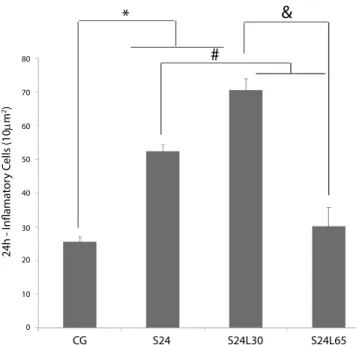
Figure 1 shows the morphometric evaluation of the number of total cells (polymorphonuclear and mononuclear) in terminal bronchioles.
he CG was statistically diferent from the non-treated group (S24) and from the group non-treated with laser therapy at 30 J/cm2 (S24L30), both showed increased
inlammatory cells (p=0.0025 and p=0.0001, respectively; Figure 1). Moreover, S24L30 increased the number of inlammatory cells compared to S24 (p=0.042; Figure 1), and S24L65 decreased this number compared to S24 (p=0.0089; Figure 1). When the treated groups were compared, S24L65 had a lower number of inlammatory cells compared to S24L30 (p=0.0001; Figure 1). No other signiicant diference was observed between groups.
24h - I
nflama
tor
y C
ells (10
µ
m
2)
*
&
#
CG S24 S24L30 S24L65
80
70
60
50
40
30
20
10
0
Figure 1. Number of inlammatory cells in the diferent groups euthanized 24h post-surgery; Control group (CG); Sepsis group: rats submitted to the experimental model of sepsis without treatment (S24G); Sepsis laser treated groups: rats submitted to the experimental model of sepsis treated with laser therapy at 30 J/cm2 (S24L30G) and rats treated with laser therapy at 65 J/cm2 (S24L65J). (* p=0.0025 (S24) and p=0.0001 (S24L30) vs CG; # p=0.042 (S24L30) and p=0.0089 (S24L65) vs S24; & p=0.0001 (S24L65) vs S24L30
DISCUSSION
his study aimed to determine the efectiveness of LLLT on the lung inlammatory process in experimental, septic rats induced by the cecal ligation and puncture (CLP) technique. he main indings showed that in the 24h experimental time, the group treated with laser therapy at 65 J/cm2 (S24L65G) had
a lower number of inlammatory cells compared to the sepsis group (S24G) and for the group treated with laser therapy at 30 J/cm2 (S24L30G), similarly for the
control group (CG).
Sepsis is a potent instigator of multiple organ system failure, and most commonly afects the lungs20.
Acute lung injury can occur as a consequence of the inlammatory response accompanied by a depression in the immunological function, which is well known in sepsis physiopathology21.
he morphometric evaluation of lung tissue inlammation showed that the number of inlammatory cells was higher in the groups submitted to sepsis induction by CLP compared to the control group. hese indings corroborate with the literature that indicates an immediate lung tissue inlammatory phase in sepsis induced by CLP22.
In addition, the sepsis group treated with laser therapy at 65 J/cm2 (S24L65G) had a lower number
of inlammatory cells when compared with the sepsis group (S24G) and with the group treated with laser therapy at 30 J/cm2 (S24L30G). herefore, our data
supports the idea that laser therapy improved the inlammatory condition in lung tissue depending on the amount of energy that was taken in by the tissue.
Although the efects of LLLT have been widely demonstrated, it is important to highlight that the parameters have been highly variable in laser therapy studies related to anti-inlammatory results, with a wide range of energy doses being used by diferent authors using diferent tissues23-25. Some studies have compared
diferent parameters of laser therapy and diferent results in the same tissues and conditions have been observed19, 26. Aimbire et al.27 compared a 685nm Ga–Al–As laser
Speciically in lung tissue, De Lima et al.17used a
laser irradiation dose of 5.4J in a model of sepsis induced by Intestinal Ischemia/Reperfusion and demonstrated a reduced pulmonary neutrophils inlux. In 2013, another study by De Lima et al.,28 showed that a laser applied at
an energy dose of 5.4J has an efect in attenuating acute lung inlammation by restoring the balance between the pro- and antioxidant mediators. Also, corroborating with those studies, the results of our study demonstrated a reduction in the number of inlammatory cells in the group treated with laser therapy at 65 J/cm2 that
received the total laser irradiation dose of 5.4J (the laser irradiation was performed in 3 points with 1.8 J of energy per point).
In addition, the author’s hypothesis is that the diferential efect of therapies in the acute phase of lung inlammation after sepsis induced by CLP may be due to the lack of energy ofered to the tissue following laser irradiation in the group treated with laser therapy at 30 J/cm2 (S24L30G). At this time, it
is diicult to deine an ideal laser treatment protocol and so further investigation is required to elucidate the mechanisms responsible for the stimulatory and inhibitory efects of laser irradiation on the acute inlammation of lung tissue.
Consequently, these data highlight the potential of LLLT to be used as a therapeutic approach to reduce acute lung inlammation, such as sepsis. Also, our study demonstrated the importance of studies that investigate the efects of diferent laser parameters to determine the eiciency and safety of laser irradiation and the treatment paradigms required for optimal stimulation.
CONCLUSION
In conclusion, LLLT in a speciic dose (65 J/cm2)
of energy was capable of decreasing the number of inlammatory cells in acute lung tissue inlammation due to sepsis.
REFERENCES
1. Pierrakos C, Vincent JL. Sepsis biomarkers: a review. Crit Care. 2010;14(1):R15.
2. Yin K, Wilmanski J, Wang C, Qiu G, Tahamont M. Lung compartmentalization of inlammatory cells in sepsis. Inlammation. 2000;24(6): 547-57.
3. Johnson ER, Matthay MA. Acute Lung Injury: Epidemiology, Pathogenesis, and Treatment. J Aerosol Med Pulm Drug Delivery. 2010;23(4):243-52.
4. Rubenfeld GD, Caldwell E, Peabody E, Weaver J, Martin DP, Nef M, et al. Incidence and outcomes of acute lung injury. N Engl J Med. 2005;353(16):1685-93.
5. Parsons PE, Matthay MA, Ware LB, Eisner MD. Elevated plasma levels of soluble TNF receptors are associated with morbidity and mortality in patients with acute lung injury. Am J Physiol Lung Cell Mol Physiol. 2005; 288:L426 –L31. 6. Ware LB, Eisner MD, Thompson BT, Parsons PE, Matthay
MA. Signiicance of von Willebrand factor in septic and nonseptic patients with acute lung injury. Am J Respir Crit Care Med. 2004;170:766-72.
7. Oliveira P, Santos AA, Rodrigues T, Tim CR, Pinto KZ, Magri AM et al. Efects of phototherapy on cartilage structure and inlammatory markers in an experimental model of osteoarthritis. J Biomed Opt. 2013; 18 (12):128004.
8. Aimbire F, Lopes-Martins RA, Albertini R, Pacheco MT, Castro-Faria-Neto HC, Martins PS, Bjordal JM. Efect of low-level laser therapy on hemorrhagic lesions induced by immune complex in rat lungs. Photomed Laser Surg. 2007; 25(2):112-7.
9. Barretto SR, Melo GC, Santos JC, Oliveira MGB, Pereira-Filho RN, Alves AVF et al. Evaluation of anti-nociceptive and anti-inlammatory activity of low-level laser therapy on temporomandibular joint inlammation in rodents. J Photochem Photobiol B. 2013; 129 (5):135-42.
10. Prianti-Júnior ACG, Silva-Júnior JA, Santos RF, Rosseti IB, Costa MS. Low-level laser therapy (LLLT) reduces the COX-2 mRNA expression in both subplantar and total brain tissues in the model of peripheral inlammation induced by administration of carrageenan. Lasers Med Sci. 2014; 29(4):1397-403.
11. Aimbire F, Ligeiro de Oliveira AP, Albertini R, Correa JC, Ladeira de Campos CB, Lyon JP, et al. Low level laser therapy (LLLT) decreases pulmonary microvascular leakage, neutrophil inlux and IL-1beta levels in airway and lung from rat subjected to LPS-induced inlammation. Inlammation. 2008; 31(3):189-97.
12. Aimbire F, Santos FV, Albertini R, Castro-Faria-Neto HC, Mittmann J, Pacheco-Soares C. Low-level laser therapy decreases levels of lung neutrophils anti-apoptotic factors by a NF-kappaB dependent mechanism. Int Immunopharmacol. 2008; 8(4):603-5.
13. Mafra de Lima F, Costa MS, Albertini R, Silva JA Jr, Aimbire F.Low level laser therapy (LLLT): attenuation of cholinergic hyper reactivity, beta(2)-adrenergic hyporesponsiveness and TNF-alpha mRNA expression in rat bronchi segments in E. coli lipopolysaccharide-induced airway inlammation by a NF-kappaB dependent mechanism. Lasers Surg Med. 2009; 41(1):68-74.
15. Silva VR, Marcondes P, Silva M, Villaverde AB, Castro-Faria-Neto HC, Vieira RP, Aimbire F, de Oliveira AP.Low-level laser therapy inhibits bronchoconstriction, Th2 inlammation and airway remodeling in allergic asthma. Respir Physiol Neurobiol. 2014; 1(194):37-48. doi: 10.1016/j.resp.2014.01.008. Epub 2014 Jan 28.
16. Mafra de Lima F, Villaverde AB, Salgado MA, Castro-Faria-Neto HC, Munin E, Albertini R, Aimbire F. Low intensity laser therapy (LILT) in vivo acts on the neutrophils recruitment and chemokines/cytokines levels in a model of acute pulmonary inlammation induced by aerosol of lipopolysaccharide from Escherichia coli in rat. J Photochem Photobiol Br Biol. 2010; 101(3):271-8. Epub 2010/08/24.
17. de Lima FM, Villaverde AB, Albertini R, Correa JC, Carvalho RL, Munin E, et al. Dual Efect of low-level laser therapy (LLLT) on the acute lung inlammation induced by intestinal ischemia and reperfusion: Action on anti- and pro-inlammatory cytokines. Lasers Surg Med. 2011; 43(5):410-20.
18. Lang CH, Frost RA, Vary TC. Regulation of muscle protein synthesis during sepsis and inlammation. Am J Physiol Endocrinol Metab. 2007; 293:E453-E9.
19. Medalha CC, Di Gangi GC, Barbosa CB, Fernandes M, Aguiar O, Faloppa F, Leite VM, Renno AC. Low-level laser therapy improves repair following complete resection of the sciatic nerve inrats. Lasers Med Sci. 2012; 27(3):629-35.
20. Li H; Han W; Polosukhin V, Yull FE.; Segal BH, Xie CM; Blackwell TS. NF-B Inhibition after Cecal Ligation and Puncture Reduces Sepsis-Associated Lung Injury without Altering Bacterial Host Defense, Mediators Inlamm. 2013; 2013: Article ID 503213: 9 pages. doi:10.1155/2013/503213
21. Doi K, Leelahavanichkul A, Yuen PST, Star RA. Animal models of sepsis and sepsis-induced kidney injury. J Clin Invest. 2009; 119(10):2868-78.
22. Filgueiras LR, Capelozzi VL, Martins JO, Jancar S. Sepsis-induced lung inlammation is modulated by insulin. BMC Pulm Med. 2014; 15 (14):177.
23. da Rosa AS, dos Santos AF, da Silva MM, Facco GG, Perreira DM, Alves AC et al. Efects of lowlevel laser therapy at wavelengths of 660 and 808 nmin experimental model of osteoarthritis. Photochem Photobiol. 2012; 88:161-6. 24. Barbosa RI, Marcolino AM, Guirro RJ, Mazzer N, Barbieri CH,
Fonseca MR. Comparative efects of wavelengths of low power laser in regeneration of sciatic nerve in rats following crushing lesion. Lasers Med Sci. 2010; 25:423-30.
25. Assis L, Moretti AI, Abrahao TB, Cury V, Souza HP, Hamblin MR, et al. Low-level laser therapy (808 nm) reduces inlammatory response and oxidative stress in rat tibialis anterior muscle after cryolesion. Lasers Surgery Med. 2012; 44(9):726-35. 26. Bublitz C, Medalha C, Oliveira P, Assis L, Milares LP, Fernades
KL et al. Low-level laser therapy prevents degenerative morphological changes in an experimental model of anterior cruciate ligament transection in rats. Lasers Med Sci. 2014; 29(5):1669-78.
27. Aimbire F, Albertine R, de Magalhaes RG, Lopes-Martins RA, Castro-Faria-Neto HC, Zangaro RA, et al. Efect of LLLT Ga-Al-As (685 nm) on LPS-induced inlammation of the airway and lung in the rat. Lasers Med Sci. 2005; 20(1):11-20.