Evaluation of the methodologies used in clinical trials and
effectiveness of chemo-mechanical caries removal with Carisolv
TMAvaliação das metodologias utilizadas nos ensaios clínicos e
efetividade da remoção químico-mecânica de tecido cariado com
Carisolv
Marcela Marquezan*
Italo Medeiros Faraco Junior** Carlos Alberto Feldens*** Maximiano Ferreira Tovo** Andréia Bertani Ottoni****
ABSTRACT: This investigation aims to discuss the methodologies applied in clinical trials published about Cari-solvTM, in order to assess the best scientiic evidence concerning chemo-mechanical caries removal. Papers con -cerning the use of CarisolvTM were sought using a search strategy. The titles and abstracts of all the reports identi-ied through the search were analyzed by a single reviewer. The inclusion criterion involved: clinical trials having CarisolvTM in one of the study groups. Then, those that fulilled the inclusion criterion underwent methodology assessment and data extraction. Only 12 papers met the inclusion criterion. It was observed that none of these studies complied with all the evaluated research methodological principles required in order to have power of evi-dence generation. CarisolvTM proved to be effective in caries removal. Appointment mean time was greater, but the perceived time was shorter than that using conventional techniques due to patients’ perception of more comfort and a reduction of anesthesia needs. There were no adverse effect in long-term assessments. In studies with micro-biological evaluation of the remaining dentine, it was observed that both the conventional and chemo-mechanical methods produced statistically signiicant reduction on counts of viable microorganisms.
DESCRIPTORS: Dental caries/therapy; Effectiveness; Methods.
RESUMO: Esta investigação objetiva discutir as metodologias aplicadas em ensaios clínicos publicados sobre Cari-solv, para veriicar a melhor evidência cientíica concernente à remoção químico-mecânica de tecido cariado. Arti -gos referentes ao uso de Carisolv foram procurados utilizando-se uma estratégia de busca. Os títulos e resumos de todos os estudos identiicados pela procura foram analisados por um único revisor. O critério de inclusão envolveu: ensaios clínicos contendo o sistema Carisolv em um dos grupos de estudo. Os estudos que preencheram o critério de inclusão foram submetidos à avaliação de metodologia e extração de dados. Somente 12 artigos preencheram o critério para inclusão. Foi veriicado que nenhum desses estudos obedeceu a todos os princípios metodológicos considerados necessários para que uma pesquisa tenha poder de geração de evidências. O Carisolvdemonstrou ser eicaz na remoção de tecido cariado. O tempo de consulta foi maior, mas o tempo percebido foi inferior em comparação ao tempo das técnicas convencionais devido à percepção dos pacientes de mais conforto e de redução da necessidade de anestesia. Não houve efeito adverso em avaliações a longo prazo. Em estudos com avaliação microbiológica da dentina remanescente foi veriicado que ambos os métodos convencional e químico-mecânico produziram redução signiicativa na contagem de microrganismos viáveis.
DESCRITORES: Cárie dentária/terapia; Efetividade; Métodos.
INTRODUCTION
Evidence-based medicine is the conscious, clear and cautious use of the current best evidence to make decisions when treating individual pa-tients.25 Nowadays systematic reviews are consid-ered the preferred method for identifying all of the
available knowledge, determining which informa-tion is the best and summarizing it in a clinically useful manner.2
Despite the caries prevalence decline7, carious tissue removal, still a challenge for researchers, is
* MS, Graduate Student, Pediatric Dentistry, School of Dentistry, University of São Paulo.
365 365 Marquezan M, Faraco Junior IM, Feldens CA, Tovo MF, Ottoni AB. Evaluation of the methodologies used in clinical trials and
ef-fectiveness of chemo-mechanical caries removal with CarisolvTM. Braz Oral Res 2006;20(4):364-71.
considered an unpleasant step of the restorative process, mainly because of the need for local anes-thesia, drilling and noise.1,5,6,9,12,15,18 Furthermore, drilling results in a rapid and excessive removal of affected dentin10 and may cause harmful ther-mal and pressure effects to the pulp.1,5,12,15,18 The advances in adhesive dentistry have changed the need for standard cavity designs allowing mini-mally invasive techniques.6,14,17,18 The chemo-me-chanical caries removal system CarisolvTM has been developed with the purpose of removing all the infected tissue, preventing the removal of sound dentin, and is intended not to cause discomfort to the patient.6,9 The system is a gel constituted of 0.5% sodium hypochlorite and three amino acids, glutamic acid, leucin and lysine. Sodium hypochlorite has a non-specific proteolytic effect which dissolves organic substances as a result of the action of chlorine, which breaks collagen net links. Thanks to the amino acids present in Cari-solvTM, there is a reduction of this effect, allowing selective caries removal by differentiating sound, bacteria-free tissue from the infected, disnatured and irretrievable dentin.9
Because of the variety of papers involving Ca-risolvTM, the present investigation aimed to dis-cuss the methodologies applied in the clinical trials published about this system in order to assess the best scientific evidence concerning the efficacy and safety of chemo-mechanical caries removal. The key question stated was: “Is CarisolvTM effective in caries removal? And is it more comfortable com-pared to conventional methods?”
MATERIAL AND METHODS
This methodology followed the format of a sys-tematic review.4
Search strategy for identification of studies
Papers concerning the use of the chemo-me-chanical caries removal system CarisolvTM (Medi Team, Gothenburg, Sweden) published until May 2005 were searched. The following databases were examined: PubMed, Cochrane Library and Bireme. The descriptors typed were: Carisolvor chemo-mechanical and caries and removal. The idioms were restricted to Portuguese and English. Titles and abstracts of all reports identified through the searches were analyzed by a single reviewer. The inclusion criterion involved: Clinical trials having CarisolvTM in one of the study groups. Studies that fulfilled the inclusion criterion underwent
meth-odology assessment and data extraction by full text analysis.4 Selected papers references were also examined. No attempt to identify grey literature or unpublished data was done.
Studies analysis
The same reviewer assessed each complete study regarding methodological aspects in order to assess its power of evidence generation. The follow-ing principles were considered in the assessment: sample size, well defined inclusion and exclusion criteria, randomization, control group, calibra-tion, examiner blinding, statistical analysis and long-term follow-up. Data extraction comprised the studies’ main characteristics and analysis of the results and its arrangement in tables.
RESULTS
Only 12 papers fulfilled the inclusion criterion: clinical trial having CarisolvTM in one of the study groups. One clinical trial primarily selected was excluded during methodology assessment because CarisolvTM had been used associated with air-abra-sion.24
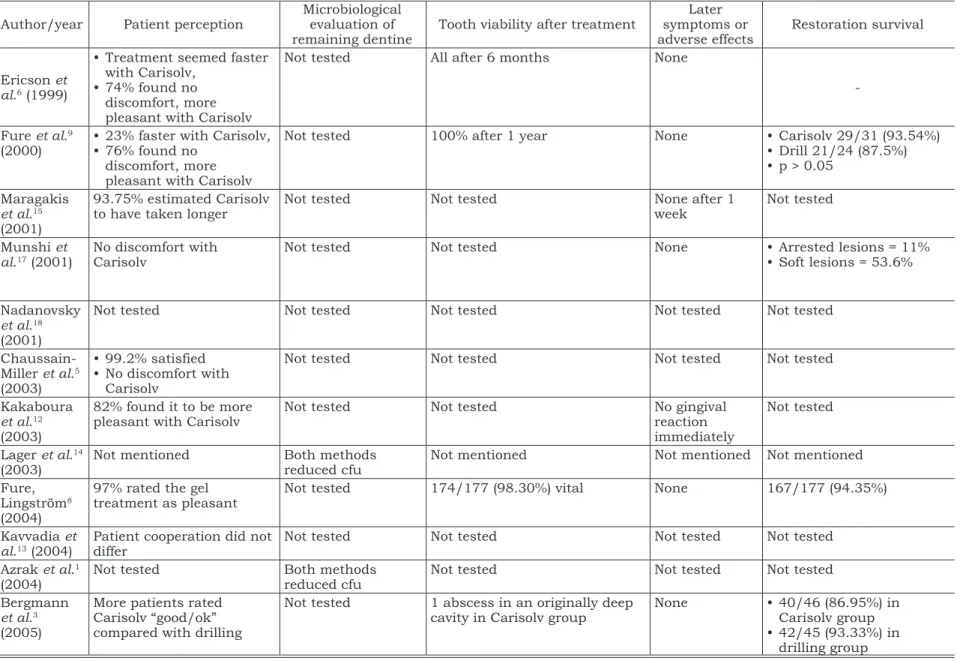
Table 1 presents the 12 selected studies, their respective authors, and methodology features. Table 2 presents the 12 selected studies, their re-spective authors, and their main features. Table 3 presents the 12 selected studies, their respective authors, and their main results.
DISCUSSION
A clinical trial is a planned experiment, strictly on human subjects, which is conducted with a view to investigate the efficacy of one or more treatments for a given condition.22 This kind of research offers us the most trustworthy evidence. All selected pa-pers in this review are clinical trials. In vitro studies can serve as hypothesis generators and indicators of possible correlations but have the uncertainty of extrapolating results to physiological effects in humans, thus presenting weak evidence.16 For that reason they have been excluded in this review.
infer-ence ability, all the assessed studies in this review carried out adequate statistical analysis.
Selection bias occurs when the individuals in the study are not representative of the popula-tion of interest. This may be avoided by ensuring that a random method of selection is used rather than relying on purposive or judgment sampling, where investigators include in their samples those individuals who they believe are typical or repre-sentative of the population.20 In this review it was observed that all the clinical trials evaluated used a convenience sample. This could have an implica-tion on the results since people that have access to dental treatment may differ from the target popula-tion in terms of caries activity and psychological profile.
The aim in designing a study is to control α and
β. Since they both increase as the sample size of the study decreases, all other relevant factors
remain-ing constant, estimatremain-ing sample size becomes an integral part of study design.23 From the analyzed studies, only Nadanovsky et al.18 (2001) mentioned to have calculated the necessary sample size.
Clinicians may have a preconceived notion re-lated to the effectiveness of a new treatment and this will influence the way in which the patients are allocated to various treatments. This might result in the more severely ill patients being al-located to the standard treatment, or vice-versa,
even if the clinician’s intention is to be fair, and this in turn would result in a biased estimate of the treatment effect. In order to avoid the possibil-ity of this happening, the patients are randomly
assigned treatments.22 If the size of the sample is enough, randomization guarantees that some results determinants known and unknown by the researcher are randomly distributed between test and control groups. Not randomized trials of
ef-TABLE 1 - Methodology assessment.
A
u
th
o
r/
Y
ea
r
S
tu
d
y
d
esi
gn
S
a
m
p
le
si
ze
(n
)
In
cl
u
si
on
a
n
d
excl
u
si
o
n
cr
it
er
ia
R
a
n
d
o
m
iza
ti
on
C
o
n
tr
o
ll
ed
E
xa
m
in
er
C
a
li
b
ra
ti
o
n
E
xa
m
in
er
B
li
n
d
in
g
S
ta
ti
st
ica
l
a
n
a
lysi
s
L
o
n
g-ter
m
fol
lo
w
u
p
Ericson et al.6
(1999) Parallel 127 Yes Yes Yes - Yes Yes
6 months
Fure et al.9
(2000) Parallel 60 Yes Yes Yes - Yes Yes
12 months Maragakis et al.15
(2001)
Split
mouth 32 Yes Yes Yes - - Yes 1 week
Munshi et al.17
(2001) Parallel 50 Yes - - - - Yes
6 months
Nadanovsky et al.18 (2001)*
Split
mouth 132 Yes Yes Yes Yes Yes Yes
-Chaussain-Miller
et al.5 (2003) Parallel 120 Yes Yes - - - Yes
-Kakaboura et al.12 (2003)
Split
mouth 90 Yes Yes Yes - Yes Yes
-Lager et al.14
(2003) Parallel 22 Yes Yes Yes - - Yes
-Fure, Lingström8
(2004) Parallel 202 Yes Yes - - Yes Yes
12 months
Kavvadia et al.13
(2004) Parallel 92 Yes Yes Yes Yes - Yes
Azrak et al.1 (2004)
Split
mouth 42 Yes Yes Yes - - Yes
-Bergmann et al.3 (2005)
Split
mouth 46 Yes Yes Yes - Yes Yes
6 months
367 Marquezan M, Faraco Junior IM, Feldens CA, Tovo MF, Ottoni AB. Evaluation of the methodologies used in clinical trials and
ef-fectiveness of chemo-mechanical caries removal with CarisolvTM. Braz Oral Res 2006;20(4):364-71.
fectiveness are inevitably limited in its ability of distinction between useful and useless or even harmful therapies.11 The great majority of the in-vestigated studies distributed patients or teeth into test or control groups by chance, except that of Munshi et al.17 (2001).
A group which does not receive the test thera-py is the reference to assess superiority or equiva-lence.22 Clinical trials in dentistry normally use two
types of study design: parallel and split mouth. The parallel group design relies on comparisons which are made between groups of subjects. Split-mouth has the advantage of avoiding variation among individuals, because it uses individuals as their own controls, but cannot be utilized for conditions which do not remain stable in the study period or which can be cured by the treatments being ad-ministered, when there is a carry-over effect from
TABLE 2 - Data extraction: Studies Features.
Author/Year Country Population/Age Lesions caracteristics Caries diagnosis
Ericson et
al.6 (1999) Sweden
• 127 patients of various profiles
• age 3 - 85 y
• Active primary caries lesion with dentine involvement in tooth with positive sensitivity response
Clinical and radiographic
Fure et al.9 (2000)
Sweden • 38 adults • age 23 - 84 y
• Active primary root carious lesion with softened dentine in a vital tooth • Ø 2 mm
Clinical
Maragakis et al.15 (2001)
Greece • 16 children • age 7 - 9
• Contralateral occlusal primary decay with open access in vital molars
• Ø 1.5 mm
Clinical
Munshi et al.17 (2001)
India • 50 children • age 3 - 12 y
• Dentinal lesion in primary and permanent molars
Clinical and radiographic
Nadanovsky et al.18 (2001)
Brazil • 66 people from poor community
• age 6 - 44 y
• Primary caries cavity in dentin in permanent teeth, sound pulp
Clinical
Chaussain-Miller et al.5 (2003)
France • 96 volunteer patients • age 10 - 81 y
• Active carious lesion with dentin involvement on a vital tooth
Clinical and radiographic
Kakaboura et al.12 (2003)
Greece • 45 volunteer patients • age 18 - 55 y
• Primary coronal mesio-occlusal or disto-occlusal carious lesions
Clinical
Lager et al.14 (2003)
Sweden • 22 Consecutive adult patients from Dentistry School
• age 20 - 68 y
• Vital premolars with primary caries involving half dentin thickness or primary buccal caries lesions extending into dentin. Consistency medium hard and color yellow to light brown
Clinical and radiographic
Fure, Lingström8 (2004)
Sweden • 170 Consecutive adult patients from dental clinics
• age 19 - 85 y
• Carious dentin lesions Clinical and radiographic
Kavvadia et al.13 (2004)
Greece • 31 Patients of the Pediatric Dentistry Department at Athens’ University
• age 28 m - 9 y
• Open carious lesion into dentin, on occlusal or buccal anterior surfaces
Clinical and radiographic
Azrak et al.1 (2004)
Germany • 21 Children with early childhood caries treated under local anesthesia • age 24 - 70 m
• Primary molars with brown and softened dentine
Clinical
Bergmann et al.3 (2005)
Denmark/ Portugal
• 46 Consecutive pediatric patients
• 4 - 11 y
• Active dentine carious lesions in deciduous teeth
n M , F a ra co J u n ior IM , F el d en s C A , T ovo M F , O tt on i A B . E va lu a ti on of t h e met h od ol ogi es u sed in cl in ica l tri a ls a n d ef -iven ess of ch emo-mech a n ica l ca ri es remova l w it h C a ri sol v T M . B ra z O ra l R es 2 0 0 6 ;2 0 (4 ):3 6 4 -7 1 . caries removal Ericson
et al.6 (1999)
• Carisolv 106/107 (99.06%) • Drilling 19/20
(95%)
• Stopped treatment because of
proximity to pulp • 4 with Carisolv • 1 with drilling
• Offered
• Carisolv 3/104 • Drilling 9/11
Less with Carisolv (p < 0.01)
• Longer with Carisolv (p < 0.01)
Fure et al.9 (2000)
• Carisolv 34/34 (100%)
• Drilling 25/26 (96.15%)
None • Offered
• Carisolv 3/34 (8.82%) • Drilling 6/26 (23.07%)
• Carisolv 0 • Drilling
12/20 (60%)
• Longer with Carisolv (p < 0.05)
Maragakis
et al.15 (2001)
• Carisolv 10/16 (62.5%)
• Drilling 16/16 (100%)
None None in Carisolv
All in drilling
62.5% reported having no trepidation with Carisolv
• Longer with Carisolv (p < 0.001)
Munshi et al.17 (2001)
• Carisolv 25/50 (50%)
None None None • Carisolv mean for arrested
lesions = 6.10 ± 1.04 min • Soft lesions = 4.56 ± 0,58 min (no comparison group) Nadanovsky
et al.18 (2001)
• Carisolv 59/66 (89.39%) • Mechanical
63/66 (95.45%) • p > 0.05
None • Offered
• Carisolv 3/34 • Drilling 6/26
Less with Carisolv (p < 0.01)
Not statistically different
Chaussain-Miller et al.5 (2003)
Carisolv 78.3% Not mentioned • Offered.
• 40% using anesthesia
Not mentioned 11.1 ± 9.51 min (no comparison
group)
Kakaboura
et al.12 (2003)
Carisolv 90% Not mentioned • Required in 8% during Carisolv and
40% during drilling (p < 0.05)
Less with Carisolv
• Longer with Carisolv (p < 0.01)
Lager et al.14 (2003)
Not tested Not mentioned Not mentioned Not mentioned Not mentioned
Fure, Lingström8 (2004)
100% 1 step-by-step
excavation in each group
• 32/104 (30.76%) New Carisolv • 30/98 (30.61%) Carisolv
39% some pain Statistically different only for deep lesions
Kavvadia et al.13 (2004)
100% Not mentioned • Administrated before caries removal
in class I lesions with more than one third into dentin
• Class V: more need with conventional mechanical method (p < 0.05)
Not mentioned • Longer with Carisolv
(p < 0.01)
Azrak et al.1 (2004)
100% Not mentioned Not mentioned Not mentioned Not tested
Bergmann
et al.3 (2005)
• Carisolv 46/46 (100%)
• Drilling 45/46 (97.82%)
1 with drilling • Before treatment
• 1 with carisolv • 2 with drilling
Not different (p > 0.05)
3 6 9 M a rq u eza n M , F a ra co J u n ior IM , F el d en s C A , T ovo M F , O tt on i A B . E va lu a ti on of t h e met h od ol ogi es u sed in cl in ica l tri a ls a n d ef -fect iven ess of ch emo-mech a n ica l ca ri es remova l w it h C a ri sol v T M . B ra z O ra l R es 2 0 0 6 ;2 0 (4 ):3 6 4 -7 1 . ± ± ±
TABLE 3 -(continued) Data extraction: Studies Main Results.
Author/year Patient perception
Microbiological evaluation of remaining dentine
Tooth viability after treatment
Later symptoms or adverse effects
Restoration survival
Ericson et al.6 (1999)
• Treatment seemed faster with Carisolv,
• 74% found no discomfort, more pleasant with Carisolv
Not tested All after 6 months None
-Fure et al.9 (2000)
• 23% faster with Carisolv, • 76% found no
discomfort, more pleasant with Carisolv
Not tested 100% after 1 year None • Carisolv 29/31 (93.54%)
• Drill 21/24 (87.5%) • p > 0.05
Maragakis
et al.15 (2001)
93.75% estimated Carisolv to have taken longer
Not tested Not tested None after 1
week
Not tested
Munshi et al.17 (2001)
No discomfort with Carisolv
Not tested Not tested None • Arrested lesions = 11%
• Soft lesions = 53.6%
Nadanovsky
et al.18 (2001)
Not tested Not tested Not tested Not tested Not tested
Chaussain-Miller et al.5 (2003)
• 99.2% satisfied • No discomfort with
Carisolv
Not tested Not tested Not tested Not tested
Kakaboura
et al.12 (2003)
82% found it to be more pleasant with Carisolv
Not tested Not tested No gingival
reaction immediately
Not tested
Lager et al.14 (2003)
Not mentioned Both methods
reduced cfu
Not mentioned Not mentioned Not mentioned
Fure, Lingström8 (2004)
97% rated the gel treatment as pleasant
Not tested 174/177 (98.30%) vital None 167/177 (94.35%)
Kavvadia et al.13 (2004)
Patient cooperation did not differ
Not tested Not tested Not tested Not tested
Azrak et al.1 (2004)
Not tested Both methods
reduced cfu
Not tested Not tested Not tested
Bergmann
et al.3 (2005)
More patients rated Carisolv “good/ok” compared with drilling
Not tested 1 abscess in an originally deep
cavity in Carisolv group
None • 40/46 (86.95%) in
Carisolv group • 42/45 (93.33%) in
one treatment to another, or when the response to treatment is prolonged.21 From the 12 analyzed pa-pers, nine3,6,9,13,15,18 used the conventional technique of caries removal by burs and or hand instruments as control group for CarisolvTM. Concerning study design, the great majority of studies used a parallel model5,6,8,9,13,14,17 while others1,3,12,15,18 used a split mouth model.
Calibration aims to guarantee the uniformity of interpretation and application of adopted criteria by examiners both in relation to themselves and to the other examiners.26 Ideally, reproducibility should be calculated by Cohen’s Kappa coefficient, in order to deduct agreements by chance.19 Interex-aminers calibration was demonstrated by Kavvadia
et al.13 (2004) and Nadanovsky et al.18 (2001). Both the patient receiving treatment and the assessor of the response to treatment may have preconceived notions about the superiority of one treatment over another. If either is aware of which treatment the patient is receiving, this may influ-ence the assessor’s evaluation of the response and lead to a biased result.22 In trials where patient and operator can not be blinded, the examiner who assesses the results must be.11 Bergmann
et al.3 (2005), Ericson et al.6 (1999), Fure et al.9 (2000), Fure, Lingström8 (2004), Kakaboura et al.12 (2003) and Nadanovsky et al.18 (2001) all mentioned examiner’s blinding.
A long-term follow-up is essential to evaluate a drug or technique safety. Longitudinal studies are the best ones regarding ability of evaluating later symptoms or adverse effects, although they pres-ent a high cost and a great possibility of individual drop outs.21 Maragakis et al.15 (2001) evaluated 16 children after one week. Ericson et al.6 (1999), Mun-shi et al.17 (2001), Fure et al.9 (2000), Fure, Ling-ström8 (2004) and Bergmann et al.3 (2005) recalled patients after six months or one year. All longitu-dinal studies found no later symptoms or adverse
effects. Fure et al.9 (2000), Fure, Lingström8 (2004) and Bergmann et al.3 (2005)assessed restoration quality during follow-up and found a satisfactory success rate.
Cavities restorative treatment is a wide issue in cariology, and there is no particular technique which is useful in all situations. Intrinsic differ-ences of each patient, including cooperation level, oral health appraisal and general health conditions make the consensus about a therapy more difficult. Based on the available clinical trials results, Cari-solvTM demonstrated to be effective in caries remov-al.1,3,6,9,12,13,18 Appointment mean time was great-er3,6,8,9,12,13,15 but due to patient perception of more comfort3,5,8,9,12,17 and reduced anesthesia necessi-ty6,9,12,13,15,18, the perceived time was shorter than that observed using conventional techniques.6,9 The system was considered adequate for pediatric use because it did not affect child cooperation13,17. However, in the study by Maragakis et al.15 (2001), the majority of pediatric patients preferred the con-ventional technique because it was faster and did not produce an unpleasant flavor. There were no adverse effects in long-term assessments.3,6,8,9,15,17 In studies involving a microbiological evaluation of the remaining dentine, it was observed that both the conventional and the chemo-mechanical meth-ods produced a statistical significant reduction on counts of viable microorganisms.1,14
CONCLUSIONS
Based on the available clinical trials related to CarisolvTM, it was observed that none of the studies complied with all research methodological princi-ples. However, the best available evidence concern-ing CarisolvTM suggests that it is effective in caries removal and ensures higher patient comfort than does conventional drilling, although it involves a longer appointment.
REFERENCES
1. Azrak B, Callaway A, Grundheber A, Stender E, Willer-shausen B. Comparison of the efficacy of chemomechani-cal caries removal (CarisolvTM) with that of conventional excavation in reducing the cariogenic flora. Int J Paediatr Dent. 2004;14:182-91.
2. Bader J, Ismail A. Survey of systematic reviews in dentistry. J Am Dent Assoc. 2004;135(4):464-73.
3. Bergmann J, Leitão J, Kultje C, Bergmann D, Clode MJ. Removing dentine caries in deciduous teeth with Carisolv: a randomised, controlled, prospective study with six-month follow-up, comparing chemomechanical treatment with drilling. Oral Health Prev Dent. 2005;3(2):105-11.
4. Braun A, Eberhard J, Krause F, Glenny AM, Jepsen S. Chemo-mechanical treatment of tooth decay [protocol]. The Cochrane Library, Issue, 2006. Oxford: Update Software. 5. Chaussain-Miller C, Decup F, Domejean-Orliaguet S,
Gil-let D, Guigand M, Kaleka R et al. Clinical evaluation of the Carisolv chemomechanical caries removal technique according to the site/stage concept, a revised caries clas-sification system. Clin Oral Investig. 2003;7(1):32-7. 6. Ericson D, Zimmerman M, Raber H, Gotrick B, Bornstein
371 Marquezan M, Faraco Junior IM, Feldens CA, Tovo MF, Ottoni AB. Evaluation of the methodologies used in clinical trials and
ef-fectiveness of chemo-mechanical caries removal with CarisolvTM. Braz Oral Res 2006;20(4):364-71.
7. Fejerskov O. Concepts of dental caries and their conse-quences for understanding the disease. Community Dent Oral Epidemiol. 1997;25(1):5-12.
8. Fure S, Lingstrom P. Evaluation of the chemomechanical removal of dentine caries in vivo with a new modified Ca-risolv gel. Clin Oral Investig. 2004;8(3):139-44.
9. Fure S, Lingstrom P, Birkhed D. Evaluation of Carisolv for the chemo-mechanical removal of primary root caries in vivo. Caries Res. 2000;34(3):275-80.
10. Fusayama T. Clinical guide for removing caries using a caries-detecting solution. Quintessence Int. 1988;19(6):397-401.
11. Guyatt GH, Sackett DL, Cook DJ. Users’ guides to the medical literature. II. How to use an article about therapy or prevention. A. Are the results of the study valid? Evidence-Based Medicine Working Group. JAMA. 1993;270(21):2598-601.
12. Kakaboura A, Masouras C, Staikou O, Vougiouklakis G. A comparative clinical study on the Carisolv caries re-moval method. Quintessence Int. 2003;34(4):269-71. 13. Kavvadia K, Karagianni V, Polychronopoulou A,
Papa-giannouli L. Primary teeth caries removal using the Carisolv chemomechanical method: a clinical trial. Pediatr Dent. 2004;26(1):23-8.
14. Lager A, Thornqvist E, Ericson D. Cultivatable bac-teria in dentine after caries excavation using rose-bur or CarisolvTM. Caries Res. 2003;37(3):206-11.
15. Maragakis GM, Hahn P, Hellwig E. Clinical evaluation of chemomechanical caries removal in primary molars and its acceptance by patients. Caries Res. 2001;35(3):205-10.
16. Mickenautsch S, Yengopal V, Bonecker M, Leal SC, Bezerra ACB, Oliveira LB. Minimum Intervention (MI) Den-tistry - Evidence based Compendium. 1st Edition. MI
Corpo-ration; 2006. Disponível em: URL: http://www.midentistry. com [accessed on 2006 Mar 21].
17. Munshi AK, Hegde AM, Shetty PK. Clinical evaluation of Carisolv in the chemico-mechanical removal of carious dentin. J Clin Pediatr Dent. 2001;26(1):49-54.
18. Nadanovsky P, Cohen Carneiro F, Souza de Mello F. Removal of caries using only hand instruments: a compari-son of mechanical and chemo-mechanical methods. Caries Res. 2001;35(5):384-9.
19. Peres MA, Traebert J, Macenes W. Calibração de exa-minadores para estudos epidemiológicos de cárie dentária. Cad Saúde Pública. 2001;17(1):153-9.
20. Petrie A, Bulman JS, Osborn JF. Further statistics in dentistry. Part 1: Research designs 1. Br Dent J. 2002; 193(7):377-80.
21. Petrie A, Bulman JS, Osborn JF. Further statistics in dentistry. Part 2: Research designs 2. Br Dent J. 2002; 193(8):435-40.
22. Petrie A, Bulman JS, Osborn JF. Further statistics in dentistry. Part 3: Clinical trials 1. Br Dent J. 2002; 193(9):495-8.
23. Petrie A, Bulman JS, Osborn JF. Further statistics in dentistry. Part 4: Clinical trials 2. Br Dent J. 2002; 193(10):557-61.
24. Rafique S, Fiske J, Banerjee A. Clinical trial of an air-abrasion/chemomechanical operative procedure for the restorative treatment of dental patients. Caries Res. 2003;37(5):360-4.
25. Sackett DL, Rosenberg WM, Gray JA, Haynes RB, Richardson WS. Evidence based medicine: what it is and what it isn’t. Br Med J. 1996;312(7023):71-2.
26. WHO (World Health Organization). Calibration of Ex-aminers for Oral Health Epidemiology Surveys - Technical Report. Geneva: WHO; 1993.