LIME EFFECTIVENESS OF SOME FERTILIZERS IN A TROPICAL ACID ALFISOL
Mercy Omogbohu Anetor and Ezekiel Akinkunmi Akinrinde*
Department of Agronomy, University of Ibadan, Ibadan, Nigeria
*Corresponding author: Tel: +234-2-8033937476; E-mail: [email protected], [email protected] Manuscript received: February 8, 2006; Reviewed: December 7, 2006; Accepted for publication: December 12, 2006
ABSTRACT
Liming increases production costs and environmentally unfriendly. Effectiveness of crystalliser (CRYS), single super phosphate (SSP) and organic fertilizer (OF) for liming was evaluated by determining pH and phosphorus- (P)-availability in an acid alfisol incubated with the amendments, Ca(OH)2 being reference. Treatments were replicated
thrice in completely randomised design. Un-amended soil remained acidic (pH 4.8) but liming raised pH (6.1-6.6), enhancing maximum (15.09-17.33 mg kg-1) P–release (un-amended having 4.24-7.09 mg P kg-1). Lime (L) and L+P
treatments resulted in maximum pH increases (7.0-7.2), decreasing with incubation. Fertilizer treatments also raised pH (5.0-5.5 for OF, CRYS or SSP; 5.6-5.8 for CRYS +SSP, CRYS+OF and OF+SSP) relative to control (5.2). Acid soil infertility-ameliorating potential of CRYS and OF was revealed. They could be used multi-purposely as lime and P fertilizers by poor-resource farmers challenged by acid soil infertility factors.
INTRODUCTION
A large proportion of soil resource found in the humid tropics is acidic and deficient in phosphorus (P). This may not be unrelated to the leaching of basic cations coupled with poor management practices characteristic of the region. The occurrence of high levels of aluminium (Al) and iron (Fe) in soil usually give rise to low pH and P release. Wherever Fe and Al imbalances exist, a corresponding P stress occurs. With high rate of P fertilizer additions, soil sorption sites are satisfied and P level increase to sufficiency for crop production [11]. This is of particular importance because of the role of P in plant nutrition; enhancing nitrogen (N) absorption, influencing pod and seed formation in legumes and contributing significantly in plant energy processes. The subject of soil addition or amendment to improve soil fertility and correct soil acidity is recently enjoying research attention; partly because of limited use of costly inputs like fertilizers, lime - soil amendments [22] occasioned by the inability of poor resource farmers to purchase these materials. Where available, application of inorganic fertilizer without soil test, on the long run, can increase soil acidity. It is also due to side effects of inorganic fertilizer on intensely cultivated soils [20]. Cropping soils without fertilizer use under a continuous intensified farming system facilitates nutrient depletion while soil degradation sets in. Another extreme of excess P fertilizer use could result in ground water pollution. In all cases, the sustainability of the soil resource is jeopardized.
Conventional lime still remains the major means of ameliorating soil acidity; yet most farmers find it difficult to purchase it coupled with the sub soil acidity associated with inadequate liming practice. Basically, inputs into the soil -inorganic fertilizer application and biological nitrogen fixation [7] and acid rain [24] have been labelled as causes of soil acidity. In like manner, soil additives capable of increasing soil pH could be exploited for correcting the twin problem of low pH and P deficiency. When rock phosphate (RP) is added to acid soils, P availability could be increased due to P supply abilities of these materials. With Ca and Mg constituent, RP assumes a significant role as a potential tool for sustaining soil productivity by reducing its acidity level. With this, it is important to consider the liming abilities of Ca-containing fertilizers - RP, SSP and organic fertilizer in addition to their P supplying property.
As such, this study sought to investigate the lime effectiveness of some P fertilizers (organic and inorganic) in an acid alfisol in relation to their ability to raise soil pH and enhance P release for sustainable soil productivity.
MATERIALS AND METHODS
Two laboratory incubation studies were conducted using loamy sand Alfisol collected from International Institute for Tropical Agriculture (IITA) substation in Ikenne, Nigeria. Analysis of the soil, prior to incubation, revealed its characteristics to be: pH (H2O)=4.7, organic matter=18.9g kg-1, total N=9.4g kg-1,
available P =2.91mg kg-1, exchangeable Ca, Mg, Na and
K = 0.38, 0.09, 0.29 and 0.48 c mol kg-1, respectively.
Soil physical properties determination gave sand = 918 g kg-1, clay =14.0 g kg-1and silt=68.0 g kg-1. Thus, it was an
acid loam sand alfisol –Typic Paleustalf [28] formed on sandstones [3].
In the first laboratory investigation, 50 g samples of the experimental soil were contained in 45 custom laboratory cups and incubated for 7, 14 and 21 days with 0, 25, 50, 75 and 100 mg Ca (OH)2kg-1 [equivalent to 0, 34.25, 68.5,
102.75 and 137.00 mg CaCO3 kg-1]. Calcium hydroxide
(slaked / hydrated lime) is calcium oxide (quicklime) slaked with water. It was used in this study in order to enhance solubility.
The treatments were replicated 3 times in completely randomised design (CRD) to give a total of 5 x 3 x 3 (limeapplication levels x incubation periods x replicates) experimental units. The soil samples were moistened to 60 % field capacity (FC) during the incubation periods and 15 samples were analysed for pH and available P determination at the end of each period. The quantities of Ca (OH) 2 applied were subsequently plotted against
pH values for the estimation of optimum liming rate for the soil.
The second laboratory experiment involved the use of the same amount of soil and incubation periods as in the first. However, the following 16 sole and combined treatments were replicated three times in CRD: control (C), lime (L), single super phosphate (SSP), crystalliser (CRYS -blend of Sokoto RP and talc), organic waste-fertilizer (OF), L+SSP, L+CRYS, L+OF, CRYS+SSP, CRYS+OF, OF + SSP, CRYS+OF+SSP, L+CRYS+OF, L+SSP+OF, L+CRYS+SSP and L+OF+CRYS+SSP. Lime was applied at 50 mg kg-1, which was obtained as
the optimum liming rate in the first experiment while P-fertilizers were applied at 44 mg P kg-1. The nutrient
soil pH obtained with conventional lime treatment minus soil pH of control/untreated soil i.e.
RAE or LE = Soil pH (with test liming material) – soil pH (with control) / Soil pH (with conventional lime) – soil pH (with control) x 100 %.
Laboratory analysis of soil samples
Soil pH was determined in a 1:2 soil/water using glass electrode pH meter, N by micro Kjedahl [16] and available P by Bray –1-P method [9]. Exchangeable cations were determined by IN NH4OAC pH 7.0 extraction, organic C by wet dichromate method [30] while micronutrients were extracted by use of acidified NaHCO3 extractant [15]. The respective concentrations in filtrates were read on atomic absorption spectrophotometer (AAS). The soil particle sizes were analysed by hydrometer method [8] and read on textural triangle.
Data Analysis
Data collected were subjected to analysis of variance (ANOVA) using Sigma Stat computer software. Subsequently, Duncan Multiple Range Test (DMRT) was used to indicate differences in the effects of the lime application rates in the first experiment while standard deviation (+ SE) was used in the second experiment to establish variations in the effectiveness of the soil amendments.
RESULTS AND DISCUSSION
Soil pH increased with increase in lime application levels
(Table 2) but declined with increasing incubation periods. Lime application at 100 mg kg-1 led to the highest soil
pH (7.5) followed by 75 mg kg-1 (7.2) after 1
week-incubation period. There was no significant difference in pH of soils incubated for various periods when limed at 100 mg kg-1 but soils incubated for 7 days with 75 mg
kg-1 lime were different from those incubated for 14 days
but were not different from those of 21 days. The same trend occurred for soils incubated with 50 mg kg-1 of
lime, which resulted in soil pH 6.1 (after 7 days) with an increase to 6.6 after 14 days of incubation and subsequent decrease to 6.4 after 21 days. At 25.0 mg kg-1 liming rate,
a slight soil pH decrease (5.6 to 5.5) was associated with increase in incubation period from 7 to 14 days while the values after 14 and 21 days were similar. However, the average pH of 5.5 for 7, 14, and 21 days of incubation was significantly higher than for the un-amended soils (4.7) (Table 2). Liming at 25.0 mg kg-1 represented one
extreme (inadequacy) of lime application that did not completely ameliorate soil acidity, as pH values of 5.4-5.6 were still indicative of acid conditions. This is evident from the available P contents of soils incubated at 25.0 mg kg-1 that was not significantly different from control
values at 7 and 14 -day incubation periods, suggesting the inefficacy of low rates of lime application. The optimum liming rate for the experimental soil could be accepted to be 50.0 mg kg-1, which raised soil pH to about 6.5 known
to ensure the availability of a broad range of essential nutrients (P inclusive) to crops [29].
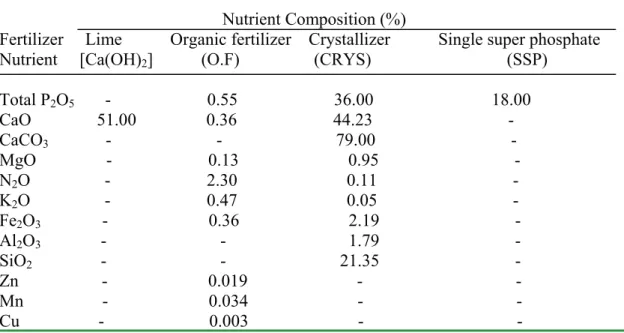
Table 2 further reveals that soil available P (at most of the Table 1. Nutrient composition of the soil amendments used.
Nutrient Composition (%)
Fertilizer Lime Organic fertilizer Crystallizer Single super phosphate
Nutrient [Ca(OH)
2] (O.F) (CRYS) (SSP)
Total P
2O
5- 0.55 36.00 18.00
CaO 51.00 0.36 44.23 -
CaCO
3- - 79.00 -
MgO - 0.13 0.95 -
N
2O - 2.30 0.11 -
K
2O - 0.47 0.05 -
Fe
2O
3- 0.36 2.19 -
Al
2O
3- - 1.79 -
SiO
2- - 21.35 -
Zn - 0.019 - -
Mn - 0.034 - -
Cu - 0.003 - -
lime application levels) decreased with incubation time. The untreated soils had the least available P at all the incubation levels while 50.0 mg kg-1 treatment resulted
in maximum P – release of 17.33, 16.76 and 15.09 mg kg-1 after 1, 2, and 3 weeks of incubation, respectively.
Optimal liming at 50.0 mg kg-1 resulted in soil pH
6.1-6.6, which permitted the highest available P contents of the incubated soils. However, liming at 75.0 or 100.0 mg kg-1 increased soil pH to above 7, causing low soil
available P-content compared with the values at 50.0 mg kg-1. Fageria et al., [12] explained that when high rates of
lime are applied, available P is significantly reduced. The summary of pH for soils sampled during the second incubation study is presented in Table 3. In the case of soil amendments involving lime, a range of 7.5-7.7 was recorded, but decreasing with increasing incubation time such that a range of 6.8-7.4 was attained by the last sampling period (21 days). This is an indication of lime depletion through adsorption by soil colloids with time, hence the need for regular lime application [17]. Lime (applied alone) and lime + P source treatments gave the highest soil pH of 7.0-7.2 after 7 days of incubation. For lime and lime combinations (L, L+CRYS, L+OF, L+CRYS+SSP etc), pH increases above the control were observed up to the third week of incubation indicating a tendency for some liming materials to have a long term effect as reported by Follett et al., [13]. The pH of control soils became more acidic with time, while the amounts of available P recovered following incubation were higher than those of the original soil. The pre-incubated/original soil could have been high in total P but low in available
Table 2. Soil pH and available phosphorus (P) contents after 7, 14 and 21 day – incubation periods with different levels of lime
Incubation period (days)
7 14 21
Ca(OH)2
applied pH Available P pH Available P pH Available P
(mg kg-1 soil ) (mg kg-1) (mg kg-1) (mg kg-1)
0 4.99 e 7.09 c 4.60 d 7.15 b 4.50 e 4.24 b
25 5.66 d 10.79 bc 5.54 c 9.41 b 5.50 d 9.94 a
50 6.14 c 17.33 a 6.65 b 16.76 a 6.46 c 15.09 a
75 7.20 b 16.19 ab 7.19 a 14.48 a 7.18 b 15.61 a
100 7.53 a 13.01 abc 7.53 a 13.53 a 7.54 a 11.42 a
Values with the same letter (s) along columns are not significantly different at p=0.05 by Duncan multiple range test.
P.
For treatments without lime (CRYS, OF, OF+CRYS, OF+CRYS+SSP etc), appreciable increases in soil pH and available P greater than for the control were obtained. This is in line with the explanation of Wright et al., [31] that increase in soil pH could be attributed to consumption of protons during acidulation of rock phosphate and subsequent neutralization of bases released. These treatments (OF and CRYS) involved materials that supplied fertilizer P in addition to P release through their liming ability as explained by Lelei et al., (18). FAO [14] and Edwards [10] reported that RP and organic fertilizer possess some liming ability. Sole and combined applications of the P fertilizer sources led to higher pH values of 5.5 for OF and CRYS while CRYS +SSP, CRYS+OF and OF+SSP gave 5.8, 5.6 and 5.7, respectively compared with control (5.2). SSP treated soils, however, resulted in pH 5.0 that is lower than for the control. This is an indication of the relative liming abilities of the materials. Combinations involving SSP also gave high soil pH values and the highest available P contents. After one week of incubation, the highest available P concentration was obtained from SSP (47.23 mg kg-1), CRYS+SSP (48.89 mg kg-1) and CRYS+OF+SSP
(39.32 mg kg-1) while least available P concentrations
were obtained from control (11.75 mg kg-1) and sole lime
(12.47 mg kg-1) incubated soils. Same trend was obtained
at the third week of incubation.
inorganic fertilizer treatments either maintained same or decreased soil pH compared with control. The high available P contents associated with this inorganic P source are attributed to the fact that it is water-soluble [2,27] while subsequent decrease could have been caused by P fixation [26]. CRYS, OF, CRYS +OF, OF+SSP, L+CRYS+OF and CRYS+OF+SSP soil amendments similarly increased available P throughout the incubation periods in consonance with the work of Minhas and Tripathi, [21] and Marwaha and Kanwar, [19] that RP (e.g. crystalliser) in combination with SSP or farmyard
manure (OF) can be as effective as SSP. With increasing incubation period, control, L+SSP, L+OF, CRYS+OF and CRYS+OF+SSP treatments had the overall tendency to decrease soil available P concentrations while there was a steady increase in available P with respect to OF, CRYS, OF+SSP, L+CRYS+OF and CRYS+OF+SSP. The increases in available P of the latter treatments throughout the incubation period could be due to the slow release of CRYS (which is largely a rock phosphate, RP) as well as the mineralization of the organic fertilizer [4,25]. In a similar study, Akinrinde et al., [4] reported gradual Table 3. The influence of lime, phosphorus (P) fertilizer and their combinations on the pH and available P
contents of soils incubated for 7, 14 and 21 days.
+ S.E, Standard deviation.
Treatment Incubation period (Days)
7 14 21
pH Available-P pH Available-P pH Available-P
(mg kg
-1) (mg kg
-1) (mg kg
-1)
Control
5.29
11.75
4.93
11.02
4.83
12.40
Lime (L)
7.22
12.47
7.15
13.05
7.21
13.42
Crystalliser
(CRYS)5.52
21.18
5.06
19.58
5.10
25.90
Organic Fertilizer
(O.F)
5.53
38.88
5.25
42.00
4.74
42.44
Single super (SSP) 5.04
47.23
5.36
40.41
5.20
45.34
L+SSP
7.56
32.21
7.23
42.51
7.13
29.81
L+CRYS
7.75
18.50
7.20
17.77
6.82
17.99
L+OF
7.67
25.24
7.49
26.26
7.18
4.52
CRYS+SSP
5.82
34.96
4.87
35.18
4.94
30.90
CRYS+OF
5.69
48.89
5.24
46.50
5.03
44.25
OF+SSP
5.73
20. 40
5.05
29.02
5.00
32.13
CRYS+OF+SSP
5.55
15.38
4.91
15.38
4.91
17.19
L+CRYS+OF
7.71
30.83
7.55
25.90
7.47
23.94
L+SSP+OF
7.48
39.32
7.54
46.43
7.34
45.27
L+CRYS+SSP
7.57
29.23
7.46
26.19
7.29
19.44
L+OF+CRYS+SSP
increase in H2O –P from 3.06 – 9.70 mg P kg-1 after 5
weeks of incubation for soil samples treated with organic fertilizer. They concluded that OF decreased P fixation and promoted P availability. Furthermore, RP supplied Ca while P – availability was ensured by the release of organic acids (during mineralization of organic fertilizer) which frees Al and Fe bound phosphates from sorption sites [1].
A comparison of results of first and second experiments (Tables 2 and 3, respectively) indicates that control treatment in the latter produced more available P (11.02 – 12.40 mg kg-1) than in the former (4.24 – 7.15 mg kg -1). Furthermore, the 50 mg Ca(OH)
2 kg-1 application
increased P availability in the former and had no effect in the latter. These observations seem to be due to the fact that the experiments were conducted independently and wide changes in the environmental/ambient conditions (particularly relative humidity) during the different periods might have contributed immensely to differences in the respective “wet and dry” cycles. Akinrinde and Obigbesan [6] opined that release of soil nutrients used to be more under wet condition than under wet and dry condition. This implies that higher quantities of soil nutrients would be released with frequent wetting than with less frequent wetting. To elucidate these phenomenons, the two series of experiments could be Table 4. Soil pH and relative agronomic efficiencies (RAE) of lime and phosphorus fertilizer
treatments at 7, 14 and 21 day-incubation periods.
Treatment Incubation period (Days)
7 14 21
pH RAE / LE (%) pH RAE / LE (%) pH RAE / LE (%)
Control (C) 5.29 - 4.93 - 4.83 -
Lime (L) 7.22 100 7.15 100 7.21 100
Crystalliser (CRYS) 5.52 11.91 5.06 5.85 5.10 11.34
Organic Fertilizer
(O.F) 5.53 12.43 5.25 14.41 5.22 20.20
Single super phosphate (SSP)
5.14 -12.93 5.36 43.00 5.20 15.54
L+SSP 7.56 117.61 7.23 103.60 7.13 96.63
L+CRYS 7.75 127.46 7.20 102.25 6.82 83.61
L+O.F 7.67 123.31 7.49 115.31 7.18 98.73
CRYS+SSP 5.82 27.46 4.87 -2.70 4.94 4.62
CRYS+O.F 5.69 20.72 5.24 13.96 5.03 8.40
O.F+SSP 5.73 22.79 5.05 5.40 5.00 7.14
CRYS+O.F+SSP 5.55 13.47 4.91 -0.90 4.91 3.36
L+CRYS+O.F 7.71 125.38 7.55 118.01 7.47 110.92
L+SSP+O.F 7.48 113.47 7.54 117.56 7.34 105.46
L+CRYS+SSP 7.57 118.13 7.46 113.96 7.29 103.36
L+O.F+CRYS+SSP 7.58 118.65 7.41 111.71 7.41 108.40
conducted simultaneously in future studies.
Relative Agronomic Efficiencies (RAEs) or Lime effectiveness (LE) of tested soil amendments (phosphorus fertilizer sources) relative to Conventional Lime
Data in Table 4 clearly shows that soil samples amended with lime (alone or in combination with P fertilizer sources) recorded the highest pH values of 7 and above. This also translated to higher RAE or LE values above 100 %, indicating additional effect from the P sources. However, the subsequent decreases in with incubation periods confirm the reduction of the lime effectiveness with time as the materials react with soil colloids. Despite the low RAE in respect of the different P sources, their potencies for improving soil pH are obvious considering that further mineralization could occur with time and subsequent additions would increase the cation reserve of the soil. However, the negative value obtained from SSP is an indication that it cannot be relied upon as a liming material [23].
CONCLUSION
Lime application rate at 50 mg kg-1 gave soil pH values
favourable for crop production and this also permitted the highest release of available P. This indicates that liming at 50.0 mg kg-1 is required to ameliorate the acid
condition of the experimental soil and over liming should be avoided as it could precipitate P deficiency again. Lime treatment combinations resulted in high pH values of about 7. The P fertilizer sources and their combinations also gave appreciable increases in soil pH, indicating their liming characteristics. Since P release was sustained for sole CRYS and OF treated soil samples, P availability during residual cropping is likely unlike SSP, which suffered fixation. Also, P fertilizer combinations such as OF+SSP, CRYS+OF+SSP and L+CRYS+SSP could favour residual cropping. It is hoped that this would greatly cut cost for the poor resourced farmer who would just require one P fertilizer application depending on crop grown. Information on amount of CRYS and OF required for sustainable crop production would assist the farmer especially those working with acid soils.
REFERENCE
[1]. Agegnehu, G., Taye, G, Effect of plant hormone on the growth and nutrient uptake of maize in acidic soils of the humid tropics, Ethiopia Journal of Science (2004) 27: 17-24.
[2]. Akinrinde, E.A., Arreyndip, G.T., Ojo, F.A., Performance of pot grown maize as influenced by intercropping with legumes and nitrogen and phosphate
fertilizer treatment combinations. Proceediings of the 25th
annual Conference of Soil Science Society of Nigeria 21 – 25th November (1999) 142-150.
[3] Akinrinde, E.A., Assessment of the Electro-Ultrafiltration (EUF) Technique for the determination of available soil nutrients, Ph.D Thesis, Univ. of Ibadan, Ibadan, Nigeria, 1987.
[4] Akinrinde, E.A., Fakunle, O.A., Ojo, F.A., Effects of organic fertilizer and super phosphate on the performance and P use efficiency of cowpea. Proceedings of the 20th Annual Conference of the Soil Science Society
of Nigeria, (2000): 130-135.
[5] Akinrinde, E. A., Onanuga, O. A., Bello, O. S., Obigbesan, G. O., Efficiency of indigenous ground phosphate rocks, organic fertilizer and their mixtures for maize performance in two Nigerian alfisols. Moor Journal of Agricultural Research, (2003) 4: 1-7.
[6] Akinrinde, E. A., Obigbesan, G. O., Evaluation of potassium release and fixation behaviors of some Nigerian soils, Nigeria Journal of Soil Science, (2005) 15: 47-53.
[7] Bolan, W.S., Hedley, M.J., White, R.E., Processes of soil acidification during Nitrogen cycling with emphasis on legume based pastures, in: R.J. Wright, R.J., Baligar, V.C., Murrmann, R.P. (Eds.), Plant and soil interaction at low pH .Phosphorus Kluwer Academic Publisher, 1991, pp 179-169.
[8] Bouyoucos, G.H., A calibration of hydrometer method for making mechanical analysis of soils. Journal of Agronomy, (1951) 43:434-438.
[9] Bray, R.H. and Kurtz, L.T., Determination of total organic and available forms of phosphorus. Soil Science, (1945) 59:39-45.
[10] Edwards, A.C., Soil acidity and its interaction with P availability for a range of different crop types in: R.J. Wright, R.J., Baligar, V.C., Murrmann, R.P. (Eds.), Plant and soil interaction at low pH. Phosphorus Kluwer Academic Publisher, 1991, pp. 229-305.
[11] Fageria, N.K, Baligar, V.C., Wright, R.J., Influence of phosphate rock sources and rates on rice and common bean production in an oxisol in: R.J. Wright, R.J., Baligar, V.C., Murrmann, R.P. (Eds.), Plant and soil interaction at low pH, Phosphorus Kluwer Academic Publisher, 1991, pp 539-546.
[13] Follet, R.H., Murphy, L.S., Donahue, R.L., Fertilizers and soil amendments, Prentice Hall, Incorporation, New York, (1981).
[14] Food and Agricultural Organization (FAO), Use of phosphate rock for sustainable agriculture, in: Fertilizer and Plant Nutrition Bulletin, 13, Zapata, F., Roy, R. N (Eds.), FAO land and water development Division and International Atomic Energy Agency, 2004. http.www. fao.org//docrep/007/y5053e/y5053eoo.htm 07052005.
[15] Hunter, A.H., Laboratory and greenhouse techniques for nutrient survey to determine the soil amendments required for optimum plant growth. Soil Fertility Evaluation Implementation Project. N.C. State University, Raleigh, N.C., (1972)
[16] Jackson, M.C., Soil chemical analysis, Prentice Hall incorporation Englewood Cliffs. New York, (1958)
[17] Kotur, S.C., Effect of Boron, lime and their residue on yield of cauliflower, leaf composition and soil properties, in: R.J. Wright, R.J., Baligar, V.C., Murrmann, R.P. (Eds.), Plant and soil interaction at low pH, Phosphorus Kluwer Academic Publisher, 1991, pp 349-354.
[18] Lelei, J. J., Mochoge, B.O., Onwonga, R.N., Effect of lime, urea, TSP on nitrogen and phosphorus mineralization in an acid soil during incubation, African crop science Journal, (2000) 8 (3): 327-336.
[19] Marwaha, B.G., Kanwar, J.S., Utilization of general rock phosphate as a direct phoshatic fertilizer- A review, Fertilizer News 1981, pp 10, 20.
[20] Mbagwu J.S.C., Aggregate stability and soil degradation in the tropics, Lecture given at the College of Soil Physics Trieste 3-21, March (2003).
http://www.
google.com/search?hl=en&Ir=&q=Aggregate+
stability+and+soil+degradation
(accessed02-08-2005).
[21] Minhas, R.S., Tripathi, D., Phosphorus nutrition of wheat through super phosphate and rock phosphate in acid soil of Himachal Pradesh, Rock phosphate in agriculture, (1986) pp 42-50.
[22] Okigbo, B., Criteria for judging sustainable farming system in Tropical Africa, in: Proc. of workshop on environ, Biodiversity and agricultural change in
West Africa, University of Ghana, 25-27, October, Perspectives from Ghana, Gyasi, E. A., Uitto, J. I. (Eds), United Nations University press, Tokyo, Japan (1997).
[23] Opara–Nadi, O.A., Omenihu, A.A., Ifemedabe, S.N., Effect of organic waste, fertilizer and mulch on productivity of an ultisol, Proceedings of the 20th Annual
conference of the soil science society of Nigeria, 2000, pp 113-120.
[24] Raij, B.V., Fertility of acid soil, in: R.J. Wright, R.J., Baligar, V.C., Murrmann, R.P. (Eds.), Plant and soil interaction at low pH, Phosphorus Kluwer Academic Publisher, 1991, pp 159-167.
[25] Reddy, K., Sanmi, A., Subbarao, P.N. and Pakkar, A.C., Transformation of fertilizer Phosphorus in a vertisol amended with farmyard manure. Biological Fertilizers Soils, (1996) 2: 279-282.
[26] Saranganath, P.A., Shindle, B.N., Petnaik, S., Effects of application of water soluble, citrate soluble and insoluble phosphate on the transformation of inorganic Phosphorus fraction and in relation with available Phosphorus in different soils, Indian Journal of Agricultural science, (1977) 47: 309-313.
[27] Siddaramappa, R., Jagadish, N.R., Srinivasamurthy, C.A., Efficiency of rock phosphate as phosphate fertilizer to rice in an acid soil of Karnataka, India, in: world congress on conservation agriculture, August 11-15, 1991, pp 430-432.
[28] Soil Survey Staff, Keys to Soil Taxonomy, 6th
Ed., US Dept. of Agric.; Soil Conservation Service, Blacksburg, VA, USA. Pocahontas Press Inc., 1994.
[29] Tisdale, S. L., Nelson, W. L., Beaton, W. L., Harlin, J. L., Soil fertility and fertilizers 5th Edition. Macmillan
Publishing Company, 1996.
[30] Walkley, A., Black, I.C. An examination of the Pegtjareff method for determining soil organic matter and proposed modification of the chromic acid titration method. Soil Sci. (1934) 37: 29 -38.