Development of an alternative transportation service
for e-commerce deliveries
João Peliteiro Coutinho
Master’s Dissertation
Supervisor: Prof. Eduardo Gil da Costa
Master in Industrial Engineering and Management
“Life is not accumulation, it is about contribution.” Stephen Covey
Abstract
This report is part of a Master's thesis of the Faculty of Engineering of the University of Porto, held in the e-commerce department of Rangel & Distribuição Logística. The challenge posed is related to the last mile delivery - the last stage in the transport of an order until it arrives at the final destination - of Business to Consumer (B2C) orders from e-commerce. The company intends to offer a B2C delivery service that increases customer satisfaction and differentiates from the competition. Therefore, a theoretical study was made regarding the themes of e-commerce and last mile delivery that indicate its main trends these days, as well as a benchmarking of the companies that work in these segments. The study allowed concluding that a service with enormous potential for Rangel in this segment would be the deliveries made on the same day of purchase, the "Same Day" service. Two days were spent with the driver of the city of Porto to understand closely the inefficiencies of the B2C network, which is currently integrated into the Business-to-Business (B2B) network. Then, in order to perceive the relevance of the Same Day service in the Portuguese market, three online stores and two courier companies were interviewed, and a survey was also launched at FEUP, which obtained 216 responses. With this, what was suggested by the previous study was corroborated. Thus, in addition to developing the Canvas business model of the new service and designing its operational model, SWOT and Porter's 5 forces analysis were done. A financial model that demonstrates the feasibility of the solution by calculating the Net Present Value (NPV) over a period of three years, including an estimation of the market size for this service in Portugal, was followed. The results suggest that Rangel should invests in this service since the VAL calculated was 374.027 € and the estimated Portuguese market was over 42 million euros per year.
Desenvolvimento de um serviço de transporte alternativo para
entregas de e-commerce
Resumo
Este relatório surge no âmbito de uma tese de mestrado da Faculdade de Engenharia da Universidade do Porto, realizada no departamento de E-commerce da empresa Rangel & Distribuição Logística. O desafio proposto está relacionado com o last-mile delivery - a última etapa no transporte de uma encomenda até que esta chegue ao destino final - de encomendas do tipo Business to Consumer (B2C), provenientes do e-commerce. A empresa pretende oferecer um serviço de entregas B2C que aumente a satisfação dos clientes e que se diferencie da concorrência. Assim sendo, foi feito um estudo teórico dos temas do
e-commerce e do last-mile delivery que indicam as suas principais tendências nos dias de hoje,
bem como um benchmarking das empresas que atuam nesses segmentos. O estudo permitiu concluir que um serviço com enorme potencial para a Rangel neste ramo seria o das entregas feitas no mesmo dia da compra, o serviço “Same Day”. Foram passados dois dias com o motorista da rota da cidade do Porto para entender de perto as ineficiências da rede B2C, que atualmente é integrada na rede Business to Business (B2B). De seguida, de forma a perceber a pertinência do serviço Same Day no mercado português foram entrevistadas três lojas online, e duas empresas de estafetagem, e foi também lançado um questionário na FEUP que obteve 216 respostas. Com isto corroborou-se aquilo que o estudo anterior tinha sugerido. Assim, para além de desenvolvido o modelo de negócios Canvas do novo serviço e desenhado o modelo operacional do mesmo, foram feitas as análises SWOT e 5 forças de Porter, seguidas de um modelo financeiro que demonstra a viabilidade da solução através do cálculo do Valor Absoluto Líquido (VAL) num período de três anos, incluindo uma estimativa do tamanho do mercado para este serviço, em Portugal. Os resultados obtidos sugerem que a Rangel invista neste serviço, uma vez que o valor do VAL calculado foi de 374.027€ e o mercado português estimado foi superior a 42 milhões de euros anuais.
Acknowledgments
This thesis closes an important chapter of my life, for which I could not feel more grateful, since it gave me memorable experiences and made me a better person academically, but above all personally. For that, I would like to begin by thanking FEUP for being my second home for the last five years.
I want to thank Rangel by making this experience possible, to all the company’s staff who have been in some way connected with my research, providing essential information for its development, especially to my advisor Ricardo Borges. I’d like to thank the other three interns of Rangel that spent the past five months by my side as well.
I feel lucky to have had Professor Eduardo Gil Costa as my FEUP supervisor, for his constant willingness to help whenever necessary, as well as for his excellent work in the revision of this document, so I want to also thank him for that. I would also like to thank Professor Maria Dulce Lopes for the inputs offered in the financial analysis of this work, and to Professor Ana Camanho, who although did not make a direct contribution to it, was the Professor with whom I created a stronger relationship throughout the course and this certainly influenced me positively.
Some of the strangers in the early months of college are friends for life today, and that was the best gift university gave me, real friends, and I must thank them. If we think about it, this is probably the last step of our lives to make such close friends. We may befriend somebody on a trip, or a job, or another random and unexpected episode, but that would hardly beat the daily living with our university friends. That makes me smile because I'm sure that I have at my side fantastic people, people much better than me. The spirit of comraderie among colleagues was amazing and served as a great learning experience, because, as it happened during these past five years with my colleagues, I believe that generosity and concern for others will transform anyone's destiny for the better.
My path at FEUP was strongly marked by my involvement in associativism, both as a member of ESTIEM but mainly as President of AGE-i-FEUP. What I experienced during my mandate was the most remarkable experience of my student life and I am fortunate to have lived those moments with absolutely incredible people. So, a big hug to all my board members of the 2015/2016 term.
I want to thank my family for their unconditional support since entering college. To my brother, my father who also contributed to the execution of this work, my uncles and cousins, and to my grandparents, especially to my recently deceased grandfather. I dedicate this work to my mother too, who gave me an incomparable support and has always made the biggest effort to give me all the necessary tools to succeed in the last five years.
Lastly and foremost, once I saw a video where the presenter showed that what gives longevity to the human being is the creation of deep and lasting relationships. Therefore, I cannot forget to thank to the person who everyday provides me a relationship as strong as if it was an indestructible bridge, with a pure and true meaning. I can say that I am fortunate to have built such a relationship with the person I consider my love, you, Clara.
Contents
1 Introduction ... 1
1.1 Company Presentation and Project Motivation ... 2
1.2 Project Presentation ... 3
1.3 Aim and Objectives of the Project ... 4
1.4 Approach and Methodology ... 4
1.5 Structure of the Report ... 5
2 Literature Review ... 6
2.1 Urban Delivery Industry ... 7
2.1.1 Portuguese Market Overview ... 7
2.1.2 Portugal VS International Markets ... 8
2.2 Future Outlook for E-commerce and Last-Mile Delivery ... 9
2.2.1 E-commerce Trends ... 9
2.2.2 Delivery Trends ... 11
2.3 Cost Drivers ... 12
2.4 Last Mile Delivery Models ... 13
2.4.1 Cargo Cycles ... 13
2.4.2 Small Eletric Vehicles (SEV) ... 14
2.4.3 Unmanned Aerial Vehicles (UAVs) ... 14
2.4.4 Automated Guided Vehicles with lockers (AGVs) ... 16
2.4.5 Self-Driving Delivery Robot ... 16
2.5 Collect and Delivery Points ... 17
2.6 Benchmarking ... 18
2.6.1 Carriers ... 18
2.6.2 Integrated Supply Aggregatores ... 19
2.6.3 Collect and Delivery Points Network ... 19
2.6.4 Pure Delivery Players ... 20
2.6.5 Pure Tech Plays ... 20
2.7 Business Model ... 22
3 Current B2C Model of Rangel ... 23
3.1 Ongoing Service Provision of Rangel ... 23
3.2 Assets Description ... 24
3.3 Description of Porto’s Route Delivery Service ... 25
3.3.1 Day One – 14th of March ... 26
3.3.2 Day Two – 24th of April... 26
3.3.3 Summary of the Information Obtained and Driver Mindset ... 27
3.4 Current situation outcomes ... 28
4 Proposed Solution: Same day Delivery... 30
4.1 The Opportunity of Same day Delivery in Portugal ... 30
4.1.1 Market Insights ... 30
4.1.2 Market Size ... 32
4.2 Same Day Delivery Model ... 33
4.2.1 Business Model ... 33
4.2.2 Operational Model ... 35
4.3 Risk Analysis ... 36
4.3.1 Five Porter’s Forces Annalysis ... 36
4.3.2 SWOT Analysis ... 37
4.4 Financial Analysis ... 38
4.4.1 Financial Benefits ... 38
4.4.2 Costs... 39
4.4.4 Feasibility Conclusion ... 42
5 Conclusions and Future Research ... 43
Bibliography ... 47
APPENDIX A: Organizational chart of Rangel & Distribuição Logística ... 53
APPENDIX B: B2B delivery (left) and prohibited parking (right) ... 54
APPENDIX C: Economic Cash Flow and Cash Flow of Investment ... 55
Acronyms
AGV – Automated Guided Vehicle API – Application Programming Interface B2B – Business to Business
B2C – Business to Consumer C2C – Consumer to Consumer CDP – Collect and Delivery Point CEP – Courier, Express and Parcel CF – Cash Flow
CRM – Customer Relationship Management ETA – Estimated-time-of-arrival
FEUP – Faculdade de Engenharia da Universidade do Porto NPV – Net Present Value
OC – Omni-Channel
PDA - Personal digital assistent POD – Proof of delivery PUDO – Pick Up and Drop Off SaaS – Software as a Service SEV – Small eletric vehicle
TMS – Transport Management System UAV – Unmanned Aerial Vehicle
List of Figures
Figure 1: Supply chain of parcel delivery ... 8
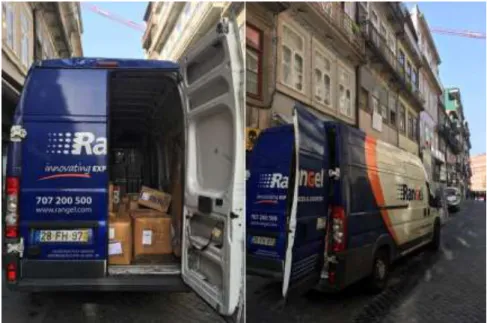
Figure 2: Sprinter van of B2C deliveries of Rangel ... 24
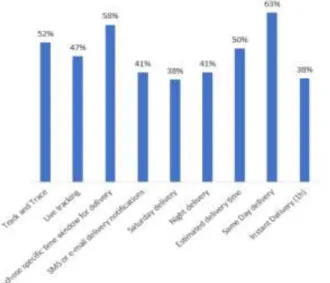
Figure 3: FEUP survey - answers Question 1... 31
Figure 4: FEUP survey - answers Question 2... 31
Figure 5: Business Model ... 34
List of Tables
Table 1: Delivery modes in Portugal. Source: Rangel ... 8
Table 2: E-commerce in Portugal vs. International e-commerce ... 9
Table 3: Examples of UAVs currently working ... 15
Table 4: Examples of Droids currently working ... 16
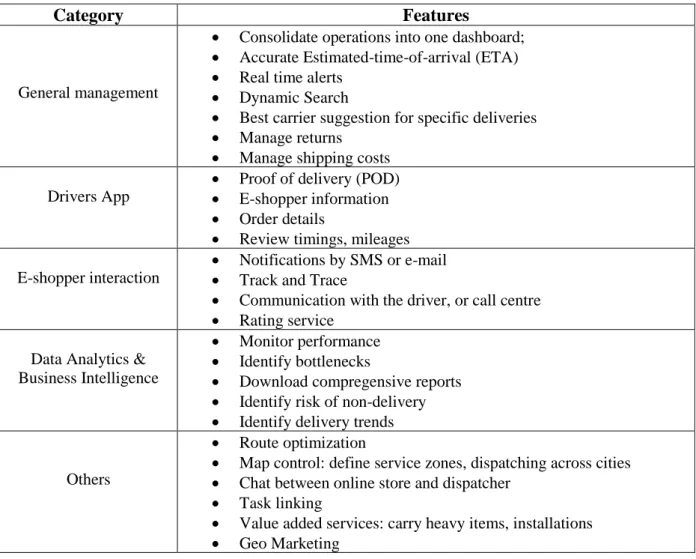
Table 5: Technology features for e-commerce industries ... 21
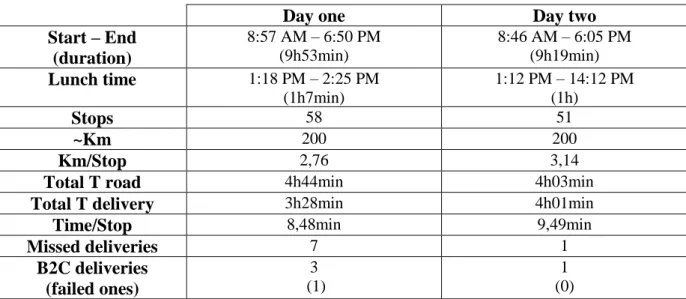
Table 6: Porto's route metrics ... 27
Table 7: Current vs. Desired B2C delivery model of Rangel ... 29
Table 8: Statistics from survey of FEUP ... 30
Table 9: FEUP survey - answers Question 3 ... 31
Table 10: FEUP survey - answers Question 4 ... 31
Table 11: E-commerce's deliveries market size ... 33
Table 12: Information obtained from courier companies ... 35
Table 13: Five Porter's Forces summary ... 37
Table 14: SWOT Analysis ... 37
Table 15: E-retailer segmentation by size ... 38
Table 16: Number of clients considered per size ... 40
Table 17: Revenues and Costs ... 40
Table 18: Gross Margin, EBIT and NET Income ... 41
Table 19: Cash Flows ... 41
1 Introduction
This project was carried out within the scope of the final dissertation for the Integrated Masters in Industrial Engineering and Management at the Faculty of Engineering of the University of Porto. The present dissertation is the result of a five-month internship at Rangel
& Distribuição Logística, who enabled this work-based thesis.
The estimated value for e-commerce sales in the year of 2017 was €1.843 trillion (Abraham et al. 2017).This has led to the increment of the global parcel delivery market, that is not only large, but it is also very scalable with growth rates reaching up to 10% in mature markets such as Germany and United States; and more than 100% in developing markets. (Martin, Florian, and Schröder 2016).This being said, failed or late deliveries become a very frequent problem due to transportation companies not being able to follow the growth of e-commerce. Nowadays, it is expected that 1 out of every 20 online orders is not delivered on the first attempt (PCA Predict 2017).
The above challenge is also an opportunity for a new set of competitors, the so-called on-demand urban delivery providers. These start-ups have entered the B2C delivery market and provided the economy with such logistics model that has attracted almost USD 5 billion in venture capital since 2014 in western markets alone (Netzer et al. 2017).The solution is now based on developing a new type of last-mile delivery to better serve the e-shoppers.
The delivery is the least efficient process between all the transportation phases of parcel delivery, amounting up to 50% of the total supply chain costs in specific cases (Vanelslander, Deketele, and Van Hove 2013), taunting huge financial losses for retailers and logistic partners, as well as brand image damage and customer dissatisfaction. Nevertheless, the concerns go far beyond the economic issue for the business. Delivery is undermining social and environmental questions, mainly and obviously minding metropolitan areas, due to the CO2 emissions, energy consumption, traffic congestion and the wastes of the impulse buying,
reducing the incitation of online shopping (Pan, Chen, and Zhong 2015).
Therefore, fulfilling distribution requirements is essential for any online business that sells physical goods. As new modes of delivery to customers are being developed and optimized, retailers will provide a better service, will improve customer retention and will generate more profit. Undoubtedly, this area is considered the most relevant to achieve excellence in logistics (Hübner, Holzapfel, and Kuhn 2016).
Since the e-commerce boom came later on to Portugal, the last mile delivery is naturally less developed when compared with the main commerce economies. However, the estimated e-commerce revenue in this country for 2017 was €4.73 billion (Abraham, Lone, and Couenberg 2017), an increase by over 12% from 2016, whose value was €3.685 billion (CTT 2017). In that same year, one out of three Portuguese shopped online, which makes Portugal a relevant potential growth market since the ecosystem of e-buyers is still lower than the European average - 33% against 55% of the European population (CTT 2017).
1.1 Company Presentation and Project Motivation
This project was developed in Rangel, a Portuguese company that provides logistics services for thousands of other companies. Due to Rangel’s recent developments on the e-commerce footprints, it is only natural to aim for becoming the trendsetter on that field. For achieving that goal however, it will be needed to develop a new transportation model for e-commerce deliveries. In light of this, this project was done in the e-commerce department, the smallest but probably the one with the biggest growth potential of the entire company.
Currently, the Rangel’s B2C transportation deliveries are integrated within the transport network of the B2B deliveries, generating inefficiencies in the service provided to e-commerce consumers. Since this type of e-commerce is getting more popular year by year, Rangel is requested to be capable of providing a more personal experience to the final consumers. For instance, additional services such as offering the possibility of two hours slots for deliveries change the hour or delivery address at any time after order is placed, or even giving the option to choose between home delivery and delivery at a pick-up point.
Although e-commerce still represents a modest business turnover inside the entire group, as stated above it is probably the one with the highest potential for the next decade, and therefore should not be neglected. In fact, it is possible to verify that Rangel’s CEO has already publicly mentioned “Portugal has a lot to evolve in e-commerce, 2018 will be the strong year of e-commerce”. Besides, the company will invest €1.5 millions in e-commerce until the end of 2018. Since Rangel wants to be a player in the e-logistics industry in Portugal, this project had a significant importance since the beginning, with the responsibility to provide concrete solutions in what regards to the e-commerce deliveries, and, moreover, to provide a deep and detailed study about the best practices and trends of e-commerce in the world.
Rangel Distribuição Logística (RDL) was founded in 1993, being part of the Rangel Group,
founded thirteen years before. Its creation came in a very successful attempt to add value to the whole group, offering integrated services through a logistics distribution chain. Nowadays, some of the services performed by RDL are insourcing and outsourcing logistics, storage and order processing, inventory management, reverse logistics, among others. In Appendix A is represented the organizational chart of RDL.
Currently, the group offer services in a diverse portfolio of industries, for instance, artwork, pharmaceutical, fashion and wine industries. Regarding the expansion strategy of the group beyond the Portuguese borders, the expansion targeted the Lusophone countries, with the take off in 2007 with Rangel Angola. During the following years, Rangel started its operations in others markets such as Mozambique, Brazil and Cape Verde.
A very important and prestigious factor of Rangel today’s operations is that the group is considered a Global Service Participant (GSP) of FedEx, one of the three companies on the top of 2018 Forbes Global 2000 transportation ranking, providing a wide range of express services, focusing on exportation and importation of goods (Gara 2018). This partnership forced the group to create another company, exclusively dedicating its activity to the urgent shipments of FedEx.
The motivation behind this project can be divided in two main points. Firstly, the company itself and its national recognition makes the project impact very high. Secondly and probably the most important, the topic of e-commerce is becoming a habit among millennials, especially among of students. Thus, in the end, it is a great chance to have the opportunity to provide Rangel with the benefits of exploring this developing market.
1.2 Project Presentation
The entrepreneurial spirit that led to the creation of the Rangel Group was the same responsible for the start of the e-commerce projects. Besides, it was also the consequence of the Group’s constant willingness to adapt to new market trends, revealing the perseverance that pushes the company to maintain its position of leadership and growth.
In the e-commerce department Rangel is developing a service of full-ecommerce in order to provide to brick-and-mortar stores an opportunity to sell online, that includes developing a website, providing the needed logistics, organize marketing campaigns and offer customer support. In view of this, this project is occurring in parallel, with the aim to understand the possibility of a same day delivery model that Rangel can offer to its B2C clients.
Presently, the company is facing a lack of services in e-commerce deliveries, being the main reason the inexistence of a dedicated fleet to especifically serve these clients. As a direct consequence, B2C deliveries are integrated with the B2B ones with the same routes, vehicles and drivers.
As of today’s B2C transportation model, the driver's main concern is to call the recipient in order to know whether he or she is at home. Nonetheless, even this process is not performed perfectly since it is not done until the van arrives to the parcel drop point, leading to wastes of time and fuel moving to the recipient's place with the possibility of the client not being there. In the likely case of a failed delivery, the driver will return the order to the warehouse, and will try to deliver it the following day. This process is repeated three times, and only at this instance Rangel informs the shipper; then Rangel has to wait for a decision - return the parcel or change the address. Naturally, because of deliveries during work time of the recipients, most people cannot receive the orders on the first attempt. In addition to the dissatisfaction of the final customer, this system leads to high logistics costs that could and should be avoided. The B2C service can be compared to the experience a client is looking for when going to a restaurant: of course, the main goal is to eat great food, but an outstanding service can raise the overall experience to a new level, increasing customer’s attendance rate. Those not-so-little details are crucial because there is nothing that forces someone to choose the same carrier in the next shopping.
Indeed, since appearance is not a job requirement, there is no way to ensure that all Rangel's van drivers are good looking, neither do they have a refined communication nor they treat the recipient with a careful and special approach. This is to be expected, since until now such things were not valued nor required from them, because in the B2B service drivers essentially deal with warehouse's operators, shops or other businesses where these differentials are not critical to performing their functions. The traditional deliveries for the businesses are still seen as priority in this company and this can compromise the future of home deliveries in a close future.
Finally, yet importantly, it should not be forgotten that the level of digitalization and software support in this activity is poor. Apart from the inexistence of an informatic application that would establish the connection between Rangel and the recipient, the company also does not have any route management software in order to guide the drivers according to their orders. As of today, is that the drivers already know a priori their destination according to each customer; and so, they are capable of recalculating the route mentally. Sometimes, although, they obviously make mistakes, but during the day those errors are not significant for now. The scarcity of solutions in the B2C field, allied to the fact that there are already competitors in this market, have led to the creation of this project, which was mainly a back-office project since it required deep research. Expected results were to identify alternative B2C delivery modes from the one is performed today by the company, draw the operational model of the
best solution before identified, obtain feedback from the market regarding the solutions developed, and create a pilot project in the case it is considered economically feasible.
1.3 Aim and Objectives of the Project
The main objective of this project was:
Identify, analyse and validate alternative delivery solutions for e-commerce customers.
This objective can be decomposed into three specific elements in order to represent which specific actions are behind it:
1. Identify: the main goal is to identify and benchmark solutions for e-commerce, to verify which companies or start-ups - inside and outside of Portugal - are solving better this problem and how they are doing it;
2. Analyse: once the trends are identified, the following step would be to analyse those trends and conclude which ones are feasible in the Portuguese context, and more specifically narrowing them to Rangel’s context;
3. Validate: finally, to develop an accurate solution built on a solid foundation. This would be possible with operational and financial validation.
1.4 Approach and Methodology
Chronologically, this project started with a theoretical study through the consultation of scientific articles, reports from audit firms and logistic companies, and navigation on dedicated e-commerce websites. The articles were searched on Engineering Village, Science Direct, Scopus, Web of Science and Google Scholar. During this part, it is also included a benchmarking study all over the world which clustered different business models currently practised among main competitors in the last mile delivery market. Thus, the research had a significant impact on every following phase of this report because it is the place from where every further conclusion is based on.
With this being done, the opportunity for same day deliveries as a service to invest in the near future was identified. Thus, further analysis had to be done in order to prove this hypothesis. The first step in the analysis was to map the current state of the B2C service of Rangel in what regards to last mile delivery, and this was achieved by spending two whole days with the Porto’s route driver. Such experience allowed the correct comprehension of how the company is performing B2C deliveries and what are the existent inefficiencies that make the operation not prepared for the Same day service.
In order to get real market insights relating to the needs of same day delivery in Portugal, three interviews were executed with e-retailers and two with courier companies. Aditionally, the relevance of the service was asked in a survey for students from FEUP.
At the end of this stage, two management tools were used with the goal of obtaining a risk analysis, taking in consideration not only internal factors of the company but also external ones that will influence the business model: SWOT analysis and Porter’s Five Forces analysis. Right after, it came the process mapping of the final solution, using Bizagi modeller software, and the business model canvas of the new service of same day deliveries of Rangel. The last method to conclude this report was a financial analysis respecting the new model created. Here, a cost-benefit analysis was simulated and the model provides the net present value through the calculation of the cash flows for three years. It also calculates the market size for this service in Portugal.
To conclude this section, the project approach can be summarized as follows: 1. Research & Benchmarking through articles, reports, websites;
2. In loco observation of the inefficiencies of the current service of Rangel including driver interviews;
3. Interviews with e-retailers and courier companies; 4. Opinion gathering by usage of a survey;
5. Risk analysis: SWOT and Porter 5 Forces; 6. Process Mapping with Bizagi Software; 7. Business Model Canvas;
8. Financial Analysis and calculation of the market size.
1.5 Structure of the Report
Following this introductory chapter, chapter two will be explored literature review that alongside a global review of the e-commerce and last mile delivery, it also presents a comparison between Portugal and international geographies in this field, as well as a worldwide search of companies that are pursuing all the mentioned trends.
The third chapter will focus on the description of the current delivery operations of B2C shipments of Rangel. Relevant insights obtained with the driver that performs the route of the city of Porto nowadays will be included.
The practical part of this project follows in chapter four, where a concrete analysis is done. Starting with why same day deliveries are an opportunity in Portugal, proven with real market interviews and with an estimation of the national market size, following the presentation of a proposed operational model for the new B2C fleet and concluding with a risk and financial analysis in order to support what was introduced before.
In the end, the main conclusions of the whole study are summarized, alongside some suggested topics for future works.
2 Literature Review
The literature researched is clustered by different directions of improvement, all of them related to the last mile delivery of products bought online - the last step of the e-commerce product’s journey from the warehouse to the customer hands – and to the e-commerce itself. The goal was to find the “big picture” of the problem in order to develop a better and more consistent solution, one that could take in consideration as many alternatives as possible. At the end of this chapter is shortly presented the research made regarding the business model used afterwards in this report.
The first priority would be to define the scope of e-commerce in which this analysis focuses, since this topic incorporates more than one definition and could be applied to different types of online transactions. Therefore, according to Arnold et al. (2017), there are B2B, B2C and C2C e-commerce.
The first segment abovementioned refers to online orders where a company buy something from another company, for example a car manufacturer that buys a specific component from a supplier through its online store. This particular kind of purchases are not a problem for the last mile delivery service as businesses are always “at home” and there is no space for failures in the delivery unless any other unexpected problem emerges. This can be responsibility of the carrier or manufacturer for example.
The second one is B2C sale of goods, requiring physical delivery to the recipient. Here is where the struggles of supply chain are focused, and where many studies have been focusing on during the past years, mainly caused by the failed home deliveries.
The third one is pure C2C e-commerce that happens in marketplaces such as eBay (or Olx in Portugal). Generally, when people put their belongings on sale in these platforms they do not have any transportation service aggregated, and they need to move from their homes to the meeting point where the buyer will receive the product.
Due to this need of making the seller and buyer lives better in what concerns to transporting goods, eBay acquired Shutl in 2013 (Butcher 2013), a start-up that became popular for the one-hour delivery services provided. Also, Olx has incorporated in its website a similar service, in partnership with CTT Expresso, called CTT e-segue, that covers the delivery of goods until 10kg.
Last but not least, there is yet another type of online transaction that does not demand physical delivery because there are no physical goods to be delivered. These can be for example e-tickets for a concert or a flight, hotel booking or, e-books.
For the purpose of the literature review, only the second and the third definitions of e-commerce will be approached since these are the only ones being affected by constantly failed deliveries, which is the biggest challenge of the e-commerce last mile delivery.
With this being said, the definition of e-commerce presented by Eurostat is the one in which this report is based: "the sale or purchase of goods or services, whether between businesses,
households, individuals or private organizations, through electronic transactions conducted via the internet or other computer-mediated (online communication) networks."
2.1 Urban Delivery Industry
According to the World Bank, nowadays more than half of the world population live in cities. However, in certain countries such as UK and USA, the urban population represents more than 80% of total population. In Portugal, for instance, this percentage is 64% conforming to the same source (The World Bank Group 2014). Therefore, cities are the main boosters of people's over-consumption as an incentive behaviour by companies, advertising and media based there.
If cities are the problem, they can and should be the solution if people who live in cities realize that it is necessary to prepare themselves for a different world from the one they have today. A world where instead of classifying people based on what they have and how they buy it, people value more the usage of services and access to products, without claiming ownership of anything. The idea where temporary access to goods and services is preferred over actual ownership is the concept of Gig Economy, also known as the Sharing Economy, a paradigm shift that is becoming more popular nowadays. The new perspective uses business models based on innovative technology that steers cities to less consumption while density increases. Examples of this technology are driverless cars and 3D printing (Gesing 2017). Portell, Brown and Ben-Shabat (2017) describe mass customization as the next commercial revolution of America. The authors argue that consumer’s behaviour is changing from an “Affluence” model stimulated by ownership, to an “Influence” model where people prioritize access and experiences. In fact, there are already dozens of companies which success is based on this new paradigm such as TaskRabbit, Netflix, Uber, Airbnb or, Spotify.
All of these changes are also visible in the Courier, Express and Parcel (CEP) industry, more specifically in the Last Mile Delivery one as well. In fact, the Gig Economy allows any person living in urban habitats to receive his/her package in a matter of hours, or even minutes. This can have food, clothes, medicine, electronic devices and so on. The paradigm shift of on demand delivery is real, meaning that traditional players have no more the power of establishing limitations on delivery times and locations because there are a bunch of start-ups using the power of crowd and flexible courier services to enable consumers to have their orders delivered anytime, anywhere (Kückelhaus and Chung 2016).
Indeed, as reported by McKinsey&Company(Netzer et al. 2017), dozens of startups offering this type of services have raised almost USD 1.7 billion in 2015. This amount of venture capital is eleven times higher than what was raised in 2013 from the same startups. This means that there are thousands of everyday people willing to pay for this service. Following the same report, among other features, what distinguish these new players from traditional logistic providers is their ability to focus on the end consumer, using dedicated mobile apps or websites that connect the consumer with merchants rather than operating in the background on behalf of merchants and losing control of the customer experience journey.
2.1.1 Portuguese Market Overview
The Portuguese e-commerce can be a little late when compared with other countries in the world, however, this activity is already evident, mainly because 86% of the population are internet users and 43% of these have bought something online in 2016 (Abraham, Lone, and Couenberg 2017). Moreover, by 2025, Portuguese market is estimated to achieve €8.9 billion in online B2C sales (ACEPI and IDC 2017). Thus, what is missing in volume remains in growth potential, so Portugal is seen as a start-up country where there is international culture and qualified human resources in what concerns to digital expertise. Moreover, Portugal has
one of the best 3G/4G structure and optic fibre of Europe (Abraham and Lone 2017) and also, Portugal is the first country in Europe to offer an instant transactions service nationwide with MB Way App (Mesquita 2016).
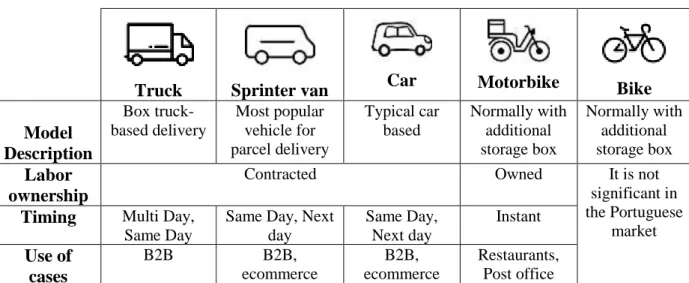
The delivery in Portugal is done with a sprinter van and truck in most part of the cases. Table 1 shows the most popular delivery modes in Portugal.
Table 1: Delivery modes in Portugal. Source: Rangel
Truck Sprinter van Car Motorbike Bike
Model Description Box truck-based delivery Most popular vehicle for parcel delivery Typical car based Normally with additional storage box Normally with additional storage box Labor ownership
Contracted Owned It is not
significant in the Portuguese
market
Timing Multi Day,
Same Day
Same Day, Next day Same Day, Next day Instant Use of cases B2B B2B, ecommerce B2B, ecommerce Restaurants, Post office
These vehicles are used throughout the supply chain of parcel delivery (see Figure 1). During the first-mile, goods are transported from the manufacturer to the distribution centre and right after, from this point to the destination platform, what is called line-haul. The first-mile and line-haul are done essentially by truck. From here, goods are transported to the recipient or to the store, what is called the of delivery, and the vehicle used can be a van or a car. In the case of restaurant delivery, the last mile is done by motorbike from the establishment to the recipient. All the information presented in this section was obtained from sources of Rangel.
Figure 1: Supply chain of parcel delivery; Source: Rangel
2.1.2 Portugal VS International Markets
As reported by Ecommerce Foundation (Abraham et al. 2017), e-commerce global sales are distributed fundamentally among three main zones, which together, accumulate pratically 98% of the global market share. Those are Asia Pacific (47,48%), Europe (25,64%) and North America (24,86%). This means that the remaining regions of the globe, which are South America and Middle East & Africa, represent only 2% of the e-commerce global market. With this, it is possible to define two distinct markets, the mature and the emergent ones, each one with its own challenges. During the same report Ingenico Group, a company specialized in e-payments, have referred that developing countries lack of financial inclusion and payment methods and on the other side developed markets concerns are in fraud and legal issues.
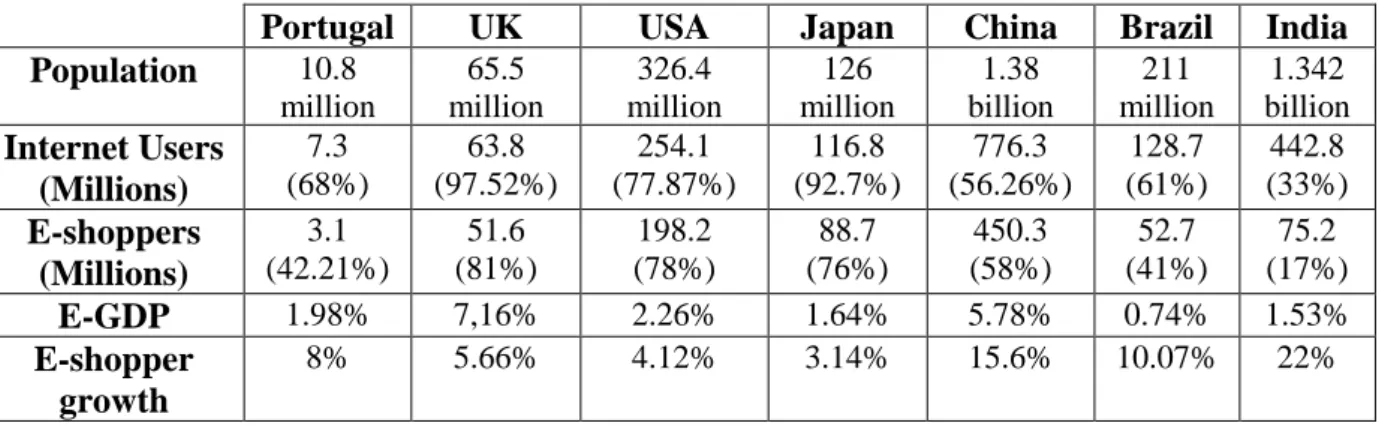
Abraham et al. also compare Portugal with the main mature markets such as UK, USA and Japan and with emergent markets like Brazil, India and China. Although all the numbers represent estimated values, it was possible to get a global perspective.
In order to understand the data two terms are defined first:
• E-GDP or E-commerce GDP: total of online sales divided by the total Gross Domestic Product (GDP);
• E-shopper: also known as online buyer, it refers any individual who bought something through internet, either a service or a good. It represents the percentage of Internet Users who buy online.
Table 2: E-commerce in Portugal vs. International e-commerce Source: Ecommerce Foundation, Ecommerce News and AICEP
Portugal UK USA Japan China Brazil India
Population 10.8 million 65.5 million 326.4 million 126 million 1.38 billion 211 million 1.342 billion Internet Users (Millions) 7.3 (68%) 63.8 (97.52%) 254.1 (77.87%) 116.8 (92.7%) 776.3 (56.26%) 128.7 (61%) 442.8 (33%) E-shoppers (Millions) 3.1 (42.21%) 51.6 (81%) 198.2 (78%) 88.7 (76%) 450.3 (58%) 52.7 (41%) 75.2 (17%) E-GDP 1.98% 7,16% 2.26% 1.64% 5.78% 0.74% 1.53% E-shopper growth 8% 5.66% 4.12% 3.14% 15.6% 10.07% 22%
When the analysis is done country by country instead of by continent, it is possible to observe smaller groups that share similar e-commerce evolution states. In fact, according to Table 1, Portugal is in an intermediary position, together with Japan. In this rank, the first places would be occupied by UK and USA, and the last ones by Brazil and India. Although China indicators are not as high as UK and USA for example, has the biggest population in the world, what makes them a first world country in what touches to e-commerce evolution. The numbers founded in Table 1 also shown what was told before about Portugal, a country with an enormous growth potential in the following years.
2.2 Future Outlook for E-commerce and Last-Mile Delivery
In this subchapter, firstly, the major trends in e-commerce generally will be described, which are not directly related with the act of delivering, but because they reveal behaviours and habits of consumers and online stores’ managers, they influence the way last mile delivery companies should organize their strategies in order to optimize their service and better approach recipients. Right after, it is presented what is expected to come in terms of delivery operations.
2.2.1 E-commerce Trends
In this section will be presented some trends of e-commerce nowadays, from an e-retailer perspective.
Internationalization
One of the main drivers of cross border e-commerce is the popularity of marketplaces. Platforms like Amazon, eBay, Alibaba are the biggest players in the e-commerce industry and encourage people buying outside of their countries. This was concluded by a study from the International Post Corporation (2018) which have found that those three marketplaces (Amazon, eBay and Alibaba) accounted for 56% e-commerce items purchased. The same study has found that more than 60% of consumers have received their orders with no delivery costs, another factor boosting international purchases.
According to another study, this time from UPS (2017), more than 70% of european e-shoppers have purchased from an international retailer. This fact made the company suggest that focusing on international customers is a key takeway for e-tailers, who should adopt global mindset and strategy.
Besides that, another study from Accenture (2015) agrees that international routes had faster growth than domestic ones between 2013 and 2017 precisely because of the growth of cross-border e-commerce.
Lastly,Realogistics Group, an important logistics player in China, believes that logistics is the bigger point of difference between cross-border and domestic e-commerce, however, there are a lot of details to take into account when the retailer attemps to target international people, regarding customer experience throughout the website.
Mobile penetration
People around the globe spend on average more than four hours per day on their smartphones (Abraham et al. 2017) and according to the DHL Trend Report Sharing Economy (2017) the world is achieving 3 billion of smartphones in use around the globe right now. Highly connected with the mobile trend is the digital payment that enables people to easily pay their orders by online payment via stored credit card or bank acounf information. Therefore, it becomes difficult to imagine a world without these devices.
Omni-Channel (OC)
Business Insider defines omni-channel as a cross-channel model that connects the presence of a retailer in-store, online and mobile. If retailers want to provide the best customer experience possible they must show coherent information along all the channels – online and offline. With this, the new era of retail requires logistics networks capable to answer to the needs of each channel (Kückelhaus and Chung 2016).
Creating warehouse operations that can supply each channel is a difficult and complex challenge for retailers. Wollenburg et al. (2017) underline some strategies to steer customers to a specific channel, for instance, charging different pick-up and delivery fees across channels. Hübner, Holzapfel, and Kuhn (2016) highlight the most important areas to achieve excellence in OC logistics, and refer “developing and optimizing modes of delivery to the customer” as the most relevant one. During another study, Wollenburg et al. (2018) describe three different typologies of OC logistics networks in grocery retailing and points out the added complexity in such warehouses, driven by the average number of items purchased by order which is much higher than in non-food purhases, and the urgency of this type of shipping.
In conclusion, omni-channel strategies are super important for all retailers that sells online and in brick-and-mortar channels, however they are not easy to implement due to challenges in adapting store systems, inventory integration, IT systems integration, lack of merchandising strategy for both online and offline and obstacles in terms of budget (Pandolph 2018).
3D Printing
This disruptive technology has the potential to completely change logistics by adding new diversity to manufacturing strategies (Kückelhaus and Chung 2016). For instance, Amazon has already a patented 3D printing truck with the goal of deliver goods in a matter of minutes (Krassenstein 2015). The customer places an online order which will be received at the Amazon data centre and which sends 3D manufacturing instructions to the the truck that is nearest from the final destiny. Thus, while the truck is arriving the customer address the order is being printed.
Delivery Innovations
• Try Before you Buy: during a consumer research report of MetaPack (2017), the company found out that more than half of consumers would be more likely to experiment this service. This option would best serve fashion clothing and appareal consumers, offering more convenience and flexibility, because survey respondents also mentioned they normally order more than one size or color to choose the best one afterwards and return the remaining pieces (Example: Amazon prime-wardrobe); • Loyalty Programmes: Amazon-Prime-like free-delivery programmes have a strong
impact to those that buy through e-commerce frequently. The main idea behind this service is to make consumers always buy at the same website, which is great for the e-tailer or marketplace, and offer ilimited deliveries included in the subscription they pay every month/year, which is very relevant for the e-shopper. Also, in the same consumer research report above mentioned, the results have shown that a massive 79% of respondents desire loyalty programmes;
• Eco Delivery: the growth of sustainability awareness among people have made a tremendous change in the way companies fight to be competitive. This has led to a new strategy called fair and responsibe logistics (Kückelhaus and Chung 2016) According to the MetaPack study, e-tailers should offer a delivery service that cover consumer green concerns.
2.2.2 Delivery Trends
In this section will be presented some trends of e-commerce nowadays, from a more operational perspective.
Same Day vs. Instant Delivery
E-shoppers increasingly expect faster deliveries for their goods, thus, it becomes imperative to offer same day or instant deliveries. The difference between the two services is that in instant deliveries there is no consolidation of the load, that is, after collecting the one order, the driver delivers it immediately afterwards, while in the same day service the collection of several orders is made and later the delivery of the same. Therefore, the cost of transport is shared between several requests. In turn, in the instant service, the cost of shipping is incorporated into the delivery value of a single order (Netzer et al. 2017).
No wonder that Uber Rush, Uber’s platform dedicated to perform packages transportation “point-to-point” – closed its operations (Dickey 2018) or that the popular start-up Shyp which provided similar service went bankrupt this year (Gibbon 2018). This happens because instant delivery adds significant costs to the last mile, beyond what is required for same day delivery models, caused essently short dense routes with higher number of turns.
According to McKinsey&Company (Netzer et al. 2017) convictions, the market size of delivery will be 10 to 20 times larger than that of instant delivery by 2025. The company believe that instant delivery will keep working mostly in the prepared food category, while same day can carry electronics and fashion items for example.
As stated in a report from BCG (Lukic and Wolfgang 2013), “Same day delivery could potentially be a standalone business, but the greater opportunity is to use It to enhance customer’s overall multichannel experience.” In the same report is estimated that affluent millennials are the greatest target for same day deliveries.
To conclude this trend, DPD Group has realized a survey in Portugal with 1009 e-shoppers, called e-shopper barometer 2017, where one of the questions was “Would the “to be delivered on the same day ” option make you more likely to purchase from a website or retailer?”. The results are astonishing with 91% of respondents answering “yes” somehow: 39% - “yes
probably” and 52% “yes definitely”. Finally, 48% of them were millennials – between 18 and 34 years old – 45% had between 35 and 55 years old and 7% more than 56 years old (DPD Group 2017).
Crowd Logistics
Another trend in the last mile delivery is the crowdsourcing, called crowd logistics. The concept of crowdsourcing refers a type of an outsourcing strategy where a company send an open call to an undefined group of people to perform a task, in this case, moving goods, which can reduce transportation costs (Mladenow, Bauer, and Strauss 2016).
Companies using this operation model can offer a superior delivery service by being faster, more flexible, more convenient and personal. Moreover, delivery players become able to cover a larger area, and there is no physical asset since the vehicles are from the crowd (Buldeo Rai et al. 2017).
Wang et al. (2016) proposed a delivery model using crowdsourcing model but the authors have also highlighted the challenges of it, those can be mainly related with legal regulations, or even data privacy and confidentiality.
Shortly, the main advantage of crowdsourcing applied to the last mile delivery is the fact that the network of cars and drivers will fit the demand, avoiding unnecessary operational costs. If the driver does not have any parcel to deliver he can do something else, and if there is a peak hour the network can cover it easily (Joerss et al. 2016).
Urban Micro Consolidation Centre (UMCC)
A direct consequence of the e-commerce growth is the increase of the number of parcels to be delivered, which, in turn, puts the logistics operation at a different level of complexity, one much bigger than the one retailers get used to. At the same time, the timing required for delivery is getting smaller. With this, a major logistical trend has been the the implementation of UMCCs, with the goal of penetrating large cities and getting closer to the final consumers. Hence, delivery players can decrease the time on the road needed to achieve the e-shopper, as well as decrease the distance driven per day, what naturally reduce last mile delivery costs. On the other side, there are added costs coming from the added operations and maintenance of the UMCCs (Browne, Allen, and Leonardi 2011). This topic will be touched again in the next section in point 2.3.1.
2.3 Cost Drivers
The literature review shows that the cost of last mile delivery is significant. However, a framework was not developed during this report because Rangel does not use its own fleet, nor does it have its own drivers, so the cost is reduced to the amount charged by suppliers. Wang et al. (2014) found that although there are common investments, different modes of delivery have different cost components. The authors identified price of work force, material resources and operation efficiency as the cost drivers in the last mile delivery and concluded that the proportion of each component will depend on the delivery mode used.
Vanelslander, Deketele, and Van Hove (2013) proposed a concrete formula to calculate the last mile delivery cost, where they multiply the average number of kilometres per route by the number of routes needed by the cost per kilometre. Moreover, they mentioned that the average number of kilometres per route depends on the customer density in how far is the retailer from the shopper. All the costs related with the van and the driver, for example fuel, maintenance, depreciation of the vehicles and wages were also taken into account. Finally, the authors argue that last-mle delivery can reach up to 50% of the total supply chain cost.
Boyer, Prud’homme, and Chung (2009) the authors explored the issue of customer’s density in the delivery zones and proved that it is a very important variable when analyzing the cost of last mile.
2.4 Last Mile Delivery Models
Concerning the delivery models, i.e, to the vehicle in which the parcel achieves the final destination, although there are a few available options in the market, the use of vans is the most popular along all the countries. Vanelslander, Deketele, and Van Hove (2013) argue that van deliveries are benefical for e-tailers once they take advantage of a dedicated fleet network that cover a large area, optimizing last mile deliveries, but it has the disadvantage of the low service level.
With this being said, in this section the challenges and the benefits of the current delivery models besides sprinter vans, cars and motorbikes will be evaluated, following the order: cargo cycles, small eletric vehicles (SEVs), unnamed aerial vehicles (UAVs), autonomous guided vehicles (AGVs) and self-driving delivery robot.
In a report about the parcel delivery, McKinsey&Company propose another vehicle mode, the semiautonomous ground vehicles. However, the literature research regarding this mode is very poor and real cases of this method of transportation were not found. With this, in line with the description given in the referred report, the main advantage is that the capacity of this vehicle is like a van, and while the vehicle is travelling, the employee can use the time to perform other service activities. Nonetheless, further investigation should be done to understand the cost feasibility of this solution.
2.4.1 Cargo Cycles
Cargo cycles have been adopted for a long time ago, since the 19th-20th centuries, but their recognition in the last mile delivery is recent (Choubassi 2015). Over decades, it has been used to transport all kind of goods between people, from letters and newspapers to food such as milk, bread, ice cream, and many more. With the invention of fuel-guzzling cars and trucks, cargo cycles began to be seen as obsolete and useless mainly because the speed and loading capacity. However, in the 21st century, manufacturers all over the world are getting back to the roots, developing a greener pedal-powered freight transport. The cargo bike has the power to change the way we displace all sort of goods and in a cost-efficient and eco-friendly way.
According to Rudolph and Gruber (2017) there are three main reasons that motivate companies to adopt the use of bikes for freight transport: environmental factors, company-specific factors and factors related to the product transported. While the company company-specific factors are based on the company vision and values, meaning the employees are responsible to decide the use of cargo cycles or not, the remaining ones are a result of external variables and events that will encourage the change of transport method.
Melo and Baptista (2017) developed a traffic simulation for the city of Porto using the AIMSUN Software and did a cost analysis that included the cost of transportation, labor and emissions. It was rather helpful as it was performed in the same city as the current study. As a result, the assumptions and decisions made throughout this report are highly supported by the conclusions and results of this article. However, the model of this report did not include any physical structure that supports the bike network, as for example an urban micro consolidation centre from where the bikes depart and where transfer or goods take place. These authors tested different penetration rates of eletric bikes in replacement of the traditional vans, which assumed values between 0% and 100%. The main findings were that combining eletric cargo bikes with vans in a ratio of 10%-90% respectively could lead to a better traffic performance
and supported by the cost analysis they concluded that cargo cycles are a feasible solution that can easily be part of the last mile delivery, such as the ones generated by e-commerce.
In both above mentioned articles the authors refer the load capacity of cargo bikes as the main challenge of this mode. Nonetheless, the second article points out that using cargo bikes implies the existence and availability of UMCCs from where drivers depart.
Similarly, Arnold et al. (2017) have also recognized the benefits of using cargo cycles for freight transport. At this time, they used this method in simultaneous with collect and delivery points, a topic that will be defined afterwards in this report. The authors concluded combining the resources beforementioned might result in a better population's quality of life. It must be enphasized that the authors also came into the conclusion that using only collect and delivery points to reach the final recipient would decrease operational costs but increase externalities like emissions or traffic congestions. On the other hand, bike deliveries would lead to the opposite effect. Hence, neither the first model nor the second alone would be beneficial for all stakeholders.
2.4.2 Small Eletric Vehicles (SEV)
A SEV, as the name indicates, is a small car powered by an eletric motor. Melo, Baptista, and Costa (2014) concluded that the implementation of this type of vehicle for the last mile delivery still has limited positive effects, so the investment needed is not worth it. The authors also point out that the autonomy restrictions, load capacity and the fact that SEVs need a consolidation centre are obstacles causing reluctance by logistics operators on what concerns to the adoption of this type of vehicles.
In spite of the outcomes of this study, it is possible to find a SEV fleet in Porto, from the post office service, operating in Porto and Lisbon (Junceiro 2017). The company has made a partnership with a Portuguese startup called UOU Mobility that manufactures electric tricycle and they are tesing this new vehicle in the last mile delivery of letters.
In fact, the potential of this new model of parcel delivery must be studied more profoundly because, as seen in the cargo cycles, the benefits a SEV can bring for the quality of life are tremendous, in terms of social and environmental matters. Besides that, it can also benefit from less depreciation costs, easily parked without disturbing traffic among other advantages (Melo, Baptista, and Costa 2014).
2.4.3 Unmanned Aerial Vehicles (UAVs)
UAVs, also known as drones, are autonomous aircrafts capable of carrying small sized parcels to their destinations along the shortest distance possible and with relatively high average speed, picking up and dropping off a single package at a time. According to McKinsey&Company, one supervisor per roughly eight drones is needed (Joerss et al. 2016). During the same study, McKinsey has also concluded that drones are a very expensive option because of the investment on aircrafts, operators and operational facilities required to start projects alike. With this being said, it was also estimated that the investment in this technology is worth only in countries with an average wage above 15€ per hour; moreover, the last mile delivery in these economies is expected to be processed by drones in about ten years. In less developed countries, however, equivalent expenses will have to wait a longer period in order to pay off.
In line with a report of DHL about the impact of this type of vehicles in logistics (Kückelhaus and Niezgoda 2014), no matter how difficult it will be to implement drone’s systems, in the future all the regultaions that do not allow its operations will be changed or adapted since many industries can profit from them. Of course, this mode of delivery will not replace ground-based transportation ways like vans or trucks because, for example, a drone cannot
carry a pallet neither can perform deliveries in apartment buildings. However, these aircrafts will surely save lots of congestion as well as provide value in remote locations.
According to the same above-mentioned report, the two most promising uses of drones in the logistics industry regarding business potential are first and last mile in urban delivery. More specifically in which concerns to urgent express shipments in crowded megacities, and rural deliveries to serve people who otherwise could not have their packages as fast as the drones can do in remote areas.
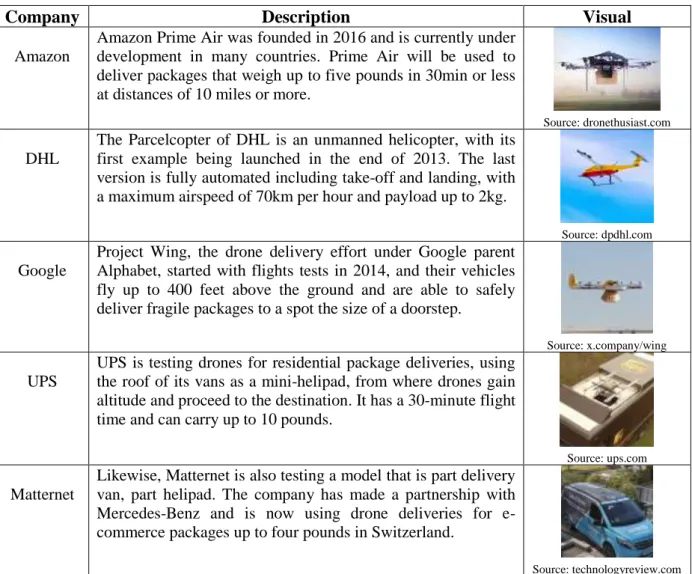
Even if it seems that this model is too utopic and futuristic, there are already real-case scenarios where UAVs are being used, mainly in healthcare services like Flirtey and Zipline projects, or in the last mile of e-commerce orders as it is shown in the Table 3.
Table 3: Examples of UAVs currently working
Company Description Visual
Amazon
Amazon Prime Air was founded in 2016 and is currently under development in many countries. Prime Air will be used to deliver packages that weigh up to five pounds in 30min or less at distances of 10 miles or more.
Source: dronethusiast.com DHL
The Parcelcopter of DHL is an unmanned helicopter, with its first example being launched in the end of 2013. The last version is fully automated including take-off and landing, with a maximum airspeed of 70km per hour and payload up to 2kg.
Source: dpdhl.com Google
Project Wing, the drone delivery effort under Google parent Alphabet, started with flights tests in 2014, and their vehicles fly up to 400 feet above the ground and are able to safely deliver fragile packages to a spot the size of a doorstep.
Source: x.company/wing UPS
UPS is testing drones for residential package deliveries, using the roof of its vans as a mini-helipad, from where drones gain altitude and proceed to the destination. It has a 30-minute flight time and can carry up to 10 pounds.
Source: ups.com Matternet
Likewise, Matternet is also testing a model that is part delivery van, part helipad. The company has made a partnership with Mercedes-Benz and is now using drone deliveries for e-commerce packages up to four pounds in Switzerland.
Source: technologyreview.com
Indeed, the technology has reached a level where it is possible to perform deliveries within a matter of minutes. Nonetheless, it will take time to generate the acceptance and trust needed for the customers to allow drones to fly to their houses for any purpose. Moreover, regulatory hurdles still have to be overcome.
Briefly, UAVs can be the solution for instant deliveries that are too difficult to payoff nowadays due to the higher complexity they have, essentially because it will provide faster customer deliveries through the shortest last mile distance possible. The question that remains is for how long regulations and public acceptance will hinder the implementation of this mode (Pandit and Poojari 2014).
2.4.4 Automated Guided Vehicles with lockers (AGVs)
An AGV is a car that can deliver parcels without any human intervention. Customers are notified of the exact arrival time because every delivery is calculated. Upon arrival at their door, customers are asked to pick up the parcel from the specified locker mounted on the vehicle. As reported by McKinsey (Joerss et al. 2016), this category of vehicles will dominate regular parcel delivery as well as time-window and delivery in urban areas, primarily because of the savings it will bring to the logistics industry. However, likewise drones, the cost advantage only holds if labor costs are above EUR 10 to 12 per hour, the same report states. Cepolina and Farina (2015) describe an AGV pilot project tested in Potugal, called FURBOT. The authors emphasize the need of an UMCC where freight would first be delivered, through trucks or trains, and highlight the features of the vehicle that would allow to solve current inefficiencies in transportation such as long dwell times at loading and unloading points or low load factors and empty trips. These features are small dimensions, mobility dexterity and electrical power.
Although FURBOT was no more than a test, there are companies such as Udelv and Nuro with the ambition to put AGVs on the road as soon as possible.
2.4.5 Self-Driving Delivery Robot
These vehicles are very promising because contrary to UAVs and AGVs, their security implications are not a big concern since they are small autonomous vehicles, only slightly larger than a regular parcel, delivering parcels to the doorstep, relatively slow at 5 to 10 km/h and use the sidewalk rather than the street to reach their destination. Such robots, also known as droids, also need to be supervised, but due to their size and low speed, developers currently believe that a single supervisor could manage 50 to 100 of them. Because of these characteristics, droids may be a substitute of bike couriers, being used for instant deliveries in urban areas with high density.
From a cost point of view, this transportation mode still has to become cheaper otherwise, its future use can be limited. Moreover, a droid requires a singular packing and theft risks are to be determined (Joerss et al. 2016). In Table 4 four different brands of self-driving delivery robots are represented, all from USA, which is the pioneer country in this type of technology.
Table 4: Examples of Droids currently working
Robby Technologies Starship Dispatch Marble
Source: robby.io Source: starship.xyz Source: dispatch.ai Source: marble.io
Shortly, the exact impacts of droids cannot be measured accurately yet, and more studies need to be done in order to understand in how much time these little robots will substitute bike couriers, or if there will always be a place for the traditional non-motorized mode under two wheels.