CENTRO DE TECNOLOGIA
DEPARTAMENTO DE ENGENHARIA DE TELEINFORMÁTICA
PROGRAMA DE PÓS-GRADUAÇÃO EM ENGENHARIA DE TELEINFORMÁTICA
DEBORAH MARIA VIEIRA MAGALHÃES
WORKLOAD MODELING AND PREDICTION FOR RESOURCES PROVISIONING IN CLOUD
WORKLOAD MODELING AND PREDICTION FOR RESOURCES PROVISIONING IN CLOUD
Tese apresentada ao Curso de Programa de Pós-Graduação em Engenharia de Telein-formática do Departamento de Engenharia de Teleinformática do Centro de Tecnologia da Universidade Federal do Ceará, como requisito parcial à obtenção do título de doutor em Engenharia de Teleinformática. Área de Concentração: Sinais e Sistemas
Orientador: Prof. Dr. Danielo G. Gomes
Coorientador: Prof. Dr. Rajkumar Buyya
Biblioteca Universitária
Gerada automaticamente pelo módulo Catalog, mediante os dados fornecidos pelo(a) autor(a)
M165w Magalhães, Deborah Maria Vieira.
Workload Modeling and Prediction for Resources Provisioning in Cloud / Deborah Maria Vieira Magalhães. – 2017.
100 f. : il. color.
Tese (doutorado) – Universidade Federal do Ceará, Centro de Tecnologia, Programa de Pós-Graduação em Engenharia de Teleinformática, Fortaleza, 2017.
Orientação: Prof. Dr. Danielo Gonçalves Gomes. Coorientação: Prof. Dr. Rajkumar Buyya.
1. Cloud Computing. 2. Simulation. 3. Workload Modeling. 4. Workload Profiling. 5. Prediction. I. Título.
WORKLOAD MODELING AND PREDICTION FOR RESOURCES PROVISIONING IN CLOUD
Tese apresentada ao Curso de Programa de Pós-Graduação em Engenharia de Telein-formática do Departamento de Engenharia de Teleinformática do Centro de Tecnologia da Universidade Federal do Ceará, como requisito parcial à obtenção do título de doutor em Engenharia de Teleinformática. Área de Concentração: Sinais e Sistemas
Aprovada em: ___ /___ /_____
BANCA EXAMINADORA
Prof. Dr. Danielo G. Gomes (Orientador) Universidade Federal do Ceará (UFC)
Profa. Dra. Rossana Maria de Castro Andrade Universidade Federal do Ceará (UFC)
Prof. Dr. José Marques Soares Universidade Federal do Ceará (UFC)
Prof. Dr. Paulo Romero Martins Maciel Universidade Federal de Pernambuco (UFPE)
To my parents, Olga and Sérgio, who taught me by example the value of commitment. To my supervisor, Prof Danielo, for his patience and support that accompany me since the master’s degree. Thank you for your friendship.
To my dear friend Andrea, for the courage and persistence that marked all battles that she fought by my side.
To friends that I met at GREat lab, I would like to thank Mauricio and Sergio for the partnership that raises thoughtful discussions contributing to my personal and professional growth. Thanks also to Adyson, Belmondo, Carlos André, Cristiano, Ismayle, Jefferson, Mariana, Neemias Gabriel, Paulo Arthur and Thalisson for providing me with a collaborative and pleasant research environment.
To Rodrigo for the constant friendship and support with images creation process. To Lana for taking me in AAMC and motivating me to see the world in a generous, creative and innocent way. My thanks also for the help with the references. To Italo for being such a generous and helpful person who gave me support in difficult times. To Rainara, for the support and encouragement that always contagious, besides the meaningful comments.
To Tici for the support and companionship, besides enhancing my sense of aesthetics and organization.
To Suelen, for being my philosophy master with dedication, generosity, and grace, awakening in me the desire to be a disciple. To Sandra for the friendship full of complicity.
To professors José Marques, Rossana Andrade, Paulo Maciel and Daniel de Oliveira for availability and excellent suggestions.
To professors Atslands and Paulo Armando for availability, tips, and shared materials and for inspiring me as a professional.
To the professors of the DETI, who contributed in a decisive way to my professional formation, especially Prof. Paulo Cortez for making the LisaMini scientific application available.
To the Clouds Lab who welcomed me during the sandwich period and contributed to my personal and professional life.
trair das páginas dos livros aquelas ideias que, em sua medida, podem se incorporar a nós, so-bretudo quando as aceitamos como válidas e necessárias. É preciso aprender a agir; saber equivocar-se dia a dia e recomeçar com a alegria de quem conquista um caminho novo. Mas, so-bretudo, para além dos erros e desilusões, fazer com que se mova algo em nós e no mundo”
A avaliação de políticas de gerenciamento de recursos em nuvens computacionais é uma tarefa desafiadora, uma vez que tais ambientes estão sujeitos a demandas variáveis de usuários com diferentes perfis de comportamento e expectativas de Qualidade de Serviço (QoS). Fatores como
overhead da camada de virtualização, indisponibilidade de dados e complexidade de cargas
de trabalho altamente heterogêneas dificultam a modelagem e caracterização de aplicações hospedadas em nuvens. Neste contexto, caracterizar e modelar a carga de trabalho (ou simples-mente carga) é um passo importante na sistematização da análise e simulação do desempenho de políticas de gerenciamento dos recursos computacionais e uma estratégia particularmente útil antes da implantação física das nuvens. Nesta tese de doutorado, é proposta uma metodologia para modelagem e caracterização de carga visando criar perfis de utilização de recursos em Nuvem. Os padrões de comportamento das cargas são identificados e modelados sob a forma de distribuições estatísticas as quais são utilizadas por um controlador preditivo a fim de estabelecer a complexa relação entre a utilização dos recursos e a métrica de tempo de resposta. Desse modo, o controlador realiza ajustes no percentual de utilização do recursos a fim de manter o tempo de resposta observado pelo o usuário dentro de um limiar aceitável. Assim, nossa proposta apoia diretamente políticas de provisionamento de recursos cientes da Qualidade de Serviço (QoS). A metodologia proposta foi validada através de aplicações com características distintas: uma aplicação científica para o auxílio do diagnóstico de doenças pulmonares e uma aplicação Web que emula um site de leilões. Os modelos de desempenho computacional gerados foram confrontados com os dados reais através de métodos estatísticos gráficos e analíticos a fim de avaliar sua acurácia e todos os modelos apresentaram um percentual de erro inferior a 10%. A modelagem proposta para o controlador preditivo mostrou-se efetiva pois foi capaz de dinamicamente manter o tempo de resposta próximo ao valor esperado, com erro percentual absoluto médio (MAPE) =4.36% sem violação de SLA.
The evaluation of resource management policies in cloud environments is challenging since clouds are subject to varying demand coming from users with different profiles and Quality de Service (QoS) requirements. Factors as the virtualization layer overhead, insufficient trace logs available for analysis, and mixed workloads composed of a wide variety of applications in a heterogeneous environment frustrate the modeling and characterization of applications hosted in the cloud. In this context, workload modeling and characterization is a fundamental step on systematizing the analysis and simulation of the performance of computational resources management policies and a particularly useful strategy for the physical implementation of the clouds. In this doctoral thesis, we propose a methodology for workload modeling and characterization to create resource utilization profiles in Cloud. The workload behavior patterns are identified and modeled in the form of statistical distributions which are used by a predictive controller to establish the complex relationship between resource utilization and response time metric. To this end, the controller makes adjustments in the resource utilization to maintain the response time experienced by the user within an acceptable threshold. Hence, our proposal directly supports QoS-aware resource provisioning policies. The proposed methodology was validated through two different applications with distinct characteristics: a scientific application to pulmonary diseases diagnosis, and a web application that emulates an auction site. The performance models were compared with monitoring data through graphical and analytical methods to evaluate their accuracy, and all the models presented a percentage error of less than 10 %. The predictive controller was able to dynamically maintain the response time close to the expected trajectory without Service Level Agreement (SLA) violation with an Mean Absolute Percentage Error (MAPE) = 4.36%.
Figure 1 – Workload Modeling Proposal and Resource Management Scope. . . 22
Figure 2 – Prediction methods taxonomy (adapted from (LORIDO-BOTRAN et al., 2014)). . . 35
Figure 3 – Model based Prediction Control Process (adapted from (CAMACHO; ALBA, 2013)). . . 38
Figure 4 – Workload modeling scenario (adapted from (FEITELSON, 2014)). . . 46
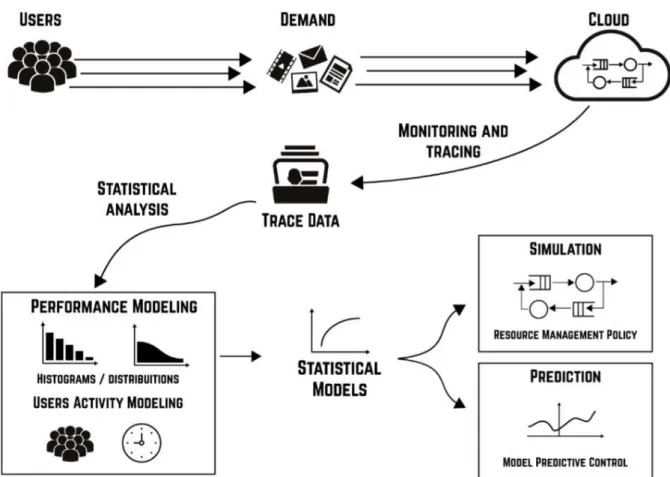
Figure 5 – Workload modeling process. . . 46
Figure 6 – Resource management sequence. . . 51
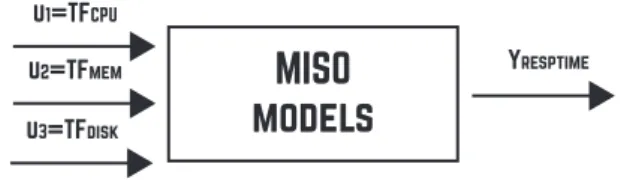
Figure 7 – MISO system. . . 52
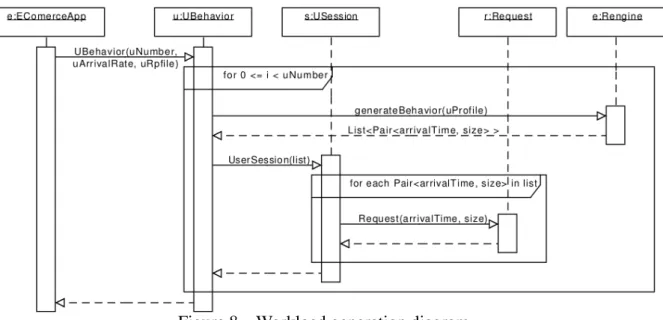
Figure 8 – Workload generation diagram. . . 65
Figure 9 – Statistical analysis of number of instructions. (a) Histogram of Browsing profile (median of 100 rounds); (b) Number of instruction per user session for Apache and MySQL . . . 69
Figure 10 – Statistical analysis of instructions number. (a) Histogram of Bidding profile (median of 100 rounds); (b) Number of instruction per user session for Apache and MySQL . . . 70
Figure 11 – Exploratory analysis of the observed CPU utilization for a browsing user session. (a) Browsing profile: scatterplot of CPU utilization (b) Browsing profile: limited axis with interval between 600 and 650 s . . . 71
Figure 12 – Quantile-Quantile plots. (a) GL with mle method; (b) GEV with PWM method 73 Figure 13 – Comparison of histogram of observed number of instructions and probability density function of simulated number of instructions (a) Browsing profile; (b) Bidding profile. . . 75
Figure 14 – MISO Model (scenario 01): response time behavior with setpoint range [300ms-1000ms] . . . 77
Figure 15 – MISO Model (scenario 02): response time behavior with setpoint range [300ms-1850ms] . . . 77
graphic locations. (a) CPU Utilization; (b) CPU I/O Wait; (c) Memory Utilization; (d) Disk Read Rate . . . 80 Figure 18 – Impact of LisaMini execution on A1 instance considering different
Table 2 – Summary of related work. . . 31
Table 3 – Studies inclusion/exclusion criteria. . . 36
Table 4 – Private cloud: Physical sever and VMs specifications . . . 56
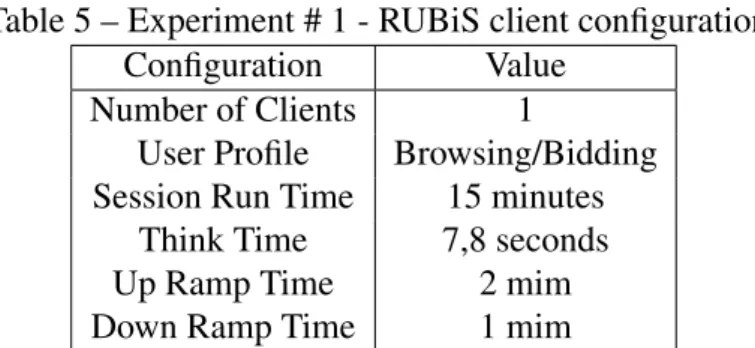
Table 5 – Experiment # 1 - RUBiS client configuration . . . 58
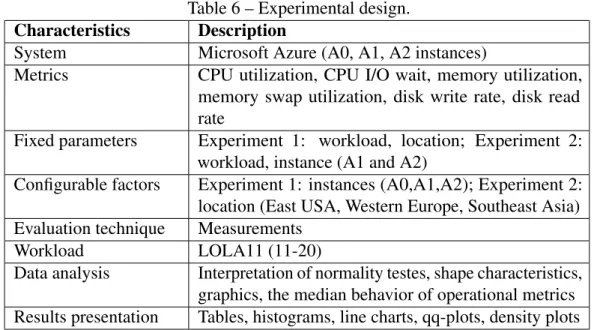
Table 6 – Experimental design. . . 61
Table 7 – Descriptive statistics: location, dispersion and shape. . . 62
Table 8 – MPC: experimental design parametrization. . . 67
Table 9 – Observed metrics statistics: number of instructions, CPU, memory, and disk utilization, and response time. . . 69
Table 10 – Distributions and parameters for number of instructions. . . 71
Table 11 – MLE parameters estimation of response time and CPU, memory and disk utilization metrics. . . 72
Table 12 – Kolmogorov-Smirnov test: number of instructions. . . 74
Table 13 – Kolmogorov-Smirnov test: response time and cpu, memory and disk utilization. 74 Table 14 – WMW test . . . 76
Table 15 – Estimated MSE error for transfer functions. . . 77
Table 16 – Experiment 1 - Distribution parameters of different instances . . . 83
Table 17 – Experiment 2 - Distribution parameters of different instances in different locations . . . 83
Table 18 – Kolmogorov-Smirnov test: Experiment 1 . . . 83
ADF Augmented Dickey-Fuller CPU Central Processing Unit CT Computerized Tomography
DVFS Dynamic Voltage and Frequency Scaling FFT Fast Fourier Transform
GEV Generalized Extreme-Value GL Generalized Lambda GoF Goodness-of-Fit
GPD Generalized Pareto Distribution GWD Generalized Weibull Distributions HF Histogram Fitting
HPC High-Performance Computing HTTP HyperText Transfer Protocol IaaS Infrastructure as a Service IT Information technology JEE Java Enterprise Edition JVM Java Virtual Machine
KPSS Kwiatkowski-Phillips-Schmidt-Shin KS Kolmogorov-Smirnov
MAPE Mean Absolute Percentage Error MCC Mobile Cloud Computing
MIMO Multiple Input Multiple Output MIPS Million Instructions Per Second MISO Multiple Input Single Output MLE Maximum Likelihood Estimation MPC Model Predictive Control
MPS Maximum Product of Spacing MSE Mean Squared Error
PaaS Platform as a Service
QM Quantile Matching QoS Quality de Service QT Queuing Theory
RUBiS Rice University Bidding System SaaS Software as a Service
SISO Single Input Single Output SLA Service Level Agreement SLO Service Level Objective VM Virtual Machine
1 INTRODUCTION . . . 17
1.1 Contextualization . . . 17
1.2 Objectives . . . 19
1.3 Research Questions and Methodology . . . 19
1.4 Contributions . . . 21
1.5 Scope. . . 22
1.6 Thesis Organization . . . 23
2 BACKGROUND AND RELATED WORK . . . 25
2.1 Resource Management in Cloud Computing . . . 25
2.2 Workload Profiling . . . 26
2.2.1 Challenges of Cloud Workload Modeling . . . 27
2.2.2 Importance of Cloud Workload Modeling . . . 28
2.2.3 Related Work in Cloud Workload Modeling . . . 29
2.3 Modeling Techniques for Application Prediction . . . 31
2.3.1 Systematic Mapping . . . 34
2.3.2 Importance of Cloud Workload Prediction . . . 35
2.3.3 Challenges of Cloud Workload Prediction . . . 36
2.3.4 Model Predictive Control (MPC) . . . 37
2.3.4.1 Prediction . . . 38
2.3.4.2 Optimizer. . . 40
2.3.4.3 Control Law . . . 41
2.3.5 Related Work in Model Predictive Control . . . 41
2.4 Concluding Remarks . . . 43
3 CLOUD WORKLOAD MODELING AND PREDICTION . . . 45
3.1 Workload Modeling Methodology . . . 45
3.1.1 Experimental Design and Setup . . . 47
3.1.2 Monitoring and Trace . . . 47
3.1.3 Exploratory Analysis . . . 47
3.1.4 Parameters Estimation . . . 47
3.1.5 Goodness of Fit . . . 49
. . . 50
3.3 Prediction . . . 51
3.3.1 Cloud Scenario . . . 51
3.3.2 Model Assumptions . . . 52
3.4 Concluding Remarks . . . 53
4 MATERIAL AND METHODS . . . 54
4.1 Monitoring and Tracing: RUBiS . . . 54
4.1.1 Testbed Configuration . . . 56
4.1.2 Servers Metrics . . . 56
4.1.3 Client Metrics . . . 57
4.1.4 Experimental Design . . . 58
4.2 Monitoring and Tracing: LisaMini . . . 58
4.2.1 Testbed Configuration . . . 59
4.2.2 Metrics . . . 59
4.2.3 Experimental Design . . . 60
4.2.3.1 Monitoring Experiments . . . 60
4.3 Workload Profiling . . . 61
4.3.1 Exploratory Analysis . . . 61
4.3.2 Parameters Estimation . . . 62
4.3.3 Goodness of Fit . . . 63
4.4 Model Simulation and Validation . . . 64
4.4.1 Workload Generation . . . 64
4.4.2 Simulation Validation . . . 65
4.5 Prediction and Control . . . 65
4.6 Concluding Remarks . . . 67
5 RESULTS AND DISCUSSION . . . 68
5.1 RUBiS Profiling . . . 68
5.1.1 Statistical Analysis . . . 68
5.1.2 Parameters Estimation . . . 70
5.1.3 Goodness of Fit . . . 72
5.4 LisaMini Profiling . . . 78
5.4.1 Monitoring. . . 78
5.4.1.1 Experiment #1: Different instances . . . 78
5.4.1.2 Experiment #2: Different locations . . . 79
5.4.2 Performance Modeling . . . 82
5.4.3 Godness of Fit . . . 82
5.4.4 Discussion of Results . . . 84
5.5 Concluding Remarks . . . 85
6 CONCLUSION . . . 87
6.1 Research Questions Analysis . . . 87
6.2 Publications . . . 90
6.3 Future Work . . . 90
BIBLIOGRAPHY . . . 92
1 INTRODUCTION
This thesis proposes a methodology for Workload characterization and modeling aiming at resource utilization profile in cloud environments. Section 1.1 contextualizes this work by providing an overview of the resource provisioning problem in cloud computing. Section 1.2 details the thesis goals. Section 1.3 presents the research questions and discusses the methodology employed through this work. Section 1.4 presents the thesis contributions and Section 1.5 states the thesis scope. Finally, Section 1.6 lists the remaining structure of this document.
1.1 Contextualization
As cloud computing has grown in size, reach and popularity, it has supported various types of applications such as Web serving, scientific High-Performance Computing (HPC), social networking, and gaming (BUYYAet al., 2009). Such applications are subjected to different
Quality of Service (QoS) aspects which are specified in a Service Level Agreement (SLA) negotiated between cloud providers and customers. The failure to comply with a SLA could compromise the QoS and result in penalties to the cloud provider (AMIRI; MOHAMMAD-KHANLI, 2017).
The development of computational Resource Management policy that supports QoS is a challenging task (MAGALHÃESet al., 2014). To evaluate the performance of these policies
is even more challenging (COUTINHO, 2014) since clouds observe varying demand, its physical infrastructure has different sizes, software stacks, and physical resource configurations, and users have different profiles and QoS requirements (BUYYAet al., 2009). Therefore, to evaluate these
policies under same conditions several times is not a trivial task.
In this context, the Workload Modeling and characterization enable a systematic analysis and simulation of resource management policies performance, which brings benefits to cloud providers, researchers and advanced professionals working in the area. The application models allow for adjustments to fit particular situations, controlled modification of parameters, repetitions of evaluation conditions, and generalization of Pattern found in the applications (FEITELSON, 2014).
production of trace logs, which are scarce in some level of cloud environments due to business and confidentiality concerns (MORENOet al., 2013) (CHENet al., 2010).
However, workload modeling and characterization are especially challenging when dealing with a highly dynamic environment, such as cloud data centers, because (i) heterogeneous hardware is present in a single data center; (ii) the virtualization layer involves overheads caused by I/O processing and interactions with the Virtual Machine Manager (VMM); and (iii) complex workloads are composed of a wide variety of applications submitted at any time, and with different characteristics and user profiles. All these factors contribute to a lack of methodologies to characterize the different behavioral patterns of cloud applications. Therefore, researchers and providers will benefit from a well-defined methodology which contains a process to achieve realistic models. They can use and extend it to generate their resource management policies and analysis.
Application modeling increases the understanding of typical patterns presented in the Cloud workloads and leads to a better management of available resources (MORENOet al.,
2013; KAVULYAet al., 2010). From the workload characterization, performance models can be
built to help us to answer important questions such as: How can cloud usage levels be affected by user behavior? How can the energy efficiency of a cloud be improved as long as the quality of service offered to users is maintained?
To ensure scalability, flexibility, and effectiveness, cloud providers need quickly to provide computing resources in accordance with the dynamic applications demand (KHANet
al., 2012; COUTINHOet al., 2013; BRAGAet al., 2014). To this end, performance models are
critical to improving resource management since they allow to continuously predict the workload performance for a particular hardware and software stack (MANVI; SHYAM, 2014).
A prediction process begins with the construction of a performance model, com-prising the behavior pattern exhibited by the application over the time. Several studies in the literature have presented different techniques to predict the application behavior, such as Linear Regression (RIZVANDIet al., 2012), Support Vector Regression (SVR) (YANGet al., 2012),
Hidden Markov Chain (KHANet al., 2012), Artificial Neural Networks (ANN) with interactive
training model (KUNDU et al., 2010), and Bucket Method (DENG et al., 2012). After the
1.2 Objectives
This thesis focuses on workload modeling and prediction. Consequently, how an application uses a computational resource (CPU, disk, memory) and how this usage varies according to the time are described and used to build realistic performance models. These models are used to estimate the resource demand of each application deployed in cloud environments. This way, the computational resources can be allocated in an efficient manner.
Therefore, themain goal of this thesis is to develop a workload profiling method-ology to produce accurate performance models that offer a good approximation to the real scenario. Such methodology can be used to generate different synthetic loads relating to relevant applications in cloud computing and support analysis and simulation of resource utilization in cloud environments.
Since the elasticity is critical to cloud providers, the second goal of this thesis is the development of a predictive model capable of capturing the complex relationship between the resource utilization profile of the application and its performance metrics (execution time, response) in order to guarantee the QoS. Such model should estimate this relationship in a future time to capture the workload variation and guide resource allocation ensuring the cloud environment elasticity.
1.3 Research Questions and Methodology
Our main research hypothesis is thatwell-defined methodology to generate work-load performance models in a cloud scenario combined with an efficient prediction tech-nique could improve the Infrastructure as a Service (IaaS) resource provisioning while maintaining the desired QoS. To guide this investigation, four fundamental research questions associated with the workload monitoring and prediction were suggested as follows.
Research Question #1: How do different user profiles impact on resource utilization behavior?
Research Question #2: Do different VM instances and geographic locations affect the resources usage patterns sufficient to justify specific models for each of them?
Research Question #4: How to develop models that are able to predict application performance considering multiple parameters such as processor, memory, network and disk usage to comply with QoS?
With respect to the methodology employed in this thesis, we carried out the 5 stages described below:
1. Literature review: the literature is investigated to raise the motivation and key challenges to workload modeling and prediction. From this point, significant gaps are identified: a lack of methodologies to characterize the different behavioral patterns of cloud applications, and a lack of detail regarding the controller parameterization, which compromises the reproducibility of the proposals and; and a lack of formal relationship description between the input and output of model predictive controls;
2. Monitoring: firstly, a design experiment is defining, including decisions as workloads, metrics, factors, environment setup, etc. Later, the monitoring scenarios have been implemented with a view to evaluating the impact of different factors on user profiles, geographical locations, and VM instance types. And, finally, the traces are recorded and stored for later analysis;
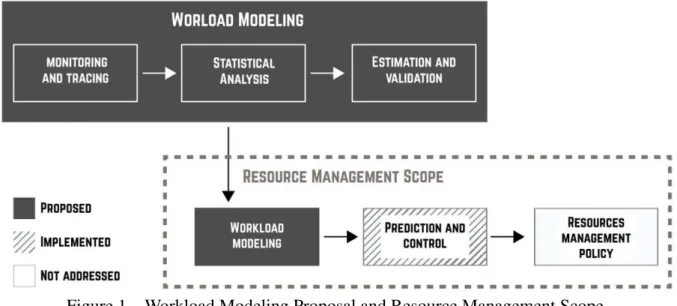
3. Profiling: the modeling process is performed in three steps as illustrated in Figure 1, a) Exploratory Analysis, which analyzes the data characteristics and determines the
candidate distributions to represent the model;
b) Parameter Estimation, uses estimation methods to set the parameters of the distribu-tions, selected in advance, based on the collected samples;
c) Good of Fitness Test, which are graphical and analytical methods to evaluate whether the distributions and their respective parameters provide satisfactorily approximation to the empirical data;
4. Prediction: a Model Predictive Control (MPC) is used to estimate the number of physical resources needed to maintain the predicted output close to the application SLA. To predict the application performance is used a linear technique called State Space Model;
5. Discrete-event simulation: the performance workload models are implemented as an extension of a CloudSim simulator (CALHEIROS et al., 2011). After, validation is
1.4 Contributions
Workload characterization and modeling problems have been addressed through the creation of simple and generic models to generate synthetic workloads (FEITELSON, 2014). Several papers have focused on resource utilization imposed by jobs, tasks and requisitions (CHENet al., 2010; GANAPATHIet al., 2010; KAVULYAet al., 2010; GROZEV; BUYYA,
2013; MORENOet al., 2013).
From these related work, we claim the workload characterization and modeling can provide an understanding of non-trivial tradeoffs and behavior prediction in cloud scenarios. However, frequently, we note that such works did not adequately justify their choices. Unfortu-nately, this makes the experiment reproducibility difficult and, consequently, their conclusions as well. In the expectation of improve the researh reproducibility, our main contribution is a methodology for workload characterization and modeling aiming at resource utilization profile in cloud environments. This methodology can be used to generate accurate and easily manageable models that match behavior patterns for different user profiles, geographic locations, and VMs configurations. This well-defined methodology contains steps and justifications to achieve the distributions and parameters derived from the application analyses so that our models can be easily reproduced and reused.ns are modeled in the form of statistical distributions. Therefore, the patterns fluctuate based on realistic parameters in order to represent dynamic environments. A model validation is provided through visual and analytical methods with a view to show that the model adequately represents the observed patterns.
We can also highlight some secondary contributions as follows:
1. Implementation of the proposed models as an extension of the CloudSim simulator (CAL-HEIROSet al., 2011), making the model available to researchers’ practical use, supported
by the cloud data center environment abstraction that CloudSim provides;
2. A case study supporting Central Processing Unit (CPU) utilization forecasting associated with Dynamic Voltage and Frequency Scaling (DVFS) management in order to improve energy saving;
3. A predictive model that fits the complex relationship between an application resource utilization profile and its performance metrics in order to support resource allocation policies aware of QoS.
Figure 1 – Workload Modeling Proposal and Resource Management Scope.
steps: (i) data monitoring and tracing; (ii) statistical analysis, which identifies the workload patterns, and (iii) estimationn and validation, it estimates the statistical distribution parameters and, finally, evaluate with the statistical model offers a good fit to the empirical data. Therefore, the statistical models generated from the methodology proposed are inputs to implementation of the model predictive control (secondary contribution) which adjusts the resource utilization values to maintain the application response time within an acceptable QoS. Such estimated values can be directly used by the resource provisioning policy to guide its decision making, but provisioning policy is not addressed in this thesis.
1.5 Scope
Some concepts and aspects identified in the cloud computing literature have not been addressed in this thesis. However, they are related and discussed throughout the text. The main focus of this thesis is on the workload characterization and modeling, and the secondary one is an application performance prediction and control, as illustrated in Figure 1. It is an important highlight that the workload concept has different interpretations in the literature. In this thesis, we assume the workload as the Virtual Machine (VM) resource utilization (CPU, memory, disk) and the application performance metric is the response time. The following items let clear what is out of the thesis scope:
• Autonomic Computing: despite this thesis support the monitoring and analysis phases of autonomic loop, this work do not consider autonomic computing;
across a geographic area, appealing to service providers who already have distributed development facilities interconnected by high-speed networks (COUTINHO, 2014). We do not consider multi site clouds;
• Provisioning: the model predictive control estimates the number of resources required to run the application to meet user expectations. Therefore, this work supports resource allocation strategies but does not implement the strategy itself, as illustrated in Figure 1. A provisioning procedure can be attached at any time to this work without impacting it; • Application independent: here two different applications were used to validate the
work-load modeling methodology, (i) a scientific application for pulmonary disease diagnoses (Section 4.1) and, (ii) a Web application that simulates an action site (Section 4.2). How-ever, our proposal for generating statistical models that represent the applications can be applied to any workload;
• Deployment: a cloud environment provides basically three service models. The SaaS model provides specific purpose software systems that are available to users over the Internet and accessible through a thin client interface. The PaaS model provides an operat-ing system, programmoperat-ing languages and development environments for the applications, aiding the implementation of software systems. And, finally, the IaaS model makes it easier and more accessible to provide resources such as servers, network, storage, and other key computing resources to build an on-demand application environment (COUTINHO, 2014). This thesis is dedicated to the IaaS implementation model, not addressing aspects of the other service models.
1.6 Thesis Organization
2 BACKGROUND AND RELATED WORK
In this chapter, we discuss relevant concepts in the context of resource management in cloud environments. In addition, the importance and challenges of workload profiling and prediction for efficient resource provisioning are presented. We also present some related work, their differences and similarities to this thesis.
2.1 Resource Management in Cloud Computing
Cloud computing can be defined as a model that enables access over the network, on demand to a set of configurable computing resources (networks, servers, storage devices, applications, and services) that can be quickly acquired and released with a minimal management effort or service provider interaction (YOUSEFFet al., 2008).
Clouds provide scalability, quality of service, and inexpensive computing infras-tructure that can be accessed via a simply and pervasive way (ROSSIet al., 2016). Further to
fast elasticity and broad access, cloud computing relies on the characteristics of self-service on demand, resource pooling, and measured service. In addition, it has three service models: Software as a Service (SaaS), Platform as a Service (PaaS) and Infrastructure as a Service (IaaS) (MELL; GRANCE, 2009).
This thesis supports the elasticity characteristic of IaaS, where the cloud provider offers VMs, storages, firewalls, load balancer, and network devices (MANVI; SHYAM, 2014). Elasticity is related to the ability of the system to automatically adapt to changes in demand for resources by provisioning and deprovisioning them at runtime (COUTINHOet al., 2015;
HERBST et al., 2013). As the elastic modalities in cloud environments, there is elasticity in
two directions: vertical and horizontal. Vertical elasticity (scale-up), usually consists of adding more processors or memory on the same host increasing its capacity. Horizontal elasticity (scale-out) refers to the addition of more hosts to the environment. This thesis directly supports the horizontal.
2017). In this context, resource management for IaaS leads to benefits, such as scalability, quality of service, optimal utility, and cost effectiveness.
Dynamic resource allocation in the cloud depends on virtualization technologies. Such technologies, despite the progress, take around 10 minutes 1 to create a VM and make it fully operational. And, the response time to changes in workload in order to achieve the desired performance is fundamental to the elasticity (COUTINHO et al., 2015). Therefore,
the prediction of future demand is essential for the implementation of rapid elasticity and the effective provisioning of resources. The prediction method estimates the variation in future demand, giving the resource manager sufficient time to provide computing resources properly (AMIRI; MOHAMMAD-KHANLI, 2017).
2.2 Workload Profiling
The problems of workload characterization and workload modeling were addressed previously by creating a simple and general model to generate synthetic workloads similar to real systems (FEITELSON, 2014). The modeling is obtained via monitoring of the infrastructure during workload execution. The idea is to find patterns of behavior on the collected data. In the context of this work, workload modeling is used for analysis and simulation of resource utilization in cloud environments. This type of evaluation is critical for resource provisioning so as to fulfill SLA. For this type of evaluation, good characterization and understanding of workload burstiness are crucial.
An important aspect that should be considered during model creation is the degree of detail. A model with the fewest number of parameters possible is easier to manage. At the same time, it must be able to fully characterize all the important attributes of workloads.
When the collected traces are directly used to represent a workload, greater precision can be obtained. However, those results can not be extrapolated to other system sizes or environment settings, because the traces show a static picture of the system, leading to results limited to the scale of the used infrastructure . If there is a need to capture different software stacks, physical resources, and their configurations, using traces becomes expensive, since much time and money need to be invested in the configuration of various software stacks and changing the configuration and number of the machines.
Models appear to circumvent traces limitations through the adjustment, where it is
possible to adjust the workload to fit the particular situation. Thus, the configuration of physical resources and software stacks are model parameters, and a new workload is generated according to these parameters. Furthermore, using a model rather than data traces brings others advantages, such as (FEITELSON, 2014): (i) controlled modification: the parameters of the model can be modified, one at a time, in order to investigate their influence, while other parameters are kept constant, (ii) repetitions: it is possible to repeat experiments under similar, but not identical, statistical conditions, (iii) additional features: missing attributes in the traces can be inserted into models. Therefore, the models prevent the need for application installation and configuration, and they provide a controlled input for researchers evaluate their theoretical mechanisms.
2.2.1 Challenges of Cloud Workload Modeling
The modeling and characterization of workloads are especially challenging when dealing with a highly dynamic environment such as a cloud, for various reasons, as discussed following:
1. Diversity of Hardware Platforms: Information technology (IT) managers update about 20% to 25% of their platforms every year (MULIAet al., 2013), resulting in the combination of
different hardware in the same data center. In these computational infrastructures, models are used to predict application performance in order to improve the resource management. The needs of applications for resources vary over time, promoting VMs relocation to maximize the IT infrastructure performance. When a VM is migrated from one host to another, the performance model can only be applied if the target host has the same hardware as the source host, since the same workload shows different performances according to physical resources capacity of the machines that host the applications. Moreover, other VMs co-located in the target host also impact the workload performance. Given the environment heterogeneity, in many cases, the performance model needs to be completely rebuilt. Another solution is to createa priorimodels of application performance for all
target hosts (KUNDUet al., 2010).
2. Business and Confidentiality: due to business and confidentiality reasons there are insuf-ficient cloud trace logs available for analysis. Thus there is a lack of methodologies to characterize the different behavioral patterns of cloud applications (MORENOet al., 2013;
CHEN et al., 2010). Some efforts in this direction were initiated, for example, by the
analysis and characterization of these data (ZHANGet al., 2011; MISHRAet al., 2010;
WANGet al., 2011; KAVULYAet al., 2010);
3. Workload Complexity: a cloud hosts a wide variety of applications that could be submitted at any time, with different characteristics and user profiles, which have heterogeneous and competing QoS requirements (BUYYAet al., 2009). This leads to complex workloads
depending on users behavior and resource consumption. Thus, it is challenging to predict workload patterns over time. MULIA et al.(2013) proposed a set of cloud workload
categories and established a relationship among them and critical computer resources in order to detect and reduce resource contention. The authors argue that the list of cloud workload categories is a tool for common communication among service providers, IT managers, and cloud users, what facilities the SLAs, purchase capital, and future computer architecture design decisions;
4. Virtualization Layer: the virtualization layer causes an overhead caused by I/O processing and interactions with the VMM. As a result, additional resources are needed. This overhead depends on the used hardware platform. Thus, it is essential to consider these factors to model workloads in order to improve estimation of application resources requirements when they are consolidated in virtual environments. In this context, WOODet al.(2008)
proposed an approach to estimate the CPU requirements of applications when they are transferred to a virtual environment.
2.2.2 Importance of Cloud Workload Modeling
Workload modeling increases the understanding about the typical cloud workload patterns and leads to more informed decisions to better manage resources (MORENO et al.,
2013; KAVULYAet al., 2010). From the workload characterization, performance models can be
constructed to support research domains, like energy-efficiency and resource management and answer important research questions, such as: how are overall cloud data center utilization levels affected by user behavior? How can cloud data center energy efficiency be improved as long as the QoS offered to the users is maintained?
To ensure scalability, flexibility, and cost-effectiveness, cloud providers need to provide computing resources according to the dynamic applications demands (KHAN et al.,
and software stack continuously.
The prediction process starts with the building of the performance model, comprising the behavior patterns exhibited by the application over time. fter the construction of the prediction model, the predictor accuracy is evaluated. Thus, providers can use the performance model to predict how workload patterns will change, and dynamically scale resources to meet the expected demand.
In addition, workload modeling in cloud computing gives rise to performance anal-ysis and simulation, which brings benefits to cloud providers and researchers as it allows: (i) the evaluation through simulation of resource management policies allows the improvement of cloud providers systems QoS; (ii) the evaluation of these policies without deployment and execution in the expensive large scale environments and (iii) the simulation of realistic cloud environments with controlled modification, adjustment, repetition and additional features. The use of simulation models enables the production of trace logs based on realistic scenarios, filling a gap identified in this area (MORENOet al., 2013). For example, CHENet al.(2010) used
several combinations of parameters in a simulated Hadoop application with the purpose of generating different workloads that arise in a real cloud production environment.
2.2.3 Related Work in Cloud Workload Modeling
The conflict of priorities between cloud providers, aiming high resource utilization with low operating costs, and MapReduce (DEAN; GHEMAWAT, 2008) applications users addressing small execution time, led to characterization and modeling of this application type (CHENet al., 2010; GANAPATHIet al., 2010; KAVULYAet al., 2010). CHENet al.(2010)
GANAPATHI et al. (2010) proposed a model to predict the execution time of
MapReduce jobs in order to maximize performance while minimizing costs. A workload generator based on statistical models was used to guide the prediction. However, the authors did not consider the full distribution to build the model. Instead, distribution is estimated from the 1st, 25th, 75th and 99th percentiles, causing information loss that compromises the accuracy of the model.
KAVULYAet al.(2010) characterized resource utilization patterns and sources of
failures to predict job completion times in MapReduce applications. They did not offer an analysis of data justifying the distributions used. Furthermore, they use only the method of Maximum Likelihood Estimation (MLE), which is quite sensitive to outliers. Our approach uses different estimation methods, and the results show that the estimator has great influence on the predictor accuracy. KAVULYAet al.(2010) presented the Kolmogorov-Smirnov (KS) values
with no critical value. Thus, it is not clear which set of distributions and parameters provide a good fit to the modeled data. Also, the values of the KS presented lose representativeness, since no critical value was defined. Thus, it is not clear which distributions and their parameters provide a good fit to the modeled data.
Most work discussed in this section focused on resources utilization imposed by jobs, tasks, and requests. However, different types of users directly impact on the workload present in the cloud. In view of this, MORENOet al.(2013) and GROZEV; BUYYA (2013) created
models based on resource utilization and users behavioral patterns. Moreno et al. (MORENO
et al., 2013) proposed a new approach for characterizing the Google trace log in the context of
both user and task in order to derive a model to capture resource utilization patterns. As in our study, the authors developed the model in the CloudSim simulator and contrasted the logged data against simulation experiments. However, although the model parameters are presented, estimation methods and the results of the GoF tests are omitted. These factors compromise the use of the model by other researchers.
Table 2 – Summary of related work. Authors Modeling Approach Application Type Exploratory Analysis Parameter Estimation GoF Test Chen et al. (CHENet al., 2010) Distribution
Analysis MapReduce Yes No No
Ganapathi et al. (GANAPATHIet al., 2010)
Distribution Analysis
MapReduce No No No
Kavulya et al. (KAVULYA et al., 2010)
Distribution Analysis
MapReduce Yes Yes (single) Yes
Moreno et al. (MORENO et al., 2013)
Distribution Analysis & Cluster
MapReduce Yes No No
Grozev and Buyya (GROZEV; BUYYA, 2013)
Analytical Model
Web No No No
Present Work (MAGALHAES et
al., 2015)
Distribution Analysis
Web Yes Yes (multi) Yes
From these related work, we observe that the application characterization and model-ing support researchers and cloud providers in understandmodel-ing complex tradeoffs and predictmodel-ing applications behavior. This understanding leads to more efficient techniques for resources management. However, the lack of a well-defined methodology, containing steps to achieve distributions, estimate parameters, and GoF tests, prevents models reproduction and usage. A summary of the related work is presented in Table 2.
2.3 Modeling Techniques for Application Prediction
Amiri and Mohammad-Khali (AMIRI; MOHAMMAD-KHANLI, 2017) and LORIDO-BOTRANet al.(2014) proposed taxonomies to classify methods capable of to predict the
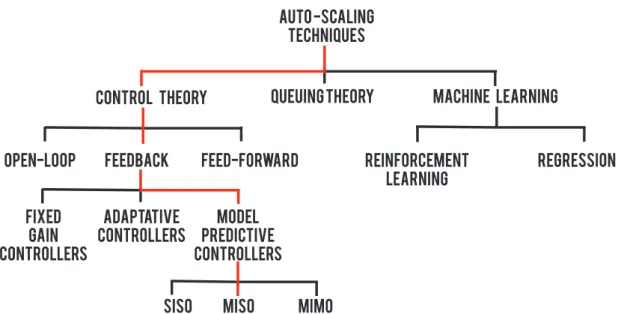
behav-ior of a different application in order to support auto-scaling in the context of cloud computing. Such taxonomies have in common three main groups as depicted in Figure 2: Queuing Theory (QT), Machine Learning and Control Theory.
Queuing models have been used to model the Internet and traditional servers ap-plications. In a simple elastic cloud application scenario, a single queue represents the load balancer that dispatches requests tonVMs. In a more complex scenario (multi-tier applications),
and costly task. Thus, QT is an expensive alternative for dynamic ambients. As an advantage, QT technique does not require a training phase (LORIDO-BOTRANet al., 2014).
Machine learning techniques are applied to dynamically construct the model of resource consumption under a specific amount of workload. In this way, different applications can utilize the auto-scalers without customized settings and preparations. They are also more robust to changes and can self-adaptively adjust the model on the fly in the presence of notable events. In order hand, machine learning approaches take time to converge to a stable model and thus causes the auto-scaler to perform poorly during the active learning period. Certainly, the application performance is affected in this process. Furthermore, the time that is taken to converge is hard to predict and varies case by case (QUet al., 2016).
Online machine learning in the auto-scalers context can be divided into two types(see 2): reinforcement learning, and regression. The reinforce learning algorithm’s target is to generate a table specifying the best provision or deprovision action under each state. The learning process is similar to a trial-and-error approach. The learning algorithm chooses an individual operation and then observes the result. If the result is positive, the auto-scaler will be more likely to take the same action next time when it faces a similar situation.
Regression determines the relationship among variables via a function based on observed data. Finally, it uses this relation to making predictions. In the context of resource estimation, auto-scaler can record system utilization, application performance, and the workload for regression. As the training proceeds and more data are available, the predicted results also become more accurate. Although, regression requires the user to determine the function type (linear or quadratic). In the case of auto-scaling Web applications, it is usually safe to assume a linear function [CHENHAO QU, 2016]. In order to achieve an accurate prediction, the model should be able to extract all workload behavior patterns. Most of the machine learning techniques, such as Neural Network and Markov Model, are based on fixed pattern length. Thus, they cannot extract all useful patterns that extrapolate the fixed length. In addition, The workload behavior changes might start after training the prediction model. The model should be retrained to adapt to workload changes. Gathering new data and retraining the models may very time-consuming (AMIRI; MOHAMMAD-KHANLI, 2017).
is calculated based only on the current input and the system model,i.e., this control is unaware
when the output reaches the desired set point; (ii) Feedback, the output of the system is observed. Thus, the controller can correct output deviations from the set point and; (iii) feed-forward, predicts the output errors and reacts before the error actually occurs. The prediction may fail. Thus, the combination of feedback and feed-forward controllers is commonly used. The controller performance depends on the application model and the controller itself (reactive or proactive). Many researchers consider that control theory has a great potential when combined with resource prediction (LORIDO-BOTRANet al., 2014).
Patikirikorala and Colman (PATIKIRIKORALA; COLMAN, 2010) highlight the advantages of applying feedback controllers in cloud platforms. Feedback control is able to handle unpredictable workload conditions, nonlinear characteristics and provides effective control under disturbance and un-modeled dynamics. Furthermore, there is systematic design process to develop an effective controller with well-proven tools and methodologies to calculate the controller tuning parameters and validate the controller. In addition, there are many standard controller algorithms available from control literature with formal stability proofs. Also, the authors discuss the well-established feedback control schemes in three categories, as shown in Figure 2: fixed gain controllers, adaptative controller and Model Predictive Control (MPC).
The Fixed gain controllers are widely adopted due to their simplicity. However, once the model parameters are set, they remain fixed during the controller execution. An example of this class is the Proportional Integral Derivate (PID).
In contrast, the adaptive control addresses some of the limitations of fixed gain controllers, by adjusting the controller tuning parameters online without human intervention. The adaptative control constructs the dynamic model of the system in each sampling instance. This type of controller is suitable for workloads with smooth variations. However, in the presence of sudden burst, the online estimation process may not capture the dynamics of the system. In addition, the parameters are updated online, but the control law remains the same (PATIKIRIKORALA; COLMAN, 2010).
Reactive systems might not be able to scale in case of sudden workload bursts because it takes several minutes to deploy or migrate a VM image, boot the VM operating system and application, and have the server fully operational (MAO; HUMPHREY, 2012). In view of this, Lorido-Botran et al. LORIDO-BOTRAN et al. (2014) concluded that efforts should
and acquire the corresponding resources with enough anticipation, maybe using some reactive methods to correct possible prediction errors.
In this context, we adopt in this work a proactive and self-optimizing technique called MPC. The MPC uses the dynamic model and predicts future behavior of the system to come up with the decisions to optimize the future behavior. In addition, MPC is attractive for multi-objective scenarios and to derive close to optimal decisions in the presences of complex policies and constraints.
The MPC establishes a relationship between the application performance and the workload and guarantees that the performance does not exceed a predefined threshold, avoiding SLA violations. The MPC treatment of constraints is simple, and these can be systematically included during the design process (CAMACHO; ALBA, 2013). The main MPC drawback is the need for an appropriate model of the system. The MPC algorithm is based on prior knowledge of the model and is independent of it, but the benefits obtained will be affected by the discrepancies existing between the real process and the model used (CAMACHO; ALBA, 2013). Nonlinear controllers can model the application behavior with accuracy, however, they require complex mathematical calculations. In this context, some controllers assume that the application behavior is linear. This makes the model less computationally costly, but there is instability associated with the controller (AMIRI; MOHAMMAD-KHANLI, 2017).
The MPC could be used to several inputs and outputs variables, representing the behavior of Single Input Single Output (SISO) and Multiple Input Multiple Output (MIMO) systems. In this thesis, we model a Multiple Input Single Output (MISO) scenarios.
2.3.1 Systematic Mapping
This search strategy was adapted from systematic review proposed by MADNI et
al.(2016) and it involves the formulation of research questions, a search of different databases,
keywords definition, and inclusion/exclusion criteria presented in Table 3. The main goal of this search strategy is to address the following questions:
• What are the motivations to workload prediction in Cloud? • What are the main challenges in cloud workload prediction? • What are the main motivations for using the MPC approach?
Auto -Scaling Techniques
Open-loop feedback
Fixed gain controllers
Adaptative controllers
Model Predictive controllers
SISO miso mimo
feed-forward Reinforcement learning
Regression Control Theory Queuing Theory Machine learning
Figure 2 – Prediction methods taxonomy (adapted from (LORIDO-BOTRANet al., 2014)).
proposed research questions, we define the searching keywords as a first step to formulating the search string. The following keywords Cloud Computing,Resource Management,Model
Predictive Controlare considered. We use the logical operator AND for connecting the keywords,
resulting in the following search string: “Cloud Computing” AND “Resource Management” AND “Model Prediction Control”.
Most of the studies were screened out because their titles or abstracts were not relevant to be incorporated in this review or they did not meet the selection criteria. The inclusion and exclusion criteria are defined in Table 3. The initial search resulted in a total of 49 studies, which were condensed to 12 studies on the basis of their titles and abstracts. Even if the paper did not cite the MPC in the title or abstract, it could have a satisfactory content in the subject forward its body. Therefore, in this first phase, a search for the MPC keyword was used throughout the studies.
2.3.2 Importance of Cloud Workload Prediction
Infrastructure as a Service (IaaS) resource management is critical to cloud computing since it allows for optimizing the resource utilization, which assists the management cost reduction, energy savings, etc. Also, the resource management ensures QoS by reduction of
overhead and latency and improvement of throughput (WEINGARTNERet al., 2015). In this
work, we focus on the IaaS provider’s perspective.
require-Table 3 – Studies inclusion/exclusion criteria. Inclusion criteria Exclusion criteria The study focuses on resource management
in Cloud Computing;
The study does not focus on resource man-agement in another area;
The study considers the Infrastructure as a Service (IaaS) for resource management only;
The study does not consider the Software as a Service (SaaS) or Platform as a Service (PaaS);
The study is written in English only; The study is not written in the English lan-guage;
The study is peer-reviewed and published in scholarly society;
The study is not peer-reviewed such as work-shop, descriptions and technical reports; The study is published in journals or
confer-ences;
The study is not published in the form of books, abstracts, editorials or keynotes;
ment mapping, adaptation, discovery, brokering, estimation, and modeling, each one with their own challenges (MANVI; SHYAM, 2014). This thesis focuses on resource modeling and estima-tion. Consequently, the use of computing resource (CPU, disk, memory) by an application and how this usage varies according to time are described and used to build performance models. These models are used to estimate the resource demand of each application deployed in the cloud environment. Thereby, resources can be allocated in an efficient manner.
Furthermore, the system’s ability to predict the resource demand in subsequent time intervals directly helps the system to adjust the resources dynamically to fulfill the QoS require-ments. Thus, this work supports the monitoring (M) and proactive analysis phase analysis(A) phases of the MAPE loop of auto-scaling process (LORIDO-BOTRAN et al., 2014). Manvi
and Shyam (MANVI; SHYAM, 2014) raise open challenges in resource mapping, provisioning, allocation, and adaptation.
2.3.3 Challenges of Cloud Workload Prediction
Workload prediction is especially challenging when applied in a highly dynamic and elastic environment with resource contention scenario, multidimensional resource demands (CPU, network, memory, disk) for multitier applications, that must meet service-level agreements (SLAs) in the face of non-stationary workloads (ANGLANOet al., 2016). The cloud hosts a
wide variety of applications deployed and destroyed at any time, with different characteristics and user profiles, which have heterogeneous and competing QoS requirements (CALHEIROS
et al., 2011). This leads to complex workloads depending on users’ behavior and resource
The use of past demands to predict future demands cannot be accurate regarding Web-based interactive applications (PADALAet al., 2009). For this reason, the estimation
models need process each one of the computational resources in a real time manner to support the dynamic resource management. Additionally, the cloud system should automatically adjust the resources to the workload handled by the application with minimum human intervention (LORIDO-BOTRANet al., 2014).
To obtain accurate prediction models, all behavioral patterns of workload should be captured by prediction models. For machine learning methods such as Neural Networks, Support Vector Machine, Markov Model, based on fixed pattern length, it is an important use sliding window to capture patterns in differents regions of workload. Otherwise, the method needs to be retrained. The technique should guarantee the model robustness, i.e., the model predictive
ability to generalize on inexperienced workloads. Moreover, most of these methods present discriminative learning,i.e., they do not learn workload pattern explicitly. They learn the model
parameters to optimize a utility function. But, parameters are of little interest to the resource manager. Therefore, some methods are needed to extract knowledge from a model and improve its transparency. Another challenge is regarding the absence of a standard testbed to evaluate the prediction techniques. This can lead to models that super fit specific workloads (AMIRI; MOHAMMAD-KHANLI, 2017).
2.3.4 Model Predictive Control (MPC)
Proactive auto-scaling systems able to predict future needs with enough anticipation are critical in clouds (LORIDO-BOTRANet al., 2014). Since anticipation is critical, the model
predictive control automates the scaling task, complementing the capacity planning and workload migration approaches. Model Predictive Control does not designate a specific control strategy but rather a range of control methods which make explicit use of a process to obtain the control signal by minimizing an objective function (CAMACHO; ALBA, 2013).
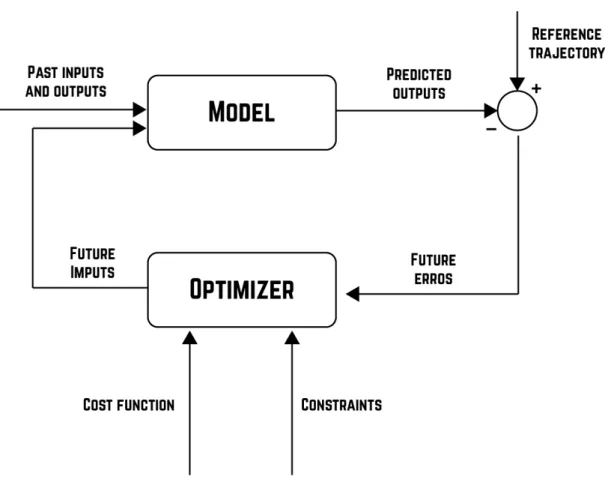
The goal of the MPC is to detect the occurrence of process shifts quickly and to take the corrective action before SLA violation happens, which means maintain thePredicted
Outputclose to the desired control signal (i.e. Reference Trajectory). To this end, thePredicted Outputis compared with theReference Trajectoryand the difference between them is applied
as feedback to theOptimizer. This difference is calledFuture Errors, as presented in Figure 3.
Figure 3 – Model based Prediction Control Process (adapted from (CAMACHO; ALBA, 2013)).
to minimize theFuture Errors. To define the best current control action which predicted input
trajectory gives the lowest numerical value to the cost. The MPC reduces the errors over time by adjustment of the control variables (CPU, Memory, and Disk utilization).
To model the complex relationship among the dependent and independent variables, the MPC predicts the future outputs, based on past inputs and outputs, and on the proposed optimal future control actions (Section 2.3.4.1). These actions are calculated by the optimizer (Section 2.3.4.2) taking into account the cost function, the future error, as well as the constraints.
2.3.4.1 Prediction
The MPC use is determined by the necessity to calculate the predicted output at future instants ˆy(t+k|t)fork=1...N, whereN is the prediction horizon at each instantt. The
In the MPC, a formal relationship between the input and output is modeled to de-termine how a change in the former affects the output. This formal relationship is denoted as transfer function or state space function or performance model (LORIDO-BOTRANet al., 2014).
Transfer Function: the Transfer Function Model is widely used in the industry (CAMACHO; ALBA, 2013). Although the derivation of the controller is more difficult, it requires fewer parameters. The concept of transfer functionG=B/Aso that the output is given by:
A(z−1)y(t) =B(z−1)u(t), (2.1)
whereA(z−1) =1+a1z−1+a2z−2+· · ·+anaz−na,B(z−1) =1+b1z−1+b2z−2+· · ·+bnbz−nb,
andz−1is the backward shift operator. Thus, the prediction is given by:
ˆ
y(t+k|t) = B(z
−1)
A(z−1)u(t+k|t). (2.2)
This representation is valid for unstable processes as well, and it has the advantage that a set of few parameters are required, althougha prioriknowledge of the process is critical, especially
that of the order of the A and B polynomials.
State Space Model: the system is described by a linear discrete time model, called State Space, and represents the dynamics of anthorder system as a first differential equation represented by a
N size vector. It has the following representation:
xt+1=Axt+But, (2.3)
yt=Cxt+Dt, (2.4)
where,t denotes time,xt is the state (vector),ut is the input or control,yt is the output anddt
the state matrix,B[nxr]is the input matrix andC[mxn]is the output matrix. The prediction for this
model is given by:
ˆ
y(t+k|t) =Cxˆ(t+k|t) =C[Akx(t) +
k
∑
i=1
(Ai−1)Bu(t+k−i|t)]. (2.5)
The state space model has the advantage of multivariable processes can be used in a straightfor-ward manner. The control law is simply the feedback of a linear combination of the state vector (CAMACHO; ALBA, 2013).
2.3.4.2 Optimizer
The future outputyis calculated by optimizing a determined criterion to keep the
process as close as possible to the reference trajectoryw(t+k). This criterion usually takes the
form of a quadratic function of the errors between the predicted output signal and the reference trajectory. The control effort∆uis included in the objective function in most cases. The general
expression for such an objective function is:
J(N1,N2,Nu) =
N2
∑
j=N1
δ(j)[yˆ(t+j|t)−w(t+j)]2+
Nu
∑
j=1
λ(j)[∆u(t+j−1)]2, (2.6)
whereN1andN2are the minimum and maximum prediction horizons andNuis the
control horizon. The coefficientsδ(j)andλ(j)are the future behavior, usually constant values or exponential sequences are considered. An advantage of MPC is that the reference is knowna
priori. Thus, the system can react before the change has effectively been made, avoiding delay
in the process response.
Regarding constraints, in practice, all processes are subject to them. Normally, bounds in the amplitude and in the slew rate of the control signal and limits in the output will be considered.
umin ≤ u(t) ≤ umax, ∀t, (2.7)
ymin ≤ y(t) ≤ ymax, ∀t. (2.8)
2.3.4.3 Control Law
In order to obtain valuesu(t+k|t)it is necessary to minimize the objective function
J of Equation 2.6. To this end, the predicted outputs ˆy(t+k|t)are computed as a function of past values of inputs and outputs and future control signals. An analytical solution can be obtained for the quadratic criterion if the model is linear and there are not constraints. Otherwise, an iterative method of optimization should be used. This is not a trivial task since there will beN2−N1+1 independent variables. To reduce this degree of freedom a certain structure may be imposed by the control law. This structuralizing of the control law produces an improvement in robustness and in the general behavior of the system.
The control law structure is sometimes imposed by the use of the control horizon concept(Nu)that consists of considering that after a certain intervalNu<N2there is no variation
in the proposed control signals:
∆u(t+ j−1) =0, j>Nu. (2.9)
Quadratic programming methods have to be used in the presence of constraints. However, an explicit solution does exist for certain types of constraints, for example, when the condition that the output attains the reference value at a determined instant is imposed, this method is used in Constrained Receding Horizon Predictive (CAMACHO; ALBA, 2013).
2.3.5 Related Work in Model Predictive Control
PAULet al.(2016) present a framework for modeling and distributing the jobs among
geographically distributed data centers. This framework uses MPC based algorithms in order to reduce the cost of electricity and to increase renewable energy penetration. Thus, the MPC optimization function has three major goals. Firstly, it minimizes the electricity cost incurred by the cloud provider. Secondly, it maximizes the renewable energy usage at all locations. Thirdly, it minimizes the number of switchings of the servers. The MPC based framework was able to appropriately address the issue of server switching and the adverse effects associated with it, reducing the variance of an average cost of electricity in 15.12% to 20.74%. This result mitigates the electricity price risk and represents a considerable amount of financial cost savings.
To address workload fluctuations on Apache Storm, FARAHABADYet al.(2016b)
The controller allocates computing resources based on decisions that consider the future states of non-controllable disturbance parameters,e.g., arriving rate of tuples or resource utilization
in each worker node while ensuring the required QoS for the individual data streams. The MPC-based solution was able to response to changes in a variation of workload or resource capacity, while it maintains the CPU cores utilization of active working nodes around 80% and achieves an average of 31% improvement in resource utilization. However, the solution needs to find an automatic way to manage situations where unusual burst streaming of data happens abruptly.
The applications executing in virtual platforms compete for resources and interfere with each others’ performance, resulting in their performance variability/degradation. FARA-HABADYet al.2016a present a dynamic resource allocation solution based on a model predictive
controller that aims at increasing the overall resource utilization of servers while achieving QoS level demands by users. The solution improves the overall resource utilization (MIMO) by 32%, without a significant impact on the QoS. Such improvement results in a fewer number of active servers and in turn contribute to an overall energy saving by 33%.
ANGLANOet al.2016 propose a dynamic vertical scaling resource management
framework, based on MPC fuzzy control. The control is able to dynamically adjust the CPU and memory capacity allocated to each VM, in the face of nonstationary workloads and resource contention, in order to precisely match the workload needs. The main advantage of authors work is the controller takes decisions by considering, at each control interval, the interference of dynamic memory adjustment on vCPU utilization, and the sign of the performance error. In addition, this related work details the control parametrization. As in our work, the authors makes use of RUBiS as multi-tier application; further, the authors also model MISO controllers. To avoid the negative effects originated by the lack of coordination between CPU and memory allocation the controllers interact in a cascade control strategy, whereby the MISO CPU Controller controls the MISO Mem Controller, which takes that vCPU capacity as input. As a disadvantage, the rule base design is challenging. Simple rules do not require complex computing, but they could not manage the resources in an efficient manner. In contrast, achieve complex rules might be difficult and time-consuming. In addition, they are more sensitive to the workload changes.
SONGet al.2016 propose a hybrid solution composed of a rule-based control and