Erika Tinoco Guimarães
Parametrical Studies of the
Behavior of Aerial Lime Mortars
Erika Tinoco Guimarães
4 P ar ame tr ical Studies of t he Beha vior of Aer
ial Lime Mor
tar
MSc Dissertation
Integrated Masters in Civil Engineering
Supervised by:
Miguel Ângelo Dias Azenha
Erika Tinoco Guimarães
Parametrical Studies of the
Behavior of Aerial Lime Mortars
ACKNOWLEDGEMENTS
First of all, I must thank my advisor and friend Miguel Azenha, and my friend and colleague Mateus Oliveira, without whom this work could not be realized at all. The proper fulfillment of my work is the result of our joint victory.
I thank Professors Fernando Castro and Soares Diniz, and technician Miguel Abreu, for the availability, kindness, and mainly patience in experimental settings.
Regarding achievement of experimental testing, helpful laboratory staff in the Department of Civil Engineering of University of Minho should be highlighted: Carlos Jesus, Mr. Mattos, Marco Jorge, Mr. Gonçalves, Mr. Pokee and many others. I must also mention Jacinto Silva for his help in difficult times.
I acknowledge the friendships made inside University of Minho, which helped me carry on smiling. Thank to every single Brazilian, Iranian and Portuguese friend for that. Special thanks to André Ferreira for technical issues.
Outside University, I thank my parents for the investments made throughout my academic formation, and principally, for the support given in the pursuit of my objectives and dreams. I thank my fiancé’s family for all kinds of help and for being my family as well. Most of all, I thank my in-laws, for being so welcome and receptive. And finally, I thank my fiancé for being my motivation since the very beginning.
RESUMO
A cal aérea foi muito utilizada como ligante de argamassas antes do surgimento do cimento Portland, sendo usualmente encontrada em construções históricas. O interesse contemporâneo em cal aérea tem sido aumentado dentro dos campos de reabilitação estrutural e restauro devido a sua compatibilidade com materiais antigos.
O processo químico através do qual dá-se o endurecimento da cal é conhecido por carbonatação. De modo a compreender a influência das condições ambientais na carbonatação, o presente trabalho procede à continuidade de um estudo previamente realizado acerca do comportamento de argamassas de cal aérea em termos de validação de modelos de simulação multi-físicos e obtenção de parâmetros de modelação.
Através de modificação dos ambientes de exposição e comparação dos resultados obtidos, foram conduzidos estudos sistemáticos sobre o efeito de parâmetros como humidade relativa, concentração de dióxido de carbono e velocidade de conversão no desenvolvimento da carbonatação.
A carbonatação foi investigada por análises temo-gravimétricas e coloração de Fenolftaleína. Processos de secagem e transporte de água através do material foram avaliados através de monitoramento de perfis de humidade. Propriedades mecânicas também foram avaliadas e discutidas face a resultados de investigação química.
PALAVRAS-CHAVE
Argamassa de Cal Aérea, Carbonatação, Análises Termo-gravimétricas, Hot-Lime Mix,Humidade
ABSTRACT
Aerial lime has been largely used as binder in mortars before the emergence of Portland cement, being commonly found in historic constructions. The contemporary interest in aerial lime mortars has enlarged concerning the field of structural restoration, given its compatibility with traditional materials.
The process through which lime hardens is the carbonation reaction. Aiming to understand the influence of environmental conditions on carbonation, the current work extends a previously developed study on the behaviour of aerial lime mortars, in view backing multi-physics simulation models and obtaining modelling parameters.
Systematic studies on the effect of relative humidity, carbon dioxide concentration and carbonation rate throughout time were followed by modifying the environments of exposure of specimens and comparing the results.
Carbonation has been investigated using thermo gravimetric analysis and phenolphthalein staining. Additionally, drying and water transport mechanisms were assessed through humidity profiles monitoring. Mechanical properties have also been evaluated and discussed in view of chemical investigation results.
KEYWORDS
SUMMARY
Acknowledgements ... iii
Resumo ... v
Abstract ... vii
Figures Index ... xiii
Table Index ... xvii
1. Introduction ... 1
1.1 Brief description of aerial lime and historic applications in construction ... 1
1.2 Scope and motivation ... 3
1.3 Objectives ... 3
1.4 Description of the work ... 3
2. Aerial Lime ... 5
2.1 Definition of aerial lime and its forms ... 5
Types of lime ... 5
2.1.1 Lime cycle ... 6
2.1.2 2.2 The carbonation process in aerial lime corresponding mortars ... 10
Carbonation and aerial lime ... 10
2.2.1 Stages of carbonation ... 10
2.2.2 Factors that influence carbonation ... 12
2.2.3 2.3 Aerial lime mortars ... 15
Components ... 16 2.3.1 Mixing method ... 17 2.3.2 Main properties ... 17 2.3.3 Models for coupling carbonation, humidity and carbon dioxide diffusion ... 19
2.3.4 3. Approaches and Experiments in Aerial Lime Mortars ... 23
3.1 General remarks ... 23
3.2 Mortar mixture design and preparation ... 23
Binder ... 23 3.2.1 Aggregates ... 24 3.2.2 Mixture proportions ... 24 3.2.3
3.3 Casting and curing procedures ... 26 Specimen size ... 26 3.3.1 Types of mold ... 27 3.3.2 Curing conditions ... 29 3.3.3 3.4 Testing of specific properties ... 29
Thermo gravimetric analysis ... 29
3.4.1 Carbonation front measurement ... 33
3.4.2 Humidity profiles monitoring ... 34
3.4.3 Modulus of elasticity ... 36 3.4.4 Compressive strength ... 38 3.4.5 4. Experimental Program ... 41
4.1 Overview and strategies ... 41
4.2 Mixture proportions and preparation ... 44
Binder: Quicklime ... 44 4.2.1 Aggregates ... 45 4.2.2 Mixing method ... 46 4.2.3 4.3 Moulding and curing processes ... 47
Disc specimens ... 48 4.3.1 Cylindrical specimens ... 49 4.3.2 Cubic specimens ... 53 4.3.3 4.4 Experimental setting ... 54
Thermo gravimetric analysis ... 54
4.4.1 Carbonation front measurement ... 58
4.4.2 Humidity profiles monitoring ... 58
4.4.3 Modulus of elasticity ... 60
4.4.4 Compressive strength ... 62
4.4.5 Lime paste testing ... 62
4.4.6 5. Main Results and Discussion ... 65
5.1 Thermo gravimetric analyses ... 65
General remarks ... 65 5.1.1
Disc specimens ... 65
5.1.2 Cylindrical specimens ... 71
5.1.3 5.2 Carbonation front measurement ... 74
5.3 Humidity profiles monitoring ... 77
5.4 Modulus of elasticity ... 79
5.5 Compressive strength ... 82
5.6 Lime paste testing ... 83
6. Conclusions ... 87
6.1 Main conclusions ... 87
6.2 Further work ... 88
References ... 89
Annex I – Summary of Literature Results ... 95
Annex II – Characterization of Quicklime – CL90 Q ... 101
Annex III – Characterization of Aggregates ... 103
Annex IV – Detailed results of TGA analysis on disc specimens ... 105
Annex V – TGA curves of disc specimens ... 107
Annex VI – Detailed results of TGA analysis on cylindrical specimens ... 113
Annex VII – TGA curves of cylindrical specimens ... 115
Annex VIII – Compressive strength test curves – standard chamber specimens ... 119
FIGURES INDEX
Figure 1: Simplified lime cycle ... 7
Figure 2: Diffusion coefficient for CO2 (Van Blen & Van Gemert, 1994) ... 12
Figure 3:Evolution of compressive strengh resistance in lime mortars (Ngoma, 2009). ... 18
Figure 4:Comparison between mortar strengths. P1,P12 : aerial lime mortars; P4-P7: hydraulic lime mortars; P8,P9: hydraulic and air lime combined mortars;P10,P11,P3,P2: air lime mortars with additives. (Stewart, 2001) ... 19
Figure 5: Disc-shaped specimens for TGA analysis (Meneghini, 2014) ... 27
Figure 6:Vaisala sleeves and the mould apparatus for humidity profiles measurements (Meneghini, 2014) ... 28
Figure 7:E modulus tests specimen and mould aparatus (Meneghini, 2014). ... 28
Figure 8:Compressive strnegth moulding apparatus (Meneghini, 2014). ... 28
Figure 9:TGA curve of 20 days old mortar specimen showing the temperature ranges of the main phenomena related to mortars’ compound analysis. (Meneghini, 2014) ... 31
Figure 10:pH scale classification. Calcium hydroxide average pH and Phenolphthalein changing colour start ranges. ... 33
Figure 11:Horizontal section of stained specimens at 4,7,14 and 36 days of age, respectively. (Meneghini, 2014) ... 34
Figure 12: Representation of the mould and the depths of measurement and picture of the measuring apparatus (Meneghini, 2014) ... 35
Figure 13: RH vs Time in 3 points of measurement (Meneghini, 2014). ... 36
Figure 14: Setting of experimental testing apparatus on specimen. ... 37
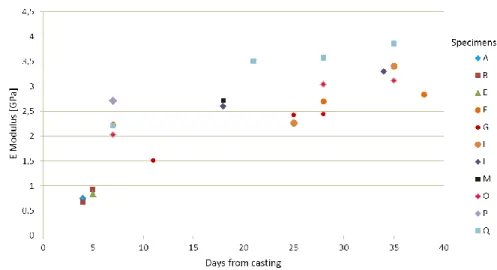
Figure 15: E-modulus vs. Time (Meneghini, 2014). ... 38
Figure 16: hydraulic press apparatus for compressive test (Meneghini, 2014). ... 39
Figure 17: Mixer used in the mixture design ... 47
Figure 18: Disc specimens stored in the standard and wet chambers, respectively ... 49
Figure 19: Mould system used in the casting of cylindrical specimens ... 49
Figure 20: Humidity profile specimen mold ... 50
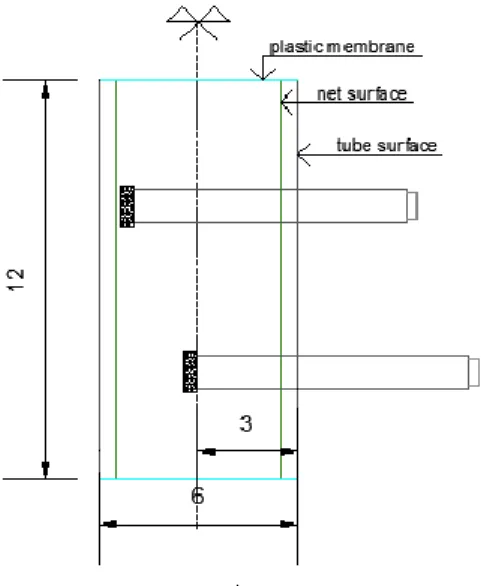
Figure 21: Scheme of sleeves positions inside the mold. Dimensions expressed in centimeters ... 50 Figure 22: Cylindrical specimens after the tube removal, stored inside the standard chamber51
Figure 24: Detail of sleeve and mortar interface in specimen HP_T20H60_B ... 52
Figure 25: Scheme of sleeves positioned vertically inside the mold. Dimensions expressed in centimetres ... 52
Figure 26: Specimen HP_T20H60_C after demoulding: longitudinal and transversal views. 53 Figure 27: Mold sets used in the casting procedure and the demoulded cubic specimens ... 53
Figure 28: Apparatus general view and detail of sample’s container ... 54
Figure 29:TGA curve for different heating rates ... 55
Figure 30: Collecting material and side used for sampling in disc ... 56
Figure 31: Adopted section and radial depths of sampling ... 56
Figure 32: Specimen 3D_T20H60_5 after sectioning. The left piece is used in the 14 day testing, while the right one is saved for the next age of test. ... 57
Figure 33: Section adopted for staining of the reused TGA cylindrical specimens ... 58
Figure 34: Measuring of humidity profiles in exposed and sealed specimens respectively. . 60
Figure 35: Experimental setting for the modulus of elasticity testing. ... 61
Figure 36: Damage in specimen EM_T20H90_1 on the first day of testing ... 61
Figure 37: Pattern of failure of specimens stored in the wet chamber (left) and standard chamber (right) ... 62
Figure 38: Compounds’ evolution in samples taken from disc specimens stored at the standard chamber ... 66
Figure 39: Comparison with Meneghini's average results for disc specimens stored in the standard chamber ... 67
Figure 40: Comparison between R rates of present work and Meneghini's work... 68
Figure 41: Evolution of compounds of samples taken from disc specimens stored at the wet chamber ... 68
Figure 42: R of samples taken from specimens stored at the wet chamber ... 69
Figure 43: Evolution of compounds of samples taken from disc specimens stored at the high CO2 concentration chamber ... 70
Figure 44: R of samples taken from specimens stored at the wet chamber ... 70
Figure 45: Evolution of compounds for material collected from depht P3 (l=0mm) ... 71
Figure 46: Evolution of compounds for material collected from depht P2 (l=15mm) ... 72
Figure 47: Free water content of cylindrical specimens at different depths according to testing ages ... 73
Figure 49: R rate of samples taken from different depths through the transversal section of
cylindrical specimens ... 74
Figure 50: Evolution of carbonation front ( % of carbonated material vs time) ... 76
Figure 51: Relative humidity measured in the center of the specimens (depth =3 cm) ... 77
Figure 52: Relative humidity measured close to the periphery of the specimens (depth=1cm) ... 77
Figure 53: Humidity variation in the first hours ... 78
Figure 54: Evolution of density along time ... 80
Figure 55: Evolution of E along time ... 81
Figure 56: Variation of weight vs time for lime and water paste sample ... 84
TABLE INDEX
Table 1: Chemical requirements of calcium lime given as characteristic values (BS EN 459-2:
2010) ... 6
Table 2: ASTM 51 Classification of quicklime (ASTM C51 -11, n.d.) ... 8
Table 3:Flow value according to the bulk density of fresh mortar (BS EN 1015-11, 1999). .. 17
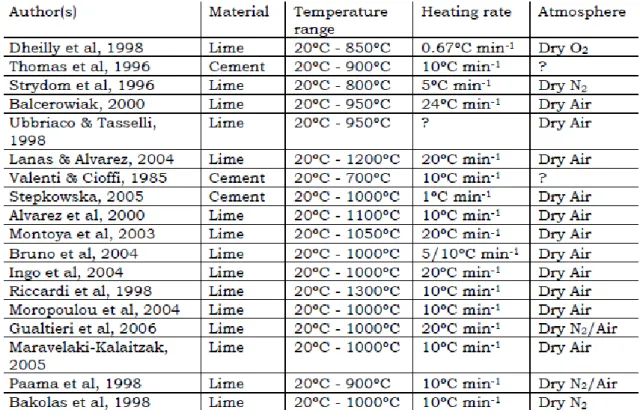
Table 4:TGA Analyses performed by different authors on lime and cement (Lawrence 2006) ... 30
Table 5:Molar masses of the compounds present in decarboxylation and dehydroxylation ... 32
Table 6: Summary of testing methodology ... 43
Table 7: Chemical characterization of CL90 ... 44
Table 8: Hydroxide and carbonate initial contents for lime and water paste ... 45
Table 9: Water content of the aggregates after drying ... 46
Table 10: Nomenclature of specimens regarding the type of tests conducted ... 47
Table 11: Nomenclature of specimens regarding the environments of exposure ... 48
Table 12: List of specimens casted for humidity profile measurements ... 59
Table 13: Results of phenolphthalein staining (specimens stored in the standard chamber) ... 75
Table 14: Compressive strength results for standard chamber's specimens at 28 days ... 82
1.
INTRODUCTION
1.1 Brief description of aerial lime and historic applications in construction
Aerial lime is obtained from lime stones, a common type of sedimentary rock, composed of Calcium Carbonate – CaCO3. When lime stones are calcinated, it is produced Carbon Oxide –
CaO, known as quicklime, which is highly reactive and hygroscopic (Meneghini, 2014). The addition of water produces hydrated (or slaked) lime, composed of Calcium Hydroxide. Aerial lime is a type of hydrated lime. Lime hardening process is given by carbonation. In this process, hydroxide reacts with atmospheric CO2, producing calcium carbonate. Carbonation
can be seen as an inverse process of aerial lime production, since it returns to the original calcite form.
Literature shows that carbonation is very slow and depends on parameters such as atmosphere exposing time (Van Balen & Van Gemert, Modelling lime mortar carbonation, 1994), variation of relative humidity throughout the material (Van Balen, Carbonation reaction of lime, kinetics at ambient temperature, 2005), environment temperature (Grandet, 1975; Van Balen & Van Gemert, Modelling lime mortar carbonation, 1994) and carbon dioxide diffusion inside the mass (Van Balen & Van Gemert, 1994). In the case of lime mortars, the porosity of the mixture (Lawrence R. , 2006), types of components and the adopted ratio (Thomson, 2002; Elert, 2002) are also relevant and should be considered. Furthermore, by hardening lime, carbonation increases the mechanics capacities of mortars.
Aerial lime mortars have been largely used as a structural and ornamental- material for at least the past 16 centuries before the emergence of the Portland cement (Coppola, n.d.). A significant portion of architectural heritage throughout Europe and Western Asia employs aerial lime mortars in their constitution (Lawrence R. , 2007).
Aerial lime was used by Romans as a construction material from the 3rd century B.C (Colombo & Festa, 2005). Lime stone-based substances were mixed with water, varied types of sands and other additives, such volcanic ashes – Pozzolan or rocks - Caementa to make many kinds of pastes. One of the best known is the so called Opus Caementicium, in which Pozzolan had a great importance as additive (Colombo & Festa 2005).
Throughout the Roman Empire, aerial lime mortars were amply employed in constructive elements and played a variable range of functions, from joining brick elements to filling empty spaces between masonry layers – multiple leaf walls (Ferretti & Bazant, 2006).
With the fall of antique civilizations and the beginning of the medieval wars, the traditional abilities and innovations were lost. Because of the lack of records, techniques and methods were progressively forgotten and fell into disuse. During the course of the middle ages, lime mortars quality became very poor, given the low quality of furnaces and scarcity of proper artefacts (Viollet-le-Duc, 1854).
From the 12th century, practices in lime started to be retaken thanks to translations of reminiscent books, such as Vitruvio’s and Plinio’s, increasing mortar’s quality (Società Impianti calce, n.d.). During renaissance, Palladio had made some efforts towards the resumptions of lime production. His product, the Calce nigra, consisted of lime with hydraulic properties obtained from clay impurities (Società Impianti calce, n.d.). The growing interest in lime can be noted more fiercely in the modern ages. Given the advent of industrial revolution in Europe in the beginning of the 18th century, industrial production of hydraulic lime has started. In 1818, Vicat patented a type of hydraulic lime, made from calcination of limestone and clay. Other patents based on his mixture followed until the emergence of Portland cement in 1824 (Coppola, n.d.).
The use of aerial lime in constructions before the 20th century was very often particularly in the form of lime putty, a slurry paste obtained by the adding of excessive water. Nevertheless, industry invested in the development of products based in Portland cement, given its proven efficiency and superior mechanic properties in comparison with aerial lime (Lanas & Alvarez, 2003).
The contemporary interest in aerial lime concerns the fields of structural restoration and conservation of historic heritage. Recent cases of restoration acknowledged deterioration in ancient masonry elements given by contact with cement mortars. Damages were caused mainly by incompatibility between these materials, once cementitious mortars were proven excessively hard to work with porous and weaker historic bricks (Lawrence R. , 2006). In addition, Portland cement promotes corrosion of ancient materials, given its alkaline character (Cultrone, Sebastián, & Ortegas Huertas, 2005).
On the contrary of Portland cement, lime is advised to operate with traditional materials. Besides of preventing corrosive effects, lime mortars are capable of resisting some degree of movement in masonry (Cultrone, Sebastián, & Ortegas Huertas, 2005). Furthermore, the slow characteristic of the carbonation is beneficial because it gives the mortar the ability to retain plasticity for long time and thus accommodate structural movements (Lawrence R. , 2006).
Beyond mentioned abilities, aerial lime mortars can also be used to eliminate unwanted water contents by absorbing humidity. It can be used as sacrifice material, being replaced when saturated. An additional advantage reflects in potentially lower costs of restoration, given lime’s commercial prices (Lanas & Alvarez, 2003).
1.2 Scope and motivation
In views of the strong presence of aerial lime in historic constructions, mainly in mortars, as well as its renovating importance in structural restoration, recent interests in the study of the properties and behaviour of this material are perceived.
Although significant advances regarding chemical and physical characterization of lime were achieved (Lawrence R. , 2006; Veiga, Fragata, Velosa, & Magalhães, 2010; Van Balen & Van Gemert, 1994; Baronio, Binda, & Saisi, 2000; Lanas & Alvarez, 2003), it is still noticed a lack of accurate information concerning the reactions that occur within, as well as precise establishments of experimental parameters. It is thereby remarkable the need to deepen the existing knowledge on the subject.
Given the remarkable lack of understanding phenomena, models and parameters towards modelling in this important field of aerial lime mortar behaviour, a research gap is thereby identified.
1.3 Objectives
The purpose of this work is to understand in which way the values of relative humidity, carbon dioxide concentration and carbonation rate interact and influence aerial lime mortar specimen´s hardening process.
In pursuit of such objectives, experimental procedures developed and validated in a previous research work are adopted (Meneghini, 2014). Based on models proposed in the literature, ratios and mixtures, and the referred experimental procedures, systematic studies on the effects of the above mentioned variables throughout carbonation are made by modifying the environments of exposure of specimens and comparing the obtained testing results.
1.4 Description of the work
The current work is divided in six chapters: I-Introduction; II-Aerial Lime; III-Approaches and experiments in aerial lime mortars; IV-Experimental program; V-Main results and
The present introduction intends to demonstrate a contextualization of the proposed theme, the scope and motivation of the work, as well as its objectives and description of content. The second chapter refers to an opening descriptive part on the relevant phenomenology associated to aerial lime phenomenology, giving with insights about the processes of carbonation, humidity and carbon dioxide diffusion and the related factors, as well as some numerical models related to the mentioned process. In the same chapter, some considerations are made concerning lime mortars’ mixture, components and main properties.
The third chapter follows a review on previous experimental works focused in aerial lime mortars, regarding the mixture design, casting procedures, curing conditions and the observation of specific properties in experimental tests.
The fourth chapter pertain to the experimental campaign developed in the scope of this work, in which are addressed the procedures that where followed concerning the casting method and curing process, and also the execution of the tests.
The fifth chapter describes the main results of all the performed tests and also conclusions regarding comparisons between the results.
In the last chapter the main conclusions of this work are acknowledged, and also some proposals for further work are forwarded.
2.
AERIAL LIME
2.1 Definition of aerial lime and its forms
Lime is an inorganic compound obtained by artificial modifications of a natural mineral crystal found in nature in the form of lime stones, commonly known as calcite. The main reaction in the process of production of lime is called calcination and consists in burning the calcite to obtain calcium oxide, also called quick lime.
Quick lime is highly reactive and hygroscopic and, when mixed with water provides calcium hydroxide, known as hydrated or slacked lime. Different slaking conditions determine the form and properties of the final product. When lime is hydrated with the precise amount of water needed, it adopts the form of a fine, white powder, whereas when an excess of water is put into the process, the product is a slurry paste called lime putty, which has different properties and applications.
Hydrated lime that originates from calcinated lime with significant amounts of argillaceous impurities, such as silica and alumina, is referred to as natural hydraulic lime for it has the capacity of setting under water, in a reaction called hydrolysis. On the contrary, when lime stones containing up to 5% of impurities are used to make lime (Coutinho, 2002), the product is known as non-hydraulic lime - commonly referred to as air or aerial lime. The reason for this denomination is that aerial lime, unlike hydraulic lime, will not set under water. Instead, it is set by the carbonation process, which requires exposure to atmospheric carbon dioxide. This causes a much slower set and the lime remains softer and more breathable (Lime Stuff Ltd.).
As previously mentioned, the subject of study of this work is mortars which have aerial lime as major component. In this matter, the present subchapter focuses on the definition of this compound and the main forms of classifying it.
Types of lime 2.1.1
Aerial limes are mostly composed of calcium oxides or hydroxides, but their composition may include other elements, such as clay, that are usually termed as impurities. In terms of impurity content, aerial lime can be classified as fat or thin. Fat limes are originated from light-colored calcites, containing no less than 99% of CaCO3, and have this designation
which have clay and other impurities contents between 1 to 5 %, and are not as workable and soft as the previous ones. Both thin and fat limes have the same setting reaction, though. Despite the impurity content, which may vary largely for the same lime impurity classification (fat/thin), there are two main types of aerial lime, classified according to the chemical composition: calcium lime and dolomitic lime (neither of them contains hydraulic or pozzolanic component).
Calcium lime, CL, is the kind of lime in which the main chemical element that forms the compound is calcium in the form of calcium oxide and/or calcium hydroxide. Additionally to the strong presence of calcium, dolomitic lime, DL, also shows significant amounts of magnesium in the composition of oxides and hydroxides. This type of lime exhibits good workability characteristics, such as high plasticity and water retention. For such reasons, it has been largely used in contemporary construction.
The present work reserves the study of the behaviour of calcium lime exclusively. According to BS EN 459-2 (2010) calcium lime are classified in respect to calcium and/or magnesium oxide contents, as Table 1 reports.
Table 1: Chemical requirements of calcium lime given as characteristic values (BS EN 459-2: 2010)
Lime cycle 2.1.2
Although lime stones are commonly considered the origin of lime due the fact that they are the main source of this substance in nature, it is important to notice that there are other forms of calcium compounds, which differ by the type of chemical process which the material have been submitted to. The sequence of transformations that affect lime is called lime cycle, and a simplified representation of it can be seen in Figure 1.
Figure 1: Simplified lime cycle
In the following paragraphs each stage of the cycle and modifying reactions are explained.
Limestone and Calcination
Calcium carbonate, or calcite, exists in nature under the form of mineralogical formations known as lime stones. According to Boynton (1984) and Holmes (1997), lime stones can have different crystal forms and compositions, and these are the main factors that affect the quality and properties of the lime.
Two main groups of lime stones are classified according to their origin: organic and inorganic. Organic lime stone occurs in nature from the accumulation of shells, corals and fossils layer in the oceans, seas and lakes. Inorganic lime stones are formed by chemical reactions with precipitation of calcium carbonate ions (Boynton, 1984).
The chemical composition of lime stones is altered by a process called calcination, a thermal decomposition of calcite where carbon dioxide is released in gaseous form, as follows equation 1.
𝐶𝑎𝐶𝑂3+ ∆𝐸 ⟶ 𝐶𝑎𝑂 + 𝐶𝑂2 (1)
Calcination of calcium carbonate CaCO3 is a highly endothermic reaction, and it requires 178
kJ/mol of heat input. The reaction only takes place when the temperature is above the dissociation temperature of the carbonates in limestone or lime mud, typically between 780°C and 1340°C (Moffat & Wimsley, 2006), and has to be maintained in that range until the end of the process.
Traditional lime kilns reach temperatures of 900oC. Higher calcination temperatures, around the order of 1400ºC, produce a dark-coloured product, often called burned lime due its low quality. According to Hassibi (2009), burned limes’ lower quality is related to lower porosities, of about 8-12%, which makes the lime less reactive and thus less efficient in further chemical processes.
On the other hand, soft-burned limes, calcined at low temperature, are more porous because carbon dioxide’s outflow occurs more slowly. Soft-burned pebbles have up to 54% in porosity and thus greater chemical reactivity. When this lime is exposed to wetting, water penetrates the cracks and fills the cavities quickly, providing a fast hydration (Hassibi, 2009). The size of the stone also influences the process. Smaller stones react much faster and due to a greater surface for heat transference, while larger stones require more time, and often higher temperatures (Elert, 2002).
The dissociation of the calcium carbonate proceeds gradually from the outer surface of the particle inward, leaving a porous layer of calcium oxide as a product (Moffat & Wimsley, 2006). Thus, the calcination zone advances as a front towards the centre of the piece and leaves behind a calcined outer zone.
The reactivity of lime is not only determined by chemical purity of the parent limestone and the calcination temperature, but it is also affected by physical properties of the limestone, such as surface, porosity, pore size distribution and crystalline size (Elert, 2002). The optimum calcination parameters vary for the different types of limestone, and they are influenced by chemical and textural characteristics of the starting material.
Quicklime and Hydration
The product of calcination is a solid product called quicklime, having a characteristic white colour and is highly reactive to water.
Quick lime is available under the form of lumps, with 10 to even 20 cm in diameter, or in the form of powder (BS EN 459-2, 2010). ASTM standard C51 classifies lime according to the size of the cluster, as explained in Table 2.
Table 2: ASTM 51 Classification of quicklime (ASTM C51 -11, n.d.)
Denomination Classifying Parameter
Large lumps Diameter ≤ 8 in. (20,32 cm)
Crushed / pebble lime 2,5 in. ( 6.35 cm) ≤ diameter ≤ 0.25 in. (0.64 cm)
Ground lime Diameter ≤ 0.25 in. (0.64 cm)
Pulverized lime Maximum grain size passes through
0.033 in. (8.4 mm) sieve
Pelletized lime / briquettes Grain average dimension : 1 in. ( 2.5 cm )
Quick lime can be added to water to produce calcium hydroxide, according to a reaction described as hydration – or slacking, represented in equation 2. Hydration of lime is an exothermic process that causes a volumetric expansion of the mass and generates around 273 kcal of heat per kilogram of lime.
𝐶𝑎𝑂 + 𝐻2𝑂 → 𝐶𝑎(𝑂𝐻)2+ ∆𝐸 (2)
Hydrated lime, also referred as slacked lime, is an aerial lime mainly in the hydroxide form produced by the controlled slaking of quicklime (Meneghini, 2014). The hydration can be made in two forms: aspersion or immersion. Aspersion consists in the slacking of the lime with the exact amount of water needed to the hydration reaction, and produces hydroxide under the form of a powdery, fine substance. Immersion on the other hand, corresponds to a hydration with excessive water, conducted by the drowning of lime blocks, and takes to a product covered by a layer of water, ensuring the complete hydration of calcium oxide. The result of an immersive hydration can be presented in the form of putty, or, in other cases of lime milk.
Lime milk is presented in a liquid stage, and consists of a white-coloured suspension of calcium hydroxide particles in water. It is not used in mortars or other cementitious materials. Instead, it was usually applied as coating on architectonical surfaces in order to change their original pigmentation and for this reason can be considered a primitive form of paint.
Lime putties water content varies from 30 to 40% (Boynton, 1984), and this amount is relative to free water, in addition to the chemically combined water (Elert, 2002). Usually the minimum time of maturation for lime putties is 3 months. In fact, this is a permeable product, presenting very low porosity and carbonation rates.
Slacked Lime and Carbonation
Carbonation is the name of the process responsible for the last transformation described in the lime cycle presented in Figure 1, corresponding to the conversion of the calcium hydroxide present in slacked lime back into the calcium carbonate compound found in lime stones. For
this reason, as it was previously mentioned, it can be considered the inverse process of calcination and hydration combined.
This reaction acts exclusively in calcium hydrate, regardless of the form that this compound is found – putty or powder, and other types of substances that may be mixed together with it (sand, pozzolans, and other aggregates and additives), and is the main responsible of the stiffness process of lime-based materials.
Because of carbonation’s great influence in aerial lime mortars, a further sub-section of the present chapter is reserved to characterize it properly and describe the main parameters that govern its development.
2.2 The carbonation process in aerial lime corresponding mortars Carbonation and aerial lime
2.2.1
As previously stated, carbonation is the process through which the Ca(OH)2 present in slaked
lime reacts with atmospheric CO2 to form calcium carbonate, or calcite, which is stronger and
less soluble then calcium hydroxide, or portlandite. (Meneghini, 2014). Although this phenomenon is more strongly observed in lime concrete and plasters, it is one of the main reactions that acts in aerial lime mortars. In fact, in exception for an initial loss of free water during the drying process at early ages, the hardening of lime mortars is given mainly due carbonation (Callebaut, 2000; Ngoma, 2009) .
In order to provide a proper conservation and achieve a longer durability of lime- based materials, it is critical to understand correctly the parameters that influence carbonation and the circumstances in which the reaction occurs, as well as its behaviour given determinate conditions.
Aiming to give a theoretical basement to the developed study, the present section of the chapter intends to describe the main characteristics and parameters of the carbonation process, such as the stages of the reaction, factors that influence it and a brief presentation of some proposed models for coupling carbonation, humidity and carbon dioxide diffusion.
Stages of carbonation 2.2.2
According to Lawrence (2006), from a wide perspective, there are five principal stages involved in the carbonation process, described below.
A. Diffusion of carbon dioxide through the pores of the mortar
This is a natural process that occurs when the mortar is exposed to the atmosphere. In sealed specimens, the diffusion of CO2 is prevented from occurring, and thus the reaction is limited.
B. Dissolution of carbon dioxide in pore water
CO2 dissolvesin water into H-, HCO3--and CO3- ions. The combination of these ions leads to
the formation of carbonic acid, according to equations 3 and 4. 2(𝐶𝑂2+ 𝐻2𝑂) → 2𝐻−+ 𝐻𝐶𝑂
3−+ 𝐶𝑂3− (3)
3𝐻−+ 𝐻𝐶𝑂
3−+ 𝐶𝑂3− → 2 𝐻2𝐶𝑂3 (4)
C. Dissolution of calcium hydroxine in pore water
The dissolution of portlandite molecules in the pore water originates Ca++ and (OH)- ions, as follows equation 5.
𝐶𝑎(𝑂𝐻)2 → 𝐶𝑎+++ 2(𝑂𝐻)− (5)
D. Solution reaction between portlandite and carbonic acid
Carbonic acid and calcium hydroxide react in the form of dissolved ions. The resulting Ca++ ions are combined with the CO3- ions, thus forming calcium carbonate. The simplified
representation of this reaction is given by equation 6.
𝐶𝑎(𝑂𝐻)2+ 𝐻2𝐶𝑂3 → 𝐶𝑎𝐶𝑂3+ 2𝐻2𝑂 (6) E. Precipitation of solid calcium carbonate
The reaction of precipitation of CaCO3 is exothermic, releasing energy of about 74 KJ/mol.
This may slightly contribute to evaporation of water from the pores. With the reduction of pore water, the medium where the reaction occurs is impaired, thus decreasing the rate of carbonation (Lawrence R. , 2006).
These five mentioned stages keep occurring repeatedly, either until all the available calcium hydroxide is converted into calcium carbonate or the capillary water has evaporated due to the heat generated by the late stage reaction.
The process also may be slowed by a reduction of carbon dioxide diffusion due the presence of a carbonated layer, which can make the surrounding substrate become “impermeable” to gaseous compounds.
Another possibility for the delay of the process is eventual excessive increase of moisture content, which also leads to a very slow diffusion of carbon dioxide.
Factors that influence carbonation 2.2.3
Diffusion of carbon dioxide through the porous structure
Carbon dioxide diffusion is strictly related to the amount of water in the mortar. The diffusion of carbon dioxide diffusion through porous lime mortar depends on the width of the pore structure of the mortar, depending thus on the water content of the mixture. The basic controlling parameters of carbon dioxide diffusion are: pore diameter, pore size distribution, pore water content and relative humidity.
According to Van Balen (2005) the diffusion of gases in aqueous medium occurs approximately 10000 times lower than in air; for this reason, it cannot be considered that the transfer of carbon dioxide inwards the mortar takes place in water. Also, the diffusive flux of within the mortar is related to concentration field, going from regions of high concentration to regions of low concentration, with a magnitude that is proportional to the concentration gradient (spatial derivative).
Based on Fick’s laws, Van Balen (Cizler, Van Balen, & Gemert, n.d.) proposed an expression to describe the rate of gas transfer, following reported as a function of the water content through the diffusivity term, described in equation 7.
𝑁𝑒 = −𝐷𝑒𝑑𝐶𝑎
𝑑𝑥 {
𝑁𝑒 = effective rate of gas transfer 𝐷𝑒 = effective diffusion coefficient 𝐶𝑎 = carbon dioxide concentration
𝑥 = 𝑑𝑒𝑝𝑡ℎ 𝑜𝑓 𝑐𝑎𝑟𝑏𝑜𝑛𝑎𝑡𝑖𝑜𝑛
(7)
The diffusion coefficient has been defined from Van Balen & Van Gemert (1994) for lime mortars as a function of water content shown in a graph in Figure 2
According to Meneghini (2014), the capillary water corresponds to the amount of water at which the water transport in form of vapour can take place and the critical water corresponds to the maximum adsorption on the pore surface before extensive capillary condensation occurs.
From the graph it is possible to note that the diffusion coefficient tends to 0 for higher water contents. Basically this means that while water transport cannot occur in vapour phase, the presence of high condensed water contents act as hindrance for the carbon dioxide diffusion (Meneghini, 2014).
With respect to the concentration of carbon dioxide in the surrounding environment, Moorehead (1986) states that increasing values would lead to an increasing amount of calcite, so that in a saturated CO2 atmosphere, the heat generated during reaction would be such that a
premature drying would take place, occasioning the halting of the carbonation process. Experiments made firstly by Van Balen (2005) and later by Shin (2009) show contrary results, though. Both authors state that it is actually the availability of moisture which guides the process and that carbonation proceeds at a rate that is independent of the carbon dioxide concentration, thus being considered a zeroth order reaction in regard to this reactant.
Solubility of gases and calcium compounds within the mass
The solubility of carbon dioxide and lime are influenced by temperature, being the optimum speed of dissolution related to temperatures of about 20oC (Van Balen & Van Gemert, 1994). Although Lawrence (2006) assumed that all the calcium hydroxide present in the composition of a mortar is available to react, the dissolution of this substance is faster than that of carbon dioxide and depends on the size of particles. For that reason, as long as carbonation is not ceased, a maximum content of hydroxide will be available at the pores surface (Elert, 2002; Van Balen & Van Gemert, 1994).
Also, the solubility of the calcium hydroxide is known to be greater than that of calcium carbonate. Thus, when an amount of water reaches the carbonation front during the occurrence of the reaction, a carbonate region separated from the aqueous solution is formed by the precipitate compound. According to Van Balen (2005), this carbonate deposit that is formed around the uncarbonated area prevents further penetration of outside carbon dioxide.
Water content and transport
Solid materials can contain water in two different forms: non-evaporable and evaporable, or free water. Non-evaporable water is present in stoichiometric quantities as part of the crystalline structures of the chemical compounds. Free water, in the other hand, corresponds to the amount available to evaporate because it is not chemically bound to a compound. Among this, water can exist in both liquid and gaseous phases and it can be classified as:
adsorbed water, when retained by the solid surface; absorbed water, when it is condensed
and held in capillary structure of colloidal solids; and occlusion or capillary water, when it is occluded in the microscopic cavities of crystalline solids.
In aerial lime mortars, water plays two main roles. Firstly, it is the main agent in the production of calcium hydroxide by hydration of calcium oxide, process in which it is combined with calcium ions to form the hydroxide compound. Water is also a product of carbonation, and its formation modifies the global water content of the mixture, altering its properties.
Aside from the above mentioned states, possible excess of adsorbed water, given by hydration or mortar mixing processes, influences the pore structure of hardened mortar, thus the diffusivity of gases through the material (Arandigoyen, 2005; Lawrence R. , 2006).
During an initial drying process, the transport of free water happens in two phases. The first one corresponds to capillary water transport. According to Van Balen& Van Germet (1994), in this phase it is considered that carbonation does not occur, since “there is not enough
openness of the pore structure to allow carbon dioxide diffusion”. In this stage of drying,
water is displaced to the surface through the capillary structure, and in this process, only the very outer surface can start to carbonate. Once it is reached the capillary water content, the second phase begins, corresponding to the water transport in form of vapour diffusion.
However, carbon dioxide diffusion does not begin until it is reached a critical water content present on the pore’s surface. For lime mortars without specified characteristics, Van Balen (2005) estimates the value of 53,4 kg/m3 as a critical water content that can start the diffusion. On the other hand, environments with very low relative humidity (RH) hold carbonation back, for it has been observed that in environments with less than 8% RH the reaction between calcium hydroxide and carbon dioxide did not occur, since they both have to dissolve in water to react (Cultrone, Sebastián, & Ortegas Huertas, 2005).
Porosity
Porosity is a factor that influences carbonation as far is influenced by it, and is also a parameter that determines the strength and resistance of a mortar. In contrast with hydraulic mortars and concrete, Lanas & Alvarez (2003) report that aerial lime mortars specimens with higher pores’ openness and quantity showed highest strength. The authors suggest that this phenomenon is given by a greater accessibility to carbon dioxide from atmosphere, resulting in greater carbonation rates.
The pore size distribution conditions the gaseous permeability. A large water:lime ratio conducts to more open porosity, but an adding of excessive portion of water leads to shrinkage cracks and weakens the mortar (Arandigoyen, 2005).
The course of carbonation affects the mortar’s porosity as well, because as the precipitation of calcium carbonate promotes its attachment to the aggregates or the portlandite crystals surface, the volume of the pores is thereby altered. According to Lawrence (2006), the referred process tends to increase the amount of smaller pores (with up to 0,1 𝜇𝑚 diameter), while slightly reduce the quantity of bigger pores.
Elapsed time
Time is related to carbonation trough the diffusion of carbon dioxide. In fact, the front of carbonation can be expressed as function of time by means of a factor k (that can be determined in experimental methods) and a constant e, according to equation 8 (Van Balen & Van Gemert, 1994).
𝑥 = 𝑒 + 𝑘√𝑡 {𝑥 = 𝑐𝑎𝑟𝑏𝑜𝑛𝑎𝑡𝑖𝑜𝑛 𝑓𝑟𝑜𝑛𝑡𝑡 = 𝑡𝑖𝑚𝑒 (8)
2.3 Aerial lime mortars
The most common form of employment of aerial lime in ancient buildings is as binder in cement pastes, most of all mortars. Aerial lime mortars usage move from holding masonry units to filling ancient concrete, as in multiple leaf walls (Ferretti & Bazant, 2006). Mortar was also employed as a complement in external resistance and internal lateral forces. In fact, one of its primary functions the load distribution throughout the structure (Gimbert, 2008). Aerial lime mortars take long to harden and according to Lourenço (2004), are usually weaker than masonry units. This material is mainly made of lime, water, aggregates and, in some cases, additives. Different proportions of components leads to mortars with different
properties, as well as different types of grain size distribution and shape should be considered in this perspective (Lanas & Alvarez, 2003).
The present sub-section presents the main types of components practiced in contemporary recreations of ancient aerial lime mortars, as well as the acknowledged methods of mixing and also introduces the main properties of the studied material, characterized by the presentation of values found in literature. The main results are related to the type of binder, aggregates and ratio used in the mixture, listed by author. This information is summarized in Annex I.
Components 2.3.1
Types of binder
Lime of different forms can be used as binder in mortars. From putty to dry-hydrated powder, different authors have reportedly tried varied mixture design in the preparation of specimens of mortar for experimental purposes.
Teutonico (1993) and later Baronio (2000) developed their research based exclusively in mortars made from lime putty. In earlier works, it can be noticed a preference in the use of more plastic materials in the making process, perhaps due the fact that it was the most common form of binder used ancient times, or even due facilities in workability and casting characteristics. Works developed later use mostly dry hydrated lime. It is also the type of lime employed by a bigger number of researches. It can be observed, though, a growing tendency to testing mortars made by a larger variety of lime forms and ages.
Granulometry and types of aggregates
According to Elert (2002), aggregates are necessary to impart strength, hardness, and a certain degree of porosity to the mortar, that can later facilitate carbonation. The most used material is sand, of variable granulometry. Not rare, more than one type of inert is employed, usually differing in the grain size and format.
The chemical characteristics of aggregates, as well as its granulometry and particle shape, play an important role in the composition of a mortar’s properties. Although there are not restrictive stablished standards in these terms, aggregates also influence the ratio used in the mix, for it can alter the performance of the binder.
According to Lanas & Alvarez (2003), calcitic aggregates made from limestone confer higher mechanical strengths in comparison with silicate sand. The same authors attested that
granulometry affects the mechanical properties by improving mechanical resistance particles smaller than 2 mm are utilised.
Concerning the grain shape, while silicate particles are mostly round-shaped, stone-derived powder are sharper and have greater specific surface that allows a tighter contrast between particles and offers larger grip areas (Lanas & Alvarez, 2003).
The existing norms recommend, for crushed stones fillers, a 30% maximum percentage of fines passing a 0.063 mm (BS EN 13139, 2002). The mentioned norm recommend for sand to fit an envelope with wider dimensions than those proposed in previous norms.
Mixing method 2.3.2
The mixing procedures of aerial lime mortar can vary greatly. The quicklime may be hydrated before mixed with aggregates or slacked along the process of execution of mortar. Regarding the second mentioned form of mixing, a traditional method of preparing mortar largely adopted in the literature the hot-lime mix method. In this mixing procedure, quicklime is slaked involving the addition of sand during the slaking procedure, thereby the slacking of the lime and the mixing of the mortar happen in the same time. Thus, the hot-lime mix shortens the production of mortar for it passes through the slacking step by combining it with the water addition, necessary to the making of mortar.
Main properties 2.3.3
Consistency
According to EN 1015-11 (1999), the flow value is the indicator of fresh mortars consistency and workability. The flow value is directly related to the density of the mortar, so that different flow values are recommended for each ranges of bulk density of fresh mortar, as shown in Table 3.
Table 3:Flow value according to the bulk density of fresh mortar (BS EN 1015-11, 1999).
Bulk density - r [kg/m3] Flow value [mm]
r >1200 175 ± 10
1200≥ r > 600 160 ± 10
600≥ r > 300 140 ± 10
Porosity
Porosity of mortars is influenced by the porosity of its contents, the amount of binder used and, the amount of water, at early ages, and later by the precipitation of calcium carbonate that alters of the pore structure (Meneghini, 2014).
For lime mortars, in contrary to cement mortars, it has been demonstrated that higher porosities leads to higher mechanical properties (Lanas & Alvarez, 2003), but it should be noted that the increase of lime content over the 2:1 lime:aggregate ratio can influence porosity in a way that may reduce strength (Lawrence R. , 2007).
The porosity of a material can be determined according to the measurement of its open porosity. This parameter corresponds to the ratio between the volume of open pores and apparent volume of the specimen (the latter made up of solid part + volume of voids), and the method to measure it is based on the principle of Archimedes.
The referred property is not reportedly normalized for aerial lime mortars in particular, however, literature results show typical values of open porosity that vary from 19% to 25% in aged hydrated lime mortars based on different forms of binder (Lanas & Alvarez, 2003). Particularly for early ages, open porosities of 23,5% to 32% are reported in lime putty mortars, and 26% to 29% in dry hydrated lime mortars (Baronio 2000, Cazalla 2000).
Compressive Strength
As it is known, the acting of carbonation leads to a progressive hardening process in aerial lime mortars, which is directly related to the improvement of mechanical properties of the material (Lawrence R. , 2006).
During lime mortar’s hardening process, the compressive strength resistance has an initial growing stage due to drying, followed by a continuous increase given by carbonation reaction (Callebaut, 2000), as Figure 3 illustrates.
The final compressive strength values of aerial lime mortars do not exhibit mechanical properties with values comparable to hydraulic or cement mortars though, for they are remarkably weaker than these usual materials.
Cement mortars mixed in a 1:2 water/cement ratio, for instance, present from 47 to 61 MPa of compressive strength by the end of 28 days, according to Farkas and Kliege (1986). As examined by Stewart (2001), much older aerial lime mortar’s resistances do not exceed a tenth of the cement lime average value. A comparison between the compressive strength of some types of mortar is shown in Figure 4 (Stewart, 2001).
Figure 4:Comparison between mortar strengths. P1,P12 : aerial lime mortars; P4-P7: hydraulic lime mortars; P8,P9: hydraulic and air lime combined mortars;P10,P11,P3,P2: air lime mortars with additives. (Stewart, 2001)
Models for coupling carbonation, humidity and carbon dioxide diffusion 2.3.4
The behaviour of aerial lime mortar during its life is determined by chemical and physical interdependent processes. Therefore, the separate modelling of these processes, such as carbonation, humidity diffusion, carbon dioxide diffusion, modification of the pore structure, without taking into account the entirety of the is highly limited and imprecise. In this matter, there have been proposed some multi physics models, with combined diffusion and reaction models, to describe aerial lime mortar. Two of the most well-known models are following described.
Van Balen and Van Gemert model
According to Van Balen & Van Gemert (1994), carbonation is described by the differential equation given in equation 9.
𝑑𝑖𝑣 (𝐷𝑒𝑓𝑓∆𝑐) + 𝜓𝑑𝑐𝑑𝑡+ 𝑅(𝑤, 𝑐) = 0 (9)
In this equation, the first term 𝑑𝑖𝑣 (𝐷𝑒𝑓𝑓∆𝑐) considers the diffusion of CO2 through the pores,
𝜓𝑑𝑐𝑑𝑡 acknowledges the change of c over time – t given by its penetration inside the voids of the mass. The last one, the sink term 𝑅(𝑤, 𝑐), expresses the dependence on c and water content - w.
The sink term, in isothermal conditions, can be expressed as follows equation 10, considering the specific surface of lime mortar pore system as 3,953 m2/m3 and the estimated amount of water with a thickness of five molecular layers.
𝑅 = 0,7062[𝐶𝑂2]𝛼(𝑅𝐻)𝛽([𝐶𝑎(𝑂𝐻)]2) (10)
In the presented equation, α(RH) is the term that takes into account the effect of relative humidity and β([Ca(OH)2) is the ratio of the pore surface for the amount of remaining lime
over the initial pore surface.
For the presented model, some assumptions have to be made, namely:
- In an elementary volume of dimensions dx, dy, dz, the carbonation reactions consumes R moles of gas per unit of time and unit of mortar volume;
- Likewise, in an elementary volume, R moles of calcium hydroxide are converted into carbonate;
- Lime, water and carbon dioxide available in the mortar are concentrated ate the pores surface.
Ferretti and Bažant model
The study of Ferretti and Bažant was focused on ancient masonry towers and, especially, on failure cases of towers with no or imperceptible warning signals. In particular, the results from the numerical simulation confirmed that the time-scale of the diffusion-reaction processes is compatible with the age at which some towers had problems. (Meneghini, 2014). For modelling the interaction between water transport, carbon dioxide diffusion and carbonation in lime mortars, Ferretti and Bažant took as base a model for low strength cement, by Saetta, Schrefler and Vitaliani. Given the few number of tests developed in lime mortars that could lead to the calibration of parameters, the authors assumed, as an approximation, the same values used to describe low strength concrete. In general terms, they have considered the simulation realistic, even if they suggest further researches on calibration of the parameters of the model.
In the presented model, the rate of carbonation is described according to equation 11.
𝜕𝑅
𝜕𝑡 = 𝛼1× 𝑓1(ℎ) × 𝑓2(𝑐) × 𝑓3(𝑅) × 𝑓4(𝑇) (11)
1 9 , 0 1 9 , 0 5 , 0 ) 5 , 0 ( 5 , 2 5 , 0 0 0 ) ( 1 h for h for h h for h f (12)
Relative humidity is coupled with relative concentration of carbonate, considering the expelled water during carbonation, and can be described in terms of Fick’s second law equation(equation 13). 𝜕ℎ 𝜕𝑡 = ∇(𝐶∇ℎ) + 𝜕ℎ𝑠 𝜕𝑡 + 𝛼2 𝜕𝑅 𝜕𝑡 (13)
Where C is the diffusivity related to h, hS is the self-desiccation term, 𝛼2 is a constant that
concerns the effect on pore humidity due to carbonation liberated moisture. C can be described through semi-empirical expressions that take into account the effect of humidity h, temperature T, the rate of carbonation R, the equivalent hydration time te and the diffusivity at
28 days and 296o K temperature - equation 14.
𝐶 = 𝐶0× (ℎ) × 𝐹2(𝑇) × 𝐹3(𝑡𝑒) × 𝐹4(𝑅) (14)
𝑓2(𝑐) is the ratio of a given carbon dioxide concentration – c by its maximum value, assumed
the average concentration in air ( 0,0035%) – equation 15. 𝑓2(𝑐) = 𝑐 𝑐
𝑚𝑎𝑥 (15)
Carbon dioxide diffusion can also be described in terms of Fick’s law by algebraically adding a term that considers the effect of carbonation - equation 16. DC is the diffusivity of carbon
dioxide in concrete (adapted for lime mortar), c is the concentration of carbon dioxide and R the relative concentration of carbonate.
𝜕𝑐
𝜕𝑡= ∇(𝐷𝑐∇𝑐) − 𝛼3 𝜕𝑅
𝜕𝑡 (16)
It is possible to give an expression – equation 17 of the diffusivity of carbon dioxide dependent to the same variables considered for humidity diffusion (humidity, temperature, equivalent hydration time, relative concentration of carbonate) and to the diffusivity at normal conditions for cement Portland concrete (28 days, 296 K temperature)- DC,0.
𝐷𝑐 = 𝐷𝑐,0𝐹1(ℎ)𝐹2(𝑇)𝐹3(𝑡𝑒)𝐹4(𝑅) (17)
The third term 𝑓3(𝑅) corresponds to the rate of carbonated material – R, as follows: 𝑓3(𝑅) = 1 − 𝑅 (18)
The rate R is the relative concentration of calcium carbonate, given by the ration between the given carbonate concentration and the maximum possible value (equation 19).
𝑅 = [𝐶𝑎𝐶𝑂3]
The factor α1×f4(T) takes into account the kinetics of the chemical reaction, where T stands for
3.
APPROACHES AND EXPERIMENTS IN AERIAL LIME MORTARS
3.1 General remarks
This chapter is focused on a dedicated review of existing experimental methodologies and protocols targeted for testing aerial lime mortars. This review comprises several issues, namely: mix design, casting and storing conditions of specimens and the main experimental tests performed to study the behaviour of the material in terms of specific properties.
It is remarked that a significant part of this literature review is based on a recent research work conducted at the University of Minho, which specifically focused on the establishment of feasible experimental protocols for aerial lime (Meneghini, 2014).
3.2 Mortar mixture design and preparation
Mortars are basically composed by binder, aggregates and water mixed in specific proportions. In some cases, additives may also be added, in order to improve certain characteristics, such as plasticity and curing time. In addition, the sequence/manner in which the ingredients are put together and mixed influence the behaviour of the mortar. The current section presents and describes the components and main parameters that influence the composition and characteristics of mortars.
Binder 3.2.1
Several types of aerial lime slacked in diverse manners and conditions, and even quicklime can be used as binder in mortars. In attempts to approach the tested mortar specimen’s composition to mortars and pastes usually found in ancient buildings and cultural heritages from diverse European regions, authors have performed test in specimens made of diverse lime forms.
In fact, in early studies on aerial lime mortars it is remarkable a preference in lime putty, as it is the binder most commonly found in ancient mortar elements (Teutonico, 1993). However, later works give great importance to the use of hydrated lime as well, and some authors restrict dry hydrated lime powder in their mixings (Lanas & Alvarez, 2003; Moropoulou, 2005; Válek & Matas, 2010; Veiga, Fragata, Velosa, & Magalhães, 2010). Other publications work with more diverse ranges, reporting the appliance of both putties and dry hydrated lime (Baronio, Binda, & Saisi, 2000; Cazalla, 2000; Lawrence R. , 2006; Margalha, 2011; Van
Balen, 2005) or even quicklime, adopting the hydration of CaO within the mortars making procedure (Lawrence R. , 2006; Válek & Matas, 2010; Meneghini, 2014). Annex I reports in detail the binders mostly found in the literature research and does a comparison of results on tested properties among them.
Regarding the use of quicklime as binder, previous research programs report the use of quicklime in a micronized form, classified as CL90 Q according to BS EN 459-1 (BS EN 459-1, 2010; Meneghini, 2014). A characterization of CL90 Q is available on annex II.
Further information obtained from Thermo gravimetric analysis – TGA (also presented in annex II) reveal the presence of a certain amount of Ca(OH)2 and CaCO3. Hence, even if the
precautions have been taken in order to prevent air contact, it has to be considered that inevitable hydration and carbonation have occurred and partially converted calcium oxide in hydrated lime and calcium carbonate, for quicklime can easily hydrate and carbonate in contact with the external environment, all the more in the micronized form (Meneghini, 2014).
Aggregates 3.2.2
The range of aggregate types used for aerial lime mortars is relatively wide. Some authors have worked with calcitic aggregates (Lanas & Alvarez, 2003) and bioclastic and oolitic lime stones (Lawrence R. , 2006). Nonetheless, most of the research works use siliceous sands (Baronio, Binda, & Saisi, 2000; Lawrence R. , 2006; Válek & Matas, 2010; Margalha, 2011; Meneghini, 2014; Lanas & Alvarez, 2003). In particular, Meneghini (2014) used to types of siliceous sand (fine and coarse sands), chemically characterized in annex III.
Regarding the granulometry of aggregates, although BS 1200 gives upper and lower limits, different for mortars made with crushed stone sand (0,06mm – 2mm), and BS EN 13139:2002 gives limits on the maximum grain size and on the percentage of fines with d<0,063mm), a properly defined standardized granulometry is not defined for lime mortar mixtures.
Mixture proportions 3.2.3
The composition of mortars varies greatly due to the wide possible types and quantities of aggregates, forms of binder and also additives that can be mixed.
Research has been developed varying proportions of raw materials in order to describe how the binder:aggregate ratio affects mortar properties (Meneghini, 2014). It is nonetheless remarked that traditional mixing usually comprises the volumetric proportion of 1:3 (limeaggregates) (Meneghini, 2014). It is further remarked that the description of mixing
ratios for aerial mortars is usually made in regard to volumetric proportions. Such situation is implied throughout this document, except when stated otherwise.
Teutonico (1993) used the ratios of 1:2,5 and 1:3. Baronio (2000) initially tried an unsuccessful ratio of 1:5, thus changing to 1:3. Lanas & Alvarez (2003) on the other hand, tried lower aggregate proportions (1:1, 1:2, 1:3 and 1:4), which did not presented casting issues. Moropoulou (2005) used 1:1,5 and 1:3. Lawrence (2006) repeated the three first ratios adopted by Lanas & Alvarez. Válek (2010) performed 1:0,9 and also 1:3 ratios. Margalha (2011) and Meneghini (2014) limited the studied mixes to the traditional ratio of 1:3. The criteria to adopt this value, despite being a well-known and practiced ratio, took into account the workability of the mortar, as well as the avoidance of cracking due shrinkage. For further information, the table presented in Annex I can be consulted.
Mixing method 3.2.4
A traditional method of preparing mortar largely adopted in the literature is the hot-lime mix (Meneghini, 2014). In this mixing procedure, quick lime is slaked involving the addition of sand during the slaking procedure, thereby the slacking of the lime and the mixing of the mortar happen in the same time.
Thus, the hot-lime mixing method shortens the production of mortar as the slacking step is combined with the mixing mortar of the mortar itself. The simplicity of the method provides more uniform physical fields, which can facilitate the isolation of physical phenomena. This characteristics is relevant for further numeric modelings and future back-analyses of the model.
It is important to regard that the hydration of the lime releases a significant amount of heat, which can cause the evaporation of part of the mixing water, thus reducing the quantity of available water. However, considering the claimed reactivity of lime (high) and the parts of water decided in the final mix, the amount of water should be enough to hydrate the lime and provide suitable plasticity to the mortar (Meneghini, 2014)
Some researches introduced alterations in the hot-lime mix traditional procedure. For instance, Válek (2010), added water gradually within 30 minutes breaks, while Margalha (2011) has subjected mortar up to 90 days of maturation before casting, adding water in the meanwhile to slake the lime.