Surgical infection in a videolaparoscopic colecistectomy when
Surgical infection in a videolaparoscopic colecistectomy when
Surgical infection in a videolaparoscopic colecistectomy when
Surgical infection in a videolaparoscopic colecistectomy when
Surgical infection in a videolaparoscopic colecistectomy when
using peracetic acid for the sterilization of instruments
using peracetic acid for the sterilization of instruments
using peracetic acid for the sterilization of instruments
using peracetic acid for the sterilization of instruments
using peracetic acid for the sterilization of instruments
Infecção cirúrgica em colecistectomia videolaparoscópica usando ácido
Infecção cirúrgica em colecistectomia videolaparoscópica usando ácido
Infecção cirúrgica em colecistectomia videolaparoscópica usando ácido
Infecção cirúrgica em colecistectomia videolaparoscópica usando ácido
Infecção cirúrgica em colecistectomia videolaparoscópica usando ácido
peracético como esterilizante dos instrumentais
peracético como esterilizante dos instrumentais
peracético como esterilizante dos instrumentais
peracético como esterilizante dos instrumentais
peracético como esterilizante dos instrumentais
EDLUZA MARIA VIANA BEZERRADE MELO1; CRISTIANODE SOUZA LEÃO2; LUCIANA MARQUES ANDRETO1; MARIA JÚLIA GONÇALVESDE MELLO3
A B S T R A C T A B S T R A C T A B S T R A C T A B S T R A C T A B S T R A C T
Objective Objective Objective Objective
Objective: To determine the frequency of surgical site infection in patients undergoing laparoscopic cholecystectomy with instruments sterilized by peracetic acid. MethodsMethodsMethodsMethodsMethods: We conducted a retrospective, cohort, descriptive, cross-sectional study. Peracetic acid has been used for sterilization following the protocol recommended by the manufacturer. We observed the criteria and indicators of process and structure for preventing surgical site infection pre and intraoperatively. For epidemiological surveillance, outpatient visits were scheduled for the 15th and between the 30th and 45th days after discharge. ResultsResultsResultsResultsResults: Among the 247 patients, there were two cases of surgical site infection (0.8%). One patient was readmitted to systemic antibiotic therapy and percutaneous puncture; in the other the infection was superficial and followed at the clinic. ConclusionConclusionConclusionConclusionConclusion: Ethical issues prevent the conduction of a prospective study because of peracetic acid have been banned for the sterilization of instruments that penetrate organs and cavities. Nevertheless, these results encourage prospective case-control studies comparing its use (historical control) with ethylene oxide sterilization.
Key words: Key words: Key words: Key words:
Key words: Surgical wound infection. Cross infection. Cholecystectomy laparoscopic. Peracetic acid. Sterilization.
Work was performed at the Foundation Professor. Martiniano Fernandes, IMIP / Recife Hospital – Recife, Pernambuco State – PE, Brazil. 1. Nurse, Institute of Integral Medicine Prof. Fernando Figueira - IMIP, Recife, Pernambuco, Brazil; 2. General Surgeon, Department of General Surgery, Institute of Integral Medicine Prof. Fernando Figueira - IMIP, Recife, Pernambuco, Brazil; 3. Pediatrician, Institute of Integral Medicine Prof. Fernando Figueira - IMIP, Recife, Pernambuco, Brazil.
INTRODUCTION
INTRODUCTION
INTRODUCTION
INTRODUCTION
INTRODUCTION
D
espite important advances in the field of surgery and in the clinical management of the surgical patient, every procedure has a risk of infection that can cause serious physical, psychological and social complications and even death 1. In the prevention program developed by the World Alliance for Patient Safety by the World Health Organization (WHO), among the ten essential objectives for a safe operation it is recommended that the team will consistently use methods known to minimize the risk of surgical site infection (SSI) 1.Infections related to healthcare are considered a public health problem, especially because they have been responsible for one in ten hospital deaths in the United States and it is assumed that in poorer countries this estimate is two to 20 times higher 1. SSI is the most common infections in surgical patients, followed by urinary and respiratory. The infected patient entails higher costs and increased length of stay, around 10 days, which economically means extra cost per patient for American standards 1-3.
Although Gram-positive bacteria are the main causal agents, there are large variations, and each service
must know the microbiota related to health care. Other agents, besides the germs of the intestinal microbiota (Gram-negative and anaerobic), are contaminants from various exogenous sources such as instruments and prostheses 3.
Outbreaks of SSI by rapidly growing mycobacteria (RGM) have been reported around the world for over 20 years. Infections by this group of bacteria were associated with failures in the process of cleaning the instruments and medical devices 4. Since 2005, several outbreaks of SSI by RGM were described in different Brazilian States, becoming a concern among regulatory agencies, especially ANVISA (Portuguese acronym for “National Sanitary Surveillance Agency”), due to the need for greater attention to the protocols for cleaning and sterilization of surgical materials. It was observed the appearance sanitizing agents-resistant bacteria 4.
During a phase of transition and epidemiological research, when glutaraldehyde and / or peracetic acid was employed for sterilization, ANVISA disclosed the occurrence of outbreaks by Mycobacterium abscessus, M. chelonae and M. fortuitum in patients of various public and private institutions undergoing surgical procedures, particularly in the ones performed by laparoscopy 7.
To reduce costs in health care is critical to expanding the services supply. The safe reprocessing of medical and hospital equipment collaborates with this reduction 8. The practice of reprocessing may result in the transmission of infectious contaminants and biofilm inside the instruments, if they are not properly reprocessed after each use 8.
In February 2009, ANVISA, suspended the practice of performing chemical sterilization of instruments by immersion thermosensitive through the RDC 08 9.
This study aims to determine the frequency of SSI in patients undergoing laparoscopic cholecystectomy (CVL) when peracetic acid was used as a sterilant.
METHODS
METHODS
METHODS
METHODS
METHODS
The study was approved by the Ethics Committee on Human Research of the IMIP under number 2025-10. Waiver of the term of free and informed consent of the patients was obtained because it was a retrospective study on secondary the database.
We conducted a descriptive, retrospective, cohort, cross-sectional study, through review of medical records for research of SSI in patients who underwent laparoscopic cholecystectomy in the period February 2008 to February 2009 in the FPMF / IMIP (Foundation Professor. Martiniano Fernandes / Institute of Medicine Professor Fernando Figueira, Recife, Pernambuco, Brazil). This institution serves only patients using the National Health System. We included in the study patients considered ASA I and II (score of the American Society of Anesthesiology) and excluded those who had multiple operations, those requiring conversion of laparoscopic procedure to laparotomic one and those who required reintervention.
During the study period, peracetic acid was the sterilization method, following the protocol recommended by the manufacturer. We recorded the criteria and indicators of process and structure for SSI prevention preoperatively and intraoperatively, as the time of preoperative hospitalization exceeding 24 hours ago, antisepsis of the operative field, control of circulation of professionals in the operating room, room door operation closed during surgery, glycemic control and tracking of surgical cases.
For the epidemiological surveillance of SSI, one outpatient return was scheduled for the 15th and between 30 and 45 days after discharge. The resident or the Nurse of the Surgical Clinic counseled the patient about wound care and warned of the need to return to the Service for
reassessment when there was fever or any change in the wound, such as pain, redness, local heat or presence of secretion. Between the 30th and 45th days after discharge, the patient was given the result of the histopathological examination of the surgical specimen. The diagnosis of SSI was carried out in the clinic by the surgeon after inspection of the wound following the diagnostic criteria established by ANVISA 8.
A list of names was provided by the system of hospital management of patients undergoing cholecystectomy during the study period. Conference was held to confirm the laparoscopic approach. The completion of the form was accomplished by consulting on three sources: the patient charts, the anesthetic record and medical and nursing visit records; the surgical map; and the log book of return to the outpatient clinic.
We collected socio-demographic factors inherent to the preoperative clinical status of the patient (presence of hypertension, diabetes mellitus and other chronic diseases, continuous use of medication, hospital stay and preoperative ASA score), factors related to the surgical procedure (prophylactic antibiotics, type of anesthesia, duration of operation, cholangiography, drain placement and type of surgical findings), the length of hospital stay and the need for reintervention. Regarding SSI, we observed the classification of infection and clinical outcome.
After double typing and correcting inconsistencies, we obtained frequency distribution tables for categorical variables and measures of central tendency and interquartile range for continuous variables. The Fisher’s test was used to compare proportions and the Kruskal-Wallis test for comparison of means.
RESULTS
RESULTS
RESULTS
RESULTS
RESULTS
We analyzed 595 patients who underwent cholecystectomy and 283 were excluded because cholecystectomy was not laparoscopic. Of the remaining 312 patients, 13 were excluded for conversion to open proccedure and 52 (17.4%) considered lost for not having returned for follow-up. The remained 247 patients had their charts reviewed until two years after discharge.
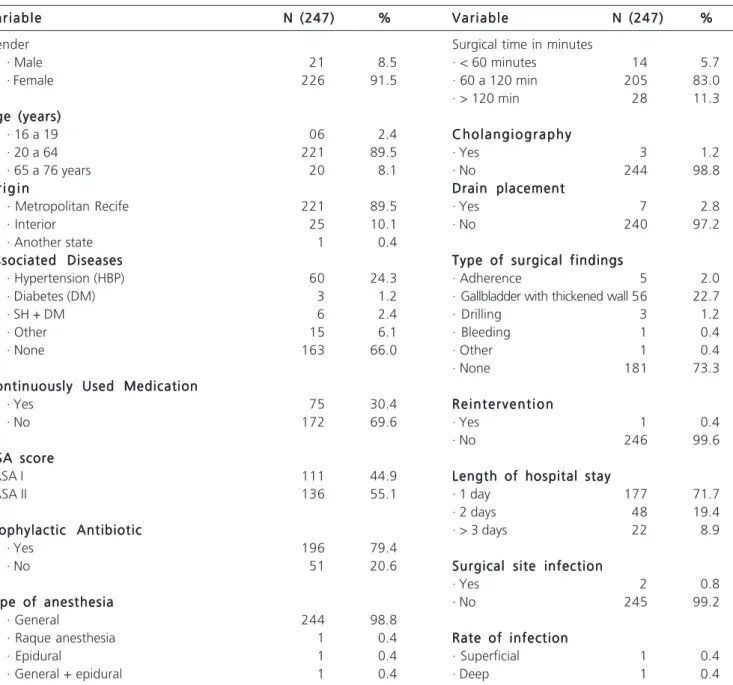
The data for characterization of the sample are shown in Table 1. There was a predominance of females, 226 (91.5%), and of patients from Recife metropolitan region (89.5%) 10. The age of patients ranged from 16 to 76 years, with a mean of 39 and a median of 40. The age group between 21 and 40 years comprised 127 patients, corresponding to 51.4% of the sample. Cholelithiasis alone was observed in 163 patients (66%), but about one quarter of the patients had hypertension and 1.2% diabetes. The association of these two diseases was present in six individuals (2.4%) 11.
days, with interquartile range of one to two days. About 9% (22) had stay equal to or more than three days 11,12. There were no deaths.
There were 136 (55.1%) ASA II patients. At the time of induction of anesthesia, antibiotic prophylaxis was administered in 196 (79.4%) individuals, general anesthesia was performed in 244 (98.8%) procedures, rachis and / or epidural in three (1.2%), always associated with general anesthesia 13.
The duration of surgery varied from 40 to 165 minutes, with a median of 60 and 72% of patients underwent the procedure in up to 75 minutes11.
Intraoperative cholangiography was performed in three (1.2%) patients and the drain was placed in seven (2.8%) 14.
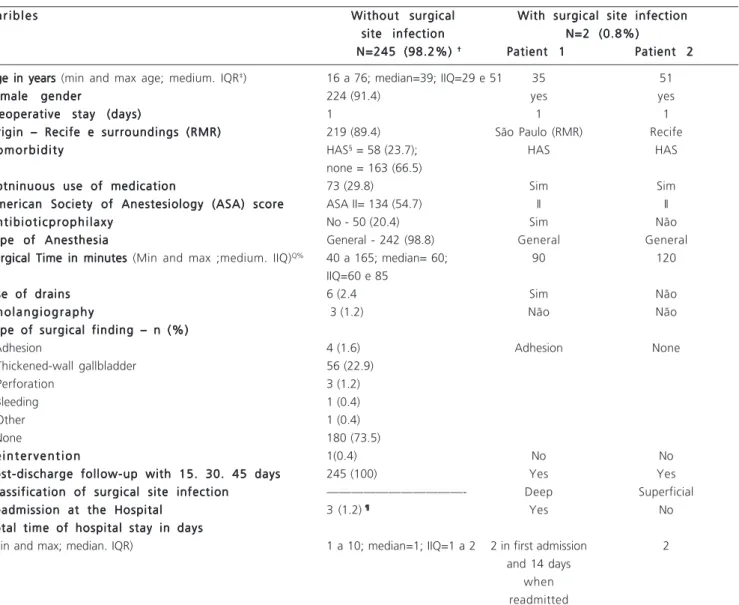
Laparoscopy identified no significant intraoperative findings in 181 (73.3%) cases. Thickened-wall gallbladder was the most common macroscopic alteration reported in the surgical records (22.7%). In this sample, only one (0.4%) patients required reintervention. Among the 247 who returned to the institution for follow-up at the outpatient postoperative visit, two cases of SSI were diagnosed (Table 2). One patient had deep SSI (subphrenic abscess); he was readmitted to systemic
Table 1 Table 1Table 1 Table 1
Table 1 - Frequency distribution of patients undergoing laparoscopic cholecystectomy, according to sociodemographic conditions before, during and after surgery and the presence of surgical site infection.
V a r i a b l e V a r i a b l eV a r i a b l e V a r i a b l e
V a r i a b l e N (247)N (247)N (247)N (247)N (247) %%%%% V a r i a b l eV a r i a b l eV a r i a b l eV a r i a b l eV a r i a b l e N (247)N (247)N (247)N (247)N (247) %%%%%
Gender Surgical time in minutes
· Male 21 8.5 · < 60 minutes 14 5.7
· Female 226 91.5 · 60 a 120 min 205 83.0
· > 120 min 28 11.3
Age (years) Age (years)Age (years) Age (years) Age (years)
· 16 a 19 06 2.4 C h o l a n g i o g r a p h yC h o l a n g i o g r a p h yC h o l a n g i o g r a p h yC h o l a n g i o g r a p h yC h o l a n g i o g r a p h y
· 20 a 64 221 89.5 · Yes 3 1.2
· 65 a 76 years 20 8.1 · No 244 98.8
O r i g i n O r i g i nO r i g i n O r i g i n
O r i g i n Drain placementDrain placementDrain placementDrain placementDrain placement
· Metropolitan Recife 221 89.5 · Yes 7 2.8
· Interior 25 10.1 · No 240 97.2
· Another state 1 0.4
Associated Diseases Associated DiseasesAssociated Diseases Associated Diseases
Associated Diseases Type of surgical findingsType of surgical findingsType of surgical findingsType of surgical findingsType of surgical findings
· Hypertension (HBP) 60 24.3 · Adherence 5 2.0
· Diabetes (DM) 3 1.2 · Gallbladder with thickened wall 56 22.7
· SH + DM 6 2.4 · Drilling 3 1.2
· Other 15 6.1 · Bleeding 1 0.4
· None 163 66.0 · Other 1 0.4
· None 181 73.3
Continuously Used Medication Continuously Used MedicationContinuously Used Medication Continuously Used Medication Continuously Used Medication
· Yes 75 30.4 R e i n t e r v e n t i o nR e i n t e r v e n t i o nR e i n t e r v e n t i o nR e i n t e r v e n t i o nR e i n t e r v e n t i o n
· No 172 69.6 · Yes 1 0.4
· No 246 99.6
ASA score ASA scoreASA score ASA score ASA score
· ASA I 111 44.9 Length of hospital stayLength of hospital stayLength of hospital stayLength of hospital stayLength of hospital stay
· ASA II 136 55.1 · 1 day 177 71.7
· 2 days 48 19.4
Prophylactic Antibiotic Prophylactic AntibioticProphylactic Antibiotic Prophylactic Antibiotic
Prophylactic Antibiotic · > 3 days 22 8.9
· Yes 196 79.4
· No 51 20.6 Surgical site infectionSurgical site infectionSurgical site infectionSurgical site infectionSurgical site infection
· Yes 2 0.8
Type of anesthesia Type of anesthesiaType of anesthesia Type of anesthesia
Type of anesthesia · No 245 99.2
· General 244 98.8
· Raque anesthesia 1 0.4 Rate of infectionRate of infectionRate of infectionRate of infectionRate of infection
· Epidural 1 0.4 · Superficial 1 0.4
· General + epidural 1 0.4 · Deep 1 0.4
antibiotic therapy and percutaneous pigtail drainage catheter. During hospitalization specimens for AFB (acid-fast bacilli) were collected, as well as culture for pyogenic bacteria and RGM, whose results were negative. The length of hospital stay for treatment of deep SSI was 14 days. Another patient had superficial SSI and was accompanied with outpatient local treatment.
Patients who did not use antibiotic prophylaxis (1/51) had a 3.9 times higher frequency of SSI when compared to those who received antibiotic (1/196), but the prevalence ratio was not statistically significant (p = 0.37) 5.
The two patients who developed SSI had longer mean duration of surgery in minutes (minimum time = 90, mean = 105, maximum time = 120) when compared to
the 245 who did not have SSI (minimum time = 40, mean = 60; maximum time = 165) 1. The comparison between the means, according to the Kruskal-Wallis test, was close to statistical significance (p = 0.054).
DISCUSSION
DISCUSSION
DISCUSSION
DISCUSSION
DISCUSSION
In Western countries the relative frequency of SSI corresponded to 15-20% of all cases of infections related to health care, with an incidence of two to 15 infections per 100 patients undergoing general surgery 13. In 2009, a global challenge was launched by the WHO for Patient Safety, which has as its motto “Safe Surgery Saves Lives”, to minimize or eliminate the risk of SSI. This retrospective
Table 2 Table 2 Table 2 Table 2
Table 2 - Characteristics of patients undergoing laparoscopic cholecystectomy according to the presence of surgical site infection (SSI).
V a r i b l e s V a r i b l e s V a r i b l e s V a r i b l e s
V a r i b l e s Without surgicalWithout surgicalWithout surgicalWithout surgicalWithout surgical With surgical site infectionWith surgical site infectionWith surgical site infectionWith surgical site infectionWith surgical site infection site infection
site infection site infection site infection
site infection N=2 (0.8%)N=2 (0.8%)N=2 (0.8%)N=2 (0.8%)N=2 (0.8%) N=245 (98.2%)
N=245 (98.2%) N=245 (98.2%) N=245 (98.2%)
N=245 (98.2%) † † † † † Patient 1Patient 1Patient 1Patient 1Patient 1 Patient 2Patient 2Patient 2Patient 2Patient 2
Age in years Age in years Age in years Age in years
Age in years (min and max age; medium. IQR‡) 16 a 76; median=39; IIQ=29 e 51 35 51
Female gender Female gender Female gender Female gender
Female gender 224 (91.4) yes yes
Preoperative stay (days) Preoperative stay (days) Preoperative stay (days) Preoperative stay (days)
Preoperative stay (days) 1 1 1
Origin – Recife e surroundings (RMR) Origin – Recife e surroundings (RMR) Origin – Recife e surroundings (RMR) Origin – Recife e surroundings (RMR)
Origin – Recife e surroundings (RMR) 219 (89.4) São Paulo (RMR) Recife C o m o r b i d i t y
C o m o r b i d i t y C o m o r b i d i t y C o m o r b i d i t y
C o m o r b i d i t y HAS§ = 58 (23.7); HAS HAS
none = 163 (66.5) Cotninuous use of medication
Cotninuous use of medication Cotninuous use of medication Cotninuous use of medication
Cotninuous use of medication 73 (29.8) Sim Sim
American Society of Anestesiology (ASA) score American Society of Anestesiology (ASA) score American Society of Anestesiology (ASA) score American Society of Anestesiology (ASA) score
American Society of Anestesiology (ASA) score ASA II= 134 (54.7) II II A n t i b i o t i c p r o p h i l a x y
A n t i b i o t i c p r o p h i l a x y A n t i b i o t i c p r o p h i l a x y A n t i b i o t i c p r o p h i l a x y
A n t i b i o t i c p r o p h i l a x y No - 50 (20.4) Sim Não Type of Anesthesia
Type of Anesthesia Type of Anesthesia Type of Anesthesia
Type of Anesthesia General - 242 (98.8) General General
Surgical Time in minutes Surgical Time in minutes Surgical Time in minutes Surgical Time in minutes
Surgical Time in minutes (Min and max ;medium. IIQ)Q% 40 a 165; median= 60; 90 120
IIQ=60 e 85 Use of drains
Use of drains Use of drains Use of drains
Use of drains 6 (2.4 Sim Não
C h o l a n g i o g r a p h y C h o l a n g i o g r a p h y C h o l a n g i o g r a p h y C h o l a n g i o g r a p h y
C h o l a n g i o g r a p h y 3 (1.2) Não Não
Type of surgical finding – n (%) Type of surgical finding – n (%) Type of surgical finding – n (%) Type of surgical finding – n (%) Type of surgical finding – n (%)
· Adhesion 4 (1.6) Adhesion None
· Thickened-wall gallbladder 56 (22.9)
· Perforation 3 (1.2)
· Bleeding 1 (0.4)
· Other 1 (0.4)
· None 180 (73.5)
R e i n t e r v e n t i o n R e i n t e r v e n t i o n R e i n t e r v e n t i o n R e i n t e r v e n t i o n
R e i n t e r v e n t i o n 1(0.4) No No
Post-discharge follow-up with 15. 30. 45 days Post-discharge follow-up with 15. 30. 45 days Post-discharge follow-up with 15. 30. 45 days Post-discharge follow-up with 15. 30. 45 days
Post-discharge follow-up with 15. 30. 45 days 245 (100) Yes Yes Classification of surgical site infection
Classification of surgical site infection Classification of surgical site infection Classification of surgical site infection
Classification of surgical site infection ———————————- Deep Superficial Readmission at the Hospital
Readmission at the Hospital Readmission at the Hospital Readmission at the Hospital
Readmission at the Hospital 3 (1.2) ¶ ¶ ¶ ¶ ¶ Yes No
Total time of hospital stay in days Total time of hospital stay in days Total time of hospital stay in days Total time of hospital stay in days Total time of hospital stay in days
(min and max; median. IQR) 1 a 10; median=1; IIQ=1 a 2 2 in first admission 2 and 14 days
when readmitted
* FPMF / iMIP - Foundation Professor. Martiniano Fernandes - Institute of Integral Medicine Prof. Fernando Figueira.
study, which analyzes data for the years 2008 and 2009, showed two (0.8%) SSI cases in 247 patients undergoing laparoscopic cholecystectomy without clinical or bacteriological diagnosis of RGM.
One should consider the limitations inherent to a retrospective study, with review of medical records that may result in various biases arising from the lack of data and / or reliability of the existing. To minimize these biases, the authors resorted to consult other sources, such as registration and nursing evolution, besides the book of outpatient postoperative visits.
When compared to laparotomy, laparoscopic cholecystectomy’s main characteristics are of decrease surgical trauma, less organic repercussion, lower metabolic, inflammatory and immunological reaction, representing a benefit to the patient 7. The use of peracetic acid sterilization securely offered the patient a new technology that was able to minimize costs 15. It should be noted that the use of peracetic acid for sterilization of laparoscopic instruments was the prevailing practice allowed by ANVISA and that the frequency of 0.8% of SSI in laparoscopic cholecystectomy in this study can be considered below the estimated (2.8%) for the time. This study evaluated only patients operated at one single institution and one surgical specialty, this assessment being limited to the routine processes of cleaning and sterilization of this institution, specific for cholecystectomy.
The post-discharge surveillance of SSI will necessarily reflect the variety of hospital operations, human resources and information needs with varying levels of success.
The methods include direct examination of the wounds of patients during follow-up visits, review of medical records and surveys by phone or email with patients and surgeons 1,16. For the epidemiological surveillance of SSI at FPMF / IMIP, patient return occurs in two periods, 15 and 30 to 45 postoperative days, but the patient can return to the Service at any time, when identifying any change in the wound. The return to the clinic was not observed in 17.4% of cases, considered lost. These patients may not have sought the service for not having infectious complications or having SSI, but living in distant regions, with difficulty in accessing help in another service. Strategies to increase this return are being studied by the surgical team.
According to data of the National Investigation of Outbreaks and Adverse Events in Health Services (RENISS) the median time to onset of symptoms of SSI is around 17 to 31 days. The second mandatory outpatient evaluation is scheduled for 30 to 45 postoperative days. Hospital records were reviewed by the researchers about one to two years after the completion of laparoscopic cholecystectomy, long enough for the return of any patient with infectious complications have been reported in the medical record 17. Epidemiological data of patients in relation to gender did not differ from the literature, where
the frequency of women undergoing cholecystectomy varies between 62 and 90%10. In this series, the frequency of women was 91.4%, with a ratio of approximately 11 women to one man (Table 1). Regarding age, epidemiological studies based on autopsy showed cholelithiasis in adults with higher prevalence among people over 50 years old. The occurrence in children is rare and happens to be most common during adolescence 10.
Although patients over 14 years of age are treated at FMPF-IMIP, in this study only 2.4% were under 19 years, which is consistent with the literature. However, about half of patients undergoing laparoscopic cholecystectomy were between 21 and 40 years old, a population younger than expected, suggesting that more studies should be performed to verify the association with dietary habits, pregnancy and other factors 10,14 .
The probability of postoperative infection takes into account the characteristics and the patient’s clinical condition and the factors associated with the type of surgery and perioperative period 4. Comorbidities play an important role in determining infection 13. As the main objective of the study was to determine the frequency of SSI in low-risk patients, for whose procedure laparoscopic material was sterilized with peracetic acid, we used scores ASA I and II, which reflect the preoperative state to minimize confounding factors 13. The operations are predominantly elective, and cholelithiasis without associated disease was observed in approximately two thirds of cases.
Both CDC and ANVISA reinforce the guidance that the prolonged preoperative length of hospital stay favors replacing the endogenous flora of the patient, increasing the risk of acquiring multidrug-resistant micro-organisms 1,3. These patients had only one day of inpatient preoperative stay, and had early discharge 1.
The beneficial effect of antibiotic prophylaxis in the prevention of SSI in laparoscopic cholecystectomy is controversial, but in this study we identified two cases (0.8%) of SSI, where a patient received antibiotic prophylaxis and the other not 18,19. Although there was a higher risk of SSI among patients who did not receive antibioticprophilaxy, the ratio of prevalence was not statistically significant.
Prolonged operations have higher probability of infection and increased operative time can be related to the technique and skill of the surgeon, deficiencies in the organization of the surgical material and human resources available.
For operations of the digestive tract lasting less than 120 minutes, a rate of 1.5% is reported, compared with 10.7% in those lasting for more than four hours 5. In patients with SSI in this study, surgical procedures lasted between 90 and 120 minutes, longer than the average observed in patients who had no infection, with a difference close to statistical significance (p = 0.054).
the sterilization of equipment used to perform the laparoscopic cholecystectomy. It is suggested that future studies address other institutions that have the same service profile to determine the incidence of SSI and to enable the comparison of methods of laparoscopic sterilization of instruments.
Ethically it is not permitted to carry out a prospective study, as peracetic acid has been banned for the sterilization of instruments that penetrate organs and cavities. Nevertheless, these results encourage prospective case-control studies comparing the use of it (historical control) with sterilization by ethylene oxide.
R E S U M O R E S U M O R E S U M O R E S U M O R E S U M O
O b j e t i v o : O b j e t i v o : O b j e t i v o : O b j e t i v o :
O b j e t i v o : Determinar a frequência de infecção de sítio cirúrgico em pacientes submetidos à colecistectomia videolaparoscópica usando o ácido peracético como esterilizante. Métodos: Métodos: Métodos: Métodos: Foi realizado estudo retrospectivo descritivoMétodos: do tipo coorte transversal. O ácido peracético foi usado para esterilização seguindo protocolo preconizado pelo fabricante. Foram observados os critérios e indicadores de processo e estrutura para prevenção de infecção de sítio cirúrgico no pré e intraoperatório. Para a vigilância epidemiológica, consultas ambulatoriais eram agendadas para o 15º e entre o 30º e 45º dias após a alta. Resultados:Resultados:Resultados:Resultados:Resultados: Entre 247 pacientes foram diagnosticados dois casos de infecção de sítio cirúrgico (0,8%). Um paciente reinternou para antibioticoterapia sistêmica e punção percutânea; no outro, a infecção foi superficial e acompanhada ambulatorialmente. Conclusão:Conclusão:Conclusão:Conclusão:Conclusão: Eticamente não é permitida a realização de um estudo prospectivo pelo fato do ácido peracético ter sido proibido para a esterilização de instrumentais que penetrem em órgãos e cavidades; contudo, estes resultados encorajam estudo prospectivo caso-controle, comparando o uso dele (controle histórico) com a esterilização por óxido de etileno.
Descritores: Descritores: Descritores: Descritores:
Descritores: Infecção da ferida operatória. Infecção hospitalar. Colecistectomia laparoscópica. Ácido peracético. Esterilização.
REFERENCES
REFERENCES
REFERENCES
REFERENCES
REFERENCES
1. Ministério da Saúde (BR). Segundo desafio global para a segurança do paciente: Cirurgias seguras salvam vidas (RJ): OMS / Organização Mundial da Saúde; 2009. 216.
2. Côrrea L. Impacto da prevenção das infecções relacionadas à assistência a saúde: segurança e redução de custos. Revista Einstein: Educação Continuada em Saúde [periódico online]. 2005 [acesso em: 18 jan2011]. 194-96 disponível em: http://apps.einstein.br/ revista/arquivos/PDF/1069-EC%20v6n4%20194-196.pdf 3. Brasil. Sítio Cirúrgico: Critérios Nacionais de Infecções relacionadas à
assistência a Saúde. ANVISA, Março de 2009.
4. Cabral DB. Micobactéria não tuberculosas em cirurgia: desafio passível de enfrentamento no Brasil [dissertação]. Ribeirão Preto: Escola de Enfermagem da Universidade de São Paulo; 2010. 5. Mangram AJ, Horan TC, Pearson ML, Silver LC, Jarvis WR. Guideline
for prevention of surgical site infection. Hospital Infection Control Practices Advisory Committee. Infect Control Hosp, Epidemil, 1999; 20(4): 250-78.
6. Assis DB, Madalosso G. Infecções por Micobactéria de Crescimento Rápido (MCR) Pós-procedimentos Cirurgicos.2009 [periódico online] Prática Hospitalr Ano XI nº 61 77-79. Disponível em: http:// www.praticahospitalar.com.br/pratica%2061/pdf/11.pdf acesso em 18 jan 2010.
7. Meirelles JH. Micobacteriose – Um sinal de alerta. Rev. Bras. Videocir [periódico online].2006 [acesso em: 23 out 2010].149-150 disponível em: http://www.sobracil.org.br/revista/rv040404/sumario.htm 8. Brasil. Ministério da Saúde. Agencia Nacional de Vigilância Sanitária
(ANVISA). Portaria 2616/98. Dispõe sobre o controle de IH em estabelecimentos de saúde [legislação na internet] Brasília; 1998. [citado 6 Dez 2006] disponível em http://www.anvisa.gov.br. 9. Ministério da Saúde (BR). Agencia Nacional de Vigilância Sanitária
(ANVISA). Informe Técnico nº 01/09 Princípios básicos para limpeza de Instrumental cirúrgico em serviços de saúde; 2009 [Citado 14 nov 2010]. Disponível em: http://www.anvisa.gov.br/servicosaude/ controle/Alertas/2009/informe_tecnico_1.pdf
10. Hangui RMG, Rêgo REC Et al. Complicações pós-operatórias de colecistectomias: Análise comparativa em relação ao sexo. Rev. Col. Bras. Cir. [periódico online] 2004. [citado em 10 jun 2011]. disponível em : http://www.scielo.br/scielo.php?script=sci_arttext &pid=S0100-69912004000100011
11. Oliveira AC, Ciosak SI, D’Lorenzo C. Vigilância pós-alta e o seu impacto na incidência da infecção do sítio cirúrgico. Rev. esc. enferm. USP [serial on the Internet]. 2007[citado 07 jan 2010]. Disponível em: http://www.scielo.br/scielo.php?script= sci_arttext&pid=S0080-62342007000400016&lng=en. 12. Coello R, et al. Adverse impact of surgical site infections in English
hospitals. Journal of Hospital Infection, 2005. Disponível em: http:/ /www.ncbi.nlm.nih.gov/pubmed/15866006
13. Ferreira FAPB, Marin MLG, Strabelli TMV, Carmona MJC. Como o anestesiologista pode contribuir para a prevenção de infecção no paciente cirúrgico. Rev. Bras. Anestesiol. [periodico online]. 2009 [acesso em 04 jun 2010].756-766. Disponivel em: http:// www.scielo.br/scielo.php?script=sci_arttext&pid=S0034-70942009000600013&lng=en.
14. Yasojima EY, Lopes FGJ. Colangiografia peri-operatória sistemática em colecistectomia videolaparoscópica. Rev. Col. Bras. Cir. [serial on the Internet]. 2002 Apr [acesso em 2010 Jul 06] ; 29(2): 92-98. Disponivel em : http://www.scielo.br/scielo.php? script=sci_arttext&pid=S0100-69912002000200007&lng=en. 15. Biering H. More than 100 years of Peracetic Acid: An old
active substance with a bright future. Journal for Hygiene in Hospitals and Medical Practice. November,2005. Aseptica,14-19.
16. Petherick ES, et al. Methods for identifying surgical wound infection after discharge from hospital: a systematic review. BMC Infectious Diseases, 2006. Disponível em: http://www.hta.ac.uk/ nihrmethodology/reports/1565.pdf
18. Souza HP, Breigeiron R, Cunha HM, Deves E. Antibioticoprofilaxia na colecistectomia videolaparoscópica eletiva: estudo prospectivo randomizado e duplo cego. Ver Col Bras Cir. [periódico na internet] 2008; 35(3). Disponível em URL:http://www.scielo.br/rcbc. 19. Ferraz AAB, Leão CS, Campos JM. Profilaxia antimicrobiana na
cirurgia bariátrica. Rev. Col. Bras. Cir. [periódico na Internet] 2007, [citado 07 set 2010]. Disponível em: http://www.scielo.br/ s c i e l o . p h p ? s c r i p t = s c i _ a r t t e x t & p i d = S 0 1 0 0 -69912007000200002&lng=pt.
Received on 10/07/2012
Accepted for publication 25/08/2012 Conflict of interest: none
Source of funding: none
How to cite this article: How to cite this article:How to cite this article: How to cite this article:How to cite this article:
Melo EMVB, Leão CS, Andreto LM, Mello MJG. Surgical infection in videolaparoscopic colecistectomy when using peracetic acid for the sterilization of instruments. Rev Col Bras Cir. [periódico na Internet] 2013;40(2). Disponível em URL: http://www.scielo.br/rcbc