Hazards and Control of Risks in Artesanal Meat
Products in Portugal
Thesis submitted to the Universidade Católica Portuguesa, to attain
the
degree of PhD in Biotechnology with specialisation in Microbiology
by
Maria Isabel Pereira da Silva Campelos
Hazards and Control of Risks in Artesanal Meat
Products in Portugal
Thesis submitted to the Universidade Católica Portuguesa, to attain
the
degree of Ph.D. in Biotechnology with specialisation in Microbiology
by
Maria Isabel Pereira da Silva Campelos
Under the supervision of Professor Paula Teixeira
Under the co-supervision of Professor Paul Gibbs
Under the co-supervision of Professor Tim Hogg
―The known is finite, the unknown infinite; intellectually we stand on an islet in the midst of an illimitable ocean of inexplicability. Our business in every generation is to reclaim a little more land.‖ Thomas Henry Huxley. 1884
―Remember that all models are wrong; the practical question is how wrong do they have to be to not be useful‖. George Edward Pelham Box, 1987
―The best model of a cat is another cat or, better, the cat itself‖, Norbert Wiener, 1970
―Salpicão de Vinhais‖ and ―Chouriça de Vinhais‖ are traditional dry-fermented smoked meat sausages produced in the Vinhais, a small region of Trás-os-Montes. These sausages are registered as Protected Geographical Indication (PGI) and are a significant economic and cultural asset. The production of this kind of product is mainly empirical, developed and perfected through centuries. The scientific knowledge of this sausage variety is limited. Hence, the collection of sound, scientific knowledge regarding its microbiological and chemical characteristics is a necessity and a helpful tool for producers, retailers, official control agencies and consumers, providing for much needed information regarding quality and food safety.
Quantitative microbiological risk assessments aim at evaluating the risks, namely the probabilities and severities of adverse health effects for consumers, resulting from the exposure to pathogenic microorganisms present in foods, and implementing appropriate management options. Governments need risk assessment in order to select risk management measures for food trade at national and international levels, avoiding risks to the population. But also, risk assessment can be useful at production, at retailer, and at consumer levels.
This work aims to collect scientific data that could, partially, fill the gaps in knowledge regarding these products, analyse the data and develop a risk-based study, according to an internationally accepted framework and finally, to explore the effect of hypothetical risk management measures on the safety of consumers, regarding traditional dry fermented meat smoked sausages.
either extracted from experimental data and when this was not possible, from relevant scientific literature. To perform the exposure assessment, a probabilistic model was developed. Since the physico-chemical (intrinsic) characteristics of the final product traditional dry fermented smoked sausages, fall near the boundaries that allow, or not, growth of L. monocytogenes, a growth/no growth equation, specific for the conditions of ―Salpicão‖ and ―Chouriça de Vinhais‖ was developed to be included in the model. Though official organisations like the European Food Safety Agency, state the relevance of growth/no growth boundaries, few risk assessments incorporate this in their exposure assessment models. Traditional dry fermented smoked sausages present low to medium risk to the health of consumers. The use of more restrictive Performance Objectives during processing and/or distribution will result in a further reduction of risk. A more rigorous control of final product water activity and the use of a bacteriocinogenic bioprotective culture during production may contribute significantly to reducing the risk of listeriosis in consumers of these Traditional Dry Fermented Smoked Sausages
―Salpicão de Vinhais‖ and ―Chouriça de Vinhais‖ are traditional dry-fermented smoked meat sausages produced in Vinhais, a small region of Trás-os-Montes. The scientific knowledge of this sausage variety is limited. This work aims to collect scientific data that could, partially, fill the gaps in knowledge regarding these products, analyse the data and develop a risk-based study, according to an internationally accepted framework and finally, to explore the effect of hypothetical risk management measures on the safety of consumers, regarding traditional dry fermented meat smoked sausages.
Seventy seven samples of ―Salpicão‖ and ―Chouriça de Vinhais‖ were purchased from producers, local markets and retail stores. Their microbiological and physical chemical characteristics were analyzed. The same analyses were performed on the products during the production processes. The raw materials and ingredients were also analyzed. Regarding the pathogenic flora, Staphylococcus aureus, spores of sulphite-reducing clostridia, Escherichia coli 0157:H7, Yersinia spp. and Salmonella spp., were not detected in any of the samples analyzed; Listeria monocytogenes was detected in 14.3% of the samples. The manufacturing process, namely fermentation, ripening/drying and smoking reduced the numbers of pathogen and hygiene indicator microorganisms. According to the Commission Regulation (EC) 2073/2005, 39% of the contaminated samples of ―Salpicão‖ and ―Chouriça de Vinhais‖ were able to support growth of L. monocytogenes. A quantitative microbiological risk assessment using a probabilistic model was developed. Considering the Portuguese population, with data obtained in this
was 0.1297 cases per year, for the perinatal sub-population, 1.3695 cases per year, and elderly sub-population 0.1995 cases per year. This means that Traditional Dry Fermented Smoked Sausages constitute a low risk for the Intermediate Age and Elderly population (less than 1 case per annum) and an intermediate risk for the Perinatal populations, considering this last group of consumers as adult pregnant women (1-10 cases per annum).
The effect of several putative risk management actions such as the adoption of a Performance Objective of 10 CFU/g, 1 CFU/g and 0.04 CFU/g reduced the risk of listeriosis for all sub-groups, at the end of shelf life, by 25.5%, 58.4% and 58.6%, respectively.
The effect of bacteriocinogenic strain of Pediococcus acidilactici HA6111-2, previously isolated from ―alheira‖, was studied on both ―Salpicão‖ and ―Chouriça‖, in a challenge test against a cocktail of Listeria innocua, at pilot scale. A reduction of the numbers of Listeria innocua was achieved in all batches, being the biphasic equation the model that gave the better fit. The use of a bacteriocinogenic strain added to the batter reduced the risk of listeriosis for all sub-groups by 26.7%; obtaining a final product with aw below 0.92, supposedly
below the growth limits of L. monocytogenes, reduces the risk by 8.6% in all sub-groups of population; the combination of the bacteriocinogenic strain and the limit of aw 0.92 reduces the risk by 41.0%. Traditional dry fermented smoked sausages
present low to medium risk to the health of consumers. The use of more restrictive Performance Objectives during processing and/or distribution will result in a further reduction of risk.
bacteriocinogenic bioprotective culture during production may contribute significantly to reducing the risk of listeriosis in consumers of these Traditional Dry Fermented Smoked Sausages (TDFSS).
O Salpicão de Vinhais e a Chouriça de Vinhais são enchidos fermentados, secos e fumados, produzidos em Vinhais, uma pequena região de Trás-os-Montes.
Este trabalho pretende recolher dados científicos que possam preencher, ainda que parcialmente, os lapsos no conhecimento deste tipo de produtos, de acordo com uma abordagem aceite internacionalmente e, finalmente, explorar o efeito potencial que as medidas de gestão de risco podem ter na segurança dos consumidores, relativamente a enchidos tradicionais, fermentados, secos e fumados.
Setenta e sete amostras de ―Salpicão‖ e ―Chouriça de Vinhais‖ foram compradas em produtores, mercados locais e hipermercados. As suas características microbiológicas e físico-químicas foram analizadas. As mesmas análises foram realizadas ao produto em curso, em diferentes fases do processo produtivo. As matérias-primas e ingredientes também foram analisadas. Relativamente à flora patogénica, não foram detectados esporos de Staphylococcus aureus, esporos do género Clostridia sulfito-redutores, Escherichia. coli 0157:H7, Yersinia spp. e Salmonella spp; Listeria monocytogenes foi detectada em 14.3% das amostras. O processo de fabrico, nomeadamente fermentação, maturação/secagem e fumagem reduziram o número de patogénicos e microrganismos indicadores de higiene. De acordo com o Regulamento da Comissão (CE) 2073/2005, 39% das amostras de ―Salpicão‖ e ―Chouriça de Vinhais‖ contaminadas eram capazes de permitir o crescimento de L. monocytogenes. Foi desenvolvida uma avaliação quantitativa de risco microbiológico. Considerando a população portuguesa, com os dados obtidos neste trabalho, o risco calculado de listeriose seria de 0.1297 casos por
população perinatal, e 0.1995 casos por ano para a sub-população sénior. Isto significa que Enchidos Tradicionais Secos, Fermentados e Fumados constituem um alimento de baixo risco para para a população de idade intermédia e população sénior (menos de 1 caso por ano) e são um alimento de risco intermédio para a população perinatal, ou seja, mulheres grávidas adultas (entre 1 a 10 casos por ano).
A adopção de um Objectivo de ―Performance‖ de atingir 10 UFC/g, 1 UFC/g e 0,04 UFC/g no produto final reduziram o risco de listeriose para todos os sub-grupos da população, em 25.5%, 58.4% e 58.6%, respectivamente.
O efeito da estirpe bacteriocinogénica de Pediococcus acidilactici HA6111-2, previamente isolada em alheira, foi estudada tanto no Salpicão como na Chourila de Vinhais, num ―challence test‖ contra um cocktail de Listeria innocua, à escala piloto. Foi observado, em todos os lotes, uma redução dos números de Listeria innocua, abaixo do limite de detecção (1.5 log UFC/g), A equação bifásica foi que forneceu o melhor ajuste da redução dos números de Listeria innocua, devido ao da estirpe bacteriocinogénica de Pediococcus acidilactici HA6111-2. A aplicação de uma estirpe bacteriocinogénica à adoba reduziu o risco de listeriose, em todos os sub-grupos populacionais em 26.7%; obter um produto final com aw
inferior a 0.92 reduziu o risco de listeriose, em todos os sub-grupos populacionais em 8.6%; a combinação destes dois factores reduziu o risco de listeriose, em todos os sub-grupos populacionais em 41.0%.
Os Enchidos Tradicionais Secos, Fermentados e Fumados apresentam um risco baixo ou médio para a saúde dos consumidores. A aplicação de Objectivos de
do risco. Um controlo mais rigoroso da actividade de água do produto final e o uso de uma cultura bioprotectiva bacteriocinogenica durante a produção, podem contribuir para reduzir significativamente o risco de listeriose nos consumidores deste tipo de produto tradicional.
KEYWORDS
―Chouriça‖ ―Salpicão‖
Bioprotective cultures
Dry fermented meat smoked sausage Lactic acid bacteria
Listeria monocytogenes Listeria spp.
Quantitative microbiological risk assessment Monte Carlo
ACKNOWLEDGEMENTS
To the Escola Superior de Biotecnologia (ESB) of the Universidade Católica Portuguesa, for accepting me as Ph.D. student and for providing the necessary conditions to carry out this work.
To my supervisor, Professor Paula Teixeira, for accepting me as her Ph.D. student, for all her guidance, support, encouraging, knowledge, thank you!
To my co-supervisor, Professor Paul Gibbs, my wise, wise mentor and soft ―scourge‖, for accepting me as his last Ph.D. student, but most of all, for being more than a supervisor.
To my co-supervisor, Professor Tim Hogg, for accepting me as his Ph.D. student and for his comments during this work.
I gratefully acknowledge the Fundação para a Ciência e Tecnologia for financial support (SFRH / BD / 14123 / 2003).
No man is an island and this work could not have been completed without the assistance of many people. I would therefore like to thank the following people for their support and help:
To Professor Nychas who received me in his lab; to Stathis Panagou, a real friend, that made all the efforts to help me and make me feel welcome; to Mario Mataragas for his assistance with the mathematical challenge I dwelled on.
A special appreciation for Armando Giovannini and Pieter Busschaert for taking the time to help a stranger, and being such an amazing example of scientific sharing and personal generosity. I never expected they would answer my e-mail. To Companies Enchidos Pérola de Vinhais Lda, Vifumeiro – Fumeiro e Carnes Lda, Fumituela-Fumeiro e Produtos Regionais Lda. for receiving me and helping me with their knowledge and excellent products.
My vianese friends, Belinha e Helena without whom I would still be filling ―salpicões‖ and ―chouriças‖ and their cousin, Jerónimo who has been always there, either by sawing logs, or by pushing me on, to finish this thesis. You will always have a special place in my heart.
My lab partners, with whom I shared joys, sorrow, frustrations, laughs, hours and hours of hard work and companionship, Ana Luísa, Teresa, Elisabetta, Joaninha, Vânia.
A very special note to Helena, for being so ―down to earth‖, relieving my anxiety with her serenity, giving so many good advices, and never going away even when I did. That is what true friendship means. Words are not enough to express my gratitude.
To my big brother, to my sister in law, to my nephew and niece, for being my ‖safety net‖, thank you!
To my mother, I am grateful for all the love, strength, support, immense patience and encouragement.
LIST OF ABBREVIATIONS
Population mean
A Difference between the initial and final population (N0 - Nf)
Af Accuracy factor
AFNOR Association Française de Normalisation ALOP Appropriate level of protection
ANOVA Analysis of variance APC Aerobic plate count
At Adjustment function
ATCC American Type Culture Collection
aw Water activity
BA Biogenic Amines
bac Bacteriocinogenic
BHI Brain Heart Infusion
BSE Bovine Spongiform Encephalopathy CAC Codex Alimentarius Comission
CDC Centers for Disease Control and Prevention CFSAN Center for Safety and Applied Nutrition CFU Colony-forming unit
CIN Cefsulodin, irgasan and novobiocin CNC Coagulase-Negative Cocci
D Dose
D time, in days, at a given temperature, required to destroy 1 log cycle (90%) of the target microorganism
DF/df Degree of freedom
D-LDH D - lactate dehydrogenase DNA Deoxyribonucleic Acid
E. Escherichia
EC European Community
Ec. Enterococcus
ECDC European Centre for Disease Prevention and Control EDTA Ethylenediamine Tetraacetic Acid
EFSA European Food Safety Authority
EHEC Enterohemorrhagic
ESB Escola Superior de Biotecnologia ETG Traditional Speciality Guaranteed
EU European Union
F F ratio
f fraction of initial population in the major population FAO Food and Agriculture Organization
FDA Food and Drug Administration FSIS Food Safety and Inspection Service FSO Food Safety Objectives
GRAS Generally Regarded As Safe
GT Generation time
GTP Glutamate-pyruvate transaminase enzyme HACCP Hazard Analysis and Critical Control Points HHP High hydrostatic pressure
HUS Hemolytic uremic syndrome ID50 Median infective dose
IDRHA Instituto de Desenvolvimento Rural e Hidráulica INE Instituto Nacional de Estatística
ISO International Organization for Standardization ITC Irgasan, ticarcillin and potassium chlorate
k Inactivation rate
kmax Specific inactivation rates
L. Listeria
L.m Listeria monocytogenes
LAB Lactic Acid Bacteria
LABpos inoculated with Ped. acidilactici HA-6111-2 (bacteriocinogenic strain
Lact. Lactococcus
Lb. Lactobacillus
LD50 Median lethal dose LDH lactate dehydrogenase
LI+LABneg inoculated with cocktail of L. innocua and Ped. acidilactici HA-2485-3 (non bacteriocinogenic strain)
LI+LABpos inoculated with cocktail of L. innocua and Ped. acidilactici HA-6111-2 (bacteriocinogenic strain)
L-LDH L - lactate dehydrogenase LOF lack of fit
Logit (P) ln[P/ (1−P)]
m Sample mean
MADRP Ministério da Agricultura, Desenvolvimento Rural e Pescas
M-H Muller-Hinton
MIC Minimum Inhibitory Concentration
MKTT Mueller-Kauffmann Tetrathionate-Novobiocin Broth
MPN Most Probable Number
MRA Microbial risk analysis
MRS de Man-Rogosa-Sharpe
MSE Mean Sum of Squared Errors N0 Initial contamination
na Not available
NADH Nicotinamide adenine dinucleotide hydride
Nb Batter contamination
NCCLS National Committee for Clinical Laboratory Standards NCTC National Collection of Type Cultures
Ni Initial contamination in new estimate
Nmax Maximum contamination
Npredicted Predicted contamination
NRC National Research Council
Nt Contamination at time t
NZFSA New Zealand Food Safety Authority
OD Optical Density
ODc Optical Density cut-off
OIE Office international des épizooties
P Probability
PALCAM PolymyxinAcriflavin-LiCl-Ceftazidime-Aesculin-Mannitol
PC Performance Criteria
PCR Polymerase Chain Reaction PDO Protected designation of origin
Ped. Pediococcus
PGI Protected Geographical Indication PHLS Public Health Laboratory Service
PO Performance Objectives
PSB Peptone, sorbitol and bile
QMRA Quantitative Microbiological Risk Assessment
R Model parameter specific
R2 coefficient of determination
RAPD Random Amplified Polymorphism DNA RPF Rabbit plasma fibrinogen supplement
RTE Ready-to-Eat
RVS Rappaport-Vassiliadis Soy Peptone Broth
s Sample standard deviation
Salm. Salmonella
SD Standard Deviation
SDFS Semi-dry fermented sausages
SDS-PAGE Sodium Dodecyl Sulphate- PolyAcrylamide-Gel- SPS Sanitary and Phytosanitary
SSDC Sodium desoxycholate and calcium chloride
SSE sum of Squared Errors
SSTO sum of the squared differences
St. Staphylococcus
Strep. Streptococcus
T Temperature
t4D Time for four decimal reduction
TAE Tris–Acetate-EDTA
TBX Tryptone, bile salt, X-GLUC agar
TDFSS Traditional dry fermented, smoked sausage
TE Tris-EDTA
ts shoulder period
TSB-YE Tryptic Soya Broth with Yeast Extract TSBYE Tryptic Soy Broth Yeast Extract
TSE Transmissible Spongiform Encephalopathy
U Unit
U.S.A United States of America
UCP Universidade Católica Portuguesa
UK United Kingdom
USDA United States Department of Agriculture
VTEC Verotoxigenic
WHO World and Health Organization WTO World Trade Organization
Y. Yersinia
LIST OF TABLES Page Table Title
3 1.1 Classification of fermented sausages
5 1.2 Minimum, maximum, mean and standard deviations of physico-chemical parameters and composition of ‗‗Salpicão de Vinhais‘‘ and ‗‗Chouriça de Vinhais‘‘
6 1.3 Biogenic amine content in ‗‗Chouriça de Vinhais‘‘ and ‗‗Salpicão de Vinhais‘‘
30 1.4 Enterococcus virulence factors identified 105 3.1 Microbiological characterization of ―Salpicão‖ 106 3.2 Microbiological characterization of ―Chouriça‖ 110 3.3 Microbiological characterization of raw materials
111 3.4 Microbiological characterization of ―Salpicão de Vinhais‖ during smoking process
112 3.5 Microbiological characterization of ―Chouriça de Vinhais‖ during smoking process
127 3.6 Parameter estimates of the logistic regression model for growth/no growth interface with L.monocytogenes
128 3.7 Statistical parameter of the logistic regression model for growth/no growth interface with L.monocytogenes
Page Table Title
130 3.8 Distribution functions of product characteristics (pH and aw),
kinetic parameters (N0 and T) and point estimates used in
model and Latin hypercube simulation of populations of L. monocytogenes
131 3.9 Consumption patterns of sausages in the region of Porto
133 3.10 Consumption data and ―r-value‖ for three population subgroups
135 3.11 Estimation of the total listeriosis cases at two distinct consumption period (CPs), based on the simulated concentration and prevalence of L. monocytogenes (LM) in fermented sausages for intermediate age groups (A), elderly (over 65) and perinatal (C)
139 3.12 Main assumptions of the model
142 3.13 Sensitivity analysis of some components of the exposure assessment a) growth rate, b) lag time, c) N predicted at CP1, d) N predicted at CP2
145 3.14 Comparison of risk of listeriosis with different Performance Objectives.
147 3.15 Sources and media of isolation of LAB strains 148 3.16 Inhibitory activity of LAB against L. monocytogenes
149 3.17 Physiological and biochemical tests used for the identification of LAB isolated from ―Salpicão‖ and ―Chouriça‖.
Page Table Title
152 3.18 In vitro susceptibility to several antibiotics of enterococcal isolates with anti-listerial activity and minimum inhibitory concentration (MIC) breakpoints
165 3.19 Statistical comparison of the models used to describe the non-thermal inactivation of L. innocua in ―Salpicão de Vinhais‖ 166 3.20 Statistical comparison of the models used to describe the
non-thermal inactivation of L. innocua in ―Chouriça de Vinhais‖ 168 3.21 Estimation of the kinetic parameters of non-thermal
inactivation of L. innocua according to biphasic-logistic (LI and LI+LABneg) and biphasic (LI+LABpos) models.
LIST OF FIGURES
Page Figure Title
7 1.1 Points of sale of ―Salpicão de Vinhais‖ and ―Chouriça de Vinhais‖
33 1.2 Codex Alimentarius Commission schematic for Risk Analysis.Diagram illustrates the interaction between each of the three main compartments comprising Risk Analysis 2.1 Overview of Listeria monocytogenes risk assessment for
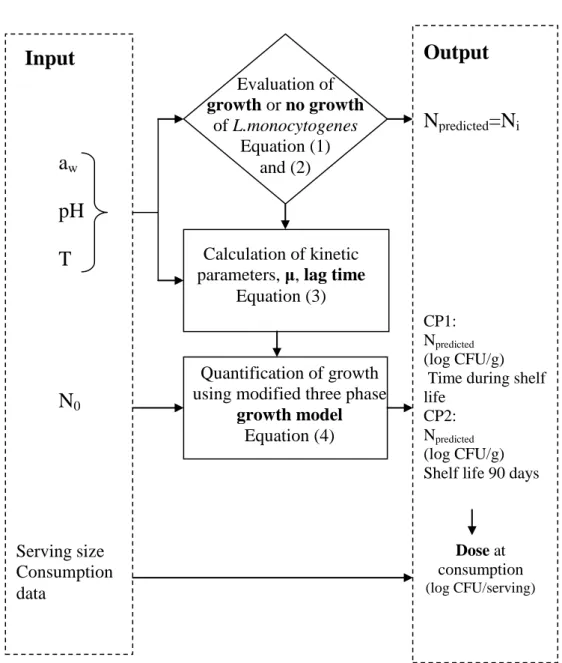
traditional dry fermented meat products
59 2.2 Components of the Exposure Assessment Model
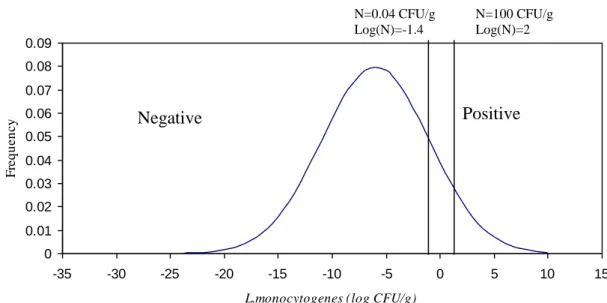
61 2.3 Example of the log-normal contamination curve showing frequencies of detectable and non detectable samples
72 2.4 Components of the Hazard and Risk Characterization Model 75 2.5 Two dimensional simulation framework
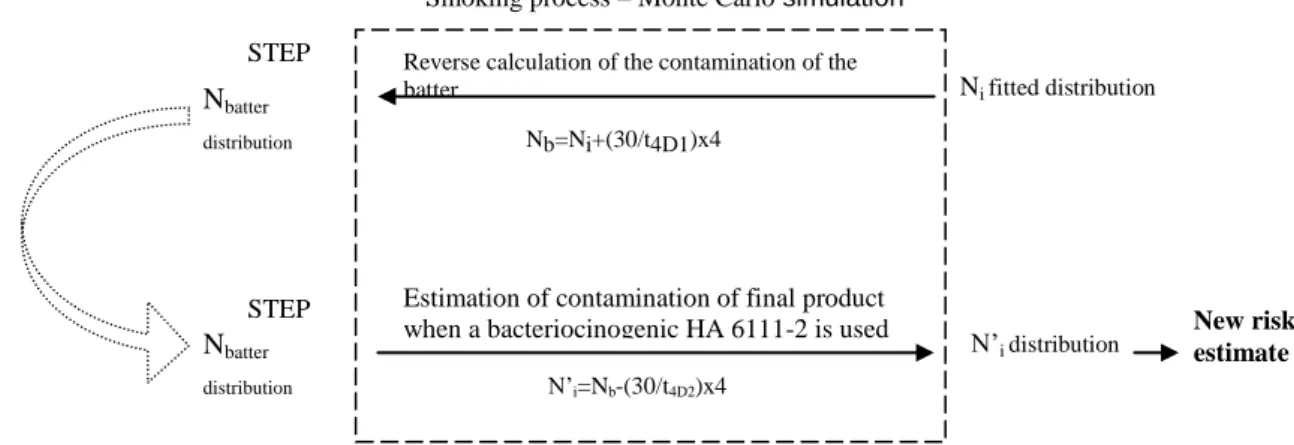
77 2.6 New Exposure assessment model, considering ―Performance Objective‖ limiting the Final Product contamination with L. monocytogenes
79 2.7 Schematic representation of calculation of a possible Process Criterion as a risk management action
80 2.8 New exposure assessment model, considering aw<0.92 and
the use of a bacteriocinogenic LAB
Page Figure Title
100 2.10 New exposure assessment model, considering aw<0.92
114 3.1 Evolution of the concentration of D/L isomers of lactic acid during the smoking step of ―Salpicão‖ and ―Chouriça‖. S_D and S_L being the concentration in ―Salpicão‖ of D-lactic acid and L-lactic acid, respectively; C_D and C_L being the concentration in ―Chouriça‖ of D-lactic acid and L-lactic acid, respectively
115 3.2 Evolution during smoking of a) pH, b) moisture, c) sodium chloride content, water activity; meaning A and B, two different producers, S and C, ―Salpicão‖ and ―Chouriça‖ respectively. The error bars represent the standard deviation 120 3.3 Histograms of (a) pH, (b) lactic acid concentration, (c) L.
monocytogenes concentration and (d) water activity in the final product ―Traditional dry fermented, smoked sausage‖ 125 3.4 Plotting of pH and aw results of the final product for TDFSS
and comparison with EC Reg.2073 criteria
141 3.5 Outcome of the second order analysis showing the Predicted number of Listeriosis cases per year when parameter uncertainty and variability are considered (green line) and when only parameter variability is considered (thick black line)
Page Figure Title
150 3.6 PCR products in agarose gel for genus-specific PCR.
Lanes: 1, molecular weight marker; 2, to 22, enterococcal isolates, 23 Ec. faecalis ATCC 29212
158 3.7 Comparing the effect of smoking on L. innocua with the negative LAB used as control, for ―Salpicão de Vinhais‖. (LI - L. innocua, LI+LABneg - L. innocua + non-bacteriocinogenic LAB strain).
159 3.8 Comparing the effect of smoking on L. innocua with the negative LAB used as control, for ―Chouriça de Vinhais‖ (LI - L. innocua, LI+LABneg - L. innocua + non-bacteriocinogenic LAB strain)
161 3.9 Non-thermal inactivation of L. innocua by Ped. acidilactici HA-6111-2, during smoking step of ―Salpicão de Vinhais‖ (LI - L. innocua, LI+LABpos - L. innocua + bacteriocinogenic LAB strain)
161 3.10 Non-thermal inactivation of L.innocua by Ped. acidilactici HA-6111-2, during smoking step of ―Chouriça de Vinhais‖ (LI - L. innocua, LI+LABpos - L. innocua + bacteriocinogenic LAB strain)
TABLE OF CONTENTS GENERAL INTRODUCTION i ABSTRACT iii RESUMO vii KEYWORDS xi ACKNOWLEDGEMENTS xiii LIST OF ABBREVIATIONS xv
LIST OF TABLES xxiii
LIST OF FIGURES xxvii
TABLE OF CONTENTS I
CHAPTER 1. INTRODUCTION 1
1.1 Dry fermented meat sausages 1
1.1.1―Salpicão de Vinhais‖ e ―Chouriça de Vinhais‖ – artesanalmeat products
4 1.1.2 Dry fermented sausage manufacturing process 7 1.1.3 Microbiology of dry fermented meat sausages 11
1.1.3.1 Lactic acid bacteria 13
1.1.3.2 Pathogenic bacteria 14
1.2 Listeria monocytogenes 22
1.2.1 Regulatory control in ready-to-eat products 22 1.2.2. Listeria monocytogenes in dry fermented meat
products
25
1.2.3. Inhibition of growth of Listeria monocytogenes in dry fermented meat products
26
1.3 Quantitative Microbial Risk Assessment 31
1.3.1 Background and components of Quantitative Microbial Risk Assessment
31
1.3.2. Microbial Risk Assessment 34
1.3.3. Quantitative microbial risk assessment 38
1.3.3. 1Mathematical models 38
1.3.3. 2. Deterministic and probabilistic models 39
1.3.3. 4. Monte Carlo simulation 43
1.3.3. 4.1 Simulation sampling 44
1.3.3. 4. 1.1 Monte Carlo sampling 44
1.3.3. 4. 1.2. Latin hypercube sampling 44 1.3.3.4.1.3 Sensitivity analyses 45
1.3.4. Second order modelling 45
1.3.5 The concept of Food Safety Objectives in the frame work of QMRA
46 1.3.6 Listeria monocytogenes quantitative microbial risk
assessments
48
CHAPTER 2. MATERIALS AND METHODS 51
2.1 Microbial characterization of ―salpicão de Vinhais‖ and ―chouriça de Vinhais‖
51
2.1.1. Origin and Sampling 51
2.1.1.1 Final Product 51
2.1.1.2 During processing 52
2.1.1.3 Raw materials 52
2.1.2 Microbiological Analyses 52
2.1.2.1 Indicator and pathogenic bacteria 52
2.1.2.2 Lactic acid bacteria 54
2.2 Physico-chemical characterization of ―Salpicão de Vinhais‖ and ―Chouriça de Vinhais‖
55 2.2.1 pH, sodium chloride and moisture content 55
2.2.2 aw 56
2.2.3 Temperature 56
2.2.4 D-lactic acid, L-lactic acid concentration 56
2.3 Risk assessment methodology 57
2.3.1 Exposure Assessment 58
2.3.1.1 Estimation of the distribution frequency of contamination with Listeria. monocytogenes
60
final product characteristics (pH, aw, temperature
profile)
2.3.1.3 Mathematical models 63
2.3.1.4 Calculation of final concentration of Listeria monocytogenes by probabilistic modelling approach
68
2.3.2 Hazard Characterization 69
2.3.3 Risk characterization 70
2.3.4 Evaluating Uncertainty and Variability 73 2.3.5 Sensitivity analysis of the QMRA 76 2.4 Risk management: Food Safety Objectives (FSO), Process
Standards and Process Criteria
76 2.4.1 Establishment of in-house ―Performance Objectives‖ to achieve the Food Safety Objective for L. monocytogenes in fermented dry meat products
76
2.4.2 Establishment of ―in-house‖ Performance Criteria‖ to achieve the Performance Objective previously proposed
78
2.4.2.1 Non-thermal inactivation as a possible Process Criterion
78 2.4.2.2. Water activity of final product below 0.92
and addition of bacteriocinogenic HA 6111-2 as a possible Process Criterion
79
2.4.2.3 Screening for bacteriocin - producing lactic acid bacteria
80 2.4.2.4 Identification and characterization of
putatively bac+ LAB
81 2.4.3 Modelling the antilisterial activity of bac+
Pediococcus. acidilactici HA-6111-2 during the smoking process
90
2.4.3.1 Sausage preparation, sampling, and inoculation procedure
90
2.4.3.2. Smoking equipment and operational conditions
92 2.4.3.3. Microbiological analyses 93
2.4.3.4. Chemical analyses 93
2.4.3.5. Mathematical models and regression software used
94
2.4.4. Water activity of final product below 0.92 as a possible Process Criterion
CHAPTER 3. RESULTS AND DISCUSSION 101 3.1 Microbiological characterization of ―Salpicão de Vinhais‖ and
―Chouriça de Vinhais‖
101 3.1.1 Pathogenic bacteria/indicator organisms in final
product
101
3.1.2 Pathogenic bacteria/indicator organisms during the smoking process
104 3.1.3 Non-pathogenic bacteria during the smoking process 111 3.2 Analysis of water activity, pH, D-lactic acid, L-lactic acid
concentration
113
3.2.1 during the smoking process 113
3.2.2 in the final product 119
3.3 Risk assessment of Listeria monocytogenes in product ―Traditional dry fermented, smoked sausage‖
121
3.3.1 Hazard identification 122
3.3.2 Exposure assessment 123
3.3.3 Hazard Characterization 132
3.3.4 Risk Characterization 135
3.3.5 Evaluating Uncertainty and Variability 140 3.3.6 Sensitivity analysis of the exposure assessment 142 3.4 Risk Management Scenarios: Food Safety Objectives (FSO),
Process Standards and Process Criteria
144 3.4.1 Establishment of ―in-house‖ Performance Objectives
to achieve the Food Safety Objective for Listeria. monocytogenes in fermented dry meat products
144
3.4.2 Use of a bioprotective culture as a preventive measure 146 3.4.2.1 Screening for bacteriocin-producing lactic acid bacteria
147
3.4.2.2 Identification of the putatively bacteriocin-producing lactic acid bacteria
149
3.4.2.3 Genus-specific PCR 150
3.4.2.4 Antibiotic resistance 151
3.4.2.6 Virulence factors 154 3.4.2.7 Discussing the use of Pediococcus acidilactici
HA-6111-2 as a bioprotective culture
156
3.4.3 Evaluation of Pediococcus. acidilactici HA-6111-2 as a biopreservative culture for ―Salpicão‖ and ―Chouriça de Vinhais‖
157
3.4.3.1 Modelling the effect of Pediococcus.
acidilactici HA-6111-2 as a biopreservative culture for ―Salpicão‖ and ―Chouriça de Vinhais‖
163
3.4.4 Establishment of ―in-house‖ Performance Criteria to achieve the Performance Objective previously proposed.
170
CHAPTER 4. CONCLUSIONS 175
CHAPTER 5. PROPOSALS FOR FUTURE WORK 179
CHAPTER 1.INTRODUCTION
1.1 Dry fermented meat sausages
When humans began to gather and hunt food in excessive amounts, they must have experienced that, sooner or later, food became inedible, either because of its disagreeable taste or odour or because it caused illness. They must also have noticed that, drying food in the sun or above fire in caves or in tents, where smoking contributed additionally to taste and length of storage, food products were preserved for a longer time and with good palatability (Incze, 2007). For centuries, the transformation of pork meat into sausages has been a way to assure the supply of preserved meat all year around, in times when mechanical refrigeration was unknown. Fermentation and drying of meat products are probably the most ancient ways of preservation.
i) The meat processing sector
Traditional dry fermented sausage production has increased overall in Europe since the 1980‘s (Chevallier et al., 2006). Dry fermented sausages are important meat products, and 4,967,000 tons of raw dry sausages were produced in the EU in 2006 (Eurostat, 2008). In Portugal, the consumption of meat was 100.5 kg/inhabitant/year, pork being the meat of major importance (42.5%) (MADRP, 2007). Protected designation of traditional products was valued, in 2007, as 70 million euro (MADRP, 2007).
ii) Classification of fermented sausages
All European countries have cultural traditions linked to food. However, probably due to the specific climatic conditions, there is a wider variety of production in the Southern European countries where, consequently, traditional products have a greater significance and economic importance (Jordana,, 2000). There is a wide variety of dry fermented products on the European market as a consequence of variations in the raw materials, formulations and manufacturing processes, originating from the habits and customs of the different countries and regions. In many European countries, the demand for traditional food products has increased (Talon et al., 2008).
Mediterranean countries have a long history of producing these foods, often at local or regional level. These products are manufactured without the addition of starter cultures in small-scale processing units. Thus fermentation in traditional dry sausages relies on indigenous, non-controlled bacterial activity (Hugas et al., 2003; Ammor et al.; 2005; Lebert et al.,2007b; Talon et al., 2008).
Fermented sausages can be divided into two groups: dry sausages that are ripened over 4 weeks (slightly acidic with a firm texture) or semi-dry sausages which are ripened for between 7 and 28 days and are less intensively dried (delivering a strongly acidic and a softer texture). Semi-dry fermented sausages have become very popular in Northern-Europe and the United States in the past 30 years (Houben and van‗t Hooft., 2005; Talon et al., 2007).
Lücke (1998), proposed a classification of fermented sausages based on their curing time, final water activity (aw), and smoking process as described in Table
1.1.
Also, differentiations can be made on the basis of pH, with fermented sausages produced in Northern countries showing a pH between 4.8 and 5.1. Fermentation occurs rapidly at high temperatures, (traditional fermentation 18-24 °C; fast fermentation 22-26 °C; very fast American-style fermentation 32-43 °C) (Schwing and Neidhardt., 2007) resulting in a rapid fall in pH. Sausages produced in the Mediterranean countries present a higher pH of 5.3 to 6.2 (Klingberg et al., 2005; Talon et al., 2007; Danilovic et al., 2011).
Table 1.1 Classification of fermented sausages
Category Ripening times Final water
activity
Application of smoke
Dry, mould fermented > 4 weeks <0.90 No Dry, mould fermented > 4 weeks <0.90 Yes
(during fermentation) Dry, no mould growth > 4 weeks <0.90 Yes or no
Semi-dry, mould fermented < 4 weeks 0.90-0.95 No Semi-dry, no mould growth < 4 weeks (usually 10-20 days) 0.90-0.95 Yes (with exceptions) Non-dried, spreadable < 2 weeks 0.94-0.96 Yes or no
(adapted from Lücke, 1998).
Although the industrial production may require the use of starter cultures and control of the manufacturing process, artisanal products are increasingly
appreciated because of their sensory properties and authenticity (Samelis, 1999; Leroy et al., 2006; Talon et al. 2007; Danilovic et al., 2011).
The production of Mediterranean dry-fermented sausages is based, as in other varieties from Northern and Central Europe, on a combination of fermentation and drying, but in Mediterranean countries, air-drying, the addition of spices and longer ripening period are prevalent, together with the smoking process, though the latter is not generally applied (Ordóñez and Hoz., 2007).
1.1.1“Salpicão de Vinhais” and “Chouriça de Vinhais” – artisanal meat products
―Salpicão de Vinhais‖ and ―Chouriça de Vinhais‖ are traditional dry-fermented meat sausages produced in Vinhais, a small region of Trás-os-Montes, a mountainous region in the Northeast of Portugal. This is an isolated and unfavoured region. As a consequence, the food production system of numerous indigenous agricultural families has been for familial-consumption. In this context, the transformation of pork meat is an ancestral practice that has created a great diversity of traditional meat products, with unique technological and sensory characteristics (Patarata et al., 2004, 2008). The essential ingredient of ―Salpicão de Vinhais‖ and ―Chouriça de Vinhais‖ is raw pork meat from ―bísaro‖, an autochthonous pig breed. The ―bísaro‖ pork is one of the three autochthonous Portuguese breeds. These sausages are registered as Protected Geographical Indication (PGI). This means that they possess a specific quality, reputation or other characteristics attributable to that geographical origin, and the production
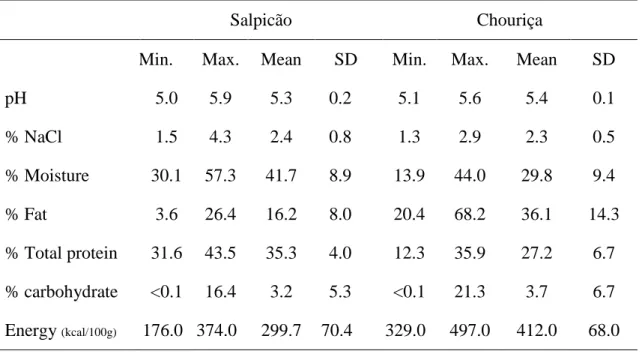
and/or processing and/or preparation take place in the defined geographical area, in this case, Vinhais (EU, 2006). The scientific knowledge about this sausage variety and the existing information in the scientific literature is limited (Ferreira et al, 2007a, 2009). The physicochemical characteristics of ‗‗Salpicão de Vinhais‘‘ and ‗‗Chouriça de Vinhais‘‘ are shown in Tables 1.2. and 1.3. The quality of these sausages is very variable, as there is very little uniformity between products manufactured by different small processors and meat industries. Actually, there does not exist an Official Standard of Quality which reflects the compositional characteristics which this type of sausage should possess, and to which the product made by the different manufacturers should conform.
Table 1.2. Minimum, maximum, mean and standard deviations of physico-chemical parameters and composition of ‗‗Salpicão de Vinhais‘‘ and ‗‗Chouriça de Vinhais‘‘
Salpicão Chouriça
Min. Max. Mean SD Min. Max. Mean SD
pH 5.0 5.9 5.3 0.2 5.1 5.6 5.4 0.1 % NaCl 1.5 4.3 2.4 0.8 1.3 2.9 2.3 0.5 % Moisture 30.1 57.3 41.7 8.9 13.9 44.0 29.8 9.4 % Fat 3.6 26.4 16.2 8.0 20.4 68.2 36.1 14.3 % Total protein 31.6 43.5 35.3 4.0 12.3 35.9 27.2 6.7 % carbohydrate <0.1 16.4 3.2 5.3 <0.1 21.3 3.7 6.7 Energy (kcal/100g) 176.0 374.0 299.7 70.4 329.0 497.0 412.0 68.0
Table 1.3 Biogenic amine content in ‗‗Chouriça de Vinhais‘‘ and ‗‗Salpicão de Vinhais‘‘ (mg/kg) Product His tam in e Me th y lam in e E th y lam in e T y ram in e 2 -Ph en y l eth y lam in e Pu tr escin e Is o am y lam in e C ad av er in e ‗‗Salpicão‘ 0.2 0.0 0.0 13.4 0.5 0.4 0.0 0.1 ‗‗Chouriça‘ 1.6 0.6 0.6 75.9 0.0 11.3 0.0 1.7
Adapted from Ferreira et al. (2007a)
There are two slaughterhouses and three transformation units, identified by official control agencies, that produce certified ―Salpicão de Vinhais‖ and ―Chouriça de Vinhais‖, besides the home-made products, representing 5.86% of the national traditional sausage production. These industries produced 2810 kg of ―Salpicão‖ at 40.00€/kg and 3096 kg of ―Chouriça‖ at 30.00€/kg, in 2007. These are high-value products (for instance ―alheira de Vinhais‖ PGI costs 8.00€/kg) and have the highest unit price among registered traditional meat products, in Portugal. Regarding their distribution, Fig. 1.1 quantifies the points of sale for these products. Despite the globalisation and standardization of food products, local resources represented by traditional products, although produced on a small scale, have a great economic impact and, consequently, contribute to a sustainable rural development (Vaz Velho et al., 2003; Ferreira et al., 2006).
Large, medium retail 30% Restaurants 20% Markets 20% Butcher 10% Direct sale to the
consumer 10%
Others 10%
Fig.1.1 Points of sale of ―Salpicão de Vinhais‖ and ―Chouriça de Vinhais‖ (MADRP, 2007).
1.1.2 Dry fermented sausage manufacturing process
These sausages can be defined as the mixture of ―bísaro‖ raw pork, pork fat drippings, salt, spices and typical wine, which undergo a natural drying-ripening process.
i) The meat is cut in large pieces, in the manufacture of ―Salpicão‖ or minced, in the case of ―Chouriça‖.
ii) The ―adoba‖, a batter with red wine, salt, laurel, paprika, fresh or powdered garlic is prepared, to which the meat is added. The mixture is stored at 4 ºC, for 48 h, and although at a low temperature, the fermentation begins.
iii) The ―adoba‖ is stuffed, manually or mechanically, into pork casings to form cylindrical formed sausages (ca. 15-20 cm long), in the case of ―Salpicão‖, and horseshoe-shaped sausages (ca. 30-35 cm long) for ―Chouriça‖;
iv) The fresh sausages undergo prolonged smoking processes. This process takes 4-5 weeks, for ―Salpicão‖, and 3-4 weeks for ―Chouriça‖. During smoking, fermentation, drying and ripening occur. The fermentation and ripening/drying do not always constitute two separate steps (Talon et al., 2007).
A study in five producer units indicated that traditional smoking occurred between 4 and 15 ºC and relative humidity between 60 and 90% (Patarata et al., 2004). Smoking temperatures, in traditional manufacture, are not controlled, varying according to the weather (Talon et al., 2007). Traditionally, dry fermented smoked sausages should only be produced during the very cold winter months, but increasing economic interest has led to its production all year long, with some producers lacking appropriate infra-structures to control temperature, while others, more industrialised, do have refrigerated installations. Normally these products are consumed without further cooking, but they can be cooked (roasted or grilled) if the drying process is incomplete. Usually, these more perishable products are purchased by the consumer, directly from the producer, with this type of consumption in mind. Packaged and distributed sausages are expected to be fully stabilized, by a thorough smoking (drying) process. Because of its empirical origin, this process does not distinguish between fermentation, drying or smoking stages.
The fermentation step in the sausage production includes the period, in the sausage process, where pH decreases from approximately 5.7 to its lowest value, which could vary from 5.5 (low temperature fermented sausages) to 4.6 (or even 4.2 in high-temperature fermented sausages) depending on the sausage type
(Petäjä-Kannine and Puolanne, 2007). The fermentation lasts from less than 12 h to several days depending on the sausage style. Sausages fermented at high temperatures (37 °C or higher) quickly reach the lowest pH value, but temperatures of around 24 °C result in a pH of 4.6 to 5.0; lower temperatures usually result in a higher pH at a slower rate (Petäjä-Kannine and Puolanne, 2007). The variation in temperature and duration of the drying step leads to variable water content of traditional sausages at the end of drying ranging from 0.83 to 0.93 in French, Spanish, Portuguese and Italian sausages (Leroy et al., 2009). One factor that stops fermentation is low pH, but the decrease of aw will
also inhibit further fermentation. The decrease of pH to values near the isoelectric point of proteins reduces their water retention capacity, facilitating posterior drying. Proteolysis (mainly due to muscular proteases, such as cathepsin D) and lipolysis (due to muscular and microbial lipases) start during fermentation producing free fatty acids, glycerol, monoglycerides, and diglycerides. (Petäjä-Kannine et al., 2007). During drying-ripening, dehydration, continuing proteolysis and lipolysis occur, forming the compounds that contribute to obtaining the desired fermented sausage flavour profile (Di Cagno et al., 2008; Patarata et al., 2008). During the drying process, three zones can be distinguished corresponding to three typical steps occurring in a drying process: induction period, constant rate period, and falling rate period of drying. The induction period corresponds to the beginning of the drying process during which a heat transfer occurs from the air to the product, increasing the surface temperature up to the wet-bulb temperature (Andrés et al, 2007). When the surface reaches the wet-bulb temperature the total
amount of heat from the air is used to evaporate water, and because the rate of evaporation is lower than the rate of water transport to the surface, the drying rate is constant (constant rate period). As the drying process proceeds, the product dries and the water transport rate toward the surface decreases. The final step is the falling rate period or diffusion period of drying, when the removal of this water is done by diffusion. Internal moisture is more difficult to remove because it is more tightly bound and is protected by the insulating effect of the already dried material close to the surface (Andrés et al., 2007). In some cases, the drying process also allows some biochemical reactions to develop taste and flavour, and it is known as a curing process. Smoke curing is a typical combined treatment, based on the combined action of enzymes and heat, which promote protein and lipid changes in the previously salted raw material. The treatment affects the sensorial quality, safety, and shelf life of the product, but the extent of these changes will depend on many factors, such as the type of smoking; the relative humidity, air velocity, temperature, density and composition of the smoke; and the time of smoking (Yean et al., 1998). Hajmeer et al. (2011) found that smoking was found to be effective against all of the five tested pathogens (Campylobacter jejuni, Escherichia coli O157:H7, Listeria monocytogenes, Salmonella enterica serotype Newport, and Yersinia enterocolitica), presumably because of the high temperatures (higher than 60ºC) employed.
Traditional smoking is divided into two categories:
- Cold smoking, with smoke temperatures between 20–25 °C and relative humidity of 70–80%. The duration of this process can be days or weeks because the smoke used is poor in aromatic and preserving components.
- Hot smoking, usually applied to meat products previously cooked or blanched. Temperatures can be about 75–80 °C, and the relative humidity must be high to avoid dehydration. With this procedure, the smoking time is reduced to hours (Yean et al. 1998; Andrés et al., 2007)
1.1.3 Microbiology of dry fermented meat sausages
Traditional dry sausage fermentation relies on natural contamination of raw materials by environmental flora. Each processing facility has a specific house flora, composed of useful microorganisms for the fermentation and flavour of sausage, as well as of spoilage and pathogenic flora (Chevallier et al., 2006; Benito et al., 2007). During the manufacture of dry-fermented sausages chemical and physico-chemical modifications occur, especially dehydration, fermentation of carbohydrates, acidification, development of a typical colour, lipolysis and oxidation of lipids, and proteolysis due to the activity of the different microbial groups (Comi et al., 2005;Foulquié Moreno et al., 2006; Garcia-Fontan et al., 2007; Di Cagno et al., 2008). Several investigations have established two groups of microorganisms as being mainly responsible for the transformations involved during fermentation and ripening of sausages. Lactic acid bacteria (LAB), in particular Lactobacillus spp., and Gram-positive coagulase negative cocci (CNC),
specifically Staphylococcus and Kocuria spp., are considered technologically fundamental (Talon et al., 2007; Di Cagno et al., 2008). Total LAB constitute the major microbiota of the traditional sausages. Lactic acid bacteria usually increase during the very first days of fermentation and they remain constant during ripening at 7 - 9 log CFU/g (Comi et al., 2005; Talon et al., 2007) or they can increase throughout the process and reach a similar final value (Lebert et al., 2007b). Lactic acid bacteria growth is often correlated with the decrease in pH in the first stage of maturation (Petäjä-Kanninen and Puolanne., 2007). Enteroccocci generally have an initial level between 2 and 4 log CFU/g. Enterococci usually grow early during fermentation and remain constant at a level of 4 - 6 log CFU/g until the end of the whole process (Comi et al., 2005; Drosinos et al., 2005; Talon et al., 2007). Enterococci are poor acidifiers and in traditional sausages of high pH they find good conditions for survival and growth (Hugas et al., 2003). Coagulase negative cocci constituted the second largest fraction of the microbiota, with a population of 4 - 6 log CFU/g (population, generally inferior to that of the LAB). Coagulase negative cocci sometimes grow during the fermentation period or they can grow during ripening (Comi et al., 2005) or throughout the process (Lebert et al., 2007a). The numbers of spoilage bacteria, such as Pseudomonas present very different levels according to the source, and much of the time remaining stable or diminishing during fermentation and, during drying-ripening (Drosinos et al., 2005; Chevallier et al., 2006), although some authors have reported an increase during ripening (Comi et al., 2005). The presence of foodborne pathogens in fermented meat sausages such as Listeria monocytogenes, Escherichia coli
O157:H7, Salmonella spp., Clostridium botulinum, Staphylococcus aureus, Bacillus cereus and Yersinia enterocolitica has been reported by several authors (Lahti et al., 2001; Thévenot et al., 2005a,b; Esteves et al., 2006; Ferreira et al., 2007a,b; Colak et al, 2007; Esteves et al., 2007; Cabedo et al., 2008; Karakolev., 2009; Meloni et al., 2009).
1.1.3.1 Lactic acid bacteria
Lactic acid bacteria are present in all fermented foods, have a long history of safe use and form part of the gut microflora of humans and animals. In addition, LAB produce a range of antimicrobial substances such as organic acids and bacteriocins that have been already exploited by the food industry (Maragkoudakis et al, 2009). Lactic acid bacteria are recognized to play an important role in food fermentations and food preservation through acidification (Talon et al, 2007). Several species of Lactobacillus (Lebert et al, 2007a) have been identified in traditional fermented sausages.
Lactic acid bacteria also produce small amounts of acetic acid, propionic acid, ethanol, acetoin, carbon dioxide, and pyruvic acid during fermentation, depending on the starter applied (if used), the carbohydrate substrate, and the sources of meat proteins and additives (Hugas et al., 2003).
Hydrogen peroxide is also produced by a large number of LAB lacking the enzyme catalase, in particular by Lactobacillus spp., that inhibits other microorganisms such as some L. monocytogenes strains, St. aureus and Pseudomonas spp. Some LAB strains are also able to produce antimicrobial
peptide compounds (bacteriocins), thereby enhancing the safety of fermented sausages (Albano et al., 2007a,b; Talon et al., 2008; Porto-Fett, 2010); many bacteriocins have the ability to inhibit the growth of pathogenic bacteria, such as L. monocytogenes.
1.1.3.2 Pathogenic bacteria
Consumers consider traditional fermented sausages safe foods. The simultaneous reduction in the aw and pH partially inhibits the development of pathogenic
bacteria during the various stages of sausage manufacture. However, they may still be present in the final product, causing a concern for the producers and for those responsible for public health, and have been the topic of study of several research groups. Outbreaks of foodborne illness associated with these products have occurred (Moore et al., 2004; Lindqvist et al., 2009). Different surveys have revealed the presence of L. monocytogenes, E. coli, Clostridium spp., and St. aureus not only in the final products, e.g., sausages, but also in different production levels. This can be due either to frequently contaminated raw materials, where there is a probability that some of the pathogenic organisms could cross the antimicrobial barriers imposed during processing, or to cross-contamination at any stage, including at retail. In both cases, pathogens may be present in the final product.
Salmonella spp. and Yersinia enterocolitica
important zoonotic pathogens of economic significance in animals and humans. Human salmonellosis is usually characterized by acute onset of fever, abdominal pain, nausea, diarrhoea and sometimes vomiting. Symptoms are usually mild and most infections are self-limiting, lasting a few days. However, in some patients, the infection may be more serious and the associated dehydration can become life threatening. In these cases, as well as when Salmonella causes bloodstream infection, effective antimicrobials are essential for treatment (Skandamis et al., 2007a). There are numerous foodborne sources of Salmonella, including a wide range of domestic and wild animals and a variety of foodstuffs (meat and meat products, including sausages). Salmonella serotypes are well-known pathogens that have been implicated in a large number of outbreaks of foodborne disease in Europe (Cabedo et al., 2008). Salmonella spp. may contaminate these products via contaminated raw meat, ingredients and/or processing equipment, and/or from post-processing contamination. These pathogens have been detected in raw meat and have also been shown to survive during certain sausage manufacturing processes (Colak et al., 2007).
Yersinia spp., are Gram-negative bacilli, or coccobacilli. Y. enterocolitica, and, less commonly, Y. pseudotuberculosis, belong to a genus associated with diarrhoea in humans. Y. enterocolitica was found in low numbers in ―alheiras‖, a traditionally fermented meat product, produced in the Northeast of Portugal (Esteves et al., 2008).
During properly controlled sausage fermentation, Enterobacteriaceae counts slightly increased during fermentation (Comi et al, 2005; Fernandez-Lopez et al,
2008); in another study the counts remain constant (Talon et al, 2007); in Greek sausages, the counts were reduced gradually, regardless of their initial concentration (Drosinos et al, 2005). Factors that may influence the growth of Enterobacteriaceae during sausage fermentation include a high initial aw; a high
initial pH value; a low concentration of fermentable carbohydrates; low numbers of lactobacilli in the fresh sausage mixture and high ripening temperatures. During drying, Enterobacteriaceae including Salmonella (Gonzalez-Fernandez et al, 2003, Fernando-Lopez et al, 2008, Porto-Fett et al., 2008; Dourou et al., 2009; Hwang et al, 2009; Lindqvist and Lindblad., 2009) and Yersinia spp., are slowly inactivated (Hajmeer et al., 2011).
Enterohaemorrhagic strains of Escherichia coli (EHEC)
Strains of the bacterium E. coli capable of producing certain cytotoxins are reported as verotoxigenic E. coli (VTEC). Enterohaemorrhagic E. coli, commonly referred to as EHEC, are a subset of the VTEC, harbouring additional pathogenic factors. More than 150 different serotypes of VTEC have been associated with human illness; however, the majority of reported outbreaks and sporadic cases of VTEC infections have been attributed to serotype O157:H7. There is a wide spectrum of symptoms associated with VTEC infections, ranging from mild to bloody diarrhoea, often accompanied by severe abdominal cramps but usually without fever. VTEC infection can also result in haemolytic uremic syndrome (HUS). HUS is characterized by acute renal failure, anaemia, and lowered platelet counts. HUS develops in up to 10% of patients infected with VTEC O157 and is
the leading cause of acute renal failure in young children (Skandamis, 2007). Severe outbreaks of haemorrhagic colitis attributed to the consumption of fermented sausages occurred in western states of the USA and Australia (Tilden, 1996; CDC, 2000). The infective dose of the causative agent is generally low, and multiplication during fermentation is not required to cause disease. Moreover, inactivation during sausage ripening may be slow (Calicioglu et al., 1997, 2001, 2002; Dourou et al., 2009); reductions of 1 to 5 logs were observed, mainly dependent on pH, water activity, ageing time and temperature (Cosansu and Ayhan., 2000; Pond et al., 2001 Porto-Fett et al., 2008; Hwang et al., 2009; Hajmeer et al., 2011). The reduction of verotoxigenic E. coli (VTEC) (O157:H7 and O103:H25) by process and recipe optimisation in dry-fermented sausages, was studied by Heir et al. (2010).
Staphylococcus aureus
Staphylococcus aureus is of significant practical importance in meat. Not only can this bacterium cause a variety of infections in meat animals, as well as in humans, but it is also the causative agent of a major form of food poisoning. The most common symptoms are nausea, vomiting, retching, abdominal cramping and prostration. In more severe cases, headache, muscle cramping and transient changes in blood pressure and pulse may occur (Skandamis, 2007). Bad practices during manufacturing, especially poor conditions of fermentation (deficient hygiene, too high temperature, no pH control) and poor conditions of storage (deficient hygiene, improper temperature control), have led to food-poisoning
outbreaks from products, especially those that are consumed raw (Skandamis, 2007). Staphylococcus aureus is frequently found in raw meat and fermented sausages, but generally at low levels. Only if allowed to grow to cell densities above 105CFU/g, does it form levels of enterotoxins sufficient to cause illness. The bacterium is little affected by salt, but is a poor competitor under anaerobic conditions, at low pH values and low temperatures. Several authors have studied the ability of St. aureus to grow in fermented sausages (Nychas and Arkoudelos.,1990; Gonzalez-Fandos et al., 1999).
Spore forming bacteria
Raw sausage mixtures may contain considerable numbers of Bacillus and Clostridium spores of which spices are a major source. Reviews of the production of cured meats with respect to the risk of botulism and the risk for outgrowth of all foodborne spore-formers (Cerveny, 1980) pointed out many factors that prevent growth and toxin production by these pathogens. No one factor in cured meats completely inhibits the growth of all pathogens. Rather, a combination of a mild heat treatment that sensitizes cells to curing agents, different salts and curing substances and a low pH, act to keep the foods safe (Doyle et al., 2001). Although the germination of bacterial spores is prevented by salt or saturated brine preservation, these spores will remain present and develop into vegetative cells when conditions are more favourable (Wijnker et al., 2011). Growth of C. botulinum and neurotoxin production are controlled by nitrite, low pH, and low aw
Listeria monocytogenes
Listeria monocytogenes, the causal agent of listeriosis, is a Gram-positive, rod-shaped and psychrotrophic pathogen which is widely distributed in the environment and consequently present in various animal products and in vegetables (Erkmen., 2008). A further special feature is its osmotolerance being able to survive in the presence of high salt concentrations (up to 20% w/v) and low aw (0.91) (Lado, 2007).
In humans, infections most often affect the pregnant uterus, the central nervous system, or the bloodstream. Symptoms vary, ranging from mild flu-like symptoms and diarrhoea to life threatening infections characterized by septicaemia and meningoencephalitis. In pregnant women, the infection spreads to the foetus, which will either be born severely ill or die in the uterus, resulting in abortion. Although human infections are rare, it is worth noting that it is considered to be a high mortality type of infection. For non-invasive listeriosis to occur in the general population, ingestion of foods with levels of contamination greater than 105 CFU/g appear to be required (NZFSA, 2009). The illness is usually evident within two days of consuming contaminated food. By contrast, in vulnerable consumers, the invasive form can occur after ingestion of as few as 100-1000 cells and the symptoms of illness may not be seen for as long as 90 days, but usually around 30 days. This makes linking the illness to a particular food difficult (NZFSA, 2009). Generally, enteric illnesses are under-reported, because patients experiencing only mild symptoms or discomfort may choose not to visit a health
care provider, and those who do visit a physician do not always provide a faecal sample. In fact, for every case of enteric illness reported, many hundreds of cases may go unreported, increasing the difficulty of accurate surveillance (Luber et al., 2011).
Control of other biological hazards Moulds and mycotoxins
Originally, the so-called house flora just contaminated the product, but when the significance of mycotoxins was realized, development proceeded to avoid the use of toxigenic moulds. Particularly in the south European countries, dry sausages are applied with atoxigenic yeast and moulds to produce products with specific flavour notes. This is done by dipping or spraying. Mould cultures tend to suppress natural moulds and, consequently, reduce the risk of mycotoxins production. The ripening techniques considered positive and normally applied in industrial practice usually allow for the growth of characteristic whitish moulds, which can also inhibit the multiplication of other moulds, especially those that prove to be potentially toxinogenic and/or with a mycelium having undesirable color (Baldini et al., 2000)
Biogenic amines
Biogenic amines (BA) are organic bases with aliphatic, aromatic or heterocyclic structures that can be found in several foods, in which they are mainly produced by microbial decarboxylation of amino acids, with the exception of physiological
polyamines (Silla Santos et al., 1998). At high concentrations, BAs may cause hypotension, hypertension, nausea, rash, dizziness, increased cardiac output and increased respiration (Bover-Cid et al, 2003; Bandolin et al., 2010). High amounts of amines can be found in fermented foods derived from raw materials with high protein content, such as dry sausages. Tyramine and putrescine are the most common BA found in dry sausages and their presence is often due to the activity of LAB (Bover-Cid et al., 2003; Suzzi and Gardini, 2003; Bandolin et al., 2010). High amounts of cadaverine and, to a lesser extent, of histamine, have been detected in some samples and related to the low quality of raw materials. During the processing of dry fermented sausages, the ripening step allows favourable conditions for the formation of BA. There is growth of microorganisms for a period of time, during which a certain degree of proteolysis takes place producing free amino acids as precursors of BA and also, usually the pH drops slightly, favouring the synthesis and activity of amino acid decarboxylases of bacterial origin (Bover-Cid et al., 2001). When considering a protective culture, it is fundamental to guarantee the quality of final products in relation to their BA content. For this reason, the inability to form BA, to survive during ripening and storage and to possess amine oxidase activity should be relevant criteria to be taken into consideration in the selection of protective cultures for the fermentation of dry sausages (Suzzi and Gardini, 2003).