UNIVERSIDADE DA BEIRA INTERIOR
Ciências da Saúde
Immune System Regulation by Gonadal Steroid
Hormones
Estrogen’s Role on Female Biased Systemic Lupus
Erythematosus
Raquel Xavier Martins
Dissertação para obtenção do Grau de Mestre em
Medicina
(ciclo de estudos integrado)
Orientador: Professora Doutora Ana Mafalda Loureiro Fonseca
ii
Dedication
iii
Acknowledgement
I would like to thank to Professor Mafalda Fonseca for her advice while choosing the subject and writing the monography. Without her orientation and support this work would not have been possible.
I also would like to thank to Dr. Vânia Reis from CHCB Clinical Investigation Center for her support on articles research and acquisition.
I would like to express my appreciation to Luís Costa for helping me formatting the final work.
Finally, I have to mention my family, especially my parents, for constant encouragement and support.
iv
Abstract
Autoimmune diseases are more prevalent in women while infectious diseases occur more often in men. Immune system responses differ between genders which suggest that sexual hormones are involved. Systemic Lupus Erythematosus (SLE) is an autoimmune disease with one of the greatest female sex bias. The etiology of the disease remains poorly defined. Gene-environment interactions are constantly being identified with epigenetics increasingly appearing as a crucial element in the pathogeneses of the disease. Sexual hormones are thought, for a long time, to be involved in the development of the disease given the sexual bias it presents. The monography pretends to evaluate estrogen’s role on the female SLE bias. As the predominant female hormone, and taking into account that the hormonal changes occurring in women relate to disease progression, it is a strong candidate to explain the higher women incidence and prevalence of the disease. Thought the female to male ratio is greater in the reproductive years it is still present in all ages. Other factors are probably rendering the female gender more susceptible to SLE, not ruling out estrogen as a large influent.
Estrogen receptor α (ERα) emerges as a central player on immune system mediation by 17β-estradiol (E2). Evidence on an aberrant cytokine profile on disease development is emerging and it seems to be dependent on ERα expression. The ER also modulates Toll-like Receptor (TLR) signalling and dendritic cells (DC) activity as does with B and T cells. These cells’s maturation and selection respond to E2 influence and their activity and survival are enhanced by its presence. TLR9 and minichromosome maintenance (MCM) proteins are also noteworthy as mediators of E2 action on immune cells. DNA methylation changes also involving ERα promoter region seem to participate in disease development.
Different aspects of immune regulation can be modulated by the female hormone estrogen towards an increased system activation and reactivity. Other sexual hormones action on immune system should be studied in order to compare results and better understand the sexual bias in SLE.
Keywords
v
Resumo
As doenças auto-imunes são mais prevalentes em mulheres enquanto as doenças infeciosas ocorrem mais nos homens. As respostas imunitárias diferem entre géneros o que sugere o envolvimento das hormonas sexuais. O Lupus Eritematoso Sistémico (LES) é uma doença autoimune com um dos maiores enviesamentos femininos permanecendo a sua etiologia pouco clara. Interações entre genes e ambiente continuam a ser identificadas com a epigenética surgindo como um elemento crucial na patogénese da doença. A hipometilação do ADN em genes implicados na autoimunidade parece ser mediada pelo estrogénio com implicações no desenvolvimento da patologia. Pensa-se, há já algum tempo, que as hormonas sexuais estão envolvidas na patogenia do LES dado o evidente enviesamento feminino que apresenta. A monografia pretende avaliar o papel do estrogénio neste mesmo enviesamento. Sendo a principal hormona feminina e tendo em conta que as variações nos seus níveis se correlacionam com a progressão e atividade da doença, é uma forte candidata à explicação da sua elevada incidência e prevalência nas mulheres. Apesar do rácio mulher:homem ser maior durante os anos reprodutivos, verifica-se em todas as idades. Outros fatores estão provavelmente a tornar o género feminino mais suscetível ao LES, não descartando o estrogénio como grande influente.
O recetor α do estrogénio (REα) surge como o principal interveniente na modulação do sistema imunitário pelo 17β-estradiol (E2). Recentes evidências atribuem também a um padrão de citocinas alterado o desenvolvimento da doença, padrão este que parece ser modulado pela expressão do REα. O recetor também modula a sinalização pelos Toll-like
Receptors (TLR) e a atividade das células dendríticas (CD) assim como das células B e T.
Merecem também destaque como mediadores da ação do estrogénio nas células imunes o TLR9 e as proteínas de manutenção de minicromossoma (MCM).
O estrogénio parece modular diferentes aspetos da regulação imunitária no sentido de uma maior ativação e reatividade do sistema. Outras hormonas sexuais deverão ser estudadas no sentido de comparar resultados e melhor compreender o enviesamento feminino do LES.
Palavras-chave
vi
Resumo alargado
As doenças auto-imunes são mais prevalentes em mulheres enquanto as doenças infeciosas ocorrem mais nos homens. As respostas imunitárias diferem entre géneros o que sugere o envolvimento das hormonas sexuais. O Lupus Eritematoso Sistémico (LES) é uma doença autoimune com um dos maiores enviesamentos femininos, permanecendo a sua etiologia pouco clara. Interações entre genes e ambiente continuam a ser identificadas com a epigenética surgindo como um elemento crucial na patogénese da doença. A hipometilação do ADN em genes implicados na autoimunidade parece ser mediada pelo estrogénio com implicações no desenvolvimento da patologia. Pensa-se, há já algum tempo, que as hormonas sexuais estão envolvidas na patogenia do LES dado o evidente enviesamento feminino que apresenta. A monografia pretende avaliar o papel do estrogénio neste mesmo enviesamento. Como principal hormona feminina e tendo em conta que as variações nos seus níveis se correlacionam com a progressão e atividade da doença, é uma forte candidata à explicação da sua elevada incidência e prevalência nas mulheres.
O rácio mulher:homem é maior durante os anos reprodutivos, apesar de se verificar em todas as idades. A influência da hormona não é tão pronunciada nas crianças nem nas mulheres pós-menopáusicas. Outros fatores estão provavelmente a tornar o género feminino mais suscetível ao LES, não descartando o estrogénio como grande influente. Estudos recentes em relação à gravidez, uso de contracetivos orais e menopausa são conflituosos. A heterogeneidade das doentes estudadas no que respeita ao estado de atividade da doença e à presença ou ausência de manifestações pode mascarar a influência do estrogénio. Mais análises são necessárias no futuro.
O estrogénio é uma hormona esteroide presente no organismo em três formas: 17β-estradiol (E2), estrona (E1) e estriol (E3). E2 é a forma predominante nas mulheres pré-menopáusicas e o mais estudado. Atua como um regulador transcripcional ligando-se a elementos de resposta ao estrogénio de promotores genéticos alvo para iniciar a transcrição. A hormona alcança o núcleo depois de se difundir para dentro da célula e liga-se aos seus recetores (REα e REβ). Os recetores do estrogénio estão expressos nas células imunes e o REα, em particular, está significativamente aumentado nas dos doentes com Lupus.
Não apenas o estrogénio, mas também os seus metabólitos estão a emergir como protagonistas cruciais na progressão do LES. A aromatase medeia a produção periférica do estrogénio a partir do androgénio. A atividade da enzima está aumentada nos doentes com Lupus e correlaciona-se com os níveis aumentados da hormona. Metabolitos hidroxilados e mais recentemente do tipo catecol parecem mediar a resposta imunitária no LES contribuindo
vii
para a manutenção do estado proliferativo da doença e dano ao ADN com reação cruzada de auto-anticorpos.
O REα surge como o principal interveniente na modulação do sistema imunitário pelo E2. O REα e o IFN-γ potenciam-se mutuamente e participam na alteração do padrão de citocinas que se observa no LES. Recentes evidências atribuem a este padrão alterado o desenvolvimento da doença, parecendo estar dependente da expressão do REα. Contudo, estudos estão a decorrer e as conclusões são por vezes discordantes tendo em conta a elevada gama de citocinas em estudo. O recetor também modula a sinalização pelos Toll-like
Receptors (TLR) e a atividade das células dendríticas (CD) assim como das células B e T. A sua
sobrevivência e atividade tornam-se mais elevadas e a progressão da doença ocorre mais rapidamente na presença de E2. Além de participar nas respostas imunitárias inatas, o TLR9 atua também como um mediador das ações do E2 nas células de defesa do organismo. Também as proteínas de manutenção dos minicromossomas (MCM), envolvidas na replicação do genoma, surgem em maiores níveis nos pacientes com LES e como intermediários do E2 sobre diferentes componentes do sistema imunitário.
Durante os últimos anos, estudos atribuem à epigenética um papel fundamental no desenvolvimento da doença. Sobretudo as alterações na metilação do ADN parecem ser mediadas pelo estrogénio com o surgimento de células T autoreativas e produção de auto-anticorpos pelas células B. Apesar do padrão de metilação do promotor do REα não diferir muito entre homens e mulheres, outros genes relacionados com autoimunidade diferem significativamente. Alterações genéticas provocadas pelo estrogénio têm provavelmente outros padrões de atuação que são necessários ter em conta em estudos futuros.
O estrogénio parece modular diferentes aspetos da regulação imunitária no sentido de uma maior ativação e reatividade do sistema. Outras hormonas sexuais deverão ser estudadas no sentido de comparar resultados e melhor compreender o enviesamento feminino do LES.
viii
Contents
1. Introduction ... 1
1.1. Objectives... 3
1.2. Methods ... 4
2. Systemic Lupus Erythematosus (SLE) ... 5
2.1. Gender Bias ... 5
2.2. Hormonal Changes ... 6
2.2.1 Childhood and Juvenile SLE ... 6
2.2.2 Oral contraceptives and SLE ... 6
2.2.3 Pregnancy and SLE ... 7
2.2.4 Menopause and SLE ... 8
2.2.5 Hormonal Replacement Therapy and SLE ... 9
2.3. Immunologic abnormalities ... 10
3. Estrogens... 12
3.1. Estrogen Receptor ... 13
3.1.1. Estrogen Receptors in SLE... 14
3.2. Estrogen Metabolism ... 16
3.2.1. Estrogen Metabolites in SLE ... 16
4. Estrogens and Immune Mediators in SLE activity ... 18
ix
4.2. Estrogens and Natural Killer (NK) cells ... 20
4.3. Estrogens and Toll-like receptors (TLR) ... 21
4.4. Estrogens and Cytokines ... 22
4.4.1. IFN in SLE ... 22
4.4.2. TNF in SLE ... 23
4.4.3. Interleukin-21 ... 24
4.5. Estrogens and B cells ... 24
4.6. Estrogens and T cells ... 25
5. Conclusion ... 28
x
List of Figures
Fig 1 Classic pathway of estrogen signal transduction. Adapted from production and actions of estrogens (41) ... 13
Fig 2 Ligand-dependent and ligand-independent estrogen-receptor activation. Adapted from production and actions of estrogens (41)... 14
Fig 3 Ovarian synthesis, transport and metabolism of estrogens. Adapted from production and actions of estrogens (41) ... 16
xi
List de Acronyms
BAFF B cell activating factor BCR B-cell receptor
BM bone marrow
CDC Centers for Disease Control and Prevention
COC Combined Oral Contraceptives cDC conventional DC
pDC plasmacytoid DC IFN Interferon
IKDC IFN-producing killer DC IL Interleukine
cSLE Childhood-onset SLE DC Dendritic Cells DPN Diarylpropionitrile ds double-stranded E1 Estrone E2 17β-estradiol E3 Estriol ER Estrogen Receptor
ERE Estrogen Response Element FasL Fas ligand
HRT Hormone Replacement Therapy Ig Immunoglobulin
xii MZ Marginal Zone
PBL Peripheral Blood Lymphocytes PBMC Peripheral Blood Mononuclear Cells PPT Propyl Pyrazoletriol
SLE Systemic Lupus Erythematosus TLR Tool-like Receptors
TNF Tumor Necrosis Factor
1. Introduction
Women experience a more intense cellular and humoral immune response than men, making them more resistant to certain infections but also suffering higher incidence of autoimmune diseases. (1) This is manifested by higher levels of circulating antibodies, higher numbers of circulating CD4 T cells, enhanced cytokine production in response to infection, and rapid rejection of allografts. (2) This sex bias is particularly evident in Systemic Lupus Erythematosus (SLE). Specifically, the adult premenopausal female to male ratio of SLE is 9:1 and is closer to 2:1 during childhood or post menopause. (3)
Many possible mechanisms for this gender bias have been considered, including microchimerism, X chromosome inactivation, and hormonal factors. (3) Regarding the last one, estrogens seem to play a role on the regulation of several of the immune system components. The way they might contribute to SLE female predominance remains unknown. SLE is a chronic, relapsing, autoimmune connective tissue disease, primarily affecting the skin, joints, kidneys, heart, lungs, nervous system, blood elements and serosal membranes. This disease is characterized by cytokine dysregulation, polyclonal B-cell activation, autoantibody production, and increased immune complex formation due to abnormalaties involving hyperactive B cells, T cells, and cells of the monocytic lineage. (4)
The Lupus Foundation of America estimates that 1.5 million Americans, and at least five million people worldwide, have a form of lupus. (5) The Center for Disease Control and Prevention (CDC) estimates a range between 1.8 and 7.6 per 100,000 persons per year in the continental United States. (6) In Portugal, according to an epidemiological study on the prevalence of rheumatic diseases between 2011-2013, SLE has 0,1% of prevalence in general population, with women (0,2%) presenting higher prevalence then men (0,04%). (7)
Although the etiology of SLE remains unclear, multiple genetic predispositions and gene-environment interactions have been identified over the years. More recently, studies show that epigenetic factors, especially abnormal DNA methylation patterns, play essential roles in the development of the disease. (8) Epigenetics is the study of heritable changes in gene function that occur without a change in the DNA sequence. Includes DNA methylation, histone modification, chromatin remodeling and microRNA interference. (8)
Management of SLE often depends on disease severity and disease manifestations. Actually hydroxychloroquine has a central role for long term treatment in all SLE patients. The LUMINA study and other trials have offered evidence of a decrease in flares and prolonged life in patients given hydroxychloroquine, making it the cornerstone of SLE management. (9) Disease
2
manifestations are often controlled with nonsteroidal anti-inflammatory drugs or low potency immunosuppression medications beyond hydroxychloroquine and/or short courses of corticosteroids.
The potential negative effect of exogenous estrogens on the course of SLE has influenced prescribing practices. (10) Many individuals may be exposed to estrogen in oral contraceptives, hormone replacement therapy (HRT), therapeutic regimens for prostate cancer and also in diet and environment. We must consider the potential role that estrogen induced modulation of the immune system may play in the development of autoimmune diseases. This way we can understand how the predominant female hormone may be responsible for the sex bias they show.
Since not only therapeutic conditions but also several physiological and pathological states may change the serum estrogen milieu and/or peripheral conversion rate, (11) it is important to understand how SLE is influenced by this hormone in order to advice more accurately physicians and patients. Sex hormones may also have a therapeutic potential in several autoimmune conditions, although further research is required before recommendations can be made.
1.1. Objectives
General
Evaluate the role of estrogens on the female bias present in SLE through their action on specific components of the immune system.
Specific
Approach the actual evidence on the etiology, risk factors and management of patients with SLE;
Find the gender bias in SLE according to the most recent studies worldwide and in Portugal;
Analyze the hormonal changes occurring in women and the incidence and prevalence of SLE.
Briefly address the immunologic abnormalities occurring in SLE;
Briefly approach estrogen action, mainly through their receptors, and metabolism;
Evaluate estrogens modulation of specific components of the innate and adaptive immune system such as Dendritic Cells, Natural-Killer Cells, Toll-Like Receptors and Cytokines;
Evaluate estrogens modulation of cellular and humoral immunity;
Demonstrate that the female bias in SLE is due to higher estrogen levels in women comparing to men.
4
1.2. Methods
Articles research was made in PubMed (http://www.ncbi.nlm.nih.gov/pubmed), the major database of scientific articles in medical field. Information regarding epidemiology and action of estrogens in immune system was consulted from 2005 to 2015 articles. Exceptions were made by relevance of previous studies or lack of information between the data mentioned. Definitions that are still applied today may also take part in the exceptions. Some incidence and prevalence data were taken from web sites of American or Portuguese associations. Research terms used were: “immune system”, “estrogens”, “autoimmunity”, “systemic lupus erythematosus”, “estrogen receptors” and “female bias”. Most part of the research was based on clinical trials with some ideas taken from reviews. All articles were written in English language except one from a Portuguese document from the Portuguese Society of Rheumatology.
2. Systemic Lupus Erythematosus (SLE)
2.1. Gender Bias
SLE, among other autoimmune diseases, exhibits a female predominance shown by various recent studies focusing its prevalence and incidence.
In a 2010 nation-wide population-based study of prevalence and incidence of SLE in France, 27.369 individuals were identified as having the disease, of whom 88% were female. (12) Another study aimed to estimate the nationwide prevalence and incidence of SLE in South Korea used data covering almost all Koreans (~50 million) during 2006-2010. The number of SLE-prevalent female patients outnumbered SLE-prevalent male patients by approximately sixfold, with a female-to-male incidence ratio of ~9:1. (13)
An investigation into the epidemiology of SLE between January 1987 and December 2006 of a well-defined population of Lugo, Northwestern Spain also shows this gender bias. The predominance of women among late-onset SLE (4:1) was reduced when compared with that observed in early-onset SLE (7:1). However, the incidence of late-onset SLE still was significantly higher in women (4.2per 100,000 population) than in men (1.3 per 100,000 population). (14)
The Euro-lupus cohort is composed of 1000 patients with SLE who have been followed prospectively during 10 years since 1991. Of the 1000 patients, only 92 (9%) were men. In the childhood onset and in the older onset group, SLE female-to-male ratio, (7:1) and (5:1) respectively, was not as pronounced as in the general SLE population (10:1). (15)
6
2.2. Hormonal Changes
If estrogens are thought to play a role in female biased SLE, the disease is expected to be more prominent in the reproductive years, especially during pregnancy and under the consumption of exogenous estrogens, variables taken into account on the analyses. A general perspective is given us by the following USA prospective cohort study. Of 238,308 female Nurses' Health Study participants with age 10 at menarche, oral contraceptive use, and postmenopausal hormone use, were each associated with higher relative risk of SLE among this population of mostly Caucasian women (relative risks of 2.1, 1.5, 1.9) (16)
2.2.1. Childhood and Juvenile SLE
In pediatric ages hormone levels vary less among female and male gender, so there should not be a SLE gender bias, at least due to sex hormones influence.
Childhood-onset SLE (cSLE) is a rare disease with an incidence of 0.3-0.9 per 100.000 children-years and a prevalence of 3.3-8.8 per 100.000 children. (17) Most studies report a median age of onset of cSLE between 11-12 years old, being quite rare under the age of 5. Surprisingly, as in adult onset SLE, approximately 80% of patients with cSLE are female. (17) Other factors, rather than hormones, may be acting on the female prevalence seen.
Juvenile-onset SLE is a severe multisystem autoimmune disease characterized by autoantibodies directed against nuclear antigens. (18) Up to 20% of all patients with SLE experience disease onset prior to adulthood. (19) Since estrogen levels in women are lower at this age group, the SLE gender bias is as well expected to be less evident. In the UK Juvenile-Onset Systemic Lupus Erythematosus Cohort Study, all patients with onset of symptoms prior to the age of 17 years and who had received a clinician’s diagnosis of juvenile SLE were eligible. Among them, the female:male sex distribution of the disease was 5,6:1. (18) A female prevalence is still seen, but with a lower female:male ratio, as expected, since estrogen levels are lower comparing to reproductive years, when the ratio can reach 9:1 ratio.
2.2.2. Oral contraceptives and SLE
Oral contraceptives are rarely prescribed for women with SLE because of concern about potential negative side effects. (10) Yet, the impression that exogenous estrogens may
negatively influence lupus disease activity is not derived from any reproducible direct evidence.
Older studies found little evidence that exogenous estrogens are associated with an increased risk of lupus. In the Nurses’ Health Study, 121,645 women, past users of oral contraceptives, had a small increase in the risk of SLE development, as compared with those who had never used the contraceptive drug. (20) A 2002 case-control study showed as well a weak association between the risk of lupus and current or past use of oral contraceptives. (21)
For those who already developed SLE, a double-blind, randomized, noninferiority trial evaluated the effect of oral contraceptives on disease activity in premenopausal women. A total of 183 women with inactive or stable active SLE were randomly assigned to receive either oral contraceptives or placebo and were evaluated over a year. They concluded estrogens did not affect the risk of flare among women whose disease is stable. (10)
More recently, a case control study, among women (ages 18 – 45) in the UK, compared 786 with the diagnoses of SLE to 7817 without the diagnoses. They found out that the use of combined oral contraceptives (COC) is associated with an increased risk of SLE. Recently prescribed estrogen-containing oral contraceptives were associated with 2.5-fold higher adjusted odds of developing the disease. (22) They concluded the risk is particularly elevated in women who recently started contraceptive use, suggesting an acute effect in a small subgroup of susceptible women.
Although COC use may be associated with a significant increased risk of incident SLE, some have argued that the low relative risk of ~2 is probably insufficient to explain the 9:1 sex ratio in the disease. (22) Thus, further studies on the acute effects of COC will be needed to better identify the characteristics of women susceptible to developing SLE when exposed to COCs.
2.2.3. Pregnancy and SLE
The impact of pregnancy on lupus activity has been controversial. The consensus is that pregnancy increases the likelihood of a lupus flare, but recent studies lead us to think that other factors rather than the hormonal levels might be implicated.
In a Chinese study, data from 111 pregnancies of 105 SLE patients from January 1990 to December 2008 were analyzed retrospectively. Among 25 pregnancies that were in active
8 stage at conception, 14 (56%) deteriorated during pregnancy. Of the 68 pregnancies that were stable at conception, only 26 (38%) flared during pregnancy or postpartum. (23)
A retrospective study carried out regularly evaluations of SLE disease activity before pregnancy and at the end of first, second and third trimesters using the SLE disease activity index-2K. Of 72 pregnancies, 8 had experienced SLE flare and all had lupus nephritis. The study revealed that when lupus nephritis is not present in pregnant patients with SLE, a disease flare will be less likely to occur. (24) As another recent prospective cohort study shows, patients with lupus nephritis present greater hazard ratios for flares. (25).
So, the activity of disease at conception and the presence of lupus nephritis seem to play a role in the evolution of disease during pregnancy and not only the hormonal changes associated
.
2.2.4. Menopause and SLE
As the clear endpoint of a woman's reproductive years, menopause represents a significant life event encompassing considerable hormonal and clinical changes. The most significant hormonal change associated with menopause is the marked reduction in levels of estradiol and estrone. (26) Though disease activity is lower in post-menopausal women, early age at menopause demonstrated to be associated with an increased risk of SLE. (21) (16). In fact, autoimmunity appears to underlie a significant proportion of cases of premature ovarian failure and anti-ovarian antibodies have been demonstrated in patients with SLE. (26)
An extensive analysis performed by Urowitz and colleagues tried to understand whether the lower disease activity in post-menopausal years was due to the menopause itself or due to the aging process and duration of disease. The study suggests that the decrease in disease activity after menopause is more likely related to the passage of time rather than to changes in hormonal status. (27) This study also shows that despite the lower disease activity, the damage index scores are significantly higher in post-menopausal SLE patients.
A latter publication introduced cyclophosphamide, a chemotherapy drug, into the analyses and demonstrated that the effect of menopause disappeared with the introduction. They concluded that cyclophophamide, not menopause, was associated with the increased accrual of damage seen in post-menopausal years. (28)
2.2.5. Hormonal Replacement Therapy and SLE
Hormone replacement therapy (HRT) involves the administration of synthetic estrogen and progestogen to replace a woman's depleting hormone levels and thus alleviate menopausal symptoms. However, HRT has been linked to various risks and debate regarding its risk-benefit ratio continues. (29) It is clear that disease activity is lower and damage accrual higher in post-menopausal years and there is concern that exogenous female hormones may worsen disease activity in women with SLE. (30)
HRT could help us to understand the effect of estrogens in the disease activity of post-menopausal women. The SELENA study by Buyon et al. evaluated 351 post-menopausal patients (mean age, 50 years) with inactive or stable-active SLE giving them a 12 months of treatment with active drug (conjugated estrogen plus medroxyprogesterone) or placebo. The study showed no increase in severe flares but a modest increase in mild–moderate flares in stable SLE patients who were treated with HRT. (30) It concludes that the benefits of HRT can be balanced against the risk for flare because HRT did not significantly increase the risk for severe flare compared with placebo. According to the study, a role for estrogens in SLE disease activity is possible but probably it isn’t alone among other factors influencing this observation. Future studies should be conducted to address the biological mechanism for this effect
.
10
2.3. Immunologic abnormalities
Since SLE is an autoimmune disease one must understand the immunologic abnormalities happening and which are the hormones that may be acting on the pathophysiology. In general, the disease is characterized by autoantibody production and immune complex deposition that results in tissue damage. (31) Although the exact pathogenic mechanism has yet to be elucidated, different components of the innate and adaptative immune system are implicated as described.
As previously stated, epigenetic factors seem to play essential roles in the development of the disease. (8) The most prevalent and best described epigenetic modifications are the DNA methylation changes which are thought to be closely related to the pathogenesis of SLE. (8) Aberrant DNA hypomethylation in some specific genes of CD4-T cells can result in generation of autoreactive T cells and autoantibody production by B cells. (8) From those antibodies against self-antigens, anti–double-stranded (ds)DNA antibodies are the most common and are essentially diagnostic of SLE. (32)
The unmethylated CpG motifs are suspected to be the major chemical groups responsible for the antigenic properties of microbial DNA (24). Synthetic oligodeoxy-nucleotides containing the unmethylated CpG motif are present in SLE patients and are equivalent to bacterial DNA in immunostimulatory activity. (33) It is then suggested that the hypomethylated genomic DNA fragments in the plasma of SLE patients may mimic microbial DNA and induce biosynthesis of those anti dsDNA antibodies. (33)
Not only the generation of autoreactive T cells but also a defective control of T cell apoptosis is considered to be a pathogenetic mechanism in SLE. (34) A number of genetic and environmental factors contribute to the T cell defect, being the female gender one of the greatest risk factors. (34) The Fas/Apo-1 molecule is a cell surface receptor expressed constitutively in various tissues. The triggering of Fas by its ligand (FasL) results in rapid induction of apoptosis in susceptible cells. It has been reported that mice carrying mutations in the Fas and FasL gene suffer from SLE-like autoimmune diseases. (34) Therefore, dysfunction in the Fas/FasL system could represent one of the crucial factors responsible for the apoptotic defect of SLE T cells.
The over expression of IFN-γ in peripheral blood T cells also contributes to the immunopathogenesis of SLE via the induction of a soluble B lymphocyte stimulator (BAFF) by monocytes/macrophages. The stimulus would promote B cell activation and maturation (35) whit the implicated consequences in antibody production already described. This is a consequence of the cytokine profile changes occurring in the disease. It was indeed
demonstrated that type I and type II IFN pathways are activated in patient subsets of rheumatic diseases, one of them being SLE. (36) (35)
Another cell replication mechanism involving minichromosome maintenance (MCM) proteins may be altered in SLE pathogenesis. MCM proteins consist of a group of ten conserved factors functioning in the replication of the genomes of archae and eukaryotic organisms. (37) A study showed that the MCM6 expression was significantly higher in peripheral blood mononuclear cells (PBMCs) and in dendritic cells (DC) from SLE patients comparing to healthy controls (33) with implications on those cells activities. The expression of MCM7 and MCM10 proteins may also be involved in increased proportions of NK cells in SLE.
Also playing a role in the disease pathogenesis are the Toll-like receptors (TLR). TLRs are critical factors in the innate immune system and their activation by auto antigens can potentially amplify autoimmune responses (38) There are at least nine human TLRs expressed on the cell surface (TLR-1, -2, -4, -5, and -6) or on endosomal membranes intracellularly (TLR-3, -7, -8, and -9). (39) TLR expression in the peripheral blood of SLE patients revealed significantly increased levels of TLR4, TLR7 and TLR8 when compared to healthy subjects, with TLR3 and TLR9 also displaying a similar trend. (3) Aberrant activation of TLR9- and TLR7-mediated innate immune responses is associated with the development and progression of autoimmune diseases, including SLE. (40)
12
3. Estrogens
Estrogen is a steroid hormone derived from the androgenic precursor’s androstenedione and testosterone by means of aromatization. In order of potency, naturally occurring estrogens are 17β-estradiol (E2), estrone (E1), and estriol (E3). Estradiol is the predominant form of estrogen found in premenopausal women. It is primarily produced by theca and granulosa cells of the ovary. Estrone is formed from estradiol in a reversible reaction. It is the predominant form of circulating estrogen after menopause. Estriol is the peripheral metabolite of estradiol and estrone. It is secreted by the placenta during pregnancy. (41) The first one is implicated in most of the studies presented.
There are evidences that estrogens influence SLE progression as demonstrated by the study where E2-treated B/W mice had significantly shorter life span, markedly accelerated occurrence of albuminuria, significantly higher serum total IgG concentration and anti-DNA antibody (IgG2a and IgG3 subclasses) levels compared to vehicle controls. (42) What remains uncharacterized is the role of the specific intervenients of the immune system in modulating disease development and progression through influence of the sexual hormone estrogen
.
3.1. Estrogen Receptor
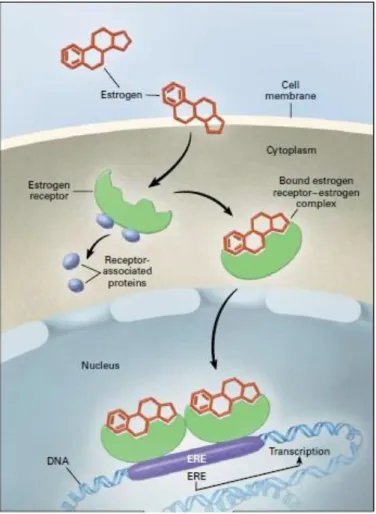
On its classical role, estrogen functions as a transcriptional regulator. As free estrogen diffuses into the cell, it binds to estrogen receptor (ER) alpha (ERα) and beta (ERβ) which dissociates from its cytoplasmic chaperones, the receptor-associated proteins. Then, the complex translocates to the nucleus, where it binds to estrogen response element (ERE) of target gene promoters to initiate transcription. (Figure 1) (43) (41)
Fig 1 Classic pathway of estrogen signal transduction. Adapted from production and actions of estrogens (41)
Non-classical effects of ER can occur in the absence of ligand binding, i.e. estradiol-independent, regulating transcriptional activity via nuclear or nonnuclear actions. Instead, cytoplasmic ER (center panel) and membrane associated ER (right-hand panel) (Figure 2) can impact specific kinase signaling pathways directly to regulate the cellular milieu. (38)
14 Fig 2Ligand-dependent and ligand-independent estrogen-receptor activation. Adapted from production
and actions of estrogens(41)
Providing hormones are implicated in SLE outcomes and that SLE is consequence of a disrupted immune function, immune system cells are thought to be a target of sexual hormones. Indeed, estrogen receptors are expressed in many tissues, including most immune cells, where they have pleiotropic effects in both the innate and adaptive immune responses. (38) Several studies have demonstrated that T cells, B cells, and monocytes respond to estrogens. The expression of ERα and ERβ by those cells has also been reported. (44) Specifically ERα was shown to be expressed at higher levels in CD4+ T cells and B cells, while in CD8+ T cells and monocytes the expression is seen in lower levels. (45)
3.1.1. Estrogen Receptors in SLE
Since most of the estrogen action is mediated through ERs, it is important to understand the specific role of each subtype on lupus autoimmunity.
It was reported that the expression of ERα mRNA and ERα protein level in peripheral blood lymphocytes (PBLs) from SLE patients was significantly increased compared with that from healthy controls. (43) (46). Demethylation of CG pairs within the ERα promoter region was showed to be associated with this enhanced ERα gene expression. (43) However there were no significant differences in frequency of demethylated ERα promoter between male and female, suggesting that other factors, apart from epigenetic factor alone, contribute to gender bias. Also, a recent study demonstrated that the expression of ERα, but not ERβ, was increased in peripheral blood mononuclear cells (PBMC) from SLE patients compared with
normal controls (44). Plus, ERα-selective agonist propyl pyrazoletriol (PPT) significantly accelerated mortality, promoted the development of albuminuria, significantly enhanced the production of anti-DNA auto-antibodies (IgG2a, IgG2b and IgG3 subclasses) and increased serum total IgG concentration compared to vehicle control. On the other hand, ERβ-selective agonist diarylpropionitrile (DPN) treatment significantly suppressed the production of anti-DNA IgG2b subclass, (42) which is a IgG subclass closely linked to glomerulonephritis and morbidity. The present study also found that serum prolactin concentration was significantly higher in PPT-treated and E2-treated B/W mice while not significantly different in DPN-treated animals compared to vehicle controls. This result suggests that ERα activation may accelerate lupus disease also through stimulation of prolactin secretion. (42)
ERα seems to promote lupus by enhancing the development of highly pathogenic anti-DNA immunoglobulins in (NZB×NZW) F1 females, which represents a relatively late event in the development of autoimmunity in these mice. (47) The initial autoimmune response occurs months prior to the appearance of serum anti-dsDNA antibodies and is associated with loss of tolerance to histone H2A/H2B/DNA. Results indicated that ERα deficiency was associated with reduced development of anti-H2A/H2B/DNA antibodies in (NZB×NZW)F1 females at this early time point. It is than suggested that ERα promotes the initial loss of tolerance event leading to lupus. (47)
As seen, ERα expression is important to the production of pathogenic auto-antibodies. E2 administration to Wild Type (WT) mice led to increased IdLNF1+ Ig levels, which was not observed in ERα−/− mice.(45) The increased levels of IdLNF1+ IgG/M in E2-treated WT mice likely contributed to the development of early lupus nephritis.
ER-α also seems to mediate the E2 cytokine profile. Changes in cytokine production that were found in WT mice after E2 treatment were not detected in E2-treated ERα−/− mice. (45)
A new estrogen target gene, ZAS3, was recently connected to SLE possibly female bias. ZAS3 is a transcriptional regulator that can inhibit NF-kB activity, a protein complex that controls
transcription of DNA. It was showed a significantly higher (21-fold) ZAS3 expression in PBMCs of SLE samples when compared to healthy controls. A statistically significant induction of ZAS3 (1.4-fold) with 10 nM of estrogen treatment was found. E2-mediated up-regulation of ZAS3 was shown to be ERα-dependent, while IFN-α didn’t seem to play a role. Importantly, super physiological concentration of estrogens (50 nM) resulted in a slight decrease in ZAS3 protein levels (48) which can explain the well known dose dependent effects of estrogens.
16
3.2. Estrogen Metabolism
In the serum, estradiol reversibly binds to sex hormone–binding globulin and, with less affinity, to albumin. About 2 to 3 percent is free. Estrogens are peripherally metabolized by hydroxylation and subsequent methylation to form catechol and methoxylated estrogens. Hydroxylation of estrogens yields 2-hydroxyestrogens, 4-hydroxyestrogens, and 16α-hydroxyestrogens (catechol estrogens). Methylation of the 16α-hydroxyestrogens by catechol O-methyltransferase yields methoxylated estrogen metabolites. (Figure 3) (41)
Fig 3 Ovarian synthesis, transport and metabolism of estrogens. Adapted from production and actions of estrogens (41)
3.2.1. Estrogen Metabolites in SLE
The production of estrogens from androgens is peripherally mediated by the aromatase enzyme complex (49), as already stated. In SLE patients, aromatase activity evaluated in skin and subcutaneous tissue showed a tendency towards an increase when compared with control individuals. Furthermore, tissue aromatase activity showed significant direct correlation with
estrogen levels in those patients. (50) Altered promoter utilization can lead to an altered testosterone:estrogen ratio that is associated with the development of disease. Specifically in autoimmune rheumatic diseases, local effects of altered peripheral sex hormone synthesis seem to consist mainly in modulation by estrogens of cell proliferation and cytokine production (i.e., TNF, IL-1, IL-12). (11)
The role of peripheral metabolism of estrogens is crucial in SLE disease progression. It is known that different downstream estrogen metabolites, especially hydroxylated, interfere with monocyte proliferation and generally might modulate the immune response. (51) In SLE patients, a large shift to mitogenic estrogens in relation to endogenous antiestrogens was demonstrated and the magnitude of conversion to the mitogenic 16α-hydroxyestrone is greatly upregulated, which likely contributes to maintenance of the proliferative state in this disease. (52)
Recently, it was stressed that estrogens and their catechol metabolites, and not only hydroxylated, seem to play an important role in SLE. The possible mechanism involves quinine-semiquinone redox cycling of catechol metabolites to generate free radicals that can cause DNA damage. The altered immunogenicity of DNA would lead to crossreaction of SLE autoantibodies to native DNA. (53) (41)
18
4. Estrogens and Immune Mediators in SLE
activity
4.1. Estrogens and Dendritic cells (DC)
DC are professional antigen-presenting cells that play a critical role in the initiation of primary immune responses and stimulate naive T cells. DC are present in abnormal numbers in the peripheral blood and synovial fluid of patients with autoimmune diseases. It was already reported that both myeloid progenitors and terminally differentiated DC express estrogen receptors (ERα or ERβ). (54) The presence of ERs on DC indicates the possibility that E2 directly modulates DC functions. (33) In fact it was found that E2 could change ERα level of spleen DC. (54)
In mice, subsets of splenic DC were differentiated in three categories: 1) conventional DC (cDC); 2) plasmacytoid DC (pDC) and 3) IFN-producing killer DC (IKDC). (55)
An investigation to assess whether exposure to E2 affects the development and function of bone marrow (BM)-derived DC reported that E2 drives preferential development of CD11b+ cDC (which synthesize IL-12) from BM precursors and increases surface expression of MHCII and the co-stimulatory molecules CD40 and CD86. (56) Also, in the same study, stimulation of mature CD11c+ splenocytes with IL-12 and IL-18 increased production of IFN-γ in the presence of sustained E2 in vivo. These data demonstrate that the precise effects of E2 on the phenotype and function of DC depends on when during development these cells are exposed to E2. Whether there is a threshold concentration of E2 required to alter CD11c+ populations requires investigation.
It is speculated that the effects of E2 on DC from SLE murine model (NZB × NZW) F1 female mice in various disease progression stages are different. A study showed that the effects of E2 on stimulatory activity, cytokine production and ERα levels on DC varied between young and old mice. Young mice exposed to E2 increased production of IL-6, IL-10, IL-12 and TNFα and had increased expression of ERα and CD40 compared with older mice. (54) The difference of the regulation of E2 on DC from various age old mice shows the regulation might relate with SLE progress in vivo.
ERα seems to be an important factor in the regulation of DC development in lupus-prone mice since pDC numbers are diminished in the absence of the receptor. Also purified pDC from ERαKO mice produced less IL-6 and IFNα than equivalent numbers of pDC from ERα+/+
animals. (38) In this way, ERα not only mediates the development of this subset of interferon-producing DC but also appears to have a functional impact on them. ERα mediates many of the effects of E2 on DC and IKDC. Yet, if E2 concentrations are sufficiently high, then ERβ may compensate and mediate itself the effects of E2 on DC activity. (56)
Toll-like receptor 9 is only expressed on DC and B cells in both human and mice. The combined effect of TLR9 ligand (CpG ODN) and E2 on untouched spleen B cells of normal female mice was already drescribed. (see below) (57) Now it is also addressed that E2 can exacerbate pDC´s activation with a TLR9 agonist. As demonstrated, E2 and CpG increased the cell viability and costimulatory molecule expression on pDC synergistically. E2 plus CpG also increased IFN-α secretion thus enhancing the stimulatory effect of pDC on B cells. (58)
Other investigation undertaken to elucidate the correlation between CD40 and the DNA replication licensing factor MCM6 in the presence of E2 found that regardless of the presence or absence of CpG, E2 induced CD40 expression in DC via the activation of p38 and JNK in an MCM6 dependent manner. (33) Suppression of MCM6 in DC abolished the up-regulation of E2 induced CD40 expression. In SLE patients they found that the mRNA level of MCM6 was related to the serum level of E2. This result provides insight about the relevance of MCM6 as a mediator of sex-based differences in SLE.
20
4.2. Estrogens and Natural Killer (NK) cells
NK cells are effector lymphocytes of the innate immune system that control several types of tumors and microbial infections by limiting their spread and subsequent tissue damage. Last years research highlights the fact that NK cells are also regulatory cells engaged in reciprocal interactions with DC, macrophages, T cells and endothelial cells. NK cells can thus limit or exacerbate immune responses. (59)
Recent evidence suggests they may play a pivotal role in some female predominant diseases or normal physiological conditions. The number and activity of NK cells change during the menstrual cycle. NK cells activity increases during the first trimester of pregnancy followed by significant suppression during the second and third trimesters. (37) This data point to an important role of estrogens in modulating NK cells activity. However, the mechanism through which this modulation occurs remains poorly defined.
In an in vivo study, two groups of ovariectomized mice were compared. The one treated whit exogenous E2 demonstrated that E2 can restore or elevate the number of NK1.1+/CD3− cells
in vivo. (37) An elevated gene expression of MCM7 and MCM10 in the E2 treated group was
also found. Pan et al had reported that E2 regulated loading of these MCM proteins onto chromatin in parallel with its induction of DNA synthesis. (60) So, it is deduced that the increased number of NK cells induced by E2 in vivo might be due to the up-regulation of these MCM proteins at a certain extent.
Despite the increased number, E2 treatment resulted in suppressed cytotoxicity of NK cells. It may be attributable to the down-regulation of NK cells activating receptors -CD69, NKp46, NKG2DL and 2B4 (CD244), - which directly inhibited NK cell activation, resulting in the reduced secretion of the soluble factors—granzyme B and FasL. IFN-γ production by NK cells was shown to be increased by E2, and it was suggested it could act as a negative regulator in the low cytotoxicity of NK cells. (37)
A one year later investigation also proved that E2 could suppress NK cell cytotoxicity and proliferative capacity in vitro. Expression of activation-associated markers (CD69, CD122) and inhibitory receptors (CD94, Ly49) were analyzed. Opposite to the previous study the change of CD69 expression was not observed with the exposure of NK cells to E2. Instead, the inhibitory receptor CD94 was activated and higher expressed after NK cell exposure to E2 compared to the control group. (61) Also conflicting with the previous study, a high dose of E2 inhibited IFN-γ expression. Both CD94 activation and IFN-γ inhibited expression were thought to be involved in the suppressed NK cell cytotoxicity, which allows the fetal tolerance during the two last trimesters of pregnancy. The role it may have on female predominant diseases remains unclear
.
4.3. Estrogens and Toll-like receptors (TLR)
Toll-like receptors have a crucial role in the detection of microbial infection in mammals and insects. In mammals, these receptors have evolved to recognize conserved products unique to microbial metabolism. This specificity allows the Toll proteins to detect the presence of infection and to induce activation of inflammatory and antimicrobial innate immune responses. (62) However if activated by auto-antigens that mimic microbial products they can also exacerbate autoimmune ones.
Women with SLE have been shown to have hypomethylated areas on the X chromosome that corresponded with enhanced gene expression when compared to male counterparts. Since TLR8 and TLR7 are both X-linked, this may explain their basal levels of up-regulation in SLE patients when compared to age and sex-matched healthy females. (3)
Unc93b1 is a multi-transmembrane protein in the endoplasmic reticulum that regulates trafficking of endosomal TLR (such as TLR3, TLR7, TLR8 and TLR9) in humans and mice. An investigation has noted that expression levels of Unc93b1 mRNA in PBMCs isolated from patients with active SLE were significantly higher than those of healthy controls. Moreover, the expression levels of Unc93b1 protein in B cells (CD20+) isolated from patients with active SLE were also higher than healthy controls. (63) A recent study provided evidence for a sex-dependent regulation of the Unc93b1 protein levels. It showed that activation of interferon or estrogen signalling contributes to increases in Unc93b1 levels. (40). This up-regulation on Unc931b expression was dependent on the expression of p202, which is an estrogen and interferon-inducible protein. What remains uncharacterized is the regulatory region of the murine Unc931b gene although it includes potential DNA-binding sites for ERα. (40)
Corroborating the previous assumption, ERα was found to modulate TLR signalling, although the molecular mechanism(s) wasn’t definitely identified. In the absence of ERα, the inflammatory response to TLR9 stimulation is significantly blunted. (38) ERα is required for TLR-induced stimulation of IL-23R expression, which may have paracrine and autocrine effects on T cells and DCs involved in the IL-23/IL-17 inflammatory pathway. (38) Th17 cells are known to be implicated in the pathogenesis of many autoimmune diseases. It is so suggested that ERα participates in modulation of Th17 cells too. This point deserves further investigation but it is another clue for the role of ER-α in the disease female bias.
A recent study characterized TLR8 as a novel estrogen target gene implicated in SLE female bias. A putative ERα-binding region near the TLR8 locus was identified and blocking ERα expression significantly decreases E2-mediated TLR8 induction. (3) Results suggest, once more, that E2-mediated induction of TLR8 expression requires ERα and occurs through direct DNA binding of ERα to an ERE just downstream of the TLR8 gene. (3) This regulation of TLR8
22 was shown, once more, to be independent of IFNα. (3) Since endosomal TLR signaling is required for the production of anti-nucleic acid autoantibodies in mice, SLE development and progression could be influenced by estrogen-priming of innate immune responses through up-regulation of endosomal TLR expression.
4.4. Estrogens and Cytokines
Cytokines are proteins secreted by immune system cells in response to microbes and other antigens. They mediate and regulate immune and inflammatory reactions. In innate immunity, cytokines as TNF-α, IL-1, IL-12 and IFN-γ, mediate the early inflammatory reactions to microbes and their elimination. In adaptative immunity, IL-2, IL-4, IL-5 and IFNγ stimulate proliferation and promote differentiation of antigen-stimulated lymphocytes and activate specialized effector cells, such as macrophages. (64)
While the role of autoantibodies and immune complexes in the initiation of the disease is well characterized, the significance of aberrant cytokine production is becoming increasingly apparent. Elevated levels of cytokines are demonstrated in SLE patients compared with controls despite individual cytokine levels do not appear to drive damage accrual. It is the balance of cytokines that appears to do so. (65)
4.4.1. IFN in SLE
The term interferon derives from the ability of these cytokines to interfere with viral infection. Type I IFN consist of two distinct groups of proteins called IFN-α and IFN-β. They mediate the early innate immune response to viral infections. IFN-γ, also called Type II IFN, despite having some antiviral activity, functions mainly as an effector cytokine of immune responses. It is the principal macrophage-activating cytokine. (64)
The increased levels of IFN-α (and other cytokines, such as IL-6) in lupus PBMC was already confirmed. (39) Not only serum levels are increased, but IFNα activity is also higher in younger individuals in SLE family cohorts and this tendency is accentuated in affected individuals. This age-related pattern of IFNα may contribute to the increased incidence of SLE in early adulthood, and interestingly, males and females had similar age-related patterns of IFN-α activity. (66) This higher IFN-α activity coincides with the peak levels of estrogens in young females. The question is whether this estrogens peak levels relate to the higher IFN-α activity, since male exhibit similar patterns of activity.
Not only IFN-α shows increased levels related to SLE but also IFN-γ. An experiment involving WT mice to investigate the roles of ER subtypes in the estrogen-induced lupus phenotype, found out E2 treatment increased serum levels of IFN-γ comparing to oil controls. (45)
Once more ER appears to be closely related to this altered cytokine profile. ERα activation plays a major role in estrogen-induced thymic atrophy, thymic T-cell and splenic B-cell phenotype alterations. ERα, but not ERβ, mediates estrogen induced up-regulation of IFN-γ production from Con A-stimulated splenocytes. (42) IFN-γ can promote the IgG subclass switching to opsonizing and complement fixing subclasses-IgG2a and IgG3. Those IgG subclasses are known to be more nephritogenic than the other subclasses in murine lupus nephritis. (67)
An investigation purposed to explore whether IFN could too regulate expression of ERα. They concluded that increased levels of IFN (IFN-α or IFN-γ) in serum of SLE patients and certain lupus-prone strains of female mice, by up-regulating the expression of ERα, potentiate the expression of certain estrogen and responsive genes. Increased expression of these IFN-inducible genes is associated with increased survival of autoreactive immune cells. (68)
One of those IFN-inducible genes is called Ifi202. Increased expression of Ifi202 gene in certain strains of female mice is associated with susceptibility to SLE. One other study also demonstrated that increased levels of estrogen, through activation of ERα, up-regulate the expression of Ifi202. (69) Consequently, increased levels of p202 protein in immune cells of certain strains of female mice contribute to increased survival of autoreactive cells, resulting in increased susceptibility to lupus disease. (69) A latter investigation came to say that this estrogen and IFN-induced increased levels of the p202 protein in immune cells contribute to sex bias in part through up-regulation of B cell activating factor (BAFF) expression. (70) (see below).
4.4.2. TNF in SLE
TNF is the principal mediator of the acute inflammatory response to Gram negative bacteria and other infectious microbes and is responsible for many of the systemic complications of severe infections. (64)
In WT mice, E2 treatment induced the production of higher levels of IL-5, IL-6 and IL-10 (a Th2-cytokine profile) as well as significantly higher levels of the pro-inflammatory cytokine TNF-α; induction of these cytokines has been postulated as an important mechanism in
E2-24 induced modulation of T cell function in lupus pathogenesis. (45) The exact mechanism is not clearly defined yet.
Recently, the role of cytokines in the pathogenesis of SLE was studied in a genetically homogeneous Caucasian SLE patient population. Their findings indicate that TNF-α levels correlate with disease activity and while they did not predict damage accrual in the entire population (as seen with other individual cytokine levels, such as IL-10), those patients with elevated levels of TNF-α at baseline were more likely to suffer damage over the follow-up period. (65) However TNF role in SLE pathology requires further investigation.
4.4.3. Interleukin-21
Interleukin-21 (IL-21) is a common γ-chain family cytokine that exerts various effects on immune cells including B cell proliferation and antibody production. Serum levels of IL-21 were reported to be elevated in SLE patients as compared with healthy controls. (31) Estrogen influence may be responsible since when CD4+T cells of SLE patients were treated with E2, IL-21 expression was increased in a dose and time dependent manner. MAPK (a signal transduction pathway) inhibitors (Erk, p38, JNK) impeded the increase, which suggests that estrogen-induced IL-21 expression is dependent on this pathway. Other plausible way can be through estrogen induced Th17-type CD4-T cells, a source of IL-21 in the peripheral blood of SLE patients. (31)
Increased IL-21 can induce immunoglobulin production by B cells and this effect can be amplified by the female sex hormone. When estrogen pre-exposed CD4+ T cells were co-cultured with B cells from a healthy donor, B cells became activated and secreted immunoglobulins implicated in SLE pathogenesis (31).
4.5. Estrogens and B cells
Among several immune cell types found abnormal in lupus, B cells have emerged as central players since autoantibodies are secreted by them. B cells also have the ability to present autoantigens and produce cytokines, both contributing to SLE pathogenesis. (57)
B cells express a number of Toll-like receptors, in particular TLR9, which recognize unmethylated CpG-rish dsDNA.(57) Abrogation of TLR9 totally impaired the production of antinucleosome antibodies in MRL/lpr mice. (71) An investigation purposed to study the E2
effect in the presence of TLR9 ligand CpG ODN on mice spleen B cells. They found that a higher E2 environment particularly enhanced the activation of B cells which were stimulated by the CpG-TLR9 signal at the same time, although E2 alone could not induce conspicuous activation. (57) In vivo E2 progressed a more pronounced activation of CpG ODN stimulated spleen B cells with increasing the expression of CD40, secreting of IgM, and even extended to the producing of several pathogenesis-related cytokines: IL-6, IL-10, IL-12. (57) Once activated, B cells upregulate their susceptibility in producing autoantigens, known to be implicated in the pathogenesis of SLE. The research also found MCM6 potentially taking part in the mediation by E2 on B cells. Beyond its proliferative function, MCM6 binds to STAT-1, a well known transcription factor in the regulatory downstream mechanism of E2. (57)
Estrogen seems to have a differential role in control of B cell maturation and selection. E2 decreases B cell lymphopoiesis in the bone marrow. This effect can be mediated through either ERα or ERβ and has been shown to reflect an E2-mediated decrease in IL-7 production by bone marrow stromal cells. (32) E2 exposure also alters B cell subsets in the spleen through a decrease in B-cell receptor (BCR) signaling in response to anti-IgM activation. An E2-induced increase in the MZ (marginal zone) B cell compartment was observed, after either ERα or ERβ engagement. This may be due to an E2-induced increase in BAFF levels or CD22 (negative regulator of the BCR) expression. (32) The way this differential control of B cells reflects on autoimmune female bias diseases remains unknown.
While some of the effects are mediated by both ERs, ERα was the primary ER responsible for the E2-induced diminution in the BCR signaling pathways. Prolonged B cell exposure to E2 reduced Erk phosphorylation after BCR ligation through ERα engagement. This reduced phosphorylation is probably associated with DNA hypomethylation in B cells, implicated in SLE pathophysiology. (32) Also ERα dependent was the breakdown in B cell tolerance. Both reduced BCR signalling and elevated BAFF levels are implicated in this altered B cell selection with increased survival of autoreactive B cells. (32) The effect of estrogen on B cell maturation and selection is therefore a possible mechanism for the female bias in SLE.
4.6. Estrogens and T cells
T cells are lymphocytes that play a central role in cell-mediated immunity. A number of genetic and environmental factors contribute to the T cell defect in SLE (34), most of them not completed elucidated yet. More than twenty years ago, T cells from active lupus patients were found to have a decreased global DNA methylation level with respective influences on gene expression. (8)
26 It was already demonstrated that inhibition of DNA methyltransferase 1 (DNMT1 gene) enhanced global DNA hypomethylation in CD4+ T cells isolated from patients with SLE and exacerbated the disease. (72) Recently it was showed that acting through ERα, E2 might induce downregulation of DNMT1 in lupus CD4+ T cells through the Erk pathway. (72) Also an autoimmune related gene, CD40L, is hypomethylated and overexpressed in CD4+ T cells from female but not in male patients with SLE. (8) The effect seems to be mediated by estrogen, which effect on DNA hypomethylation partially explains the gender dimorphism in lupus.
Previously it was showed that only female but not male (SWR×NZB)F1 (SNF1) mice developed early immune complex glomerulonephritis. The ratio of CD4+ to CD8+ IdLNF1 (nephritogenic
idiotype) reactive T cells was increased and was correlated with an increase in serum IdLNF1+
IgG, which is deposited in diseased female SNF1 kidneys. Also in the female SNF1mice, E2 treatment resulted in a pronounced increase in the numbers of IdLNF1 reactive subset T cells
expressing the memory phenotype. (73) To find out if those changes were due to estrogens and since male SNF1 mice normally do not develop nephritis, administration of E2 to male SNF1 mice was tested. It led to accelerated glomerulonephritis, and further, the mechanism involved the expansion and activation of CD4+ IdLNF1 reactive memory T cells and IdLNF11
producing B cells which contributed to the production of pathogenic IdLNF1+ IgG. (73) The fact
that cells with this phenotype express estrogen receptors and were selectively expanded in response to E2 suggests that they may have been directly expanded by the hormone, explaining the female SLE bias.
Defective control of T cell apoptosis is considered to be one of the pathogenetic mechanisms in SLE. (34) It is well known that Fas and FasL are involved in cell apoptosis. What is now demonstrated is that E2 decreases the Activation-Induced Cell Death of SLE T cells, by down-regulating the expression of FasL in activated SLE T cells both at the protein and mRNA levels. (34) This inhibitory effect is mediated by a receptor-coupling event and allows persistence of activated T cells.
NF-kB is a key regulator of inflammatory and immune systems. It also regulates the expression
of various genes that control cell cycle and cell viability. Recent studies have revealed the role of NF-kB signaling in T cells. (74) It was demonstrated that E2 enhances NF-kB activity in
human T cells. After E2 binding to ER, (probably ERβ) ER translocates to nucleus and binds to p65. Concurrently, ER recruits steroid hormone co-activators to the ER-NF-kB complex on the
NF-kB target gene promoter region, resulting in upregulation of the transactivity. (74) Since
NF-kB in PBT cells is required for T cell survival, this is another way E2 is promoting T cell
viability. In this way, by allowing persistence of activated T cells, E2 exhibits a detrimental action on SLE activity.
Calcineurin is a protein phosphatase that activates T cells of the immune system. It dephosphorylates and thereby activates the transcription factor NFAT. Calcireurin is activated by calcium signals generated through TCR signaling in response to antigen recognition. (64) Another factor contributing to female bias may be the direct increase estrogen evokes in calcineurin expression in PBL. The calcineurin in SLE was 3.15-fold higher than in normal controls and its increased expression in response to estrogens appeared to be limited to Lupus patients. (46)