Ar
ti
cl
e
*e-mail: [email protected]
Synthesis and Structural Characterization of Block and Random Low Molecular Weight
Copolymers Composed of L-lactic Acid and Isosorbide Succinate Moieties
Romeu Casarano,a Denise F. S. Petri, a Michael Jaffeb and Luiz H. Catalani *,a
aInstituto de Química, Universidade de São Paulo, 05513-970 São Paulo-SP, Brazil
bMedical Device Concept Laboratory, New Jersey Institute of Technology, Newark, USA
Resíduos de succinato de isosorbídeo foram incorporados na cadeia principal de poli(L-lactídeo) (PLLA) visando a obtenção de uma nova classe de polímeros biodegradáveis com propriedades melhoradas. Este artigo descreve a síntese e caracterização de quatro tipos de copolímeros de baixa massa molar. O copolímero I foi obtido da mistura dos monômeros L-lactídeo, isosorbídeo
e anidrido succínico; II do oligo(L-lactídeo) (PLLA), isosorbídeo e anidrido succínico; III do
oligo(succinato de isosorbídeo) (PIS) e L-lactídeo; e IV de reações de transesteriicação entre PLLA
e PIS. Análises de MALDI-TOFMS e 13C-NMR apresentaram evidências de que cooligomerização foi alcançada em todos os casos. Os dados sugerem que o produto I é um cooligômero aleatório
e que os produtos II-IV são cooligômeros em bloco.
Isosorbide succinate moieties were incorporated into poly(L-lactide) (PLLA) backbone in order to obtain a new class of biodegradable polymer with enhanced properties. This paper describes the synthesis and characterization of four types of low molecular weight copolymers. Copolymer
I was obtained from monomer mixtures of L-lactide, isosorbide, and succinic anhydride; II from
oligo(L-lactide) (PLLA), isosorbide, and succinic anhydride; III from oligo(isosorbide succinate)
(PIS) and L-lactide; and IV from transesteriication reactions between PLLA and PIS. MALDI-TOFMS and 13C-NMR analyses gave evidence that co-oligomerization was successfully attained in all cases. The data suggested that the product I is a random co-oligomer and the products II-IV
are block co-oligomers.
Keywords: isosorbide, PLLA, PIS, copolymers, MALDI-TOF
Introduction
The use of biodegradable and biocompatible polymers in biomedical applications has been recognized as desirable, where their non-toxicity is of fundamental importance.1 The choice of polymers to be employed as biomaterial relies on the general criteria that their mechanical properties and biodegradation time have to be compatible with the application needs.2
Most of the biodegradable polymers contain hydrolysable linkages along the polymeric chain, such as polyesters like poly(L-lactide) or poly(L-lactic acid) (PLLA), depending on which starting material was used: L-lactide or L-lactic acid, poly(glycolic acid) (PGA), polycaprolactone (PCL), poly(trimethylene carbonate), and poly(3-hydroxybutyrate) (PHB).3 Poly(L-lactide) is obtained from L-lactide
((S,S)-3,6-dimethyl-1,4-dioxane-2,5-dione), a cyclic diester of L-lactic acid, a naturally occurring isomer.2
A class of biodegradable and bioresorbable polyesters little explored is that derived from 1,4:3,6-dianhydrohexitols and alkyl diacids, e.g. poly(isosorbide succinate) (PIS).4 The 1,4:3,6-dianhydrohexitols, such as isosorbide (1,4:3,6-dianhydro-D-sorbitol or -D-glucitol), are important monomers in view of their non-toxicity and renewable origin.5,6 Likewise, succinic acid is produced from glucose by fermentation7 and is readily metabolized by the Krebs cycle.
The incorporation of isosorbide into polyesters backbone has proven to be an advantageous artiice to obtain products of enhanced properties. In special, the inclusion of small quantities of isosorbide into aromatic polyesters affords polymers with higher Tg, opening new windows of applications for these materials.8,9
employed one can obtain alternating, random, or block copolymer structures.10 On the other hand, most of the interest on step copolymerization lies on the production of block and random copolymer structures, whose properties can be close or very different to the weighted average of the corresponding homopolymers, respectively.10
Matrix-assisted laser desorption/ionization time-of-flight mass spectrometry (MALDI-TOFMS) has been used as a very powerful tool on homopolymer and copolymer characterization. From this technique, one can obtain information not only on average molar mass, molar mass distribution and end groups analysis, but also on polymerization mechanisms by analyzing the formation and the reactivity of functional groups as well as determining anomalous structures eventually formed as consequence of side reactions.11-17
In this work we investigated four different approaches for the synthesis of biodegradable aliphatic polyesters composed of L-lactic acid (LLA), isosorbide (I), and succinate (S) moieties using copolymerization techniques.
SEC, MALDI-TOFMS, 13C NMR spectrometry and WAXD
were used to access their structural characterization.
Experimental
Materials
Isosorbide (Aldrich) and L-lactide (Aldrich) were recrystallized, respectively, twice and once from dry ethyl acetate (mp 63.5-63.6 ºC and 92.3-92.7 ºC, respectively). Succinic anhydride (Aldrich) was reluxed with acetic anhydride for 10 min, filtered, and then washed with cold dry ethyl ether18 (mp 121.0-121.1 ºC). Tin(II) 2-ethylhexanoate (Aldrich; ca. 95%; SnOct2) and p-toluenesulfonic acid (Aldrich; 98.5%) were used as catalyst without further puriication. Chloroform (Synth)
and anhydrous methanol (Mallinckrodt) of analytical grade were used as received.
Synthesis
Two samples of PLLA were synthesized in bulk by ring-opening polymerization with different average molar masses. Synthesis of PLLA1 (higher average molar mass): L-lactide (1.000 g; 6.9×10⁻³ mol) and SnOct
2 (0.023 g; 5.7×10⁻⁵ mol) were added to an assay tube, purged with N2, sealed, and kept in an oil bath at 120 ºC for 35 h. The same procedure was used for PLLA2 (lower average molar mass), except for the amount of SnOct2 (0.0010 g; 2.5×10⁻⁶ mol). The reaction temperature was chosen based on literature data.19-21
PIS was synthesized by step polymerization through azeotropic distillation: isosorbide (14.6 g; 0.1 mol), succinic anhydride (10.0 g; 0.1 mol), p-toluenesulfonic acid (0.017 g; 1×10⁻⁴ mol), and dry chloroform were added to a one-necked round-bottom lask of 250 mL. The reaction was kept in relux for 28 h, using a modiied Dean-Stark apparatus illed with previously dried molecular sieves of 3 Å.
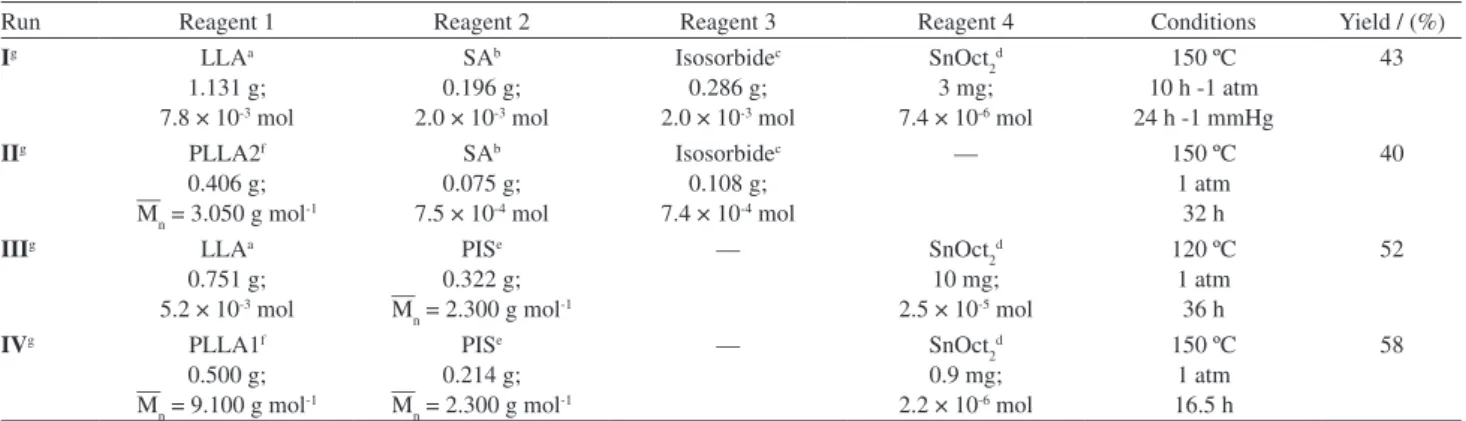
Product I was synthesized by copolymerization techniques involving both ring-opening and step copolymerizations from L-lactide, isosorbide, succinic anhydride, and SnOct2; product II via step copolymerization from PLLA2, isosorbide, and succinic anhydride; product III by ring-opening copolymerization from PIS, L-lactide, and SnOct2; product IV from copolymerization via transesteriication reactions between PLLA1 and PIS, in the presence of SnOct2. The general procedure for the four bulk copolymerizations: all reagents were sealed in an assay tube after purging with N2 and heated in oil bath at different temperature and time. The copolymerization was carried out under reduced pressure only in the synthesis of the product I. Table 1 describes the quantities and conditions used for
Table 1. Quantities and conditions used for the syntheses of the products I-IV, as well as the corresponding yields
Run Reagent 1 Reagent 2 Reagent 3 Reagent 4 Conditions Yield / (%)
Ig LLAa
1.131 g; 7.8 × 10⁻³ mol
SAb
0.196 g; 2.0 × 10⁻³ mol
Isosorbidec
0.286 g; 2.0 × 10⁻³ mol
SnOct2d
3 mg; 7.4 × 10⁻⁶ mol
150 ºC 10 h -1 atm 24 h -1 mmHg
43
IIg PLLA2f
0.406 g; —
Mn = 3.050 g mol-1
SAb
0.075 g; 7.5 × 10⁻⁴ mol
Isosorbidec
0.108 g; 7.4 × 10⁻⁴ mol
— 150 ºC
1 atm 32 h
40
IIIg LLAa
0.751 g; 5.2 × 10⁻³ mol
PISe
0.322 g; —
Mn = 2.300 g mol-1
— SnOct2d
10 mg; 2.5 × 10⁻⁵ mol
120 ºC 1 atm
36 h
52
IVg PLLA1f
0.500 g; —
Mn = 9.100 g mol-1
PISe
0.214 g; —
Mn = 2.300 g mol-1
— SnOct2d
0.9 mg; 2.2 × 10⁻⁶ mol
150 ºC 1 atm 16.5 h
58
aL-lactide; bsuccinic anhydride; c1,4:3,6-dianhydro-D-glucitol; dtin(II) 2-ethylhexanoate; eoligo(isosorbide succinate); foligo(L-lactide) with different average
each experiment. The reaction temperature (150 ºC) for the syntheses of I and II was based on literature values for the production of PIS homopolymer in bulk.4 The same temperature was also used for the synthesis of IV to allow complete melting of the starting materials.
Puriication
PLLA1, PLLA2, PIS, and the products I-IV were purified by dissolving in chloroform (1 volume), precipitating in methanol (10 volumes), and drying the iltrated in a vacuum-oven at 40 ºC for 48 h, except PIS and product I, which were vacuum-dried at RT. Table 1 also gives the corresponding yields of these four products. The yields obtained for PLLA1, PLLA2, and PIS were 86%, 64%, and 61%, respectively.
Analysis
Size exclusion chromatography (SEC) was carried out with a Shimadzu HPLC/SEC class-VP system equipped with a Shimadzu RID 10A differential refractive index detector and connected to four Styragel columns (102, 103, 104, and 105 Å; Waters). Chloroform was used as mobile phase at a low rate of 1 mL min-1 and low polydispersed polystyrene reference samples (Aldrich/Waters) were used for calibration.
1H and 13C nuclear magnetic resonance (NMR) spectra
were obtained in a Bruker DRX 500 (500 and 125 MHz, respectively) or Bruker AC 200E (200 and 50 MHz, respectively). The samples (20-100 mg) were dissolved in CDCl3 (0.5 mL) using TMS as internal reference.
MALDI-TOFMS measurements were performed by using an Ettan MALDI-TOF mass spectrometer (Amersham Biosciences), equipped with a nitrogen laser emitting at 337 nm and operating at an acceleration voltage of 20 kV. The detection of positive ions was carried out in relection mode and 200 laser shots were summed up per full spectrum. Angiotensin, adrenocorticotropic hormone (ACTH), and bovine cytochrome C were used for calibration. Stock solutions were prepared from the samples (10 mg mL-1), the matrix (1,8,9-trihydroxyanthracene; dithranol; 10 mg mL-1), and NaI (5 mg mL-1) in chloroform/tetrahydrofuran (THF) (1:1, v/v). Aliquots of 10 µL of the sample, 25-80 µL of the matrix, and 3-8 µL of NaI were mixed together. 0.5 µL of this mixture was added onto the sample holders (stainless steel; 0.5 µL), and air-dried prior to analyses.
The addition of cationizing agent (e.g. NaI salt) in MALDI-TOFMS procedures presents at least one of the following outcomes: (i) the signal-to-noise ratio increases, (ii) the signals originated by other salts eventually present
in the sample are suppressed, and (iii) the base-line is improved.11 The quality of the spectra obtained was signiicantly improved through the addition of NaI (the corresponding spectra without NaI salt addition are not shown), as well as the best sample-to-matrix-to-cationizing agent ratios.
The diffraction patterns of wide angle X-ray diffraction (WAXD) were recorded in a Rigaku Minilex powder X-ray diffractometer, using a monochromatic beam with wavelength (λ) of 0.194 nm (FeKα) or 0.154 nm (CuKα), voltage of 30 kV, and electric current of 15 mA. The intensities were collected from 2θ range of 3-60° with step scanning mode of 0.02°. The powdered samples were annealed in a vacuum-oven at 90 ºC for 48 h prior to the analyses.
The degrees of crystallinity (χc) were obtained from WAXD profiles with curve decompositions following Gauss or Lorentz function its as follows: the ratio of the area of crystalline peaks to the total area (crystalline peaks plus amorphous halo) was multiplied by 100.
Results and Discussion
PLLA (1 and 2) and PIS were obtained, respectively, in bulk by ring-opening polymerization and by polycondensation via azeotropic distillation in order to be used as reagents in subsequent steps. Four products (I-IV) containing L-lactic acid, isosorbide, and succinate moieties were synthesized from different approaches by means of copolymerization techniques, i.e., using in all cases different feed reagents (see Scheme 1).
Table 2 presents the values of —Mn and polydispersity index (—Mw / —Mn) obtained for PLLA (1 and 2), PIS, and I-IV by SEC and MALDI-TOFMS, for comparison. The —Mn values obtained by SEC for I-IV, as well as for PLLA (1 and 2) and PIS, were relatively low, ranging from 4.300 to 5.850 g mol-1 and from 2.300 to 9.100 g mol-1, respectively, showing that, in general, co-oligomers and oligomers were attained.
The low average molar mass obtained for PIS is related to the fact that (i) isosorbide is a secondary diol and (ii) it presents two different hydroxyl groups, endo and exo, with different reactivities.4,22 The low average molar masses obtained for PLLA are associated with the relatively low purity of the monomer L-lactide used, which serves to the purpose of this study. Perego et al.21 also obtained PLLA with low average molar masses by using less pure L-lactide. In this work, when very pure L-lactide was used, PLLA with —
experiments starting from that approach produced materials with —Mw ranged from 20.000 to 210.000 g mol-1.
The —Mn values obtained by MALDI-TOFMS were 42-76% lower than those obtained by SEC. Two possible reasons can explain this difference: (i) SEC data calculations were based on polystyrene as reference, which may not relect correctly the hydrodynamic volumes of the samples and (ii) lighter molecules can be preferentially desorbed and ionized,23 especially in the case of synthetic (co)polymers with polydispersity index higher than 1.2.23
Table 2 also presents the mass compositions of the products I-IV determined by 1H NMR. The mass compositions ranged from 61-83% (LLA) to 39-17% (IS).
13C NMR spectra (not shown) obtained for the
homo-oligomers presented the following chemical shifts in
the region of the carbonyl functional group: 169.6 ppm (PLLA2) and 171.4 and 171.1 ppm (PIS), in very good agreement with the data reported in literature.4,24
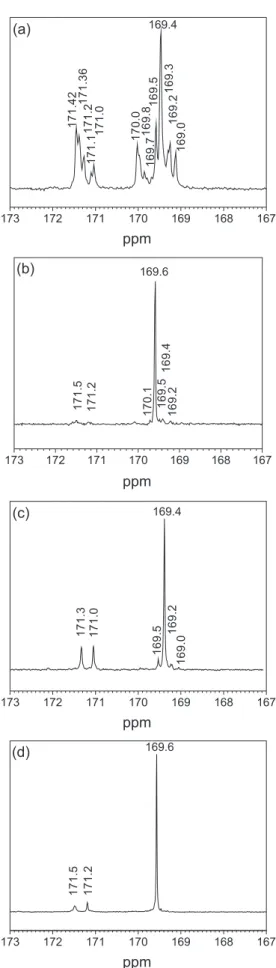
The 13C NMR spectra obtained for I-IV in the expanded region of the carbonyl grouping (Figure 1) displayed either additional (I-III) or no additional (IV) peaks. A qualitative analysis revealed that product I exhibited ten additional peaks (171.4, 171.2, 171.1, 170.0, 169.8, 169.7, 169.5, 169.3, 169.2, and 169.0 ppm; Figure 1a), which could emerge from the interactions of the different moiety sequences randomly distributed along the co-oligomer chains, i.e., a random co-oligomer was attained. Similar results were observed by Abe et al.25 when they reported the appearance of six additional peaks in the C=O regions of 13C NMR spectra obtained for random copolymers synthesized
Scheme 1. Proposed chemical structures for the products I-IV. See experimental section, where x, y, and z denote the molar fraction of succinate, isosorbide, and L-lactic acid moieties randomly distributed along the co-oligomer chains, respectively. The indices a-g correspond to the number of the respective repeating units in each structure. The proposed structure for IV is representing only the overall acylic nucleophilic substitution stemmed from PIS hydroxyl end group attack.
Table 2. Mass compositions determined by 1H NMR and values of —M
n and polydispersity index (
—
Mw / —Mn) obtained by SEC and MALDI-TOFMS, for the sake of comparison
Run Composition measured / (wt.%) MALDI-TOFMS SEC
LLAa ISb —M
n / (g mol-1)
—
Mw / —Mn —Mn / (g mol-1) —M
w /
— Mn
PLLA1 — — — — 9.100 1.6
PLLA2 — — 2.200 1.2 3.050 1.3
PIS — — 1.750 1.2 2.300 1.4
Ic 62 38d 1.800 1.2 4.300 1.6
IIc 83 17 2.150 1.1 4.700 1.2
IIIc 61 39 1.900 1.1 4.550 1.4
IVc 75 25 2.700 1.2 5.850 1.9
through ring-opening copolymerization from monomer mixtures of (R)-β-butyrolactone and L-lactide.
Conversely, product IV displayed no extra peaks (Figure 1d), implying that this could be a block co-oligomer showing lack of random sequences.8,26 Kricheldorf has obtained copolymers possessing almost block structures from transesteriication reactions between two homopolymers.26
Although Hiki et al.27 have synthesized copolymers from ring-opening copolymerization of hydroxyl-terminated atactic PHB with L-lactide, the block nature of those products was stated based on the absence of signals due to the alternating HB-LA sequences in the C=O regions of 13C NMR spectra. They also claimed that the detrimental transesteriication reactions have not happen during the block copolymerrizations.27
Products II and III showed four (170.1, 169.5, 169.4, 169.2 ppm; Figure 1b) and three (169.5, 169.2, 169.0 ppm; Figure 1c) extra peaks of very weak intensities, respectively. One possible interpretation of these results is that block co-oligomers were obtained, but mild secondary transesteriication reactions occurred and shorter blocks (than those that would be formed if transesteriication reactions would have not happened) are expected as a result.
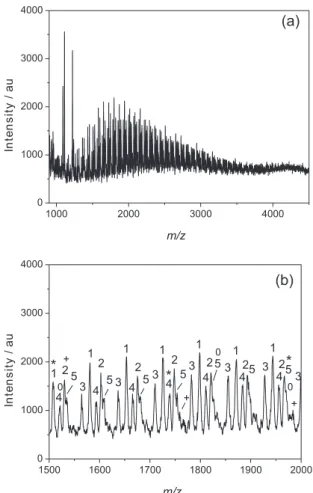
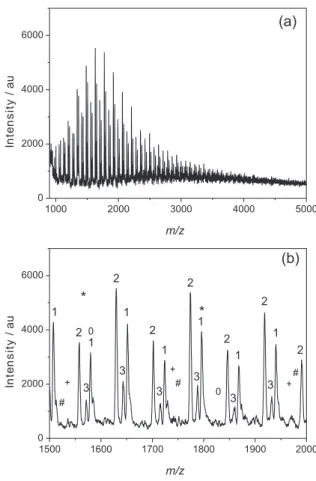
In addition to 13C NMR results, MALDI-TOFMS measurements were performed in order to give additional evidence on the co-oligomers formation, as well as on their structures. Figures 2a and b illustrate, respectively, both full and expanded region at mass-to-charge ratio (m/z) ranging from 1500 to 2000 of the MALDI-TOF mass spectra obtained for I using NaI salt.
Figure 2b exhibits six series of peaks showing the variation of L-lactic acid residues along the series, plus four additional series of peaks exhibiting the variation of succinate and isosorbide moieties. The proposed adduct structures for the product I are depicted in Scheme 2.
The end groups shown in Schemes 2-4 are consistent with esteriication and transesteriication reactions involved in the formation of (co)polyesters,11,12,14 in addition to sodium-cationized (co)polyester chains terminated with hydroxyl (or carboxyl) and sodium carboxylate end groups
formed during MALDI-TOFMS measurements.11,14
The calculated m/z values for adducts ([M+2Na−H]+, [M+Na]+, or [M+H]+) of the product I were obtained by applying equation 1.
Adduct m/z = 100x + 128y + 72z + CE + EG (1)
where: x, y, and z correspond to the molar fraction of succinate, isosorbide, and L-lactic acid moieties randomly distributed along the co-oligomer chains, respectively; 100,
Figure 1. 13C NMR spectra expanded in the carbonyl region obtained for
128, and 72 refer to the relative molar masses of succinate, isosorbide, and L-lactic acid residues, respectively; CE is the charged species and can assume values of 1, 23, and 46 referring to the relative atomic mass of a proton detached from the matrix, or one or two Na+ stemmed from NaI salt, respectively; EG is the end group and can assume values
of 18, 118, and 146 corresponding to the relative molar masses of hydrogen atom and hydroxyl, hydrogen atom and succinyl residue, and isosorbide residue and hydroxyl, respectively.
It should be pointed out that artifacts due isobaric effects are ruled out since the relative molar masses of the monomer moieties involved (100 for succinate, 128 for isosorbide and 72 for L-lactic acid) have no multiplicity relationship, enabling sequence analysis from MALDI-TOFMS measurements.
The calculated and experimental m/z values obtained for adducts of the product I appearing in Figure 2b are presented in Table 3. The calculated and experimental m/z values showed a good agreement (Table 3), suggesting that the product I is a co-oligomer. The presence of odd number of L-lactic acid moieties (Table 3) implies that intermolecular side transesteriication reactions are involved.
Figures 3a and b show, respectively, both full and expanded region at m/z ranging from 1500 to 2000 of the MALDI-TOF mass spectra obtained for II using NaI. Figure 3b shows ive series of peaks and exhibits several series of peaks in common with those shown in Figure 2b for the product I. Again, the ive series of peaks show the variation of L-lactic acid mers and three extra series of peaks exhibiting the variation of isosorbide succinate repeating units are also depicted.
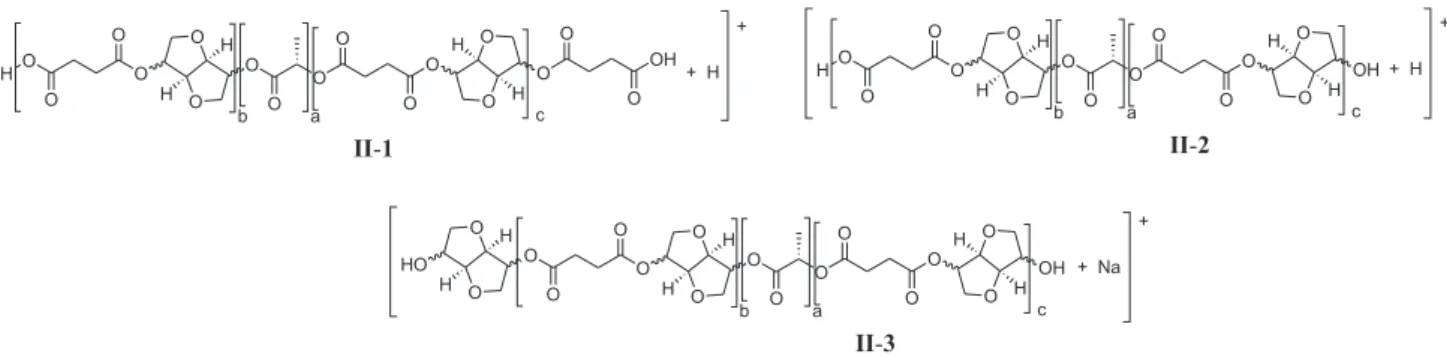
Scheme 3 illustrates the proposed adduct structures for II and the calculated m/z values for adducts ([M+Na]+ or [M+H]+) of the product II was obtained from equation 2 shown below.
Adduct m/z = 228(b+c) + 72a + CE + EG (2)
where: b plus c stand for the total number of isosorbide succinate repeating units in both side blocks, a refers to
Figure 2. MALDI-TOF mass spectra of the product I acquired with NaI in (a) full region and (b) expanded region at m/z ranging from 1500 to 2000.
L-lactic acid repeating unit, and 228 correspond to the relative molar mass of isosorbide succinate repeating unit (for the deinition of other terms, see equation 1).
As already mentioned, MALDI-TOFMS can be used to obtain sequence information since 228 is neither equal to nor multiple of 72. The calculated and experimental m/z values for adducts of the product II shown in Figure 3b are summarized in Table 4. The theoretical and experimental m/z values are in good agreement (Table 4), implying that II is a co-oligomer.
Both full and expanded region at m/z ranging from 1500 to 2000 MALDI-TOF mass spectra obtained for IV using NaI are shown in Figure 4a and b, respectively. Figure 4b shows three series of peaks exhibiting the variation of L-lactic acid repeating units. In general, these three series of peaks are quite close to the irst three displayed in the spectrum obtained for II (Figures 4b and 3b), indicating structural similarities.
The MALDI-TOF mass spectra of III acquired with NaI for both full and expanded region at m/z ranging from 1500 to 2000 are illustrated in Figure 5a and b, respectively. Three series of peaks showing the variation of L-lactic acid mers and four series of peaks exhibiting the variation of isosorbide succinate repeating units along each series are displayed in Figure 5b. Scheme 4 shows the suggested adduct structures for III. The calculated m/z values for adducts ([M+Na]+ or [M+H]+) of the product III were obtained based on equation 2. Table 5 contains
Table 3. Calculated and experimental m/z values for adducts of the product I
Peak seriesa Adduct structuresb Calculated m/z valuesc (x,y,z)d Experimental m/z valuese
1 I-2 1507 (4,4,8); 1579 (4,4,9); 1651 (4,4,10); 1723 (4,4,11); 1795 (4,4,12); 1867 (4,4,13); 1939 (4,4,14)
1507.0; 1578.7; 1651.5; 1723.8; 1795.6; 1867.3; 1940.2 2 I-5 1525 (5,5,3); 1597 (5,5,4); 1669 (5,5,5); 1741 (5,5,6);
1813 (5,5,7); 1885 (5,5,8); 1957 (5,5,9)
1523.7; 1595.0; 1667.3; 1738.9; 1811.2; 1883.0; 1954.8
3 I-1 1535 (4,4,7); 1607 (4,4,8); 1679 (4,4,9); 1751 (4,4,10); 1823 (4,4,11); 1895 (4,4,12); 1967 (4,4,13)
1535.3; 1606.0; 1678.2; 1750.0; 1823.9; 1895.4; 1968.0 4 I-1 1547 (5,5,4); 1619 (5,5,5); 1691 (5,5,6); 1763 (5,5,7);
1835 (5,5,8);1907 (5,5,9); 1979 (5,5,10)
1545.1; 1617.9; 1690.1; 1762.5; 1836.4; 1906.5; 1979.1 5 I-2 1555 (2,2,15); 1627 (2,2,16); 1699 (2,2,17); 1771 (2,2,18);
1843 (2,2,19); 1915 (2,2,20); 1987 (2,2,21)
1555.2; 1627.9; 1699.0; 1772.2; 1842.5; 1916.4; 1988.1
6 I-2 1567 (3,3,12); 1639 (3,3,13); 1711 (3,3,14); 1783 (3,3,15); 1855 (3,3,16); 1927 (3,3,17); 1999 (3,3,18)
1567.0; 1639.0; 1711.5; 1783.8; 1855.2; 1927.6; 2000.3
*f I-1 1523 (3,3,10); 1751 (4,4,10); 1979 (5,5,10) 1523.7; 1750.0; 1979.1
0f I-4 1545 (3,3,10); 1773 (4,4,10); 2001 (5,5,10) 1545.1; 1772.2; 2000.3
+f I-2 1567 (3,3,12); 1795 (4,4,12); 2023 (5,5,12) 1566.7; 1795.6; 2023.8g
#f I-3 1555 (2,2,13); 1783 (3,3,13); 2011 (4,4,13) 1555.2; 1783.8; 2011.5g
aPeak series shown in Figure 2b for the MALDI-TOF mass spectrum obtained for I; badduct structures presented in Scheme 2 for I; ccalculated by applying
equation 1; dx, y, and z correspond to, respectively, the molar fraction of succinate, isosorbide and L-lactic acid residues randomly distributed over the
co-oligomer chains; eexperimental data; fnew peak series showing the variation of succinate and isosorbide moieties along those series; gvalues out of the
previously established range.
Table 4. Calculated and experimental m/z values for adducts of the product II
Peak seriesa Adduct structuresb Calculated m/z valuesc (b+c,a)d Experimental m/z valuese
1f II-1 1511 (2,13); 1583 (2,14); 1655 (2,15); 1727 (2,16);
1799 (2,17); 1871 (2,18); 1943 (2,19)
1509.3; 1580.8; 1653.6; 1725.0; 1798.8; 1871.6; 1943.8 2f II-2 1531 (6,2); 1603 (6,3); 1675 (6,4); 1747 (6,5);
1819 (6,6); 1891 (6,7); 1963 (6,8)
1530.4; 1602.6; 1675.2; 1748.2; 1820.8; 1892.7; 1961.9 3f II-2 1567 (3,12); 1639 (3,13); 1711 (3,14); 1783 (3,15);
1855 (3,16); 1927 (3,17); 1999 (3,18)
1564,5; 1636,8; 1710,2; 1782,2; 1854,9; 1927,6; 1999,2
4 II-3 1525 (5,3); 1597 (5,4); 1669 (5,5); 1741 (5,6); 1813 (5,7); 1885 (5,8); 1957 (5,9)
1522.9; 1594.3; 1667.2; 1739.6; 1810.9; 1884.0; 1955.3 5 II-1 1535 (4,7); 1607 (4,8); 1679 (4,9); 1751 (4,10);
1823 (4,11); 1895 (4,12); 1967 (4,13)
1534.8; 1609.0; 1680.3; 1753.0; 1823.1; 1894.0; 1966.9
*g II-1 1511 (2,13); 1739 (3,13); 1967 (4,13) 1509.3; 1739.6; 1966.9
0g II-1 1523 (3,10); 1751 (4,10); 1979 (5,10) 1522.9; 1753.0; 1978.2
+g II-2 1531 (6,2); 1759 (7,2); 1987 (8,2) 1530.4; 1759.2; 1985.1
aPeak series depicted in Figure 3b for the MALDI-TOF mass spectrum obtained for II; badduct structures presented in Scheme 3 for II; ccalculated by
applying equation 2; dboth b and c (which were added up) and a refer to the number of isosorbide succinate and L-lactic acid repeating units, respectively; eexperimental data; f those peaks were also observed in the MALDI-TOF mass spectrum obtained for the product IV (Figures 3b and 4b); gnew peak series
showing the variation of isosorbide succinate repeating units along those series. Scheme 3. Proposed adduct structures for the product II.
Scheme 4. Proposed adduct structures for the product III.
both the calculated and the experimental m/z values for adducts of III. The co-oligomer nature of the product III is evidenced by the good agreement between the calculated and experimental m/z values (Table 5).
The presence of odd and even numbers of L-lactic acid repeating units are expected for adducts of IV, owing to transesteriication reactions involving both PIS and PLLA hydroxyl end groups as nucleophilic agents. On the other
hand, odd numbers of L-lactic acid repeating units given in Table 5 for adducts of III and shown in Table 4 for adducts of II suggest that undesirable side intermolecular transesteriication reactions took place. As mentioned, mild secondary transesteriication reactions were indicated (by additional peaks of very weak intensities) by 13C NMR qualitative analysis for the products II and III.
Table 5. Calculated and experimental m/z values for adducts of the product III
Peak seriesa Adduct structuresb Calculated m/z valuesc (d,e)d Experimental m/z valuese
1 III-1 1507 (4,8); 1579 (4,9); 1651 (4,10); 1723 (4,11); 1795 (4,12); 1867 (4,13); 1939 (4,14)
1507.5; 1580.1; 1651.8; 1723.8; 1795.8; 1868.1; 1940.4
2 III-3 1557 (4,7); 1629 (4,8); 1701 (4,9); 1773 (4,10); 1845 (4,11); 1917 (4,12); 1989 (4,13)
1558.0; 1629.9; 1701.9; 1774.0; 1846.6; 1918.5; 1990.5 3 III-2 1573 (3,10); 1645 (3,11); 1717 (3,12);
1789 (3,13); 1861 (3,14); 1933 (3,15)
1571.6; 1643.1; 1715.9; 1787.8; 1860.6; 1932.3
*f III-1 1567 (3,12); 1795 (4,12); 2023 (5,12) 1567.1; 1795.8; 2024.0g
0f III-1 1579 (4,9); 1807 (5,9); 2035 (6,9) 1580.1; 1808.7; 2033.4g
+f III-2 1513 (4,6); 1741 (5,6); 1969 (6,6) 1512.8; 1741.6; 1968.8
#f III-2 1525 (5,3); 1753 (6,3); 1981 (7,3) 1524.6; 1751.5; 1980.1
aPeak series shown in Figure 5b for the MALDI-TOF mass spectrum obtained for III; badduct structures presented in Scheme 4 for III; ccalculated based
on equation 2; dd and e refer to the number of isosorbide succinate and L-lactic acid repeating units, respectively; eexperimental data; fnew peak series
showing the variation of isosorbide succinate repeating units along those series; g values out of the previously established range.
numbers of L-lactic acid repeating units obtained by MALDI-TOFMS for poly(L-lactide), even when synthesized at mild conditions.28-30 Moreover, the obtained products were almost 100% isotactic, i.e., racemization did not take place.29,30 Lee et al.31 also observed by MALDI-TOFMS odd and even numbers of L-lactic acid mers in their block copolymers synthesized via ring-opening
copolymerization of L-lactide with poly(ethylene oxide) or poly(ethylene glycol).
MALDI-TOFMS has been used to obtain sequence information on synthetic copolymer structures.11,14,15,31,32 For example, a good agreement between experimental and calculated m/z data has been used as evidence that copolymer structures were attained.11,14,15,31,32 In a similar
Figure 4. MALDI-TOF mass spectra of the product IV acquired with NaI in (a) full region and (b) expanded region at m/z ranging from 1500 to 2000.
manner, our work was also based on that assumption, in addition to using supporting techniques.
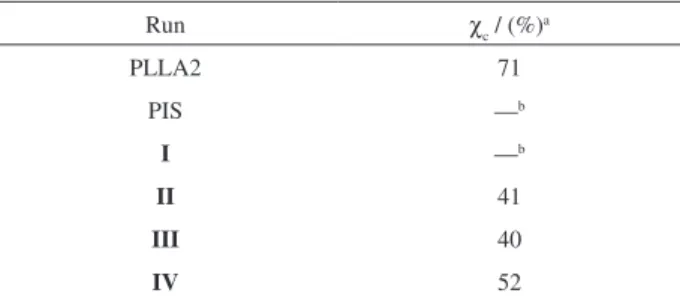
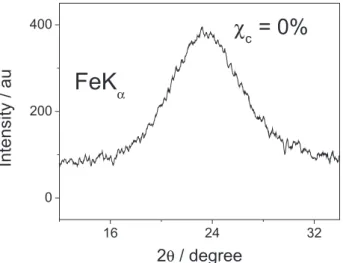
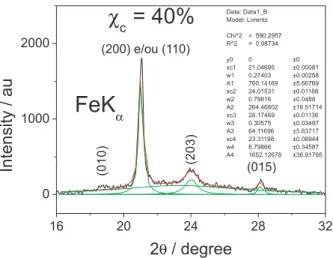
WAXD was used as supporting technique to determine the degrees of crystallinity of the powdered samples previously annealed. The samples of PIS and I were not annealed. The diffraction pattern obtained for PLLA2 is similar to that reported in literature,33,34 while the diffraction pattern obtained for PIS showed, as expected,4 only an amorphous halo, characteristic of non-crystalline samples. The diffraction patterns obtained for II-IV are comparable with that obtained for PLLA2, whilst that obtained for I is comparable with that of PIS (see Supplementary Information). This is strong evidence that while I is a fully random copolymer, II-IV preserves blocks of L-lactic acid in its structure.
The degrees of crystallinity (Table 6) were obtained from WAXD proiles with curve decompositions following Gauss or Lorentz function its (Supplementary Information). They amount to 71% (PLLA2), 0% (PIS), 0% (I), 41% (II), 40% (III), and 52% (IV). Shorter blocks and loss in crystallinity are expected as the consequence of undesirable side transesterification reactions. Therefore, the data presented in Table 6 conirms the occurrence of mild secondary transesteriication reactions involved during the syntheses of II and III.
Conclusions
Four types of products (I-IV) with low average molar masses were synthesized from different approaches via copolymerization techniques. The calculated m/z values for adducts of I-IV were in good agreement with the experimental values observed by MALDI-TOFMS, indicating that co-oligomers were obtained.
Although the analysis of 13C NMR data was done in qualitative terms, the indings were consistent with those attained by MALDI-TOFMS. 13C NMR data indicated that
Table 6. Degrees of crystallinity obtained by WAXD for the powdered samples previously annealed (48 h at 90 ºC)
Run χc / (%)a
PLLA2 71
PIS —b
I —b
II 41
III 40
IV 52
aDegree of crystallinity; bobserved only an amorphous halo for each
sample, which is expected for the scattering patterns produced by non-crystalline samples.
mild secondary transesteriication reactions took place during the syntheses of II and III and blocks of shorter size (than those that would be formed if transesteriication reactions would have not happened) are expected as a result. MALDI-TOFMS data also suggested that undesirable side intermolecular transesteriication reactions were involved during the production of I-III. The WAXD profiles showed that I is completely amorphous and II-IV are semicrystalline. The degrees of crystallinity obtained by WAXD showed that a mild loss in crystallinity occurred for II and III, suggesting a shortening of the blocks due to side transesteriication reactions, in agreement with 13C NMR data. The data obtained by MALDI-TOFMS together with those by 13C NMR and WAXD gave evidence that random (I) and block (II-IV) co-oligomers were attained. The most promising approach to obtain products with higher average molar masses towards biomaterial application was that used to synthesize the product III.
Acknowledgments
The authors thank CNPq, CAPES and FAPESP for inancial support and Dr. Isaura N. Toma (Department of Biochemistry, Institute of Chemistry, USP) for MALDI-TOF mass spectra acquisitions.
Supplementary Information
Supplementary data are available free of charge at http:jbcs.sbq.org.br, as PDF ile.
References
1. Huang, S. J. In Comprehensive Polymer Science: The Synthesis, Characterization, Reactions and Applications of Polymers; Eastmond, G. C.; Ledwith, A.; Russo, S.; Sigwalt, P., eds.; Pergamon Press: New York, 1989, vol. 8, pp. 598, 599. 2. Middleton, J. C.; Tipton, A. J.; Biomaterials 2000, 21, 2335. 3. Albertsson, A. C.; Karlsson, S. In Comprehensive Polymer
Science, First Supplement; Aggarwal, S. L.; Russo, S., eds.; Pergamon Press: New York, 1992, pp. 285-297.
4. Okada, M.; Okada, Y.; Aoi, K.; J. Polym. Sci., Part A: Polym. Chem. 1995, 33, 2813.
5. Thiem, J.; Lüders, H.; Polym. Bull. 1984, 11, 365.
6. Stoss, P.; Hemmer, R.; Adv. Carbohydr. Chem. Biochem. 1991, 49, 93.
7. Schilling, L. B.; FEMS Microbiol. Rev. 1995, 16, 101. 8. Kricheldorf, H. R.; J. Macromol. Sci., Rev. Macromol. Chem.
Phys. 1997, C37, 599.
10. Odian, G.; Principles of Polymerization, Willey: New York, 2004.
11. Pasch, H.; Schrepp, W.; MALDI-TOF Mass Spectometry of Synthetic Polymers, Springer: New York, 2003.
12. Shyamroy, S.; Garnaik, B.; Sivaram, S.; J. Polym. Sci., Part A: Polym. Chem. 2005, 43, 2164.
13. Saeed, K. A.; Ayorinde, F. O.; Eribo, B. E.; Gordon, M.; Collier, L.; Rapid Commun. Mass Spectrom. 1999, 13, 1951.
14. Adamus, G.; Rizzarelli, P.; Montaudo, M. S.; Kowalczuk, M.; Montaudo, G.; Rapid Commun. Mass Spectrom. 2006, 20, 804.
15. Alicata, R.; Barbuzzi, T.; Giuffrida, M.; Ballistreri, A.; Rapid Commun. Mass Spectrom. 2006, 20, 568.
16. Borda, J.; Kéki, S.; Bodnár, I.; Németh, N.; Zsuga, M.; Polym. Adv. Technol. 2006, 17, 945.
17. Libiszowski, J.; Kowalski, A.; Duda, A.; Penczek, S.; Macromol. Chem. Phys. 2002, 203, 1694.
18. Shringer, R. L.; Struck, H. C.; Org. Synth. 1932, 12, 66. 19. Joziasse, C. A. P.; Grijpma, D. W.; Bergsma, J. E.; Cordewener,
F. W.; Bos, R. R. M.; Pennings, A. J.; Colloid Polym. Sci. 1998, 276, 968.
20. Garlotta, D.; J. Polym. Environ. 2001, 9, 63.
21. Perego, G.; Cella, G. D.; Bastioli, C.; J. Appl. Polym. Sci. 1996, 59, 37.
22. Hopton, F. J.; Thomas, H. S.; Can. J. Chem. 1969, 47, 2395. 23. Montaudo, G.; Garozzo, D.; Montaudo, M. S.; Puglisi, C.;
Samperi, F.; Macromolecules 1995, 28, 7983.
24. Ajioka, M.; Enomoto, K.; Suzuki, K.; Yamaguchi, A.; Bull. Chem. Soc. Jpn. 1995, 68, 2125.
25. Abe, H.; Doi, Y.; Hori, Y.; Haghwara, T.; Polymer 1997, 39, 59.
26. Kricheldorf, H. R.; Makromol. Chem. 1978, 179, 2133. 27. Hiki, S.; Miyamoto, M.; Kimura, Y.; Polymer 2000, 41, 7369. 28. Montaudo, G.; Montaudo, M. S.; Puglisi, C.; Samperi, F.;
Spassky, N.; Leborgne, A.; Wisniewski, M.; Macromolecules 1996, 29, 6461.
29. Kowalski, A.; Libiszowski, J.; Duda, A.; Penczek, S.; Macromolecules 2000, 33, 1964.
30. Jalabert, M.; Fraschini, C.; Prud’Homme, R. E.; J. Polym. Sci., Part A: Polym. Chem. 2007, 45, 1944.
31. Lee, H.; Chang, T.; Lee, D.; Shin, M. S.; Ji, H.; Nonidez, W. K.; Mays, J. W.; Anal. Chem. 2001, 73, 1726.
32. Carroccio, S.; Rizzarelli, P.; Puglisi, C.; Rapid Commun. Mass Spectrom. 2000, 14, 1513.
33. Cho, J.; Baratian, S.; Kim, J.; Yeh, F.; Hsiano, B. S.; Runt, J.; Polymer 2003, 44, 711.
34. Mano, J. F.; Wang, Y.; Viana, J. C.; Denchev, Z.; Oliveira, M. J.; Macromol. Mater. Eng. 2004, 289, 910.
Received: October 24, 2008
Web Release Date: August 7, 2009
Su
pp
le
m
enta
ry
Inf
or
m
ati
on
*e-mail: [email protected]
Synthesis and Structural Characterization of Block and Random Low Molecular Weight
Copolymers Composed of L-lactic Acid and Isosorbide Succinate Moieties
Romeu Casarano,a Denise F. S. Petri, a Michael Jaffeb and Luiz H. Catalani *,a
aInstituto de Química, Universidade de São Paulo, 05513-970 São Paulo-SP, Brazil
bMedical Device Concept Laboratory, New Jersey Institute of Technology, Newark, USA
Figure S1. WAXD patterns obtained for powdered samples previously annealed (48 h at 90 ºC) of PLLA2 with curve decompositions following
Gauss function it (R2 = 0.99). “A5” corresponds to the amorphous halo
areas.
Figure S2. WAXD patterns obtained for powdered samples of PIS.
Figure S3. WAXD patterns obtained for powdered samples of I.
Figure S4. WAXD patterns obtained for powdered samples previously annealed (48 h at 90 ºC) of II, with curve decompositions following Gauss
Figure S5. WAXD patterns obtained for powdered samples previously annealed (48 h at 90 ºC) of III, with curve decompositions following Lorentz function it (R2 = 0.99). “A4” corresponds to the amorphous
halo areas.
Figure S6. WAXD patterns obtained for powdered samples previously annealed (48 h at 90 ºC) of IV, with curve decompositions following Gauss