www.eerp.usp.br/rlae
Corresponding Author:
Roberto Wagner Júnior Freire de Freitas
Universidade Federal do Piauí. Centro de Ciências da Saúde Rodovia BR 343, km 3,5
CEP: 64800-000, Floriano, PI, Brasil Bairro: Meladão
E-mail: [email protected]
Roberto Wagner Júnior Freire de Freitas
2Márcio Flávio Moura de Araújo
3Adman Câmara Soares Lima
4Dayse Christina Rodrigues Pereira
5Ana Maria Parente Garcia Alencar
6Marta Maria Coelho Damasceno
71 Supported by Conselho Nacional de Desenvolvimento Científico e Tecnológico, process # 474902/2009-9. 2 PhD, Adjunct Professor, Departamento de Enfermagem, Universidade Federal do Piauí, Floriano, PI, Brazil. 3 PhD, Adjunct Professor, Centro de Ciências da Saúde, Universidade Federal do Maranhão, Imperatriz, MA, Brazil. 4 MSc, Professor, Faculdade de Ensino e Cultura do Ceará, Fortaleza, CE, Brazil.
5 MSc, Professor, Faculdade de Juazeiro do Norte, Juazeiro do Norte, CE, Brazil.
6 Doctoral student, Universidade Federal do Ceará, Fortaleza, CE, Brazil. Adjunct Professor, Centro de Ciências da Saúde, Universidade Regional do Cariri, Crato, CE, Brazil.
7 PhD, Adjunct Retired Professor, Faculdade de Farmácia Odontologia e Enfermagem, Universidade Federal do Ceará, Fortaleza, CE, Brazil.
Objective: to evaluate the lipid profile in a population of university students.
Methods:cross-sectional study with 702 students, of both genders enrolled in various courses at a public university
in Fortaleza-CE. The demographic data and data on lifestyle habits were collected through a
self-administered questionnaire. The blood collection was performed in a clinical laboratory. Results:
showed a predominantly young population, with a mean age of 21.5 years with more females
(62.7%). High levels of triglycerides, total cholesterol and cholesterol associated with low density
lipoprotein (LDL-c) were found in 23.0%, 9.7% and 5.9% of students, respectively. The cholesterol
associated with high density lipoprotein (HDL-c) was at reduced values in 12.0% of subjects
and was significantly associated with smoking (p=0.0231) and physical inactivity (p=0.0357).
Conclusion: changes in lipid profile are present in the young population and intervention studies
should be encouraged in order to reduce the prevalence of cardiovascular disease in adulthood.
Descriptors: Dyslipidemias; Triglycerides; Cholesterol, HDL; Cholesterol, LDL; Young Adult.
Rev. Latino-Am. Enfermagem 2013 Sept.-Oct.;21(5):1151-8.
Introduction
Lipids, represented by phospholipids, cholesterol,
triglycerides (TG) and fatty acids, are considered
essential to the human body, both by making up of the
basic structure of cell membranes (phospholipids), and
by acting as a precursor to steroid hormones, bile acids
and vitamin D, as well as being a constituent of cell
membranes, acting on the luidity of the latter and in the
activation of the enzymes located there (cholesterol) (1).
As for TG, these are formed from three fatty acids
bound to a glycerol molecule and constitute one of the
most important forms of energy storage in the body,
and are deposited in the adipose and muscle tissue.
In relation to lipoproteins, it is emphasized that these
allow the solubilization and transport of lipids, usually
hydrophobic substances, in aqueous plasma. It is
important to note that there are four major classes of
lipoproteins separated into two groups: a) those that
are TG-rich, larger and less dense, represented by
chylomicrons, of intestinal origin, and very low density
lipoproteins, of hepatic origin, and b) those rich in
cholesterol, forming low density (LDL-c) and high density
(HDL-c) particles(1).
In many situations, the concentrations of these
lipids and/or lipoproteins are not in normal amounts
in the human body, in what is known in the scientiic literature as dyslipidemia. Studying the lipid proile
(total cholesterol biochemical determinations – TC,
HDL-c, TG and LDL-c) after fasting for 12 to 14 hours,
has been an activity of great value, considering that
the research already carried out, and correlation
between the morphology of the arteries obtained from
autopsies and cardiovascular risk factors, has allowed
it to be demonstrated that dyslipidemia is a factor of
great importance for the development of atherosclerosis
in later life(2), as well as for the development of other
health disorders such as metabolic syndrome and type 2
diabetes mellitus(1).
It is known that genetic predisposition has inluence
on the development of changes in cholesterol levels,
however, it is not the determining factor in most cases in
which an inappropriate exposure lifestyle is observed(1).
It is noteworthy that researchers now have identiied
the presence of risk factors for chronic diseases in
young people, especially adolescents, demonstrating
that, on a daily basis, individuals of a young age have
shown inappropriate lifestyle(3). It is necessary and very
important to evaluate the lifestyle of young adults so that
preventive measures can be taken as early as possible(4).
Also with regard to young people, special attention
should be given to university students. Among some of
the justiications showing the importance of studying
this group is the fact that they are subject to special
conditions, with their entry into the university system.
For many students, entering university corresponds to
the irst time they will have to take responsibility for
their own housing, feed themselves and manage their
own inances. The association between dificulty in
performing such tasks and psychosocial factors, lifestyle
and situations in an academic setting contribute to the
exposure of students to inappropriate lifestyle habits,
such as skipping meals, consumption of fast food and
eating nutritionally unbalanced meals, which can result
in risk components for a number of diseases(5).
Studies(6-7) show that a large portion of university
students had used licit and illicit drugs at least once in
life and that many of them consider the consumption of
alcohol and smoking as normal and socially acceptable,
which means that the consumption of these is
increasing, causing ill affects on health. Accordingly, it
has been found that university students have distinct
risk behaviors that therefore should be investigated.
Individualizing the problem for dyslipidemia,
Portuguese authors conducted a survey of 154 university
students and found that exposure to university life
greatly increased their levels of cholesterol. The authors
found that students who had recently entered higher
education had lower proportions of dyslipidemia (28.6%),
overweight (12.5%) and smoking (0.0%) compared to
students exposed to academic life (44.0% – dyslipidemia,
16.3% – overweight and – 19.3% smoking)(4).
Literature data are already demonstrating that
although young, many university students already
have risk factors for chronic diseases and metabolic
diseases(8). In order to check the lipid proile of nutrition
students and their relationship with other cardiovascular
risk factors, a study in Santa Catarina, Brazil, with
63 university students, whose ages were 17-43 years
identiied low HDL-c in 47.6% of students and found
hypercholesterolemia in 38.1% of them(9).
Another piece of Brazilian research, this time
carried out at the Faculty of Medicine of São José do Rio
Preto, São Paulo, with 153 university students, aimed
to study the lipid proile and its correlation with risk
factors for cardiovascular disease and, among its main
results, the most important was that altered levels of
total cholesterol, LDL-c and TG were detected in 11.8%,
9.8% and 8.5% of the students, respectively, as well as
It is important to note that in light of these indings,
if no early intervention occurs, these problems will
probably perpetuate and continue to negatively impact
the health of these individuals(11-12).
Thus, taking into account that the dyslipidemia
is present in the young population and that studies
involving this population are scarce, especially in Brazil,
the objective of this investigation was to study the lipid
proile in a population of university students.
Methodology
This is a cross-sectional study conducted with
students, of both genders, at a public university in
Fortaleza, Brazil, in the period January-July 2011.
Based on the total number of students enrolled in
courses at the university being investigated, the sample
was extracted by applying the formula for ininite populations, using P=50%, Q=50% signiicance level
of 0.05 and relative sampling error of 8% (absolute
error=4%)(13).
The calculation resulted in 702 students who were
stratiied according to the following areas: Humanities
(20.4%), Exact Sciences (16.5%), Agriculture (14.0%),
Health (15.1%), Science (18 1%) and Technology
(15.9%). The criteria for inclusion were established as
follows: age ≥18 years, be a student of daytime courses
attended in person, agree to participate in all stages of
data collection, have a landline or cell phone and e-mail
contact. We excluded pregnant women and nursing
mothers.
Of all daytime courses, we selected two from each
area of human knowledge. Students were recruited
through calls made by researchers in the classroom and
through signs posted by the university.
The social and demographic data and data on
lifestyle habits were collected by means of a
self-administered questionnaire, which used a theoretical
framework appropriate to each of the subjects:
Sedentary lifestyle – the following were classiied
as sedentary: students who said they did not practice
regular physical activity at least three times per week
and for at least thirty consecutive minutes per exercise
activity(14).
Smoking – was classiied into four categories:
daily smokers (those who smoked at least one cigarette
per day for at least a month before completing the
questionnaire), occasional smokers (those who do not
smoke daily), former smokers (those that after having
been smokers, had stopped smoking at least one month
before), and nonsmokers (those who had never smoked
or had been smoking for less than a month)(15).
Alcohol Consumption – the validated version in Brazil
of AUDIT (Alcohol Use Disorders Identiication Test) was
used(16) with the following standard procedures.
Regarding the demographic data, it should be
made clear that all measurements were performed by a
group of duly-trained nurses who followed the following
standards rigorously:
Weight – was measured with the students barefoot, wearing light clothing and without wearing accessories.
For this purpose, we used an electronic anthropometric
scale for adults, with 200 kg capacity;
Height – inelastic anthropometric tape ixed to a
smooth wall was used and respondents were instructed
to position themselves erect and motionless, hands lat
on their thighs and their heads placed in the Frankfurt
plane;
Body mass index (BMI) – deined as the ratio of
the weight (kg) by the square of the height (m2) was
calculated and analyzed, taking into account the criteria
of the World Health Organization(17), i.e., considered as
low if BMI <18.5 kg/m2; normal if ≥18.5 and <25.0,
overweight if values between 25.0 and 29.9 kg/m2, and
obese if BMI ≥30 kg/m2;
Waist circumference (WC) – measured at the midpoint between the last rib and the upper border of
the iliac crest, measured at the end of the expiratory
movement, using an inelastic tape placed on the skin,
with the subject in an upright position(8).
Venous blood was collected in a clinical laboratory.
A vacuum collection system was used, BD Vacutainer®
(São Paulo, Brazil), by puncture. For this purpose, the
participants in the study went without food for twelve
hours, for biochemical determinations of triglycerides,
total cholesterol and fractions thereof. The sample was
stored in 5 mL tubes without anticoagulant (for dosages
of triglycerides, total cholesterol and fractions)
After collection, the samples were processed and
centrifuged for twenty minutes in a LS3 CELM Plus®
serologic digital centrifuge (São Paulo, Brazil), with
maximum g force of 1,700 x g. Then, 1 mL aliquots
of serum were separated to perform the biochemical
measurements. For evaluating of biochemical
parameters, commercial Labtest Diagnostic S/A® (Minas
Gerais, Brazil) kits were used, with standard techniques
based on enzymatic and colorimetric methods,
spectrophotometry, according to the manufacturer’s
recommendations. The concentrations were determined
Rev. Latino-Am. Enfermagem 2013 Sept.-Oct.;21(5):1151-8.
analyzer (Minas Gerais, Brazil) and the determinations
of LDL-c were calculated using the Friedewald formula.
A free snack was offered to all of the participants once
the blood samples had been taken.
For the statistical analysis, SPSS software, version
16.0 was used. For the continuous-type sociodemographic
and economic variables, we calculated the average and
standard deviation. To associate the lipid proile with
gender, we used the median of the variables and the
Mann-Whitney test. In the association between the
mean serum levels of total cholesterol, HDL-c, LDL-c
and triglycerides with variables related to lifestyle and
demographics, we used the ANOVA variance and then
Tukey test. For all crosses those whose P value was less
than 0.05 were considered signiicant.
It should be stressed that all students signed the
Free and Informed Consent form and the study was
approved by the Ethics Committee on Human Research
of the Federal University of Ceará, under protocol
number 208/10.
Results
The study included 702 university students. Of
these, 62.7% were women, 49.3% “colored” (pardo,
dark-skinned, mixed-race), 92.0% were single and
53.3% were in the age group 20-24 years. The majority
of the participants were students of the Humanities,
20.4%, and freshman, 69.1%.
The average household income was R$ 3,211.66
(SD=3765.48), distributed with higher proportions of
economic classes B and C (79.0%), considered to be
average purchasing power by Brazilian standards. In
addition, 64.7% were doing nothing other than studying
and 70.4% lived with their parents.
Excess weight was detected in 26.4%, with 21.3%
and 5.1% for overweight and obesity, respectively.
The CC was at high values in 5.4% of students. It was
found also that 70.2% were sedentary, 8.5% were using
tobacco and 6.6% had harmful alcohol consumption.
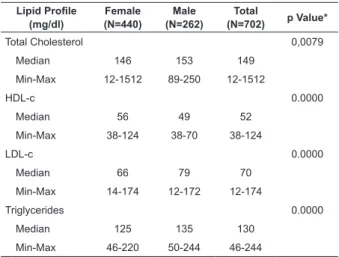
Table 1 - Median Values for Lipid Proile according to
gender. College students. Fortaleza, CE, Brazil, 2011
Table 2 - Association between mean serum levels of total cholesterol, HDL-c, LDL-c and triglycerides and variables
related to lifestyle and demographics. University students. Fortaleza, CE, Brazil, 2011
*Mann-Whitney Test Lipid Proile
(mg/dl)
Female (N=440)
Male (N=262)
Total
(N=702) p Value*
Total Cholesterol 0,0079
Median 146 153 149
Min-Max 12-1512 89-250 12-1512
HDL-c 0.0000
Median 56 49 52
Min-Max 38-124 38-70 38-124
LDL-c 0.0000
Median 66 79 70
Min-Max 14-174 12-172 12-174
Triglycerides 0.0000
Median 125 135 130
Min-Max 46-220 50-244 46-244
Variable
Total Cholesterol Low-density
lipoprotein (HDL-c)
High-density
lipoprotein (LDL-c) Triglycerides
Mean P* Mean P* Mean P* Mean P*
Smoking 0.5812 0.0231 0.1697 0.0771
Smokers 159 51 80 134
Non-smokers 154 54 74 126
Levels of total cholesterol in serum were higher
in smokers, those overweight and those who had high
waist circumference values. Moreover, they did not
vary according to physical activity levels. There was no
statistically signiicant relationship in any of the crosses
performed. With regard to HDL-c, it is clear that the
variables smoking and but a sedentary lifestyle showed
a signiicant relationship, i.e., students who smoke
and were physically inactive had lower mean levels,
compared to a nonsmoking students and those who
practice physical activities (Table 2).
Regarding the lipid proile of the university students,
high triglyceride, total cholesterol and LDL-c levels were
found in 23.0%, 9.7% and 5.9%, respectively. With
regard to HDL-c, reduced levels were present in 12.0%
of the students.
By associating the lipid proile by gender, it was
realized that the men showed the largest median total
cholesterol, LDL-c and triglycerides, while females had
higher levels of HDL-c. All crosses found statistically
signiicant association as summarized in Table 1.
Table 2 - (continuation)
Figure 1 - Correlation between the levels of LDL-c and HDL-c in university students. Fortaleza, CE, Brazil, 2011 *Test Used – ANOVA. P<0,05 Considered Signiicant
The mean LDL-c levels were higher in smokers,
those with a sedentary lifestyle, those high waist
circumference values, and especially those who are
overweight, the latter showing a statistically signiicant
association. The mean triglyceride levels showed no
signiicant relationship with any of the variables studied
(Table 2).
Based on the normality of the variables, correlation
measures were carried out using the Spearman test. The Variable
Total Cholesterol Low-density
lipoprotein (HDL-c)
High-density
lipoprotein (LDL-c) Triglycerides
Mean P* Mean P* Mean P* Mean P*
Sedentary Lifestyle 0.9422 0.0357 0.3132 0.1532
Yes 155 52 76 130
No 155 54 73 126
IMC 0.5800 0.0751 0.0203 0.1542
Underweight 151 53 73 124
Normal (healthy) weight 153 54 72 125
Overweight 160 52 81 132
Obese 161 51 83 130
Waist circumference 0.5112 0.4471 0.3638 0.2167
Normal 155 53 74 127
High 161 54 79 133
correlation between the levels of LDL-c and HDL-c levels
was found to be proportional (r=0.167) but weak and
statistically insigniicant (p=0.248) (Figure 1). Among
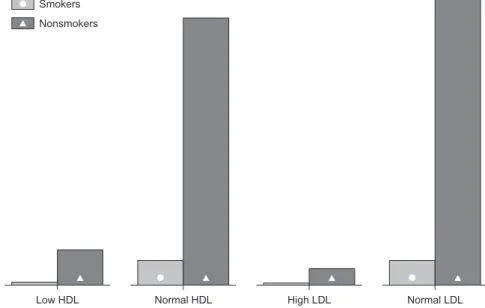
nonsmokers, the correlation between the levels of
HDL-c was positive (r=0.391) and statistically signiicant
(p=0.005), i.e. in this group there is an increase in levels
of this lipoprotein (Figure 2). With respect to LDL-c, this
was not repeated (r=- 0.223) and was not statistically
Rev. Latino-Am. Enfermagem 2013 Sept.-Oct.;21(5):1151-8.
Figure 2 - Correlation between HDL-c and LDL-c levels and smoking in university students. Fortaleza, CE, Brazil, 2011
Discussion
In the present study, we evaluated 702 university
students of both genders. The population was
predominantly young, with a mean age of 21.5 years
and female. Excess weight, sedentary lifestyle, tobacco
and alcohol consumption were present in 26.4%,
70.2%, 8.5%, and 6.6% of the sample, respectively.
High levels of triglycerides, total cholesterol and LDL-c
were found in 23.0%, 9.7% and 5.9% of students,
respectively. The HDL-c values were low in 12.0% of
subjects and were signiicantly associated with smoking
and physical inactivity.
The mean age of 21.5 years can be explained by
this being the most frequent age to enroll in higher
education in Brazil. To prove this assertion, one can
point to an investigation conducted in the southwestern
state of Minas Gerais, involving 349 students on the
delete Nursing, Biological Sciences, Nutrition and
Physical Education courses, which found that 45.3% of
the sample were aged between 20 and 30 years(18).
As noted, overweight and obesity were present
in 21.3% and 5.1%, respectively, higher than the
percentage found in university students in Portugal (19),
12.2% and 3.2%, and lower than those found in Chile(20),
where excess weight was present in 70.1% of the sample.
Regarding physical activity, the majority of
students were classiied as sedentary (70.2%). Yet
as noted, references that could be compared to this
result are virtually unanimous in showing high rates of
physical inactivity among students in higher education.
These indings to not just concern Brazil because they
are common in other countries, often with a more
worrisome prevalence. Nationally, studies have found
rates of physical inactivity of 74.7% and 57.9%,
respectively(18,21), while internationally, research has
found values of 91.5% and 72.5%, respectively(20,22).
Also in relation to lifestyle, smoking and drinking
were present in 8.5% and 6.6% of students. As for
smoking, Venezuelan scholars, investigating a population
of 100 university students, found higher values than the
present study, noting that 23.0% of them were using
tobacco(23). Other researchers, seeking to investigate
risk factors for chronic non-communicable diseases
in 120 medical students found prevalence of smoking
and alcohol consumption of approximately 34.2% and
68.3% of them, respectively(22).
It was observed that in the study in question, that
men were the ones with the biggest changes in CT
values (p=0.0079), LDL-c (p=0.0000) and triglycerides
(p=0.0000). On the other hand, the women had higher
levels of HDL-c (p=0.0000). These indings, when
compared to the literature, are sometimes similar and
sometimes not. For example, a study conducted in
Cartagena – Colombia, with 301 students found too, that
men were the ones with larger changes in the levels of
TC, LDL-c and triglycerides, the latter association being
statistically signiicant(24).
However, the indings of this study do not agree
with the results of an investigation carried out in
Portugal with 154 students, at the University of Aveiro.
association between lipid proile and gender, however,
it was the women who had higher mean values of TC
(164.1 mg/dL), LDL-c (83.04 mg/dL) and triglycerides
(112.69 mg/dL) compared to men(4).
With respect to the cross between lifestyle habits
and anthropometric data, with the lipid proile, the
present study found that smoking, sedentary, overweight
and high waist circumference subjects were those who
had dyslipidemia.
For smoking, a statistically signiicant association
with HDL-c (p=0.0231) was found. The literature makes
it clear that smoking leads to changes in the lipid proile, leading to signiicantly increases in triglycerides, VLDL
and LDL-c, as well as a decrease in HDL-c(25).
A sedentary lifestyle was also associated with
HDL-c, and lower average cholesterol was found among
those who did not engage in regular physical activity.
It is known that physical exercise produces an increase
in the metabolism of lipids and carbohydrates. One of
the most signiicant changes is the increase in HDL-c,
considered to be the faction which has a protective
effect on atherosclerotic disease(1). These indings,
when confronted with the literature, corroborate the
strong link between physical exercise and maintaining
good health(26).
Excess weight was associated statistically
(p=0.0203) with an increase in the levels of LDL-c in
this study. A study conducted at Tufts University in
Boston, United States, with 564 (mean age=19.1 years)
students found that 16.2% of the students already were
overweight/obese. Furthermore, a strong association
was found between overweight and high levels of TC and
LDL-c, as well as between physical activity and increased
HDL-c and a lowering of triglyceride levels(26).
The waist circumference Classiication (WC) in the present study showed no statistically signiicant relationship with the lipid proile, however, it was
found that those students who had a large WC had
high mean values of TC, LDL-c and increased TG levels,
when compared to those with normal WC. Searches
in the literature identiied that Brazilian researchers
also found similar results and other researchers
have observed that individuals with abdominal
obesity had a higher prevalence of dyslipidemia,
as well as other diseases such as hypertension and
diabetes mellitus(9).
Given the above, it is clear that the university
students studied showed signiicant changes in different
variables related to health, such as overweight, physical
inactivity and dyslipidemia, which demonstrates the
need for routine assessments of this portion of the
population. Researchers are already suggesting that
there is a need to assess the health, health and the
behavior determinants of young people during the
transition from school to university(27).
It cannot be denied that young people when they
enter the university, are still shaping their habits and
are at a critical point in their lives, making lifestyle
choices. The transition to adulthood is an ideal time
to encourage individuals to adopt healthy lifestyles.
Accordingly, the chances of this population of the sticking
to the guidelines in relation to a healthier lifestyle are
signiicantly increased(11-12).
Conclusion
The results of the study indicate that changes to
the lipid proile were present in the population studied.
High levels of triglycerides, total cholesterol and LDL-c
were found in 23.0%, 9.7% and 5.9% of the university
students, respectively. HDL-c had diminished values in
12.0% of the subjects and was signiicantly associated
with smoking (p=0.0231) and a sedentary lifestyle
(p=0.0357).
Given these indings, further research should be
carried out, either of an epidemiological nature, so that
larger samples of university students can be studied in
different areas of Brazil, or intervention studies, so that
healthy habits are incorporated and developed in the
lives of these students.
References
1. Sociedade Brasileira de Cardiologia. IV Diretriz
Brasileira sobre Dislipidemias e Prevenção da
Aterosclerose. Departamento de Aterosclerose da
Sociedade Brasileira de Cardiologia. Arq Bras Cardiol.
2007;88 Suppl I:2-19.
2. Carreras G, Ordoñez J. Adolescence, physical activity,
and metabolic cardiovascular risk factors. Rev Esp
Cardiol. 2007;60(6):565-8.
3. Costa JV, Silva ARV, Moura IH, Carvalho RBN,
Bernardes LE, Almeida PC. An analysis of risk factors
for arterial hypertension in adolescente students. Rev.
Latino-Am. Enferm. 2012;20(2):289-95.
4. Brandão MP, Pimentel FL, Cardoso MF. Impacto
f academic exposure on health status of university
students. Rev Saúde Pública. 2011;45(1):49-58.
5. Cota RP, Miranda LS. Associação entre constipação
intestinal e estilo de vida em estudantes universitários.
Rev. Latino-Am. Enfermagem 2013 Sept.-Oct.;21(5):1151-8.
Received: July 28th 2012 Accepted: July 15th 2013
6. Morales BN, Plazas M, Sanchez R, Ventura CAA. Risk and
protection factors related to the consumption of psychoactive
substances in undergraduate nursing students. Rev.
Latino-Am. Enfermagem. 2011; 19(n.spe):673-83.
7. Ortega-Perez CA, Costa-Júnior ML, Vasters GP.
Epidemiological profile of drug addiction in college students.
Rev. Latino-Am. Enfermagem. 2011; 19(n.spe):665-72.
8. Fernandes J, Lofgren IE. Prevalence of metabolic
syndrome and individual criteria in college students. J
Am Col Health. 2011;59(4):313-21.
9. Salvaro RP, Ávila Júnior S. Perfil lipídico e sua relação
com fatores de risco cardiovascular em estudantes de
nutrição. Rev SOCERJ. 2009;22(5):309-17.
10. Coelho VG, Caetano LF, Liberatone RDR Júnior,
Cordeiro JA, Souza DRS. Perfil lipídico e fatores de
risco para doenças cardiovasculares em estudantes de
medicina. Arq Bras Cardiol. 2005;85(1):57-62.
11. Huang TTK, Shimel A, Lee RE, Delancey W, Strother
ML. Metabolic risks among college students: prevalence
and gender differences. Metab Syndr Relat Disord.
2007;5(4):365-72.
12. Irazusta A, Hoyos I, Irazusta J, Ruiz F, Diaz E, Gil
J. Increased cardiovascular risk associated with poor
nutritional habits in first-year university students. Nutr
Res. 2007;27(1):387-94.
13. Hulley SB, Cummings SR, Browner WS, Grady
D, Newman TB. Delineando a pesquisa clínica: uma
abordagem epidemiológica. 3th ed. Porto Alegre:
Artmed; 2008. 384 p.
14. Souza LJ, Giovane NC, Chalita FE. Prevalência
de obesidade e fatores de risco cardiovasculares em
Campos, Rio de Janeiro. Arq Bras Endocrinol Metab.
2003;47(6):669-76.
15. World Health Organization. Tobacco country profiles.
2nd ed. Proccedings of the 12th World Conference on
Tobacco or Health. Helsinki, Finland; 2003.
16. Figlie NB, Pillon SC, Dunn J, Laranjeira R. The
frequency of smoking and problem drinking among
general hospital inpatients in Brazil – using the AUDIT
and Fagerström questionnaires. São Paulo Med J.
2000;118(5):139-43.
17. World Health Organization. Defining the problem of
overweight and obesity. In: World Health Organization.
Obesity: preventing and managing the global epidemic:
report of a Who Consultation. Geneva; 2000. (WHO
technical report series, 894).
18. Oliveira TT, Souza BC, Silveira GSL, Santos M. Fatores
de risco para doenças cardiovasculares em estudantes
universitários das áreas de ciências biológicas e da
saúde. Ciênc Praxis. 2008;1(2):41-5.
19. Brandão MP, Pimentel FL, Silva CC, Cardoso MF. Factores
de risco cardiovascular numa população universitária
portuguesa. Rev Port Cardiol. 2008;27(1):7-25.
20. Palomo IF, Torres GI, Alarcón MA, Maragaño PJ,
Leiva E, Mujica V. Alta prevalencia de factores de riesgo
cardiovascular clásicos en una población de estudiantes
universitarios de la región centro-sur de Chile. Rev Esp
Cardiol. 2006;59(11):1099-105.
21. Silva LR, Silveira SS, Freitas RWJF, Sousa VEC,
Barbosa ICFJ, Damasceno MMC. Risk factors for diabetes
mellitus type 2 in nursing students. Rev Enferm UFPE on
line. 2011;5(3):757-63.
22. Oviedo G, De Salim AM, Santos I, Sequera S, Soufrontt
G, Suárez P, et al. Risk factors of nontransmissible
chronic diseases in students of medicine of Carabobo
University. Nutr Hosp. 2008;23(3):288-93.
23. Hernández MA, García HL. Factores de riesgo y
protectores de enfermedades cardiovasculares en
población estudiantil universitaria. Rev Fac Medicina
(Caracas). 2007;30(2):119-23.
24. Hernández-Escolar J, Herazo-Beltrán Y, Valero
MV. Frequencia de factores de riesgo asociados a
enfermedades cardiovasculares en población universitaria
joven. Rev Salud Pública. 2010;12(5):852-64.
25. Mammas IN, Bertsias GK, Linardakis M, Tzanakis
NE, Labadarios DN, Kafatos AG. Cigarette smoking,
alcohol consumption, and sérum lipid profile among
medical students in Greece. Eur J Public Health.
2003;13(1):278-82.
26. Sacheck JM, Kuder JF, Economos CD. Physical fitness,
adiposity, and metabolic risk factors in Young college
students. Med Sci Sports Exerc. 2010;42(6):1039-44.
27. Colder CR, Flay BR, Segawa E, Hedeker D. Trajectories
of smoking among freshmen college students with prior
smoking history and risk for future smoking: data from
the University Project Tobacco Etiology Research Network