Pharmaceutical Sciences
http://dx.doi.org/10.1590/s2175-97902017000300173
R
e
*Correspondence: K. Pathak. Department of Pharmaceutics, Pharmacy Col-lege Saifai, Uttar Pradesh University of Medical Sciences, Saifai, Etawah, U.P. India 206130. E-mail:[email protected]
Decades of research in drug targeting using gastroretentive drug
delivery systems for antihypertensive therapy
Amit Porwal
1, Harinath Dwivedi
2, Kamla Pathak
1*1Department of Pharmaceutics, Pharmacy College Saifai, Uttar Pradesh University of Medical Sciences, Saifai, Etawah, UP, India,2School of Pharmacy, Babu Banarasi Das University, Faizabad Road, Lucknow, UP, India
The limitations in absorption of drugs with narrow absorption window, or those unstable in the intestinal pH or those exhibiting low solubility at high pH are primary candidates for gastroretentive drug delivery systems (GRDDS). The delivery system has been widely explored for its commercial potential for a wide variety of therapeutic agents. GRDDS ofer clinical therapeutics for acute and chronic management. Hypertension is a chronic disease that requires long term treatment and its management by patient compliant dosage forms would be clinically useful. Antihypertensives belonging to diferent classes have proved good candidates for the formulation of GRDDS. The review aims to discuss various GRDDS researched for antihypertensive drugs to increase the gastric residing time, bioavailability, henceforth to reduce the dose of the drug, dosing frequency and increase patient compliance. It also explores various marketed products and the patents iled/granted for GRRDS of antihypertensives. The GRDDS investigated include efervescent and non-efervescent loating drug delivery systems, swelling and expanding systems and bio/mucoadhesive systems. Many other systems that provided research platforms include high density systems, raft forming systems and osmotic delivery systems. In clinical context, wherein combination of antihypertensives is indicated, dual release delivery systems may also be explored.
Keywords: Antihypertensive drugs. Gastroretention delivery systems/absorption. Floating systems. Expanding and swelling systems, Bio/mucoadhesive systems.
INTRODUCTION
The drug delivery systems for oral administration such as drug release rate-controlled delivery systems, time-controlled delivery systems and site-speciic delivery systems have been extensively explored due to their signiicant therapeutic advantages. The current controlled release technology has made it possible to release drugs at a constant release rate for longer periods of time ranging from days to years (Sato et al., 2003; Streubel, Siepmann, Bodmeier, 2006). However, this beneit has not satisied
a variety of important drugs that (i) are locally active in the stomach, (ii) have an absorption window in the stomach or in the upper small intestine, (iii) are unstable in the intestinal or colonic environment, and/ (iv) exhibit low solubilities at high pH values (Streubel, Siepmann, Bodmeier, 2006; Rocca, Omidian, Shah, 2003). These
stomach is completely emptied of gastric luid. In such a situation, there is nothing to loat on. A prolonged stay in the stomach is not desirable for drugs that (i) cause gastric lesions (e.g., NSAIDs); (ii) are unstable in the acidic pH of the stomach; or (iii) undergo a significant first-pass efect (i.e., metabolism in the liver prior to entering the systemic circulation; e.g., nifedipine) (Streubel, Siepmann, Bodmeier, 2006).
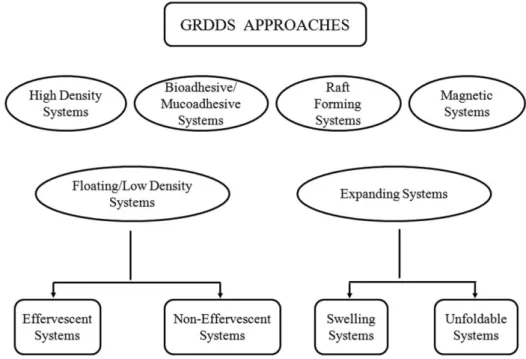
Different techniques used for gastric retention (Arora et al., 2005; Prinderre, Sauzet, Fuxen, 2011; Adebisi, Conway, 2011) are compiled as a schematic chart (Figure 1). These systems have been researched for a wide variety of therapeutic categories including antiulcer drugs, antibiotics, anti-diabetic drugs, cardiovascular drugs, drugs for gout and NSAIDS.
Hypertension and its therapy
Hypertension is the term used to describe high blood pressure. Normal blood pressure is below 120/80 mmHg; blood pressure between 120/80 mmHg and 139/89 mmHg is called “pre-hypertension”, and a blood pressure of 140/90 mmHg or above is considered high. An elevation of the systolic and/or diastolic blood pressure increases the risk of developing heart (cardiac) disease, kidney (renal) disease, hardening of the arteries (atherosclerosis or arteriosclerosis), eye damage, and stroke (brain damage). These complications of hypertension are often referred to as end-organ damage because damage of these organs is the result of chronic (long duration) high blood
pressure. To nullify its impact, the diagnosis of high blood pressure is important so that eforts can be made to normalize blood pressure and prevent complications (MedlinePlus, 2015; Macgill, 2016). The treatment approaches include diuretics, ACE inhibitors, angiotensin antagonists, β-adrenergic blockers, α-adrenergic blockers, calcium channel blockers and vasodilators (Table I). Most anti-hypertensive medications can be used either alone or in combination: some are used only in combination (amlodipine with lisinopril); some are preferred over others in certain speciic medical situations; and some are not to be used (contraindicated) in speciic situations. Combination therapy is advocated when monotherapy fails or is not tolerated. In practice, a large majority of hypertensives ultimately require 2 or more drugs. Even initial treatment of mild to moderate hypertension with a low dose combination is being advocated as an alternative strategy. (Tripathi, 2003).
Need for GRDDS of antihypertensive drugs
Hypertension is one of the most common conditions in primary care and one of the key risk factors, along with hyperlipidemia, hyperglycemia, obesity and smoking etc that contribute to other diseases like myocardial infarction, stroke, renal failure and death. Joint National committee VIII (United States) estimates suggest more than 1 billion hypertensive patients world-wide. As per WHO report on World Health Statistics 2012, one in every three adults has raised blood pressure (Arora et
al., 2015). This becoming a chronic disease requires long term treatment. GRDDS can be a viable option for management of hypertension management as several antihypertensive drugs are associated with (a) narrow absorption window {e.g. furosemide (Pawar et al., 2012; Davis, 2005; Darandale, Vavia, 2012), atenolol, diltiazem (Srikanth et al., 2011)}; (b) short half-life {e.g. losartan (Chen et al., 2010), furosemide (Darandale, Vavia, 2012)}, (c) instability {e.g. captopril (Streubel, Siepmann, Bodmeier, 2006; Pawar et al., 2012)} at high pH values; (d) low solubility {e.g. verapamil (Streubel, Siepmann, Bodmeier, 2006; Niranjanbhai et al., 2012), furosemide (Streubel, Siepmann, Bodmeier, 2006), propranolol (Chinta et al., 2009)} at high pH, and (e) degradation in the colon {e.g. metoprolol (Srikanth et al., 2011)}. GRDDS is an approach to prolong gastric residence time, thereby
targeting site speciic drug release in the upper GIT for local or systemic efects. This site-speciic drug delivery reduces undesirable side efects of administered drug as it can minimize the counter activity of the body leading to higher drug eiciency. This review aims to discuss various GRDDS of antihypertensive drugs to increase the gastric residence time, bioavailability, henceforth to reduce the dose of the drug, dosing frequency and increased patient compliance.
GRDDS FOR ANTIHYPERTENSIVE DRUGS
Gastroretentive systems using polymers have been extensively investigated for various antihypertensive drugs and the findings are summarized in a classified manner in the following sections.
Floating Systems
Effervescent systems
Floatability can be achieved by generation of gas bubbles. CO2 can be generated in situ by incorporation of carbonates or bicarbonates, which react with acid-either the natural gastric acid or co-formulated as citric or tartaric acid. An alternative is to incorporate a matrix with entrapped liquid, which forms a gas at body temperature. Drug and excipients can be formulated independently and the gas generating unit can be incorporated into any of the layers. Further reinements involve coating the matrix with a polymer which is permeable to water, but not to CO2. The main diiculty of such formulation is to ind a good compromise between elasticity, plasticity and permeability of the polymer (Bardonnet et al., 2006).
Chen et al. (2010) formulated gastroretentive tablets based on efervescence/swelling mechanism using polymers sodium carboxymethyl cellulose, hydroxyethyl cellulose and sodium bicarbonate for losartan. To evaluate swelling and efervescent properties, tablets were prepared with different compression pressure. The optimized formulation floated for more than 16 h with a swollen diameter of 2 cm within 3 h in the simulated gastric luid. Also, the formulations showed pH-dependent drug release with an extension for 24 h. Clinical trials of the optimized GRDDS were assessed on the bioavailability of losartan and the formation extent of active metabolite E3174 by CYP2C9 polymorphism. Trials in healthy human volunteers showed an enhanced bioavailability of approximately 164% as compared to the immediate release marketed formulation Cozaar®. As expected, the developed GRDDS showed favourable pharmacokinetic parameters: increased mean residence time whereas, Tmax
TABLE I - The commercial dosage forms ofantihypertensive drugs
Category Drug Dosage forms
Diuretics Thiazides
Loop acting
K+ sparing
drugs Hydrochlorthiazide, Chlorthalidone Furosemide, Terosemide Spironolactone, Triamterene Tablets Tablets Tablets, injection Tablets Tablets Tablets
ACE inhibitors Captopril,
Enalapril, Lisinopril Quinapril Tablets Tablets Tablets Tablets Angiotensin antagonist Losartan, Candesartan Tablets Tablets β-adrenergic blockers Propranolol, Metoprolol, Atenolol Tablets, injection Tablets, injection Tablets α-adrenergic blockers Prazosin, Terazosin Tablets Tablets β + α Adrenergic
and Cmax were lower as compared to Cozaar® concluding the enhancement in bioavailability due to gastroretention.
Ozdemir, Ordu and Ozkan (2000) designed loating bilayer tablets with controlled release for furosemide. To enhance the poor solubility of furosemide in the gastric medium, its inclusion complex with beta-cyclodextrin in a 1:1 proportion was prepared by kneading method. The irst layer constituted of HPMC 4000, HPMC 100, and CMC and the drug. The second layer was composed of the efervescent mixture of sodium bicarbonate and citric acid. The in vitro loating studies inferred that lesser the
compression force the shorter was the time of onset of floating. For tablets compressed at 15 MPa, floatation was initiated in 20 min whereas at a force of 32 MPa the time was prolonged to 45 min. In vivo studies on six healthy male volunteers revealed gastroretention of 6h when monitored by radiography. Pharmacokinetic studies showed that the bioavailability of the drug from the loating tablets was 1.8 times than that of the conventional tablets. These findings suggested that the delivery of furosemide from floating bilayer tablets resulted in sustained antihypertensive efect.
Another study on furosemide, by Meka et al. (2009) reports formulation of polymer coated mini tablets as multiple unit gastroretentive floating systems. A core containing a solid dispersion of furosemide in polyvinyl pyrrolidone with other excipients was prepared by direct compression. The core was coated first with an effervescent layer (sodium bicarbonate) and a second coat with polymethacrylates (Eudragit RL30D) was afected. Interestingly, with an increase in the amount of the efervescent agent and decrease in the coating level of the polymer, the time to loat was decreased. The in vivo gastric residence time examined by radiograms revealed gastroretention of about 6 h that would be helpful in drug release sustainment. The stability samples showed no signiicant change in dissolution proiles.
In a research endeavour, Elkheshen, Yassin and Alsuwayeh (2004) formulated and evaluated floating effervescent sustained release tablets of verapamil hydrochloride from granules containing mixtures of a forming matrix (HPMC, HPC, EC/carbopol) together with sodium bicarbonate and anhydrous citric acid. In vivo X-ray imaging experiments conducted on fasted beagle dogs to abolish the efect of food, showed that the gastric emptying time of the loating tablets could be more than 4 h and less than 5 h. Results demonstrated that the optimized formulation delayed the gastric emptying time under fasted conditions. While fed state is the primary requirement for gastroretention in vivo studies so the fed state would prove useful.
Directly compressed loating tablets of verapamil hydrochloride have also been reported by Dawange, Khadabadi and Saboo (2015). A variety of polymers and efervescent properties (HPMC K15M, sodium alginate, sodium bicarbonate and citric acid) were utilized to optimize the desired disposition profile by 32 factorial design. It was found that the levels of HPMC K4M, sodium alginate and their interaction had significant inluence on both the drug release and loating lag time of the delivery system. In vitro drug release studies showed sustained release for 12 h and that followed Korsemeyer Peppas model.
A similar formulation approach was used by Rahman, Ali and Khar (2006) for formulating a bilayer floating tablet of captopril using direct compression technology. First layer consisted of HPMC K-grade and a mixture of citric acid and sodium bicarbonate. Second layer contained captopril and various polymers like HPMC K15M, PVP-K30 and Carbopol 934P. The optimized formulation released 95% of drug in 24 h in vitro, while the loating lag time was 10 min and the formulation remained floatable throughout the study. The release kinetics followed the Higuchi model. X-ray imaging method used to evaluate the buoyancy behaviour of captopril bilayer-loating tablet in 10 human subjects showed that the tablets remained in the stomach for about 6.4 h. Thus, the optimized formulation showed gastroretention due to buoyancy conferred by the porous structure formed due to entrapment of CO2. In a mechanistic study, Martinez, Ramirez and Robles (2010) studied the efect of antioxidant metolose SH 4000 SR on drug release from loating matrix tablets of captopril. It was concluded that the higher levels of gas forming agent caused hindrance on drug release, as carbon dioxide bubbles obstructed the difusion path and decreased the matrix coherence. The developed dosage form remained buoyant for a period of more than 8 h. An increase in polymer concentration resulted in decreased drug release rate due to an increasing tortuosity and length of the diffusion path through the matrix.
showed good loating properties and controlled release proiles, with drug release proceeding via swelling and erosion of the polymer matrix. The floatation duration varied from 1 to 20 h with a lag time of less than 3 min. The researchers concluded enhancement in solubility and gastroretention to improve site speciic bioavailability of the drug.
Apart from research reports on tablets, the literature also cites gastroretentive capsules of antihypertensive drugs. Moursy et al. (2003) formulated sustained release loating capsules of nicardipine HCl. A hydrocolloid of high viscosity grade was used for the loating systems, and for aiding buoyancy sodium bicarbonate was added to allow evolution of CO2. In vitro evaluation showed an increase in loating duration with an increase in proportion of hydrocolloid. The optimized sustained release loating capsules were evaluated in vivo in comparison to MICARD (commercially available conventional 20 mg capsule of nicardipine hydrochloride capsules) by using it on rabbits. Drug determination in rabbit plasma revealed a prolonged sustained drug release of 16 h over the conventional “MICARD” capsule (8 h).
Non-effervescent systems
This type of system, after swallowing, swells via imbibitions of gastric luid to an extent that prevents their exit from the stomach. The formulation methods of such type of dosage forms involve the mixing of the drug with a gel, which swells when it comes in contact with gastric luid and maintains a relative integrity of shape and a bulk density of less than one within the outer gelatinous barrier. The air trapped by the swollen polymer provides buoyancy to these dosage forms (Sarojini, Manavalan, 2012).
In an attempt to develop non-efervescent GRDDS of antihypertensives, Sultana, Bhavna and Iqbal (2009) formulated gastroretentive microspheres of lacidipine using chitosan as polymer and glutaraldehyde as the cross-linking agent. The efect of independent variables such as concentration of polymer, glutaraldehyde volume, stirring speed and cross-linking time was evaluated on the dependent variables: mucoadhesion and entrapment eiciency using central composite design. It was found that the polymer concentration and glutaraldehyde volume had pronounced efect on dependent variables.
Shimpi et al. (2004) explored the application of gelucire 43/01 for designing loating granules of a highly water-soluble drug diltiazem HCl. The granules were prepared by melt granulation technique and evaluated for pharmaceutical characteristics. The results of in vivo
gamma-scintigraphy in healthy human volunteers showed that the granules retained in stomach for 6 h and 65–80%
of drug was released over 6 h with an initial fast release from the surface. It was concluded that hydrophobic lipid, gelucire 43/01, can be considered as an efective carrier for design of a multi-unit loating drug delivery system of diltiazem HCl. Additionally, a polymer based multiunit loating system of diltiazem hydrochloride was developed by Ma et al. (2008). Floating alginate microspheres were developed by ionotropic gelation method using calcium carbonate as loatation aid. Experiments were conducted to enhance the drug encapsulation eiciency by adding chitosan into the gelation medium and the drug release was delayed by coating with Eudragit. Both uncoated and coated microspheres were able to continuously float over the simulated gastric fluid for 24 h in vitro.
Gamma scintigraphy technique was used to compare gastrointestinal transit of optimized floating sustained release microspheres with that of the non-loating system manufactured from the same material, in healthy human volunteers. It was observed that the gastric-retention time of the optimized loating microspheres was prolonged for over 5h and was 2.5h for non-loating system. Alginate based floating beads of diltiazem HCl have also been reported by Saxena et al. (2016). The floating beads were prepared by ionotropic external gelation technique using CaCl2 as cross-linking agent. The authors however attempted to improve both the entrapment eiciency and drug release by incorporating low methoxy pectin and sunlower oil as co-polymers along with sodium alginate. SEM images of beads showed sponge like nature with little droplets of oil that imparted buoyancy to the beads. This report paves way for experimenting with many more biological macromolecules and low density food grade oils for preparation of loating beads.
SR and improved with high polymer/drug ratio. The drug release kinetics followed Fickian difusion. While the results concluded the loating and sustained release properties, the viability of single unit system over the reported multiparticulate system is debatable especially in the absence of in vivo studies.
An interesting report by Chinta et al. (2009) explores a novel spray-dried tableting excipient made of chitosan (all three grades) and lactose for developing GRDDS of propranolol HCl. Specific amount(s) of chitosan was dissolved in an aqueous solution of citric acid and mixed with aqueous solution of lactose and the drug. The resultant solution was spray dried to get granules that were directly compressed with sodium bicarbonate. The tablets showed their 50% drug release between 30 and 35 min. Another report on propranolol HCl by Porwal, Swami and Saraf (2011) describes preparation of sustained release microballoons for increasing its bioavailability by increasing gastroretention. Microballoons were prepared by the non-aqueous O/O emulsion solvent diffusion evaporation method using Eudragit RSPO as polymer. It was found that preparation temperature determined the formation of cavity inside the microballoon and this in turn determined the buoyancy. The microballoons presented spherical and smooth morphologies and remained buoyant for >12 h with favourable in vitro release characteristics.
In vitro release kinetics followed Higuchi model mainly controlled by difusion; and showed a biphasic pattern with an initial burst release, followed by sustained release for 12 h. A single unit loating system of propranolol HCl has also been described by Srikanth et al. (2012) Gastric loating tablet was developed by using central composite design and the efects of formulation variables on drug release and the buoyancy properties were investigated. The independent variables were polyethylene oxide WSR coagulant and sodium bicarbonate. Mathematical modelling of the responses demonstrated significant efects of independent variables on loating lag time, drug release at 1h and t90%. In vivo studies in human volunteers demonstrated buoyancy in gastric luid and the gastric residence time was enhanced in the fed in comparison to the fasted state.
Poorly water soluble antihypertensive drugs have also been developed as non-effervescent GRDDS. Iannuccelli et al. (2000) used solid dispersion of furosemide inpolyvinylpyrrolidone (PVP) to prepare loating multiple unit system. The complete dose release over the actual intra-gastric residence time of the system (about 8 h) was achieved by loading both the core and the membrane forming the units with a 1:5 furosemide/PVP solid dispersion. XRD showed a decrease in crystallinity
of furosemide in solid dispersion, which lead to the improved solubility and dissolution rate of the drug, that further led to desired release proile from the loating units. Further, Sahu, Singh and Verma (2011) formulated non-effervescent floating matrix tablets of furosemide using chitosan and HPMC. The tablets were evaluated for loating capability and in-vitro drug release kinetics. The drug release followed non-Fickian diffusion. On combining HPMC with chitosan in various mixtures, it was observed that formulations followed zero-order kinetics with loatation period of >8 h.
ElMeshad and El-Ashmoony (2012) prepared buoyant beads enclosing furosemide by cross-linking chitosan with dioctyl sodium sulphosuccinate and characterized. The spherical beads loated for over 12 h in simulated gastric fluid and affected retarded release of the drug as compared to pure drug powder and Lasix tablets. The beads remained buoyant in the stomach of dogs for 6 h. The results concluded that chitosan loating beads as efective carrier for furosemide, maximizing its therapeutic efect at the site of absorption in a controlled release pattern.
In another research endeavour, Streubel, Siepmann and Bodmeier (2002; 2003; 2003a)prepared microparticles of verapamil containing polypropylene foam powder and different polymers (Eudragit RS, EC, polymethyl methacrylate) by o/w solvent evaporation method. They also formulated a monolithic loating drug delivery system based on highly porous polypropylene and matrix-forming polymers. The highly porous foam powder provided low density tablets which could loat for at least 8 h in 0.1N HCl. Drug release characteristics were modiied according to the ratio of matrix-forming polymer and foam powder and were also strongly related to drug chemistry.
Coated minitablets of the verapamil formulated by Sawicki (2002) were assessed for their in vivo performance in healthy human volunteers. An increase in AUC was observed for testing minitablet against the immediate release formulation. However, the results could not conclude the gastric retention because of the indirect link between pharmacokinetics and the gastrointestinal position.
combined mechanism(s) of difusion, partially through a swollen matrix and partially through water-filled pores. Floating microspheres (251.80 to 350.75 µm) of verapamil HCl by solvent-difusion evaporation method using cellulose acetate, Acrycoat S100 and Eudragit S100 have been prepared by Tanwar, Naruka and Ojha (2008). The microspheres showed prolonged drug release and remained buoyant for more than 12 h that is nearly two times the value reported for gastroretentive beads reported by Eldeen et al. (2006). In vitro release study demonstrated non-Fickian diffusion of the drug and radiographic images of dog stomach revealed that cellulose acetate microspheres loaded with barium sulphate loated on the gastric luid for about 3.2 h. The hollow structure of the microspheres was responsible for the loating properties.
A similar formulation approach was used by Soppimath et al. (2006) to study the effect of co-excipients on drug release proile and loating property of the hollow microspheres of nifedipine. The drug was incorporated into cellulose acetate hollow microspheres prepared by solvent difusion/evaporation technique in the presence of co-excipients like polyethylene glycol, dibutyl phthalate and poly(-caprolactone) by using ethyl acetate as a dispersing solvent. An increase in polymer concentration resulted in an increase in the size of the microspheres. The microspheres remained buoyant in simulated gastric luid for over 12 h. The presence of co-excipients afected the buoyancy of the microspheres. The cellulose acetate-polyethylene glycol microspheres had lower buoyancy that increased with increasing concentration of polyethylene glycol (PEG). However, on increasing the PEG concentration from 10% to 40%, the buoyancy decreased from 51.3% to 11.8%. Better buoyancy (62–82%) was observed for microspheres made with water-insoluble plasticizer dibutyl phthalate due to its hydrophobic nature that prevented wetting as well as water uptake. The drug release was in a controlled manner that was amenable to modiication by the process variables.
Floating gastroretentive microspheres of carvedilol using EC and HPMC have been reported by Zhang et al.
(2016). The formulations were screened for drug loading (74.62±2.05 to 95.02±1.02%), particle size (270.04±10.30 to 356.30±10.60 μm), loating time (4.5 to 9.12 h) and
swelling at the end of 4h (67.25±1.67 to 93.64±3.05%). The in vitro drug release in pH 1.2 after 6 h was found in the range of 64.45±1.41 to 88.07± 1.74%. The optimized formulation (containing EC=1.0% and HPMC=0.5%) was signiicantly efective in promptly lowering the systolic blood pressure as compared to that of conventional tablet in hypertensive patients.
Using a polymeric blend of hydroxyethylcellulose and chitosan, and sodium bicarbonate Chen et al. (2013) developed gastroretentive drug delivery systems of losartan by combining loating and swelling approaches. They found that formulations containing equivalent ratio of hydroxyethylcellulose and chitosan with 20 mg sodium bicarbonate began loating within 1 min and loated for more than 16 h, exhibiting a swelling ratio of 2 (due to polymeric blend) to achieve an adjustable sustained release proile.
Similarly, Nur and Zhang (2000) designed captopril loating tablets using HPMC (4000 and 15000 cps) and Carbopol 934P. In vitro buoyancy studies exhibited that tablet with hardness of 2 kg/cm2, after immersion loated immediately whereas the tablets with hardness of 4 kg/ cm2 displayed a lag time of 3 to 4 min. Tablets in both cases remained loating for 24 h. No loating capability was found in the tablet with 8 kg/cm2 hardness. It was concluded that the buoyancy of the tablet is governed by both the swelling of the hydrocolloid particles on the tablet surface when it contacts the gastric luids and the porosity of the tablets. A prolonged release for 24h from the loating tablets and the release kinetics fitted Korsemeyer and Peppas equation was followed by irst order kinetics.
In another research, Wu et al. (1997) prepared floating sustained release tablets of nimodipine using HPMC and PEG 6000. Before formulating floating tablets, nimodipine was incorporated into poloxamer-188 solid dispersion after which it was directly compressed into loating tablets. Formulations were optimized using uniform design and variables afecting nimodipine release from matrix were studied. In vitro release followed zero-order kinetics and it was observed that an increase in HPMC and decrease in the PEG 6000 content resulted in decrease in the in vitro release of nimodipine. In vivo
studies in healthy volunteers showed that the optimized formulation could remain floating on gastric fluid for more than 10 h. Relative bioavailability of floating tablets was 391.46% and MRT was more than twice the conventional tablets. Thus, loating tablets of nimodipine loaded solid dispersion results in tremendous increase in the bioavailability of the drug.
Hydrophilic cellulose and pH-independent acrylic polymer based directly compressible controlled release loating matrix tablets of nicorandil were designed and developed by Nath and Ahmed (2016). The optimized formulation was evaluated for stability study and in vivo
in the stomach and in vivo absorption studies showed a signiicant increase in the AUC and MRT.
Expanding and swelling systems
A dosage form in the stomach will withstand gastric transit if it is bigger than the pyloric sphincter. However, the dosage form must be small enough to be swallowed, and must not cause gastric obstruction either singly or by accumulation. Thus, three configurations are required: a small configuration for oral intake, an expanded gastroretentive form and a final small form enabling evacuation following drug release. Unfoldable and swellable systems have been investigated. Unfoldable systems are made of biodegradable polymers. The idea is to make a carrier, such as a capsule, incorporating a compressed system that extends in the stomach. Swellable systems are also retained because of their mechanical properties. The swelling usually results from osmotic absorption of water. The dosage form is small enough to be swallowed, and swells in gastric liquids. The bulk enables gastric retention and maintains the stomach in a ‘‘fed’’ state, suppressing housekeeper waves (Bardonnet
et al., 2006).
Darandale and Vavia (2012) developed and characterized a gastroretentive dosage form suitable for controlled drug release of furosemide. It consists of a drug loaded polymeric film made up of a bilayer of immediate and controlled release layers which was then folded (zig-zag folding; Figure 2) into a hard gelatin capsule. The bilayer ilm consists of hydroxypropyl-β-cyclodextrin in both layers and Carbopol ® 971P NF, Eudragit RLPO and HPMC E4M in the controlled release layer. The ilm was shown to unfold and swell under acidic conditions and provide immediate release of the drug for 1h and controlled release for up to 12 h in acidic medium. Unfolding and swelling of the ilm and its bioadhesion to the gastric mucosa forms the key to gastroretention.
A similar approach was used by Sathish et al. (2013) for the preparation of a novel expandable gastroretentive dosage form based on an unfolding mechanism. They prepared a bilayer polymeric ilm of captopril folded into a hard gelatin capsule, which achieved gastric retention due to unfolding of the dosage form within 15-20 min. Films were formulated by solvent-casting technique using EC, HPMC E15 and Eudragit RLPO as polymers and dibutyl phthalate as the plasticizer in both the layers. Apart from routine technical parameters, the bilayer ilms were evaluated for unfolding behaviour based on the mechanical shape memory of polymers. The capsulated zigzag folded ilm was shown to unfold in the gastric juice and provided
drug release up to 12 h in the simulated gastric luid. The X-ray study revealed that the GRDDS was retained in the stomach for up to 6± 0.5 h in fasting condition and 8 h in fed state validating the design.
In an efort to design a controlled-release, expandable GRDDS; Biswas et al. (2014)fabricated a drug delivery system of carvedilol using HPMC and psyllium. Mass swelling ratios at equilibrium were higher for batches containing psyllium which rendered them buoyant in the simulated gastric luid within 9 min and maintained the structural integrity for a maximum period of 23.8±0.97 h. The batch with HPMC K15M and psyllium in the ratio 2:1 exhibited Fickian type swelling mechanism. The drug difused out through the gel barrier around the swollen matrix slowly via difusion/relaxation controlled transport. Release retardant efect of psyllium was manifested in high values of t50% and t80% of 7.8 0.59 and 16.1±0.26 h, respectively, for the optimized batch.
Bio/Mucoadhesive systems
They bind to the gastric epithelial cell surface, or mucin, and extend the GRT by increasing the intimacy and duration of contact between the dosage form and the biological membrane. The epithelial adhesive properties of mucin have been applied in the development of Gastro retentive drug delivery systems (Sarojini, Manavalan, 2012).
The optimized formulation showed best mucoadhesive strength and a drug release of 99.06% at 24th hour. In another report on captopril; Pawar, Lalitha and Ruckmani (2015) prepared gastroretentive captopril loaded alginate beads by ionotropic gelation method using sodium alginate in combination with natural gums containing galactomannans (Senna tora seed gum, guar gum and locust bean gum) in the presence of calcium chloride. From the entrapment eiciency and drug release studies, it was concluded that galactomannans in combination with sodium alginate show sustained release property. The optimized formulation showed satisfactory sustained release for 12 h and the release was governed by swelling of the polymer followed by drug difusion through the swollen polymer and slow erosion of the beads.
Lemieux, Gosselin and Mateescu (2015) prepared microspheres from carboxymethyl starch powder and investigated the influence of degree of substitution (0.1 to 1.5) on the physicochemical, drug release and mucoadhesion properties as well as interactions with gastrointestinal tract epithelial barrier models. Placebo and furosemide loaded microspheres were obtained by emulsion-crosslinking with sodium trimetaphosphate. The degree of substitution impacted the equilibrium water uptake and modulated drug release properties of the microspheres according to the surrounding pH. The drug release, permeability enhancement and mucoadhesive properties of the microspheres suggested that the microspheres made with carboxymethyl starch powder with degree of substitution between 0.6 and 1.0, were suitable excipient for GRDDS.
Using isabgol as an excipient for developing GRDDS of lisinopril was experimented by Semwal, Semwal and Semwal (2014) and its gastroretentive ability was enhanced by addition of sodium bicarbonate as a gas-generating agent while its mucoadhesive property was enhanced by incorporation of HPMC K4M. The drug, sodium bicarbonate and HPMC K4M were imbibed on isabgol husk, dried and illed in a hard gelatin capsule. The drug released through isabgol was delayed by 12 h in comparison to commercially available formulation of lisinopril which released the drug completely in 0.5 h. The drug release study from the formulation followed irst order kinetics using a difusion controlled mechanism. The results from the present study concluded that isabgol can be used as a potential excipient for the formulation of GRDDS in future.
Formulation of gastroretentable mucoadhesive patch of lercanidipine HCl has been reported by Pandey
et al. (2013). The patch consisted of a rate controlling film (Eudragit RSPO and RLPO) and a mucoadhesive
ilm of various hydrophilic polymers. The bilayered patch was prepared by using the layering method. The ilm was folded into a hard gelatin capsule and evaluated for in vitro drug release in pH 1.2 containing 0.2% (w/v) sodium lauryl sulphate, and in vivo bioavailability in rabbits. The patches showed controlled drug release up to 12 h and optimal mucoadhesion (4.05±0.4 to 4.52±0.12 N). In vivo
bioavailability results revealed that the gastroretentive patch system provided a novel way to retain the drug matrix for the longer period of time in stomach, enhance drug absorption and thereby ofer a promising strategy for gastroretentive mucoadhesive drug delivery for the lercanidipine HCl.
COMMERCIALIZATION AND PATENTS
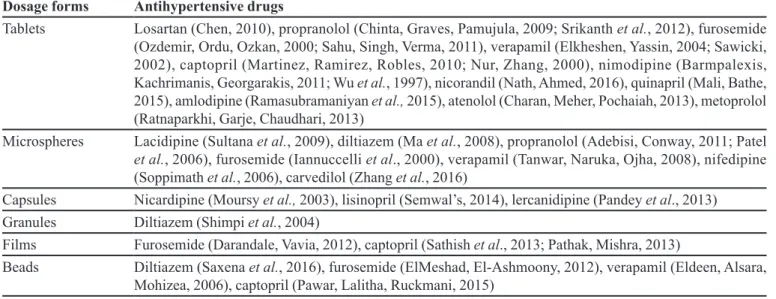
The commercial potential of GRDDS has already been proven. Commonly used drugs in formulation of gastroretentive dosage forms and the marketed products of antihypertensives available as GRDDS can be found in Table II and Table III respectively. While to the best of our knowledge only four products could be found, twice the number of patents was documented in literature as compiled in Table IV. This deinitely ofers wide vistas for researchers to explore the less trodden area. A few of the patents have been described briely in the following text. Dudhara, Dharmadhikari and Dhayse (2004) patented a gastric retention controlled drug delivery system comprising: (a) a controlled release core comprising a drug, a highly swellable polymer and a gas generating agent, said core being capable of swelling and achieving loatation rapidly while maintaining its physical integrity in gastrointestinal luids for prolonged periods and (b) a rapidly releasing coat so that the system provides a biphasic release of the drug in gastrointestinal luids.
Ogorka et al. (2009) has been assigned a patent for an extended release GRDDS of valsartan containing a release portion of valsartan, a gastroretentive portion for retaining the drug delivery system in the stomach and an optional secondary portion for delivering a secondary pulse of valsartan. In another embodiment, a swellable unfolding membrane comprising Valsartan for sustained administration of Valsartan has been provided to the upper GI tract of a patient.
TABLE II - Summarized compilation of antihypertensive drugs explored for various GRDDS
Dosage forms Antihypertensive drugs
Tablets Losartan (Chen, 2010), propranolol (Chinta, Graves, Pamujula, 2009; Srikanth et al., 2012), furosemide
(Ozdemir, Ordu, Ozkan, 2000; Sahu, Singh, Verma, 2011), verapamil (Elkheshen, Yassin, 2004; Sawicki, 2002), captopril (Martinez, Ramirez, Robles, 2010; Nur, Zhang, 2000), nimodipine (Barmpalexis, Kachrimanis, Georgarakis, 2011; Wu et al., 1997), nicorandil (Nath, Ahmed, 2016), quinapril (Mali, Bathe, 2015), amlodipine (Ramasubramaniyan et al., 2015), atenolol (Charan, Meher, Pochaiah, 2013), metoprolol (Ratnaparkhi, Garje, Chaudhari, 2013)
Microspheres Lacidipine (Sultana et al., 2009), diltiazem (Ma et al., 2008), propranolol (Adebisi, Conway, 2011; Patel
et al., 2006), furosemide (Iannuccelli et al., 2000), verapamil (Tanwar, Naruka, Ojha, 2008), nifedipine
(Soppimath et al., 2006), carvedilol (Zhang et al., 2016)
Capsules Nicardipine (Moursy et al., 2003), lisinopril (Semwal’s, 2014), lercanidipine (Pandey et al., 2013)
Granules Diltiazem (Shimpi et al., 2004)
Films Furosemide (Darandale, Vavia, 2012), captopril (Sathish et al., 2013; Pathak, Mishra, 2013)
Beads Diltiazem (Saxena et al., 2016), furosemide (ElMeshad, El-Ashmoony, 2012), verapamil (Eldeen, Alsara,
Mohizea, 2006), captopril (Pawar, Lalitha, Ruckmani, 2015)
TABLE III - Marketed products of GRDDS for antihypertensive drugs (Srikanth, 2011; Awasthi, Kulkarni, 2016)
Drug Technology Brand name Manufacturer
Prazosin HCl Efervescence and swelling
based loating system. Prazopress XL® Sun Pharma, India
Carvedilol Osmotic system Coreg CR® Glaxosmithkline, USA
Verapamil HCl OROS Covera HS® DURECT Corporation, USA
Nisoldipine GeomatrixTM Sular® Skyepharma, Shionogi Pharma Inc. UK
the drug during the early waking hours. The invention treats certain conditions by a particular regime, as well as provides novel formulations for a delayed, followed by a prolonged release of drug.
FUTURE PERSPECTIVE
A controlled drug delivery system with prolonged residence time in the stomach can be of great importance for antihypertensive drugs with select pharmacokinetic features. The systems developed include gastroretentive tablets, capsules, microspheres, granules and beads. Many other systems can be explored for developing GRDDS of antihypertensive drugs. These may be osmotically regulated systems that ofer the possibility of varying the formulation variables and exploring various designs. Unfolding bilayer system, raft based and ion exchange resin systems may be utilized depending upon the physicochemical properties of the drug. The bilayer unfolding and raft forming systems need to be explored extensively as scarce reports can be found in literature that ofer most promising GRDDS. Through bilayer unfolding
systems both sustained as well as immediate release can be obtained, and sustained release can be increased up to 24 h. At the same time, small size of the folded system makes it easy to administer and on reaching the stomach it will unfold and swell to prolong gastric retention thereby increasing gastric emptying time as well as increasing bioavailability. More research is required on this system that has potential for exhibiting excellent results in controlling hypertension.
of gastric cancer. The in vitro permeation capability of curcumin along with favourable pharmaceutical and pharmacokinetic characteristics of the optimized formulation airmed the capability of microsponges as eicient GRDDS.
Over the last few decades majority of the work was done on the GRDDS of antihypertensives reports development of novel systems by using single drug. Clinically, for chronic hypertensive cases, dual drug therapy is advised that presents a new area of research TABLE IV - Patents on grdds of antihypertensive drugs
Patent/Application number (year of issue/publication) & Drug
Original assignee/
Applicant Comment Ref.
US20040180088A1 (2004)
Antihypertensives
Dudhara KM, Dharmadhikari NB,
Dhayse VV.
Provides a gastric retention controlled drug delivery system comprising: (a) a controlled release core comprising a drug, and (b) a rapidly releasing coat so that the system provides a biphasic release of the drug in gastrointestinal luids.
(Dudhara, Dharmadhikari,
Dhayse, 2004)
EP2061438 A1 (2009)
Valsartan Novartis AG
Invented an extended release GRDDS of valsartan containing a release portion of valsartan, a gastroretentive portion for retaining the drug delivery system in the stomach and an optional secondary portion for delivering a secondary pulse of valsartan.
(Ogorka et al., 2009)
WO2009087665 A2 (2009)
Propranolol Vishwanath SN
Claimed a novel GRDDS that loats over the simulated physiological luids owing to its low density. The system comprises inert core, polymers and plasticizer.
(Vishwanath, 2009)
US7776345 B2 (2010) Antihypertensives
Sun Pharma Advanced Research
Company Ltd
A GRDDS comprising a controlled release core of the, a highly swellable polymer and a gas generating agent, and (b) a rapidly releasing coat such that the system provides a biphasic release of the drug.
(Dudhara, Dharmadhikari,
Dhayse, 2010)
WO2011107750 A2 (2011) Antihypertensives
University of Strathclyde
Discloses an invention in which an active agent is designed to be released in a prolonged manner at a time point some time after administration of the active agent.
(Mullen, Stevens, Eccleston, 2011)
WO2013051036 A1 (2013) verapamil, propranolol, captopril, diltiazem
Council of Scientiic & Industrial
Research, India
The invention discloses a GRDDS comprising a drug in the core and coated with a coating of a pH sensitive polymer. The system can release the drug in both sustained and pulsatile manner.
(Kolhe, Kulkarni, 2013)
WO2013054285 A1 (2013) ACE inhibitors
Ranbaxy Laboratories, New Delhi, India
Invented a loating capsule which releases the drug without any lag time and which remains buoyant for a suicient period of time in the stomach.
(Kumar, Ahmad, Singh, 2013)
US8586083 B2 (2013)
Metoprolol Euro-Celtique S.A.
The invention is produced by extrusion. The use of extrusion enables the product to take many useful forms. The product may comprise a sheet of hydratable polymer, the hydrated sheet being of a size which will not pass out of the stomach, for example a shaped sheet or a roll.
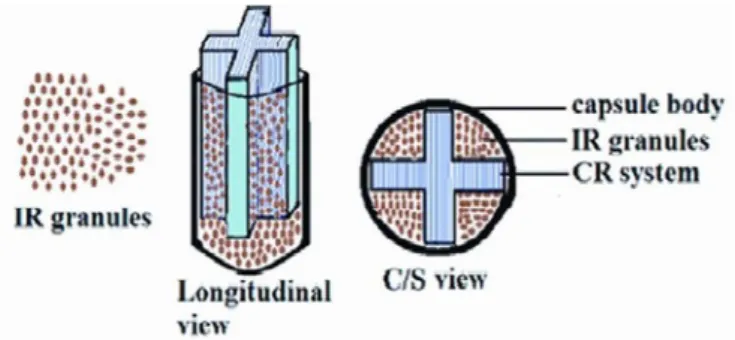
focussing on dual drug release systems. One can ind few reports on drug delivery systems based on dual release mechanism and an interesting design has been reported recently by Rajput Singh and Pathak (2014)though not for antihypertensives. Briefly, the authors developed a bifunctional single unit capsular system comprising uniquely shaped gastroretentive fanicular cylindrical system for immediate release of granules of ranitidine HCl and controlled delivery of clarithromycin (Figure 3). The fanicular cylindrical system of clarithromycin exhibited synergistic gastroretention due to its loating and bioadhesive features. This system can be extrapolated/ modiied version can serve as a lead for development of bifunctional /dual release systems of antihypertensive drugs.
CONCLUSION
Adequate control of the gastric residence time combined with controlled drug release patterns can significantly improve the bioavailability of the drug. To achieve this goal, loating, bioadhesive, expanding/ swelling and raft forming systems have depicted promising potential. However, various other systems need to be explored for achieving maximum therapeutic eicacy. While many systems have proven their eicacy,
in vitro and in vivo, clinical intricacies need to be resolved before the novel GRDDS can be put into commercial use.
DECLARATION OF INTEREST
None
REFERENCES
Adebisi A, Conway BR. Gastroretentive microparticles for drug delivery applications. J Microencapsul. 2011;28(8):689-708
Arora A, Ali A, Ahuja A, Khar RK, Baboota S. Floating drug delivery systems: a review. AAPS PharmSciTech. 2005;6(3):E372-E390.
Arora A, Shaiq N, Jain S, Malhotra S. Development of sustained release nanoFDC (Fixed Dose Combination) for hypertension – a experimental study. PLOS ONE. 2015; 10(6):e0128208.
Arya P, Pathak K. Assessing the viability of microsponges as gastro retentive drug delivery system of curcumin: optimization and pharmacokinetics. Int J Pharm. 2014;460(1-2):1-12.
Awasthi R, Kulkarni GT. Decades of research in drug targeting to the upper gastrointestinal tract using gastroretention technologies: where do we stand? Drug Deliv. 2016;23(2):378-394.
Bardonnet PL, Faivre V, Pugh WJ, Piffaretti JC, Falson F. Gastroretentive Dosage forms: overview and special case of Helicobactor pylori. J Control Rel. 2006;111(1-2):1-18.
Barmpalexis P, Kachrimanis K, Georgarakis E. Solid dispersions in the development of a nimodipine loating tablet formulation and optimization by artificial neural networks and genetic programming. Eur J Pharm Biopharm. 2011;77(1):122-131.
Biswas MS, Karmakar D, Ghosh N, Roy BG. Fabrication and characterisation of plant mucilloid-based non-effervescent expandable gastroretentive drug delivery system. Latin Am J Pharm. 2014; 33(8):1357-1362.
Charan DV, Meher CP, Pochaiah B. Design and evaluation of atenolol loating drug delivery system. Int J Curr Pharm Rev Res. 2013;4:10-26.
Chen RN, Ho HO, Yu CY, Sheu MT. Development of swelling/loating gastroretentive drug delivery system based on a combination of hydroxyethyl cellulose and sodium carboxymethyl cellulose for losartan and its clinical relevance in healthy volunteers with CYP2C9 polymorphism. Eur J Pharm Sci. 2010;39(1-3):82-89.
Chen Y, Ho H, Lee TY, Sheu MT. Physical characterizations and sustained release proiling of gastroretentive drug delivery systems with improved loating and swelling capabilities. Int J Pharm. 2013;441(1-2):162-169.
Chinta DD, Graves RA, Pamujula S, Bostanian LA, Mandal TK. Spray dried chitosan as a direct compression tableting excipient. Drug Dev Ind Pharm. 2009;35(1):43-48.
Darandale SS, Vavia PR. Design of a gastroretentive mucoadhesive dosage form of furosemide for controlled release. Acta Pharm Sinica B. 2012;2(5):509-517.
Davis SS. Formulation strategies for absorption windows. Drug Discov Today. 2005;10(4):249-257.
Dawange SR, Khadabadi SS, Saboo SS. Formulation and evaluation of loating tablets of verapamil hydrochloride by using gastroretentive technology. Int J Pharm Sci Rev Res. 2015;34(1):263-269.
Dudhara KM, Dharmadhikari NB, Dhayse VV. Gastric retention controlled drug delivery system. Patent No. 10.482.770. 2004.
Dudhara KM, Dharmadhikari NB, Dhayse VV. Gastric retention controlled drug delivery system. Patent No. 7776345. Sun Pharma Advanced Research Company; 2010.
Eldeen AB, Alsara IA. AL-Mohizea. Chitosan beads as a new gastroretentive system of verapamil. Sci Pharm. 2006;74:175-188.
Elkheshen SA, Yassin AEB, Alsuwayeh S. In vitro and in
vivo evaluation of loating controlled release dosage forms of
verapamil hydrochloride. Pharmazeutische Ind. 2004;66:1364-72.
ElMeshad AN, El-Ashmoony MM. Floating furosemide gel beads: In vitro and in vivo evaluation. J Drug Deliv Sci Tech. 2012;22(4):317-325.
Guo X, Chang RK, Hussain M. Ion-exchange resins as drug delivery carriers. J Pharm Sci. 2009;98(11):3886-3902.
MedlinePlus: Trusted Health Information for You. High Blood Pressure. [Cited 2016 June 8]. Available from: https:// medlineplus.gov/ency/article/000468.htm.
Iannuccelli V, Coppi G, Leo E, Fontana F. Bernabei MT. PVP solid dispersion for the controlled release of furosemide from a floating multiple unit system. Drug Dev Ind Pharm. 2000;26(6):595-603.
Kolhe UD, Kulkarni MG. Use of pharmaceutical composition for gastroretentive sustained and pulsatile drug delivery system. Patent No. 2013051036. CSIR; 2013.
Kumar V, Ahmad S, Singh RB. A gastroretentive dosage system and process of preparation thereof. Patent No. 2013054285. Ranbaxy Laboratories Limited; 2013.
Lemieux M, Gosselin P, Mateescu MA. Carboxymethyl starch mucoadhesive microspheres as gastro retentive dosage form. Int J Pharm. 2015;496(2):497-508.
Ma N, Xu L, Wang Q, Zhang X, Zhang W, Li Y, et al. Development and evaluation of new sustained release loating microspheres. Int J Pharm. 2008;358(1-2):82-90.
M a c g i l l M . H y p e r t e n s i o n : c a u s e s , s y m p t o m s , a n d treatments. [Cited 2016 June 8]. Available from: http://www. medicalnewstoday.com/articles/150109.php.
Mali AD, Bathe RS. Design and optimization of gastroretentive loating matrix tablets of an antihypertensive drug quinapril HCl. Int J Pharm Tech. 2015;7(2):9212-9224.
Martinez IJ, Ramirez AMD, Robles LV. Efect of antioxidants on captopril loating matrices. Pharm Dev Technol. 2010;15(3):230-240.
Meka L, Kesavan B, Kalamata VN, Eaga MC, Bandari S, Vobalaboin A, et al. Design and evaluation of polymeric coated minitablets as multiple unit gastroretentive loating drug delivery systems for furosemide. J Pharm Sci. 2009;98(6):2122-32.
Mohammad H. Gastroretentive drug delivery system comprising an extruded hydratable polymer. Patent No. 8586083. Euro-Celtique S.A.; 2013.
Moursy NM, Aii NN, Ghorab DM, El-Saharty Y. Formulation and evaluation of sustained release floating capsules of nicardipine hydrochloride. Pharmazie. 2003;58(1):38-43.
Mullen A, Stevens H, Eccleston S. Delayed prolonged drug delivery. Patent No. 2011107750. University of Strathclyde; 2011.
Nath LK, Ahmed AB. Design and development of controlled release loating matrix tablets of nicorandil using hydrophilic cellulose and pH-independent acrylic polymer: In-vitro and in-vivo evaluations. Expert Opin Drug Deliv. 2016;13(3):315-324.
Niranjanbhai BD, Mahendrakumar VN, Surendran CS, Viral S, Upadhyay UM. Advances in GRDDS: raft forming system a review. J Drug Deliv Ther. 2012;2(5):123-128.
Ogorka J, Kavimandan NJ, Lakshman JP, Matharu AS, Royce AE, Teelucksingh NR. Extended release gastro-retentive oral drug delivery system for valsartan. Patent No. 2. 061.438. Novartis AG; 2009.
Ozdemir N, Ordu S, Ozkan Y. Studies of loating dosage forms of furosemide: in vitro and in vivo evaluation of bilayer tablet formulation. Drug Dev Ind Pharm. 2000;26(8):857-866.
Pandey S, Jirwankar P, Mehta S, Pandit S, Tripathi P, Patil A. Formulation and evaluation of bilayered gastroretentable mucoadhesive patch for stomach-speciic drug delivery. Curr Drug Deliv. 2013;10(4):374-383.
Patel SS, Patel JK, Patel GN, Bharadia PD, Patel MM. Formulation and evaluation of loating chitosan microspheres containing propranolol hydrochloride. [Cited 2015 July 10]. Available from: www.pharmaquality.com [February/March 2006]
Pathak A, Mishra A, and Mishra P. Formulation and evaluation of gastroretentive mucoadhesive ilms of captopril. Pharmacia. 2013;2(1):31-38.
Pawar HA, Lalitha KG, Ruckmani K. Alginate beads of Captopril using galactomannan containing Senna tora gum, guar gum and locust bean gum. Int J Bio Macromol. 2015;76:119-131.
Pawar VK, Kansal S, Asthana S, Chourasia MK. Industrial perspective of gastroretentive drug delivery systems: physicochemical, biopharmaceutical, technological and regulatory consideration. Expert Opin Drug Deliv. 2012;9(5):551-565.
Porwal A, SwamiG, and SarafSA. Preparation and evaluation of sustained release microballoons of propranolol. DARU J Pharm Sci. 2011;19(3):193-201.
Prinderre P, Sauzet C, Fuxen C. Advances in gastro retentive drug-delivery systems. Expert Opin Drug Deliv. 2011;8(9):1189-1203.
Rahman Z, Ali M, Khar RK. Design and evaluation of bilayer loating tablets of captopril. Acta Pharm. 2006;56(1):49-57.
Rajput P, Singh D, Pathak K. Bifunctional capsular dosage form: novel fanicular cylindrical gastroretentive system of clarithromycin and immediate release granules of ranitidine HCl for simultaneous delivery. Int J Pharm. 2014;461(1-2):310-321.
Ramasubramaniyan P, Palanichamy S, Deepu VM, Rajesh M. Formulation and evaluation of amlodipine besylate floating tablets. Res J Pharm Bio Chem Sci. 2013;4(4):15-33.
Ratnaparkhi MP, Garje PK, Chaudhari SP. Formulation and
evaluation of sustained release loating drug delivery system of metoprolol succinate. Res J Pharm Tech. 2013;6:1058-1063.
Rocca JG, Omidian H, Shah K.Progresses in gastroretentive
drug delivery systems. Pharmatech. 2003;15:3-6.
Sahu AK, Singh SK, Verma A. Formulation development of buoyant controlled release tablets containing chitosan: optimization of in vitro dissolution and release kinetics. Int J Pharm Sci. 2011;3(Suppl 2):81-85.
Sarojini S, Manavalan R. An overview on various approaches to gastroretentive dosage forms. Int J Drug Dev Res. 2012;4(1):1-13.
Sathish D, Himabindu S, Kumar PP, Rao YM. Preparation and Evaluation of novel expandable drug delivery system with Captopril. Curr Drug Therapy. 2013;8(3):206-214.
S a t o Y, K a w a s h i m a Y, Ta k e u c h i H , Ya m a m o t o H . Physicochemical properties to determine the buoyancy of hollow microspheres (microballoons) prepared by the emulsion solvent difusion method. Eur J Pharm Biopharm. 2003;55(3):297-304.
Sawicki W. Pharmacokinetics of verapamil and norverapamil from controlled release loating pellets in humans. Eur J Pharm Biopharm. 2002;53(1):29-35.
Saxena A, Kitawat S, Gaur K, Singh V. Formulation, development and characterization of loating beads of diltiazem hydrochloride. Int J Drug Deliv Tech. 2016;6:1-6.
Semwal R, Semwal RB, Semwal DK. A gastroretentive drug delivery system of lisinopril imbibed on isabgol-husk. Curr Drug Deliv. 2014;11(3):371-379.
Shimpi S, Chauhan B, Mahadik RK, Paradkar A. Preparation and evaluation of diltiazem hydrochloride-gelucire 43/01 loating granules prepared by melt granulation. AAPS PharmSciTech. 2004;5(3):51-66.
Srikanth MV, Ram BJ, Sunil SA, Rao NS, Murthy KVR. Gastroretentive drug delivery systems: novel approaches and its evaluation - a review. Int J Pharm Sci Rev Res. 2011;10(1):203-216.
Srikanth MV, Rao N, Sunil SA, Ram B, Kolapalli VRM. Design and evaluation of a propranolol HCl gastric loating tablet. Acta Pharm Sinica B. 2012;2:60-69.
Streubel A, Siepmann J, Bodmeier R. Floating matrix tablets based on low density foam powder: effects of formulation and processing parameters on drug release. Eur J Pharm Sci. 2003a;18(1):37-45.
Streubel A, Siepmann J, Bodmeier R. Floating microparticles based on low density foam powder. Int J Pharm. 2002;241(2):279-92.
St r e u b e l A, Si e p m a n n J, B o d m e i e r R . Mu l t i p l e u n i t gastroretentive drug delivery systems: a new preparation method for low density microparticles. J Microencapsul. 2003;20(3):329-47.
Streubel A, Siepmann J, Bodmeier R. Gastroretentive drug delivery systems. Expert Opin Drug Deliv. 2006;3(2):217-233.
Strubing S, Metz H, Mader K. Characterization of poly (vinyl acetate) based floating matrix tablets. J Control Rel. 2008;126(2):149-55.
Sultana S, Bhavna P, Iqbal Z. Lacidipine encapsulated gastroretentive microspheres prepared by chemical denaturation for pylorospasm. J Microencapsul. 2009;26(5):385-393.
Tanwar YS, Naruka PS, Ojha GR. Development and evaluation of loating microspheres of verapamil hydrochloride. Braz J Pharm Sci. 2008;43(4):1-6.
Tripathi KD. Essentials of medical pharmacology. 36a ed. New
Delhi: Jaypee Brothers; 2003. p. 503-518.
Vishwanath SN. Gastroretentive drug delivery system. Patent No. 09.087.665. 2009.
Wu W, Zhou Q, Zhang HB, Ma GD, Fu CD. Studies on nimodipine sustained release tablet capable of loating on gastric luids with prolonged gastric resident time. Yao Xue Xue Bao. 1997;32(10):786-790.
Zhang WQ, Chen LB, Zhe AN, Liu GH, Zhang L, Wang YH, et al. Gastroretentive floating microspheres of carvedilol: preparation, in vitro and in vivo characterization. J Biomater Tissue Eng. 2016;6(1):74-78.
Received for publication on 09th November 2016