Manual Ability Classification System (MACS): reliability
between therapists and parents in Brazil
Daniela B. R. Silva1, Carolina A. R. Funayama2, Luzia I. Pfeifer1
ABSTRACT | Background: The Manual Ability Classiication System (MACS) has been widely used to describe the manual
ability of children with cerebral palsy (CP); however its reliability has not been veriied in Brazil. Objective: To establish
the inter- and intra-rater reliability of the Portuguese-Brazil version of the MACS by comparing the classiications given by therapists and parents of children with CP. Method: Data were obtained from 90 children with CP between the ages of 4 and
18 years, who were treated at the neurology and rehabilitation clinics of a Brazilian hospital. Therapists (an occupational therapist and a student) classiied manual ability (MACS) through direct observation and information provided by parents. Therapists and parents used the Portuguese-Brazil version of the MACS. Intra- and inter-rater reliability was obtained using unweighted Kappa coeficient (k) and intra-class correlation coeficient (ICC). The Chi-square test was used to identify the predominance of disagreements in the classiication of parents and therapists. Results: An almost
perfect agreement resulted among therapists [K=0.90 (95% CI 0.83-0.97); ICC=0.97 (95%CI 0.96-0.98)], as well as with intra-rater (therapists), with Kappa ranging between 0.83 and 0.95 and ICC between 0.96 and 0.99 for the evaluator with more and less experience in rehabilitation, respectively. The agreement between therapists and parents was fair [K=0.36 (95% CI 0.22-0.50); ICC=0.79 (95% CI 0.70-0.86)]. Conclusions: The Portuguese version of the MACS is a
reliable instrument to be used jointly by parents and therapists.
Keywords: cerebral palsy; MACS; reproducibility of results; rehabilitation.
HOW TO CITE THIS ARTICLE
Silva DBR, Funayama CAR, Pfeifer LI. Manual Ability Classiication System (MACS): reliability between therapists and parents in Brazil. Braz J Phys Ther. 2015 Jan-Feb; 19(1):26-33. http://dx.doi.org/10.1590/bjpt-rbf.2014.0065
1Divisão de Terapia Ocupacional, Departamento de Neurociências e Ciências do Comportamento, Faculdade de Medicina de Ribeirão Preto (FMRP),
Universidade de São Paulo (USP), Ribeirão Preto, SP, Brazil
2Departamento de Neurociências e Ciências do Comportamento, FMRP, USP, Ribeirão Preto, SP, Brazil Received: 02/03/2014 Revised: 04/29/2014 Accepted:07/07/2014
Introduction
Cerebral palsy (CP) can affect body structures, such as the hands and their components (muscles, joints, bones), as well as several body functions1.
Hand functions are frequently impaired, resulting in diminished mobility, reduction in muscle strength, lack of control in rapid coordinated movements, presence of involuntary movements1, spasticity1,2,
and poor postural control2. Hand sensory impairments
may be observed, involving tactile pressure detection, tactile spatial resolution, and recognition of common objects and shapes1. CP may also limit the child’s
ability to perform functional daily tasks, such as eating, drinking, grooming, dressing, and performing school tasks1.
Until recently, most classiication systems related to the use of upper limbs in children with cerebral palsy focused on manual function (e.g. House Classification3, Modified House Classification4,
and Zancolli Classiication5 systems) or on manual
functional capacity (e.g. Bimanual Fine Motor
Function classiication system6). In 2006, the new
Manual Ability Classiication System (MACS) was developed, taking into account the usual performance of children and young people at home, at school, and in the community, instead of focusing on what they are capable of doing best (capacity) in relation to manual ability7,8. This classiication system complies
with the International Classiication of Functioning, Disability and Health9.
The MACS aims to classify how children with CP use their hands when handling objects in their daily activities7 and the impact that these environmental and
personal factors (e.g. motivation and cognition7) may
have on the children’s performance10. MACS levels
are based on children’s ability to initiate handling objects by themselves (eating, dressing, playing, drawing or writing7) and their need for assistance or
from I to V. The children at level I are able to handle objects easily, those at level II handle most objects but with a little reduced quality or speed, and those at level III handle objects with dificulty and need help to prepare or change activities. At level IV, children handle a limited quantity of objects and require continuous support to partially conclude the activities, and at level V, the children do not handle objects7.
The MACS has received international recognition11
and has been used in conjunction with the Gross Motor Function Classiication System (GMFCS)12 to
classify children with cerebral palsy. The MACS has been translated into 25 languages as it is recognized as a valid and reliable system to classify the manual ability of children with cerebral palsy7,8,13-18.
Through the use of classification systems like the MACS, it is possible to have a broad vision of the children’s overall ability to handle everyday objects, which constitutes an important complement to the diagnosis19. The combination
of the information provided by this classiication and the medical diagnosis makes it possible to deine subgroups within the heterogeneous group of cerebral palsy20. In clinical practice, it is important
to improve communication between families and therapists20, helping guide therapeutic objectives
and treatment priorities18,21. However, the MACS
should not be used as an outcome measure to document the impact of intervention since the classiications, although stable over time11, do not
have appropriate sensitivity.
Researchers who developed the MACS mentioned that, to obtain information concerning the manner in which the children handle various objects in daily life, it is necessary to ask someone who knows them well7. Studies have shown from good to excellent
reliability of the MACS when used by different healthcare professionals7,8,10,13,14,16,17 and parents7,15-17.
In Brazil, the MACS was translated and culturally adapted to Portuguese-Brazil according to the procedures suggested by Beaton et al.22 and
is available for download (http://www.macs.nu); however, the reliability of this classiication system has not been established in the country. The objective of the study was: (1) to determine inter and intra-rater (therapist and student) reliability of the Portuguese-Brazil version of the MACS; (2) to compare the classiication of therapists and parents in relation to the MACS.
Method
This is a methodological study aimed at examining the psychometric properties of a classiication system. The research was approved by the Research Ethics Committee of Hospital das Clínicas at Faculdade de Medicina de Ribeirão Preto, Universidade de São Paulo (HCFMRP-USP), Ribeirão Preto, SP, Brazil. Parents signed an informed consent form (HCRP no. 12469/2008).
Participants
To assess the reliability of the MACS, ninety children with CP, aged between four and 18 years, were included. The children were treated at the Occupational Therapy or Physical Therapy Service of the Rehabilitation Center or at the Neurology Outpatient Clinic of HCFMRP-USP between September 2010 and October 2011.
This was a convenience sample and the inclusion criteria were: to be diagnosed with CP, regardless of the type or severity of the motor disability, to be aged between 4 and 18 years, and to understand simple commands. The exclusion criteria were low vision or blindness and/or epilepsy.
Data collection procedure
Two evaluators collected data simultaneously at separate locations. Evaluator 1 (E1) was an undergraduate occupational therapy student and Evaluator 2 (E2) had nine years of experience in the rehabilitation of children with CP (occupational therapist). None of them were familiar with the MACS and both received training before the start of data collection through an instructional video produced by the authors of the classiication. They also classiied 10 children who were not included in the research sample. Any questions concerning the selection of the MACS level were clariied with Dr. Eliasson by email. A research assistant (E3), also an occupational therapy student, was responsible for ilming each child while handling objects, as well as for ilming the parents’ report about how their children commonly used their hands to manipulate objects in their daily activities as described below. E3 was also responsible for the selection of videos for the intra-rater reliability test.
memory game; 4) Placing the pieces back in the box; 5) Closing and opening a zipper; 6) Buttoning and unbuttoning a jacket; 7) Using a spoon to scoop up food (e.g. yogurt or soft cake); 8) Drinking from a cup; 9) Building a tower with 5 blocks; 10) Pounding pegs using a toy hammer; 11) Performing a graphic activity; 12) Putting marbles and/or beads into a jar. After observing the child, E1 also obtained additional information from the parents concerning the typical performance of the children at home and school, in relation to the use of their hands, such as playing, feeding, and using materials at school. E1 classiied each child, considering the observation of his/her performance, in combination with the information collected from the parents about the child’s use of their hands in their performance of daily activities; this was the irst assessment of Evaluator 1 (A1E1). Each child’s task performance and the parents’ report were ilmed by E3 to be used in inter- and intra-rater reliability tests.
While E1 observed the child performing the tasks, E2 read the Portuguese-Brazil version of the MACS to the parents, who had to select a single level of the MACS to classify their child. E2 informed the parents that, in order to select the level of the MACS, it was necessary to consider the manual ability of their children when playing, drawing, writing, and handling objects during feeding and dressing. When parents provided examples of the manual ability of their children, it was reinforced that they should select the level that best described the manual ability. If they were unsure about which level they should select, the difference between the two levels was read to them. E2 simply wrote down the MACS level that the parents selected without any clariication.
Two weeks later, in an attempt to minimize memory bias (i.e. remembering the classiication level chosen by parents), E2 classiied the children according to the MACS levels by analyzing the videos of the children’s observation and the parents’ information about the children’s performance in daily activities, which was the irst assessment of Evaluator 2 (A1E2).
The second assessment (intra-rater reliability) took place one month after the irst one. Both evaluators (E1 and E2) watched the videos separately in order to classify the children’s manual ability level. This stage included 30 videos selected by E3 (corresponding to 33% of the sample) from various age groups and MACS levels based on the initial classiication of the E2.
Parent and therapist classiications were compared using the irst assessment performed by E2 (A1E2).
Statistical analysis
The MACS is an ordinal scale with ive levels. Descriptive statistics were used to characterize the participants. Ordinal data were analyzed using percentage agreement and Cohen’s unweighted Kappa (k) to examine parent-therapist agreement and intra- and inter-rater agreements. By using the Intra-class Correlation Coeficient (ICC) it was possible to make comparisons with other studies.
The following criteria were used for the Kappa coeficient interpretation: values below zero (poor), between 0.00 and 0.20 (slight), between 0.21 and 0.40 (fair), between 0.41 and 0.60 (moderate), between 0.61 and 0.80 (substantial), and between 0.81 and 1.0 (almost perfect agreement)23. The Chi-square
test for adherence was used to verify the associations between the perception of parents and therapists in relation to the manual ability classiication of children using the MACS.
Results
The average age of the children was 7.58 years, ranging from 4 to 17.91 years of age. Most were diagnosed as children with spastic bilateral CP (n=61), followed by unilateral spastic (n=17), dyskinetic (n=9), and ataxic (n=3) CP. Regarding gender, the sample was equally distributed.
The children with unilateral CP were classiied by the occupational therapist (E2) as MACS levels I or II (35% in level I and 65% in level II). Most of those with bilateral CP were classiied as level I (31.1%), although the other children from this group were distributed over the other MACS levels (Table 1). In relation to the parents, the MACS classiication was performed mostly by mothers (91%). Table 2 shows
additional information about the parents.
Inter-rater reliability
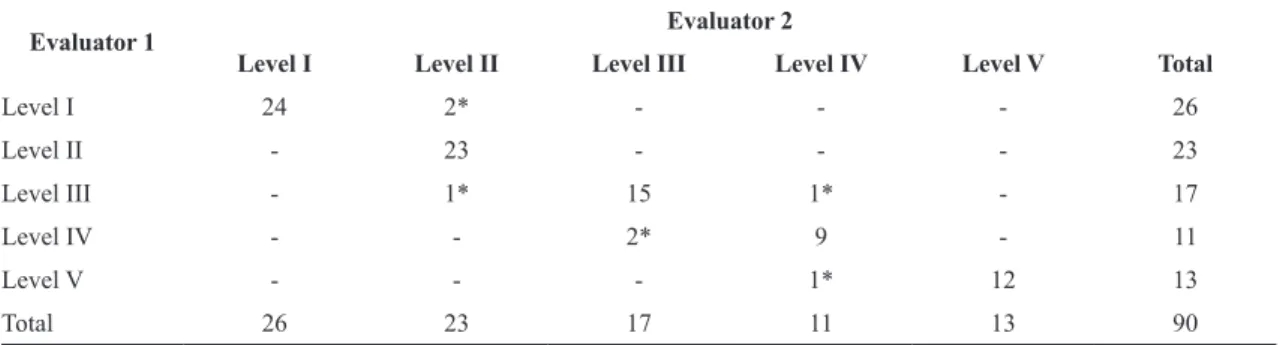
Table 3 presents the results of inter-rater agreement, considered to be almost perfect [K=0.90, (95% CI 0.83-0.97); ICC=0.98 (95% CI 0.96-0.98)].
It can be noted that there were seven disagreements that were not predominant at speciic levels (Χ2=1.57;
Intra-rater reliability
The evaluators (E1 and E2) classiied the manual ability of 30 children with cerebral palsy in the initial assessment and after one month. The results show almost perfect agreement between both evaluators. E1 had two disagreements between levels I and II and two others between levels III and IV [K=0.83 (95% CI 0.98); ICC=0.96, (95% CI 0.68-0.98)]. E2 (the researcher with the most experience in the neurology ield) had only one disagreement between levels I and II of the MACS [K=0.95 (95% CI 0.88-1.00); ICC=0.99 (95% CI 0.98-0.99)].
Reliability between therapists and parents
Fair agreement was observed between the classiication performed by the occupational therapist (E2) and the classiication performed by the parents [K=0.36 (95% CI 0.22-0.50); ICC=0.79 (95% CI 0.70-0.86)]. Table 4 presents the frequency of
agreement and disagreement between E2 and the parents, according to the MACS levels.
It is possible to verify that there were 46 classiication agreements between parents and the therapist (E2) and 44 disagreements. Of these, 21 occurred between levels I and II, 9 between levels II and III, 7 between levels III and IV, and 3 between levels IV and V. There were also four disagreements in more than one level between therapist and parents, two of them between levels I and III and the others between levels I and IV. It can be noted through the chi-square test for adherence that the disagreements between levels I and II are the most predominant (Χ2=36.18; p=0.001).
Discussion
This study sought to assess the reliability between therapists (occupational therapist and undergraduate occupational therapy student) by means of inter- and
Table 1. Classiications based on MACS levels performed by the E2 (A1E2) according to the type of cerebral palsy (CP).
CP type Level I Level II Level III Level IV Level V Total
Bilateral spastic 19 13 13 8 8 61
Unilateral spastic 6 11 - - - 17
Dyskinetic - 1 1 3 4 9
Ataxic - 1 2 - - 3
Table 2. Caregivers’ characteristics.
Caregivers’ characteristics Average Standard deviation Minimum Maximum
Age 34.06 8.77 19 56
Years of schooling 8.80 3.29 0 15
Income* 1222.81 787.34 250.00 6000.00
Occupation (n)
Unemployed 62
Employed 28
*values are in Reais (R$).
Table 3. Inter-rater agreement and disagreements (A1E1 and A1 E2).
Evaluator 1 Evaluator 2
Level I Level II Level III Level IV Level V Total
Level I 24 2* - - - 26
Level II - 23 - - - 23
Level III - 1* 15 1* - 17
Level IV - - 2* 9 - 11
Level V - - - 1* 12 13
Total 26 23 17 11 13 90
intra-rater reliability tests concerning the MACS, with an almost perfect reliability (ICC=0.97; K=0.90). Similar results were found in the validation study of the MACS in Sweden7, Korea16, Turkey17,
and Iran18, with ICC ranging from 0.95 to 0.98,
and in the Netherlands10 (K=0.86). These studies
involved different health professionals (occupational therapists, physical therapists, physiatrists, and pediatricians).
In this study, video analysis was used for the children’s performance while handling objects and the parents’ reports was used for the evaluators’ classiication. Most studies concerning the MACS reliability veriied by healthcare professionals have used the direct observation of the children in the clinical context and have shown positive results for the age group proposed by the MACS (4 and 18 years of age)10,13,16,17, especially when additional
information about the typical performance was obtained from the parents16,17. The parents observe
the children’s performance in different environments and in different activities throughout the day, while the professionals observe a limited selection of daily activities20 in a clinical environment or school24. For
that reason, it is important to consider the information of both and also because manual ability is the result of contextual, environmental, and personal factors such as motivation and cognitive ability7 and it can
vary according to the objects being handled, time of day, and setting13. We believe that the information
obtained from the parents in this study, combined with the observation of manual ability, resulted in the near perfect agreement between the evaluators, despite their different levels of expertise in the ield of neuropediatrics (occupational therapist and student).
The intra-rater reliability was considered almost perfect for both evaluators, with only one disagreement for E2 and four disagreements for E1,
who had less experience. Only three studies were found in the literature involving intra-rater reliability (healthcare professionals) of the MACS as part of the process of cultural adaptation and reliability and they were conducted in Korea16, Turkey17, and Iran18,
with almost perfect agreement in all of them (ICC ranging from 0.97 and 0.98). In these studies, the healthcare professionals repeated the procedures for the irst MACS assessment, which included direct observation and interviewing the parents16,17.
In our research, we used a similar method (direct observation of the child and parent interview), but the second assessment to evaluate intra-rater reliability was made by watching the video recordings of the initial assessment. This procedure has been used in other studies to evaluate intra-rater reliability25,26.
Regarding the reliability between therapists and parents, there was substantial agreement, with disagreements predominantly between levels I and II. The results obtained in this research are similar to Morris et al.13, who also found that disagreements
between levels I and II were more frequent (K=0.38). The data collection in that study involved direct observation of the children by physical therapists and parent classiications performed using a MACS booklet received by mail, without the possibility of clarifying any questions with the therapist.
In our research, the evaluator simply read the MACS booklet to the parents. If they provided examples of the children’s handling of the objects at home and asked whether those examples corresponded to a certain MACS level, the evaluator provided no response so as not to influence the parents, but instead emphasized the need for them to choose one of the levels that was closer to the manual ability of the children, and repeated the levels and/or topics, differentiating the levels if necessary.
Table 4. Frequency of agreement and disagreements of the irst assessment by evaluator 2 (A1E2) and the parents.
Evaluator 2 MACS Parents
Level I Level II Level III Level IV Level V Total
Level I 11 13* - - - 24
Level II 8* 14 4* - - 26
Level III 2* 5* 4 6* - 17
Level IV 2* - 1* 8 - 11
Level V - - - 3* 9 12
Total 23 32 9 17 9 90
Among the studies that had higher rates of agreement, parents and physical therapists read the MACS booklet and the parents’ questions concerning the classiication were answered by the researcher7,17
or the therapist in charge16.
It should be acknowledged that, in its descriptions, the MACS uses terms like “quality”, “speed”, and “independence”, which are more commonly used by healthcare professionals in their clinical practice and which can be interpreted differently by parents and therapists. In addition, these terms have to be considered in relation to the child’s age20, since there
are differences between the objects that a four-year-old is capable of handling and those an adolescent is able to handle, such as fragile and sharp objects7,
as well as the level of independence, which can be very complex for the parents to analyze. The authors of the MACS recognize that additional instructions, examples of daily activity performance, and information such as an instructional video would probably make the process of classiication easier for the parents20.
Other aspects that can be related to disagreements between therapists and parents’ classiication is that healthcare professionals, when using classiications like the MACS, tend to evaluate the children in clinical environments, which are designed to allow their optimal functioning and minimize the negative effects of the environment24, while parents consider
a broader range of environments, such as home, school, and community, when classifying their child’s performance24,27,28. Although the evaluators
(E1 and E2) also considered the parents’ report of the children’s typical manual ability performance in this study, they did not observe the children in non-therapeutic environments and, even if they did, their view might differ from the parents’, as the latter adopt a perspective relevant to the activities performed over a whole day, while therapists almost inevitably take into account a limited selection of structured daily activities20. Therefore, it is understandable that
parents and therapists perceive the children’s manual ability differently, as the latter often have limited information about the children’s performance in the different environments they attend.
However, taking into consideration the limitations of the MACS as mentioned, such as the use of terminology directed to healthcare professionals and the complexity of the manual ability concept, it is suggested that therapists provide information to the parents about the concepts present in the
MACS, examples concerning the terminology used, and that they answer their questions to assist with the classiication. In addition, parents and therapists should be able to jointly classify the manual ability of children with CP, as the thinking process conducted by the parents in relation to their children’s manual ability and the communication of information to healthcare professionals can provide better personal understanding and improve self-confidence24, in
addition to providing a starting point for decision-making and intervention planning for the children29.
Within the limitations of the study is the fact that the classiication of the MACS was done by parents based only on the reading of the MACS booklet and no explanation about speciic terms or clariication of questions was provided by the researcher. Further studies about content validation and stability of the MACS by therapists and parents are needed, as well as the comparison of the classiication by therapists and parents who had or had not been trained through the institutional MACS video.
Therefore, we conclude that the MACS has been shown to be a reliable classiication that can be used by health professionals with different levels of experience and by parents. Even if therapists and parents perceive the manual ability of children with CP differently, the information from both sources should be complementary. The use of the MACS in clinical practice can be an important starting point to set intervention targets for the children in partnership with the family. In addition, the health professionals should give examples/information about manual ability and clarify the parents’ questions about the description of the MACS levels in order to enhance their understanding of the classiication.
References
1. Arnould C, Bleyenheuft Y, ThonnardJL. Hand functioning
in children with cerebral palsy.Front Neurol. 2014;5(1):48.
PMid:24782821.
2. Hanna SE, Law MC, RosenbaumPL, KingGA, WalterSD,
PollockN, et al. Development of hand function among
children with cerebral palsy: growth curve analysis for ages 16 to 70 months.Dev Med Child Neurol. 2003;45(7):448-55. http://dx.doi.org/10.1111/j.1469-8749.2003.tb00939.x. PMid:12828398
3. HouseJH, GwathmeyFW, Fidler MO. A dynamic approach
to the thumb-in palm deformity in cerebral palsy.J Bone Joint Surg Am. 1981;63(2):216-25. PMid:7462278.
4. KomanLA, WilliamsRMM, EvansPJ, Richardson R, NaughtonMJ, PassmoreL, et al. Quantification of upper
cerebral palsy.Dev Med Child Neurol. 2008;50(12
):910-7. http://dx.doi.org/10.1111/j.1469-8749.2008.03098.x. PMid:18811712
5. ZancolliEA, ZancolliERJRJr. Surgical management of the hemiplegic spastic hand in cerebral palsy.Surg Clin North Am. 1981;61(2):395-406. PMid:7233330.
6. Beckung E, HagbergG. Neuroimpairments, activity
limitations, and participation restrictions in children with cerebral palsy.Dev Med Child Neurol.
2002;44(5):309-16. http://dx.doi.org/10.1111/j.1469-8749.2002.tb00816.x.
PMid:12033716
7. Eliasson AC, Krumlinde-SundholmL, RösbladB, Beckung
E, Arner M, Ohrvall AM, et al. The Manual Ability
Classification System (MACS) for children with cerebral palsy: scale development and evidence of validity and reliability.Dev Med Child Neurol. 2006;48(7):549-54. http:// dx.doi.org/10.1017/S0012162206001162. PMid:16780622
8. Plasschaert VFP, Ketelaar M, NijnuisMG, Enkelaar
L, Gorter JW. Classification of manual abilities in children with cerebral palsy under 5 years of age: how reliable is the Manual Ability Classification System? Clin Rehabil. 2009;23(2):164-70. http://dx.doi.
org/10.1177/0269215508098892. PMid:19129264 9. Organização Mundial Da Saúde – OMS. CIF: Classificação
Internacional de Funcionalidade, Incapacidade e Saúde. São Paulo: Edusp; 2003.
10. Kuijper MA, van der WildenGJ, Ketelaar M, GorterJW.
Manual ability classification system for children with cerebral palsy in a school setting and its relationship to home self-care activities.Am J Occup Ther. 2010;64(4):614-20. http://dx.doi.org/10.5014/ajot.2010.08087. PMid:20825133
11. Imms C, CarlinJ, Eliasson AC. Stability of
caregiver-reported manual ability and gross motor function classifications of cerebral palsy.Dev Med Child Neurol. 2010;52(2):153-9.
http://dx.doi.org/10.1111/j.1469-8749.2009.03346.x. PMid:19486106
12. PalisanoR, RosenbaumP, WalterS, Russell D, WoodE,
GaluppiB. Development and reliability of a system to classify gross motor function in children with cerebral palsy. Dev Med Child Neurol. 1997;39(4):214-23. http://dx.doi.org/10.1111/j.1469-8749.1997.tb07414.x. PMid:9183258
13. Morris C, Kurinczuk JJ, Fitzpatrick R, Rosenbaum
PL. Reliability of the manual ability classification system for children with cerebral palsy.Dev Med Child Neurol. 2006;48(12):950-3. http://dx.doi.org/10.1017/
S001216220600209X. PMid:17109781
14. van MeeterenJ, Nieuwenhuijsen C, de Grund A, StamHJ,
RoebroeckME, and the Transition Research Group South West Netherlands. Using the manual ability classification system in young adults with cerebral palsy and normal intelligence.Disabil Rehabil. 2010;32(23):1885-93. http:// dx.doi.org/10.3109/09638281003611011. PMid:20450460 15. Mutlu A, KaraOK, GunelMK, KarahanS, Livanelioglu A.
Agreement between parents and clinicians for the motor functional classification systems of children with cerebral palsy.Disabil Rehabil. 2011;33(11):927-32. http://dx.doi.or
g/10.3109/09638288.2010.514645. PMid:20815692
16. Jang DH, SungIY, KangJY, LeeSI, ParkJY, YukJS, et al.
Reliability and validity of the Korean version of the manual ability classification system for children with cerebral palsy.Child Care Health Dev. 2013;39(1
):90-3. http://dx.doi.org/10.1111/j.1365-2214.2012.01408.x. PMid:22708965
17. AkpinarP, TezelCG, Eliasson AC, Icagasioglu A. Reliability
and cross-cultural validation of the Turkish version of Manual Ability Classification System (MACS) for children with cerebral palsy.Disabil Rehabil.
2010;32(23):1910-6. http://dx.doi.org/10.3109/09638281003763796.
PMid:20373857
18. Ryyahi A, Rassafiani M, AkbarFahimiN, SahafR, Yazdani
F. Cross-cultural validation of the Persian version of the Manual Ability Classification System for children with cerebral palsy.Int J Ther Rehabil. 2013;20(1):19-24. http://
dx.doi.org/10.12968/ijtr.2013.20.1.19.
19. RethlefsenSA, Ryan DD, KayRM. Classification systems
in cerebral palsy.Orthop Clin North Am. 2010;41(4):457-67. http://dx.doi.org/10.1016/j.ocl.2010.06.005. PMid:20868878 20. Öhrvall AM, Eliasson AC. Parents’ and therapists’ perceptions
of the content of the Manual Ability Classification System, MACS.Scand J Occup Ther. 2010;17(3):209-16. http://
dx.doi.org/10.3109/11038120903125101. PMid:19707950
21. ChagasPSC, DefilipoEC, Lemos RA, Mancini MC,
FronioJS, CarvalhoRM. Classificação da função motora e do desempenho funcional de crianças com paralisia cerebral.Rev Bras Fisioter.2008;12(5):409-16. http://dx.doi.
org/10.1590/S1413-35552008000500011.
22. Beaton DE, Bombardier C, GuilleminF, Ferraz MB.
Guidelines for the process of cross-cultural adaptation of self-report measures. Spine (Phila Pa 1976). 2000;25(24):3186-91. http://dx.doi.org/10.1097/00007632-200012150-00014. PMid:11124735
23. LandisJR, KochGG. The measurement of observer agreement for categorical data.Biometrics. 1977;33(1
):159-74. http://dx.doi.org/10.2307/2529310. PMid:843571 24. Morris C, GaluppiBE, RosenbaumPL. Reliability of family
report for the Gross Motor Function Classification System. Dev Med Child Neurol. 2004;46(7):455-60. http://dx.doi. org/10.1111/j.1469-8749.2004.tb00505.x. PMid:15230458 25. HagaN, van der Heijden-Maessen HC, van HoornJF,
Boonstra AM, Hadders-Algra M. Test-retest and inter-
and intrareliability of the quality of the upper-extremity skills test in preschool-age children with cerebral palsy. Arch Phys Med Rehabil. 2007;88(12):1686-9. http://dx.doi.
org/10.1016/j.apmr.2007.07.030. PMid:18047886
26. SorsdahlAB, Moe-NilssenR, StrandLI. Observer reliability
of the Gross Motor Performance Measure and the Quality of Upper Extremity Skills Test, based on video recordings. Dev Med Child Neurol. 2008;50(2):146-51. http://dx.doi.
org/10.1111/j.1469-8749.2007.02023.x. PMid:18201304 27. Morris C, KurinczukJJ, FitzpatrickR, RosenbaumPL. Who
best to make the assessment? Professionals’ and families’ classifications of gross motor function in cerebral palsy are highly consistent.Arch Dis Child. 2006;91(8):675-9.
http://dx.doi.org/10.1136/adc.2005.090597. PMid:16638783
28. Jewell AT, StokesAI, BartlettDJ. Correspondence of
palsy aged 2 to 6 years and therapists using the Gross Motor Function Classification System.Dev Med Child Neurol. 2011;53(4):334-7. http://dx.doi.org/10.1111/j.1469-8749.2010.03853.x. PMid:21166672
29. RosenbaumP, KingS, Law M, KingG, EvansJ.
Family-centre service: a conceptual framework and research review.Phys Occup Ther Pediatr. 1998;18(1):1-20.
Correspondence
Daniela Baleroni Rodrigues Silva
Universidade de São Paulo (USP)
Departamento de Neurociências e Ciências do Comportamento Divisão de Terapia Ocupacional
Avenida Bandeirantes, 3900, Hospital das Clínicas, 4o andar