
Fisioter. Mov., Curitiba, v. , n. , p. - , Apr./June Licenciado sob uma Licença Creative Commons DO): http://dx.doi.org. . / - . . .AO
[T]
Dual task performance: a comparison between healthy
elderly individuals and those with Parkinson’s disease
[)]
Desempenho em duplas tarefas entre indivíduos
saudáveis e com doença de Parkinson
[A]
Eduardo Nascimento Floriano[a], Jacqueline Frazão Alves[a], Isabela Andrelino de Almeida[a],
Roger Burgo de Souza[a], Gustavo Christofoletti[b], Suhaila Mahmoud Smaili Santos[a]*
[a] Universidade Estadual de Londrina UEL , Londrina, PR, Brazil
[b] Universidade Federal de Mato Grosso do Sul UFMS , Campo Grande, MS, Brazil
[R]
Abstract
Introduction: The dual tasks DT is learned during the whole life and a prerequisite in functional
perfor-mance in different activities of daily living. (ealthy elderly have reduced ability to perform motor activities and cognitive tasks simultaneously, compared to young adults. Parkinson’s disease PD is the second most common neurodegenerative disease in the elderly and classic motor symptoms coexist with prejudice in cognitive domains. Objective: To compare balance, gait and performance in dual tasks of individuals with
* ENF: grad., e-mail: [email protected] JFA: grad., e-mail: [email protected]
)AA: post graduate in Neurofunctional Physiotherapy, e-mail: [email protected] RBS: MSc, e-mail: [email protected]
Parkinson’s disease and healthy elderly. Material and method: Transversal study consisted of
individu-als with PD, classified between . to in (oehn and Yahr scale and healthy individuindividu-als. To evaluate the performance on simple tasks and dual tasks the participants were submitted to five simple tasks motor and each was associated with a cognitive task, featuring a DT. To balance and gait evaluation was used the following instruments: Berg Balance Scale, Tinetti Scale and Dynamic Gait )ndex. Results: )n respect to gait
and performance in dual tasks, there was a statistically significant difference with the worst performance for the group of individuals with PD. Conclusion: )t was found that the group of elderly people with PD has
lower performance in the execution of concurrent tasks when compared with healthy elderly, so the DT can be introduced in rehabilitation programs to improve the performance of these patients.
[P]
Keywords: Parkinson’s disease. Physiotherapy. Aging. Postural balance. Gait.
[B] Resumo
Introdução: A dupla tarefa (DT) é aprendida durante toda a vida e é pré-requisito no desempenho funcional em diversas atividades de vida diária. Idosos saudáveis apresentam redução na capacidade de executar ativi-dades motoras e tarefas cognitivas simultaneamente, em comparação a adultos jovens. A doença de Parkinson (DP) é a segunda doença neurodegenerativa mais comum em idosos e os sintomas motores clássicos coexistem com prejuízo nos domínios cognitivos. Objetivo: Comparar o equilíbrio, a marcha e o desempenho em duplas tarefas de indivíduos com doença de Parkinson e idosos saudáveis. Material e método: Estudo transversal, composto por 21 indivíduos com DP, classificados entre os estágios 1,5 e 3 na Escala de Hoehn e Yahr e 21 indiví-duos saudáveis. Para avaliação do desempenho nas tarefas simples e duplas os participantes foram submetidos a cinco tarefas simples (motoras) e a cada uma delas foi associada uma tarefa cognitiva, caracterizando uma DT. Para avaliação do equilíbrio e da marcha foram utilizados os seguintes instrumentos: Escala de Equilíbrio de Berg, Escala de Tinetti, e Índice de Marcha Dinâmica. Resultados: Não houve diferença estatisticamente significante quanto à pontuação dos grupos nas escalas de equilíbrio. Em relação à marcha e ao desempenho nas duplas tarefas, houve diferença estatisticamente significante com pior desempenho para o grupo de indiví-duos com DP. Conclusões: Verificou-se que o grupo de idosos com DP apresenta menor desempenho na execu-ção de tarefas simultâneas quando comparados com idosos saudáveis, portanto a DT pode ser introduzida nos programas de reabilitação para melhorar o desempenho desses pacientes. [K]
Palavras-chave: Doença de Parkinson. Fisioterapia. Envelhecimento. Equilíbrio postural. Marcha.
Introduction
Dual tasking DT , also known as simultaneous or associated tasking, is learned during an individual’s entire course of life. (ighly advantageous, it is a pre-requisite for functional performance in various ac-tivities of daily living. A walk, for instance, enables communication between people, answering a mobile phone, or transporting objects from one place to an-other, among other possibilities. )n normal circum-stances, the simultaneous performance of cognitive and motor tasks occurs automatically; however, when there is cognitive and/or motor control impairment, greater attention is required, which may compromise the performance of both tasks , .
253
Parkinson’s disease PD is the second most com-mon neurodegenerative disease affecting elderly indi-viduals: between . % and % of the population that is between the ages of and years old and from % to % of the population older than years old is affected. Current demographic trends indicate cases
will double by , . PD is characterized by
rest-ing tremors, rigidity, plastic stiffness, bradykinesia,
and postural instability , , . Classic motor
symptoms, however, coexist with impairment in the cognitive domains, ranging from subtle memory and
attention deficits to evident dementia , , .
)t is well-established that reduced gait speed, re-duced stride length, increased step variability, and episodes of freezing of gait are observed in people with PD when they are required to maintain a task-related gait. One of the explanations for dual-task interference among patients with PD is that, when two tasks are required at the same time, one is consciously performed by the frontal cortical re-gions while the other is automatically controlled by the basal ganglia, the functions of which are com-promised in PD patients. The task controlled by the frontal lobes may present errors and reduced speed,
amplitude and strength .
)t is important to consider that even though keep-ing balance seems to be a skeep-ingle task, it requires the integration of the sensorial, nervous, and musculo-skeletal systems for the body core to be kept within a support base that is within limits of stability so that the center of gravity is moved without changing the support base. (ence, in the same way as is the case for cognitive and motor tasks, postural control occurs at the cortical level, meaning that one task interferes with the another or leads to diminished
automatism .
Therefore, this study’s aim was to compare the balance, gait and simple and dual-task perfor-mance of healthy individuals and individuals with Parkinson’s disease.
Material and method
This cross-sectional study was composed of individuals with Parkinson’s disease cared for by
the Medical Outpatient Department at Hospital das
Clínicas, State University of Londrina, and healthy
individuals from the community, of both sexes, aged between and years old.
Patients with a medical diagnosis of PD classified at . and stages, according to the (oehn and Yahr Staging of Parkinson's Disease, and not hospitalized, were included in this study after formally expressing their consent by signing free and informed consent forms, in accordance with criteria established by the
)nstitutional Review Board Protocol No. /
and Resolution / , National Council of (ealth.
)ndividuals with other neurological associated dis-eases, severe heart disdis-eases, amputations, sensory disorders, cognitive deficits, or using orthotics or prosthesis for walking were excluded from the study.
The (oehn and Yahr Staging of Parkinson’s dis-ease was used. )t is a rapid and practical instrument that indicates the patient’s general condition. )n its original form, it comprised five stages of classification to assess the severity of PD based on postural
in-stability, rigidity, tremors and bradykinesia , .
The following instruments were used to assess balance and gait: Berg Balance Scale and the Tinetti Test, which are intended to assess balance in different activities of daily life, such as transitioning from one postural configuration to another, climbing and descending stairs, reaching for objects in front and above of oneself, and picking up fallen objects from the ground. Berg’s maximum score is and Tinetti’s maximum score is , while the highest
score on both scales represent the best balance ,
; the Dynamic Gait )ndex was used to assess the individuals in different situations, such as walk-ing at different speeds, walkwalk-ing while lookwalk-ing to the sides, up and down, traversing and walking around obstacles, climbing and descending stairs, among other situations. This scale’s maximum score is
and indicates best balance during gait , ; To
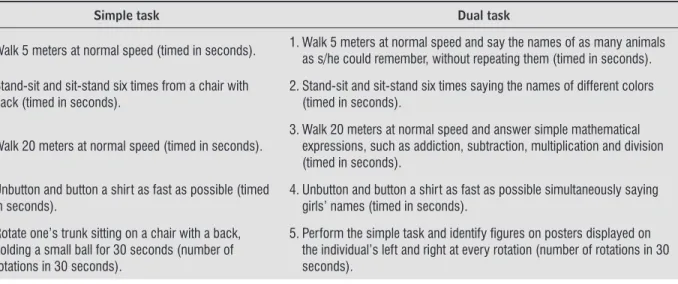
Table 1 - Assessing the performance of simple and dual-task
Simple task Dual task
1. Walk 5 meters at normal speed (timed in seconds). 1. Walk 5 meters at normal speed and say the names of as many animals as s/he could remember, without repeating them (timed in seconds).
2. Stand-sit and sit-stand six times from a chair with back (timed in seconds).
2. Stand-sit and sit-stand six times saying the names of different colors (timed in seconds).
3. Walk 20 meters at normal speed (timed in seconds).
3. Walk 20 meters at normal speed and answer simple mathematical expressions, such as addiction, subtraction, multiplication and division (timed in seconds).
4. Unbutton and button a shirt as fast as possible (timed in seconds).
4. Unbutton and button a shirt as fast as possible simultaneously saying girls’ names (timed in seconds).
5. Rotate one’s trunk sitting on a chair with a back, holding a small ball for 30 seconds (number of rotations in 30 seconds).
5. Perform the simple task and identify fi gures on posters displayed on the individual’s left and right at every rotation (number of rotations in 30 seconds).
Results
The average age found in the group with PD
n = was . ± . years old; individuals
were male and nine were female. All the patients were classified between stages . and , according to the (oehn and Yahr Stages of Parkinson’s Disease. The average age in the group of healthy individuals
n = was . ± . years old; four
individu-als were male and were female. The p-value re-garding the groups’ ages was . . The groups were matched according to age.
No statistically significant differences were found in regard to the scores obtained by the groups on the Berg and Tinetti scales. The scores obtained for the Dynamic Gait )ndex, however, showed a statistically significant difference between groups: the healthy group performed better than the group with PD
Table .
When comparing the outcomes, the time needed by the two groups to perform simple and dual tasks revealed statistically significant differences except for simple task , simple task , and dual task , as shown in Table . The individuals with PD took longer to perform simple and dual tasks when compared to healthy individuals in the same age range.
Discussion
This study revealed that both healthy individu-als and those with PD obtained similar results on the
scales screening balance. This finding corroborates
data obtained by (orak and collaborators , in
which various items of the Berg Balance Scale and Tinetti test showed little or no difference in total scores among the participants in their study, who were di-vided into control group and group with mild PD. The authors also note that many healthcare professionals still use these scales e.g., to predict falls and that even patients who score well on the Berg scale and have the mild version of the disease present balance difficul-ties, especially when rotating, so that these signs are not measurable using the aforementioned scales. )t is believed that what may explain this is the fact that these scales are sensitive to detecting compromised balance in the more advanced stages of the disease.
According to Souza , dual-task performance
is assessed to verify cognitive processing, changes in attention mechanisms, automation of motor skills in dual tasks and to investigate diseases involving cogni-tive and attention deficits, such as Parkinson’s dis-ease, from experimental and behavioral perspectives. The dual-task protocol developed in this study sought to associate daily tasks that can determine the degree of an individual’s functionality, such as dressing, independent gait, and transition between postures e.g., sitting and standing . The participants with PD took longer to perform dual tasks when com-pared to healthy individuals in the same age range. This finding corroborates the findings reported by
the study performed by Teixeira and Alouche , in
255
with the group of healthy individuals. Gait is a rhyth-mic and automatized action, i.e., mainly managed by subcortical systems, and, therefore, performed without attention focus. Some authors, however, as-sert that even gait may be harmed when performed
together with another task . Studies show that
even visual-spatial deficits common to PD manifest when walking generates an incapacity to maintain a straight path, perceive doors, obstacles and variations in terrain, possibly leading to festination, freezing
and falls .
which consisted of buttoning a shirt as fast as possible while saying female names. This performance may be explained by muscle rigidity, which is a typical manifestation of the disease, characterized by co-contraction between agonist and antagonist muscles. Additionally, the involvement of basal ganglia changes the speed control of voluntary movement, slowing down patients in comparison to healthy individuals when performing movements.
)n the activities that involved gait, the group with PD took longer to perform their tasks when compared
Table 2 - Assessment of Balance and Gait in healthy individuals and individuals with Parkinson’s disease: median and
interquartile interval
Healthy Parkinson p
Berg (scores) 55 [52–56] 54 [52–55.5] 0.32
Tinetti (scores) 26 [26–27.5] 25 [21.5–27] 0.11
Dynamic Gait Index (scores) 24 [23.5–24] 21 [20–22] 0.00*
Note: *Statistically signifi cant difference. Berg Balance Scale, Tinetti Test and DGI in points.
Table 3 - Dual-task performance of healthy individuals and individuals with Parkinson’s disease: median and interquartile
interval
Healthy Parkinson p
Simple 1 (s) 4.5 [4.1–5.2] 5.2 [4.1–5.7] 0.19
Dual 1 (s) 5 [4.5–6] 6.3 [5–6.9] 0.01*
Simple 2 (s) 16 [13–16.5] 16 [14.3–21] 0.26
Dual 2 (s) 15 [13.7–19.3] 18 [14.4–25] 0.17
Simple 3 (s) 23.4 [17.8–28.2] 27.4 [22.4–32.7] 0.04*
Dual 26.8 [21–33.1] 32 [27.5–37] 0.02*
Simple 4 (s) 25.5 [13.8–35.5] 41 [27.4–55.7] 0.002*
Dual 4 (s) 28 [18.2–43.2] 45 [32.7–62] 0.003*
Simple 5 (rot) 24 [21–29] 18 [14–21] 0.001*
Dual 5 (rot) 16 [12–21] 12 [11–15] 0.01*
suggest that people with PD tend to give priority to the secondary cognitive task instead of the first task when not instructed to do otherwise. Therefore, dual tasking is an appropriate strategy to improve gait, while the use of different types of secondary tasks is an alternative that may potentially lead to good results. Tseng and collaborators found similar results when they compared the performance of patients
with PD while walking backwards .
Studies also suggest that the assessment of the ability to perform two tasks simultaneously may be a sensitive indicator of incapacity among individu-als with PD, even in the initial phases of the disease. The study conducted by Fuller and collaborators assessed which elements of dual tasks cognitive or gait are the ones most associated with deficiency
and impairment in PD. A total of individuals with
PD were assessed under the following conditions: time required to walk meters speed ; num-ber of words generated in the verbal fluency test; and association of both dual task . The authors concluded that individuals who performed worse in the dual task than expected presented greater im-pairment, suggesting that patients give priority to gait performance speed instead of cognitive per-formance and that the generation of words during dual task performance may be an early and sensitive indicator of impairment in PD.
Based on evidence regarding DT performance in
PD, Conradsson et al. sought to investigate the
effects in the short and long terms of new exercise strategies for PD and proposed, based on a controlled clinical trial, the development of a new concept for the training of balance and gait, emphasizing multi-task training, associating cognitive functions e.g., counting numbers with secondary motor tasks transporting and/or manipulating objects . The justification for choosing training based on motor learning is supported by recent findings regarding the phenomenon of neuroprotection induced by motor learning in patients with mild to moderate degrees of PD.
Even though results support the importance of assessment and treatment based on dual tasks for individuals with PD, one has to consider some limi-tations of this study: the results of a cross-sectional study are valid only for the sample under study and cannot be generalized to other samples. The choice of different dual tasks can reveal different results. Additionally, randomized clinical trials are needed
Yogev-Seligmann et al. state that patients
with PD present difficulty in gait-related dual task performance but note that it is still unclear if this difficulty results from a motor or cognitive deficiency. Dual task performance creates a competition for at-tention and for the allocation of cognitive skills, so that one task may have priority over another, depend-ing on the circumstances. For this reason, the authors analyzed the effects of explicit prioritization of gait or cognitive task on the speed of gait in patients with PD and healthy elderly individuals. The par-ticipants performed a verbal fluency task VF while in a sitting position as a single task and then were in-structed to walk at their normal speed for meters under four conditions: habitual gait without a dual task, walk while performing VF task without an explicit instruction to give priority to the motor or the cognitive task; with an instruction to give priority to the cognitive task; and with an instruction to give priority to gait. )n the last two conditions, the individuals were instructed to perform the priority task as if they were being performed in isolation. As a result, individuals of both groups significantly de-creased the speed of their gait while performing DT. Time of steps and time of oscillation were signifi-cantly harmed; that is, both groups took longer since neither gave priority to DT in comparison to their habitual gait. This negative effect was more evident in the group with PD.
)n this line of investigation, the immediate and short time effects of a strategy that consisted of di-viding attention between gait and a cognitive task for individuals with Parkinson’s disease in the mild and moderate stages were investigated in a controlled
clinical trial performed by Fok and collaborators .
257 . Moraes (, Deslandes A, Silveira (, Arcoverde C, Alve (,
Laks J. Effects of motor and cognitive dual-task per-formance in depressive elderly, healthy older adults, and healthy young individuals. Dement Neuropsychol.
; : - .
. Br“mmer V, Schneider S, Str“der (, Askew C. Primary motor cortex activity is elevated with incremental exercise intensity. Neuroscience. ; : - . . Marchi KC, Chagas M(N, Tumas V, Miasso A),
Crippa JAS, Tirapelli CR. Adesão à medicação em pacientes com doença de Parkinson atendidos em ambulatório especializado. Ciênc Saúde Coletiva.
; : - .
. Longo GS, Pinhel MS, Sado CL, Gregório ML, Amorim GS, Florim GS, et al. Exposure to pesticides and hetero-zygote genotype of GSTP -Alw ) are associated to Parkinson’s disease. Arq Neuropsiquiatr. ;
: - .
. Amano S, Roemmich RT, Skinner JW, (ass CJ. Ambula-tion and Parkinson disease. Phys Med Rehabil Clin N
Am. ; : - .
. Petzinger GM, Fisher BE, McEwen S, Beeler JA, Walsh JP, Jakowec MW. Exercise-enhanced neuroplasticity tar-geting motor and cognitive circuitry in Parkinson’s disease. Lancet Neurol. ; : - .
. Santos VV, Araújo MA, Nascimento OJM, Guimarães FS, Orsini M, Freitas MRG. Effects of a physical therapy home-based exercise program for Parkinson’s disease. Fisioter Mov. ; : - .
. Christofoletti G, Cândido ER, Olmedo L, Miziara SRB, Beinotti F. Efeito de uma intervenção cognitivo-motora sobre os sintomas depressivos de pacientes com doen-ça de Parkinson. J Bras Psiquiatr. ; : - . . Tedrus GMAS, Fonseca LC, Kange PM. )mpact of clini-cal and cognitive aspects on quality of life. Dement Neuropsychol. ; : - .
. Barbosa ER. Non-motor symptoms in Parkinson’s disease. Arq Neuropsiquiatr. ; : - .
. Brauer SG, Woollacott M(, Lamont R, Clewett S, O’Sullivan J, Silburn P, et al. Single and dual task gait training in people with Parkinson’s disease: A proto-col for a randomized controlled trial. BMC Neurology.
; : .
to assess the improvement of outcomes based on treatment proposing dual task training, in addition to follow-up studies to verify how long is required for training to start presenting benefits. Despite the limitations presented, the authors were cautious in recruiting the participants and implementing the tests to ensure accuracy in the results of this study.
Conclusion
This study enabled verifying that the group of el-derly individuals with Parkinson’s disease performed worse than healthy individuals in simultaneous tasks and required more time to perform the same tasks. Such deficits may be related to the fact that activities that were previously automatized begin to require a controlled process when the individual began to be affected by Parkinson’s disease, with increased attention demands, thereby hindering dual task per-formance. Studies show, however, that there is motor learning and that dual tasking may be introduced in rehabilitation programs intended to improve the performance of patients in performing these tasks, which are common tasks performed in daily life.
References
. Teixeira NB, Alouche SR. O Desempenho da dupla tarefa na doença de Parkinson. Rev Bras Fisioter.
; : - .
. Yogev-Seligmann G, Giladi N, Brozgol M, (ausdorff JM. A training program to improve gait while dual tasking in patients with Parkinson’s disease: A pilot study. Arch Phys Med Rehabil. ; : - .
. Targino VR, Freire ANF, Sousa ACPA, Maciel NFB, Guerra RO. Effects of a dual-task training on dynamic and static balance control of pre-frail elderly: a pilot study. Fisioter Mov. ; : - .
. Gehrinh PG, Bertolassi MA, Nunes MES, Basso L, Meira Júnior CM, Santos S. Desempenho em idosos em uma tarefa motora de demanda dupla de controle. Rev Bras Educ Fís Esporte. ; : - .
. Galna B, Lord S, Daud D, Archibald N, Burn D, Roches-ter L. Visual sampling during walking in people with Parkinson’s disease and the influence of environment and dual-task. Brain Res. ; : - .
. Yogev-Seligmann G, Rotem-Galili Y, Dickstein R, Giladi N, (ausdorff JM. Effects of explicit prioritization on dual task walking in patients with Parkinson’s disease. Gait Posture. ; : - .
. Fok P, Farrell M, McMeeken J. The effect of divid-ing attention between walkdivid-ing and auxiliary tasks in people with Parkinson’s disease. (um Mov Sci.
; : - .
. Tseng ), Jeng C, Yuan R. Comparisons of forward and backward gait between poorer and better attention capabilities in early Parkinson’s disease. Gait Posture.
; : - .
. Fuller RL, Van Winkle EP, Anderson KE, Gruber-Baldini AL, (ill T, Zampieri C, et al. Dual task performance in Parkinson’s disease: a sensitive predictor of impair-ment and disability. Parkinsonism Relat Disord.
; : - .
. Conradsson D, Löfgren N, Ståhle A, (agströmer M, Franzén E. A novel conceptual framework for balance training in Parkinson’s disease study protocol for a randomized controlled trial. BMC Neurology. ;
: .
Received: / /
Recebido: / /
Approved: / /
Aprovado: / /
. (orak FB, Wrisley DM, Frank J. The Balance Evalua-tion Systems Test BESTest to differentiate balance deficits. Phys Ther. ; : - .
. (oehn MM, Yahr MD. Parkinsonism: onset, progres-sion and mortality. Neurology. ; : - . . Scalzo PL, Flores CR, Marques JR, Robini SCO, Teixeira AL.
)mpact of changes in balance and walking capacity on the quality of life in patients with Parkinson’s disease. Arq Neuropsiquiatr. ; : - .
. Miyamoto ST, Lombardi J, Berg KO, Ramos LR, Natour J. Brazilian version of the Berg balance scale. Braz J Med Biol Res. ; : - .
. Tinetti ME. Performance-oriented assessment of mo-bility problems in elderly patients. J Am Geriatr Soc.
; : - .
. Jonsdottir J, Cattaneo D. Reliability and validity of the dynamic gait index in persons with chronic stroke. Arch Phys Med Rehabil. ; : - . . Kadivar J, Corcos DM, Foto J, (ondzinski JM. Effect of
step training and rhythmic auditory stimulation on functional performance in Parkinson patients. Neu-rorehabil Neural Repair. ; : - . . King LA, Mancini M, Priest K, Salarian A,
Rodrigues--de-Paula F, (orak F. Do clinical scales of balance re-flect turning abnormalities in people with Parkinson’s disease? J Neurol Phys Ther. ; : - . . Souza CB. Efeitos de um treinamento em condição de
dupla tarefa sobre o desempenho motor e habilidade de dividir a atenção em indivíduos com doença de Parkinson [dissertação]. São Paulo: )nstituto de Psi-cologia da Universidade de São Paulo; . . Teixeira NB, Alouche SR. O desempenho da
du-pla tarefa na doença de Parkinson. Rev Bras Fisioter.
![Table 3 - Dual-task performance of healthy individuals and individuals with Parkinson’s disease: median and interquartile interval Healthy Parkinson p Simple 1 (s) 4.5 [4.1–5.2] 5.2 [4.1–5.7] 0.19 Dual 1 (s) 5 [4.5–6] 6.3 [5–6.9] 0.01* Simple 2 (s) 16 [1](https://thumb-eu.123doks.com/thumbv2/123dok_br/15166230.523030/5.918.93.810.667.1049/performance-individuals-individuals-parkinson-interquartile-interval-healthy-parkinson.webp)
