Revista Gaúcha
de Enfermagem
How to cite this article:
Marques DKA, Silva KL, Nóbrega MML. Hospitalized school children: proposition of a data collection instrument in light of Horta’s theory. Rev Gaúcha Enferm. 2016;37(spe):e2016-0038. doi: http:// dx.doi.org/10.1590/1983-1447.2016. esp.2016-0038.
doi: http://dx.doi.org/10.1590/1983-1447.2016.esp.2016-0038
Hospitalized school children:
proposition of a data collection
instrument in light of Horta’s theory
Escolares hospitalizados: proposta de um instrumento para coleta de dados à luz da teoria de Horta
Escolares hospitalizados: proposición de un instrumento para recolección de datos a la luz de la teoría de Horta
a Universidade Federal da Paraíba (UFPB), Hospital
Universitário Lauro Wanderley. João Pessoa, Paraíba, Brasil.
b Universidade Federal da Paraíba (UFPB), Programa
de Pós-Graduação Em Enfermagem. João Pessoa, Paraíba, Brasil.
Daniela Karina Antão Marquesa Kenya de Lima Silvaa Maria Miriam Lima da Nóbregab
ABSTRACT
Objetivo: To build a data collection tool for hospitalized schoolchildren in light of the Theory of Basic Human Needs.
Method: Methodological research developed in a a Teaching Hospital in João Pessoa, with the participation of eight teachers and assistant nurses, from July 2014 to March 2015. Statistical analysis was used to validate the empirical indicators.
Resultados: The indicators were identified from the instrument analysis validated for children, considering the International Nursing Minimum Data Set, which resulted in version 1 of the instrument with 301 indicators. The instrument validation resulted in 288 indicators, which were later revalidated and formatted once the instrument’s final version was reached.
Conclusion: The instrument has contributed to data collection in teaching hospitals and has guided the other phases of the nursing process, considering the specific needs of these children, collaborating with the nursing care, education and research.
Keywords: Nursing. Nursing process. Validation studies.
RESUMO
Objetivo: Construir um instrumento de coleta de dados para escolares hospitalizados à luz da Teoria das Necessidades Humanas Básicas.
Método: Pesquisa metodológica desenvolvida no Hospital Escola de João Pessoa, com a participação de oito enfermeiras docentes e assistenciais, no período de julho de 2014 a março de 2015. Foi utilizada a análise estatística para a validação dos indicadores empíricos.
Resultados: Os indicadores foram identificados a partir da análise de instrumentos validados para crianças, considerando o Conjunto Internacional de Dados Mínimos de Enfermagem, resultando na versão 1 do instrumento, contendo 301 indicadores. Após a validação do instrumento, obtiveram-se 288 indicadores que passaram por revalidação; em seguida, foi realizada a formatação do instrumento na versão final.
Conclusão: O instrumento tem contribuído para a coleta de dados de escolares hospitalizados e norteado as demais fases do pro-cesso de enfermagem, considerando as necessidades específicas dessas crianças, colaborando com a assistência, ensino e pesquisas de enfermagem.
Palavras-chave: Enfermagem. Processos de enfermagem. Estudos de validação.
RESUMEN
Objetivo: Construir un instrumento de recolección de datos para escolares hospitalizados a la luz de la Teoría de las Necesidades Humanas Básicas.
Método: Investigación metodológica desarrollada en un hospital Escuela de João Pessoa, con la participación de ocho profesores y auxi-liares de enfermería en el periodo de julio de 2014 y marzo de 2015. Se utilizó el análisis estadístico para validar los indicadores empíricos.
Resultados: Los indicadores se identificaron a partir del análisis de los instrumentos validados para los niños, considerando el Con-junto Internacional de Datos Esenciales para Enfermería, resultando en la versión 1 del instrumento, conteniendo 301 indicadores. Después de la validación del instrumento, hubo 288 indicadores, que pasaron por la revalidación y después de que el formato del instrumento se llevó a cabo en la versión final.
Conclusión: Este instrumento ha contribuido a la recolección de datos de escolares hospitalizados y guiado las demás fases del proceso de enfermería, considerando las necesidades específicas de estos niños, apoyando la asistencia, enseñanza e investigación en enfermería.
INTRODUCTION
The proposal to develop the systematization of nurs-ing care in pediatric units presents some challenges for they serve a clientele that is complex in its growth and development, in age groups ranging from newborns to adolescents. Allied to child morbidity and mortality profile changes due to gradual increase in assistance and the pre-vention of acute diseases mainly due to perinatal diseases and preventable causes, the reduction in the incidence of preventable diseases through immunization schedules, the advance of technology and the actions of the teams in the basic health units(1), factors that contributed to the children’s hospital admissions focusing on chronic and se-vere acute cases.
Nursing care in the children’s hospitalization requires professionals to rethink their actions and base their actions on scientific knowledge, specifically in science itself, in nursing. Therefore, it is necessary to establish goals to fully meet the needs of the child/family, in the biological, emo-tional, psychological, social and spiritual contexts, with the intention of provided quality and visibility to their actions. Thus, it is imperative that the nursing professional have the competence and ability to provide efficient care that solves the problem presented, for which it is imperative to estab-lish a method to guide their practice.
The method used is the nursing process, which is un-derstood as a methodological tool that enables the iden-tification, understanding, description, explanation and/ or prediction of the person’s, family’s or human commu-nity’s needs, favoring and organizing professional care(2). The nursing process must be based on a theoretical model in order to be used in care practice. In Brazil, the theoreti-cal assumptions of Horta, referring to basic human needs (BHN), have been used in various services and applied to a number of nursing clients.
The theories of BHN directs nursing care at three lev-els: psychobiological, psychosocial and psychospiritual(3). Nursing care provided to children and adolescents should include not only the physical/biological care, but consider the emotional, social and spiritual needs. From the mo-ment that the nurse is knowledgeable about the level of needs of their specific clientele, diagnoses, outcomes and interventions will result in a better resolution rate and qual-ity in the assistance.
The application of the nursing process, the use of nurs-ing theories in research aimed at care practice, as well as the development of a standardized language for this assis-tance, are increasingly discussed topics in national and in-ternational studies(4). Associated with Resolution 358/2009
of the Conselho Federal de Enfermagem (Nursing Federal Council) on the implementation and documentation of the nursing process in health institutions, it demonstrates the contribution of nursing to health care among the popu-lation, increasing visibility and professional recognition(5-6).
The Clínica Pediátrica do Hospital Universitário Lauro Wanderley-Paraíba State (Pediatric Clinic of the University Hospital Lauro Wanderley-Paraíba) has been the scene for research development directed towards healthcare prac-tice care for many years, where tools were developed for the implementation of the nursing process for specific age groups, children 0-5 years (7) and adolescents (12-18 years of age) (8), leaving a gap for school age children (6-12 years of age), and the development and validation of diagnostic/ results/interventions for the group of pediatric patients(9-10). The tools developed are based on Horta’s theory of Ba-sic Human Needs (BHN)(3), as it is the basis of the HULW’s Nursing Assistance Systematization (SAE) project, in the development of other phases of the nursing process, help from the International Classification for Nursing Practice (ICNP®)(4)was necessary, meeting the recommendations of the International Council of Nurses.
Considering the gap involving school age children for said pediatric unit and the fact that there were no actual descriptions in other studies concerning the data collec-tion instrument for schoolchildren, the following quescollec-tion was made: What does the International Council of Nurses proposes to collect nursing information to promote the visibility of nursing care and the implementation of the nursing process?
In this perspective, the International Council of Nurses
(ICN), together with the International Medical Informatics Association Nursing Informatics Special Interest Group (IMIA NI-SIG) and other international standards bodies have
de-veloped the International Nursing Project Minimum Data
Set (i-NMDS) since 2001 . This global project is focused on the coordination of data collection or information collec-tion and analysis in nursing that is relevant to support the description, study and improvement of nursing practice
and was structured from the Nursing Minimum Data Set
(NMDS(11). ]The i-NMDS has promoted the test,
demon-strated its potential and is congruent to the NMDS in de-scribing nursing practice, focusing on developing and
us-ing the ICNP® according to what is proposed by the ICN.
The concepts of CIPE® can be used by i-NMDS to represent
the nursing care elements: diagnosis, intervention and out-come of nursing(12).
col-lection instrument based on the Theory of Basic Human Needs support the health care practice of nurses and pro-vide continuity in the implementation of other phases in the nursing process aimed at providing care considering the specific needs of hospitalized school age children?
In this light, the objective of this study was to construct a data collection tool for hospitalized school aged children based on Theory of Basic Human Needs.
METHOD
This article was extracted from the thesis entitled: “De-velopment and validation of an instrument for the imple-mentation of the nursing process in hospitalized school age children”(13), and is inserted in the research interest Theoret-ical and PhilosophTheoret-ical Foundations of Care in Nursing and Health, which belongs to the Programa de Pós-Graduação em Enfermagem da Universidade Federal da Paraíba at Uni-versidade Federal da Paraíba (PPGENF-UFPB – Graduate Pro-gram in Nursing at the Federal University of Paraíba ), linked to the Grupo de Estudos e Pesquisas em Fundamentos da Assistência de Enfermagem (GEPFAE – Group for Study and research in Fundamentals of Nursing Care) and the research project Sistematização da Assistência do Hospital Universi-tário Lauro Wanderley (HULW – Health Care Systematization of the University Hospital Lauro Wanderley).
The GEPFAE, through the integration of teaching, re-search and extension, with the collaboration of teachers and hospital nurses, aims to implement the nursing pro-cess in health care practices, aiming to build research in-volving the development and testing of instruments to raise data that is significant to nursing practice, identifica-tion of nursing diagnoses, as well as planning, implemen-tation and evaluation of care.
This is a methodological research, developed at the HULW Pediatric Clinic. The research was assessed by the UFPB Comitê de Ética em Pesquisa, do Centro de Ciências da Saúde (CCS – Research Ethics Committee of the Health Sciences Center) and approved in accordance with Proto-col No. 0654/13 and CAAE 24193313500005188. The ethi-cal aspects recommended by Resolution No. 466/12 of the National Council of Health, which regulates research in hu-mans(14) were taken into account. Nurses and teachers were asked for their permission to participate in this research by signing the consent form.
Data collection took place in the period between June 2014 and March 2015. The following inclusion criteria were established: nurses who had graduated at least five years prior; nurses who acted in the pediatrics area for at least two years; nurses who had graduate degrees and research
experience; nurses who had knowledge of the nursing pro-cess and systematization of nursing care; nurses that used HULW Clinic Pediatric nursing backgrounds. The exclusion criteria were the following: nurses who were on vacation or leave during the period of data collection; nurses who did not hand back the instrument within thirty days from the date of delivery.
Eight nurses participated, between active nurses and teachers of the HULW Pediatric Clinic, all female, aged be-tween 34 to 58 years, with experience ranging from ten to more than 25 years. As for training, one had a doctorate degree, two were doctoral students, one held a master’s degree, another was obtaining the same degree, and three were experts. Of the sample, three exercised the functions of clinical nurses and teachers simultaneously, linked to the Federal University of Paraíba.
The research was conducted in three stages: 1 – Iden-tification of Basic Human Needs empirical indicators in school children hospitalized, based on literature review, indicator validation and formatting of the tool-version 1; 2 – Validation of empirical indicators of version 1 and appear-ance and content and preparation of version 2 of the in-strument; 3 – Formatting of the data collection instrument, final version.
Empirical indicators were considered as relevant terms to which nurses should be alert and that should be re-searched using the clientele, according to the basic human needs presented, so that from this clinical reasoning and nursing diagnosis judgment, to provide professional prac-tice with a scientific basis. It can be exemplified that in the Oxygenation Need, empirical indicators that have been val-idated and should be the main signs and symptoms in this case to be evaluated are: vesicular murmurs, adventitious sounds, expectoration (present or absent), respiratory rate, secretion, symmetry of respiratory effort, cough, cyanosis.
Following is a description of step 1 – Identification of related empirical indicators of hospitalized school children:
Empirical indicators were identified from literature review. Aside from relevant studies on the subject, 13 re-search works developed in PPGENF-UFPB that contribut-ed to the implementation of the nursing process in HULW were identified. Of these, 05 that were directed to pediatric patients were. To further deepen and prepare the instru-ment for hospitalized school children, a need was felt to evaluate these studies that were already used, because they were validation studies that had already undergone
judgment by expert nurses. To achieve this, two
These instruments were evaluated according to the relevant items for the Nursing Minimum Data Set, exam-ple (service items: identification or health service number, client’s unique registration number, nursing professional’s unique registration number, admission date, discharge date, referal data, data on the type of payment for the ser-vice, clients’ demographic items, including personal iden-tification, date of birth, sex, race and ethnicity, residence); care items: nursing diagnosis (ND), nursing intervention (NI), nursing results (NR) and intensity of nursing care).
At this stage, in the item, nursing care empirical indi-cators that could direct the nurse in the identification of ND were inserted. Therefore, they were organized consid-ering Horta’s levels of basic human needs of(3). The ND, ND and NR items were inserted in the instrument related to care planning, included in another stage of the research.
Basic human needs described by Benedet and Bub(15),
Horta(3), Marques(8-9) and Garcia Cubas(16) were also ana-lyzed, as were their indicators, in the literature review topic and reorganization needs in the study considered relevant for hospitalized school age children; as a consequence, version 1 of the instrument was structured considering the empirical indicators identified in the literature review.
In step 2: Validation of the content, appearance and instrument format, there was the validation of empirical indicators found in version 1 of the instrument with clinical nurses and teachers, with the help of an instrument to clas-sify empirical indicators in relevant and not relevant and insert suggestions and withdrawal justifications or inclu-sion of empirical indicators. Empirical indicators classified as relevant were given weight “1” and not relevant – weight “0”. The empirical indicators that achieved a Concordance Index (CI) greater than or equal to 0.80 were validated, and empirical indicators with a CI under 0.80 were not consid-ered for inclusion in the Version 2 of the instrument. The inclusion of suggestions were evaluated and inserted de-pending on the Concordance Index and relevance to the study, according to the relevance, pertinence, representa-tiveness, clarity, contribution, repetition of empirical indica-tors and the instrument presentation.
In step 3, Data collection instrument formatting, final version, after analysis of validated empirical indicators ver-sion 2 of the instrument was drawn up, and resubmitted to the research participants, so that they could reaffirm and agree to the changes made by all, so that the final version of the instrument could then be formatted.
RESULTS
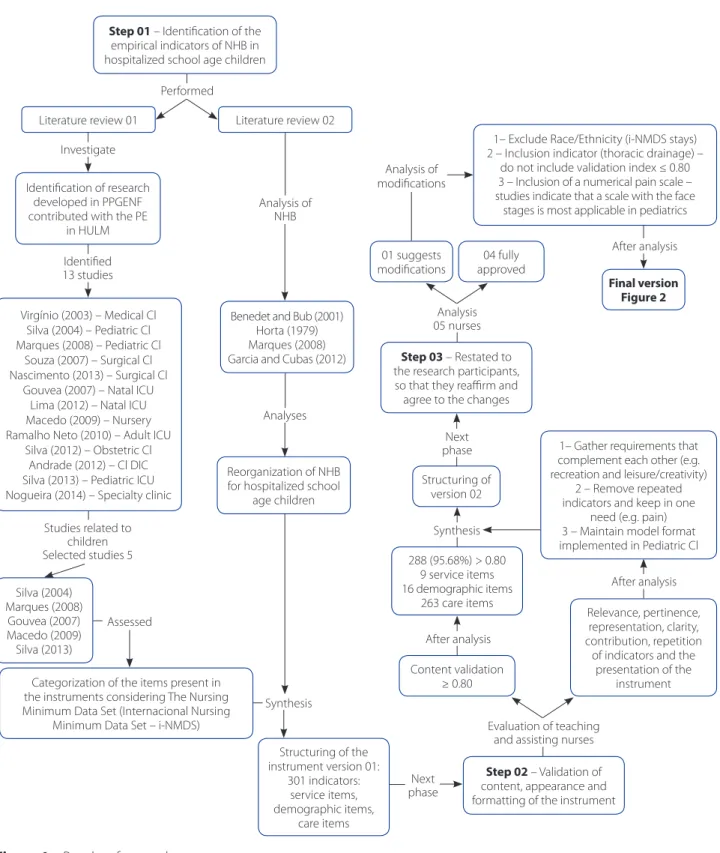
Figure 1 shows the results of the research steps.
301 empirical indicators relating to the service items, items demographic and care items were presented on the instrument – Version 1, of which 288 (95.68%) reached the concordance index (CI) of 0.80 or above and 13 (4.31%) empirical indicators have not been validated, as they pre-sented a CI below 0.80 and belonged to the item care. Of the 288 empirical indicators validated, nine are from the service items, 16 from demographic items and 263 belong to care items.
Demographic data and service data were validated in their entirety and the care data related to measurable em-pirical indicators (temperature, respiratory rate, heart rate, blood pressure, height, weight, blood glucose and oxygen saturation) was also validated with a CI = 1.0. Empirical indi-cators for care data were presented for basic human needs, according to Horta’s referencial adopted in the study.
The instrument sought to contemplate the i-NMDS data in their categories and items. The service items are shown in the identification of the service through the iden-tification of the Hospital and the Pediatric Clinic, presented by logos that are standardized by the institution, showing the nature of the institution, by means of data on the type of payment for the service, meaning a public hospital be-longing to SUS – Unified Health-System.
It is known that it is necessary for the customer to have a unique registration number in order to access service, for SUS, this number is is the National Health Card num-ber-CNS (Cartão Nacional de Saúde) and the medical re-cord number, where individual services are registered. For the i-NMDS, the date of admission and discharge date are relevant data, but only the admission date was included in the instrument, considering its purpose the date of discharge is recorded when the patient leaves on a daily assessment tool; The unique record number of nursing professionals in Brazil, the number of the Regional Coun-cil of Nursing (COREN), which must be legible, followed by the professional’s signature, located at the end of the in-strument, were also contemplated. Customer referral data were considered related to information on the clinic and ward where the client is located.
The i-NMDS demographic items that should minimal-ly be collected are: personal identification, date of birth, sex, race/ethnicity and residence. The identification is per-formed by recording the child’s full name, age in years, date of birth, gender and race/ethnicity. Data on the residence are made by recording the full address.
during their entire hospital stay by a guardian or other adult; the child’s education and origin, because they are hospitalized school age children and information about previous hospitalizations and the main complaint, where
the following information is entered: whether it is a chronic disease, if the child has undergone surgery, been hospitalized, the medical diagnosis and the current com-plaint for hospitalization.
Figure 1 – Results of research steps
Source: Research data, 2015.
Step 01 – Identification of the empirical indicators of NHB in hospitalized school age children
Step 02 – Validation of content, appearance and formatting of the instrument Step 03 – Restated to
the research participants, so that they reaffirm and
agree to the changes Identification of research
developed in PPGENF contributed with the PE
in HULM
Categorization of the items present in the instruments considering The Nursing Minimum Data Set (Internacional Nursing
Minimum Data Set – i-NMDS)
Reorganization of NHB for hospitalized school
age children Virgínio (2003) – Medical Cl
Silva (2004) – Pediatric Cl Marques (2008) – Pediatric Cl
Souza (2007) – Surgical Cl Nascimento (2013) – Surgical Cl
Gouvea (2007) – Natal ICU Lima (2012) – Natal ICU Macedo (2009) – Nursery Ramalho Neto (2010) – Adult ICU
Silva (2012) – Obstetric Cl Andrade (2012) – Cl DIC Silva (2013) – Pediatric ICU Nogueira (2014) – Specialty clinic
Silva (2004) Marques (2008)
Gouvea (2007) Macedo (2009) Silva (2013)
Benedet and Bub (2001) Horta (1979) Marques (2008) Garcia and Cubas (2012)
Structuring of the instrument version 01:
301 indicators: service items, demographic items,
care items
Structuring of version 02
288 (95.68%) > 0.80 9 service items 16 demographic items
263 care items
Relevance, pertinence, representation, clarity, contribution, repetition
of indicators and the presentation of the
instrument 1– Gather requirements that complement each other (e.g. recreation and leisure/creativity)
2 – Remove repeated indicators and keep in one
need (e.g. pain) 3 – Maintain model format implemented in Pediatric Cl 1– Exclude Race/Ethnicity (i-NMDS stays) 2 – Inclusion indicator (thoracic drainage) –
do not include validation index ≤ 0.80 3 – Inclusion of a numerical pain scale – studies indicate that a scale with the face
stages is most applicable in pediatrics
Content validation ≥ 0.80 01 suggests modifications
Final version Figure 2 04 fully
approved Literature review 01
Performed
Analysis of NHB
Analyses
Analysis 05 nurses Analysis of modifications
After analysis
After analysis
After analysis Investigate
Identified 13 studies
Studies related to children Selected studies 5
Assessed
Synthesis
Synthesis
Next phase
Next phase
Of the empirical indicators that were not validated, three belonged to the need for oxygenation: arterial blood gases, chest drainage and oxygen saturation, which received CI 0.37; 0.62; 0.75, respectively. But the oxygen saturation in-dicator found itself repeated in measurable data that has been validated, remaining, therefore, in the instrument.
The need for hydration has the empirical indicators rap-id weight gain (CI = 0.62) and electrolyte replacement sub-stances (CI = 0.75) excluding from need. In the elimination need, the indicator volume diuresis 24h__ml (CI = 0.75) is excluded. The need for sexuality only had the indicator sex-ual education (CI = 0.62), and was ruled out for the final version. In the need for physical activity, only the indicator exercises regularly not been validated (CI = 0.75). The need for physical safety and environment, empirical indicators type of housing; number of rooms and number of people living in the home were excluded, because their CI = 0.75. In the need for vascular regulation, the cardiac heart rate indicator reached CI = 0.75, but due to its relevance in the evaluation of the cardiac physical examination, it remained for a second evaluation in version 2, in which it was consid-ered validated. In the need for physical integrity, the
indi-cator venous infusions (CI = 0.75) was not validated, but it is found included in need for hydration. The validated empir-ical indicators are presented in the final version-instrument according to Figure 2.
DISCUSSION
For the identification of empirical indicators, research was conducted with validation studies conducted in HULW, resulting from research linked to PPGENF/UFPB, which developed instruments for the implementation of the nursing process applied to the pediatric clientele. Val-idated empirical indicators were analyzed, portraying the scientific vocabulary and place of the institution and that are included in the service as part of the implementation of the nursing process in the Intermediate Neonatal Care Unit in the Neonatal Intensive Care Unit in the Pediatric Inten-sive Care Unit and Pediatric Clinic(7-8), pursuant to COFEN Resolution 358/2009.
The development of a scientific and local vocabulary contributed to the nurses of the Pediatric Clinic/HULW rec-ognizing their own language used in professional practice
Figure 2 – Instrument collection of nursing data for hospitalized school age children final version. João Pessoa, PB, 2015
and standardizing terms, which has allowed for the system-atic documentation of nursing activities.
In addition to the contribution in the identification of empirical indicators, the instruments used in the Pediatric Clinic/HULW served as a model for formatting and presen-tation. The contents were analyzed from a descriptive and comparative study(17) to support the development of the in-strument for hospitalized school age children, where the In-ternational Nursing Minimum Data Set-i-NMDS(12) were com-pared with the data contained in the nursing background.
Once the instruments were applied in the HULW Pedi-atric Clinic, it was identified that the elements proposed by the i-NMDS, which should minimally be collected to gen-erate information relevant to the clientele assisted by the nursing staff were not actually considered because they were not designed with this foundation. Of the evaluated elements belonging to the i-NMDS proposal, the instru-ment for hospitalized adolescents contemplated twelve and the instrument for children between zero and five pre-sented seven(17).
Considering the data recommended by the i-NMDS in service items and demographic data items, it is emphasized that the inclusion of such data in the instrument has facil-itated the child’s admission process, therefore, the nurse, most often, is the family’s first contact with the service and the search for information upon admission has contribut-ed to the inclusion of the child in the hospital’s electronic registration, which reduces the rate of financial losses per day of hospitalization.
internal discussions have been developed regarding the release of a module for the registration of the nurs-ing process and the integration of existnurs-ing modules in the current system. The technological maturity of pub-lic health services and the integration of systems when present, is still an obstacle. Sometimes, the absence of requirements by managers and policies toward the cost of management, may result in lack of interest of cost man-agement in public hospitals(18).
Items of nursing care is the data that contribute to list the diagnoses, interventions, outcomes, and intensity of nursing care. In the data collection phase of this research, the empirical indicators that identify the basic human needs were considered. These items have contributed to the initial nursing care provided, for it allows the nurse to identify the affected needs with a specific focus, easing the process of diagnostic reasoning and therefore the name of the nursing diagnoses, structured in a naming validated for care to hospitalized children(10).
It is emphasized that this research has contributed to the use of standardized language in nursing in the HULW
Clinical Pediatric to plan assistance, documenting activities, identifying and measuring the results of practice. Moreover, it has collaborated with the development of knowledge in the care of school-age children, which aims to cooperate with the development of nursing.
This is one of the research developed by PPGENF-UFPB that hosts the Center of the International Classification for Nursing Practice (CIPE®) in Brazil, whose mission is to support
the continuous development of CIPE®; promote their use
in clinical practice, education and research in nursing; and contribute to the International Council of Nurses and oth-er research centoth-ers for the CIPE® classification system to be-come a world reference terminology, strengthening nursing in health care, education and research(19). The development of several studies point to the importance of using CIPE® for the improvement of professional practice(20). CIPE® Brazil Cen-ter has done its part by adding the Cen-terminology to practical assistance from its applicability to the development of sub-groups and research for specific clients.
CONCLUSION
Given the above, it is stated that the goal was achieved. The data collection tool for hospitalized school age chil-dren has directed the care, teaching and research for this clientele with regard to obtaining data that is relevant to the implementation of the remaining phases of the nurs-ing process. The study has some limitations, as it was con-ducted in a teaching hospital in which the organizational structure differs from other pediatric services and there-fore, can not be used in another institution, also consid-ering the specificity of the clientele. It is suggested that other pediatric services be included for similar research development, given that the methodological steps of the research can be replicated.
The preparation of diagnoses, results and nursing inter-ventions from the data collected with the instrument has promoted an organized nursing care, based on scientific knowledge, taking into account the real needs of hospital-ized school age children, as well as being an accessible reg-istry, making nursing assistance provided to these children visible and facilitating communication and standardization of data that should be collected as priority.
instrument allows new questions about the countless pos-sibilities to identify empirical indicators, that lead to the de-velopment of different diagnoses, outcomes and nursing interventions (actions), as this will depend on the individu-al and collective commitment of nurses to meet the needs presented by each assisted client.
REFERENCES
1. Araújo JP, Silva RMM, Collet N, Neves ET, Toso BRGO, Viera CS. História da saúde da criança: conquistas, políticas e perspectivas. Rev Bras Enferm. 2014 nov-dez [cited 2015 fev 23];67(6):1000-7. Available at: http://www.scielo.br/pdf/re-ben/v67n6/0034-7167-reben-67-06-1000.pdf.
2. Garcia TR, Nóbrega MML. Processo de Enfermagem: da teoria à prática assisten-cial e de pesquisa. Esc Anna Nery. 2009 jan-mar [cited 2015 fev 23];3(1):188-93. Available at: http://www.scielo.br/pdf/ean/v13n1/v13n1a26.pdf. 3. Horta WA. Processo de enfermagem. Rio de Janeiro: Guanabara Koogan; 2011. 4. Garcia TR, Bartz CC, Coenen AM. CIPE® uma linguagem padronizada para a
prática profissional. In: Garcia TR, organizador. Classificação Internacional para a Prática de Enfermagem CIPE®: versão 2015. Porto Alegre: Artmed; 2015. Cap. 2.
5. Conselho Federal de Enfermagem (BR). Resolução no 358, de 15 de outubro de 2009 [Internet]. Dispõe sobre a Sistematização da Assistência de Enferma-gem e a implementação do Processo de EnfermaEnferma-gem em ambientes, públicos ou privados, em que ocorre o cuidado profissional de Enfermagem, e dá outras providências. Brasília; 2009 [cited 2014 mar 13]. Available at: http://www. cofen.gov.br/resoluo-cofen-3582009_4384.html.
6. Conselho Federal de Enfermagem (BR). Resolução no 429, de 30 de maio de 2012. Dispõe sobre o registro das ações profissionais no prontuário do paciente, e em outros documentos próprios da Enfermagem, independentemente do meio de suporte- tradicional ou eletrônico. Diário Oficial da União [da] Repúbli-ca Federativa do Brasil. 2012 jun 8;149(110 Seção 1):288-9.
7. Silva KL, Nóbrega MML. Construção e validação de um instrumento de coleta de dados para crianças de 0-5 anos. OBJN. 2006 [cited 2013 mai 15];5(3):[7 telas]. Available at: http://www.objnursing.uff.br/index.php/nursing/rt/print-erFriendly/704/160.
8. Marques DKA, Nóbrega MML. Instrumento de sistematização da assistência de enfermagem para adolescentes hospitalizados. REME Rev Min Enferm. 2009 jul/set [cited 2014 fev 21];13(3):372-80. Available at: http://www.reme.org. br/artigo/detalhes/202.
9. Marques DKA, Nóbrega MML, Silva KL. Construção e validação de afirmativas de diagnósticos de enfermagem para adolescentes hospitalizados. Rev Eletr Enf. 2012 jul/set [cited 2013 mai 15];14(3):626-33. Available at: https://www.fen. ufg.br/fen_revista/v14/n3/pdf/v14n3a20.pdf.
10. Nóbrega MML. Diagnósticos, resultados e intervenções de enfermagem para clientes hospitalizados nas unidades clínicas do HULW/UFPB utilizando a CIPE®. João Pessoa: Ideia; 2011.
11. Werley HH, Lang NM, Identification of the nursing minimum data set. New York: Springer; 1988.
12. Center for Nursing Informatics. University of Minnesota (US). i-NMDS (Interna-tional Nursing Minimum Data Set). 2013 [cited 2015 May 15]. Avaliable from: https://www.nursing.umn.edu/sites/nursing.umn.edu/files/i-nmds.pdf 13. Marques D K A. Construção e validação de um instrumento para a
implemen-tação do processo de enfermagem em escolares hospitalizados [Tese]. João Pes-soa (PB): Centro de Ciências da Saúde, Universidade Federal da Paraíba; 2015. 14. Ministério da Saúde (BR), Conselho Nacional de Saúde. Resolução nº 466, de
12 de dezembro de 2012. Diretrizes e normas regulamentadoras de pesquisas envolvendo seres humanos. Diário Oficial da União [da] República Federativa do Brasil. 2013 jun 13;150(112 Seção 1):59-62.
15. Benedet AS, Bub MBC. Manual de diagnóstico de enfermagem: uma aborda-gem baseada na teoria das necessidades humanas básicas e na classificação diagnóstica da NANDA. 2. ed. Florianópolis: Bernúncia; 2001.
16. Garcia TR, Cubas MR. Diagnósticos, intervenções e resultados de enfermagem: sub-sídios para a sistematização da prática profissional. Rio de Janeiro: Elservier; 2012. 17. Marques DKA, Souza GLL, Silva AB, Silva AF, Nóbrega MML. Conjunto
Interna-cional de Dados Mínimos de Enfermagem: estudo comparativo com instru-mentos de uma clínica pediátrica. Rev Bras Enferm. 2014 jul-ago [cited 2014 jan 15];67(4):588-93. Available at: http://www.scielo.br/pdf/reben/v67n4/ 0034-7167-reben-67-04-0588.pdf.
18. Oliveira WT, Haddad MCL, Vannuchi MTO, Rodrigues AVD, Pissinati PSC. Capaci-tação de enfermeiros de um hospital universitário público na gestão de custo. Rev Enferm UFSM. 2014 nov [cited 2016 nov 06];4(3):566-74. Available at: https://periodicos.ufsm.br/reufsm/article/view/12938.
19. Garcia TR, Nóbrega MML. A terminologia CIPE® e a participação do Centro CIPE® brasileiro em seu desenvolvimento e disseminação. Rev Bras Enferm. 2013 [cited 2014 ago 23];66(esp):142-50. Available at: http://www.scielo.br/pdf/ reben/v66nspe/v66nspea18.pdf.
20. Souza Neto VL, Andrade LL, Agra G, Costa MML. Profile of nursing diagnoses of hospitalized patients in an infectious disease unit. Rev Gaúcha Enferm. 2015 set [cited 2015 Oct 23];36(3):79-85. Available from: http://www.scielo.br/pdf/ rgenf/v36n3/1983-1447-rgenf-36-03-00079.pdf.
Corresponding author:
Daniela Karina Antão Marques E-mail: [email protected]