Use of Resting Myocardial Scintigraphy during Chest Pain to Exclude
Diagnosis of Acute Myocardial Infarction
Gustavo Borges Barbirato, Jader Cunha de Azevedo, Renata Christian Martins Felix, Patricia Lavatori Correa, André
Volschan, Monica Viegas, Lucia Pimenta, Hans Fernando Rocha Dohmann, Evandro Tinoco Mesquita, Claudio
Tinoco Mesquita
Centro de Estudos do Hospital Pró-Cardíaco (Procep), Rio de Janeiro, RJ - Brazil
Summary
Background: Images of myocardial perfusion taken during an episode of chest pain have been used for patients in the emergency department.
Objective: To evaluate the operating characteristics of 99mTc-Tetrofosmin scintigraphy during an episode of chest pain to
exclude the diagnosis of acute myocardial infarction.
Methods: One hundred and eight patients admitted with chest pain, or up to four hours after the end of symptoms
and nondiagnostic electrocardiogram, underwent resting scintigraphy and measurement of troponin I concentrations. Patients with a history of myocardial infarction (MI) were not excluded (24 patients). Troponin I concentrations were determined at admission and 6 hours later. Nuclear physicians performed a blind analysis of the images, and myocardial infarction was confirmed whenever troponin I level increase was three times that of the control.
Results: Resting perfusion image was abnormal in all 6 patients with MI. Only 1 patient had a normal image and increased troponin levels. Fifty-five patients had positive images without MI, and 46 patients had normal images and troponin levels. The prevalence of the disease was 6.5%. The sensitivity and specificity of the resting images during an episode of chest pain to diagnose MI was 85.7% and 45.5%, respectively. The negative predictive value was 97.7%.
Conclusion: Patients undergoing chest pain protocol with SPECT showed an excellent negative predictive value to exclude diagnosis of myocardial infarction. These results suggest that resting perfusion image is an important tool at the chest pain unit. (Arq Bras Cardiol 2009;92(4):255-260)
Key words: Radionuclide imaging/myocardial; rest; chest pain; coronary disease.
Mailing address: Gustavo Borges Barbirato •
Rua Baronesa de Poconé 71/1004, Lagoa - 22471-270 - Rio de Janeiro, RJ - Brazil
E-mail: [email protected]
Manuscript received January 29, 2008; revised manuscript received May 19, 2008; accepted June 02, 2008.
The systematic approach followed at the chest pain unit allows to provide care to the patient with suspected acute coronary syndrome3. When a patient is admitted to the
chest pain unit, an investigative process starts by taking into consideration time elapsed from symptom onset, clinical presentation at admission and electrocardiogram findings (typically the patient goes through an investigative route) to provide timely and adequate treatment. The systematic approach towards the chest pain patient significantly reduces, from 5 to 0.5%3, the risk of the patient with AMI and unstable
angina being inadvertently discharged from the emergency unit. By using electrocardiograms and serial cardiac enzymes, the investigative route system allows to significantly reduce the risk of AMI, whereas stress examinations such as myocardial scintigraphy help to define stress-induced myocardial ischemia2. At the emergency unit, the use of provocative
testing for myocardial ischemia can reduce by 45% the number of admissions. Since it is inexpensive and largely available, exercise stress testing has been employed in several studies with a negative predictive value of up to 98%. However, in a study conducted in Brazil, 36% of the patients presenting
Introduction
Myocardial perfusion scintigraphy has been used as a valuable tool to guide treatment decisions of patients admitted to the cardiac emergency department. Its value for acute myocardial infarction (AMI) diagnosis and for prognosis of patients admitted with acute coronary syndrome has been described in the literature with sufficient levels of evidence1.
with chest pain to the emergency department were not able to undergo the test and 16% had non-conclusive results4,5.
Stress echocardiography and cardiac magnetic resonance are tools with sensitivity similar to that of myocardial scintigraphy; however, whereas the former is an operator-dependent technique that demands an adequate acoustic window, claustrophobia, use of pacemakers and metal prostheses, as well as a relative lack of studies, are limitations that preclude the use of the latter6,7.
Myocardial scintigraphy has been included in many studies on chest pain in the emergency department, and it is one of the few methods validated for case-control multicentric studies that has shown a 20% reduction in the number of admissions with no increase in the rate of cardiovascular complications. For this reason it has been included as part of the protocol at our institution (Hospital Pró-Cardíaco)8.
Patients with negative investigative routes who have undergone non-invasive scintigraphy for risk stratification remain at the hospital at least 12 hours before they can be safely discharged2,4. The length of stay represents a significant
cost burden, and new strategies are being developed aiming at improving this cost-benefit relationship. Resting scintigraphy performed during chest pain episodes has a high negative predictive value, making it possible to safely dismiss the hypothesis of AMI as the cause of patient symptoms. The sensitivity of this technique ranges from 71% to 88%, and the negative predictive value is 100% in low-risk patients; therefore, risk stratification of chest pain patients can be optimized in hospitals providing this diagnostic technique at the emergency department1,3.
In 2002, our institution (Hospital Pró-Cardíaco) added a nuclear medicine service to its Emergency Care Unit. The availability of the technique for patients presenting with chest pain allowed us to design an evaluation protocol to assess whether perfusion scintigraphy performed during the pain episodes is useful in dismissing diagnosis of AMI even 4 hours after symptom onset. The objective of this study is to evaluate the usefulness of resting myocardial scintigraphy during an episode of chest pain to dismiss the possibility of acute myocardial infarction.
Patients and methods
From November 2002 to March 2004, 108 prospectively selected patients were admitted to the chest pain unit of the
Hospital Pró-Cardíaco with chest pain or time to symptom relief < 4 hours and normal/nonspecific ECG; patients agreed to be included in the research protocol by signing the free informed consent form approved by the institution’s research ethics committee. Patient data were included in a database (Access) for statistical analysis purposes.
Resting myocardial perfusion scintigraphy was perfomed with 99mTc-tetrofosmin (electrocardiogram-synchronized
gated images).
Initial resting images were acquired using 10 to 15 mCi activity level. Images were acquired using a Siemens e.cam (duet) gamma camera with one-inch Nal crystals, approximately 45 to 90 minutes after venous administration
of the radiopharmaceutical agent. Images were acquired using two detectors configurated at 90°, with a 64x64 matrix and 64 25-second projections. Images were synchronized with the ECG in order to acquire the gated images (gated SPECT) with 8 frames per cardiac cycle.
Image reconstruction was carried out by filtered backprojections with a fifth-order Butterworth filter and cutoff frequency set at 0.5.
Images were arranged into three axes: a short transversal axis, a long vertical axis and a long horizontal axis. Tomographic slices were evaluated by dividing the myocardium into 17 segments5.
The processing of ventricular function images was carried out using the Quantitative Gated SPECT (QGS) software with left ventricle tridimensional reconstruction, analysis of the ejection fraction, ventricular volumes, myocardial contractility and thickness.
Images were analyzed by experienced nuclear physicians in a blinded fashion (they did not have any information on the clinical status of the patient). Results of scintigraphy tests were forwarded to the physicians in charge of treating patients. For the purposes of this study, images were dichotomized into positive or negative for ischemia/myocardial infarction. Findings showing perfusion defects associated or not with abnormal motility and/or wall thickness were considered positive. All other findings were considered negative6.
Patients with previous infarction were not excluded as they represented a significant portion of patients presenting with chest pain and nondiagnostic ECG, which means that, at admission, this population consisted of low- and medium-risk patients.
Patients with normal resting myocardial perfusion images, and no abnormalities in the levels of myocardial necrosis markers and serial electrocardiogram, underwent risk stratification with physical or pharmacological stress imaging. These are considered to be low-risk patients, as their resting myocardial perfusion, necrosis markers and serial ECG findings showed no abnormalities.
Diagnosis of myocardial infarction was confirmed whenever the serum cardiac Troponin measurement (cTnI) was equal to or greater than 0.6 ng/ml (cutoff value of 0.1 ng/ml).
Results were presented as means ± standard deviations. SPECT operating characteristics were calculated to detect infarction in the standard manner, and a 95% confidence interval was used (CI 95%). The SPSS software was used for statistical analysis.
Results
Cardiac troponin I analysis
None of the 108 patients developed alterations in the ECG within the first 12 hours, and seven of them (6%) were diagnosed as having myocardial infarction as their serum levels of Cardiac Troponin were greater than 0.5 ng/ml. Of these seven patients, five already had high values of cTnI at admission, whereas in the other two only the late measurements were high (9 hours after hospital admission). Cardiac Troponin measurements at admission had a 68.8% sensitivity and a
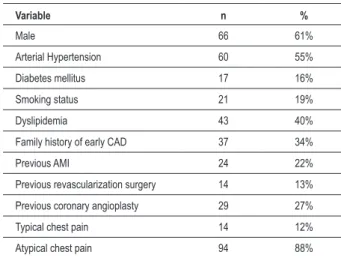
Table 1 - Clinical proile of the 108 patients undergoing scintigraphy during chest pain episode in the emergency room
Variable n %
Male 66 61%
Arterial Hypertension 60 55%
Diabetes mellitus 17 16%
Smoking status 21 19%
Dyslipidemia 43 40%
Family history of early CAD 37 34%
Previous AMI 24 22%
Previous revascularization surgery 14 13%
Previous coronary angioplasty 29 27%
Typical chest pain 14 12%
Atypical chest pain 94 88%
AMI - acute myocardial infarction; CAD - coronary artery disease.
Table 2 - Correlation between perfusion scintigraphy and gated SPECT during chest pain episodes with the diagnosis of acute myocardial infarction
No AMI AMI
Normal scintigraphy
Normal Gated SPECT 41 1
Abnormal Gated SPECT 5 0
Abnormal scintigraphy
Normal Gated SPECT 19 4
Abnormal Gated SPECT 36 2
99% specificity for diagnosing acute myocardial infarction. Figure 1 shows the distribution of Cardiac Troponin I values at admission and nine hours later of the 108 patients who underwent scintigraphy, respectively.
Analysis of myocardial perfusion by scintigraphy
Of the 108 study patients, 78 (72%) had chest pain when the radiotracer was administered. Resting scintigraphy images acquired during the chest pain episode showed abnormal perfusion patterns in 61 patients and normal pattern in 47 patients (43%). Of the seven patients who suffered AMI, six (86%) had abnormal scintigraphy perfusion imaging. On the other hand, among the 101 patients whose myocardial necrosis marker levels were normal, scintigraphy images were normal in 46 cases and abnormal in 56. Table 2 shows the correlation between scintigraphy findings and the diagnosis of acute myocardial infarction. The operating characteristics of perfusion scintigraphy during an episode of chest pain for
Figure. 2 -Perfusion scintigraphic imaging with 99mTc-tetrofosmin acquired
during an episode of chest pain. A large area of reduced perfusion is seen in the
interventricular septum, anterior wall, apex and inferior wall of the left ventricle.
Coronariography showed important lesions in the anterior descending artery and in the right coronary artery.
the diagnosis of non-ST-elevation acute myocardial infarction were: 86% sensitivity (CI 95%: 49% - 99%), 45% specificity (CI 95%: 36% - 55%), 98% negative predictive value (CI 95%: 89% - 100%), and 10% positive predictive value (CI 95%: 5% - 20%). The likelihood ratio for a positive scintigraphy was 1.6, and the likelihood ratio for a negative scintigraphy was 0.3.
Analysis of left ventricular function by scintigraphy
Images of cardiac function analyzed by gated SPECT showed abnormal contractility in 65 patients and no abnormalities in 43 patients. Of the seven patients with AMI, only two had abnormal wall contractility and/or thickness. On the other hand, among the 101 patients whose myocardial necrosis marker levels were normal, gated SPECT images were normal in 60 cases and abnormal in 41. Table 2 shows the correlation between gated SPECT findings and the diagnosis of acute myocardial infarction. The operating characteristics of ventricular function analysis by gated SPECT for the diagnosis of non-ST-elevation acute myocardial infarction were: 29% sensitivity (CI 95%: 8% - 64%), 38% specificity (CI 95%: 29% - 48%), 89% negative predictive value (CI 95%: 76% - 95%), and 3% positive predictive value (CI 95%: 1% - 10%). The likelihood ratio for the positive gated SPECT was 1.8, and the likelihood ratio for the negative gated SPECT was 0.4.
To illustrate the value of the technique, we show the scintigraphy images of one of the study patients. It is the case of a 67-year-old male patient presenting with retrosternal oppressive pain radiating to the back and that had started one hour before admission to the emergency unit. The patient was hypertensive and dyslipidemic. Initial ECG was considered normal. Figure 2 presents images of myocardial
perfusion acquired after administration of the radiotracer at rest. A large area of reduced perfusion is seen in the interventricular septum, anterior wall, apex and lower wall of the left ventricle.
Discussion
At the emergency room, conventional evaluation of the chest pain patient consists of history taking, physical examination, electrocardiogram and measurements of myocardial necrosis markers6. Despite being accurate, this
approach delays the discharge of low-risk patients until the measurements of necrosis markers dismiss the presence of myocardial injury. Myocardial perfusion scintigraphy was introduced to the emergency room in order to speed up the evaluation of patients at low risk of having an acute coronary syndrome, especially those patients with normal or non-diagnostic ECGs7. Several observational studies have shown
that scintigraphy has a high predictive value in this context to confirm the absence of myocardial infarction or subsequent cardiac events7-11. In a multicenter randomized study
conducted in the United States, the addition of scintigraphy to the conventional approach to evaluating chest pain in the emergency room made it possible to determine earlier either the presence or absence of myocardial ischemia, thus facilitating early screening and reduction of time spent at chest pain observation units12.
As to sensitivity to detect myocardial infarction, Kontos et al11 reported that resting scintigraphy with sestamibi had
a 92% sensitivity when performed early in the emergency room, compared to a sensitivity of only 39% of the initial troponin measurement11. Some studies even mention that
optimal sensitivity of troponin is not reached before 18 hours of symptom onset13-18. In our study, we found that Troponin
I measurements at admission had a sensitivity of 68.8% compared to a 86% sensitivity of scintigraphy during chest pain. Resting myocardial perfusion images were abnormal in six of the seven patients with myocardial infarction. Only 1 patient presented a normal MPS and increased troponin level. This patient’s global and segmental left ventricular function was normal and he had a slight elevation of troponin I level (<10 ng/ml). The most likely explanation for these findings is that the myocardial area at risk was small, since the spatial resolution of tomographic scintigraphy in devices as the one used in our study is approximately 10x10x10mm19. Some
imaging studies have shown that approximately 13% of the subendocardial infarctions with normal ECG are detected by magnetic resonance, but they are below the resolution cutoff value of the gamma camera20. However, these small infarctions
may not have prognostic impact, considering the excellent prognostic capacity shown by scintigraphy during chest pain episodes as reported by several studies4. Since until now, the
evidence available confirming the use of this method was from reports of cases from reference centers abroad, these data suggest that our experience is similar and is favorable to employing this technique wherever available.
experiences with some time elapsed after the end of chest pain before radiotracer injection10. The reduction in technique
sensitivity is directly proportional to time elapsed after symptom remission11. This type of protocol establishes that a
reduction in myocardial perfusion is the first manifestation of the ischemic cascade. This event precedes symptoms, as well as electrocardiographic and echocardiographic abnormalities. When injecting the radiopharmaceutical (99mTc - Sestamibi
or Tetrofosmin), the myocardial cellular membrane must be intact for the radiopharmaceutical agent to go through, which is not the case during an acute ischemic coronary event4,5.
The final result is a resting scintigraphic image with areas of reduced uptake where perfusion is impaired. This evaluation allows us to dismiss and prognose adverse events and future hospitalizations2. The admission of patients to undergo an
investigative route generates costs to both the hospital and health insurance companies, which can have negative impacts on the health system. There is evidence corroborating the cost-benefit of the injection protocol for chest pain6. Resting MPS
after chest pain also has an important prognostic value as most patients remain without any events for up to one month6.
Some studies, such as that of Kontos et al21, have employed
Gated SPECT as one of the criteria to determine the test as being abnormal; therefore, only the tests with perfusion defects associated with abnormalities in wall motility or thickening would be considered as abnormal. In our study, we showed the reason why gated imaging was excluded as a criterion for determining a positive result in radiotracer injection during chest pain - since the image is obtained some time after the administration, the alteration in contractility may not persist long enough to be detected during image acquisition. This is corroborated by the low sensitivity of gated imaging in our sample. The low specificity is also understandable, since we have not excluded patients with previous infarction or myocardial revascularization, which can result in contractile alterations that do not correlate with a new acute episode or abnormal movement of the interventricular septum, respectively. In general, patients with previous myocardial infarction are not good candidates for radiotracer injection during an episode of chest pain, since they are more likely to
be undergoing an acute coronary syndrome and due to the probability that the perfusion alterations are the result from previous events; however, the test can still provide additional diagnostic information when the previously infarcted area is known, or if the patients have an evaluation of a previous normal image22. Other techniques, such as echocardiography,
have shown good accuracy in assessing chest pain in the emergency room by identifying myocardial infarction patients and at risk of events. In an analysis consisting of 16 studies and more than 1,300 patients, echocardiography had a sensitivity of 93% and a specificity of 71%. Despite the acoustic window limitation, in some patients the technique can be considered similar to scintigraphy when performed by experienced echocardiographists23. Other techniques such as
calcium scoring, coronary angiotomography and magnetic resonance have not yet been sufficiently studied so as to provide sound recommendations for the management of the patient presenting to the emergency unit with acute pain and non-diagnostic ECG.
In short, this study evaluated the use of resting scintigraphy with 99mTc-Tetrofosmin in patients undergoing chest pain to
exclude the diagnosis of acute myocardial infarction. The incorporation of this technique into the strategy for emergency room evaluation of the chest pain patient seems to safely exclude the presence of myocardial infarction, thus reducing unnecessary admissions and improving the effectiveness of the screening process.
Potential Conflict of Interest
No potential conflict of interest relevant to this article was reported.
Sources of Funding
There were no external funding sources for this study.
Study Association
This study is not associated with any post-graduation program.
References
1. Underwod SR, Anagnostopoulos C, Cerqueira M, Ell PJ, Flint EJ, Harbinson M, et al. Myocardial perfusion scintigraphy: the evidence. A consensus conference organised by the British Cardiac Society, the British Nuclear Cardiology Society and the British Nuclear Medicine Society, endorsed by the Royal College of Physicians of London and the Royal College of Radiologists. Eur J Nucl Med Mol Imaging. 2004; 31: 261-91.
2. de Azevedo JC, Félix RC, Correa PL, Barbirato GB, Dohmann HF, da Silva PR, et al. Prognóstico em médio prazo da cintilografia de perfusão miocárdica de estresse na unidade de dor torácica. Arq Bras Cardiol. 2007; 88: 602-10.
3. Bassan R, Scofano M, Gamarskii R, Dohmann HF, Pimenta L, Volschan A, et al. A dor torácica na sala de emergência: a importância de uma abordagem sistematizada. Arq Bras Cardiol. 2000; 74: 13-29.
4. Tavel ME. Stress testing in cardiac evaluation: current concepts with enphasis on the ECG. Chest. 2001; 119: 907-25.
5. Macaciel RM, Mesquita ET, Vivacqua R, Serra S, Campos A, Miranda M, et al. Safety, feasibility, and results of exercise testing for stratifying patients with chest pain in the emergency room. Arq Bras Cardiol. 2003; 81: 166-73.
6. Nucifora G, Badano LP, Sarraf-Zadegan N, Karavidas A, Trocino G, Scaffidi G, et al. Comparison of early dobutamine stress echocardiography and exercise electrocardiographic testing for management of patients presenting to the emergency department with chest pain. Am J Cardiol. 2007; 100: 1068-73.
7. Ingkanisorn WP, Kwong RY, Bohme NS, Geller NL, Rhods KL, Dyke CK, et al. Prognosis of negative adenosine stress magnetic resonance in patients presenting to an emergency department with chest pain. J Am Coll Cardiol. 2006; 47: 1427-32.
2002; 288: 2693-700.
9. Erhardt L, Herlitz J, Bossaert L, Halinen M, Keltai M, Koster R, et al. Task force on the management of chest pain. Eur Heart J. 2002; 23: 1153-76.
10. Cerqueira MD, Weissman NJ, Dilsizian W, Jacobs AK, Kaul S, Laskey WK, et al. Standardized myocardial segmentation and nomenclature for tomographic imaging of the heart a statement for healthcare professionals from the cardiac imaging committee of the Council on Clinical Cardiology of the American Heart Association. Circulation. 2002; 105: 539-42.
11. Kontos MC, Jesse RL. Evaluation of the emergency department chest pain patient. Am J Cardiol. 2000; 85: 32B-39B.
12. Varetto T, Cantalupi D, Altieri A, Orlandi C. Emergency room technetium-99m sestamibi imaging to rule out acute myocardial ischemic events in patients with nondiagnostic electrocardiograms. J Am Coll Cardiol. 1993; 22: 1804-8.
13. Hilton TC, Thompson RC, Williams H, Saulors R, Fulmer H, Stowers SA. Technetium-99m sestamibi myocardial perfusion imaging in the emergency room evaluation of chest pain. J Am Coll Cardiol. 1994; 23: 1016-22.
14. Tatum JL, Jesse Rl, Kontos MC, Nicholson CS Schimidt KL, Roberts CS, et al. Comprehensive strategy for the evaluation and triage of the chest pain patient. Ann Emerg Med. 1997; 29: 116-25.
15. Kontos MC, Jesse RL, Anderson P, Schmidt KL, Ornato JP, Tatum JL. Comparison of myocardial perfusion imaging and cardiac troponin I in patients admitted to the emergency department with chest pain. Circulation. 1999; 99: 2073-8.
16. Heller GV, Stowers SA, Hendel RC, Herman SD, Daher E, Ahlberg AW, et
al. Clinical value of acute rest technetium-99m tetrofosmin tomographic myocardial perfusion imaging in patients with acute chest pain and nondiagnostic electrocardiograms. J Am Coll Cardiol. 1998; 31: 1011-7.
17. Zimmerman J, Fromm R, Meyer D, Boudreaux A, Wun CC, Smailling R, et al. Diagnostic marker cooperative study for the diagnosis of myocardial infarction. Circulation. 1999; 99: 1671-7.
18. Schaeffer M, Brennan T, Hughes A, Gibler B, Gerson M. Resting radionuclide myocardial perfusion imaging in a chest pain center including an overnight delayed image acquisition protocol. J Nucl Med Technol. 2007; 35: 242-5.
19. Kuikka JT, Yang J, Kiiliainen H. Physical performance of Siemens E. Cam gamma camera. Nucl Med Commun. 1998; 19: 457-62.
20. Wagner A, Mahrholdt H, Holly TA, Elliott MD, Regenfus M, Parker M, et al. Contrast-enhanced MRI and routine single photon emission computed tomography (SPECT) perfusion imaging for detection of subendocardial myocardial infarcts: an imaging study. Lancet. 2003; 361: 374-9.
21. Kontos MC, Jesse RL, Schmidt KL, Ornato JP, Tatum JL. Value of acute rest sestamibi perfusion imaging for evaluation of patients admitted to the emergency department with chest pain. J Am Coll Cardiol. 1997; 30: 976-82.
22. Allman K, Freedman S. Emergency department assessment of patients with acute chest pain: myocardial perfusion imaging, blood tests, or both? J Nucl Cardiol. 2004; 11: 87-9.